
I have been fascinated with painting water and figures in water for some time and have a series of paintings dedicated to this subject. Nothing liberates me more than the “excuse” to abstract shapes to create “reality.” To portray the feeling of water touching the figure and of being suspended in water, surrounded by myriads of reflections, I allow myself to distort the figure and find ways of morphing the skin into the water. Here is how Stasis was created:
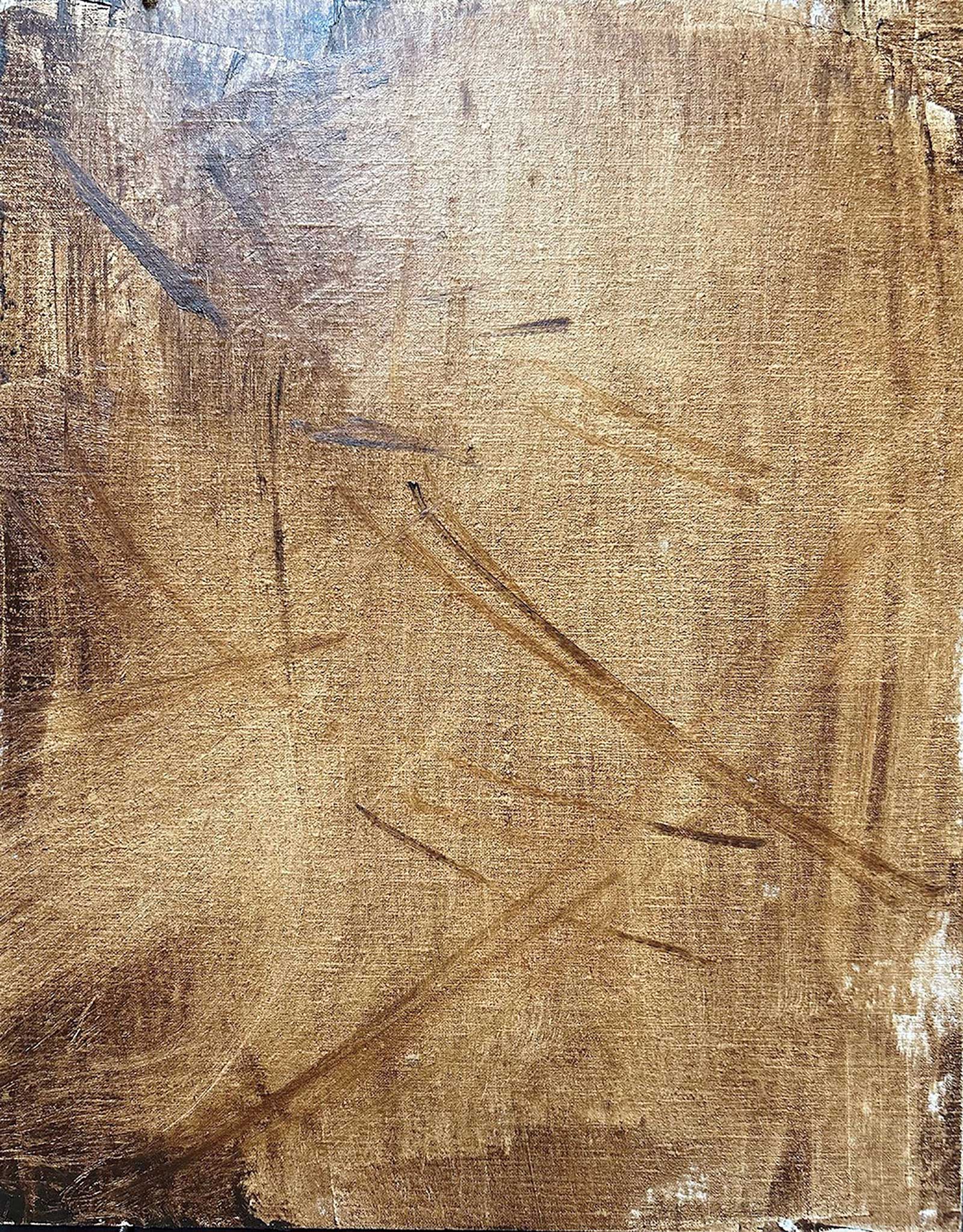 Stage 1
Stage 1: Composition is by far the most important aspect of the creation process. The idea of this painting came from recognizing this strong diagonal of the head and body. Everything evolved around it. Before I start painting, I want to feel what my movement within the canvas will be. The figure, in a sense, rested at the point where those diagonals met. My first strokes on the toned canvas were the first indicators of what that movement would be. I was searching for the right placement within the canvas. It was all about that movement that supported the initial idea. I indicated the head placement with simple broad strokes.
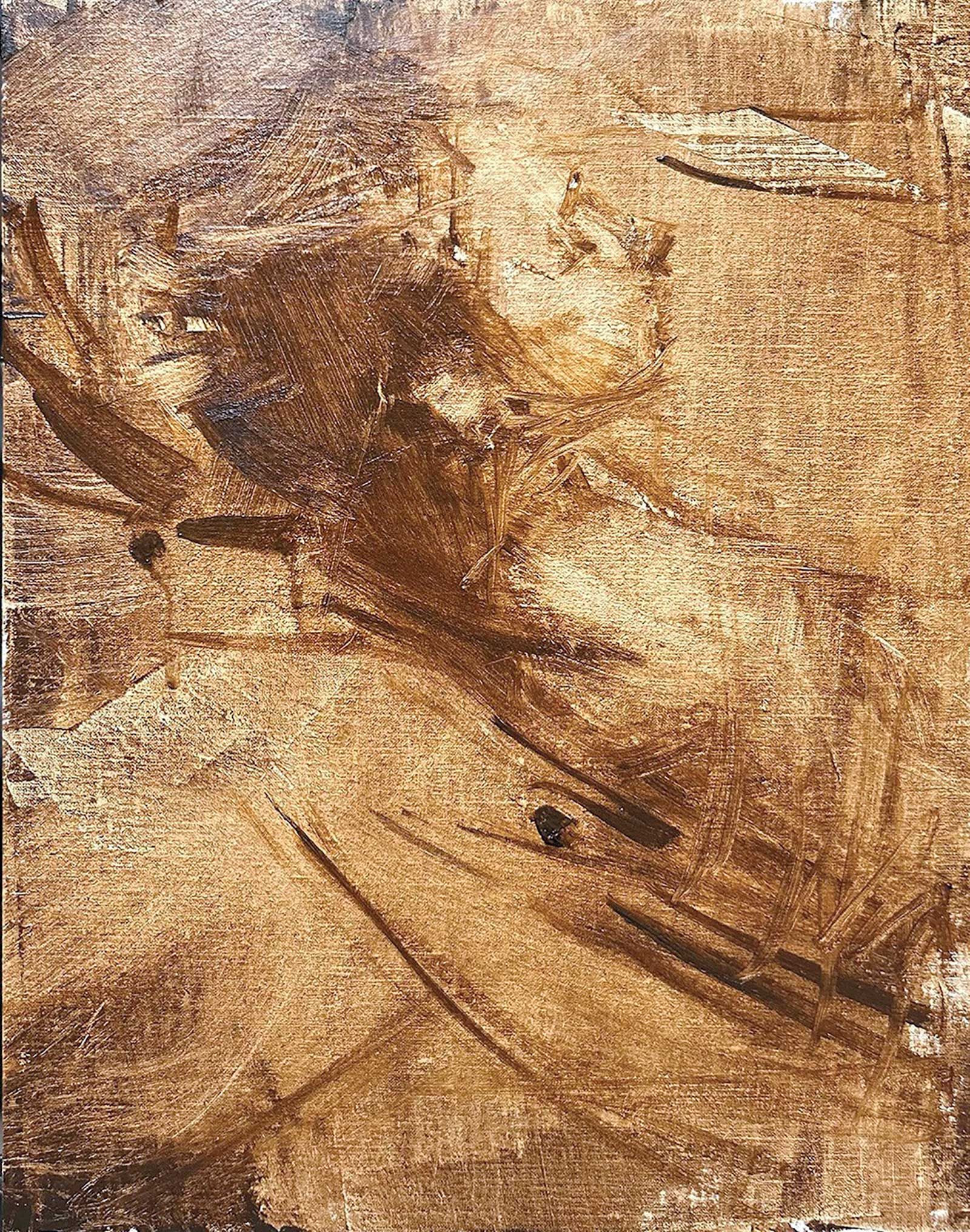 Stage 2
Stage 2: I further developed the head and indicated the position of the shoulder. Because my canvas was toned right before starting, it was still wet, and I could wipe off whites with a rag. I continued to use raw umber, but on another painting, I may have gotten into warm transparent shadows and skin tones much earlier than here. There is no formula.
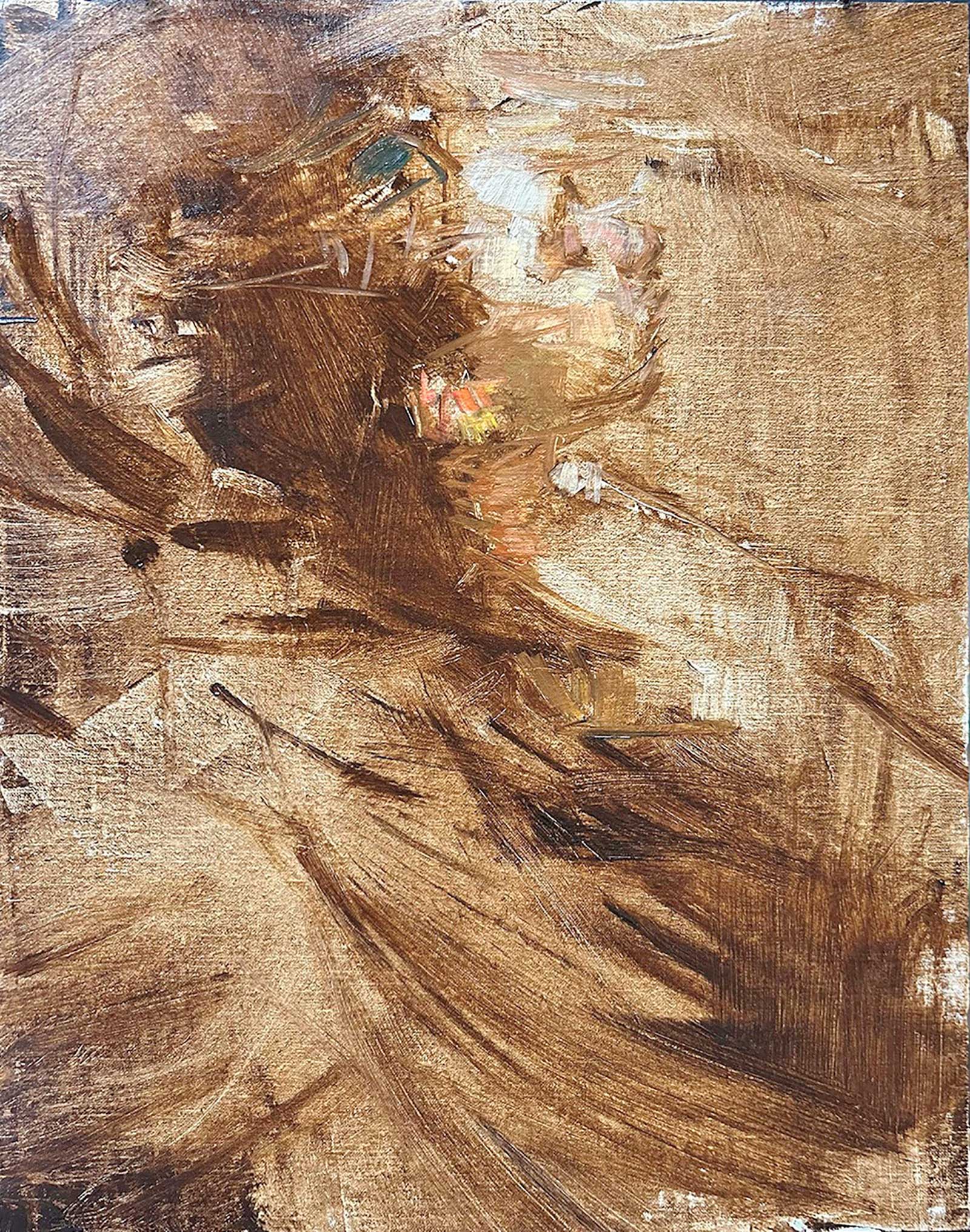 Stage 3
Stage 3: I started to indicate skin tones. Putting a dab of warmth in the ear made the monochrome painting start to come alive. I could change it later, but at this stage I needed some placeholders, and that was the first. Sometimes these placeholders make something that is barely emerging from the crude placement strokes feel right. It could be a strong reflection in the eye of the sitter, a thick, juicy stroke of hair falling on the forehead, or, as in this case, some warmth in the ear.
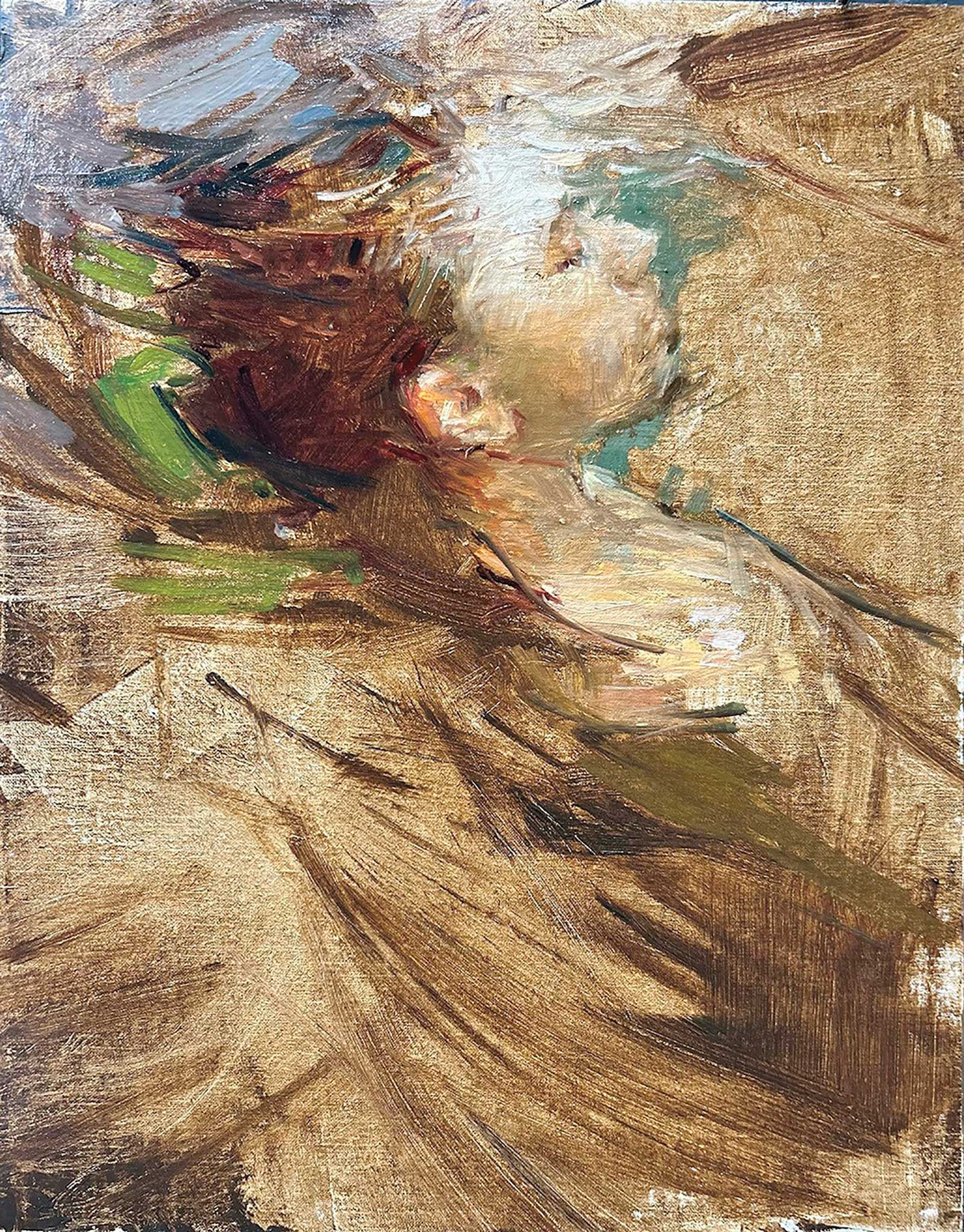 Stage 4
Stage 4: I continued to work on skin tones and overall color harmony. I indicated the background around the skin and started to establish the edges and better assess the color and relationships. It’s only through the merging of the skin and background and finding those passages of stronger and softer edges that the face or the figure started to feel right.
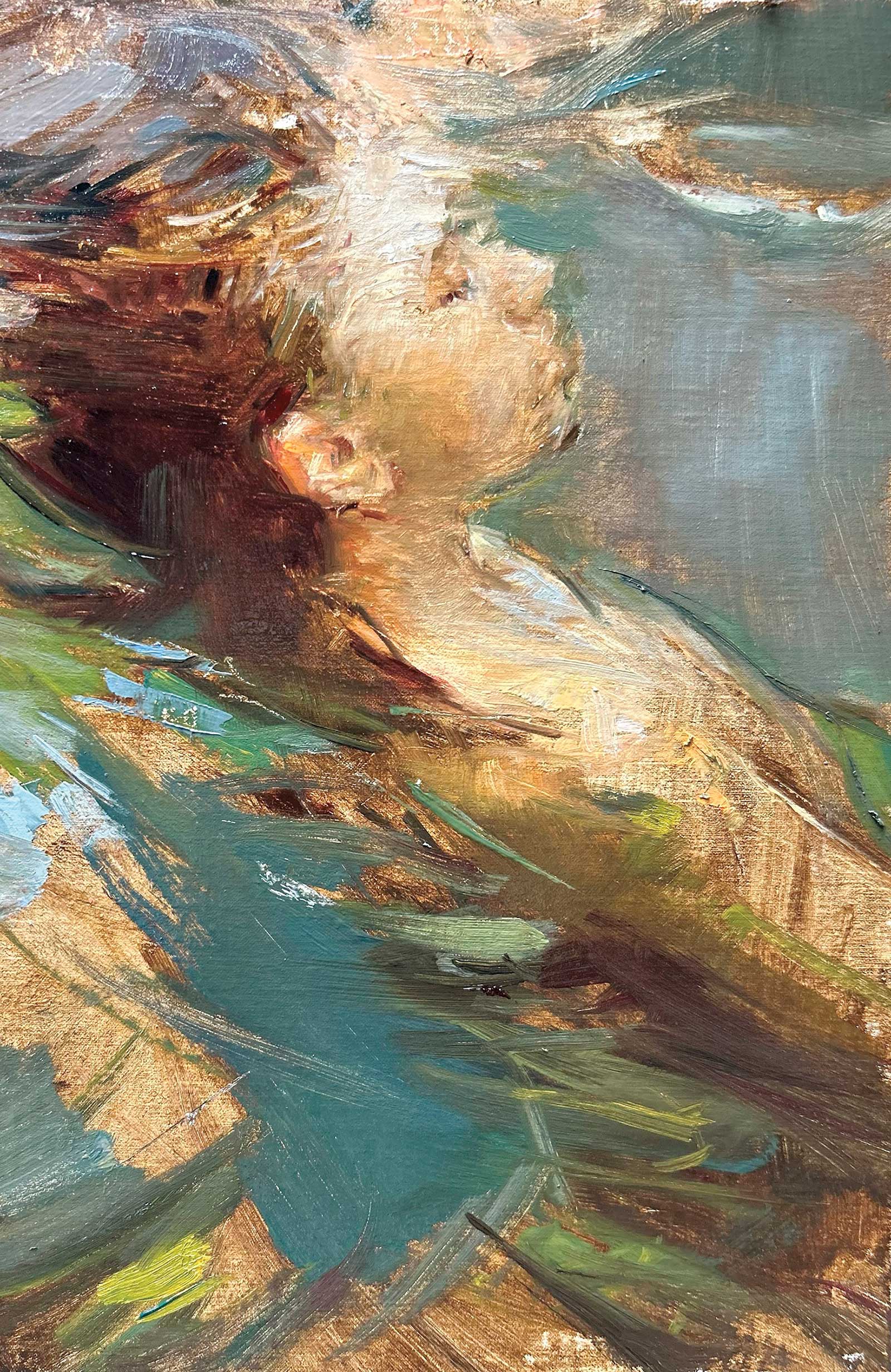 Stage 5
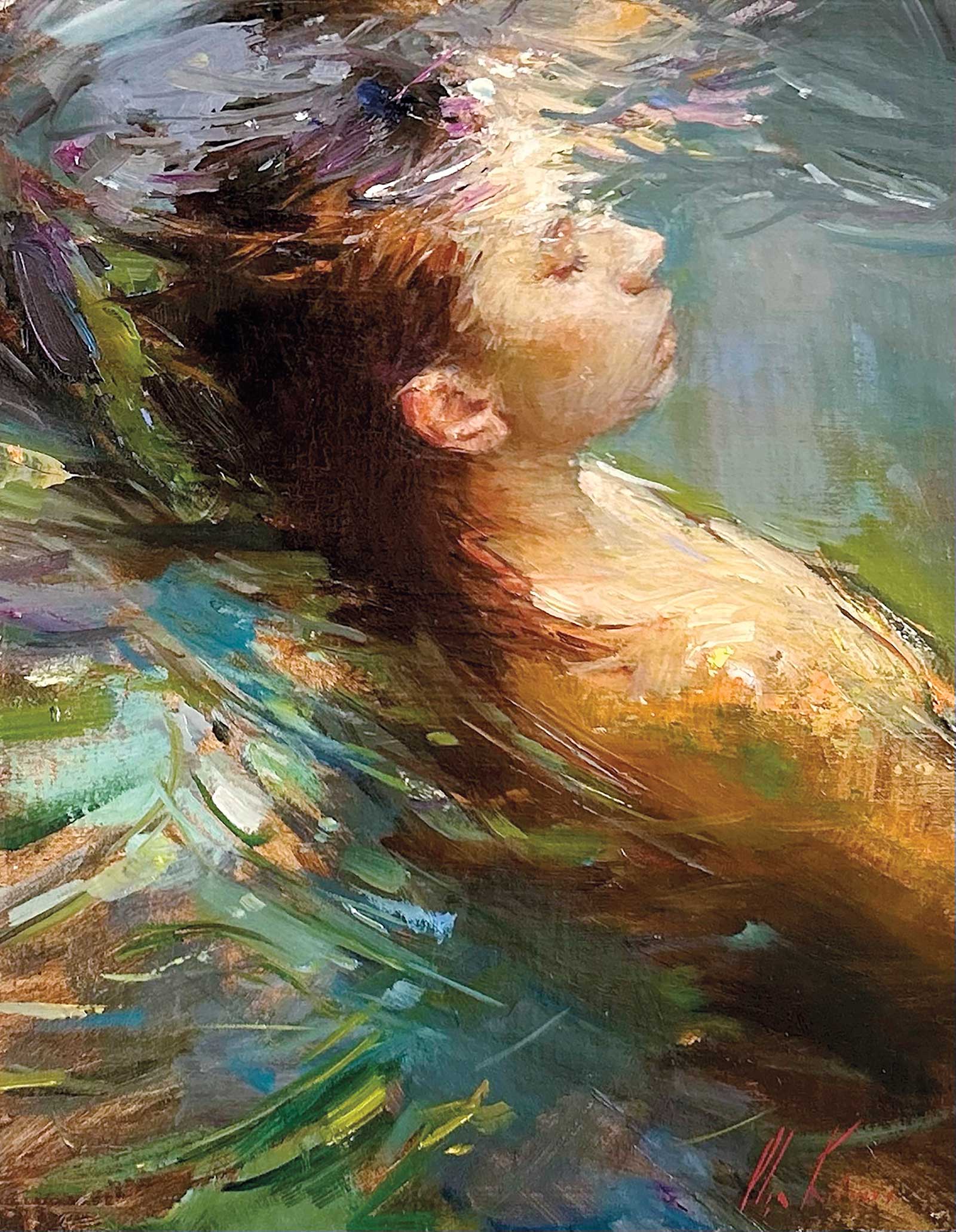
Stage 5: I continued to build the face and started work on the ear. The darkness of the hair was much more pronounced when compared to the lightness of the ear. It is the darkest dark, and I started to flatten the strokes in that darkness to maintain the transparent depth of that mass. That darkness had to seamlessly morph into the shadow under the body as it went down, following the path of that strong diagonal that was so important for my composition. That darkness was beautiful and mysterious, and the water enveloped the figure there. I followed that movement of the water around the figure. I layered more opaque strokes of the reflections onto that transparent darkness. I paid attention not to treat the figure separately from its surroundings. There is a repetitive movement of strokes, as if they are moving around the body. I still had not developed parts of the face nor finished the hair. The top of the head was planned as an area of reflection and was intended for knife work. I still had to think it through, and I wasn’t there yet.
 Stage 6
Stage 6: I designed the passages of transparent darkness and opaque knife work and deliberately merged her forehead with the water. The forehead was reflected in the water, as her head was near the surface of the water. Was she floating above the water? If so, why is her head under the water? Yet somehow it made sense compositionally. That initial diagonal became part of a larger zigzag: I followed the direction of the strokes in reflections above her head, from the top right to the left, curving through her hair, softly going down through her neck and shoulder, and then changing direction to pick up a counterbalancing diagonal of warm strokes that bring the eye to the bottom left corner. Sometimes it’s not what really happened, but what can create the right movement, that is important. I refined the shape of some of the thicker strokes and further emphasized that zigzag I described. I softened the areas of the skin and cleaned up the mid-tones. I felt that if I continued this refinement, I would’ve destroyed the freshness I worked so hard to create. There is always that fine line that is so easily crossed. —