For over the past two decades I have painted with my fingers using acrylics. Recently, I’ve begun experimenting with a sort of adapted Flemish Method. Using layers of transparent acrylic glazes, sometimes upward of 100 separate applications of color, I’ve been able to heighten the realism, illusion of depth and smoothly blended surfaces of my final images. I often paint on paper sealed and glued to the canvas, as the paper contracts and expands in reaction to getting wet and being adhered, and a noticeable “crinkling” effect is created that can be seen throughout much of my work.
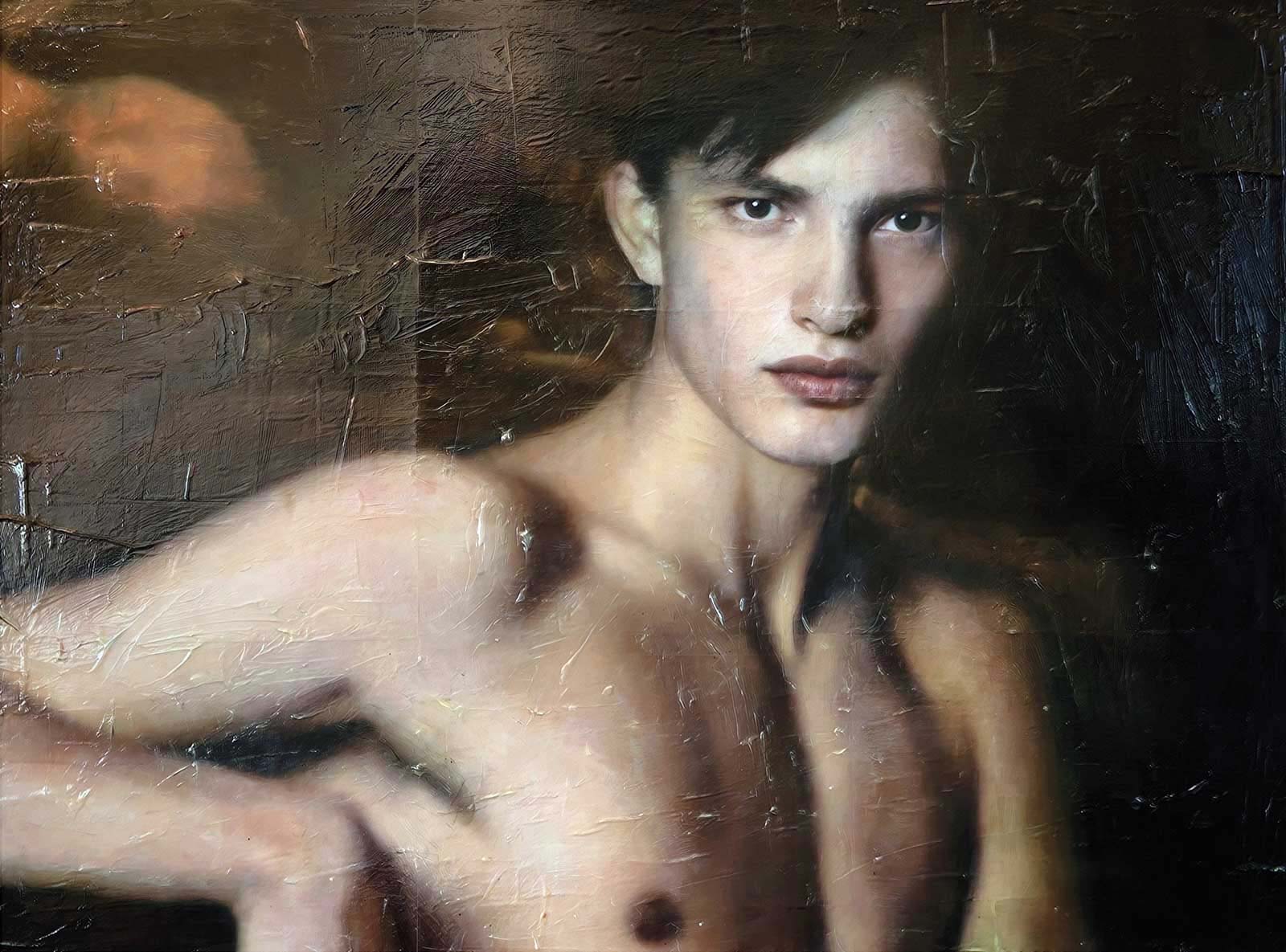
Not Ben or Brent, acrylic on paper on canvas, 30 x 40" (76 x 101 cm) This is a piece from my most recent exhibition (in April 2023 at Arcadia Contemporary in New York City). I have made a number of paintings over the years of my younger brother Ben and his best friend Brent. Incidentally, I’ve started running out of ideas for titles the more work I make, and this became Not Ben or Brent.
The way I paint usually goes like this:
1. Seal and glue sheets of generic, office/copy type paper down onto canvas using an acrylic gel medium.
2. Paint/sketch a basic outline of the reference image I’m working from.
3. Start blocking in shapes by building up acrylic glazing layers (I mix very small amounts of paint color diluted 10-to-20-fold with an acrylic gel medium.) Usually this gets applied one color at a time, waiting for each to dry before starting the next one. I often use a small space heater in between layers to speed up the drying time.
4. Cycle through steps two and three, gradually refining lines and details between layers of glaze.
5. Realize I’ve cycled 20 times more than any reasonable person would and that the painting looks ridiculous.
6. Paint over the entire thing and start again.
7. Frequently repeat steps two through six, to be completely candid.
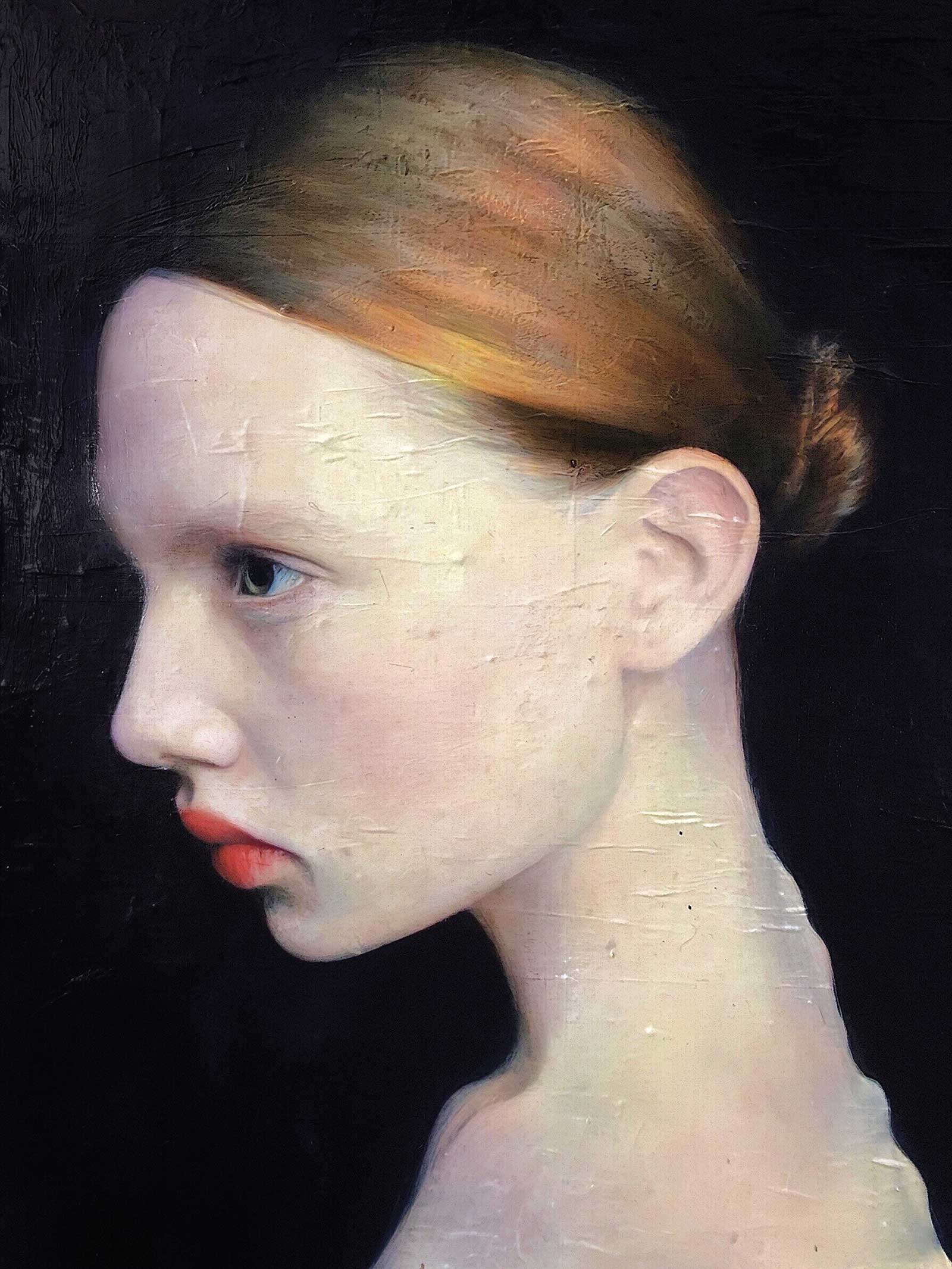
Holly Rose, Side Profile, acrylic on paper on wood, 40 x 30" (101 x 76 cm) My images are created in large part by building up many layers of glaze—thin washes of acrylic paint that I dilute with an acrylic gel medium.
Basically, I block shapes in; I define details. I build up a very large number of translucent color layers like a person with absolutely no life whatsoever and all the time in the world. I’m far from the first person to paint this way, and I may spend more time on step five than most. If you’re looking for guidance or advice, you’re probably reading the wrong article. Having said that, a couple of things I’ve found aid this process: acrylic impasto medium can be helpful in order to even out the wrinkling of the paper underneath in an area where it may be distracting or difficult to paint on top of. It can also be used to camouflage places where the sheets of paper line up if those lines are too pronounced. Acrylic based impasto medium usually dries mostly clear—however, most brand formulations are just slightly opaque enough that they can help even out the obviousness of mistakes and further contribute to the appearance of smooth blending.
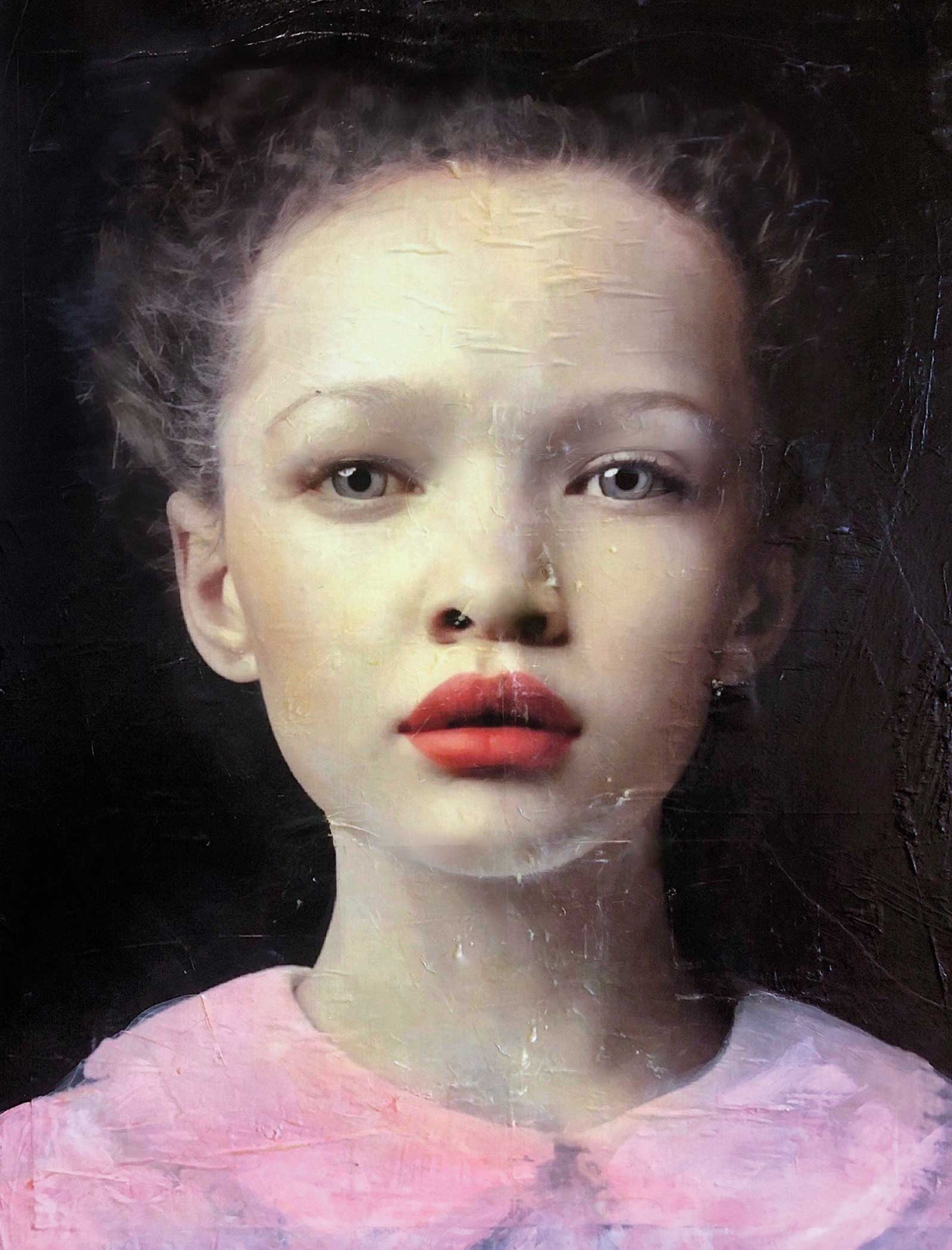
God Shot Me in the Face and Then I Saw, acrylic on paper on canvas, 40 x 30" (101 x 76 cm) This was one of the paintings I submitted in my entry for the Bennett Prize in 2020. (The Bennett Prize for Women Figurative Realists is a prize endowed by philanthropists and established at the Pittsburgh Foundation. It is monetarily the largest art award offered solely to women painters.) I was one of the ten finalists that year.
Second, zinc white. This is pretty much the only acrylic color I use undiluted, and it’s the only specific color of anything I use routinely in a committed sort of a way (i.e., I generally paint with red, blue, yellow, white and black, without a shade preference for any of them). I’ve deluded myself into thinking any color in the world can be made as long as the three basic primaries and white and black are involved, though this is likely untrue. I use zinc white because it is significantly more translucent than any of the other whites, and it can help blend out harsh or errant lines.
My grandmother taught me how to paint when I was a little girl, and I’ve done it my entire life. Painting has taught me many things. I have learned about persistence, about tolerating frustration, appreciating success when it comes and understanding that it comes less frequently than failure, about taking risks and avoiding unnecessary ones—and most of all, about luck. I am the luckiest person alive to be able to paint every single day. I’m also incredibly fortunate to have had people in my life who thought I could, and who told me so.
My Art in the Making Untitled, 2023
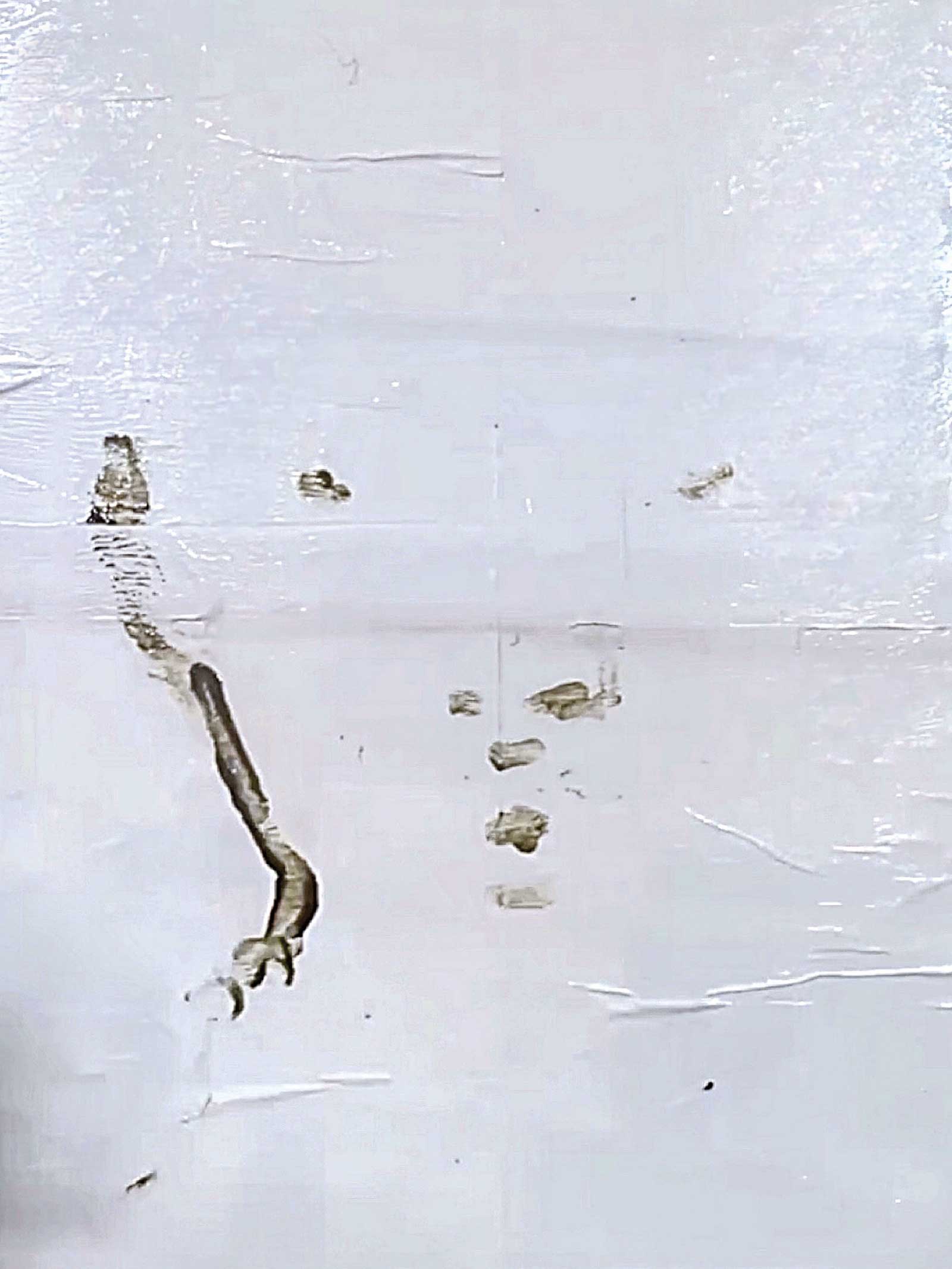 Stage 1
Stage 1 Starting Out
I typically begin a painting by first gluing sheets of paper onto the surface of a canvas. The paper shrinks and expands in reaction to getting wet, creating a wrinkled texture in the background.
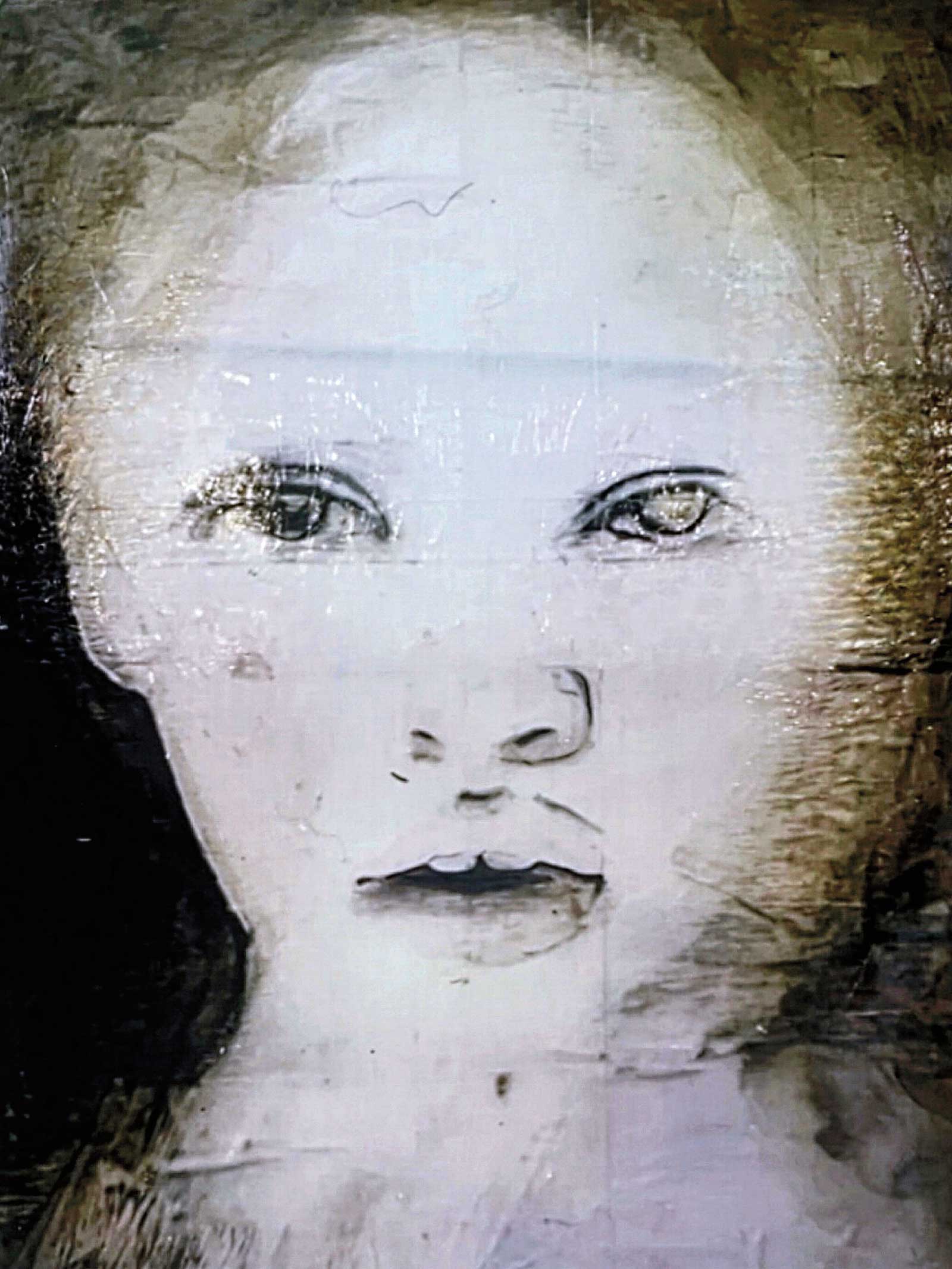 Stage 2
Stage 2 Block-in
I paint primarily with my fingers. The first steps of my process involve blocking in a general outline of the piece as a whole before moving on to the initial coloring of the main shapes.
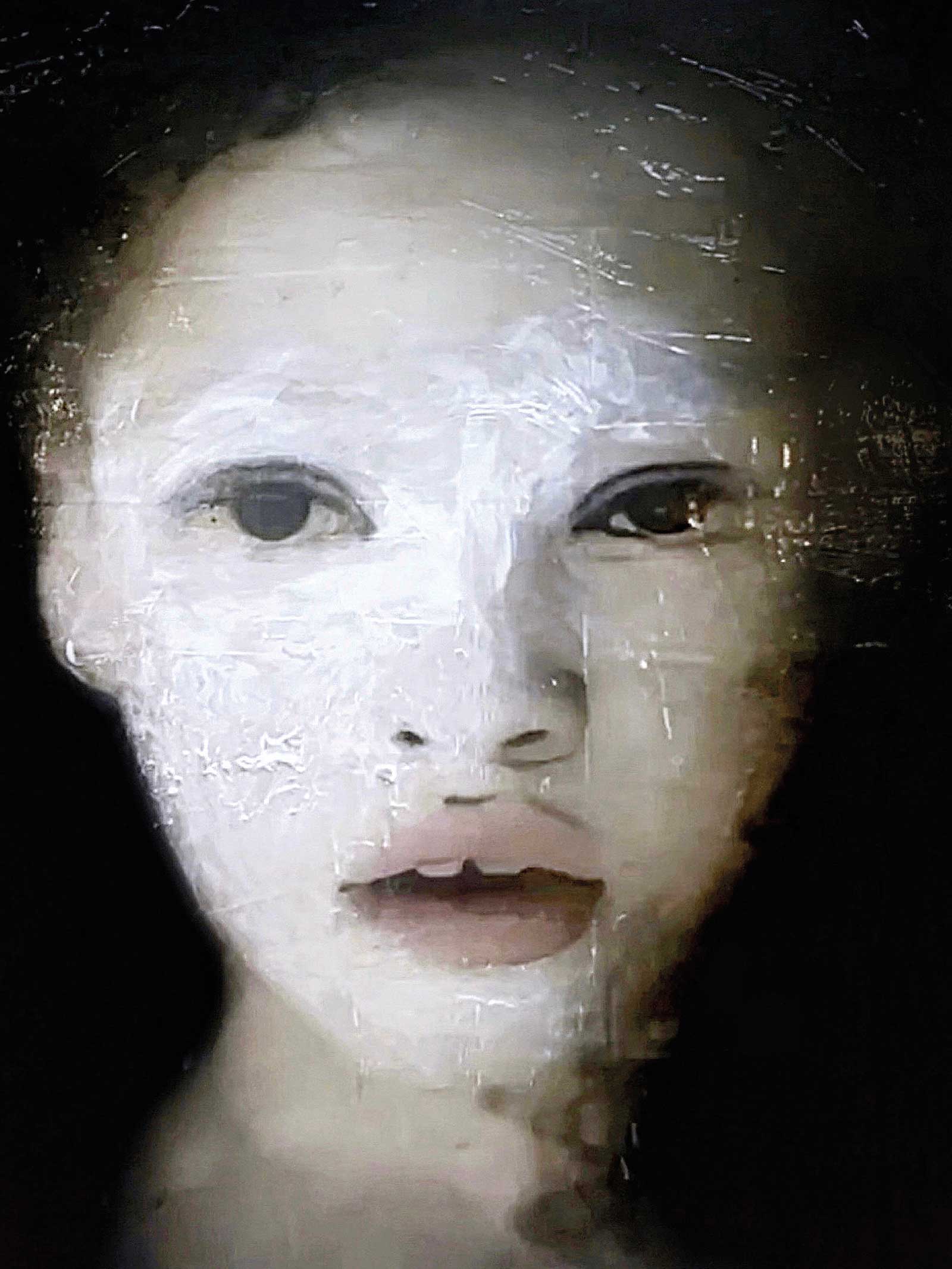 Stage 3
Stage 3 Glazing
Most of my painting happens cycling through stages three and four. Once the basic shapes have been created, I start building up images with acrylic glazing layers—transparent washes of color diluted with acrylic gel medium.
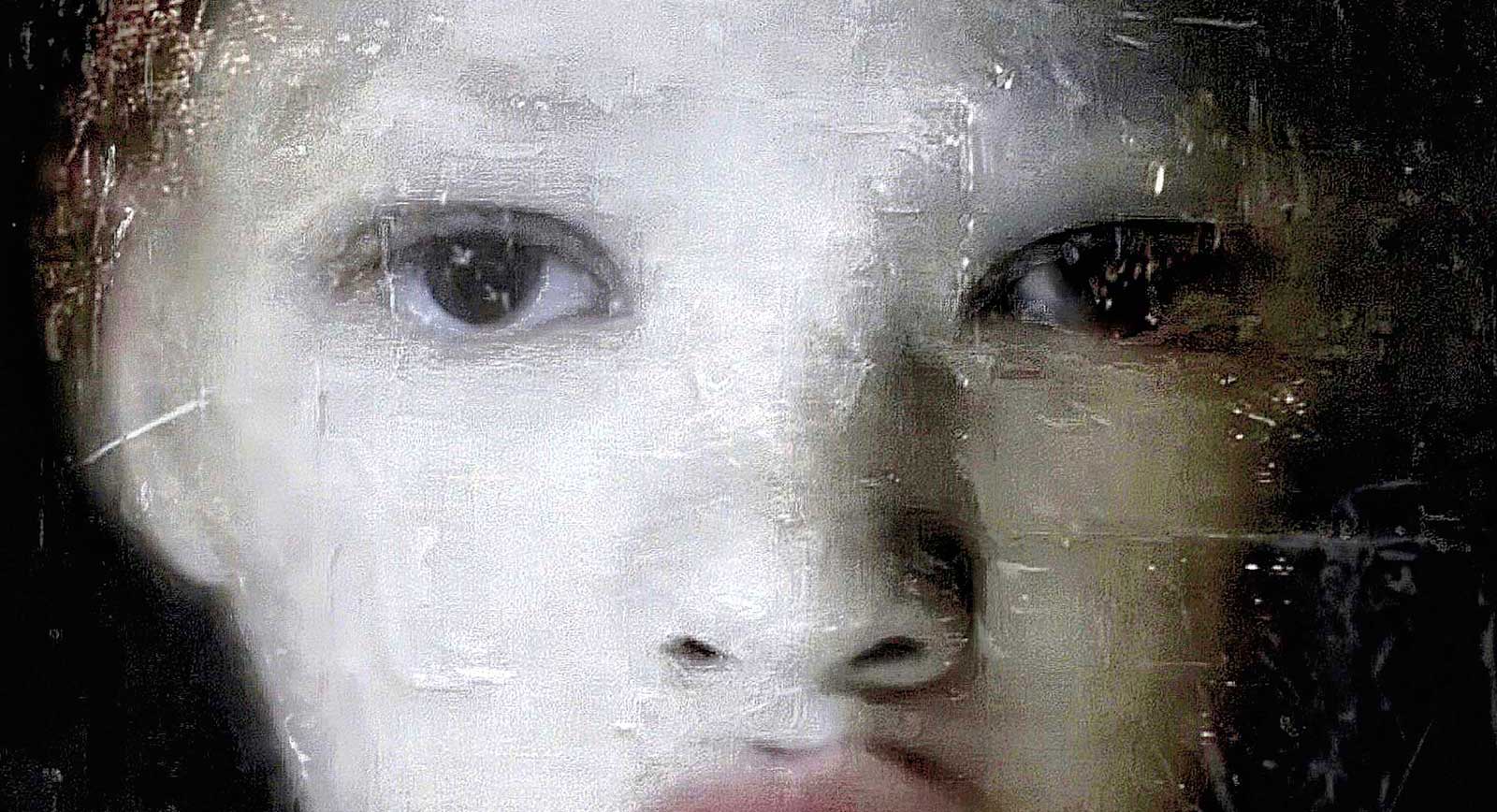 Stage 4
Stage 4 Drawing with Paint
As the image begins forming with the acrylic glazes I start rotating these layers in between more detailed, precise lines. This feels a lot like I’m using my fingers to “draw” in paint.
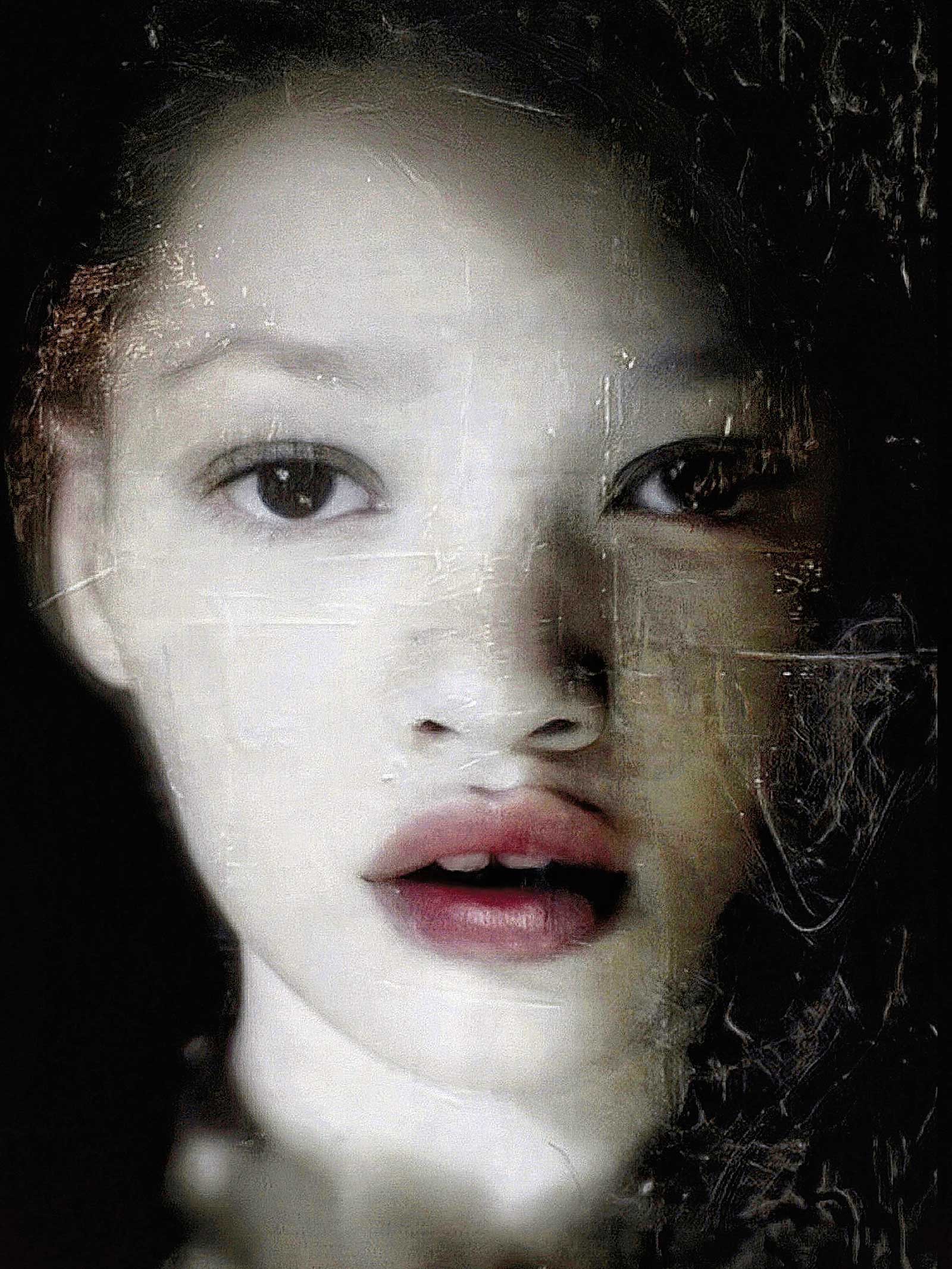 Stage 5
Stage 5 Erasing and Blending
I make a great deal of mistakes and unusual choices while painting. Zinc (or “blending”) white and semi-opaque impasto medium have been very helpful for erasing, disguising and blending out things I regret.
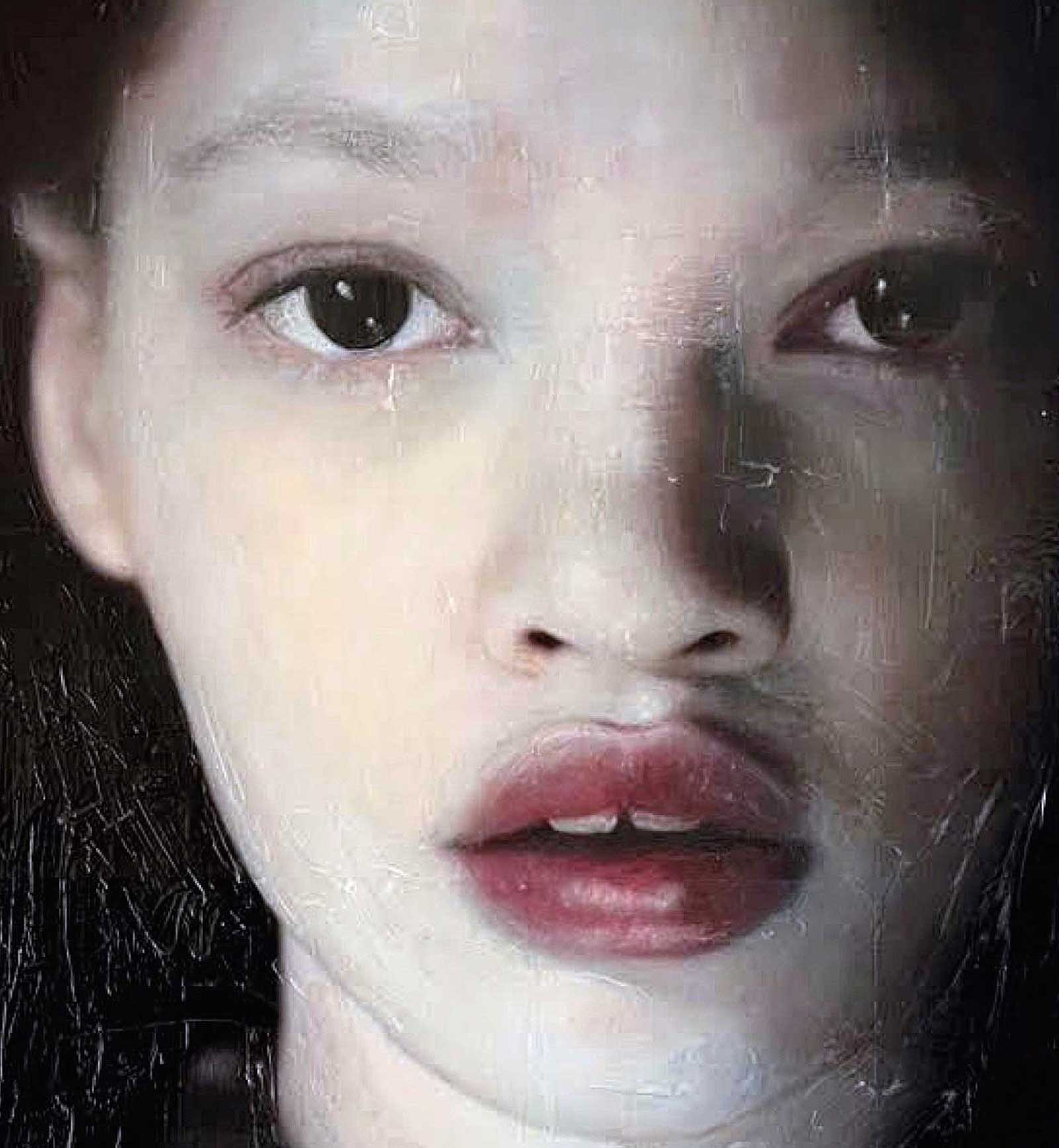 Stage 6
Stage 6 Final Touches
As mentioned previously, I’ve always painted primarily with my fingers. However, especially if working on a smaller scale, I often end up painting in the finer details last, with a very small brush.
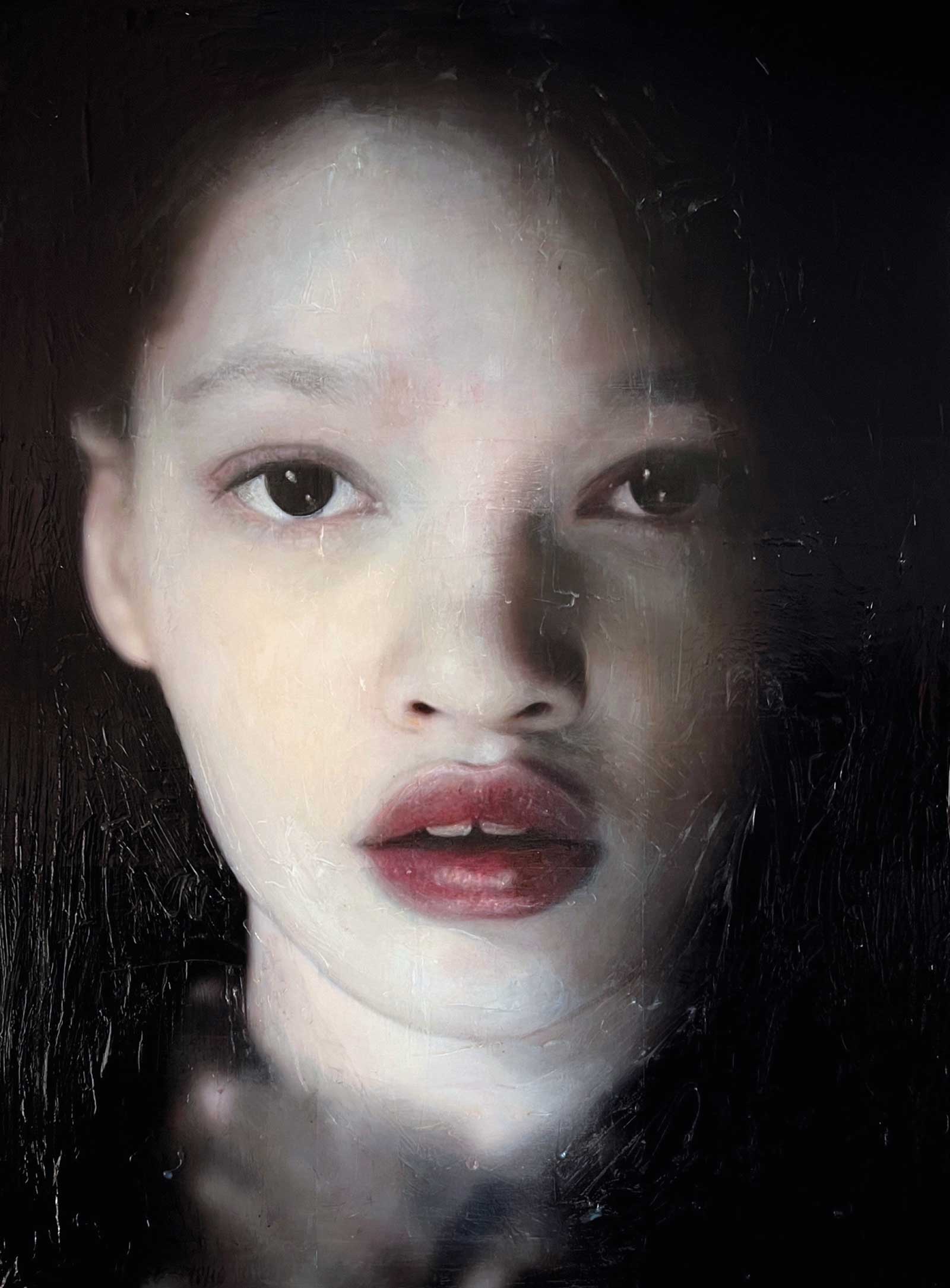 Stage 7
Stage 7 Finished Artwork
Untitled, 2023, acrylic on paper on canvas, 40 x 30" (101 x 76 cm)
About the artist
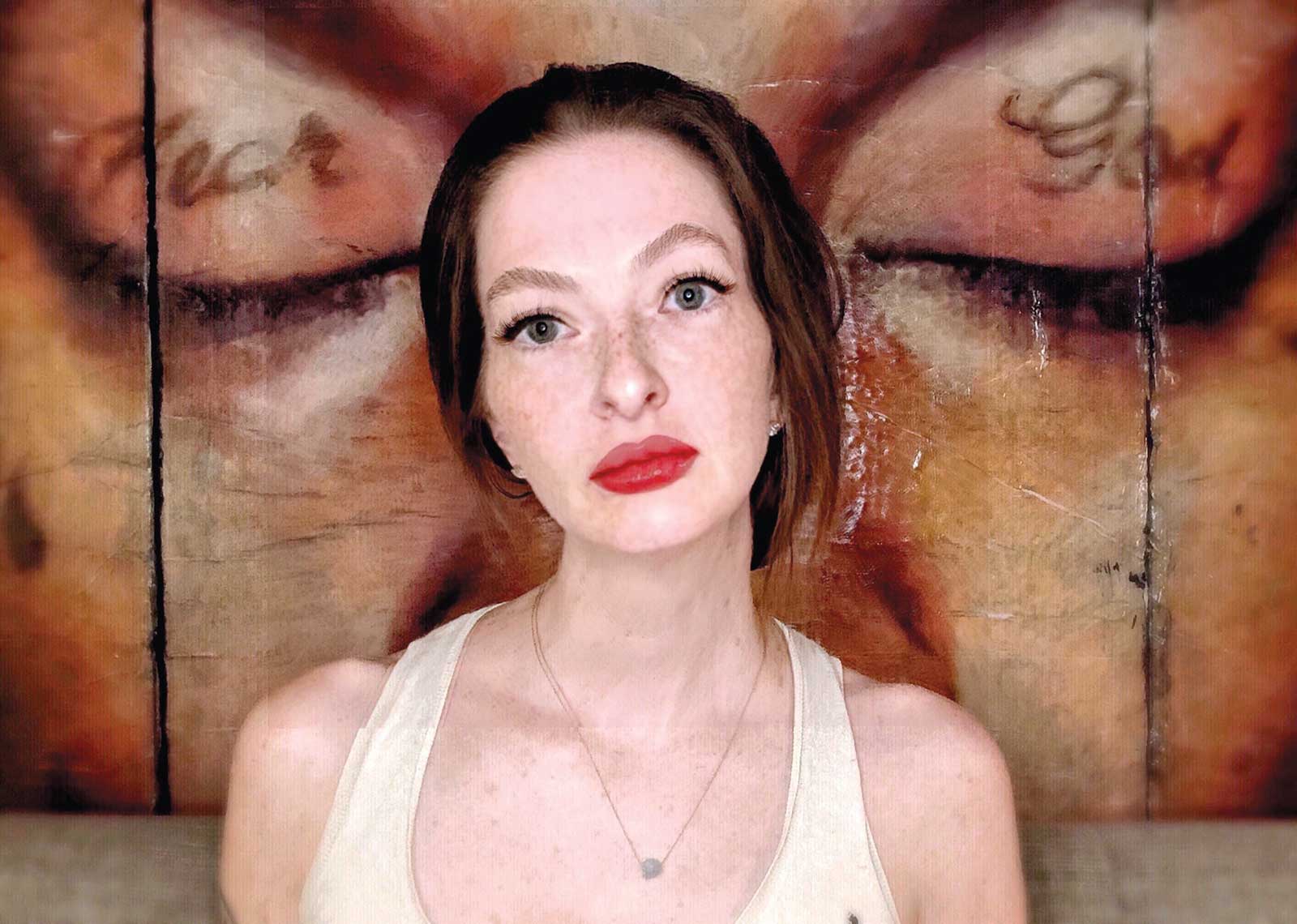 Lavely Miller
Lavely Miller graduated summa cum laude with a BFA in studio art from James Madison University. She also holds both master’s and doctoral level degrees in clinical mental health from the University of Virginia. Miller was named one of ten finalists for the 2021 Bennett Prize, the largest visual arts award given to a female figurative realist in the United States. She has received grants from the Pollock-Krasner Foundation, Maryland State Arts and the Adolph and Esther Gottlieb Foundation. She is the recipient of the 2022 Keller Prize, the Contemporary Award from Contemporary Paintings, a winner of the Beautiful Bizarre Art Prize and a Juror’s Choice awardee from National Museum of American History/Smithsonian Institution.
Miller’s work is held in various public collections such as the New Salem Museum, the University of Virginia and the 21st Century Fox Building.
Represented by
Arcadia Contemporary, New York, USA, www.arcadiacontemporary.com
Galleri Ramfjord, Oslo, Norway, www.galleriramfjord.no
Galerie Mokum, Amsterdam, The Netherlands, www.galeriemokum.com
Verduyn Gallery, Moregem, Belgium, www.verduyngallery.com