Scottsdale Artists’ School: How did your teaching career at Scottsdale Artists’ School begin?
Judd Mercer: I was taking a workshop with Dave Santillanes at the Scottsdale Artists’ School and another student noticed some of my plein air work. I tend to go all in at workshops and do some plein air painting before/after class to make the most of my time. Thanks to a recommendation from a fellow student, I was able to teach my first workshop at the school and it was the start of my teaching career, which I am very thankful for.
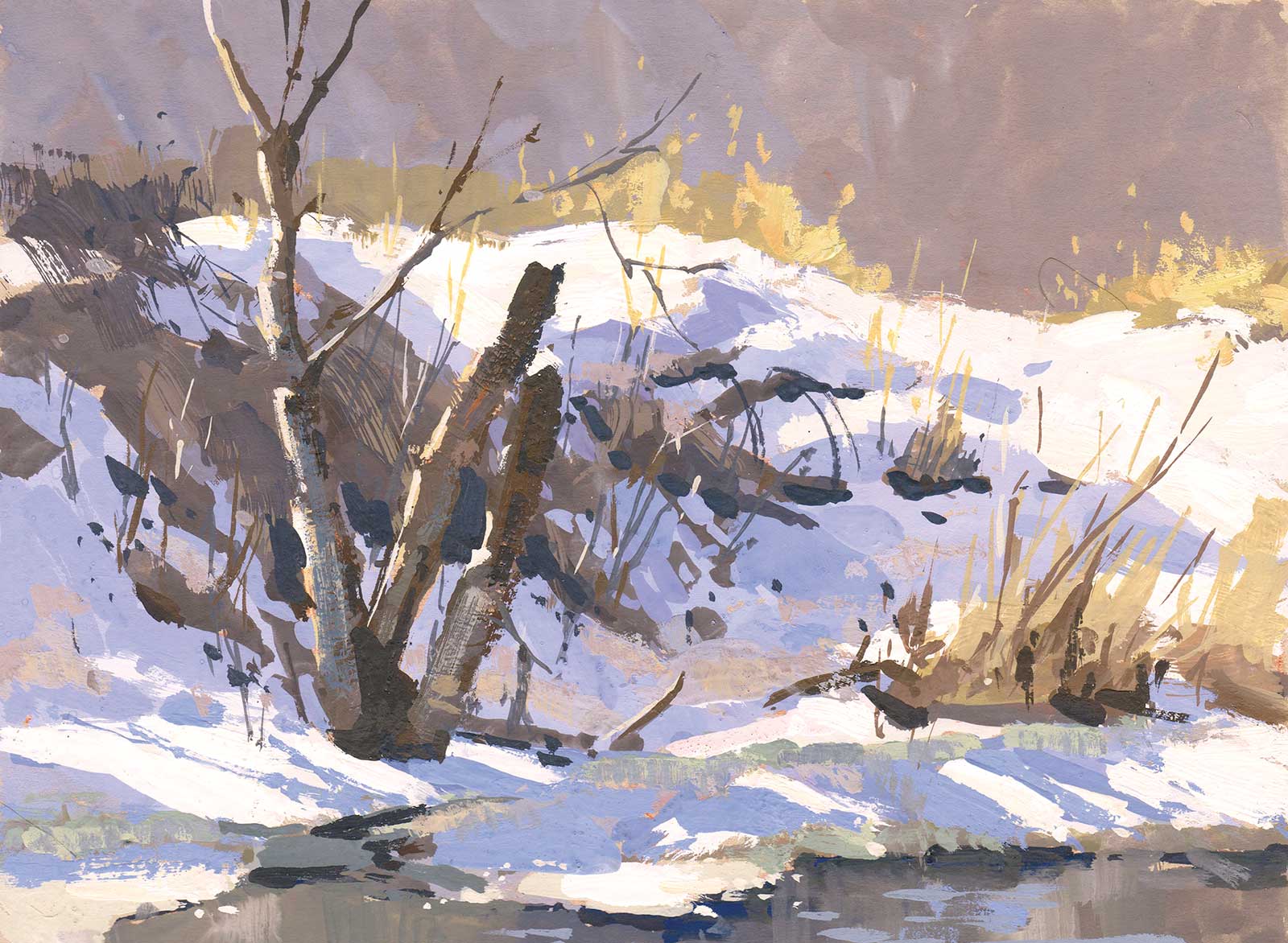
Judd Mercer, Thaw Comes to Colorado, gouache, 6 x 8" (15 x 20 cm)
SAS: Have you always been inspired to paint plein air?
JM: Yes! My first medium was watercolor, and I was drawn to works by Alvaro Castagnet and Joseph Zbukvic, who both are plein air painters, so I started painting plein air from the very beginning. It really never stopped (although my motivation for winter painting comes and goes). Plein air is the only time the world really slips away, and I can be 100 percent present, and if I’m lucky, find that magic flow state.
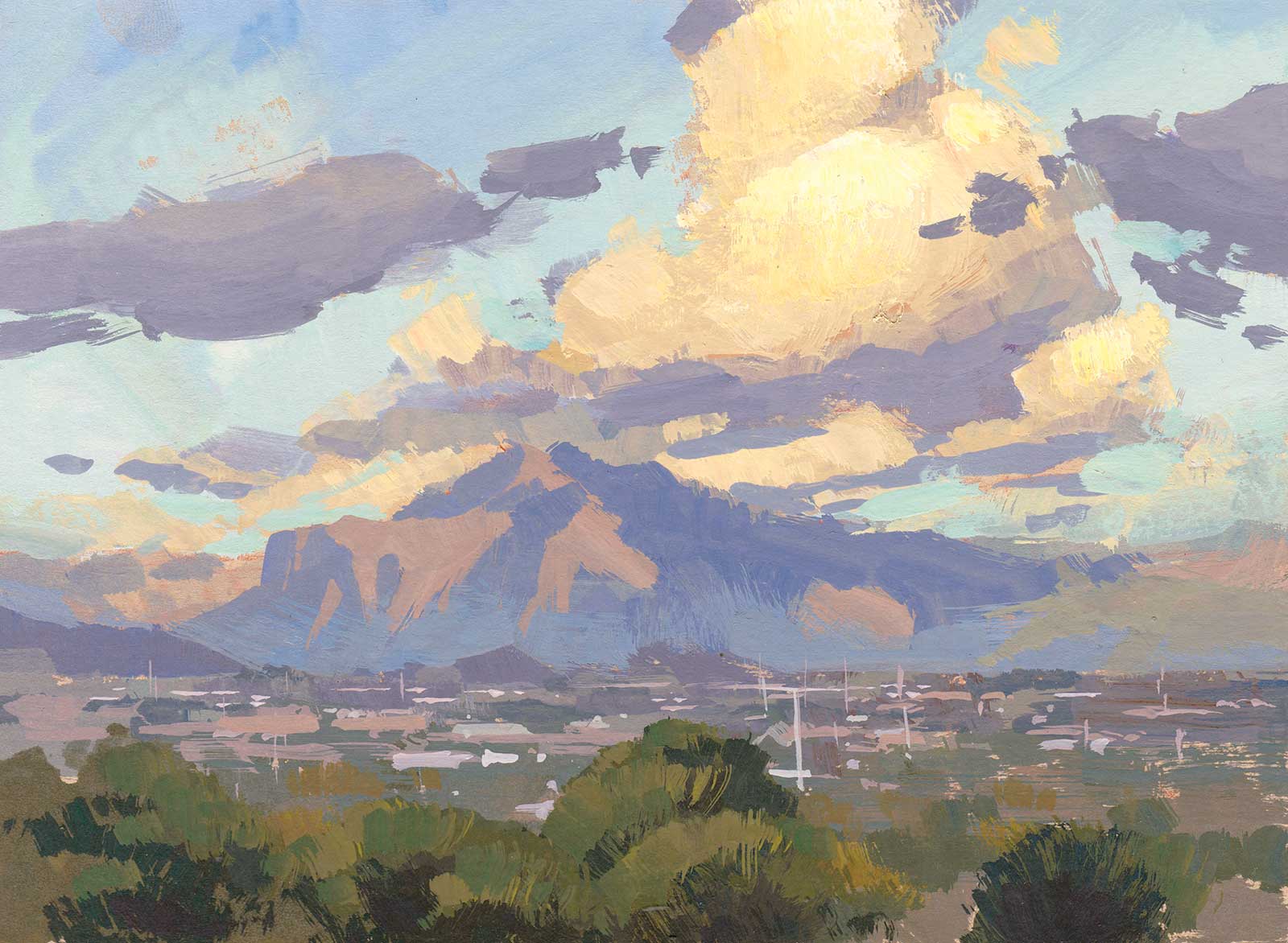
Judd Mercer, Phoenix Rising, gouache, 6 x 8" (15 x 20 cm)
SAS: As a nature enthusiast, how do you determine what landscape will become your next subject?
JM: For a long time, I didn’t think about it much. I just tried to go as many places as I could and interesting things would catch my eye. Variety was key. Beaches, mountains, deserts, snow, cities, you name it. My goal was just to get used to observing a variety of environments to study different lighting conditions, atmosphere (or lack thereof) and color palettes. Lately, though, I’ve been into more monolithic compositions with an idea around objects in nature as altars or symbols of something much bigger. It’s a theme that’s still forming, but imposing rock formations and twilight conditions keep drawing me back, at least for now.
SAS: Does your career in digital design have an impact on how you approach a subject and if so, how?
JM: Design is much more objective and involves problem solving, so I think it definitely plays a part in my painting. How shapes fit together, overall composition, storytelling, it’s all in there. I’m much less of an expressive painter, so with more finished work, I’m definitely trying to elicit a specific mood and feeling. In order to do that, all those fundamentals have to work together to pull that off. Design keeps me organized and focused (more or less).
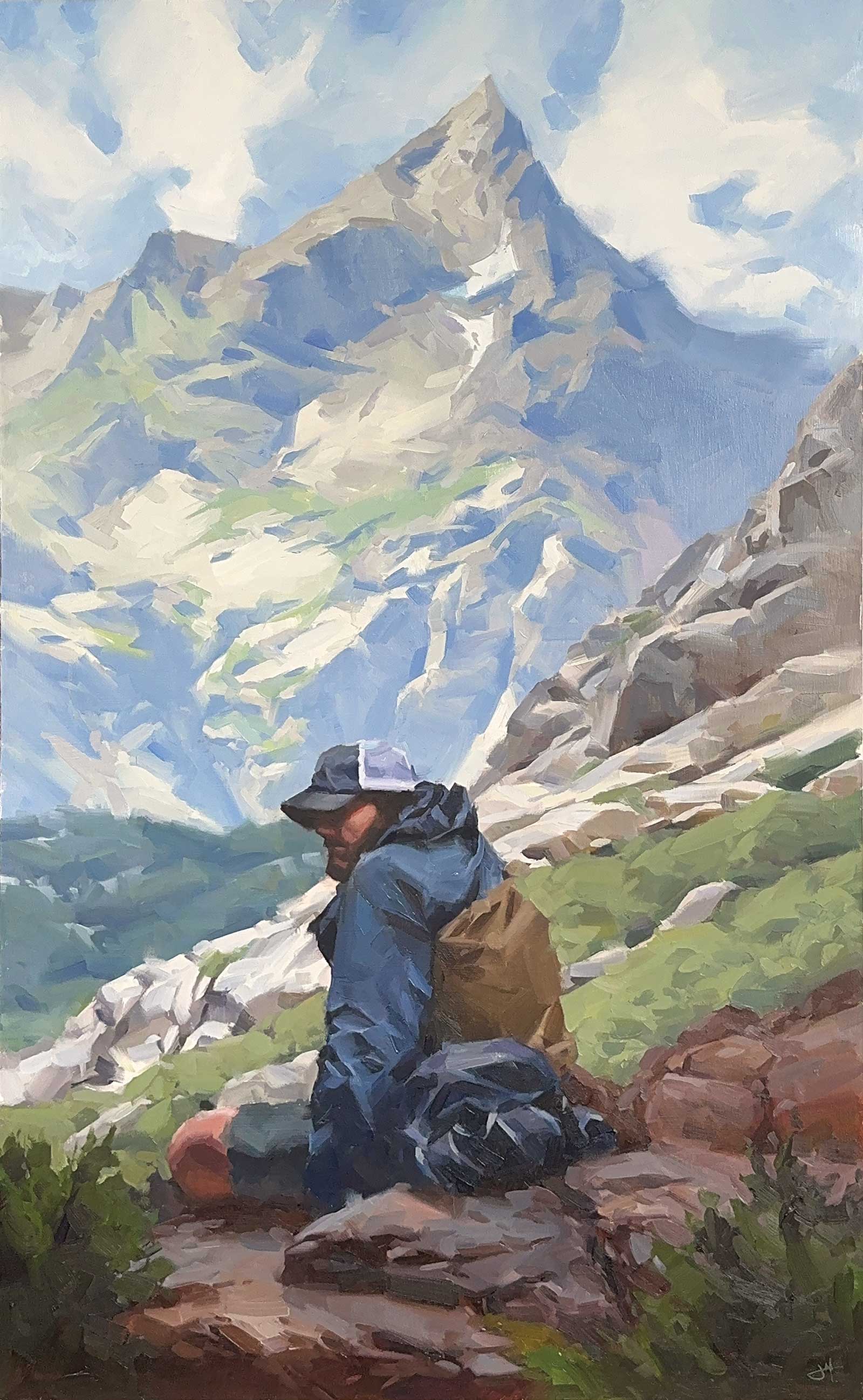
Judd Mercer, August Reverence, oil, 48 x 24" (121 x 60 cm)
SAS: Can you tell us about the moment you sold your first painting?
JM: It was actually a commission. My first “plein air trip” was really my honeymoon in Italy where my wife would enjoy a gelato and I would do some mediocre watercolor sketches. Everyone has to start somewhere! Someone I knew also had traveled there and asked for a commission based on a photo they took. That was it! I think friends/family is a pretty typical starting point.
SAS: You have two very exciting workshops coming up this year. Could you give us a little sneak peek at what they entail?
JM: The narrative one will revolve around reference and pushing, pulling, exaggerating and changing references for effect. From composition to the shapes and colors we use, we can make a lot of little tweaks that add up to make a dramatic impact. Also, we’ll touch on stories more generally, how humans tend to think in terms of story and hopefully help painters figure out theirs. My other workshop is an on location plein air workshop in Astoria, Oregon, which is a quaint little coastal town with some interesting places to see. Forests, coasts, boats, lighthouses, all the good seaside subjects you’d want. We’ll be trying to hit the high points each day with this workshop, solely focused on immersion in a new place and painting outside. It’s a little looser, more like a painting vacation.
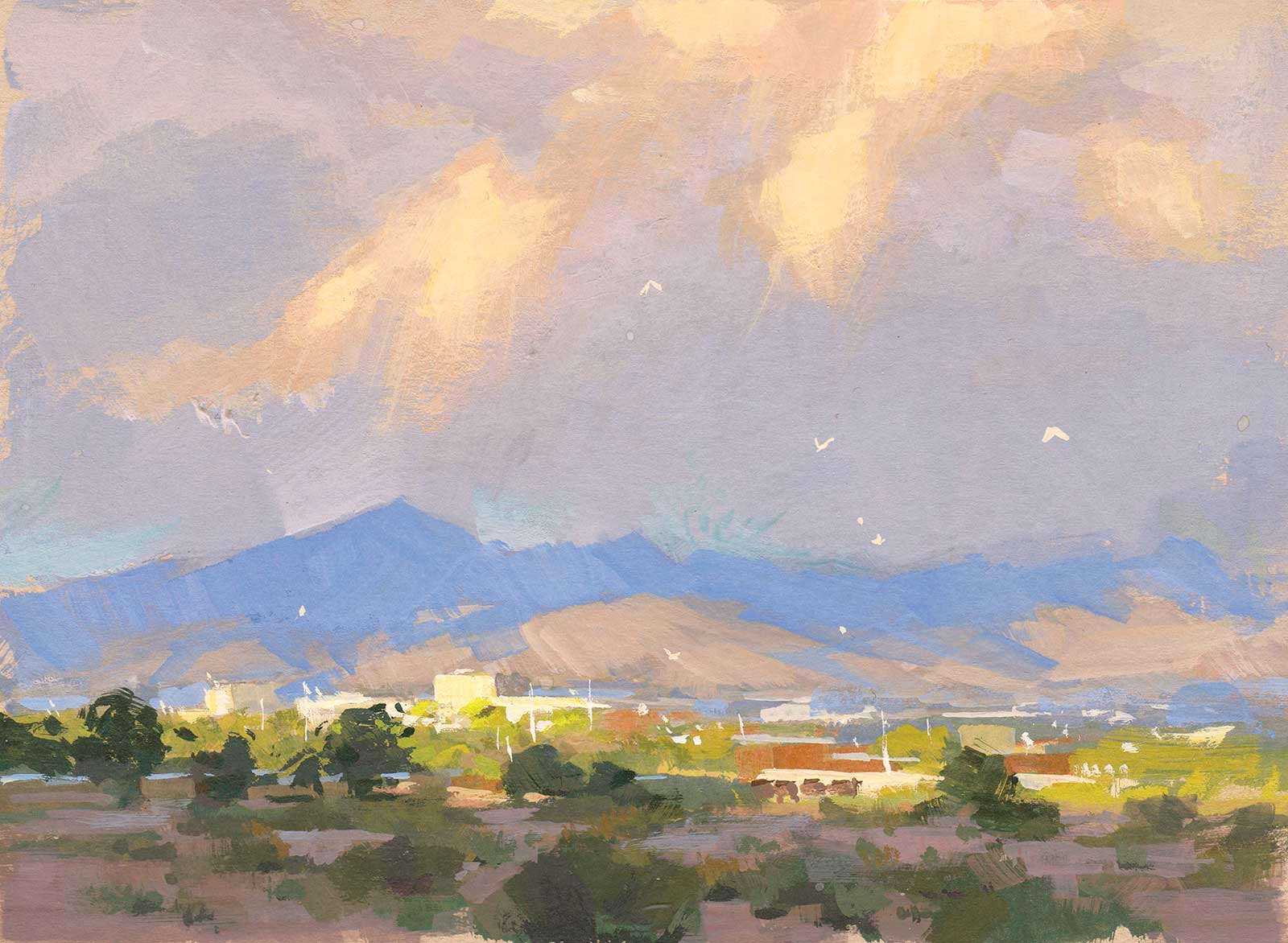
Judd Mercer, Sublimation Over Scottsdale, gouache, 6 x 8" (15 x 20 cm)
SAS: What’s the most important takeaway you hope students will gain when taking your workshops?
JM: For beginners, that the goal of learning to paint is much more important than knowing how to paint. That’s the only way to develop a sustainable practice. You have to find some way to enjoy the somewhat painful process because, spoiler alert, it never ends! But that’s the beauty of it.
SAS: What do you look forward to the most when teaching at Scottsdale Artists’ School?
JM: The campus itself is always lovely, as is the weather. Meeting and working with students from all over is really great and of course after class, having the opportunity to paint the desert golden hour and sunsets as only found in Arizona. —