Recently, the Portrait Society of America had the pleasure of announcing the winners of the fourth annual The Future Generation Competition. This competition was created to acknowledge the work of talented, emerging artists who are 18 to 25 years old. Early recognition in art competitions can have an incredible and lasting impact on a young artist’s career as it once did for John Singer Sargent who, at the age of 23, won Honorable Mention at the Paris Salon for a portrait of his teacher, Carolus-Duran. Since the competition’s creation four years ago, we have seen a remarkable caliber of work submitted by the best and brightest the field has to offer. As Dawn Whitelaw said, “Each year, the winners of the Future Generation Competition are stellar, and we continue to be encouraged by the many accomplished pieces of art that are entered.”
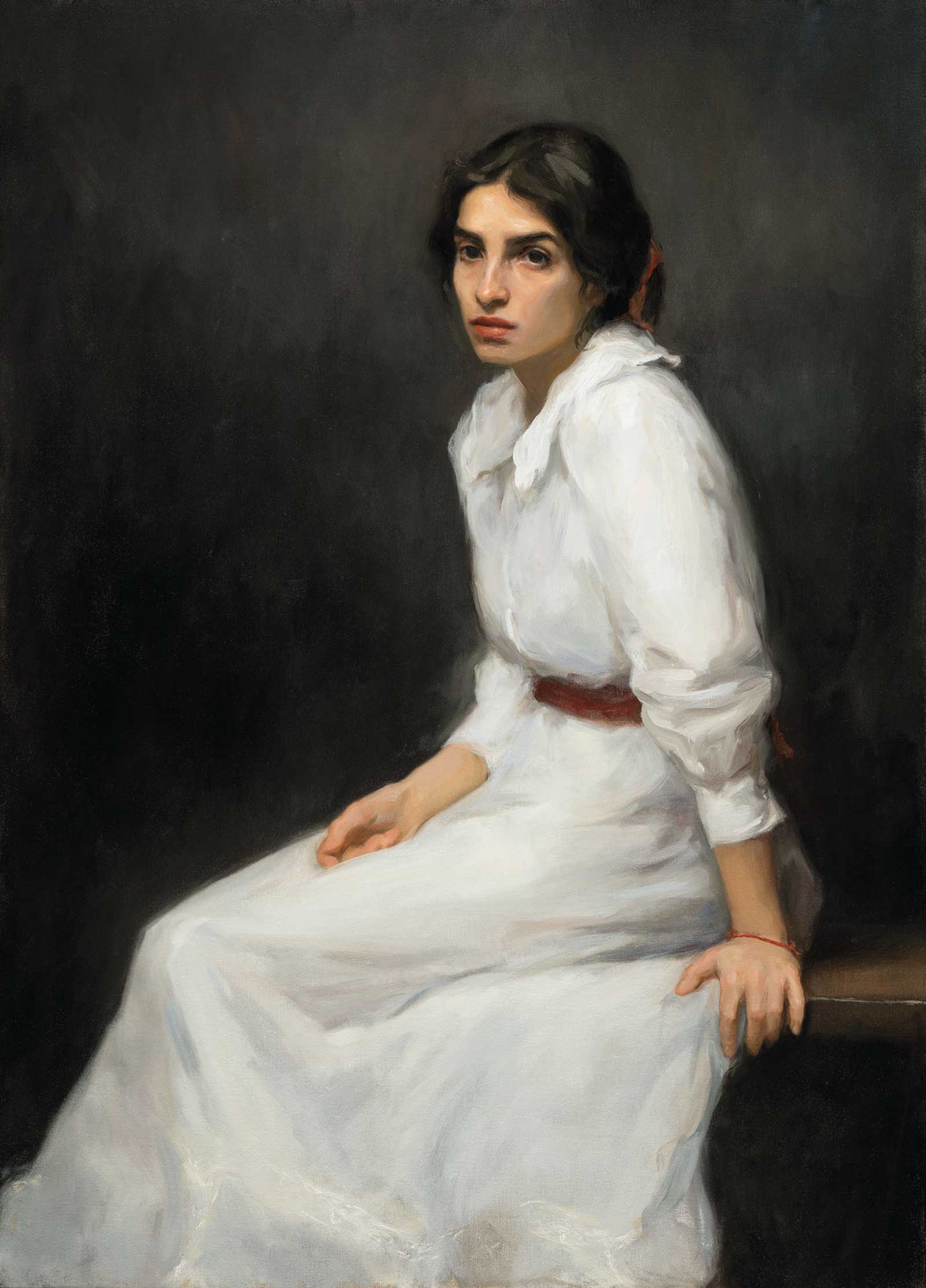
Elizabeth Ralph-Smith, Miriam in White, oil on linen, 47 x 33.4" (119 x 84 cm). First Place Winner.
This year, the selected panel of judges were Whitelaw, Louis Carr and Stephanie Paige Thomson. Together they reviewed over 200 entries from young artists around the world, including Canada, China, Germany, India, Israel, Italy, Kazakhstan, Mexico, New Zealand, Romania, Singapore, Spain, Sweden, the United Kingdom and the United States. The four top awards were selected and awarded 1st Place through 4th Place: Elizabeth Ralph-Smith, Stefano Curti, Ava Liberace and Phoebe-Louise Stewart Carter.
When asked her thoughts about the competition, Thomson said, “The growth and success of the future generation of artists is at the heart of this competition. It’s clear not only from the affordable entry price, online format and generous prizes, but also from the extreme level of care and attention each entry receives in the judging process. The rigorous deliberation and high standards of this competition make inclusion as a finalist carry great gravitas for the young artist.” Whitelaw was equally impressed, remarking, “I am astonished at the diversity and ambition of the collection of work presented each year.” I couldn’t agree more. I look forward to each year’s submissions and can’t wait to see what the future holds for these outstanding young artists.
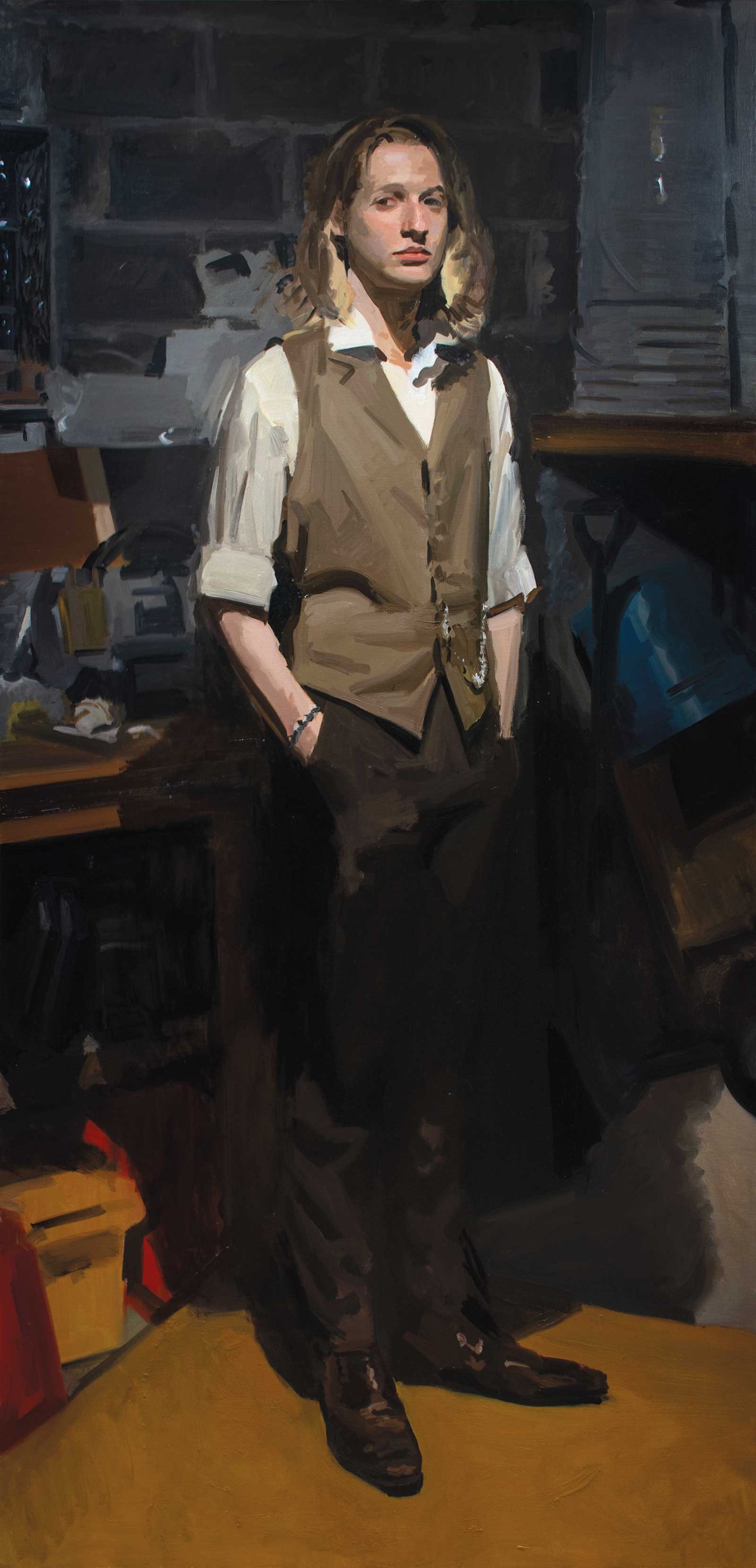
Stefano Curti, Lukas Sheehan, oil on linen, 78 x 42" (198 x 106 cm). Second Place Winner.
Carr had this to say about the competition: “By highlighting what’s fresh, interesting and unique in their work, while constructively addressing areas of improvement, we create an environment where artists believe in their worth and are driven to strive harder. This balance between constructive criticism and acknowledgment is precisely the ethos behind many art competitions. Wherein it provides a positive platform to declare they are on the right path.” He concluded, “This competition isn’t just another event; it’s designed to be a part of the ecosystem to nurture the next generation of artistic talent. And as we stand at the crossroads of tradition and modernity, it’s more crucial than ever to ensure that these platforms continue to thrive, illuminating the path for the luminaries of tomorrow.”
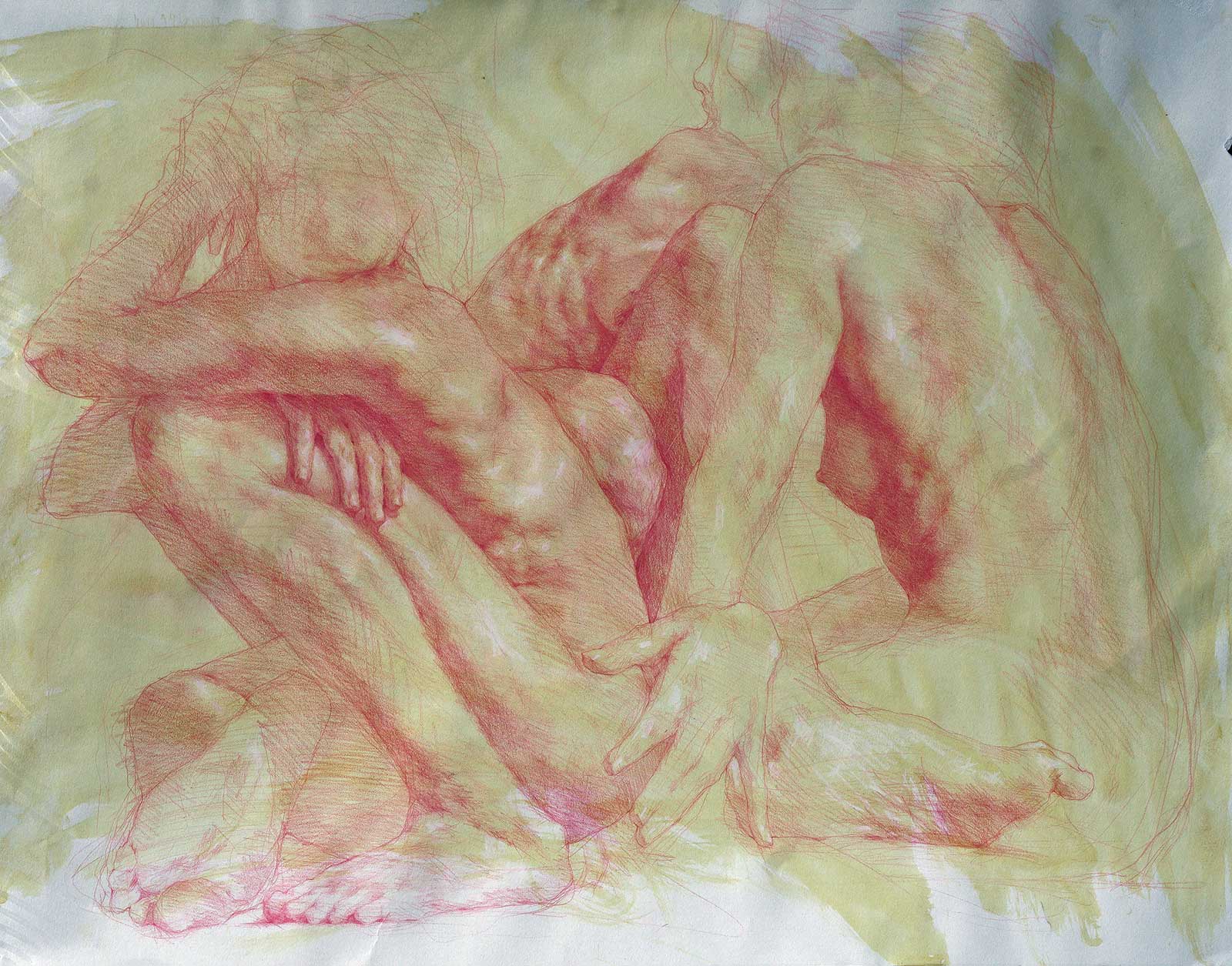
Ava Liberace, Coiled, pencil and chalk, 18 x 24" (45 x 60 cm). Third Place Winner.
Another competition held annually at the Portrait Society is “The International.” The 2024 competition will attract hundreds of artists from all over the world who are inspired and motivated to create and enter their strongest work possible. The top award, The Draper Grand Prize, is among the largest cash prizes presented to portrait/figure painters in the world at $50,000 with a total purse for winners of nearly $150,000. The finalists will be invited to display their original work in Atlanta, Georgia, on April 25 to 28, 2024, at the annual The Art of the Portrait conference for the final stage of in-person judging. Last year’s winner, Paul Newton from Australia, had this to say about his experience: “Winning the 2023 Draper Grand Prize in the Portrait Society of America’s International Portrait competition was an extraordinary honor and a dream come true. To be awarded this prize by a jury of my peers, all distinguished artists in their own right, makes this win even more meaningful to me. I am enormously grateful to the Portrait Society for the wonderful work they do fostering and promoting portraiture and figurative art.”
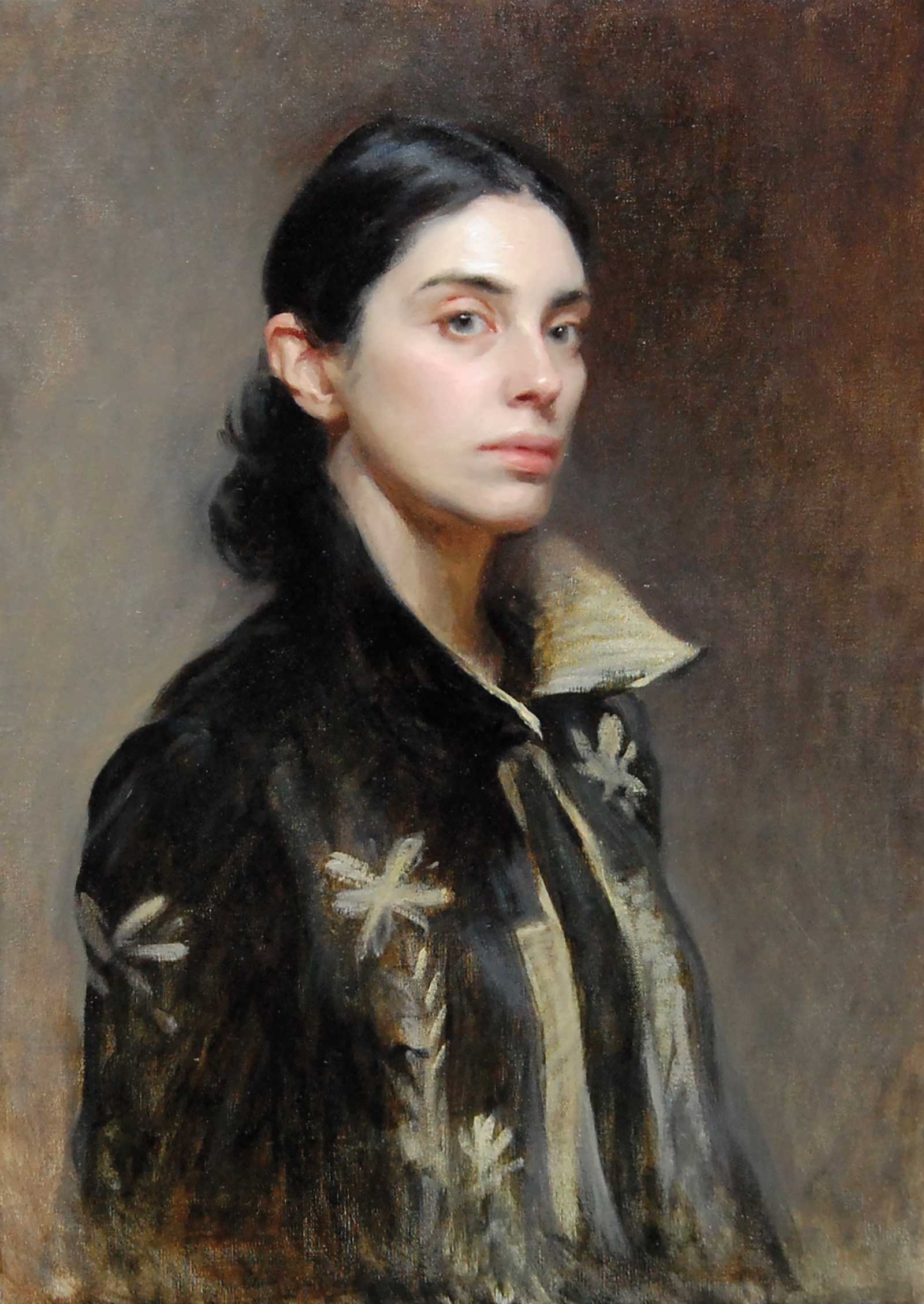
Phoebe-Louise Stewart Carter, Giulia, oil, 16 x 14" (40 x 35 cm). Fourth Place Winner.
Choosing to participate in a competition can offer a clear objective to strive for and motivate individuals to create their highest-quality work. But it takes courage to put your work before a panel of judges who are tasked with making selections based on several criteria. Ed Jonas, past chair of the Society, outlined many of the questions judges ask themselves when reviewing work. He believed there were specific standards that should be considered including: originality and uniqueness in concept and design, technical proficiency within the potential of the medium, aesthetic sophistication and fundamental skill development. The judging should be conducted without subjective or stylistic prejudice under the mantle of providing each work a fair and honest assessment. To further refine this list, the judge must ask:
• What is the artist’s message?
• How successfully does it communicate?
• Does the work follow a high aesthetic?
• How successful is the work within its chosen stylistic direction?
• What is the skill level demonstrated within the work’s execution?
• Does the work communicate well on a visual level?
• Does the work fit within or comment upon the present cultural times?
• How “creative” is the work or could it be considered imitative?
A challenging task indeed, yet another crucial factor that a judge must consider, pertains to the artistic content of the work, and this is the most nebulous subject to define. What kinds of emotions are appropriate for art? In an 1896 essay, What is Art, Leo Tolstoy outlined what he held to be authentic emotions for artistic expression. He felt that sarcasm, irony, cynicism, melodrama and sentimentality were not authentic emotions as they often come across as phony and contrived. He also stated that purely technical or intellectual works didn’t fulfill the universal strength that is required to contribute to the culture.
I encourage you to create your best work, and I look forward to seeing your entries in the upcoming competitions! Good luck!
Michael Shane Neal
Chairman