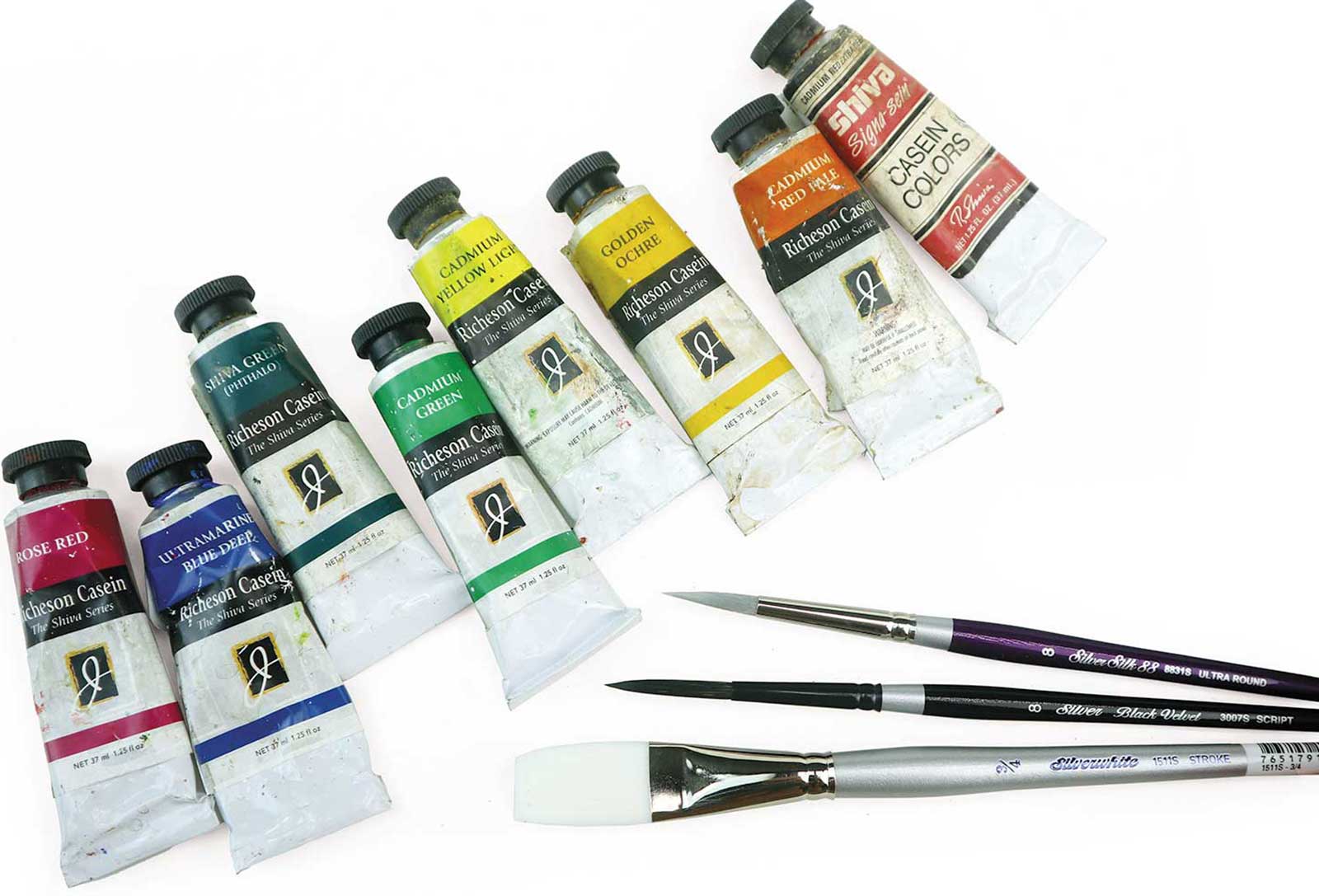
Casein’s Advantages
Casein offers many advantages for traditional oil painters looking for a water-based alternative, because it has none of the problems with toxic solvents, messy clean-up, slow drying times and transportation issues.
Compared to gouache, it dries with a closed surface and resists reactivation. Yet, the binding force is weaker than the binder in acrylic paint, making it less sticky and easier on brushes. It dries to a matte finish, which makes it attractive in saturated tints. But to restore luster, dark paintings can be varnished and framed without glass.
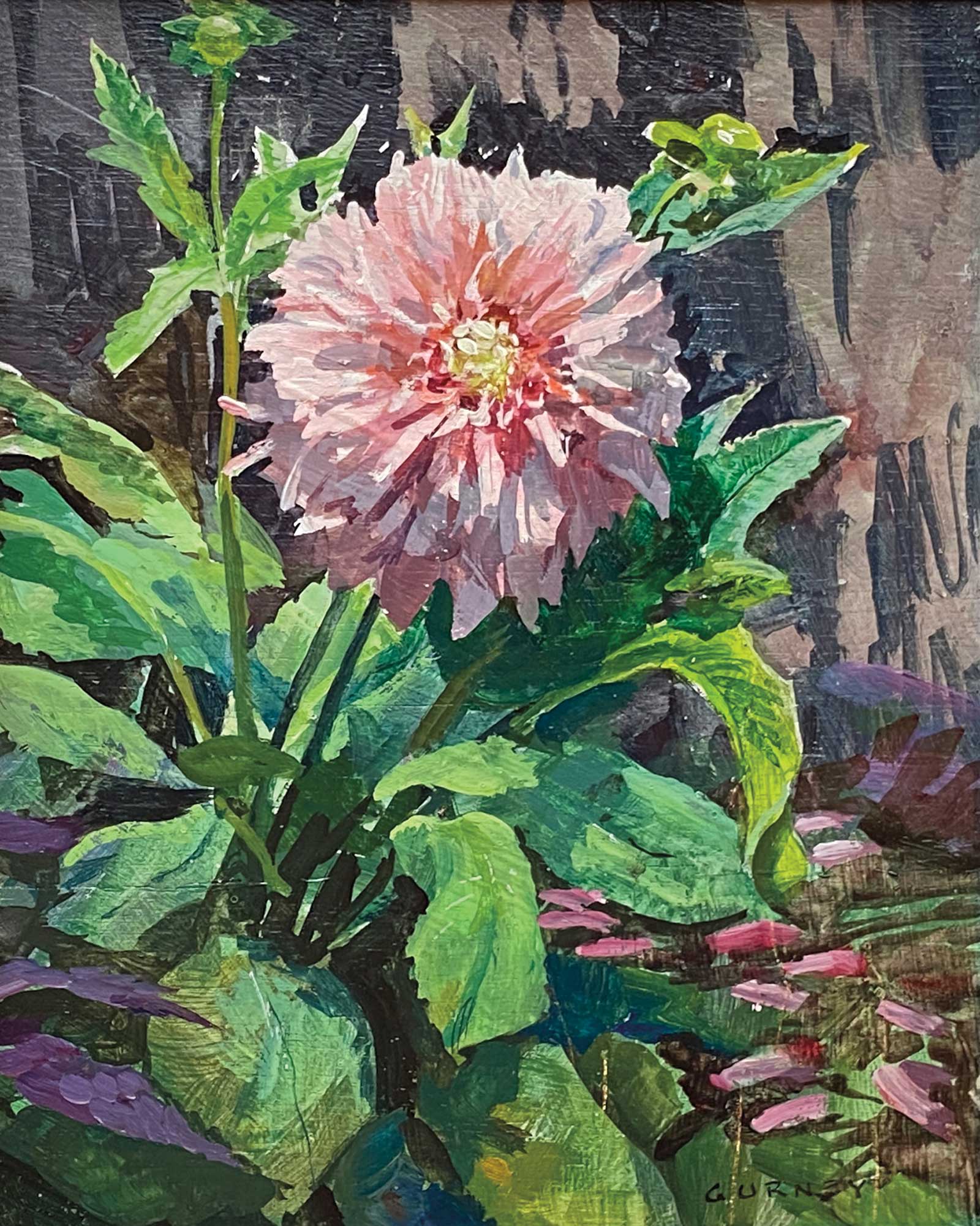
Dahlia, casein on panel, 10 x 8" (25 x 20 cm)
The History of Casein
Casein is the oldest known type of paint, much older than oils or watercolor. The earliest archaeological evidence of casein paint dates back to prehistoric times. Milk proteins mixed with powdered ochre have been discovered on tools dating to 49,000 years ago.
Casein was commonly used during the age of pharaohs in Egypt and has been identified on ancient Chinese artifacts. In 1933 Ramon Shiva created a tube form of casein paint for artists. Its popularity declined after artificial polymers such as acrylics were developed. Luckily the paint is still being produced in about 40 colors by the company that acquired Shiva, and somehow they’re able to produce a paint that’s less expensive by weight than either gouache or oil.
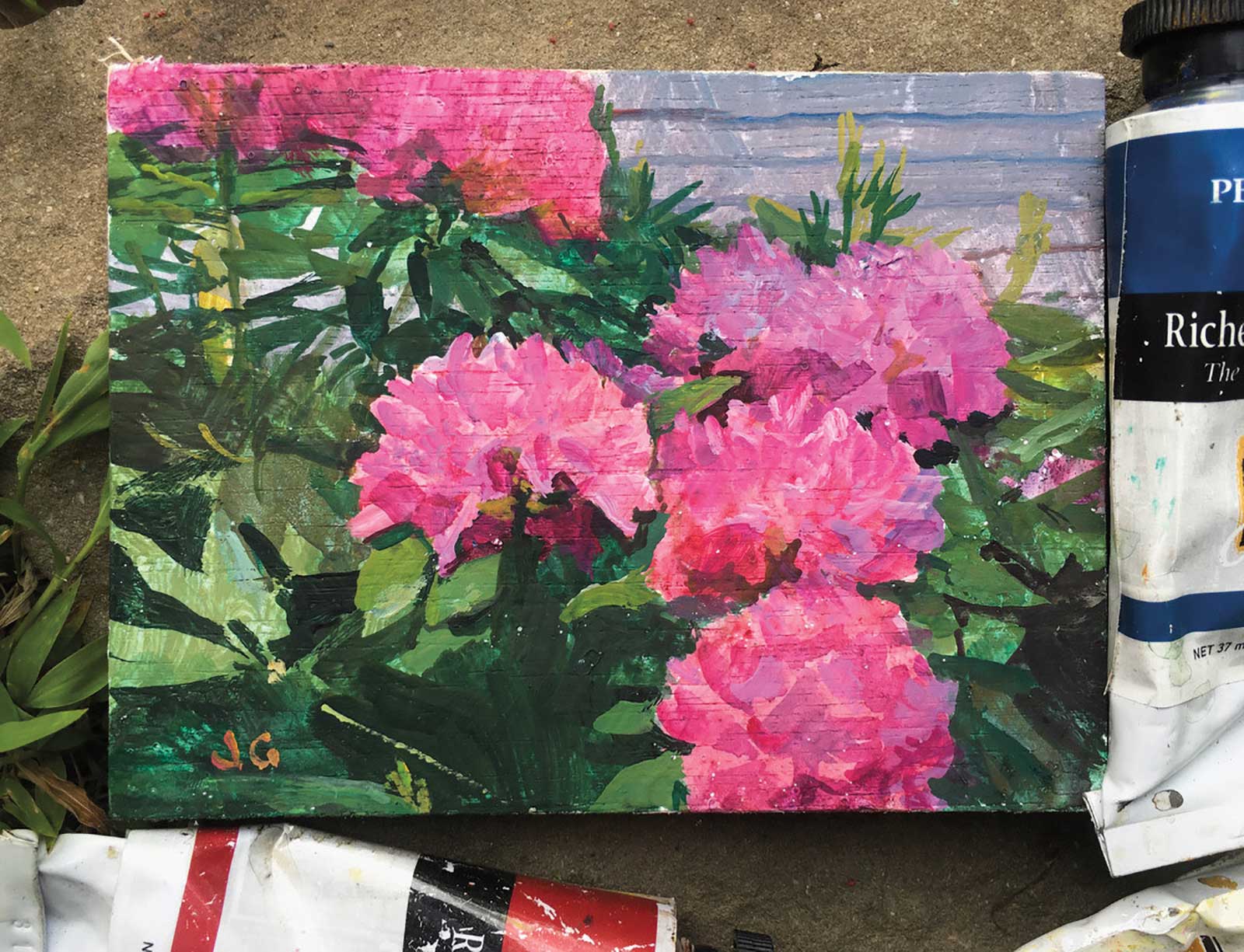
Rhododendrons, casein on panel, 3½ x 5" (8 x 12 cm)
Working Properties
Illustrators and gallery painters have used casein for field studies, preliminary sketches, underpainting and finished art, and one reason they like it is because of the unusual binder.
Every paint has a glue-like binder, and that binder is what defines the working properties of the paint. In the case of casein, the binder is a water-soluble milk protein. The preservatives that keep the milk from spoiling give it a distinctive aroma.
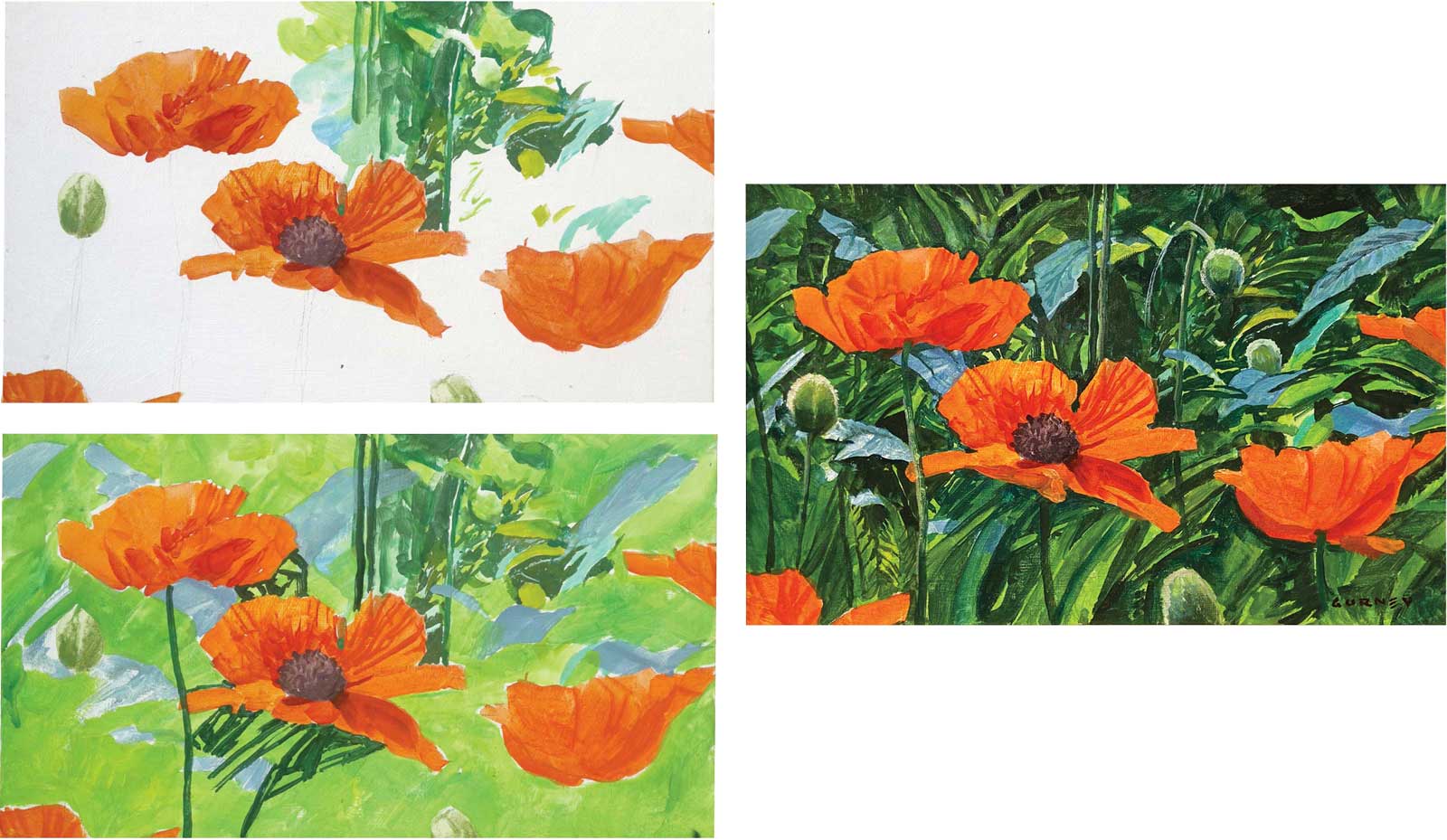
Poppies, casein on canvas board, 9 x 18" (22 x 45 cm)
Its working properties resemble gouache, cel vinyl and certain kinds of matte acrylic. It can be used transparently, depending on the pigment and the amount of white in the mixture. It can also deliver considerable opacity. In my experience, casein lends itself to bold, painterly handling and “finding the image in the paint.”
Depending on your preference, you can use it in thin layers on a flexible paper or gessoed canvas, or thickly on a rigid board or panel. Because of that weaker binding strength, a thick, textural impasto is prone to cracking or crumbling unless it’s on a rigid substrate. If you prefer to work thickly, you might even want to pre-texture the surface with a more robust acrylic based modeling paste, or reinforce the casein impastos by mixing in some acrylic medium.
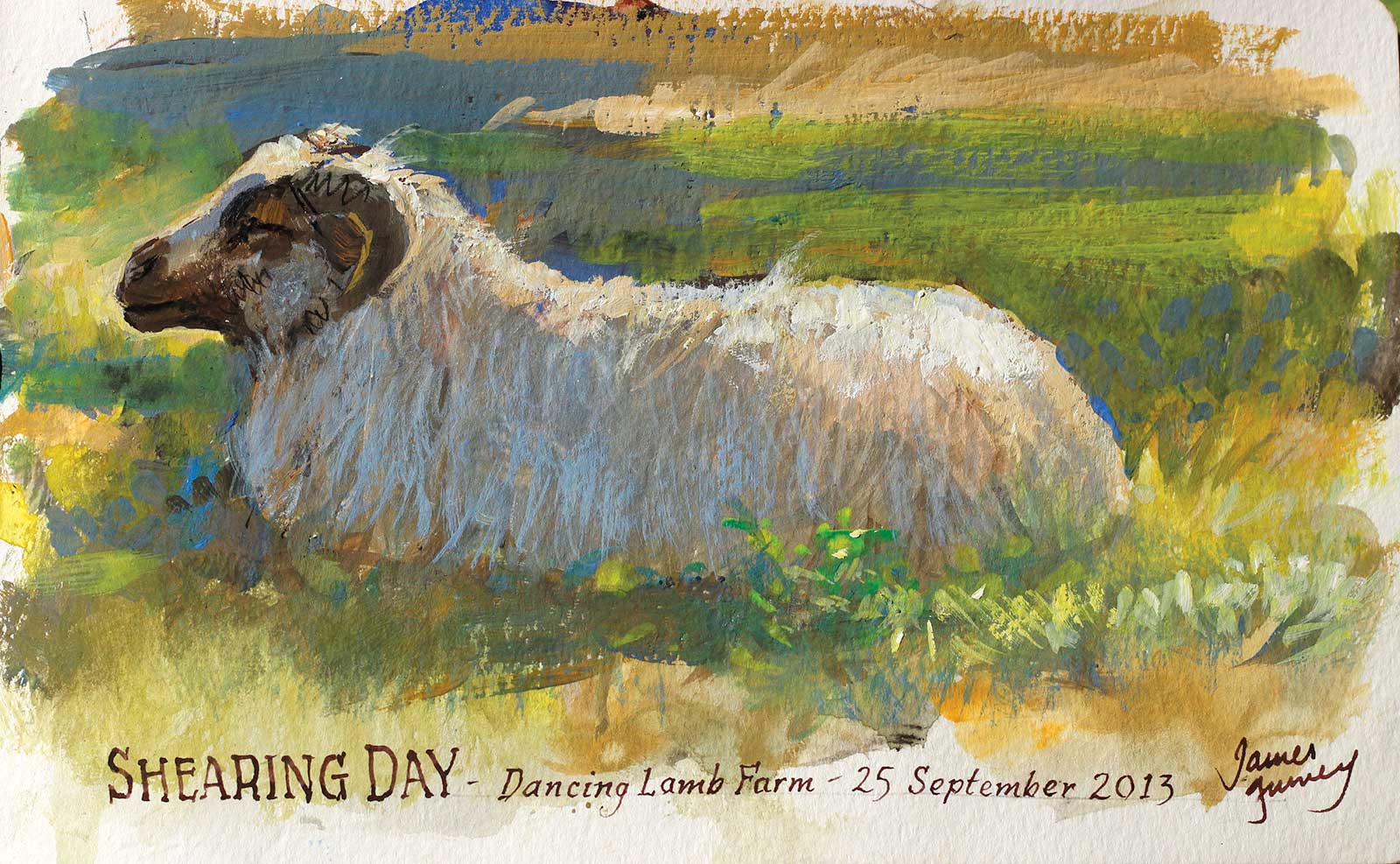
Shearing Day, casein on watercolor paper, 5 x 8" (12 x 20 cm)
Drying and Curing Time
Drying time is similar to most other kinds of water media. On a fair weather day an average paint stroke starts to dry to the touch in anywhere from a few minutes to ten minutes or so. While it’s still wet you can blend all you want. In practice, the time it takes for a freshly painted area to dry to the touch depends on many factors, including temperature, humidity, wind, paint thickness, absorbency of the ground and even the type of pigment. Cadmiums dry more slowly than earth colors, for example.
The variability of each pigment’s drying time is especially noticeable on the paint that’s squeezed out on the palette. You can extend the open time of the paint on the palette by squeezing out the tubes on damp paper towels. A light spritz of water from a spray bottle on the palette or the painting can also keep paint alive a little longer.
Paint that feels dry from evaporation isn’t fully cured yet. The milk protein molecules continue bonding, which can take anywhere from overnight to a couple weeks. Curing time can be accelerated by putting the painting in a sunny, dry and warm (but not too hot) location.
When I’m painting in casein, I most often reach for the inexpensive synthetic brushes: flats, rounds and filberts. Occasionally I use the kind of hog bristle brush that I’d normally use for oil. But I avoid sable and Kolinsky fibers, which are damaged over time by the paint.
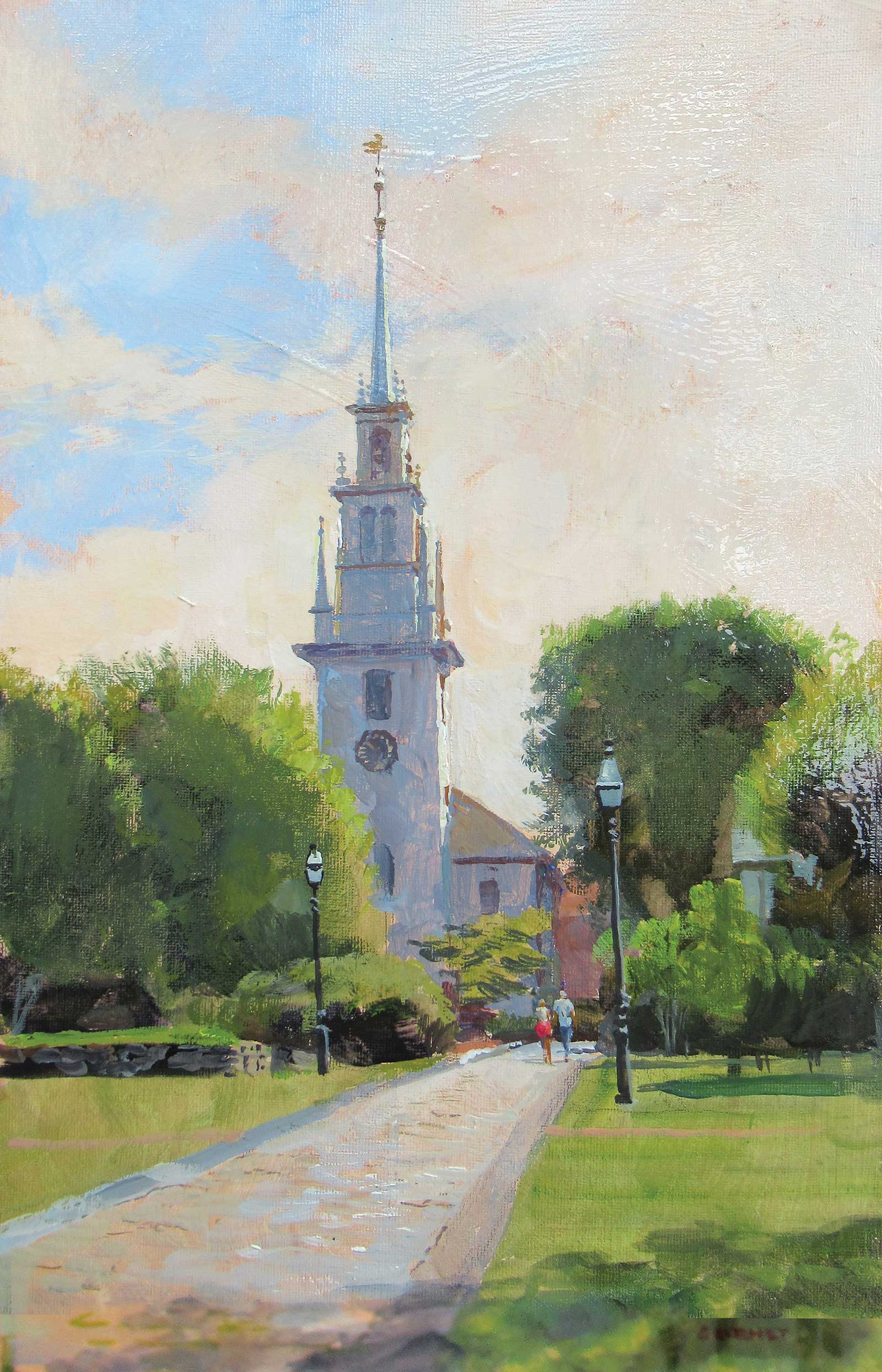
Trinity Church, casein on canvas board, 16 x 10" (40 x 25 cm)
Varnishing and Framing
After the paint has dried you can decide whether or not you want to varnish it. Like gouache, casein is meant to dry matte, and that can look good in a light, high-key painting. I almost never varnish sketchbook paintings.
Should casein paintings be varnished? The manufacturers suggest buffing the surface of a dry painting using an old T-shirt to add some semi-gloss luster to the surface.
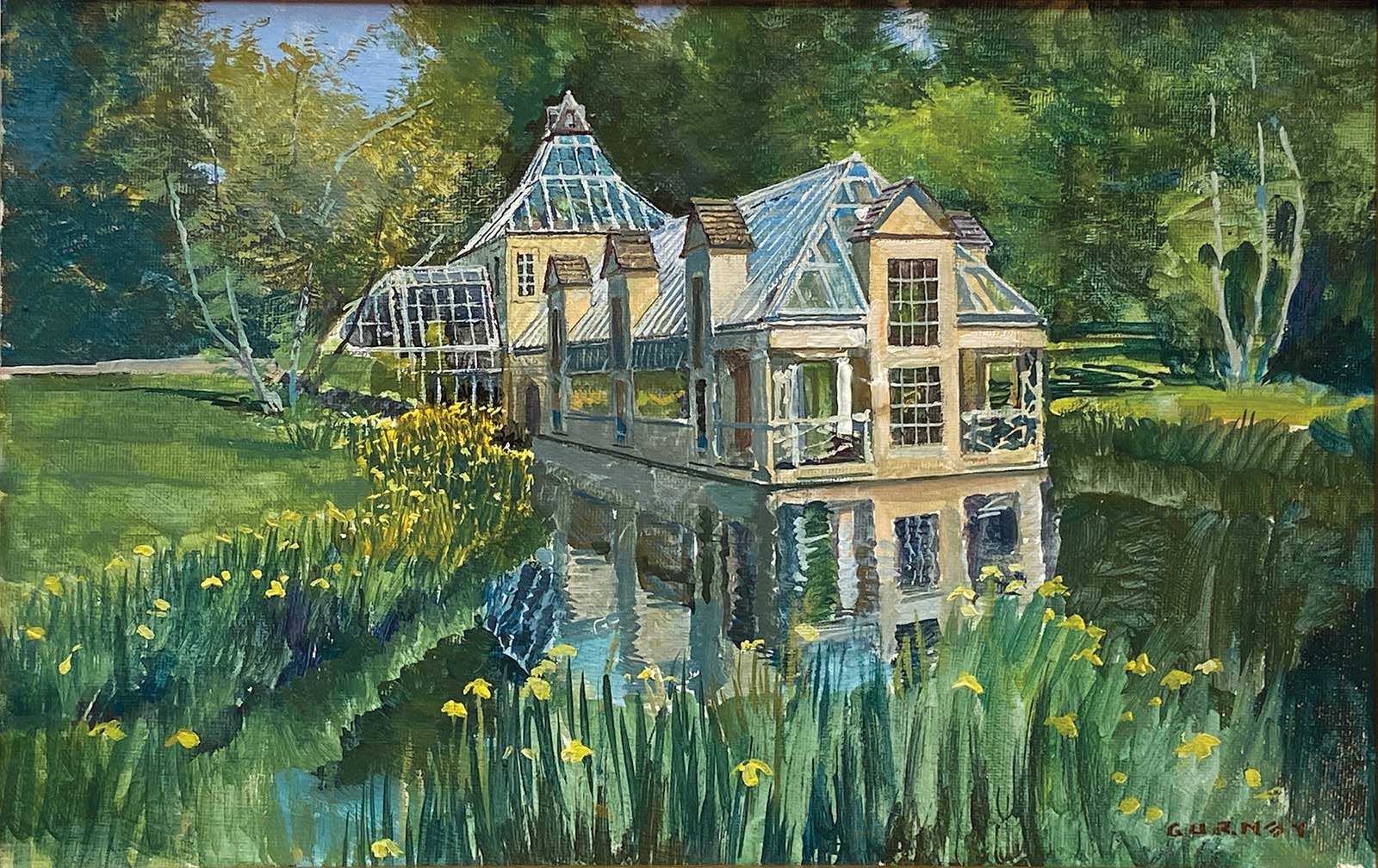
Conservatory, casein on canvas board, 9 x 18" (22 x 45 cm)
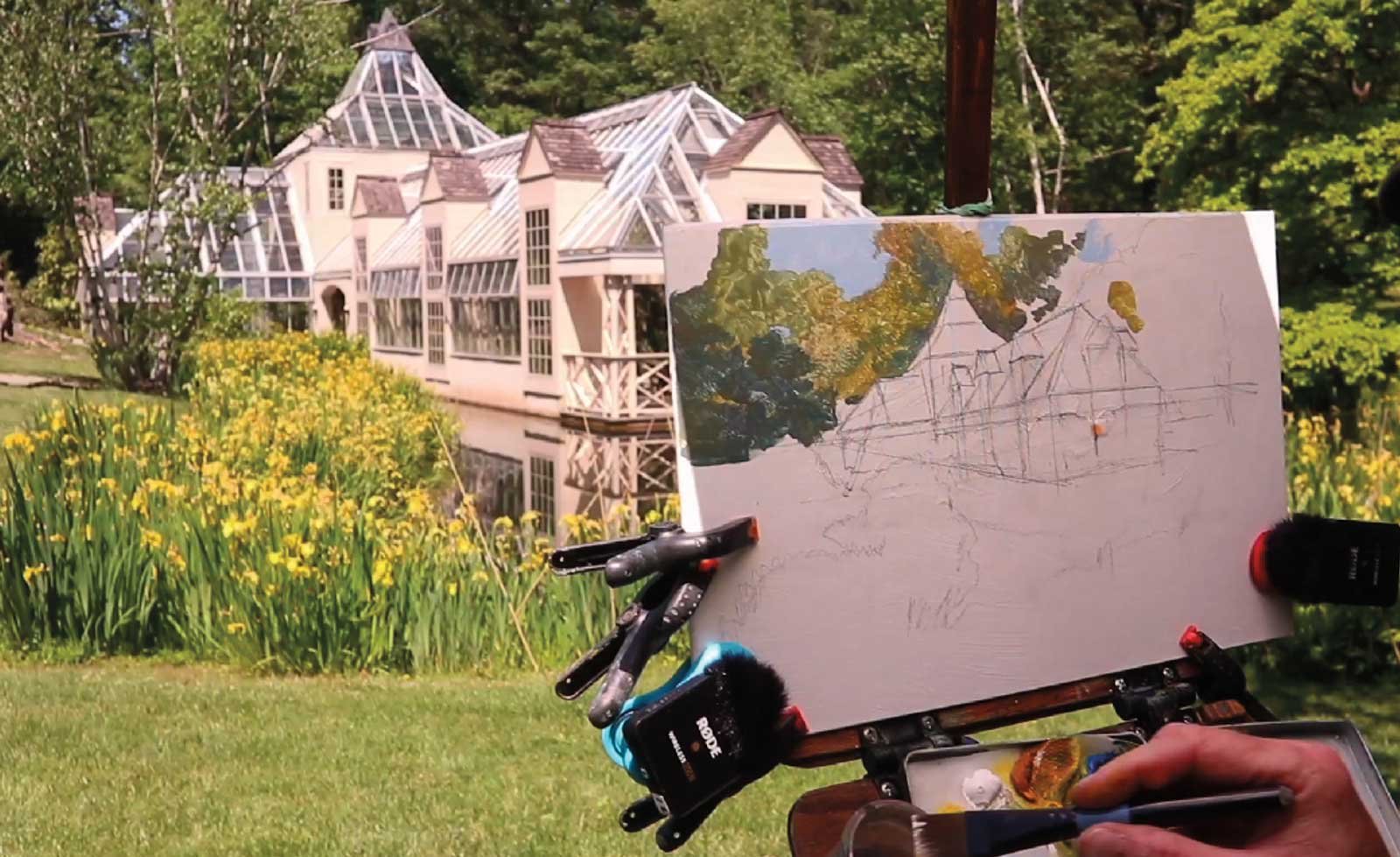
Conservatory, casein on canvas board, 9 x 18" (22 x 45 cm)
But I think some paintings call for a glossier finish. Varnish deepens the darks in an overall dark painting and can protect a painting for framing without glass. Dark-keyed paintings usually look better varnished, and sometimes varnish is needed to unify the surface sheen of the painting. Casein can be varnished with the kind of finish varnish intended for acrylic or oil painting. The advantage of casein compared to oil for plein air painters is that you can varnish it the same day, rather than waiting weeks or months for the paint to dry.
For the varnish to cover with just one or two coats, the substrate beneath the paint needs to be relatively non-absorbent, such as a hardwood panel or gesso-primed canvas panels. If the painting consists of thinly painted passages on watercolor paper, the surface will absorb the varnish, and it will take a lot of coats before you start to get a glossy surface. After it’s varnished, a casein painting can be framed without glass just like an oil.
If you want to ease into a new medium, I’d recommend just buying a tube of black and one of white. If you can’t find casein in your region or don’t want to invest in a new set of paint, I’d recommend acrylic gouache as a substitute. Like casein, it has enough emulsion strength to keep it from reactivating when it dries. —
About the Artist
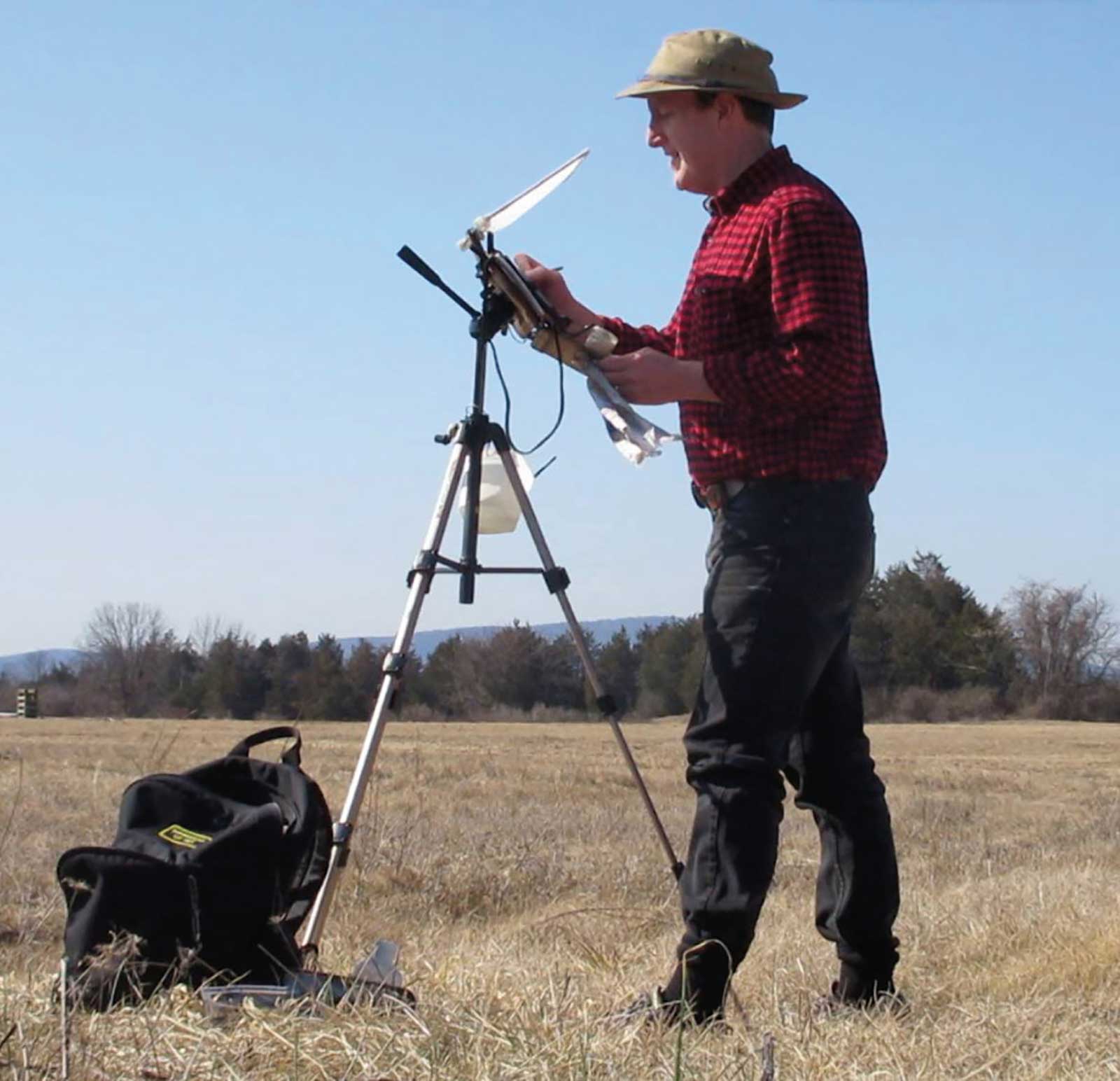 James Gurney
James Gurney is the author of two Amazon-bestselling books: Color and Light and Imaginative Realism, which are also available in Spanish, Japanese, Korean and Chinese. His original Dinotopia artwork has been featured in over 30 one-man museum exhibitions.
Contact at
www.jamesgurney.com