I enjoy the calm that painting animals gives me. It’s something that comforts me in such a way that I am able to escape from the real world and stay alone, with my watercolor, in perfect connection. Playing with color with all its nuances to get the lights, shadows and volume is something that overtakes me with each painting. My color palette is very wide, but I always use warm colors and their complementaries. Color exerts an influence on our emotions and allows us to express moods, and as an immediate consequence, provokes positive reactions in our brain when we perceive them.
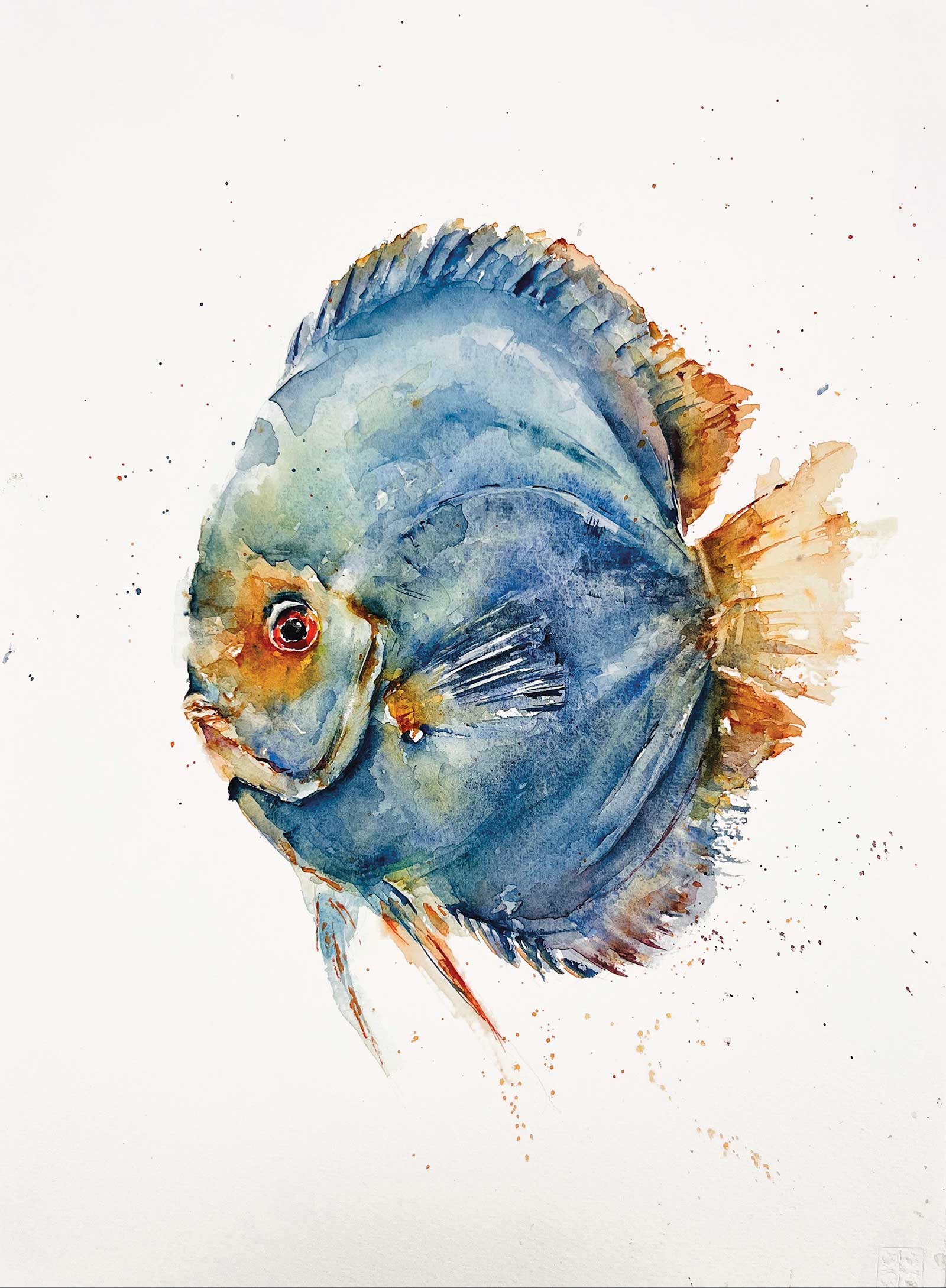
Discus fish, watercolor on cold-pressed cotton paper, 15 x 11" (38 x 28 cm) The shape and line define this fish, while the range of blues creates volume, highlighting its shadows and lights.
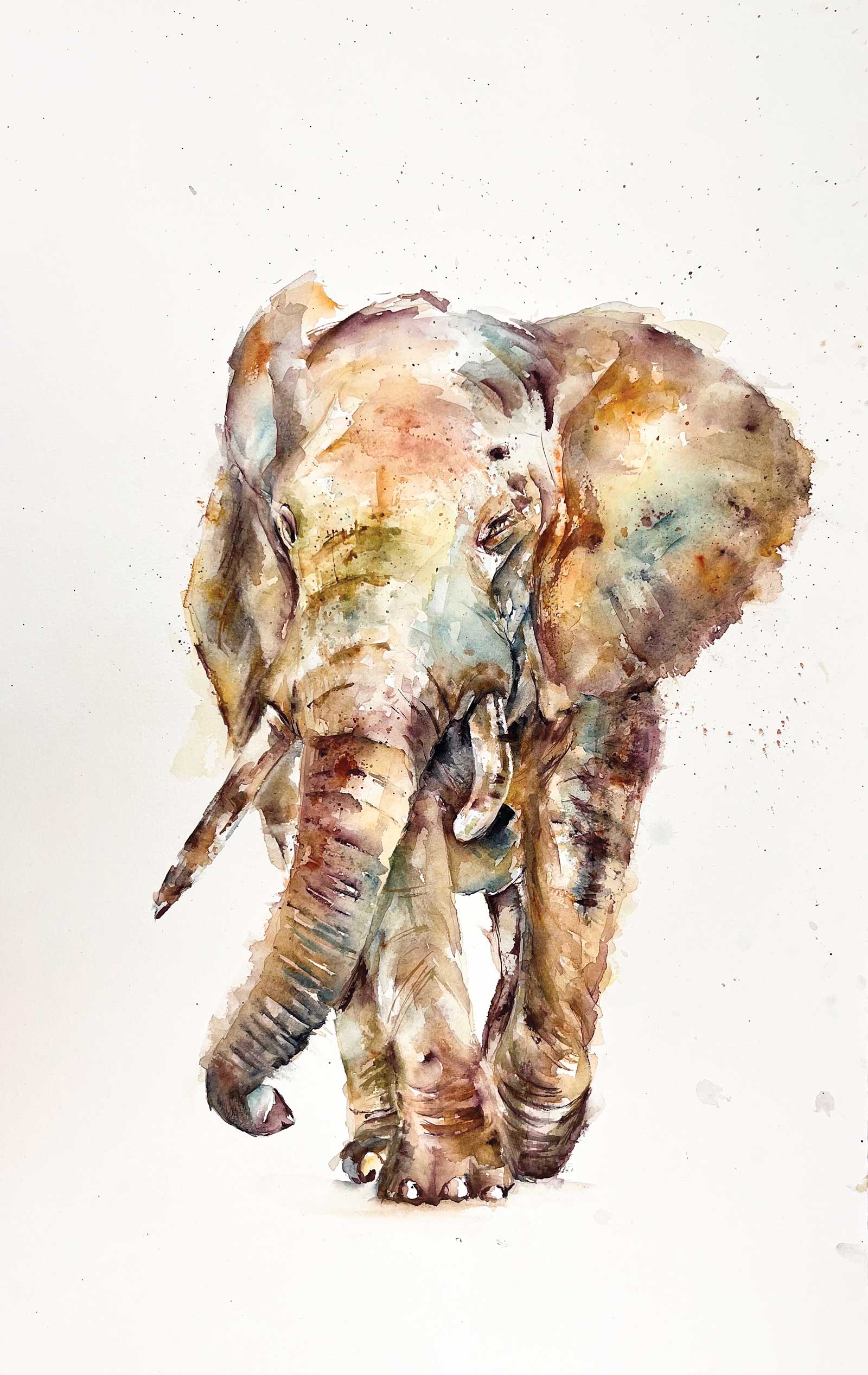
Elephant, watercolor on cold-pressed cotton paper, 22 x 15" (56 x 38 cm) Through color, the elephant gains movement. It is a constant play of colors throughout his body.
My style is quite loose, so I focus more on masses of color than on details such as feathers, hairs or scales. Although my style is fairly personal, people usually say that my watercolors are very realistic. Paying close attention to proper anatomy and form is always important. I never forget the shapes, lines and overall harmony of the animal I am portraying. And in the end, everything must reflect a perfect balance.
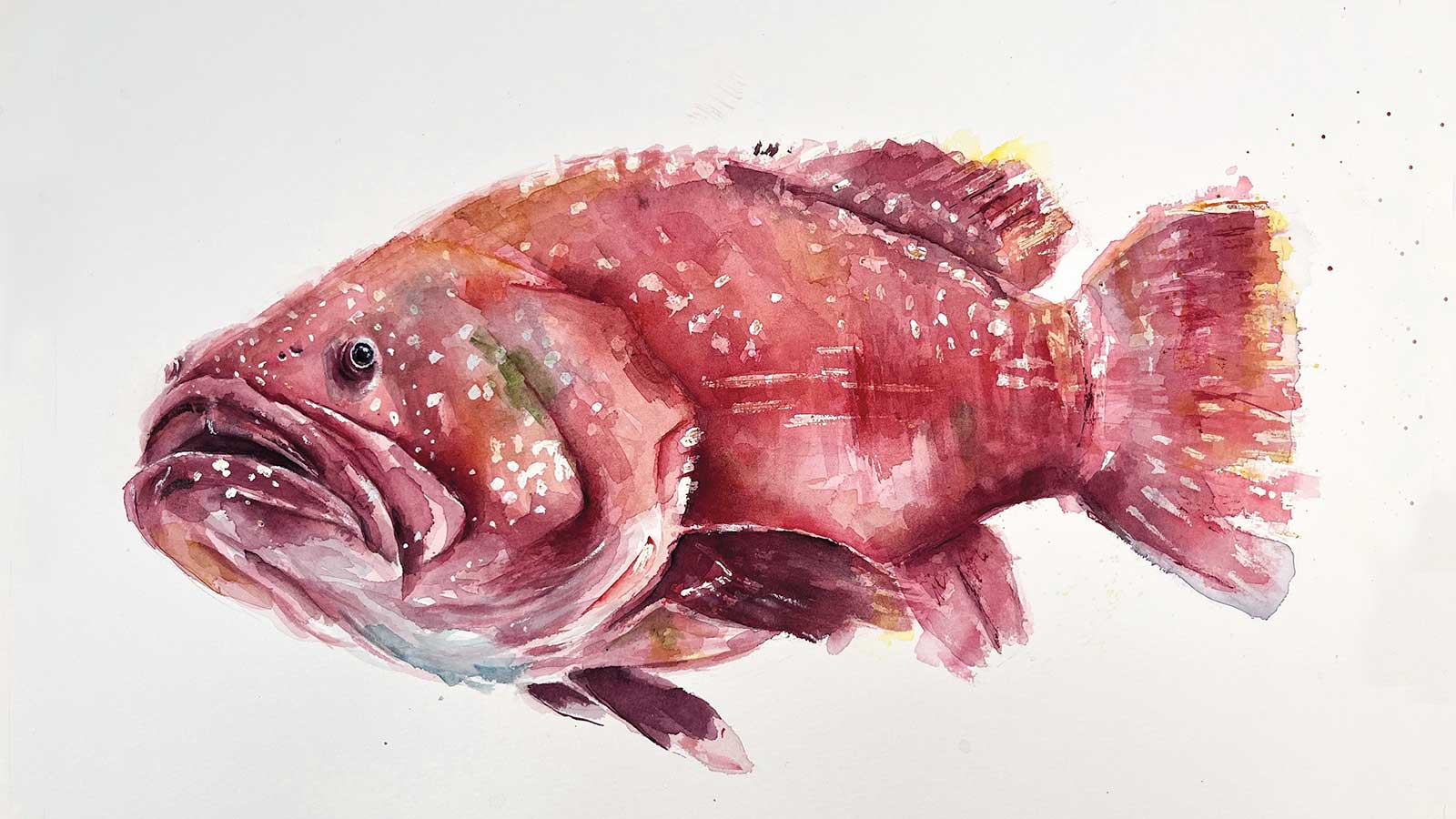
Grouper, watercolor on cold-pressed cotton paper, 15 x 19" (38 x 48 cm) Body, shape and size make the reds come alive in this fish.
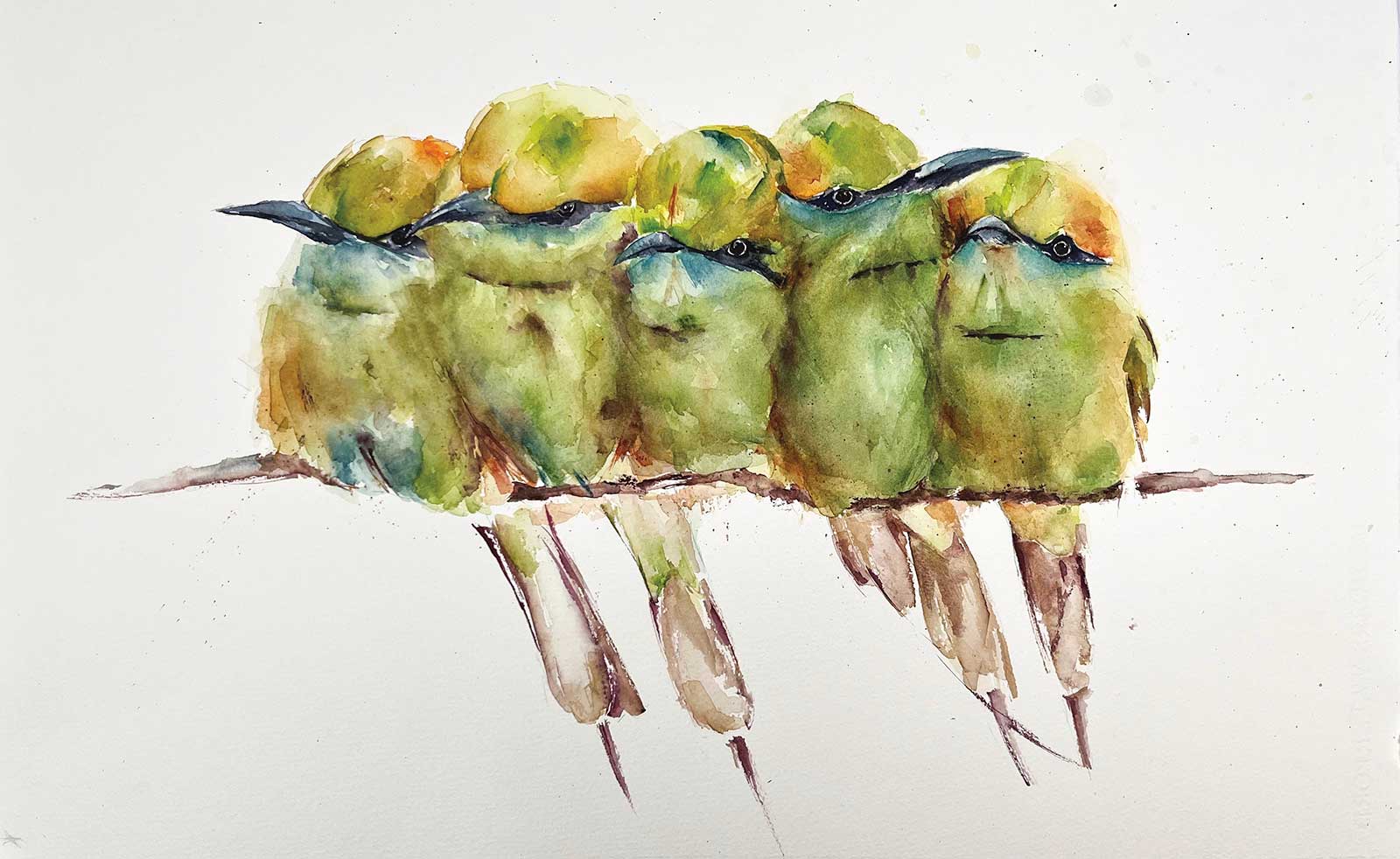
Bee Eaters, watercolor on cold-pressed cotton paper, 15 x 22" (38 x 56 cm) The mixture of greens melts the bodies of these birds, making a perfect assembly.
My Art in the Making Green Parrot
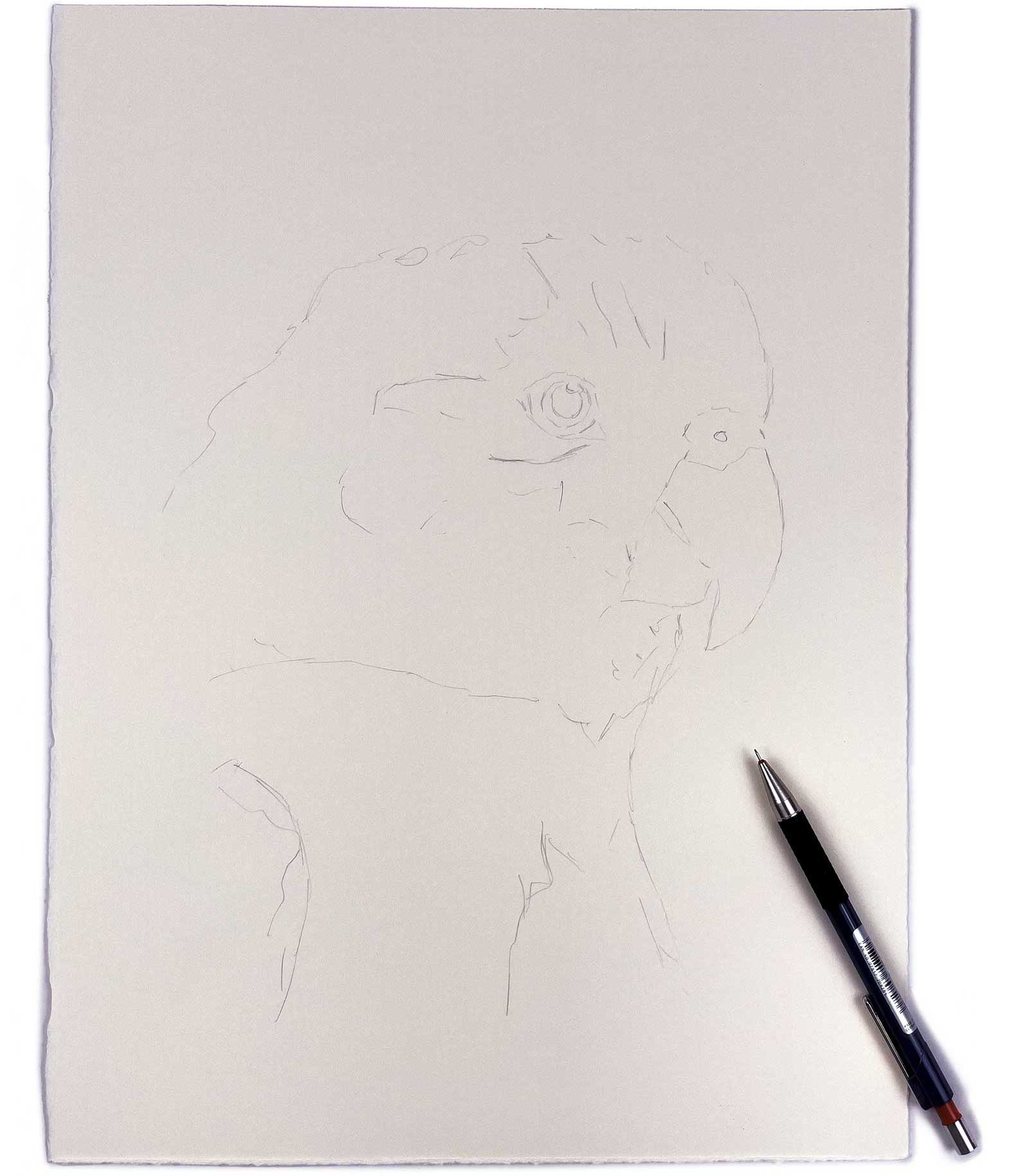 Stage 1
Stage 1 Pencil Drawing
I start with a pencil drawing marking the main features of the animal—the eye, the beak and broadly the size, although they are always indicative.
WHAT THE ARTIST USED
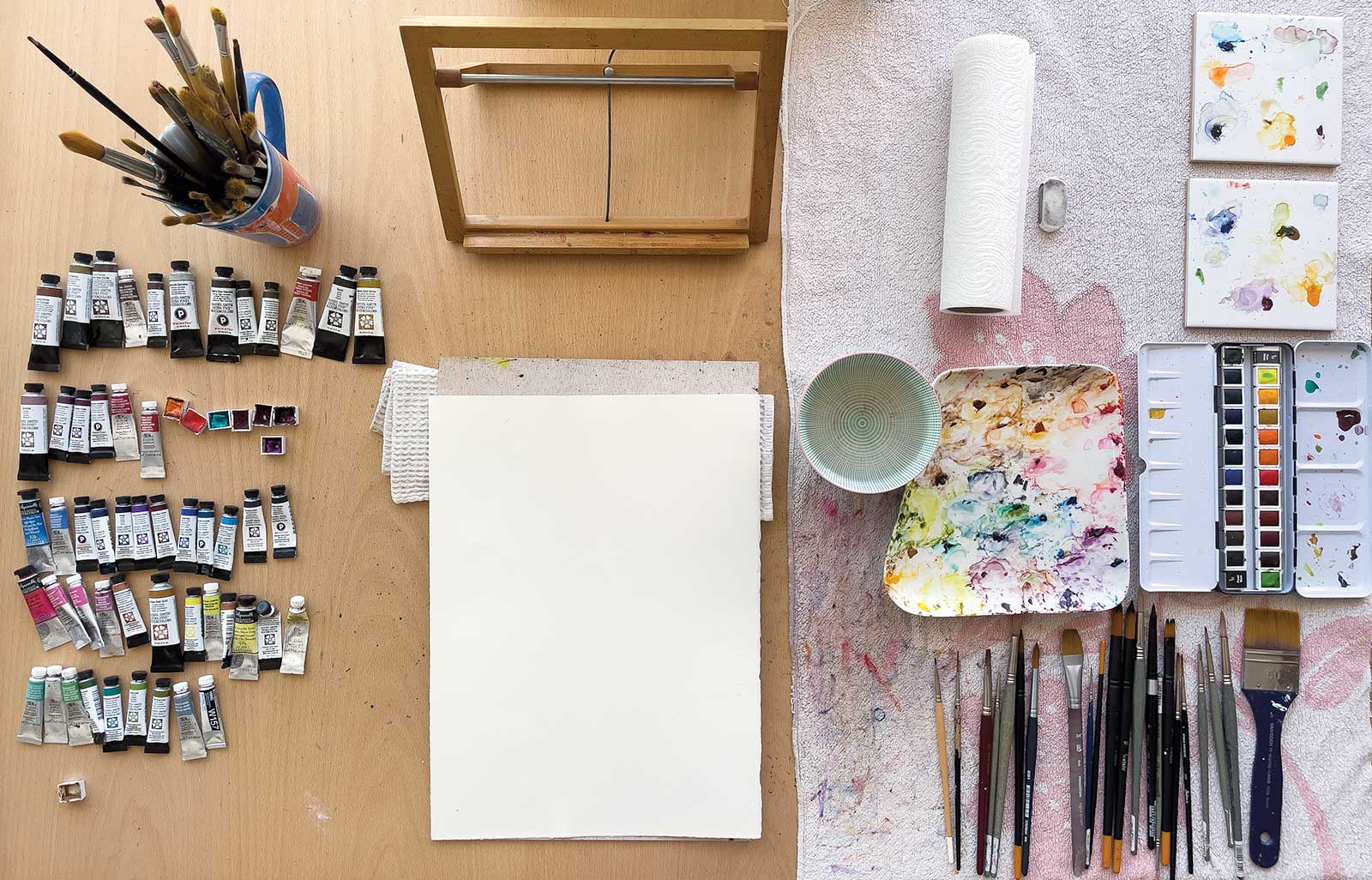
Daniel Smith Watercolors
Lemon yellow, Mayan yellow, Perylene violet, Cobalt violet deep, Perylene scarlet, Sienna, Quinacridone deep gold, Quinacridone burnt orange, Transparent pyrrol orange, Olive green, Green gold, Rich green gold, Mayan blue genuine, Cobalt turquoise
Brushes
Rounds, size 8 and 12, Scrubber, size 2
Paper
Saunders Waterford cotton paper, 300 gr/sqm, cold-pressed
Additional Supplies
Pencil eraser, 2B Pencil, Palette, Water bucket, Hand towel, Toilet paper
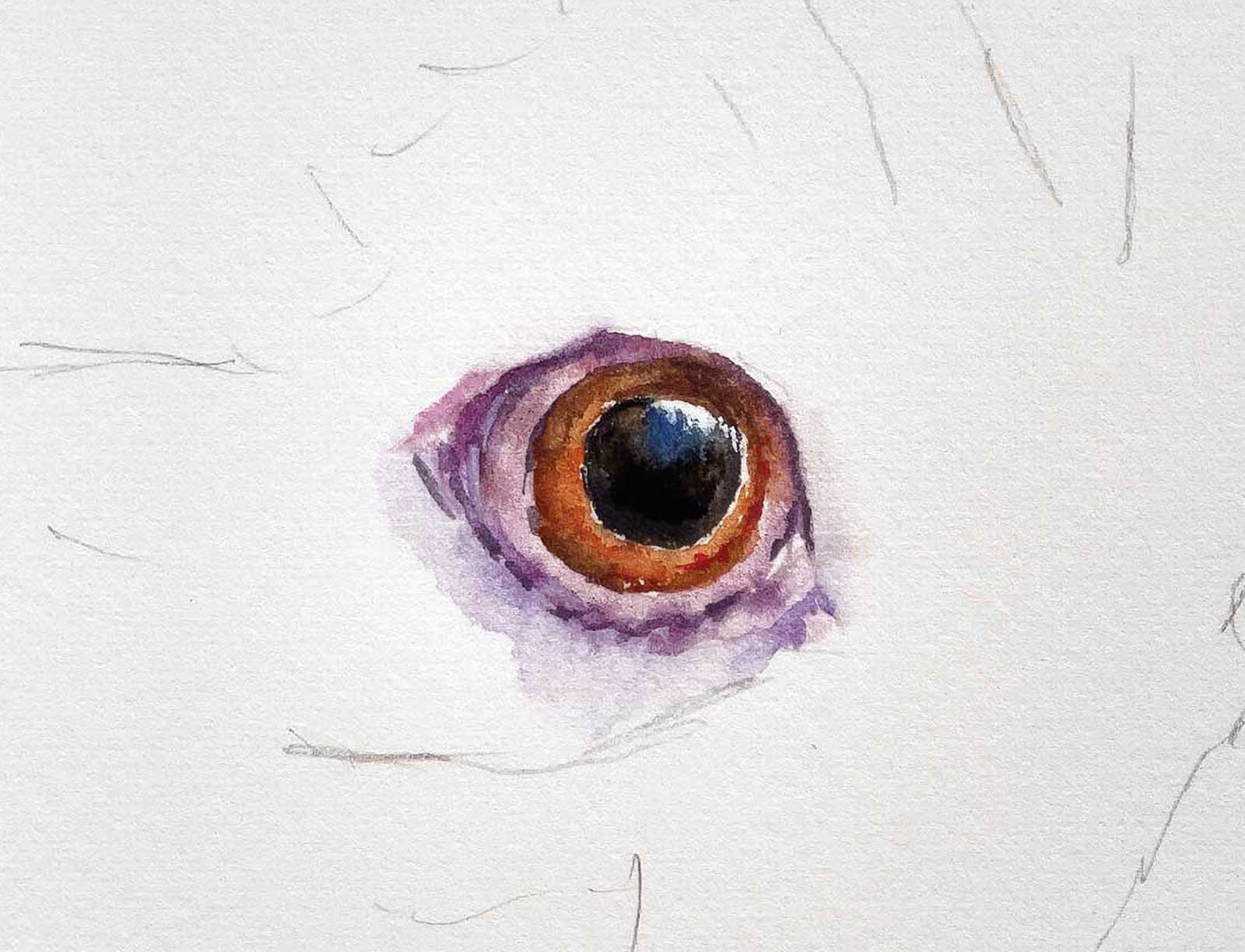 Stage 2
Stage 2 The Eye
This time I start painting the eye since the macaw’s gaze will mark the watercolor. I try to start with the most relevant parts and those that deserve more precision when painting.
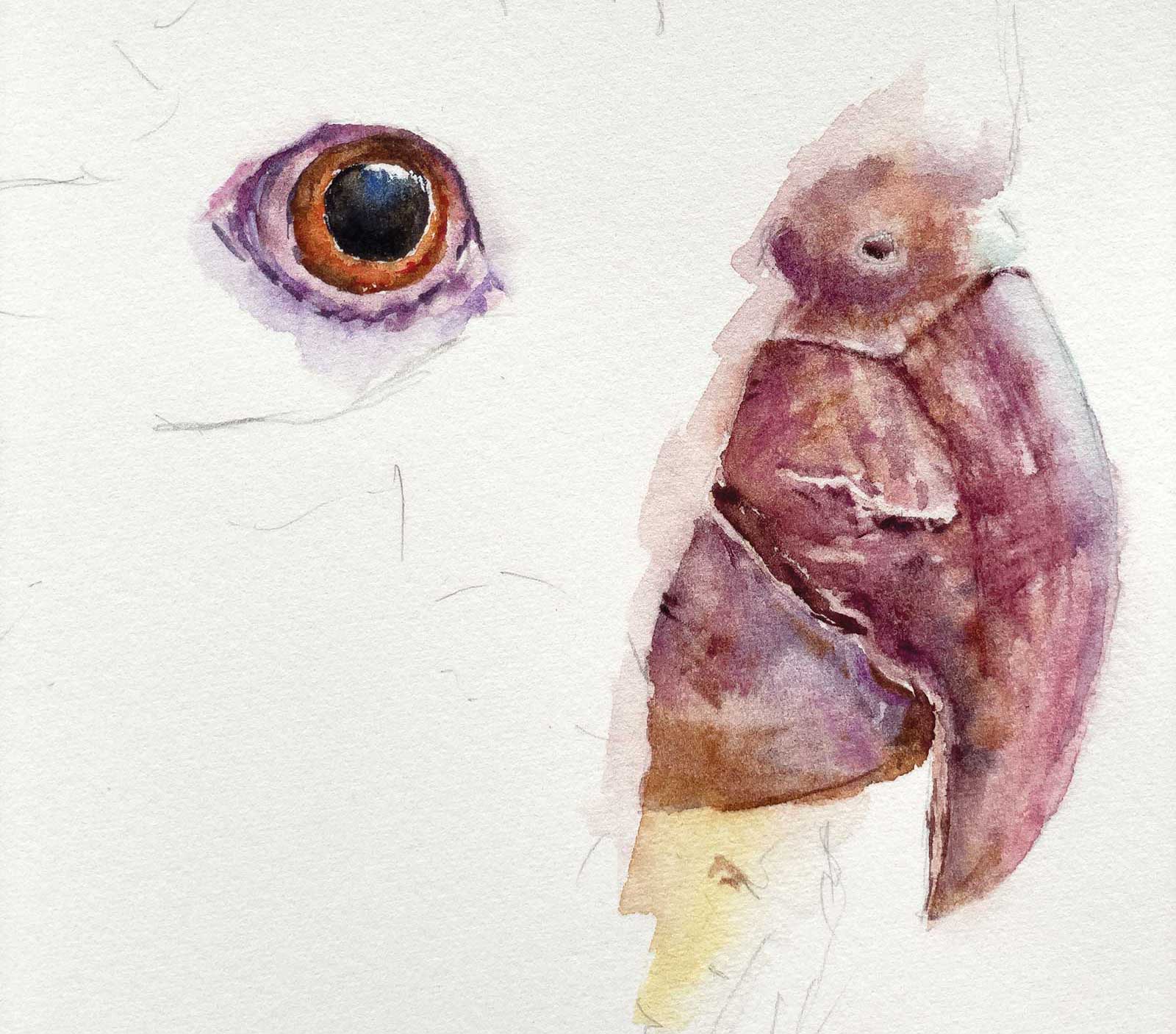
Stage 3
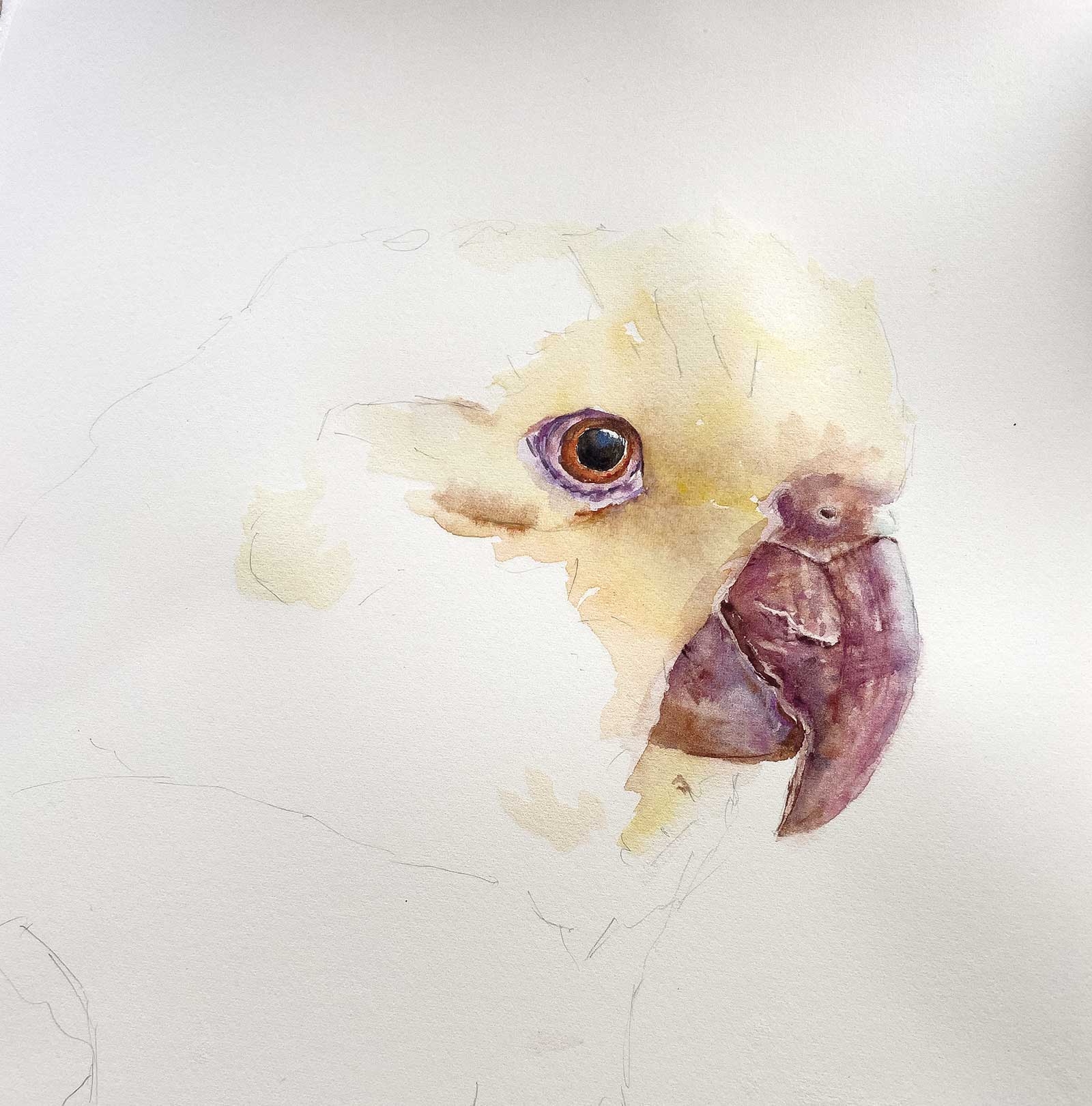
Stage 3 The Beak
The beak has that texture that gives it character. I try through different shades of color to achieve volume, adding layers of color in different directions.
Stage 4
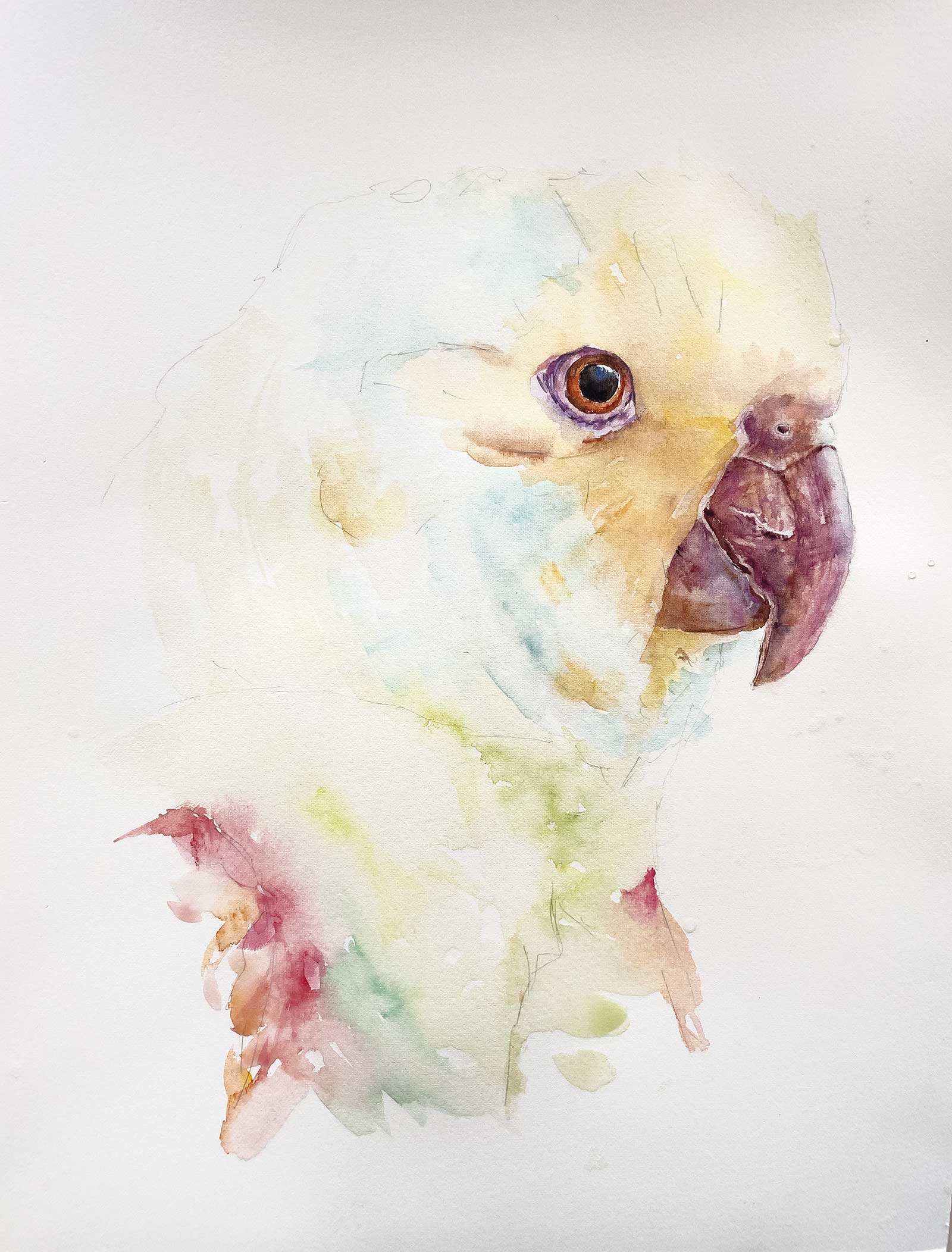
Stage 4 Varying Colors
Using the wet-on-wet technique I begin to differentiate the colors of this bird. As you can see, I respect the lights and shadows with the most appropriate color.
Stage 5
Stage 5 Allowing Colors to Blend
With almost transparent washes, I continue painting the rest of the body and let the colors interact with each other.
Stage 6
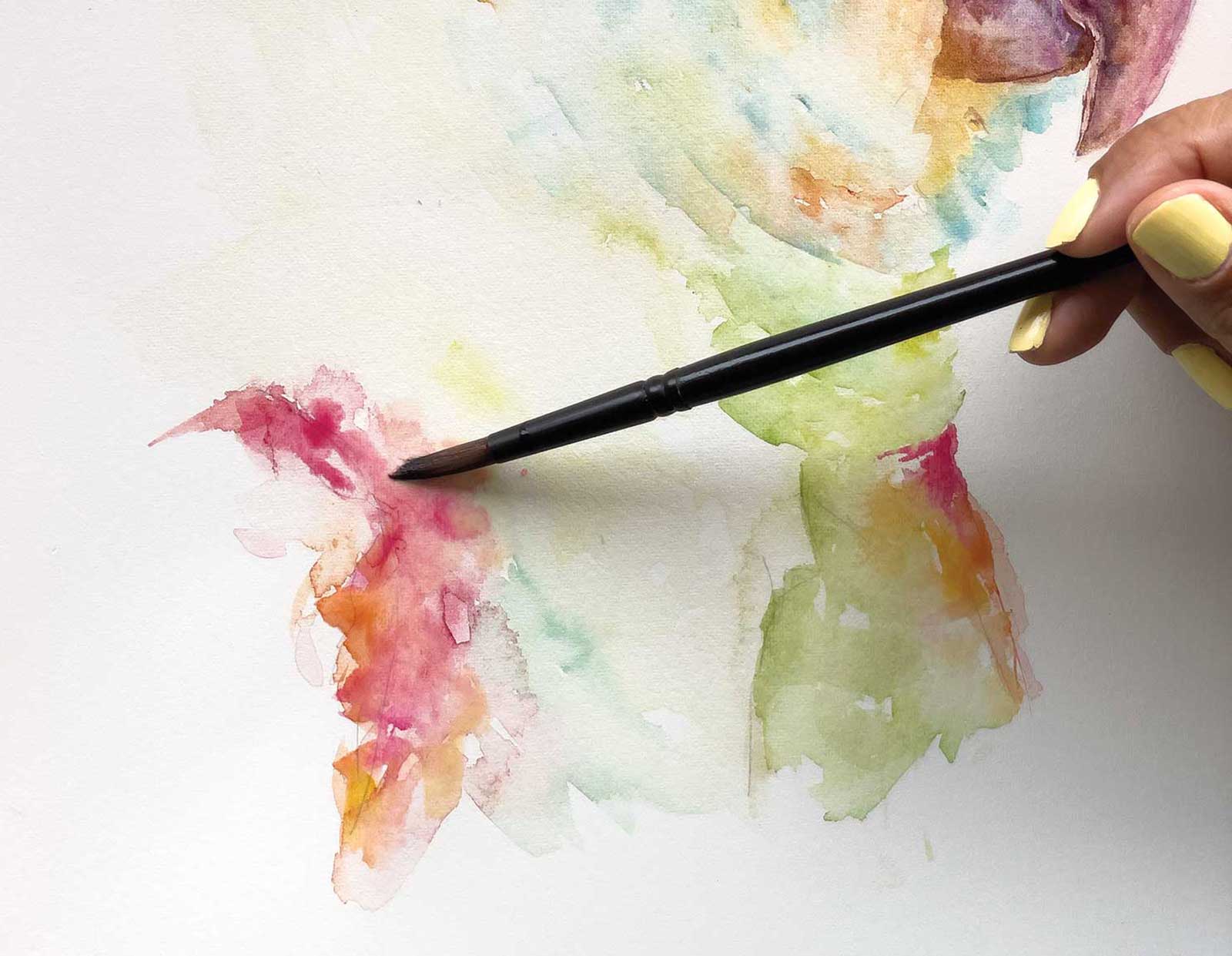
Stage 6 Deepening the Colors
I take advantage of the fact that the paper is still wet to intensify some colors that may have been very faint.
Stage 7
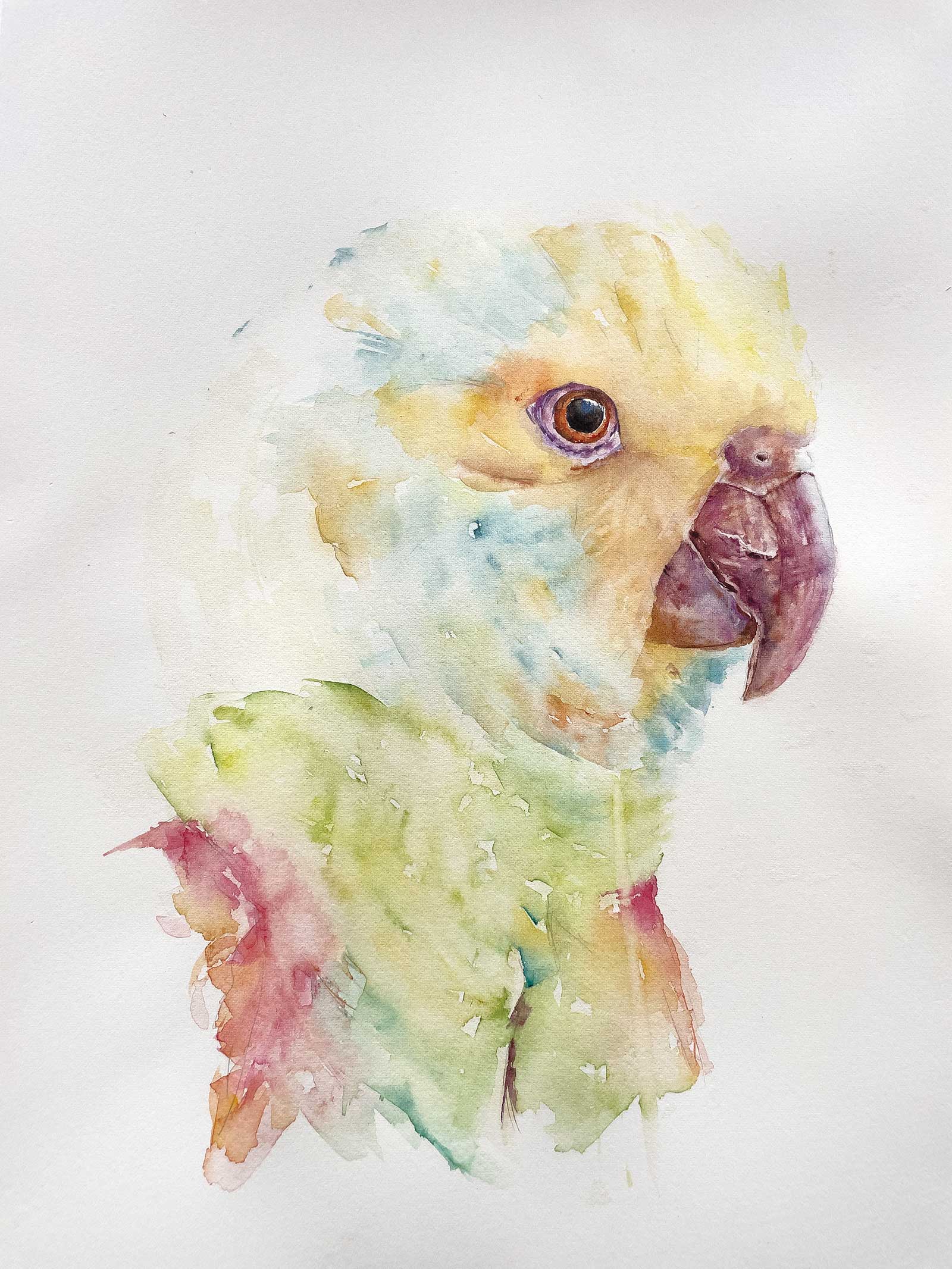
Stage 7 Allowing the Water to Flow Freely
I let the water leave a record for the drawing since it is those marks that seem to me the most interesting in the watercolor.
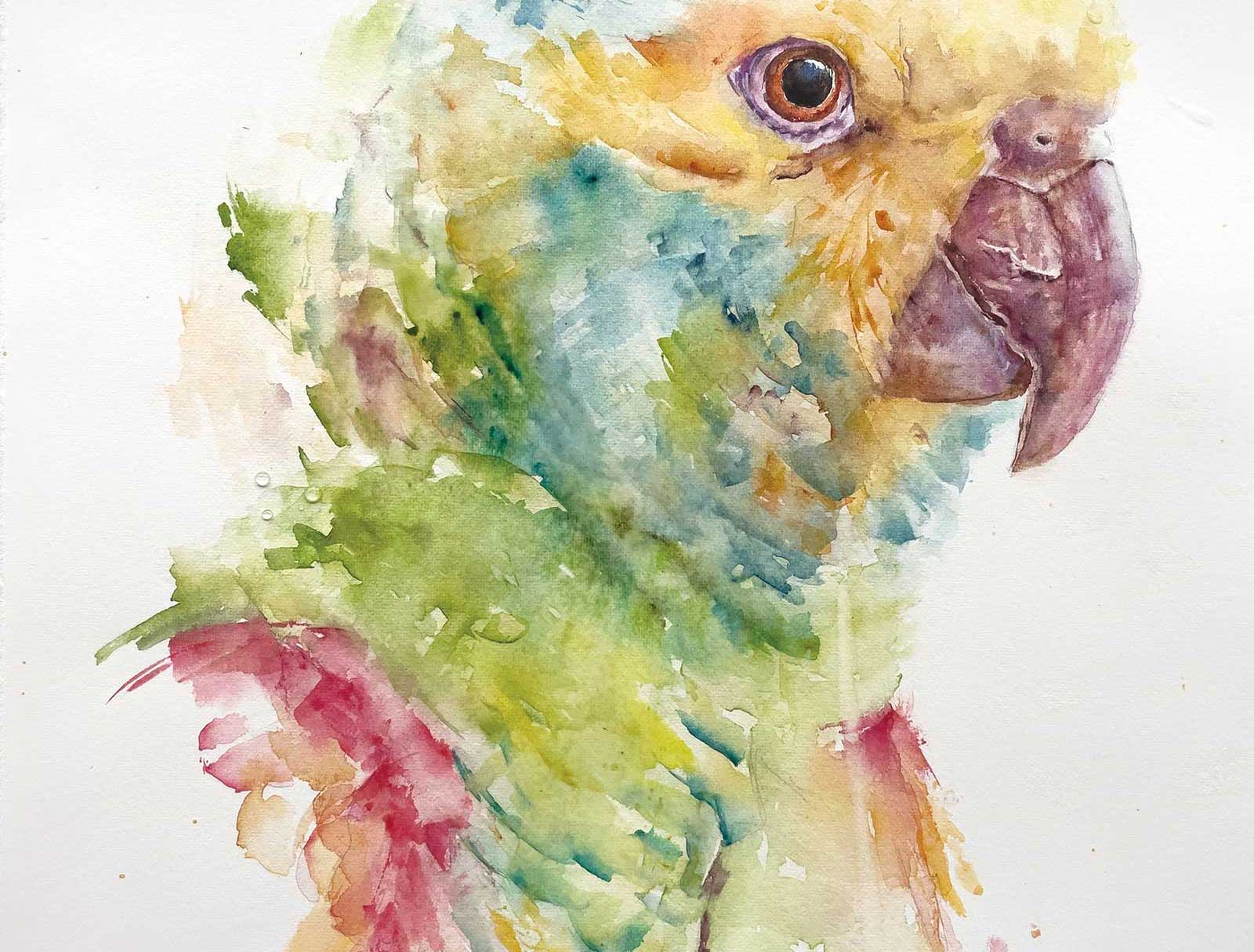
Stage 8
Stage 8 Creating Volume
I continue to intensify the parts that are more in shadow and leave the lights alone. This helps build volume.
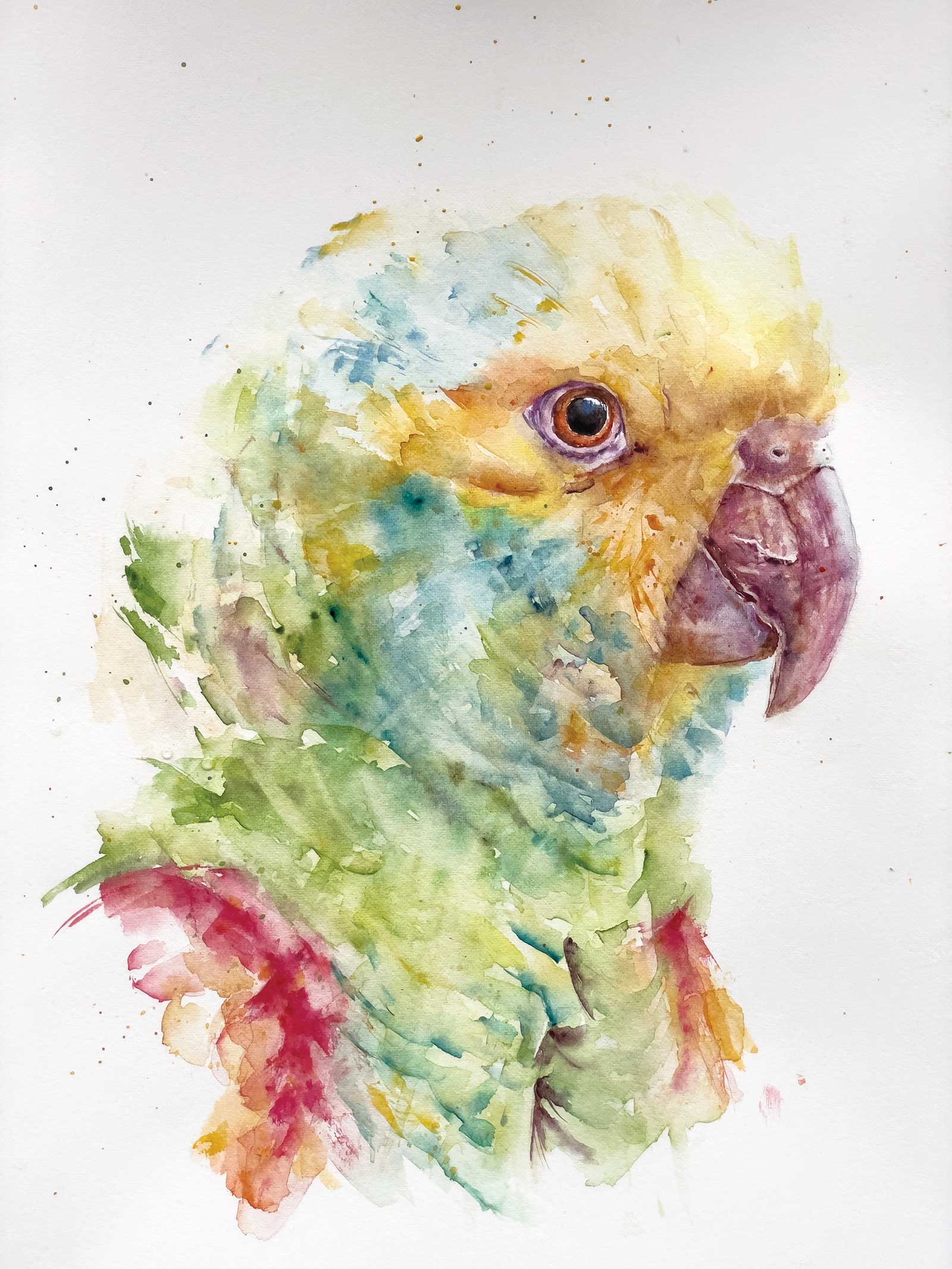
Stage 9
Stage 9 Finished Artwork
Green Parrot, watercolor on cold-pressed Saunders Waterford cotton paper, 15¾ x 12" (40 x 30 cm)
Here, I am adding the final touches, continuously making sure that everything is harmonious.
About the artist
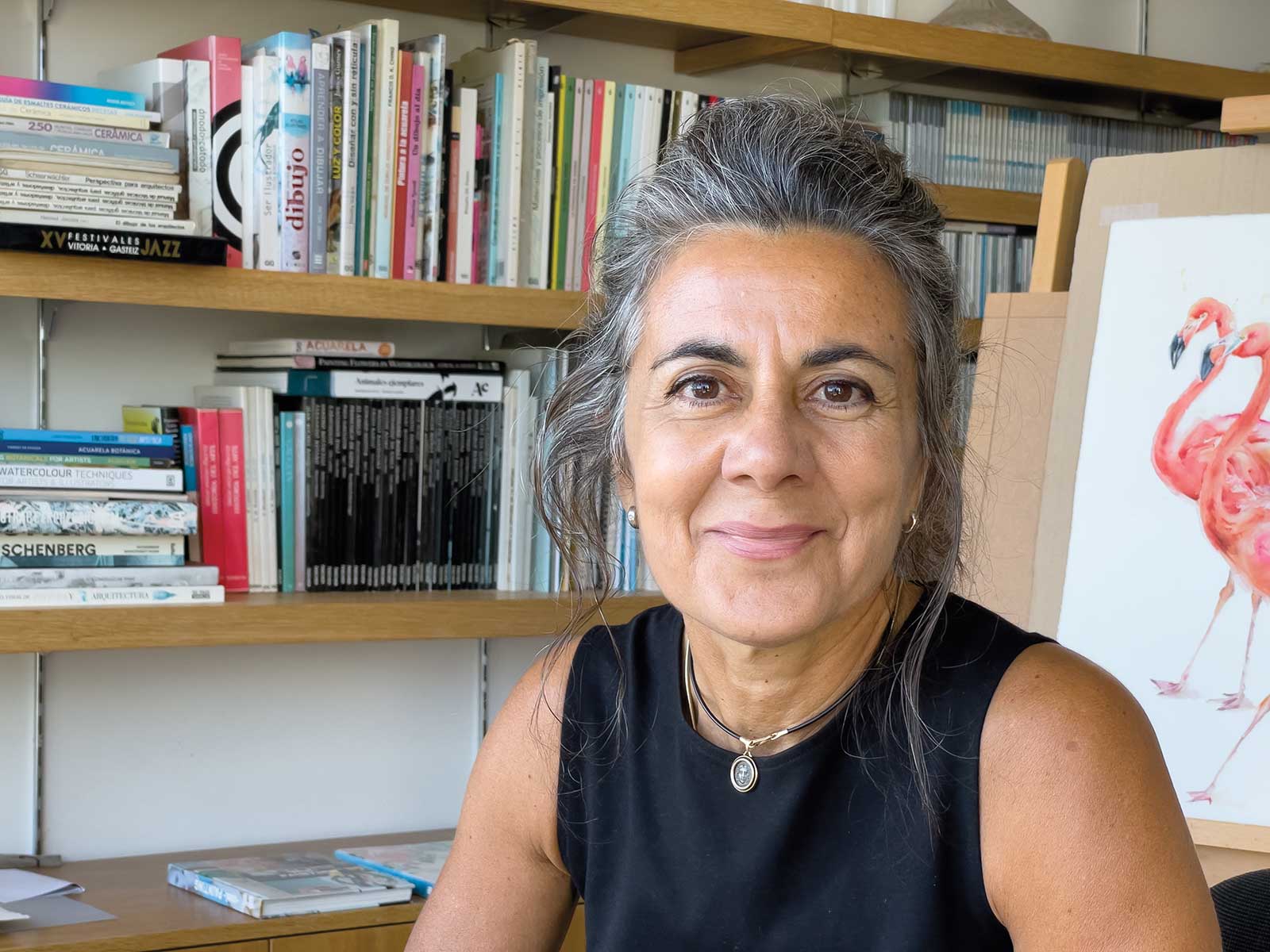 Sandra Aguilar
Sandra Aguilar, who lives in Spain, is a professional artist painting animals and their environments. She has been linked to art her entire life, but until formally studying fine art four years ago, she had not yet dedicated herself to painting in a serious way. The artist feels that watercolor is magical and likes to pass along her passion to anyone who wants to begin painting in the world of watercolors. Aguilar’s work has been exhibited in multiple exhibitions within Spain.
Represented by
Quadro Vigo, Vigo, Spain, www.quadrovigo.com
Marcos Souto, Ourense, Spain, www.artesouto.com