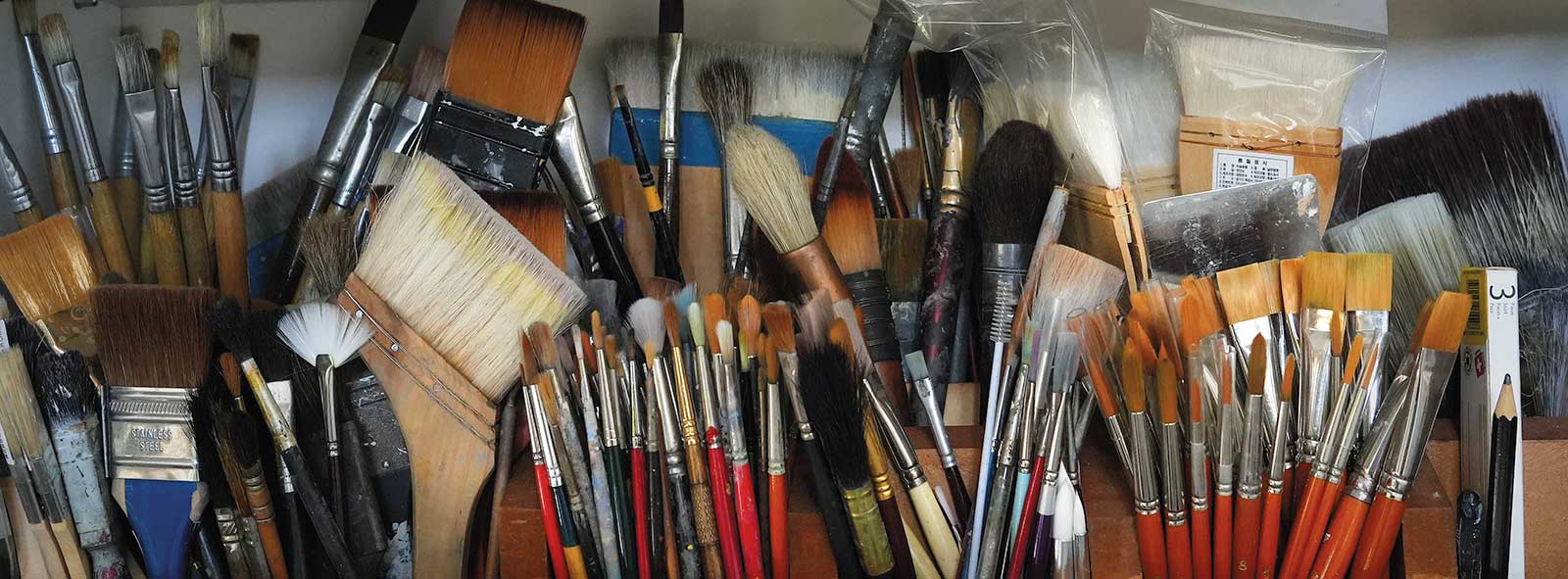
I think everyone hooked on painting with watercolor develops a curiosity for the myriad of different paint brushes available. I can’t help trying out all the new and different varieties that appear from time to time. Some I stick with and some find their way into a growing collection of rarely used novelties. I have tried mop brushes, round brushes, sable brushes, fan brushes, bristle brushes and have settled on a small, odd collection of half a dozen brushes that suit the way I work and do everything I need pretty well. Everyone will have different requirements depending on what they paint and the approach they like to take. Here is a rundown on the handful of brushes I have settled on over the years.
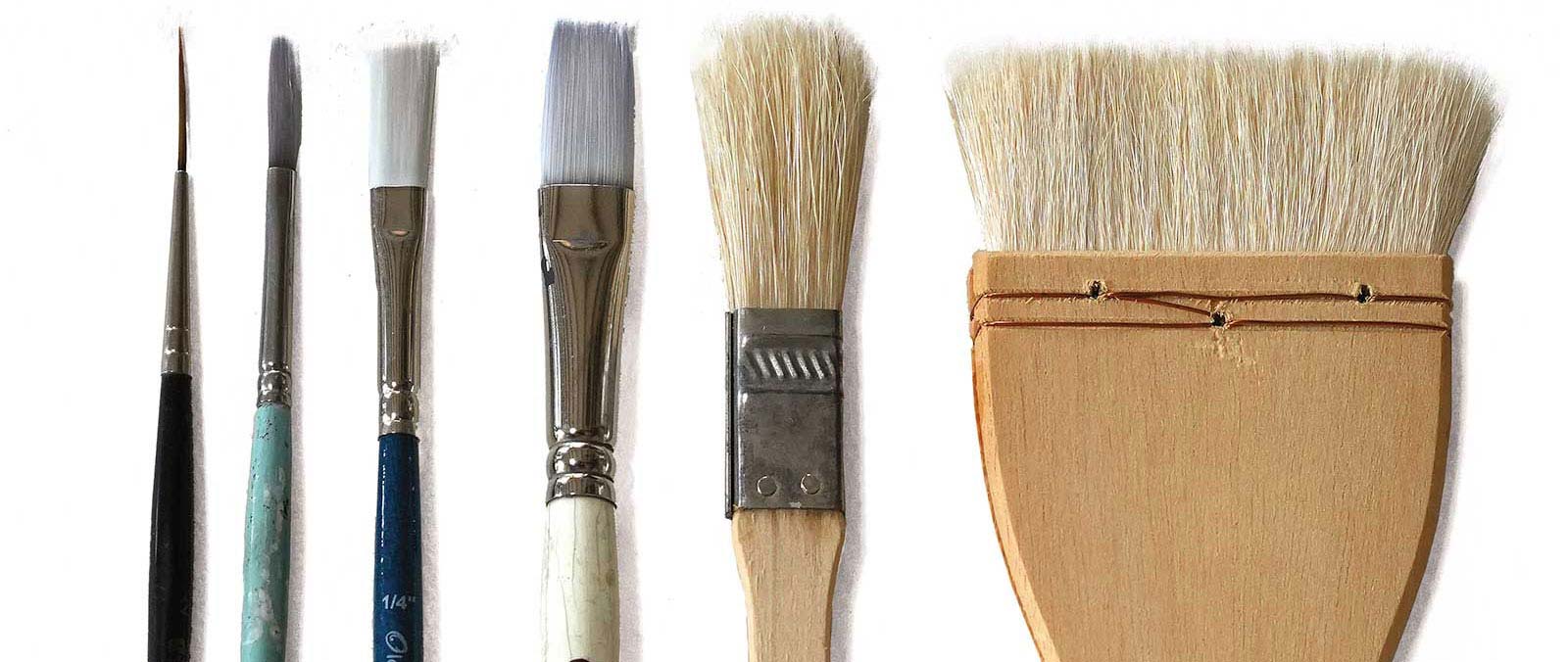
The liner brush is great for hair thin lines and detail. The one stroke brushes look after all the precise, geometric marks. The ½” bristle brush is an all purpose tool, taking care of all the organic shapes and washes. It holds a surprising amount of paint and can do anything from big rough calligraphic shapes to fine delicate marks with a little practice. The Hake brush is always used dry. I use it to smooth out washes, soften edges, remove blooms and generally tidy up. It is always used very delicately and is constantly rubbed on a piece of towel to keep it dry. Used this way, it performs like a magic wand for watercolor.
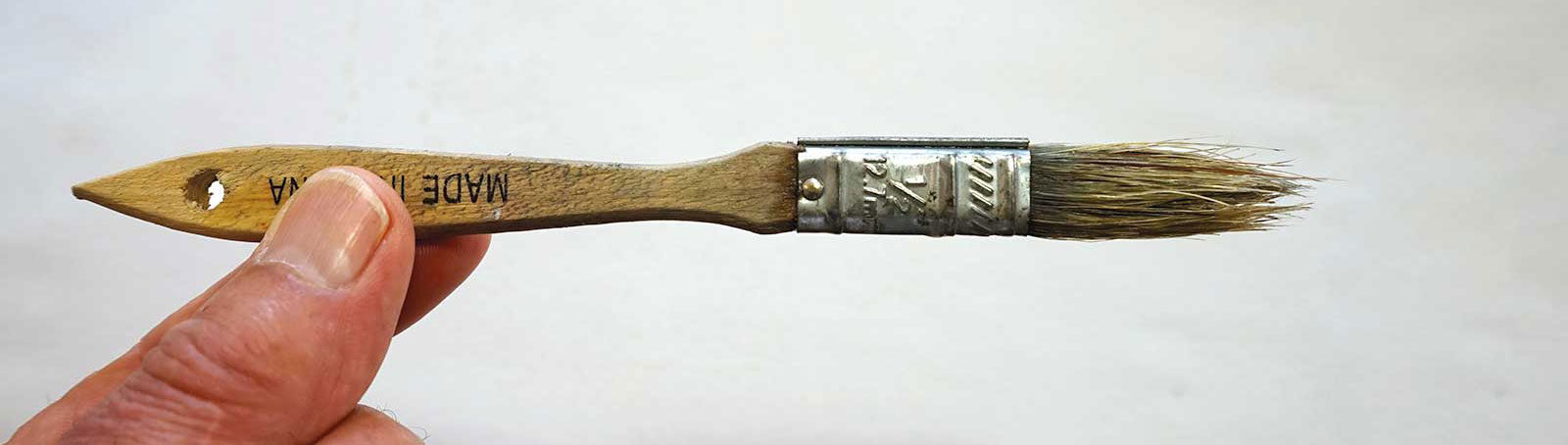
The humble ½" bristle brush. It’s cheap, nasty and unpredictable, but this has grown to become my most used tool for making marks. Synthetic bristle versions of this brush just can’t match the usefulness of genuine pig bristle.
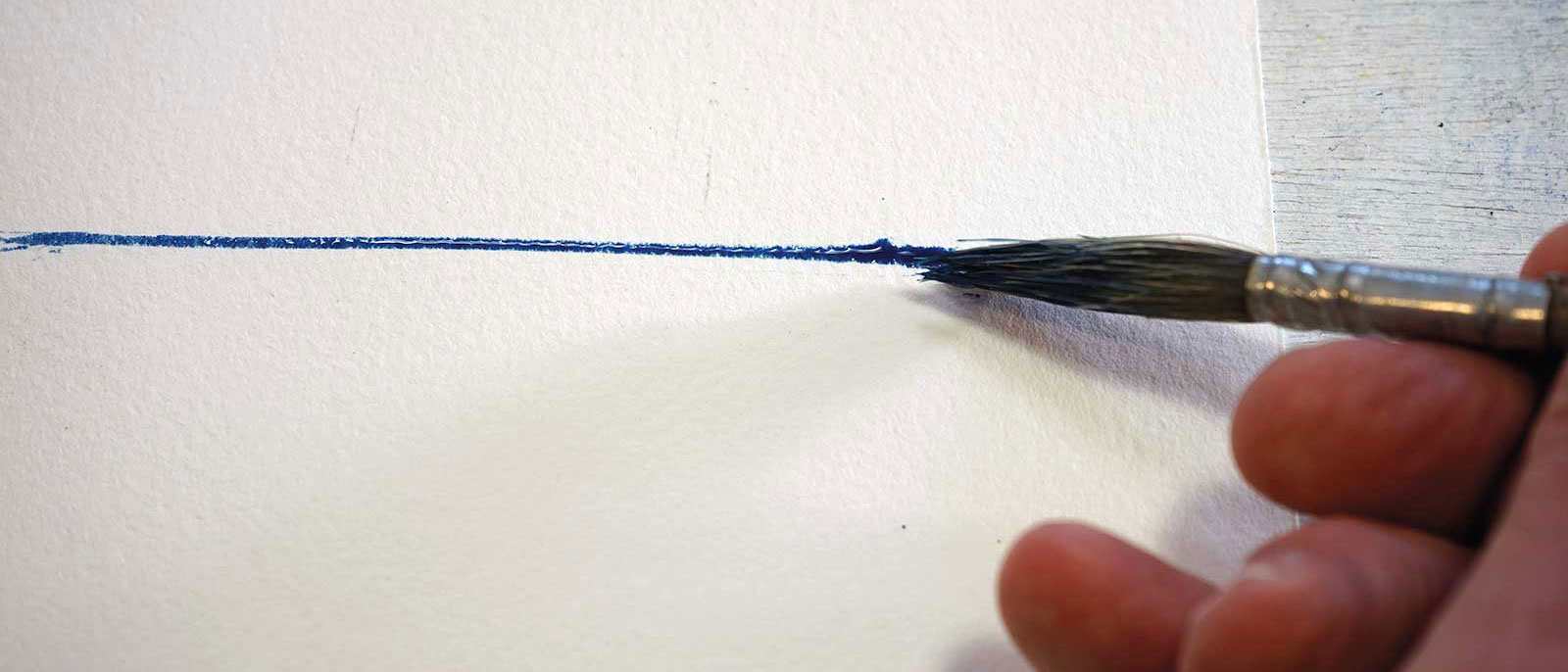
Loaded with pigment and formed into a chisel point on the palette, the ½" bristle brush can produce reasonably fine, but always interesting lines.
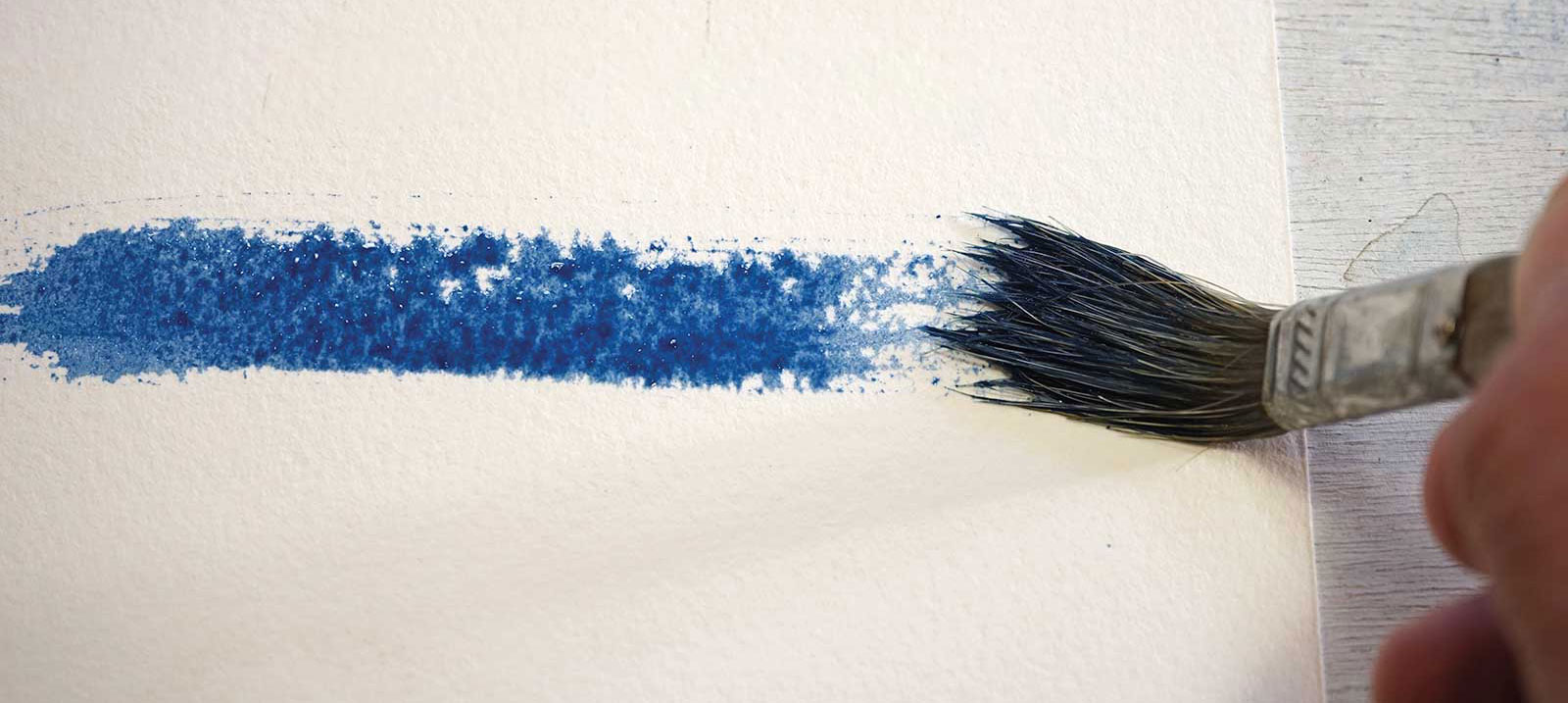
The ½" bristle brush loaded up and used broadside makes interesting marks, full of character. I love the contrast between these loose, rough marks and the formal marks made with the one stroke brushes.
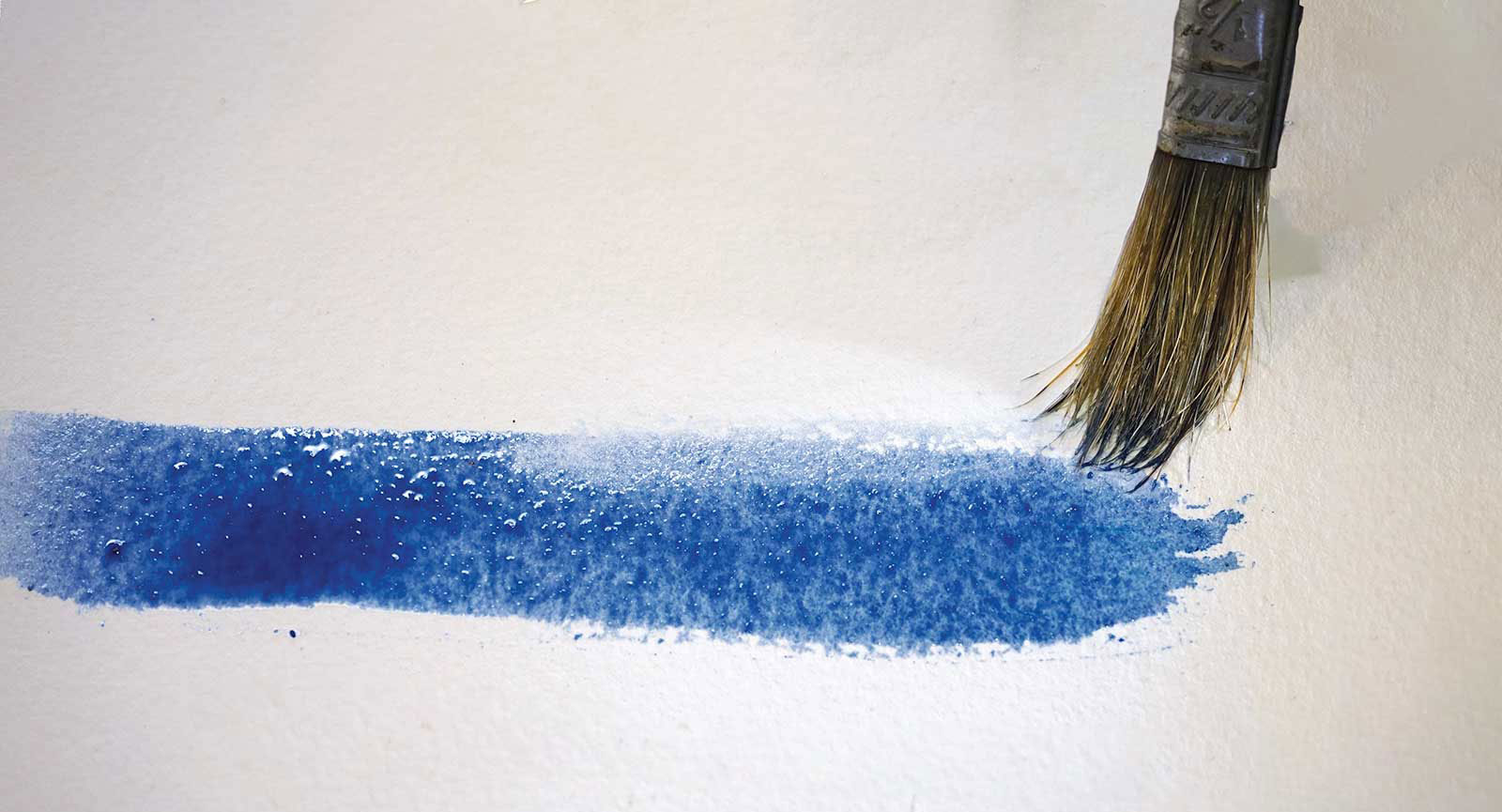
Washing the ½” bristle brush out and drying it to just the right amount of dampness turns it into a great tool for softening and feathering edges.
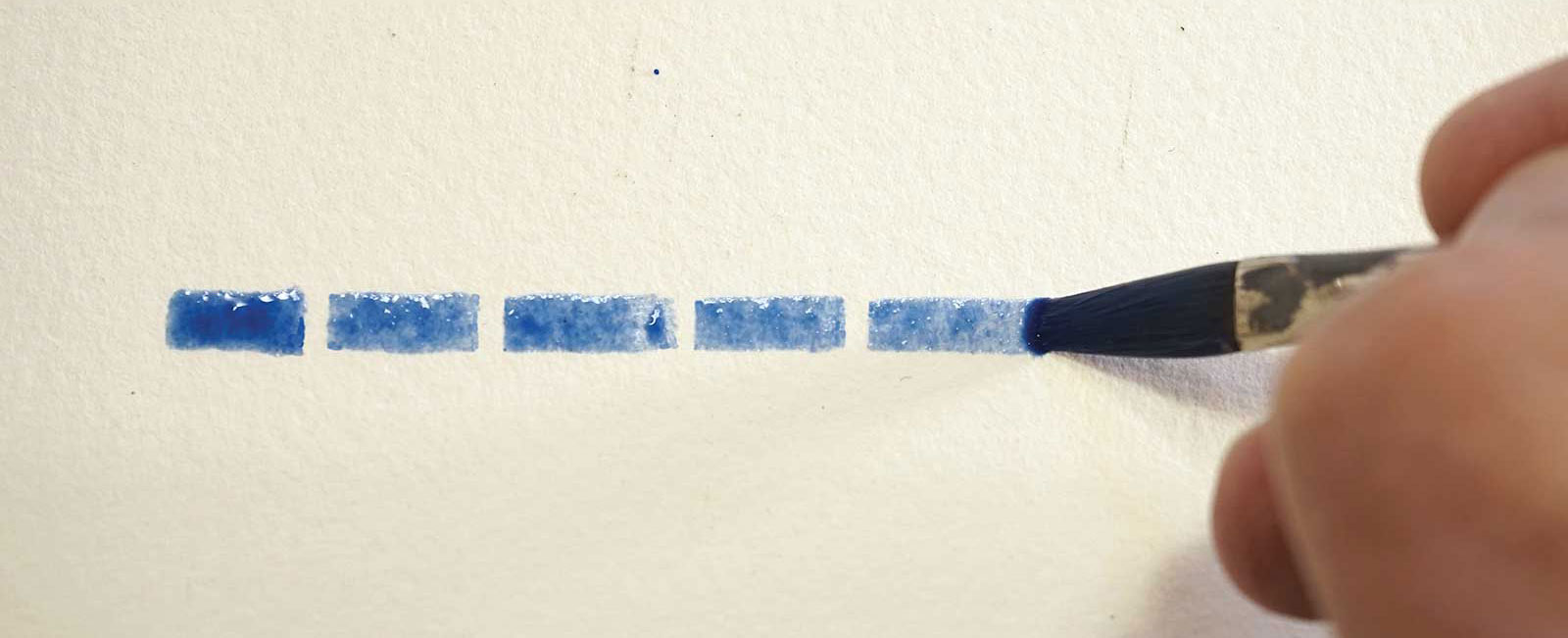
The one stroke brushes make very precise geometric shapes. This is the ¼" model. The other two one strokes do the same thing but on a different scale. These brushes are ideal for architectural subjects, taking care of doors, windows, walls, bricks, roofs or any other geometric shapes. The Taklon fiber holds its shape well, has plenty of spring, soaks up a lot of pigment and wears very well. They are a reasonably priced brush, so I like to replace them every year or so, as soon as I notice the corners they produce becoming rounded.
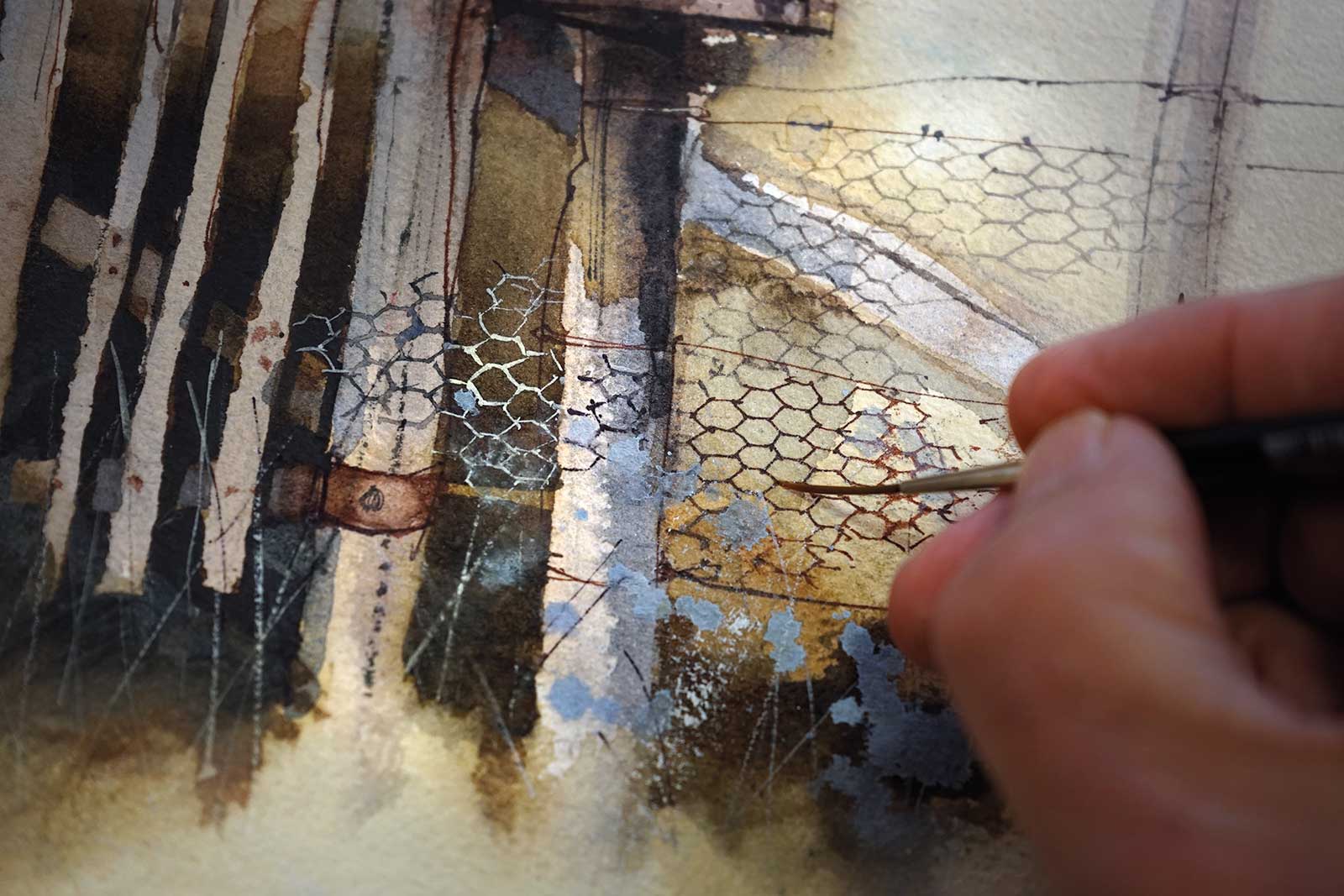
The #1 liner makes beautiful fine lines. The secret is to load the brush with pigment then touch just the tip of the brush on the paper. For long fine strokes, hold the brush perpendicular to the paper and make a sweeping stroke with your arm, keeping your wrist and fingers locked.
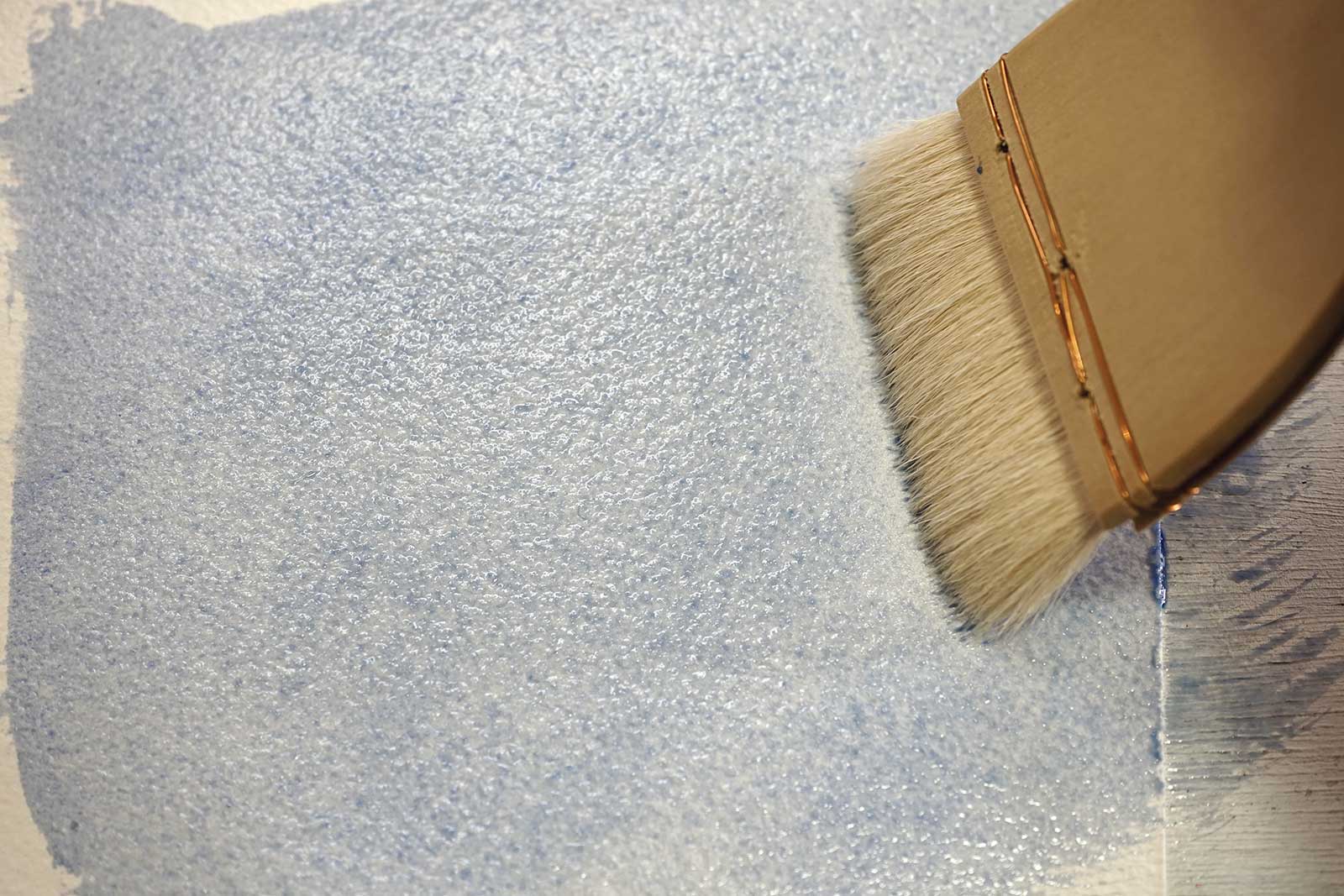
The dry Hake brush will smooth out the most uneven, blotchy wash. I often like to work on unstretched paper, which causes pools to form in large washes. Gently sweeping across the wash with a dry Hake quickly absorbs moisture and evens out the pigment. One or two strokes at a time, then dry the brush on a piece of towel, is the secret. Blooms (those cauliflower shaped blemishes), if caught before they dry, can be easily removed by gently dusting over them in various directions with a dry Hake brush.
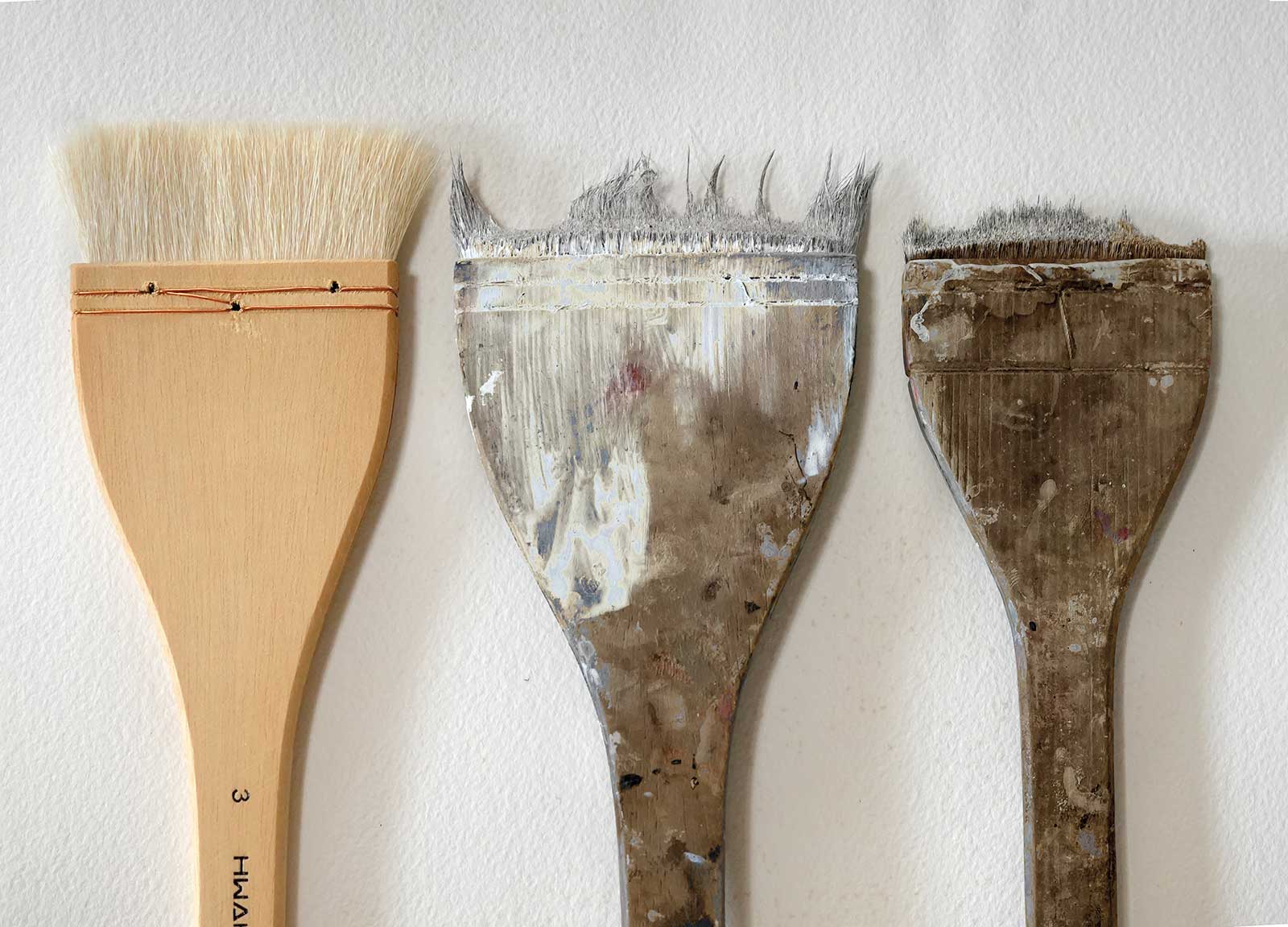
Hake brushes generally last pretty well when used with watercolor. Gesso tends to take its toll on them, though. This pair should have been disposed of long ago, but you tend to get attached to them after a while.
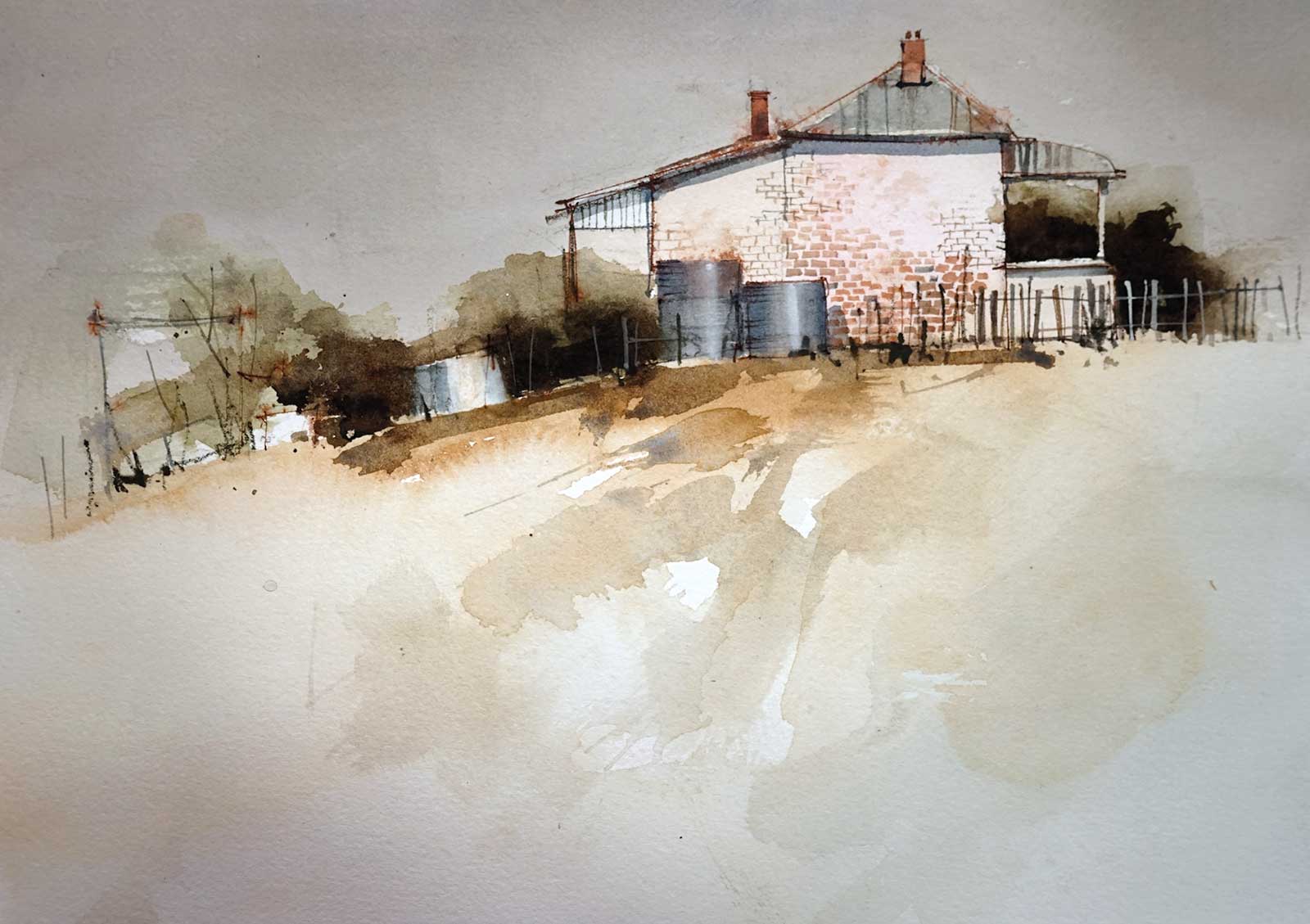
This little sketch demonstrates the brushes I use. The foreground, sky and background foliage was applied with the ½" bristle brush. The edges were softened and adjusted as the marks were applied. The walls, roofs and water tanks were painted with the ½" one stroke. The bricks were painted with the 1⁄8" one stroke. All the fine lines were applied with the rigger brush, and a few burnt sienna ink lines applied with a pen. Finally, warm gray washes were applied to the foreground and either side of the painting with the ½" bristle brush, then gently feathered out with the dry Hake brush.
This handful of brushes have grown to suit the way I paint. I’m not sure if I trained them or they trained me, but one thing is certain: whatever brushes you choose, the more you use them, the better they seem to work. —