
Before I embark on any painting, I always ask myself the fundamental question: Why? Why am I choosing this particular subject to paint? For me, it’s essential that I paint objects or people not merely because they exist but to paint my emotional response to the subject. What do I feel? I challenge myself to see beyond what others might perceive and focus on my personal perspective. Identifying what I want to communicate in the artwork becomes my guiding light, even in quick studies, resulting in a more fluid painting process and a greater appreciation for the final piece.
For this painting, I chose to paint my daughter. I was captivated by her fully engaged gaze. This intensity became the focal point of my painting, guiding my entire creative process.
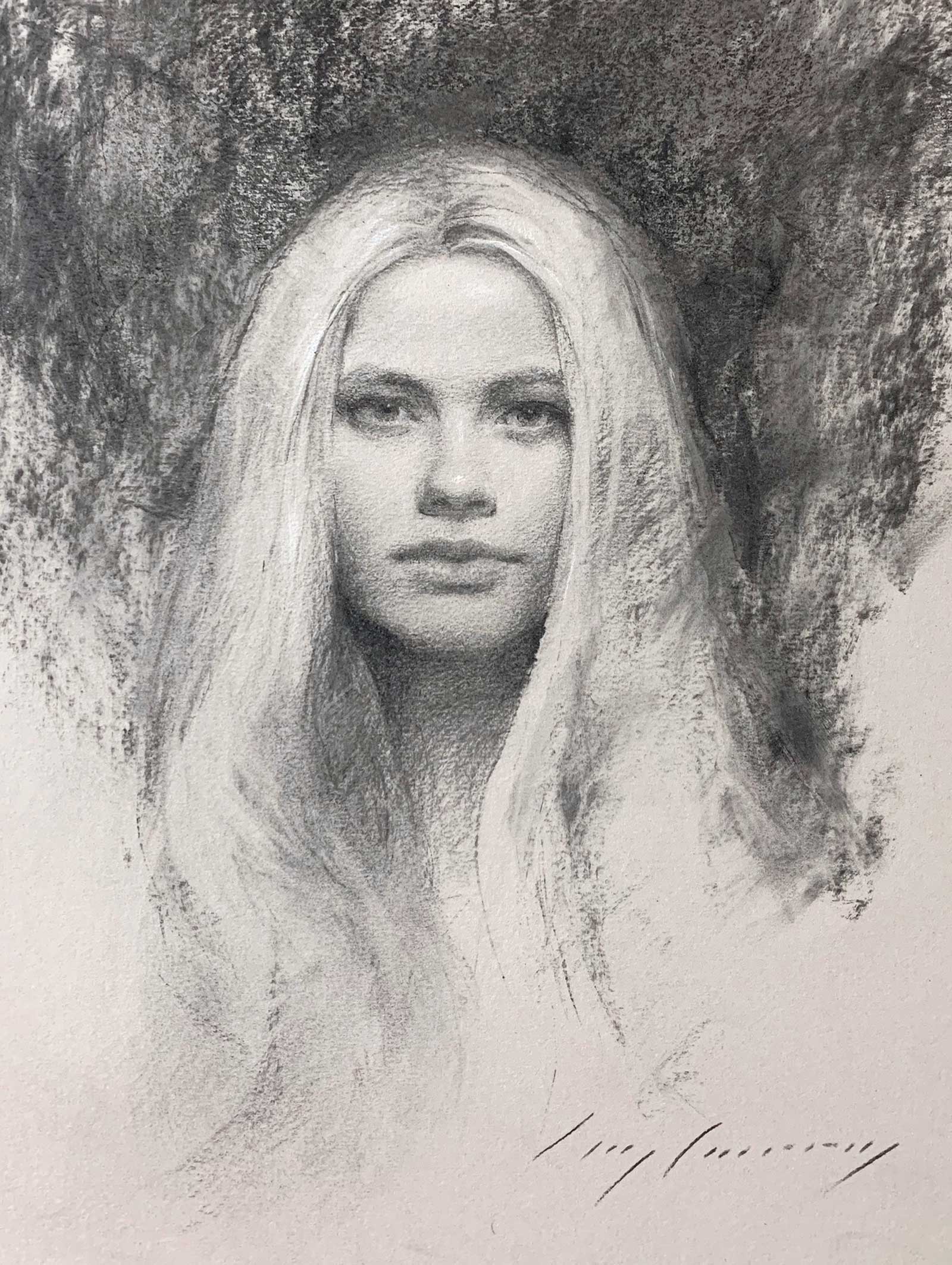 Stage 1Stage 1: Establishing the Foundation To begin, I meticulously crafted a charcoal drawing to map out the value structure. Given the subtle lighting and nuanced value changes, this initial step was crucial. Then I kept the drawing at the side of my easel for constant reference throughout the painting.
 Stage 2
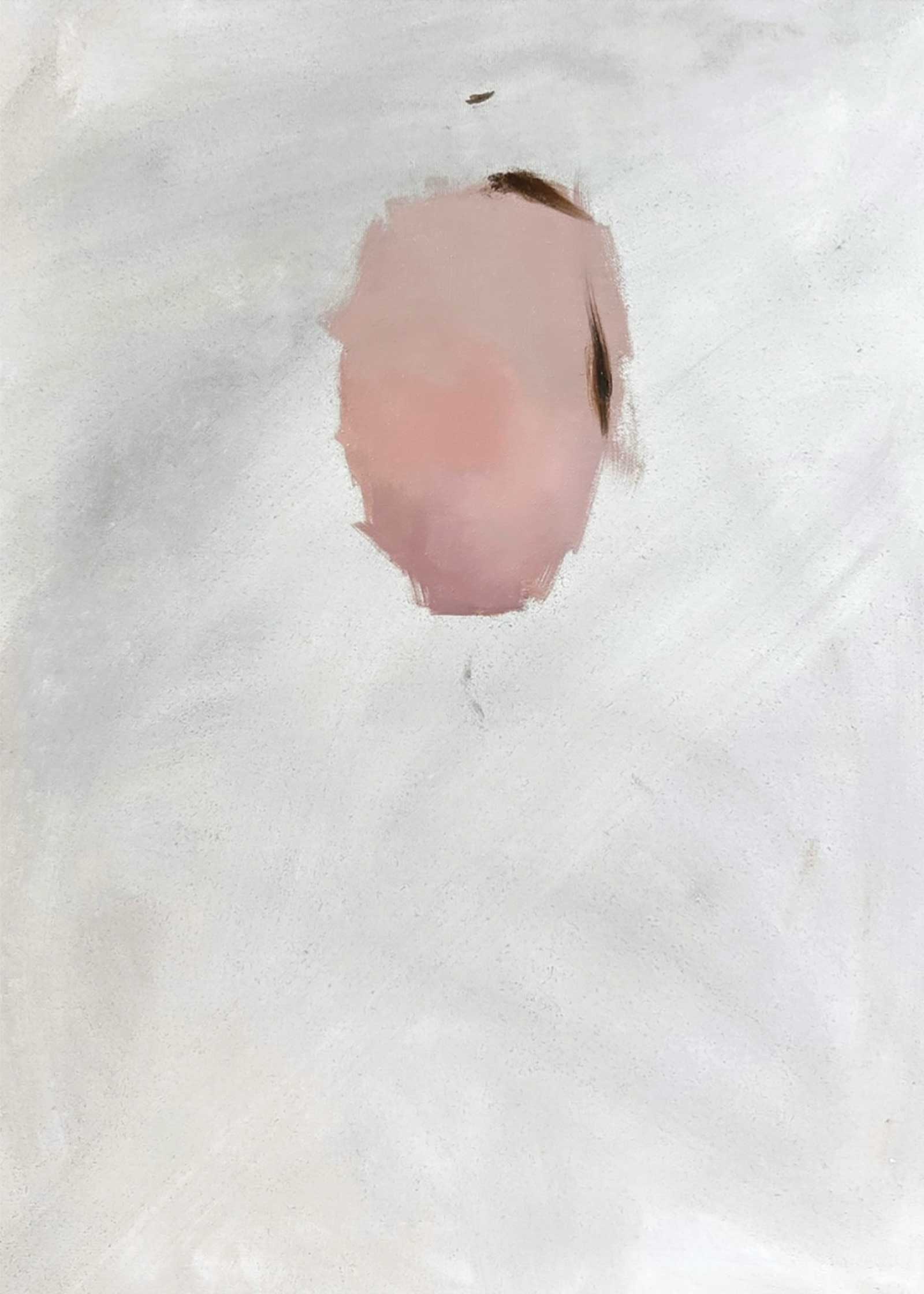
Stage 2: Setting the Stage With the foundation in place, I toned my surface with a wash of black paint and gamsol, subsequently wiping it back with a paper towel. I then sketched the basic outlines of the head, hairline, chin and sides of the face, knowing that these lines might shift as the painting progresses. This set the groundwork for me to start painting a generalized skin tone, subtly varied for each facial zone. For instance, I added a touch of red to the cheeks and nose area, differentiating them from the forehead. Placing the darkest part of the hair next to the face also helped me evaluate the values more accurately.
 Stage 3
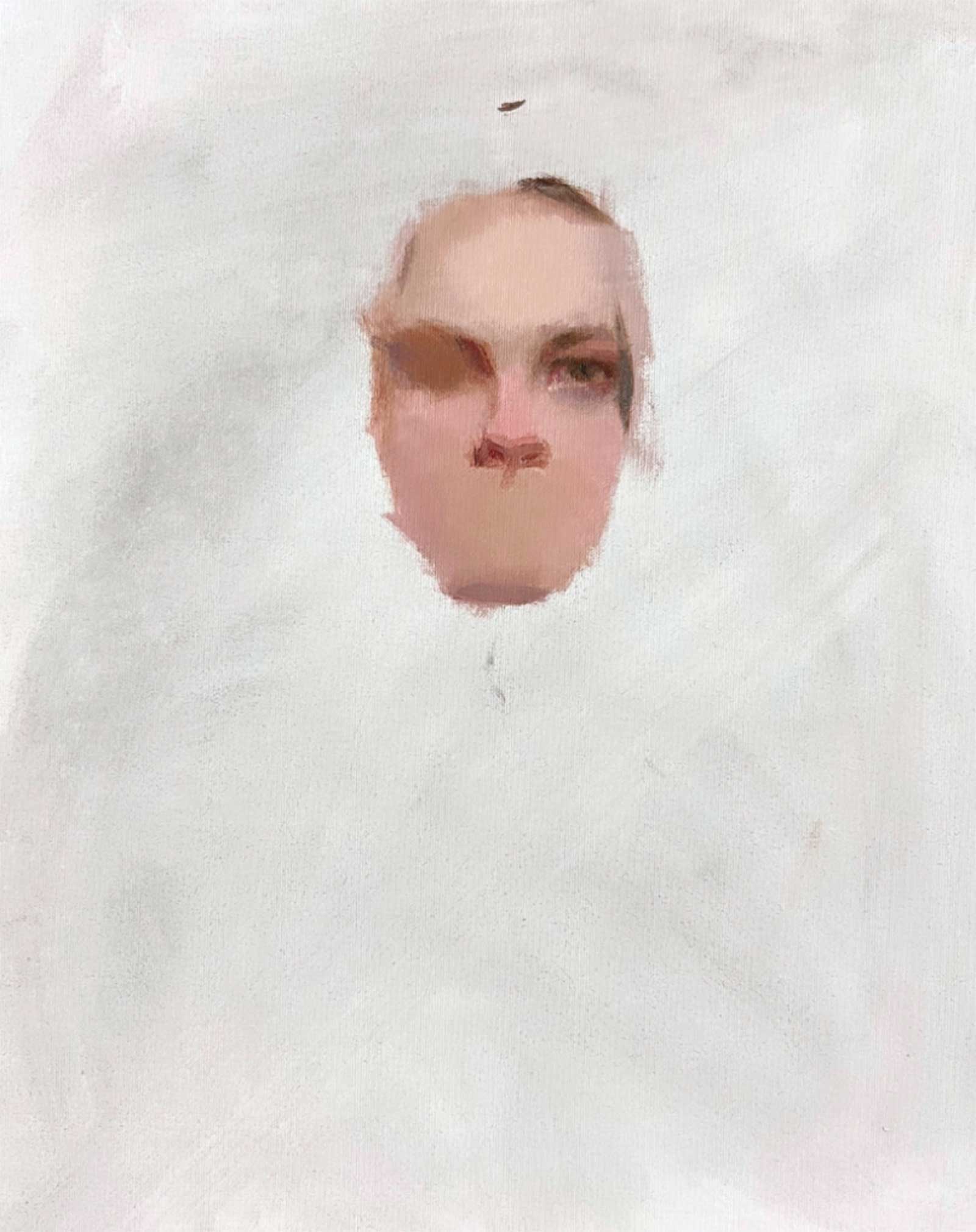
Stage 3: Sculpting with Light and Dark In a manner similar to how a sculptor works with clay, I began to manipulate the lights and darks to mold the facial features. Starting with the eye sockets, I gradually refined the details of the eyes and followed the same approach for the rest of the facial features.
 Stage 4
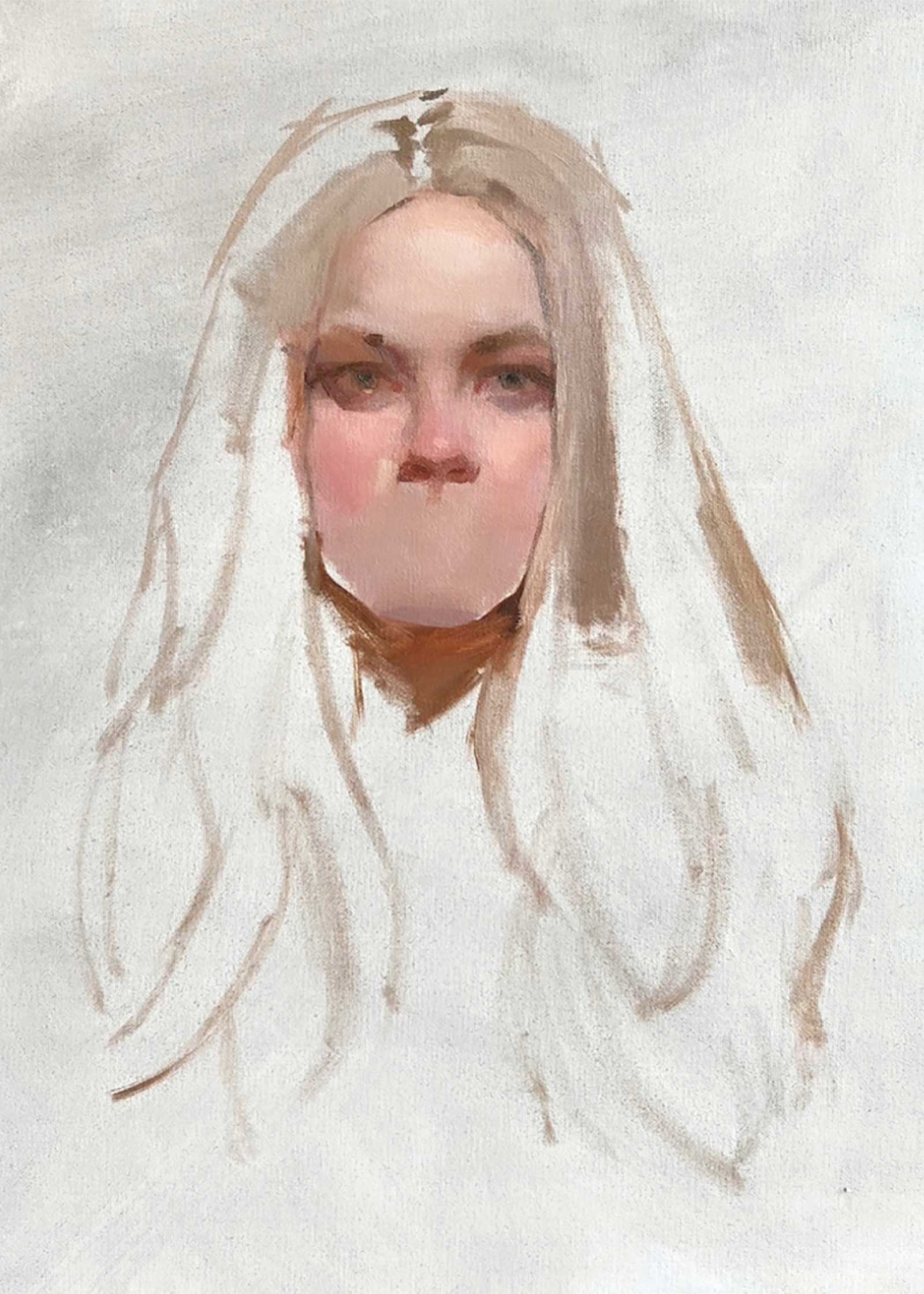
Stage 4: Evolving the Face With the basic eye, forehead and nose planes established, I moved on to the jaw and mouth form, carefully painting the lips. During this stage, I introduced some of the hair color and value around the face to ensure they harmonize with the model’s subtle, green-tinted hair. The dark shadow under the chin was especially helpful in refining the jaw shape.
 Stage 5
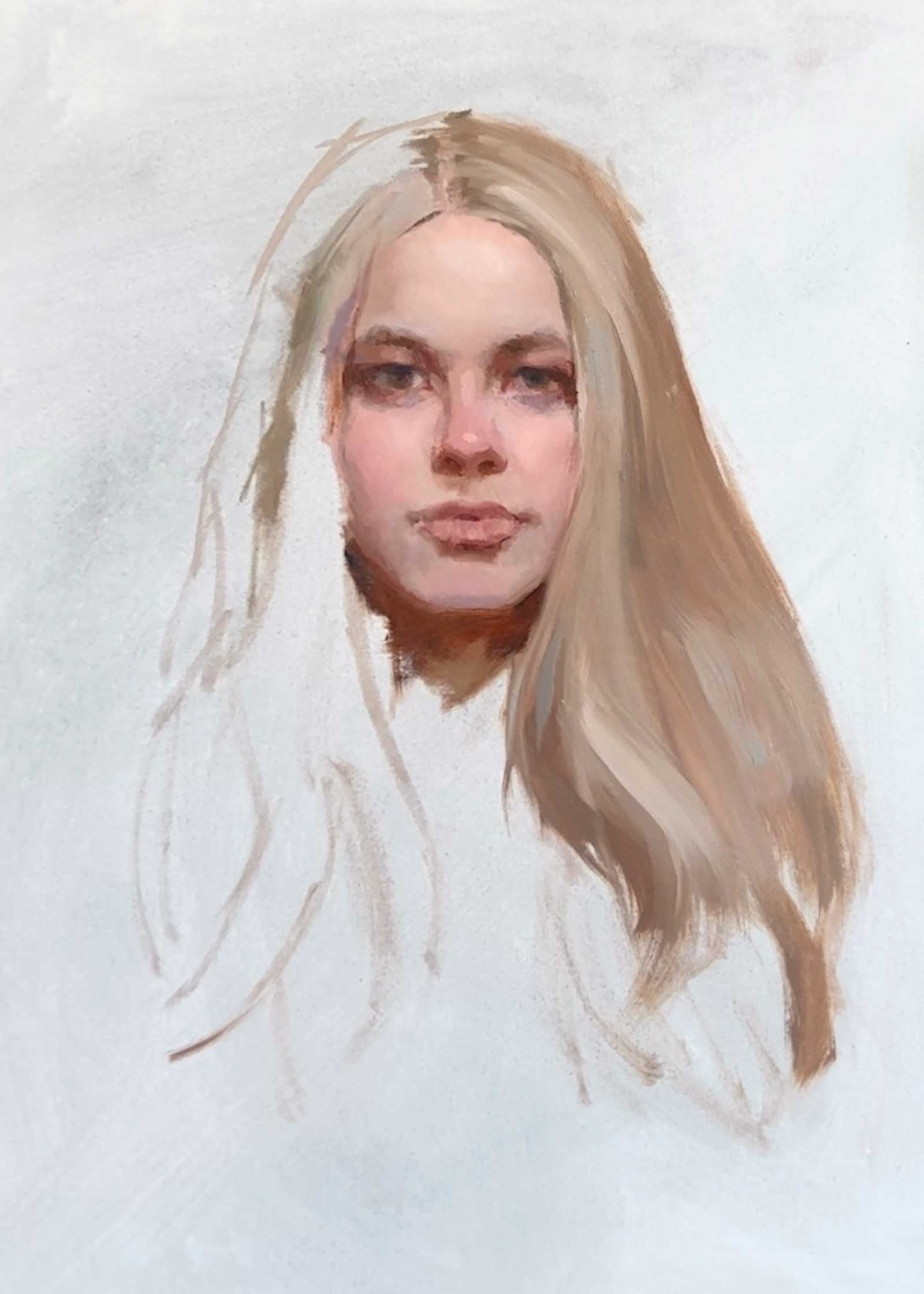
Stage 5: Nailing the Mouth The mouth, always the trickiest part for me, was the last feature I focused on. Having the other features in place aided in ensuring the mouth fit perfectly within the composition. At this stage, I also began painting the hair and sweater.
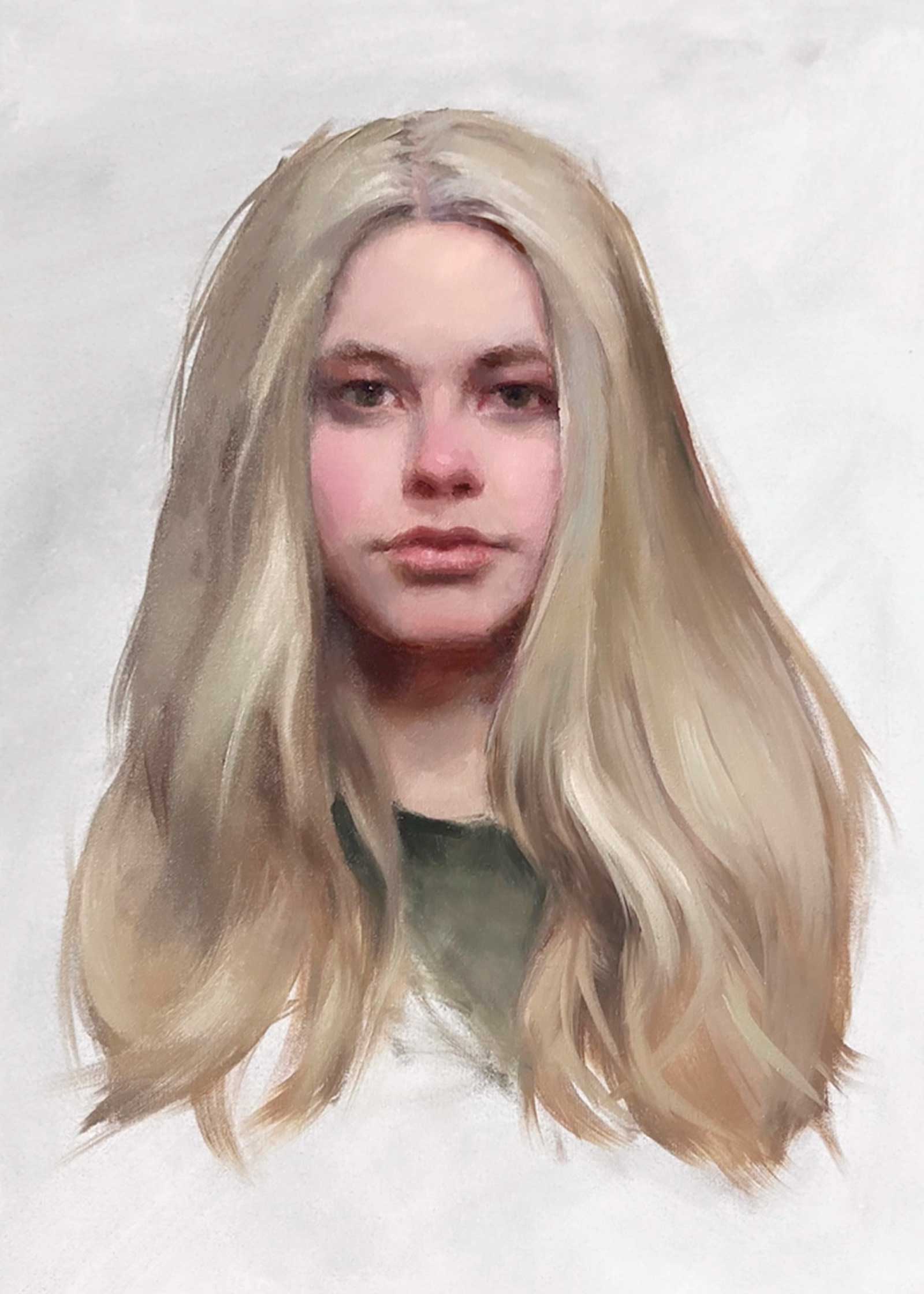 Stage 6
Stage 6: The Final Flourish The last phase of the portrait involved refining the shapes and colors, smoothing out the transitions between values where needed. I continuously stepped back to assess if I had successfully conveyed the intended intensity of the gaze. The ultimate question was whether any further modifications would enhance or diminish the piece. Once I was satisfied, I knew it was time to put the brush down.
Liz Harris is a contemporary figurative artist, who, for the most part, is self-taught but refined her skills through an apprenticeship with Casey Childs. Her exceptional talent has been recognized through numerous awards, including the Awards of Excellence at Portrait Society of America’s 2019 and 2020 International Portrait Competition, and an Honorable Mention at The Springville Museum Salon show in 2018. Harris is a distinguished Signature Member of the Portrait Society of America and passionately shares her expertise as an instructor at SentientAcademy.com while devoting herself to a thriving career as a full-time artist.—