Developing a deep understanding of your materials is a crucial, tactile aspect of painting. Learning how to read a label and understand all the ingredients in a paint will empower you when buying and using paint. Each pigment comes with a set of properties that are important to know something about. Understanding the rich history of pigments will help you understand some of the attributes of each pigment. Also, categorizing each color—even blacks, browns and whites—into its hue family will help you when mixing paint. This, too, will empower you as you learn more about color.
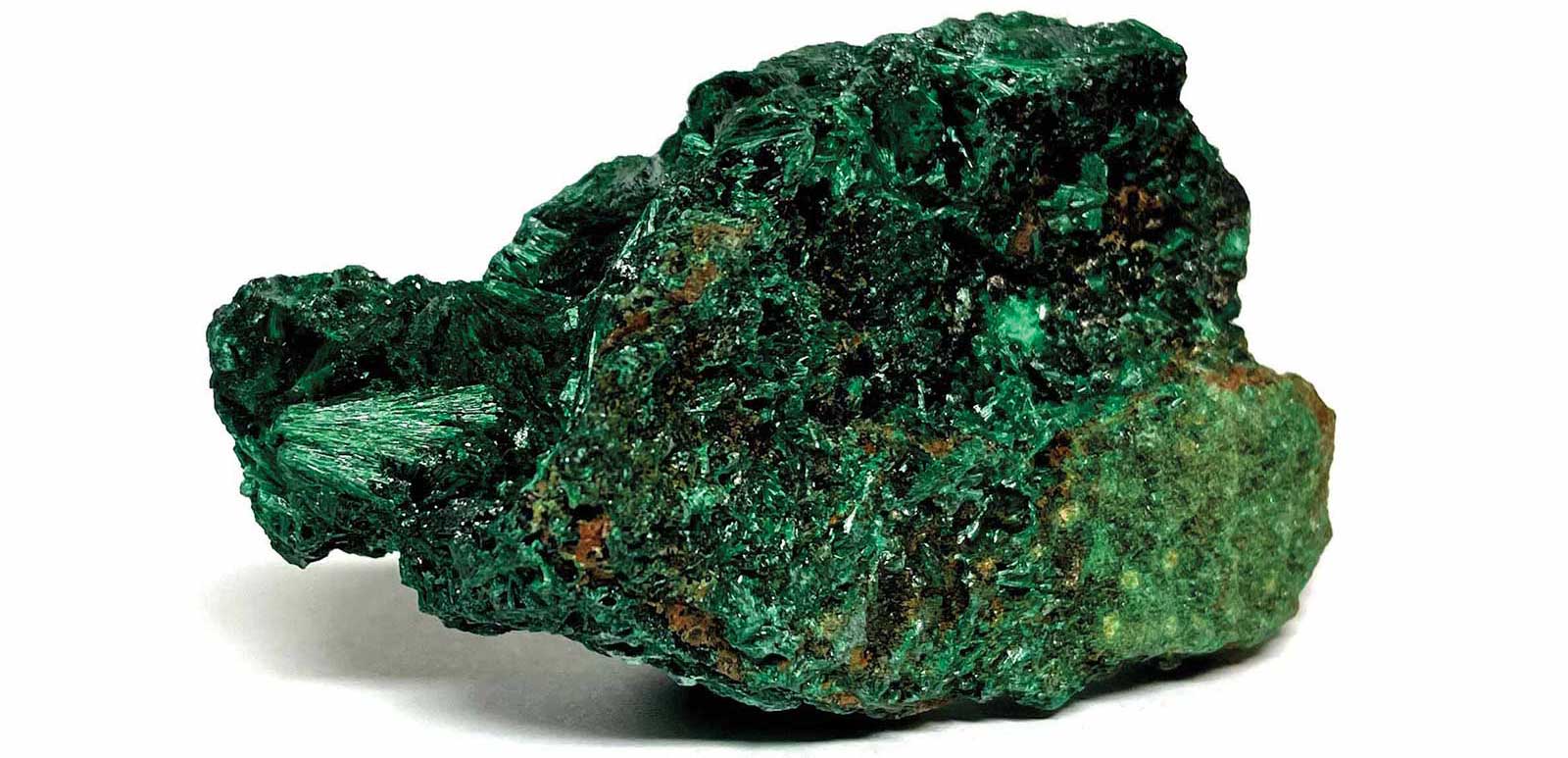
This is the precious gemstone malachite, which is a copper carbonate.
The Anatomy of a Paint Tube
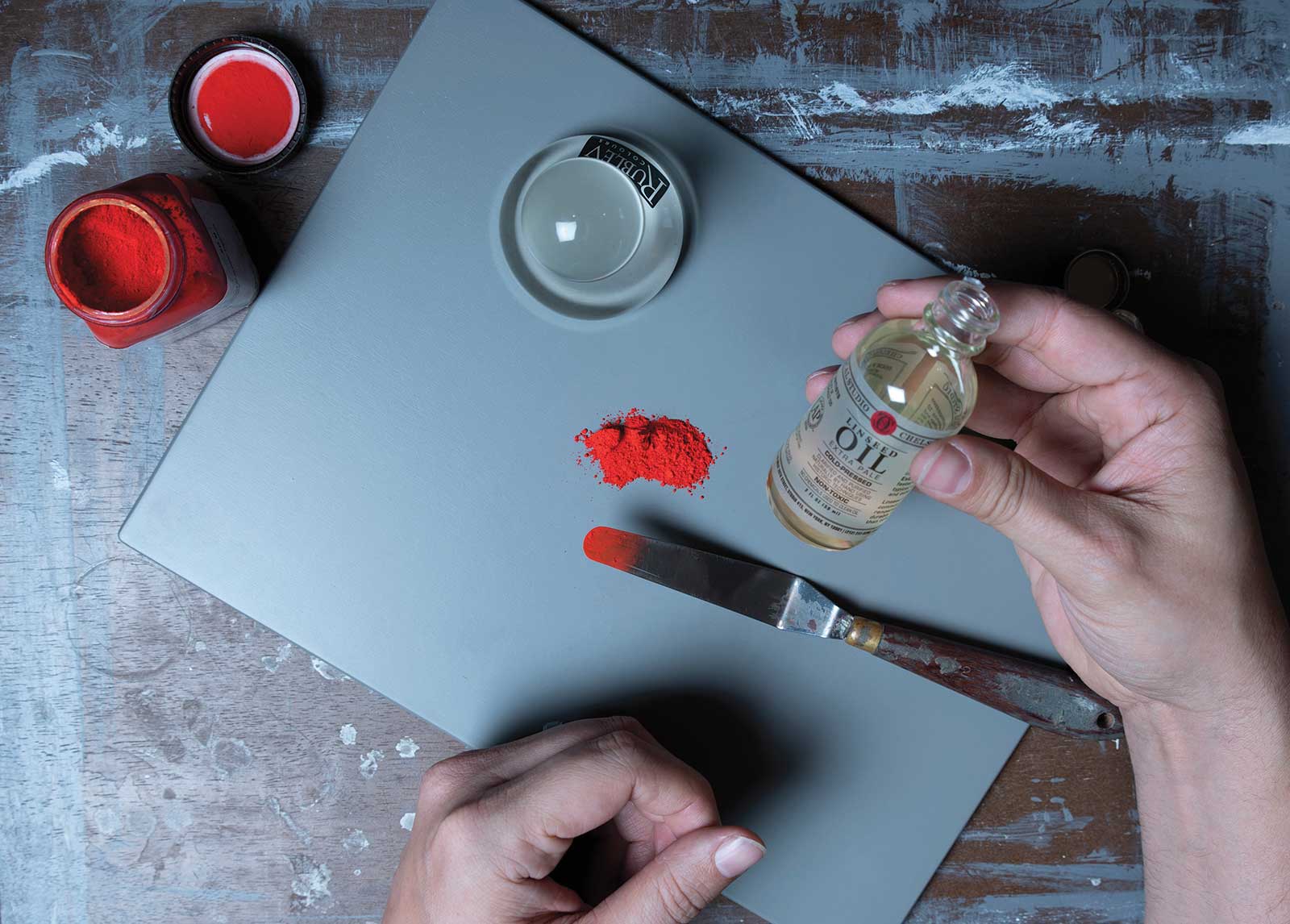
In its simplest form, oil paint is a combination of pigment and oil. Buying paint in an aluminum tube was not always an option. Before paint was sold in tubes, master painters would buy powdered pigments and grind them in oil or have their studio assistants perform this difficult, time-consuming task. This is one of the many reasons that painters mostly used limited palettes.
Aluminum tubes became available around 1860, at about the same time the impressionist movement started in Paris. Modern day oil paints come in aluminum tubes and consist mainly of a pigment and a drying oil, although it’s common to see a small amount of binder combined with the paint—for example, wax is used as a binder to hold the pigment and oil together when the paint is stored on a shelf. Lower quality paints, commonly referred to as “student grade,” often contain a significant quantity of binder and additional fillers used to “extend” the paint, thus compromising its lightfastness and longevity.
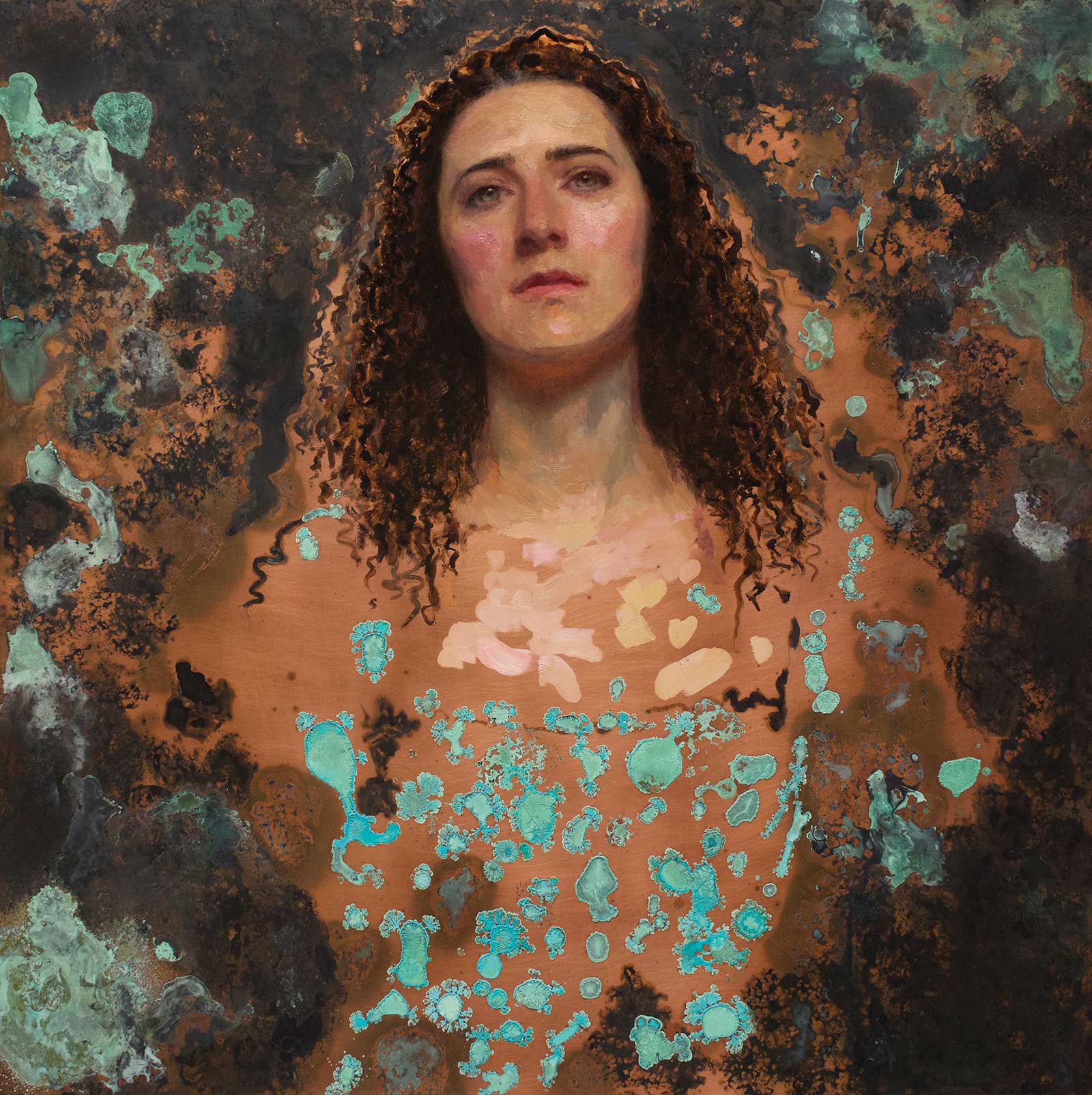
Kate Lehman, Eloisie Eonnet, Sea Wife, 2016, oil and patina on copper, 24 x 24" (60 x 60 cm). Courtesy the artist.
What are Pigments?
Pigment is a broad term for a colored substance that may originate in a wide range of materials, including naturally occurring things (dirt, minerals, animals, plants) as well as compounds created in the laboratory. Pigment is usually finely ground before being evenly mixed and suspended in oil. The ratio of pigment to oil is a distinguishing factor separating high- from low-quality paint. Higher-grade oil paints contain very little (if any) fillers or additives, whereas student grade paints contain fillers, additives or both. Some pigment particles are larger than others, so they scatter light in different ways. Particle size will also affect the handling of the paint. Larger-particle paints are stiffer, while smaller-particle paints are more fluid. Examples of large-particle paints include cobalt violet, manganese blue, cerulean blue, viridian, ultramarine blue and cobalt blue, among others. Those with smaller particles include, for example, zinc white, titanium white, Prussian blue, the quinacridone and phthalo colors, and lamp black.
The Texture of Paint
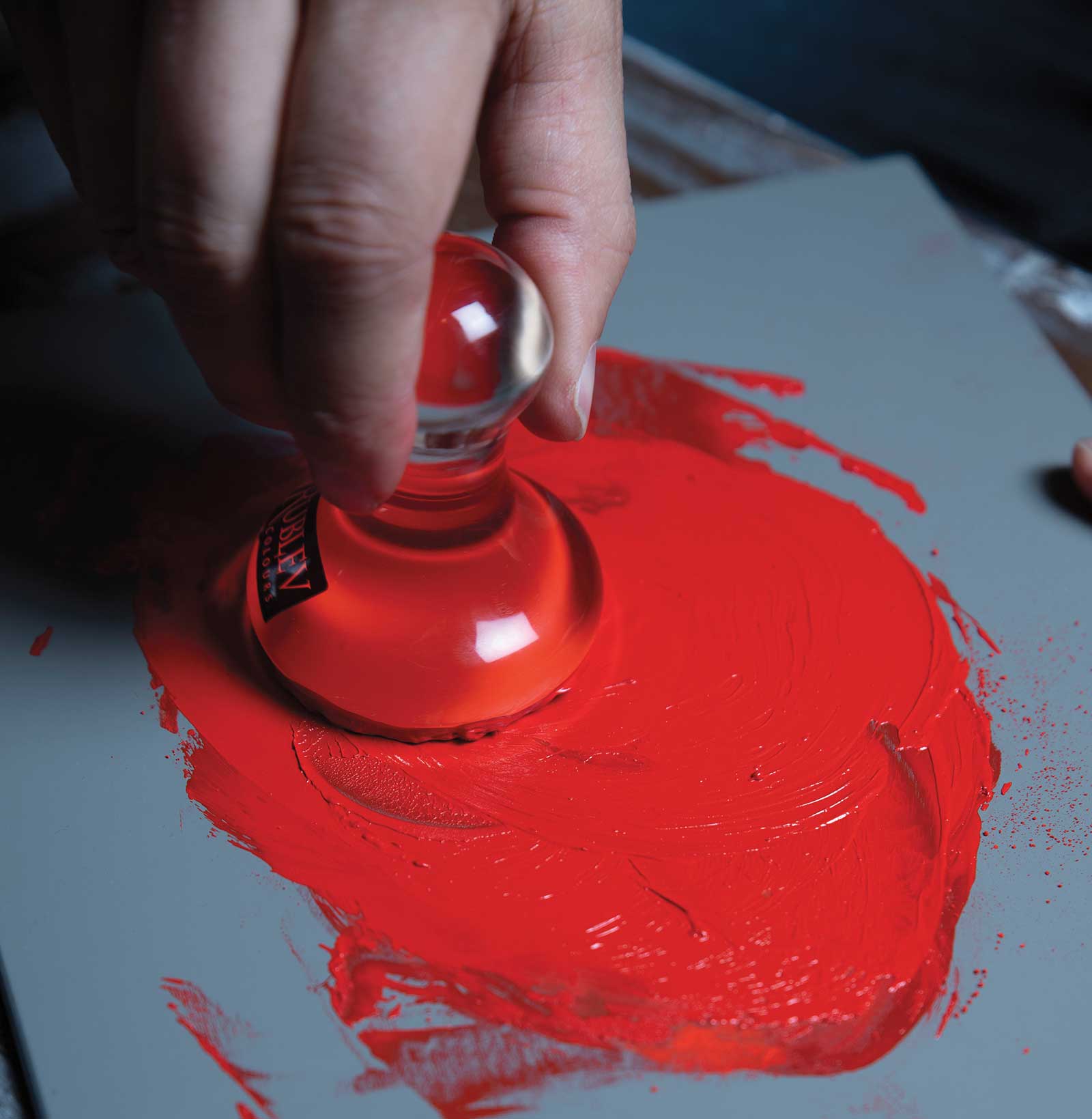
Grinding your own pigments will give you a better understanding of oil paint.
Oil paint comes in a variety of textures, with a creamy, buttery texture being the most common. But it can also be more granular, especially if it contains natural iron oxides, which are essentially dirt. The pigment’s particle size affects the texture of paint as well. The rheology of paint refers to the consistency of the texture. Paint is usually referred to as having an either short or long stroke when brushed on a surface. A short stroke will not pull as far as a long stroke. Most manufacturer paints are short, but if you grind your own pigments you can choose if you want the paint to be long or short.
Fillers and Additives
Fillers are inert ingredients, or extenders, that are usually white or near-white pigments with extremely low color power. These substances, such as chalk or stearate used to bulk up paint, are more common in low-quality, student grade paint. Additives include drying agents, oxygen scavengers (which prevent bubbles from curing in the paint) and wetting agents (which help the pigment and oil mix). Driers, or siccatives, enable the paint to dry faster, but there’s a tradeoff: they may compromise the paint quality, adversely affecting the film strength and making it brittle over a period of years. Common additives that speed up drying, slow it down, or extend paints or increase their opacity include alumina hydrate, asbestine, barytes, blanc fixe, chalk, china clay (kaolin), gypsum, infusorial earth (diatomaceous earth), magnesium carbonate, marble dust, mica, pumice, silica, talc and whiting. But let me reiterate that, in my practice, I’ve found it best to paint with paint that’s just pigment mixed with oil.
The Dangers of Cheap Paints
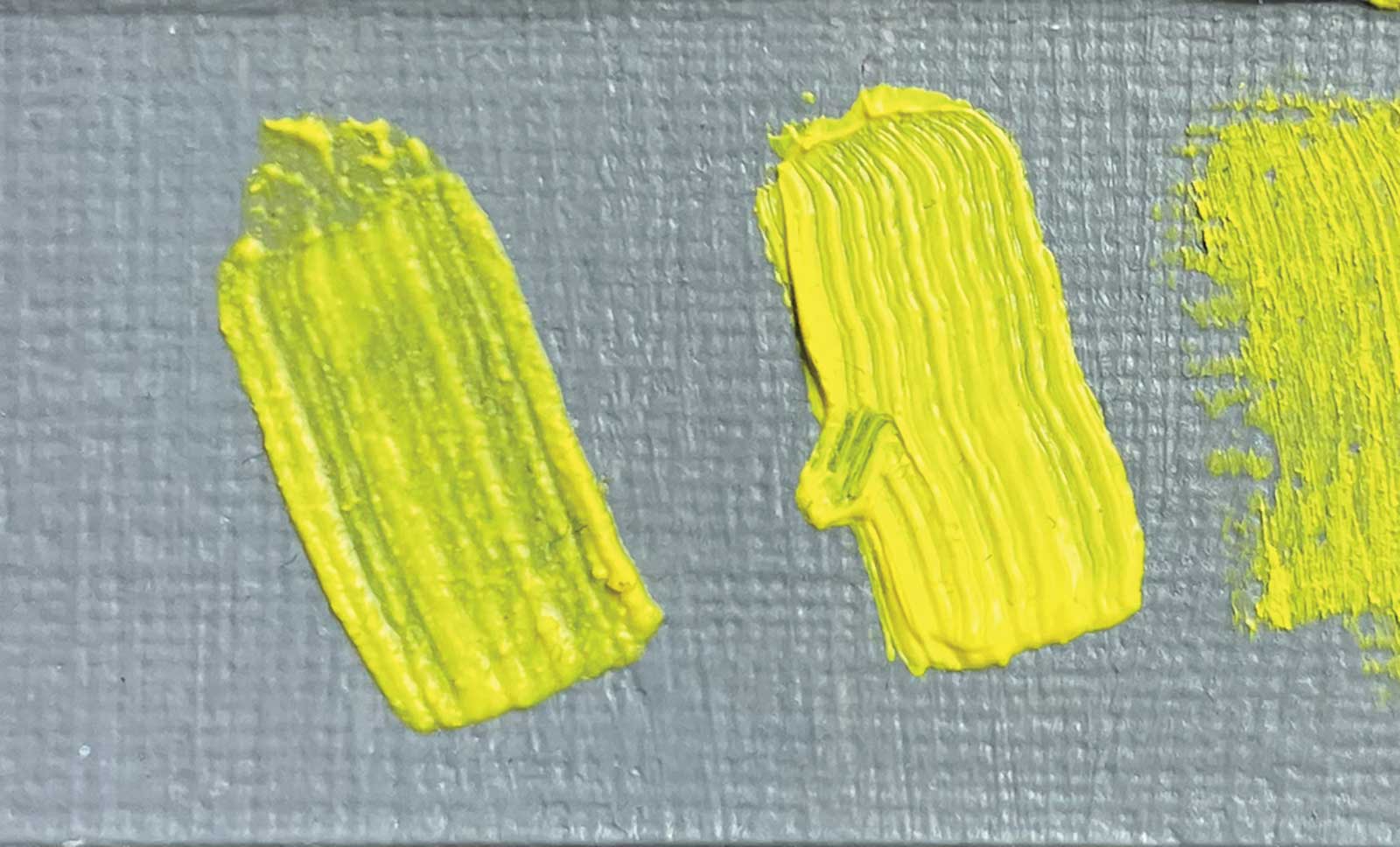
Shown here is student grade hansa yellow light brushed onto a gray panel. This paint has a lot of filler in it, which is why it looks grainy and transparent. The swatch to the right is the same color but from a professional brand that does not have fillers in it.
Inexpensive, low-quality paints use a lot of fillers and other additives to achieve their low price. The tradeoff is a diluted, less permanent paint, which covers poorly and lessens the visual impact of the painting.
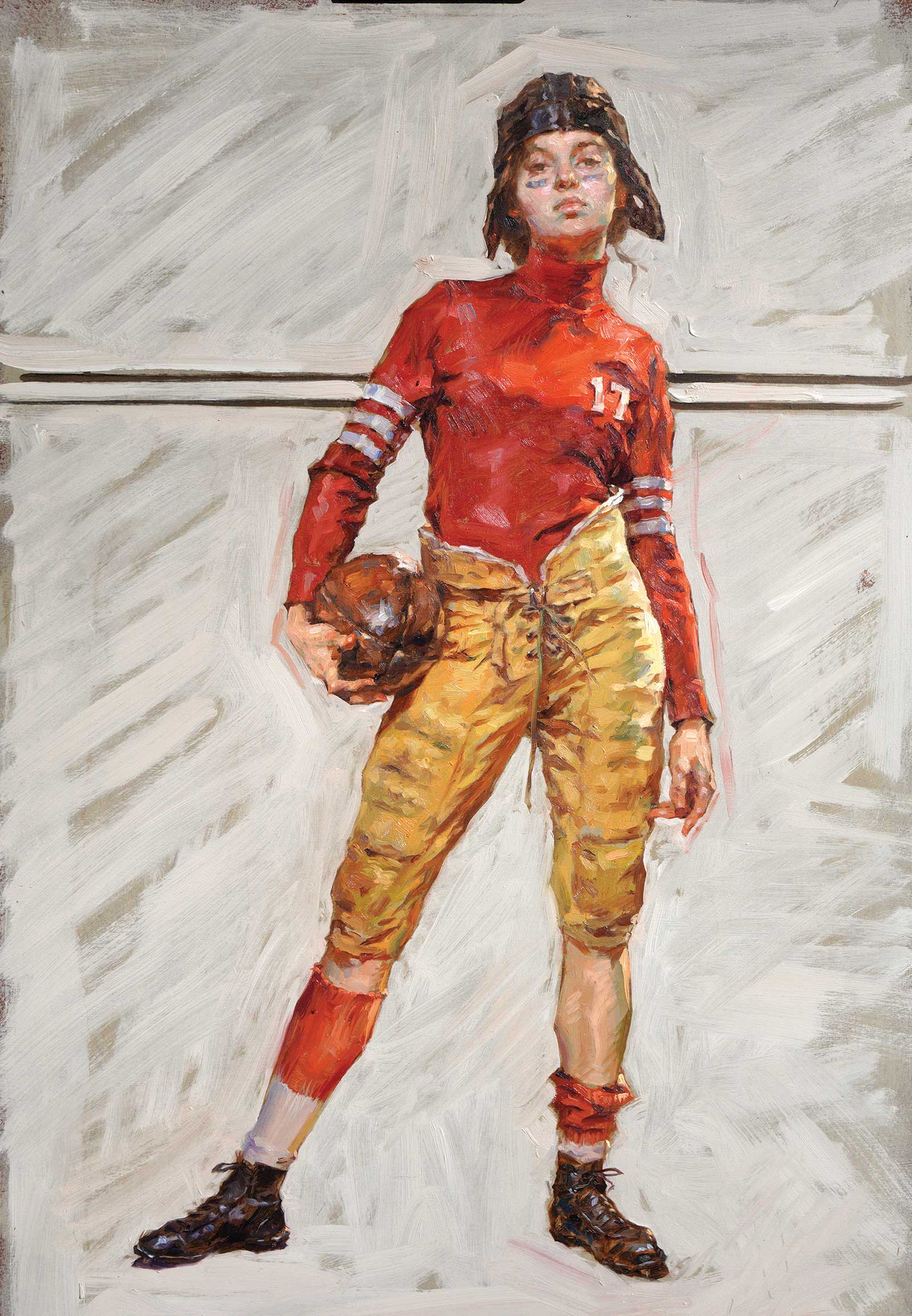
Robert Liberace, Ava, 2020, oil on canvas, 12 x 9" (30 x 22 cm). Courtesy the artist.
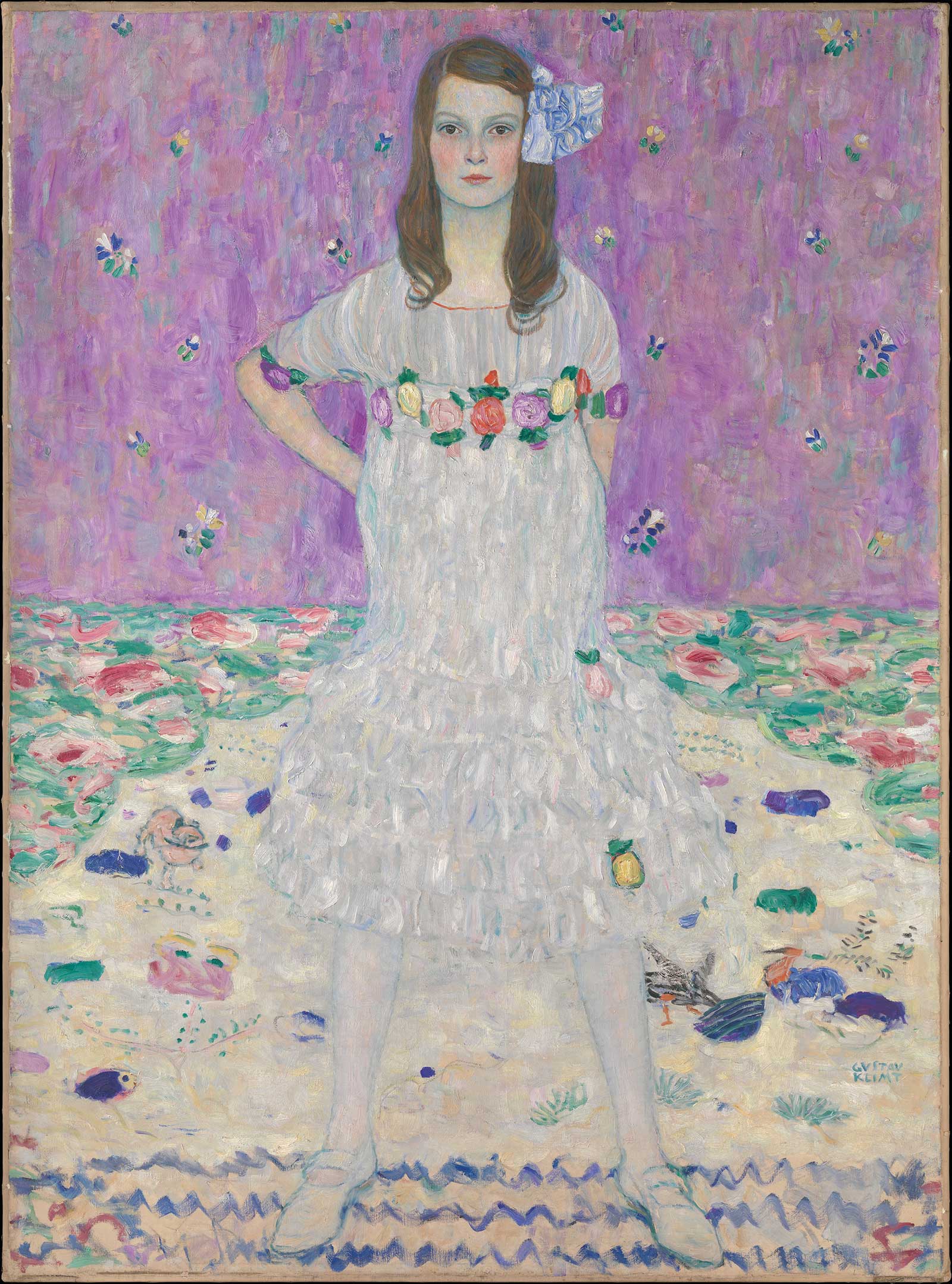
Gustav Klimt (1862-1918), Mäda Gertrude Primavesi, 1912-1913, oil on canvas, 59 x 43½" (149 x 110 cm). Gift of André and Clara Mertens, in memory of her mother, Jenny Pulitzer Steiner, 1964. Metropolitan Museum of Art, New York. Klimt uses a violet color in the background of this painting.
Oil-to-Pigment Ratio
The amount of oil in each tube of paint varies from pigment to pigment because of different pigments’ different particle sizes and the degree of their “thirst” for oil. Most manufacturers try to find the perfect ratio, but, as a general rule, the maximum amount of oil in most tubes ranges from 30 to 60 percent. The weights of tube colors differ according to the particle size of the pigment and how well oil is absorbed into the pigment. The smaller the pigment particles, the greater the amount of oil needed and the lighter the tube of paint. The larger the particles, the less demand for oil—hence a heavier tube of paint. Examples of relatively light paints are the phthalo colors, whose pigment particles are small. Lead white, on the other hand, has a larger particle size and needs very little oil, making the tube heavier.
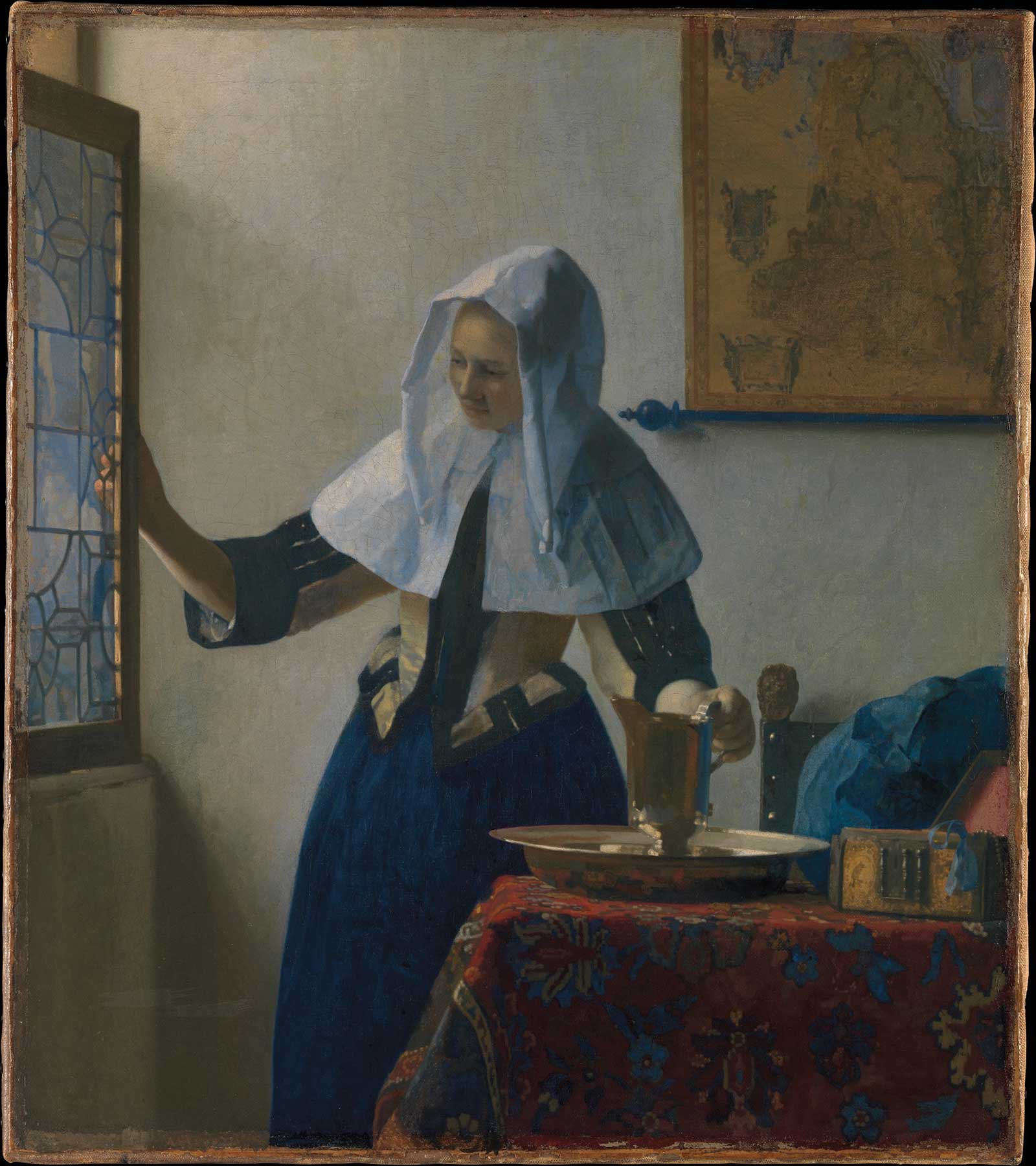
Johannes Vermeer (1632-1675), Young Woman with a Water Pitcher, ca. 1662, oil on canvas, 18 x 16" (45 x 40 cm). Marquand Collection, Gift of Henry G. Marquand, 1889. Courtesy the Metropolitan Museum of Art, New York. Vermeer used azurite on his palette among other blues, like lapis lazuli (ultramarine blue).
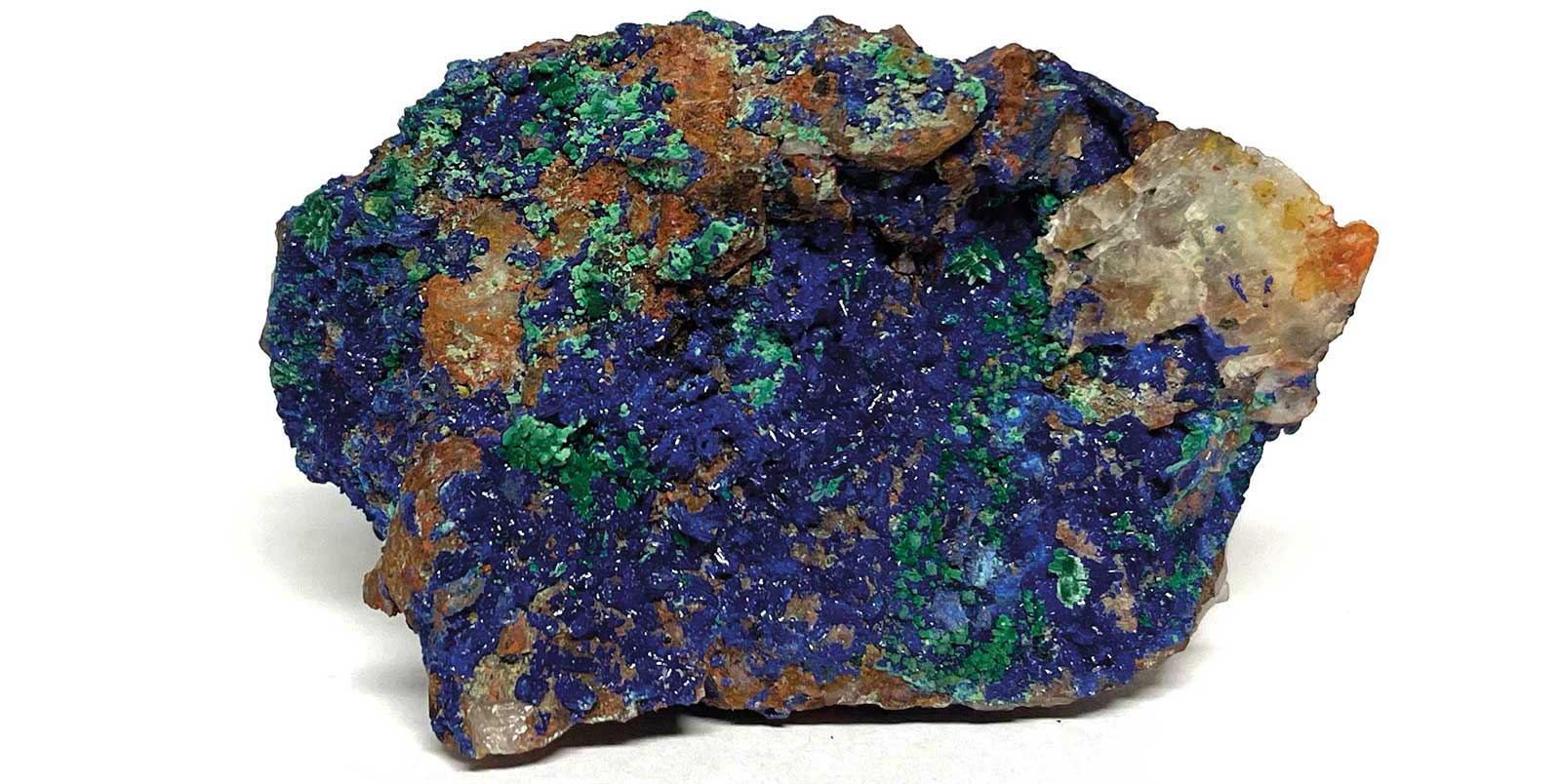
This is the precious gemstone azurite. The blue part of this stone is ground down into the color azurite. The green is the presence of malachite.
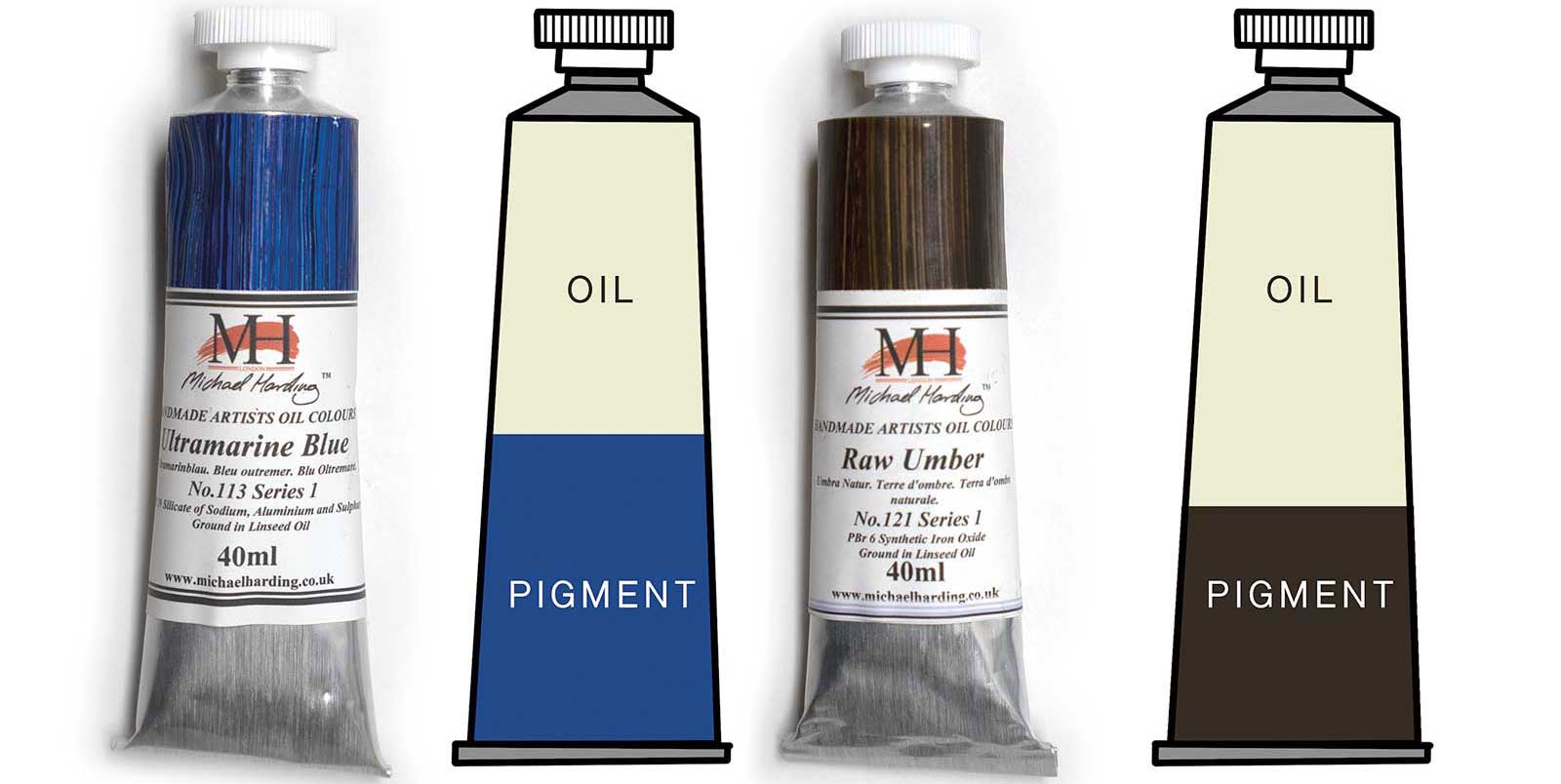
Each pigment requires a different amount of oil depending on its “thirst.”
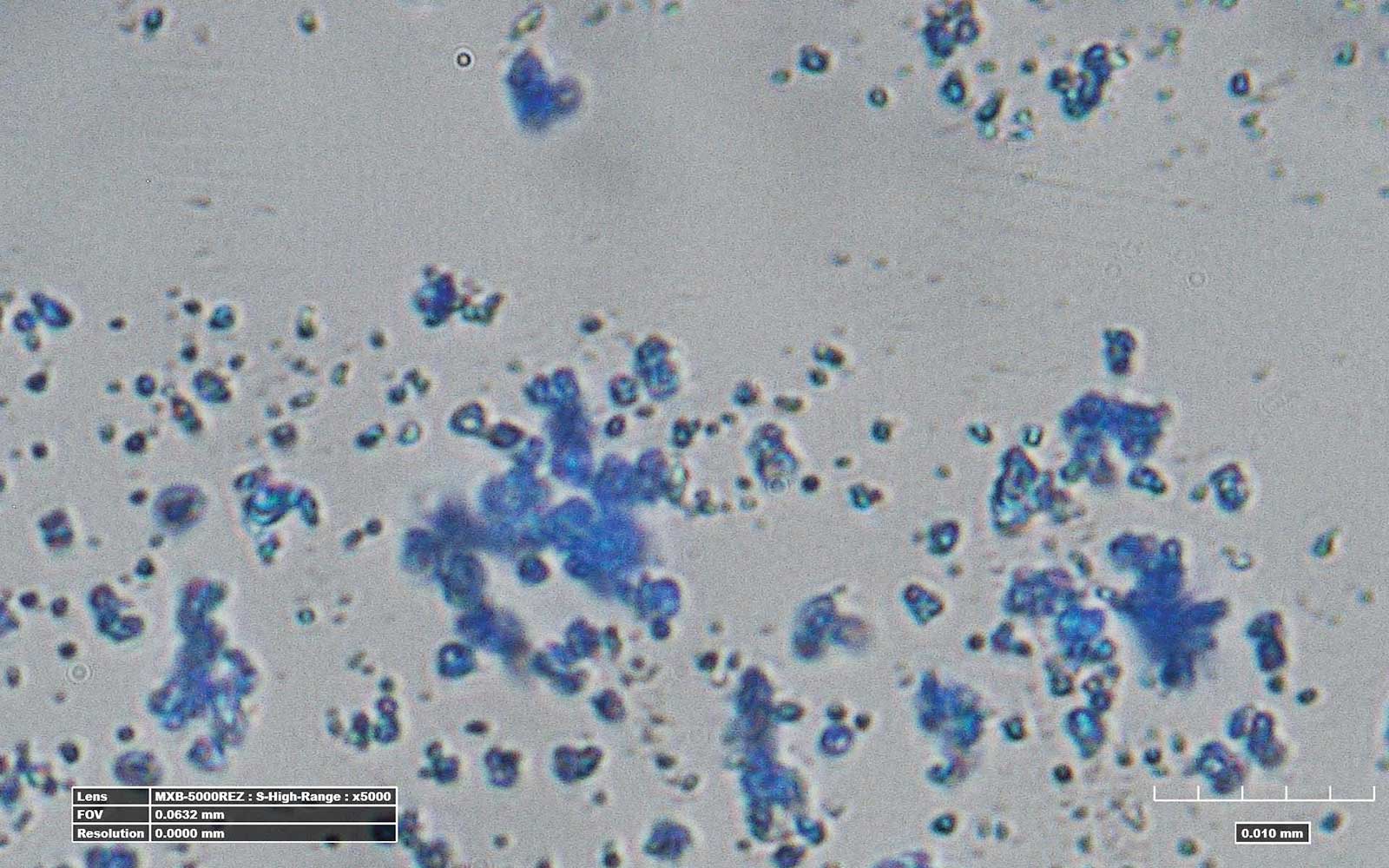
A view of ultramarine blue under a microscope. Notice how light interacts with the pigment.
This article is a modified excerpt from Casey’s latest book, The Oil Painter’s Handbook: A Contemporary Guide to Color Mixing, Pigments, Palettes, and Harmony. Learn more at www.toddmcasey.com/opch.—
About the Artist
 Todd M. Casey
Todd M. Casey’s work touches on more than simplistic realism. There is a haunting, nearly literary quality to each frame—a feeling that subjects are viewed from behind mottled glass, burnished by enigmatic candlelight or brushed by the soft, hazy edges of a half-remembered dream. His work is classically styled but progressive in approach. Every painting has a tale to tell, brewed from a deep well of introspective thought.
His paintings have been honored with awards several times in recent years. Most recently, he won first place four times at the Portrait Society of America’s Members Only Competition and placed first in oil painting from the Allied Artists of America in 2015. His work can be found in collections throughout the United States, and on the East Coast at Rehs Contemporary Gallery, in Midtown New York City, and Simie Maryles Gallery in Provincetown, Massachusetts.
In resulting years, Casey has made the transition from painter to author and teacher. He published his first art book The Art of Still Life in 2020, and his second book The Oil Painters’ Color Handbook came out in August of 2022. His work is also featured in Cocktails: A Still Life, by Christine Sismondo and James Waller, which was released in August 2022. When not painting, writing or illustrating, Casey teaches classes for the Massachusetts College of Art and the Academy of Art University Online, the Art Students League of New York and through private online classes and workshops.
Contact at
www.toddmcasey.com