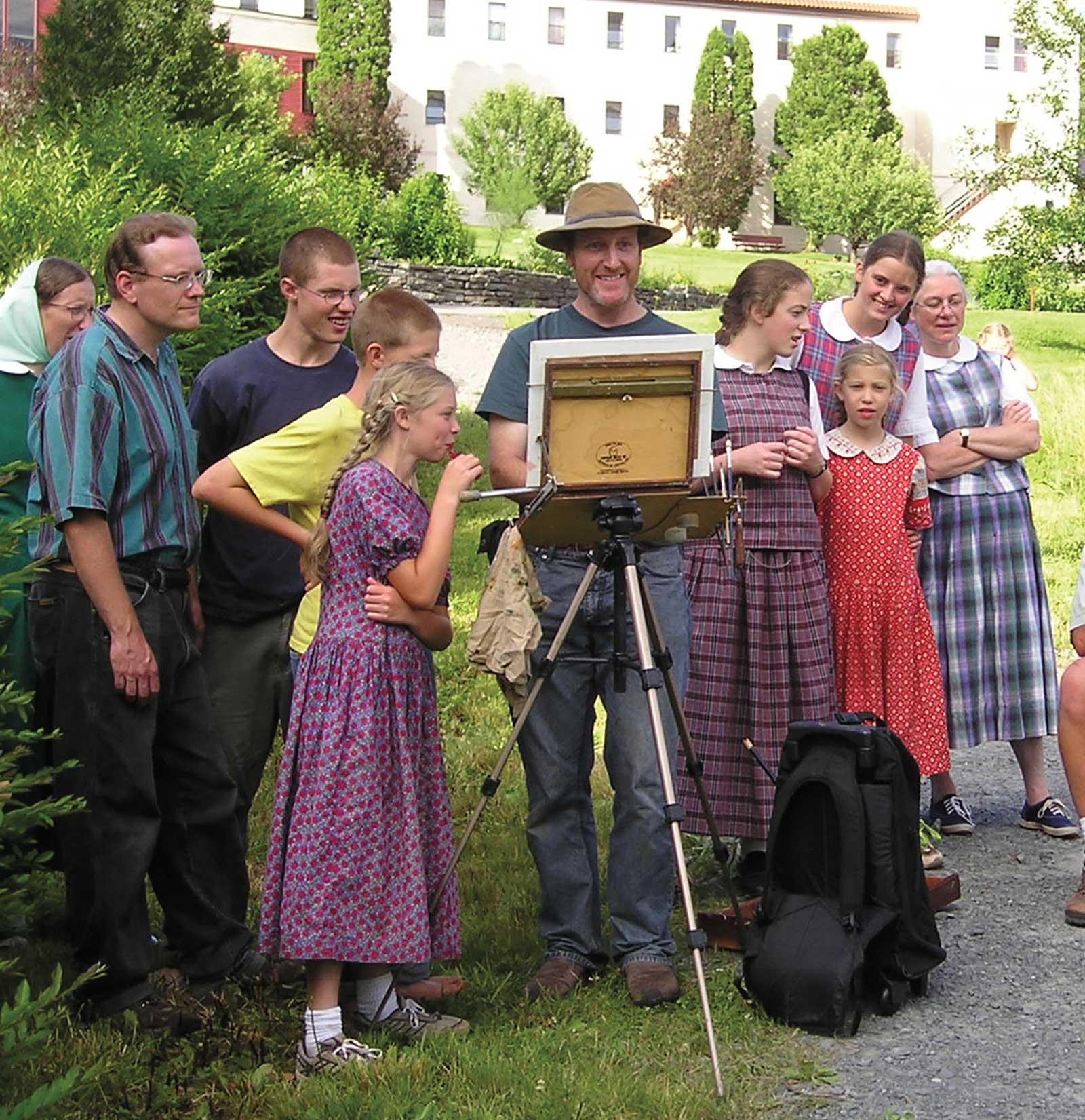
Painting at the Platte Clove Bruderhof Community in Upstate New York. Actually these folks were very respectful and asked smart, observant questions.
The Challenge of Making Art Outside
Like it or not, when you paint in public, you become an entertainer. You are a magnet for random strangers. Anyone who has sketched outside has faced questions or remarks from passersby. Many beginning painters feel uncomfortable with such attention. Conversing while painting introduces a cognitive load that can shut down even experienced painters who need to concentrate on a difficult step. This is especially true in watercolor, where time is critical.
I’ve gotten plenty of weird remarks. A landowner once shouted from his big pickup truck, “Makin’ money off my tree?”. A lawyer who owned a property said, “Don’t fall into my creek and drown. That would be actionable.” Another time I had to give up a good spot because I realized it was the unloading zone for busload after busload of bored tourists.
I’ve collected several strategies for dealing with this problem, starting with the most anti-social.
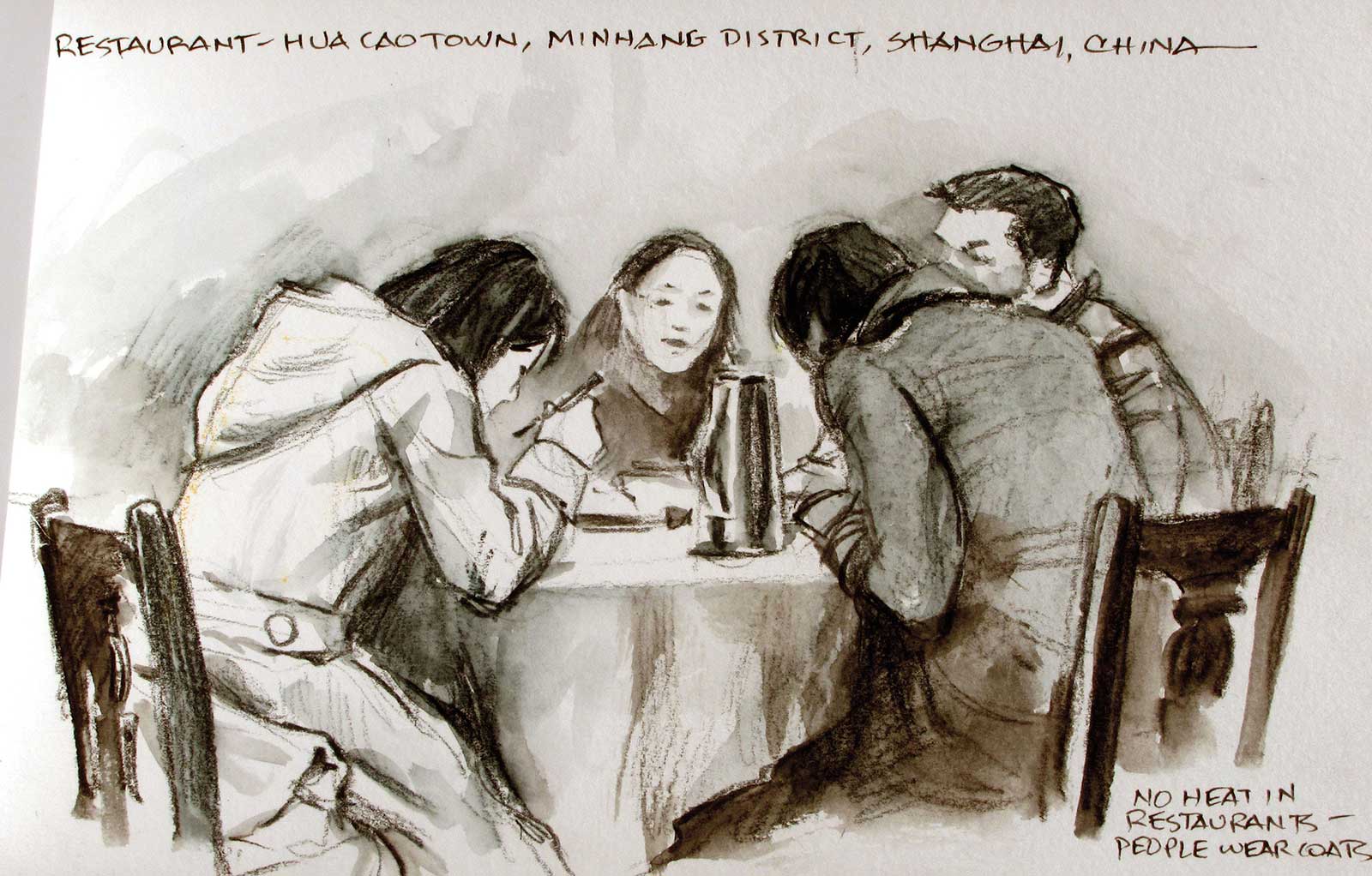
Most average restaurants in Shanghai, China are not heated, so in the cold months people keep their coats on. It’s okay to lean over your plate. These people don’t mind me sketching at all. As I sketched, the chef came out of the kitchen and stood behind me for a while, smiling and giving me the “thumbs up.” And as the people finished their meal and left, they took a look and had a big laugh, too.
13 Ways to Deal with Curious Spectators
1. Avoid the Problem
The simplest way to deal with a problem is to avoid it. As Arthur Guptill said, “Though you must gradually accustom yourself to spectators, I suggest that for a time you work where you will be at least comparatively free from them. There are problems enough to deal with without this added one.”
2. Wear Headphones
Wearing a big set of headphones makes you look zoned out, even if you’re not really listening to any music. It’s a preemptive signal that says “I can’t talk.” You can tune up the music or podcast and tune out the world, or shut it off to overhear candid comments. John Singer Sargent would clench a paintbrush between his teeth and scowl to repel watchers.
The problem with all the foregoing passive-aggressive solutions is that they can cause you to miss out on potentially meaningful encounters. Let’s explore how to make the experience work out better for you and the public.
3. People Mean Well
Remember that most people have good intentions and aren’t as judgmental as some assume. They almost universally admire an artist who is courageous enough to bring their studio outside. If spectators ask silly questions, it’s because they’re shy and don’t know what to say to an artist.
4. Have Some Standard Lines Ready
When someone comes up and they seem unsure of what to ask, I usually have a prepared line ready to help orient them, such as, “Hi, I’m working in casein, which is an old-fashioned milk-based paint that artists used before acrylic was invented.” Then I pivot to talking about them, which takes the focus off me and my painting.
5. Language Barriers Can Help
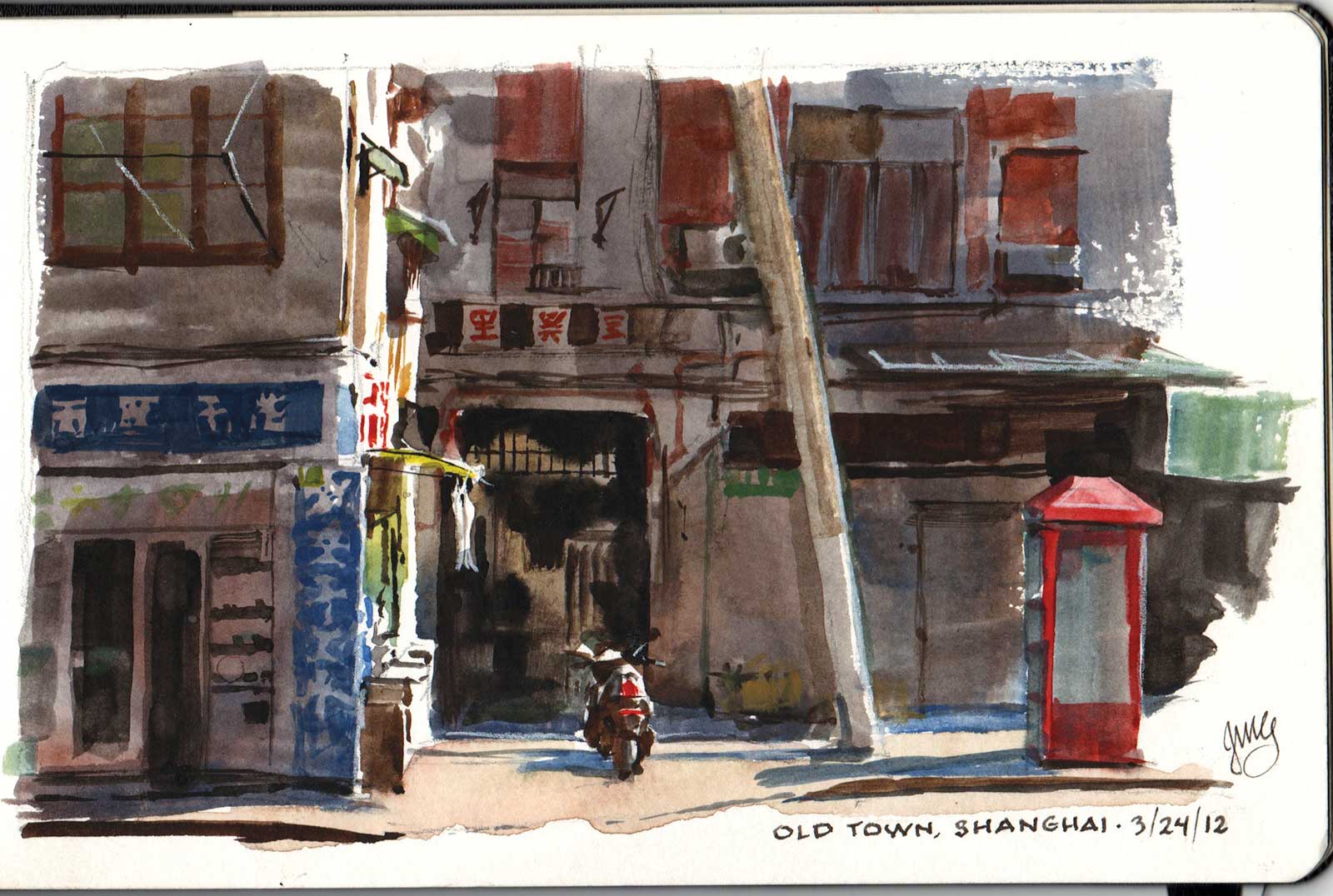
When sketching in different countries, language barriers can work in your favor. Spectators may watch quietly or offer encouraging gestures instead of bombarding you with questions. When I sketched in China, people watched with quiet, respectful absorption, or they would just smile and make encouraging gestures.
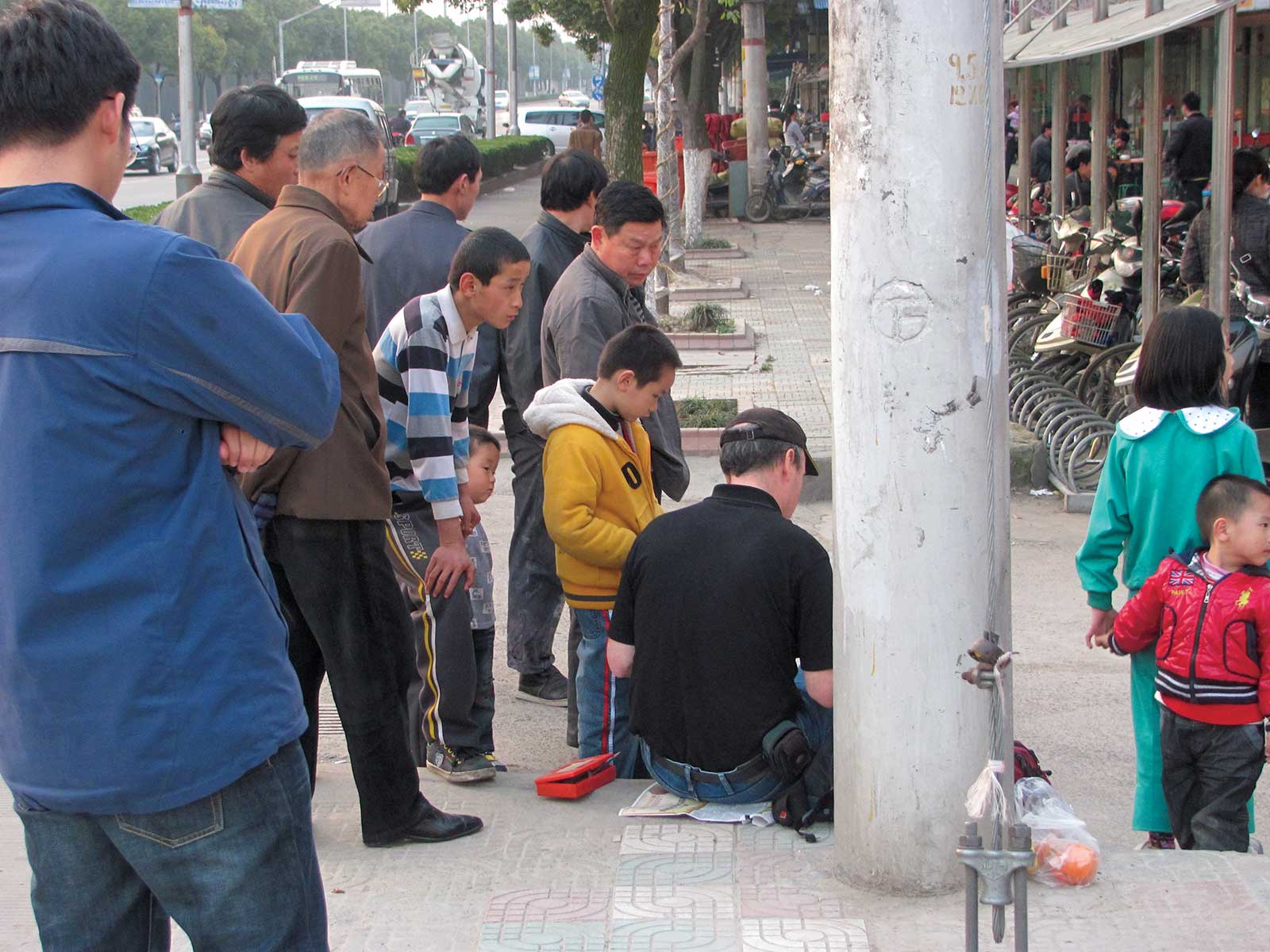
In Shanghai, China, someone gives me a newspaper so I don’t have to sit on the ground.
6. Let Kids Watch
Most of the time when kids hang around, it makes sketching much more fun. If you bring an extra sketchpad to loan to a really interested kid, you might change their life. Being inviting and friendly doesn’t always work, and sometimes I get annoyed, especially by questions that obsess over ego, careers and money.
7. Give Permission to Look
Tell them it’s okay to take a quick look, and invite them to come back later. That approach lets them know implicitly that you may not want them to park too long next to you. If you’re in the middle of a difficult passage and can’t talk, just briefly explain that you’d love to chat, but you can’t right now because you are in the middle of a tricky step.
8. Change the Subject
Shift the discussion away from you, your proficiency or the price of your painting. Ask the person something about the place you’re in or the thing you’re painting. For example: “Do you know the history of that old building?” or “How high did the floodwaters get here in the last storm?” This often leads to truly interesting encounters, and it lets them do the talking so you can concentrate. I’ve learned a lot about many of my motifs this way.
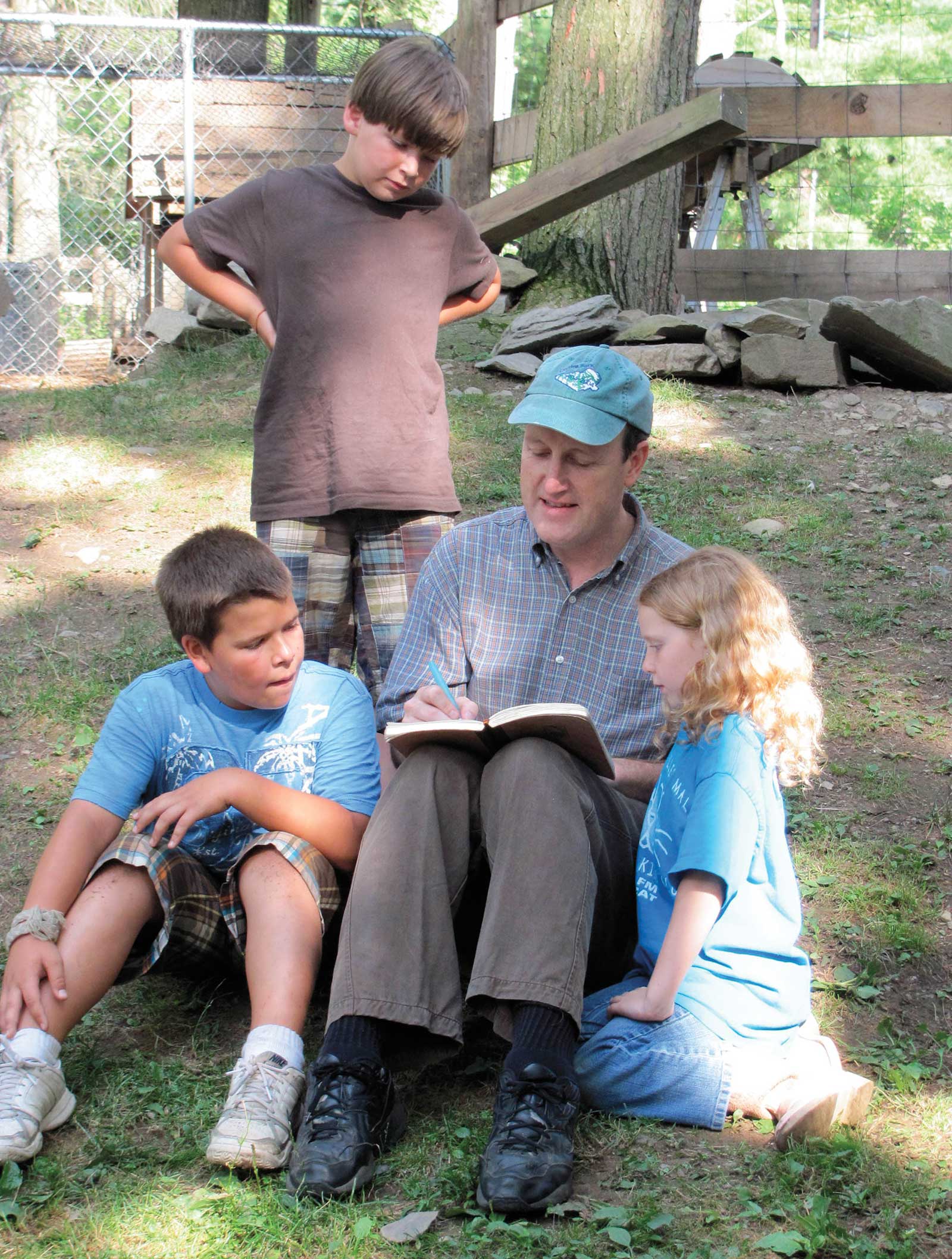
Some of the same questions keep coming up.
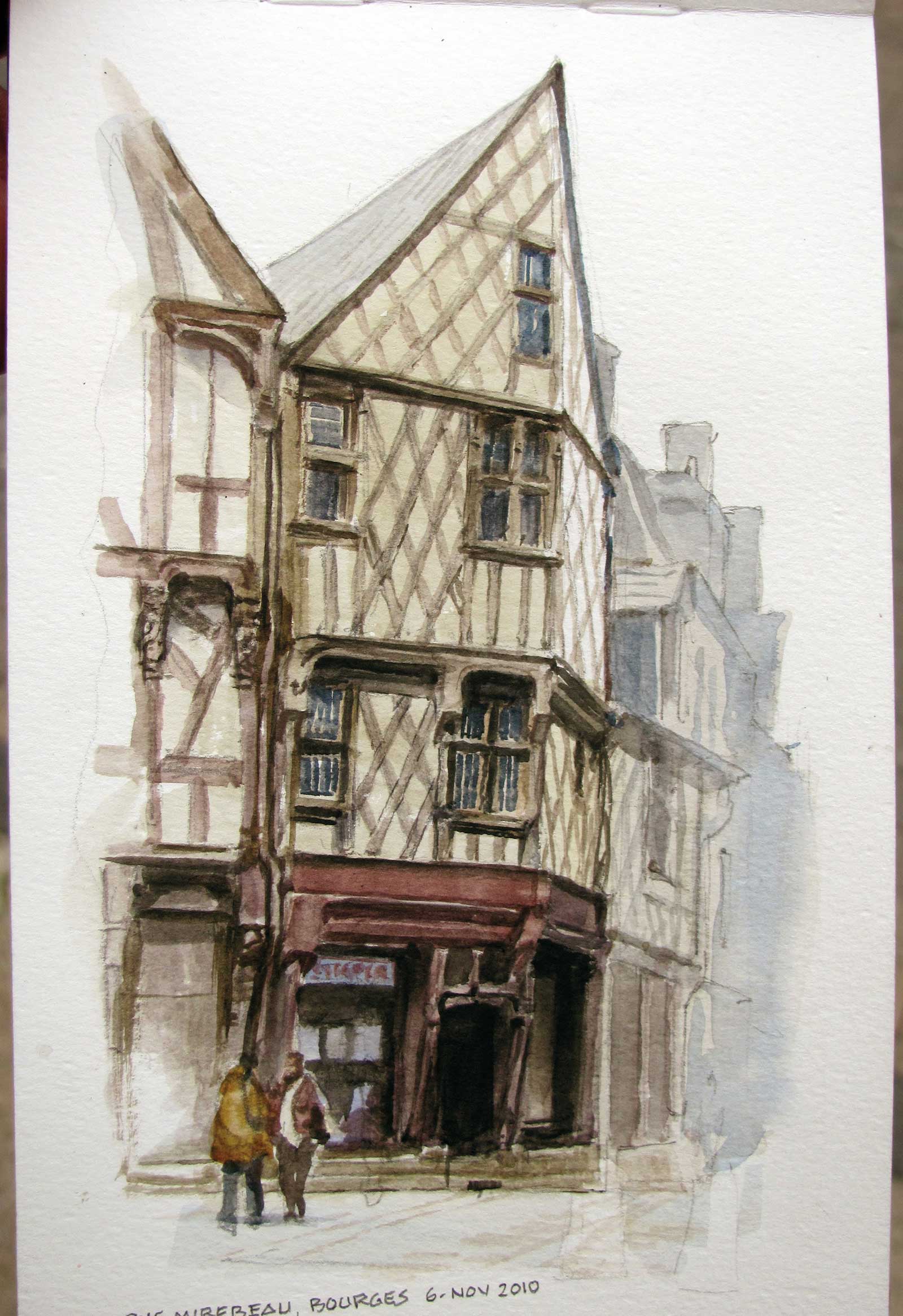
A few people stop by and watch quietly as I do this watercolor study of half-timbered buildings in Bourges, France.
9. Create a Web Resource
Before you go out painting, you can create a website or blog post where you answer common questions and share information about your galleries or publications. Then you can create a QR code that people can scan with their phone to find out what they want to know without bothering you.
10. Bring a Friend
If you have a friend or a spouse who doesn’t mind fielding questions from the spectators, it can take a lot of pressure off you and make you feel safer in dodgy neighborhoods.
11. Back Up to a Wall
Choose a motif where you can back up to a wall or a rosebush so that no one can get behind you. Or sit up high. Andrew Wyeth would sit on the hood of his car with his feet on the bumper so that no one could watch from behind.
12. Look Official
Wear a uniform shirt and surround yourself with traffic cones and “caution” barricade tape. If there’s more than one of you, and you’re wearing uniforms, spectators are so bewildered, they don’t know what to say.
13. Welcome the Challenge
The challenge of spectators is just one of the things that makes painting outdoors so exhilarating. There’s also wind, rain, bugs, animals, traffic and changing light. Dealing with all these issues helps develop our concentration and gives us a sense of urgency that makes us do our best work.
Is It Okay to Sketch Strangers in Public?
Is it ethical to stare at someone in public and draw them without their permission?
If the person being sketched is preoccupied with their phone or their book and doesn’t notice you, you’re under no obligation to tell them they’re being sketched or to ask their permission. Doing so could make the person self-conscious.
But once the subject looks up and you lock eyes with them, all the questions start playing in their head, such as: Is that artist sketching me? Should I hold still? Will he make me look good? How long will it take? Will I get to see the sketch afterwards? If I like it, can I put it on Facebook? Are they going to try to sell it to me or give it to me?
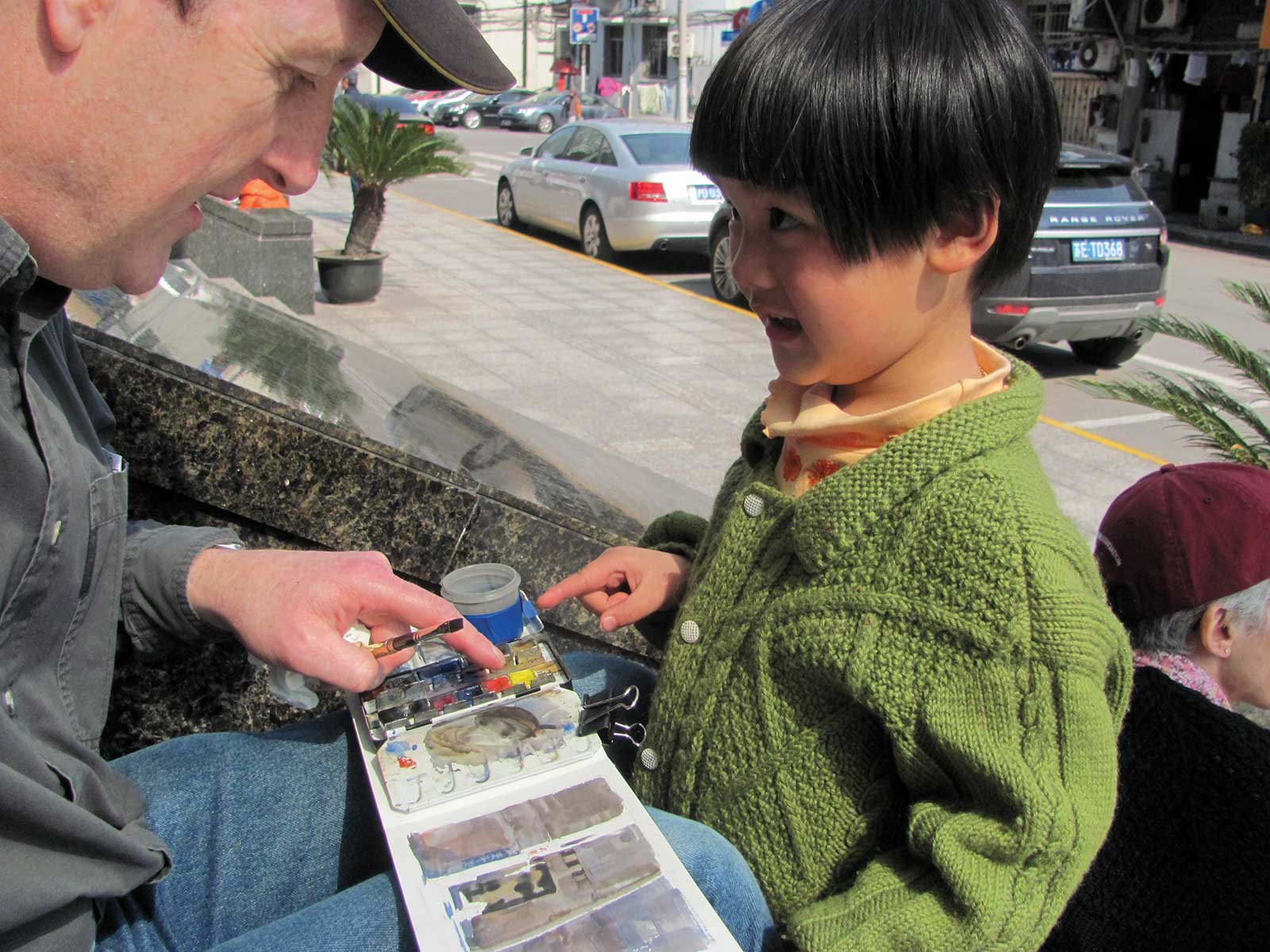
People come out to watch as I sketch the view across the street in Shanghai. A little girl quickly realizes I can’t speak her language, so she points out the color names and laughs as I attempt to repeat what she says.
You can address these anxieties in a friendly opener, such as, “Hi, I’m just getting some practice sketching people, hope you don’t mind. Keep doing what you’re doing. You don’t have to hold still. I’ll be done in five more minutes and I’ll show you when I finish.” If they look annoyed after that, it’s probably best to try someone else, but nine times out of ten, you will have erased their worries and perhaps made a friend. —
About the Artist
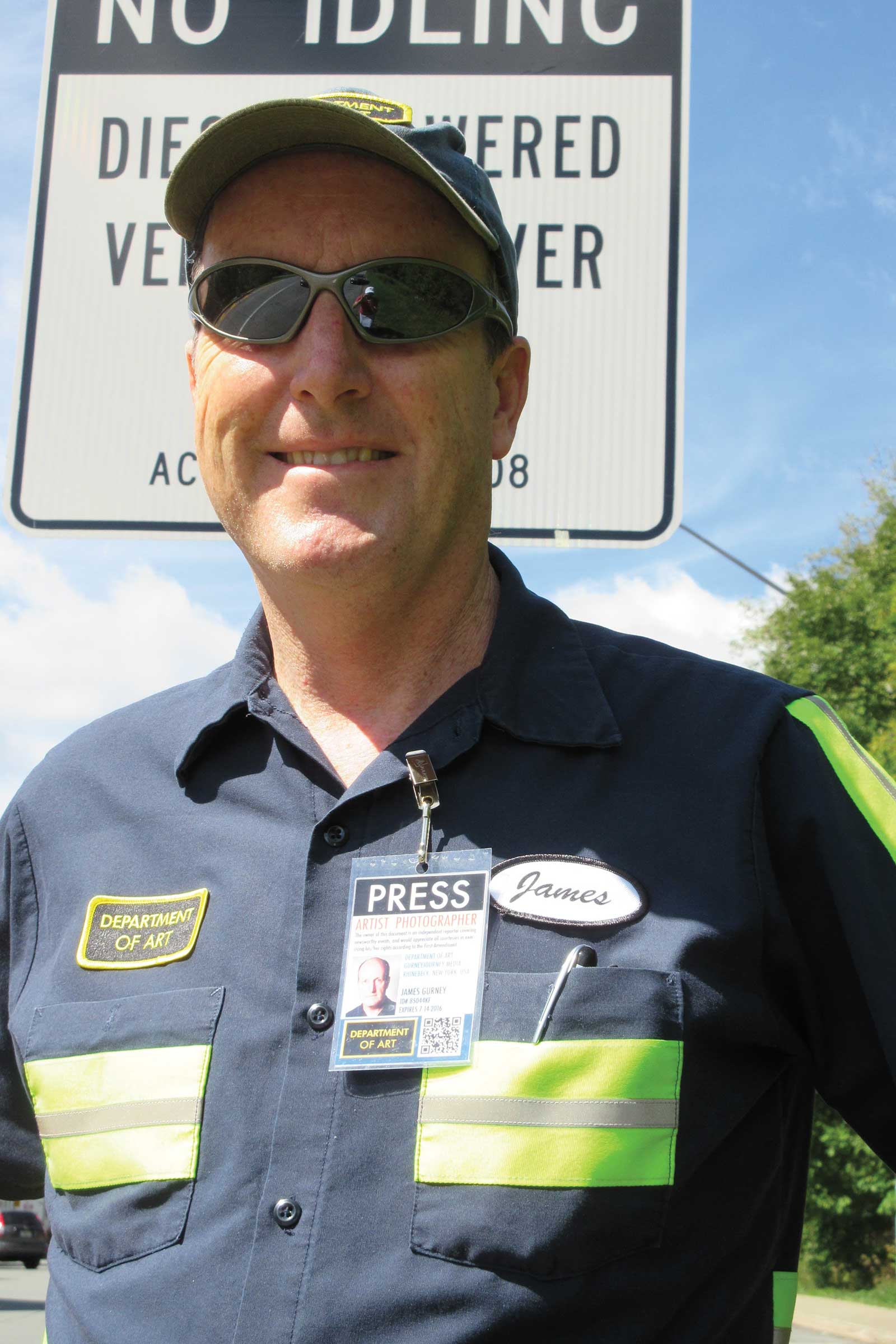 Uniform stores will often provide embroidered name badges, and you can make your own press passes if you’re a citizen journalist.
James Gurney left art school to ride the freight trains across America sketching the people and places he visited, resulting in the 1982 book The Artist’s Guide to Sketching. When he returned from his adventures he painted over 600 background paintings for the animated film Fire and Ice, and started painting science fiction paperback covers and National Geographic illustrations. He then wrote and illustrated four books about his alternate universe of Dinotopia, and has since built a YouTube channel with 500,000 followers about his on-the-spot paintings.
Contact at
www.jamesgurney.com