As a representational oil painter, I primarily use the alla prima approach and often work from direct life study. My painting philosophy revolves around seeing and interpreting subject relationships. Learning to see these relationships is crucial and fundamental for artists to authentically depict aspects of the subject in paint. Learning to see is more than just looking, as it involves understanding. As my wife often reminds me, “Hearing is automatic, but listening is not.”
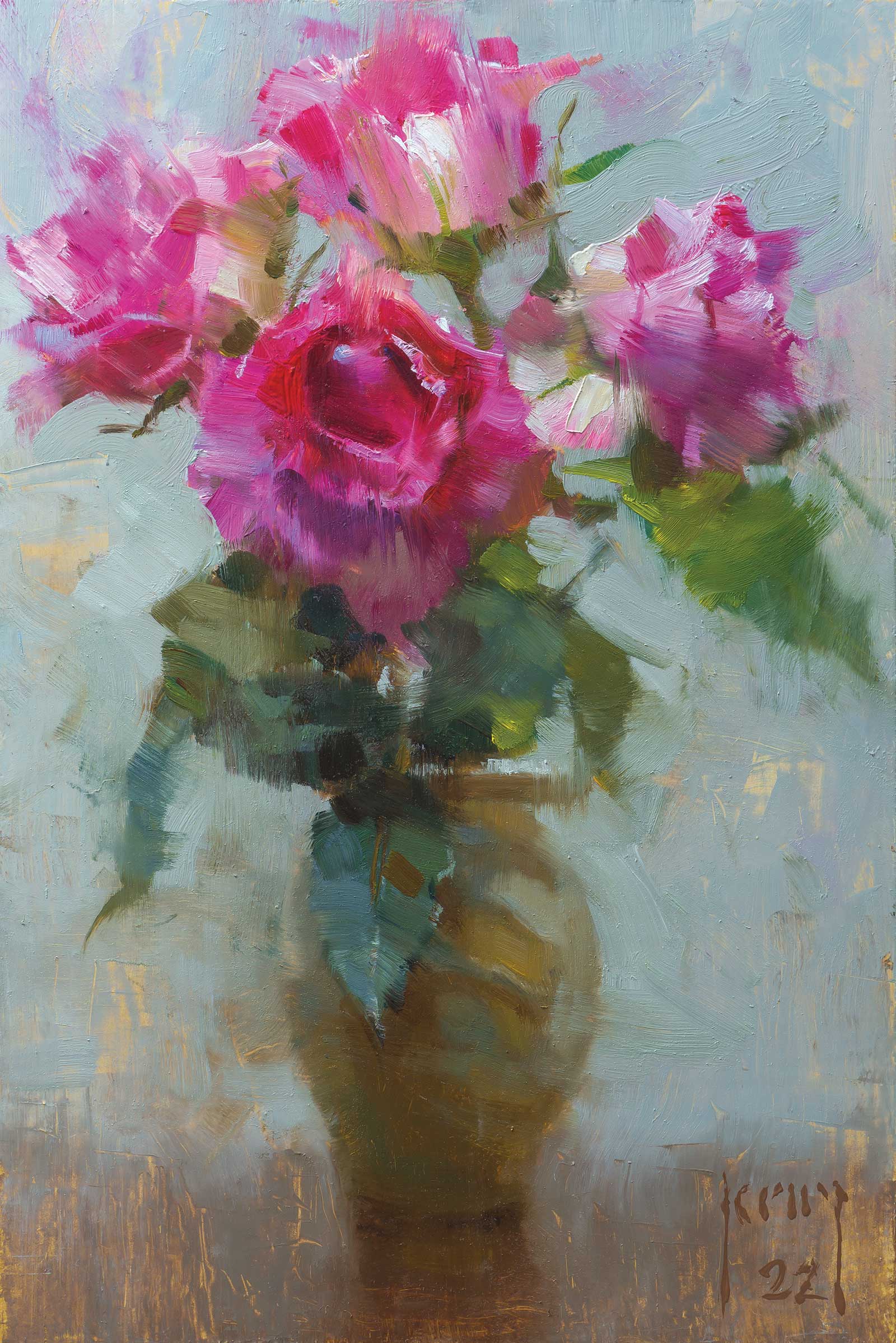
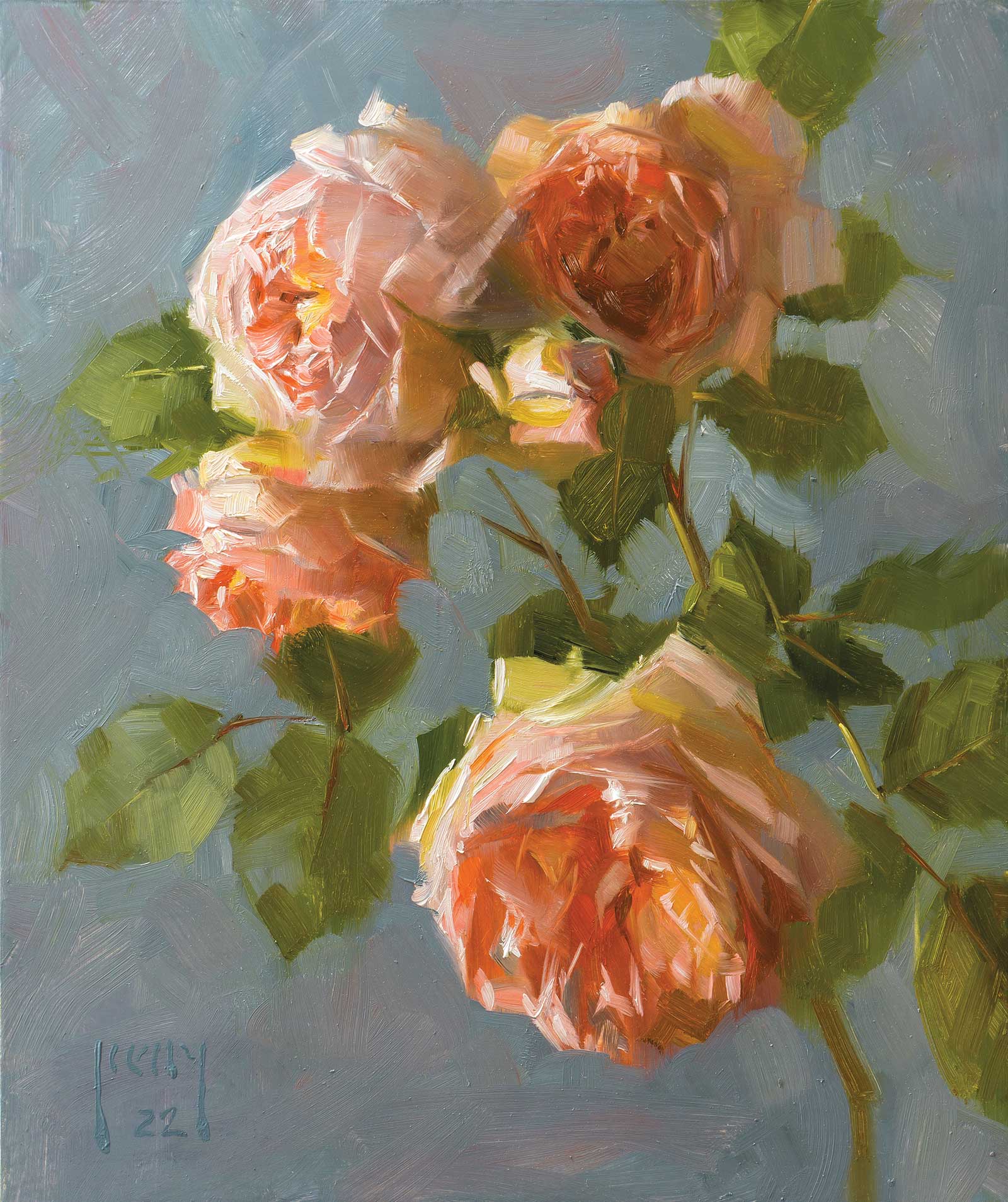 Touches the sun so mighty and powerful, oil on panel, 12 x 10" (30 x 25 cm) These David Austin roses were painted from life in the studio over a couple of sessions. These particular roses lose their color quite rapidly so I had to work quickly to establish the basic chroma and hue relationships, which could then be refined later when they had faded.
I refer to the understanding of these relationships as the simplification of the visual hierarchy, which comprises objective and subjective aspects. As artists, we exert greater control over the objective elements, which I focus on when teaching my painting approach. The objective aspects encompass lines, drawing, shape, composition, color (divided into value, hue and chroma), edges and texture. The subjective aspects are often open to interpretation. For example, blue is the hue aspect of color (objective) but can also suggest a sensation of cold (subjective).
Most artists are aware of the importance of stepping back from the painting to perceive it as a whole. By doing so, we encompass all the objective relationships within the painting’s “world.” One way to illustrate the visual hierarchy is by envisioning a pyramid, with value relationships near the base and edge relationships closer to the top.
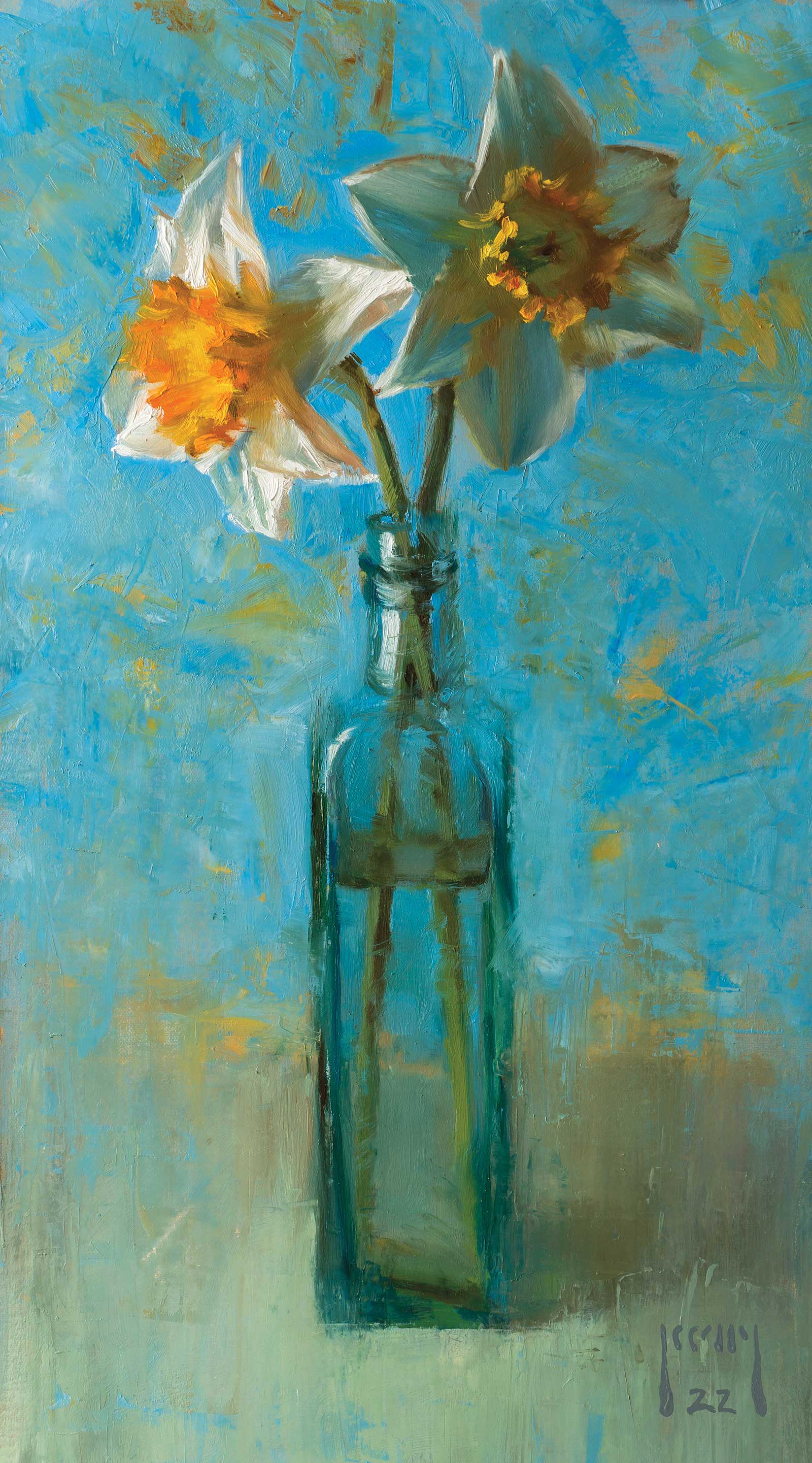 The past is left behind, the future is yet unreached, oil on canvas, 15 x 8" (38 x 20 cm) One of the great qualities that I enjoy in floral subjects is the translucency of the petals and this is particularly noticeable in daffodils. That translucency is one aspect I like to depict by contrasting a light/shadow arrangement in a composition.
The process commences with the idea, the painting’s essence. It may arise from an interesting arrangement of shapes or the interplay of light—encompassing dark and light values or a color harmony. The idea itself may be suggestive of a composition. Next is the block-in, the simplest representation of value relationships within the composition. Alla prima presents a challenge as all objective visual relationships must be considered simultaneously, unlike indirect painting with a monochrome underpainting.
Visual comparison serves as our primary tool to perceive these relationships. Whether it’s the angles of lines that define the shapes in the drawing aspect, the relationships between value shapes or the hierarchy of edges from hard to soft to lost, it all relies on perceiving and translating these relationships in paint. However, paint itself has optical limitations—for example, in terms of value or chroma compared to nature—that prevent a one-to-one transfer. Those limitations though are a blessing in disguise. The magic of representational painting stems from interpreting these relationships, transforming limitations into a jumping off point for creative expression.
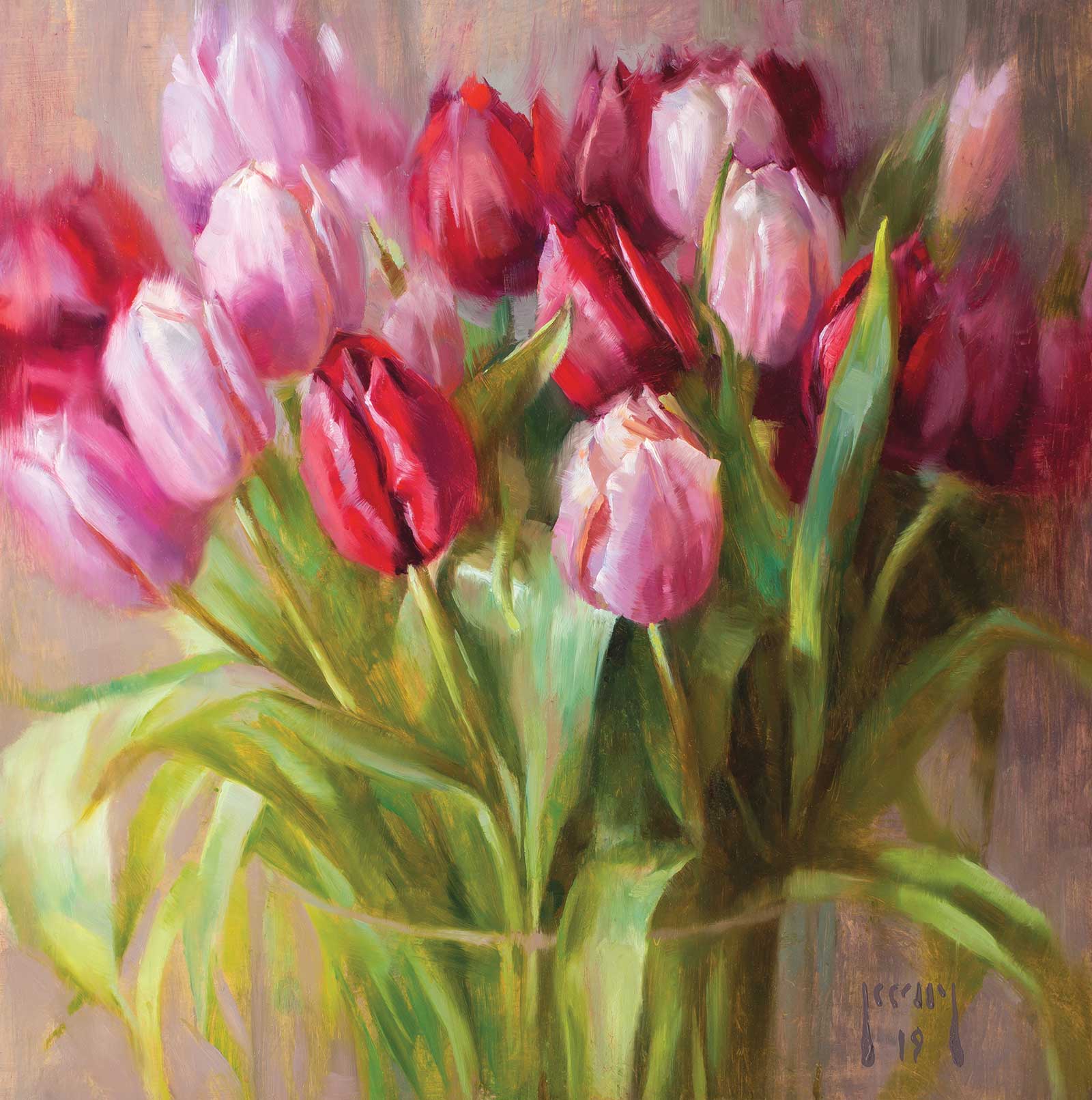
Vernal poem in red and pink, oil on panel, 12 x 12" (30 x 30 cm) Tulips are particularly tricky to paint from life because they move around more than any other flower I know. Because of this I had to adopt a selective area-by-area approach.
The painting process entails iterative refinement rather than a strictly linear progression, from composition to block-in to completion. This means that after completing the block-in, for instance, further refinement of the drawing, value, chroma and edge relationships may be necessary. Dealing with multiple objective aspects prompts the use of a strategy that starts with the most evident relationships, progressing towards those that are less clear. For example, working from the largest color shapes to smaller ones or establishing a value or chroma range from the outset by identifying the darkest dark and lightest light, or the most and least chromatic shapes. Thus, we begin with the “big picture,” capturing and representing the most obvious relationships, then gradually move towards the subtler ones by comparing what is known to what is more mysterious.
In summary, the main principles guiding my process are: seeing and interpreting objective visual relationships, and iterative refinement within the framework of the visual hierarchy.
My Art in the Making Sometimes you have to leave something behind to go forward
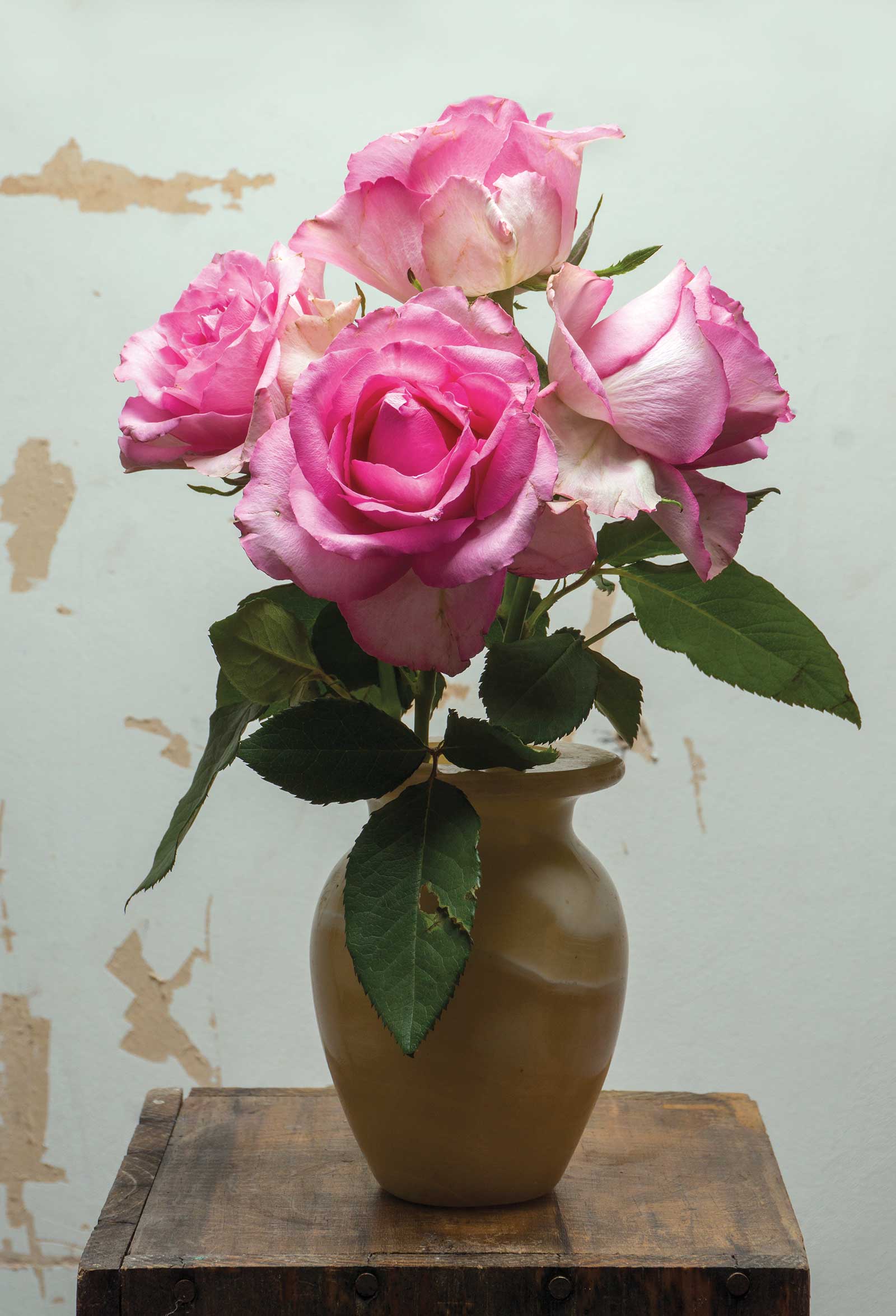 Photo Reference
In this step-by-step demonstration I show my typical process with a floral still life painted from life. The first step in this case is the composition/idea, which involves arranging what are fundamentally color shapes at a basic visual level. I try to get an interesting variety of light and dark shapes using an overhead LED panel light. This process can take many hours of rearranging the subject until I am happy with the composition. I work on oil-primed surfaces exclusively because the wet paint can be easily manipulated on the surface, allowing for a variety of interesting edges.
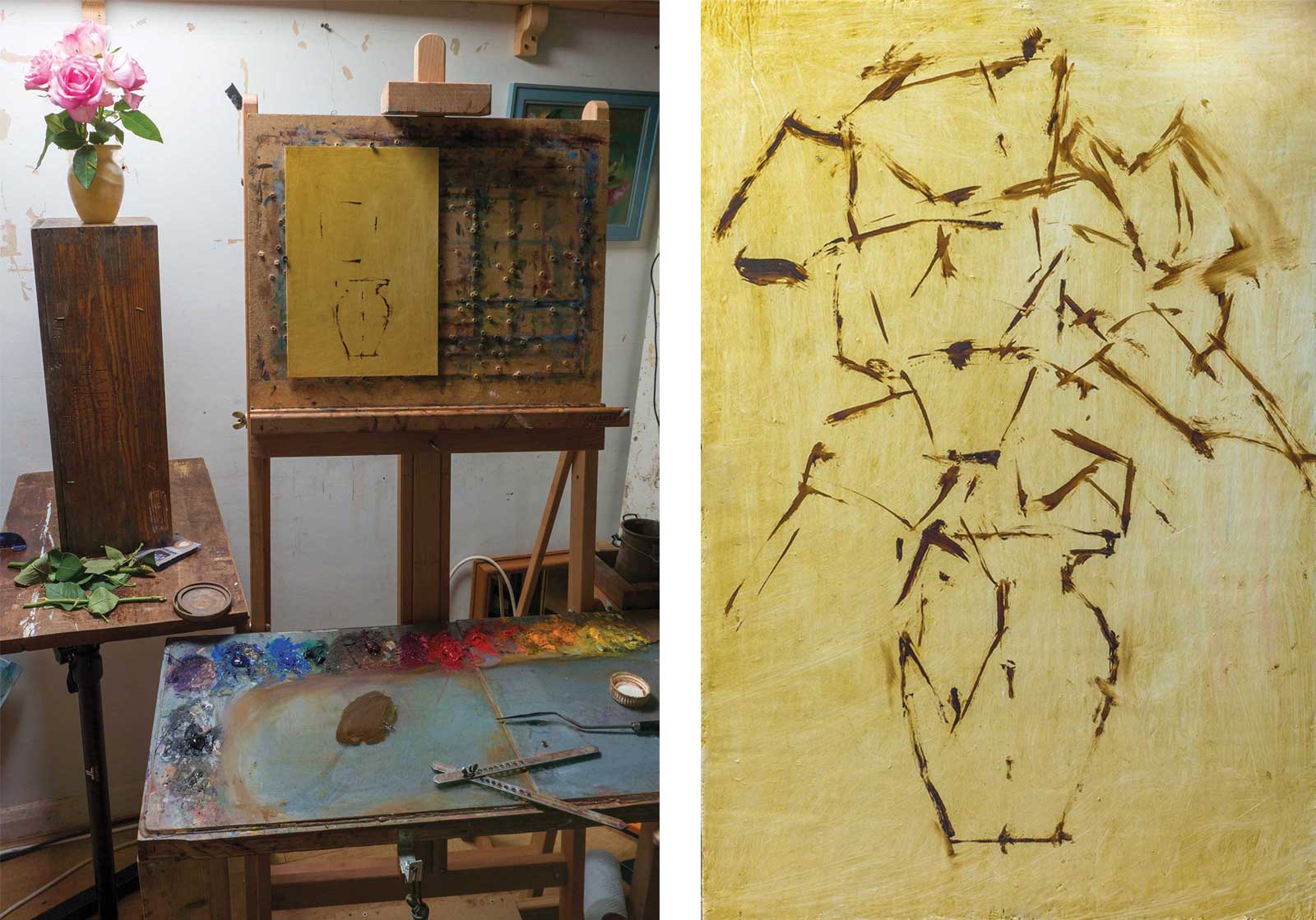 Stage 1
Stage 1 Roughing in Main Shapes
I begin to draw in with paint the largest value shapes and contours. I have found that drawing shapes with straight lines initially to be more effective in judging angle relationships than using curved lines.
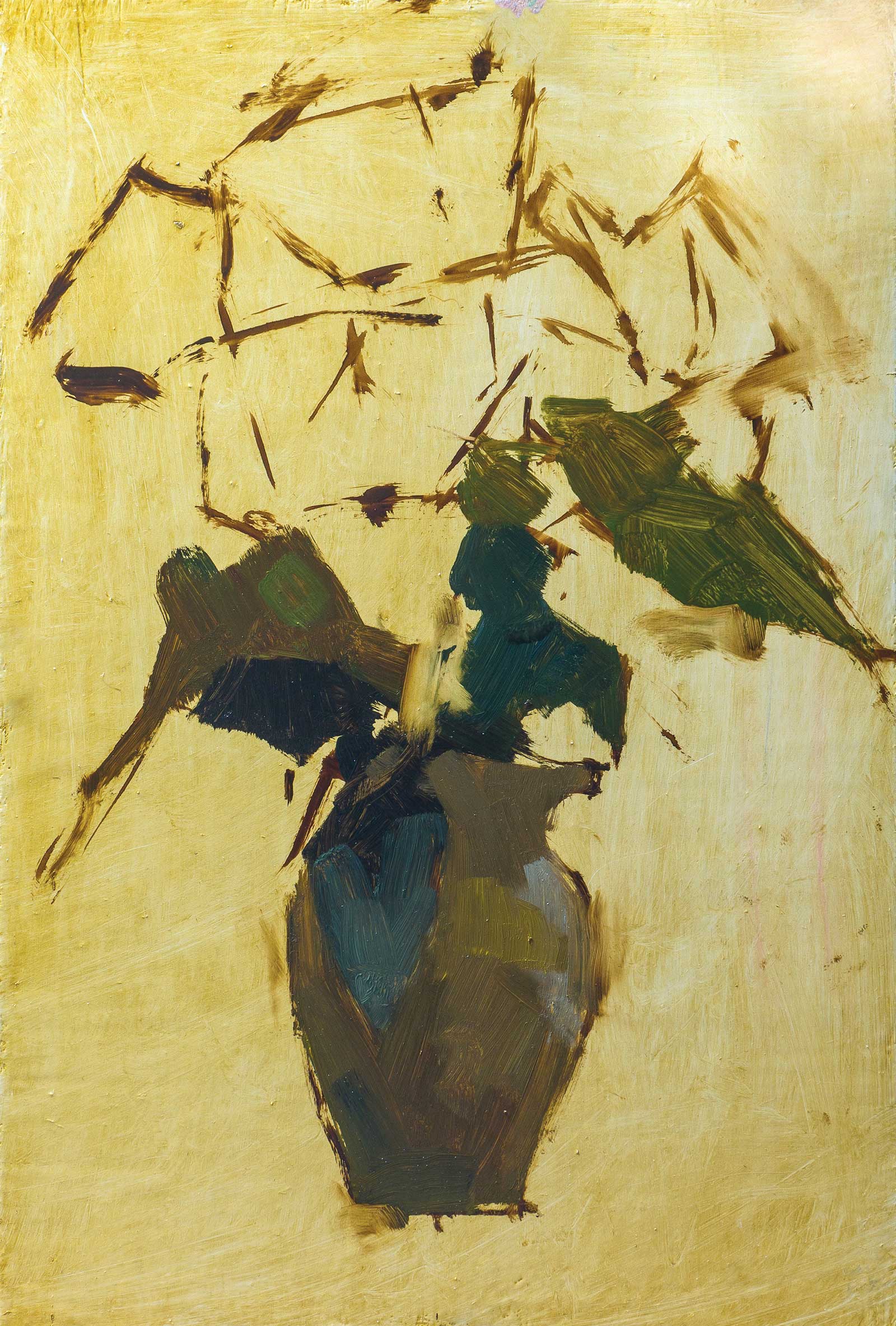 Stage 2
Stage 2 Darkest Values
Here I have established the darkest value shapes.
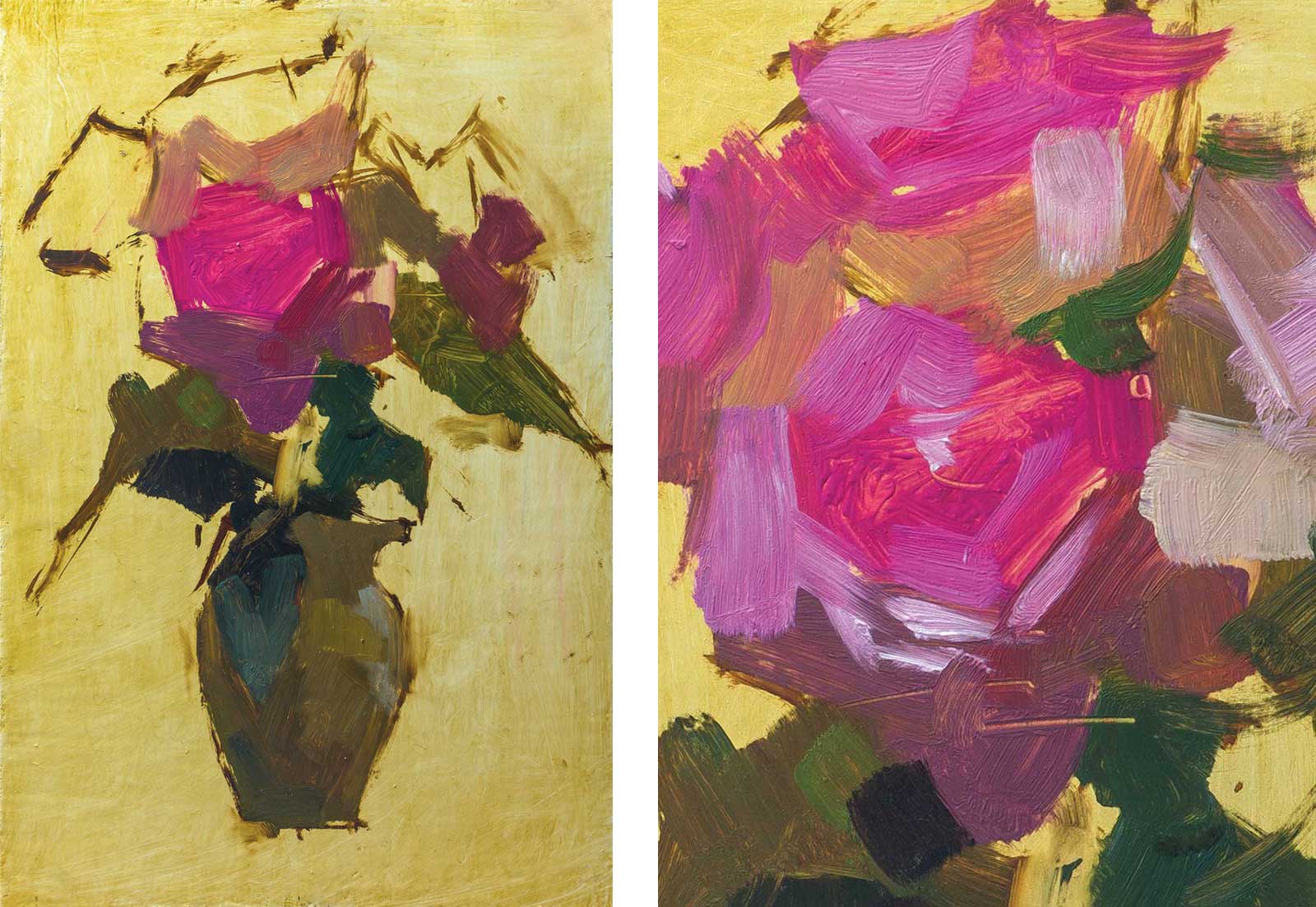 Stage 3
Stage 3 Blocking in Color
Next I am tackling the most chromatic shapes. I keep the paint fairly thin in this block-in stage as too much paint build up can cause problems later.
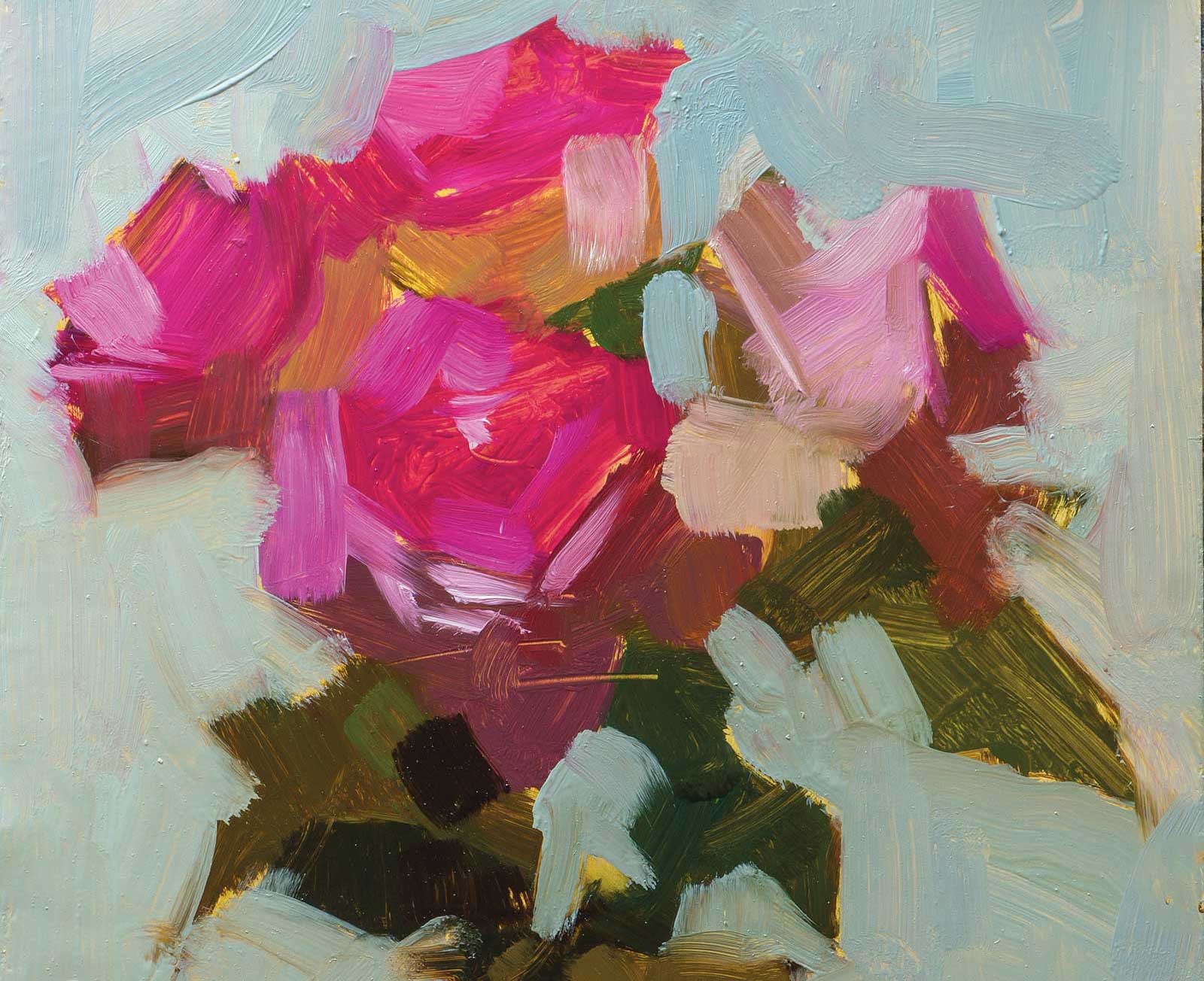 Stage 4
Stage 4 Details Take Shape
Building one shape against another and comparing all the time. Step-by-step, the big shapes are all completed and are relatively correct in terms of shape, value, hue and chroma.
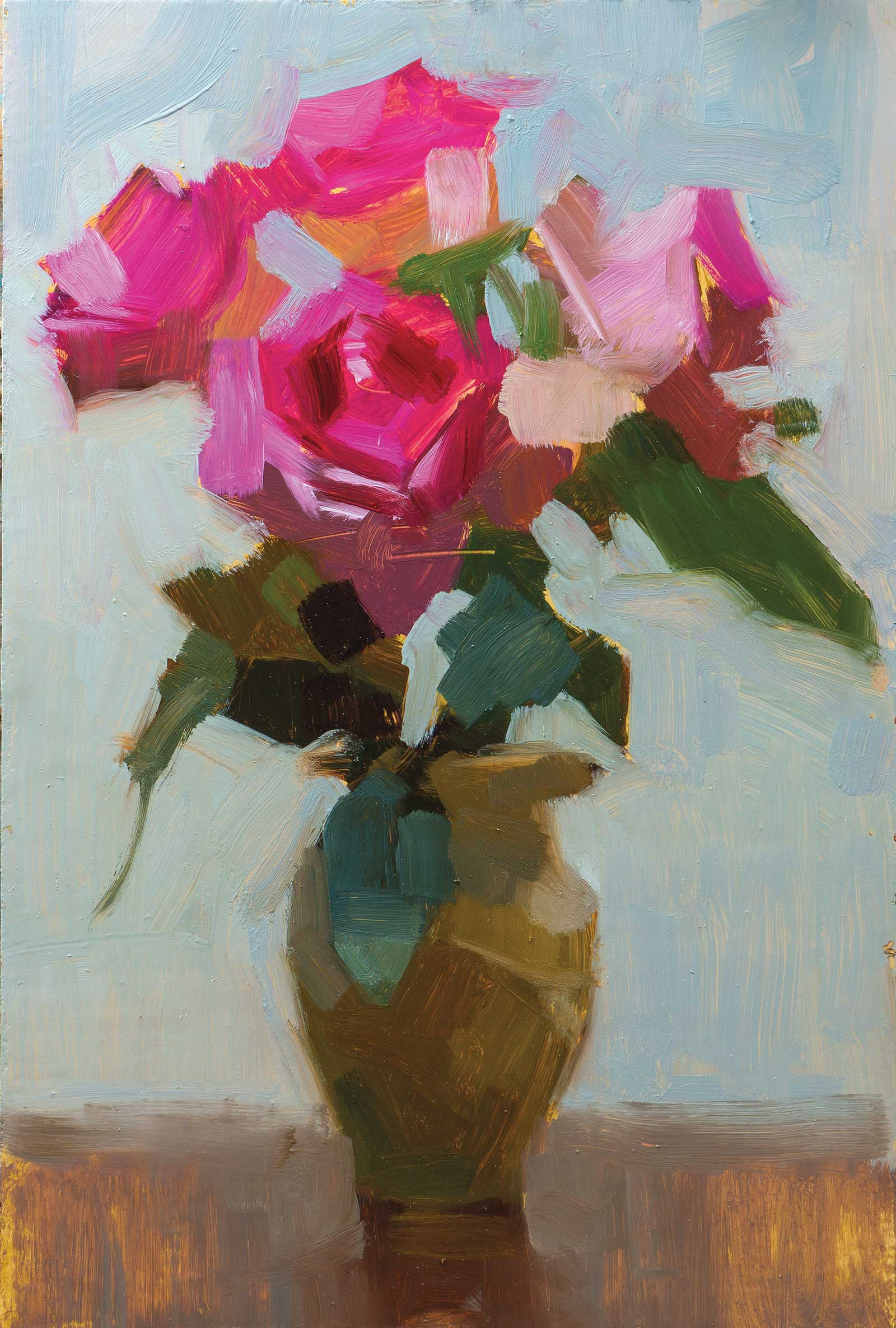 Stage 5
Stage 5 Block-in Finished
This is the completed block-in. From this point you could take it in many different directions.
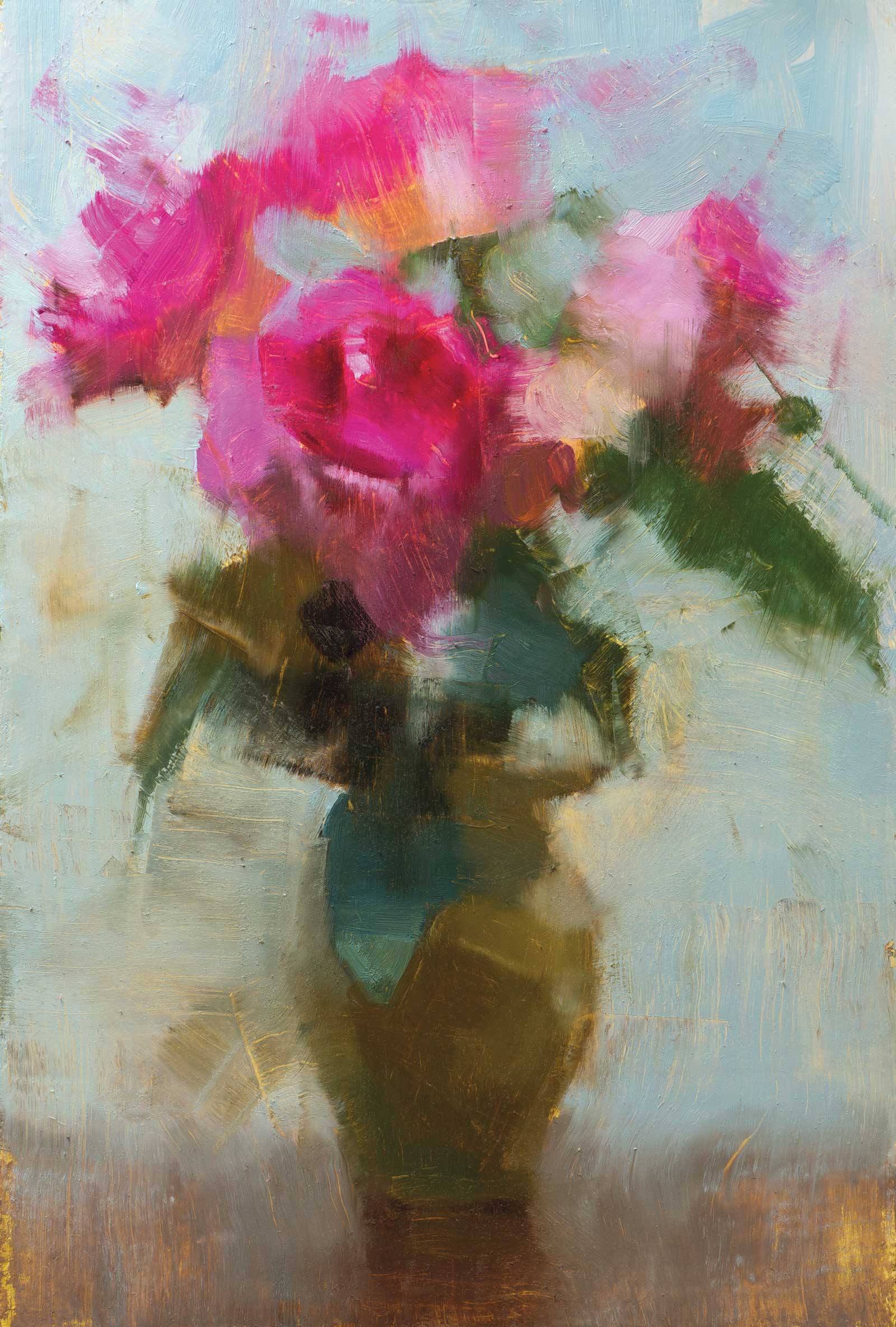 Stage 6
Stage 6 Creating Texture
I selectively “destroyed” part or all of the block-in with a silicone spatula to create a range of edges and textures.
Strategies for Learning to See
- Establish the block-in with a clear sense of a world of light and a world of shadow.
- Paint the big shapes first—go for the most obvious/ important shapes first—then judge everything else against those.
- Identify and put in the most obvious objective aspects sooner rather than later. This might be the lightest light and the darkest dark to establish the value range/value key of the whole painting, or it could also be the most chromatic color shape you can see.
- Squint at the subject to see the value and edge relationships.
- Try to be as accurate as possible from the beginning, but don’t stress too much if things are a little off—the iterative process will allow for refinement and correction as long as you keep observing the relationships in the subject and the painting.
- Normal perception tends to be in the mode of things: a rose, a face, a tree, etc. Try to develop a way of seeing that sees in terms of shapes. This mode of seeing is useful for the artist as it enables not only accurate drawing of shape relationships but also value relationships.
- Stand back from the painting and the subject when making comparisons if needed. This overcomes the tendency to see value shapes in isolation.
- When making comparisons between any objective relationship, pose this question in your mind: is it lighter or darker, more chromatic, harder-edged, etc. than the shape I’m comparing with? And how much lighter or darker is it?
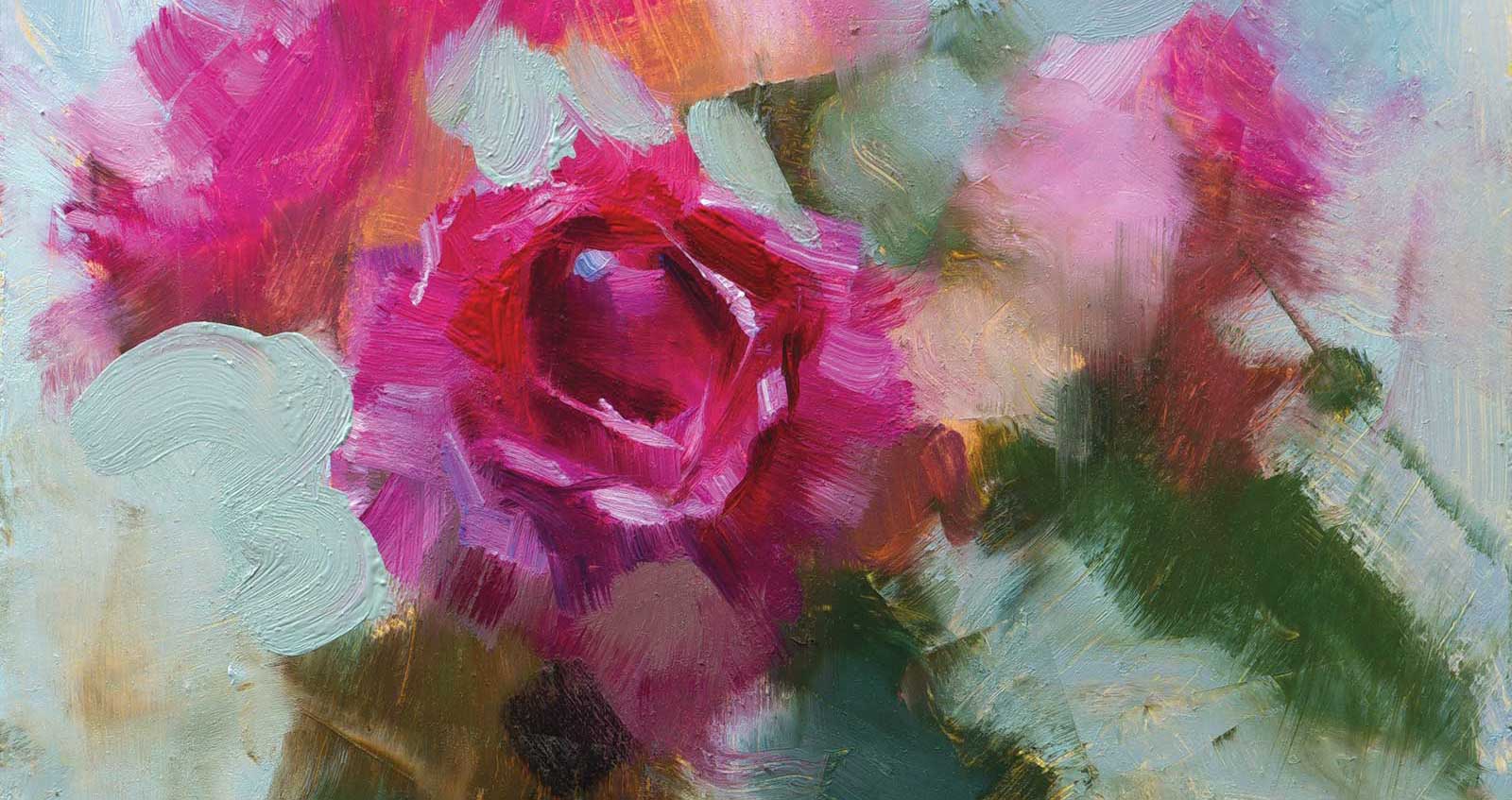 Stage 7
Stage 7 Rebuilding
Now begins the process of selectively rebuilding each of the objective aspects, shape, value, chroma, hue, edges, etc. by referring to the relationships discerned in the subject.
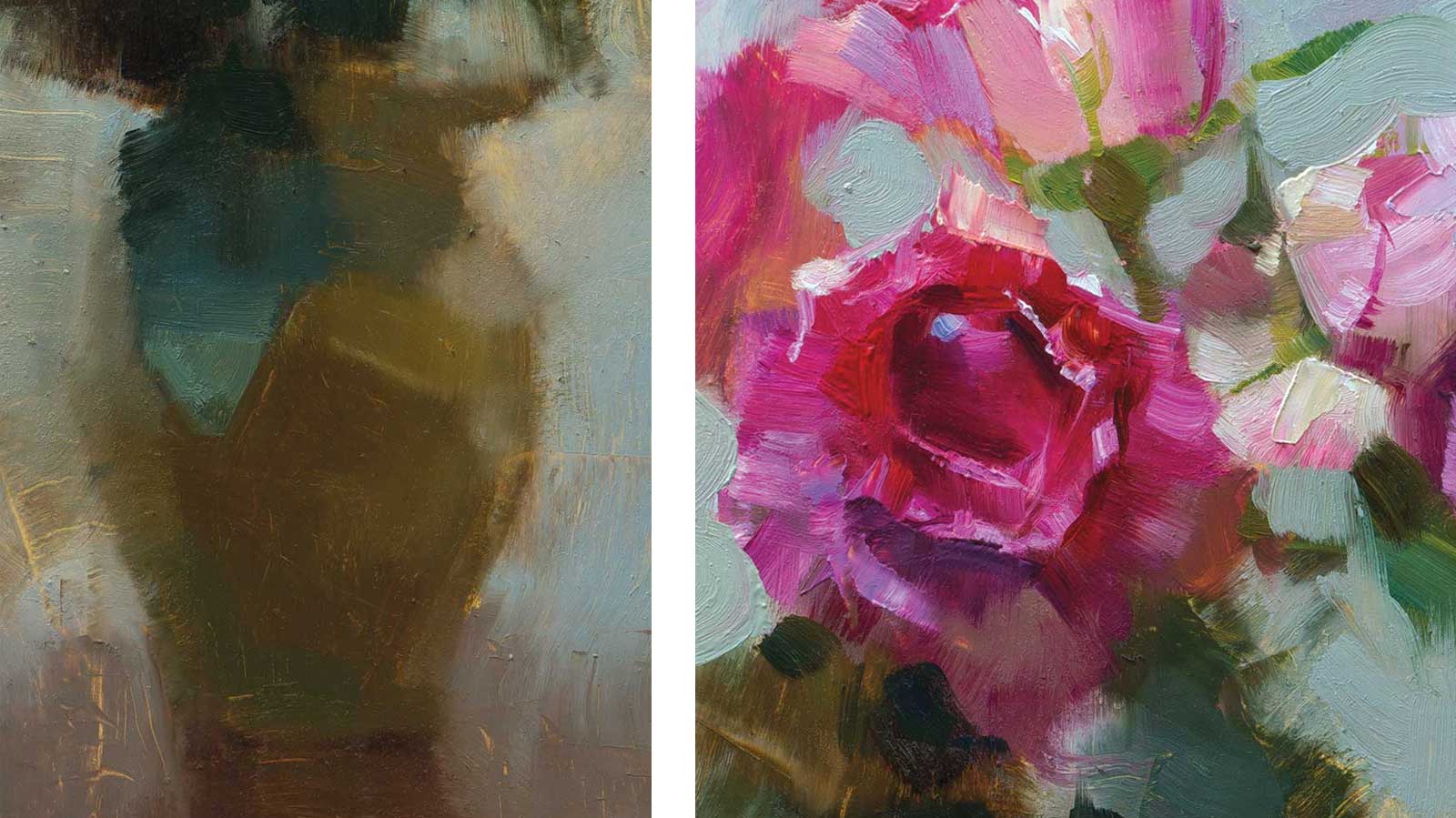 Stage 8
Stage 8 Iterative Refinement
In the later stages I spend more time assessing the relationships in the painting independently of the original subject. This is a process of iterative refinement of the different objective aspects.
 Stage 9
Stage 9 Finished Artwork
Sometimes you have to leave something behind to go forward, oil on panel, 12 x 8" (30 x 20 cm)
The painting is finished when the relationships in the painting are complete in their own independent reality.
About the artist
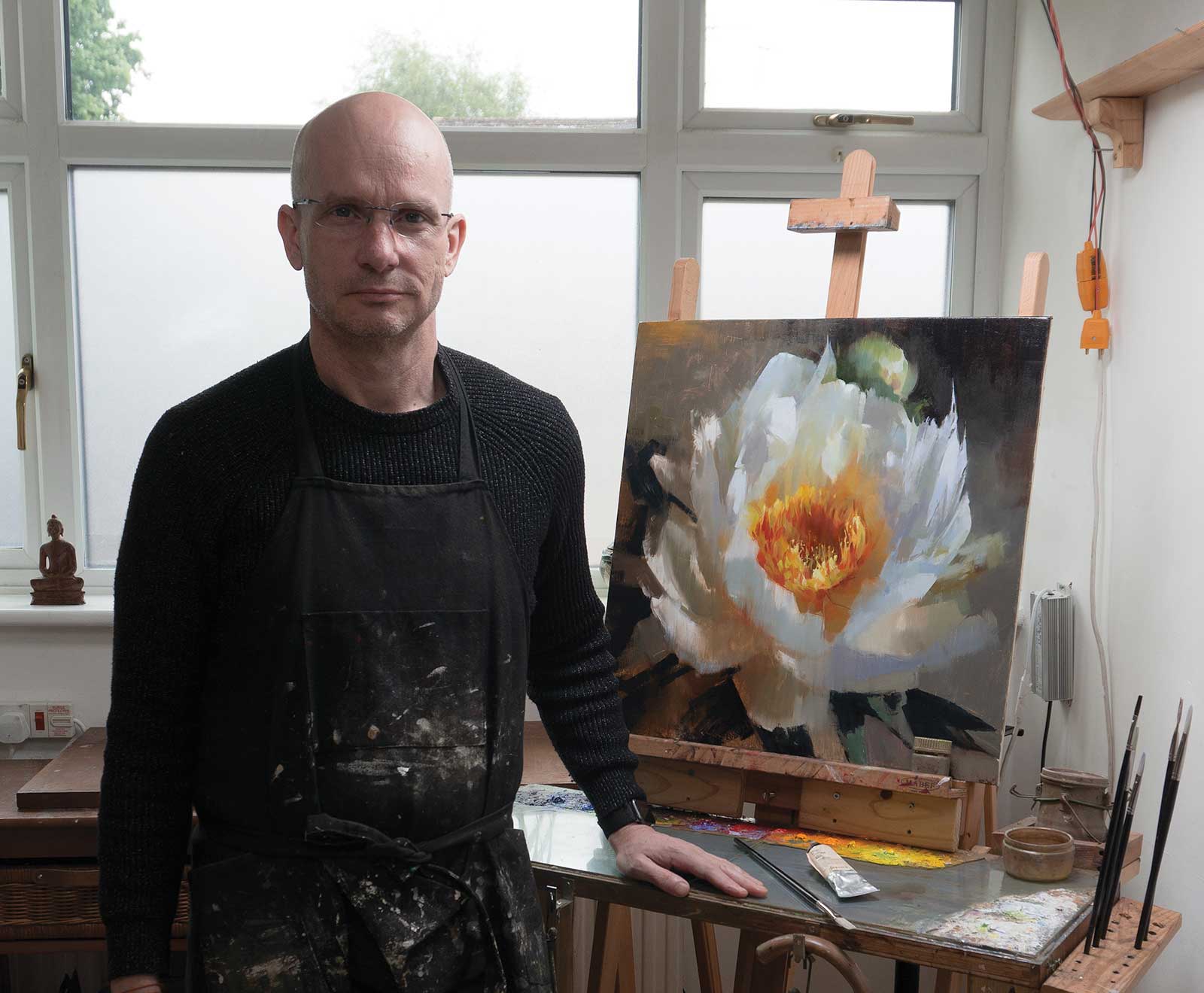 Alex Kelly in his studio
Alex Kelly received a BA in fine art with honors from Manchester Metropolitan University (UK) in 1993. He also trained and worked as a professional graphic designer for over 20 years. He has had various art-based studio practices and art-related teaching positions with schools and colleges before devoting himself full-time to painting. Kelly has won numerous awards, including the Buxton Spa Prize, and his work is in many private collections around the world. He currently lives and works in Birmingham, England.