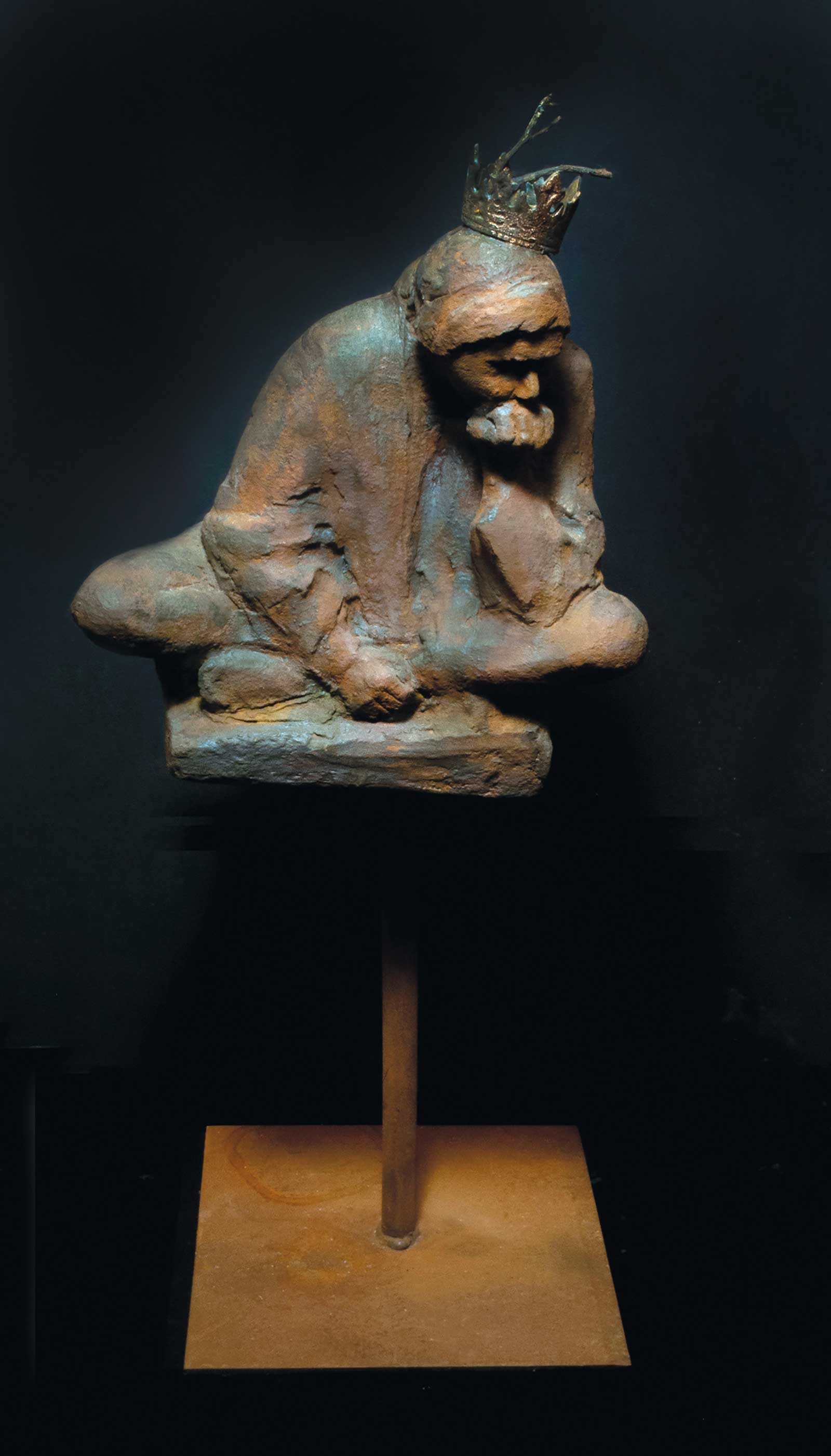
 Muse, hydrostone, 26 x 10" (66 x 25 cm)
Mary Buckman
Inspiration
Throughout my career, the concept of a muse has frequently emerged in my work. Whether it be in the form of a model capturing a pose, a beloved family member or the presence of nature, these instances often serve as my greatest sources of inspiration. It is during these moments that I am motivated to step outside of my comfort zone and create something unique. Whenever the urge to sculpt something new arises, there is invariably a muse in some shape or form, spurring me forward.
Process
To start my sculpture process, I always begin with a solid block of clay. Initially, I sculpt the figure using wood tools and my hands. After finishing the sculpture, I proceed to coat the dried clay figure with a flexible urethane mold. After that, I cast the mold using hydrostone. When the figure is dry, I apply several acrylic washes to achieve a nice patina. The brass crown and small branch from my garden were added as a heartfelt tribute to my muse.
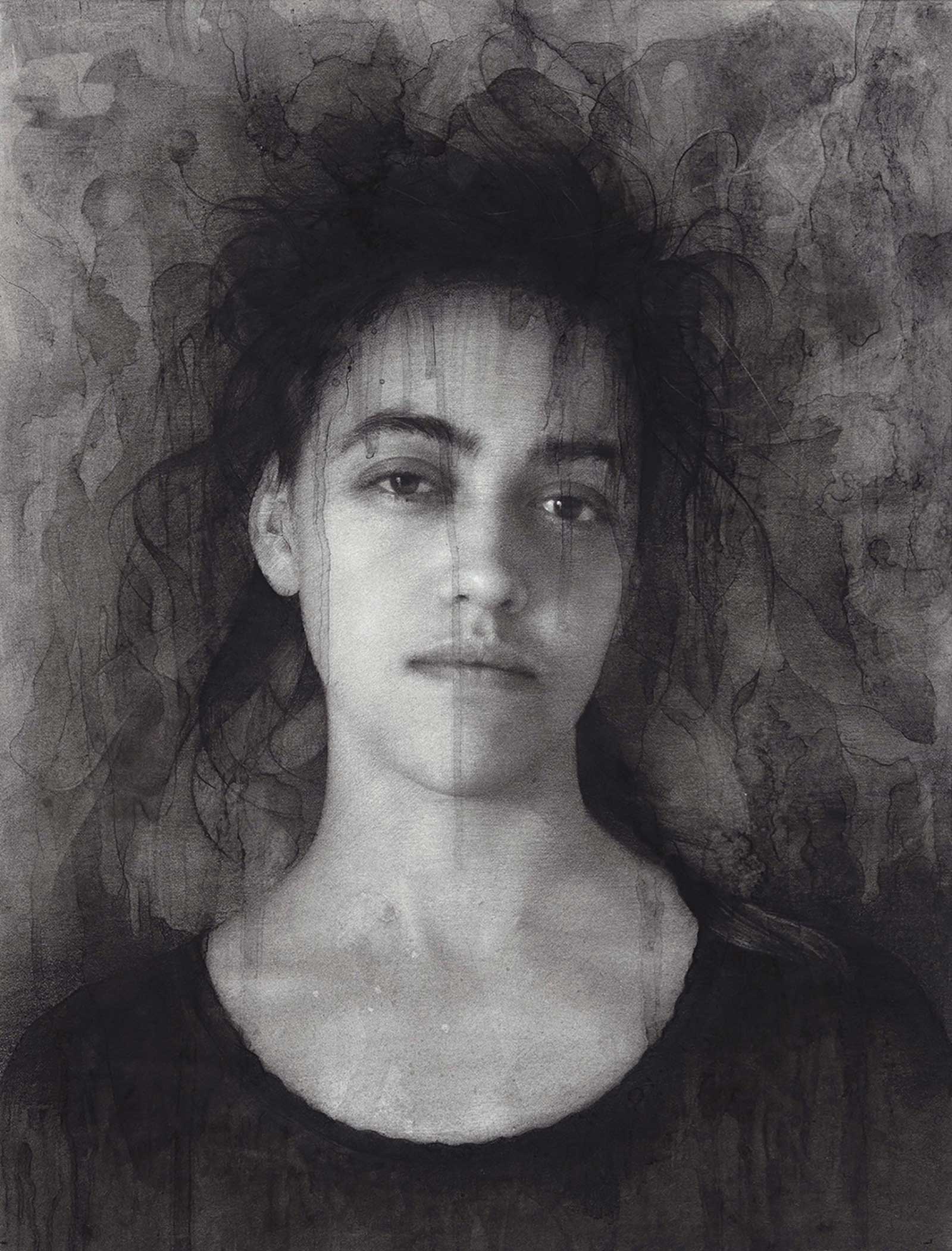 Katrina, charcoal on paper, 22 x 17" (55 x 43 cm)
Dmitry Artamonov
Inspiration
The inspiration for my portrait was my friend Katrina. An artist herself, she is a great inspiration to me.
Process
For this portrait I used compressed charcoal and charcoal pencils. My paper is a smooth Bristol, as I tend to select a very smooth paper. As I was working on her hair, an interesting thing happened. I had made some mistakes that I then tried to hide with more charcoal, but it didn’t look right, so I decided to pour some acetone in that area to see how it would look, and I really liked the result.
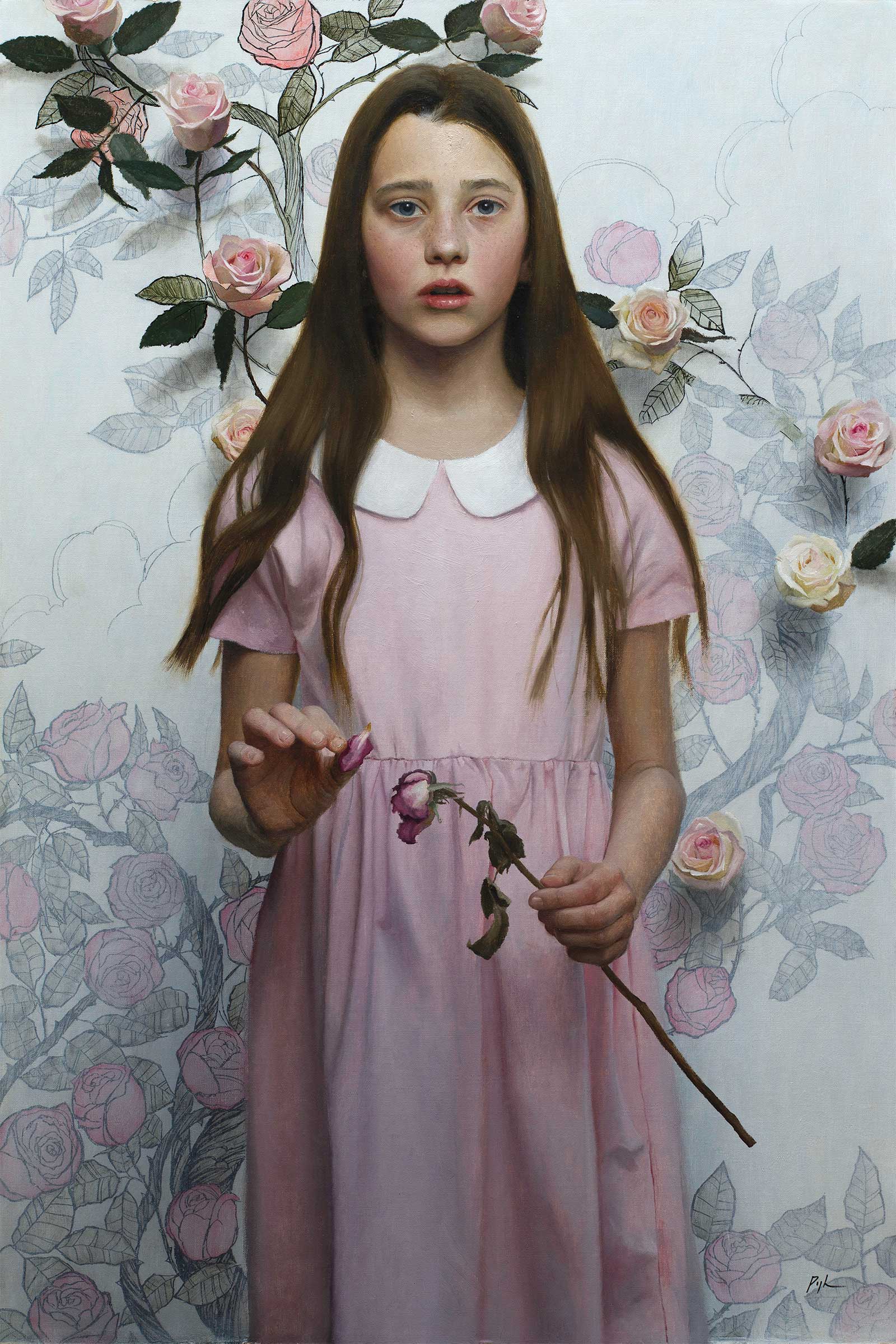 Sorrow and the Girl with the Flower, oil and ink on linen, 36 x 24" (91 x 60 cm)
Mark Pugh
Inspiration
I was inspired by my oldest daughter, who I have painted many times, and wanted to portray her struggle with moving on from childhood.
Process
After conceptualizing this painting in my mind, I took a number of photographs, and then created a digital composition of the layout, determining exact size and placement of the figure in the painting and a rough sketch of the background. Using standard HB graphite, I did a line drawing of both the figure and the background over top of the previous drawing. I then wiped the water-soluble sketch lines away with water, leaving only the final line drawing, rendered in standard HB graphite. After sealing the drawing with a workable fix, I covered the entire drawing with a thin glaze of Liquin, titanium white and a touch of ivory black, raw umber, cadmium yellow lemon and ultramarine blue, making sure to darken the shadow area on the lower left side of the canvas. I then inked an overlay of the background using archival ink. After sealing the ink drawing, I glazed color into the flowers to give it a watercolor look, then another thin glaze of white once it had dried. Finally, I selected several flowers to paint in full oils, so they would “pop” off the drawing. Once the background was finished, I painted the figure in oil, using a multi-layer method.
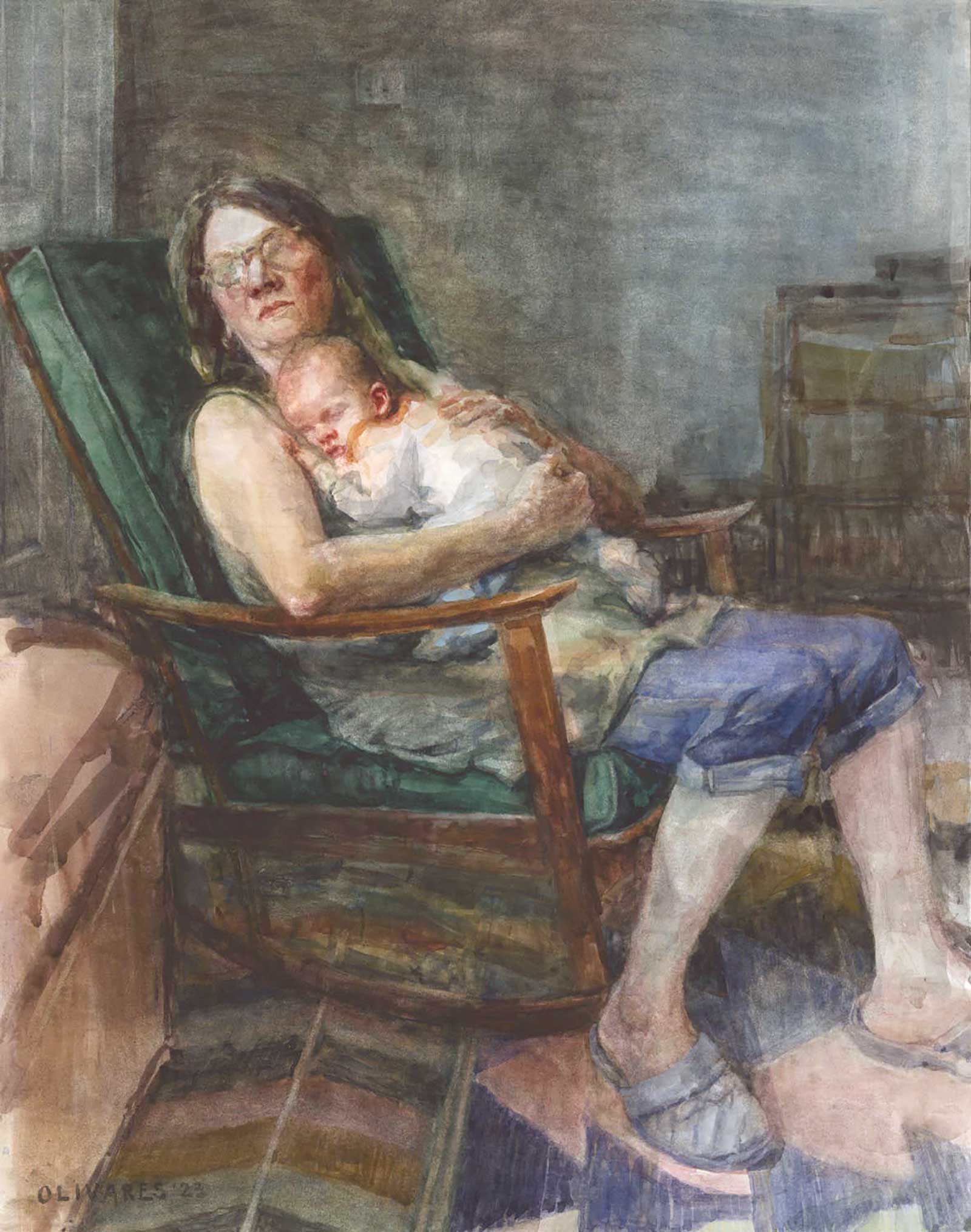 Sound Asleep, watercolor and gouache, 19 x 14¾" (48 x 37 cm)
Brooke Olivares
Inspiration
My painting, Sound Asleep, was inspired by my recuperation time after having my second child. My mom came to visit our family shortly after our son was born, and her soothing presence and affection always lulled him to sleep.
Process
This watercolor piece began as a very loose gestural pencil drawing to establish placement and proportions of the figures to the environment. I chose not to do a tight drawing because I tend to work too carefully after that. This way of working in watercolor keeps me on my toes, but I’m free to take more bold choices out of necessity. I then began blocking in loose washes of color to establish the overall mood and tone of the image. I used mid tones and darks to carve out the figures, focusing on various types of edges and what to bring in and out of focus. It’s really a constant back and forth of painting information and then deciding it may need to be obliterated if it takes away from the whole. I used Strathmore hot-pressed paper, which tends to work well with how I like to work because the slick surface allows me to lift out and manipulate areas back and forth, much like in an oil painting. I love seeing the process in a painting; so often the final piece still has remnants of my initial gestural strokes paired with areas that are more resolved.—