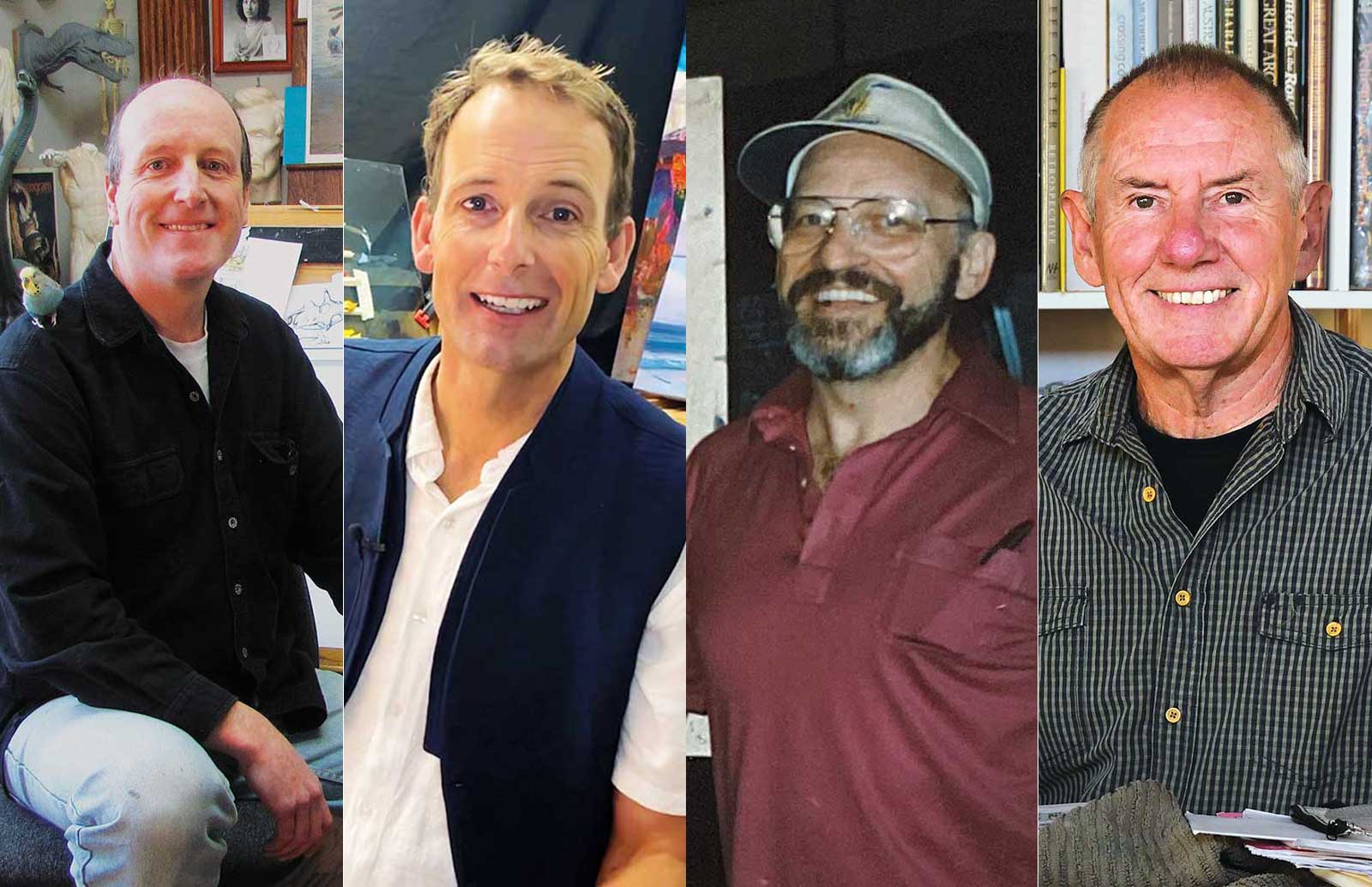
How long have you been a contributor to International Artist and how did you first come aboard?
James Gurney: The first article I wrote was in 2009 for issue 69. Editor/publisher Vincent Miller invited me to write an article about composition, based on my book Imaginative Realism: How to Paint What Doesn’t Exist. That article became a series, and the series became the column Station Points. I’ve contributed an article to every issue since. I think that’s over 80 consecutive issues. I feel like the grandfather clock in the hallway, marking the minutes while decades roll by.
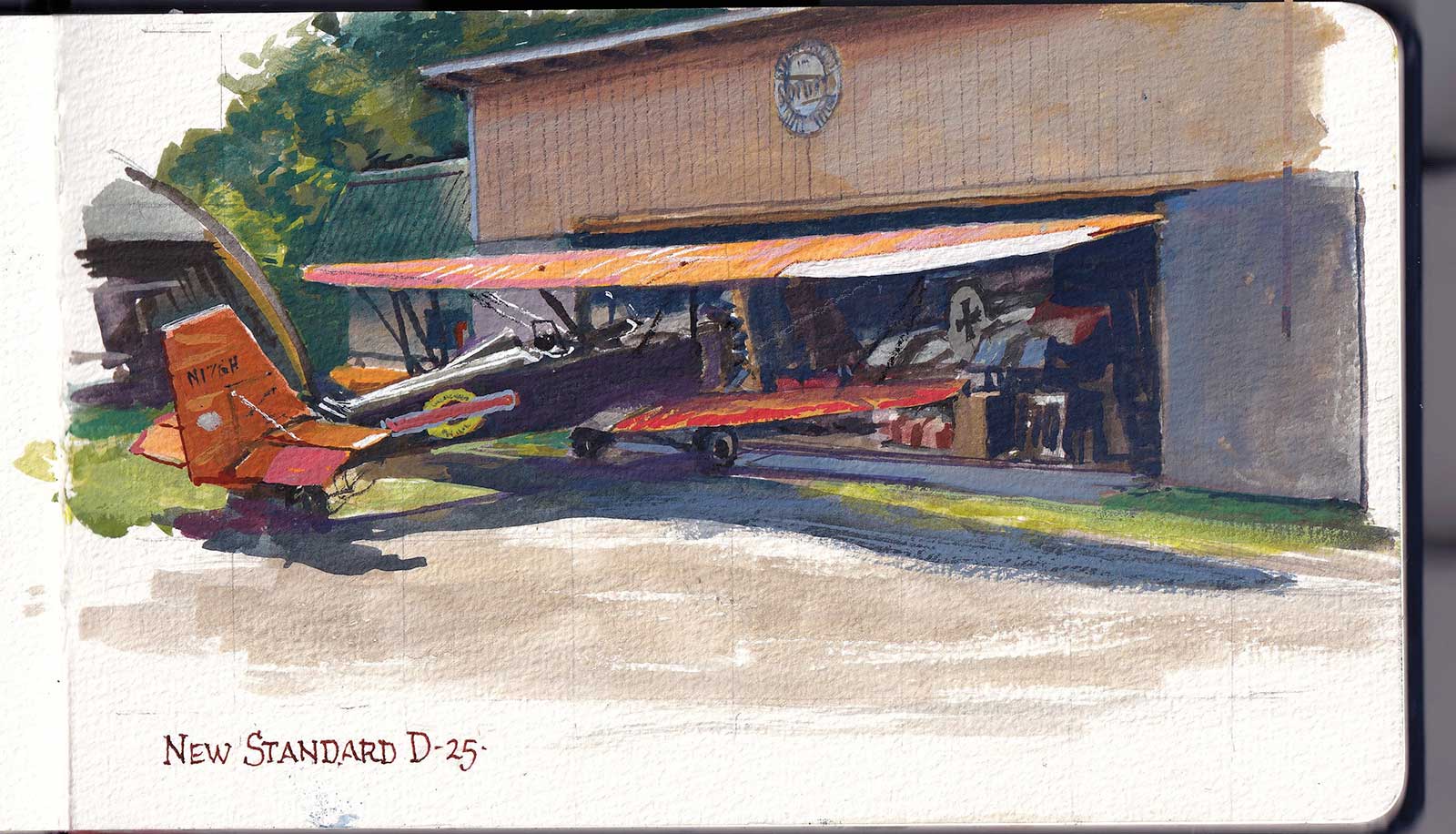
James Gurney, New Standard Bisplane, casein, 5 x 8" (12 x 20 cm)
John Lovett: I started writing articles for International Artist in issue 38, which was August/September 2004. Vincent Miller, the then publisher, and I worked on a series of 10-minute DVDs that were marketed through International Artist. I did the painting, filming, editing and production while Vincent did the marketing, tweaking and adjusting. Back then a physical disk had to be sent back and forth until it was finally honed into shape. It was a lot of work, but very successful. I have been contributing articles for almost every issue since those early days.
Richard Robinson: I guess I’ve been with IA for over 10 years now. I believe the first time I contributed was with an article I wrote specifically for the magazine. Then I had the idea of sharing the critiques I do of my students work with IA so that others could learn from them. That idea was well-received by the magazine, and I’ve continued to contribute in every issue since then.
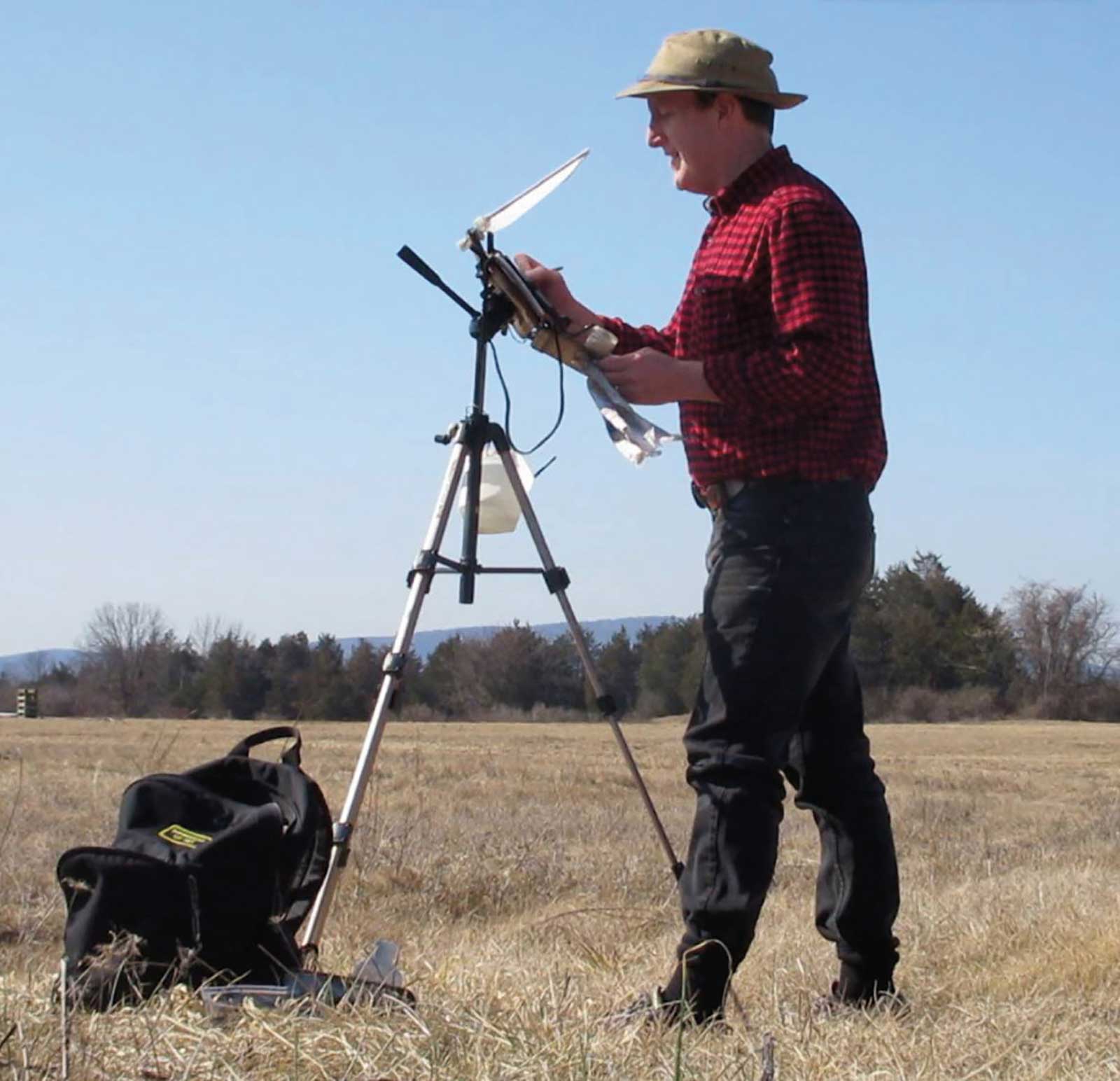
James Gurney painting on location with a sketch easel.
Harley Brown: I enthusiastically came aboard International Artist after meeting its founder Vincent Miller in Australia. I was there doing art demonstrations at the Universities of Melbourne and Sydney. He quite liked my pastel art pieces and how I described and developed them. Right away he asked me to send him some of my thoughts about art along with images of my works. My mind was brim full of ideas approaching art, and I was more than happy working with him. Vincent has a positive, inspiring mind and right from the beginning, International Artist became a major art publication throughout the world.
Tell us a little bit about your artwork and who you are as a person. Your passions, hobbies, life in general.
JG: I come from a family of inventors and engineers. I’ve experimented with a lot of different ways of making art: animation, lettering, illustration, sketching, sculpting. I love trying out new art materials, pigments and techniques, but at the same time I’m fairly old-fashioned. I’ve been revisiting old school hand skills such as dip pens and typewriters that I used as a teenager in the 1970s. A lot of people may know me from my YouTube channel, blog or Instagram feed, where I share a wide range of interests.
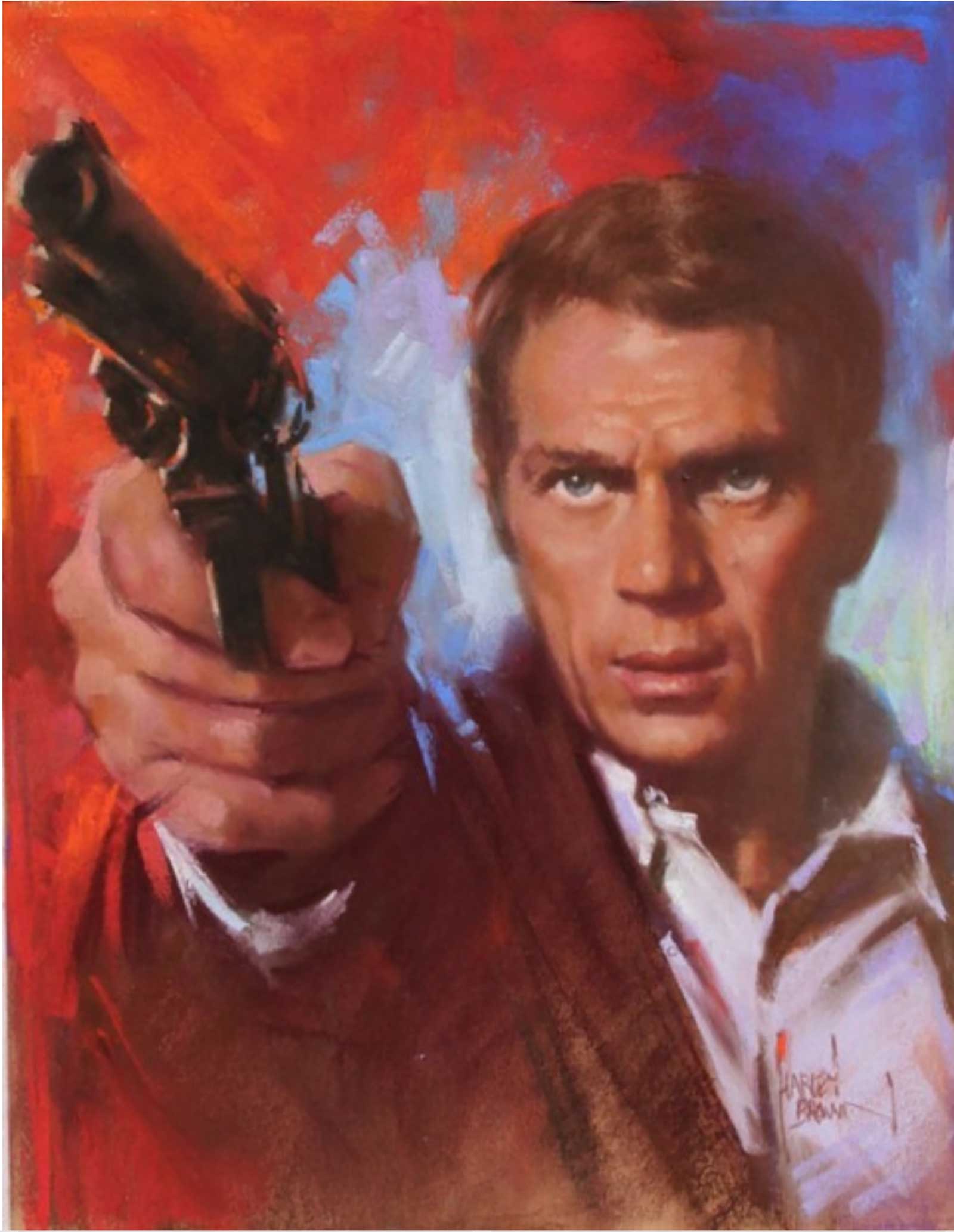
Harley Brown, Steve McQueen
JL: One of my great passions is travel. My wife and I are fortunate to have been asked to conduct workshops all over the world. This gives us the opportunity to explore many interesting, out of the way places. We also do a lot of traveling in remote areas of Australia. We have a four-wheel drive truck with a camper and enough fuel, water and food to be self-contained for a couple of weeks. My painting is often inspired by things we encounter when we travel. I love to find an interesting place, camp and explore for a while, doing sketches, small watercolors and taking photos. All this information ends up back in the studio as the basis for larger work.
RR: I grew up in New Zealand, the product of a pretty privileged childhood spending lots of time in the great outdoors. I’ve always enjoyed the quiet wonder of nature and long hours of focused creative time, being in the flow. I feel like that’s my natural happy state, and whenever I find myself in a crowded urban situation it always seems like a shock to the system. Those traits have lent themselves to me becoming an artist where I can actively choose how I direct my energy. My other passions are surfing, kiteboarding, music and healthy living.
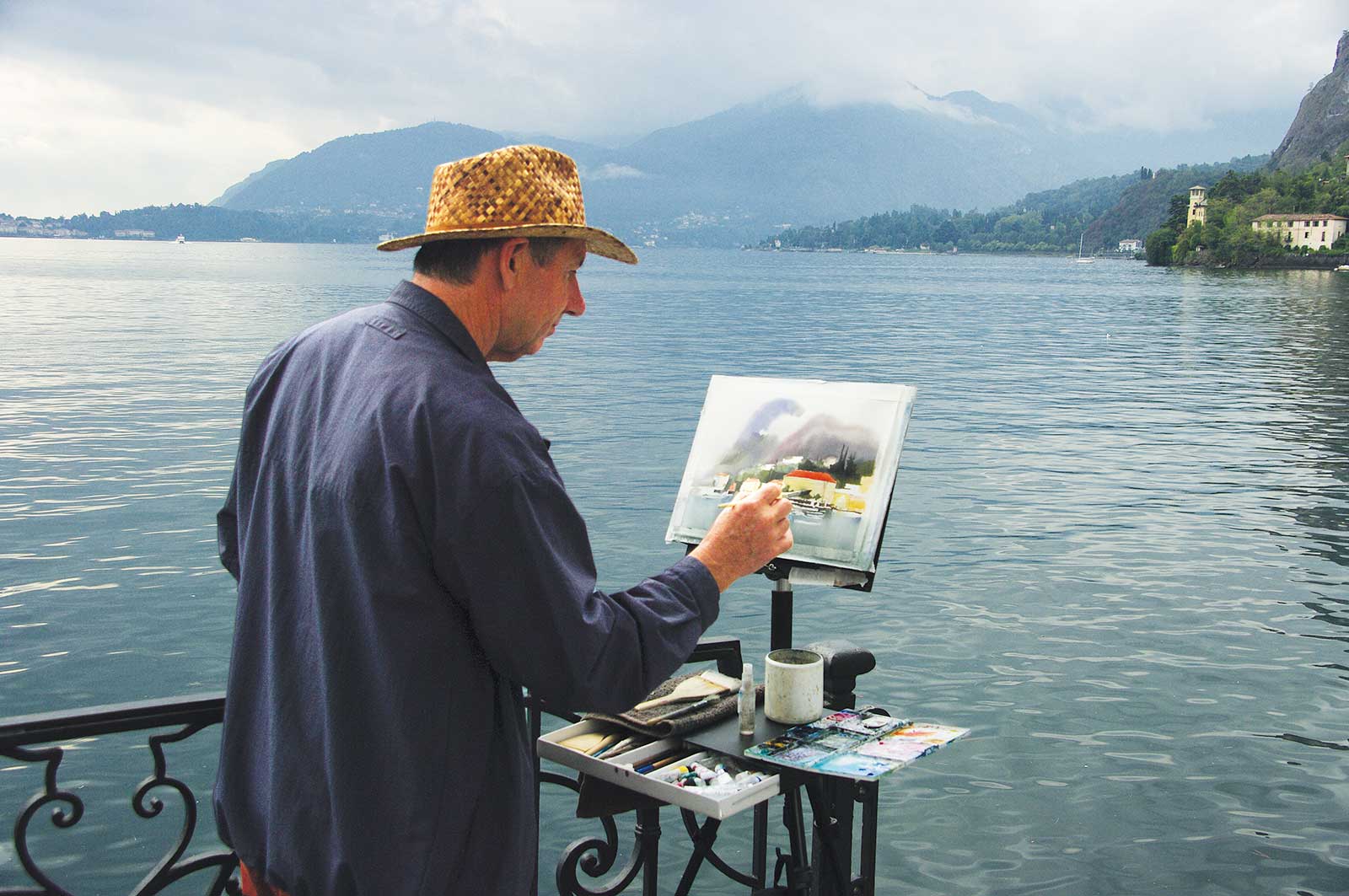
John Lovett painting Lake Como in plein air.
HB: Those who know me understand I’m an ultra-eccentric with big dollops of obsessions. (Including an alter ego.) Art, music and writing are in my corner of life. A life that has gone into major changes of personalities. I played jazz piano in a brothel during my college era. Soon after, I started painting portraits of individuals, some of whom you wouldn’t believe. Eventually, I was asked to do dozens of magazine covers, particularly horror/supernatural publications. I’m blessed to be a member of three remarkable Western art associations. And I’ve written four art books. All this time, the arts have been the center of my life. My family and friends are extremely important to me, and they joyfully join with me in a number of my obsessions and adventures. It’s interesting that early on I was devoted to painting with oils, and suddenly that changed literally overnight to pastels. Pastels love me as much as I love them; the way they allow me such a phenomenal array of colors; and their applications are an artist’s dream realized.
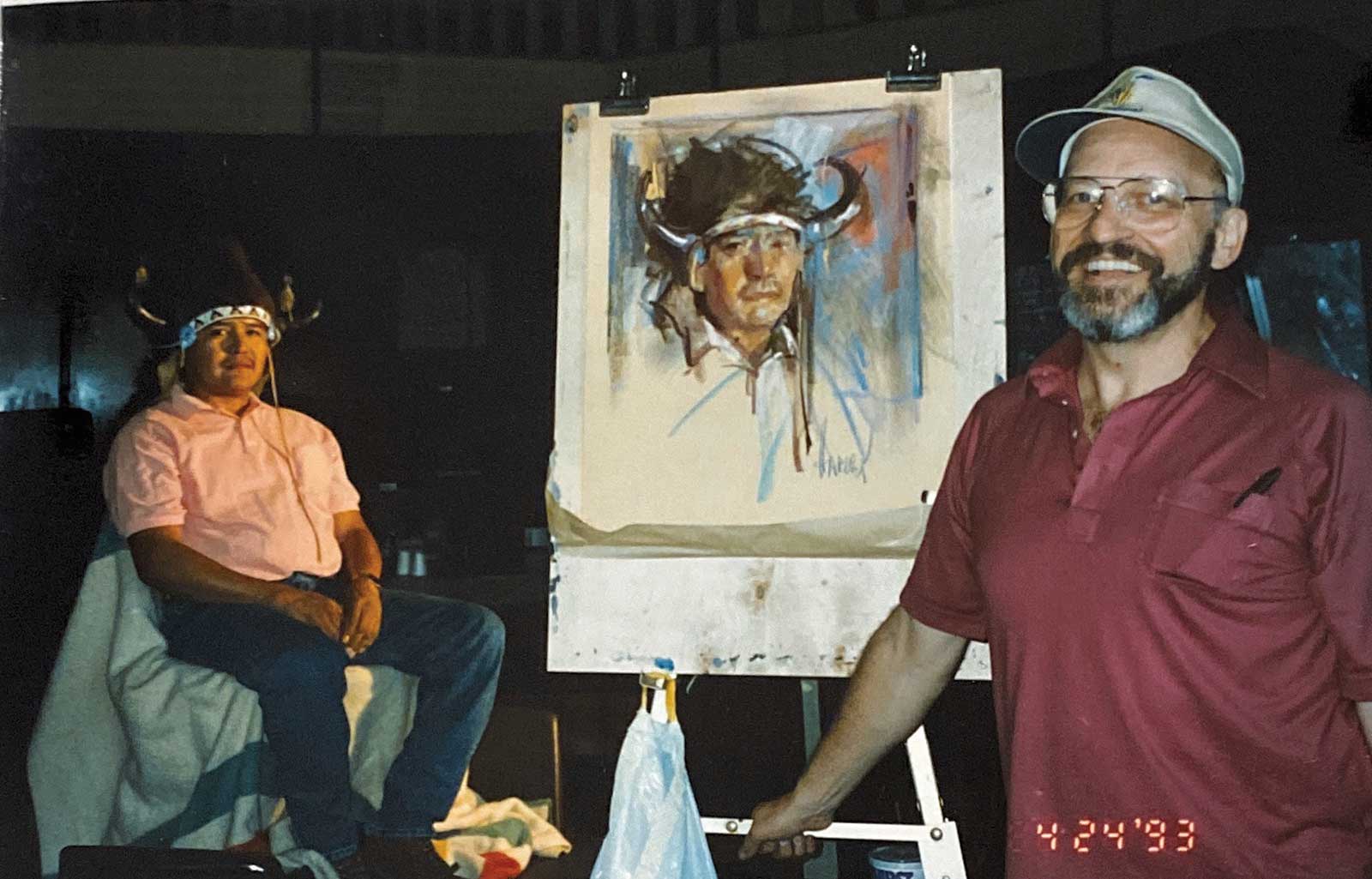
Harley Brown working with a model back in 1993.
How have things changed for you as an artist since you first began writing for IA? What were you doing then, and what are you doing now?
JG: I’m just as excited about discovering the world through sketching as I was 40 years ago when I co-wrote The Artist’s Guide to Sketching. When I started contributing to International Artist, I was painting almost entirely with oil paint, and maybe 10 percent water media. I’ve flipped that the opposite way, for both practical reasons and health reasons. And my subject matter has focused less on fantasy and more on reportage. When I began with IA, I was painting dinosaurs. Now I am a dinosaur.
JL: Twenty years ago when I first started writing for International Artist I had a mortgage and kids living at home, so earning money was a necessity. I was supplying half a dozen galleries and doing three major exhibitions a year. It was hard work, but I enjoyed going out into the studio and immersing myself in it. These days I am under much less pressure in the studio and enjoy conducting workshops and meeting people from all walks of life. I consider myself very lucky to be able to walk into the studio and paint what I like when it suits me.
RR: Over the years I’ve gone from being a graphic designer to an artist and then a teacher. I didn’t stop being any of those things, they just naturally grew from each other, and sometimes I do more of one than another. I cherish the freedom that this lifestyle choice has given me, and I encourage anyone to simply follow their heart in order to sculpt their life into something that suits them.
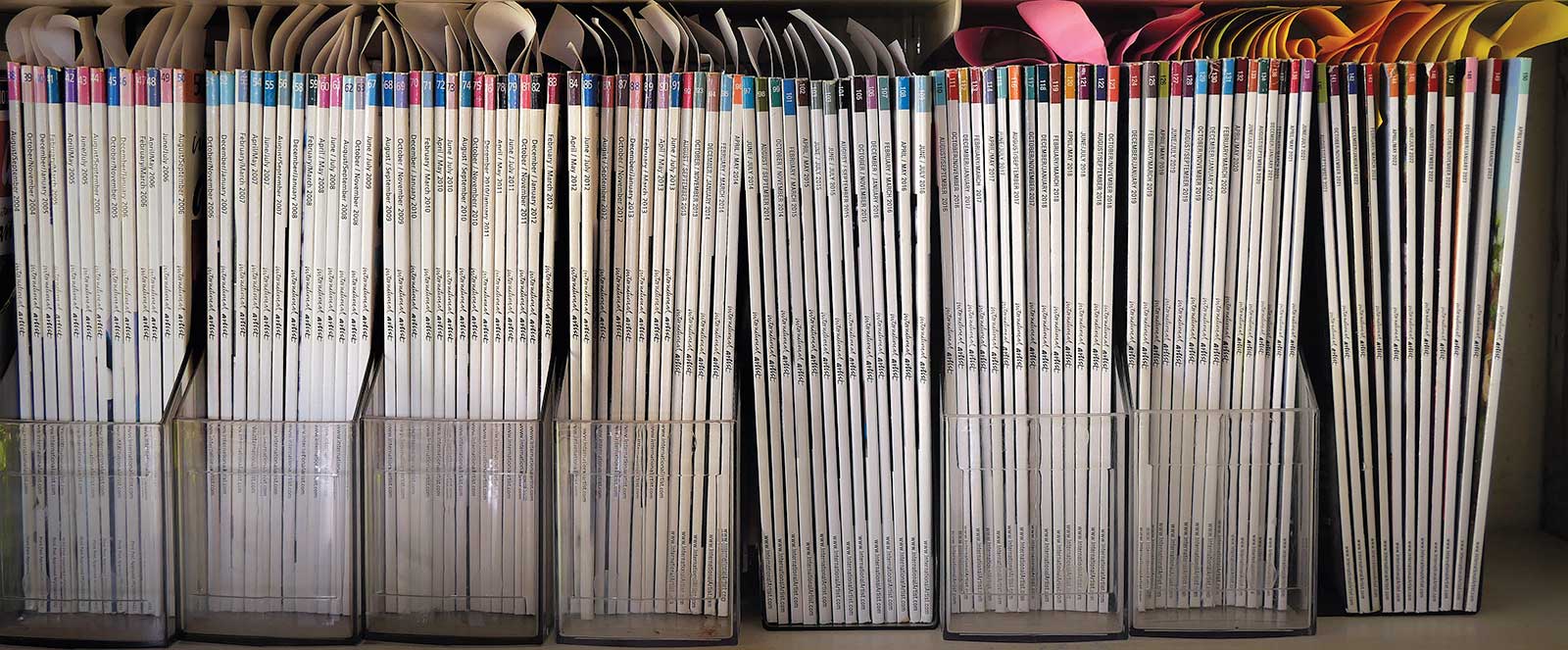
John Lovett’s expansive collection of International Artist issues.
HB: My life has changed since the first years with International Artist. Those were times I was doing a great amount of art shows. This meant major studio time, plenty of travel, plus on location creating art and attending grand events. I also did many workshops in very interesting parts of this wondrous planet. Oh yes, I’m now slowing down a bit, but as usual every day grants me wonders I can’t resist. I admire many other artists’ artworks, especially when I don’t have to be told why I should be inspired by certain pieces. I think you can readily guess where my mind goes in art; and from childhood on, such has been my rapture. Speaking of myself here, I can be fairly interesting, and at times, I’m quite a bore. Age has led me into that relaxed, inner-self territory where I’m Harley and won’t change because of the situation. I’m completely enthused about doing my articles for IA. They’re a wonderful release of my obsessiveness, giving me a chance to reveal important ideas and observations from my artistic past and present.
What is one of your favorite pieces you’ve written for the magazine?
JG: I enjoyed writing an article about painting snow scenes in gouache. I love trying to capture light effects on snow. But since I mainly paint in gouache and casein, I have to deal with paint freezing in the sub-freezing air. Since I wrote the article, I’ve had better luck keeping the water freezing by mixing in some vodka or isopropyl alcohol.
JL: One of my favorite articles for IA was on mountain landscapes (issue 85). It was a series of atmospheric landscapes from the country I grew up in. As a kid we had a 2,000-acre cattle property in the Snowy Mountains near Cooma in southeast Australia. It was beautiful, inspiring country. To go back there many years later to relive and document the atmosphere of that place was fantastic.
RR: I don’t know that I have a favorite piece that I have written for IA, but I do get a kick out of seeing my students work (and my own) printed alongside the great artists featured here, and I love getting the feedback from students who are excited to see their work in the magazine too.
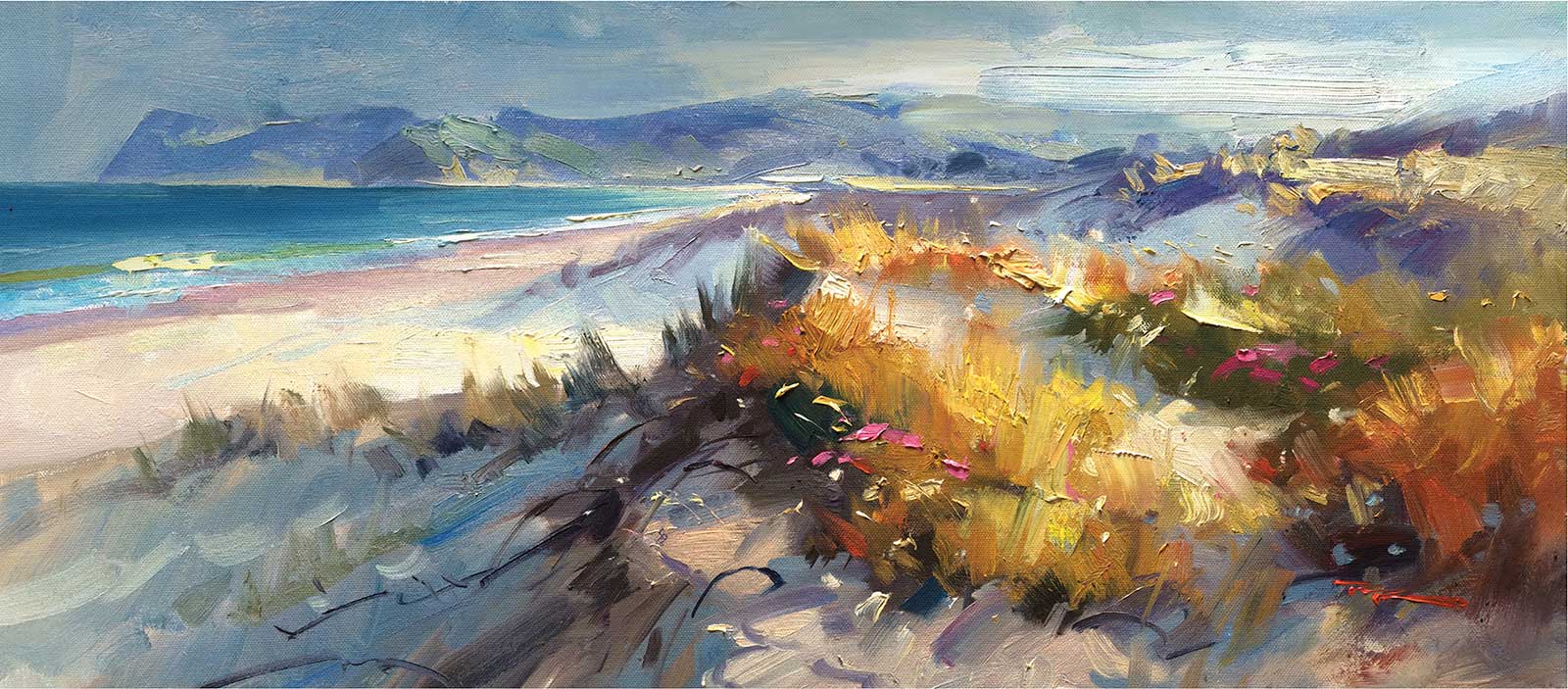
Richard Robinson, Last Light Ruakaka Beach, oil on canvas, 11 x 25" (27 x 63 cm)
HB: Because each of my articles goes into a multitude of areas, I’ll have to say there are none I would call favorites. Mainly, I get personal and bring forth basics that continually come to mind—like finding mental treasures. An example: I recall way back, a monumental moment when I was drawing an animal from life, laying in good lights and shadows. An artist/mentor came by and showed me how those shadow shapes could be laid in as parts of the overall composition—the form shadows and cast shadows working together next to light areas, giving dramatic shapes for design. Including lost edges with lights and darks. For years, when something “hits me” as I’m painting or sketching, and it’s made a positive difference with my art, I quickly jot down what it is and later that day, I’ll often expand upon it. There are plenty of “hit and miss” experiences in my career. I remember the “hits” and steer away from the “misses.” Of importance, I explain to readers how they should intensely observe their subject and how to personally interpret.
What do you enjoy most about International Artist?
JG: What I enjoy most about International Artist is that, for the most part, the artists write the articles. I’m fascinated by what goes on in artists’ minds when they make pictures. How does each of us translate inspiration into image? The quality level in IA is always amazing, and I love learning about new artists.
JL: I love the variety and quality of artists presented by IA. It is also nice to be able to sit in the sun, pick up a magazine and flick from article to article, rather than booting up a tablet or computer.
RR: I enjoy the range of art represented in International Artist and love seeing the processes of other artists and also seeing their studios. It’s always very exciting to see a creative space, no matter what it’s used for—there’s that sense of focus and joy about it that lights me up inside.
HB: I’m thoroughly impressed with the wide range of master artists in the magazine, and the fact that they not only are genuinely talented and creative, but there are exceedingly useful thoughts and visuals pouring from them into the magazine. Always so valuable for the readers. We are each working together with our skills and talents within this worldwide community of artists. International Artist has truly done so much in bringing us together.
What can we expect from you in the future?
JG: There are so many topics I’m looking forward to covering in future articles for the magazine, including classical art lettering, botanical illustration, more watercolor and gouache techniques, and strategies for lighting. I’ve got three books in the works that will come out in about a year and a half, and several museum shows in the works.
JL: Now that Covid is behind us, I’m looking forward to doing more workshops in Europe and the United States again. I am working on an exhibition to be held in 2024 in Tasmania, and I’m just about to head off to Central Australia to conduct a workshop in the beautiful Macdonnell Ranges around Alice Springs. All these things will become the source for more articles for IA.
RR: I’m finding as I get older that my focus is turning more and more towards how I can help others achieve success in their own creative endeavors. So I expect you’ll see that ethos more present in whatever I contribute to IA in the coming years as MyPaintingClub.com becomes a creative hub for painters everywhere.
HB: As time goes on, I want to keep digging even deeper into my aesthetic senses. Things that I’ve felt made a difference with my art, my attitude and my surrounding world. I don’t create for people, I do it for myself and hope there are those out there who might go along with my works and my writing. I know that life isn’t perfect, and actually, I like it that way. We make things happen in our lives, which becomes our pattern of existence. When I write an article, it is like a painting. I can make changes as my intuitive thinking leads me. When my articles reach the readers, those readers are witnessing years of art knowledge coming from my past cherished mentors as well as myself, always with various amounts of passion and insight. Writing for you is similar to working on an art piece. Putting it another way, I’m here at this moment for both you and me. —