


In the exciting world of art today, the traditional stretched canvas has taken a backseat to new, innovative surfaces that have hit the art supply market. From watercolor paper on board to wood to brilliant copper, there’s a vast array of surfaces for artists to choose from. These unique new surfaces may, in fact, change or inspire something new within your own work.
Traditional Stretched Canvas The old method of buying a full roll of canvas—cutting it to the right size, buying wood stretcher bars and adhering it to the wood—is still used as a tried and true method, especially when painting larger sized works. The wooden frame with canvas can provide stability for very large sizes, but the downside is that these canvases, once stretched, can be easily ripped or torn.
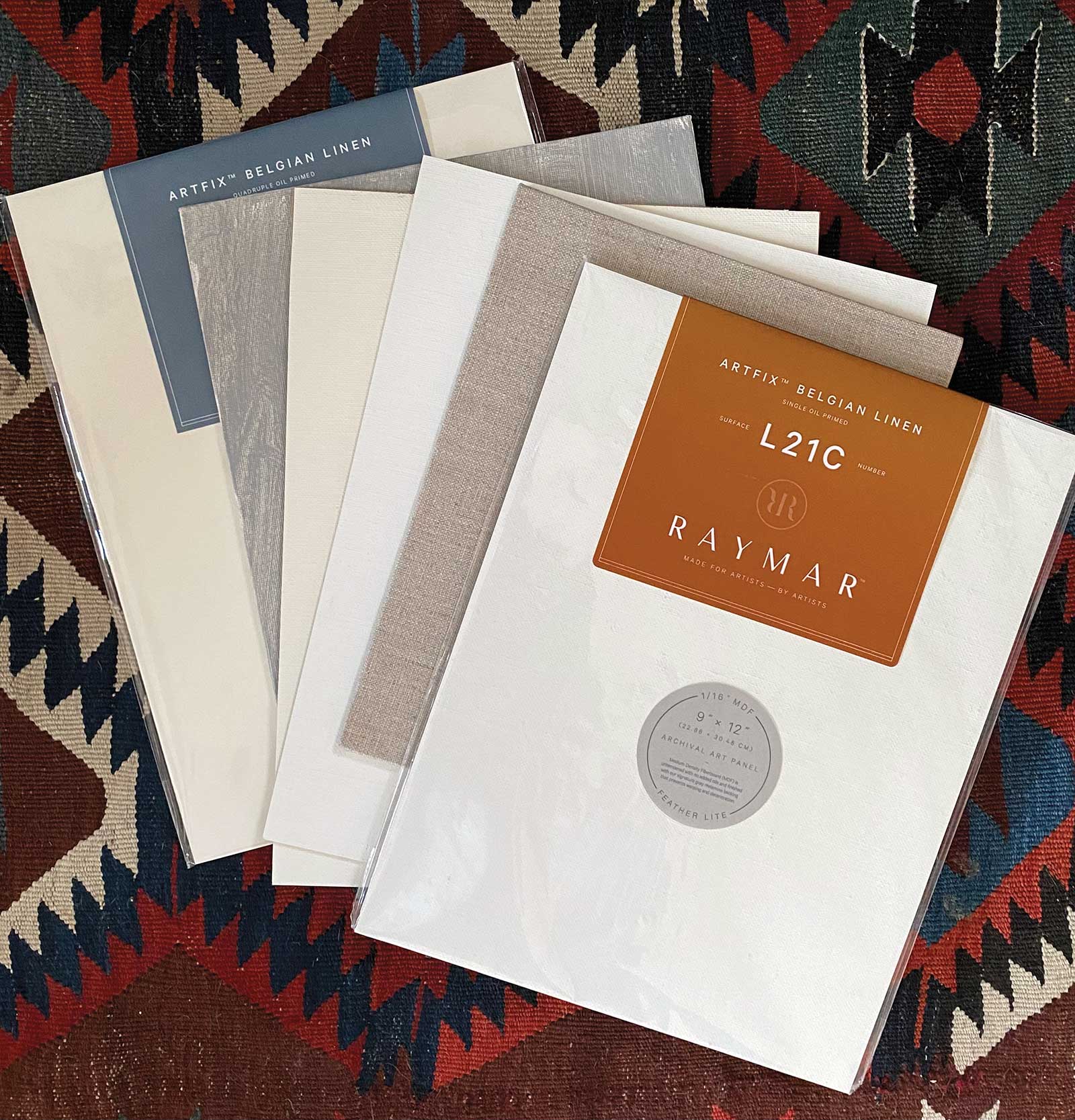
A display of panels in varying surfaces.
Linen on Board
One of the first amazing advancements, which came out years ago, was canvas or high-quality linens that were available on board. The linen is adhered to the board with a special fixative and is smoothed out for a very fine and durable surface to paint on. And it can’t be torn, so it’s much safer. Belgian or French linen is one of the professional choices, and cotton is considered student grade. I recently asked Raymar—one of the stand-out companies who started canvas on board—how they keep up with the changing needs of artists. “As the president of Raymar, my ultimate goal is to provide artists with the highest quality surfaces to enhance their painting process,” says Emilie Dietrich. “By collaborating with top artists, we constantly add new surfaces to meet their evolving needs. The most recent additions to our line of archival panels include copper, watercolor paper, and soon, a sanded pastel paper panel. It is my hope that with the right materials, artists can effectively bring their creativity to life on a support that will stand the test of time.”
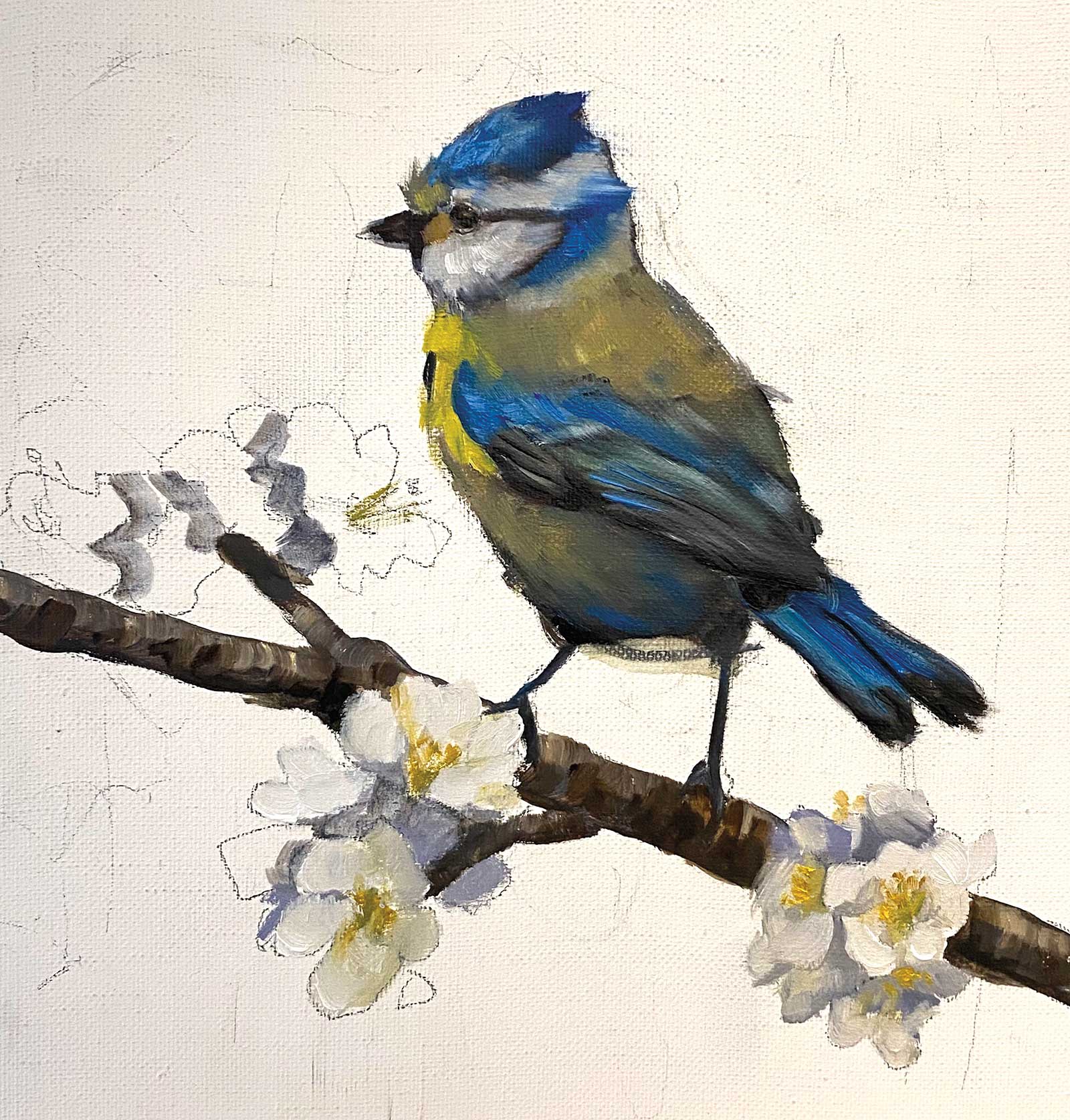
An example of a painting on a linen surface.
Watercolor on Board
One of the most exciting new products is watercolor paper on board. I know all the watercolorists reading this are absolutely thrilled, as the ease of transporting, painting on and framing is much easier and safer. The paper will not get wrinkled or torn as it is now adhered securely to a board. What makes this even better is the ease of framing your work. The boards come in set sizes that correlate to the frames, and it’s less expensive to frame since they are ready to go with existing backing. All you would need then is the glass. For example, Raymar offers the Italian paper Fabriano in hot or cold-pressed right on a lighter aluminum ACM panel. Additionally, Jerry’s Artarama offers a nice basic watercolor paper on gatorfoam board that can also be lightweight.

A figurative piece painted on watercolor paper on board.
Copper
Copper is a slightly more expensive but truly alluring surface that has now hit the market in board form. This very fine, shiny surface can be scratched into, painted and scratched off in areas, in order to see the copper under the painting. It can add beautiful textures or areas of interest in your work. Often, artists are painting on copper and leaving areas unpainted with the shiny copper color showing through. It adds a little glimmer to the work and warm undertones.
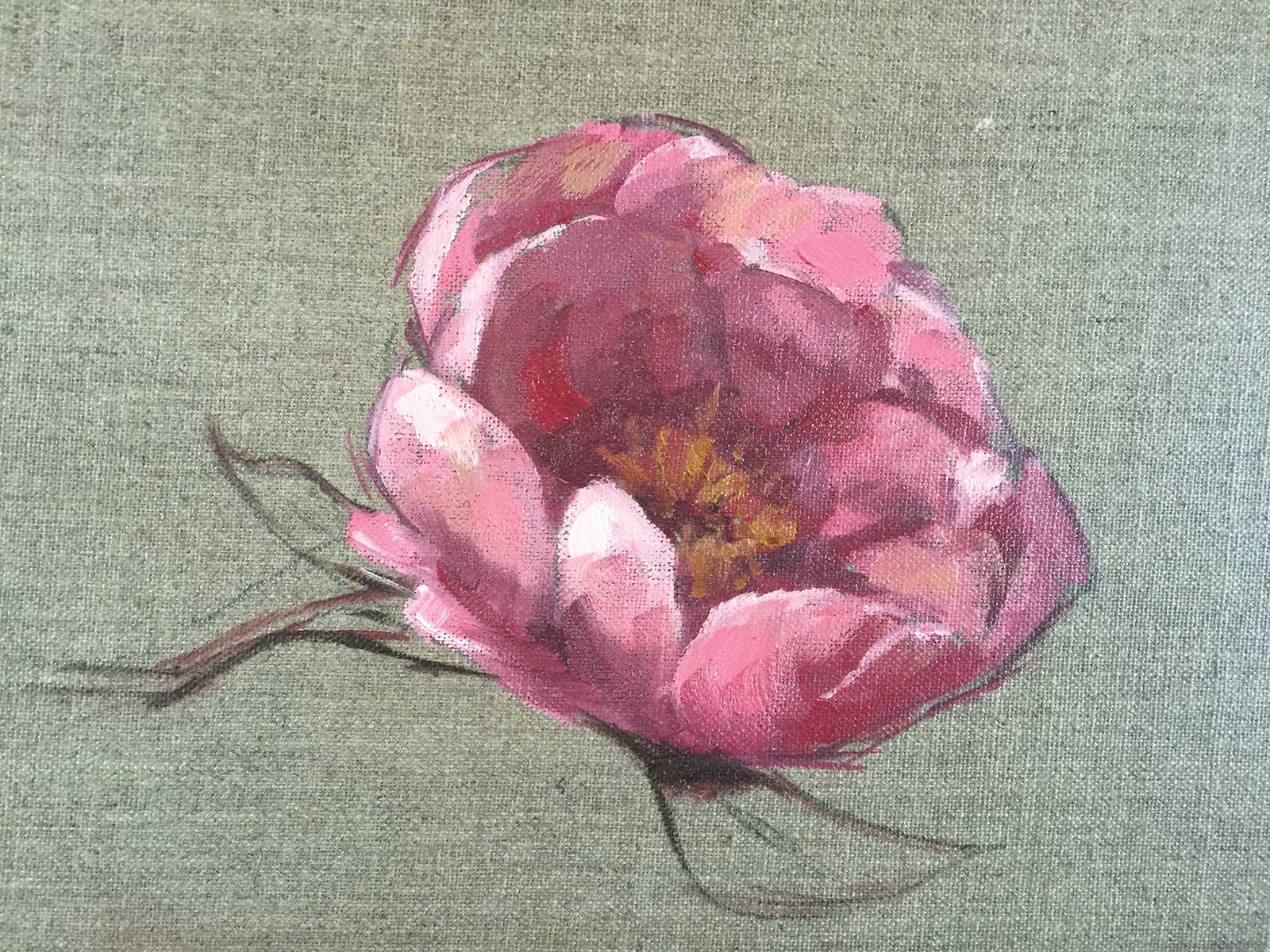
A floral work painted on raw linen.
Wood, Gesso, Aquabord and Raw Linen
There are other interesting surfaces to paint on that give texture underneath. Smooth wooden surfaces are available to artists and were some of the very early supports used for painting. Think of those church pieces with religious figures, all painted on fine wood. Nowadays, these panels are finely packaged and ready to go. Made from birch wood, they are another strong and viable support to paint on, although not as widely used. Gesso panels by Ampersand are an extremely smooth option, often used by acrylic painters. Portrait painters also seem to like a smooth and reliable surface. Aquabord by Ampersand is another option for water-based media and seems to allow more saturated color to remain rather than being absorbed into the paper. One of my favorite surfaces for small works is the Senso brand clear-primed linen panel. It looks like you are painting on raw linen, but the surface has a lot of tooth and texture.—