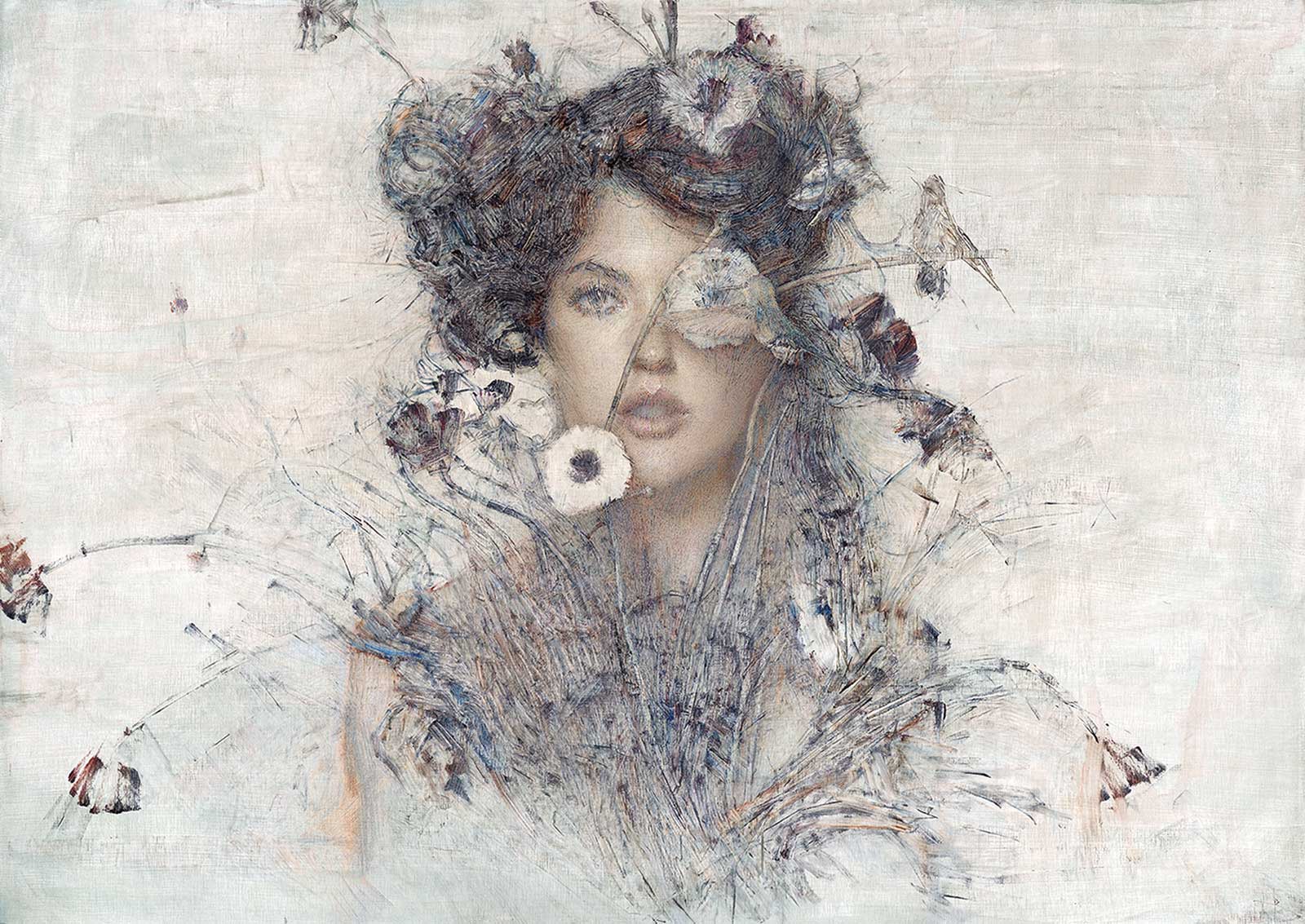
Daniel Bilmes, Augur, oil on panel, 26 x 36" (66 x 91 cm)
Scottsdale Artists’ School: Tell us about your artistic training.
Daniel Bilmes: At the age of 8, I began studying art with my father, Semyon Bilmes, who had a small illustration school in southern Oregon. My father comes from a strong academic background. He was educated in the Soviet Art academies, before immigrating to the United States and attending Parsons in New York City. There he met my mother, Alla Bilmes. I was immersed in art and art education from a very early age, which was a key foundation for my artistic career.
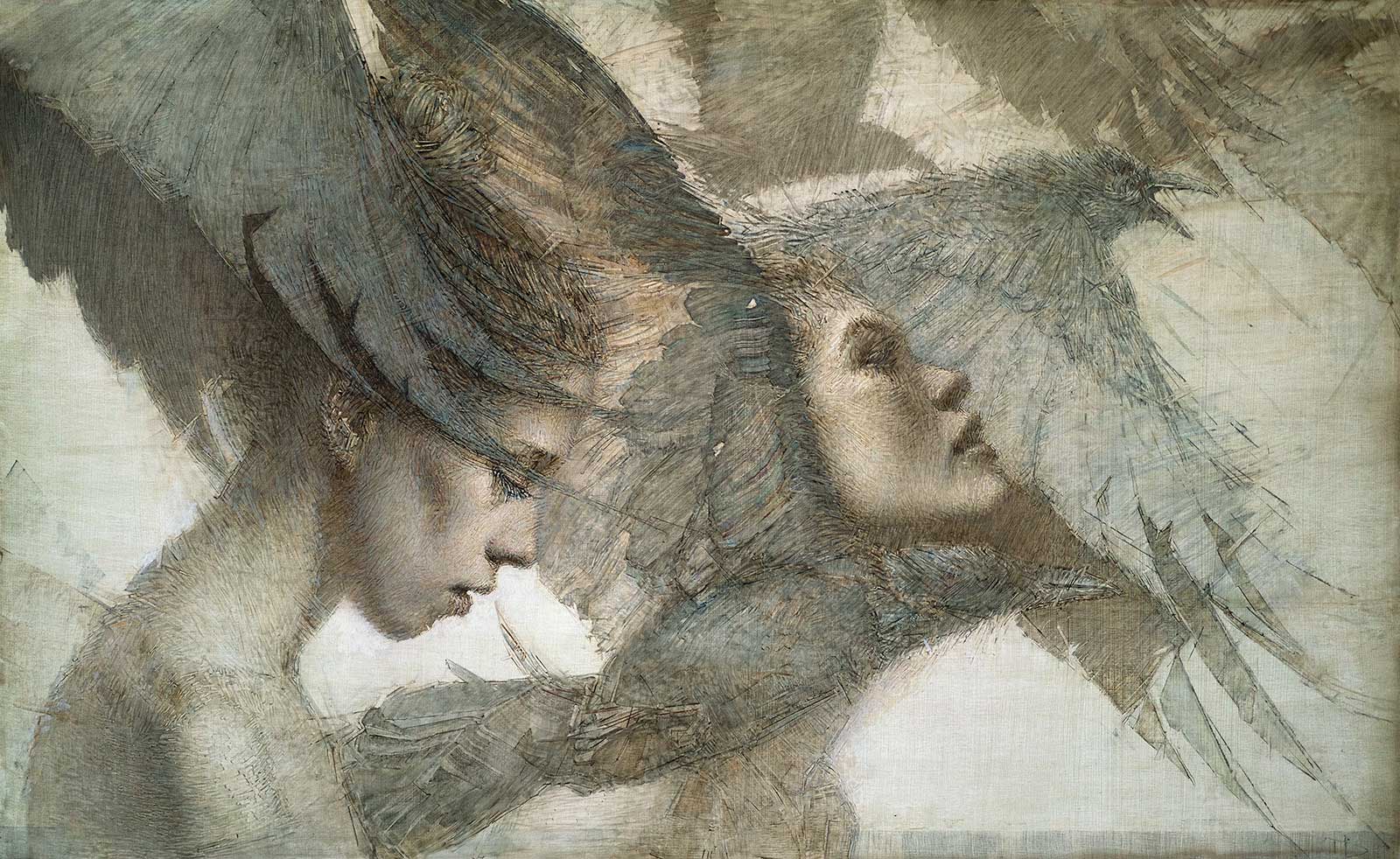
Daniel Bilmes, Falling Up, oil on panel, 20 x 32" (50 x 81 cm)
SAS: What is the difference between creating art and teaching art?
DB: They go hand in hand. I grew up in an art school; it was the family business. I learned so much from teaching—especially since I started at a young age. You quickly discover the gaps in your understanding when you must instruct someone else. This stuck with me. I don’t have a lot of time to teach these days, but I think it’s important.
SAS: You have such a distinct color palette. Can you tell us a little bit about this?
DB: Color, like texture, is very personal and has to do with preference, harmony and balance. I’ve spent much time looking through endless imagery, mapping my reactions. What makes me feel something when I look at an image? What kind of colors do I gravitate toward? I started my painting journey with a wide array of colors and gradually whittled it down to pigments I consider essential. My palette has both earth tones as well as a few extremely saturated colors. Each one is necessary to balance the whole.
SAS: How do you describe the visual rhythm of texture in your paintings?
DB: Textures are like music. The simplest melody and rhythm can touch the soul, but a few discordant notes can be quite jarring. I’ve always found myself interested in the process of how something is constructed. I’ll get lost in how a hand or a fabric is woven together. The visual rhythm of textures fascinates me.
I didn’t intentionally develop a style—I guess this is just my interpretation of reality. My technique evolved from my academic drawing and life studies. A part of the narrative in my works is in the rhythmic brushstrokes.
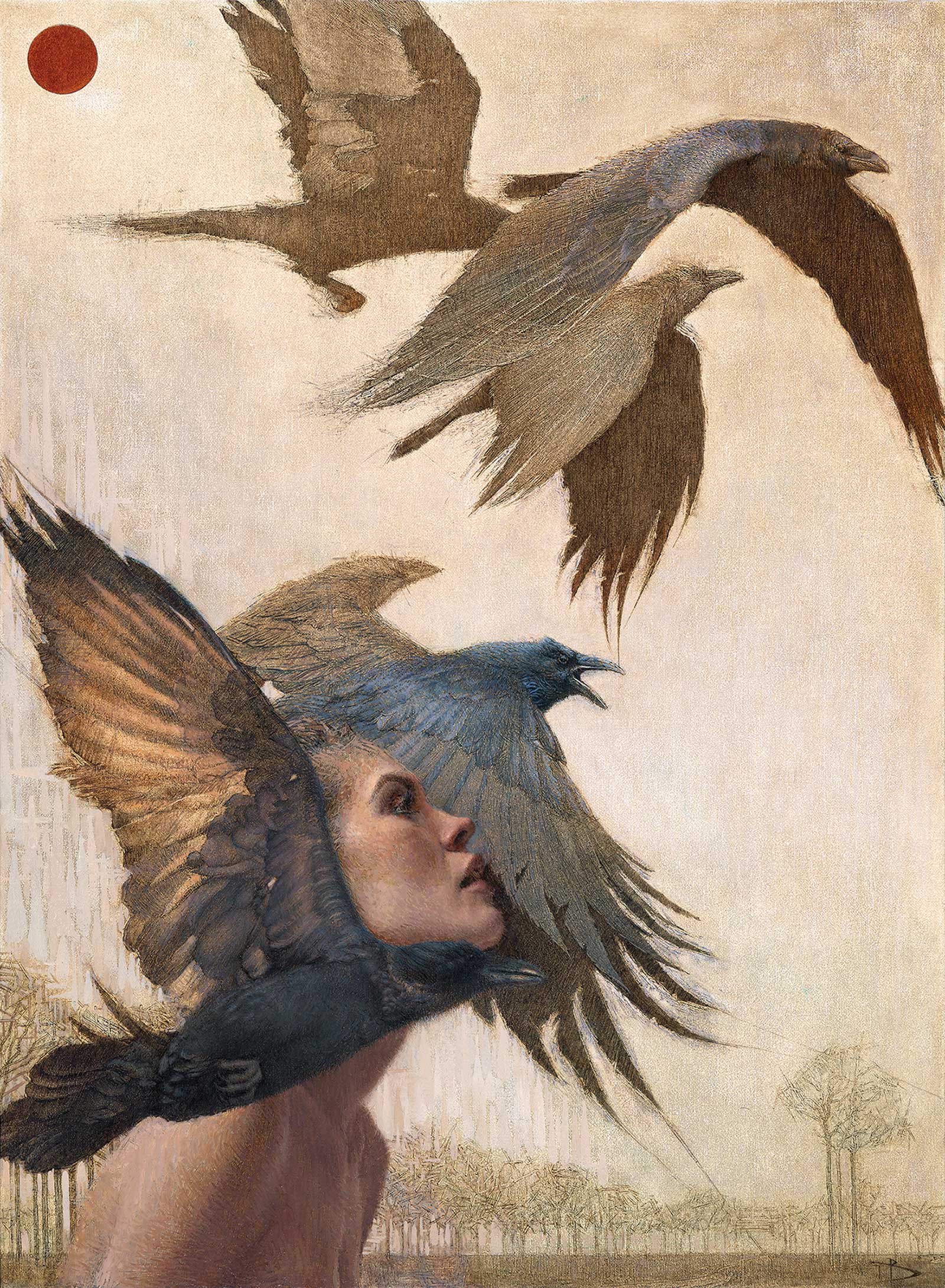
Daniel Bilmes, Ascending Into The Unknown, oil on panel, 34 x 25" (86 x 63 cm)
SAS: How does the slightly unfinished look of your paintings contribute to the visual narrative?
DB: I focus as much on how my paintings come to life as the finished product. The areas of my painting I like the most are created on days when I painted the most elegantly. I try to infuse the start of every painting with as much movement and energy as possible, beginning with the longest brushstrokes and working my way down. I move the paint around a lot in the beginning and then scratch it as it dries. This leads to many long painting sessions. The process is as important as the finished work. I carefully weave the different stages of my work into the narrative and finished compositions.
SAS: Tell us about your paintings’ combination of figurative art and abstract environment.
DB: How do visual stimuli impact our emotions? I try to deconstruct my own taste and feelings and build art with the pieces. The abstract environments and the figurative characters that inhabit my paintings are a juxtaposition of interests and passions.
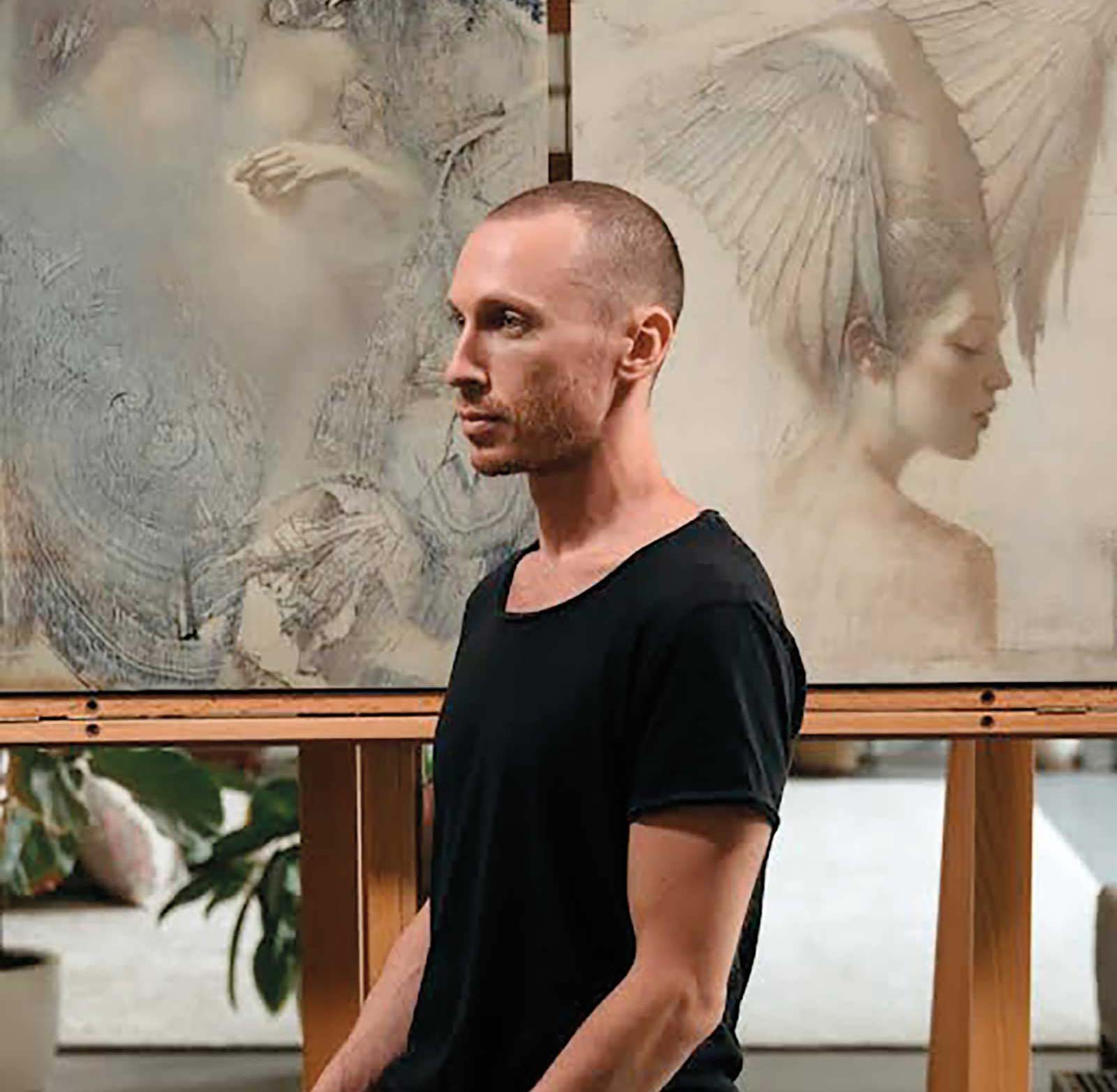
Daniel Bilmes in his studio.
SAS: What advice would you give to students and young artists?
DB: It is essential for a student to learn the techniques of others and for an artist to develop their own. There’s so much going on in the world, and so many options and directions, I believe that creativity and vision are more valuable than ever. This is the first generation of artists that have access to limitless visual inspiration—we’re not just looking at archives of the past—we can see what’s happening in the art world in real time, all around the globe. —
Look for Daniel Bilmes’ workshop this fall: Scottsdale Artists’ School, “Paint in Motion” October 26-28, 2023