Choosing a watercolor paper can be one of the most confusing aspects of watercolor painting. Each manufacturer offers a number of different textures, weights and sizes plus various paper qualities. Artist quality paper is expensive and needs to be properly treated, before and after use, to keep it in pristine condition. In this article we will look at how to choose a suitable paper and how to handle and preserve your paper.
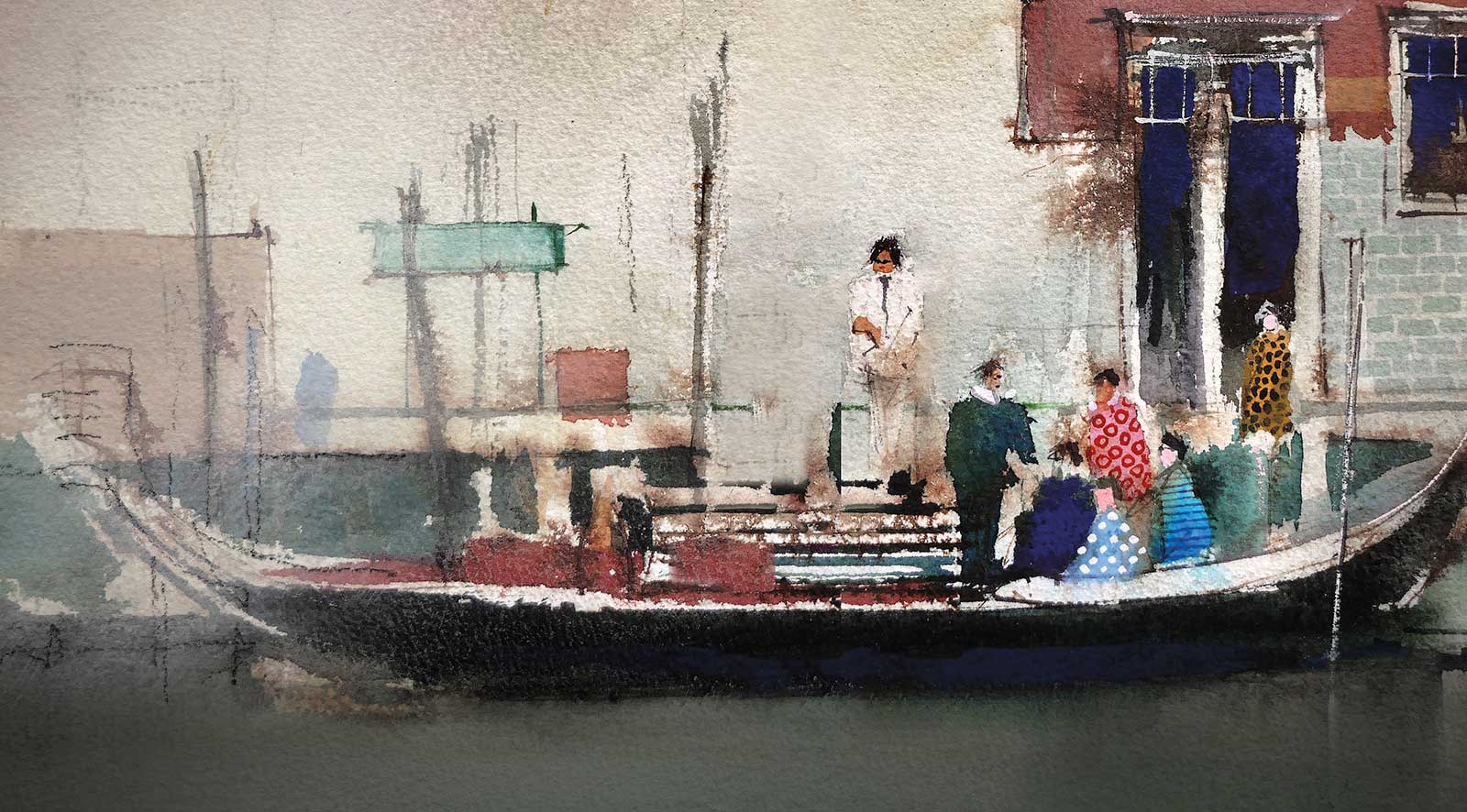
Painting on rough paper.
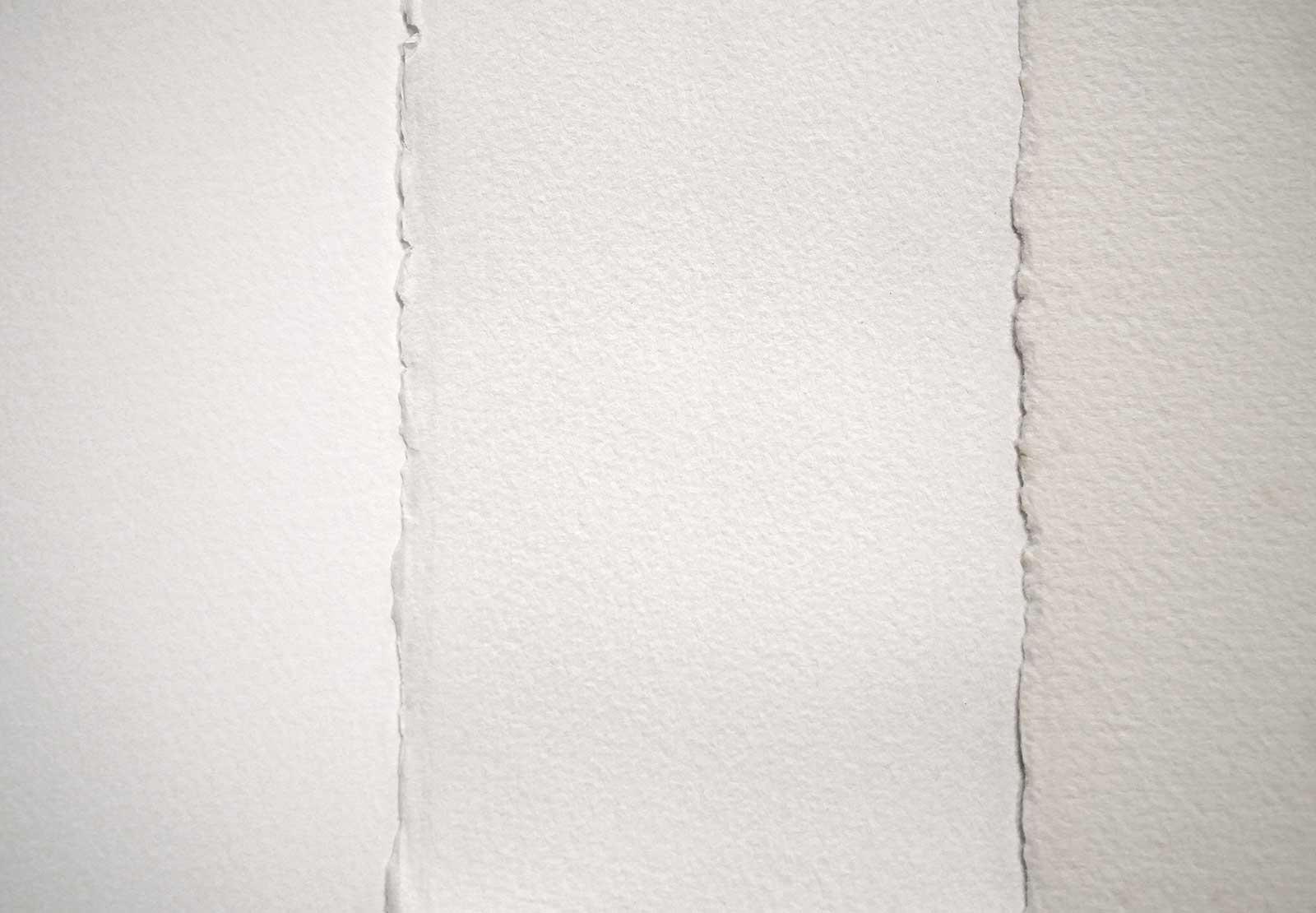
Hot-pressed, cold-pressed and rough paper.
Paper Texture
Watercolor paper comes in three main textures: smooth (called hot-pressed), medium (cold-pressed or CP) and rough. This photo shows the apparent change in tone due to the shading effect of the progressively heavy textures.
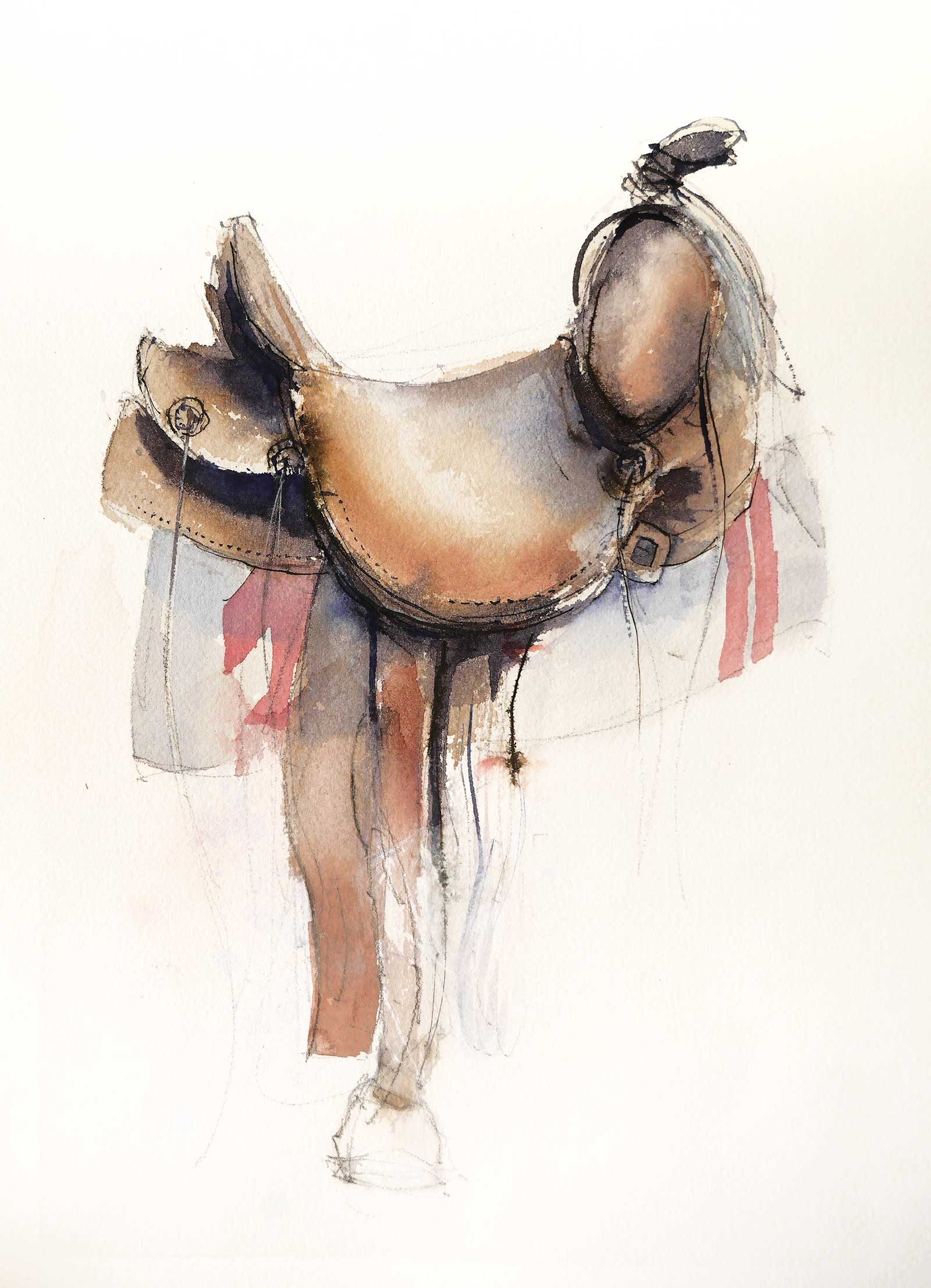
Painting on hot-pressed paper.
Hot-pressed
The smooth, flat surface of hot-pressed paper is most suited to fine, detailed work. The lack of texture gives the paper a whiter appearance than a textured paper so colors appear more saturated and tonal contrast is more pronounced. Hot-pressed paper is less forgiving when it comes to large washes due to its heavy surface sizing. Blooms can be a problem on hot-pressed paper.
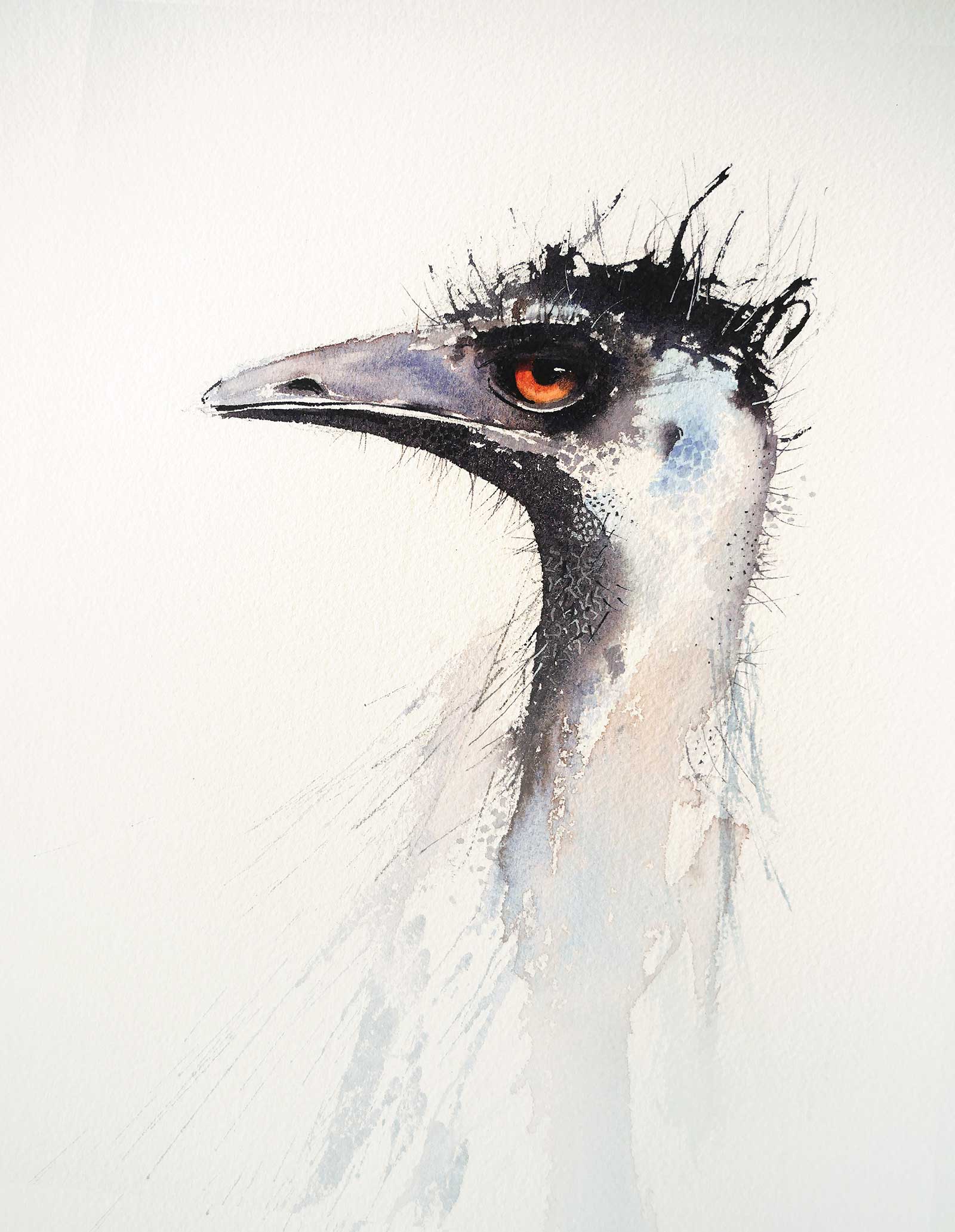
Painting on cold-pressed paper.
Cold-pressed
Cold-pressed paper sits halfway between hot-pressed and rough. It has a moderate texture so there is a slight shadow cast into the tiny pits in the paper. This reduces the appearance of whiteness and desaturates the colors slightly. However the paper is much more forgiving than hot-pressed when it comes to big washes or manipulating drying pigment. Cold-pressed is a good all round paper. It allows for plenty of fine detail while giving your work a subtle underlying texture.
Rough Paper
Rough paper is just what it says. Its heavy texture suits rustic, heavily textured subjects. Rough paper is not quite as good for fine detail, but like cold-pressed, it is very forgiving when it comes to washes and manipulation.
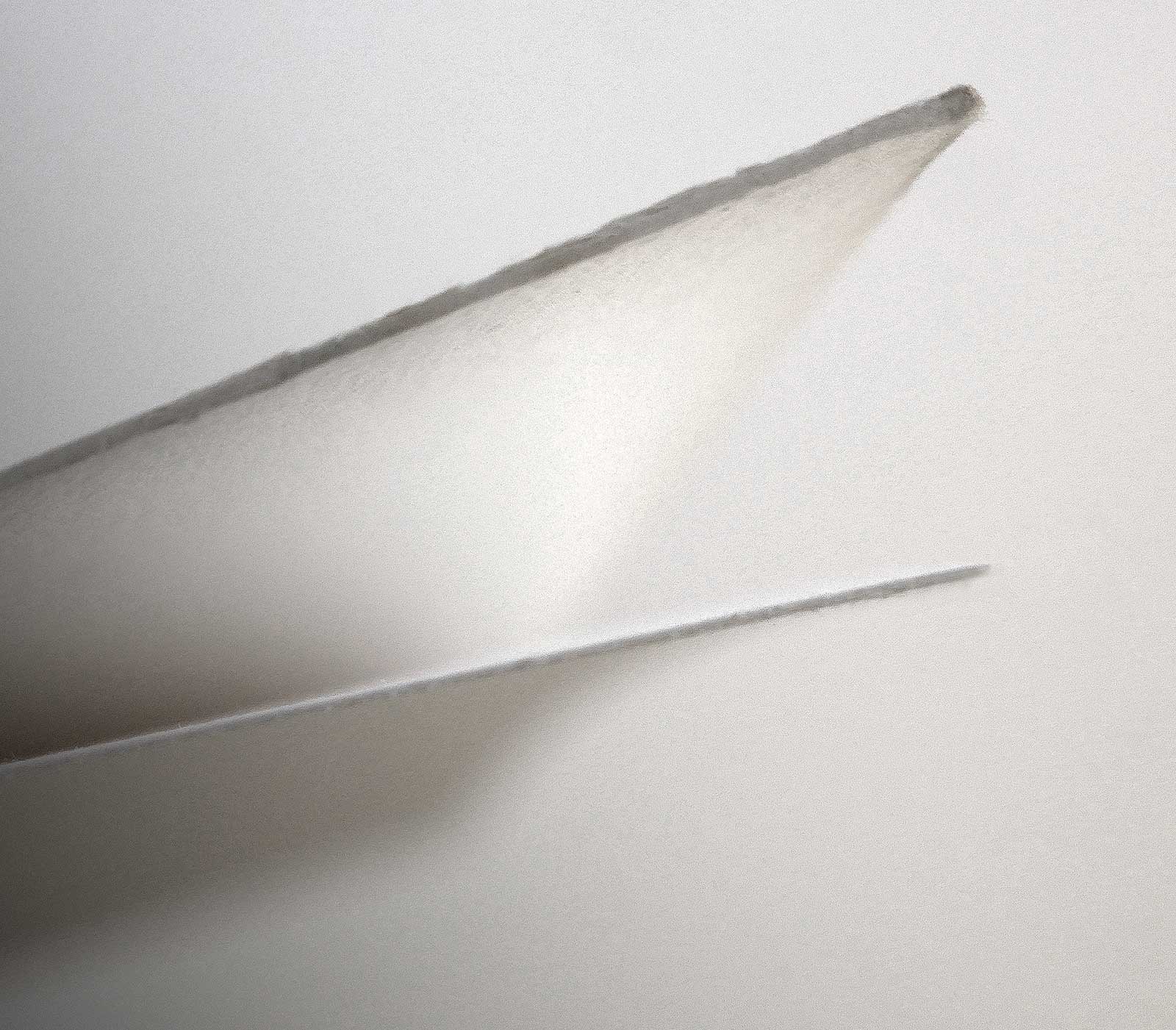
This photo shows the difference between 640gsm paper and 180gsm.
Paper Weight
Another consideration when buying paper is weight. Different countries describe the weight in different ways. In the United States, paper weight is in pounds per ream (500 sheets) of that paper, so 140-lb paper means 500 standard 22-by-30-inch sheets would weigh 140 lbs.
In Europe paper weight is described in grams per square meter (gsm) of that paper. The European equivalent to 140-lb paper is 300gsm; 90-lb paper is the same as 185gsm; and 300 lb paper is the same as 640gsm. Heavier weight paper is thicker and less likely to buckle than lighter, thinner paper. It is also more expensive, so 140-lb (300gsm) paper is a good compromise.
Artist Quality vs Student Quality
Good quality artist paper is acid free and made from 100 percent cotton fibers. It is robust and forgiving due to the careful internal and external sizing.
Student quality paper is usually made from wood pulp which is not as robust and can yellow over time. I always encourage students, once they are confident applying and controlling paint, to use a good quality paper, as it makes the job of painting so much easier. Student paper is ok to practice washes, softening and controlling edges and mixing colors—if you can do a half decent job on student paper, you will be an expert on artist quality paper.
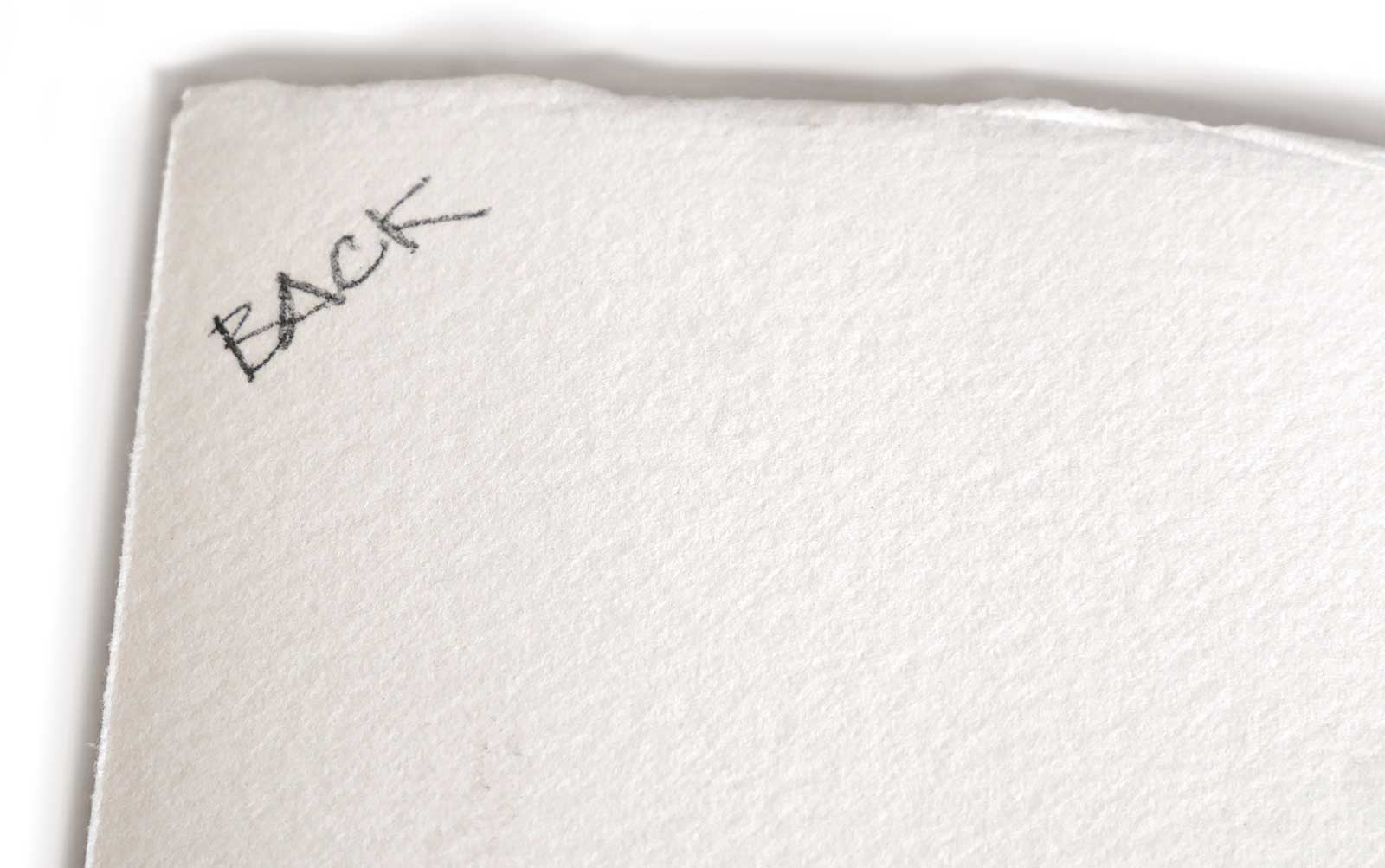
Marking the back of a sheet in each corner before cutting.
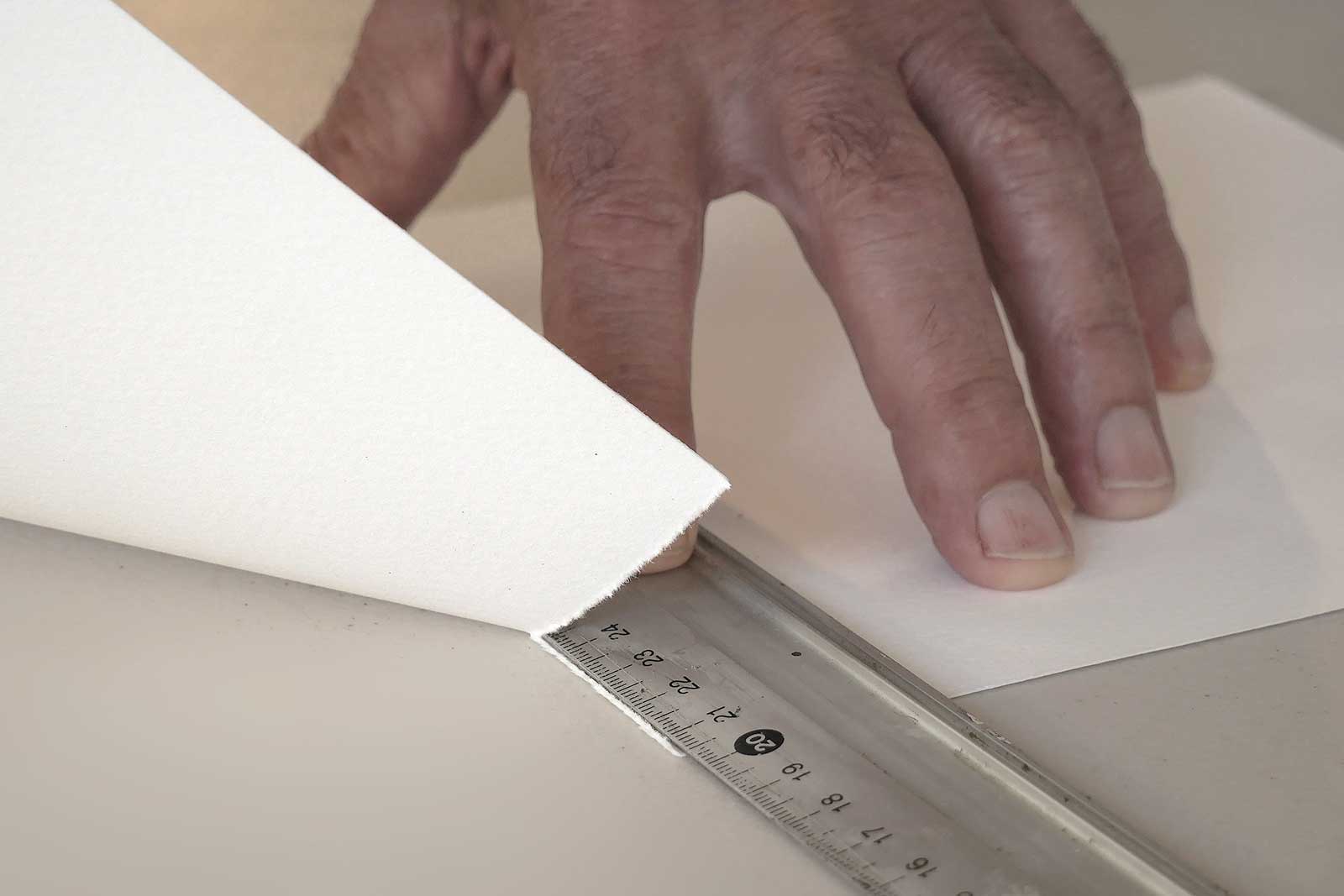
Tearing paper with a straight edge.
Cutting Paper
It is a good idea to mark the back of your paper before cutting it into smaller sheets as there is usually a front and back side to the paper—the front being the preferred side to work on.
If you hold up a sheet of good paper to the light you will notice a watermark. This should be around the right way from the front. If you want to cut a full sheet into four quarter sheets, find the watermark then turn the paper over and write “BACK” lightly in each of the corners with a pencil. Once you have cut the paper into four you will know which side to paint on whether or not the watermark is visible.
A sharp craft knife and straight edge are the easiest way to cut paper. If you want to mount the paper with the edges exposed use a heavy metal straight edge and tear the paper to leave a decal edge.
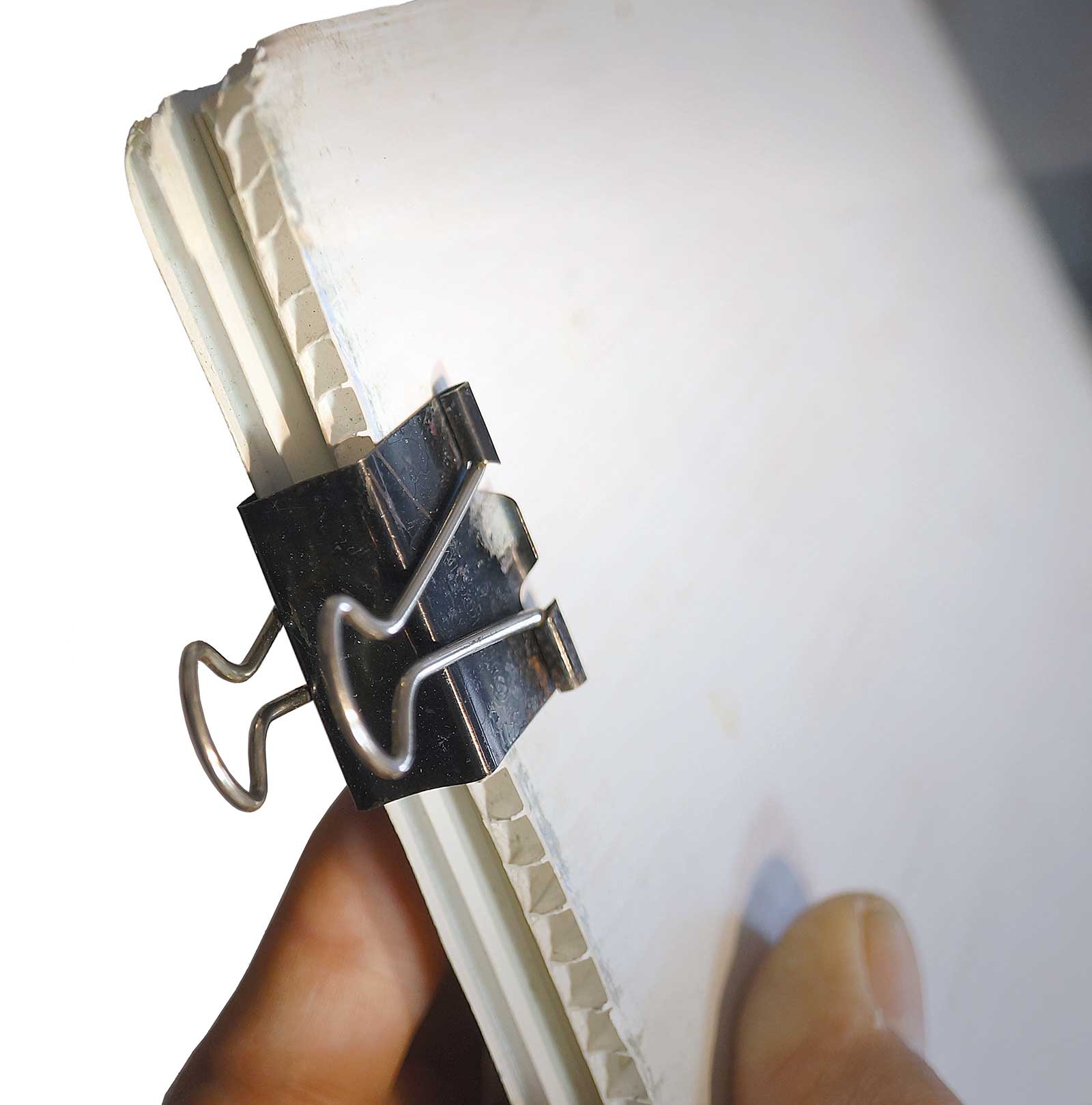
Protect paper between sheets of corflute for travel.
Storing and Carrying Paper
With all the wetting and scrubbing a good sheet of watercolor paper can handle you would think it was pretty well indestructible. There are a few things, though, that can quickly ruin a good sheet of paper. Constant friction can destroy a stack of paper. I lost a pile of small sheets in a backpack in the back of a four wheel drive. The top surface of every sheet had been rubbed away traveling over corrugations. I now clip my loose sheets between two sheets of lightweight plastic corflute. These can then be used as backing boards.
When you store paper or finished paintings keep them away from any acidic surfaces. This includes sheets of cheap paper and cardboard or MDF or chipboard shelves. The safest way to store paper is in the big plastic bags it is sold in. If you live in a humid environment, tape up the bag when you put it away. Acidity and moisture encourage mold to grow. Once this happens your paper is ruined.
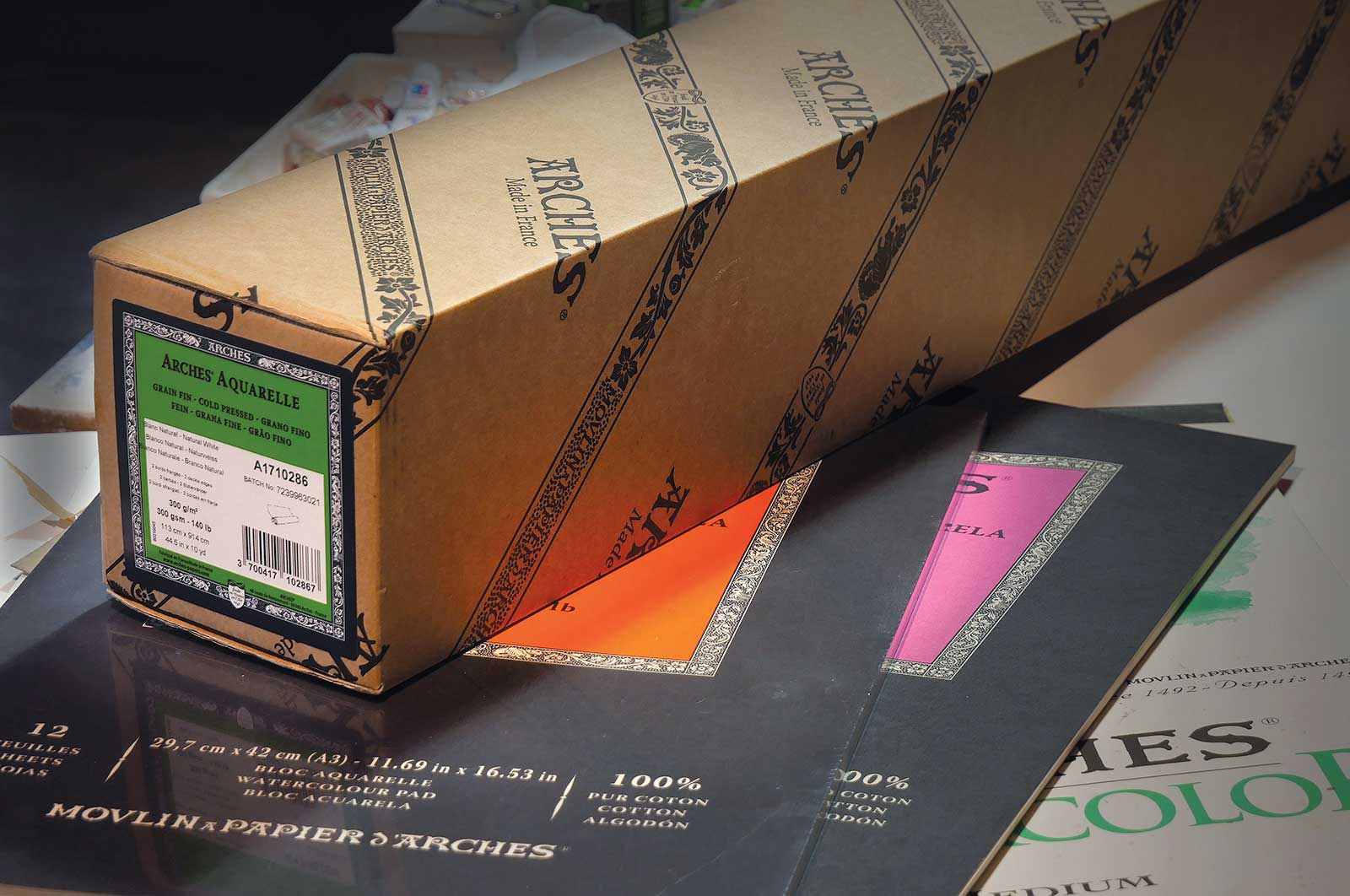
Rolls, blocks, pads and full sheets.
Blocks, Pads, Full Sheets and Rolls
Just to confuse things even further, most paper manufacturers sell their paper in all of the above formats. By far the cheapest way to buy paper is by the roll. The downside is that you have to buy 10 meters at a time then wrestle with it to cut it into the sizes you want. Blocks are great for traveling because each sheet can be removed by running a credit card or blunt blade around the sheet once the painting is finished. Pads are good too, but the block keeps the paper nice and flat until the painting is removed. Full sheets work out a bit cheaper than blocks or pads, but again they have to be cut up and carried if you want smaller sheets.
Which Paper is Right for Me?
The only way to find out is to experiment and try different manufactures. The best paper from one manufacturer will be different from the best paper produced by another. Knowing what type of painting you wish to do will give you a clue to the most suitable texture. Fine detailed work is more suited to a smooth hot-pressed or CP paper. For heavily textured and mixed media work, or if you are a painter that likes granulation effects, a rough paper would probably suit you best.
I have found Arches 300gsm cold-pressed suits most of what I paint. It is robust and forgiving and is only lightly textured, so fine detail is not lost.
Whatever you choose, remember, it takes a few paintings to become used to a different paper. If you wish to experiment, buy a full sheet, cut it into four and wait until you have used all four small sheets before you make up your mind. Even when you do decide on the perfect paper, don’t forget to experiment. Sometimes a different paper will trigger fresh ideas and a different approach to what you have been doing. —
Contact at
www.johnlovett.com