The strategy for building a picture is typically to draw it out first and then paint over the drawing. Many artists work out all the details in pencil lines or pen lines at the beginning, and then put their dry media aside and shift to wet paint, adding colors either transparently or opaquely. But with watercolor or gouache you can flip that sequence, doing the painting first and then crafting a detailed drawing on top of the dry paint, because the matte surface is receptive to most drawing media. With this method, the early stages can be big, splashy, loose, or exploratory, followed by carefully considered lines and textures executed with dry media. Here are some examples of this quirky technique, which is sometimes called “overdrawing.”
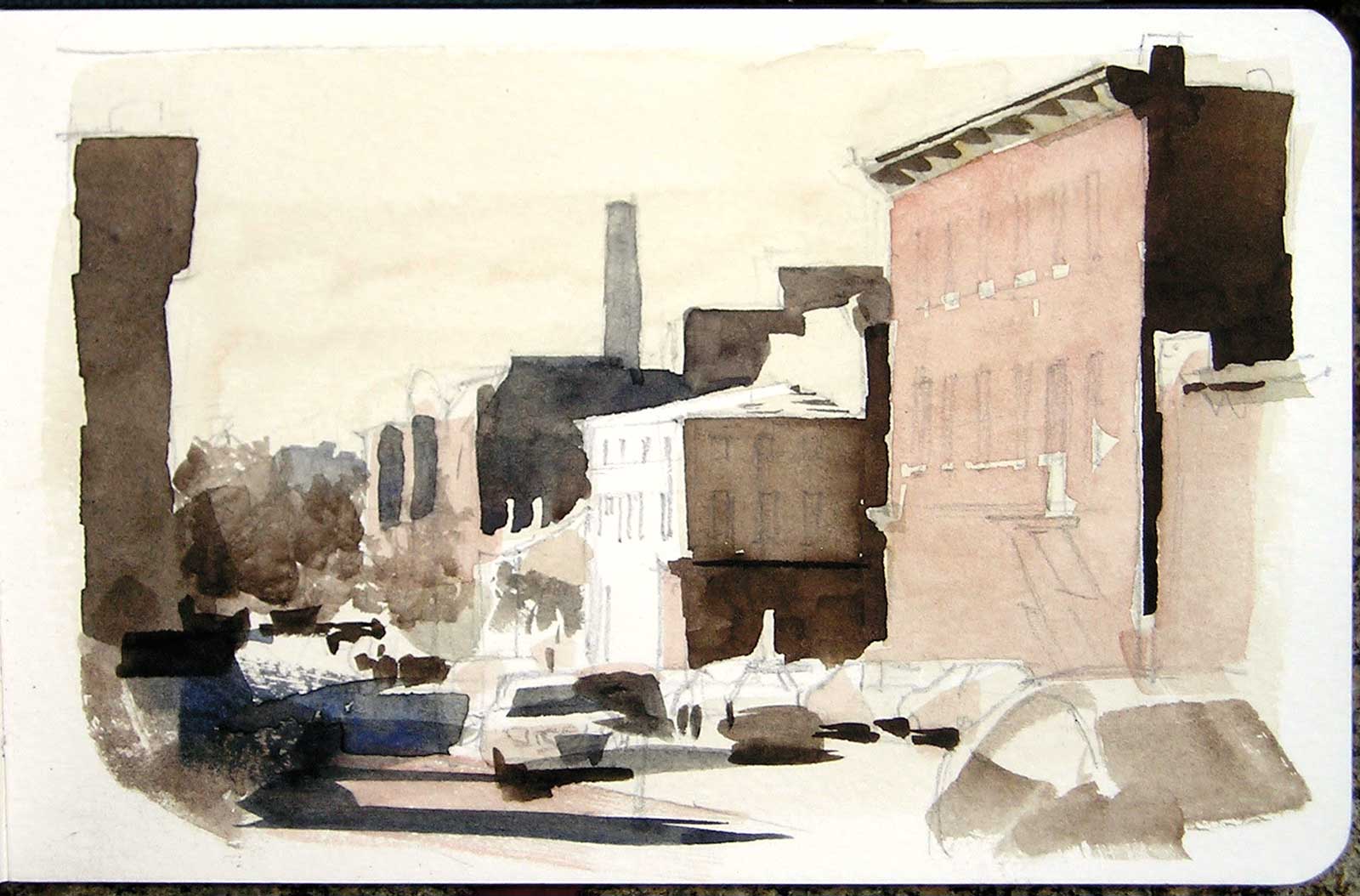
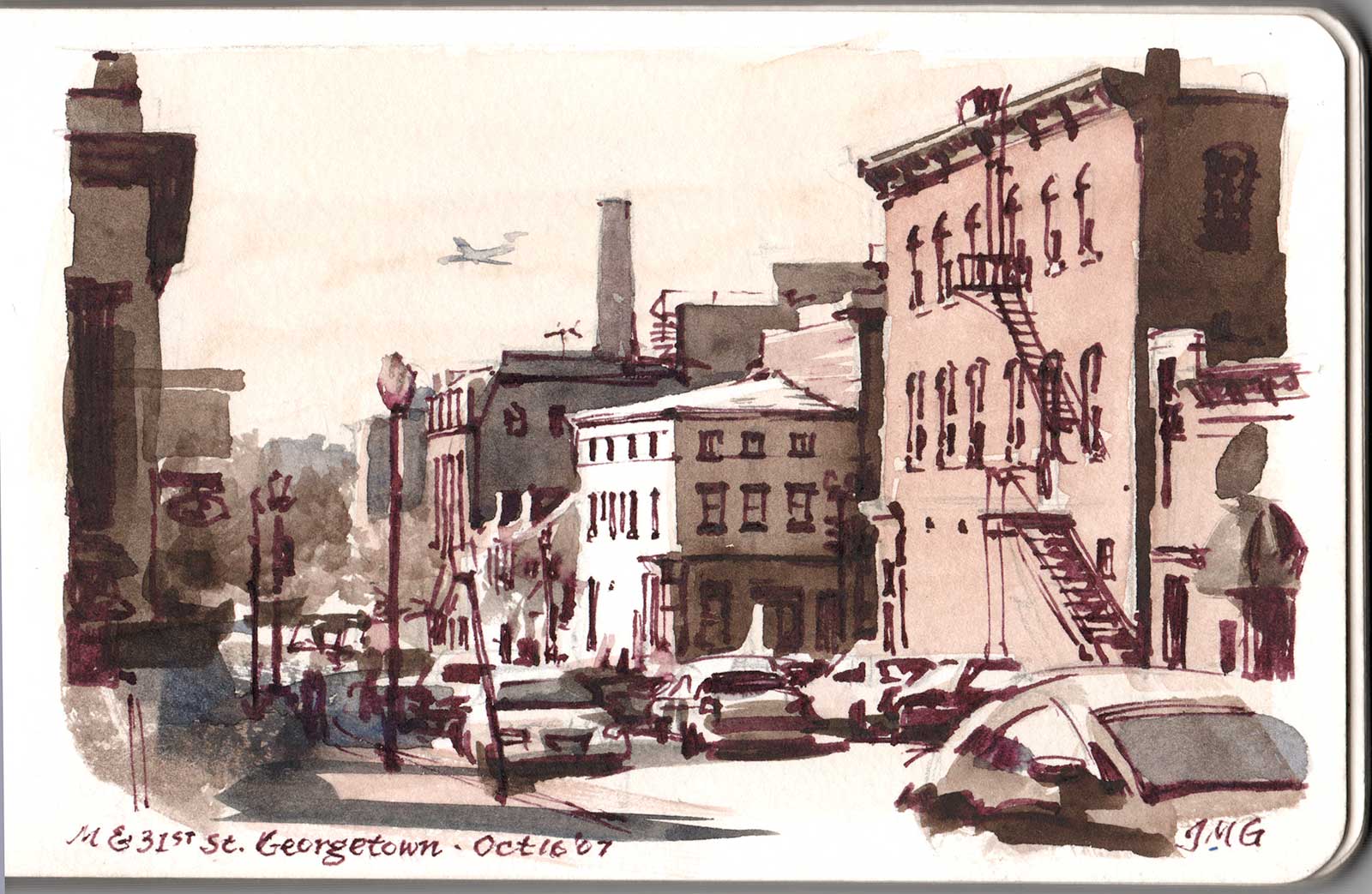
M and 31st, Georgetown, watercolor and fountain pen, 3½ x 5½" (8 x 13 cm)
Creating An Antique Photo Look
The goal with this tiny plein air sketch is to simulate the look of an antique photo by combining warm and cool gray tones with brown pen lines. I start with a light underdrawing in graphite pencil and then place the big light and shadow planes with a relatively large flat synthetic brush. The only pure white is the central building. For the final linework I use a fountain pen with brown ink. Since the brown ink is water-soluble, I can’t add further watercolor washes without dissolving the lines.
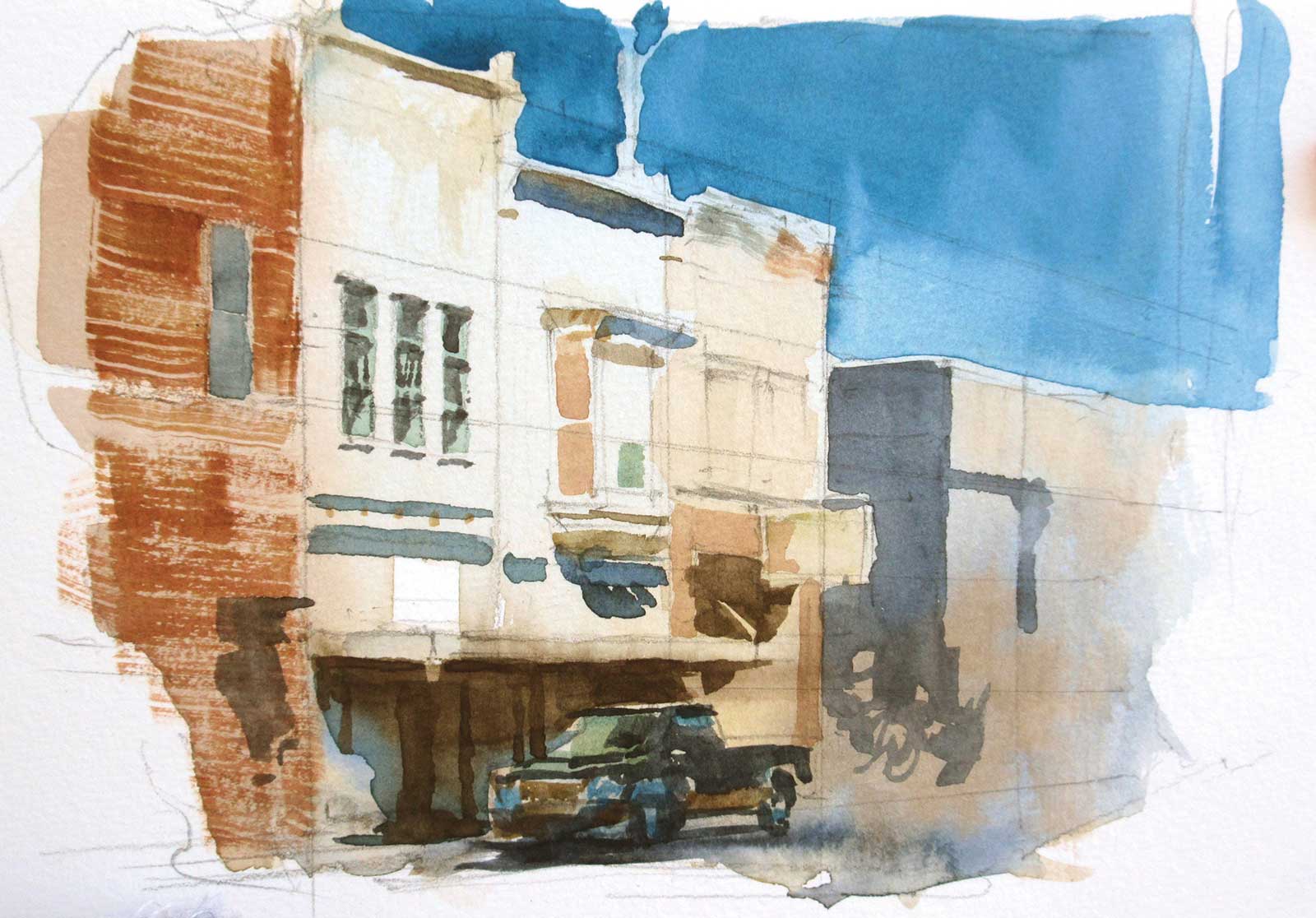
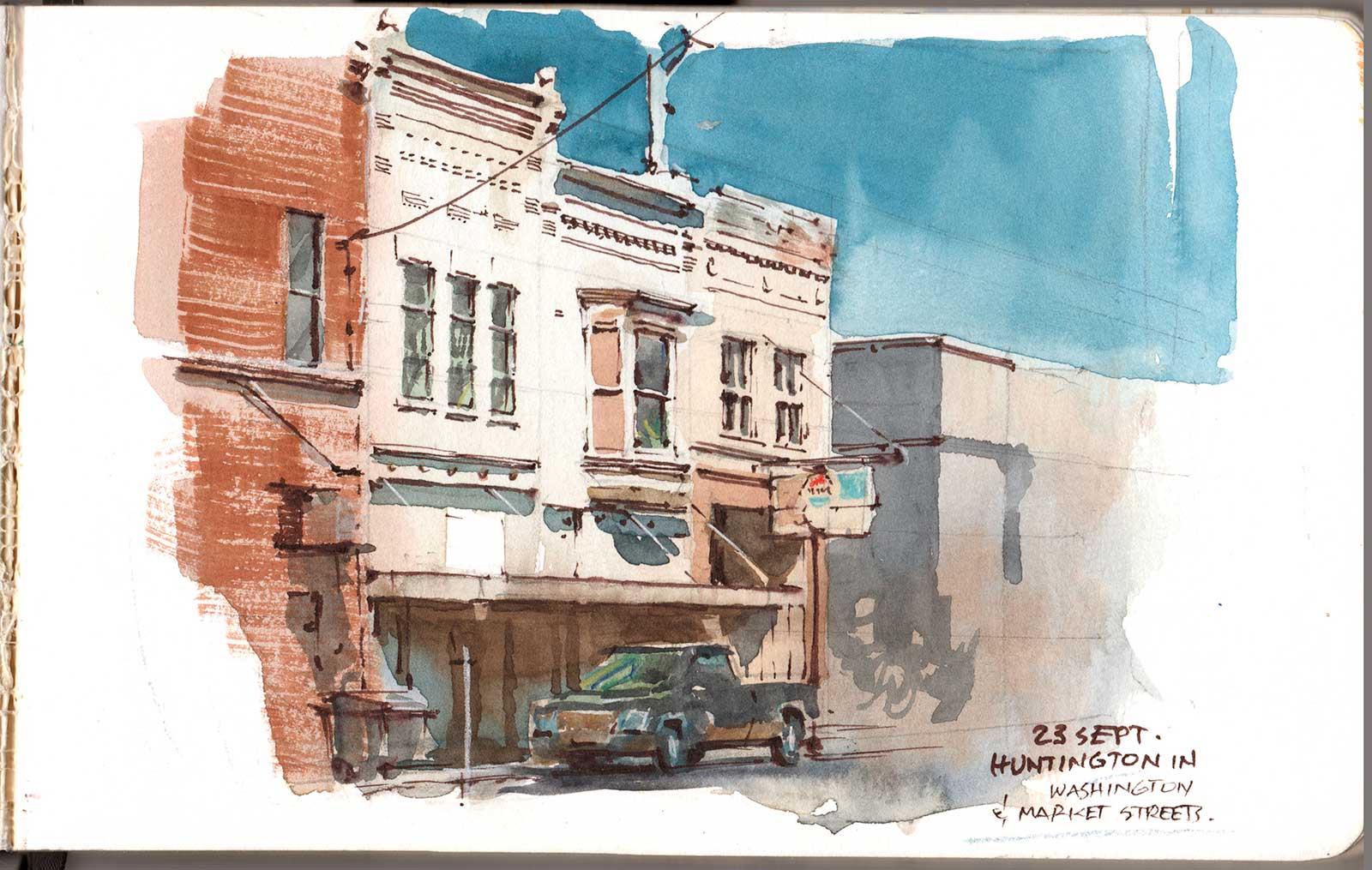
Huntington Shopfronts, watercolor and fountain pen, 5 x 8" (12 x 20 cm)
Adding Only the Lines You Need
For this one I want to open up more into color. So I establish the basic perspective lines with a graphite pencil, and then place broad watercolor tones with a flat brush, limiting the color to a cerulean/light red contrast and letting color areas flow softly into each other. I paint carefully around the diagonal light lines and add dry strokes for the courses of brick on the left. Finally I switch to a fountain pen with brown ink to describe the small accents in the window and cornice. I use the pen for selective small accents rather than for boundary lines.
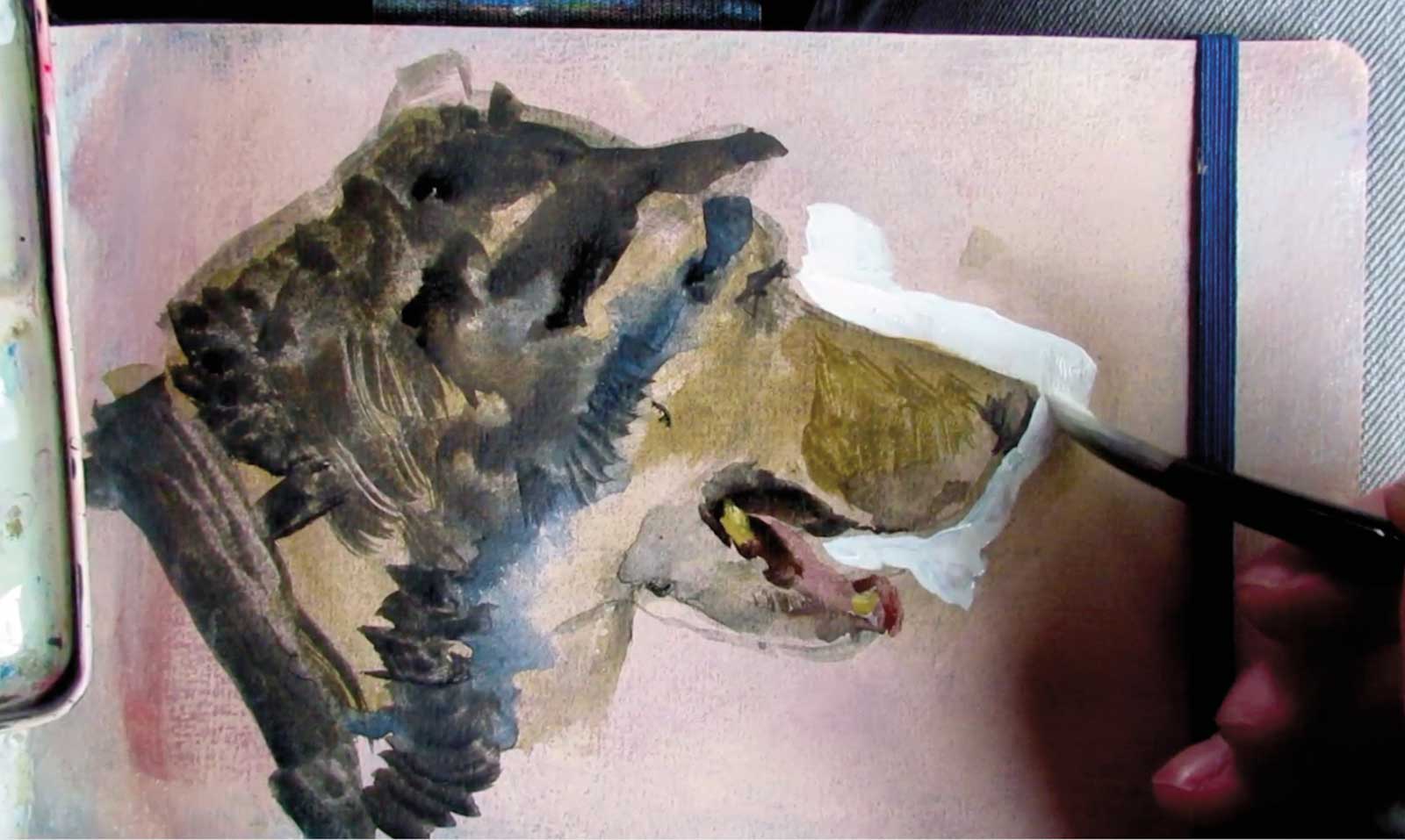
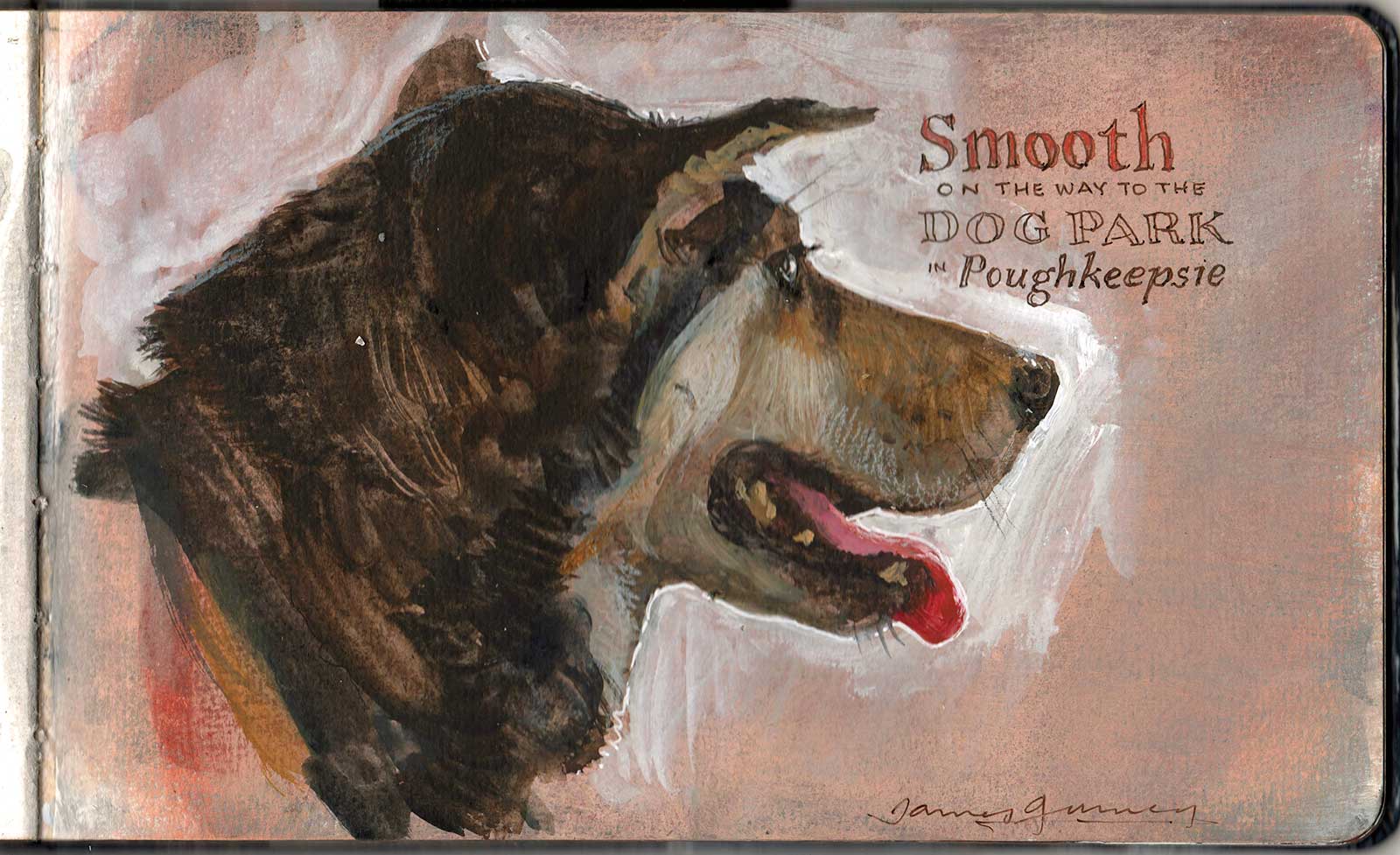
To the Dog Park, watercolor, casein, colored pencils and fountain pen, 5 x 8" (12 x 20 cm)
Riding to the Dog Park
I’m sitting in the back seat next to Smooth, the husky mix, on the way to the dog park. The sketchbook is open on my lap. I’m using watercolor with casein white on a reddish brown casein priming. It’s a fairly non-absorbent surface that makes the watercolor float. I start right out with the brush, painting him with his mouth closed. But once he opens it, I change my mind and want to capture that doggy smile, with the tongue draped over his teeth. As we arrive I drag a white pencil on the area of his muzzle and describe his whiskers with watercolor pencils and do some lettering with a fountain pen.
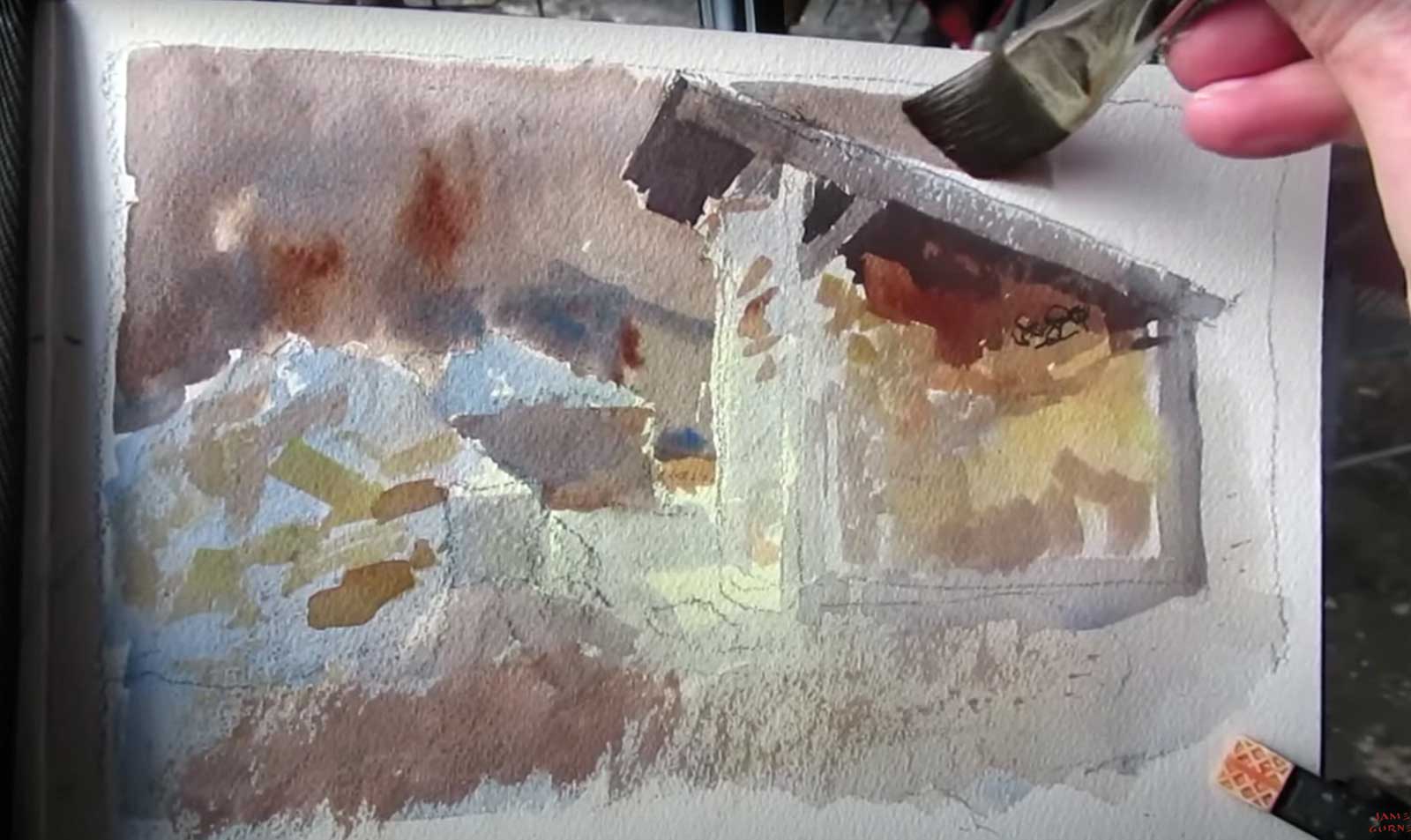
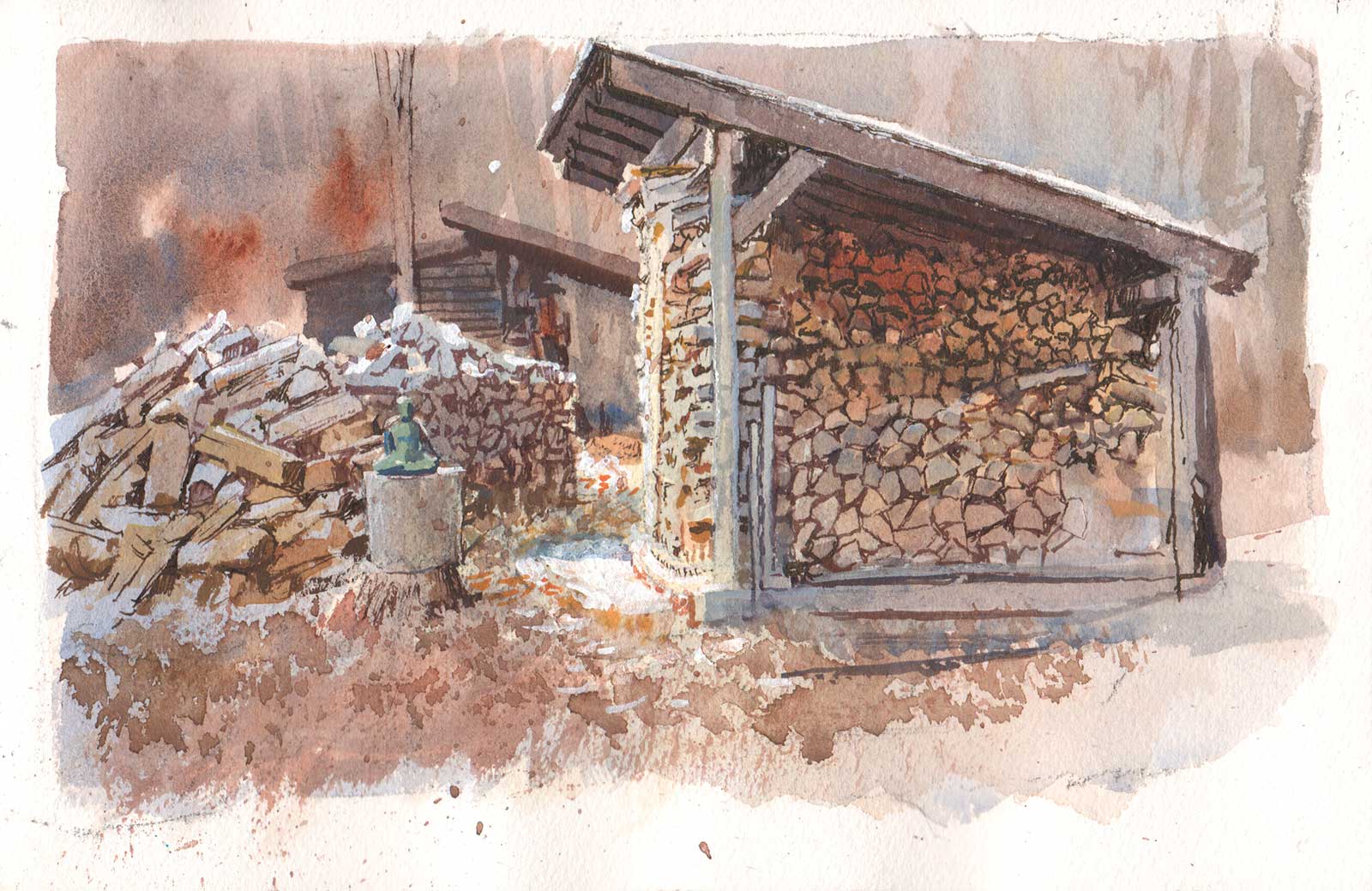
Tom’s Woodpile, watercolor and fountain pen, 5 x 8" (12 x 20 cm)
Save the Detail for Later
Saving the linework for last is a helpful strategy for interpreting subjects with a lot of surface complexity. The watercolor washes are restricted to just warm and cool colors, some of which were applied with an old house painting brush. I place a few blobs of bright white acrylic in the central area to suggest sun glare. With this type of approach, the initial stages can be remarkably loose, with the paint serving as a base to guide the final drawing.
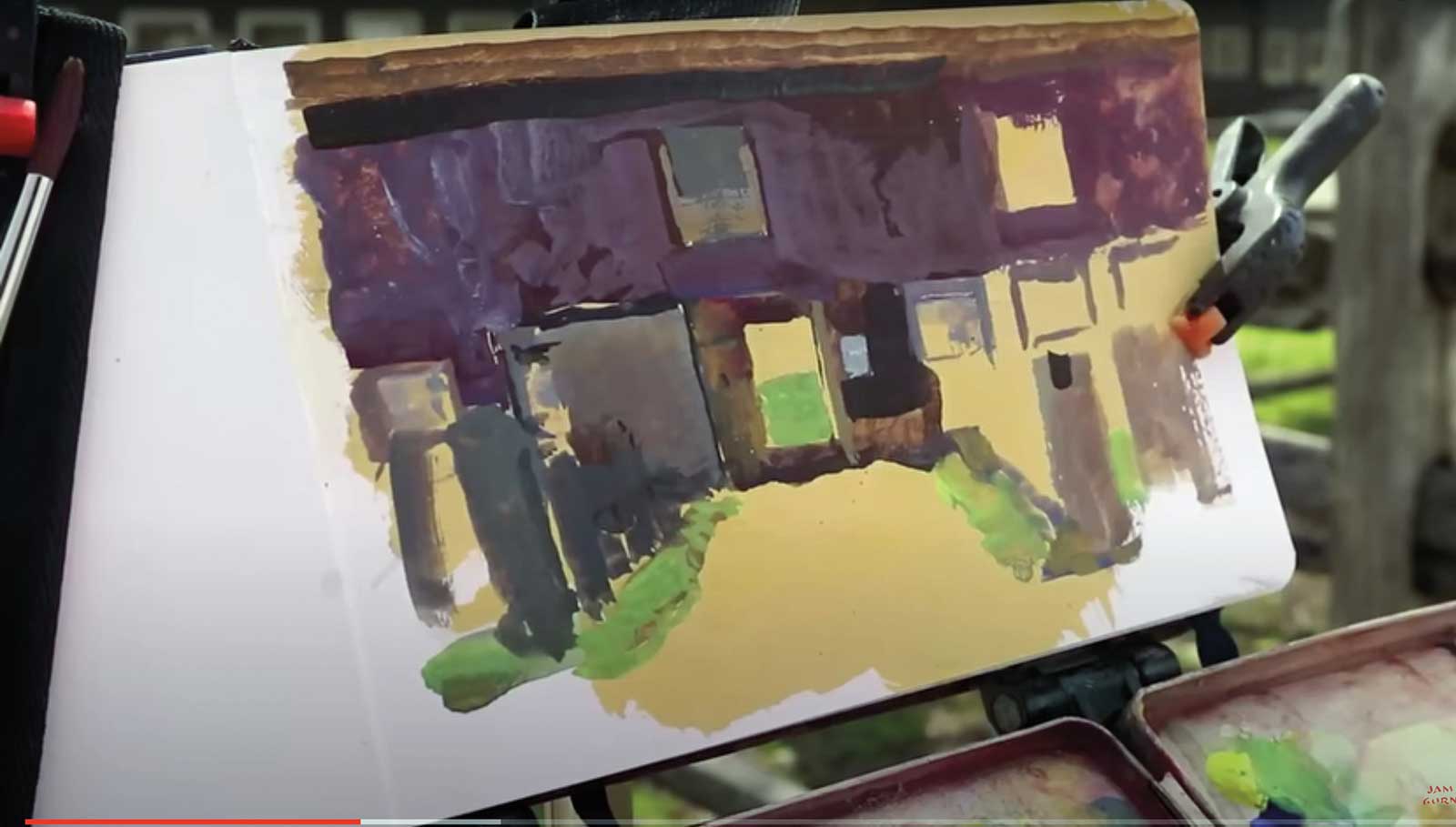
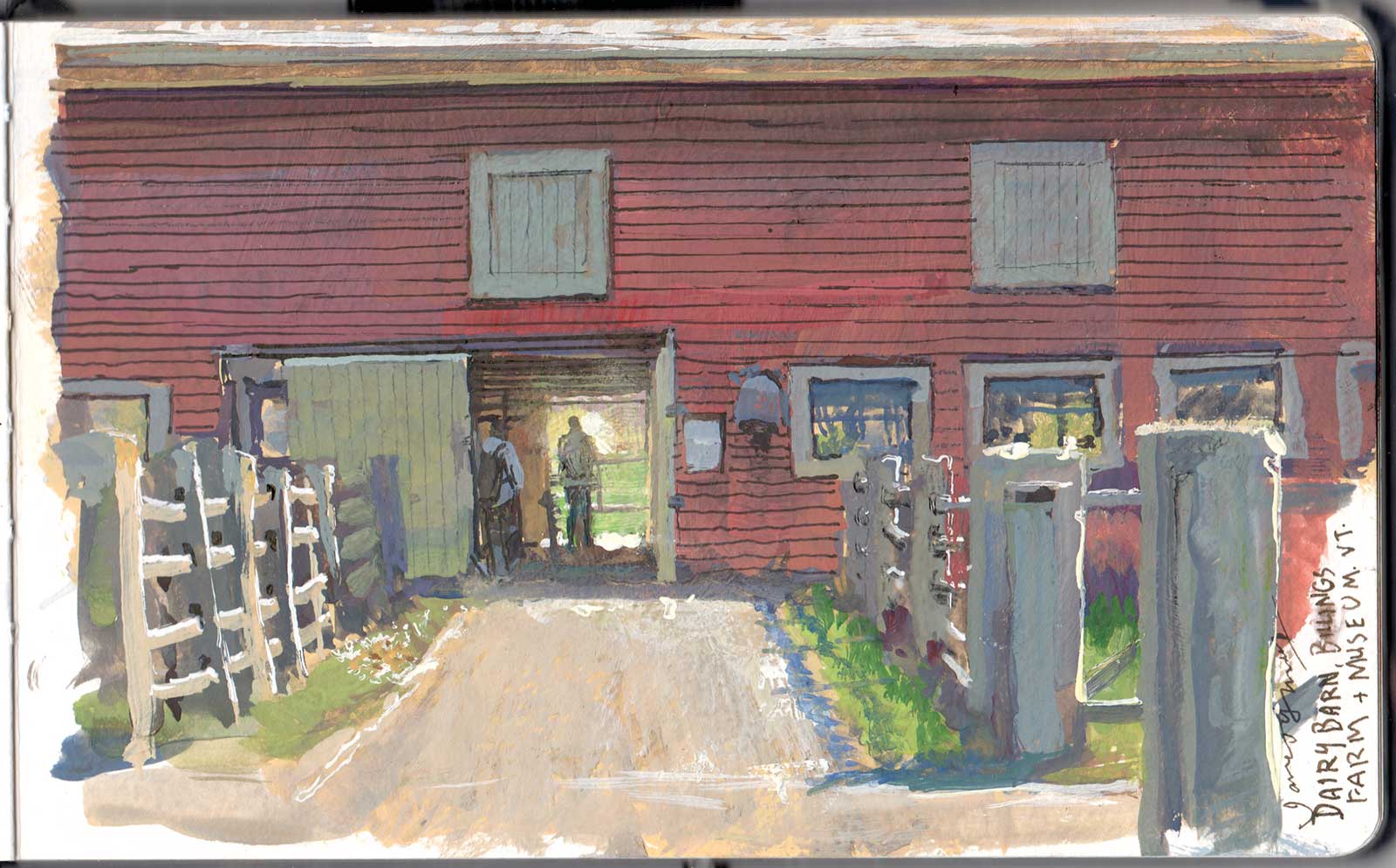
Dairy Barn, gouache, colored pencils, fountain pen, pastel and white gel pen, 5 x 8" (12 x 20 cm)
Painting the Broad Side of a Barn
The shady side of this dairy barn includes a keyhole view to the illuminated pastures beyond. I start out on a page of my watercolor book pre-primed with a thin layer of yellow-ochre colored casein. I establish rectangular shapes in gouache with a brush. I draw on top of dry gouache using a fountain pen and a straightedge to capture the parallel clapboards. For the rim-lit fence details I use a white gel pen. And finally, I use some touches of white and yellow hard pastels smeared with my finger to simulate the glare of light coming through the doorway. I like this combination of painting and drawing materials because it’s possible to achieve textures and effects that you can’t get with drawing or painting media alone.
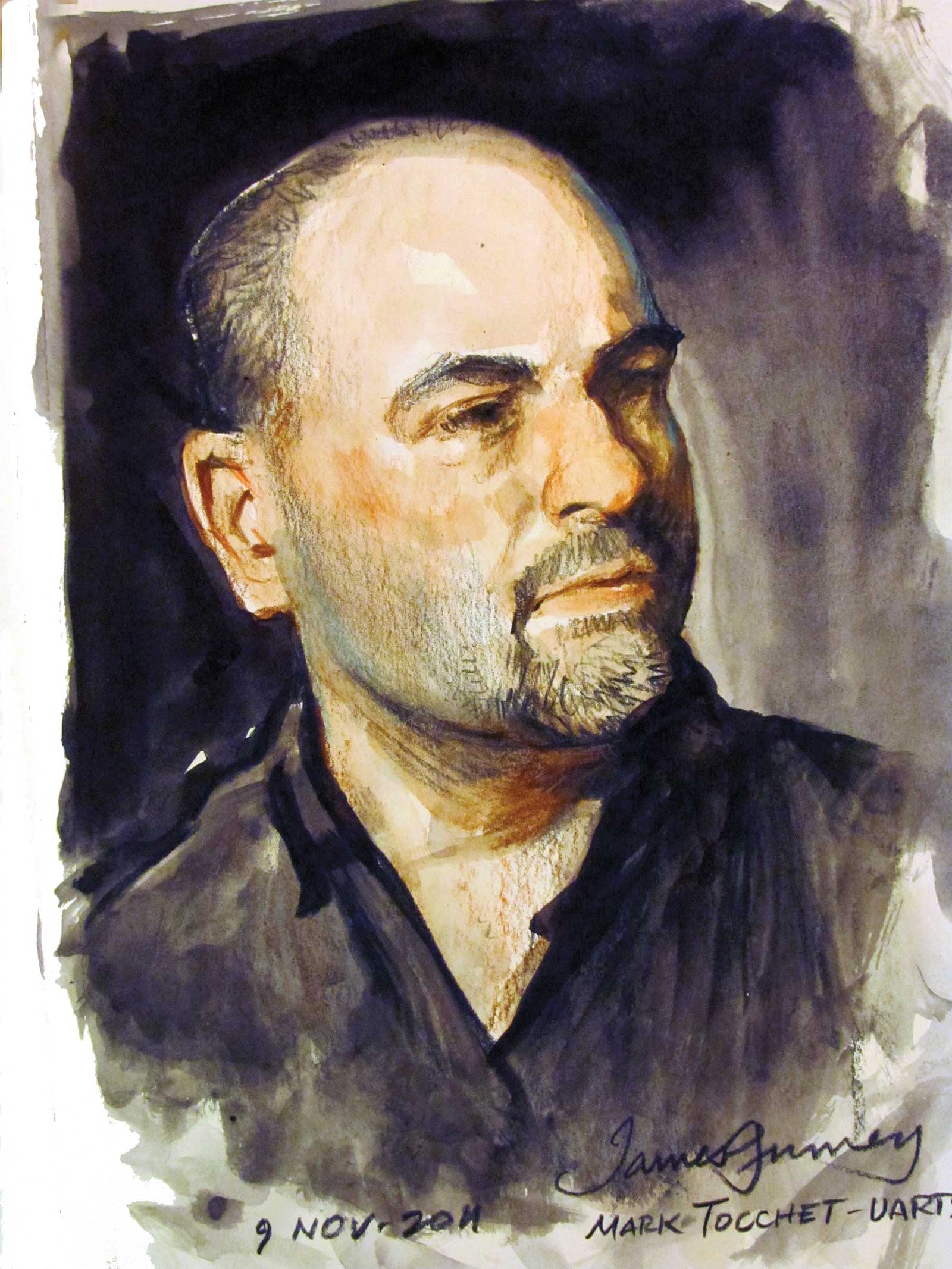
Marc Tocchet, watercolor and water-soluble colored pencils, 8 x 6" (20 x 15 cm)
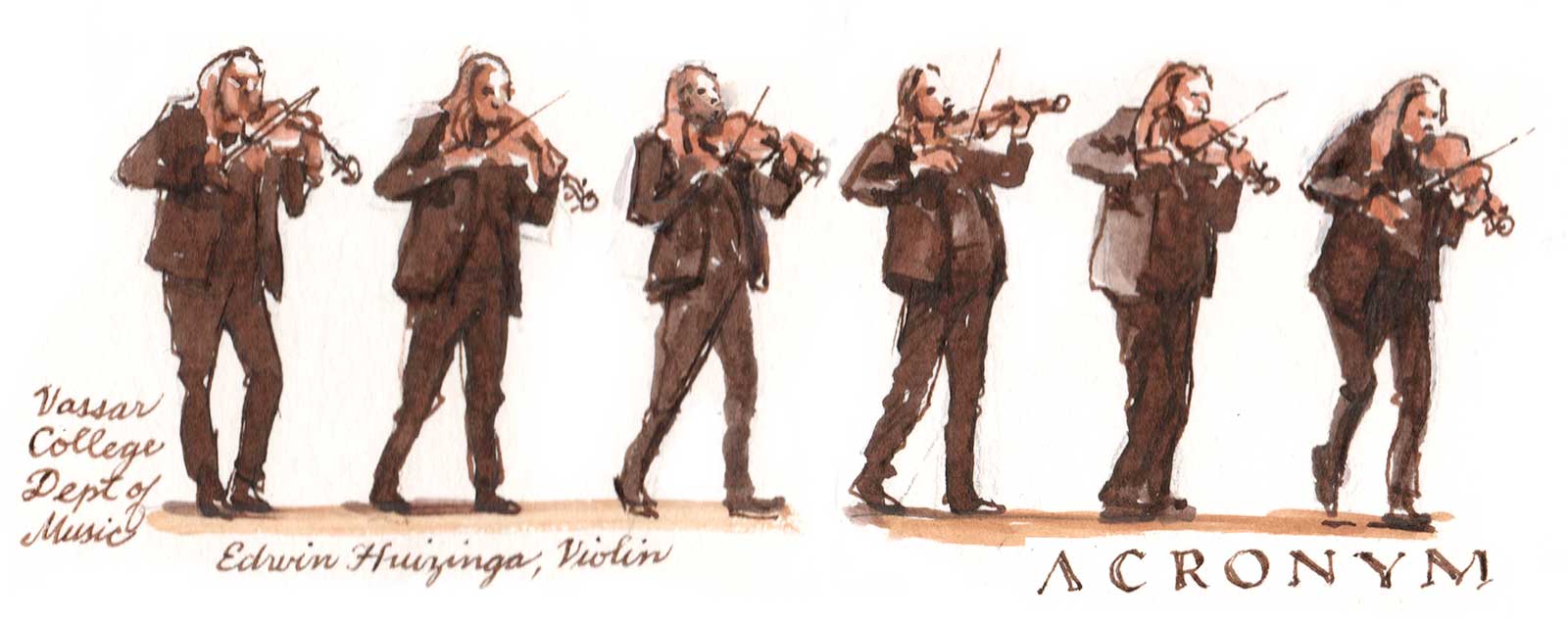
Violinist, watercolor and fountain pen, 3 x 8" (7 x 20 cm)
Painting, Then Drawing a Portrait
As a 20-minute demo for his art-school class, I asked the teacher to take the hotseat. One water brush is filled with clear water. The other is filled with black fountain-pen ink. I apply the colored pencils at the beginning and end of the process. In the first pass, I place the main construction lines using the side of the pencils. Using the clear water brush, I blend the dry pigment into large washes, starting in the light areas. Next, I add the black background, lightening it with clear water on the right side of the face. After those layers are completely dry, I add textures and linear accents in the eyes and beard.
About the Artist
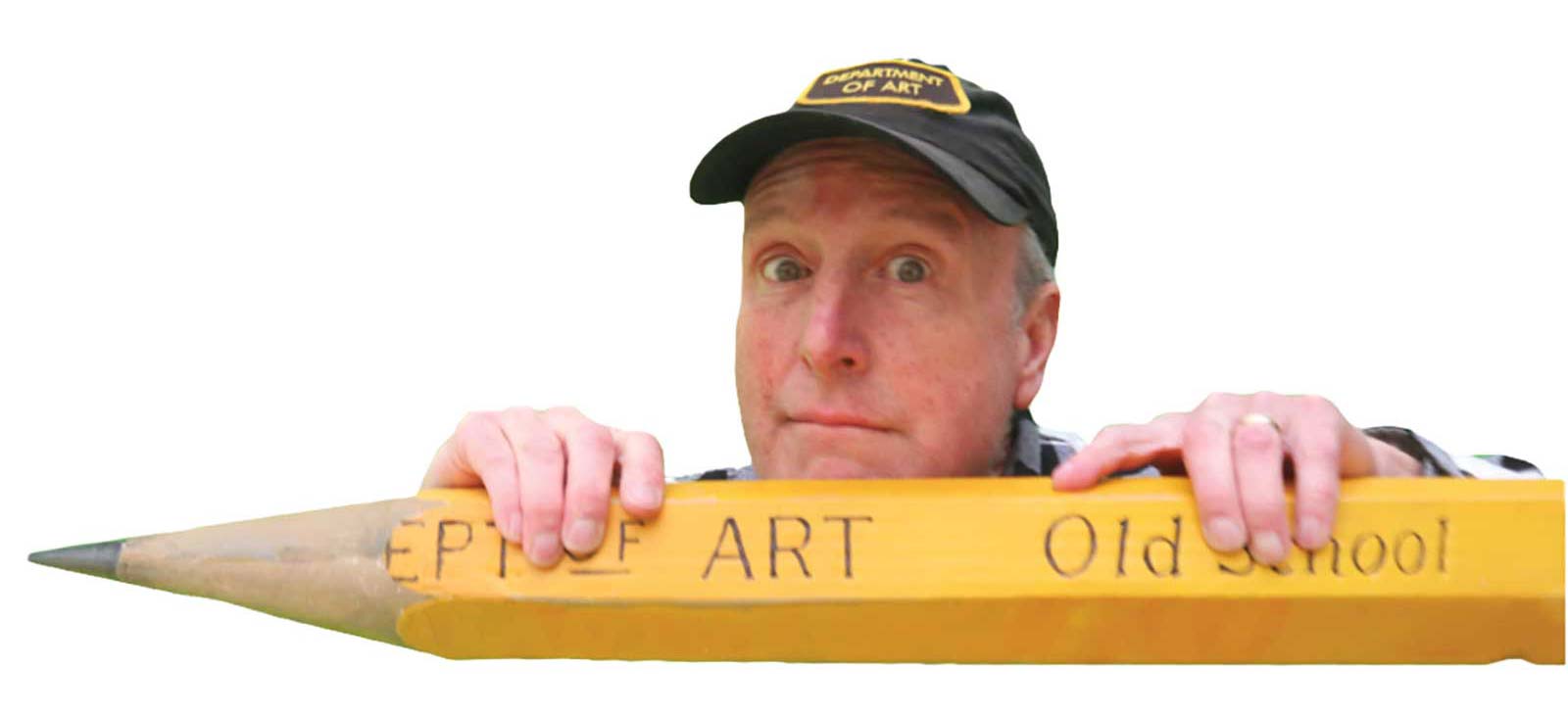 James Gurney
James Gurney is the author of Amazon #1 category bestsellers Color and Light: A Guide for the Realist Painter and Dinotopia: A Land Apart from Time. He recently created a custom AI chatbot named Jimbot at chat.jamesgurney.com who will answer any question you throw at him, based on training data from Gurney’s 6,400 blog posts, seven books, over 320 YouTube videos and over 84 consecutive articles for this magazine.
Contact at
www.jamesgurney.com
Facebook groups: “Sketch Easel Builders” and “Color in Practice”