I’ve never had any formal training in drawing or painting, but I have always had a strong attraction to the arts and the practice of painting. During my adolescence I practiced photography a lot, and I believe that photography sharpened my eye and helped it develop into an “artist’s eye.” However, photography left me unsatisfied as I felt I was missing the manual aspect of drawing and painting.
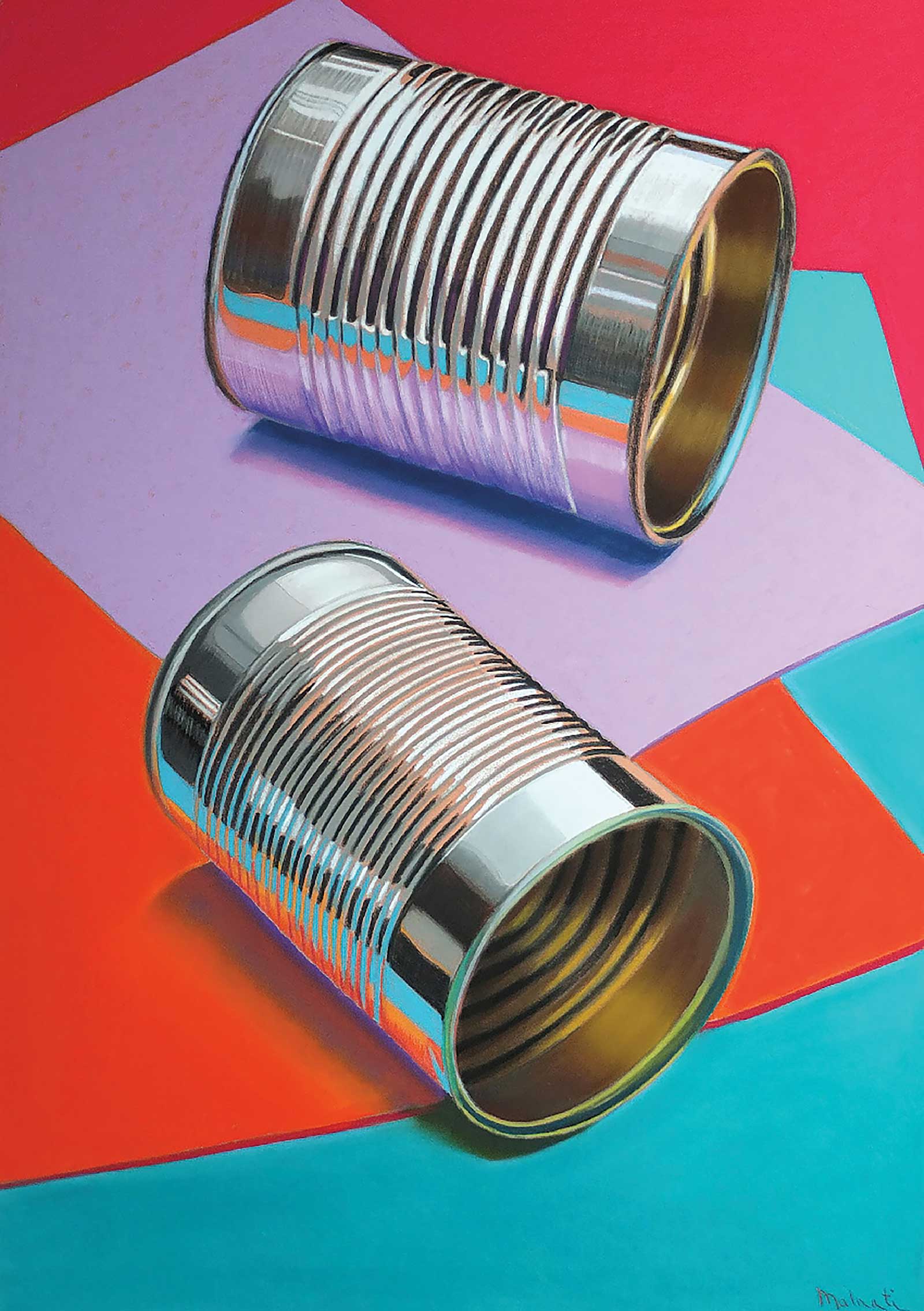
2 boites de conserve, pastel, 26 x 18½" (67 x 47 cm) In the public eye tin cans are more associated with garbage because, after use in your kitchen, they are thrown away and—in the best of cases—recycled. Yet from a purely aesthetic point of view, they are very beautiful objects—elegant, shiny, adorned with regular grooves. In short, they have everything it takes to seduce an artist like me who likes to associate the brilliance of contemporary materials and the sculptural originality of the subjects.
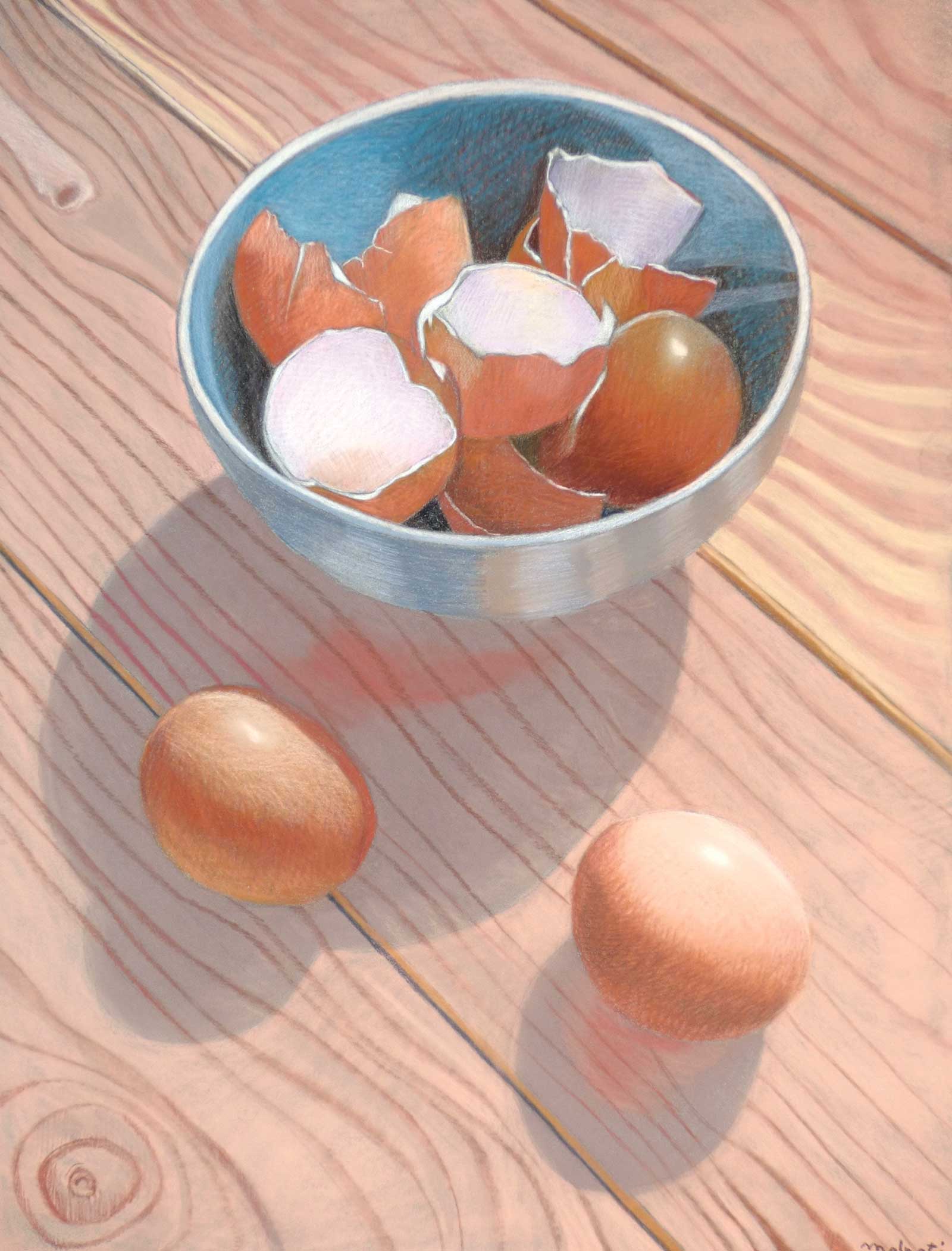
Distressed family, pastel, 25 x 20" (63 x 50 cm) This image comes from our kitchen when my wife broke a few eggs in order to incorporate them into the composition of a pastry. A simple photo helped keep in mind the idea of a pastel to be painted a little later in the quiet of my studio. The egg is well-loved by painters, myself included, because it has a perfect shape; very pleasant to draw and paint, which also carries a vital meaning. In this case, the message left by these eggs is not happy because it is based upon a massacre. But it is not this dire message that really matters to me. It is above all the beauty of the momentary coexistence of broken eggs and eggs still intact that caught my attention as an artist. The oblique flow of the wood grain of the table adds a dynamic element to the composition. The dominant color chosen is warm and thereby softens the “massacre” side of the story. The light blue color of the bowl serves as a counterpoint.
Parallel to a career in international banking, including a few years in the United States, I developed my drawing and painting skills as best I could. My self-taught efforts have gone through copy sessions in museums, notably the Museum of Fine Arts in Strasbourg, France, and drawing sessions with live models. I have exhibited regularly since the age of 34 and have been admitted into art societies such as the Pastellistes de France, the Société Française de l’Aquarelle and the Pastel Society of America (signature member).
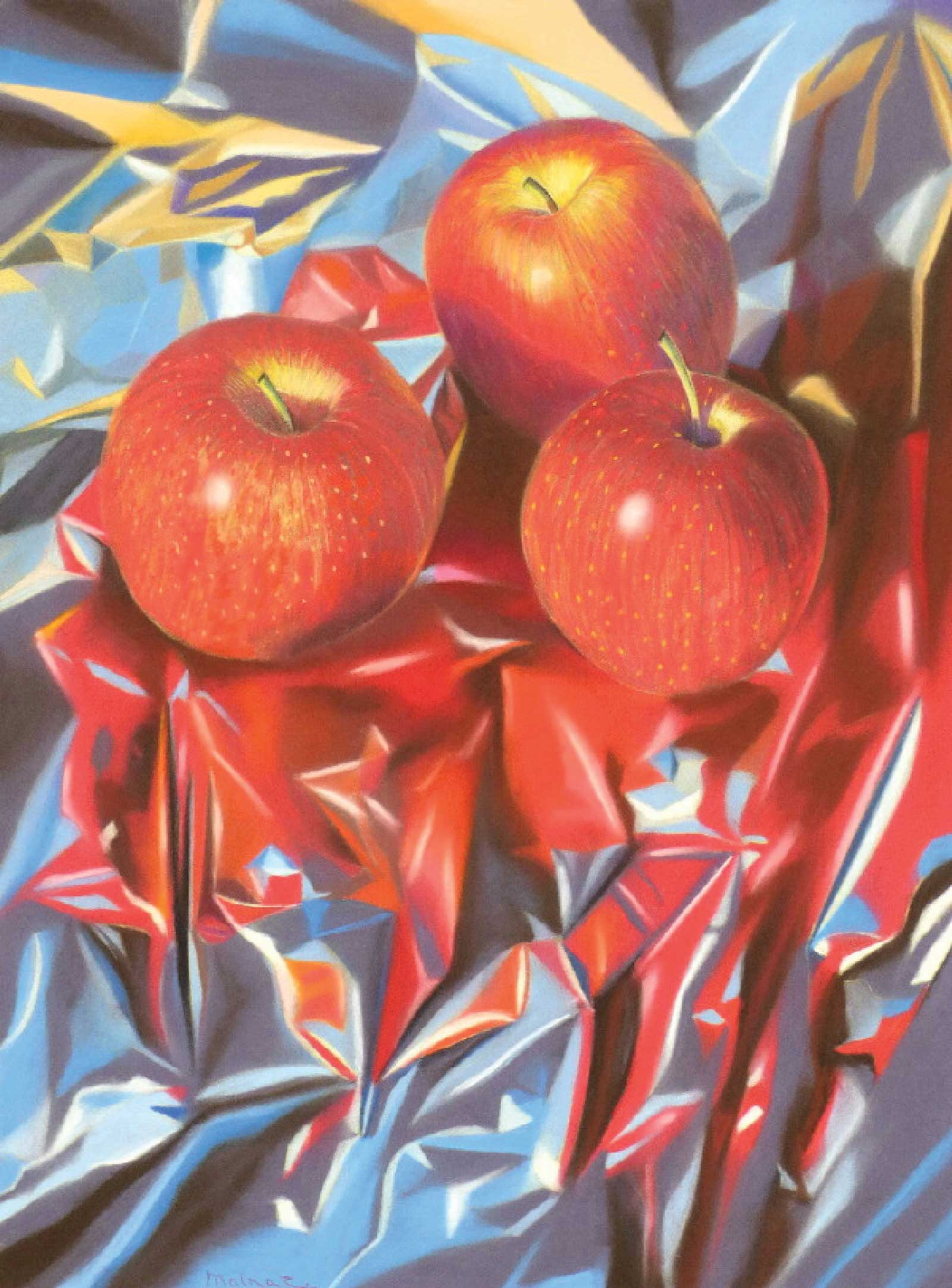
Gala apples, pastel, 24 x 18" (60 x 45 cm) The apple is probably one of the oldest subjects in the history of still life painting, and yet we can still imagine painting and updating it in the present day. My way of continuing to explore this subject is to associate it with a contemporary material, aluminum foil. My basic idea was to create a kind of mosaic, giving an abstract aspect to the whole. The reflections created by the aluminum sheet are small windows of clarity that lighten the overall design and give rhythm to the composition.
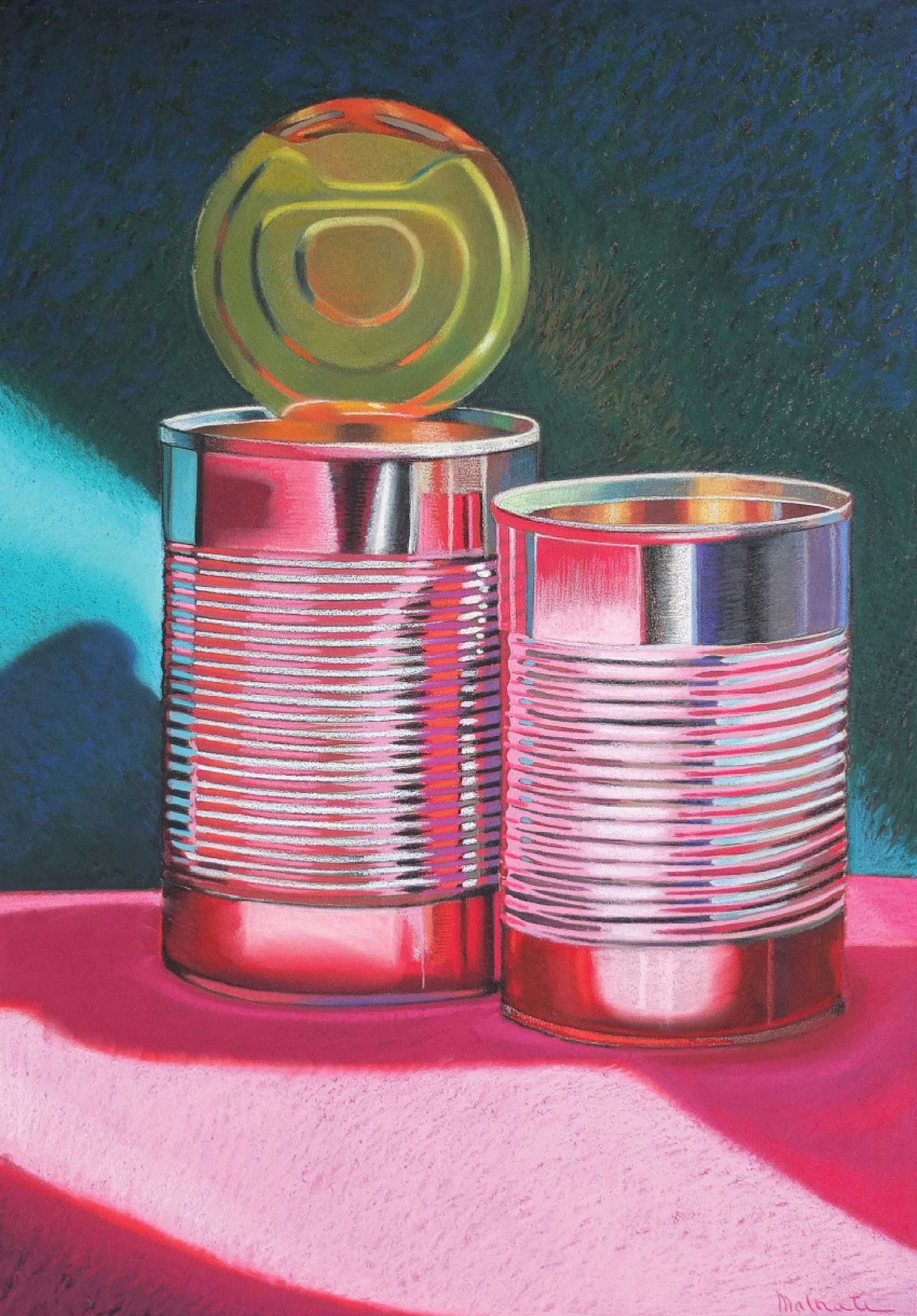
Metal Cans, pastel, 26 x 18" (66 x 45 cm) This pastel painting was also born in my kitchen. Indeed, most of the time I find my inspiration inside my house. Since I have been painting still lifes I realize that my immediate environment is full of interesting and original subjects. As for the two tin cans that seduced me, I emphasize that they illustrate the wild and often neglected beauty of metal surfaces. We too often associate tin cans with our trash cans—fortunately, the artist knows how to see beauty in them, just waiting to be highlighted. Moreover this subject is entirely within the scope of the mission I have assigned to myself, namely to explore new subjects and new territories in the field of still life. I chose a green and a pink background in order to give shine to the still life. These colors made me think of an official salon in a 19th-century palace; this is a background likely to make us forget the modest origin of the subject and to give it an elegance we did not expect from it. I also wanted to highlight the play of light from the grooves of the metal body. Pastel pencils are a great help in this respect.
I have been exhibiting pastels and watercolors in New York, London, Paris, Switzerland, Canada, Japan and China. My artistic vocation is to try to develop the art of still life painting in a more contemporary direction, as well as more imaginative inspiration in terms of subjects.
My favorite medium is soft pastel. Watercolor, however, is very useful to help me develop new concepts and approach new subjects. —
About the Artist
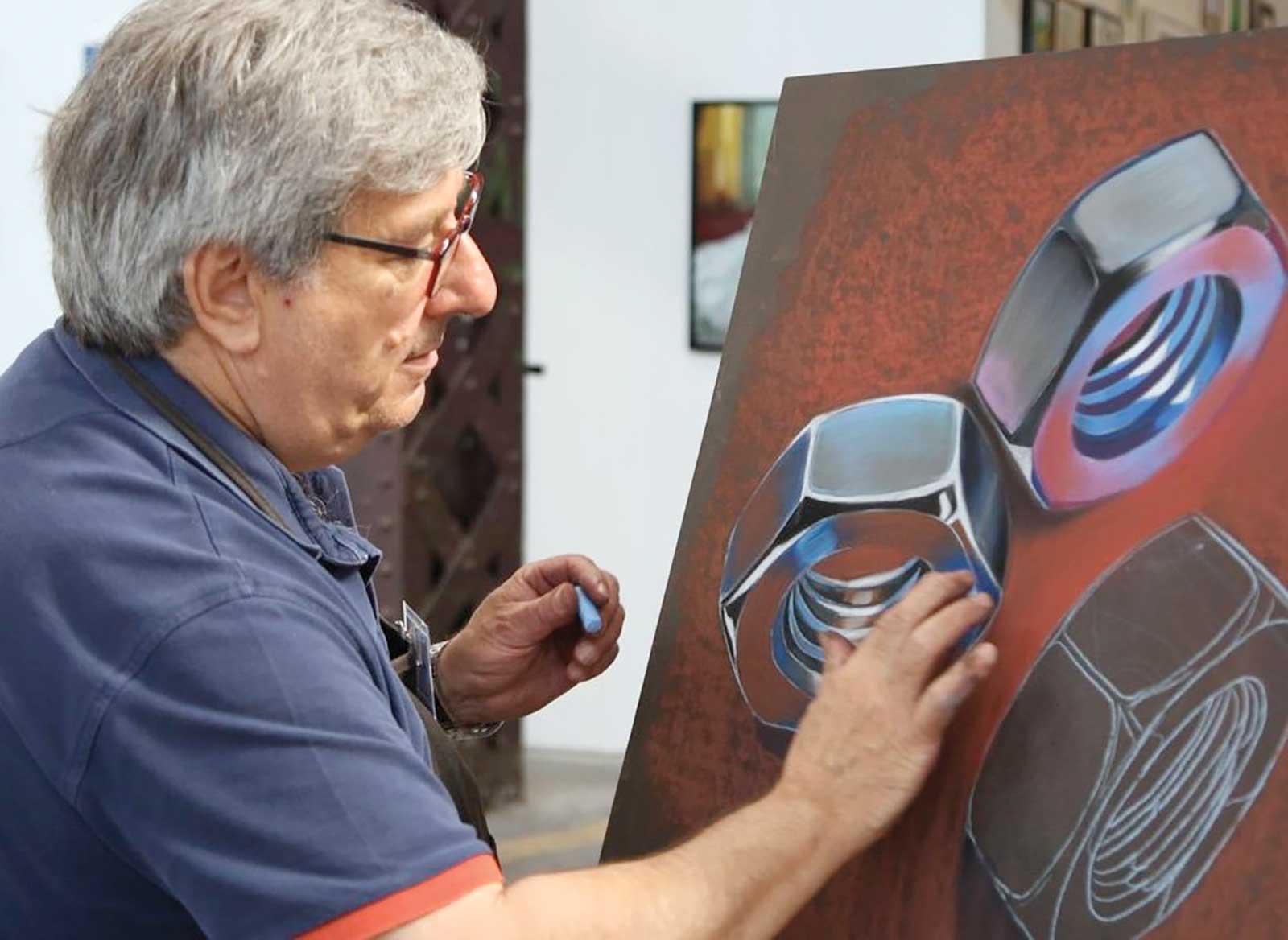 François Malnati
François Malnati was born in France in 1950. He currently lives and works in Sélestat, Alsace, France, and has received training through Atelier Alsace. He is a member of such art societies as Pastellistes de France, the Société Française de l’Aquarelle and a signature member of the Pastel Society of America. Exhibiting his work since 1984, Malnati has shown his pastels and watercolors in exhibitions across the world. He is also a member of the France Watercolor Society, Society of Watercolourists of the Grand Est and Art du Pastel en France.
Contact at
www.malnatimages.com