How did an Atlanta native become a storyteller and arrive at ways of engaging viewers in each framed moment’s bigger story? Skill and passion certainly are a leg up. Lisa Gleim possesses a knack for very deftly pairing clever compositions with masterful, anatomically accurate renderings of untamed, often predatory, creatures to inspire mystical musings by viewers. There’s more to her tale, however.
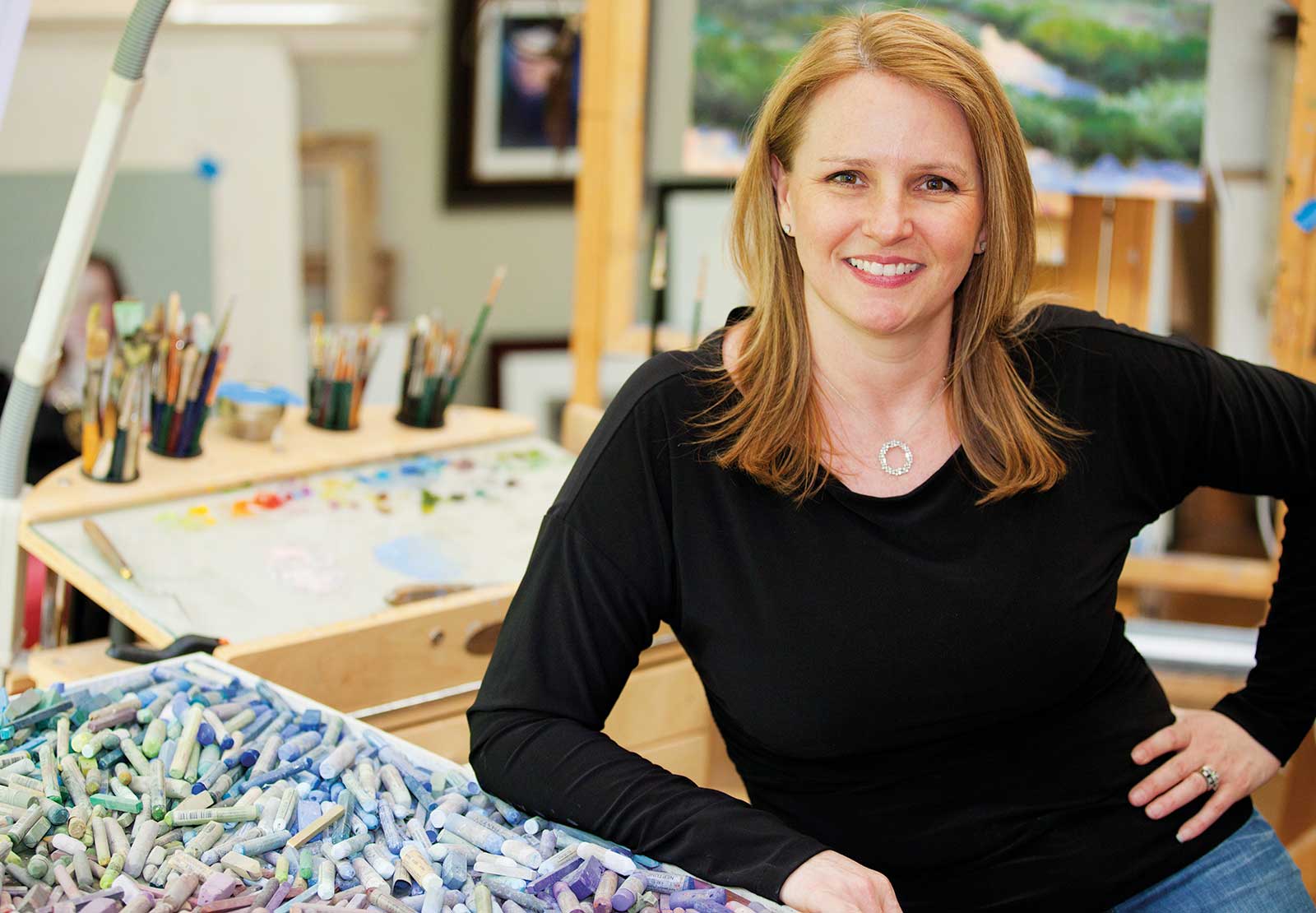 Lisa Gleim
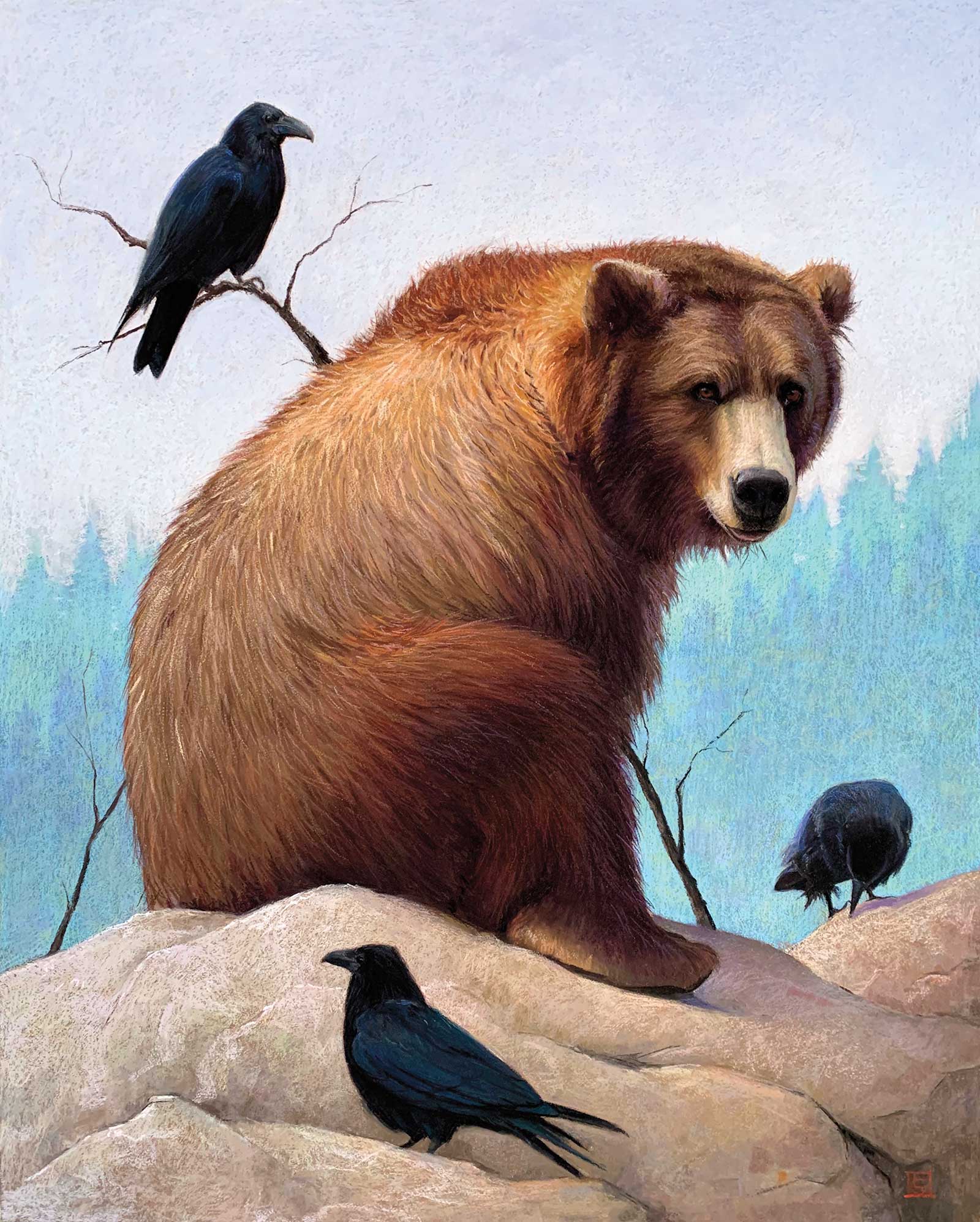
Secret Keepers, pastel on panel, 32 x 40" (81 x 101 cm)
Over the course of her career, Gleim has grown into her own unique style, instantly recognizable. Her current body of work is a series of Western wildlife narrative realism on panel, set against understated but identifiable substrates of vintage maps and nostalgic collectables on panel. Such backgrounds add to each work’s narrative, using materials of an undeniable universal appeal. Who doesn’t have a city metro guide, a show ticket, a saved scrap of paper chock full of fond, unforgettable memories? Many pieces also include charming interactions: A bear exploring a honey hive as bees circle or a keen fox eyeing two taunting ravens. “Bears are natural models—curious, active and playful,” says Gleim.
“Initially, my aspiration to be a commissioned portrait artist led me to the Pennsylvania Academy of the Fine Arts (PAFA). Until then I had always drawn, never really painted, nor imagined working in oils. Experience with both [drawing and painting] refined and focused my career objectives. Then there was yet another unexpected twist before graduation: in a classmate’s castoff supplies, I found my true medium: pastels.”
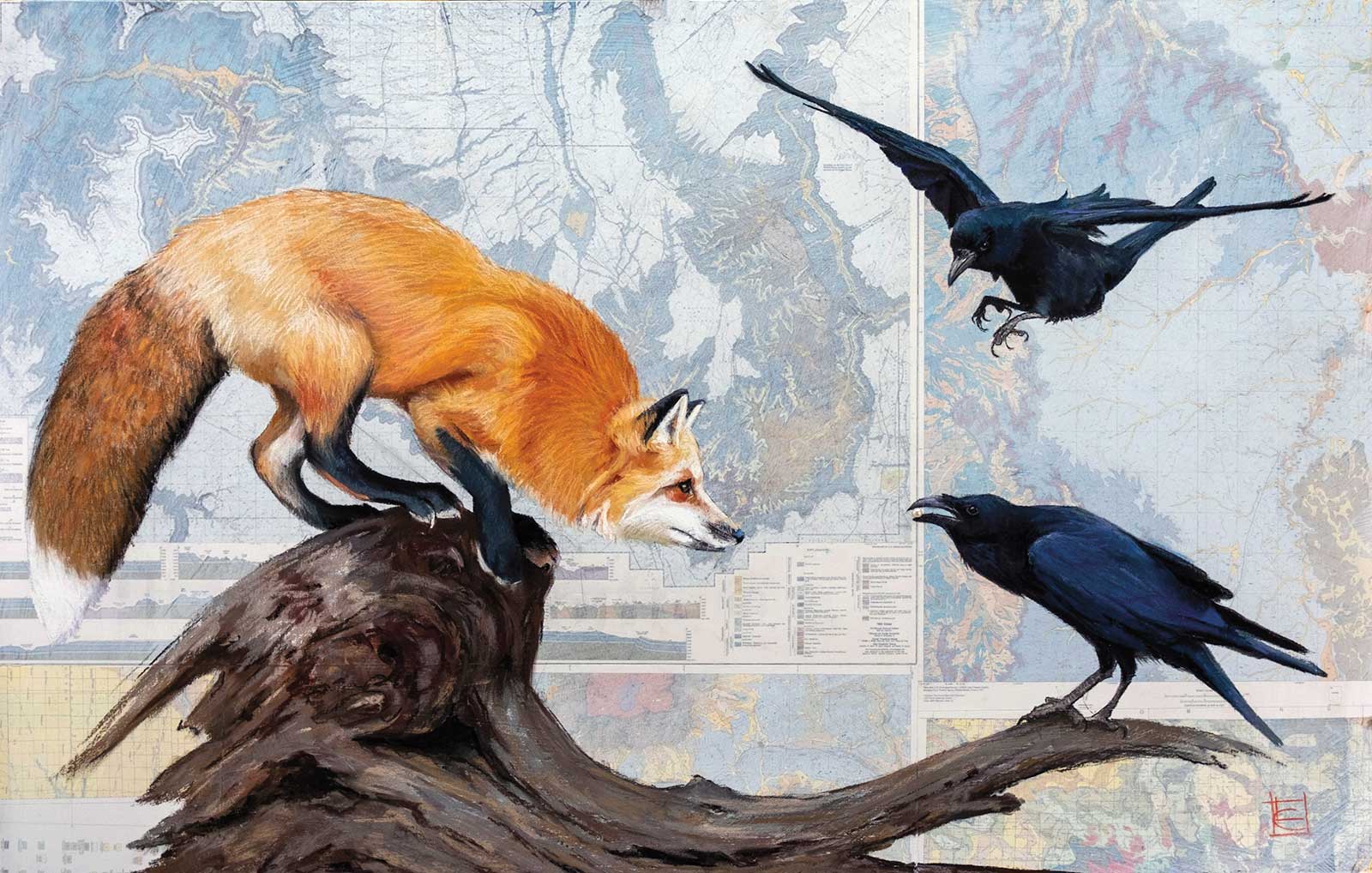
One Must Be A Fox To Recognize A Trap, pastel on geographical maps with pearl, 21 x 33" (53 x 83 cm)
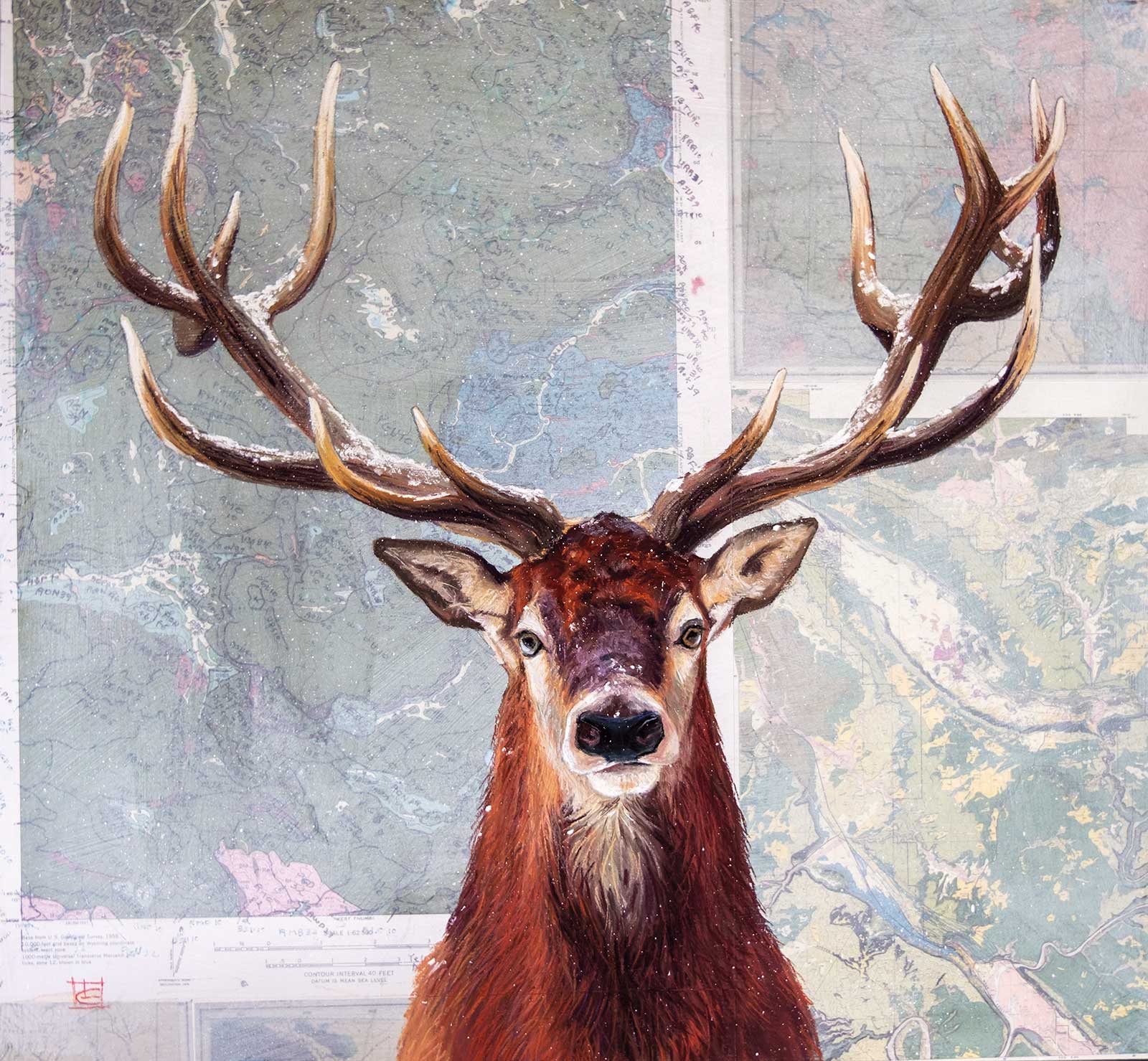
Ice-cold Ginger Deer, pastel on Western geological maps, 24 x 26" (60 x 66 cm)
She continues, “I’ve never looked back. I was hooked by the smoothness of the material and the broader, painterly strokes it allowed my drawing. The vibrancy and richness of the pure pigment of pastels was also a big plus. Mixing paint colors to achieve what my eye observes is not one of my strengths. For this reason, I literally have thousands of pastel sticks in my trivet. Generally, I can instinctively pick out the color match I want. If it isn’t spot on, I can create it through layering and mark making, beginning with harsher strokes and building it up.”
As a woman artist, working in an often less valued medium and less widely collected genre, Gleim, nonetheless, embarked on, and built a flourishing portrait business after graduating and returning to Georgia.
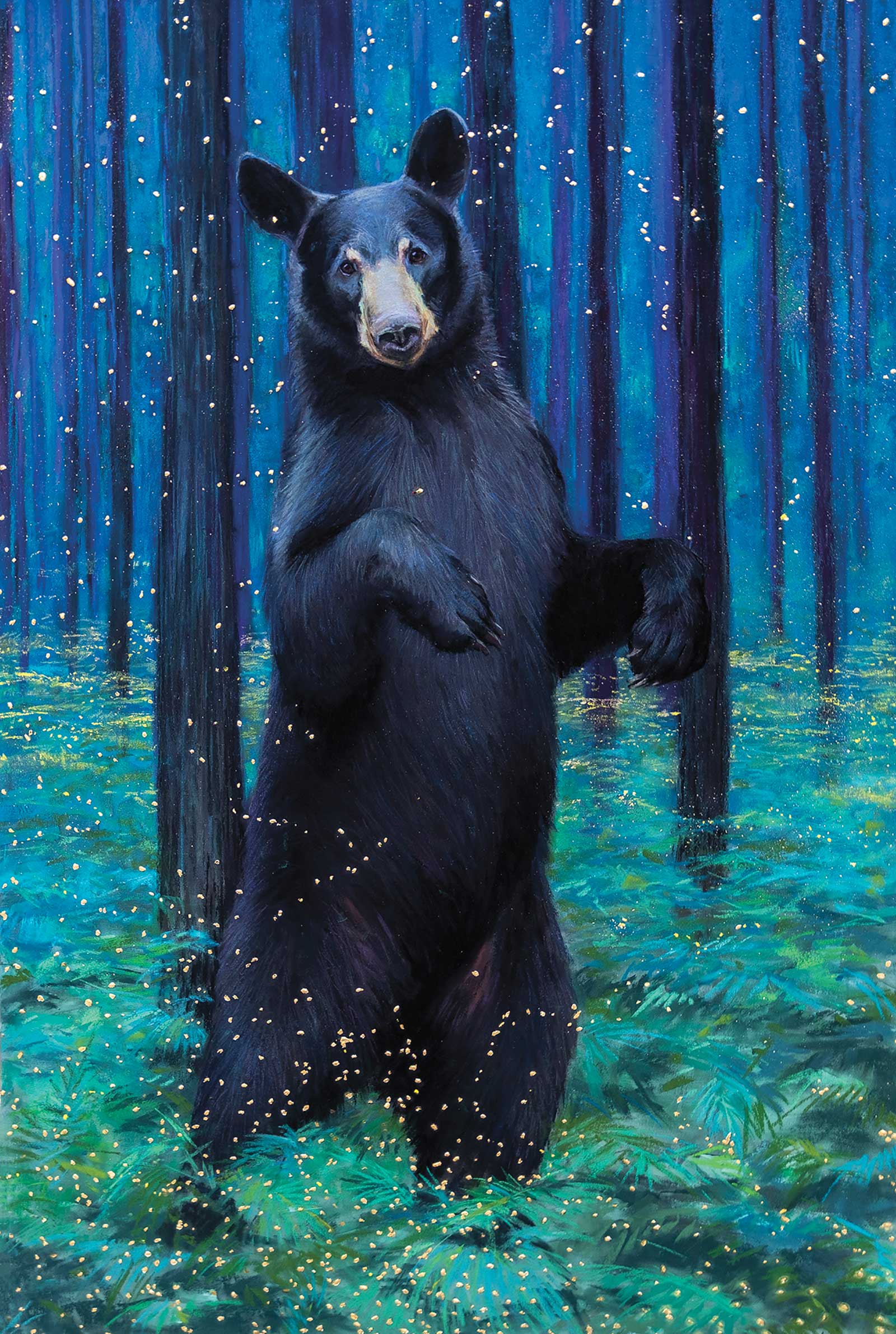
Dancing with Fireflies, pastel and gold leaf on panel, 36 x 24" (91 x 60 cm). Winner of the 2022 American Women Artists “People’s Choice” award during the exhibit Breaking Through: The Rise of American Women Artists.
Influenced by studying with legendary artist Joanette Egeli, Gleim portrayed subjects in a minimalist style. She didn’t include surroundings or other objects, rather she focused on the subject alone. “Imagine just head and shoulders; a pretty young girl with a bow in her hair,” she says.
To supplement her portrait income in the early years, the artist also reproduced the familiar low country and coastal landscapes scenes of her childhood and existing surroundings. Interested in capturing the beauty of light and how it affects her subject, she painted on location, in plein air, as often as possible.
“Outside the studio, I found myself in heaven! A seascape on a gray day is very different from one bathed in sunlight. There is such movement and countless streaks of colors in water reflections,” says Gleim. “I believe a sense of motion gives a two-dimensional work added depth and often elicits a viewer’s emotional response.”
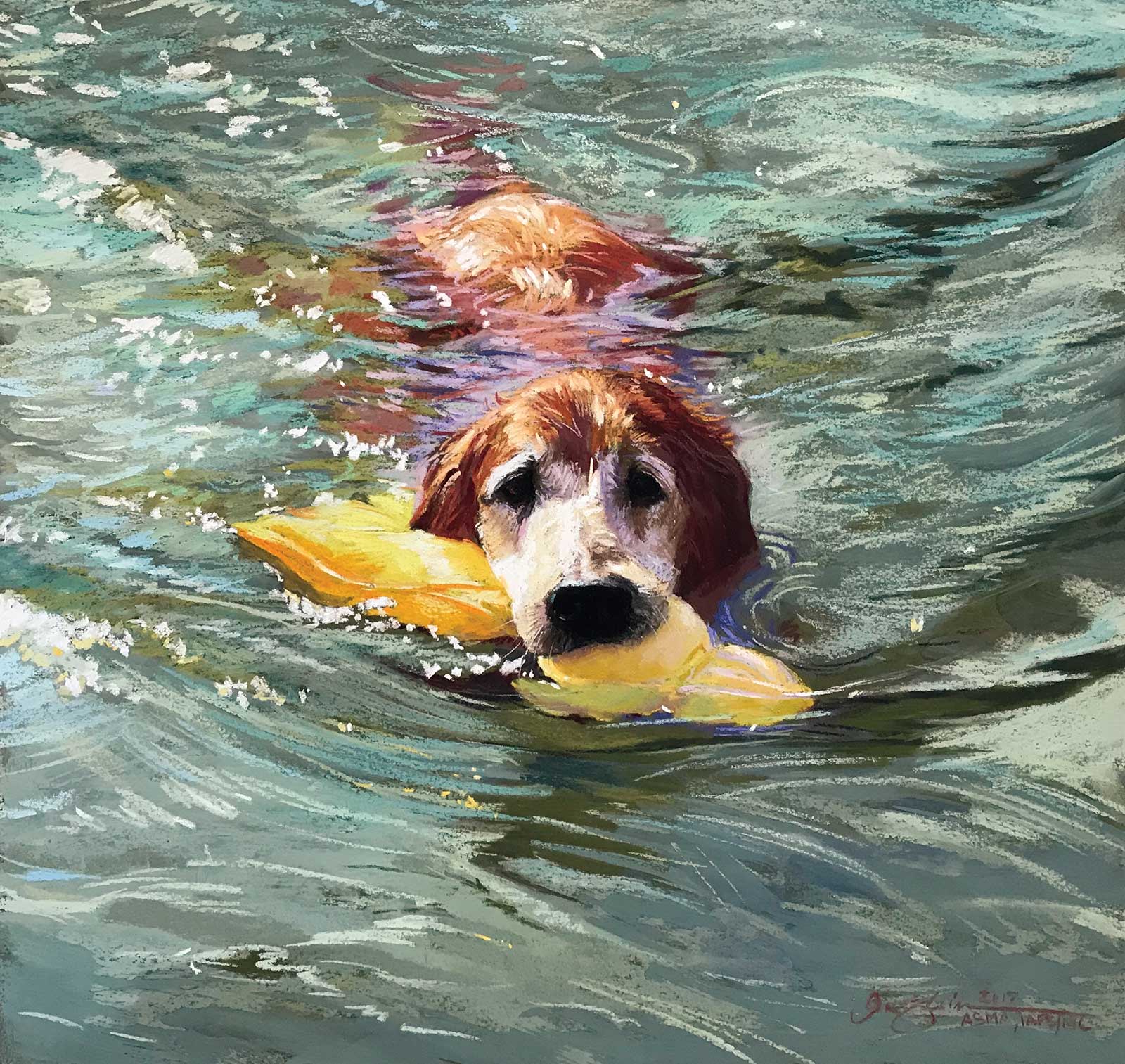
Diesel, pastel on panel, 24 x 24" (60 x 60 cm)
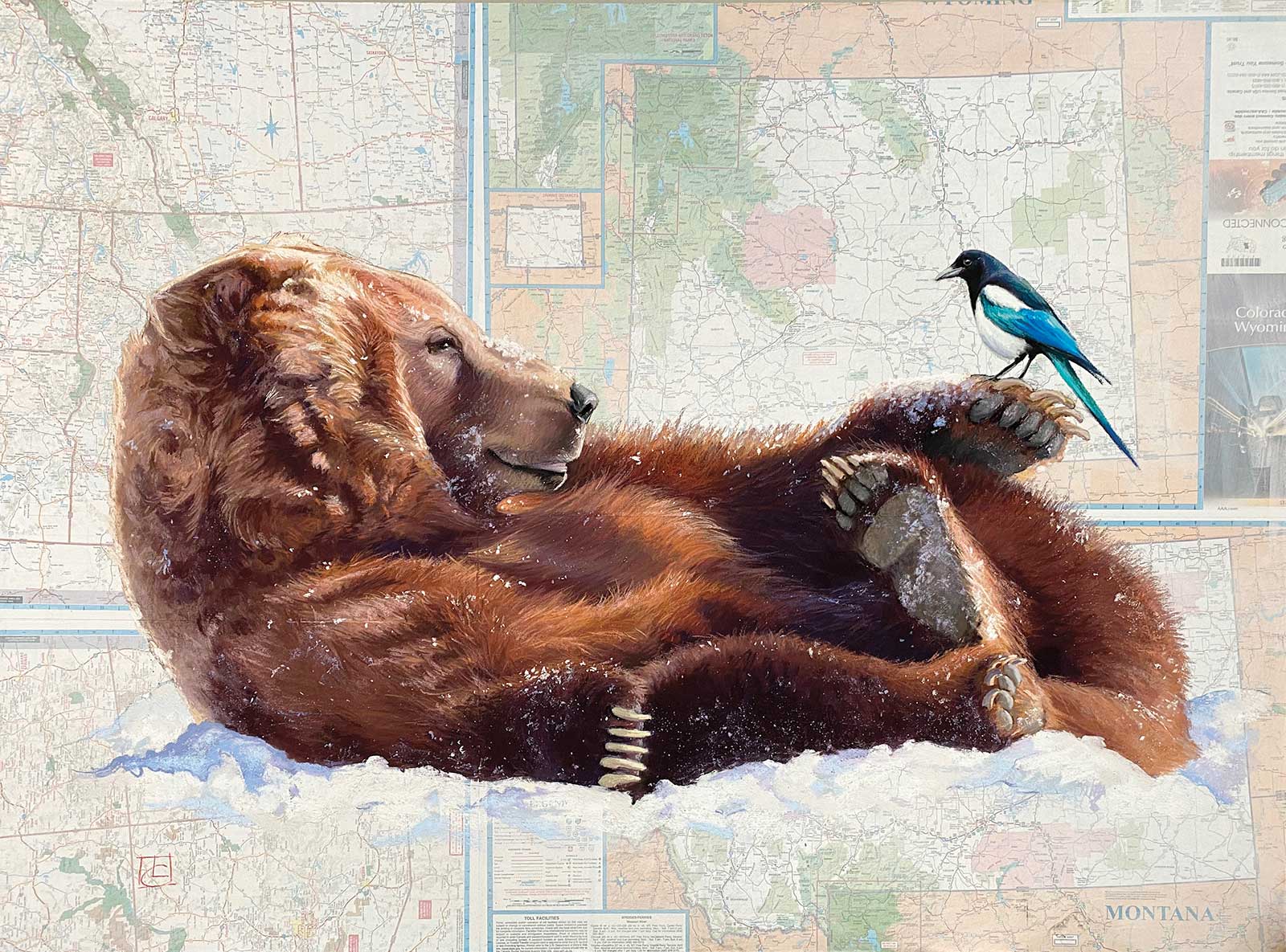
Kodiak Moment, pastel on state maps, 34 x 46" (86 x 116 cm)
With the support and promotional efforts of gallerist Cheryl Newby, and later Beverly McNeil, collectors soon multiplied. The landscapes were sell-out successes. Simultaneously becoming very popular were the pet commissions Gleim completed.
Nearly 12 years of steady pet depictions would lead her to another immensely well-received series often referred to as “the water dogs,” when she accepted a patron’s request to render a fine art likeness of her energetic, playful pet swimming, using a photograph reference.
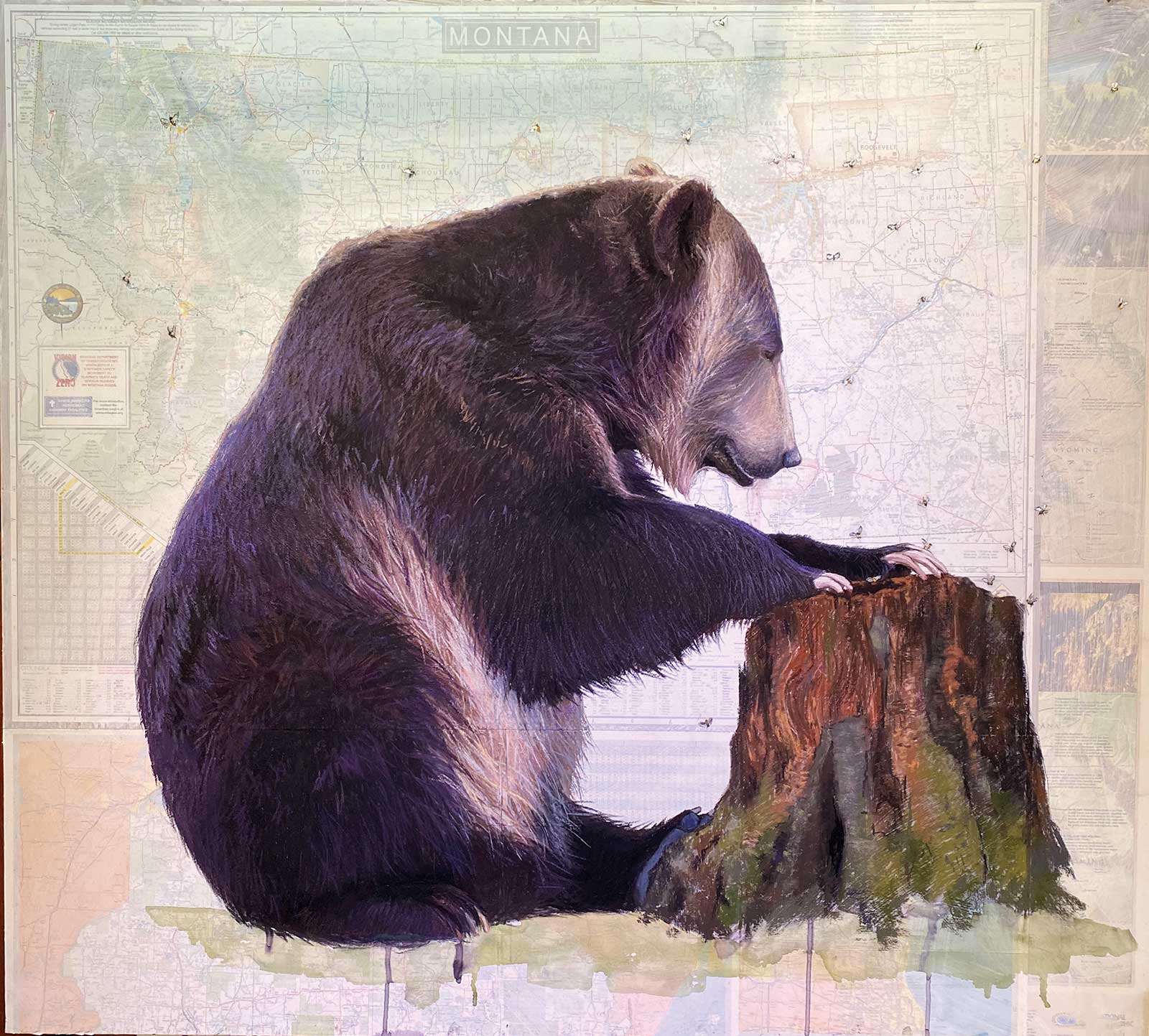
What Hive We Here?, pastel on national park maps, 36 x 40" (91 x 101 cm)
As her craft for composition and detailed execution continually evolved, Gleim began to seek out additional gallery representation. Eager to share all she could do, the response from potential gallerists quickly taught her to “show less of her portfolio,” to focus on which genre best suited each gallery, what would complement the work of artists already represented and most appeal to each gallery’s patrons. Gleim’s ability to regularly produce and supply inventory could persuade one to invest in creating a market for her work.
Researching galleries and thinking in terms of forming partnerships, her criteria became identifying those who would actively work to promote and build her career. Without diligent, professional follow up, exposure in the wrong venues for the sake of being seen isn’t a good investment.
Simultaneously, Gleim continued to enter her work in competitions such as The Russell show and sale at the C.M. Russell Museum in Great Falls, Montana. She also actively participates in professional artists associations. Currently, she’s vice president of American Women Artists (AWA) and has chaired two AWA museum exhibitions. To further add credibility to her work and enrich her story, she also sought out invaluable quotes from collectors and patrons of her art.
When her pastel on panel Secret Keepers was acquired by the Booth Museum of Western Art, gallerist Michael A. Paderewski, the Sportsman’s Gallery, Ltd. and Paderewski Fine Art president remarked, “Lisa’s treatment of the various textures and elements within this work of art are wonderful. From the multi-hued coat of the bear to the shimmer of the ravens’ feathering, she has captured in pastel the subtleties found in nature. I am most enamored with the triangular composition. My eyes first met the eyes of the curious bear only to fall to the raven on the bottom right. From there my eyes were led clockwise from raven to raven. It seems I was not done viewing the piece until Lisa said I was.”
“New ideas are always circling and forming in my head,” says Gleim. “To continue to be successful, I must always maintain a style and quality expected of gallerists and collectors.” —