A love of art, sharing and community were the key words that characterized the 25th anniversary of the prestigious Portrait Society of America. More than 800 participants from all over the world took part in this year’s The Art of the Portrait event. There was even a virtual option available for those who could not attend the conference in person.
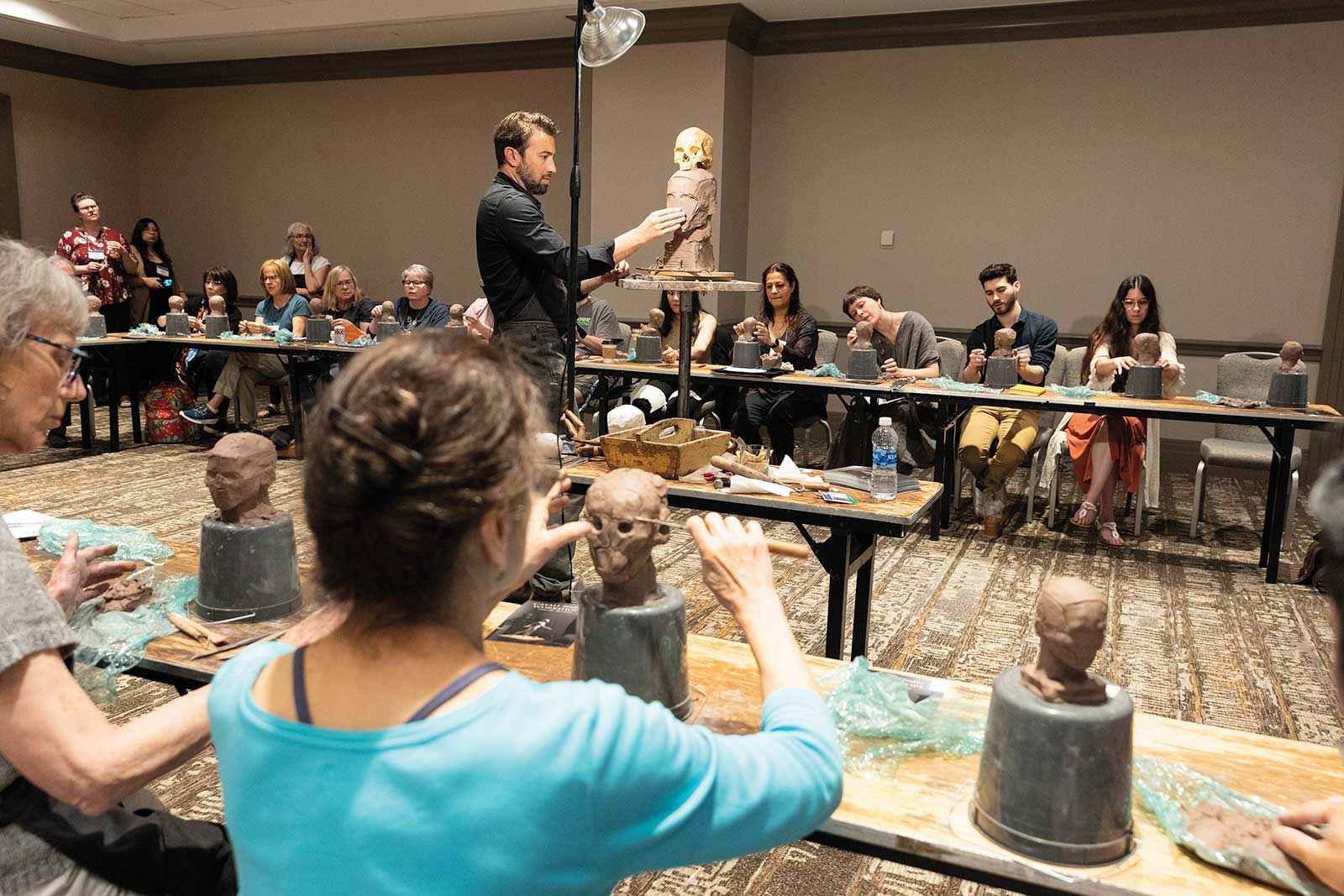
Conference attendees learned the geometric structure of the head during a hands-on class taught by Rick Casali.
Welcoming the attendees was a full complement of faculty members who made the stunning success of the weekend possible. They shared with the participants their forma mentis and their approaches to art through drawing, painting and sculpture demonstrations. Interspersed with these were discursive sessions in which various topics were addressed, such as painting from photographic reference and the artistic approach while traveling.
This year’s pre-conference workshop sessions were conducted by Mary Whyte, Susan Lyon and Scott Burdick. Thursday night’s Face-Off event kicked off the main conference with 18 artists drawing, painting and sculpting simultaneously. Following this exciting opening, some of the stars of the next generation, Celia Liberace, Jared Brady, Kyle Ma and Stephanie Paige Thomson, performed parallel sessions under the eyes of Max Ginsburg, who simply described them as “the future of art.”
Michael Shane Neal, Chairman of the Board of the Portrait Society of America, officially welcomed attendees to the 25th anniversary conference Friday morning by introducing Burton Silverman—an award-winning artist and living legend who, in a video made especially for the event, shared his great love for art. Burton specified how the communicative power of a work of art and its ability to reach people are both aspects that should be taken into account even before the aesthetic result is considered.
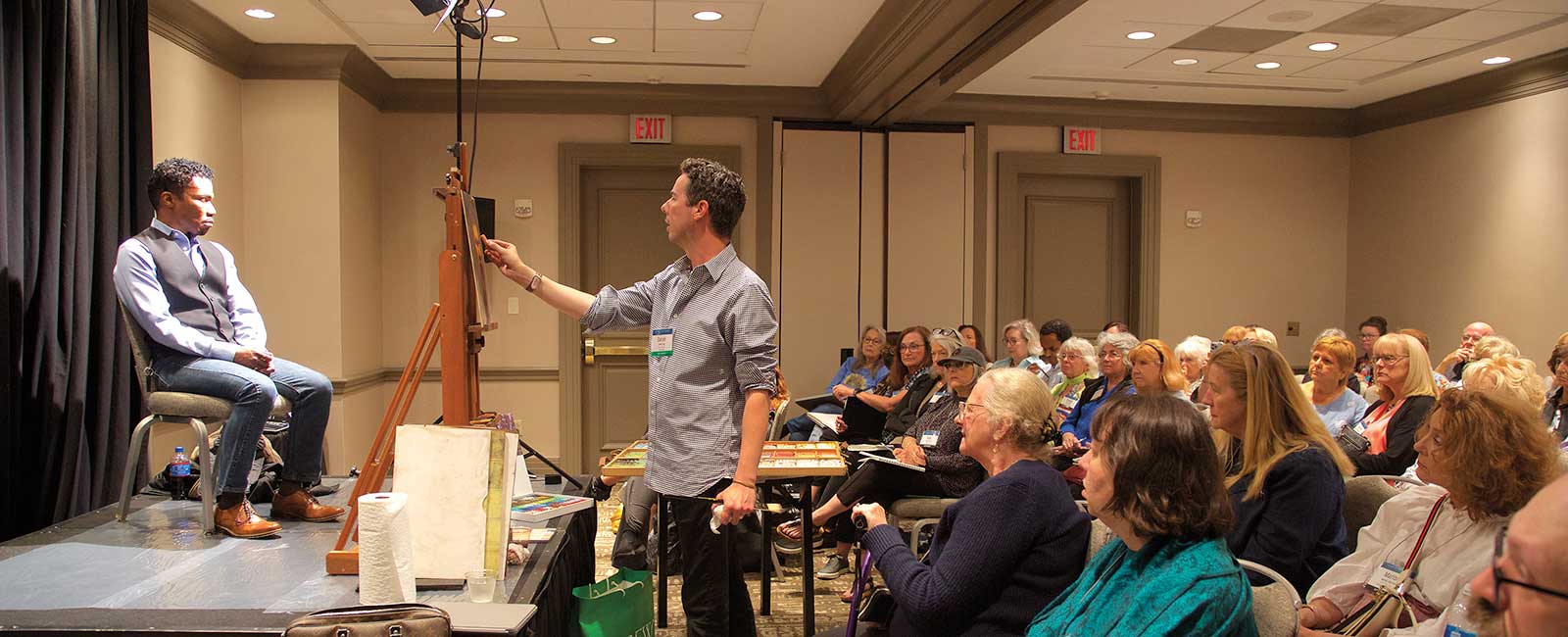
Daniel Keys shared his thought process and offered insight and instruction on creating dynamic portraits using pastels.
Later that morning, the demonstration sessions got into full swing by addressing a variety of technical topics. Adrienne Stein and Anthony Ryder were moderated by Jeff Hein who, with pointed questions and his characteristic good dose of humor, highlighted the artists’ different approaches in structural and stylistic composition. Stein’s piece was executed with a rich color palette in oil while Ryder, who considers drawing a kind of meditation, completed his in pencil.
The importance of background in composition, a theme also mentioned by Silverman in his presentation, was among the topics addressed by Dawn Whitelaw during her afternoon breakout session. She invited participants to perform exercises aimed at bringing out the differences in the image in relation to the background. Later, in her session with Thomas Caleb Goggans, Whitelaw insisted on the importance of drawing from visual memory in a limited amount of time, a process that allows one to focus on the key points of the portrait without getting lost in the details.
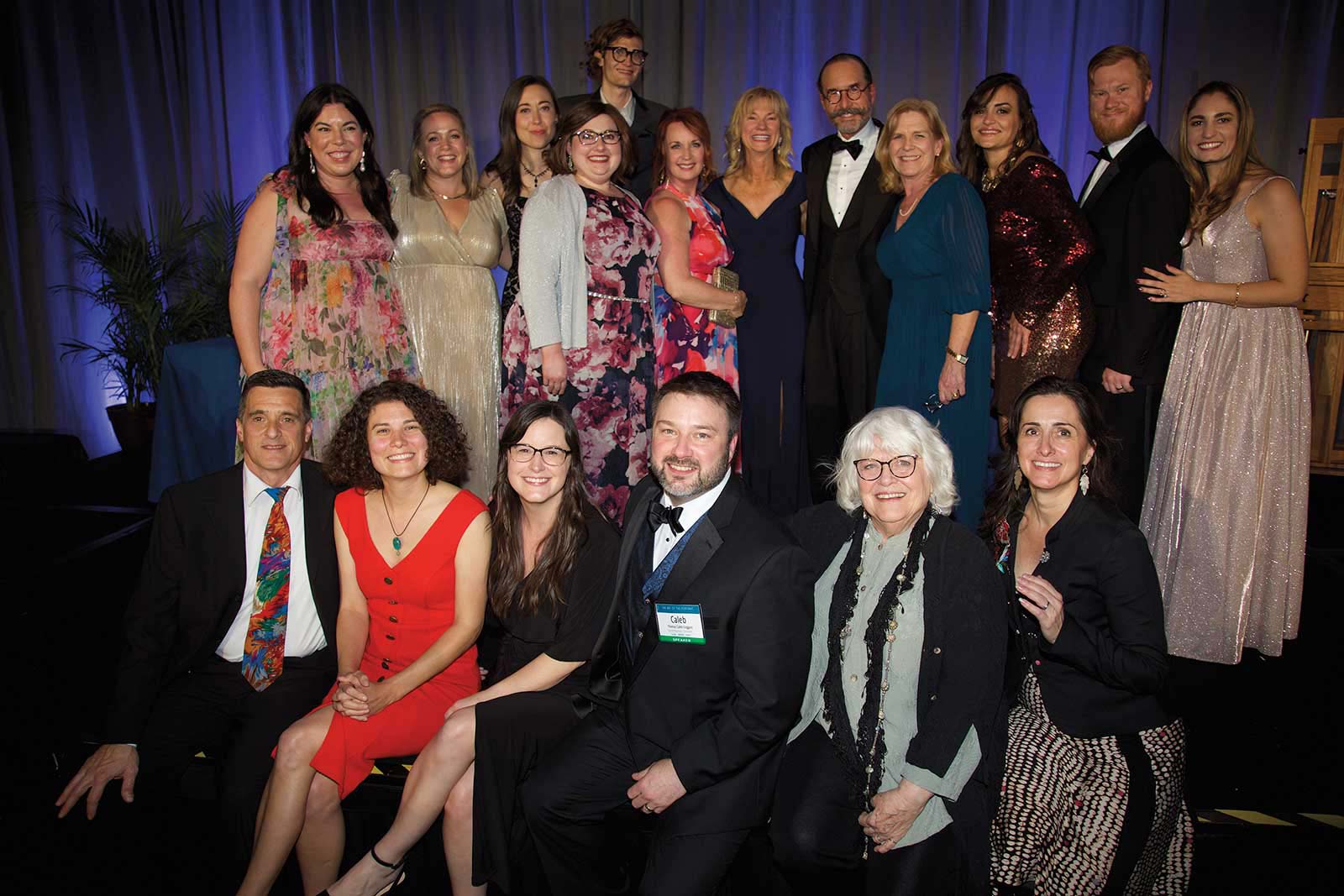
Thank you to the staff, board and volunteers who dedicated many hours to making the conference such a huge success.
The making of large forms is among the most difficult challenges in the compositional process and therefore always offers a reason for dialogue and reflection. In this regard, James Gurney, drawing on his experience in composing carnet de voyage-style landscape scenes, simplified the construction of big shapes with the use of watercolors and gouache.
In his breakout session, Rick Casali explained how the sculptural approach to the face follows the same principles as the painting process, whereby tonal values change as the planes of the head vary, which in turn, vary according to the light.
Louis Carr, in his session on the construction of a solid and effective composition, also emphasized aspects such as light, as well as the realization of the background and the perception of the human eye, which in its complexity follows Gestalt theory.
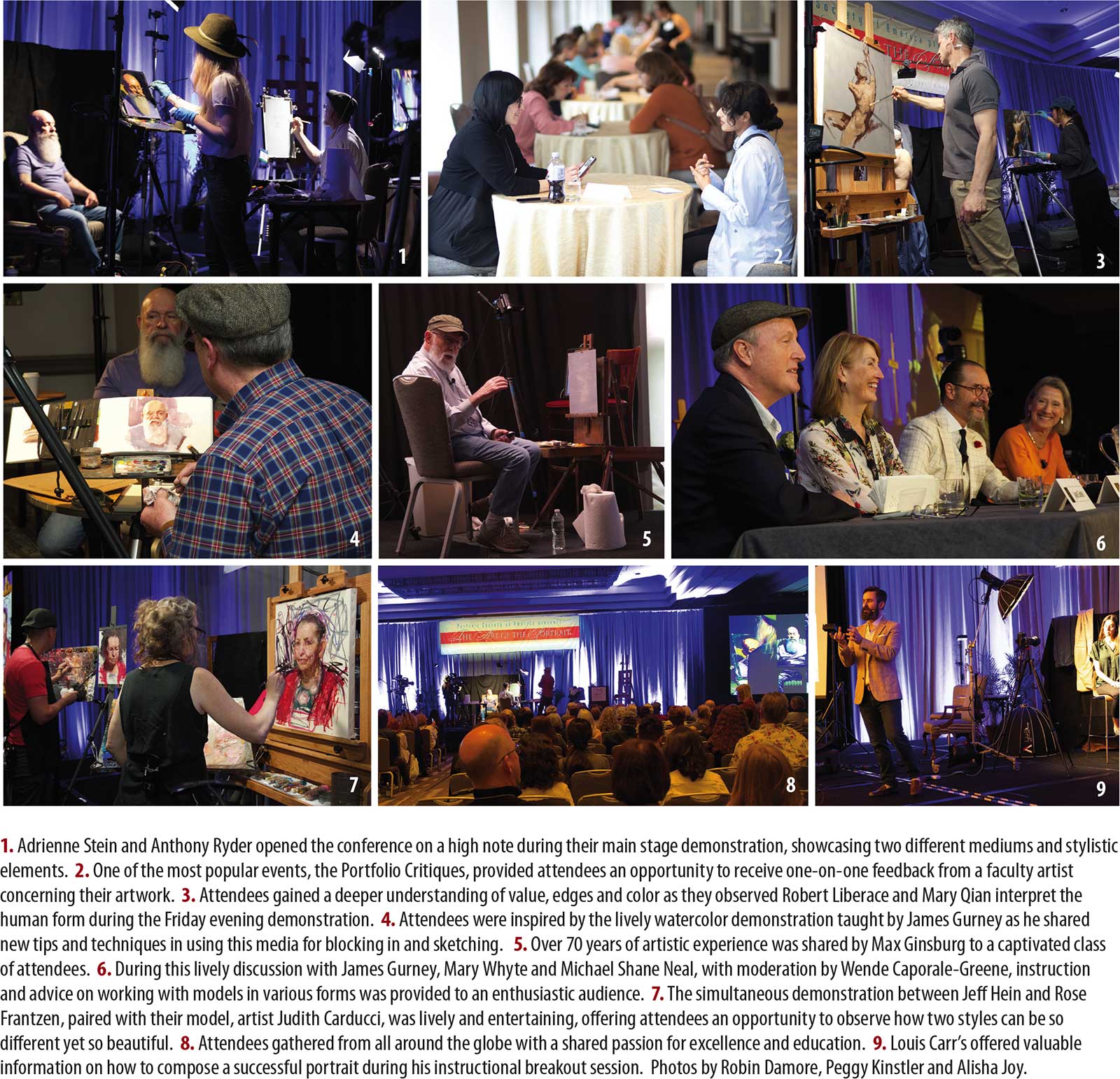
Robert Liberace and Mary Qian brought two different perspectives to the concept of “rhythm” and how it emerges naturally. Through rhythm, it is possible to perceive the compositional pathos that is emphasized both by the posture of the subject and by the anatomical approach to the human figure. This can be the starting point of the painting, as it is for Robert Liberace, or the ending point as for Qian, who emphasized the anatomical volumes at the end of the composition with the use of shadows.
The impact of portraiture done solely from photographic references during the pandemic has left considerable aftermath. During a panel discussion, leading figures in the Portrait Society of America, including Gurney, Neal, Whyte and Wende Caporale, explained how to optimize the approach of painting from life whenever possible.
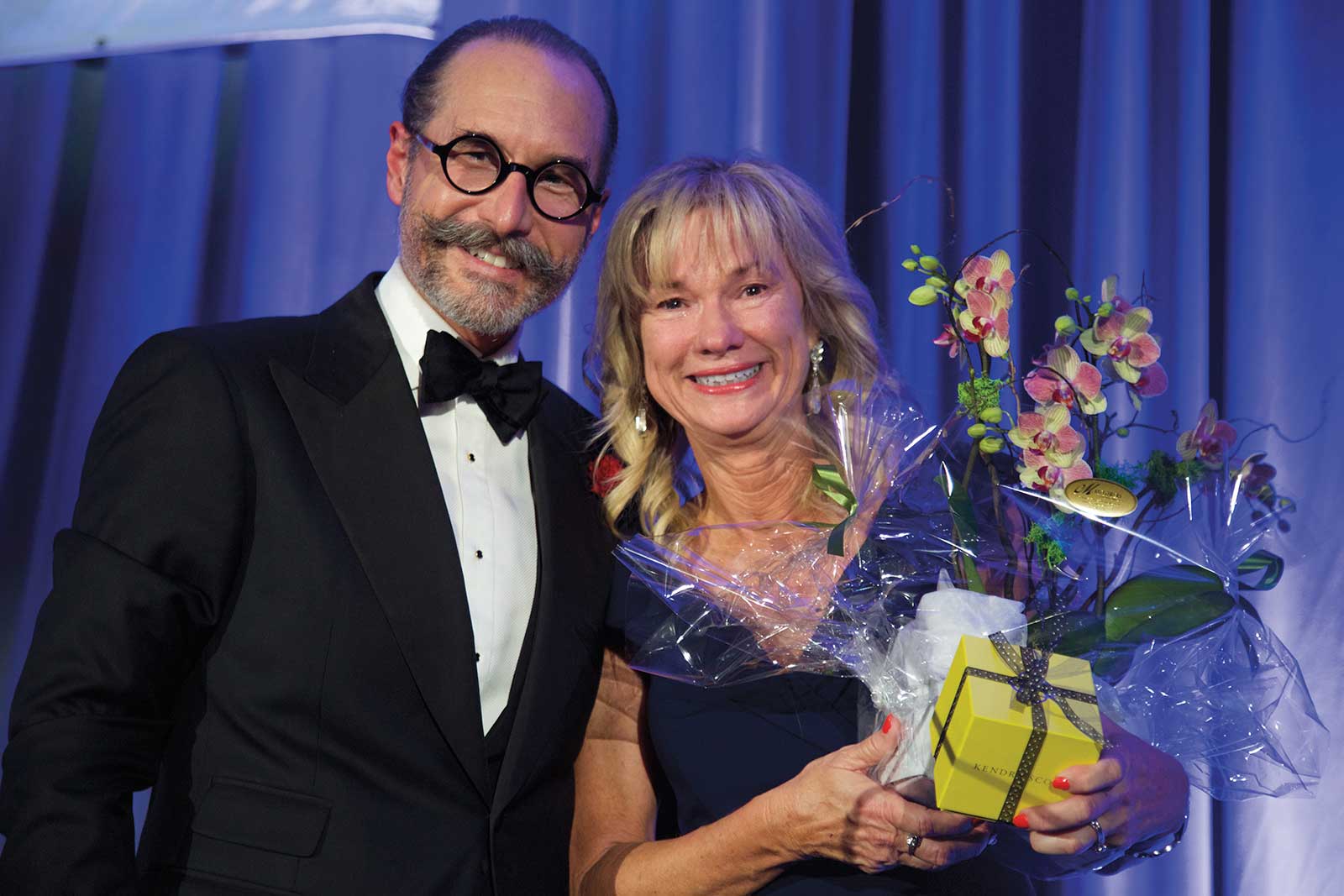
During the gala banquet, Michael Shane Neal surprised Christine Egnoski with flowers and a gift, celebrating her 25 years of dedicated service to the Portrait Society.
An influential proponent of using photographic references in the compositional process is another legend of realistic figurative art—Max Ginsburg. The painter of people, Ginsburg made a distinction between candid photos, spontaneous photographs and photoshoots, which require the posing of the subject aimed at a specific compositional goal.
The end of the pandemic also signaled the resumption of travel. This passion is keenly felt among artists who see painting as a means of interacting with people and learning about new cultures and traditions. Scott Burdick and Suchitra Bhosle talked about creating portraits from photographic references taken personally during their recent stay in India. Another proponent of painting in new and unfamiliar places is Kevin Macpherson who, in his touching speech, told of how, by encountering unfamiliar cultures, he was able to devote himself to the art of portraiture by overcoming preconceptions and fears motivated by people’s judgment.
Painting from life remains the favorite approach to making a portrait, as was amply demonstrated by Dominique Medici in sketching with a limited palette. Also demonstrating this was Daniel Keys in his pastel sketch made from focusing on the five shadowed points of the face: the eye socket, the bottom of the nose, the upper lip, the under lip and the chin.
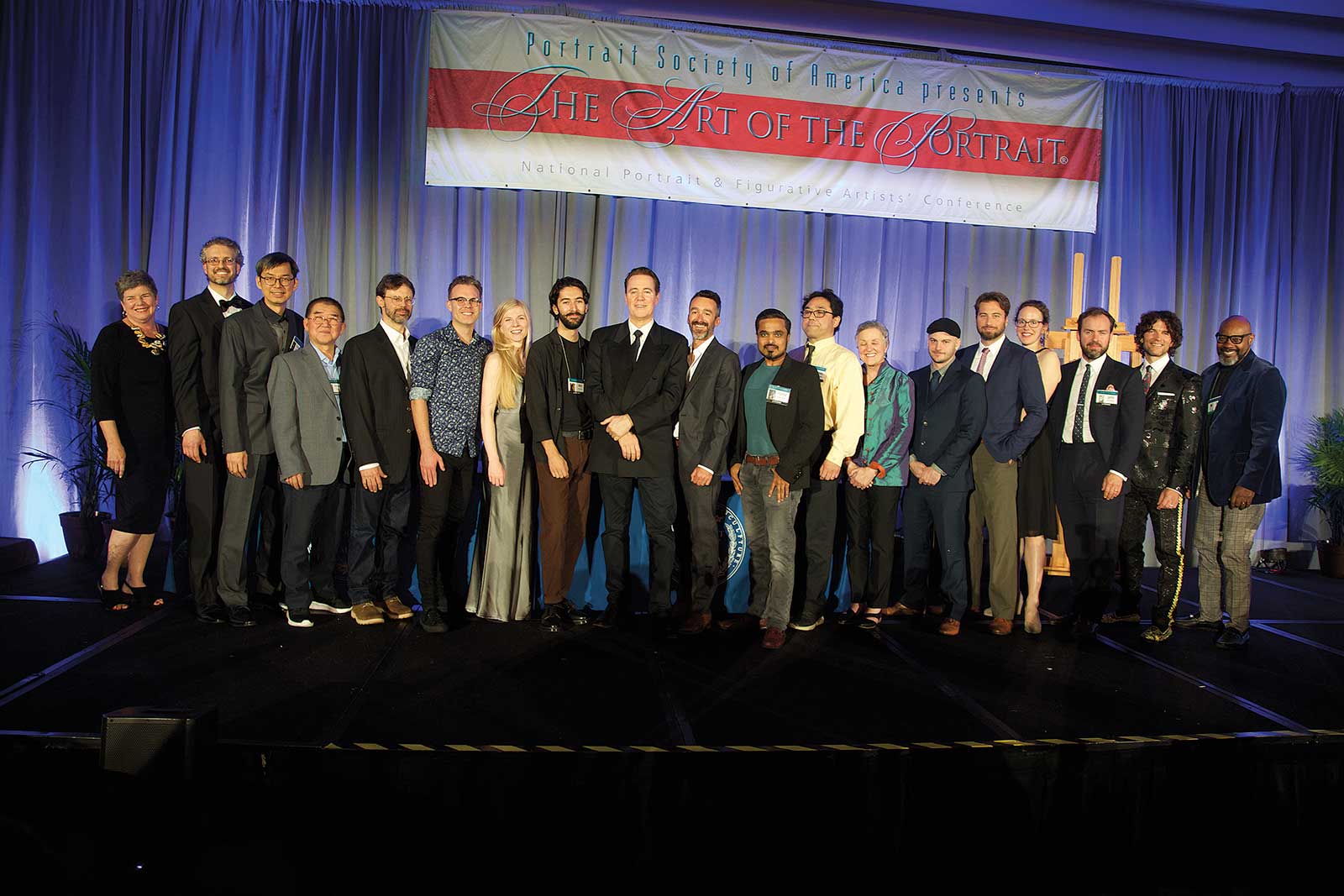
After an exciting evening of award presentations, the finalists of The International gathered onstage for a group photo.
These practical and theoretical demonstrations were alternated with sessions that transcended traditional concepts, resulting in forms of reflection and meditation such as that of Quang Ho and Ron Hicks. Also falling in this category was the frenzied demonstration carried out by the energetic Rose Frantzen and Jeff Hein—an explosive pairing in which the model, artist Judith Carducci, was the icing on the cake with her critical and poetic appeal.
Throughout the conference there was no shortage of live portrait model sessions where participants, under the guidance of faculty members like Susan Lyon and Jennifer Gennari, were guided with personalized feedback. Additionally, there were portfolio critique sessions available, as well as book signings by artist authors. Conference attendees were also able to learn about new product releases and purchase materials made available by the various exhibitors.
As in years past, the conference attendees were given the opportunity to purchase the works of extraordinary artists, both through the “6x9: Limited Size, Unlimited Talent - A Mystery Art Sale,” as well as the Silent Auction, which consisted of the pieces created during the compelling Thursday evening Face-Off.
The Saturday night gala reconfirmed itself as a must-attend event due to both the beauty of the occasion and the elegance of the guests. At the end of the lavish banquet, attendees applauded the winners of The International, including Paul Newton, winner of the prestigious Draper Grand Prize, and Ruth Fitton, winner of the People’s Choice Award. The evening ended with an exciting film, made by multifaceted artist Mattie Ree Neal, which assembled some of the most treasured moments from the Portrait Society’s 25 years, cadenced by the people who have made its history while carrying on the tradition of this prestigious institution.
To wrap up the weekend, participants, taking advantage of this year’s location, were able to visit the National Portrait Gallery or the Mary Whyte exhibition, We the People: Portraits of Veterans in America, at the National Museum of the United States Army, which provided Whyte with an entire section of the museum to celebrate this grand project.
The Portrait Society of America has proven to represent not only excellence in the execution and teaching of portraiture and figurative art but has affirmed its social importance by serving as a point of reference for all who share the same passion: inspiring and being inspired. —