My client, Will, traveled from Texas to sit for his portrait at my studio in Northumberland. I always commence each painting with sittings from life, and having him in my own studio allowed me the luxury of knowing my space and lighting and having all my kit close at hand. In addition, Will had thought through his clothing so we only had to choose a pose and the gestures of the hands in advance of the first sitting.
 Stage 1
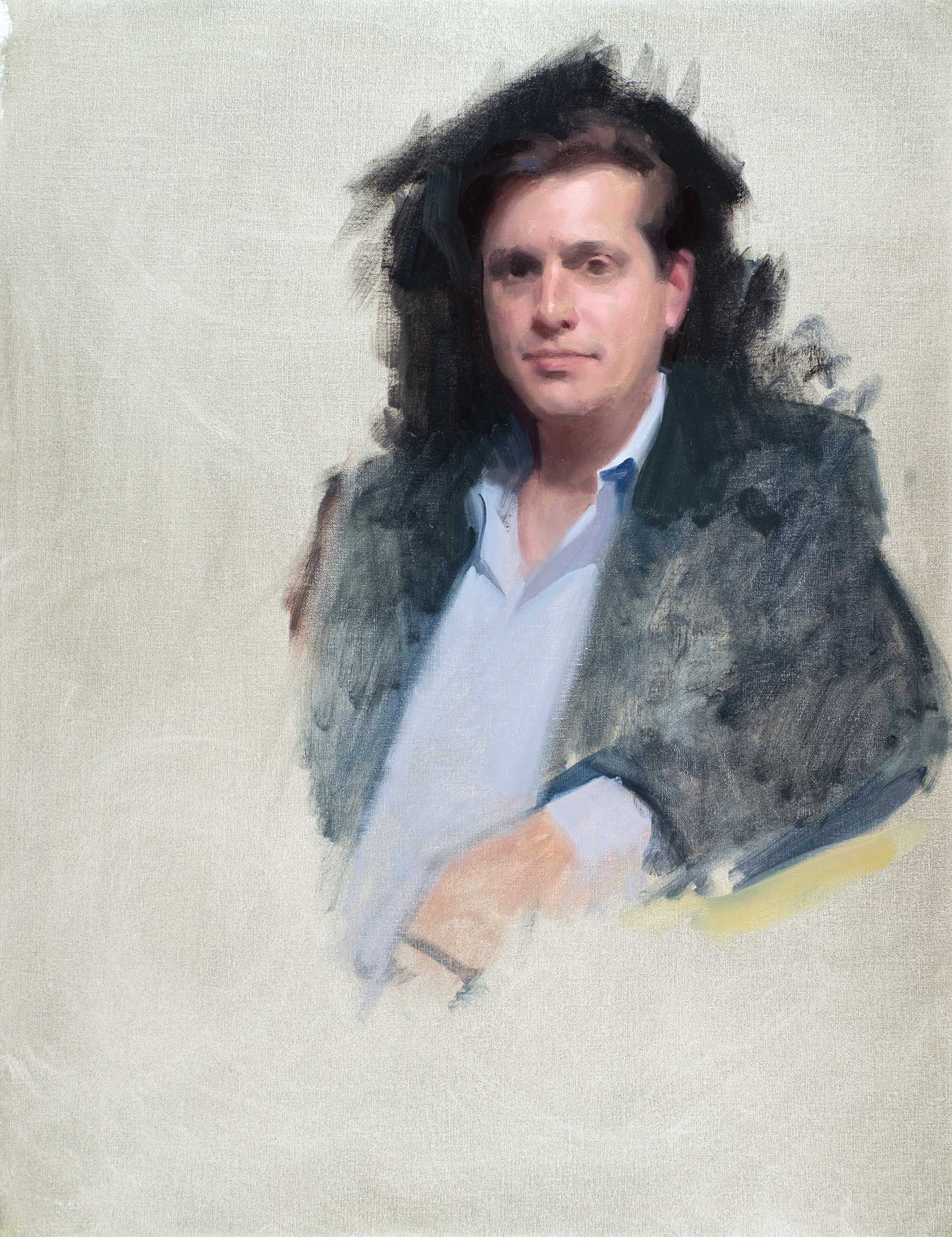
Stage 1 Warming Up: After the initial setup is complete, I work sight-size to lay in a very rough base of information, which acts as a guide for future plans. This is effectively my sketchbook, which slowly disappears under subsequent layers of paint as the work progresses. The first layer is always fun to photograph as it shows the naive strokes and impressions before too much thought and control has been applied; it’s interesting to look back at the various stages the painting has gone through on route to the finished product. At this stage I’m really only interested in the base structure, the fundamental blocks of light shade and some color.
The initial sketched layers of the painting are forethoughts to what will come later. They are rough and rudimentary. The brushes used at this stage are size 10 and above large bristle brushes, each one representing a different tone or color. The aim of my lay-in is to chase values more than precise colors. There are very few smaller brushes in play at this time, and I’m not bothered too much with details like highlights in eyes. Since all of this is likely going to change in future layers, getting into detail too early can be a waste of time.
 Stage 2
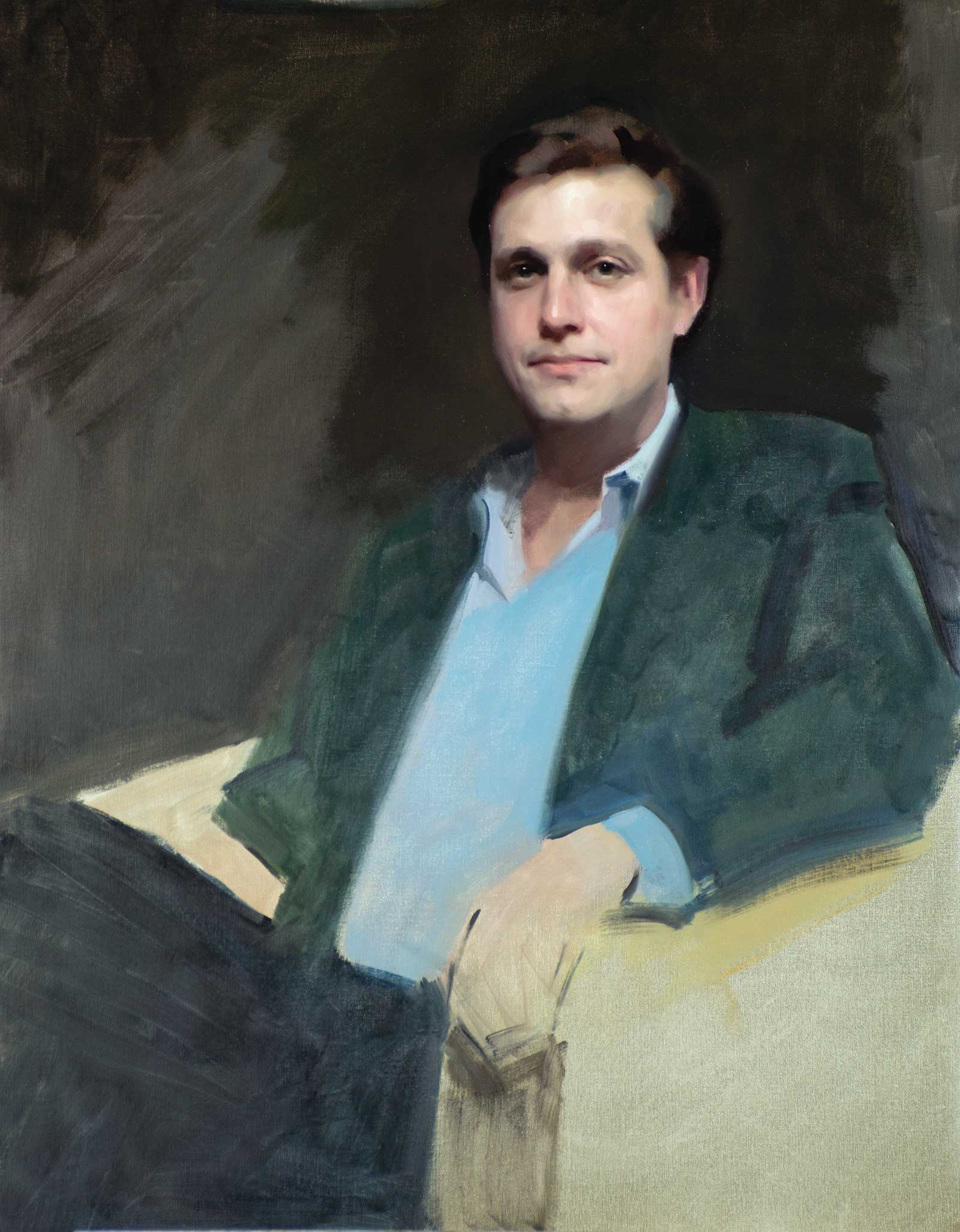
Stage 2 Progression: As things progress, I move out from the head—a priority while I have my sitter at hand—and lay down the same rough strokes and blocked-in areas for the body and, in this case, a chair arm. This more or less completes the plans for the painting, so I then leave it to dry out completely.
My approach to color is different from some other more color-oriented artists. For instance, the elements of precise warm and cool color ranges are considered late in my painting process. In the first few sittings, the most important concerns are tones (or values) and getting the lights and darks established in their hierarchy. Throughout the middle and ending of the painting, I turn my attention to the question of which colors I wish to accentuate and in what degree. That is not to say that one doesn’t think about the color before the painting begins, only that in the process of arriving at the colors and tones I want, I find it best to center the tonal range in the early painting. As you see here the blocks of color laid down are basic and rough; this changes later on as the painting develops.
The next phase is the long process of building paint up to convey textures, the light effect and the atmosphere. This is also the most important phase for expression. At this point I tend to talk to my clients and their families a lot in order to make sure that we are all able to recognize the sitter—in particular the expression that is emerging. The subtleties here are important. Rendering a real human hangs on the smallest changes. I will need the intimate relations and friends of the sitter to help me achieve an accurate feel.
 Stage 3
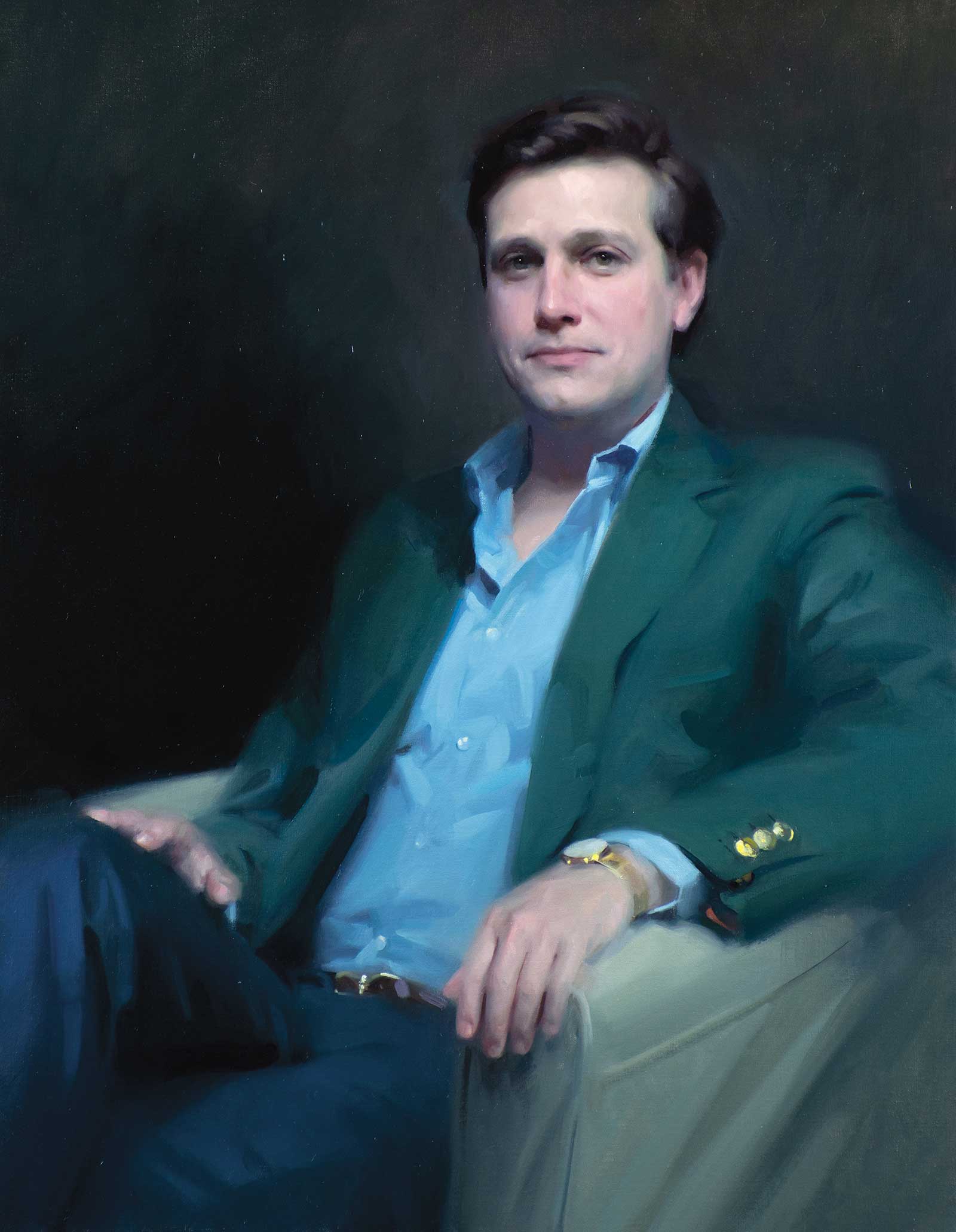
Stage 3 Fabric: In handling the fabric, it helps to keep a firm eye on the anatomy underneath the clothing to make the gesture and pose more clear. You may need to edit out a number of folds that are not helping and accentuate others.
I start all portraits with a sitting from life; this is a fundamental of my work. I have to see the light falling on the subjects, see them moving, talk to them, see them relax into the most natural gesture and lay down the rudiments of the painting so that I have a strong memory of what I’ve seen when I’m referring back. I take a lot of reference photos as I go, but without some hours of sittings from life (allowing me to get to the stage of the first photograph in this series), I can’t produce work that I find satisfactory.
 Stage 4
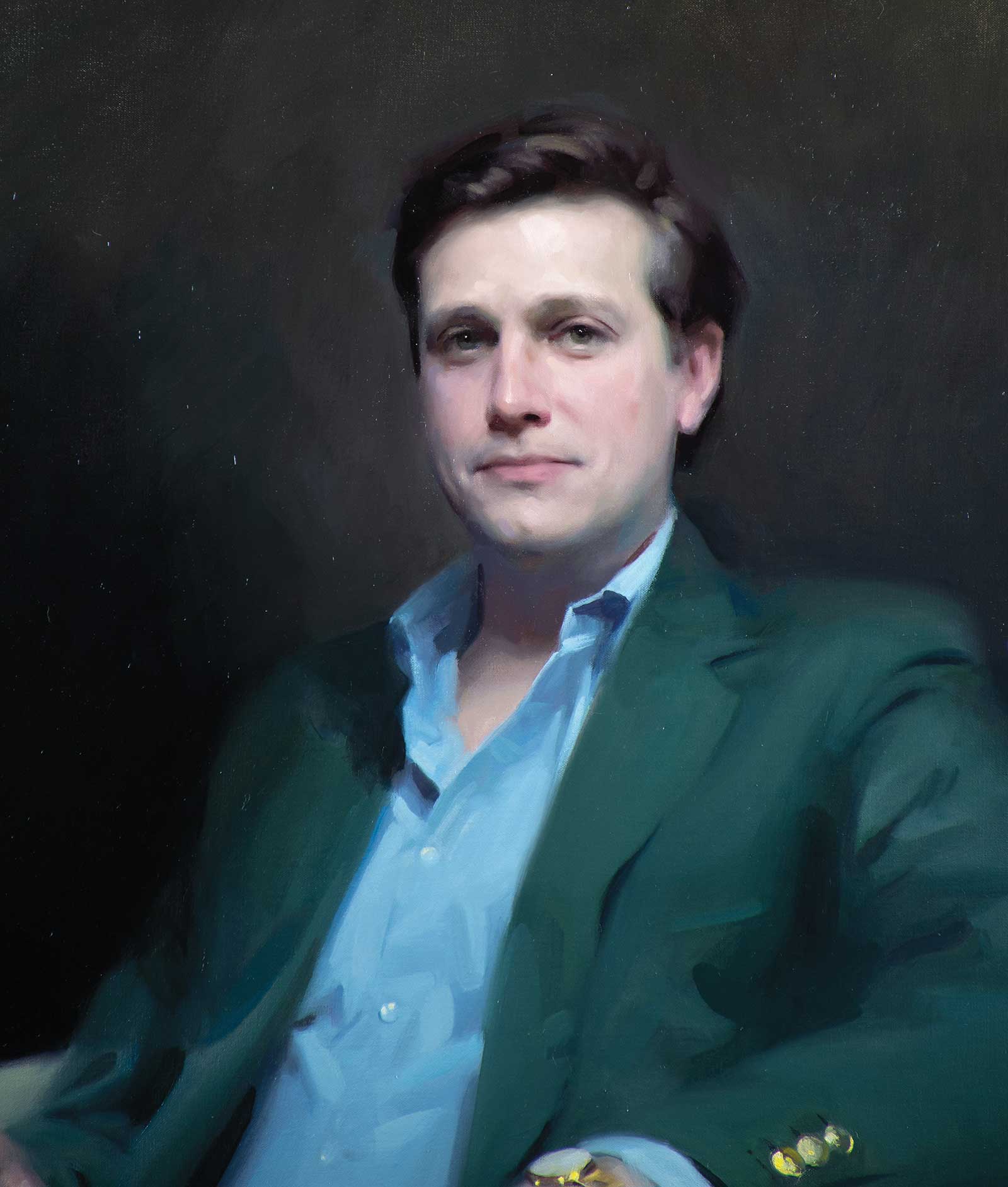
Stage 4 Finished Artwork (Detail): I generally have a “rule of thirds” in the division of my time on each painting. The first third is sittings from life. The second is from reference photos—all the clothes and furniture and most likely hands. The final third is the lengthiest and most important—this is at the end of the process. You must live with the painting and see how it will feel and communicate from the wall. You’ll need to move it around into different light sources because you don’t know where it will hang. You must tweak color, tweak gesture and facial expression. This is the slow, final chapter to the painting process and the most vital.
Frances was raised in Suffolk and, after developing an early interest in drawing and painting, she pursued art and art history at school. Since the completion of her training, Frances has been a full-time professional portrait and landscape painter and has participated in many exhibitions. She is a member of the RP, the ROI and an Assoc RSMA. —