So, you’ve been accepted to participate in an art fair. This is a major accomplishment! And while you should be extremely proud of yourself, a fair amount of planning and consideration will also be needed moving forward. In the following pages, I’ll be detailing what I’ve found are some most important elements in preparing for an art fair—indoor or outdoor, large or small.
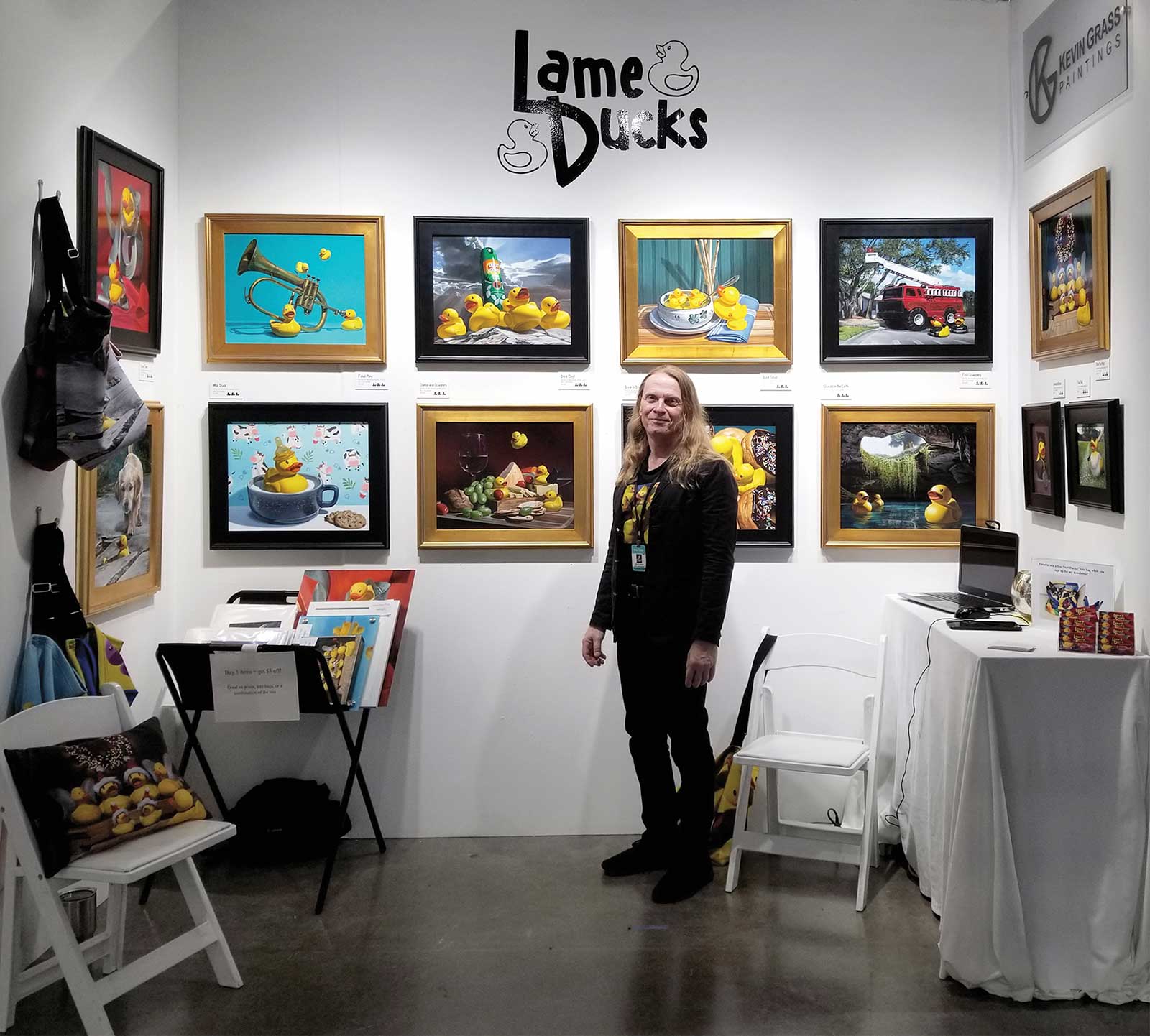
These images were taken after the booth was completely set up. In addition to the framed original artwork, we also offered prints and tote bags for sale. We brought samples of other merchandise featuring my Lame Ducks series, including a pillow, coffee mug and T-shirt (I wore a different one every day) that can be purchased on my website.
What to Sell
You must first determine what products you plan to offer. Will it be all originals, or a combination with prints and other merchandise? See if there are any restrictions on what you may show in the exhibitor’s catalog, and don’t assume something that’s fine in one fair will work in another.
Pick items that cover various price points so that you have something for serious collectors, but also for people who are on a tighter budget. Smaller items may be matted prints, note cards or tote bags. Try to keep the bulk of your inventory on display in the under $5,000 range, to make it in the “affordable” category. Works that cost more than $10,000 do sell, but your clientele is more limited.
When pricing your work, use a consistent formula, such as pricing per square inch, or figuring that each additional complex element adds a specific amount. Consider exactly how much money you need to make from each work, and then mark it up about 20 percent. Potential buyers will invariably want a deal of some sort. Make sure that you’re firm ahead of time about how much of a discount you may be willing to give (if any) and respect your artwork and the effort that went into making it. While it may seem that any sale is better than none, you don’t want to undercut your own pricing. If your work takes a long time to make, you want buyers to honor that. You do not want to be uneven in your pricing and have collectors compare notes only to find that some people got better bargains from you than others.
It is your responsibility to find out when and how much sales tax you must collect. Will you include that in the price, or will it be added separately? Will your pricing include shipping within the United States, or will you give a discount to someone who takes the artwork directly from the fair?
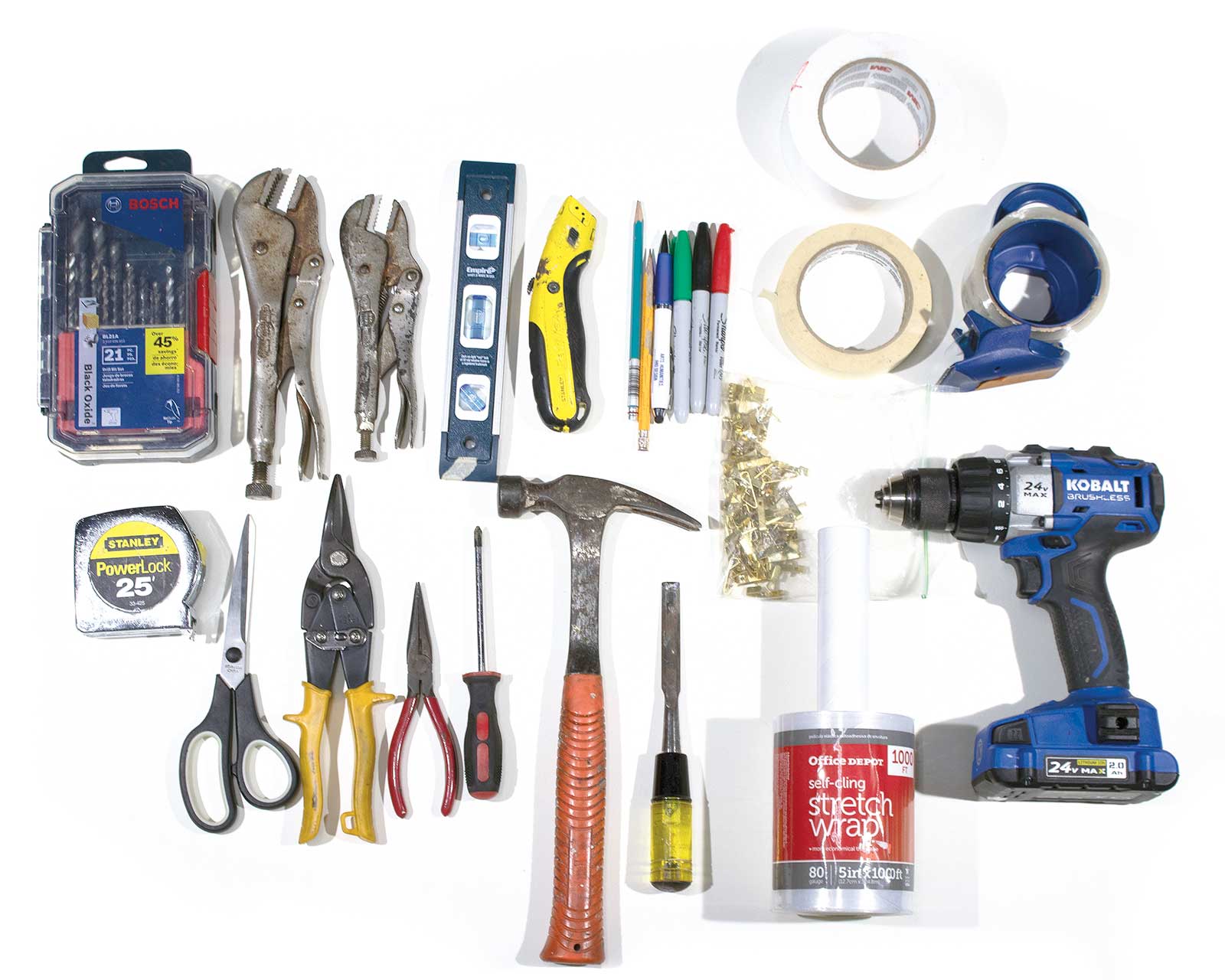
It is important to have all the tools that you will need for setting up and taking down your artwork, labels and signage. Artists exhibiting small works may bring materials for packing the pieces so that they may be taken by the collector from the fair. My toolbox includes materials for changing frames as well, since collectors have the option to select gold or black frames.
Before the Fair
If you are participating in an outdoor fair, make sure that you have the requisite equipment (tent, wall panels, weights, furnishings) in good repair. Many indoor fairs may include a table and chairs, but still look at your furnishing needs for your booth. I built a custom table with a shelf and floor-length tablecloth to hold extra artwork and tools during a fair.
Figure out how you will transport your artwork to the venue. Will you be shipping the entire show and need to make crates? Or will you need to rent a truck, van or trailer to transport your work there in person? Additionally, it is always easier to do an art fair if two people work a booth, so see if a spouse or friend is free to tag along and help, and make clear what kind of compensation they will earn, if applicable.
Are you registered for sales taxes in the state where the fair is taking place? Make sure that you’re informed on all the regulations that may affect your art sales.
Does your art fair include insurance? If not, see what kind of liability insurance you may need to purchase before you can exhibit. Transit coverage can be useful in case the artwork is damaged while going to and from a fair.
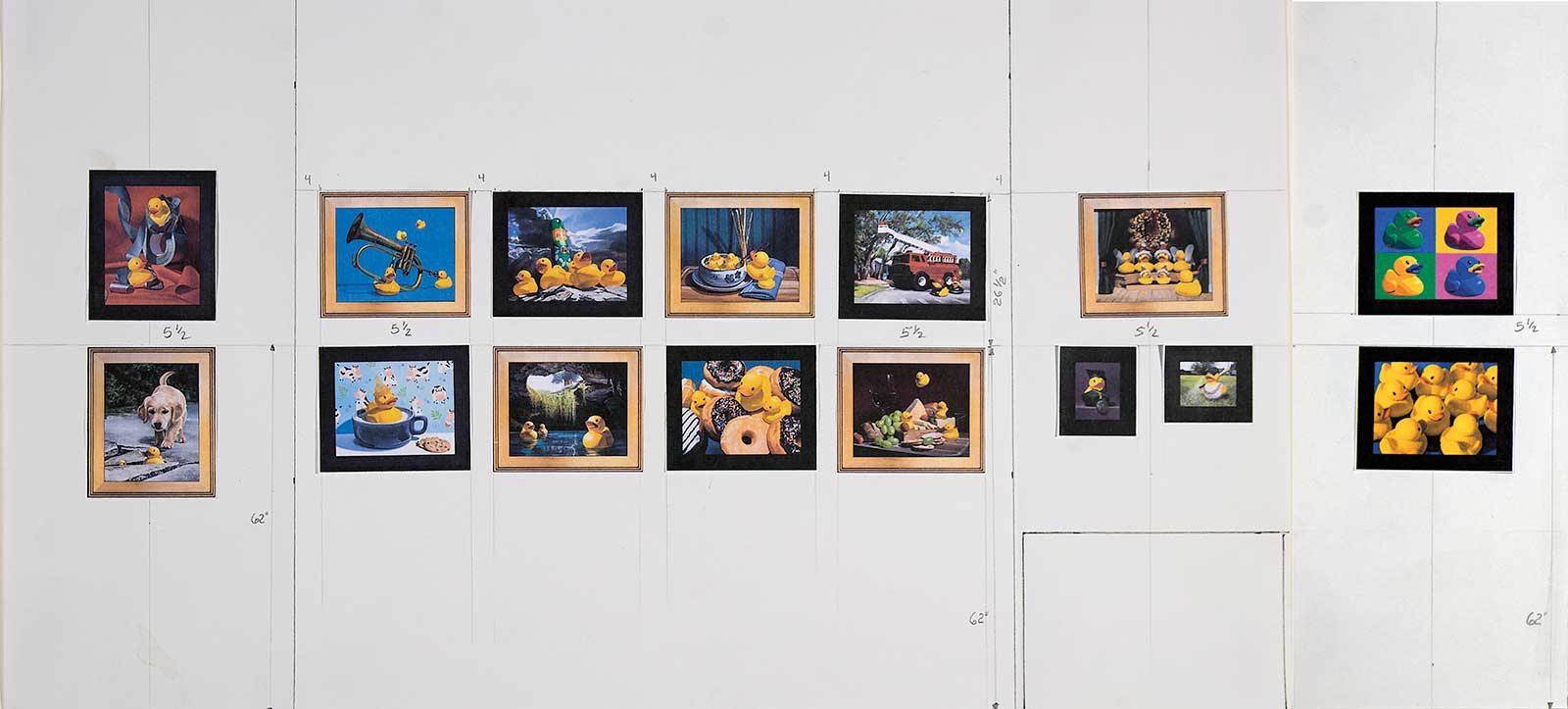
I glued small thumbnail-sized color images of the paintings to a scale plan of the walls to plan the layout of the artwork. This space was a corner booth, so the outside of the wall was included on the right.
You’ll also want to assess your printing needs well in advance, so you can order reprints if a mistake is made. Be sure to have sufficient business cards for the entire show. Consider whether you want to have free postcards available. If so, that might cut into potential sales for small prints. Will you need to have a sign made for your booth? Look online at photos from previous fairs at your venue to see what kinds of signs fit in. Will you require scratch-off wall words or a more permanent sign? Doublecheck with the exhibitor’s manual to ensure that you follow the guidelines.
If your artist website is an e-commerce site, confirm that the pricing matches what you will ask for at the fair. You don’t want your website to undercut your in-person sales and challenge your credibility. All the works you’re offering at the fair should also be on your website. Plan for your social media to help promote your participation in the fair. With Facebook Business Suite, you can schedule posts to your business page and your Instagram business page in advance. Find out if fair organizers are recommending specific hashtags and if they will retweet your tweets to help people find your booth. Send emails to your mailing list and include your booth number and links for free tickets for collectors. In spare moments during the fair, post photos of buyers with your art and images of your booth to your most active social media accounts so your fans can find you.
Assemble a toolbox for helping you hang your work. It should include such things as a utility knife and blades, screwdriver, hanging hardware, hammer, level, pliers, microfiber cloths for wiping your artwork, packing tape, masking tape, stretch wrap, mounting tape for art labels and red dot stickers. Pens, a black marker, and a small container of paint and brushes for touching up frames can also come in handy. A ladder is also always a good idea.
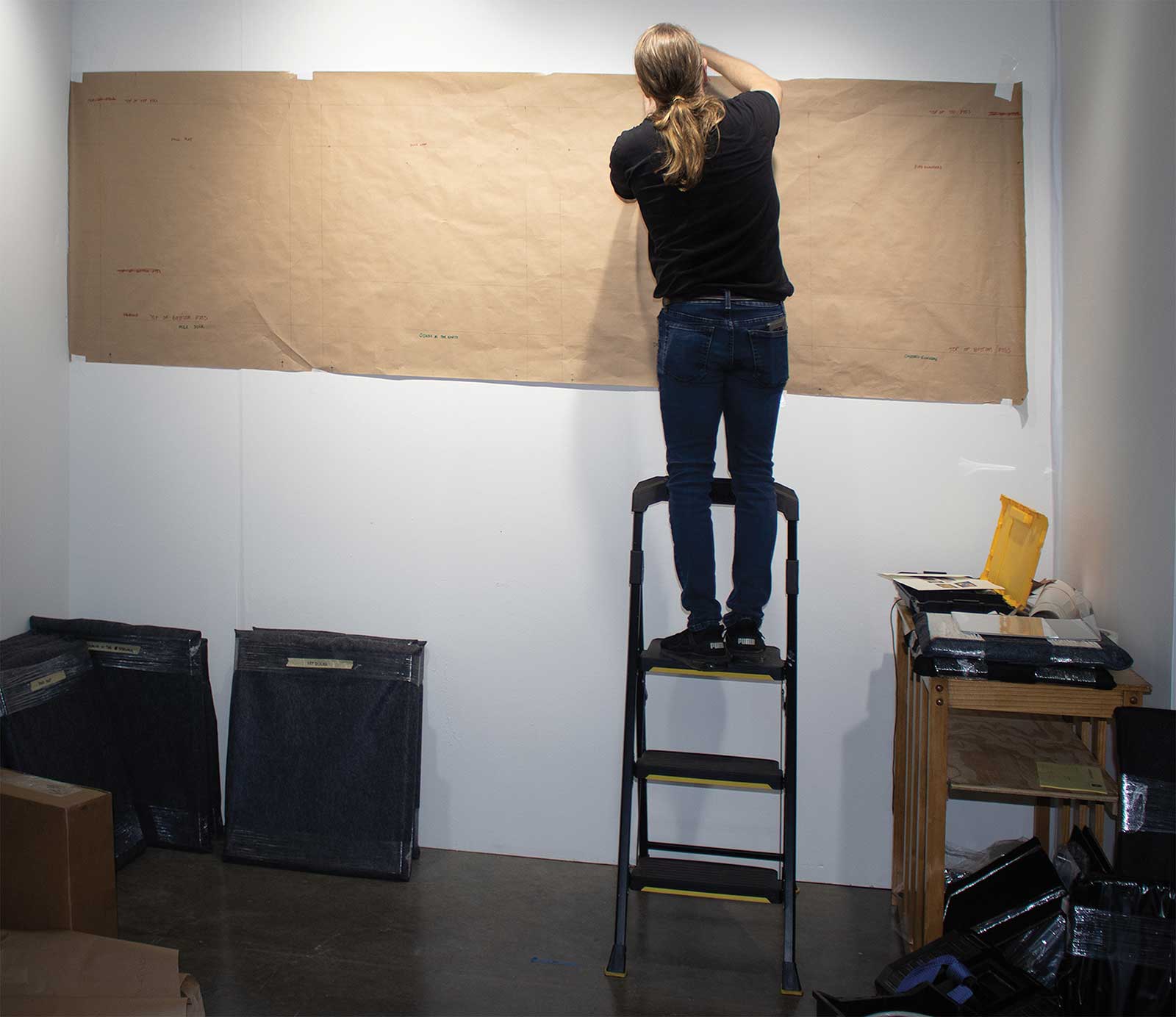
I made a template for each wall on 36-inch Kraft paper with the exact location of the hangers for each painting. I use two hangers for each piece for extra security and to ensure they are level. The templates are carefully taped to the wall and the hanging hardware is secured with nails. The templates are then removed from the walls and discarded.
It’s also important to create labels for each artwork and consider how you will obtain contact information for new collectors. Will you be doing a giveaway of some sort? Having a special landing page on your website to help booth visitors sign up for your email list is particularly useful. I use a tablet computer to encourage sign-ups, but also have a traditional fishbowl and pen and paper for dropping in business cards.
Schedule an email for the visitors to your booth for the day after the fair to thank them for stopping by to meet you. Let them know how frequently they can expect a newsletter from you about your art developments and add the giveaway winner’s name right before it is sent.
Assemble a folder with hard copies of paperwork for the fair. It should include certificates of authenticity for original artworks, sales contracts, your art resume, biography and artist statement. I also have an explanation of the symbolism in my narrative artworks.
Consider also using a computer during the fair, as it can show a continuous PowerPoint presentation of your artwork, a video of you creating work or show off your website and the works you could not fit into your booth. See if you need to pay an additional fee for an electric outlet in your booth. It is well worth it. Is a good Wi-Fi connection included with your booth fee? If not, visit your cell phone carrier beforehand and find out how to set up a hotspot.
Plan the layout of your artwork in the booth. Your fair organizers may ask for your booth design a few months beforehand. If you need additional lights for your booth, it is usually less expensive to order them in advance. If you’re planning on hanging works salon style, consider printing out small thumbnails of the pieces and arranging them in a scale drawing of your booth to confirm that everything will fit the way you expect. When I hung paintings in double rows, I created a full-scale template on Kraft paper of where each work should go. When it came time to hang the show, I did not have to do more calculations to get even spacing.
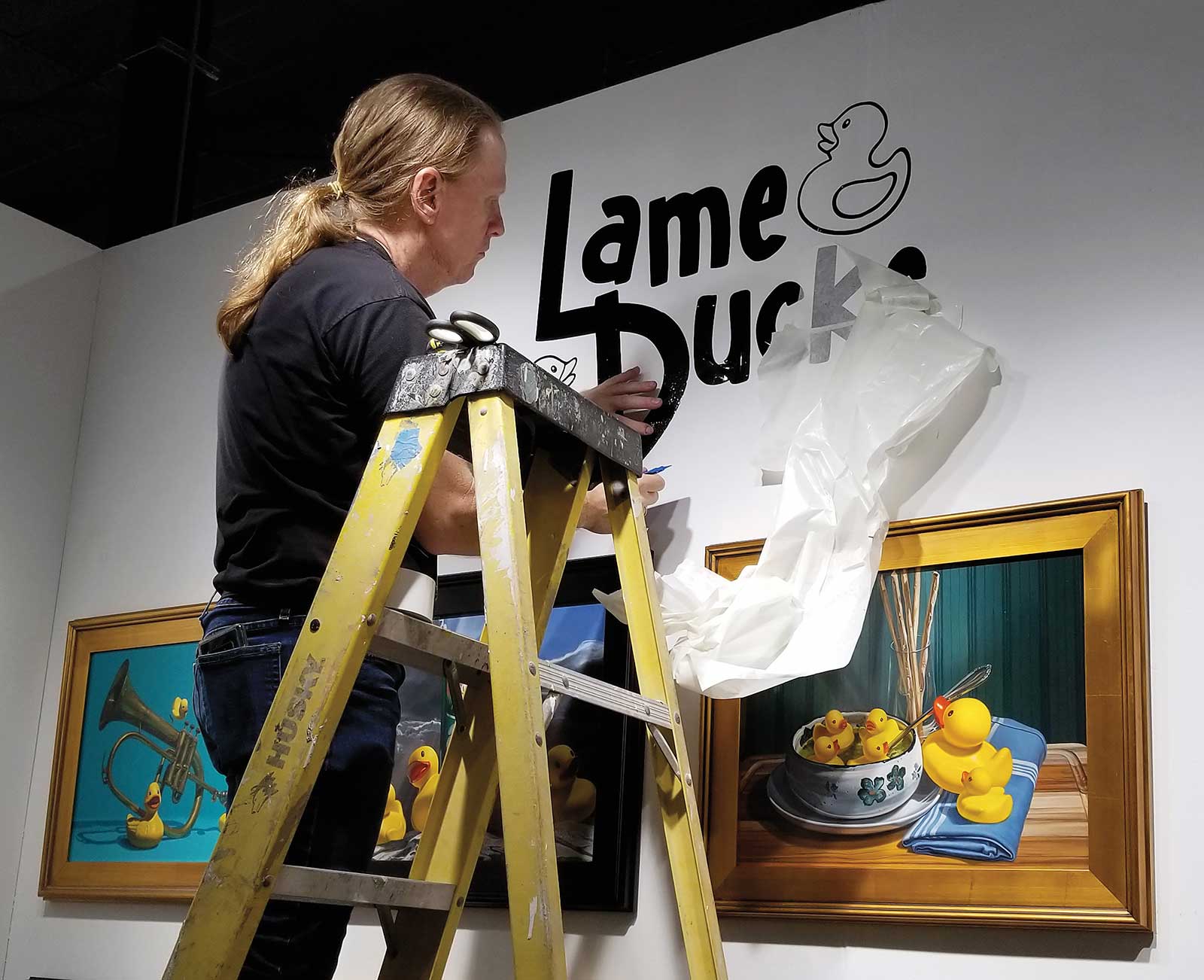
Vinyl lettering can be tricky to install. A ladder and a lot of patience are needed to make sure that all the vinyl securely adheres to the surface without air bubbles.
How to Take Payments
Prepare to have several types of payment methods ready before the show. For cash transactions, make sure that you have sufficient change available. This works well for small items, like prints and calendars. The Square POS (point of sale) app is popular with many artists. You set up an account with Square and order the plug-in for your phone or a Square reader that accepts chip cards and contactless payments. You can also use a card reader or mobile payment terminal with a company like PayPal.
If you plan on using Venmo to take payments, make sure that you’re using a Venmo business account. You can create a business profile under an existing Venmo login and seamlessly switch from your personal profile to your business one. The business profile will help you with tax reporting and disputes services.All these services have a transaction fee and that is the cost of doing business. When you price your artwork, keep these kinds of fees in mind.
Having several payment methods available will help you when you’re trying to run a credit card and your reader malfunctions. Most people are impatient to complete a transaction, even though buying an original artwork is not like buying a hot dog from a food truck. If you have not practiced by testing these methods ahead of time (send yourself $1.01 to test: lower amounts usually don’t work with credit cards), then you may lose a sale. It is best not to accept personal checks unless you know and trust the buyer.
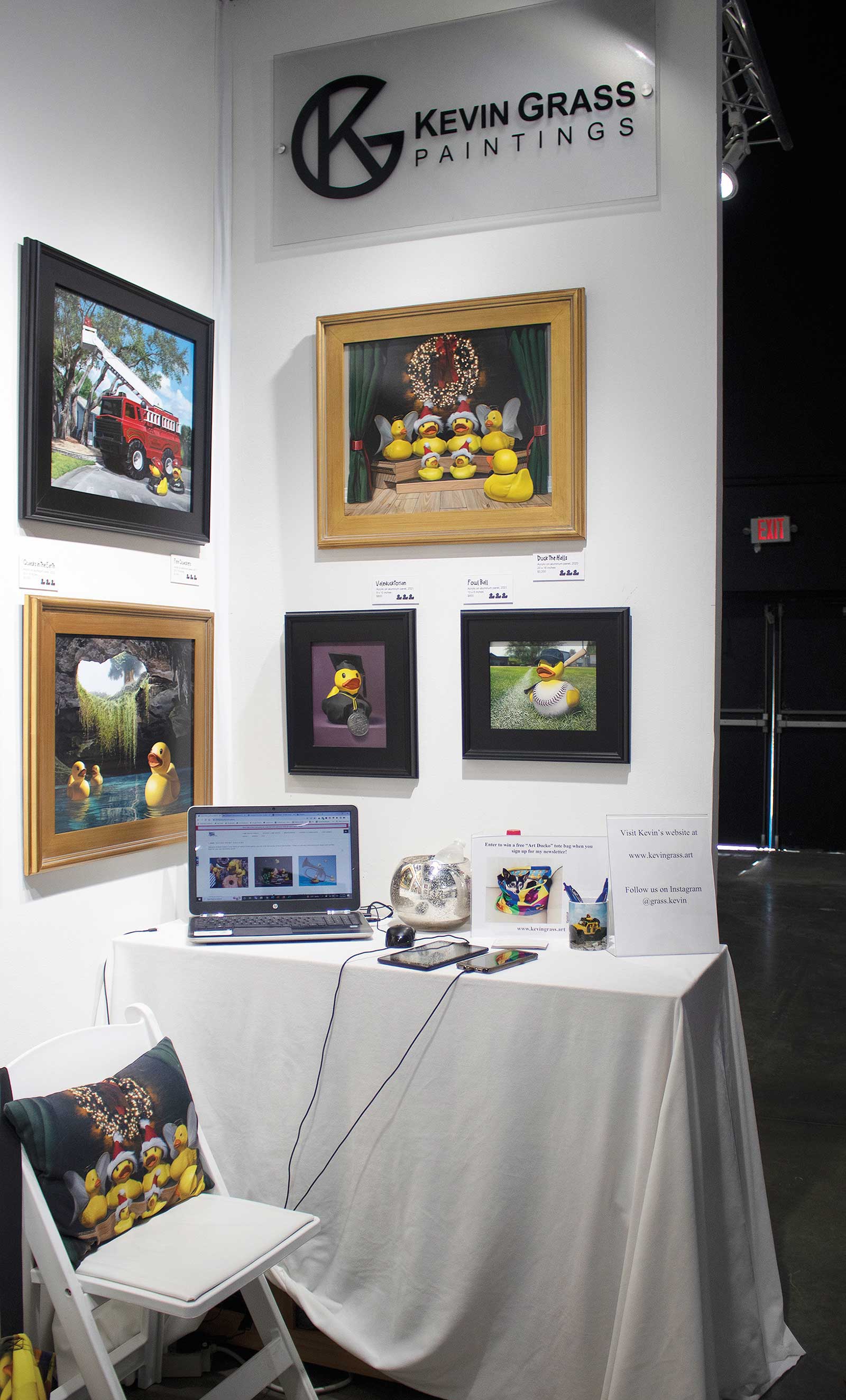
A white tablecloth allows the table to blend with the color of the walls and hides the material contained within the table. A laptop, fishbowl and cards for the giveaway and business cards are placed on the table.
One problem with some of these methods is that you may not have much customer information on hand and previous customers are your best base for future sales. Find a way to get name, address, email and phone number for at least the buyers of original works. With a quick Venmo transaction for a print, you may not have time to get all this data if your booth is busy and your customer is in a rush.
Getting a sale is exciting, but if your skill set is in painting or sculpting, you may be nervous during a transaction. Take a deep breath and relax. The hardest part of the sale is getting your customer to decide to buy your artwork. Even though you may be shaking inside, make sure your alternate plan is in place if a credit card does not work with one of the payment methods. Appearing professional will make the right impression on a collector to encourage future purchases.
Arriving at the Fair
Usually, the set-up happens the day before the opening. Check in with the fair organizers and get a name tag or lanyard identifying you as an exhibitor so that security will not question you going in and out of the venue with artwork and equipment. Find your booth space and make sure that everything you ordered is in place, such as an electrical outlet, table, chair and spotlights. If you find something missing, swing by the fair organizer’s desk to put in a work order so it can be fixed as soon as possible.
Find out if you need to get a special parking pass or if you must pay-as-you-go each day, and see if there is a special lot for artists once the artwork is unloaded. If you’re working an outdoor fair, putting up your tent and wall panels will be challenging if you’ve never done it before. Make sure you have someone available to help. Then hang your show and show signage. Affix the wall labels next to each artwork. Set out your business card holder or lay your postcards on your table.
Introduce yourself to the artists in the booths surrounding yours. If you have good rapport, you may be able to help each other out if one of you needs to step away briefly or loan each other tools that you might have forgotten.
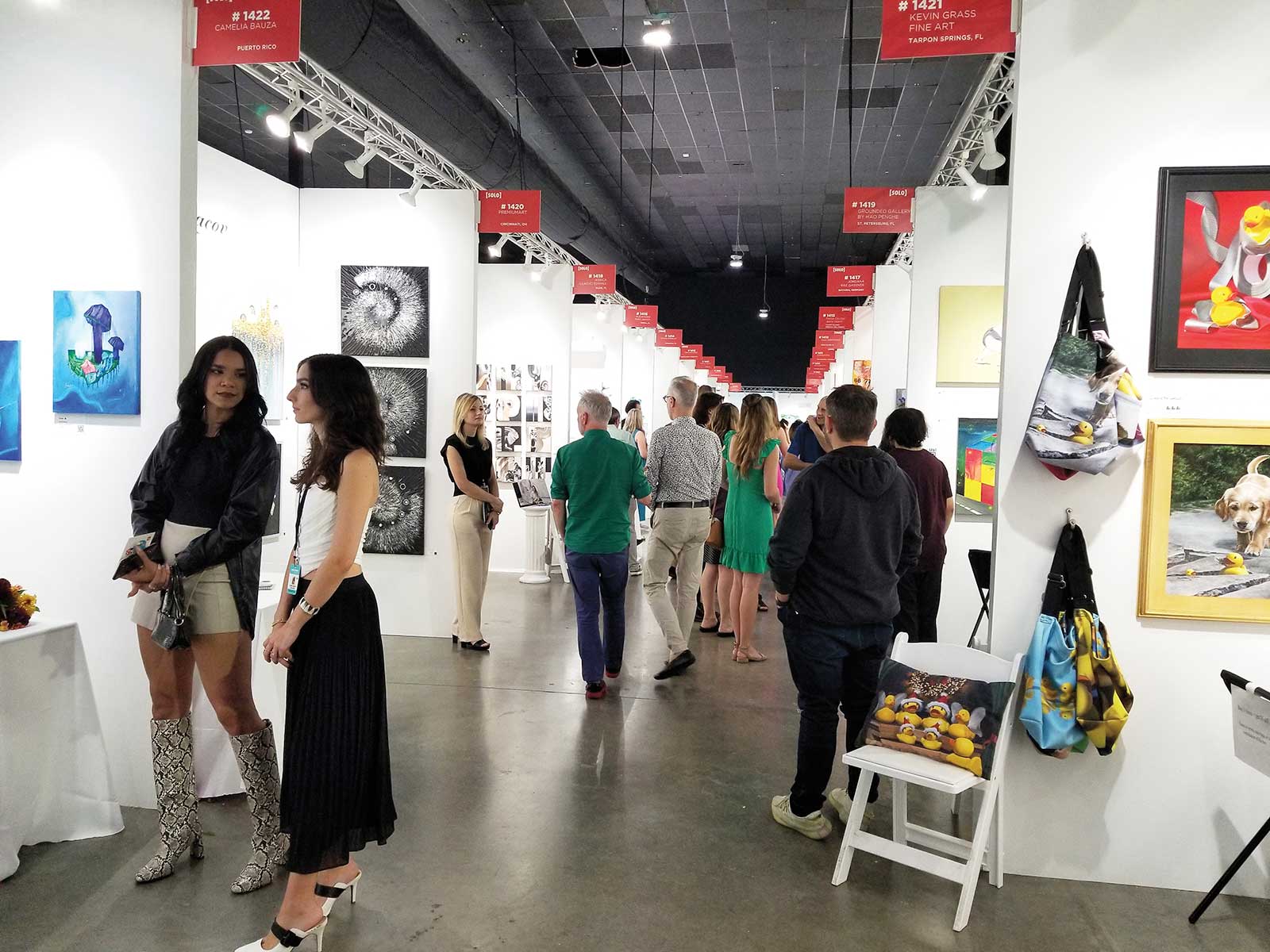
There was consistently steady traffic to the solo artist booths throughout the SPECTRUM Miami art fair in Miami, Florida.
During the Fair
Try to arrive early enough to your booth that you can put out your print bin, set up your computer, and possibly have time to look around to see other artists’ work. Let people come into your booth, and if they seem interested, ask if you can answer any questions. Don’t spend your time engrossed with your mobile phone or appearing bored, since that puts off visitors.
Looking professional and keeping an upbeat attitude helps you sell your luxury goods. Encourage people who genuinely like your work to sign up for your mailing list. When conversing with visitors, identify whether the person is a potential customer or whether they are another artist trying to pick your brain about your art techniques. It may be fun to talk shop, but if it’s busy, limit such conversation so you can concentrate on more serious buyers. You will hear the same kinds of comments from multiple guests and have to repeat answers to, “How many hours did it take you to paint this piece?” numerous times. Interacting with large numbers of the public can be invigorating if you’re getting many compliments, but it’s also draining. It is probably the antithesis of what it was like for you to create the artwork that’s on display. See if your helper can give you short breaks so you can stay fresh. When it comes to a collector wanting to make a purchase, they always want to talk to the artist in person, so don’t stay away long.
Stay hydrated and try to have at least one decent meal for each day of the fair, so your energy won’t flag. Then repeat the process until it’s time to pack up.
After the Fair
Once the posted deadline for the fair is up, you may be surprised at how quickly artists can break down their booths. Crates, tools and ladders are summoned, and the artwork is quickly wrapped and taken back to the various vehicles. If you participated in an indoor fair, make sure that you remove the mounting tape for your wall labels and any scratch-off signs, so fair organizers won’t charge you extra for not tidying up your space. Smaller vendors are expected to clear out the night that the show closes, while larger galleries continue to dismantle their booths the next day.
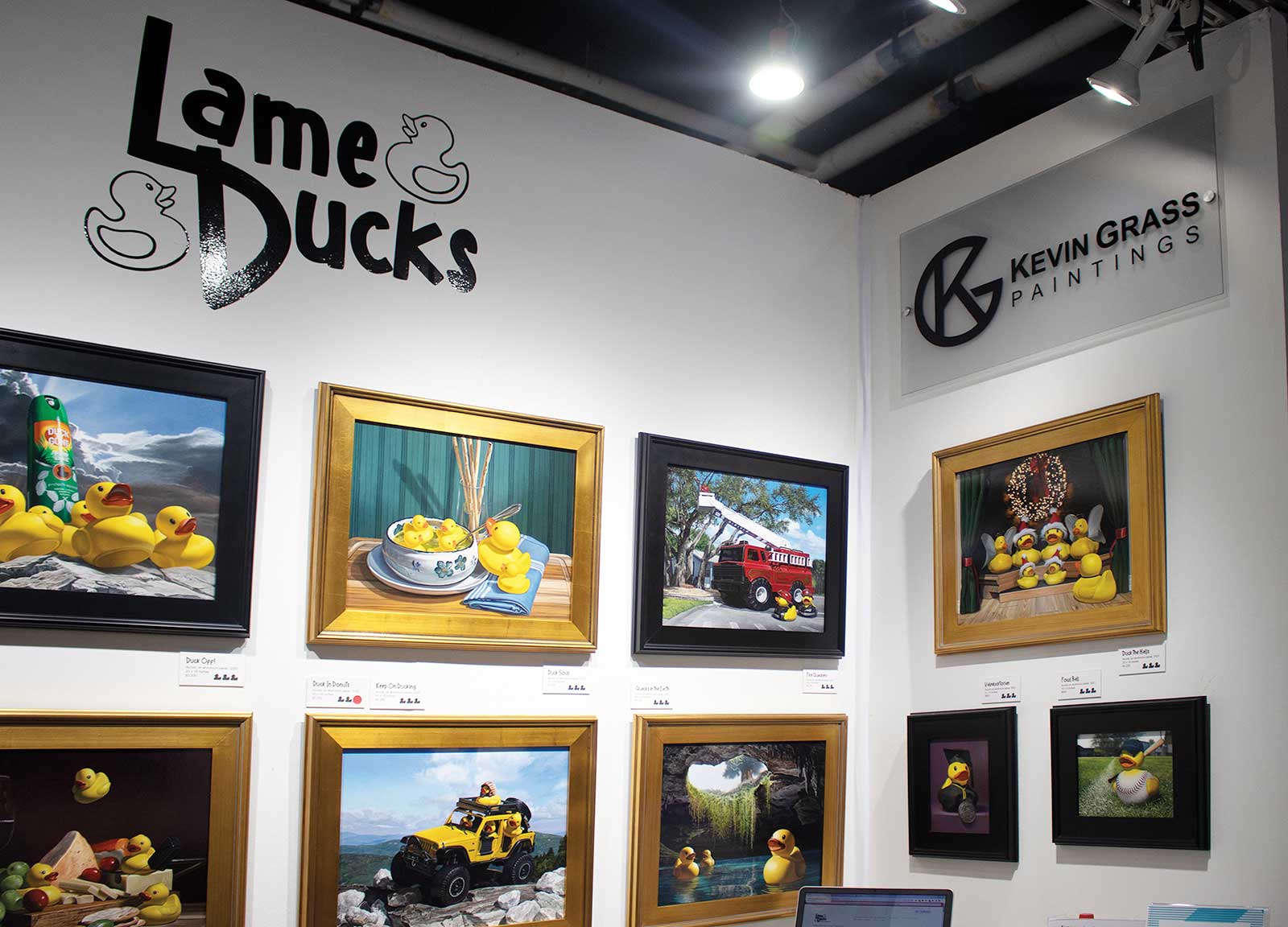
Most artists bring custom vinyl lettering and logos to the exhibition. I recommend bringing two just if you run into problems when applying the first one to the wall. I also have two acrylic signs, which I can use repeatedly. I include them to clarify that my works are paintings, not photographs.
Draw the name of the winner for your giveaway and notify them via email. In your scheduled email to the fair visitors, take a moment to include the name and city of your winner, so everyone knows that you did indeed honor your giveaway. Then send the prize when you get home.
In the days after the fair, check your email regularly, even your spam folder. I made the mistake of missing an email from the fair organizers that told me about a potential buyer for one of my paintings. When I finally did follow up, she had purchased something else with her budget and I missed the sale.
Use some of the photos you took of your booth and with visitors in your social media posts in the days after the event. Follow up with any emails from new fans or comments on Facebook or Instagram to see if you can close a sale for someone who was on the fence about a purchase.
It is not unheard of to have a sale from someone you met at the fair happen afterward, once they have looked over your website. My biggest sale came from a collector who had bought a smaller painting in my booth and then called me a few weeks later to purchase my largest and most expensive painting from my website.
Some collectors contact you so you can do a commissioned work since they like your style. In one instance, it has taken nine years from the time a couple purchased their first artwork to commissioning a custom piece. It helped that I saw them at other fairs in the meantime, so when they were ready, they got in touch. You may also hear from gallerists or art curators inviting you to participate in future exhibitions in the coming weeks.
If you felt that the art fair was a success for your business, consider booking a booth for next year. As a repeat customer, you may be able to negotiate a better location or a discount if you do so right away. Assess what you learned from the experience. Do you need to adjust your artwork in terms of size or subject matter to attract more buyers in the future? Do you want to do art fairs in person, or are you more suited to working with a gallery to represent your art? Does doing outdoor fairs or just indoor ones work for you? Participating in an art fair is a big investment in energy and effort. I hope these tips will help you decide if it’s right for you.