My work follows the academic process closely. I’ve adapted the academic process to my personal way of working, and I’ve created a process that always works for me. When I paint, I focus on three main things: design, drawing and paint application. I consider design to be the most important part of a painting. Before I start painting, I make sure that my composition works. Good design is the foundation of every good painting; that’s why this step can take up to a month for each piece. Every time I have an idea, I try to make a simple drawing in my sketchbook. If the sketch works, then I start working on my iPad to develop the idea. There I plan the colors, the value structure and the shape design. After this step, I start drawing.
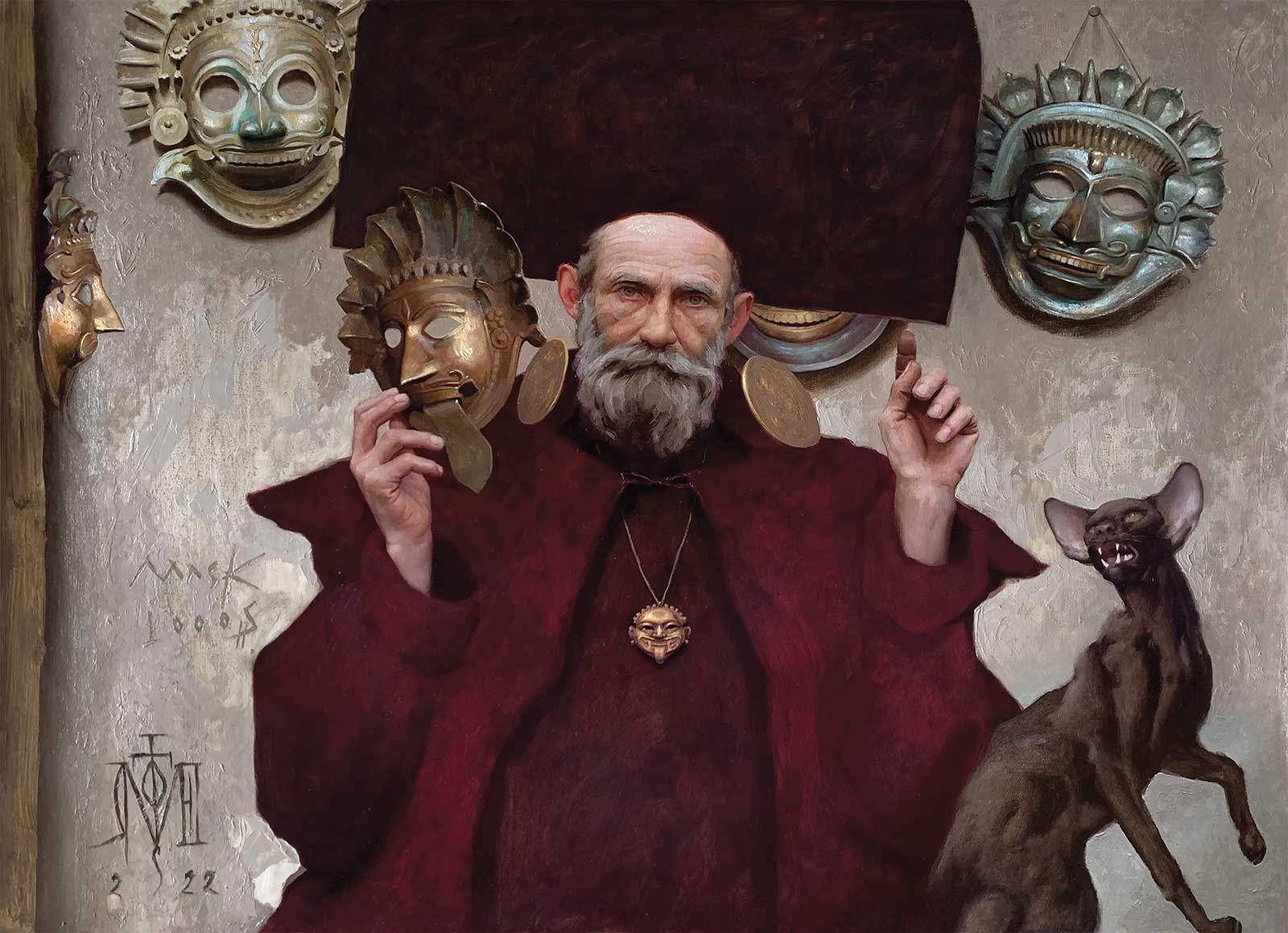
Vendor of Masks, oil on linen, 25 x 35" (63 x 88 cm) A big headpiece signifies power and knowledge in many cultures, three qualities I wanted this character to have.
There is something very important that I learned in my years in school, and that is that a good composition will make a good painting even if the paint application is not great—in contrast, even a great paint application and rendering won’t make a good painting if the composition is bad. Without a good composition, a work loses its visual value and seductive qualities.
When talking about realism, a bad drawing can ruin a great design. If trying to create an appealing realist piece, specifically talking about figurative work, a well-executed drawing must be a priority. This implies a basic knowledge of anatomy, portrait design and a humble eye to detect any mistakes and correct them. It is true that sometimes our eyes are so familiarized with our work-in-progress that it is difficult to see any mistakes; luckily there are some ways to refresh our eyes. One way would be to simply take a picture of the piece you’re working on. When looking at the work on a phone screen you are forced to look at the whole image without focusing on small details. Another useful way is to flip the image horizontally, as this will also give you a fresh view of your work. Stepping away from your work for a few hours will also do the trick. On many occasions I’ve abandoned paintings that look weird and not appealing to my eye. I knew something wasn’t working but I could never tell what, and using these methods helped me find those mistakes.
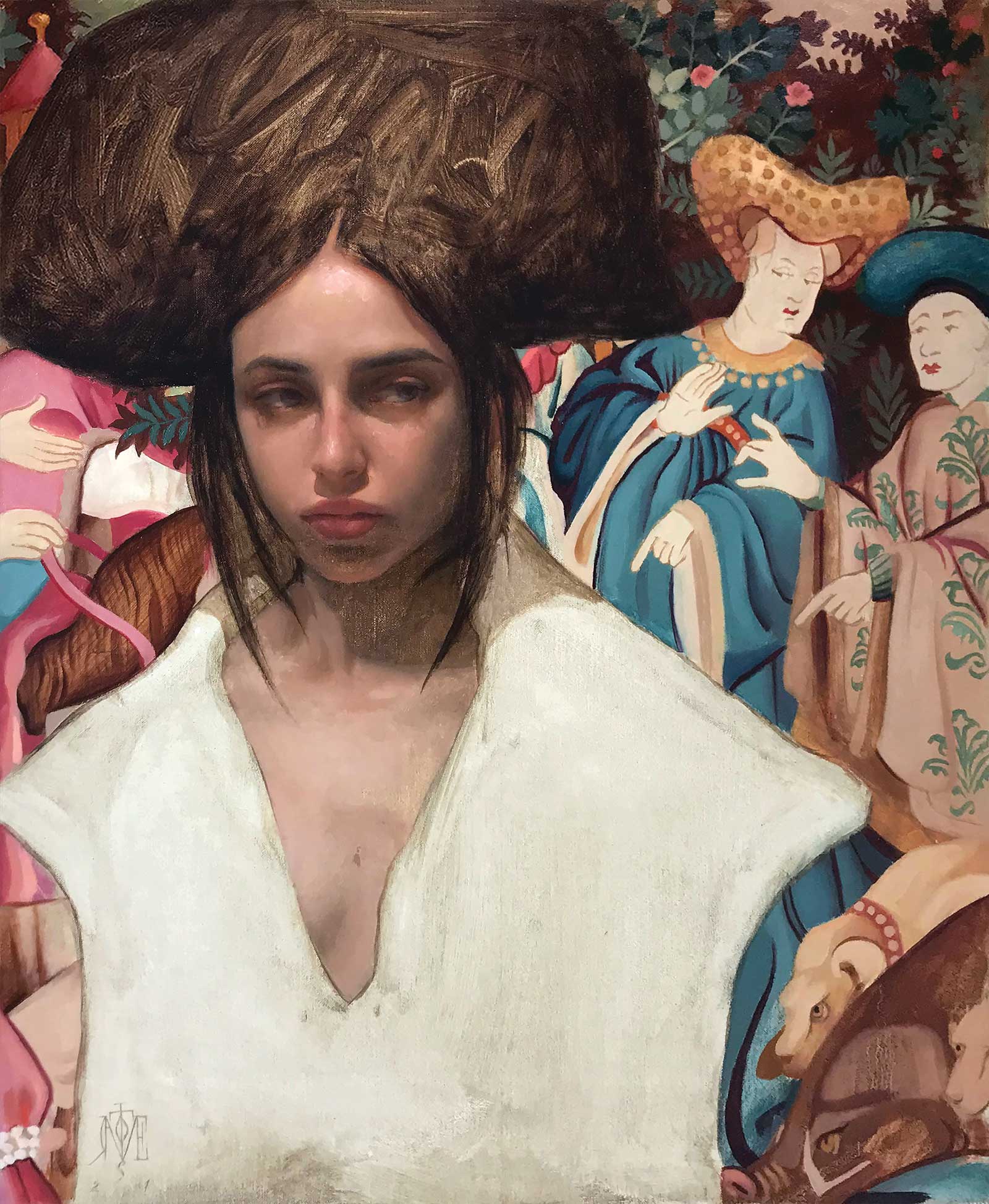
Gossip, oil on linen, 17 x 14" (43 x 35 cm) The background and the figure in this piece interact with each other and tell a story.
Only when the composition works and the drawing is done is it time to paint. And when it’s time to paint, variety is something important to consider. Variety makes a painting attractive; a painting should have variety in color, texture, shapes, values and paint application. Effective composition makes a painting attractive from far away, and variety in design elements and paint application makes a painting attractive from up close.
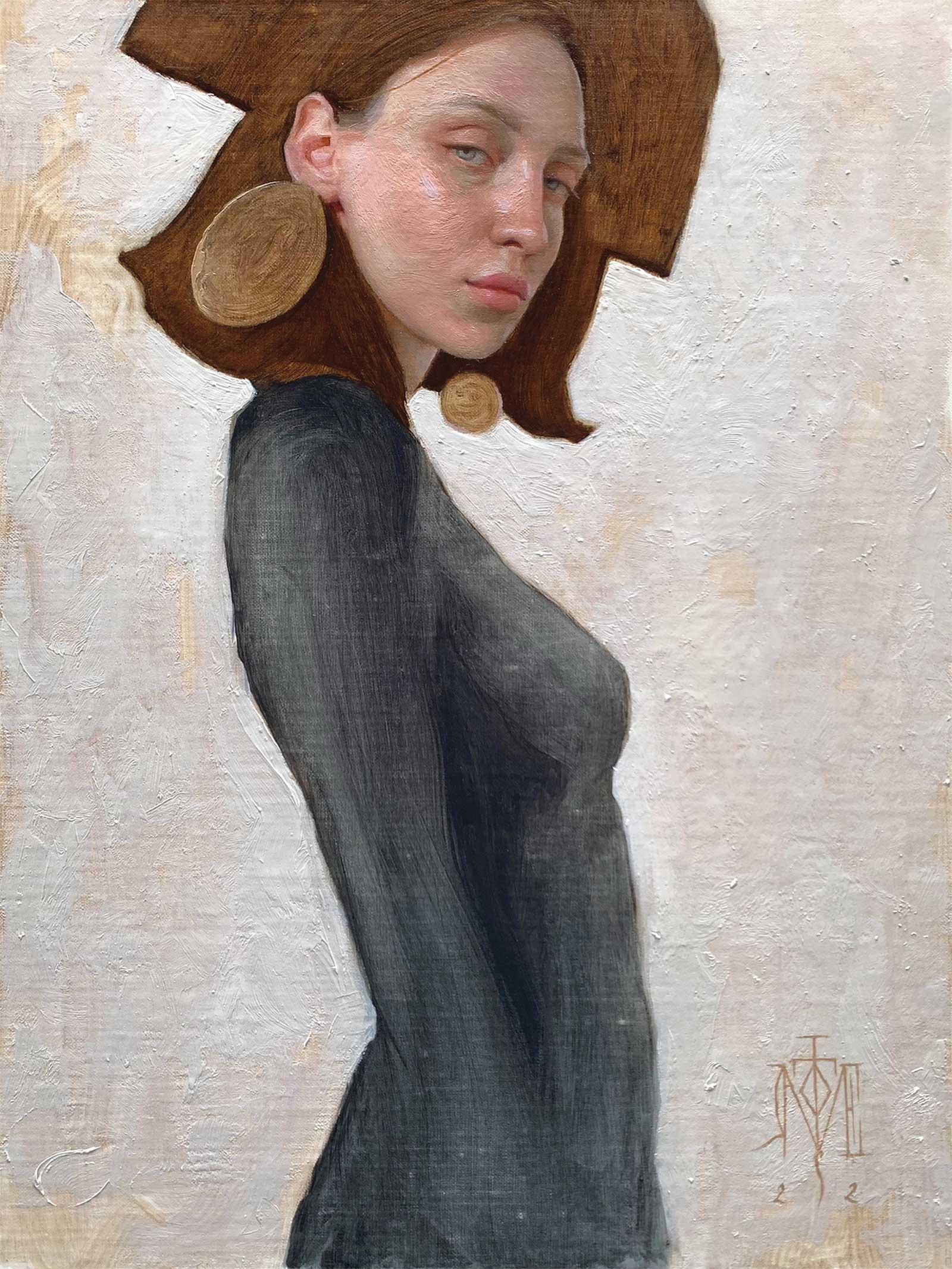
Rift, oil on linen, 12 x 9" (30 x 22 cm) Here I wanted to highlight the silhouette of the figure with a plain background.
Layering is great to show different qualities of paint application, but too many layers can make the paint application look flat and monotonous. I try to finish each section making as little layers as possible to keep the painting fresh. I try not to cover each area completely when working on new layers so the underlying paint and colors can show through and give depth. I always try to make the first layers as finished as possible to make my work easier in future sessions. The better the underlying layer is painted, the easier it will be to give the finishing touches.
My Art in the Making Temptation
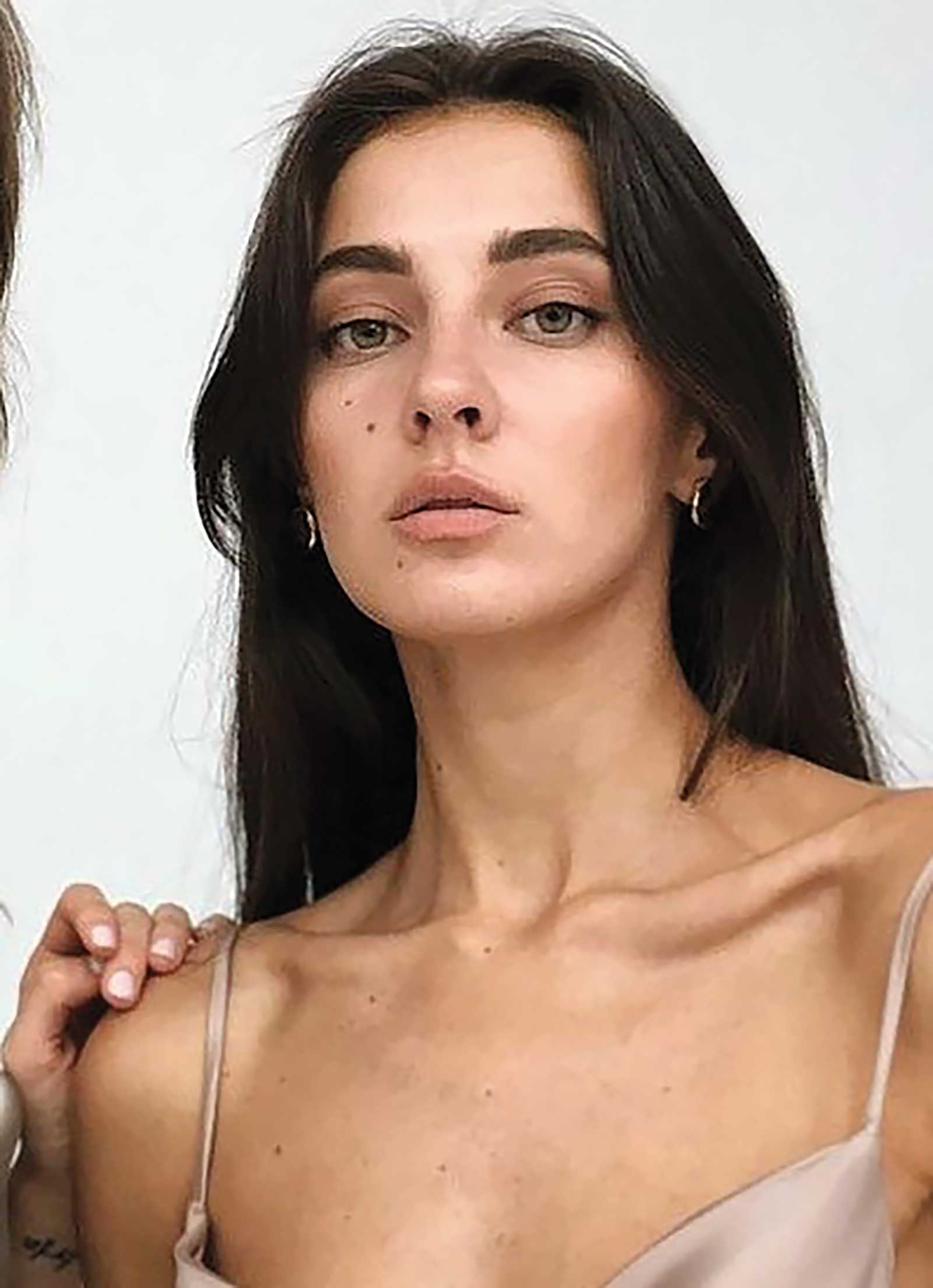 Reference Photo
Reference Photo
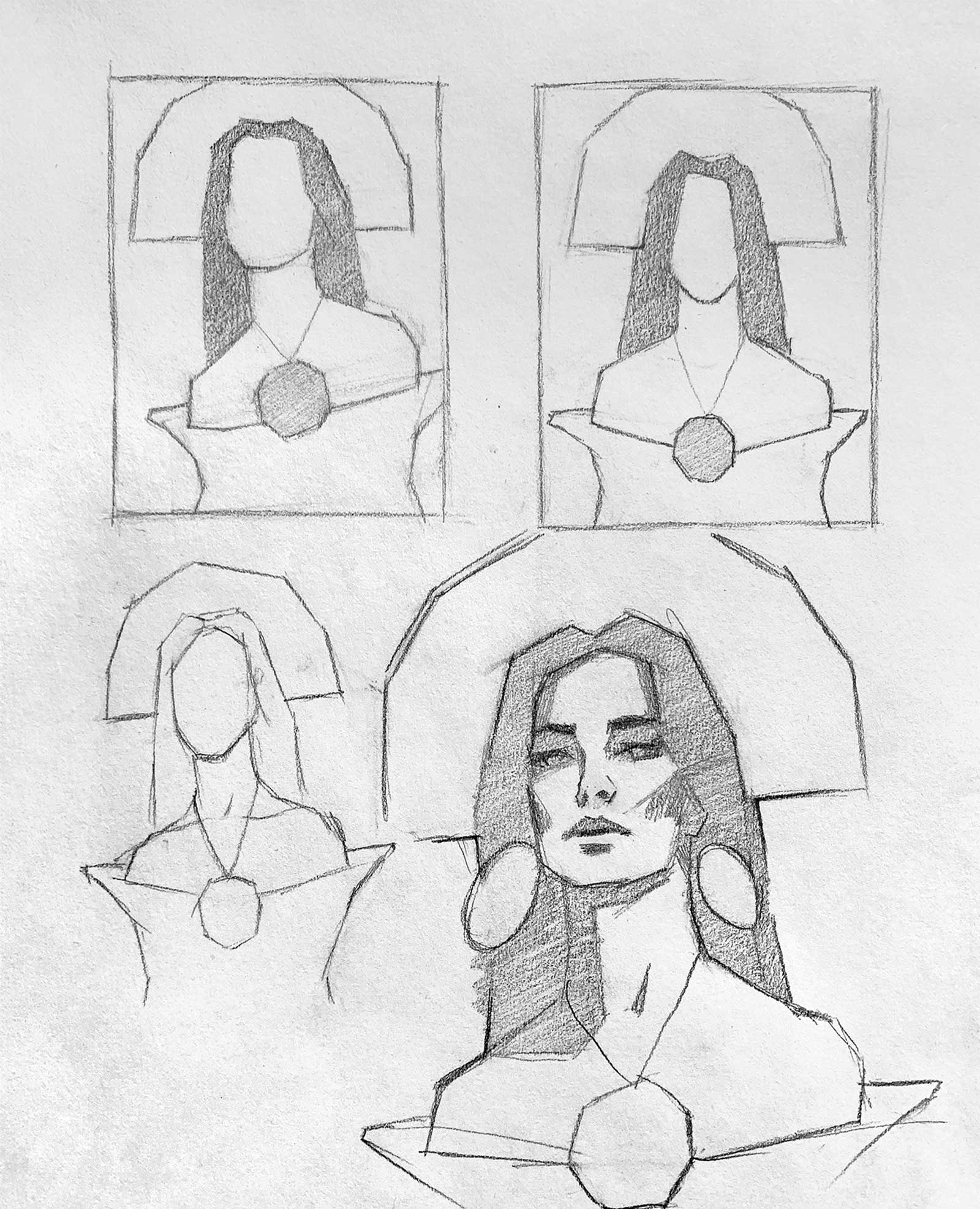 Stage 1
Stage 1 Sketch/Composition
Although these sketches seem simple, this is the most important part of the process. Here I decide the composition and overall look of the painting. This stage can take months.
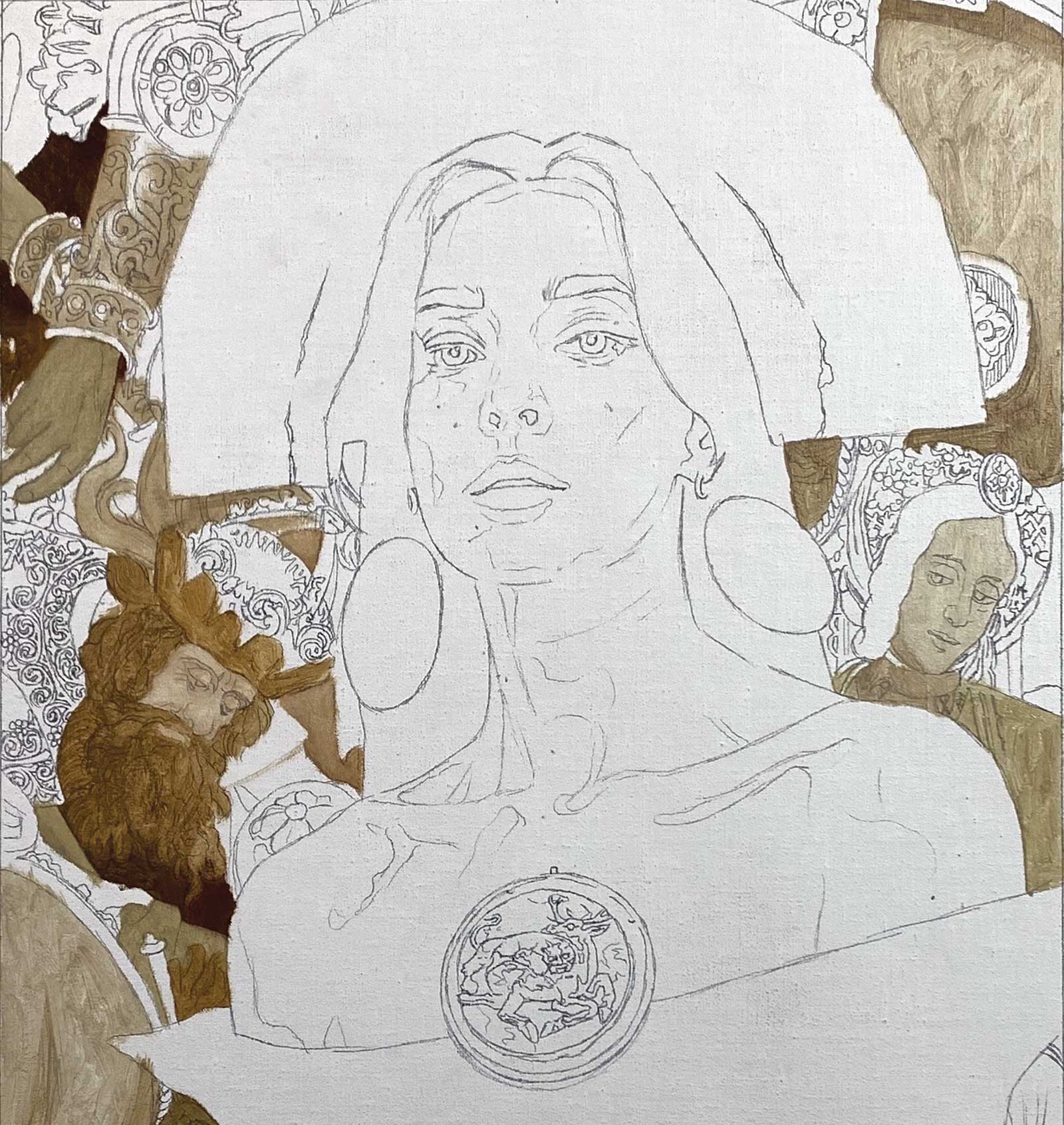 Stage 2
Stage 2 Drawing and Transfer
The next step is to draw the image and find all the intricate parts. This drawing stage is decisive, and one should take as much time as needed. In this stage it is important to resolve any issues with anatomy and proportions. I always draw on paper and then transfer the drawing onto canvas and start painting.
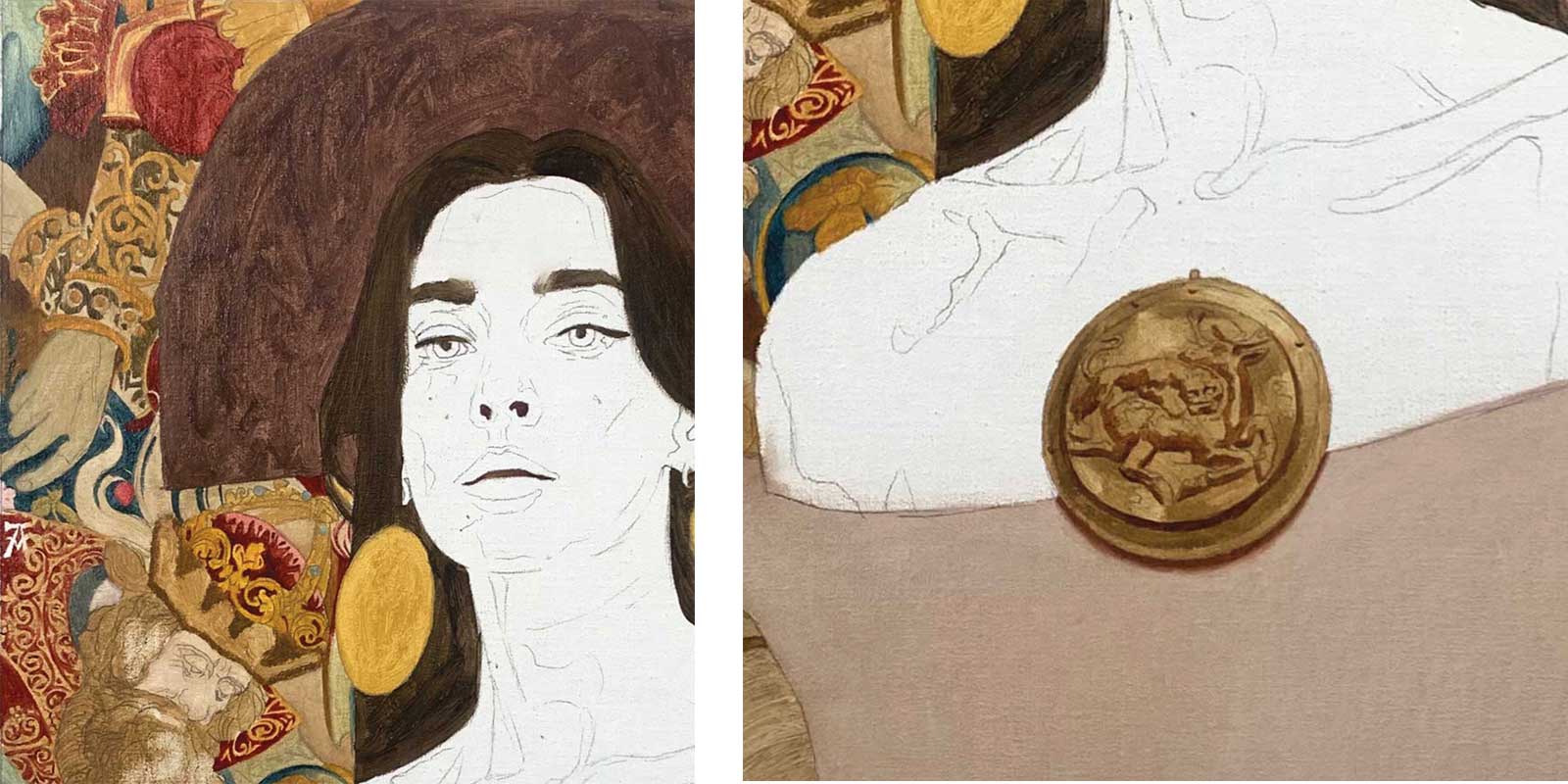 Stage 3
Stage 3 Rough Colors
The next step is to roughly cover everything but the flesh with color. Here I apply colors which will show through the top layers. I mix mineral spirits with paint so the diluted effect can show through the top layers.
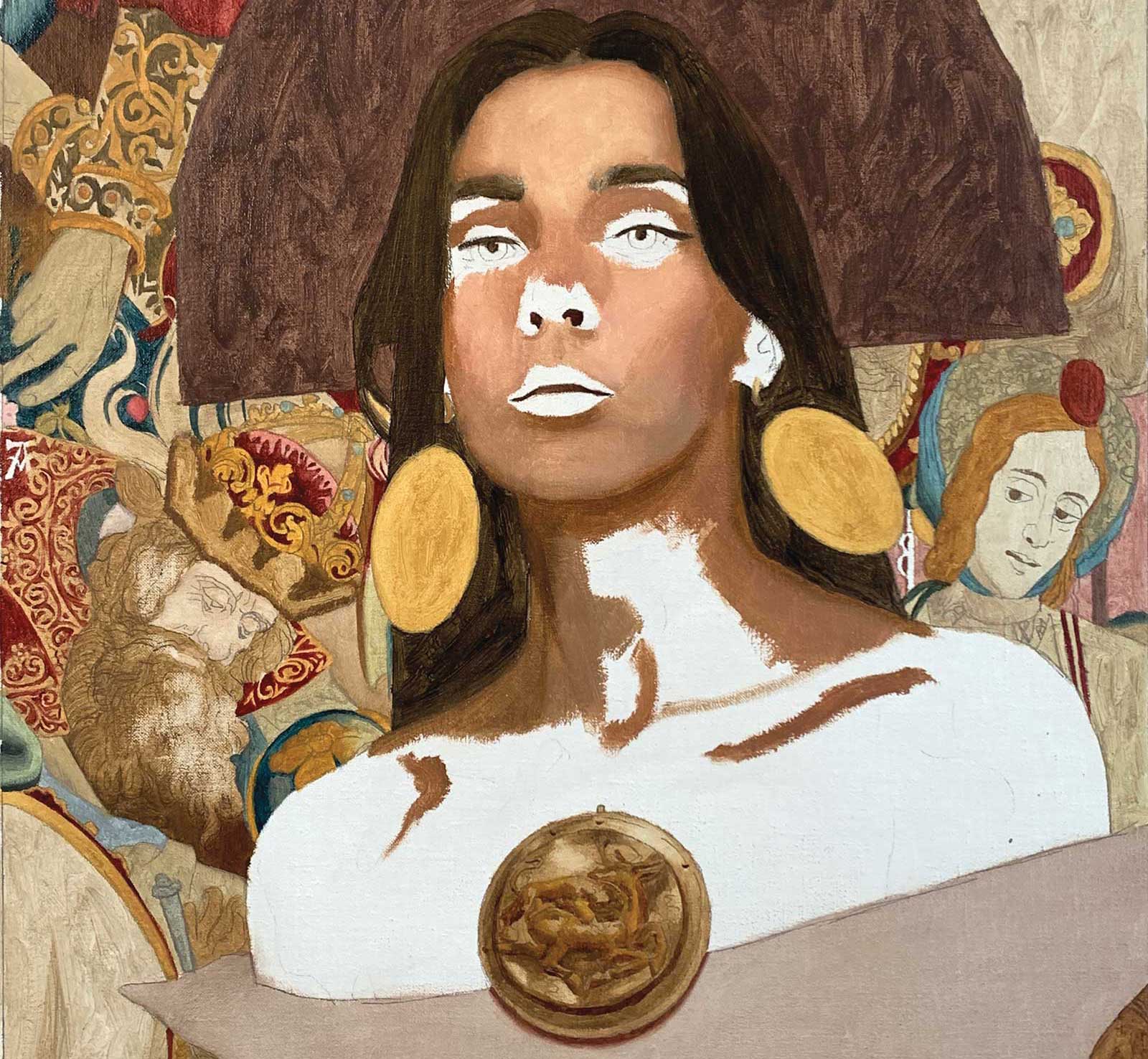 Stage 4
Stage 4 Painting First Layer OF Skin
Similar to the last stage, here I cover the whole skin area with rough colors. Although the surface of the canvas is slippery and difficult to work, I try to add a full range of value and render the form.
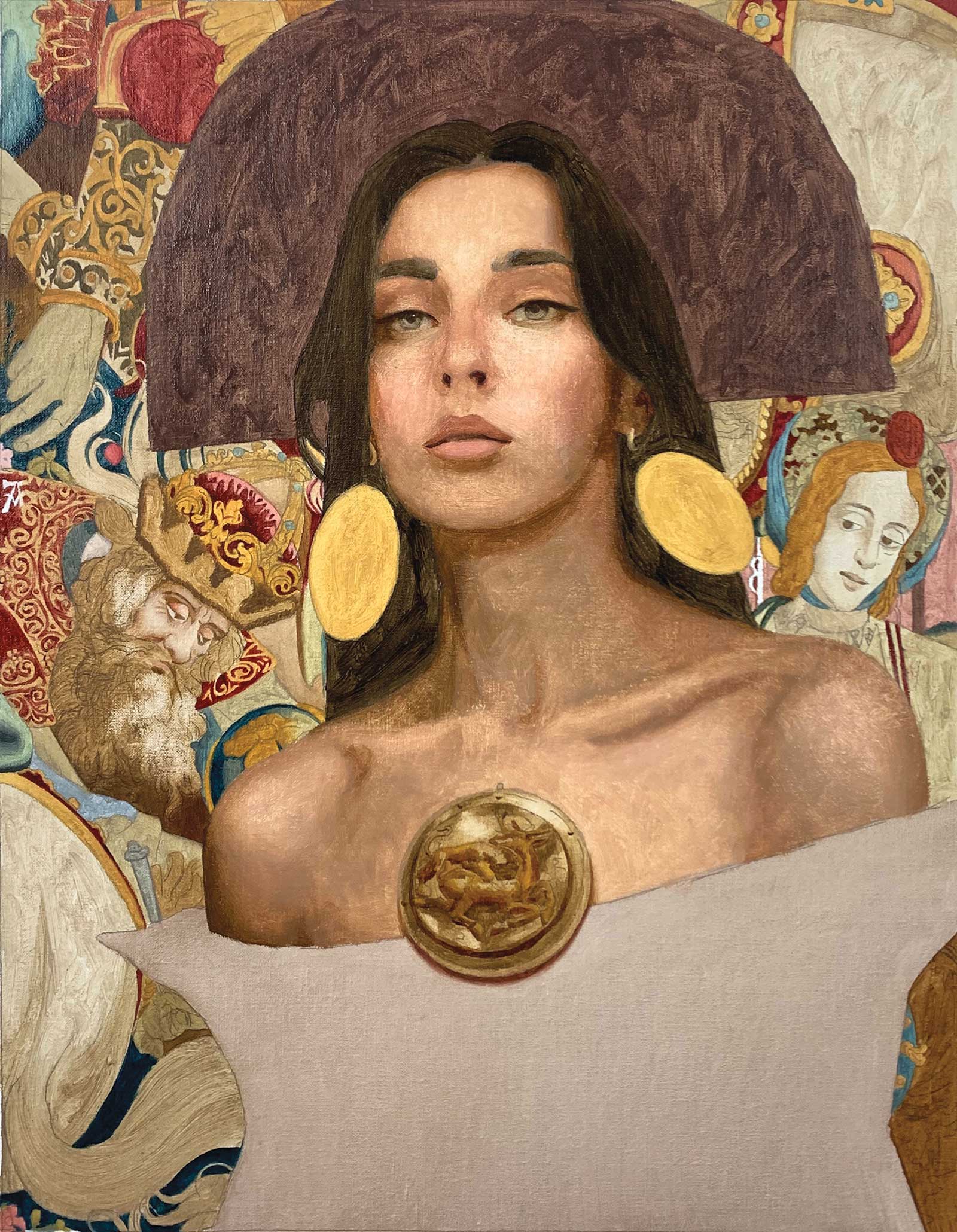 Stage 5
Stage 5 Completing First Layer
Now the whole surface should be covered with a first layer of paint. I always try to have something that looks as close as possible to a finished piece. The more successful this layer is, the less work will be needed to achieve a good finished look.
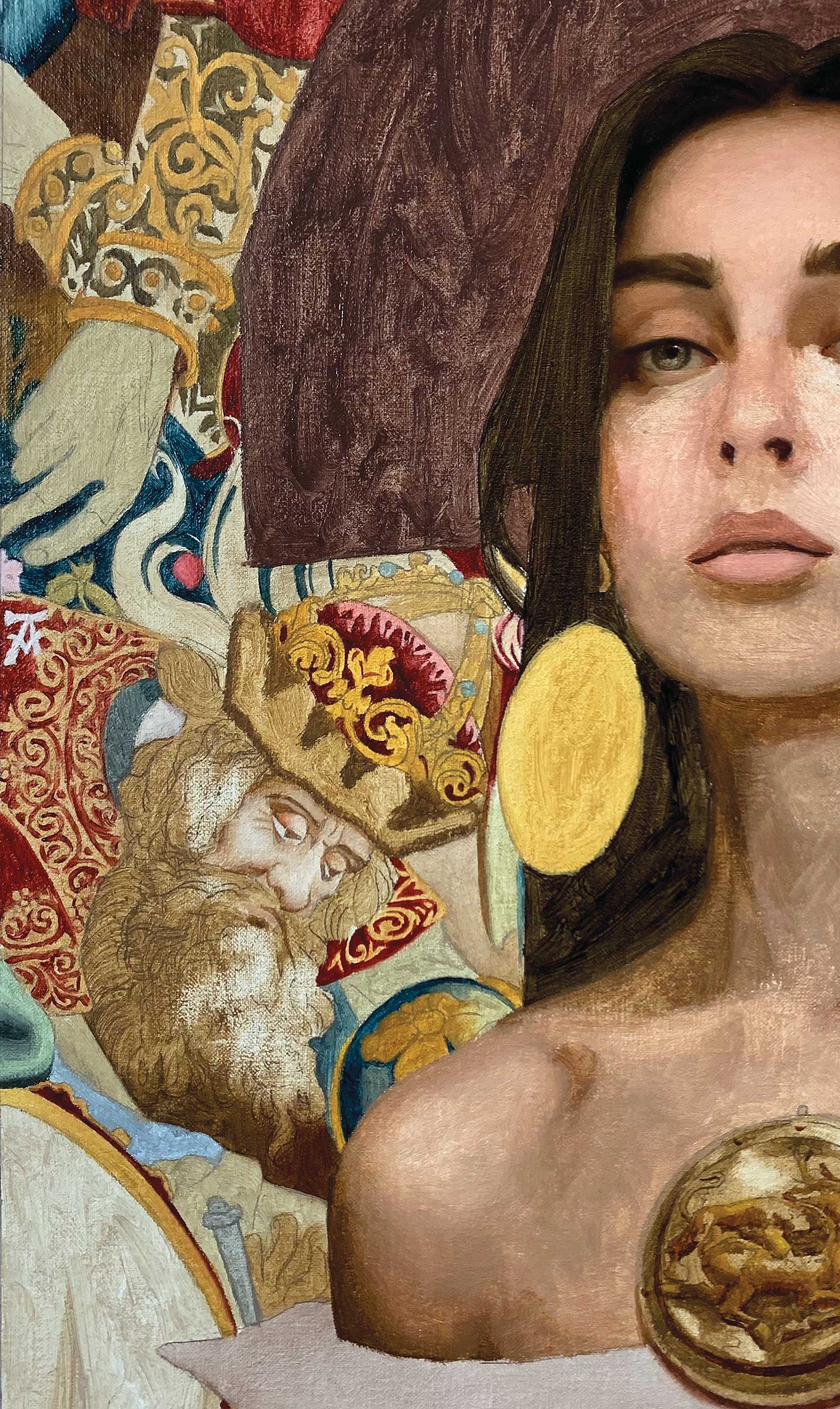 Stage 6
Stage 6 Starting Second Layer
After I let the first layer dry for a couple of days, I start applying the second and final layer. Here it is important to focus on the overall look of the portrait while rendering each part separately. In every stage the goal is to get as close to a finished piece as possible, but in this step you should get really close to that end result.
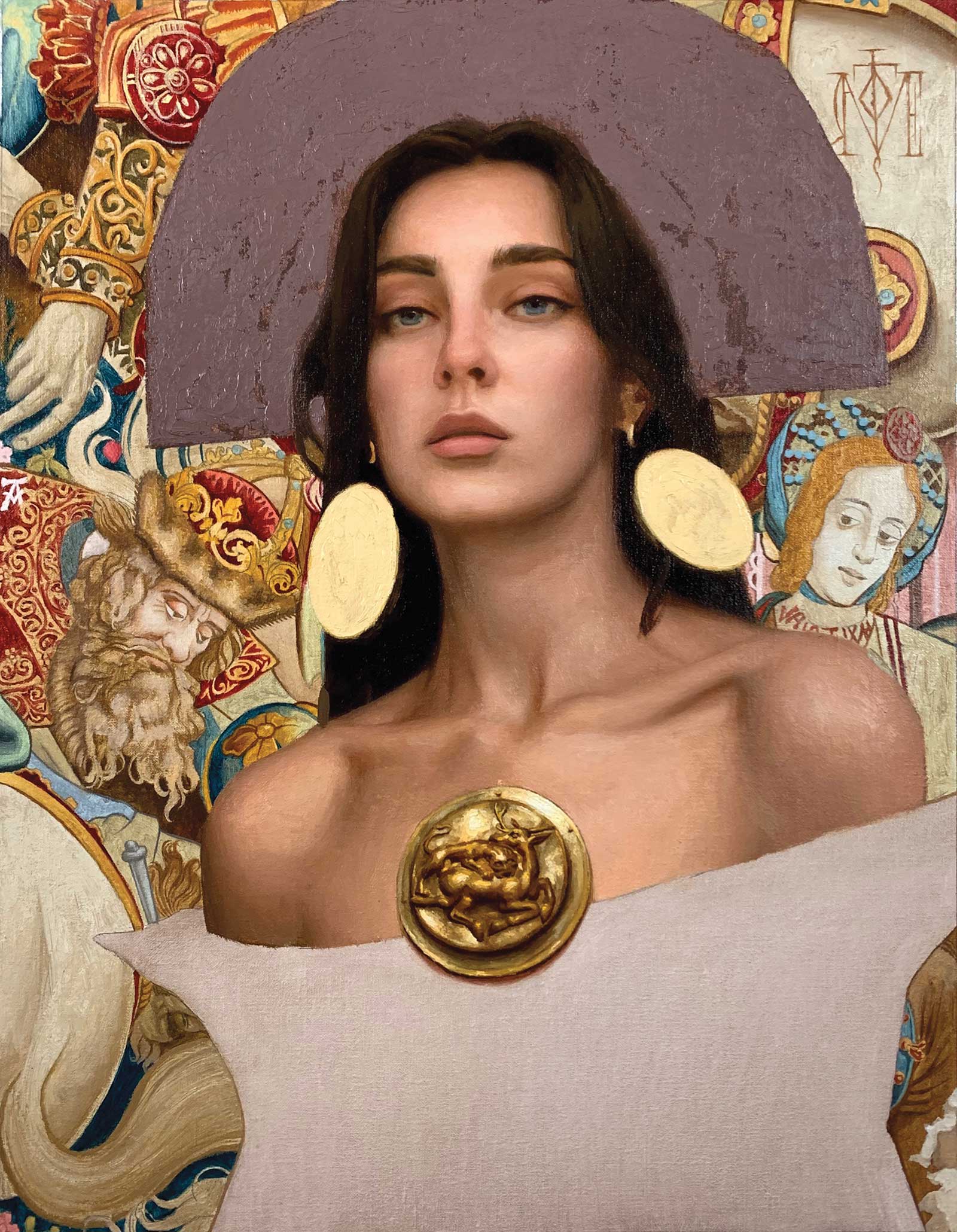 Stage 7
Stage 7 Finalizing Second Layer
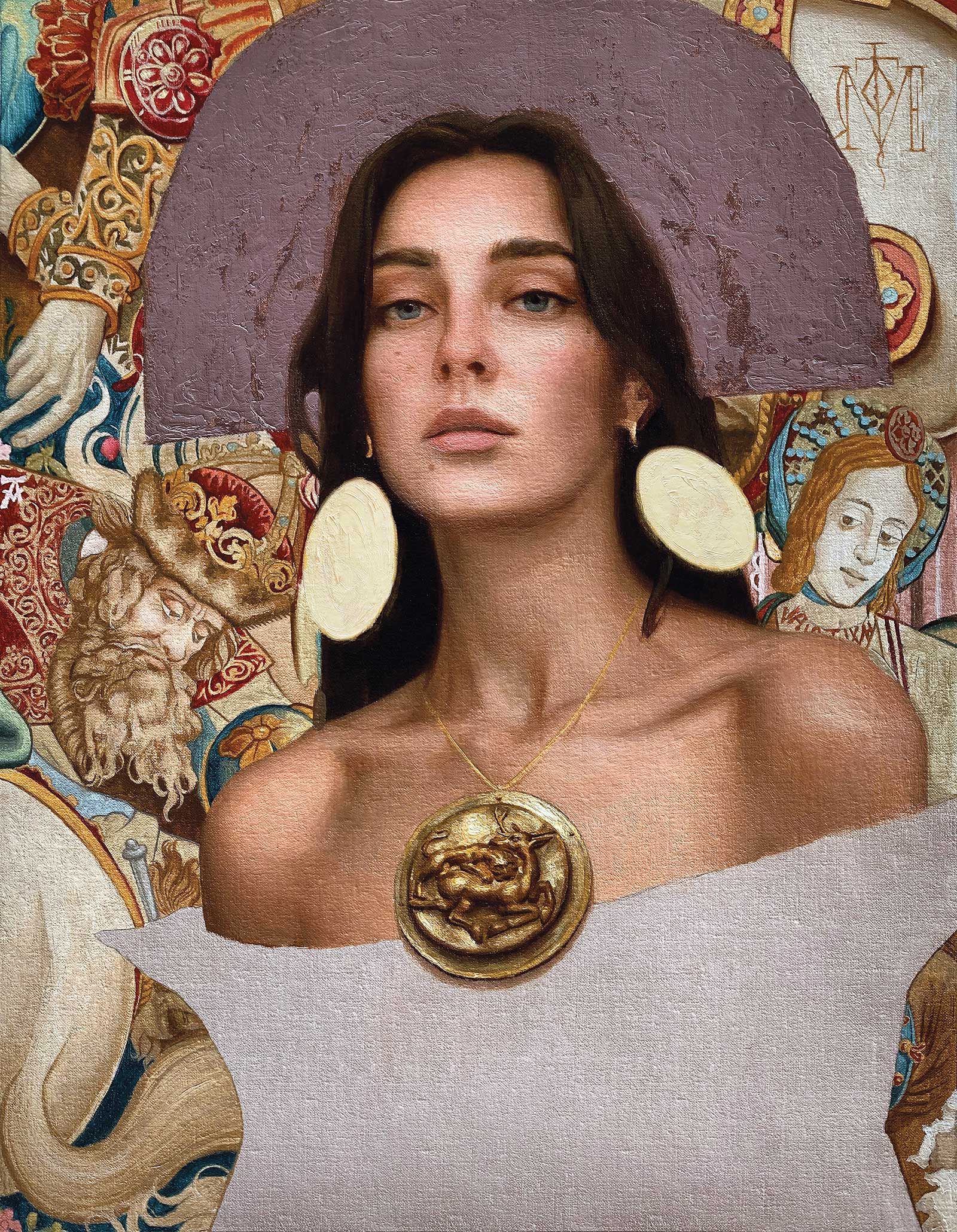
Now the whole surface is covered with a second layer of paint. At this stage the painting should be almost done. Here it’s time to correct small mistakes. There are only small details left to paint, like the moles or the chain of the necklace.
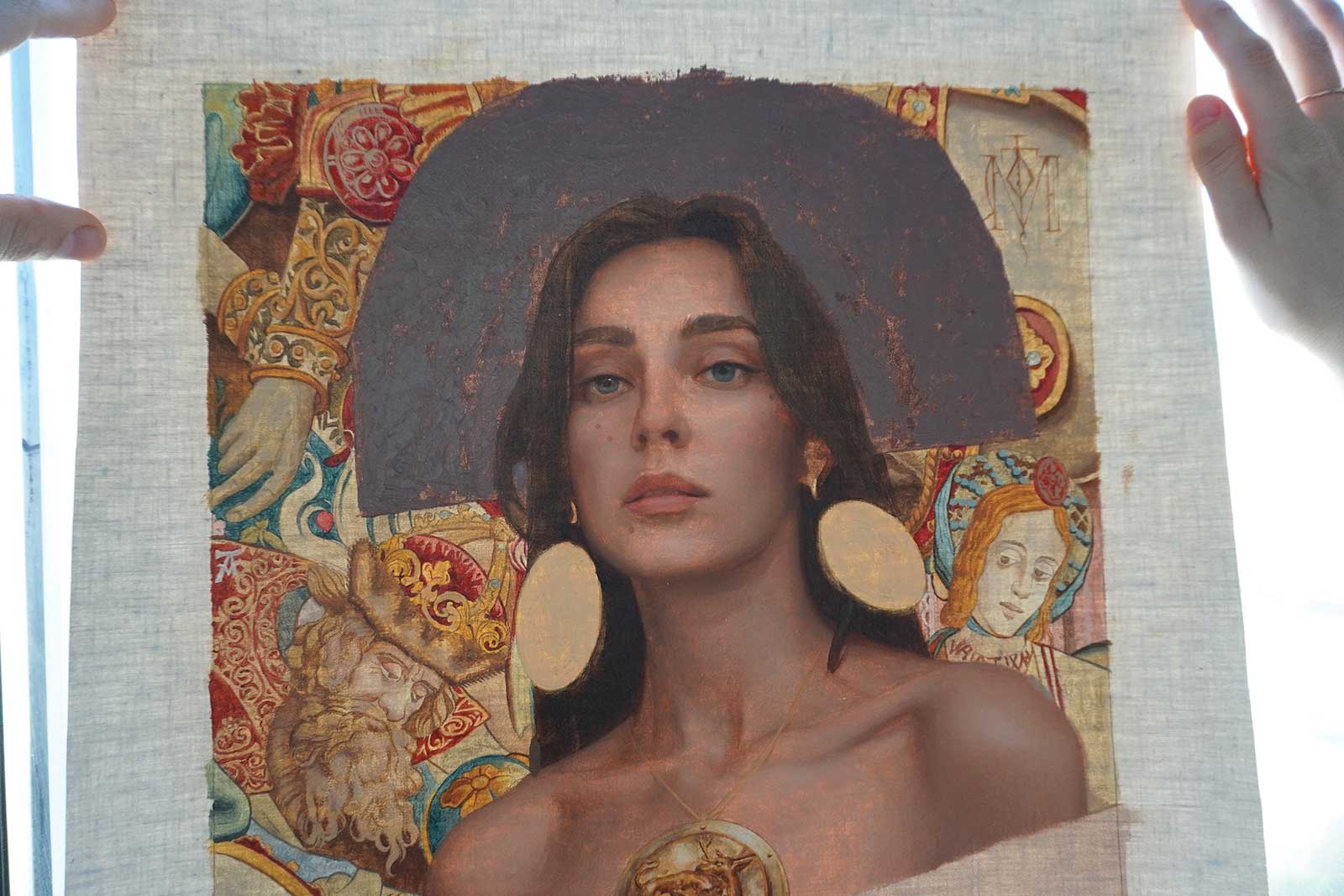 Stage 8
Stage 8 Finished Painting Against a Light Source
Here you can see how some areas are covered with more paint than others. My intention working with layers is to never cover an area completely unless it needs it. The viewer should be able to see the first layers showing through various parts of the piece.
 Stage 9
Stage 9 Finished Artwork
Temptation, oil on linen, 13 x 17" (33 x 43 cm)
About the artist
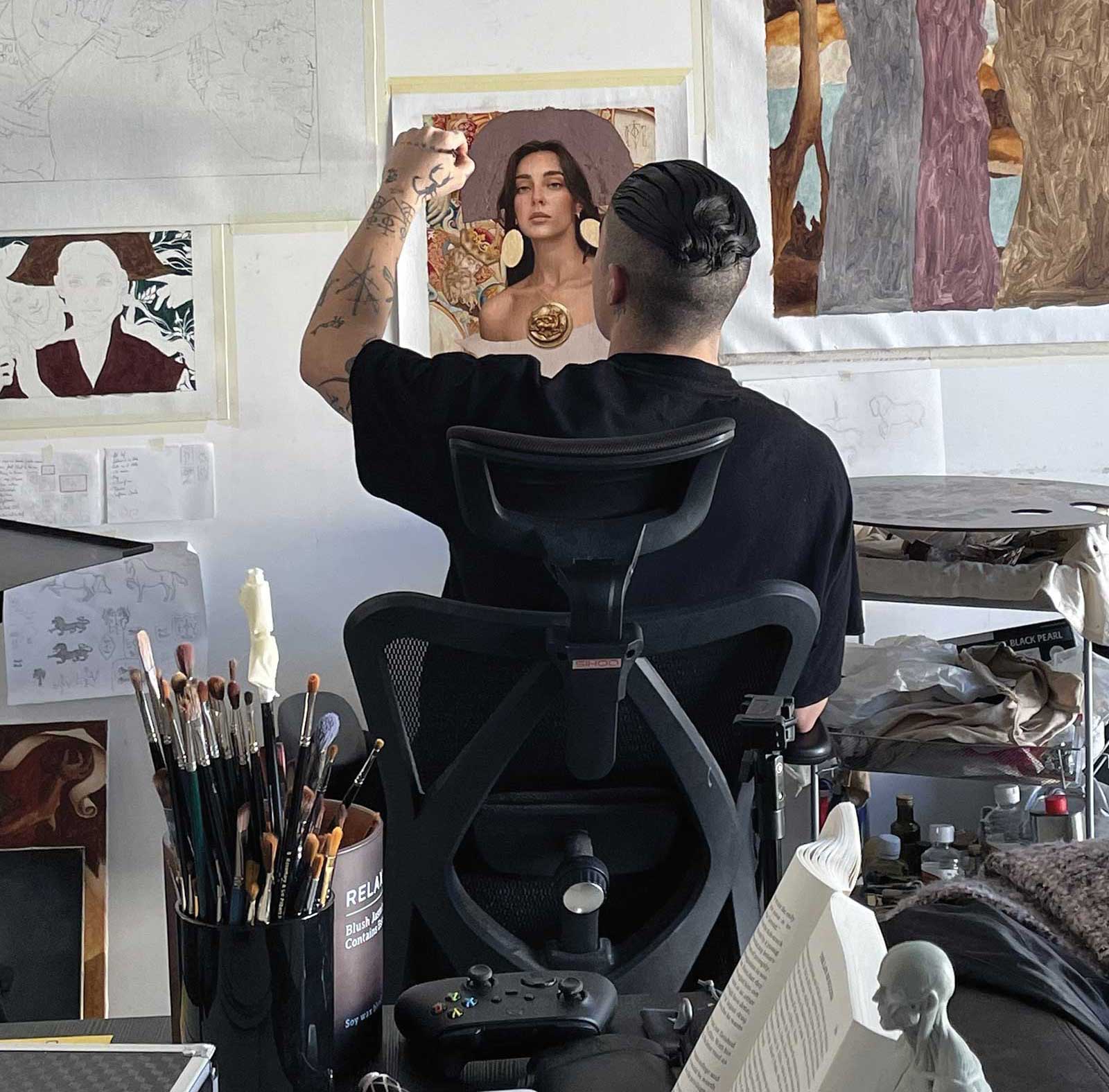 Jose Lopez Vergara
Jose Lopez Vergara was born in Mexico City in 1994 and raised in Madrid, Spain. He studied classical drawing and painting from 2016 to 2021 in Florence and New York, following a tradition that goes back to the Renaissance.
Vergara’s work centers on the search for an idealized representation of everyday life, current events and universal emotion. He’s influenced by art from many different cultures of the past and present. Although his realist technique requires a strict methodology and rational thinking, his compositions rely on subconscious impulses and demand an abstract expression. His interest in the silhouette and minimal design plays a central role in his work and continues to open many paths for exploration.
His work can be found in private collections in Europe, Mexico and the United States, including the permanent collection of the New Salem Museum in Massachusetts.
Represented by
Arcadia Contemporary, New York, USA, www.arcadiacontemporary.com