I consider my art a blend of everything I spend time learning, both stylistically and technically. So technique wise, I blend and teach classical painting techniques, impressionism, tonalism and modern techniques. I try not to label myself as a painter of a specific style since my work is so varied between them all.
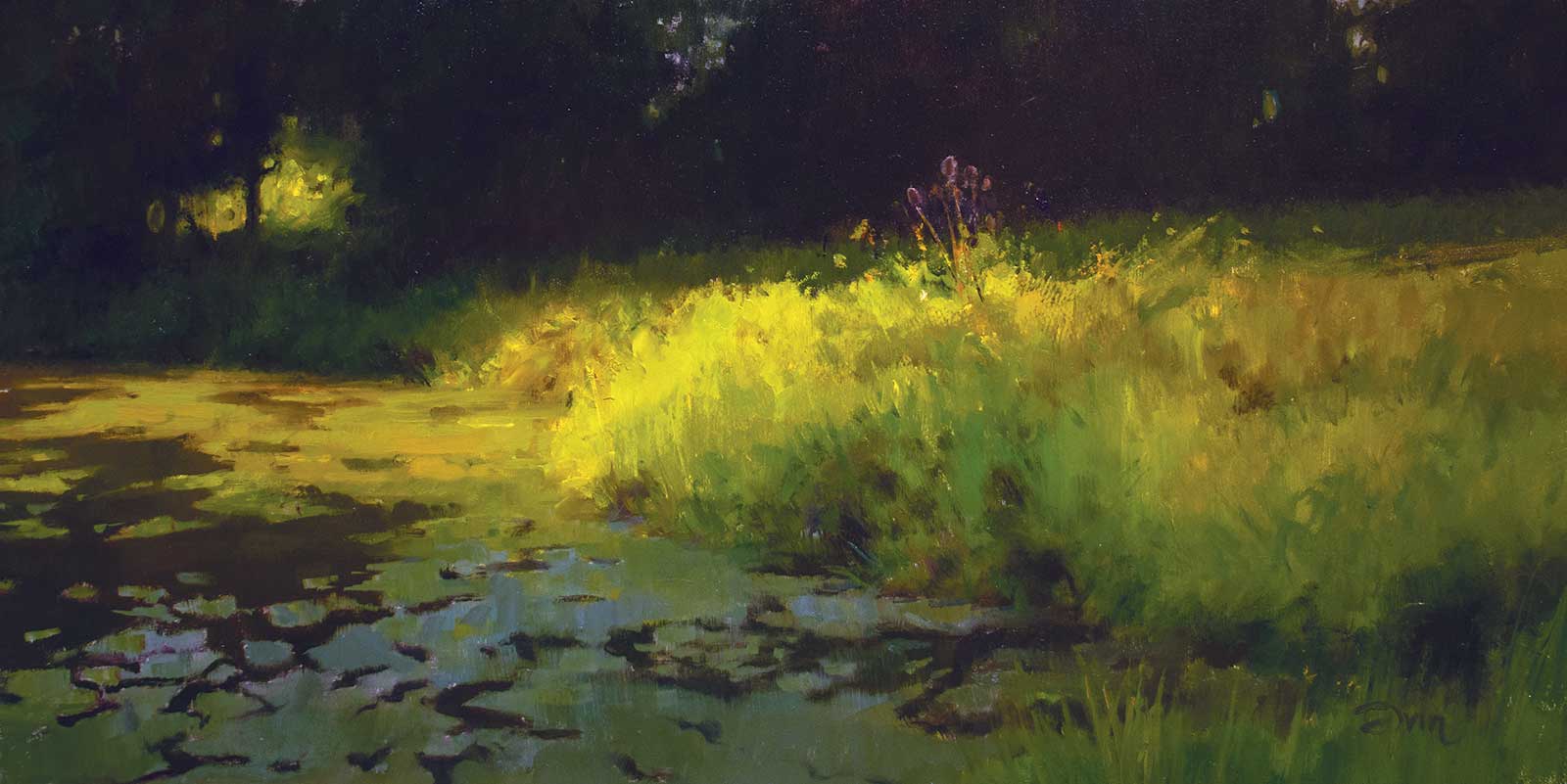
Watering Hold of the Hinterlands, oil on panel, 15 x 30" (38 x 76 cm) This was painted from a smaller pencil sketch done on location and several photographic references that I used to compose it. I was really interested in a style that looks very realistic from a distance yet is loose and impressionistic when you get up close. Focusing on patterns and light.
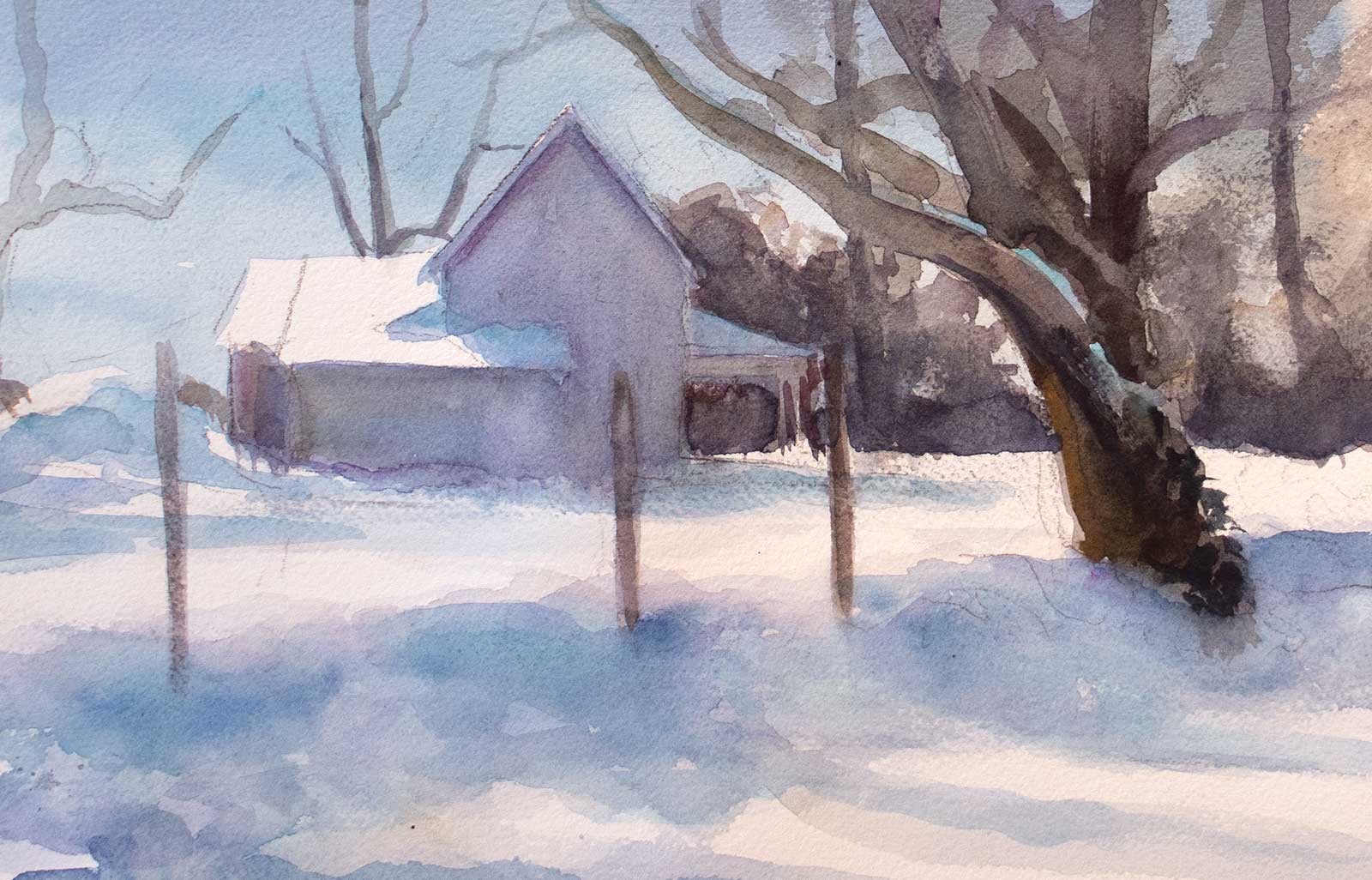
Shadows over Snowfall, watercolor on paper, 8 x 11" (20 x 27 cm) This is an example of the much looser impressionistic quick style I often do in my small watercolor and oil sketches. The purpose here is to explore the subject quickly and instinctually to come to a deeper understanding of the main features. I will take a small sketch like this and combine it with other references to compose a more detailed, larger and more thought-out studio piece.
Sometimes when I’m outside on location I will paint in a very quick and impressionistic manner, choosing to either splash some watercolor paint on in a matter of minutes or maybe spend 30 minutes on a small oil painting. In the studio I may opt for the same quick style or can spend up to four or more months layering and doing a more long classical process. With classical layering I will often start with a toned imprimatura underdrawing.
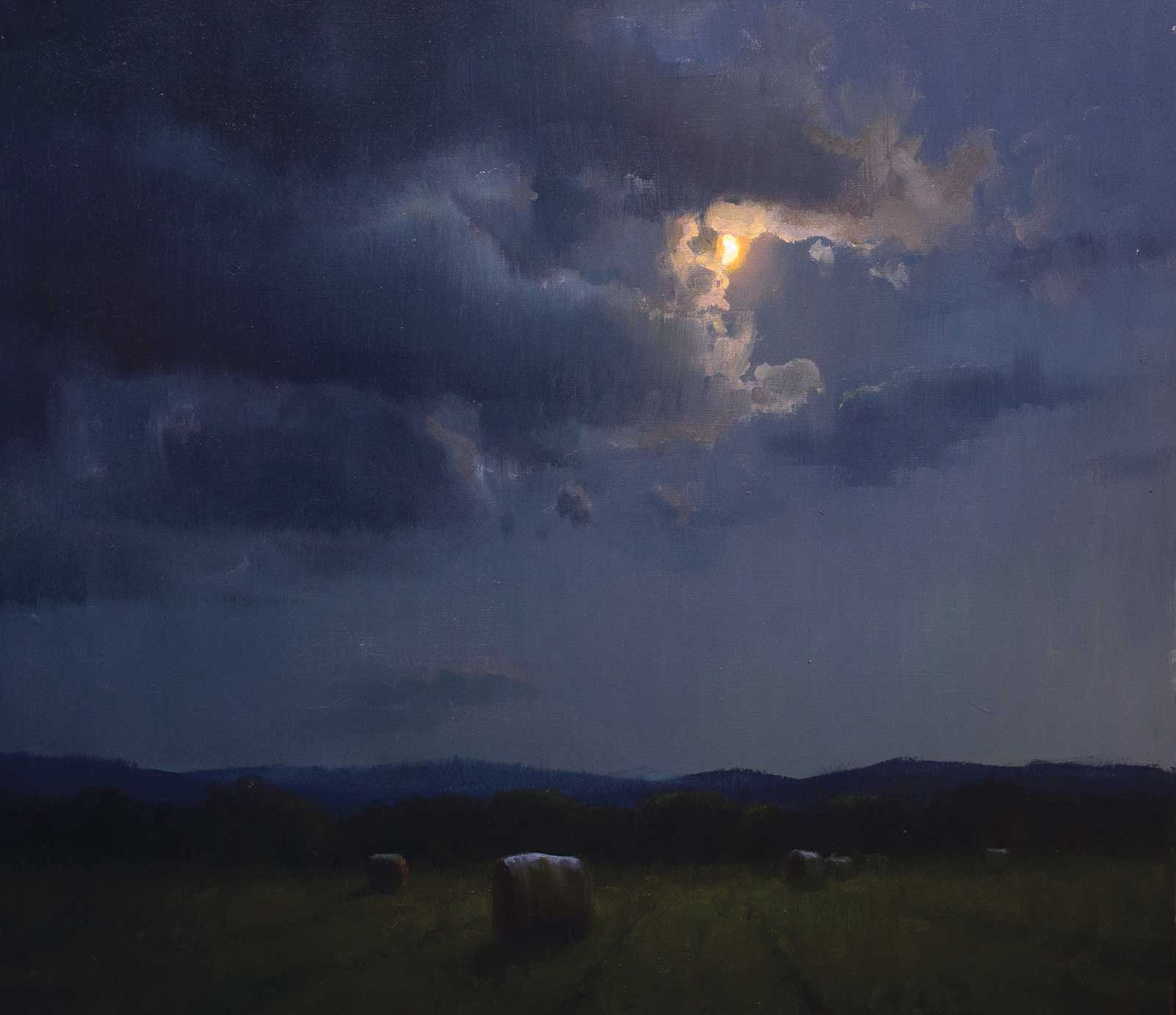
Farmland under the moonlight, oil on panel, 16 x 18" (40 x 45 cm) I painted this from a small daytime sketch of haybales during a painting trip to the Salida area of Colorado. That same evening I captured a quick photo of the moon rise and decided to combine both back in the studio to create this composition. This is probably my favorite way to compose art because it requires a combination of observation, creativity and imagination.
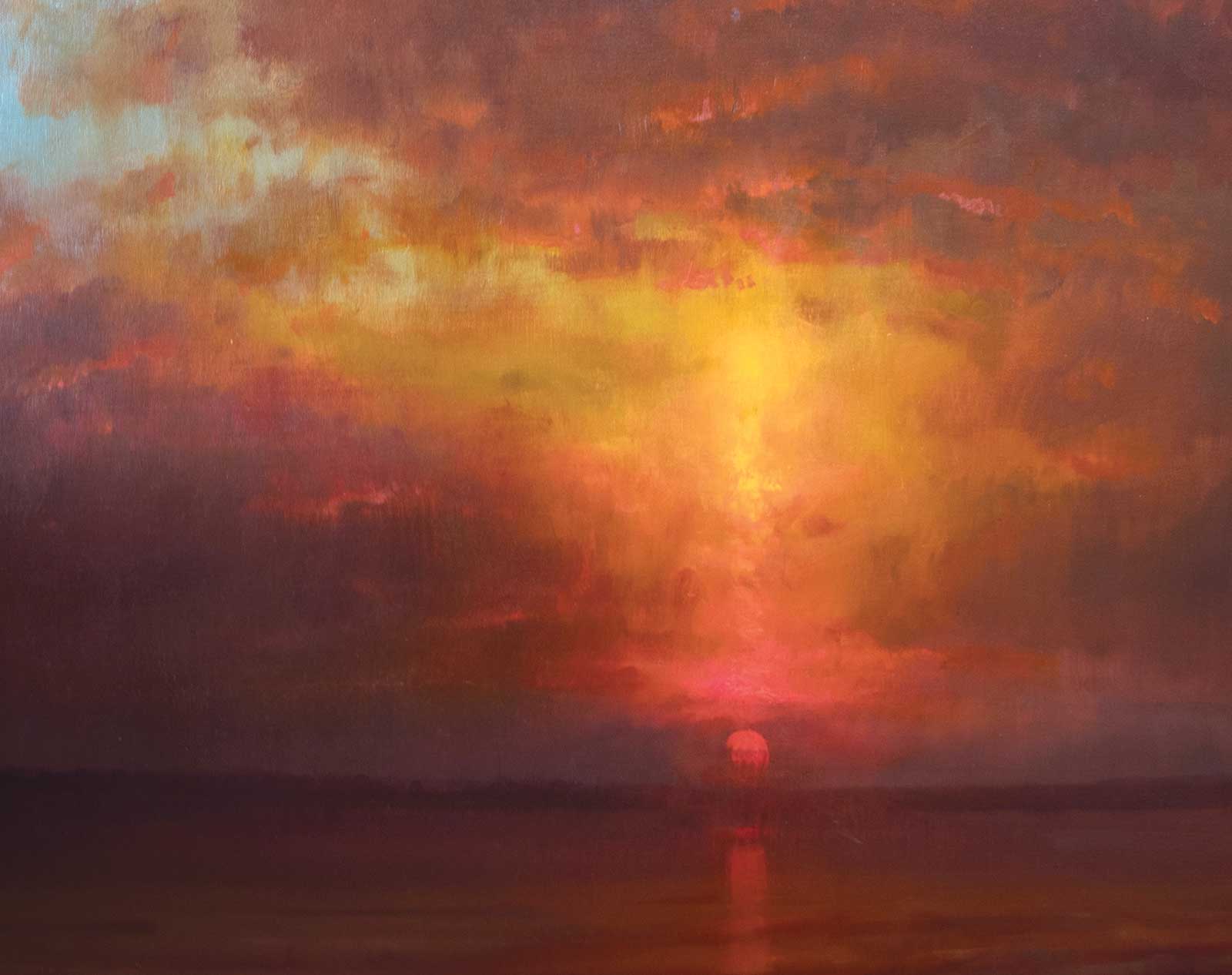
Descending Sun over the Bay, oil on canvas, 20 x 30" (50 x 76 cm) Again, this serves as an example of a long layering process. In order to teach these techniques at my online art school, I will learn them myself. In this case, the techniques of Turner and Thomas Moran. I’m layering and glazing, alternating between transparent glazes and more opaque paint painted into the glazes, in order to bring about a jewel-like surface that creates deep saturation and the sense of light.
Once that dries, I will do the first full body layer using no added oils (so very lean) and from there I will do maybe two more full-body layers and then begin the glazing, scumbling and refining layers. I keep everything lean at the start so the paint adheres during the later oil glazes. I focus a lot on learning tonal, impressionist and realist techniques so my style has a very realistic and tight look and sometimes a very loose and impressionistic look. While my focus is on oil painting primarily, I also enjoy watercolor painting and spend much of my painting trips using watercolor and gouache. And although I am mostly known for my landscapes at this point, I have a large body of work that includes still lifes and portraits. —
About the artist
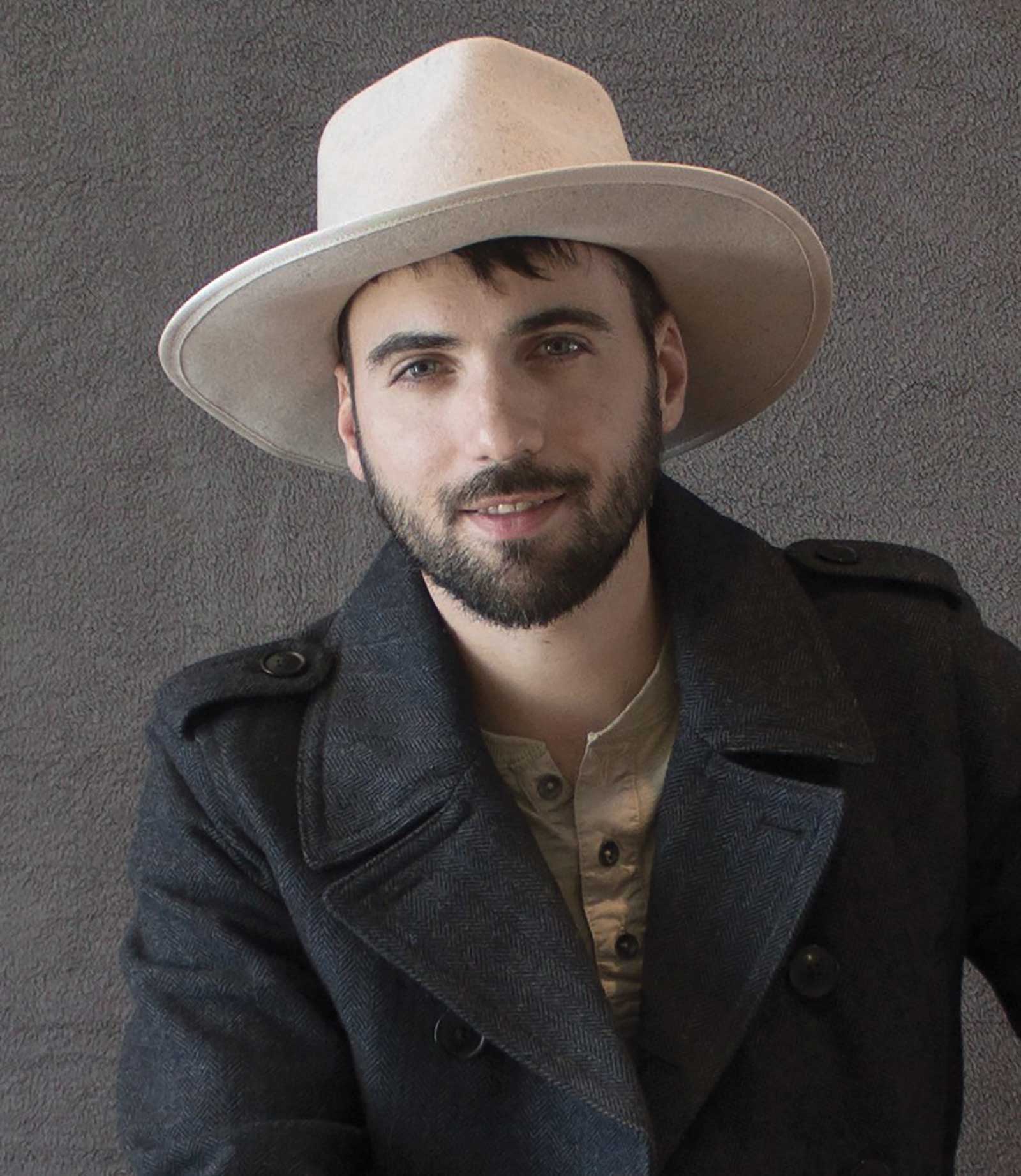 Devin Michael
Devin Michael Roberts an American contemporary realist combining aspects of minimalist and tonalist philosophies with classical, impressionist and modernist techniques. He was born in the Cascade Mountains and currently resides in the Ozark mountains of Missouri. The outdoors have always played an important role in Roberts’ life, and as a result of that intimate connection he has put his primary focus on painting the landscape. His days and nights are spent either in the field studying directly from nature or in the comfort of the studio painting well thought-out, emotive pieces.
Influenced by a wide array of artists, from N.C. Wyeth to George Inness and Russian impressionist Isaac Levitan, to the modern abstract artist Gerhard Richter, Roberts has a technical process that is ever evolving. He currently puts a focus on beginning his paintings from life, either from a study done on location or from life in the studio. He takes these studies and uses them as the reference for his studio paintings. The studio paintings are often pieces that combine multiple references including video, photography and plein air studies. Roberts takes all these various references and combines different elements together when composing a larger studio scene. The goal of these studio pieces is to build an emotional experience within the viewer and not to represent a physical location. Over the last eight years as a professional artist Roberts’ career has expanded to include a collector base around the world, as well as numerous national awards and press.
Contact at
www.devinrobertsstudio.com