



This May 11 to 14, the Portrait Society is celebrating a monumental quarter century of passion for portraiture during our 25th annual The Art of the Portrait conference in Washington, D.C. To celebrate this historic occasion, we will be introducing a dynamic program format with new speakers, sharing their wisdom on a range of topics relevant to today’s figurative artists. Over the weekend the top 20 finalists of The International, the world’s premier portrait competition, will exhibit their works in hopes of winning the Draper Grand Prize and a cash award of $50,000. In preparation for this major event, I sat down to speak with a few of our new and returning faculty artists to discuss a range of subjects from education and technology to moving beyond technique. Last issue, we heard from several highly esteemed artists. In this issue, we will hear from yet more renowned artists, including Rose Frantzen, Ron Hicks and Burton Silverman, as well as rising artists in the field of figurative art, including Kyle Ma, Celia Liberace and Louis Carr.
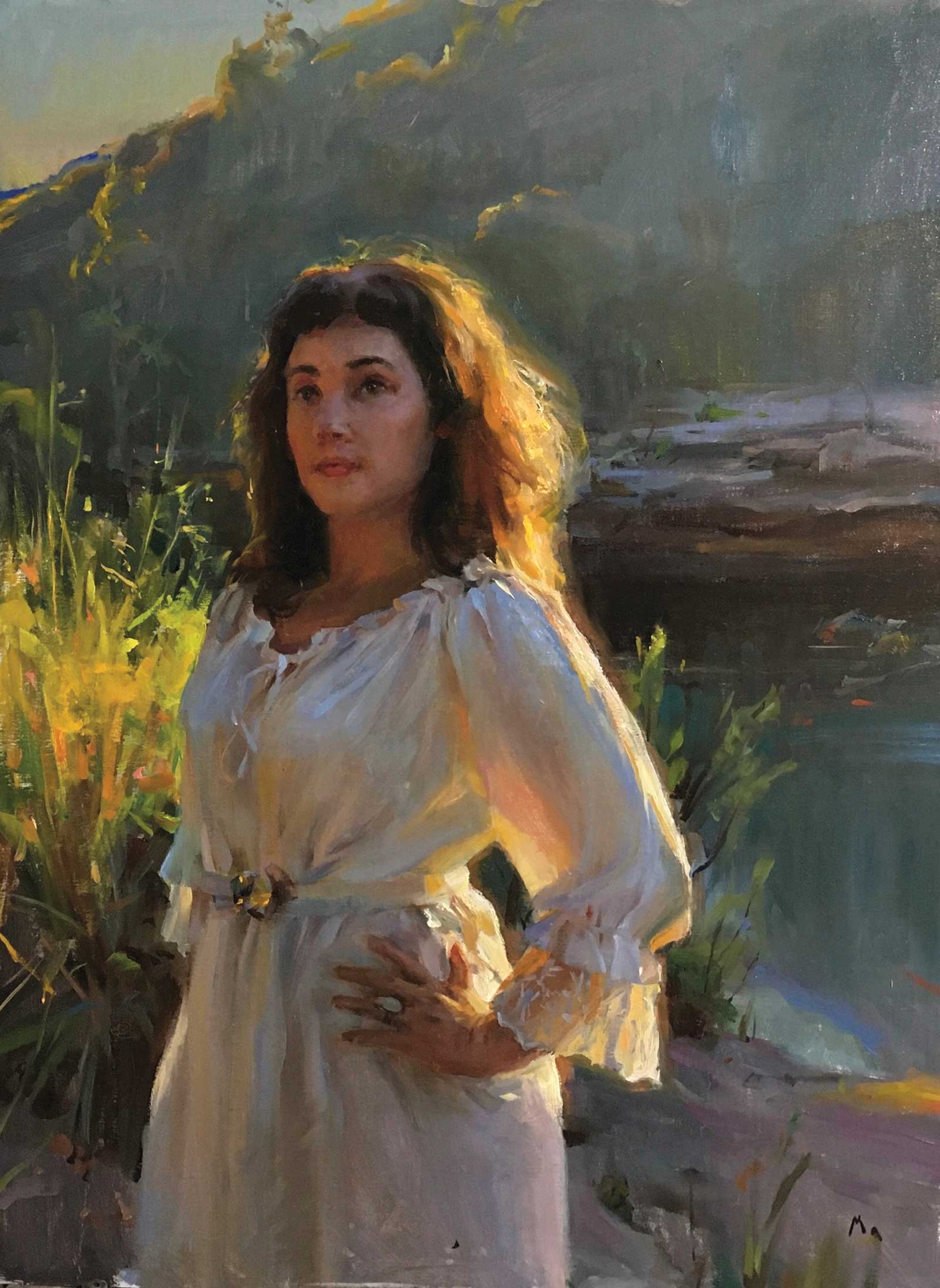
Kyle Ma, Evening by the River, oil on panel, 30 x 22" (76 x 55 cm)
Every artist finds their own path to education, whether through traditional or atelier training, workshops and mentoring programs, self-study or a combination of experiences. For Rose Frantzen, her formal studies began at the American Academy of Art of Chicago. After nearly three years of study, she left to attend Chicago’s noted Palette & Chisel, an open studio art center. “Here, one could work with live models six days a week for a minimal yearly membership fee,” says Frantzen. “In this studio, you could paint alongside a myriad of folks of different ages and disciplines. I chose to do this following my friends Nancy Guzik and Scott Burdick, and it was there that we met Richard Schmid. Richard was there to recapture the joy of working with live models, and he became our mentor.” Looking back on her history, Frantzen notes that the learning never stops. “What may be most outstanding about my training is that I was able to be in the company of some incredible artists. My peers and I were, and still are, passionate learners,” says Frantzen. “We were challenged, humbled, overwhelmed and inspired to believe we could live as artists. This is no small thing. We learned that we could learn, that we could strive for some goal, achieve it and welcome the next challenge that so quickly follows.”
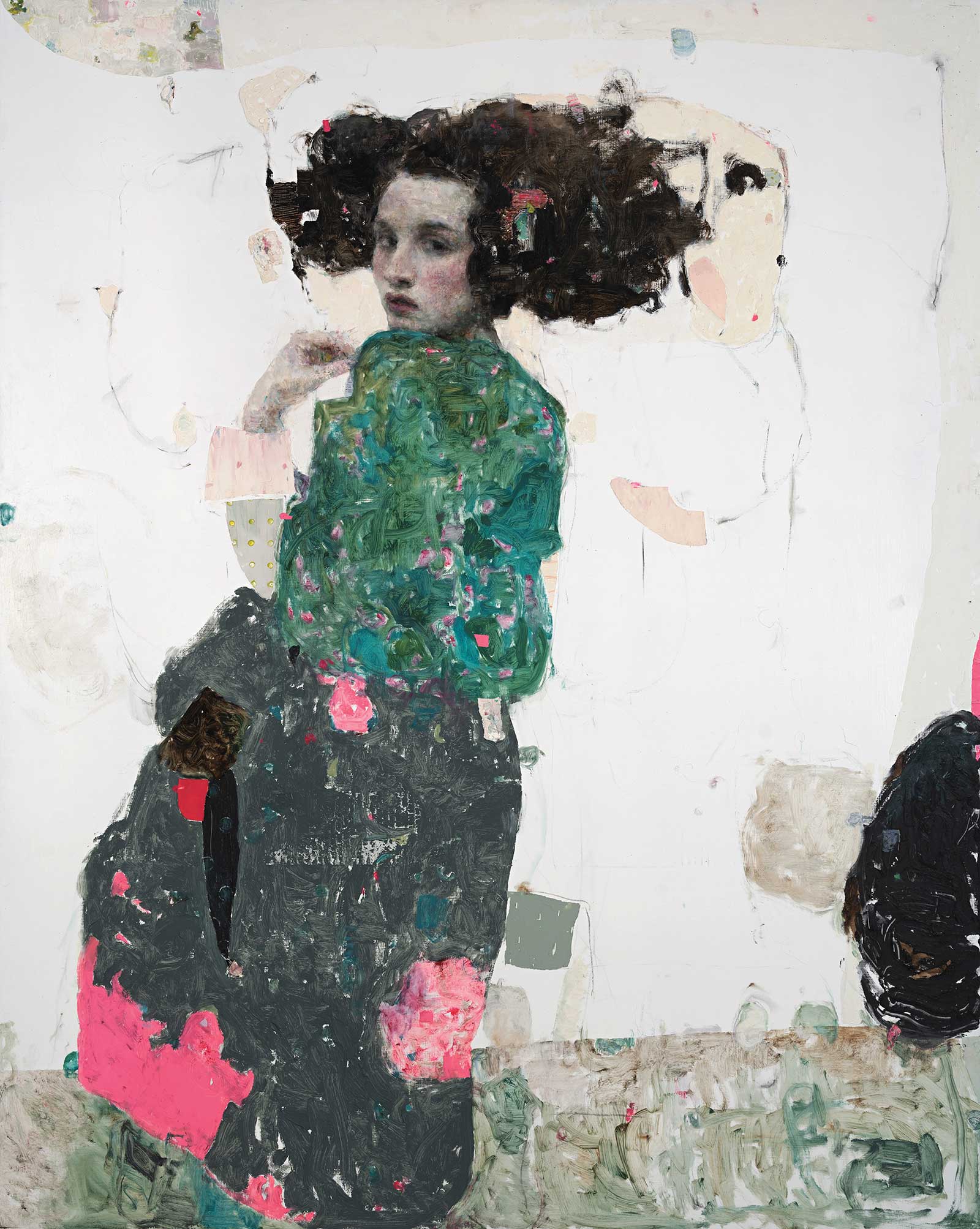
Ron Hicks, Standing Wave, oil on birch panel, 60 x 40" (152 x 101 cm)
Austin-based artist Kyle Ma first began learning drawing and painting seriously at age 10 from his instructor, Elizabeth Locke. Under her tutelage, Ma learned the foundations of drawing, values, colors and edges. “I had also gotten my hands on books such as Richard Schmid’s Alla Prima and John F. Carlson’s Guide to Landscape Painting,” says Ma. “Reading these books became a big part of my development as a painter. After I stopped taking classes with Locke, I continued to read books, watch instructional videos and attend workshops throughout high school and college. I found it beneficial to use the knowledge of artists who went to different ateliers to inform my work.” A big part of Ma’s education also came from conversations with other artists and using online sources. “Students now have access to [so] many resources online and through books and videos that it is possible to become proficient through self-study,” explains Ma. “This can be a great way to learn for those on a budget or those who cannot spend the time to go to an atelier for a few years. However, the drawback of this approach is that it will be harder to get feedback throughout the learning process. Studying at an atelier is a great way to establish a great foundation.”
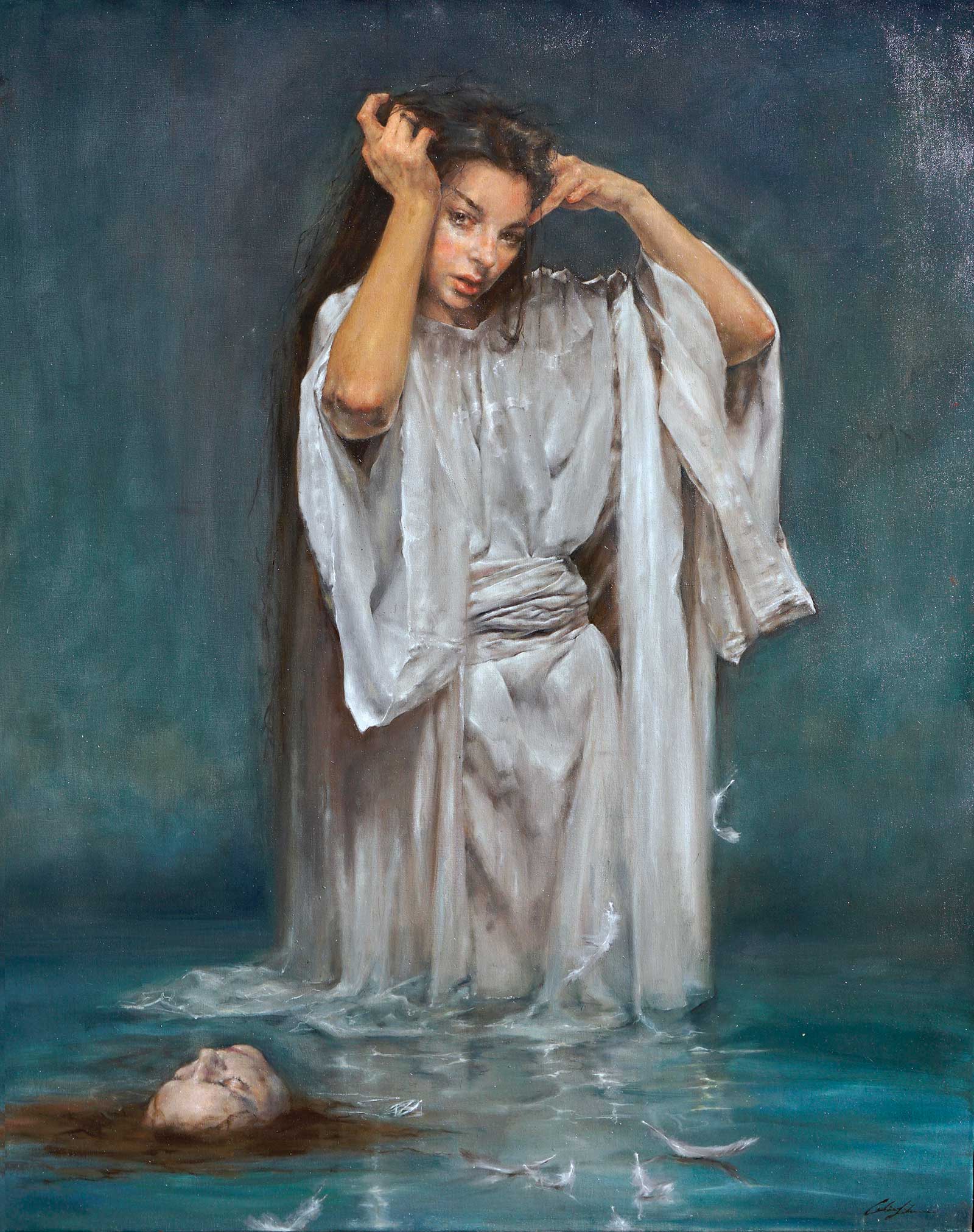
Celia Liberace, A Broken Curse, oil, 37 x 31" (93 x 78 cm)
After learning and refining the fundamental techniques, the challenge for many artists becomes how to move beyond technical ability to create powerful, emotive works. For Ron Hicks, the answer lies in a search for personal truths. “It’s really about seeking my truth,” says Hicks. “I don’t look at my compositions or my paintings in terms of rendering a story. I’m always of the mindset that I want the viewer to respond to each piece in whatever way they respond to it—by whatever emotion is to them. As far as moving away from the technical things, I think when you’re a young artist, you’re often trained to paint what you see. For example, painting something to look exactly like what you see, then, that is art. At some point in my professional journey, I started to ask myself, ‘What is art about?’ I came to the conclusion that I am my art, and my art is me—there is no separation.”
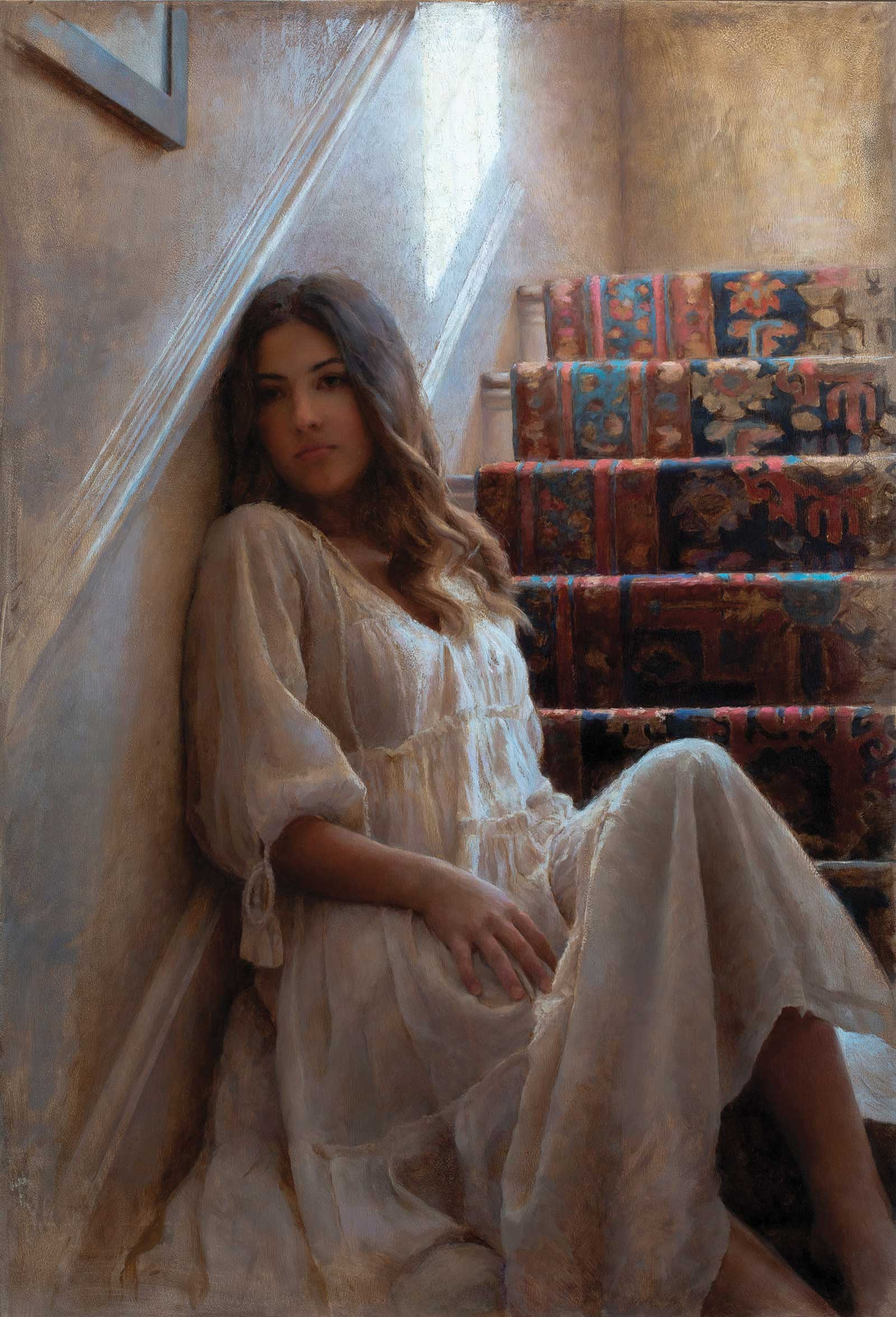
Louis Carr, Morning Reverie, oil, 44 x 30" (111 x 76 cm)
Exploring the dynamic spaces and shapes of human emotions is a key element of Celia Liberace’s practice. “I’ve always been drawn to that liminal space that exists between the suppression and expression of an emotion; a vibrating, oscillating state, where something is just sizzling under the surface,” says Liberace. “Over time it has become intentional, to explore that little space.” The human body, for many artists, has always been a source of inspiration and emotive potential. “From a very young age, the figure has found itself in my sketchbooks,” explains Liberace. “The body can contain so much. Beyond its geometry and aesthetics, it is a direct portal into the inner workings of the mind. Tension accumulates over time, storing itself as pockets of energy within the body. They create this constellation of hot spots throughout the figure, giving way to bends, dents and unusual vibrations of shadow and light. I want to bottle up that tension through painting and drawing. I also want to capture its release. The dance between the two is so exciting.”
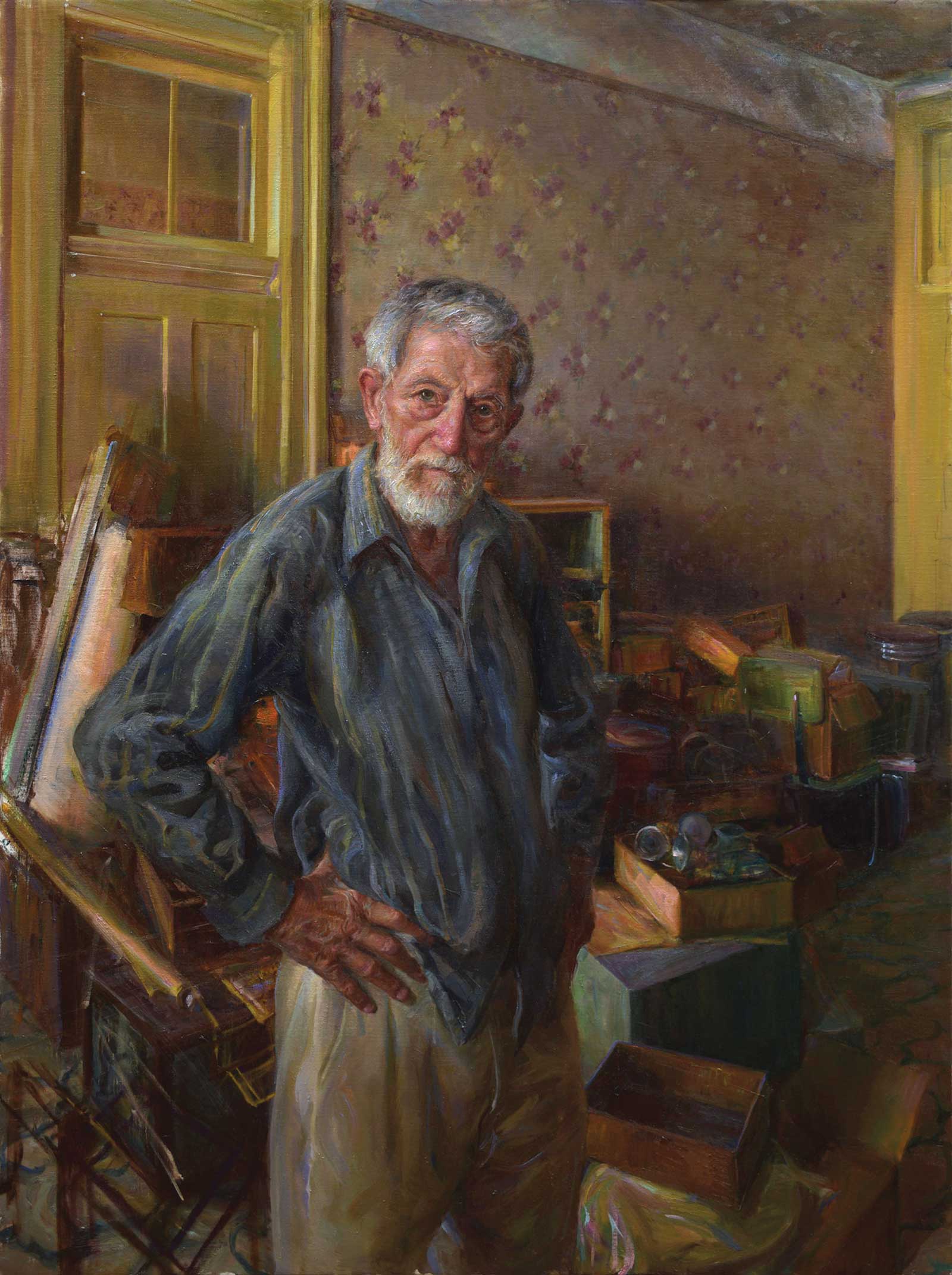
Rose Frantzen, History, oil on linen, 48 x 36" (121 x 91 cm)
At 95 years old, artist and long-time educator Burton Silverman has seen the landscape of art education change throughout the years, and he offers a few words of advice to young and emerging artists. “As a traditional artist, I would stay with the basics such as a significant background in art history, especially those about realism,” says Silverman. “I’d start a budding artist drawing right away. Whatever skills they have can be enhanced by direct visual observation, beginning with live models. Studying human anatomy can be very useful at the beginning.” In addition to learning drawing skills and studying the masters, Silverman speaks of finding art that inspires. He says, “Finding the art that impacts you the most is a kind of beginner manual in the journey of self-discovery.”
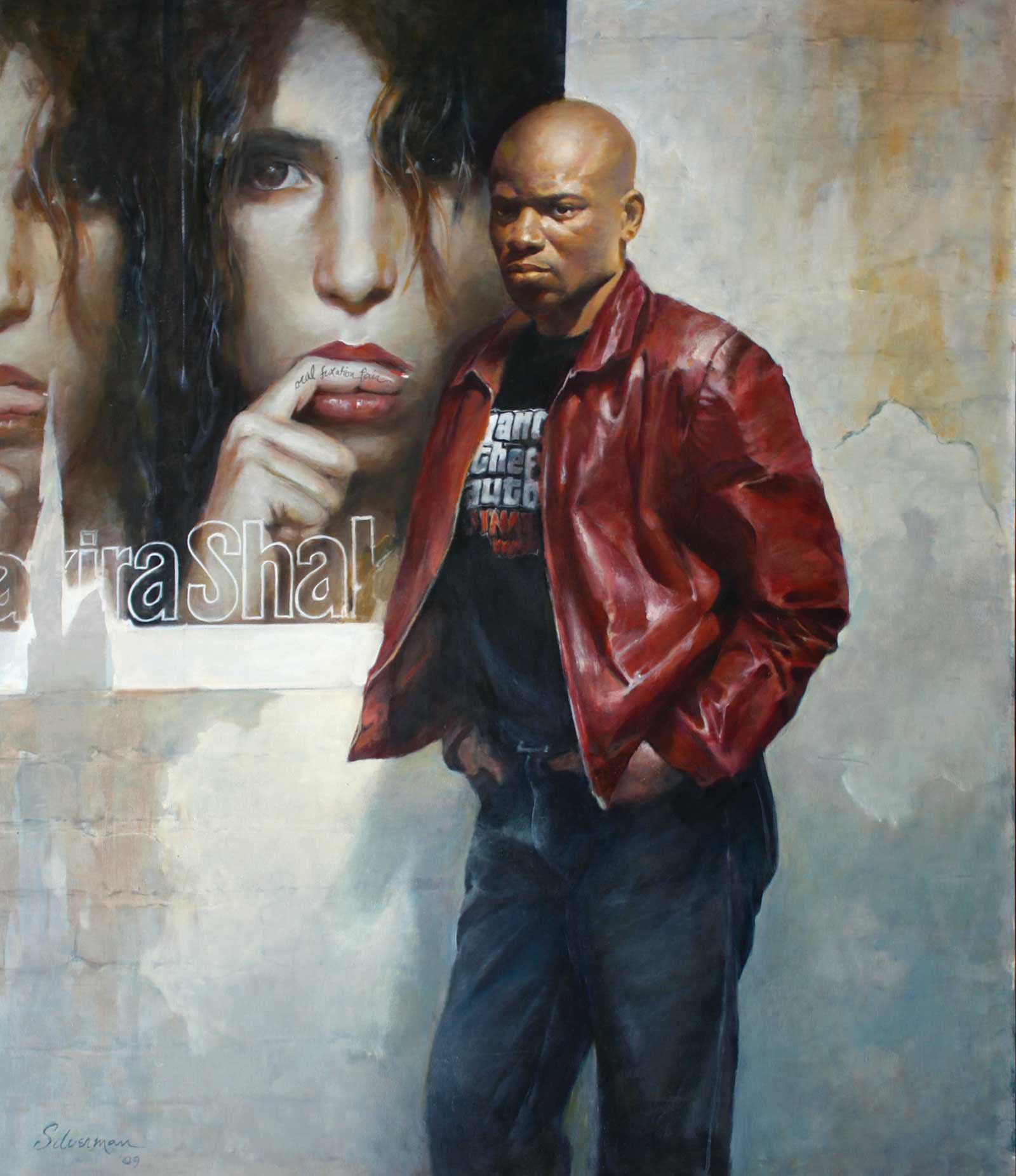
Burton Silverman, Wall Poster, oil, 42 x 48" (106 x 121 cm).
Louis Carr is one of many contemporary artists who has embraced the benefits of technology in the creation and promotion of his art. “Technology is always a double-edged sword,” says Carr. “However, in my opinion, the benefits outweigh the setbacks. As a commissioned painter, there has been no greater tool than social media to help bring awareness to what I do. In my early career, I wasn’t being represented by any gallery, so it was up to me to find my audience. I put a significant amount of effort into building relationships and a collector base. I remember a season where I would physically draw and paint in social atmospheres in order to build awareness. Coffee shops and on the beachfront were the most successful. I would take a portfolio with me in a small photo album to seize any chance encounter I may have to show my work to a potential client. However, once Facebook came along it had magnified my established network by tenfold. Soon after, iPhone came on the market, which allowed me to upload my artwork. One thousand songs in my pocket was not that important to me. However, having my portfolio fit in my pocket was huge! My phone is now used in almost every aspect of my business aside from the actual creation of paintings.” Carr reasons that it’s the natural order of things for art to use present day resources. “There are many examples in history in which artists used the latest technologies to experiment ways to make their art unique,” says Carr. “I believe it broadens the spectrum of what could be created. All forms will develop an emergence of what is good and bad within that current use of materials and technology.” He surmises, “There are more ways to learn today than there have ever been.”
For a weekend dedicated to learning, join us and our outstanding faculty at the 2023 The Art of the Portrait annual conference! For information on registering, visit www.portraitsociety.org. —