One of the most important aspects for me to explore in my paintings is the interplay between the light and the dark. It is by focusing on that contrast that I find the atmosphere and dramatic feel that I strive for in my work. Whether I am going for subtlety, drama, or in any case atmosphere, the light plays such an important part.
My intention is to capture elements of the coastal landscape, rather than recreating any particular scene, to represent and not replicate. Those glimpses of light from beneath a cloud, the reflections in the pools on the beach created by the sky above, the shadows cast over the sea and on the land by the dark clouds, the horizons, the depth of color or palest gleam of the sea itself, the tidal effects, wide open spaces, meandering rivulets, all fascinate me. I am excited by these elements, and I enjoy allowing the process to unfold as I go along and show me where the painting needs to go.
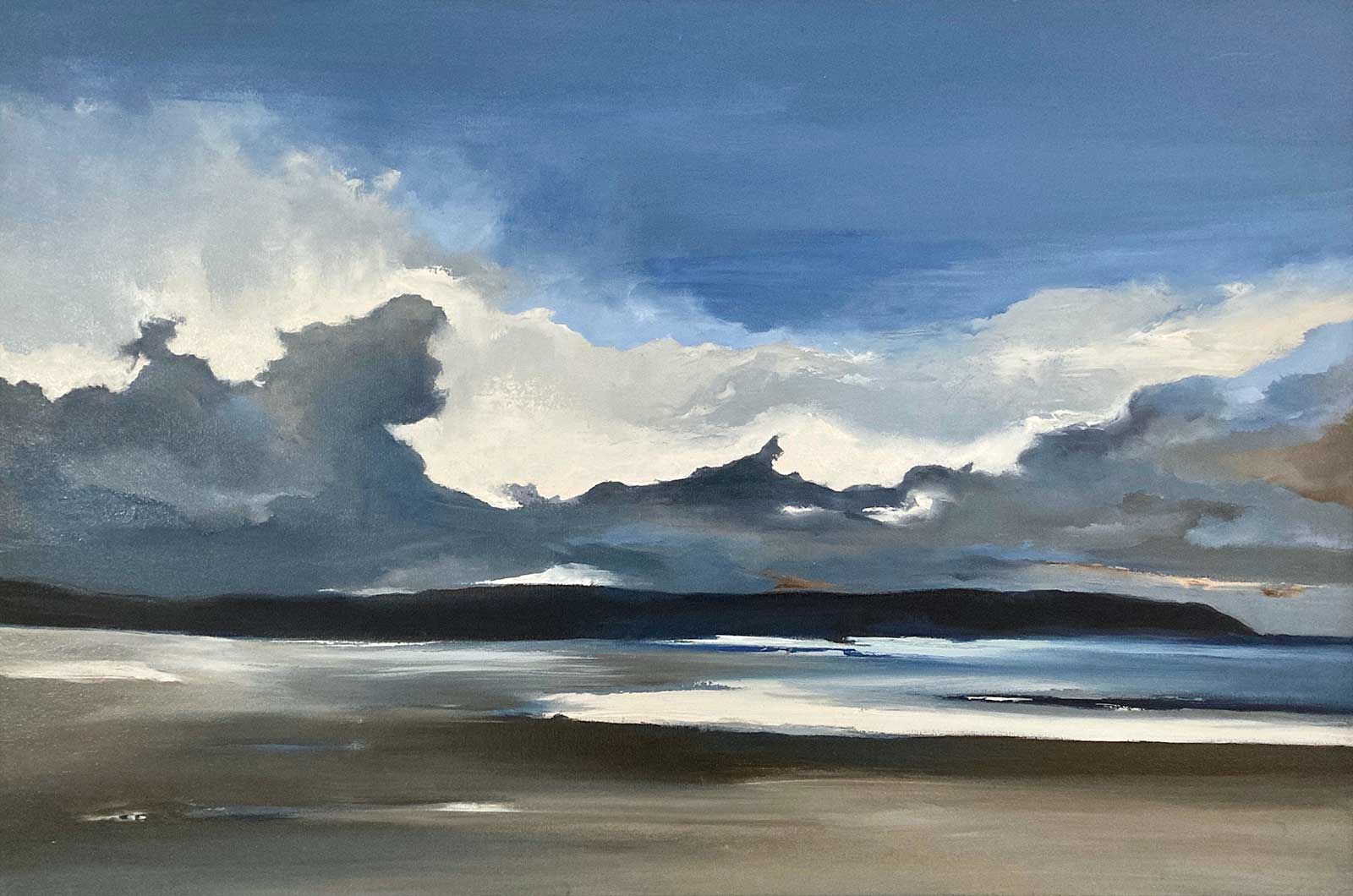
Casting Shadows, oil on canvas, 20 x 30" (50 x 76 cm) This is a painting inspired by one of my favorite beaches at Woolacombe in North Devon. I started this painting with a raw umber notan to establish the basic darks and lights and allowed glimpses of that first layer to show through in places.
Typically, I don’t try to recreate scenes from photographs, because I enjoy the freedom and spontaneity of allowing my paintings, process and materials to lead the way, and also because I am more interested in expressing the essence, light and moods of the coastal landscape. However, using a photo for reference can be an excellent way to get started.
Although my art process often tends towards the intuitive and spontaneous, I do also enjoy working in a more classical way, and with more intention, at least at the beginning, and particularly if I’m working in oils.
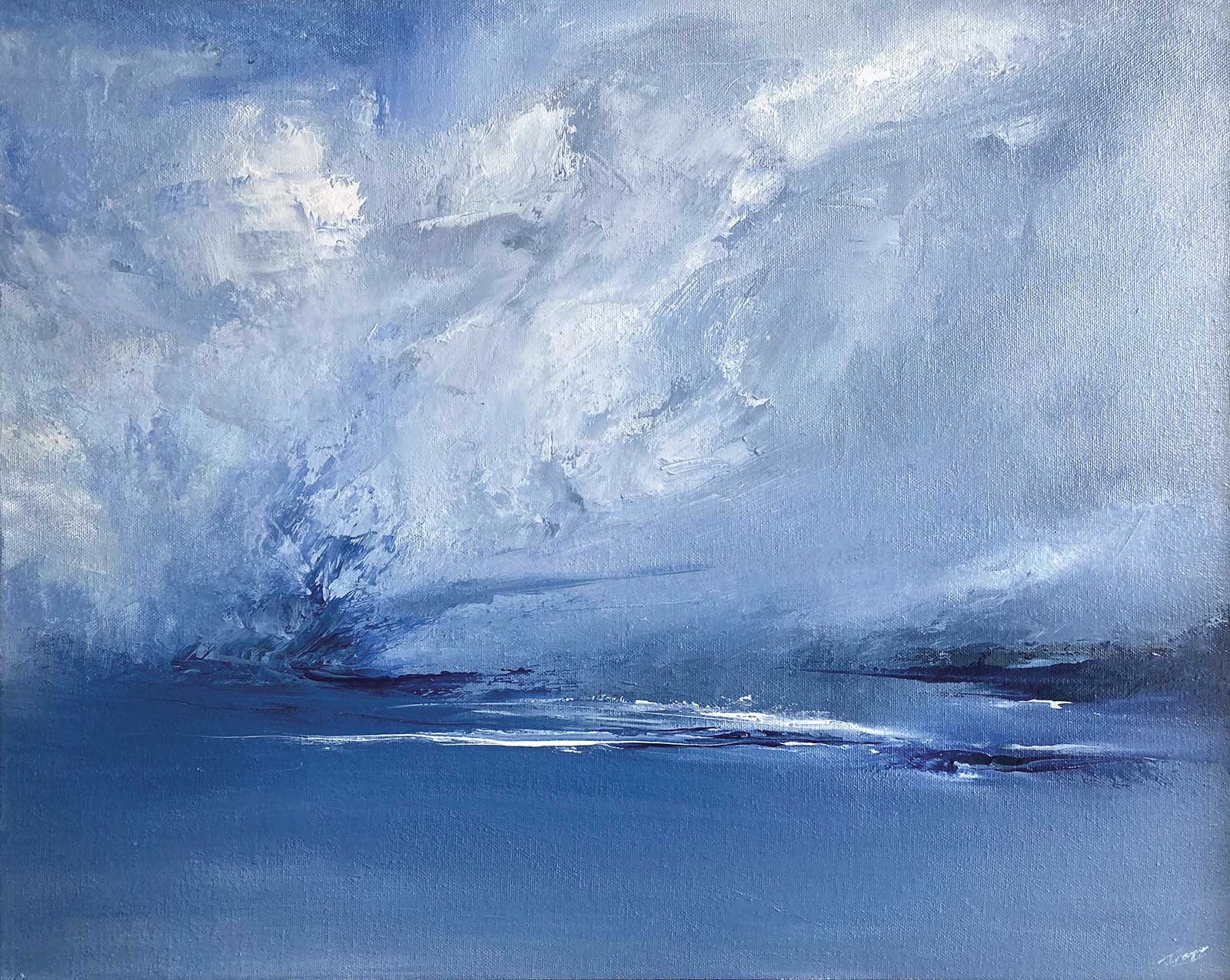
Blue Days, oil on canvas, 16 x 20" (40 x 50 cm) Some glorious days when I go to my favorite nearby beach, everything seems so blue. This little oil painting was one of those spontaneous works, a celebration of this color. I enjoy the brush marks and the feeling of movement in this one.
In the following demonstration, I show how I do this, using water mixable oil paints, by creating a classic notan to begin the painting (notan comes from a Japanese word that means light-dark). I prefer to use water mixable oils, and the specialized mediums that go with them, as they are cleaner and less toxic than traditional oil paints. The main difference is in the clean up stage, as everything can be cleaned with soap and water.
There are many ways to show the relationship between light and shadow, depending on the medium and techniques used, but this method is a good way to start. It can be helpful as a guide, to first establish the values, where the lightest and darkest areas of the painting will be, because the balance of lights and darks provides the basic composition, in the very first layer on the canvas.
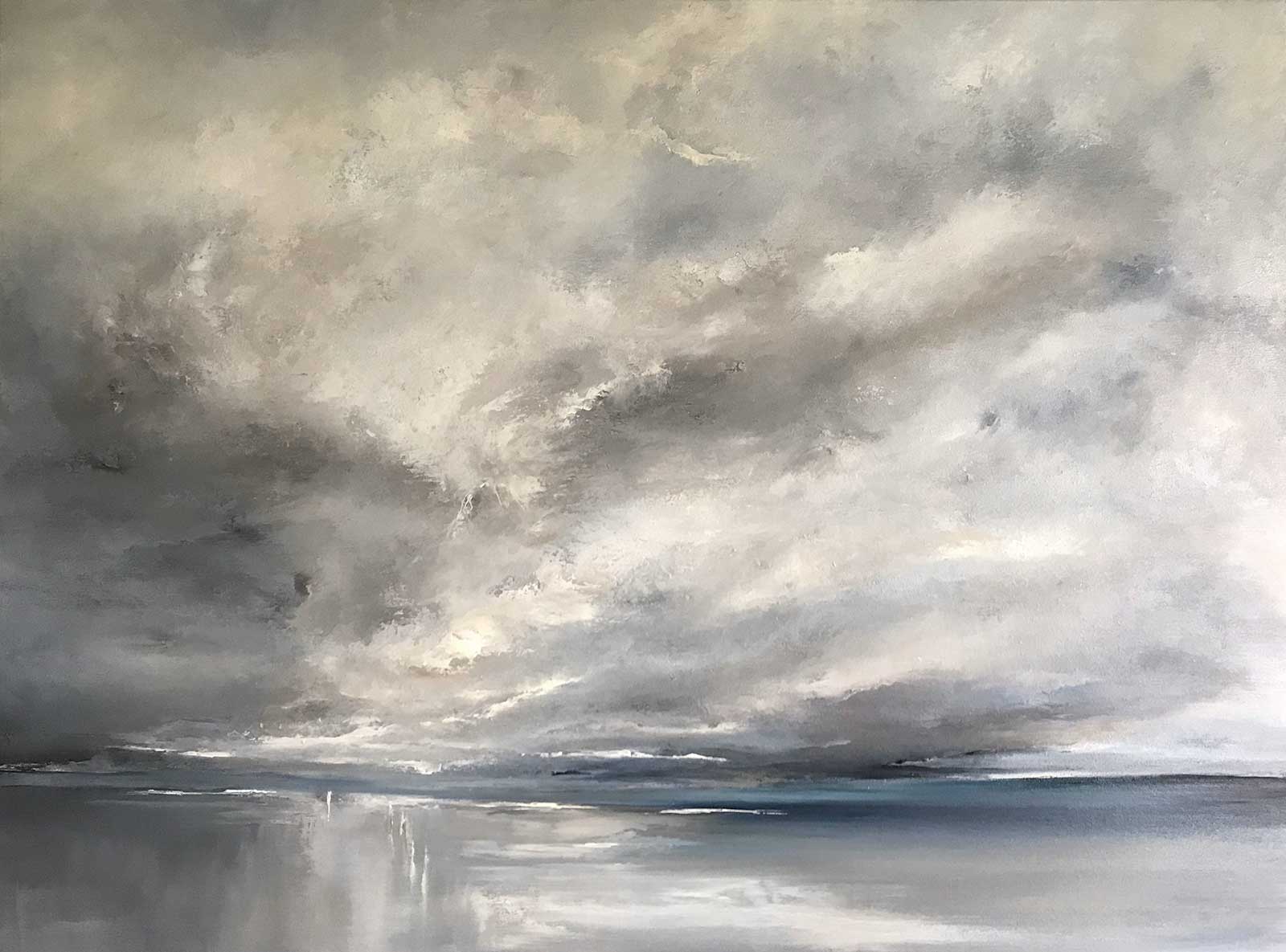
Fleeting, oil on canvas, 30 x 40" (76 x 101 cm) Painted freely and intuitively, without a notan and with no particular composition established at the beginning, this is one of my favorite paintings and now lives with one of my collectors in London.
The initial notan is created by first applying a thinned background layer of paint in just one color; my preferred options are either a raw or burnt umber, or a burnt sienna as shown in the following demonstration. Once the first layer of paint is covering the entire canvas, and while it is still wet, the next part is about lifting paint away, thus revealing the lighter areas and the mid tones, this way the painting starts to take shape even before a color palette is in play. With this first layer I can already tell whether I like the composition, the shapes, the areas of dark and light, and of course nothing is set in stone, I can always override my own decisions at a later stage.
My Art in the Making On a Winter’s Day
For On a Winter’s Day, I used a photo for reference because I wanted the shape of the headland to be recognizable. However, I usually come to a point in this process where my intuition takes over, and I let go of the image I started with. Part of the joy of painting for me is that freedom to let go and explore.
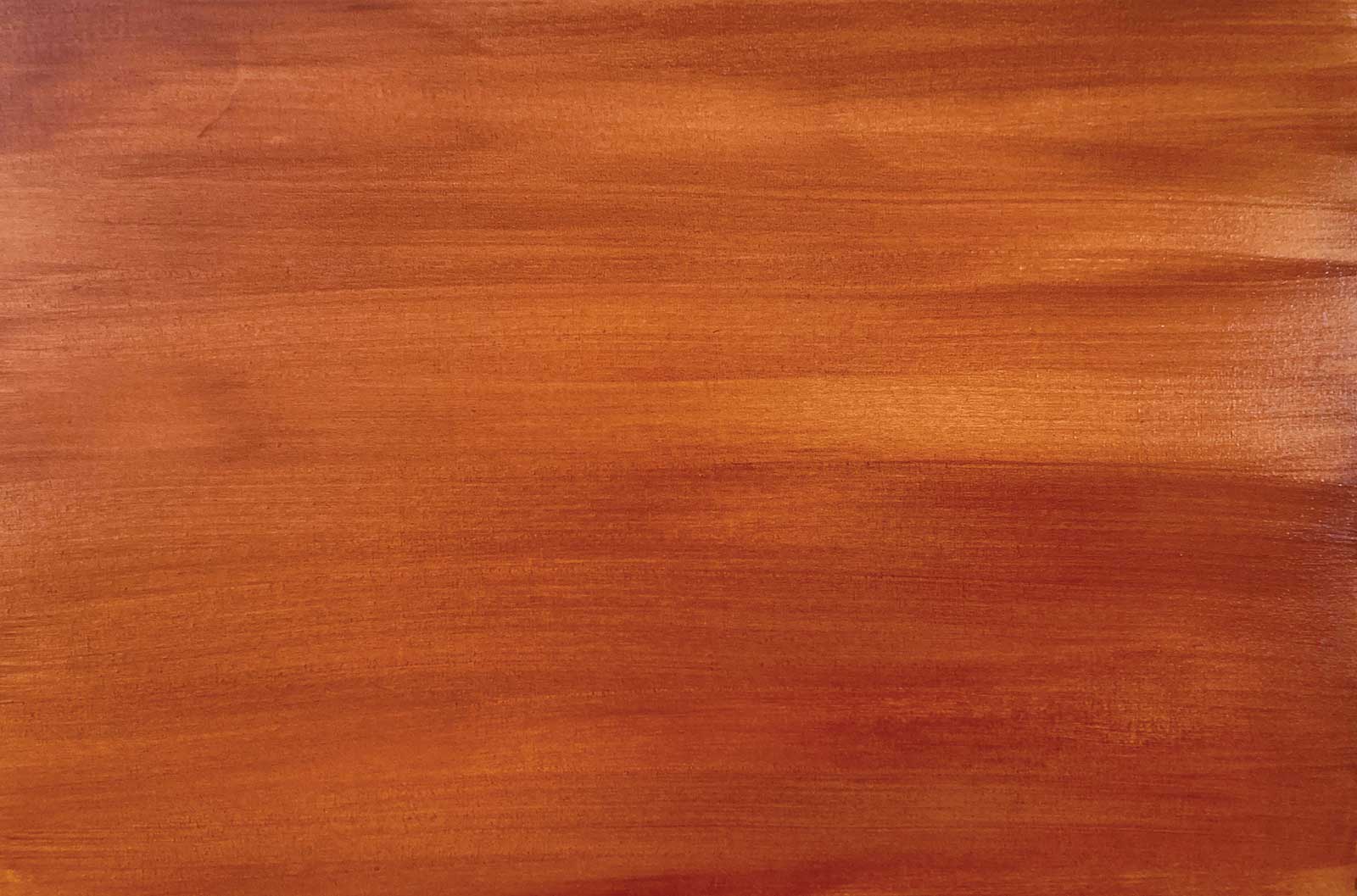 Stage 1
Stage 1 Creating a Notan
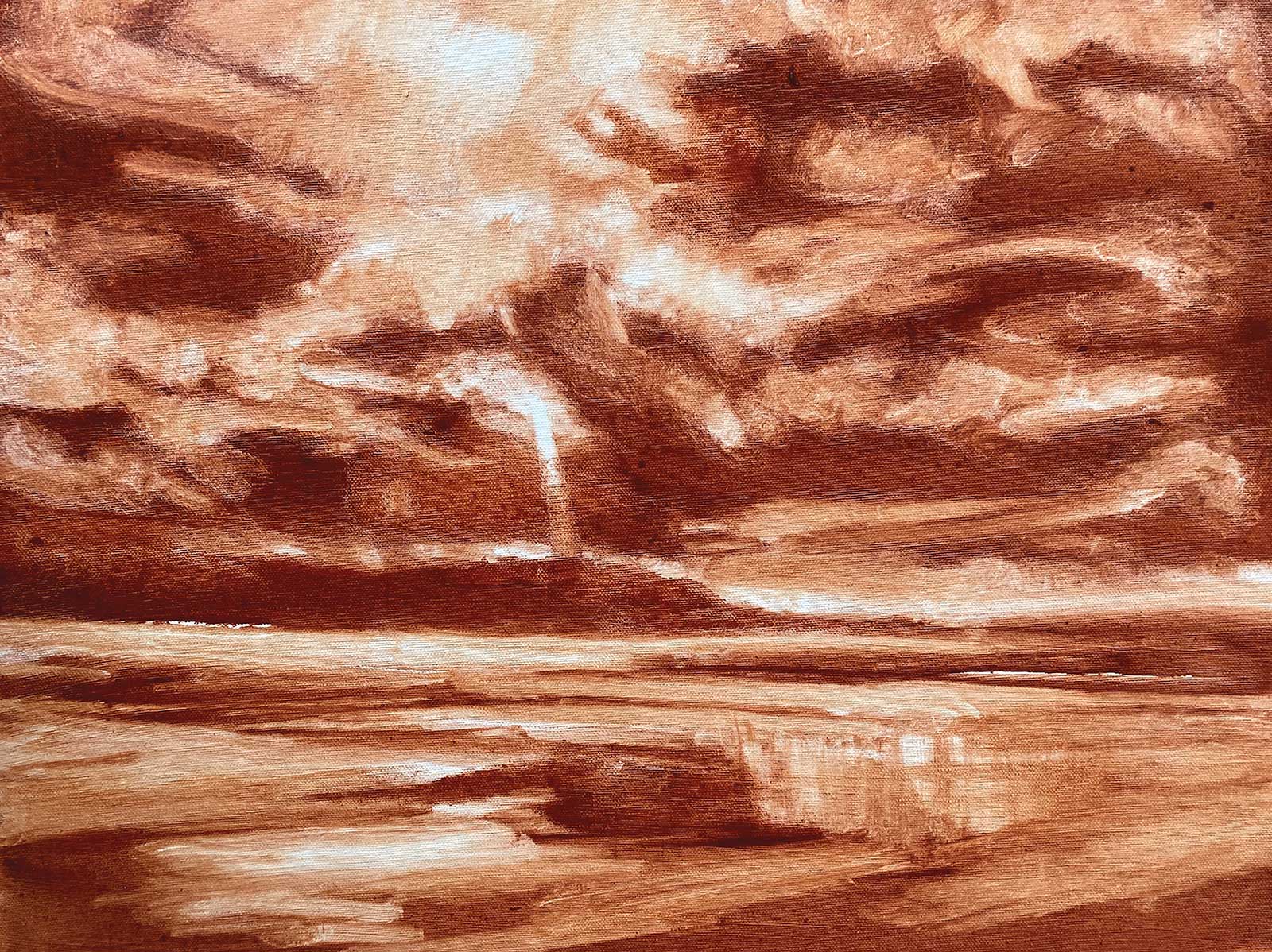
One of my favorite ways to begin an oil painting is by the creation of a notan to first establish where the lights and darks will be in my painting. To make the notan, I applied a thin layer of burnt sienna over the entire canvas. Here I used water mixable oil paint, combined with the appropriate thinner; bearing in mind the fat over lean rule, no extra oil is used at this early stage.
 Stage 2
Stage 2 Lifting the Paint
While the first layer is still wet, I begin lifting off some of the paint using water mixable thinner on a rag or paper towel and occasionally a palette knife and a catalyst wedge to reveal where the lighter areas will be; more paint removed for the very lightest area. The painting starts to come to life in front of my eyes as I establish the basic composition of the painting.
 Stage 3
Stage 3 Darkest Areas
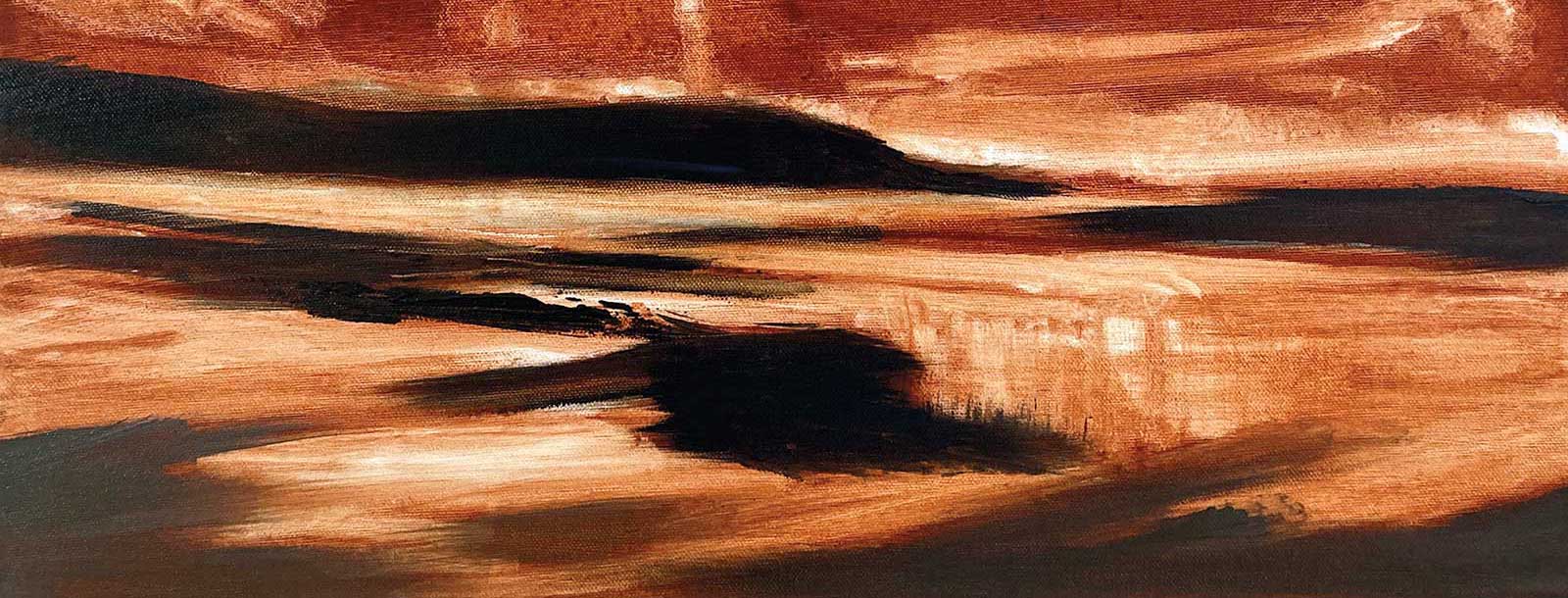
Having established the lightest areas, I then turned my attention to the very darkest parts, using a favorite combination of ultramarine blue and burnt sienna with a little thinner to get a rich dark tone for the headland and the other darkest areas. I rarely use black straight from the tube, and prefer to mix my own. So now I have the darkest darks and the lightest lights, as well as the original middle values.
 Stage 4
Stage 4 Cloud Grays and Browns
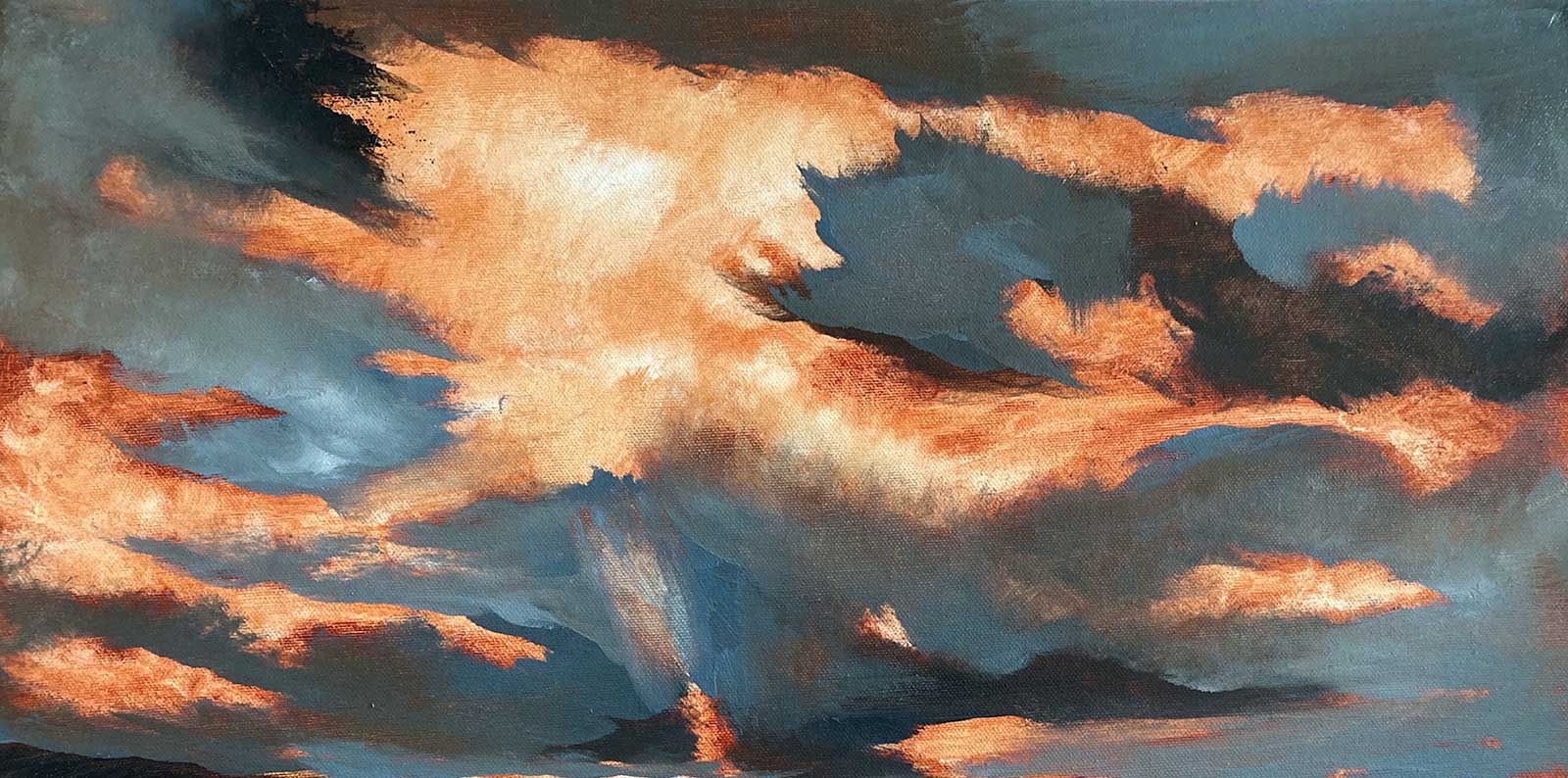
I then mixed up some cloudy grays and browns with combinations of burnt sienna, ultramarine blue and titanium white, in varying degrees; for the warmer tones more sienna, and more of the blue for the cooler tones. I began to build the clouds from dark to light, applying the paint with a palette knife before moving it around the canvas with a brush.
 Stage 5
Stage 5 Adjusting Colors
I am beginning to use increasingly lighter grays here, some more blue, some more brown according to need—with lighter, bluer hues on the sea, especially above and below the darkness of the headland. At this point instinct takes over, and I find I am sometimes mixing the color on the actual canvas rather than beforehand. Clouds are a constantly moving and changing subject, and I paint them by feeling my way rather than with any precision.
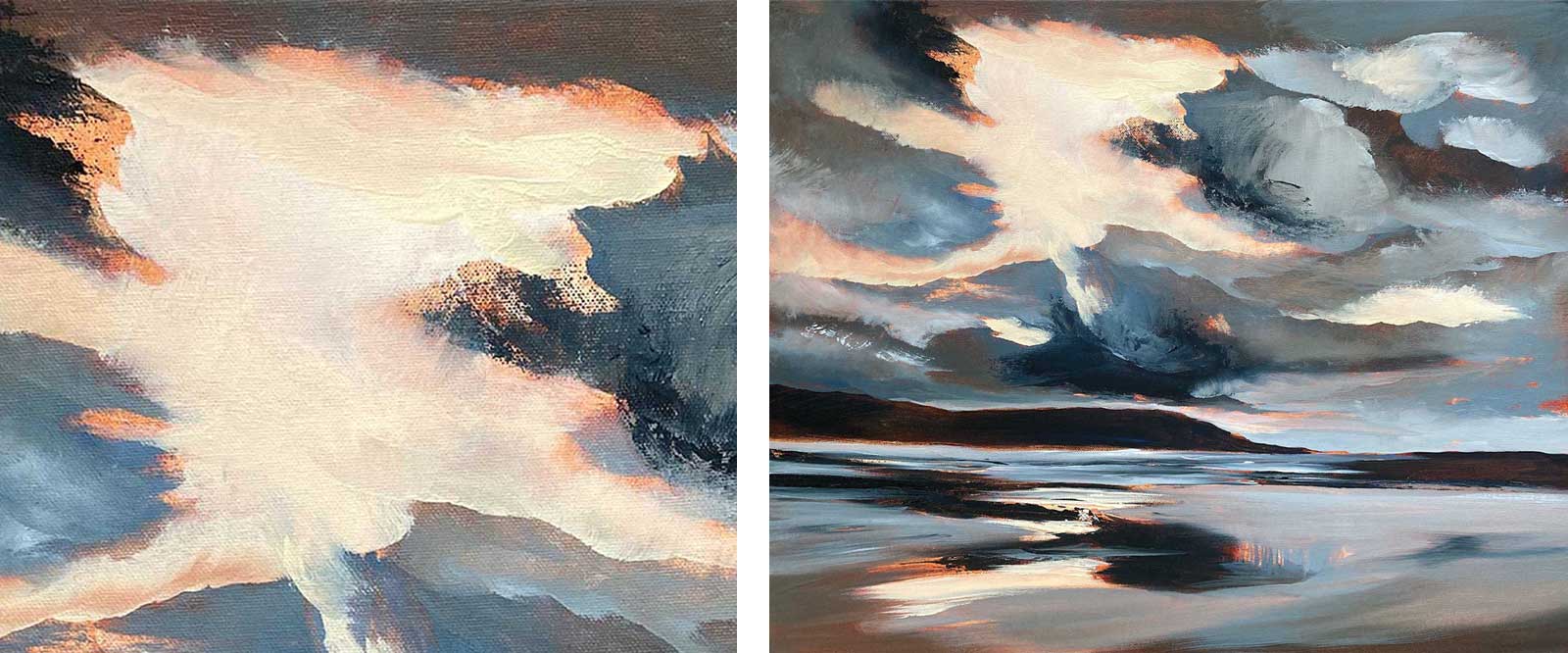 Stage 6
Stage 6 Lightest Parts of Sky and Reflections
Allowing the original layer of burnt sienna to glow through in parts, I start to fill in the very lightest parts of the sky and reflections with a pale Naples yellow, and in some parts a pale burnt sienna, both using titanium white to lighten. The paint here is still not very thick as I will be building on this layer, increasing the oiliness as I go.
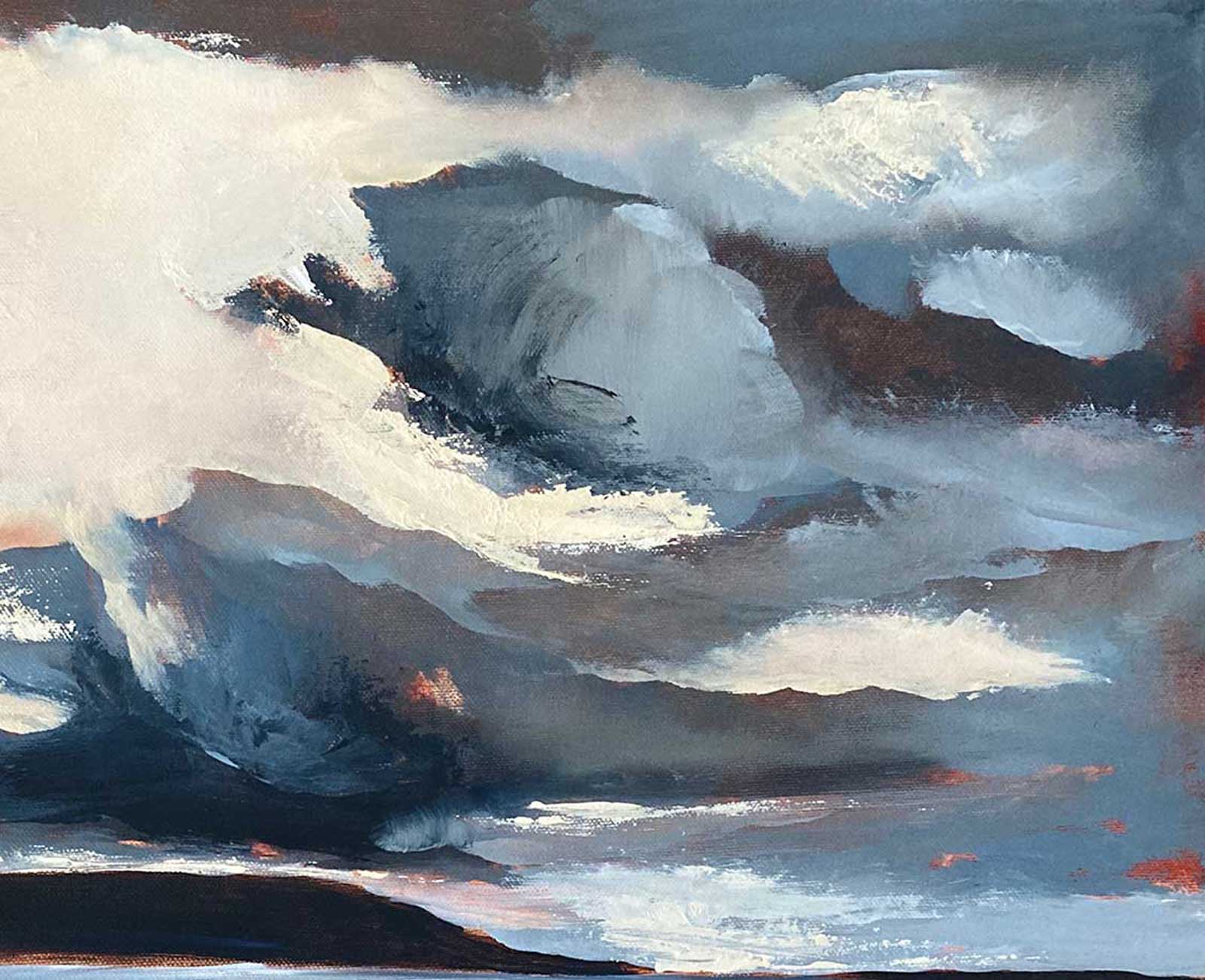 Stage 7
Stage 7 More Yellow in Sky
I added more pale Naples yellow in the sky, including blending directly onto the light gray directly above the horizon and to the right of the headland, in other parts taking it nearer to the edges of the gray clouds. Still allowing some of the burnt sienna underpainting to show through, I used a catalyst wedge to break up the lightest area of pale Naples yellow, creating lines on the beach near the shoreline.
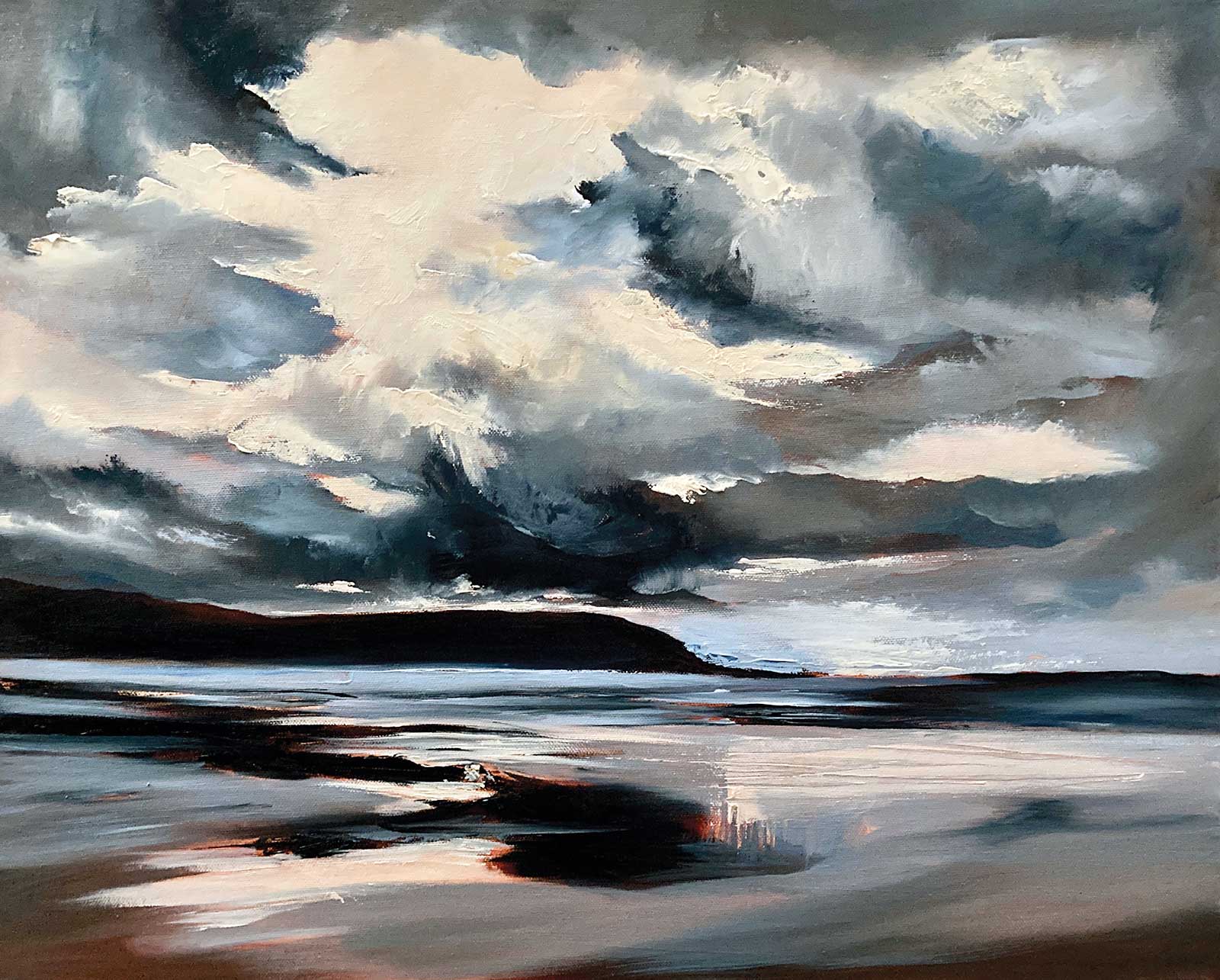 Stage 8
Stage 8 Blend Edges
Using thicker paint here, applied with a palette knife, I then started to blend the edges using a brush and sometimes my finger. I let my instinctive and intuitive side take over at this point, with little regard for the reference photo. The photo was useful as a starting point, but in the end I did not wish to be restricted by it and I found that the painting started to come alive for me.
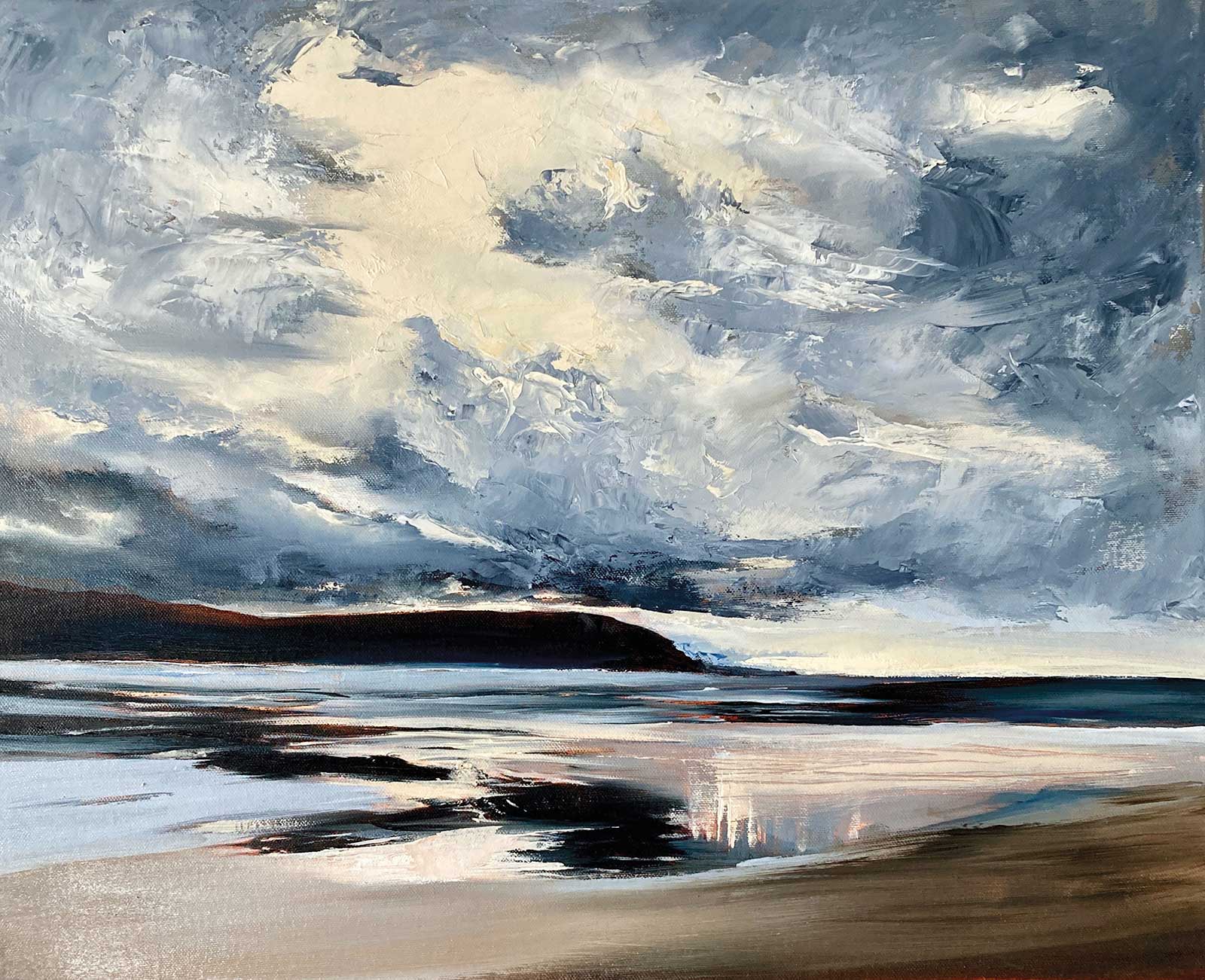 Stage 9
Stage 9 Finished Artwork
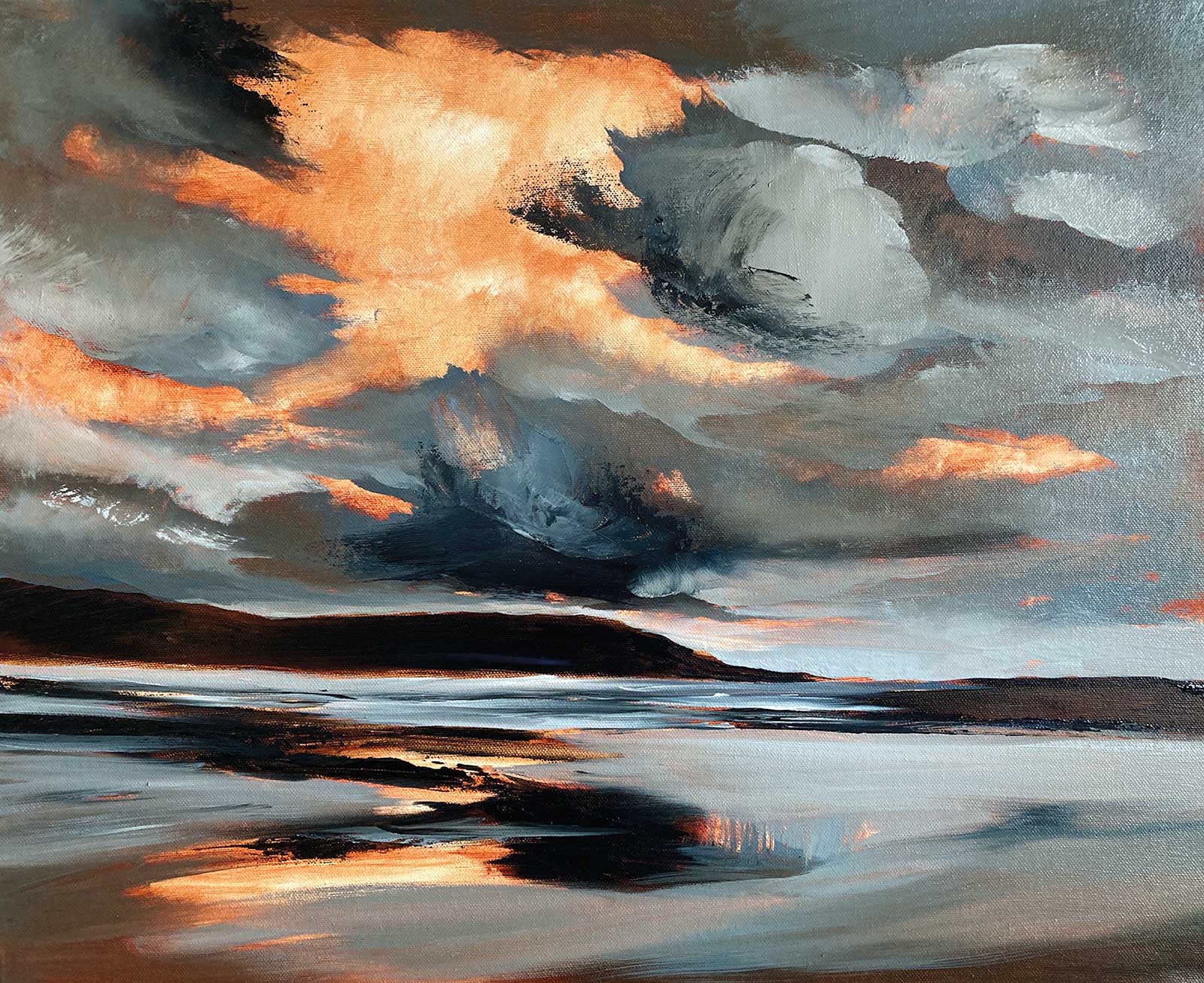
On a Winter’s Day, oil on canvas, 16 x 20" (40 x 50 cm)
I finished the painting by bringing in some lightened Payne’s gray, adding flourishes with a palette knife, which created a sense of movement in the sky. I find it satisfying how the lower part of the painting is in stillness, while the clouds above appear to be moving.
About the artist
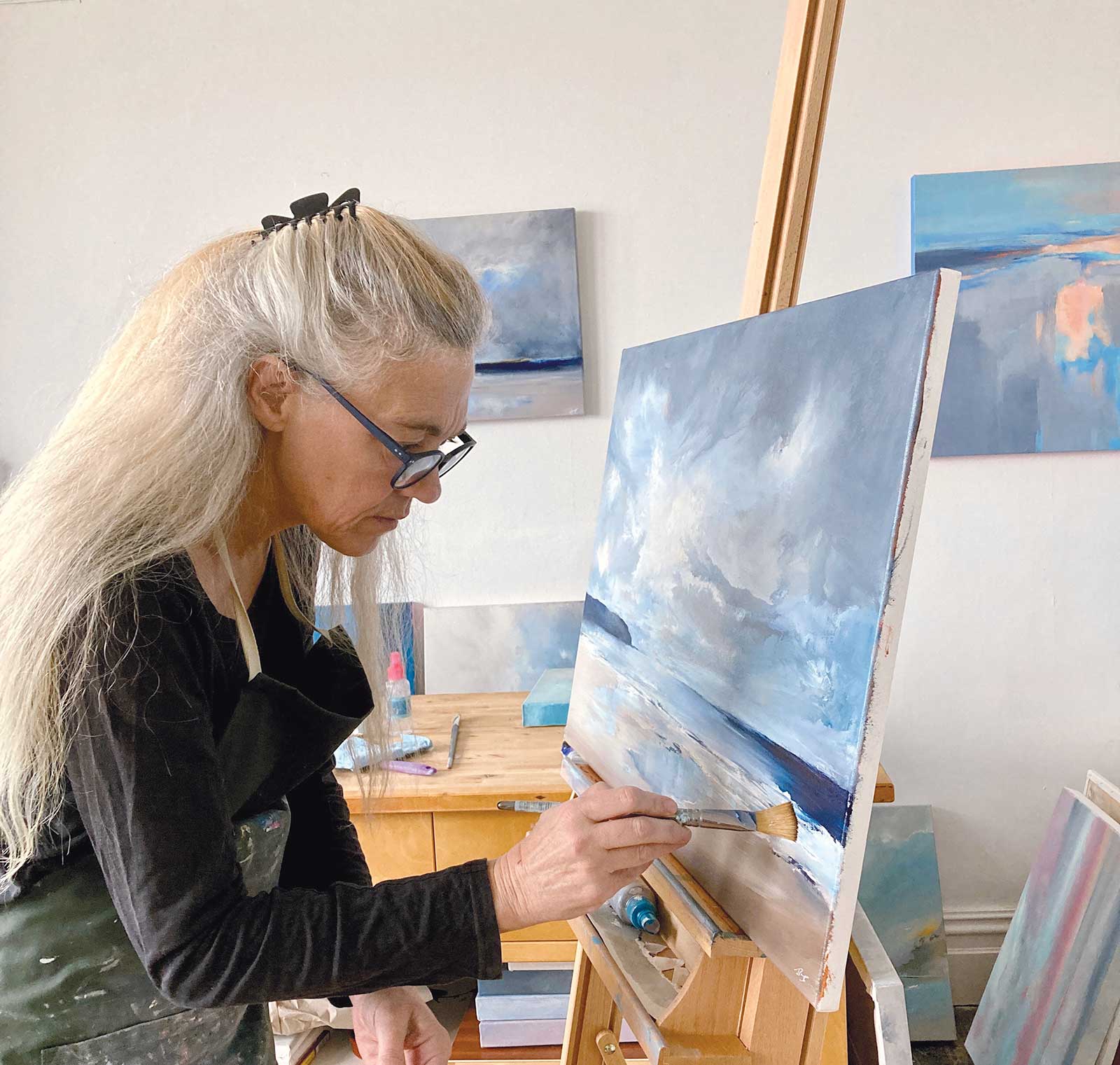 Jo Payne
A painter of coastal landscapes, which are very much inspired by her surroundings, Jo Payne is a self-taught artist working from her home studio on the North Devon coast in the UK. Using a variety of mediums, her intention is to express elements absorbed from my daily walks and observations to create atmospheric paintings, which focus on huge skies, wide open spaces, reflections and the constant relationship between light and shadow. Payne represents herself and sells her own work, online and in person, as well as occasionally exhibiting locally. Visits to her studio to see her work in person are welcome, and by appointment.
Contact at
www.seapainterstudio.com