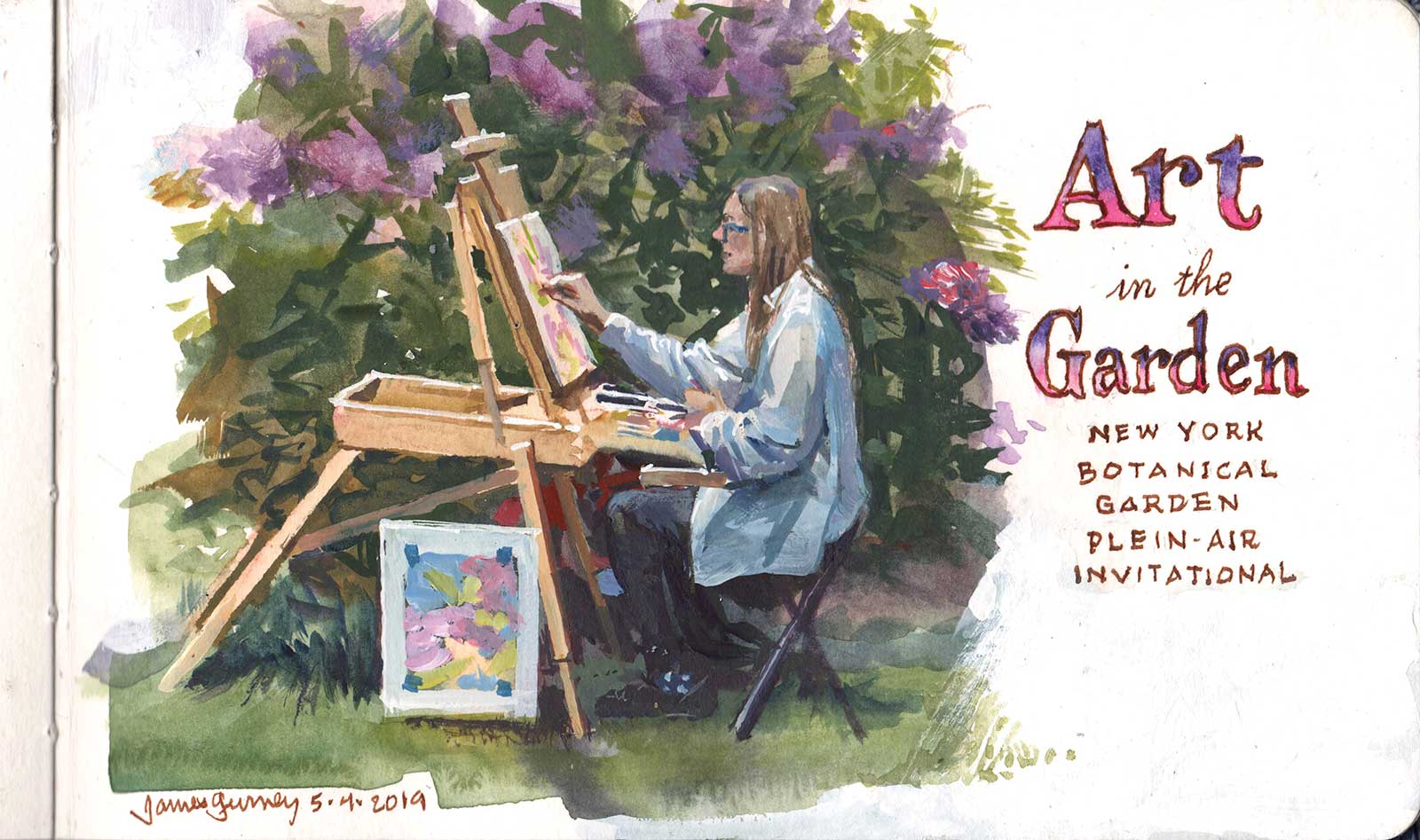
Veronica Painting Lilacs, watercolor and gouache, 5 x 8" (12 x 20 cm)
Painting with Friends
Building up a practice of regular sketching excursions with friends is a great way to get motivated. There are Urban Sketchers groups and plein air meetups in almost every city, and you can paint together in a private garden if you’re nervous about people watching you.
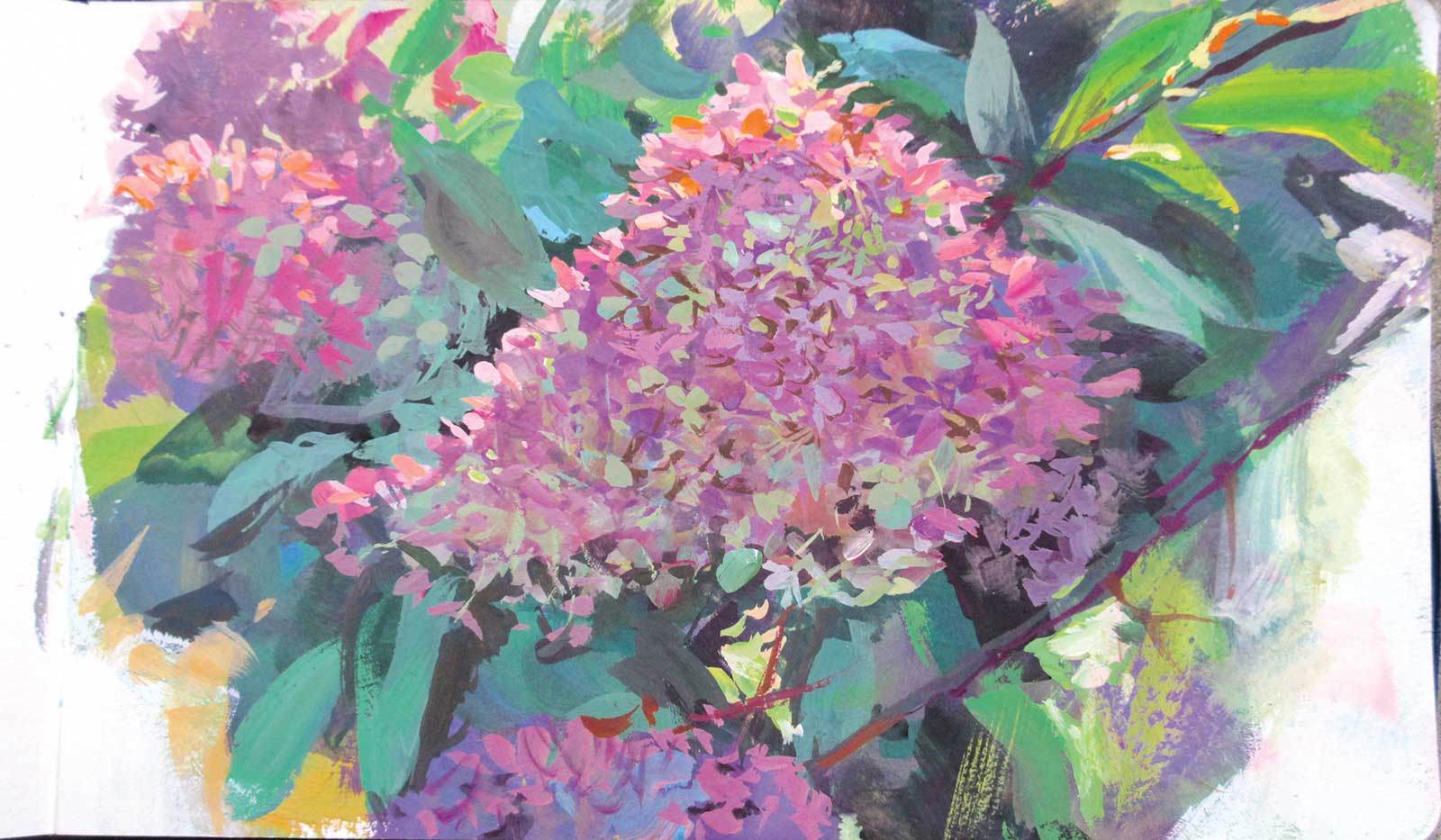
Hydrangeas, casein, 5 x 8” (12 x 20 cm)
Develop a Color-mixing Workflow
Some kinds of flowers and foliage are composed of small bits of color to make an impressionistic effect of variegated hues. Capturing that effect with opaque paint requires a palette that’s set up for a lot of free mixing. With opaque pigments, I mix a bunch of batches of varied color and try to keep several different brushes in play at once.
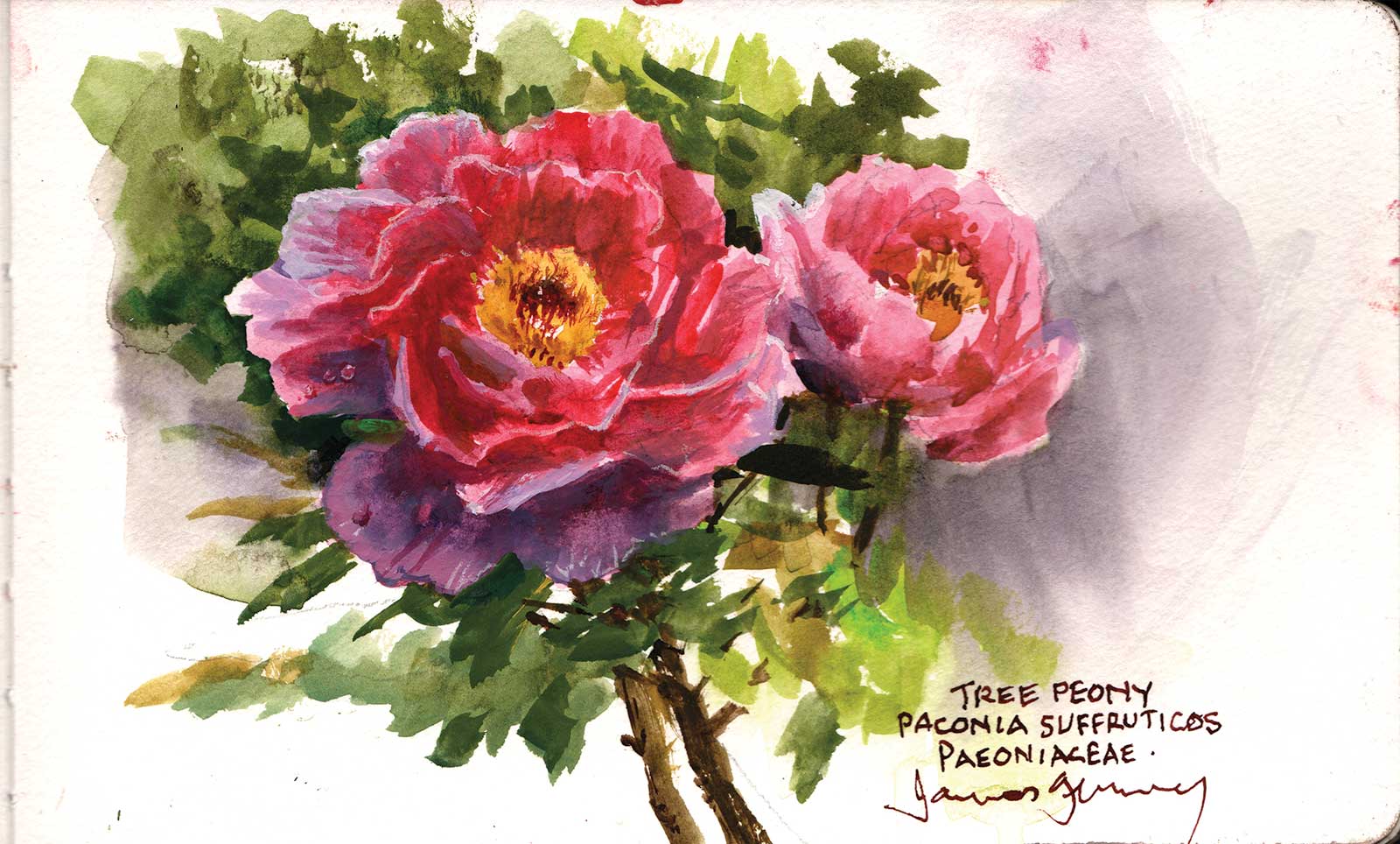
Tree Peony, watercolor and gouache, chalk, and white gel pen, 5 x 8” (12 x 20 cm)
Bring High-Chroma Colors
I should follow my own advice, but sometimes I forget how intense colors can be. At the New York Botanical Garden’s Plein Air Invitational, I wanted to do a close-up study of a tree peony, but I didn’t have a strong enough magenta pigment. Luckily my wife came to my rescue with a tube of opera rose. In the deep recesses between petals, the chroma is heightened by transmitted light.
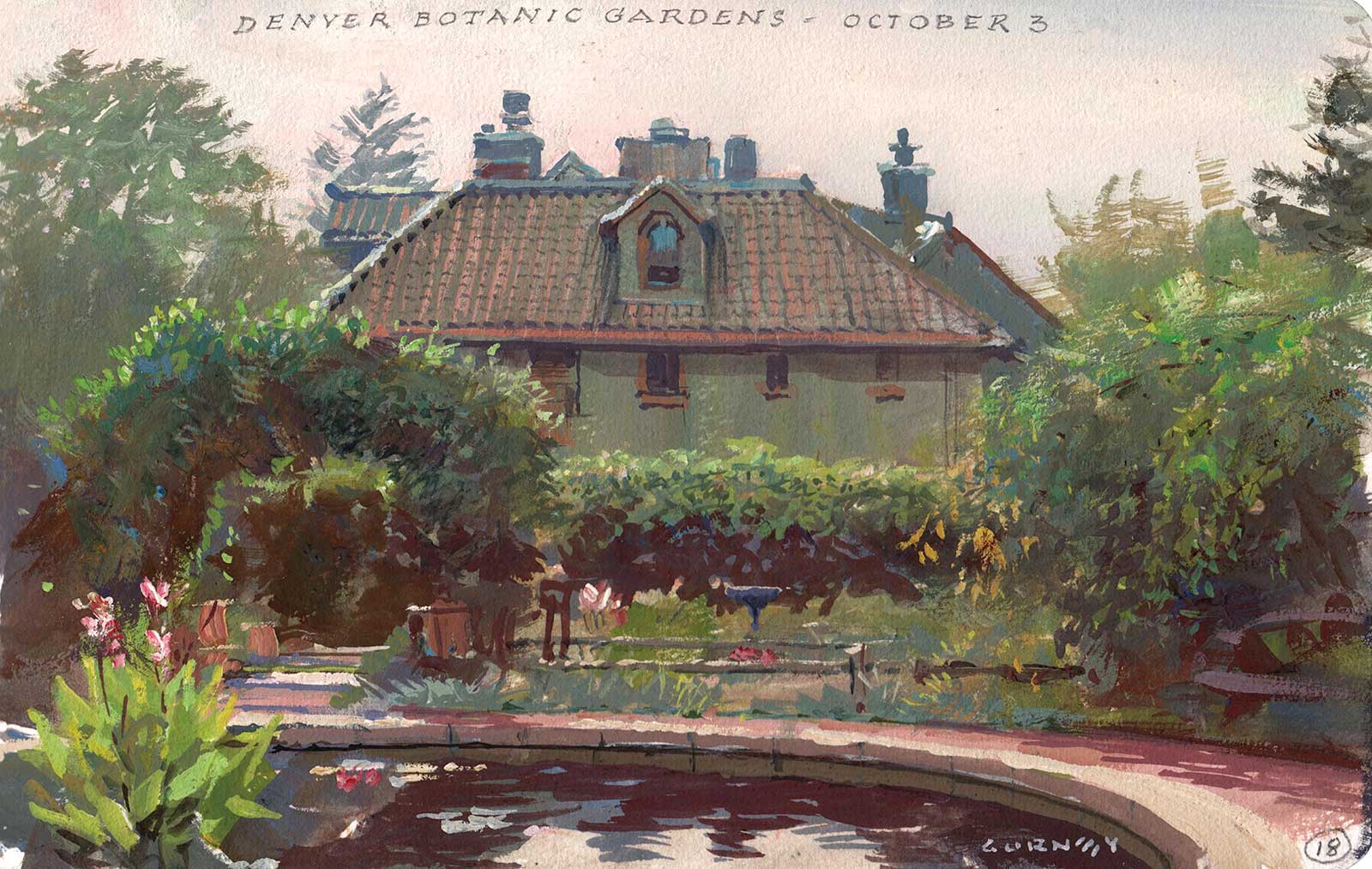
Denver Botanic Gardens, watercolor and gouache, 5 x 8” (12 x 20 cm)
Leaves are Lighter than Surroundings
In a natural setting, leaves get lighter in value at the top of the plant because they receive more illumination than the ones farther down the plant. It’s safe to say that all leaves are lighter than their background, unless they are against the sky, in which case it’s safe to generalize that they’re darker than their background.
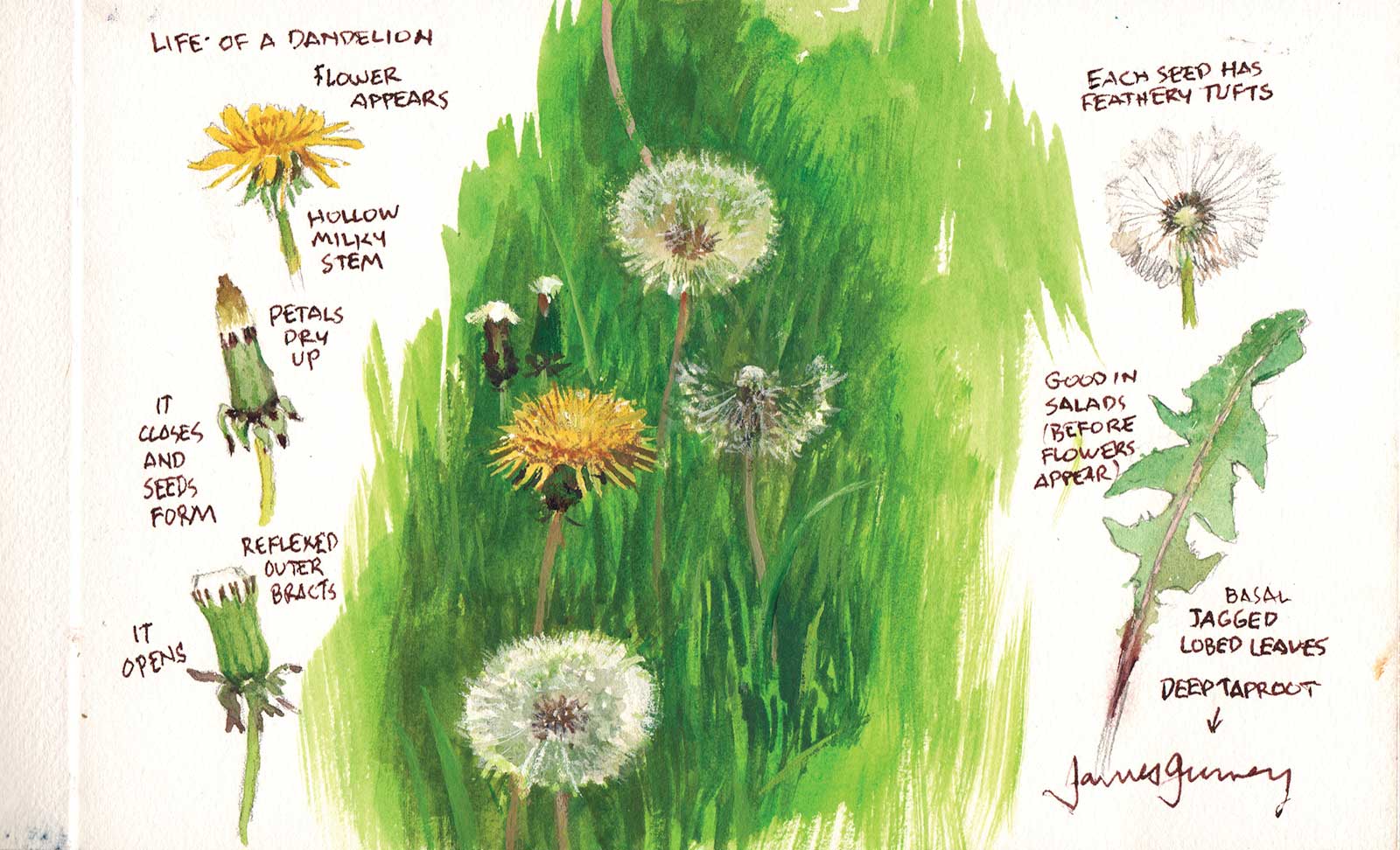
Dandelions, watercolor and gouache, 5 x 8” (12 x 20 cm)
Show the Life Cycle
Look for different stages in growth, from fiddlehead to fern, or from bud to flower. Sometimes getting the full spectrum of growth requires that you return later during another session. In this case, Taraxacum officinale (dandelion) has a brief enough life cycle that I can find examples in all the various growth stages during one painting session.
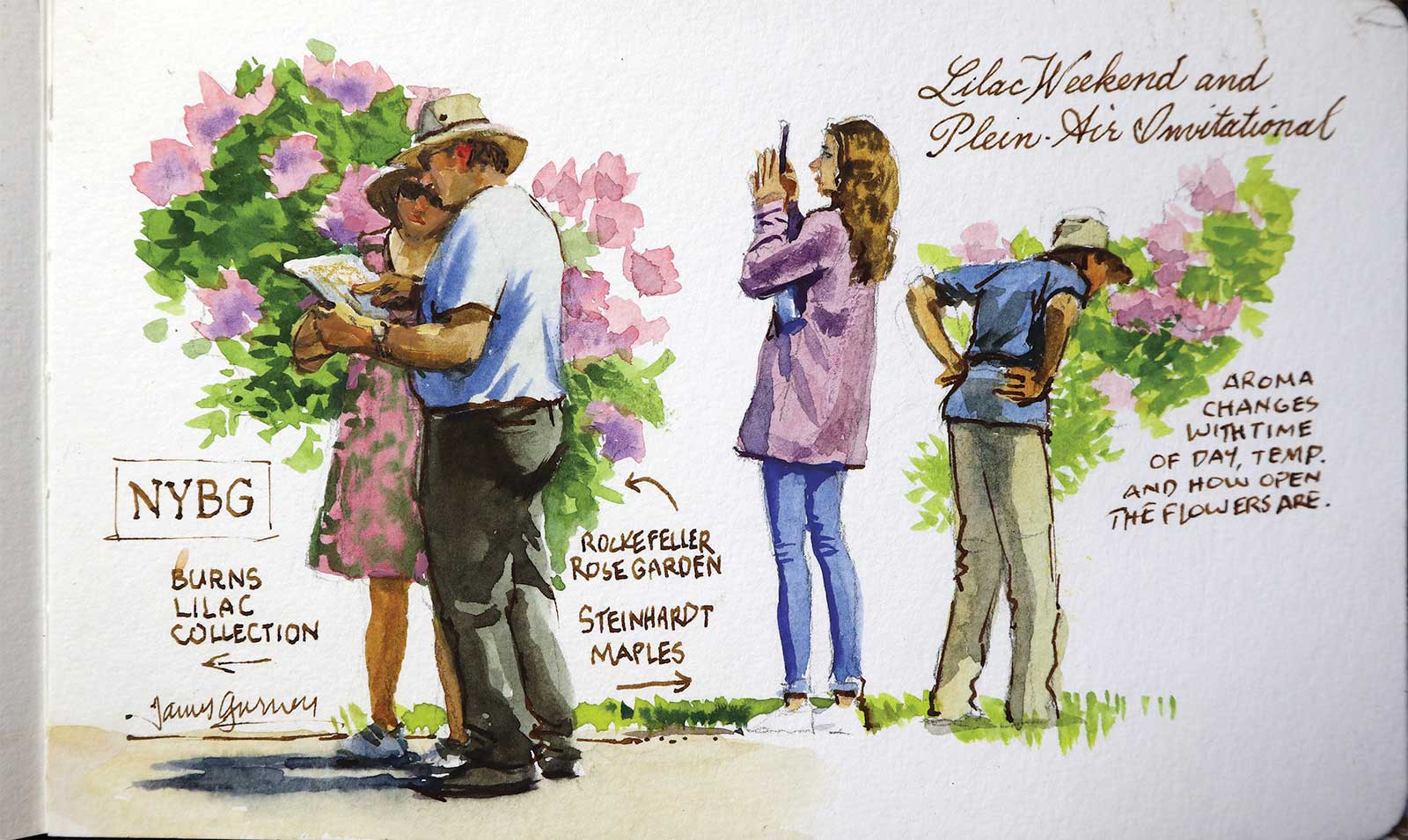
Lilac Weekend, watercolor and gouache, 5 x 8” (12 x 20 cm)
Include People Reacting
Painting random people looking at flowers gives context and scale to garden paintings, but people aren’t easy to capture. They don’t hold still for long. But you can snap a photo and work from that later, which is what I did here. Or if you want to be a purist, you can keep a sketchbook for pencil sketches and quick color studies, and reconstruct a pose based on those.
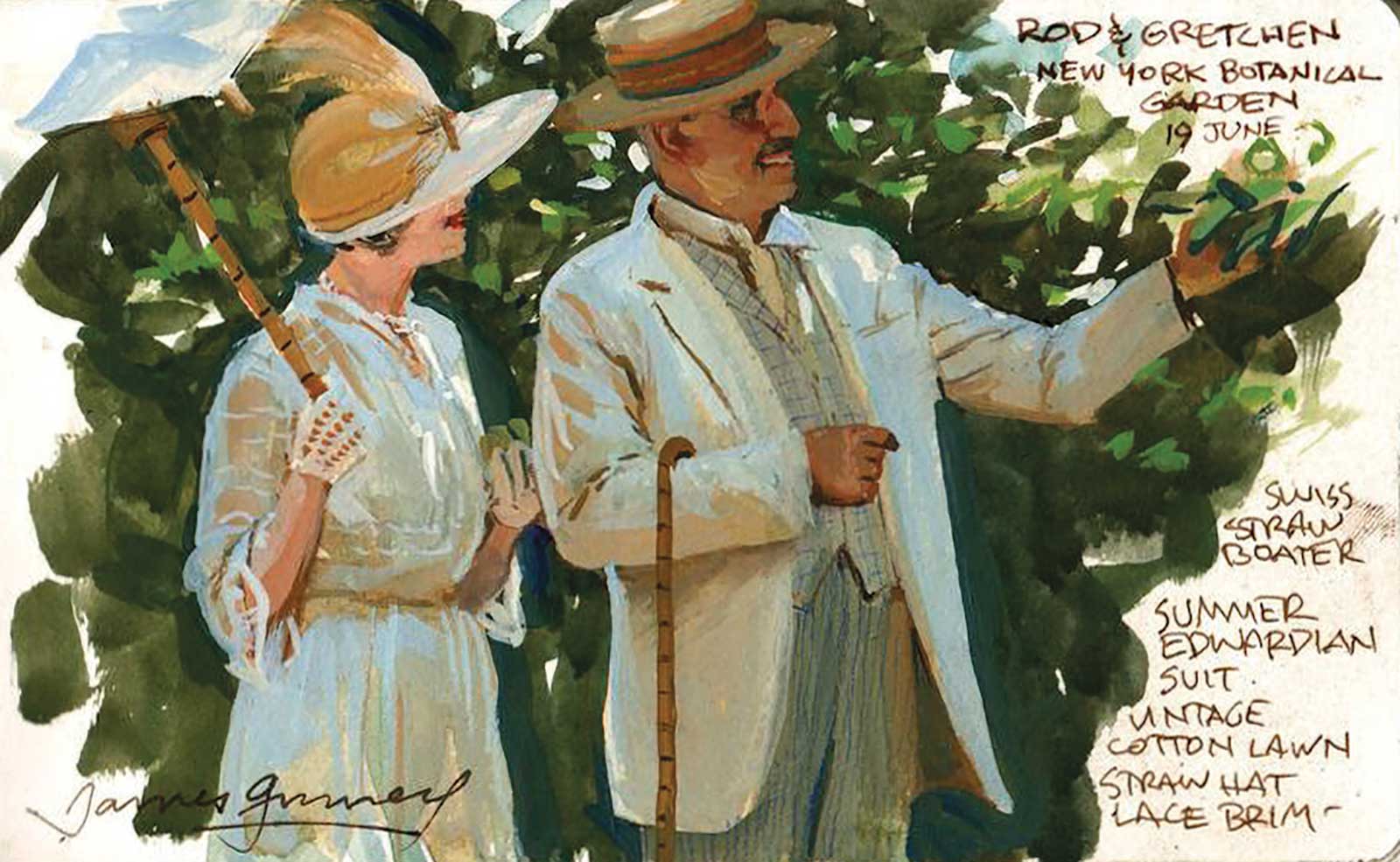
Rod and Gretchen, watercolor, gouache and colored pencil, 5 x 8" (12 x 20 cm)
Ask People to Pose
Rod Caravella and Gretchen Fenston posed for me in Edwardian attire at the New York Botanical Garden. I have never painted dappled light quite this way before. It really helps that they’re wearing white or very light tones of fabric. I can see how up-facing planes catch the blue of the sky, and creases or folds repeat the warm tones of the fabric.
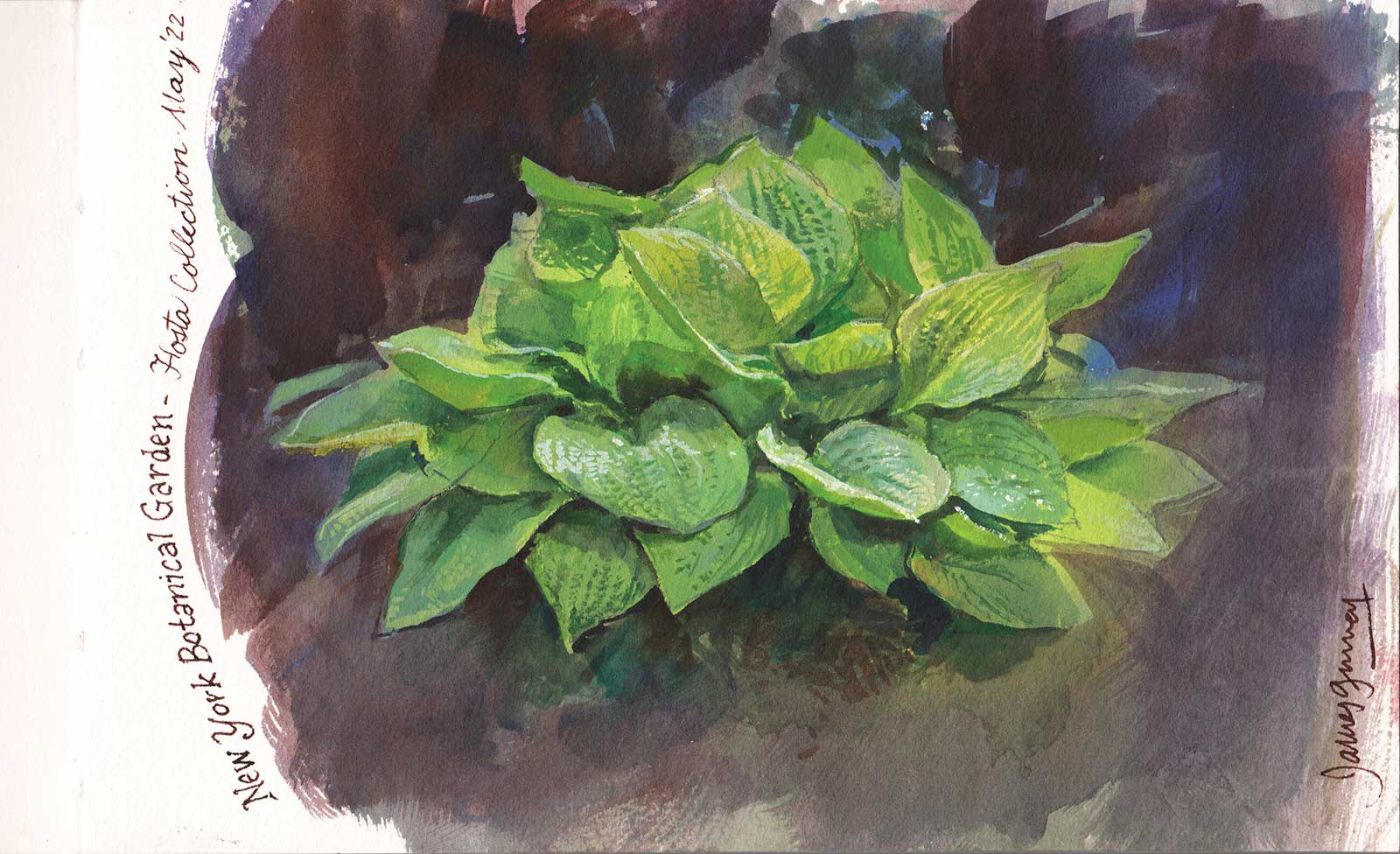
Hosta, watercolor and gouache, 5 x 8" (12 x 20 cm)
Discover Worlds Within Worlds
The hardest thing to do when you’re painting outdoors is to be patient, slow down and observe both the big shapes and the small details. If you can do it, worlds within worlds will open up. “Seeing them,” said painter and teacher Richard Schmid, “is a matter of the right point of view, and your painter’s eye is the special portal to such sights.”
Botanical and Plein Air Art
Is there a difference between botanical art and plein air painting? While both may result in attractive images of plants, the botanical artist is more concerned with portraying individual specimens with a scientist’s perspective, removing a plant from its context to understand the structure and exploring the beauty in that way. The plein air artist pays attention to the whole living ensemble as influenced by light, air, atmosphere and spatial depth. It’s possible to combine the two visual approaches—and the thought process behind them—to see both the forest and the trees.
About the Artist
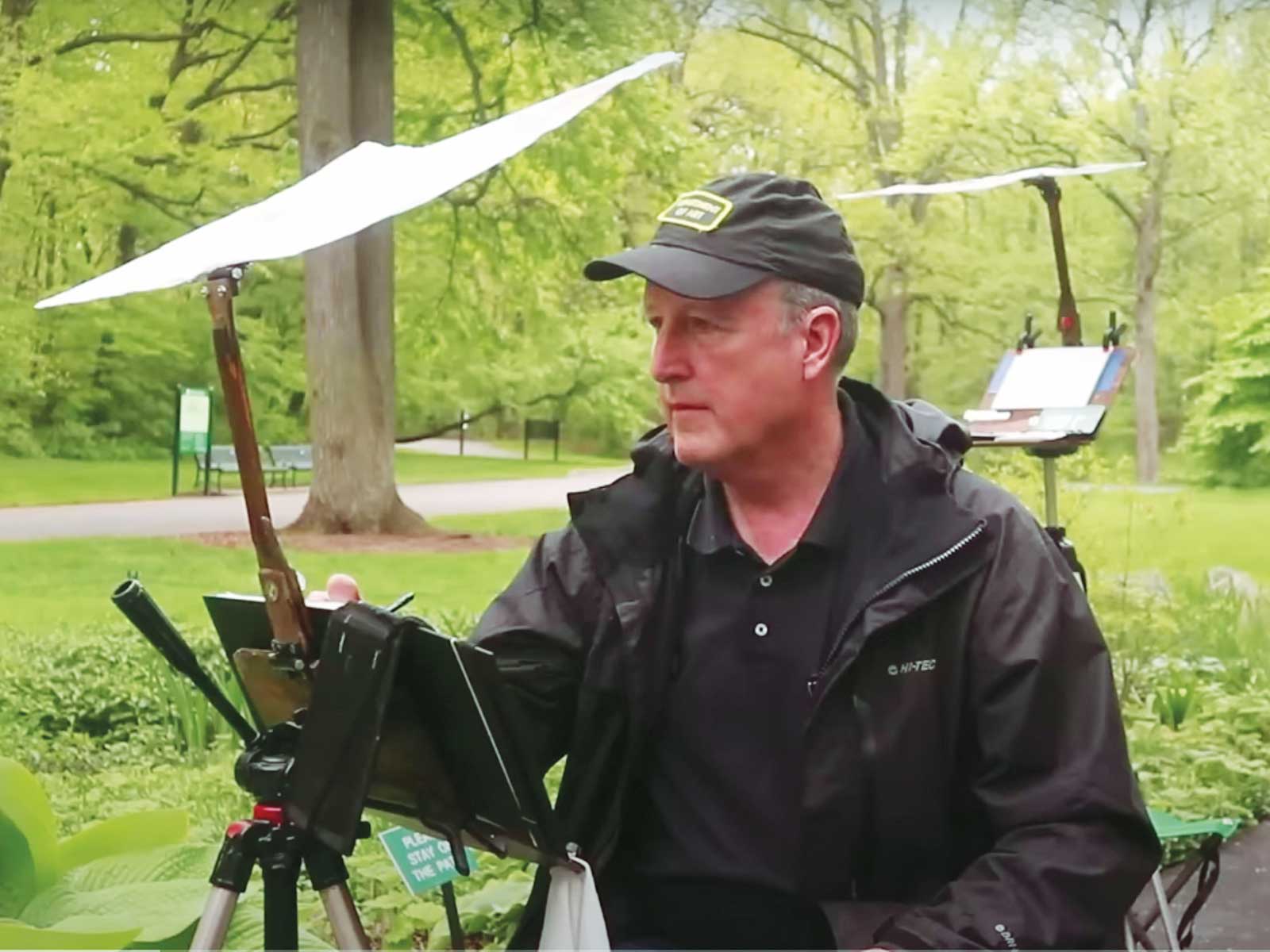
James Gurney is the author of Amazon #1 bestsellers Color and Light: A Guide for the Realist Painter and Dinotopia: A Land Apart from Time. When he painted “Australia’s Age of Dinosaurs” postage stamps, he consulted with a paleobotanist to make sure the plants were right. Check out his tutorial video “Flower Painting in the Wild,” available for streaming or download from Gumroad and Sellfy.
Contact at
www.jamesgurney.com