In our tech savvy art world of today, there are hundreds of websites where you can sell your own work online, and many fine art shows and fairs where you can buy a booth to meet your new clients. There are some artists who prefer to remain at the easel or don’t want to run their own business. But for those of us that do, a fruitful career is still possible these days—without a major gallery.
The main thing will be balance between your time at the easel and time spent on the business aspects. Having interviewed many successful artists, and from my own professional knowledge, I’ve discovered that a mix of about 60 percent of time at the easel and 40 percent on the business side is a realistic and necessary approach.
 The Business of Art
For the business you will need a website. You can try Weebly or any templated website company. Buy your domain name for a few years, as this will be your brand, link it to your website and maintain your presence. FASO websites (www.faso.com) are also very popular among artists.
You will also need the program Constant Contact to send email blasts out to your clients to show them new work or tell them about your shows. “Square” is the checkout system used by many small business owners. Create an account with Square, get the portable card swipe machine, and away you go. Remember they charge 2.85 percent, however the payments are secure and protected, not like a check that could bounce. Find out about taxes and district sales tax in your area and charge for any instate sales. You will need to file sales taxes quarterly as well. Many artists hire accountants or personal assistants for this aspect, as it is very important.
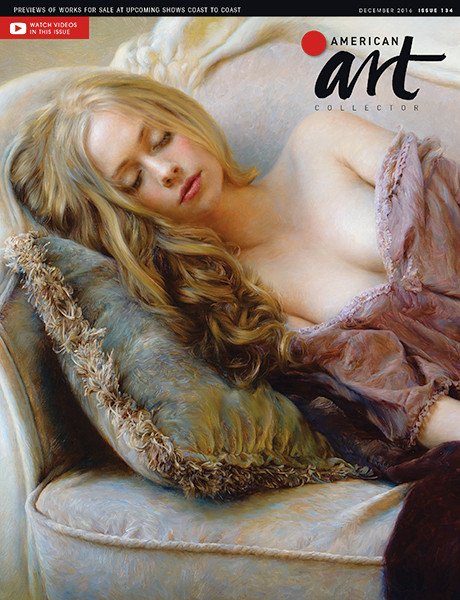
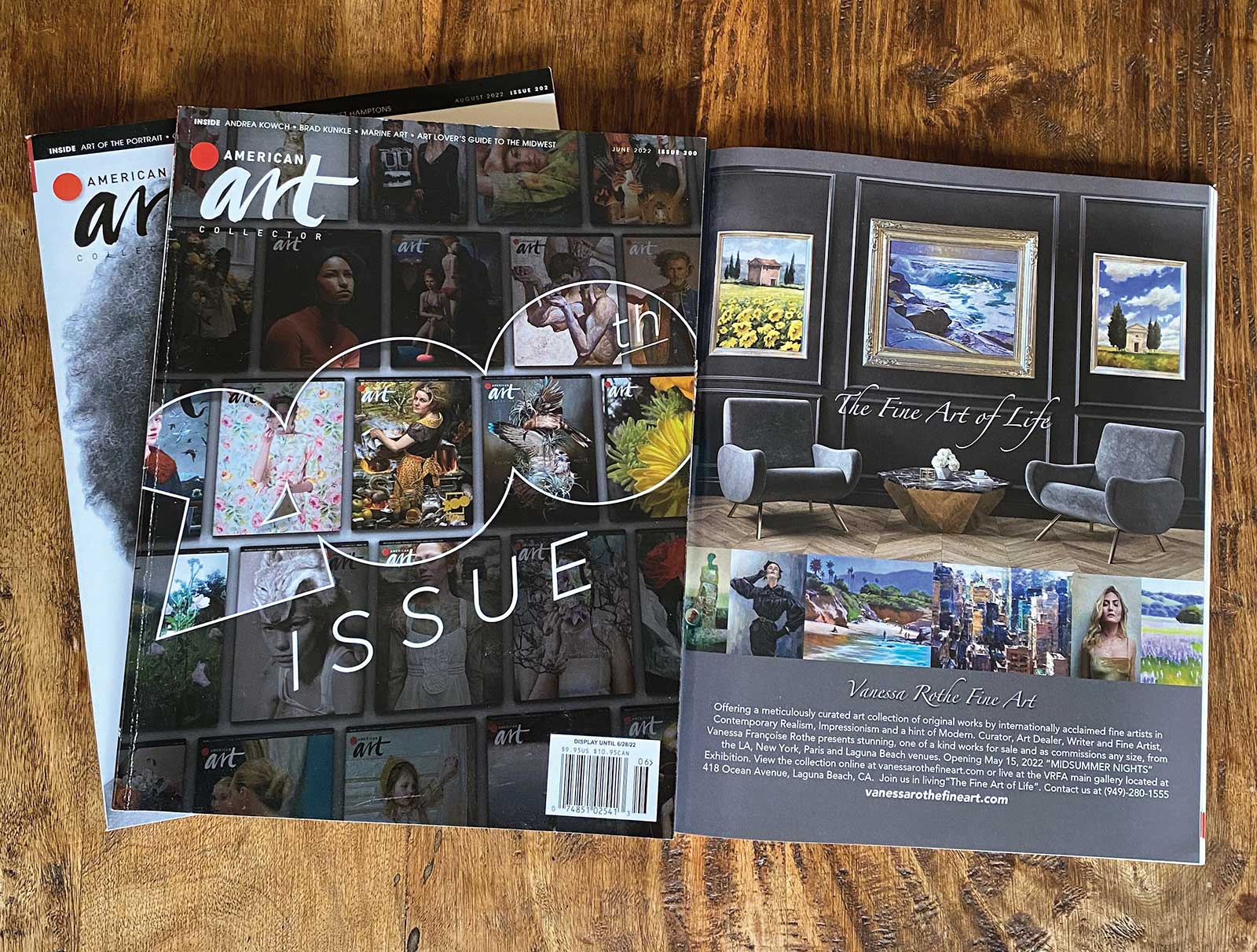 An example of an ad placed in sister publication American Art Collector.
Selling Your Work
What galleries usually provide, you will need to do yourself: marketing and advertising. For this article, we will assume you don’t have a physical gallery space rented to show and sell your work. You will need to make a marketing plan. First, find out where your artwork fits and with what publications, be it digital or print, where you can sell to your target market.
The way art is sold has changed. Online galleries for artists are in abundance these days, including hundreds of digital markets like Artspace, Artsy, Artnet, 1st Dibs, Saachi, even Amazon or Etsy. You will need to research them, see if your work fits in the genres that they sell, set up meetings and negotiate monthly or yearly pricing with the companies and then take time to load up all of your work to the software and site. Some take a small percentage of the sale, so check all the rates and compare.
Print magazines for the art world are still a viable place to show and sell works, and most have digital components now as well. This includes advertisements that can be sent to a mass email list of clients, as well as web tiles on their sites showing your work. Get to know editors of the art and luxury goods magazines, as well as sales reps, as they will help you build a plan to reach their art buyers.
You will also need to write press releases about your work (or hire a freelance writer) and submit it to art editors in hopes they will cover you and your work in an article. If you know someone who lectures on art, ask them if they can include one of your works in their presentation. Anytime someone writes about you or shows an image of your work, is a possible future sale. Be sure to always be honest and upfront about costs, tax, shipping, etc.
Art Organizations
Important art clubs such as Oil Painters of America and American Impressionist Society, as well as smaller local art clubs are a great way to show your work and reach your clients with only a minimum yearly fee. Most clubs have annual exhibitions at galleries and do advertising and marketing for your work in conjunction with the show. There is power in numbers. Enter the shows—you will be shipping your work there and back, but the shipping costs are usually well worth the money to be displayed on the walls and in front of buyers. Offer to do a demonstration at the event, and your name and work will be advertised even more.
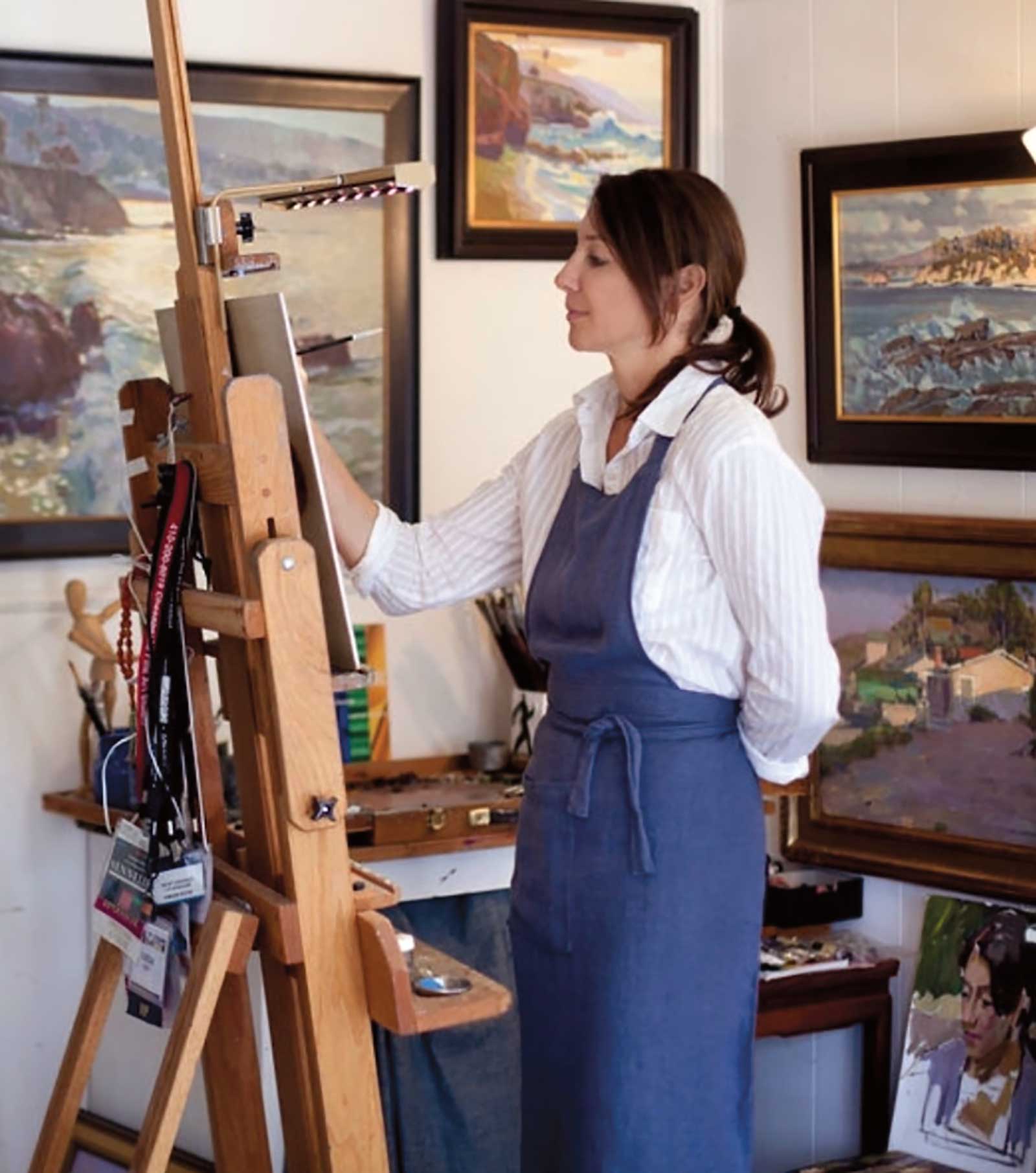 Vanessa Rothe working at her easel.
Social Media
The internet has changed the way art is sold. Facebook, Instagram and YouTube can all help you reach your clients directly. We have sold many works directly off Instagram where the buyer saw our work and called, emailed or texted to buy it directly. Make sure you use a clear name so they can find out and fill out all the contact information. Check your direct messages often to be sure you don’t miss a client and read all your comments below, as they may be asking to buy it. You will need to post regularly with beautiful images, including your palette and paint. Also be sure to document instances in which you paint on location and travel for work so that collectors can follow you. Use hashtags such as #artcollecting, #fineart, #sculpture #artoninstagram, etc. as well as more specific #landscapes #seascapes #figurative. Film yourself painting, film your mixing or brush techniques, and post on these media outlets as well as create a YouTube channel for yourself.
 A view of the LA Art Show in Los Angeles, California.
Art Fairs
Art fairs have popped up all over the world and are a new staple in the art market today. From the LA Art Show to Frieze to the Celebration of Art in Arizona, buyers, luxury clients and art lovers all attend these shows. Although these can be pricey to enter, they are a great option for a once or twice a year show. Booths can run $10,000 for a show, and you often have to present a full portfolio and list of exhibitions just to get in. If you get in, make sure you have a great collection ready, in which all of your works go together harmoniously. Be sure to have your bio printed to hand out, or even a QR code that leads to your website. Make a written guestbook available as well to capture emails for your e-blasts and mailing list.
Enter Competitions
Right here in International Artist, there are competitions to enter that can help you earn esteem or money. You can do searches on the internet as well for other competitions happening across the world.
Open Studio
Another great way to gain clients and make sales is to have an open studio event. Buy a few bottles of wine, have a nice cheese and cracker plate, play some soothing classical music and use your mailing list to create an invitation to your studio.
Teaching
Most of us professional artists have a “side gig.” (From teaching weekend workshops, to weekly Tuesday night classes, to writing for this magazine!) The art world can be challenging to maintain a monthly income. We nearly all have a side gig where we earn other stable money, especially if we are helping support a family. Many of the top artists I know teach or work a part-time job.
Do the Dance
As a solo entrepreneur you will need to do a dance between creating and running the business. In the next issue, I will dive into some of these areas more in depth. Hard work and dedication is what it will take to make it on your own. Going solo is not for the faint of heart, and it can be difficult to find a good balance. You will need to build and foster relationships with clients, follow up with benefactors, be on time and show up for many events in the art world. But with the internet, social media and a digital platform market, anything is possible. —