I have always been captivated by atmospheric conditions—sunlight, mist, rain and the ever changing weather are all of great fascination to me. The warm glow of a sunset, or the silver light of a sunrise, offer endless inspiration as a landscape painter.
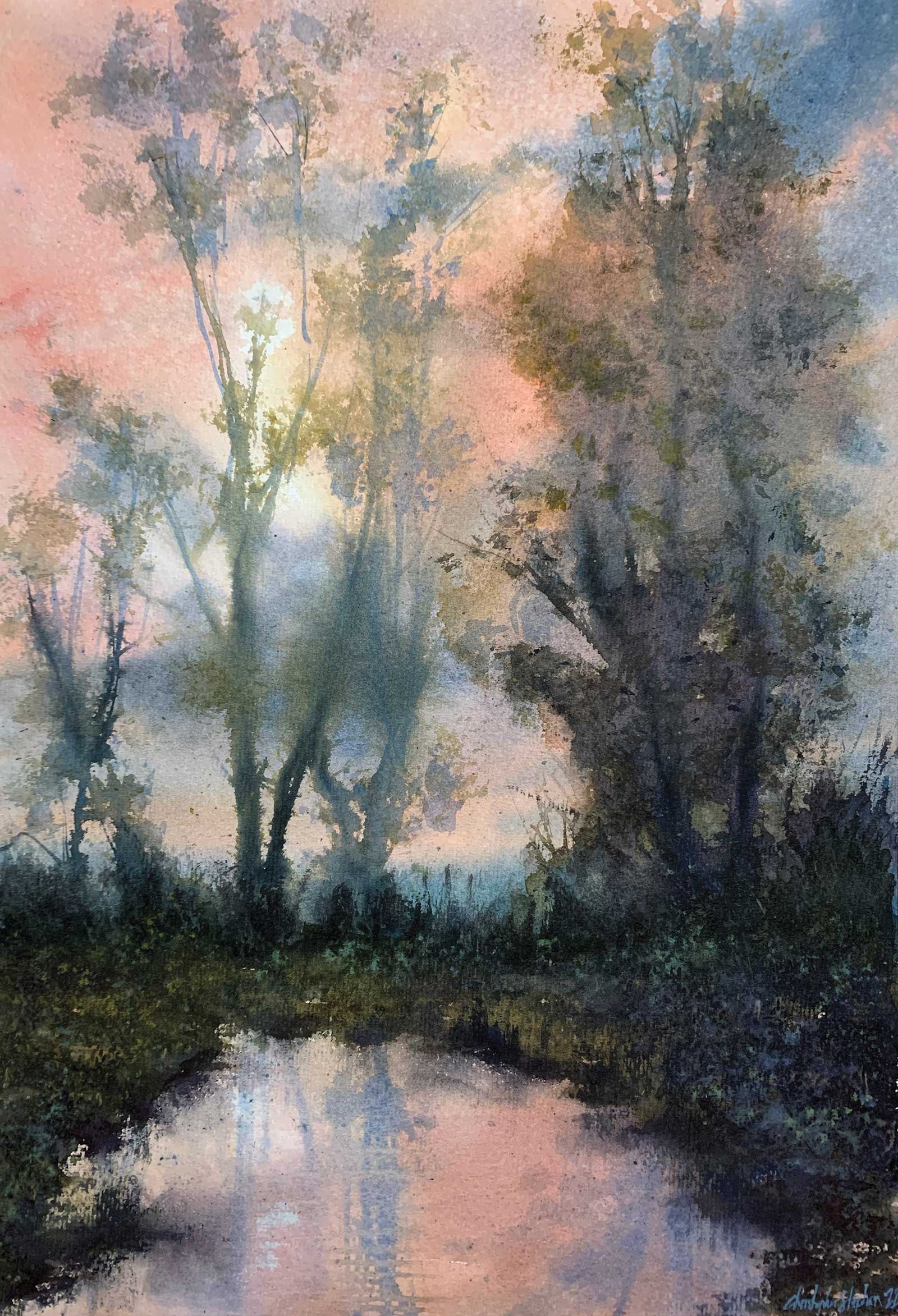
After The Flood, West Norfolk, watercolor, 22 x 15" (55 x 38 cm) The county of Norfolk offers almost endless subject matter for me. This painting came about after a heavy rainstorm. The clouds cleared to leave a wonderfully atmospheric scene.
When walking through the Hertfordshire countryside near my home, I’m forever compelled to stop and reach for my pad and paints, to hurriedly grab a quick sketch for later reference. Often, it can be something as simple as a beam of light, touching the bough of a tree, or a rippling reflection of a narrowboat on the canal. A regular scenario is to be stopped in my tracks with a flash of inspiration; I’ll then spend the next few minutes frantically scribbling before my initial observation disappears.
That’s the challenge of working in plein air. All too often the sun can slide behind a cloud or the mist can roll in and the effect that initially pulled me in has gone. I create my sketch and take color notes, and I try to remember as much as possible, so it can be recreated back in the studio.
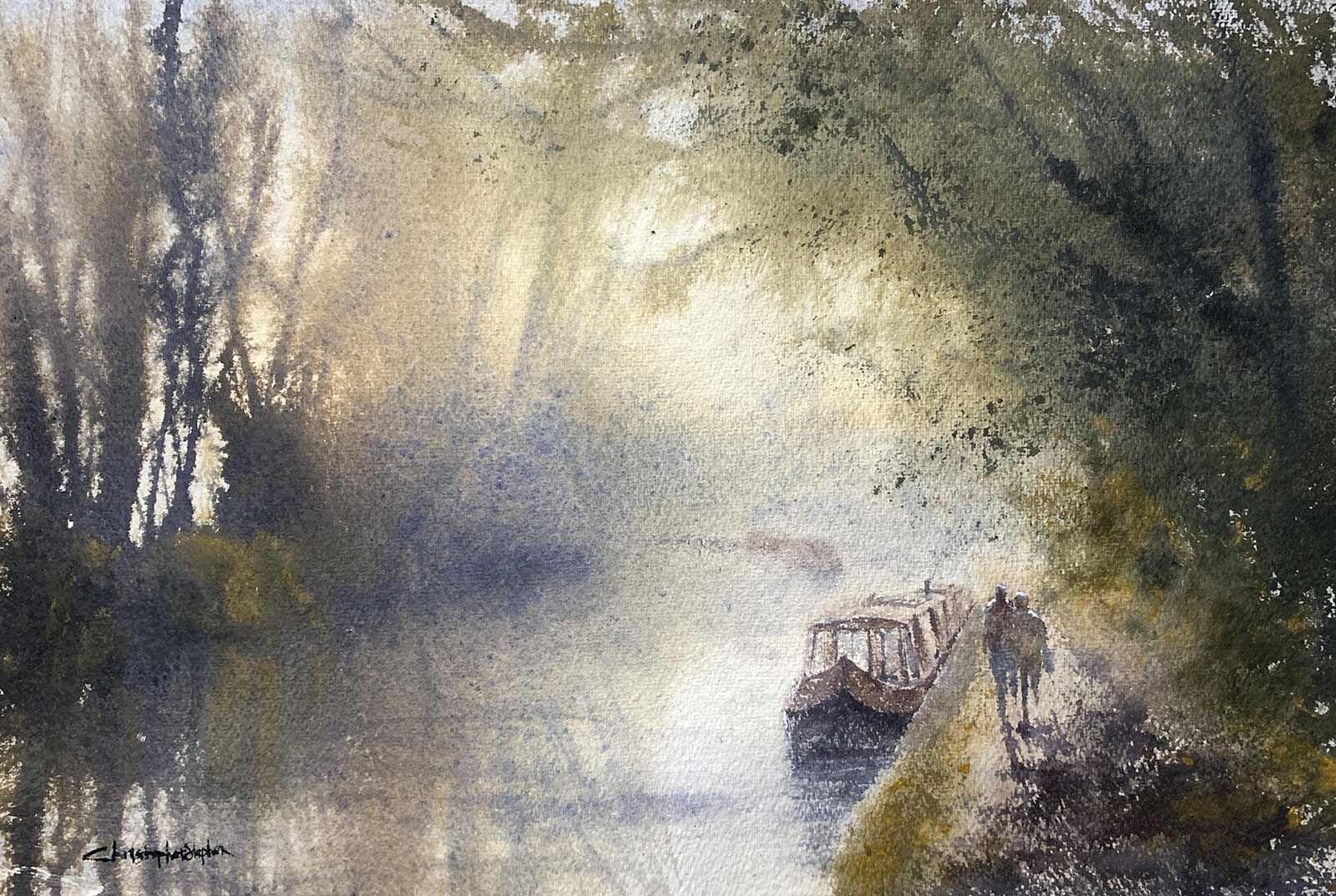
Misty Morning, River Lea, watercolor, 15 x 22" (38 x 55 cm) The early morning mist on the river provides an exciting opportunity for a painting. The softness of the reflections and the muted tones are perfect for portraying an atmospheric scene.
I prefer to work in this way, from sketches and notes, as opposed to photographs, so I don’t get bogged down with the tiny elements. Referring to my sketches makes it easy to strip away all the unnecessary information. With photo references, it’s all too tempting to include every tree, bush or fence post. This can result in a busy, confusing composition. I find it far more pleasing, as an impressionist style painter, to suggest almost everything in a simple manner and paint one or two focal points strongly. This, in my opinion, can produce a far more interesting experience for the viewer.
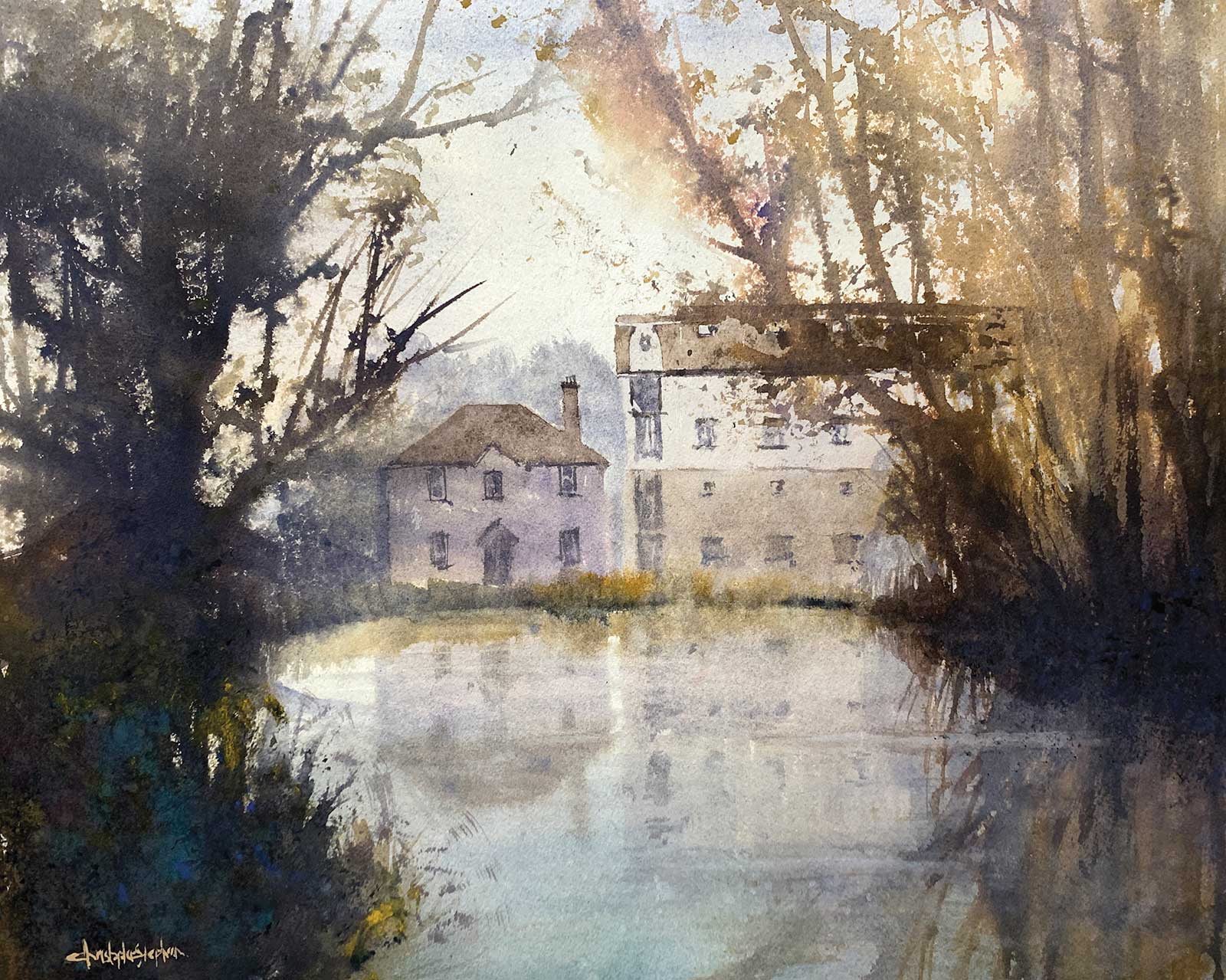
Roydon Mill, watercolor, 15 x 22" (38 x 55 cm) There has been a water mill on this site in Roydon, Essex, since the 11th century. Now used as offices, the building still offers an interesting subject.
Another benefit of working in plein air with watercolor is that it allows me to capture these fleeting moments. A photograph will often intensify the shadows, and color can either be too saturated or completely washed out. Using a simplified setup, a small pad of watercolor paper, a limited palette and a few brushes means I can be setup and painting in a matter of minutes. Of course, the biggest advantage is I get to spend my days in the great outdoors.
My Art in the Making Summer Morning, River Stort
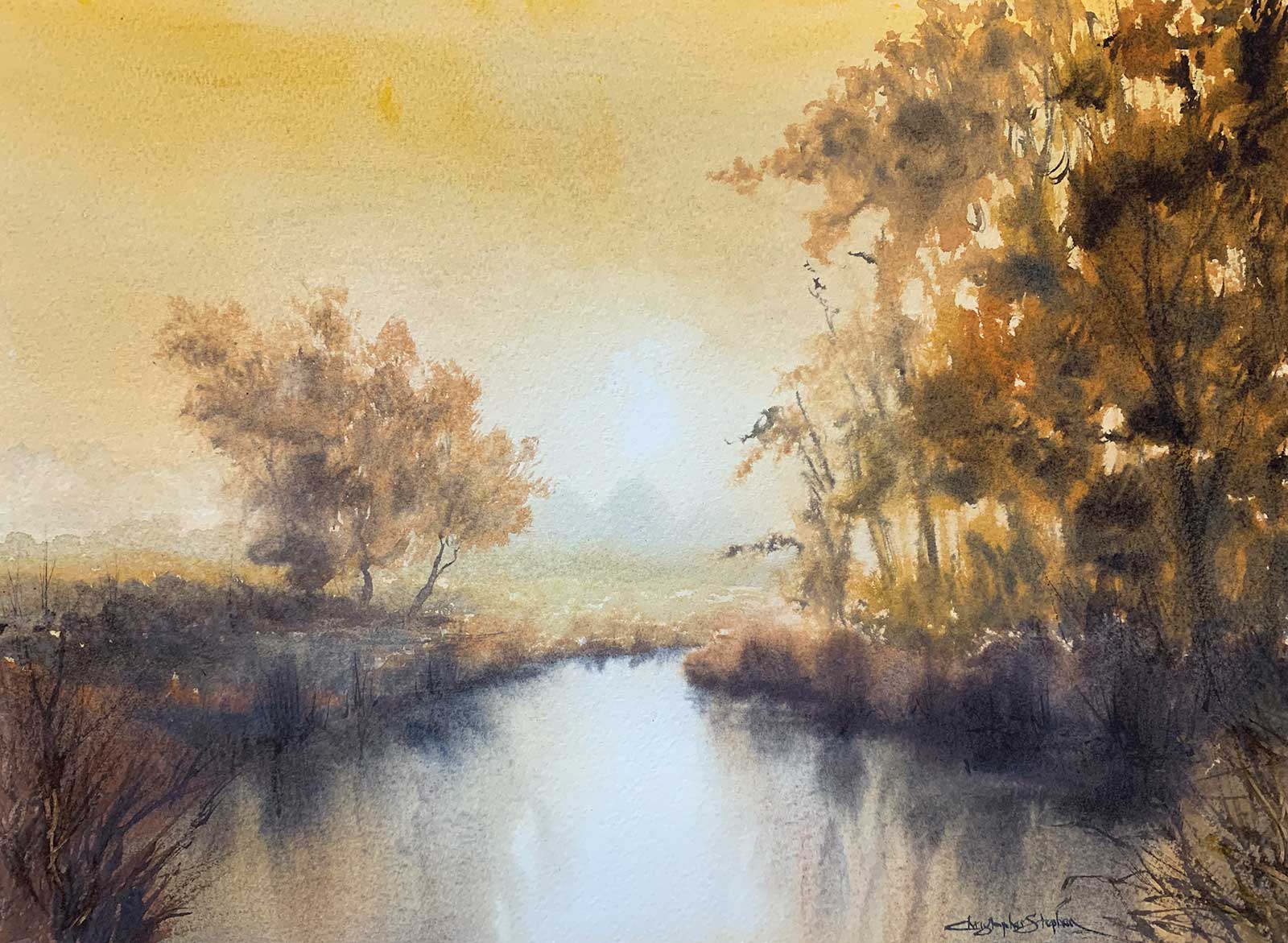
For this demonstration, I’ll be working back in the studio from a sketch I made on a warm, golden summer’s morning. While walking along the River Stort, on the Hertfordshire/Essex border in England, I rounded the bend and was taken aback by a view of a hazy sun, rising above the distant treeline and illuminating everything before me. The water took on an almost mirror-like quality and the reeds cast a beautifully elongated reflection.
The instant, free flowing nature of watercolor comes into its own for this style of painting. Working quickly and loosely, allowing the paint to flow and mix together on the paper, can create marks and effects that would be near impossible to achieve by design.
To capture the feeling of this summer morning, I worked mostly wet into wet, using only a small amount of dry brush technique near the end. This results in a soft, misty, almost ethereal painting that places atmosphere and light above all else.
I painted straight onto the paper with no pencil drawing, first setting an overall color tone with a graded wash, then subsequent washes were added while the paper was still wet. This requires an experienced eye for how much water remains on the surface; too wet and the paint will simply wash away, too dry will leave a hard edge. It’s also important to leave some white on the paper, as this will serve as a light source, both in the sky and reflected on the river’s surface. To achieve a sense of perspective, I worked from the distance to the foreground, gradually increasing value from lighter to darker.
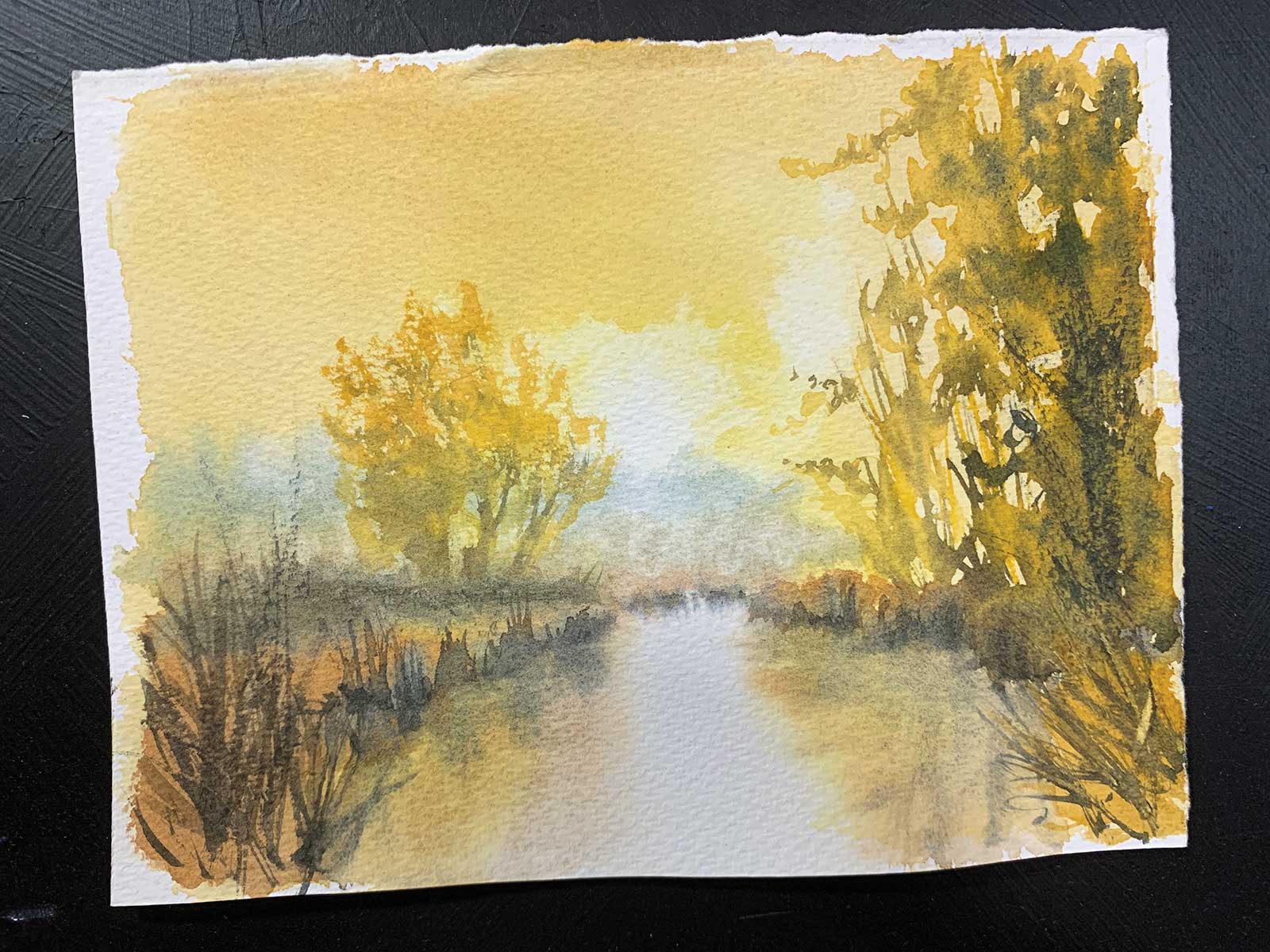 Stage 1
Stage 1 Plein Air Sketch
I created my sketch on location on an early June morning by the River Stort. I used the same limited palette and brushes as in the studio, on an 8-by-6-inch sheet of Millford watercolor paper.
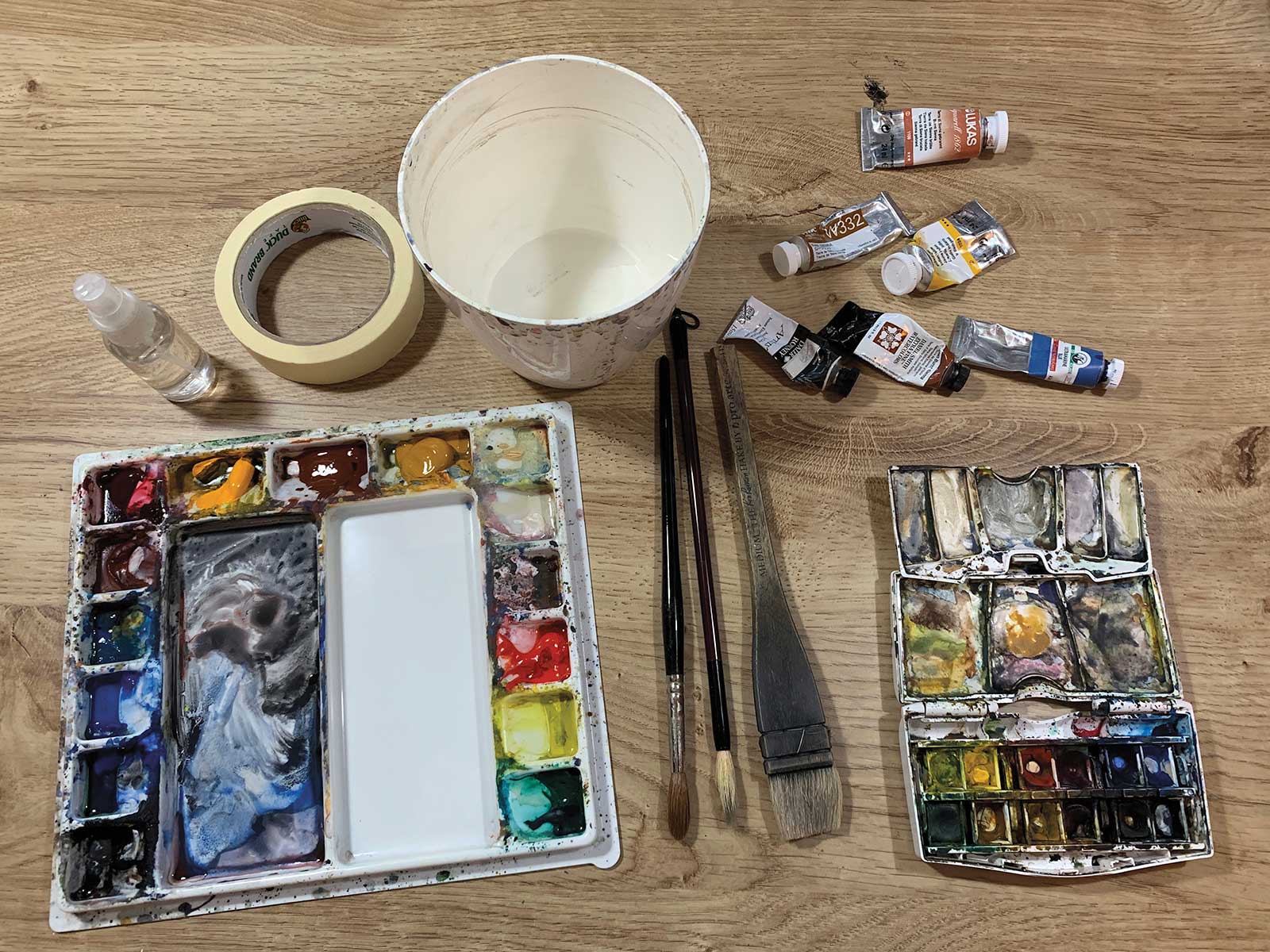
WHAT THE ARTIST USED
Watercolors
Ultramarine, Cobalt blue, Alizarin crimson, Indian yellow, Burnt sienna, Raw sienna
Additional Colors On My Palette
Payne’s gray, Cerulean blue, Light red, Cadmium red, Hansa yellow, White
Brushes
Hake brush, Sable brush, size 10, Medium calligraphy brush
Paper
Millford 140lb cold-pressed watercolor paper
Additional Supplies
Water pot, Masking tape, Spray bottle, Large palette (studio), Travel paint set (plein air)
 Stage 2
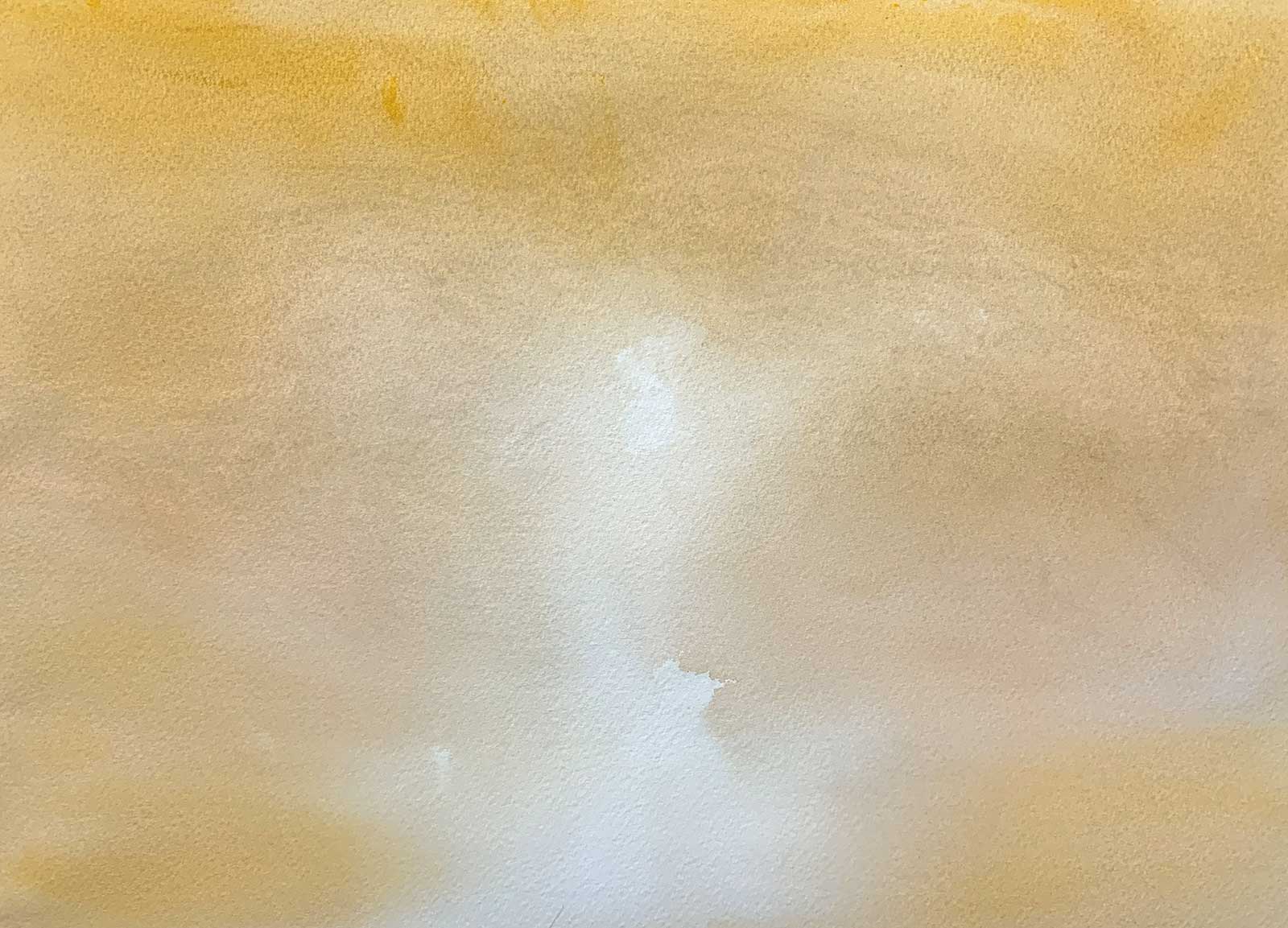
Stage 2 Graded Wash
This first wash sets the overall color tone. Raw sienna, Indian yellow and alizarin crimson were applied using the Hake brush. White paper is left behind for the sunlight.
 Stage 3
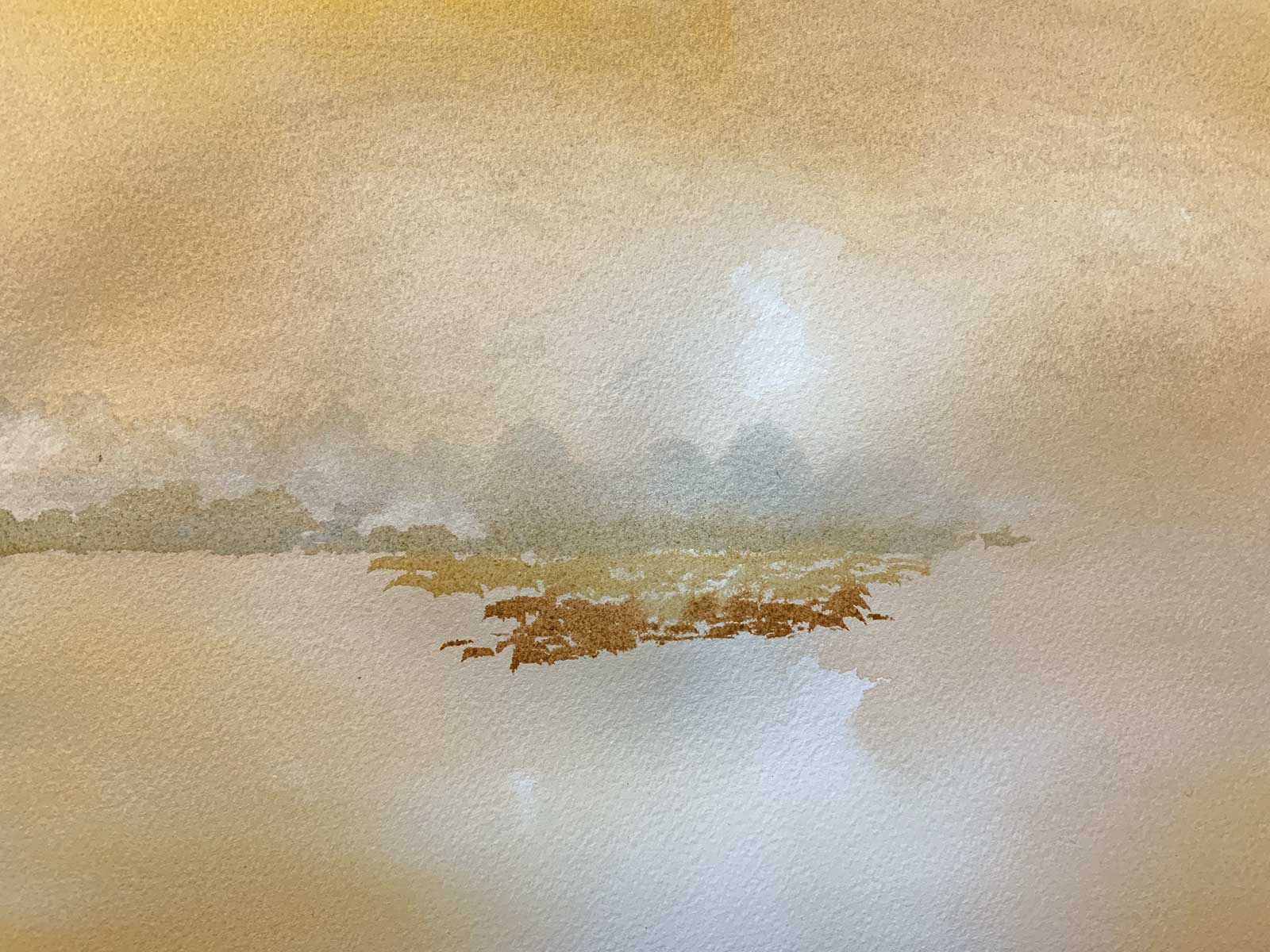
Stage 3 Distant Trees and Midground
Cobalt blue is added to the sky colors to create a blue/gray. The distant trees are painted with a size 10 sable, while the paper is damp. The midground is raw and burnt sienna.
 Stage 4
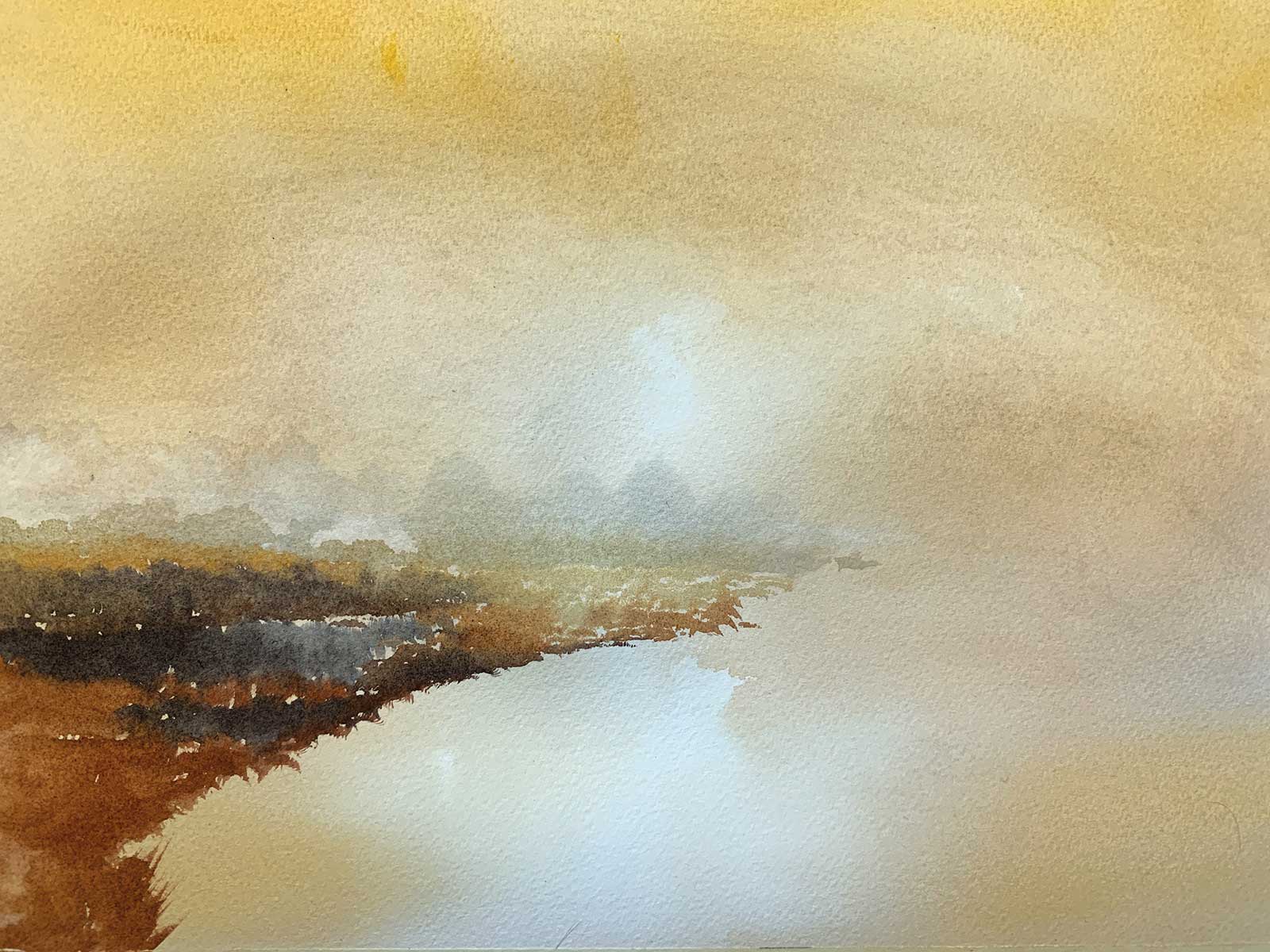
Stage 4 Left Side Riverbank
Continue with the size 10 sable down the left side of the riverbank. Ultramarine is added to the previously used colors. The darks are a mix of ultramarine and burnt sienna.
 Stage 5
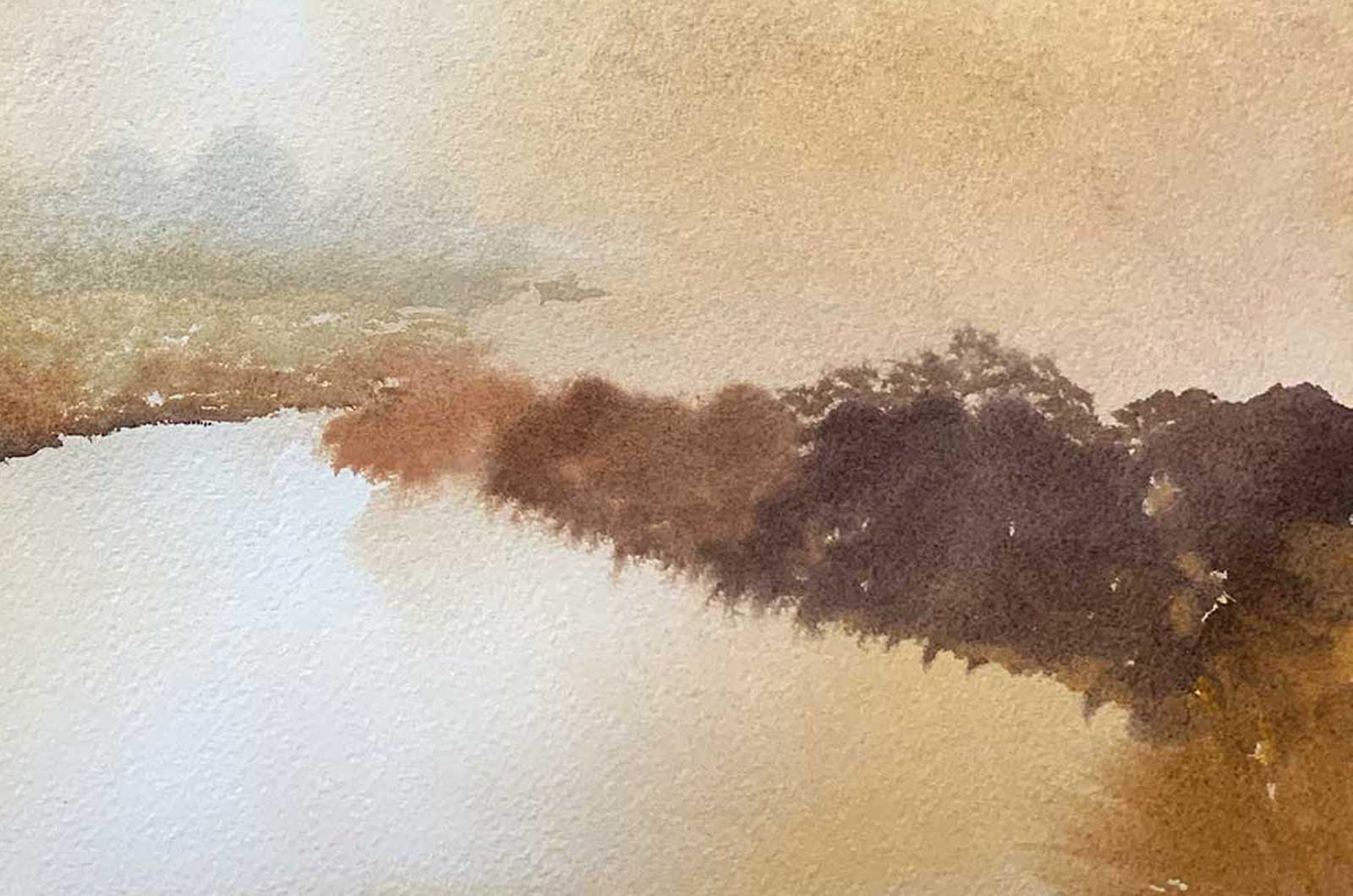
Stage 5 Right Side Riverbank
Using the same brush and colors, I’m working lighter in the midground, to darker in the foreground. I leave a small area of raw sienna in the bottom right. This will be a small area of sunlit reeds.
 Stage 6
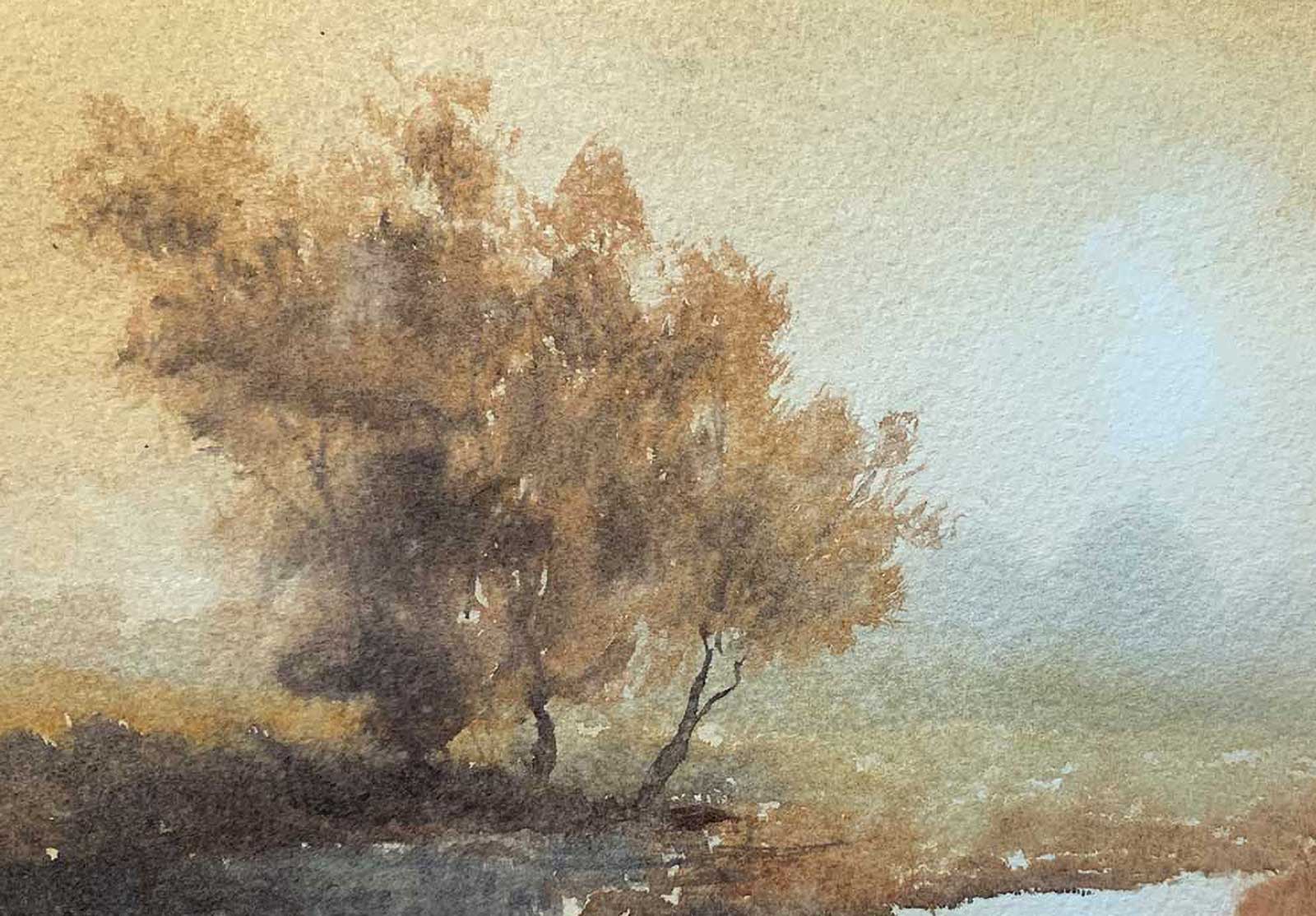
Stage 6 Midground Trees
I use a mist bottle to dampen the surface and paint the trees using the calligraphy brush. Raw sienna, burnt sienna and alizarin crimson are used for the foliage. The shadows and branches are ultramarine and burnt sienna.
 Stage 7
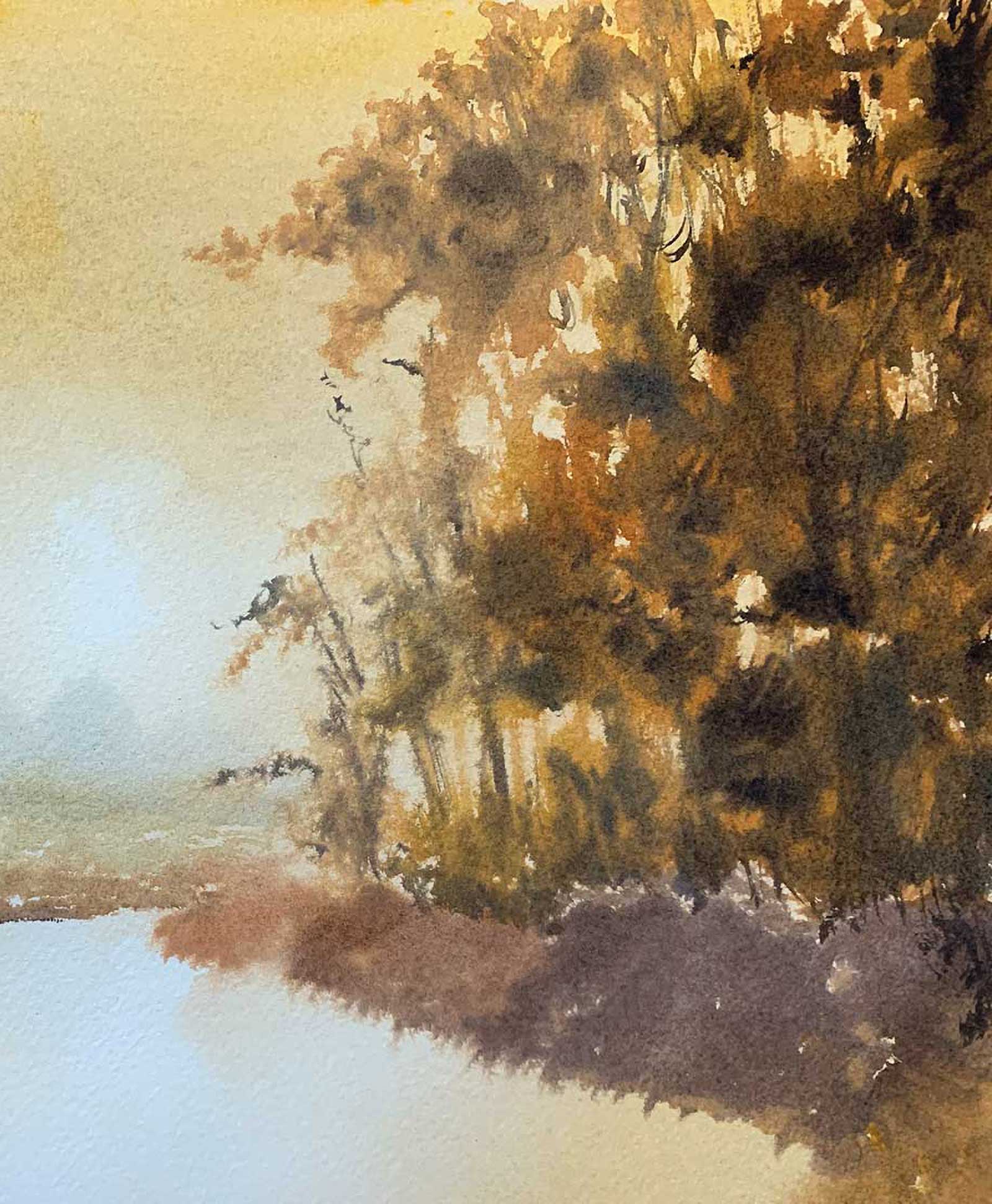
Stage 7 Right Side Trees
Using the same colors and brush as the midground trees, I increase the value as the trees get closer. This is achieved by using increasingly thicker paint.
 Stage 8
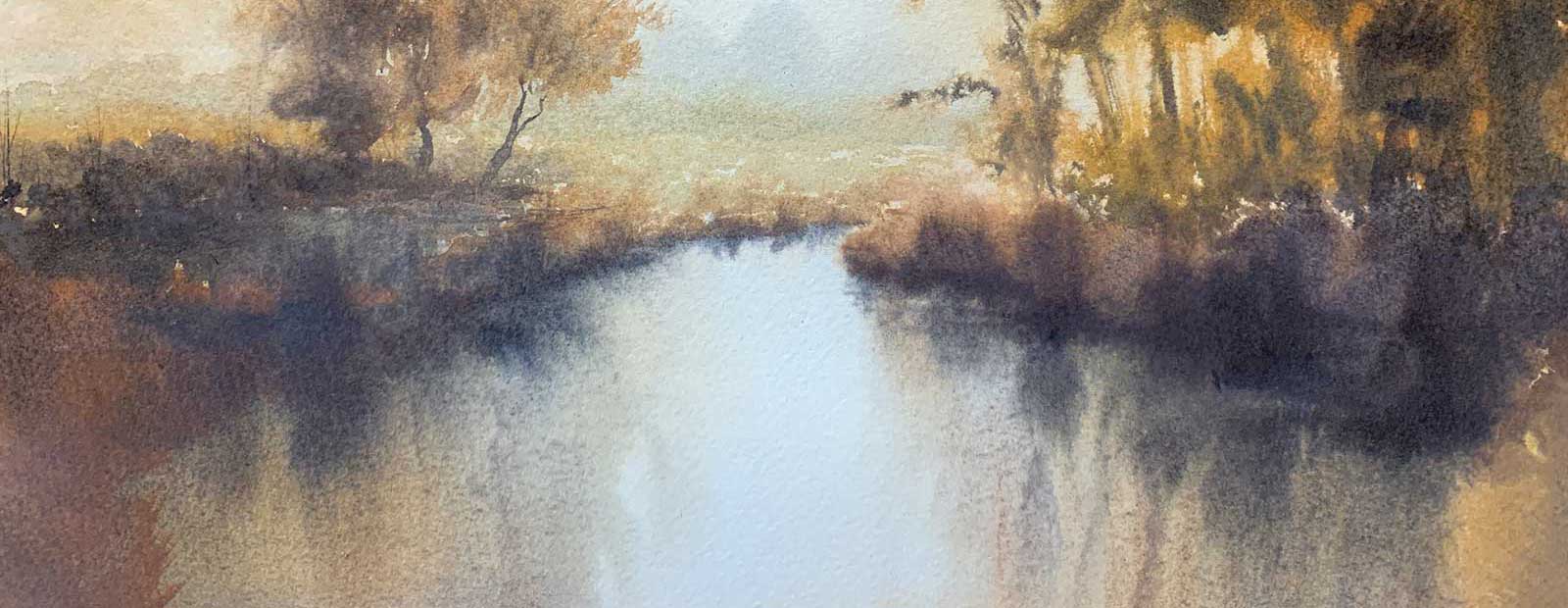
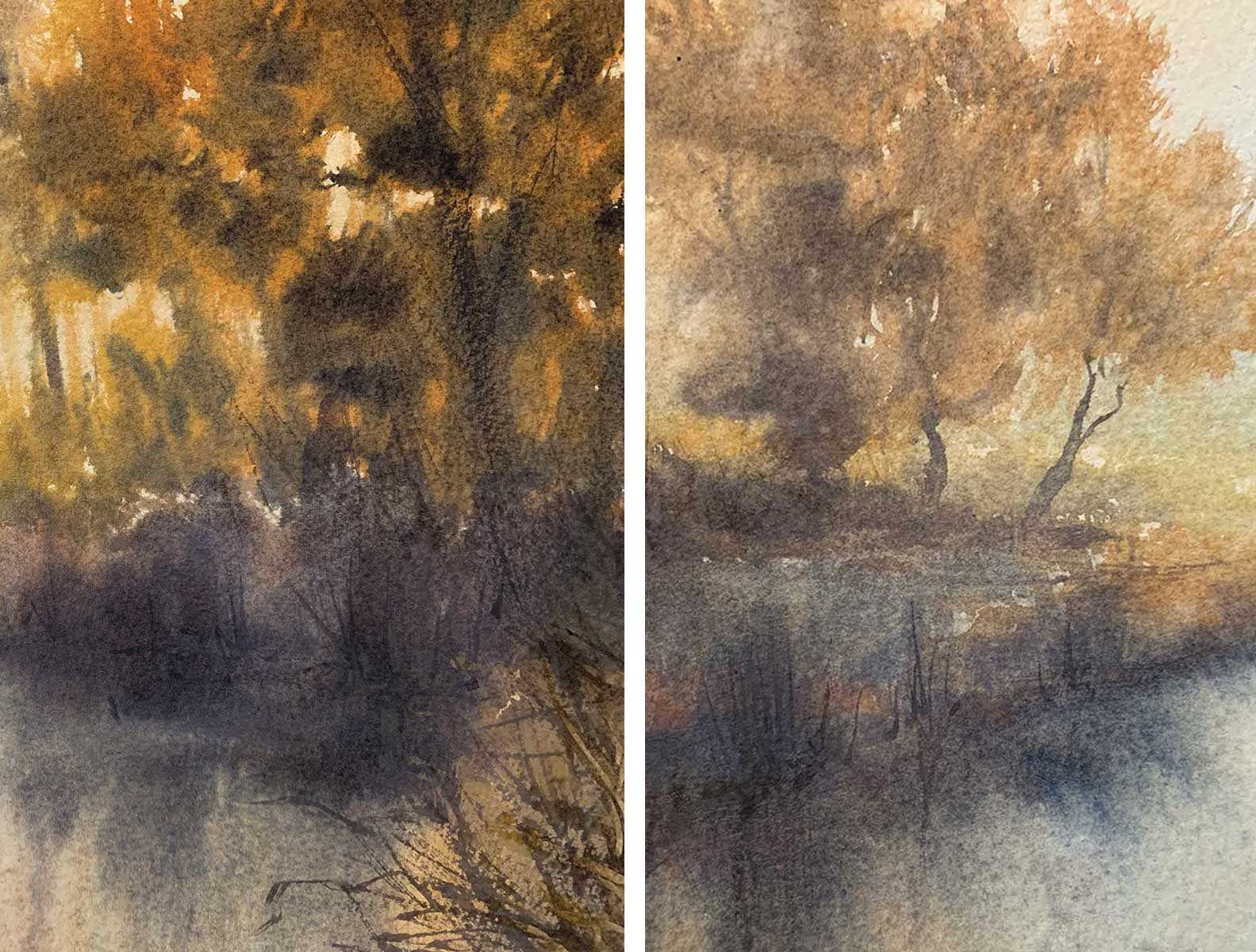
Stage 8 Reflections and Darks
Once the painting is fully dry, I re-wet the water area. Using a size 10 sable and thick paint, I apply the reflections. I’m starting with the lightest values and adding the darks on top, allowing the pigment to flow down.
 Stage 9
Stage 9 Dry Brush and Details
I let the painting dry fully, then add some small details with the calligraphy brush. I’m also strengthening some tree branches and adding a suggestion of foreground grasses.
 Stage10
Stage 10 Finished Artwork
Summer Morning, River Stort, watercolor, 11 x 15" (27 x 38 cm)
I added the suggestion of a couple more grasses to the riverbanks, and finally, my signature.
About the artist
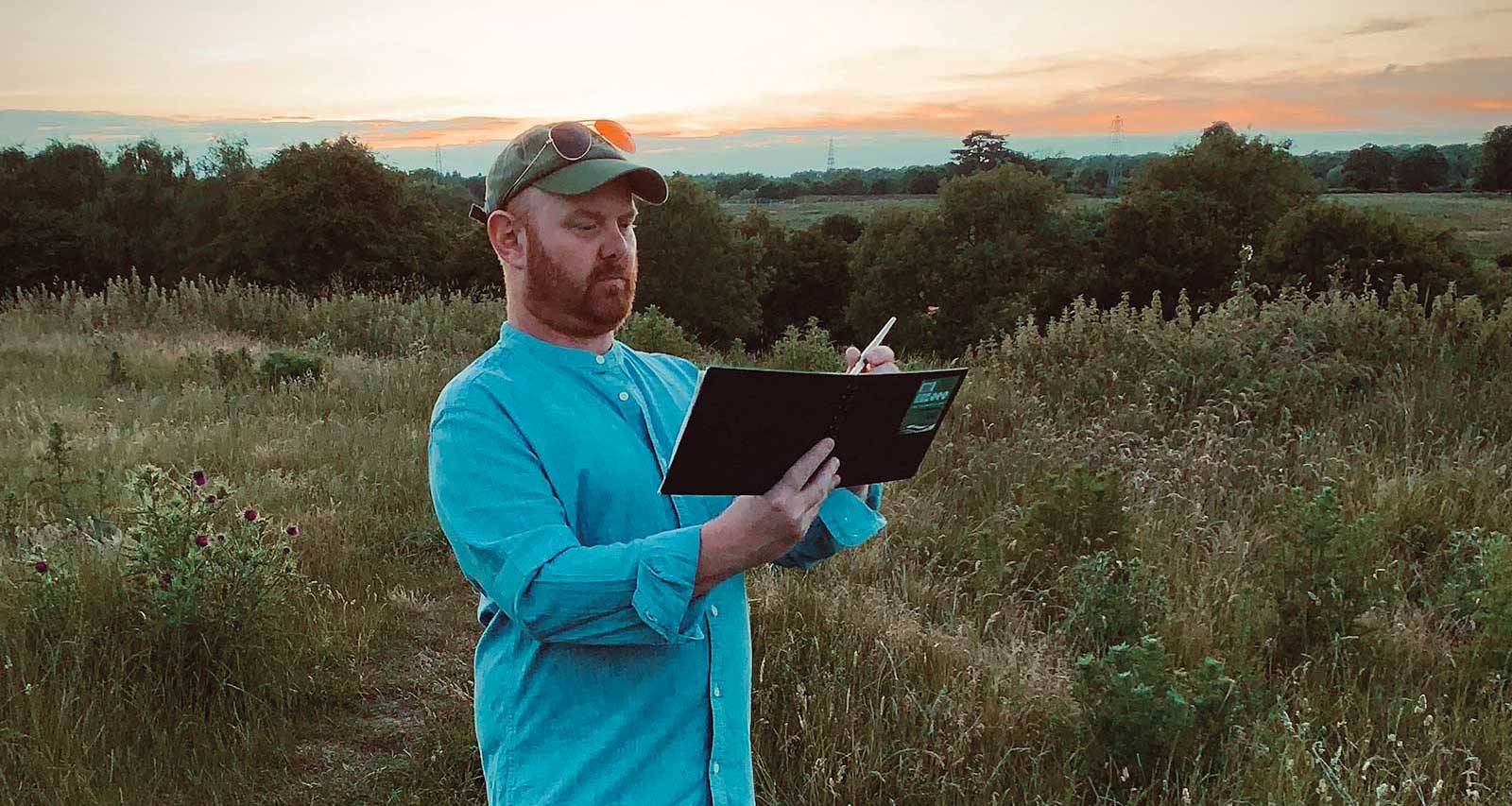 Christopher Stephen
Christopher Stephen is a painter from Hertfordshire, England. Primarily working in watercolor, he creates atmospheric compositions of the English countryside that surround his home. He regularly visits Norfolk and Suffolk, where he works in plein air, to capture timeless coastal scenes.
Originally trained in computer aided design, Stephen transferred his skills to the traditional pursuit of fine art. His fast and loose style, which focuses mainly on light, have earned him much interest from galleries in the East Anglia region. His work regularly sells out when available in public sales.
Contact at
www.christopherstephenart.com