
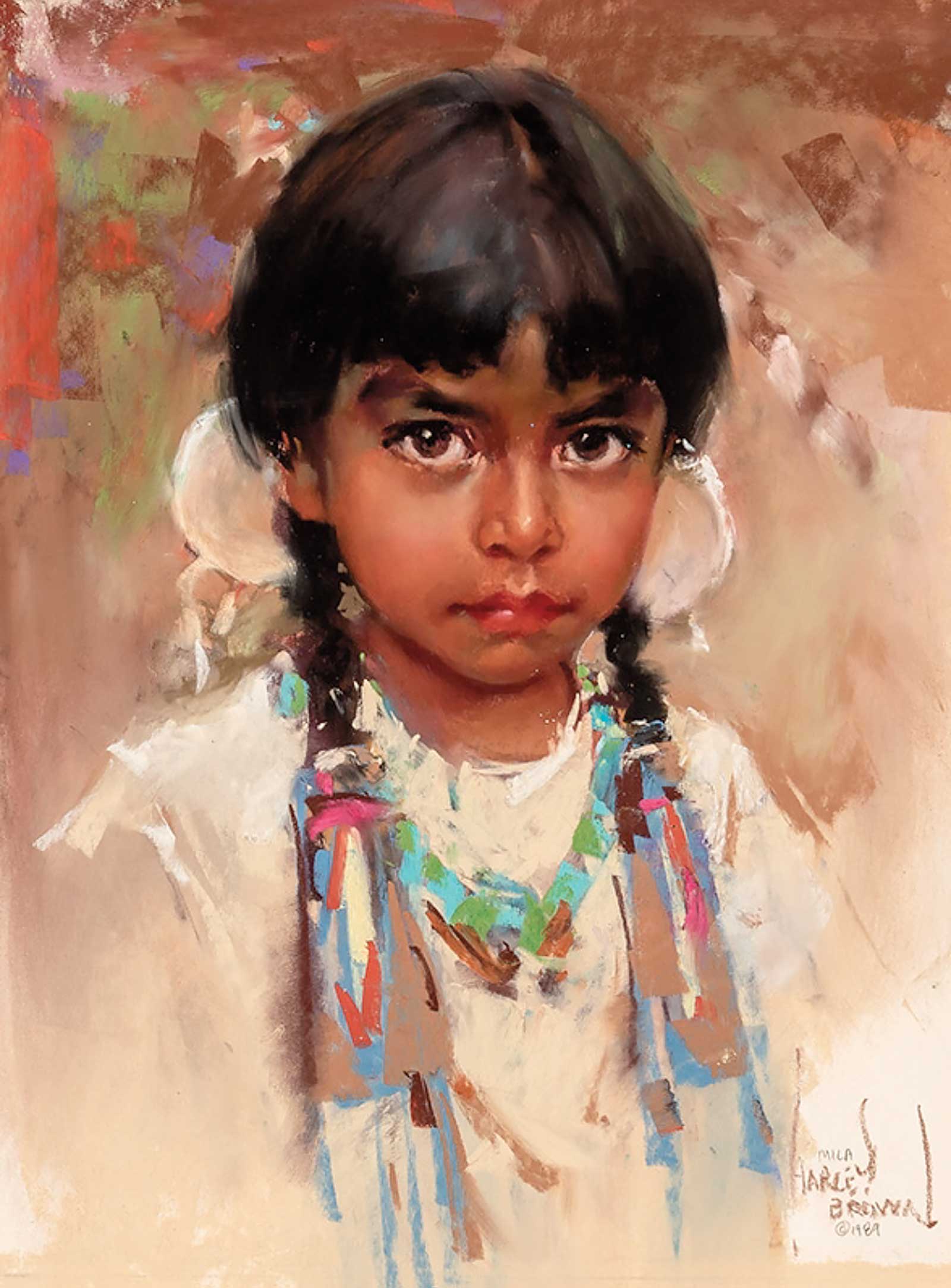
Mila This piece demonstrates an example of highlights on the face.
The Eyes Have ItI’ve mentioned how our minds retain much of what has been fed to them by our five senses over the years. Now, let me praise a particular sense and the greatest “camera” of all, the human eye. Think of how its tiny lens focuses in on shapes, values, colors, and on a grand scale, the minute details of expansive scenes. Consider also, the retinas on the back walls of the two 3D eyeballs, able to perfectly decipher those objects while they’re moving. Like seeing that young child bringing us flowers, or the horses running towards the finish line. Yes, after a long day, those dear eyes do get the reward of sleep, knowing their owner is piloting an airplane to Halifax in the morning.
Today’s actual cameras allow us to capture much of what those eyes observe. We can take endless photos; the quality of pictures are clear with good lighting and good color. When I take a photo of one of my artworks, it can be off to a friend or publisher who will get it within five seconds.
When photographing a person, I’ll keep my camera “clicking” as she moves about and relaxes. I’ll also move about, sometimes changing the lighting. My instinct sees a natural, dynamic moment when I ask her to “oh, please hold that pose.” I’ll continue taking photos from various angles.
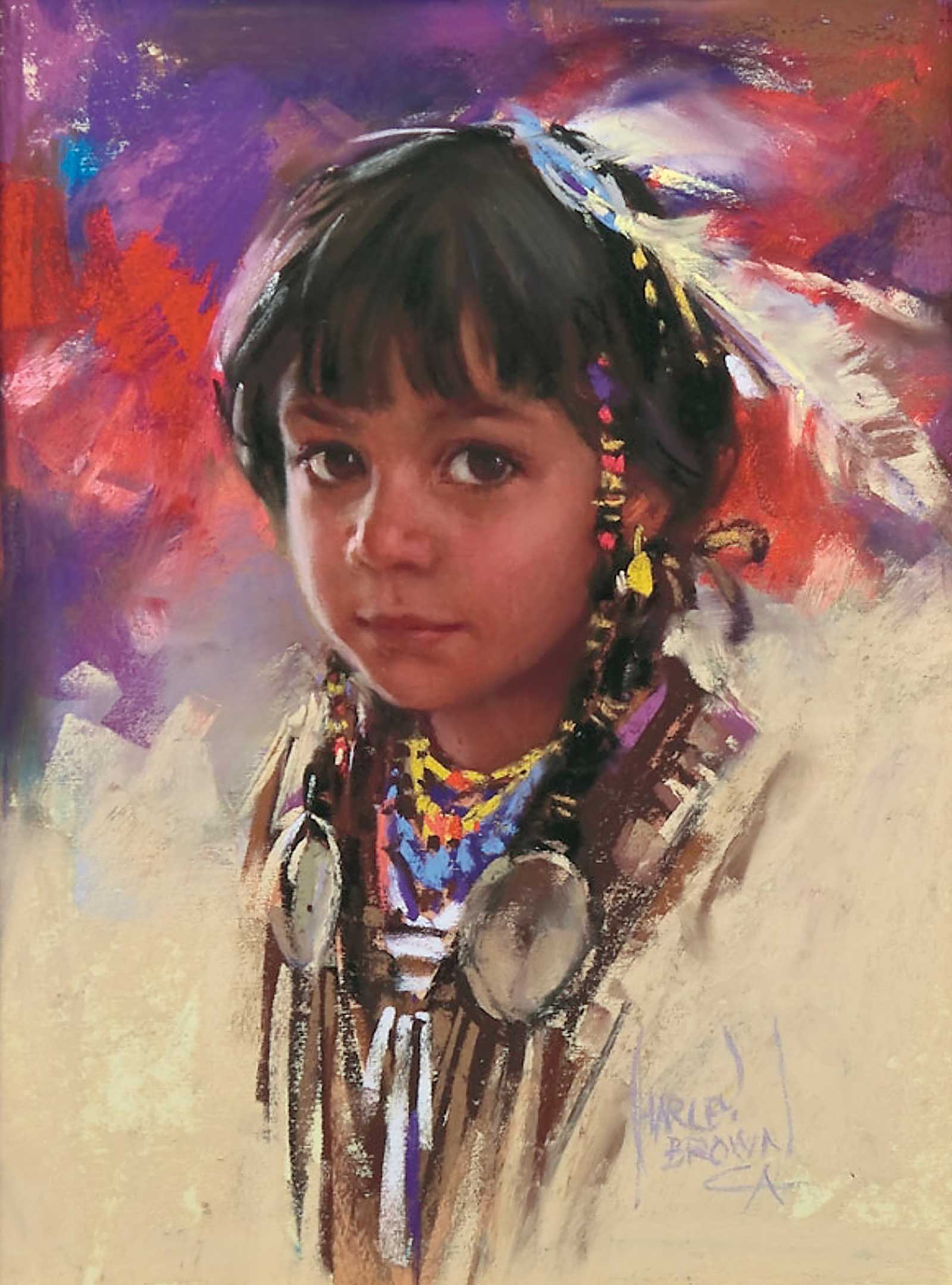
Knowing Moment An example of highlights on the side of the face.
Different/Normal
We can be different and normal at the same time. All humans on this planet are different from one another. Being normal has many definitions, but you and I can figure the general limits. We as artists can be quite different from one another: representational, surreal, abstract, etc. I have contemporary art friends who sure paint differently, but live very “normal” lives along with me. I also know realist painters who have quite different lifestyles. Not outlandish, just different.
In my case, my early art career years were different, big time. My friends knew of no one more unconventional than me. It all started in art college. There was a mind bending half hour incident that caused me to be the most unbelievable, eccentric person anyone had known. For 15 years, I went through many levels of personality; a completely different individual from before. All that time, my art career was steady, doing very well. As I’ve mentioned, just recently a film producer wanted to make a film about my life back then but finally thought I was much too bizarre, and no one would believe it. I’ll leave it at that.
After 15 years of that bizarre personality, another half hour mind bending incident happened, and I was right back to what we would call “normal.” Of course, I continued with what I love to do, my art. Through my life from the beginning, art’s been as natural to me as talking. Expressing thoughts by vocally putting words together—expressing visuals by putting lines on paper. Like learning to walk, then run, then jump, then go for the Olympics.
Indeed, it took a number of years and personal faith, but I eventually graduated into completely myself and not a tattered copy of others. Yes, we can all be happily different but at the same time, and in the best way—normal.
Diagnosing Highlights
I remember my young period when I was excited discovering highlights but went way overboard doing them.
Highlights are an important part of art. Too many can take away the reality and drama of an art piece. Let’s use a portrait as an example. Those highlights can be pushed all over a face, thinking it makes the features feel alive. The forehead, nose, cheeks, lips, chin. Yes, there might be lights on those parts of the face. But they’re not necessarily the same intensity; it’s as if the artist was using the same brush, same paint, quick dabs, one highlight after the other. Highlights can certainly be close, but the importance is to see even the subtlest differences. Also in their softness or sharpness.
Sometimes I’ll walk away from one of my works, then come back and give it a fresh look and think, “Wow, I sure overdid that highlight!” So, there’s my highlight discussion for today.
A strong light from the side can be quite different as we see in the painting above.
The Feel and the Flow
It is important for me to say that all areas in my portrayals are approached with the same skill and personal emotions. You see fussy work around facial features and casual strokes in the clothing or background. They’re all based on the same inner feeling. For instance, when I’m doing hands, I don’t think, okay, let’s draw in the hands. I look at them as with all other parts of my work; they are specific shapes intertwined. At the same time, I might lay in a few folds of a shawl, and go back to the hands or face with the same state of mind. This is how I see artists through history. For instance, Rembrandt would complete the hands in his portraits or he might leave them incomplete, rather casual.
My Reason, Your Reason
The reason I paint is not primarily to show my inner feelings to the outside world. I paint for myself—how a certain object or person inspires me while I lay on the strokes. I think of two things: my subject and my artistic reaction to every moment with my subject. The outside world doesn’t exist during this time.
Also, I don’t get so self-indulgent that I think I can get “into the inner soul of a person.” This is impossible. I’m after one expression (pose) being revealed at a subject’s special moment. But wait. If someone observing my artwork does see my artistic connection to my subject, that’s fine. But while I’m creating this piece, the only person my inner mind wants to “fulfill” is my outer mind. That’s part of our ego and joy in art.
And Then
Some people think it clever to say that a realist painting is no different than a photograph. I’m guessing they somehow don’t see what the great realist artists might have in their masterpieces: dynamic involvement with design, areas of intrepid colors, retaining close accuracy while creatively pushing and pulling shapes, lost and found edges, inspired swipes mixed with paintbrush or pastel fussing. Total involvement between artist and subject. In the same way that an actor is not simply speaking the lines from a script, the actor “lives” the lines. Other actors would read those same lines differently. As each of us artists would differently paint the same subject. Far, far from a photograph. All of us in the arts have our individual approaches and interpretations with what we are creating. Bravo to each of us in the arts.
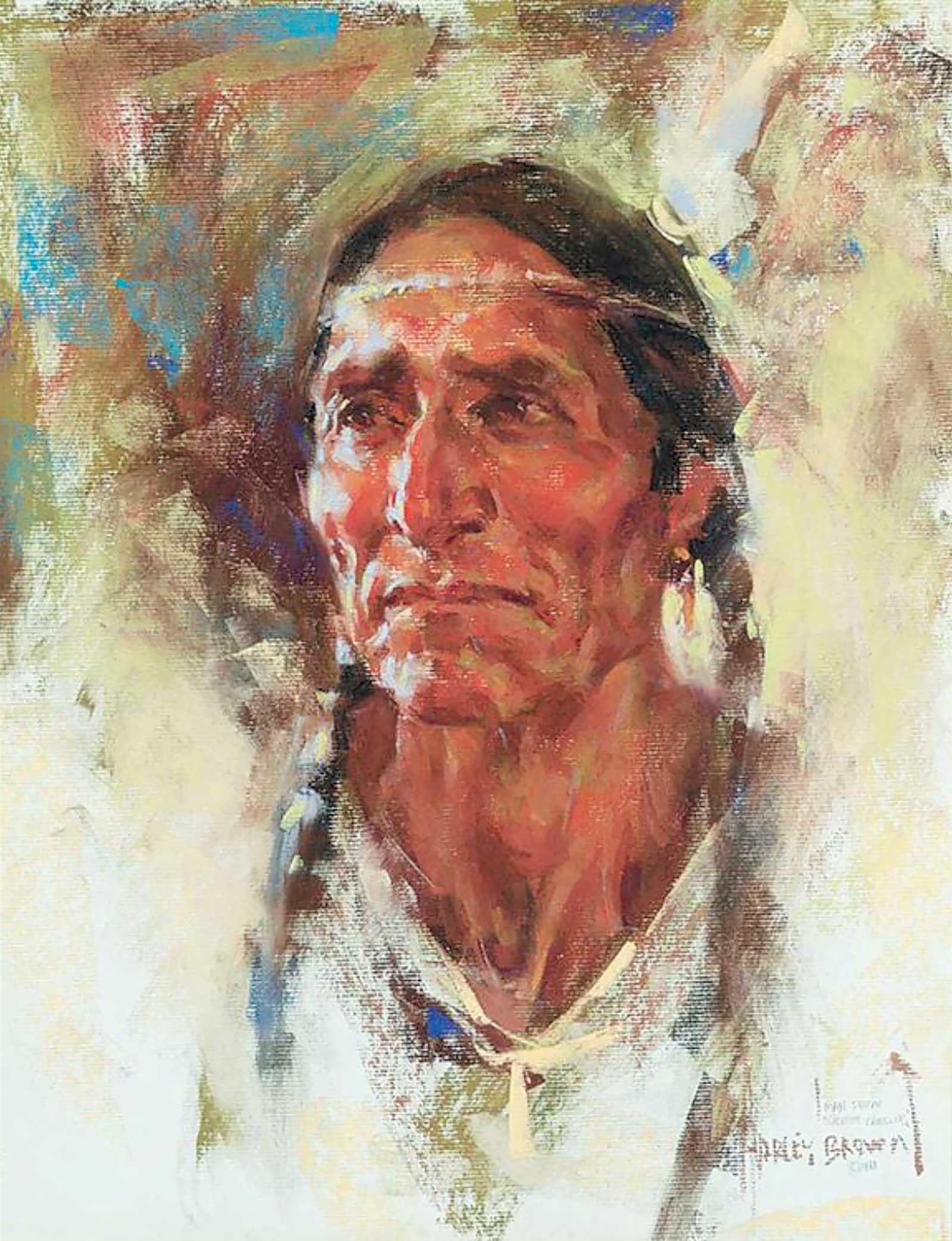
Battle Won…Friend Lost Highlights on the side of the face.
The Shadow Knows
During my grade school years, my father showed me the importance of shadows on objects and subjects. The division between the light and dark areas. How dark to make them and understanding reflected light that might touch into shadow areas. Incidentally, at that time, I was more interested in drawing subjects rather than complete, border to border works of art.
Years later, another artist showed me how to work those shadows into the design and drama of an overall art piece. The shaping of the cast shadow, where to simplify areas and edges, sometimes working shadows with one into another for the design of the whole piece. Those lost edges, and soft and hard edges.
Not long after that, an artist said something that added to my shadow knowledge: don’t put textures and fussed details into the shadow areas unless the shadow takes up much more area than the lighted areas. For instance, if the light in a portrait touches just a spot on the forehead and a cheekbone, then more detail goes into shadow. That was actually a four-minute lesson.
I’ve had plenty of “shadow lessons.” Both learning and self-discovery. As we know, the shadow is a major concern when drawing or painting; it can make or it can break, even in a small area.
We’ve all spent years looking at well-known masterworks and reflect on these thoughts and principles and work the age old light/shadow basics into our own unique drawings and paintings. Applying legendary principles toward to very own approaches of today. That happens so well in many of the arts. Tonight I’m watching Othello.
Dark and Light
- The dark and light of an artwork should not be equal. Unless saved by a design that is powerful and heart stopping. Design is an eye treasure.
- Center of interest, for example, a bright star in sky—that’s where the eyes go.
- Knowing when to quit a painting is often not easy. Still, you’ll feel it more during those many times at the easel.
- Get proportions right at the beginning. This saves later problems.
- I’ll keep saying: at the very least, do a sketch a day.
- Let nothing distract your dream of being an artist. I understand this complex world we live in.
- We won’t paint like our art instructor any more than we’ll talk like our English professor.
- I’m in my 80s and still learning about nature and art and myself.
- While painting or drawing I look intensely for my subject’s details and squint for values.
- Your free imagination might guide you to make some meaningful changes within an art piece while you’re creating it.
- Right now, draw something you’ve never drawn before. —
BALINOFSKI
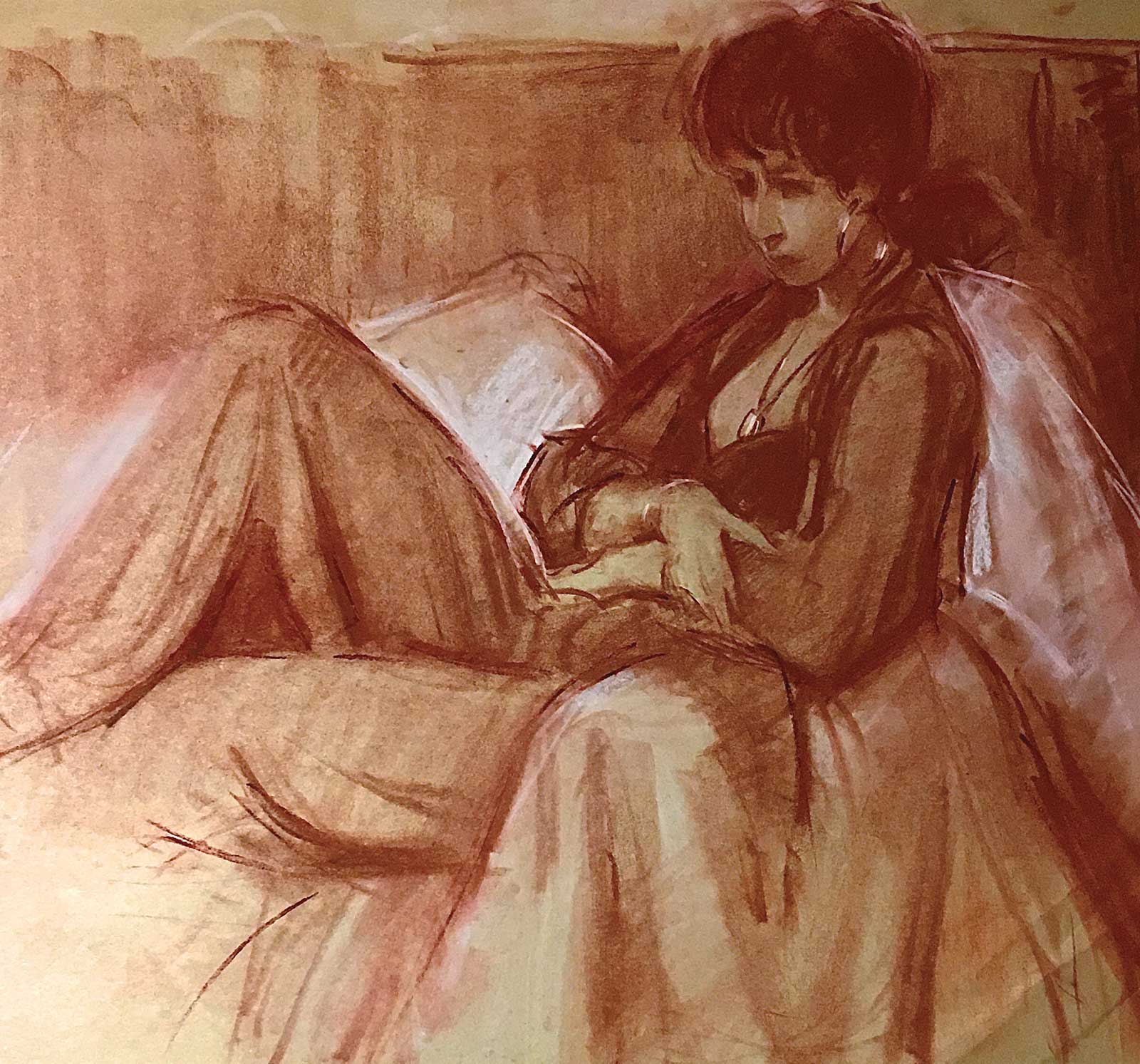 EVANGELINE
EVANGELINE
Evangeline had such a charisma that I begged her to sit for me to draw. Yes, Balinofski begged. She agreed but could only spend a very short time because of commitments she had to attend. There would be no rest breaks, just get what I could in the time allowed. And whatever I had done with my drawing, that was it.
I will say because of the circumstances, my mind was totally fixed upon this intriguing lady, as if there was no past or future, just now. You can observe the rapid conte strokes laid in, not all flawless but each one purely inspired.
We can sense her pondering expression even though her face is but a few quick strokes. Hand shapes swished in. There’s the drama of her right leg, an impromptu moment, dominant yet relaxed. When she left, I was alone with a feeling of pure elation. My mind had been swirling during and after this spirited time with her. Often artists can’t explain, they can only experience. Even now when I see this drawing of mine, I smile and am taken back to Evangeline’s brief but very memorable presence.