When I go looking for a subject to paint, sometimes a scene jumps right out at me, but most of the time I have to hunt for it.
I often start with a preconception of what I’m looking for, especially when I’m away from home. Typically my mind conjures the familiar “postcard view” of a given region, based on picture ideas that have proven successful for other artists.
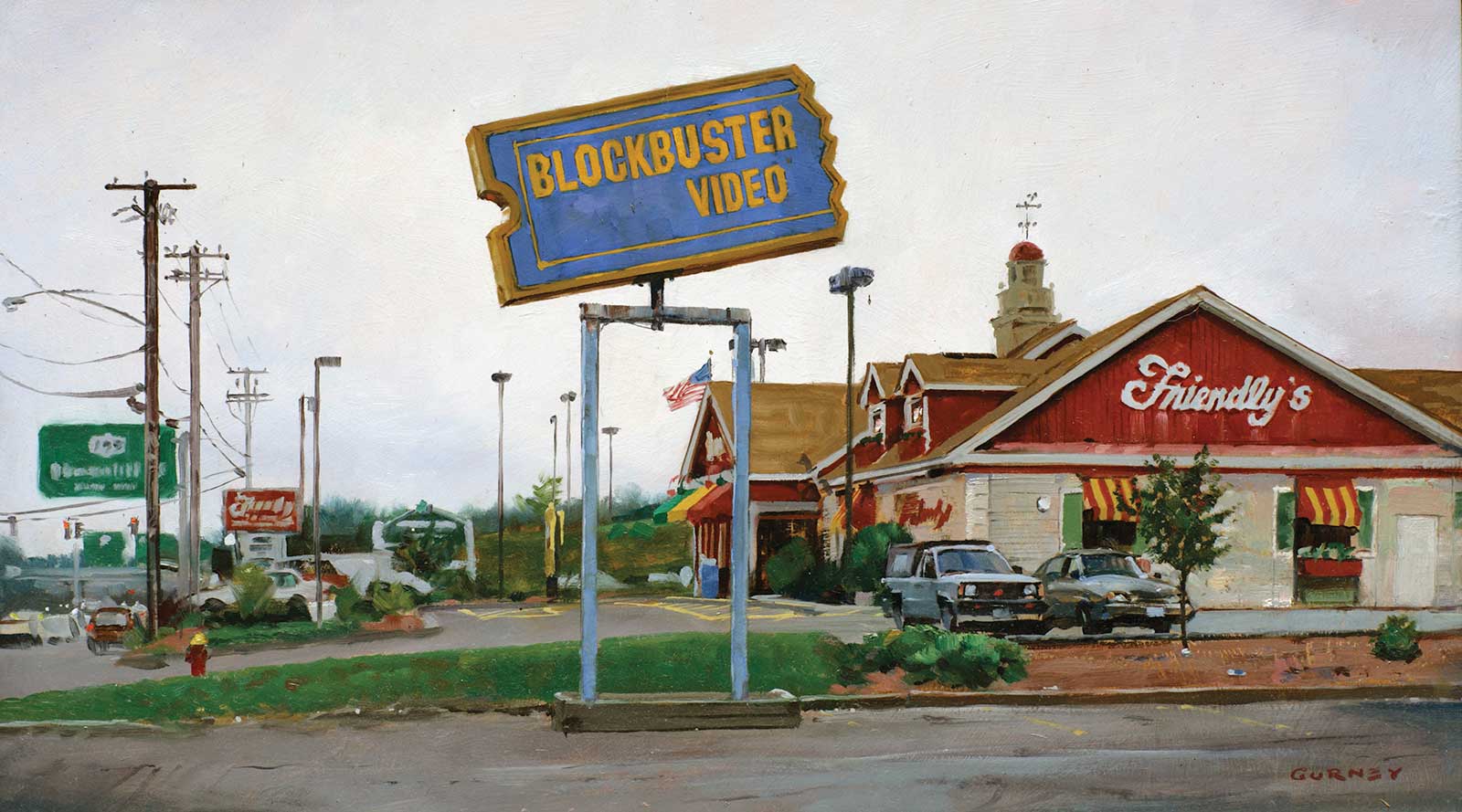
Blockbuster, oil, 10 x 18" (25 x 45 cm) About 20 years ago I sat on a sidewalk and painted a commercial streetscape that included signs for a video store and a chain restaurant. Back then, when I showed the painting to art students, I would tell them, “One day this world will pass away like the dinosaurs.” They just laughed because they didn’t believe me. Sure enough, it has come to pass. The video rental store and the restaurant are both long gone, and what first seemed jarringly unartistic now looks warmly nostalgic.
Classic artistic motifs include such things as fishing boats, Venetian canals, red barns, floral bouquets, majestic peaks or crashing waves on rocky coastlines. I’m not criticizing these subjects or anyone who paints them; in fact I’ve painted my share of them. The problem is that when we see paintings of those subjects, we sort of tune them out and keep walking, unless the artist can come up with something really original.
I have to traverse all that territory in my mind before I can find a “non-motif.”
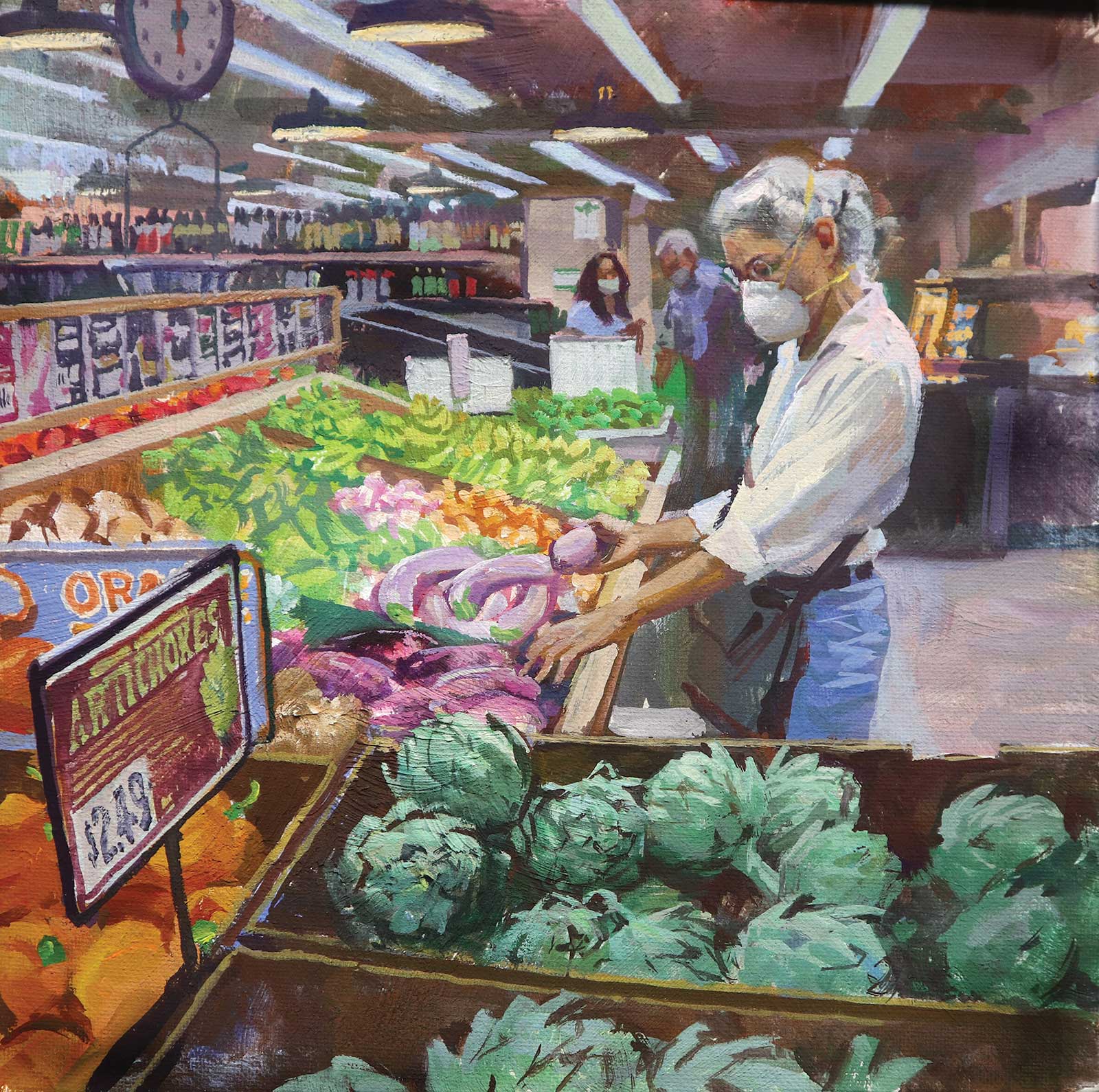
Supermarket Portrait, casein, 10 x 10" (25 x 25 cm) At the height of the pandemic, I painted my wife shopping at the market, using photos as reference. The painting process was looser and more improvisational than usual.
What is a Non-Motif?
This is what I call a scene from our everyday world that is familiar but rarely interpreted by artists. Unlike a picturesque motif, a non-motif is unconventional, unexpected, but also commonplace and recognizable.
If you try googling the term “plein-air painting” you probably won’t find a single car or fast-food restaurant or utility pole, despite the fact that those things are all around us. Why not? Is it because they are intrinsically ugly or because we haven’t yet found the beauty in them?
Paintings can serve to awaken us to the mystery of the world we actually inhabit, such as parking lots, supermarket interiors, gas stations or back alleys. They have a weird luminous power over my imagination. When I begin to paint them, I feel as though I have set foot on an unexplored continent.
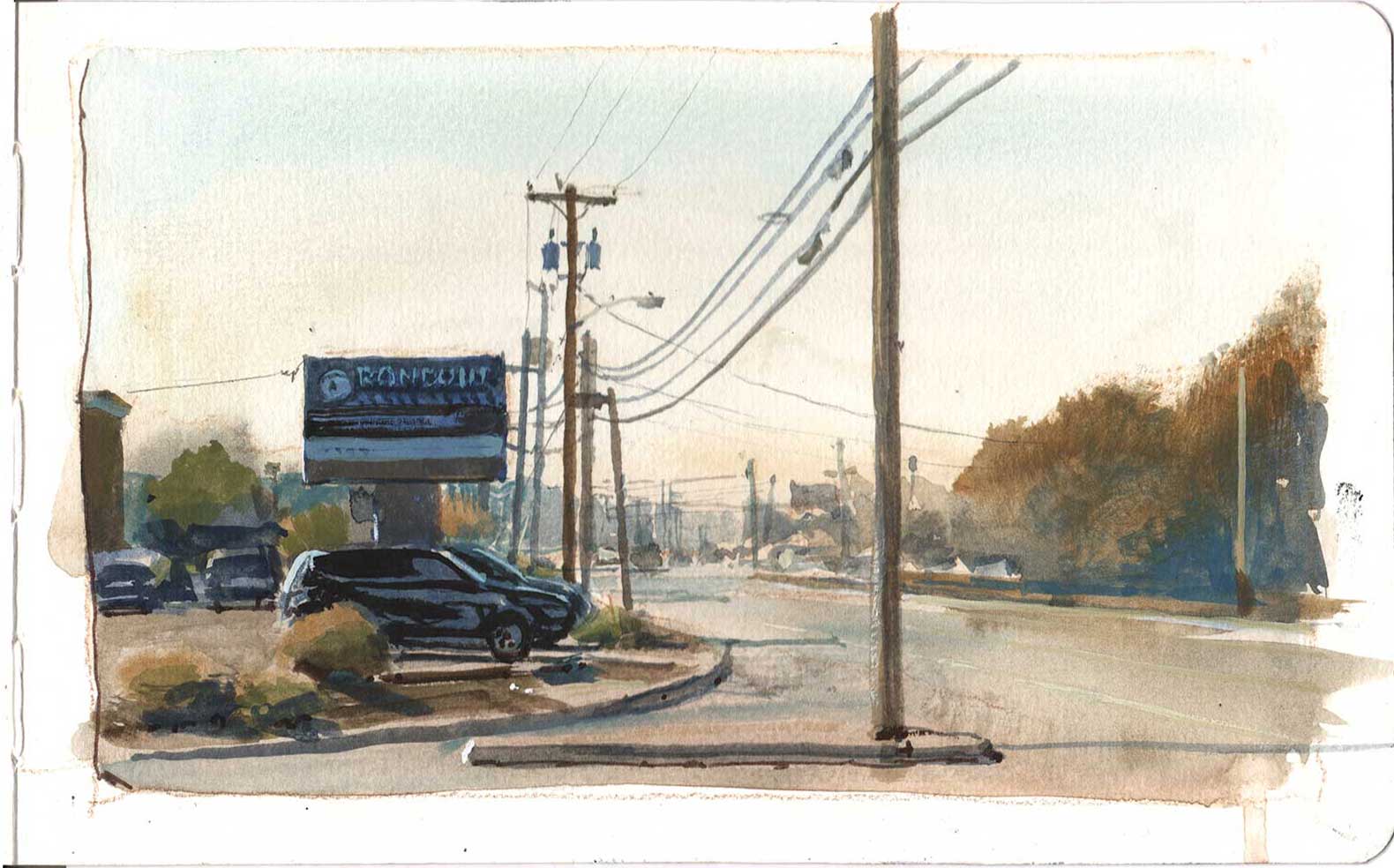
Route 9W, watercolor with gouache, 5 x 8" (12 x 20 cm) What attracts me to this scene in Kingston, New York, is the cluster of poles and wires next to the sign and the delicate details of the far distance. I limit the colors to a blue/brown gamut, disregarding greens and reds. I want to keep the lights light and the darks dark like a high contrast photo.
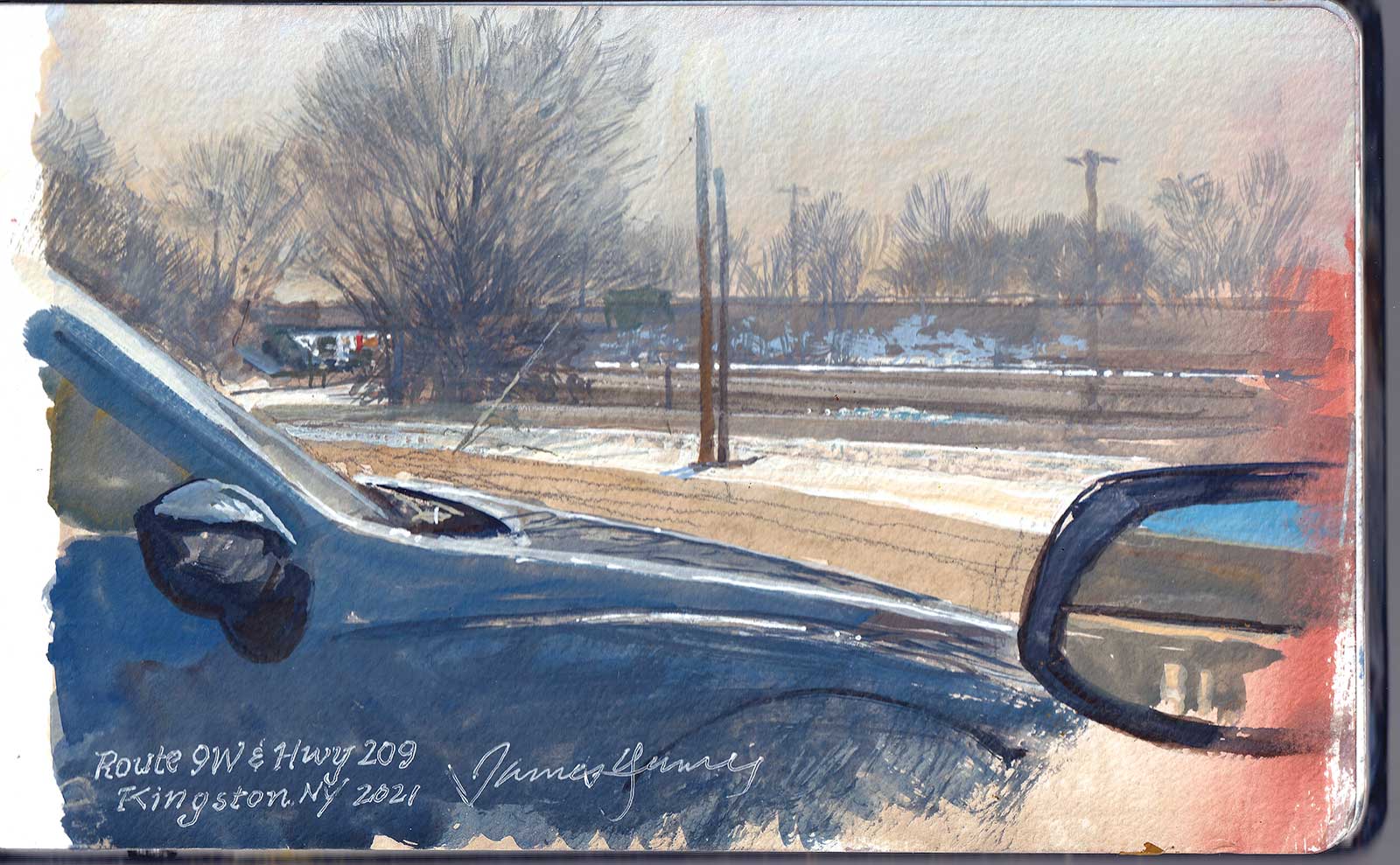
Highway 209 Overpass, watercolor and gouache, 5 x 8" (12 x 20 cm) Nothing to see here, just a state highway overpass seen from a parking lot. I’m pretty sure no one has painted this scene before. That is exciting to me, like being the first artist on Mars.
Tips for Succeeding with Non-Motifs
• Start out with an idea of the light, color or compositional effects you want to achieve, and plug the forms into that idea. For example, you might want to do a tight cropping on a colorful sign or you might want a warm, backlit scene with edge lighting.
• Use a viewfinder, a mirror or a camera to give you a fresh eye on the scene. It’s often hard to recognize good subjects, even when you’re looking straight at them.
• Do a thumbnail sketch in pencil or paint to visualize what choices you might need to make.
• Try to key into an emotional reaction that you have about a place, something you love or hate about it, a juxtaposition that seems bizarre or somewhere that you enjoyed hanging out as a child.
• Stay local. Paint the subject at different times of day, and if you can, different seasons of the year.
• If you’re traveling, paint an ordinary street, not the Instagram spot.
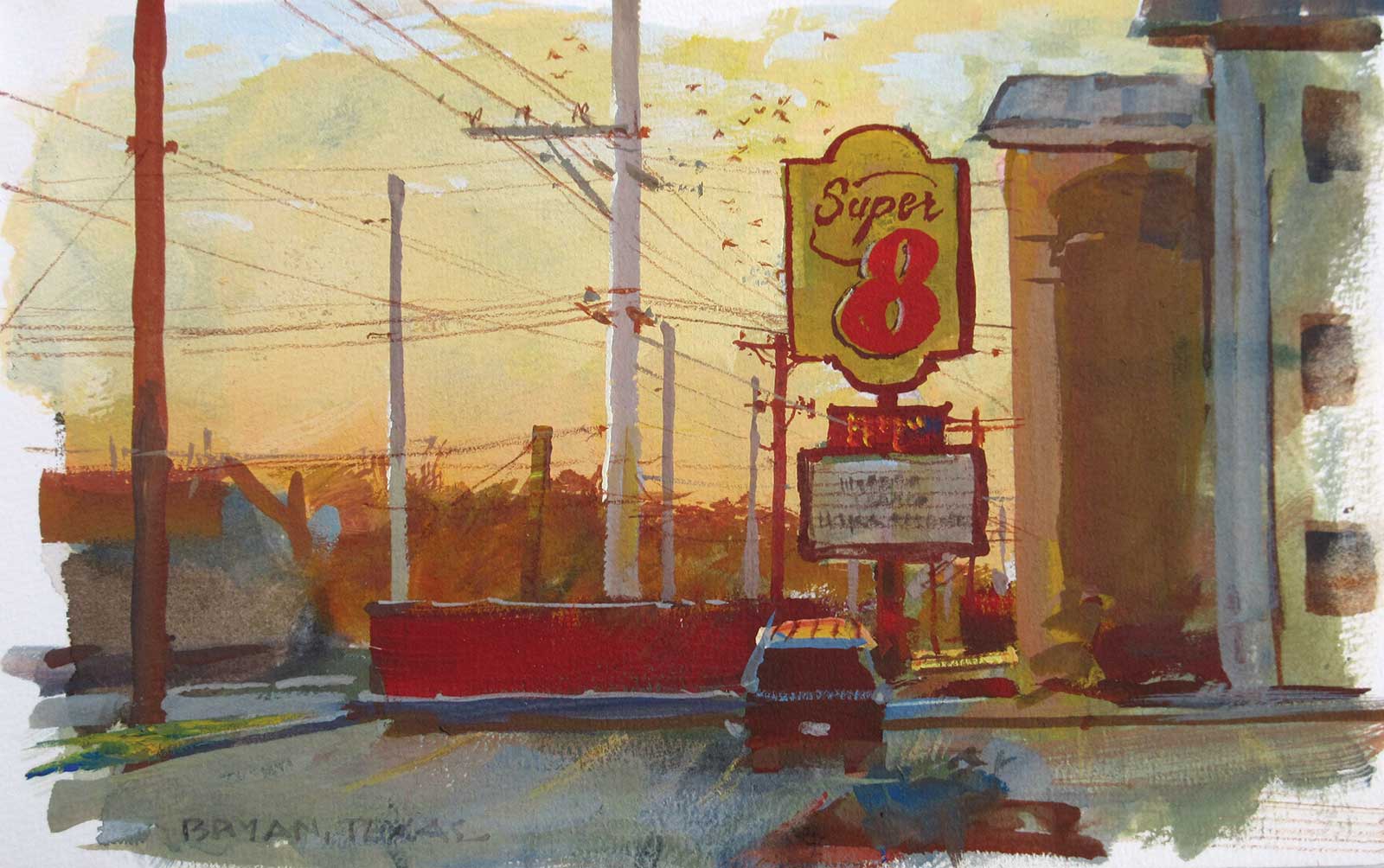
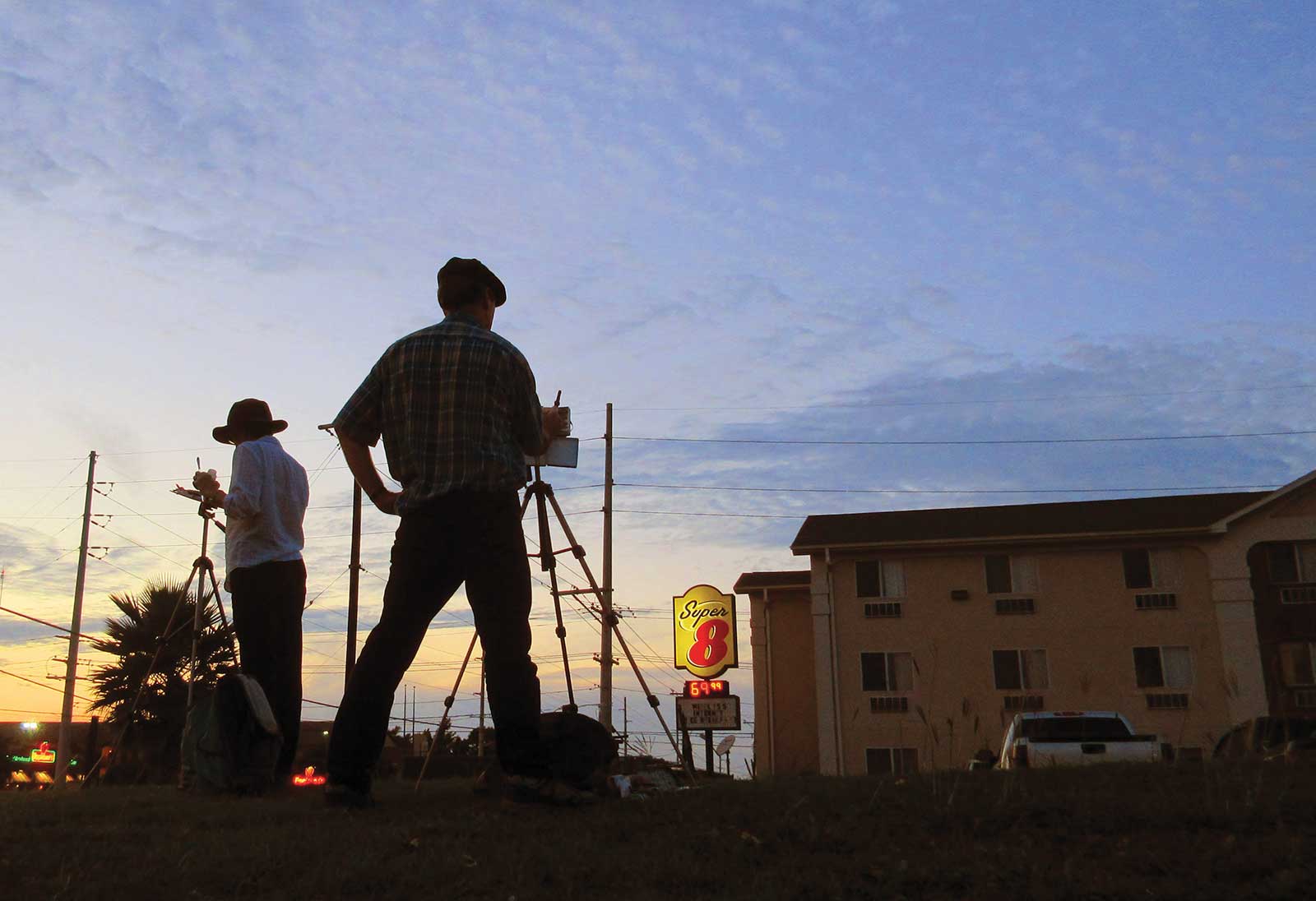
Sunset at the Super 8, gouache, 5 x 8" (12 x 20 cm) As I painted the sunset across Texas Avenue in College Station, a raucous flock of great-tailed grackles filled the sky beyond the net of power lines.
About the Artist
 James Gurney
James Gurney is the author of Color and Light: A Guide for the Realist Painter and the Dinotopia series, which you can get signed at his website, www.jamesgurney.com.
Contact at www.jamesgurney.com