This year, the Portrait Society is thrilled to celebrate a quarter century of passion for portraiture during our 25th annual The Art of the Portrait conference to be held in Washington, D.C., from May 11 to 14. To celebrate this remarkable occasion, we will be introducing a program format with new speakers, sharing their wisdom on a variety of topics relevant to today’s figurative artists. Over the weekend, the top 20 finalists of The International, the world’s premier portrait competition, will exhibit their works in hopes of winning the Draper Grand Prize and a cash award of $50,000. In preparation for our grand event, I had a chance to sit down and talk with a few of our new and returning faculty artists to discuss a range of subjects from mentoring and education to overcoming the most challenging obstacles. In this issue, we will hear from renowned artists Michael Shane Neal, Mary Whyte and Max Ginsburg, as well as rising artists in the field of figurative art, including Stephanie Paige Thomson, Thomas Caleb Goggans and Dominique Medici.
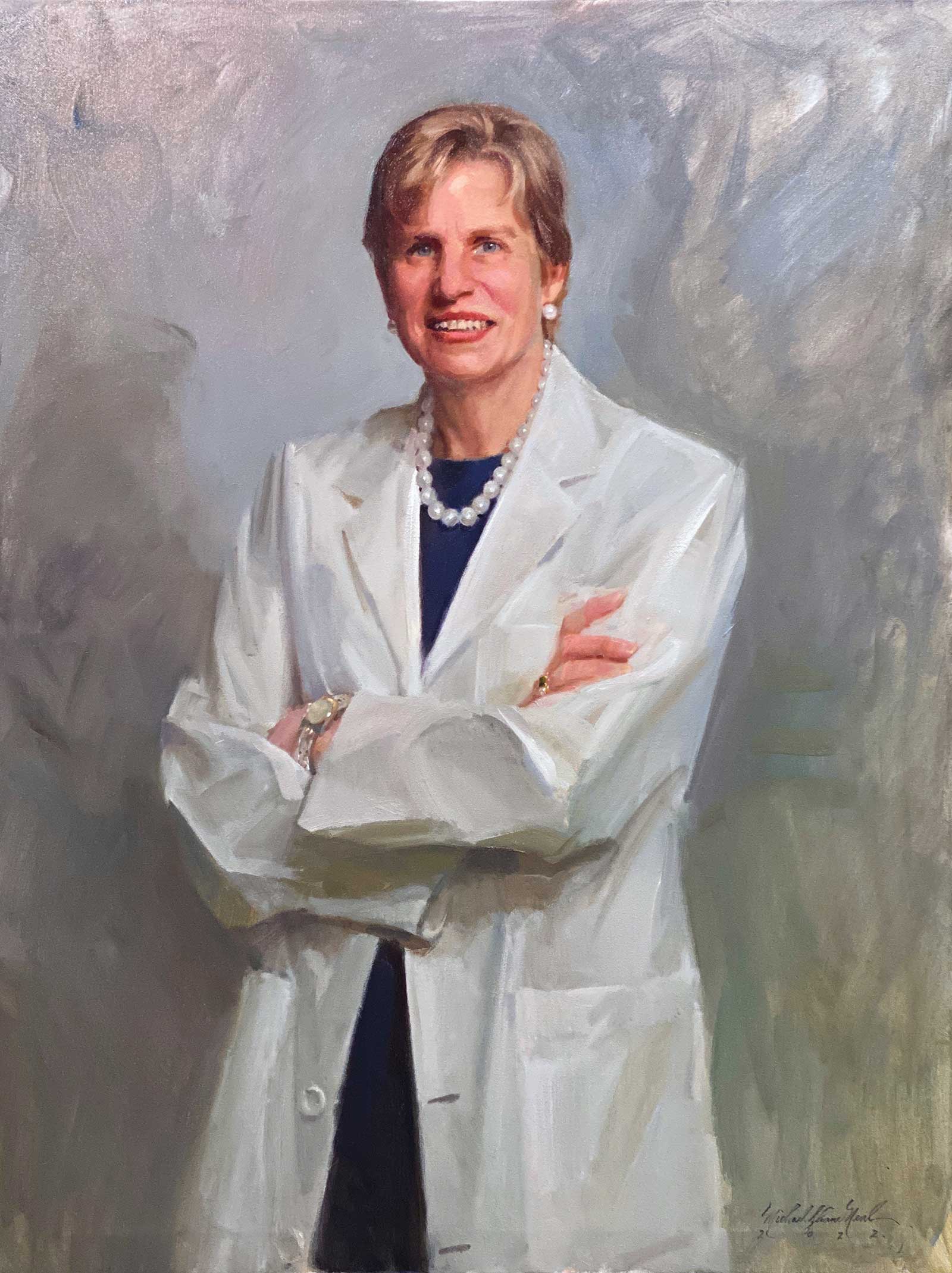
Michael Shane Neal, Dr. Nancy Brown, oil on canvas, 40 x 30" (101 x 76 cm)
Mentoring can be a critical step in any artist’s journey. “My first mentor was my college painting professor, Dawn Whitelaw,” says Neal, Portrait Society chairman. “She was an encouraging and affirming influence on me in my early career and has remained a lifelong friend and source of inspiration. My relationship with Everett Raymond Kinstler has had the largest impact on my life, both as an artist and as a human being. He was both motivating and kept me accountable as I developed as an artist.” Neal has written extensively about the impact of Kinstler on his work and is about to release a book called The Art of Seeing: Everett Raymond Kinstler on Painting. “One powerful summary that he often shared was that imagination, feeling and the ability to communicate were prerequisite traits/skills that every artist must have,” says Neal. “He was also a proponent of hard work, expressing often that that singular discipline made more difference than any other to his growth and success as an artist.”
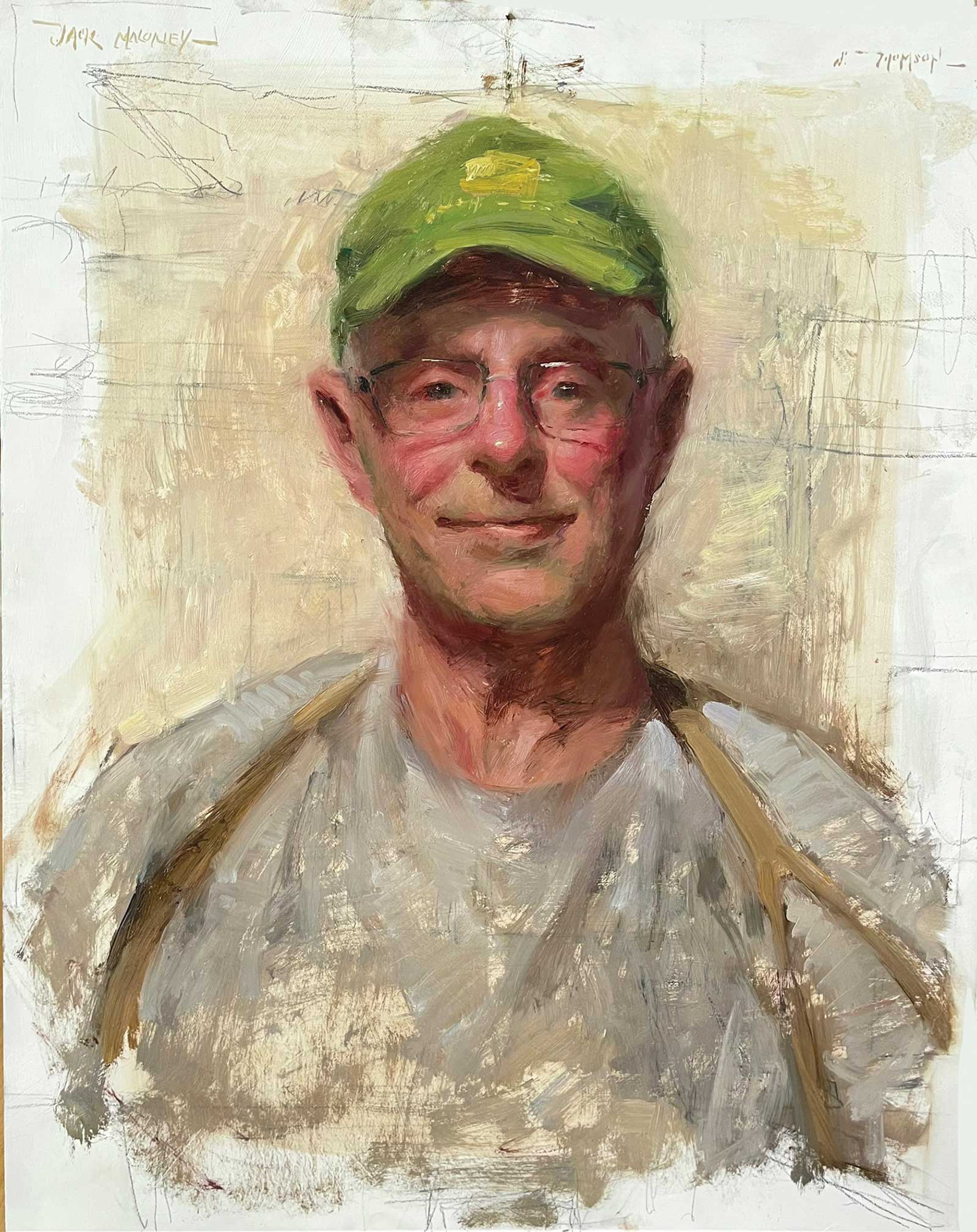
Stephanie Paige Thomson, Jack Maloney, oil, 20 x 16” (50 x 40 cm)
For Thomson, it was a childhood art teacher who steered her to her first mentor. “When I first set out with the ambition to create a career as an artist, I didn’t know of the existence of workshops or that it was possible to craft your education through the careful choosing of instructors. My childhood art teacher, a gentleman named Barry Stebbing, was the first to introduce us to workshops and suggested I seek out CW Mundy. As soon as I met CW and his wife, Rebecca, they graciously provided critiques of my work and advice for workshop instructors. The importance of these three people is immeasurable: I don’t know where I would’ve landed if not for their timely advice to avoid a university education, immediately followed by the provision of workshops. They shaped my career and set me on the path most suited for my goals.” Traveling across the country from Vermont to Arizona, Thomson has studied under many influential artists including Sherrie McGraw, Michelle Dunaway, Robert Liberace and Johanna Harmon.
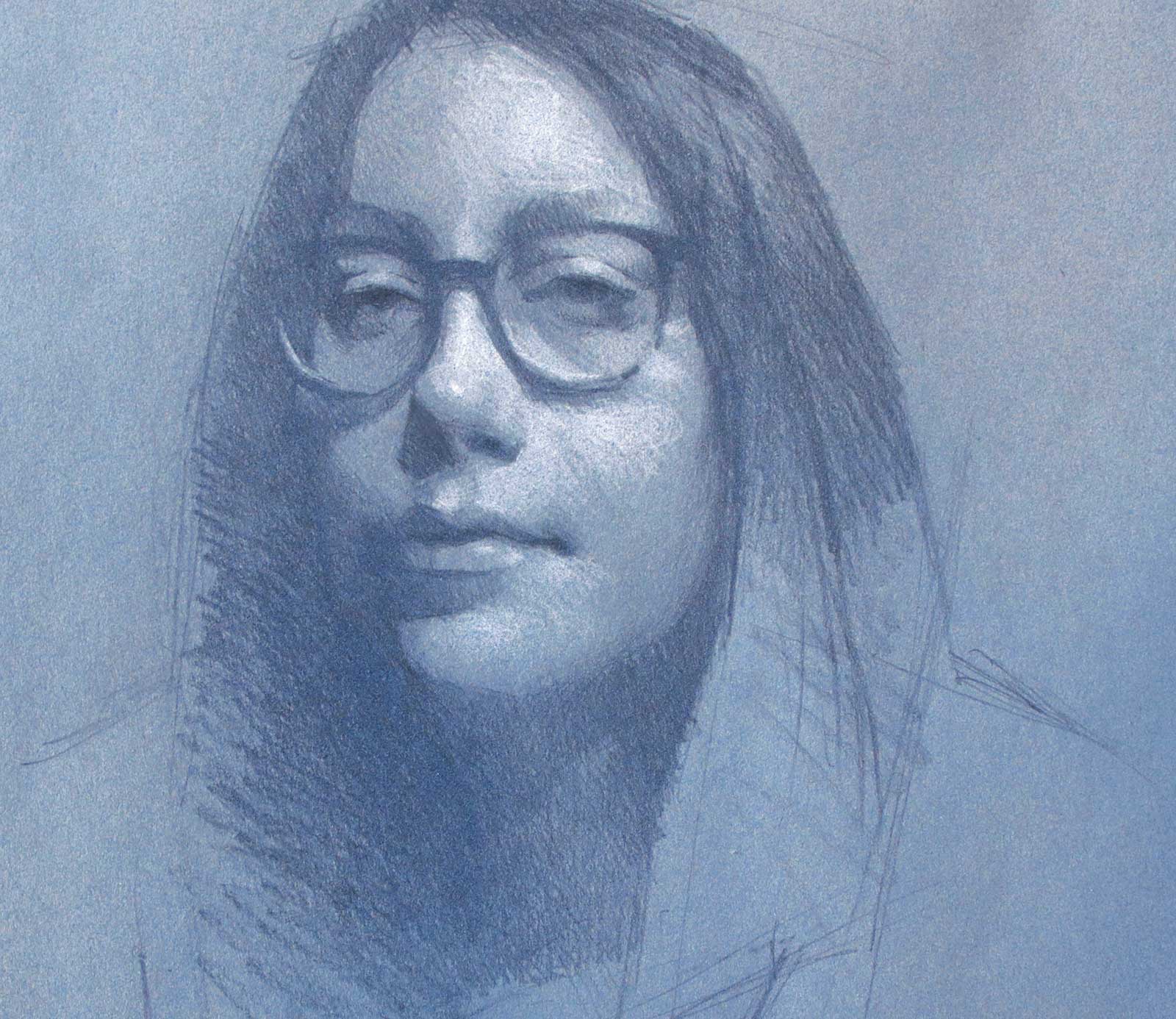
Dominique Medici, Self Portrait, toned paper, 12 x 12" (30 x 30 cm)
An artist’s path to an education often has many twists and turns, especially in pursuit of training in figurative realism. “When I was 18, I enrolled at the Tyler School of Art in Philadelphia,” says Whyte, speaking about her educational journey. “It was against my father’s wishes, so I made a compromise with him by agreeing to also get a teaching degree. The best part of art school was living and studying in Rome for a year. The worst part was that my work didn’t fit into the school’s mission. Most of the art schools at that time were following New York’s trend of abstract expressionism, and my paintings of the people on the subway, my grandmother’s teacups and my aunt in her kitchen were far from that. Regardless of the lack of acceptance of my work in art school, it was an enormous period of growth for me. An artist’s best education will always happen in front of the easel, with his or her time spent earnestly in search of personal and meaningful expression.” While Whyte cherishes her time spent teaching, she tries to balance it with stretches of time in the studio. “I find it satisfying to inspire and instruct young artists and to see them blossom into the creative person they were meant to be. Having to articulate the mental and physical process of painting to others has made me a better artist as well.”
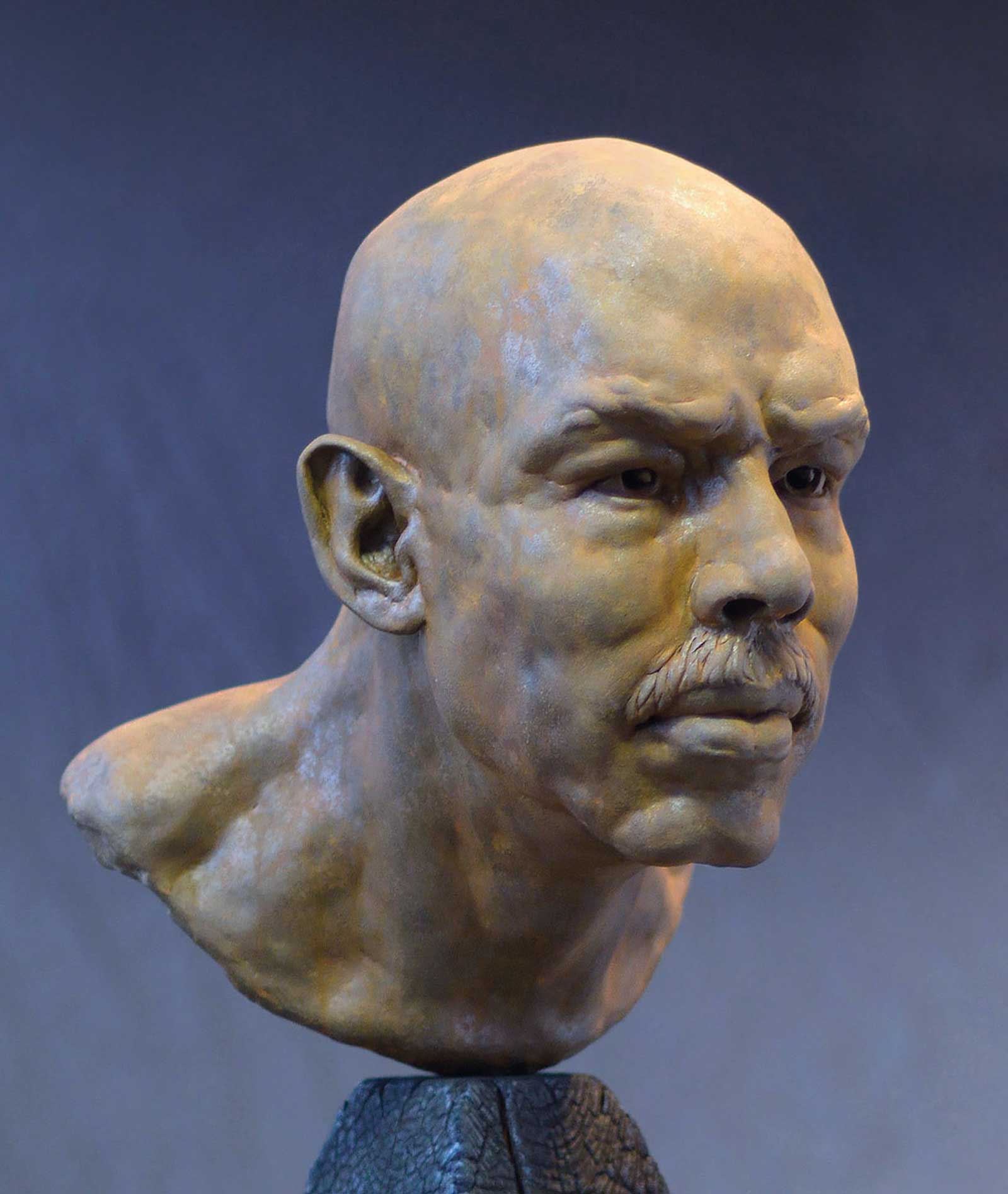
Thomas Caleb Goggans, The Buffalo Soldier, resin and wood, 22 x 11 x 12" (55 x 27 x 30 cm)
Like many artists, Goggans knew very young that he wanted to be an artist. He says, “Painting, drawing and playing around in clay consumed my grade school and high school years until I found myself at the end of my teens determined to be an artist but having no clear idea of how to make it happen. I really wanted to move to Europe to study in ateliers or go to New York and enroll in the Art Students League, or to some other place that had revered art institutions and traditions. But coming from a smaller town and from a family that didn’t have the means to help me financially, all that seemed impossibly daunting and out of reach.” Around that time, Goggans was visiting former Portrait Society Chairman Edward Jonas’ studio for a few days. “He very wisely saw how hungry I was to learn,” Goggans recalls, “and how much I wanted to become a skilled and successful artist. On the second day, he practically grilled me all morning about what I wanted, what my goals were and how I planned to achieve them. He also introduced me to several colleges and art programs I wasn’t aware of, where you could get a solid skill-based art education. That conversation really challenged me and helped me develop a clear practical focus and determination.”
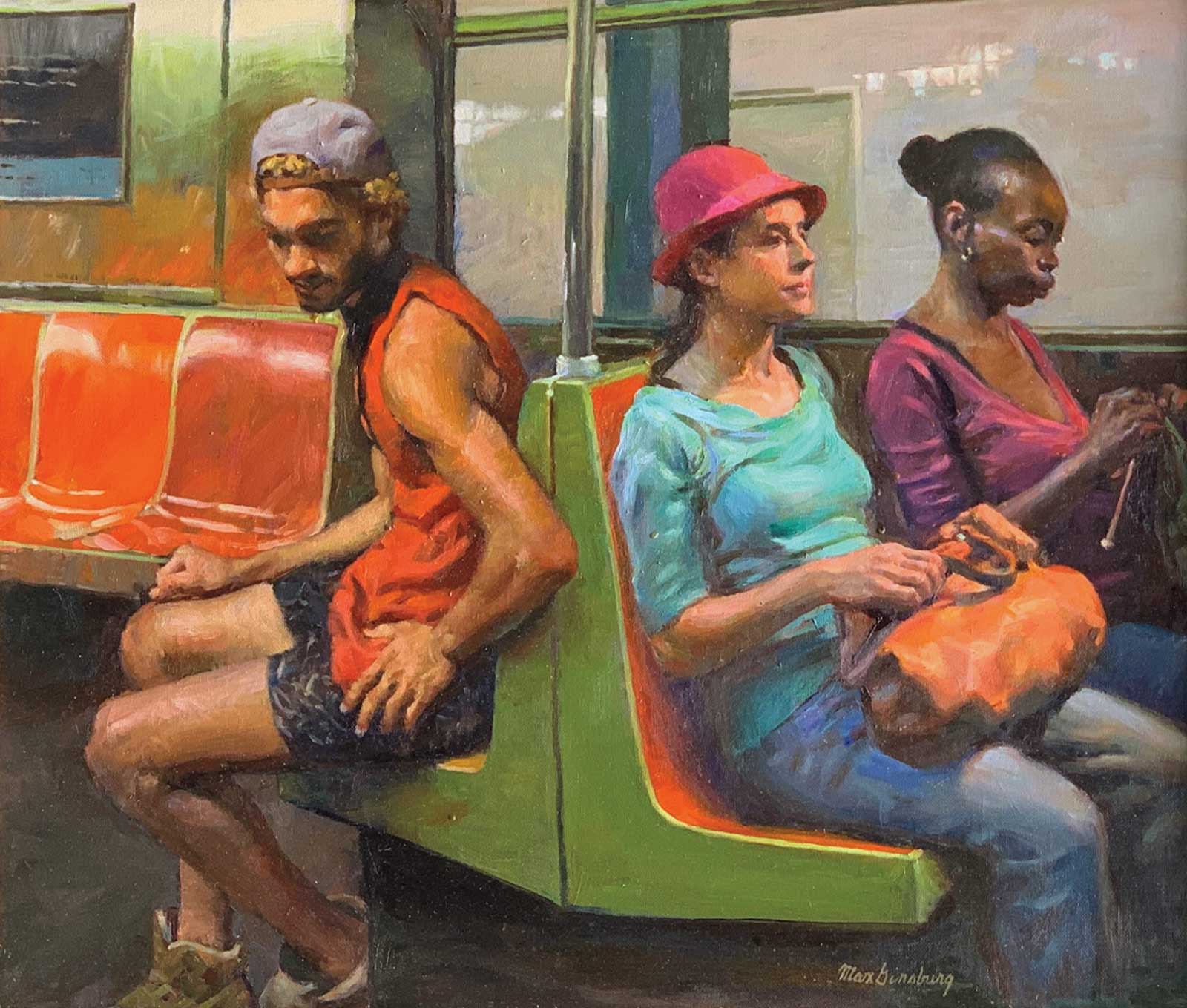
Max Ginsburg, Subway Trio, oil on canvas, 22 x 26" (55 x 66 cm)
Obstacles are something every artist, from beginners to masters, must learn to overcome. On the challenges of overcoming obstacles, Ginsburg says, “The biggest obstacle while I was developing as a realist artist in the 20th century was the lack of opportunities to develop my realist skills in the schools and colleges I attended. Freedom of expression of realism in art was discouraged while modern art was being taught and promoted. Galleries and museums primarily promoted and accepted modern art and even realism that was badly drawn and unskillfully executed. Galleries and museums were not accepting and encouraging all forms of art.”
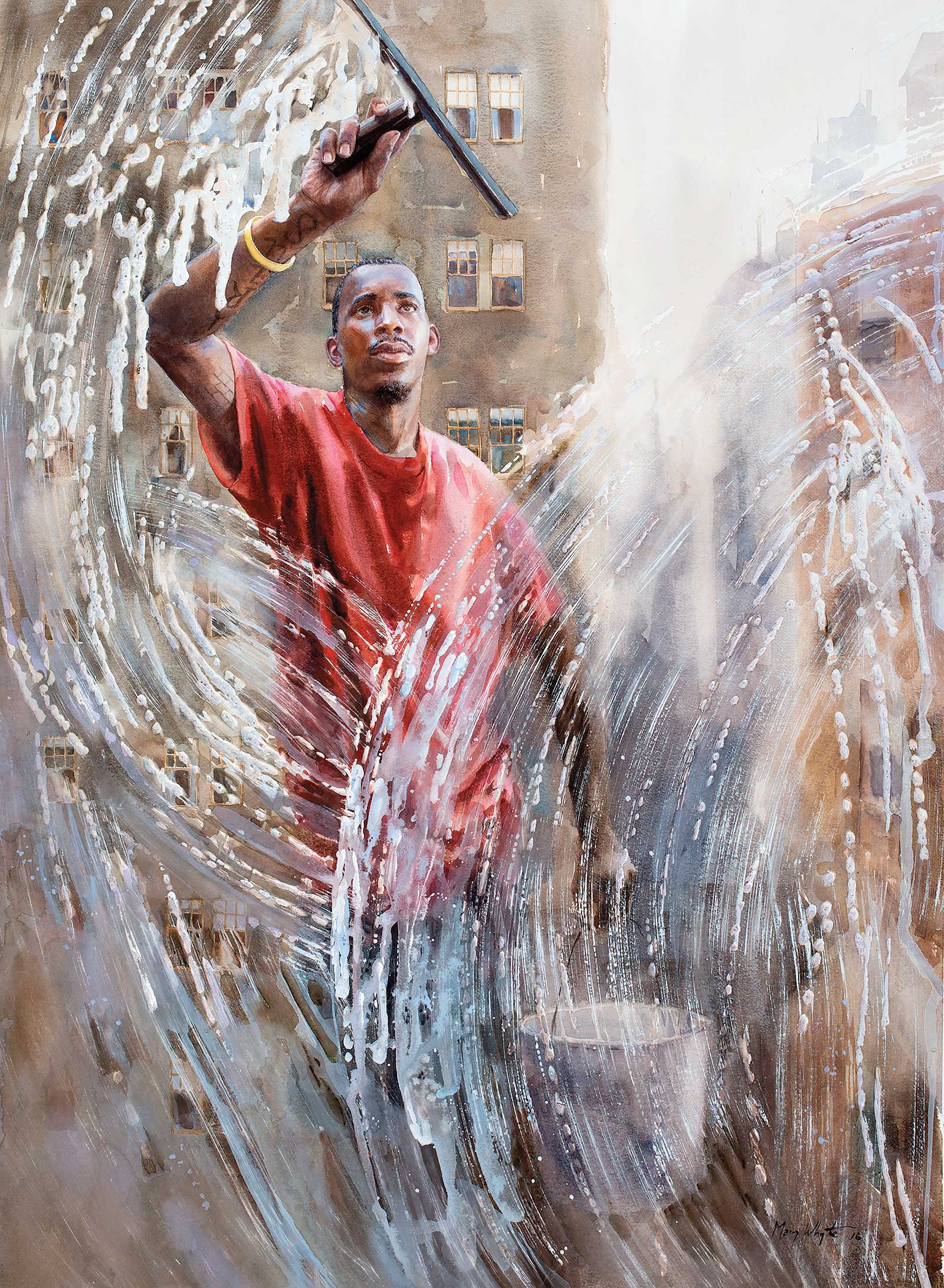
Mary Whyte, Window, watercolor on paper, 38½ x 28¼" (97 x 71 cm). From WE THE PEOPLE: Portraits of Veterans in America Exhibition.
Medici, who specializes in both egg tempera and oil painting, says one of her current challenges is navigating social media. “I am wary of engaging because of the way it subtly manipulates us,” Medici explains. “It is literally designed to be addictive and trigger the dopamine reward system. That said, social media is also very useful, fun and, to be honest, is probably one of the main reasons I am able to work as a full-time artist. So, to that extent, I am grateful. Like all these other skills, it is a matter of balance.”
On facing discouragement, Medici says, “One of the biggest challenges in the beginning and now is to not get discouraged and try to remain objective. For example, you put your heart into a painting and then submit it to a show, and in the beginning, there is more rejection than acceptance. You pay to play only to have your hopes squashed in the process. Even when you do get in, there are shipping fees, and there is no guarantee your work will sell or win awards. However, over time you realize it isn’t personal and that these fees are just part of the year’s marketing budget. It is the price you pay for networking and building your CV, and in the big picture is inconsequential.”
Medici reasons that the artistic journey can be summed up in a quote by David Whyte: “A true vocation calls us out beyond ourselves; breaks our heart in the process and then humbles, simplifies and enlightens us about the hidden, core nature of the work that enticed us in the first place.” Look out for more words of wisdom from our 2023 The Art of the Portrait faculty in the next issue. For information on registering for the conference or submitting your work to The International, visit www.portraitsociety.org. —