How can imaginative realism benefit you? This might depend on where you are on your journey as an artist. In the beginning, we’re all just trying not to be defeated by that white, empty canvas or paper in front of us. So we draw and paint, trying our best to get our work to look like the thing we’re drawing or painting. And finally we do. Now what?
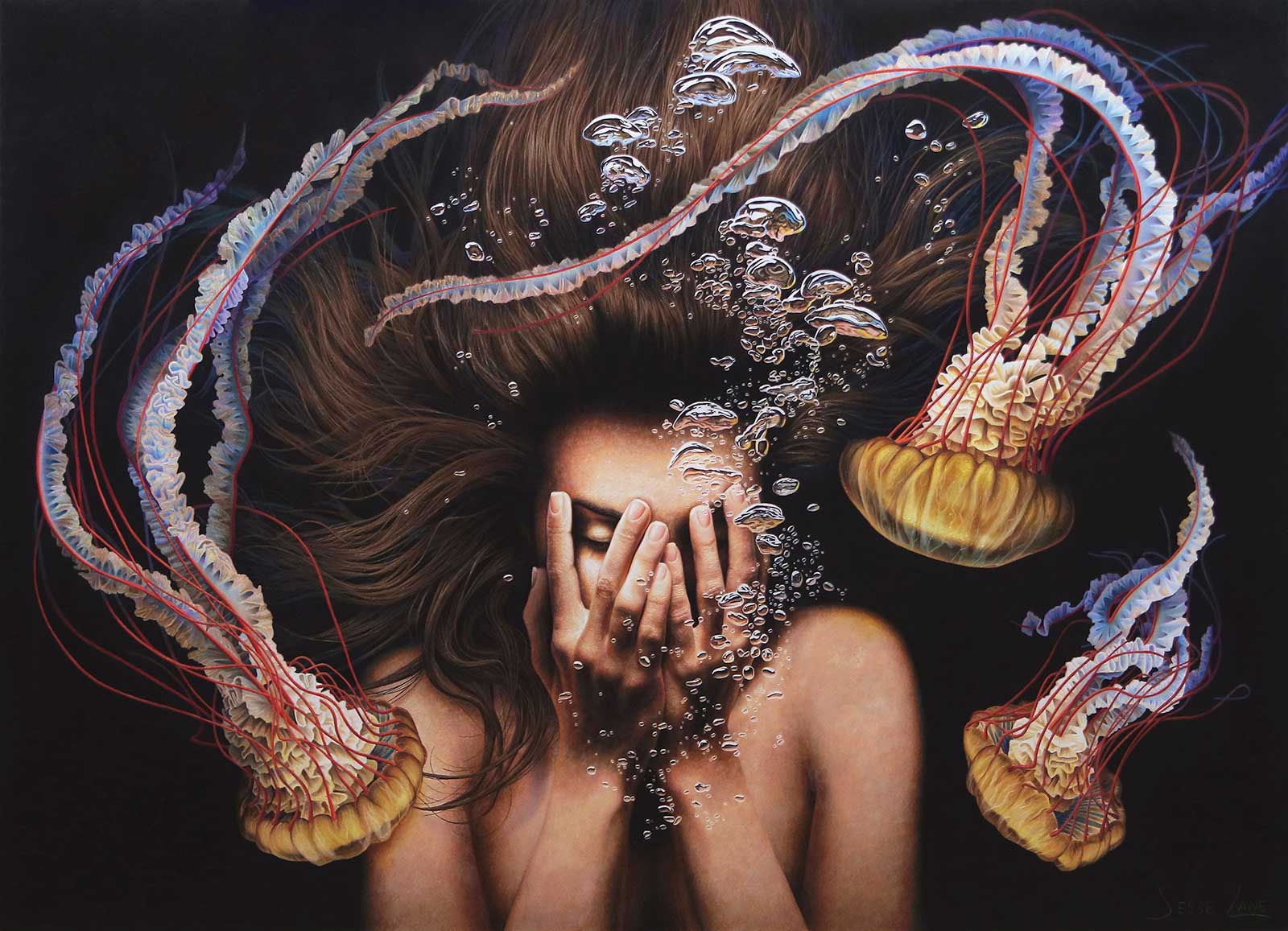
Abyss (detail), colored pencil on Bristol board, 28 x 39" (71 x 99 cm)
I’d like to share my answer.
For so long, my goal was to create the perfect picture through photorealism. I valued photorealism over everything. I tackled a variety of objects and scenes, learning to master glimpses of life and nature. It’s a thrill to be able to create an image that is, in a sense, “perfect.” Storytelling slowly crept into my work. At first, it was clumsy and heavy-handedly staged. I was telling the viewer exactly what to think. The technique and detail might hold their attention for a moment or two, but the image itself could be seen, studied and dismissed in a few seconds.
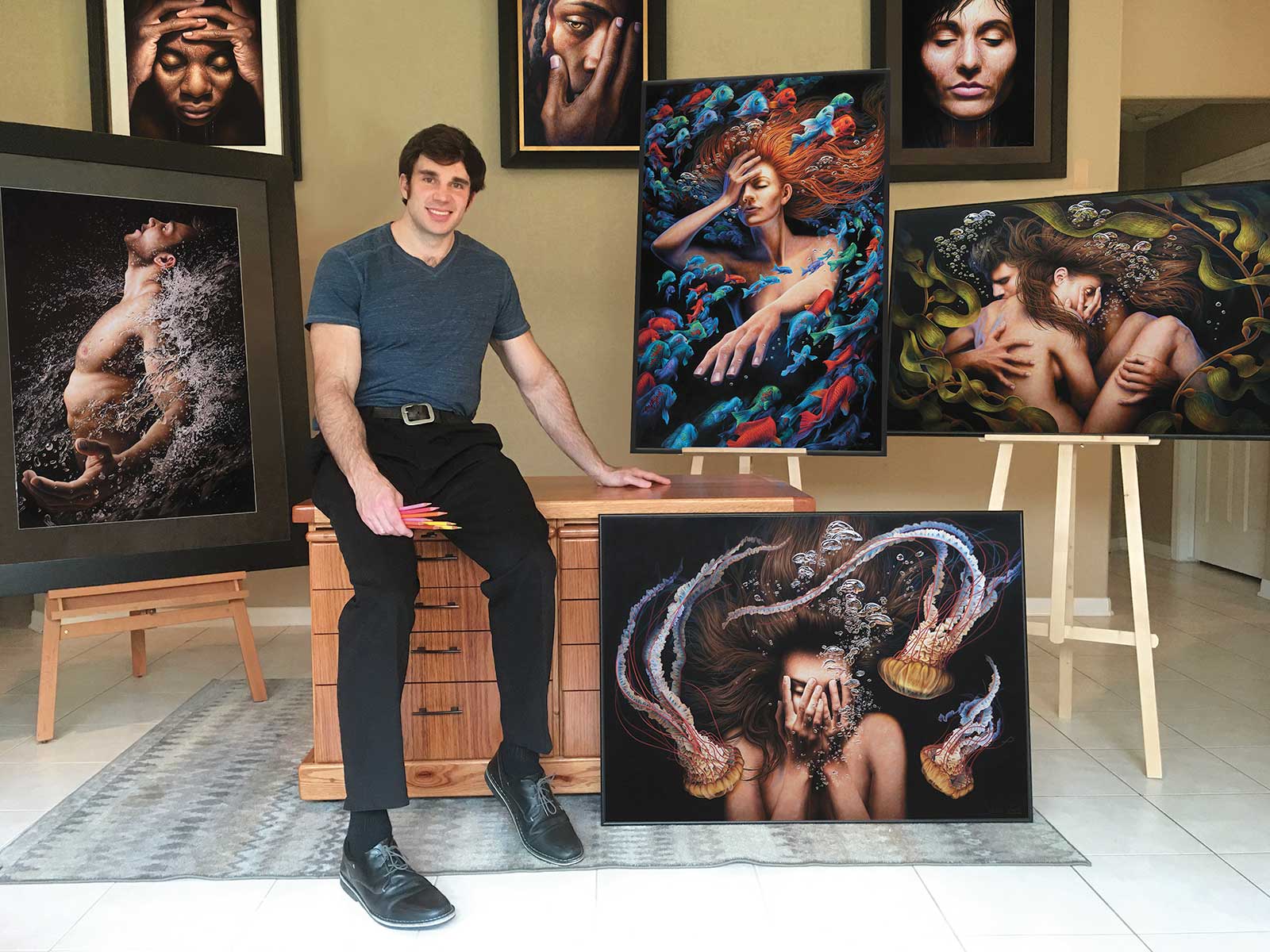
Jesse Lane
And then, in one piece, it all came together. It was a simple portrait of a young woman, my fiancée, just out of the shower. Her eyes were closed, and her hair was matted with water. Water streamed in trails down her face and off her chin. It was the moment before she toweled off. The moment before her face became itself again. There was great intrigue in that image, so I leaned into it. I cropped out most of the background and darkened it, then I shaded her with chiaroscuro lighting. When I finished, I saw emotion and mystery that I couldn’t define with one answer. There were many possible stories that could have brought her to this moment. (The final piece that came out of this experience is Oasis, shown above). That was my real beginning as an artist. My rendering ability became my set of tools, not the end result. I decided I wanted to use my skills to create a mood and tell stories.
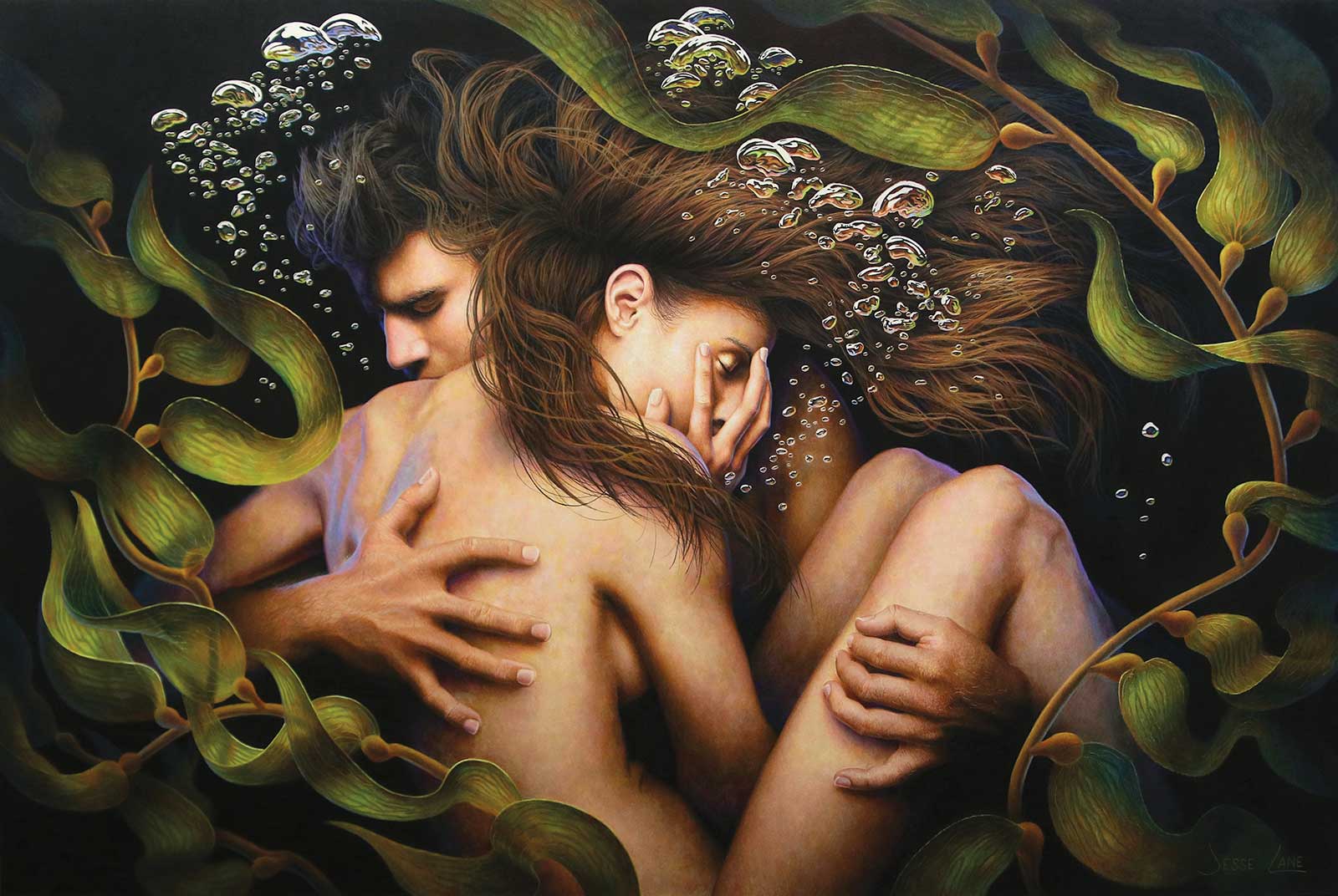
Undercurrents, colored pencil on Bristol board, 26 x 39" (66 x 99 cm)
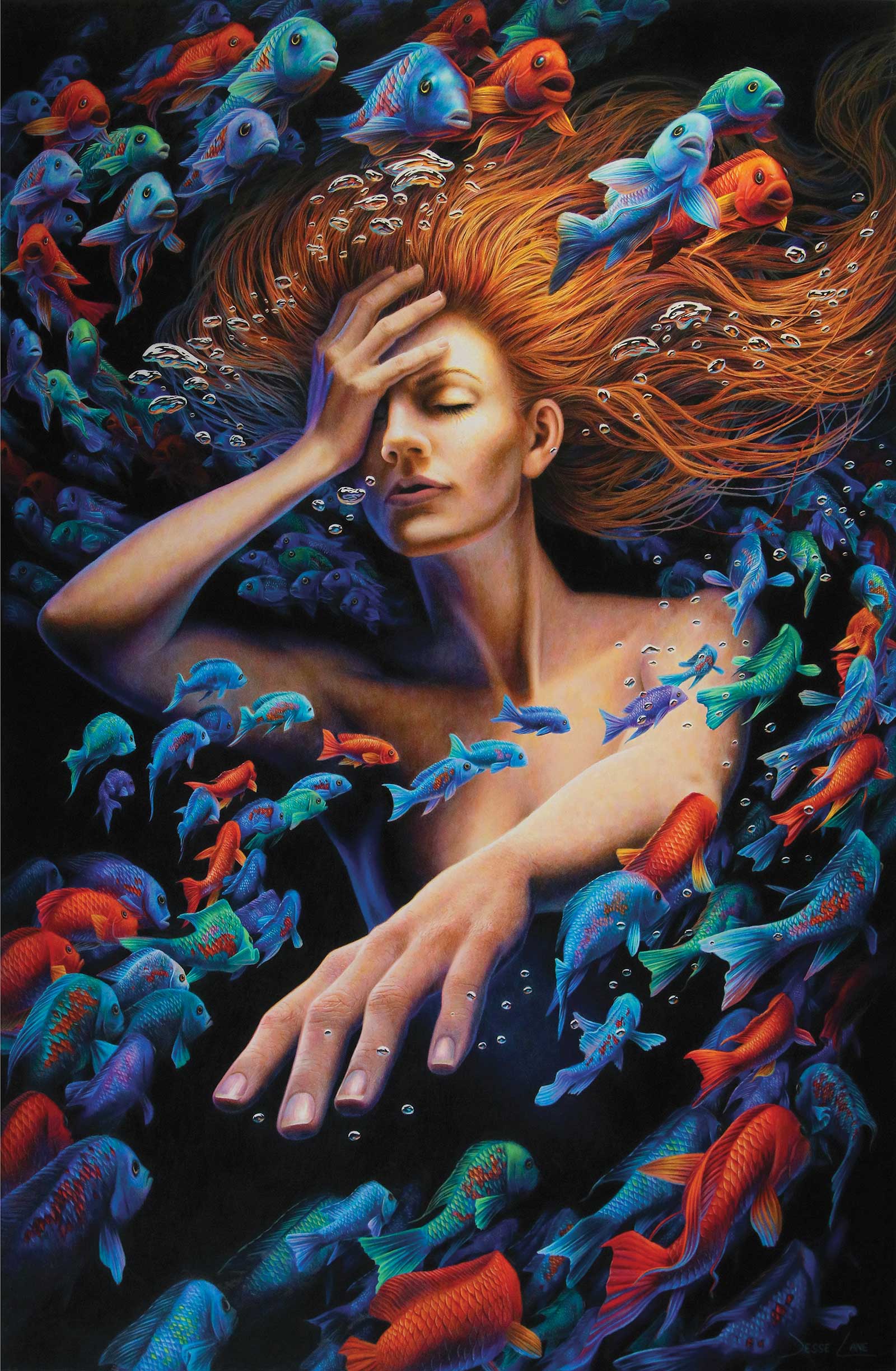
The Winds of Water, colored pencil on Bristol board, 39 x 26" (99 x 66 cm)
So I created a series of portraits—but not the kind you would hang over the fireplace or see in a business office. They were faces emerging from darkness with subtle emotions combined with layers of mystery. Eventually though, I had my “now what?” moment. How could I go beyond realism? And really, what is “real?” I used to see reality in one way. However, as I get older, I’ve seen reality shift. Situations are the same, yet how we see them affects our reality.
For example, when two people fall in love, their two realities meet. Our reality is familiar to us, while the other person’s is new and a bit strange. Love allows us to explore the depths of another person, and we discover a new “reality.” This is the experience I want to capture. I went underwater, envisioning what it would look like if we were just there, with our emotions of love and pain, power and loss. Imaginative realism has been described as the art of the unseen, the sight of things that never existed. For me, it’s a glimpse into the interior mystery of life. I brought every skill, every emotion, from my previous work into this new realm of imaginative realism. Nothing I learned was ever wasted. I took reference photos. I put them in Photoshop, moved them around, cut and pasted, flopped them and changed the lighting. I painted on top of them until I really knew the image. The more work I did on the front end, the easier it became on the back end.
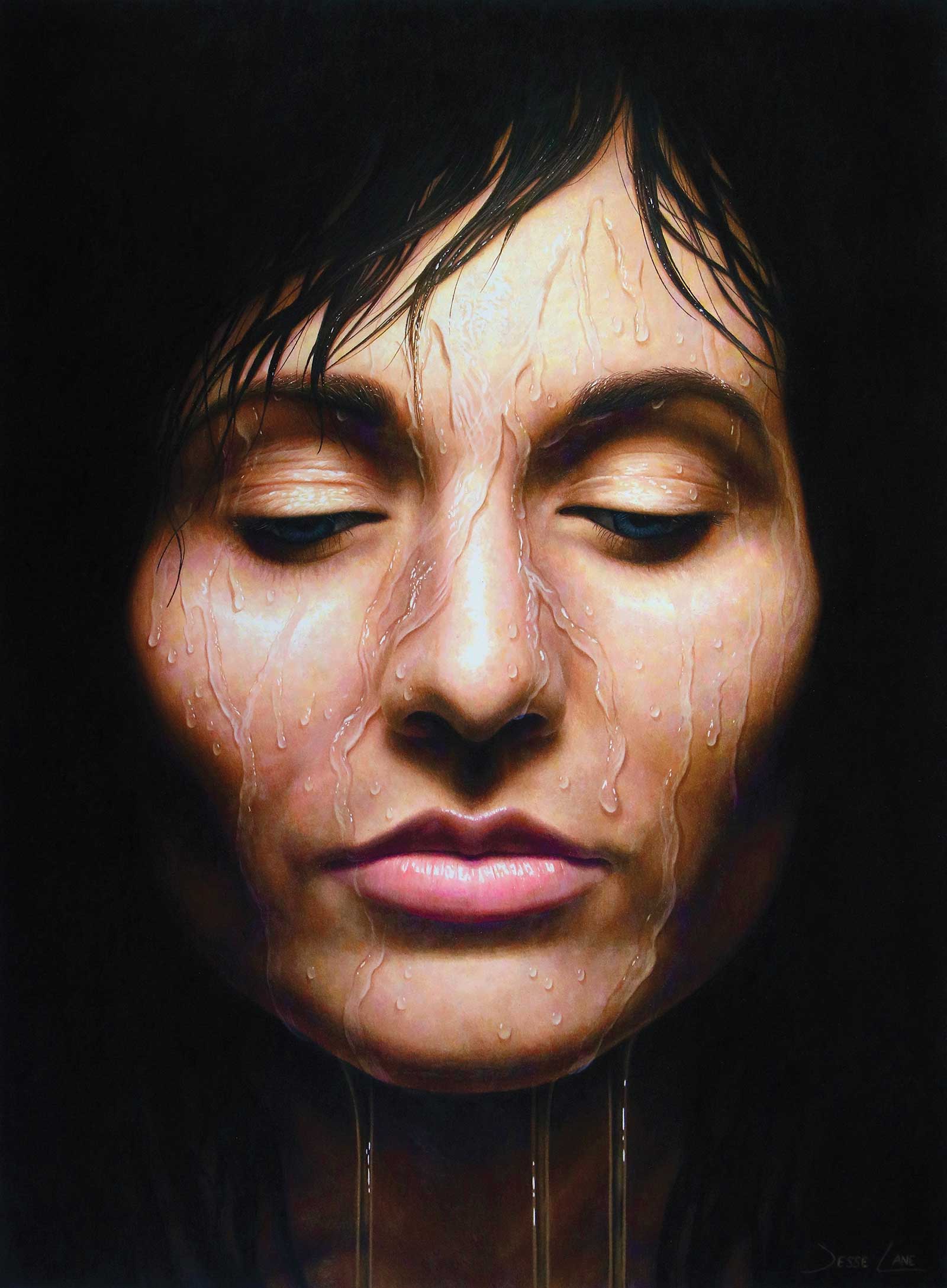
Ripple, colored pencil on Bristol board, 30 x 20" (76 x 50 cm)
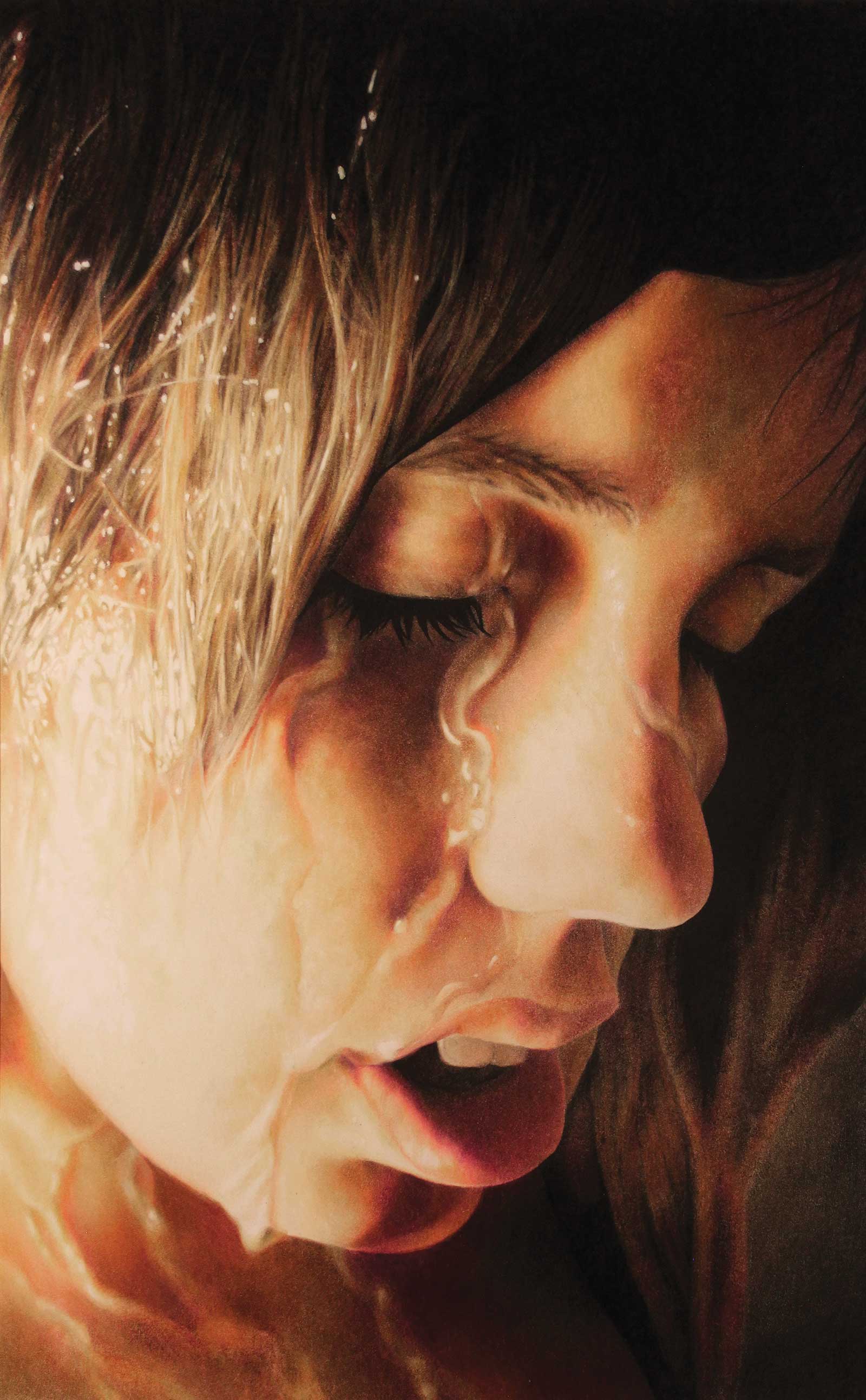
Oasis, colored pencil on Bristol board, 28 x 18" (71 x 45 cm)
While beautiful, when an image is too fantasized or too perfect, I have trouble putting myself there. For this reason, I begin each piece with its most human moment. I then play off that emotion with supporting imaginative elements, and that changes the context. There’s a part of making art that is a balance of self-expression and mystery. To boil it down simply, I think suggesting a story means not drawing people or things, but drawing a moment that involves people or things. When a piece can be left open to interpretation, the viewer can participate by finding what they want to see. They can mentally enter the image, letting their own story and experience be their guide.
When we were children, we were told the world is a certain way, and one day we will enter it. What I’ve learned is that we all create our own reality. This is especially true for life as a professional artist and a husband. In love, as in life, there is a certain amount you can control, but much that you cannot. The magic in life often lies in the things we can’t control. We usually feel vulnerable outside our element, seeking joy and love.
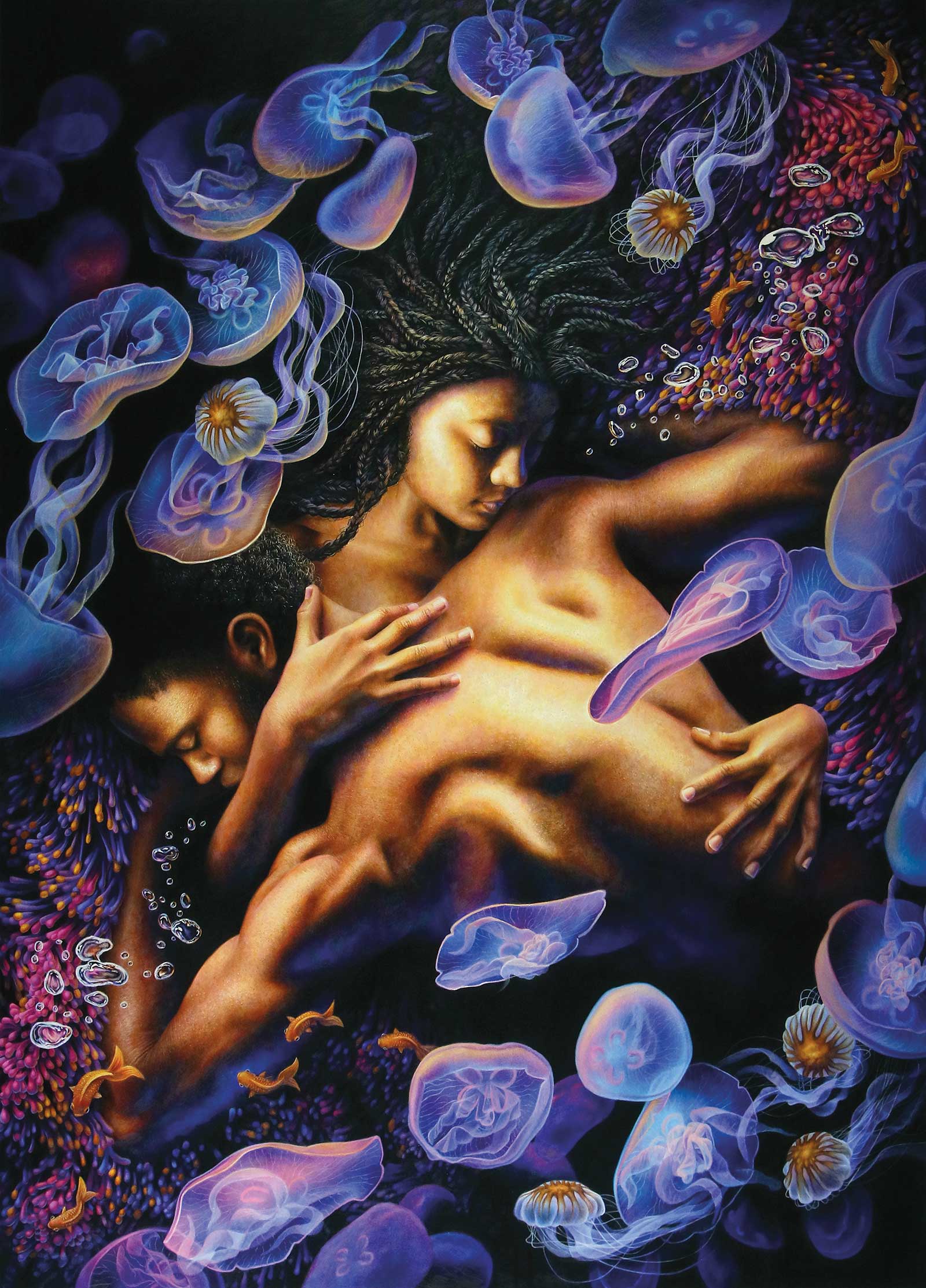
Lunar Rhythms, colored pencil on Bristol board, 38 x 28" (96 x 71 cm)
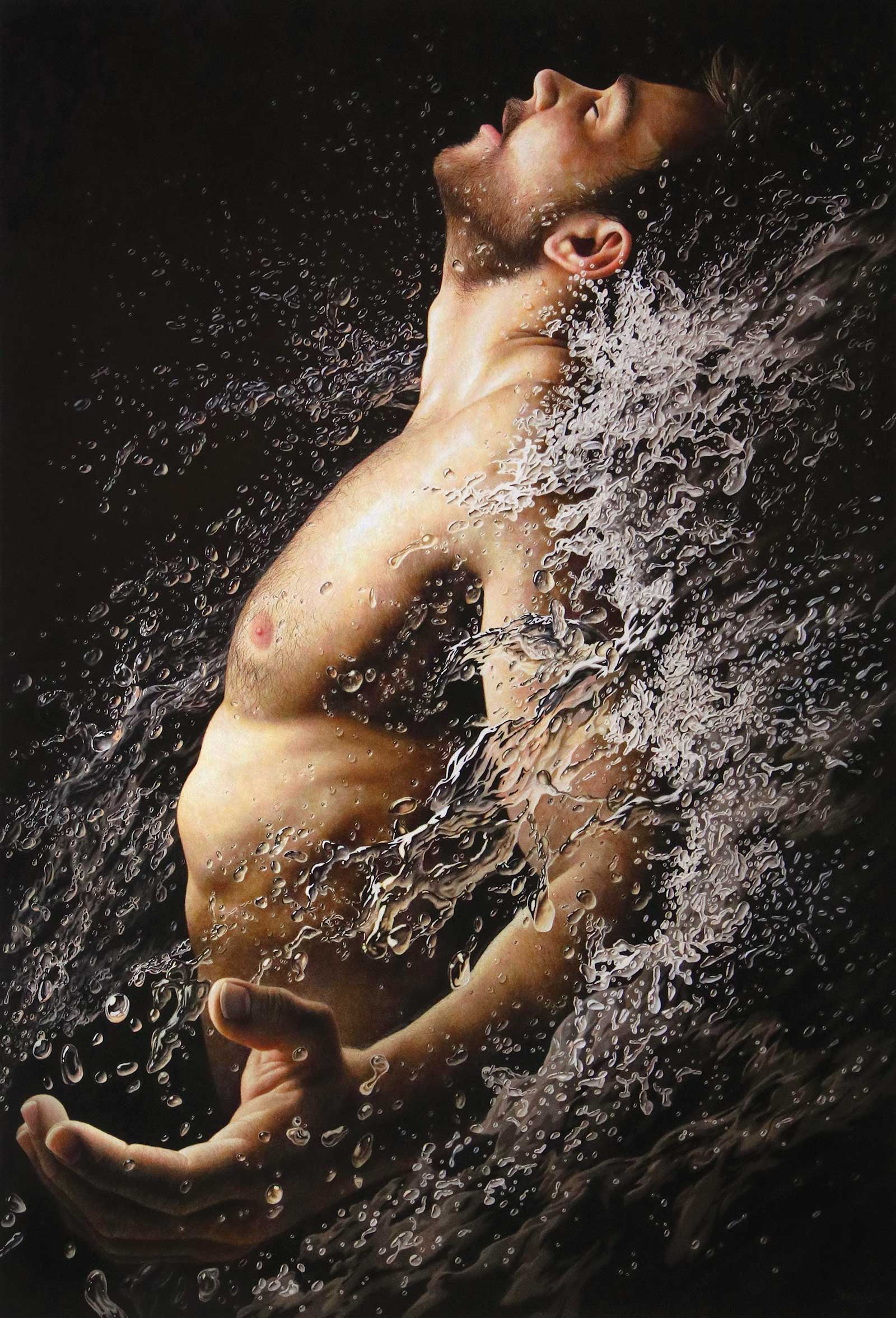
Adrenaline, colored pencil on Bristol board, 39 x 27" (99 x 68 cm)
To me, the ocean is a metaphor for love and life because it’s the most magical place on earth. We become weightless, seeing things that always existed, yet we never thought or knew about them. As magical as the ocean is, it deprives us of one of our greatest necessities, oxygen. There are many beautiful and dangerous creatures in the ocean, all of which move faster than us. When we enter into it, we are under the ocean’s control, being pushed around by its currents. Whether beautiful or dangerous, the ocean, love and life are always magical.
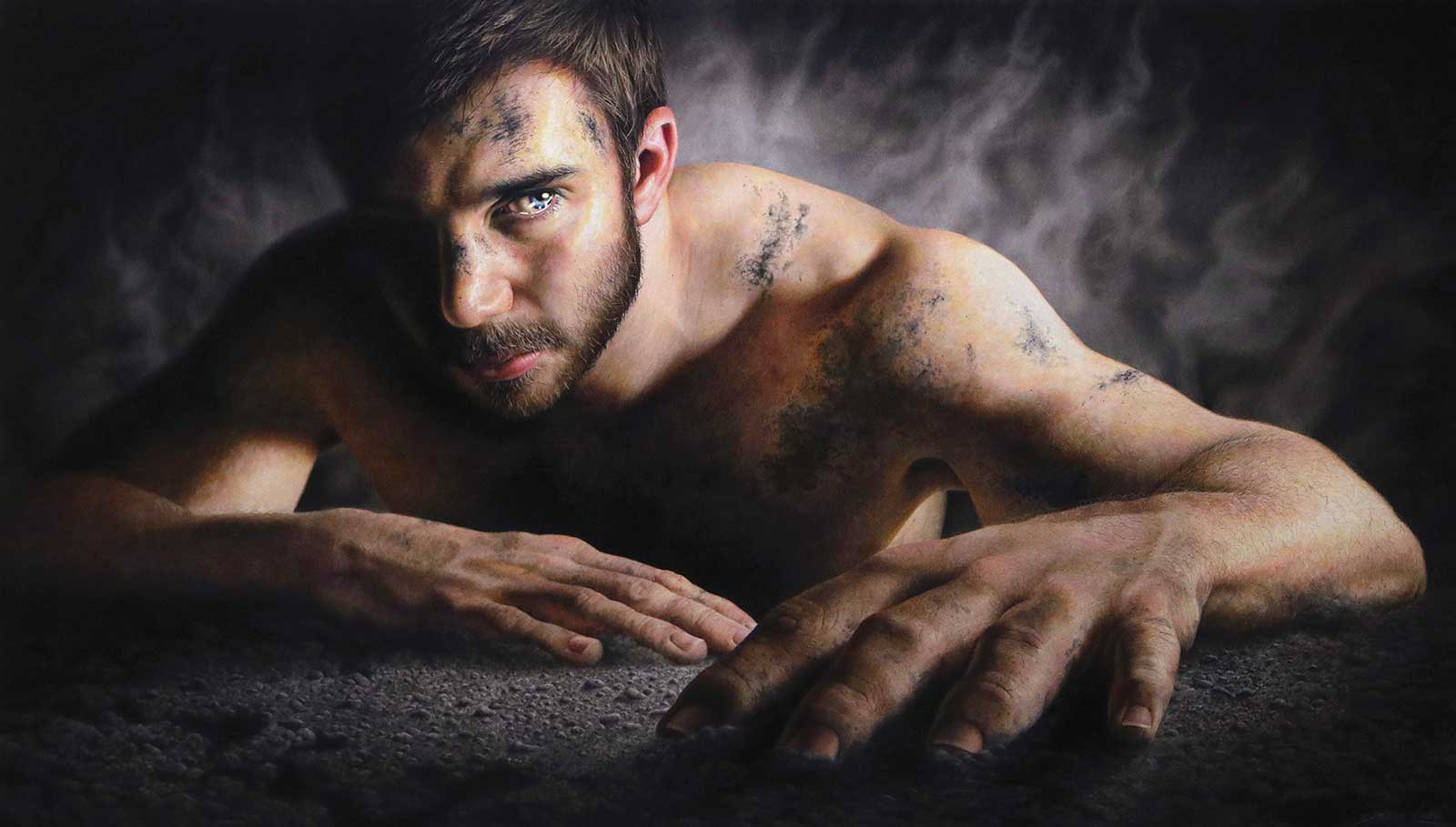
Face Reality, colored pencil on Bristol board, 23 x 40" (58 x 101 cm)
Perhaps the greatest joy of imaginative realism is the ability to create your own world, one full of self-expression and self-exploration. Imaginative realism can also take you on a journey of self-discovery. For me, it feels like an endless voyage, one that keeps going so long as I have a voice with something to say and a story to tell. —
About the Artist
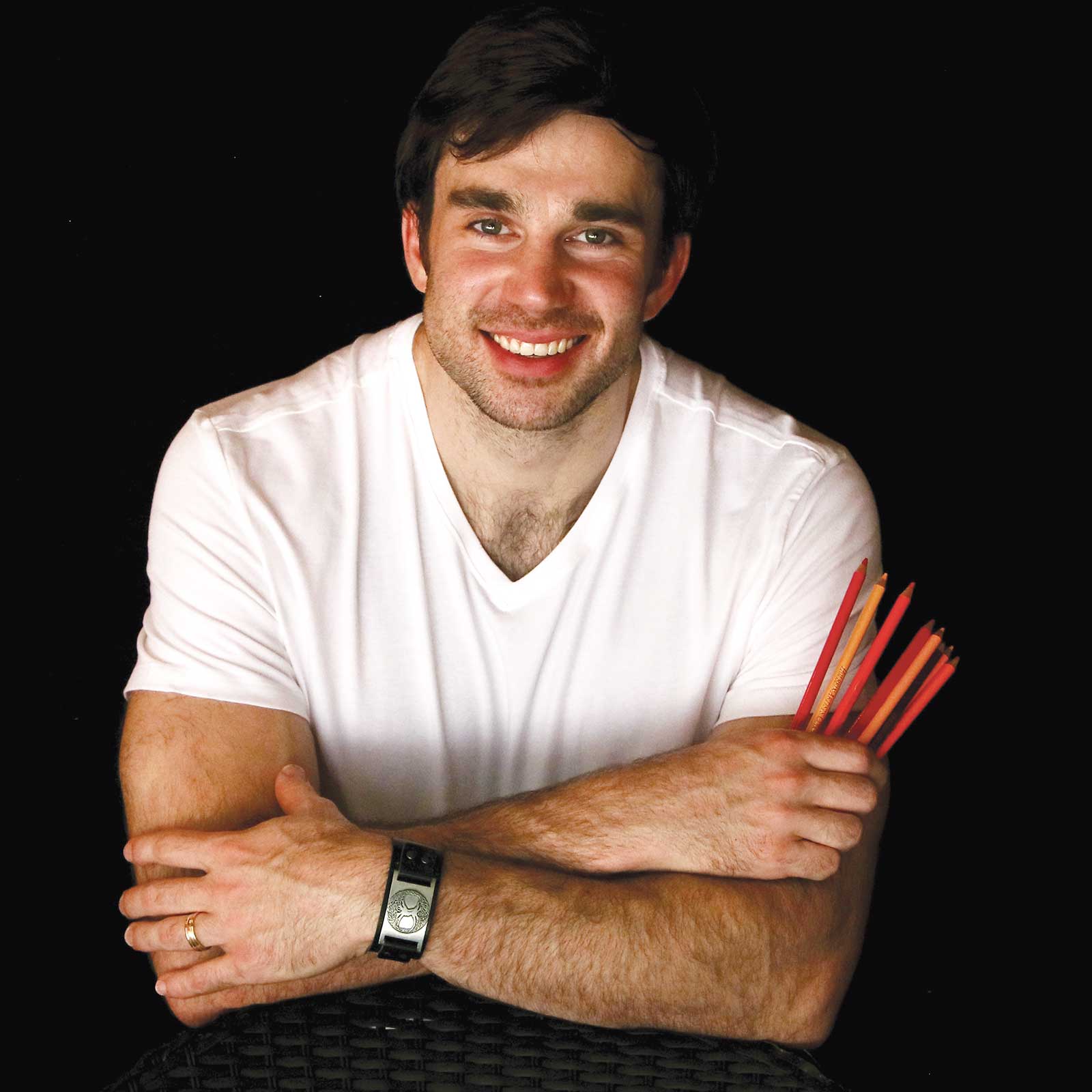 Jesse Lane
Jesse Lane is a professional artist from Houston, Texas, known for stunning hyper realistic portraits and works of imaginative realism. His numerous national and international honors include the top award from the Colored Pencil Society of America, the CIPPY. Lane loves teaching through videos and online workshops.
Represented by
RJD Gallery, Michigan, USA, www.rjdgallery.com
Contact at
jesse@jesselaneart.com
www.jesselaneart.com