After abandoning my first attempt at painting artist Rose Devanny from a photo I took of her in the woods behind my studio, I decided to sand down the dry layers of textured oil paint a year later and started a new painting of her on top of it.
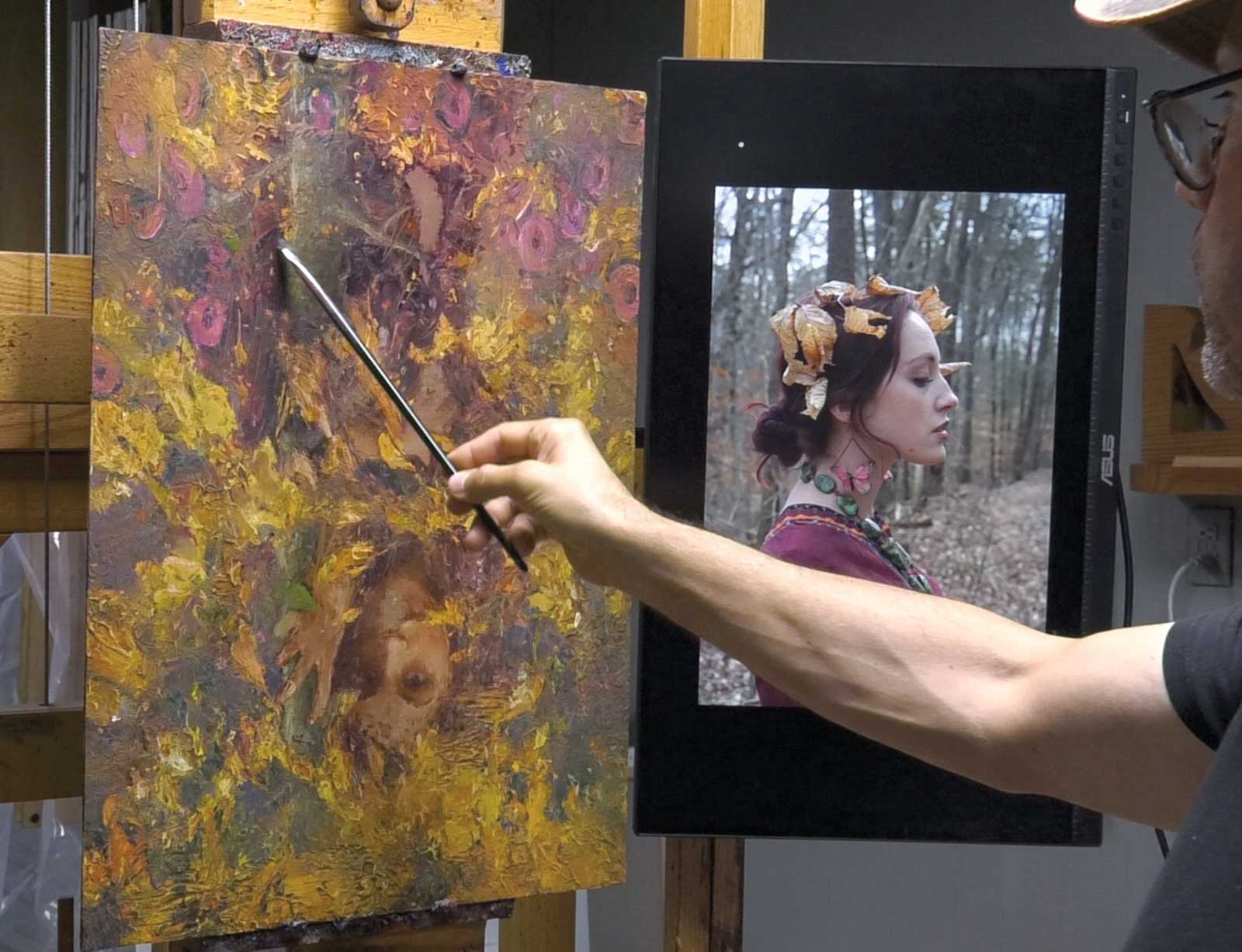 Stage 1
Stage 1
In this first stage, I’ve sanded away the dry layers of paint and have begun adding fresh paint. The original reference photo is on the right.
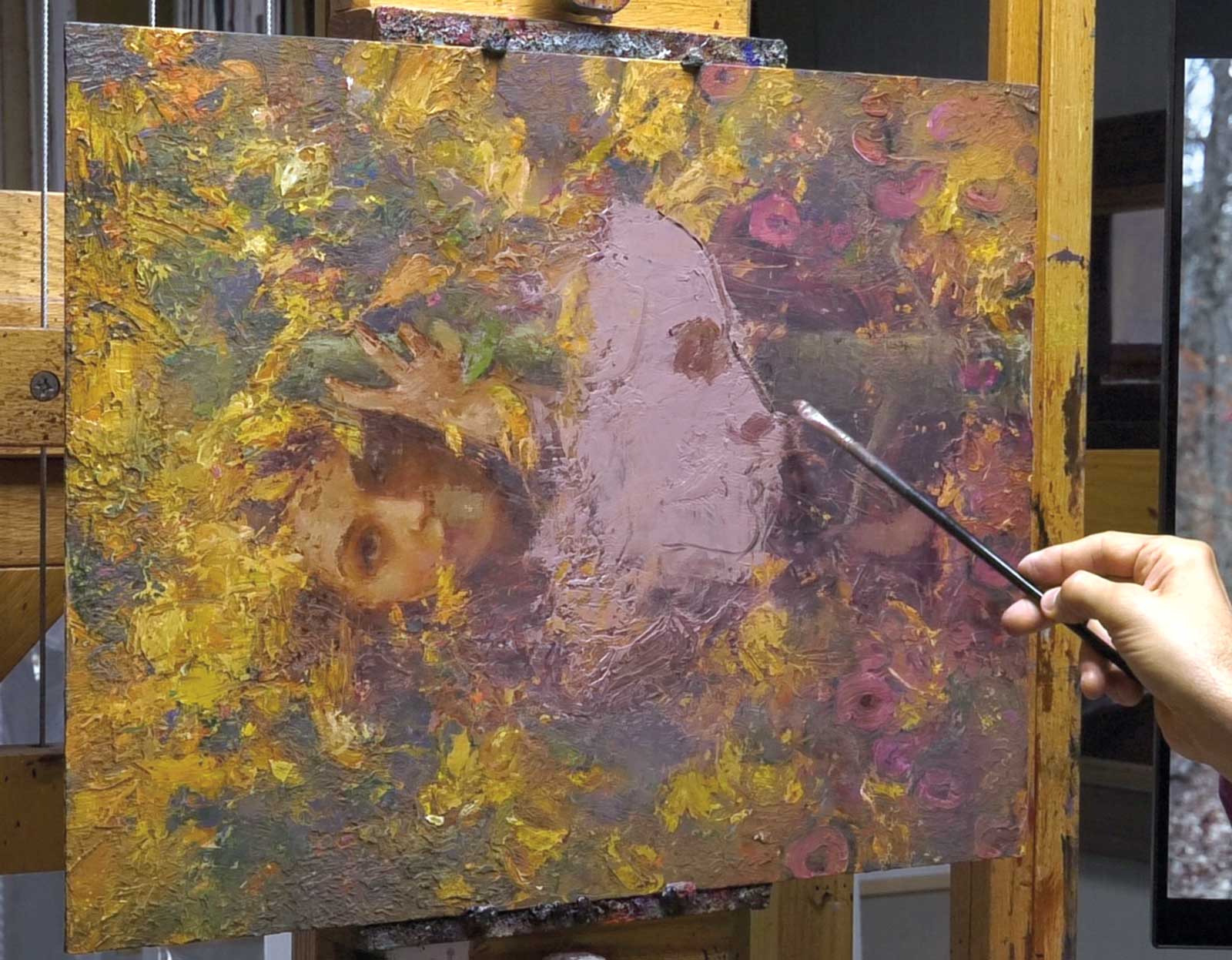 Stage 2
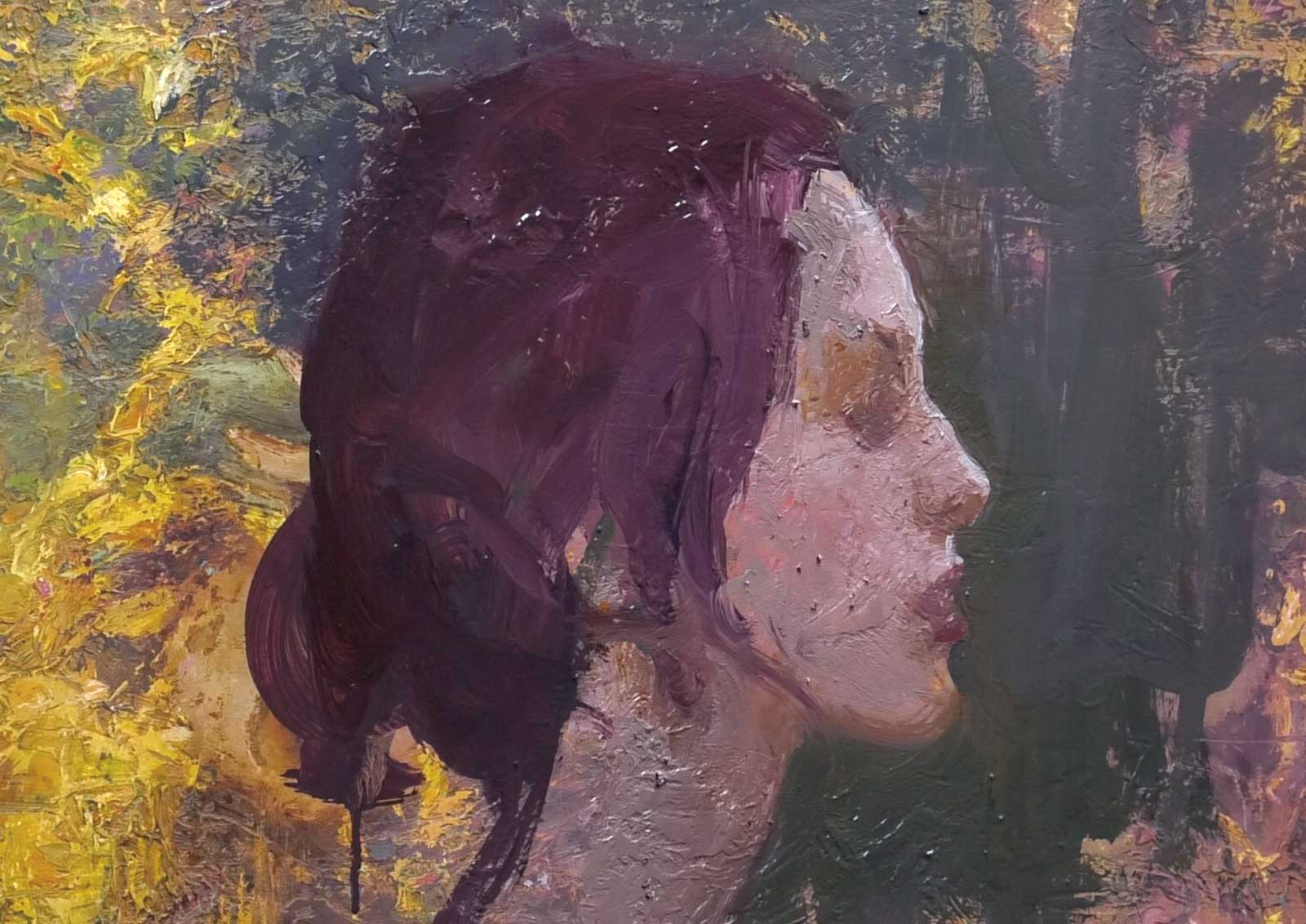 Stage 2
Stage 2
The vertical format felt wrong, so I switched to a horizontal composition just a few minutes into the painting and rapidly blocked in the larger shapes of the face and hair without a drawing underneath.
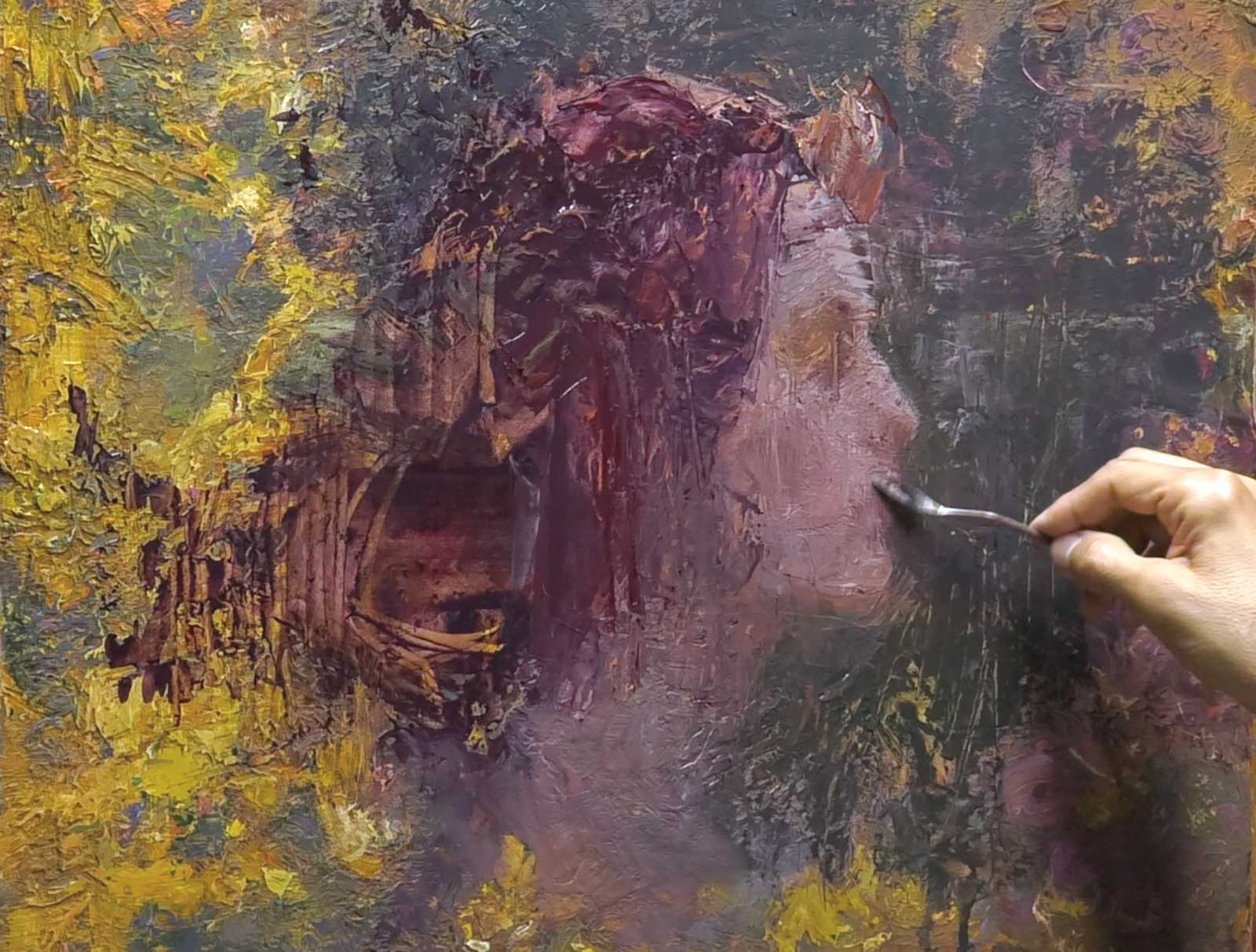 Stage 3
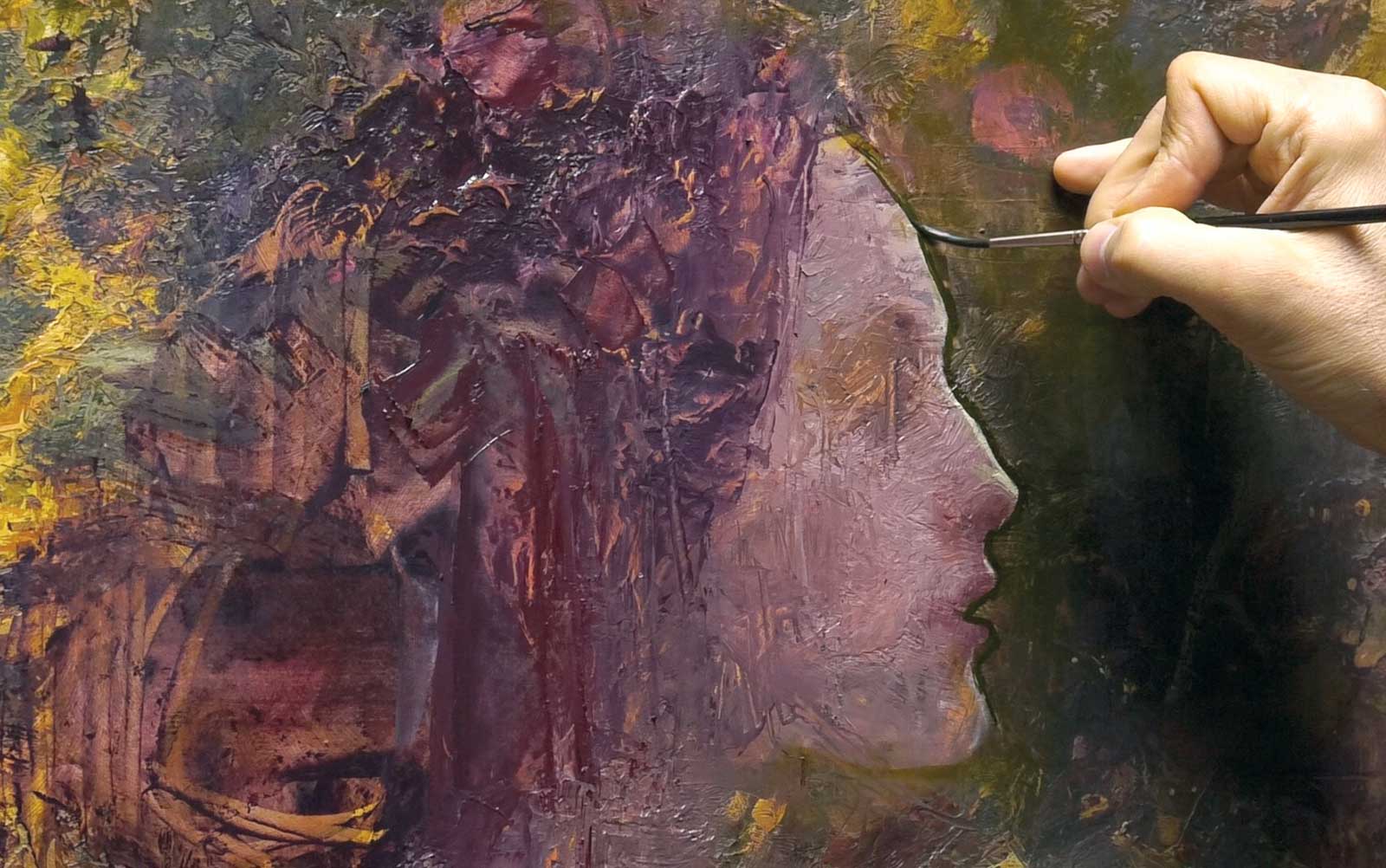 Stage 3
Stage 3
I used a clean palette knife to scrape into the thick paint, exposing some of the rough texture and colors of the failed painting underneath. Next, I defined the sharp outline of Rose’s classic profile with a long Rosemary & Co. rigger brush.
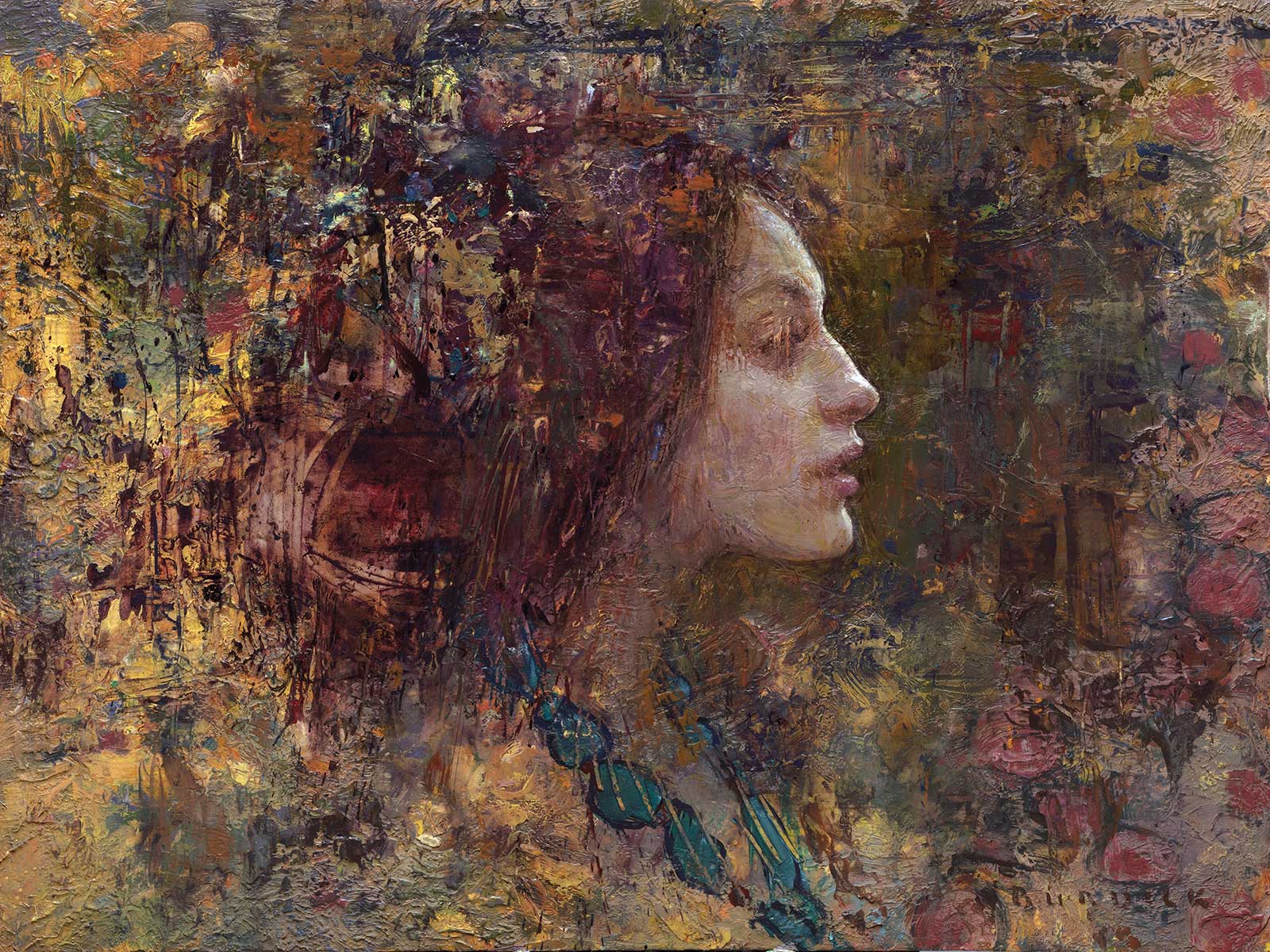 Stage 4
Stage 4
I slowed down at this point and refined the face and background, adding more layers of slightly varied warm and cool colors on top of one another for more depth. For most of this stage, I added Gamsol mineral spirits to thin the paint into a slightly transparent glaze so some of the colors would show from the old painting underneath. This created that abstract depth I was going for in the painting. I added the green necklace last but felt quite uncertain about whether it was too much.
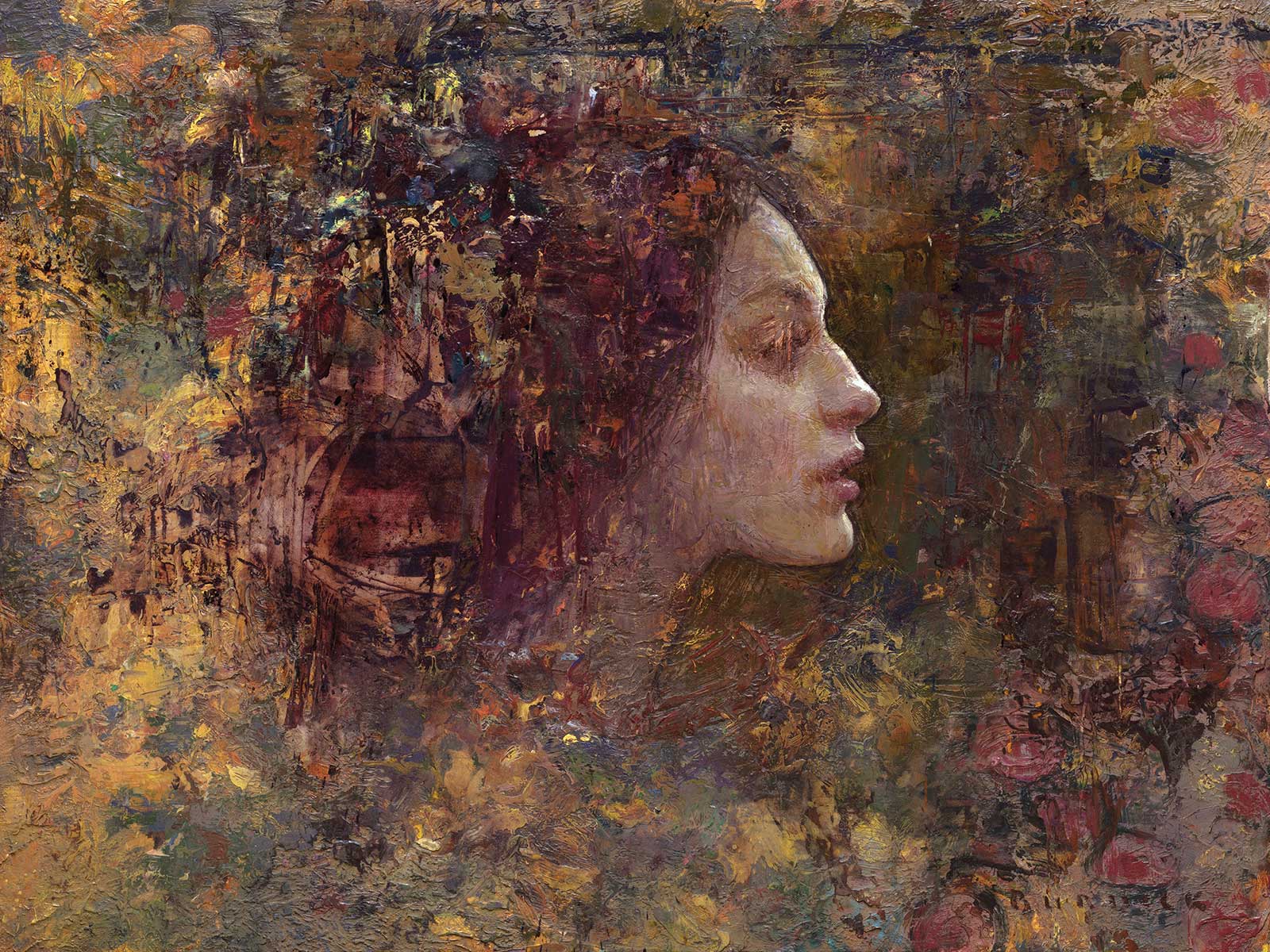 Stage 5
Stage 5
The next day, I decided I liked the painting better without the necklace, so I dipped a paper towel in my brush-cleaning can of Gamsol and wiped away the necklace. This was easily done since the underpainting that I had sanded down was thoroughly dry.
I’m sure some will prefer the necklace stage, but I feel better without it competing with the face. As always, I have that nagging disappointment that the painting is not as good as I had hoped it would be when I started. Oh well, maybe the next painting will be perfect—or the next, or the next. Despite being disappointed, the only truly failed painting is the one you’re too afraid to start. Some of my greatest lessons have come from my failures, both in painting and in life.
If you would like to see the video demonstration of this painting, visit www.patreon.com/susanlyon and try not to laugh too much at how many mistakes I attempt to correct on every demonstration I’ve posted there!
Scott Burdick and his wife, artist Susan Lyon, live in North Carolina in the United States and have exhibited in numerous gallery and museum shows. Together, they travel widely and focus on painting people in traditional cultures in many remote regions. Both Lyon and Burdick will be doing demonstrations at this year’s Portrait Society of America’s conference in Washington, D.C. To see more of his work, www.scottburdick.com. —