



It all started back in February of 1983. Nearly 100 exhibitors and 5,000 attendees gathered together for the first Southeastern Wildlife Exposition, and since then, the annual event has grown to astounding heights: 500 artists, exhibitors and wildlife experts and 40,000 attendees, bringing in an estimated $50 million in economic impact each year.
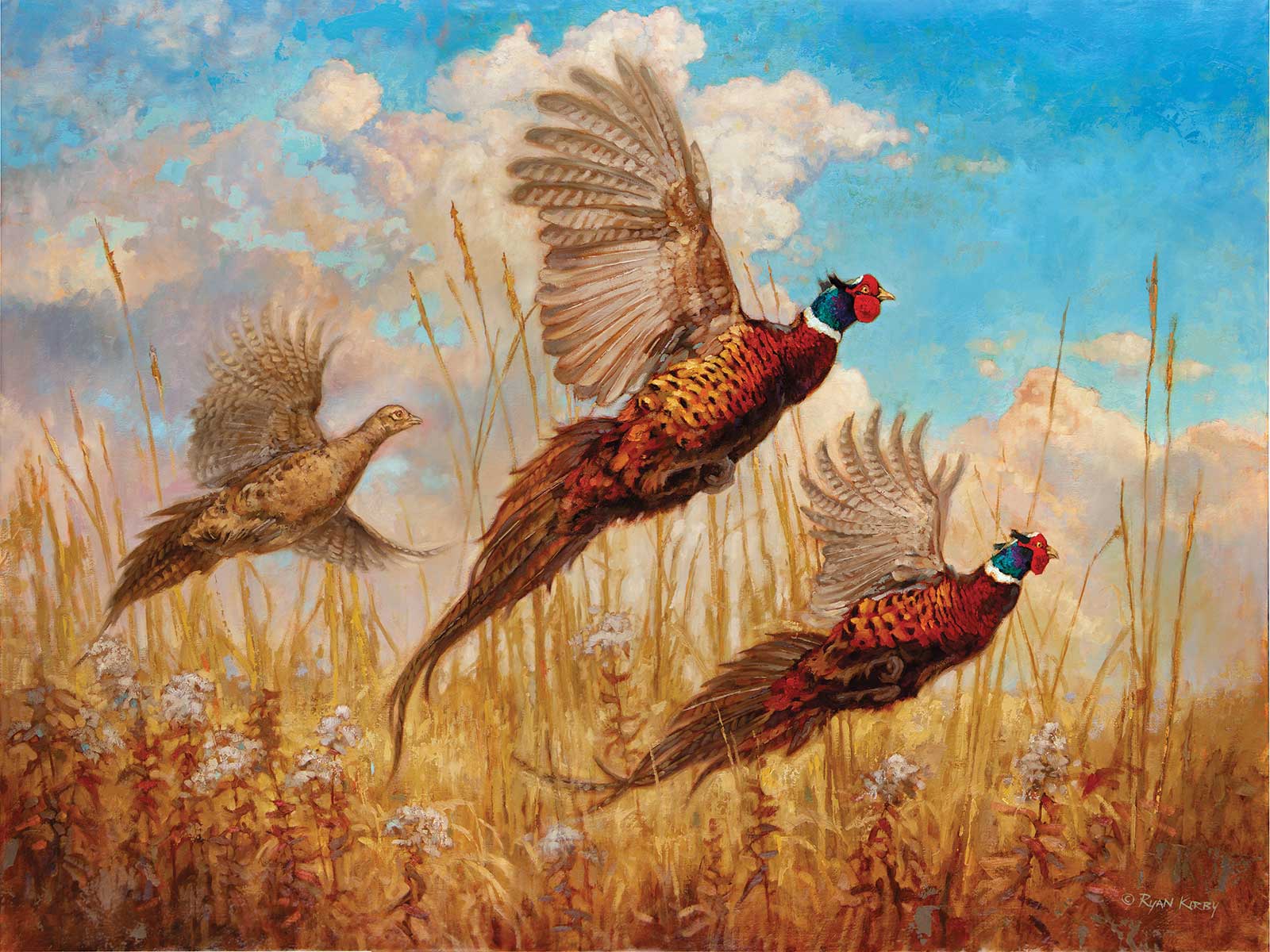
Ryan Kirby, The Departure, oil on linen, 36 x 48" (91 x 121 cm). 2023 Featured Artwork.
SEWE takes place in Charleston every February, the heart and soul of South Carolina’s Lowcountry region. There’s a sense of charm and culture there, as vibrant as its natural ecosystems and the wildlife that inhabit them, from intertidal wetlands, marshes and coastal habitats to sandy shorelines and deepwater creeks. So it’s really no wonder the region is a haven for conservationists and those who share a love of things that grow. It’s also, of course, a haven for wildlife artists inspired to capture the diversity of animals existing in all sorts of ecosystems. And hundreds of these brilliant artists showcase those works each year during SEWE.
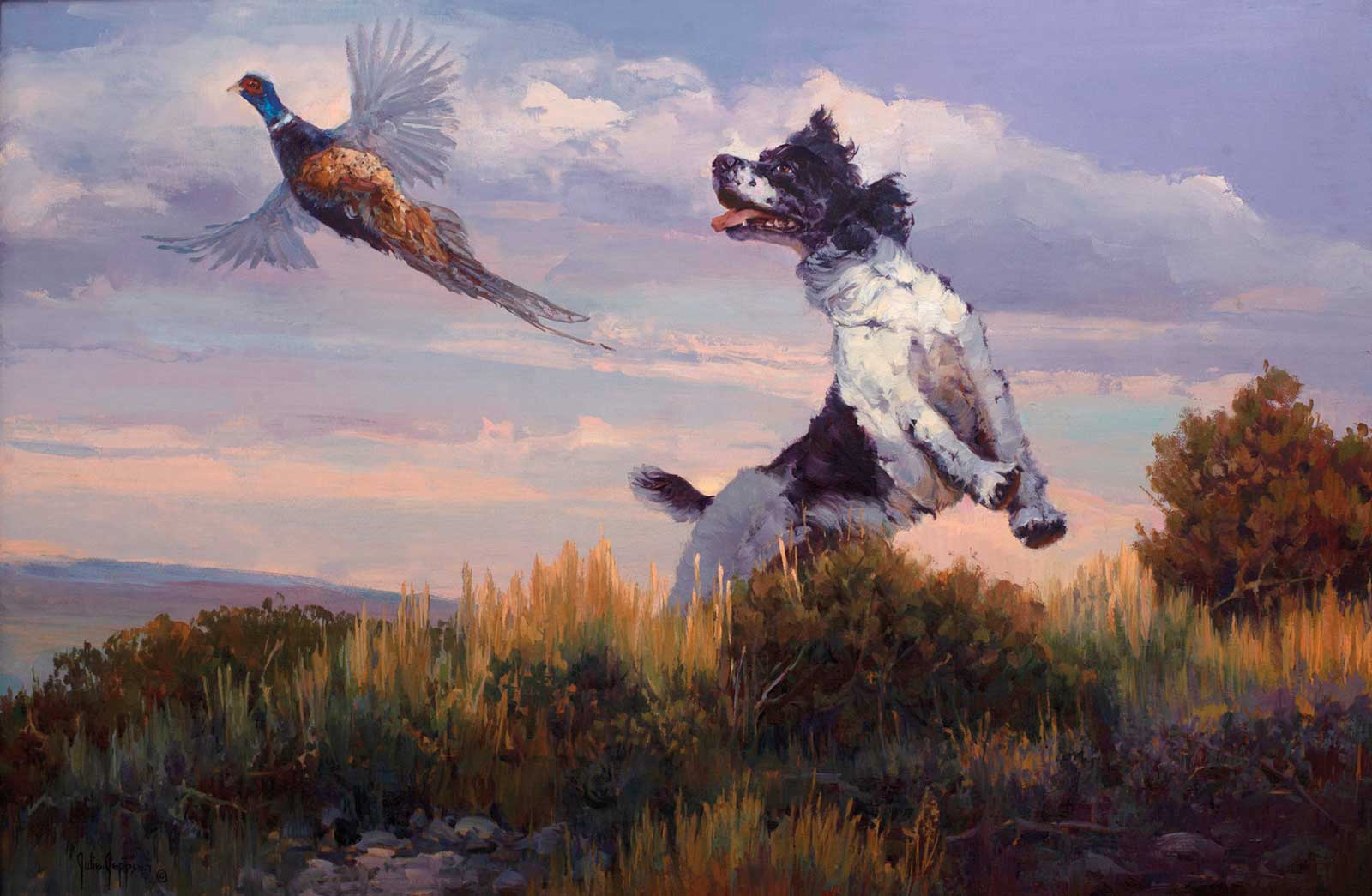
Julie Jeppsen, Spaniel Flush, oil on canvas, 20 x 30" (50 x 76 cm)
“There’s this spirit that is absolutely organic—that we’re going to descend upon Charleston every February and set up shop, enjoy each other’s company, swap stories, enjoy art and celebrate the city,” says John Powell, SEWE president and CEO. “[It’s about] the outdoors lifestyle, the sporting lifestyle, conservationists, lovers of canines and all things outdoors.”
In the event’s early days, Powell says there was a greater focus on carvings and decoy art. Now, two-dimensional art commands the stage, including works in oil, acrylic, watercolor, pastel, scratchboard, charcoal and graphite, to name just a few. Sculpture in bronze, wood and metal (as well as decoy art) occupy a special place at the event as well. One of the best parts? The artists are all in attendance during the three-day weekend to speak with and learn from.
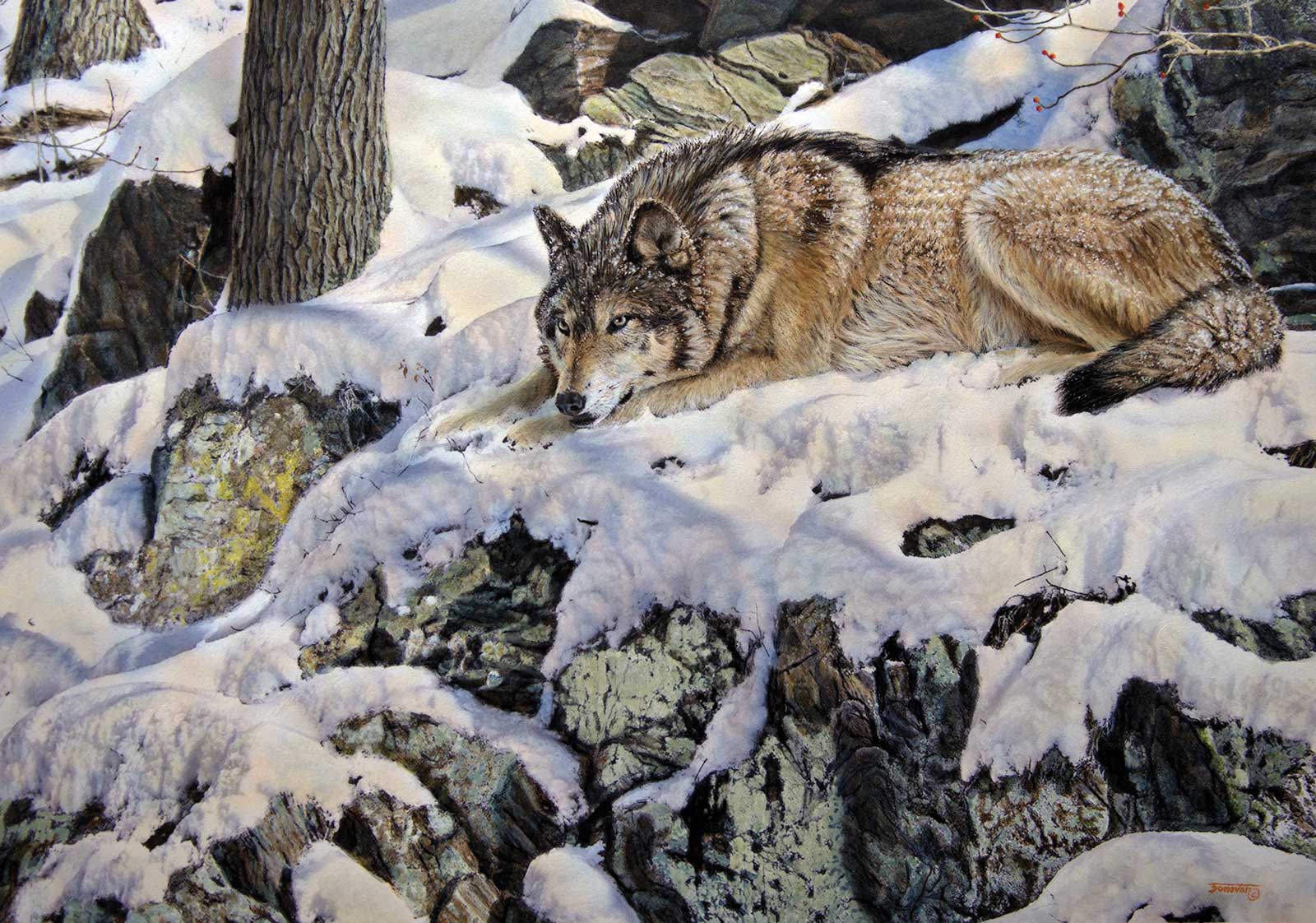
Tim Donovan, Tranquility, egg tempera and acrylic on panel, 14½ x 20½" (36 x 52 cm)
SEWE is a 501(c)(3) non-profit, supporting numerous conservation efforts both locally and beyond. The event has grown into not only a phenomenal showcase of wildlife art, but also a celebration of the outdoors. In addition to the Quick Draw/Speed Sculpt event—in which artists paint or sculpt an original piece from start to finish in just one hour—SEWE also features flight demonstrations by a variety of birds of prey; the widely loved DockDogs® Competitions (a canine water jumping contest) and more. SEWE also features dozens of exhibitors outside the fine art realm, from conservation groups to knifemakers to woodworkers.
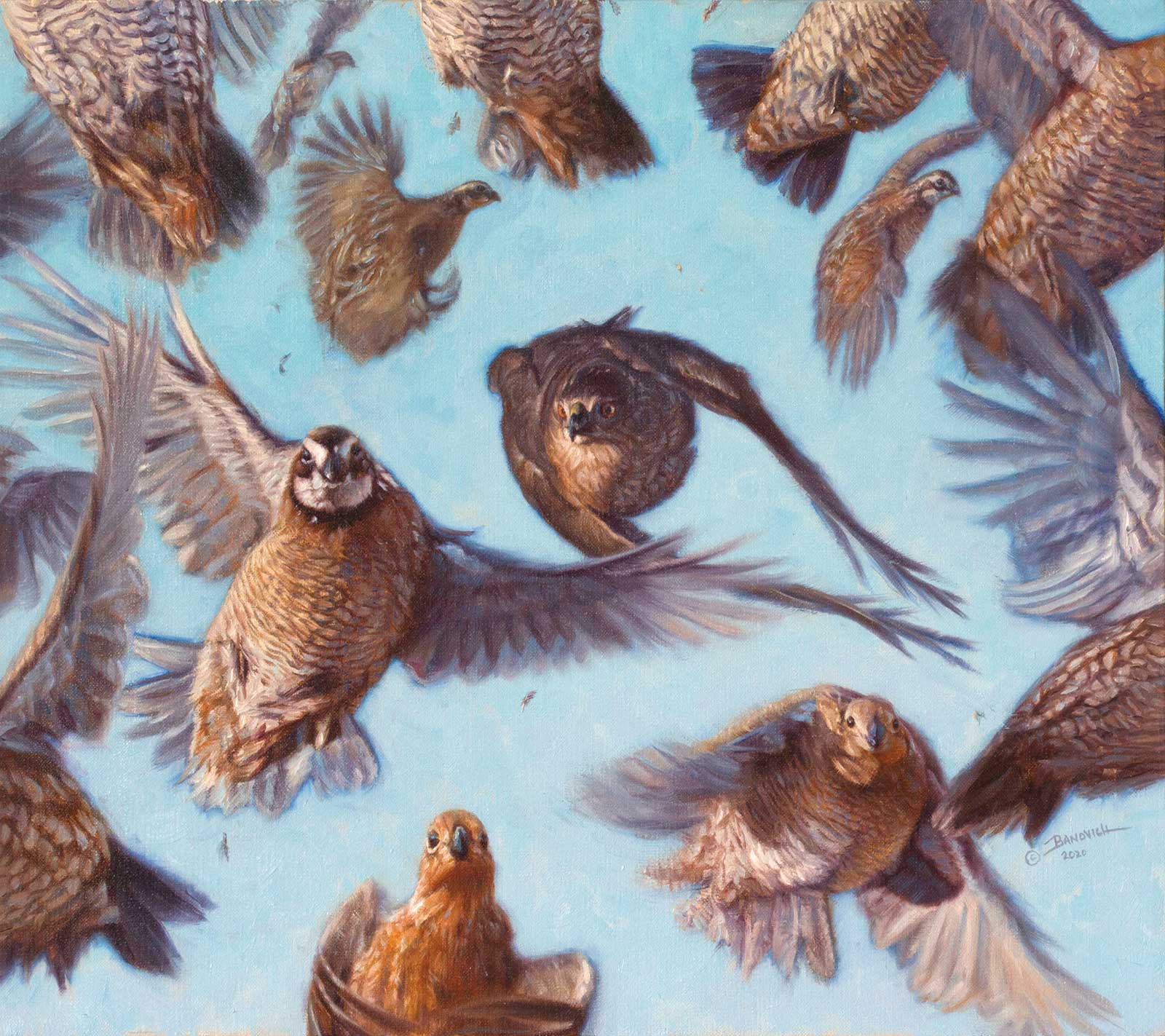
John Banovich, The Blue Darter, oil on Belgian linen, 16 x 18" (40 x 45 cm)
“My very first year I showed up to check in and the woman at the table told us we’d be next to Jim and Karen Killen. I was shocked. I’d grown up attending Ducks Unlimited banquets and had known of Jim Killen forever. He’d been famous for pretty much my entire life,” says Ryan Kirby, the 2023 SEWE Featured Artist. (Wildlife/sporting artist Killen has been named “International Artist of the Year” three times by the non-profit organization Ducks Unlimited, which is dedicated to the conservation of wetlands and upland habitats for waterfowl and other creatures. Unsurprisingly, Ducks Unlimited also happens to be one of SEWE’s many exhibitors.)
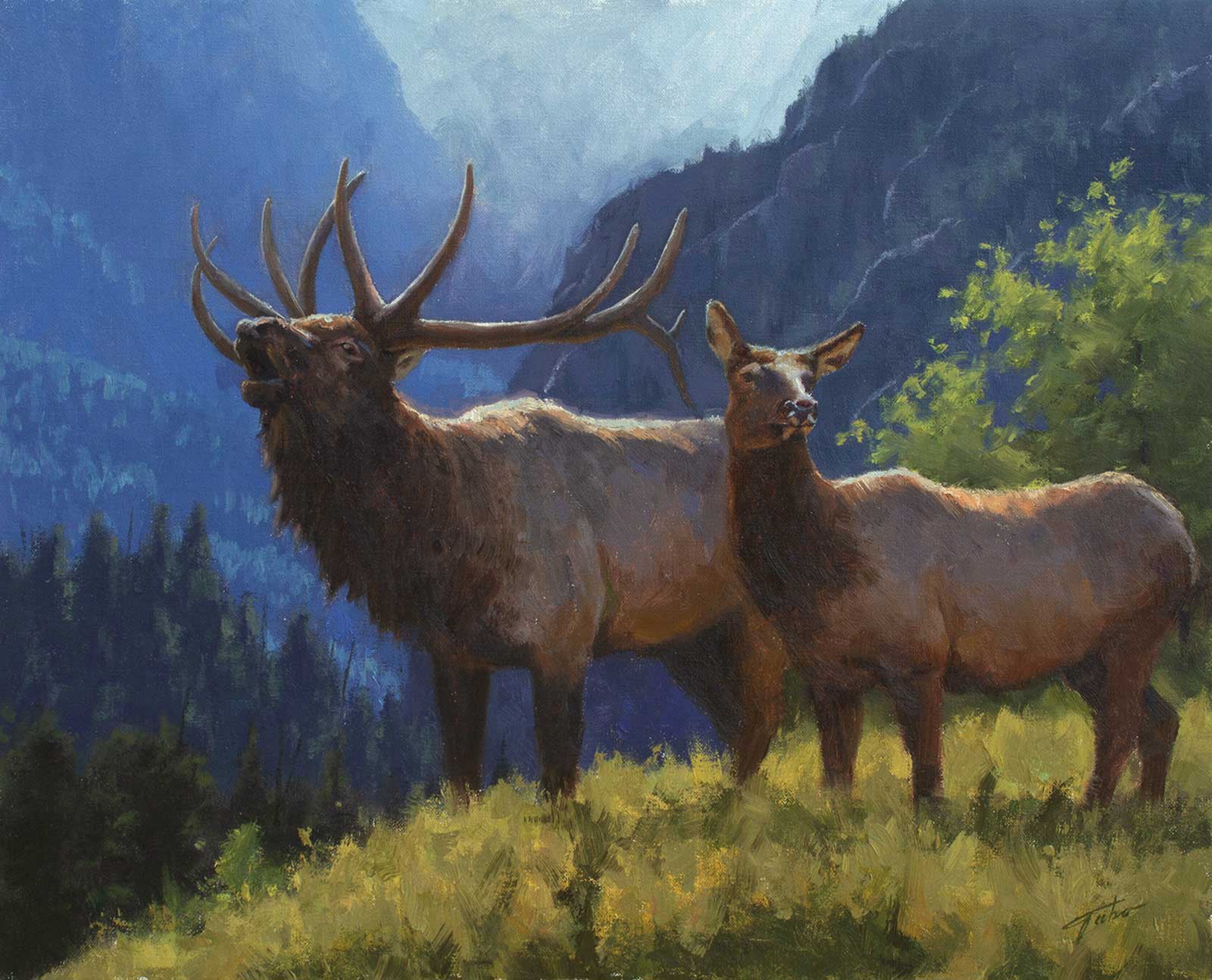
Jason Tako, Mountain Monarch, oil on linen, 16 x 20" (40 x 50 cm)
This is Kirby’s ninth year showing at the exposition, and he’s finally hit that milestone as featured artist. “It’s a huge honor and a great opportunity for me. I’ve been a part of the show for nine years now, and in that time I’ve seen some tremendously talented artists take the stage as the featured artist. Now that it’s my turn, I intend to work very hard and bring my best work to the 2023 show,” he says. “For [these next few] months, everything I put a brush to is dedicated to SEWE, and I’m looking forward to releasing them to the public on the show floor.”
His oil The Departure is the Featured Painting, plastered across the official SEWE 2023 poster. The painting, a significant 36 by 48 inches, captures a trio of pheasants flying across a field of gold. The composition is well-balanced, with the three birds occupying the scene at varying heights. “The featured [painting] isn’t just a solitary canvas destined for auction at a black tie event among cocktails and crab cakes, it’s a symbol for SEWE. It’s used on every piece of marketing material from daily passes to billboards on I-26. It sets the tone for all digital and print communication to SEWE patrons. So it’s got to be bright and bold,” says Kirby. He explains that one of his challenges was painting on such a large canvas. “I work fairly quickly, but covering 12 square-feet of canvas with brushes that are rarely more than a half inch wide is a marathon, not a sprint. I chose a steady, methodical approach to this piece, showing up each day prepared to put in my time.”
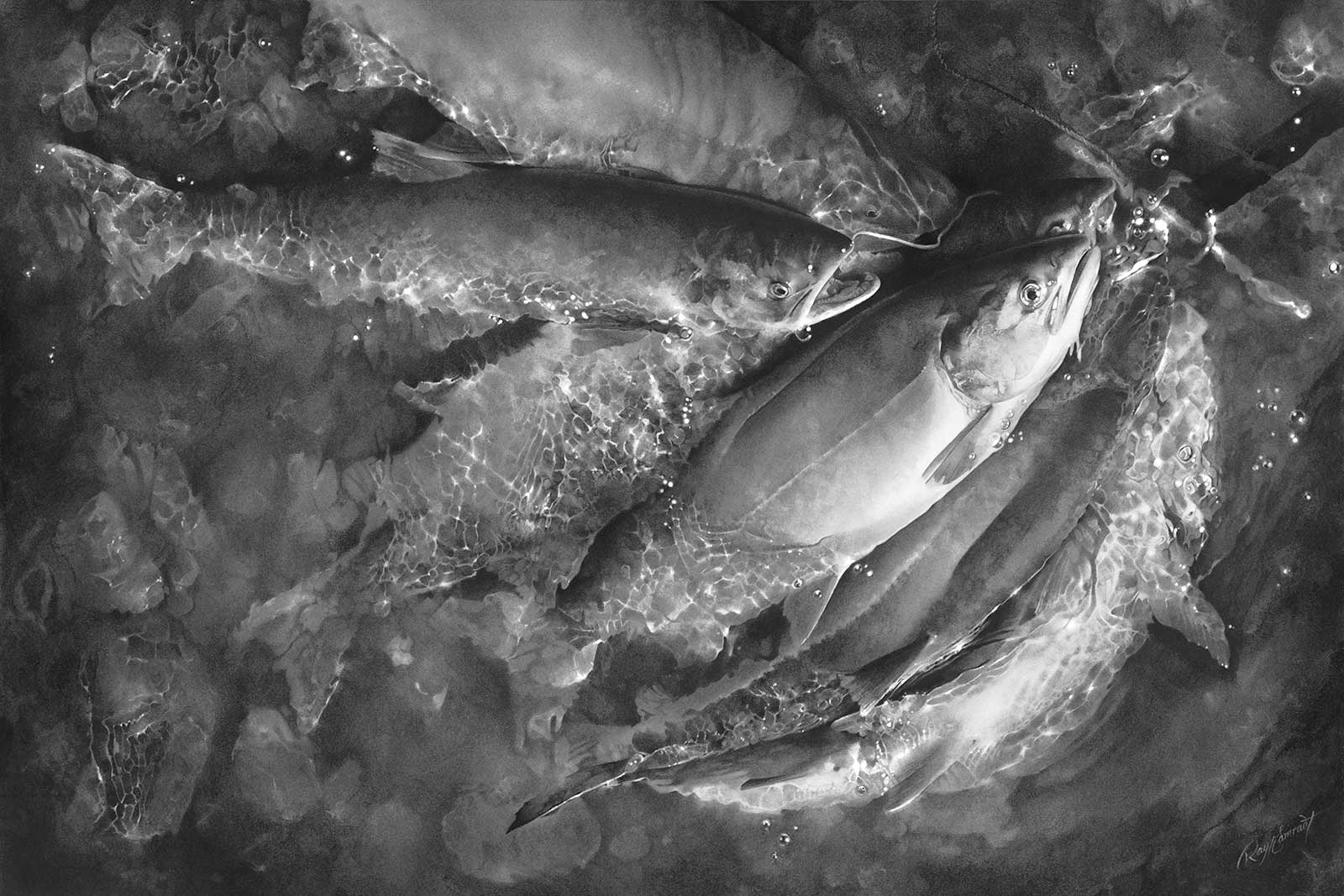
Ray Gamradt, Bouquet, charcoal on board, 24 x 36" (60 x 91 cm)
Kirby grew up on a farm in the Midwestern United States, surrounded by livestock and wild game. “Each year, my interest in wildlife grew, bordering into an obsession. I remember going out after turkey season was closed and calling turkeys in, just to video them and experience them in their world on their terms. I’d do anything just to get close to an animal and observe it in the wild,” he says. “As I grew, I discovered I had a talent for art, and I simply used that ability to render the things I was already passionate about, which was wildlife. From day one, a love of the outdoors is what has driven me and provided the creative fuel for my life’s work.”
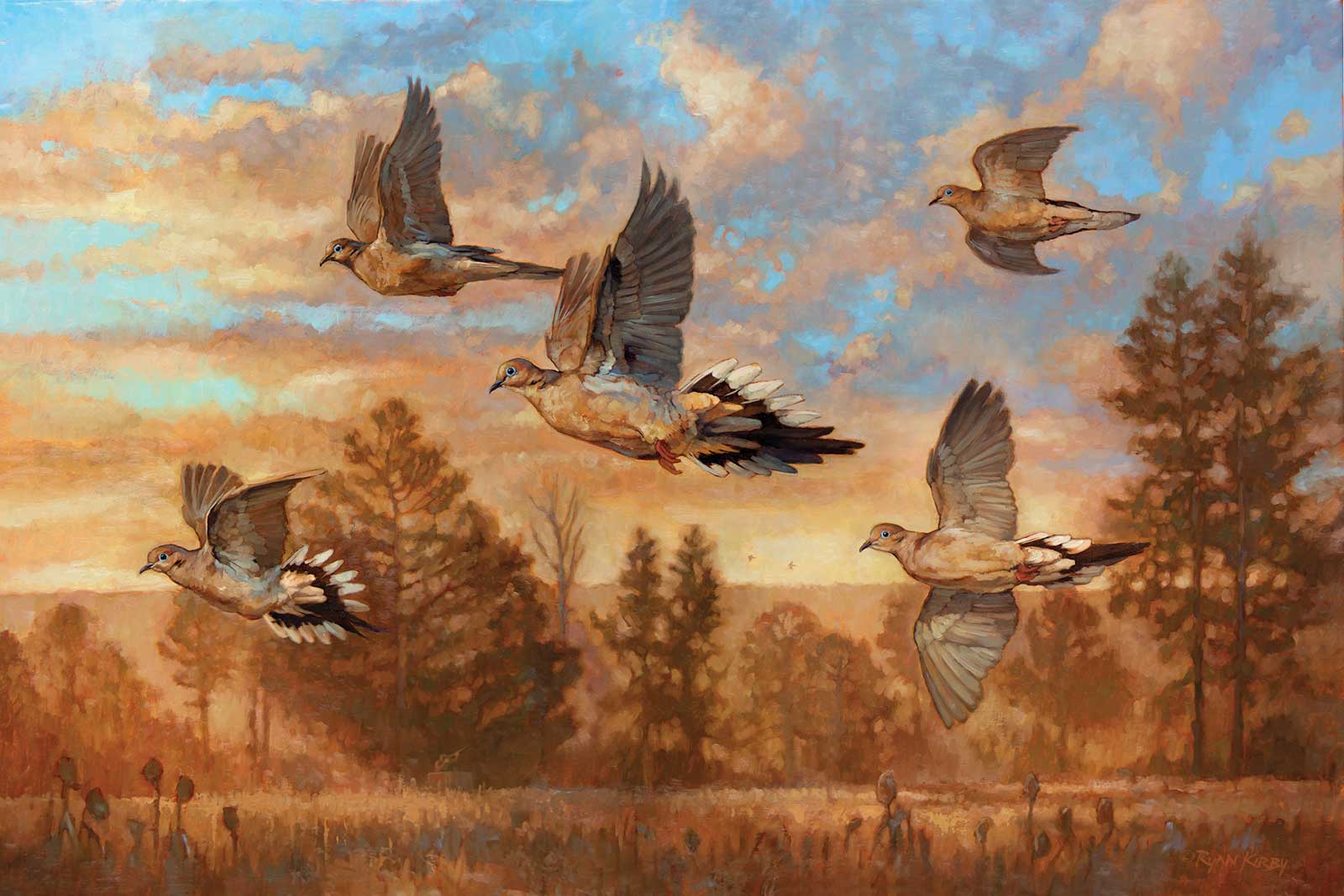
Ryan Kirby, Golden Hour, oil on linen, 24 x 36" (60 x 91 cm)
Powell says, “From a show perspective, we need great artists, we need emerging artists and everything in between…We’re always going to make sure that art is the centerpiece of the show…It’s been fun to watch Ryan over the years. What he is and what he continues to evolve into, I think it’s going to be amazing.”
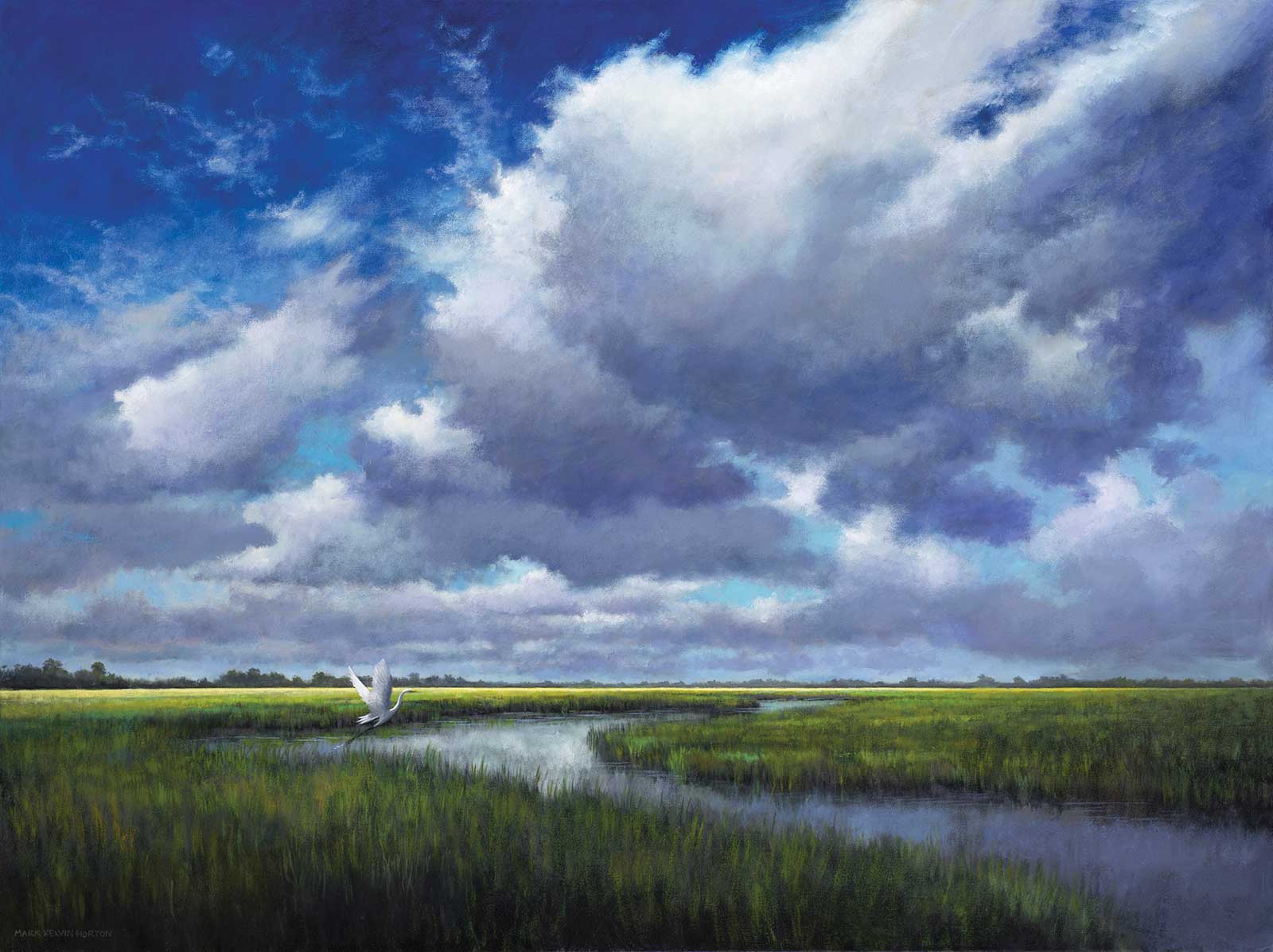
Mark Kelvin Horton, Onward, oil on canvas, 36 x 48" (91 x 121 cm). 2021 Featured Artwork.
Julia Rogers was the SEWE 2022 Featured Artist. “Many years ago I applied to exhibit in the Southeastern Wildlife Exposition and was so excited to be accepted,” Rogers recalls. “I never thought that one day I would be the featured artist and have my painting displayed all over town.” In her featured painting, Golden Light, the evening sun dances off the feathers of three tundra swans wading in a creek. “They are one of the most elegant birds, and as they are completely white, it offers an opportunity to add so much reflective color in the shadows,” Rogers says. “I love to paint light and all its effects. The sun shining through the large white wings of a swan—it doesn’t get better than that!”
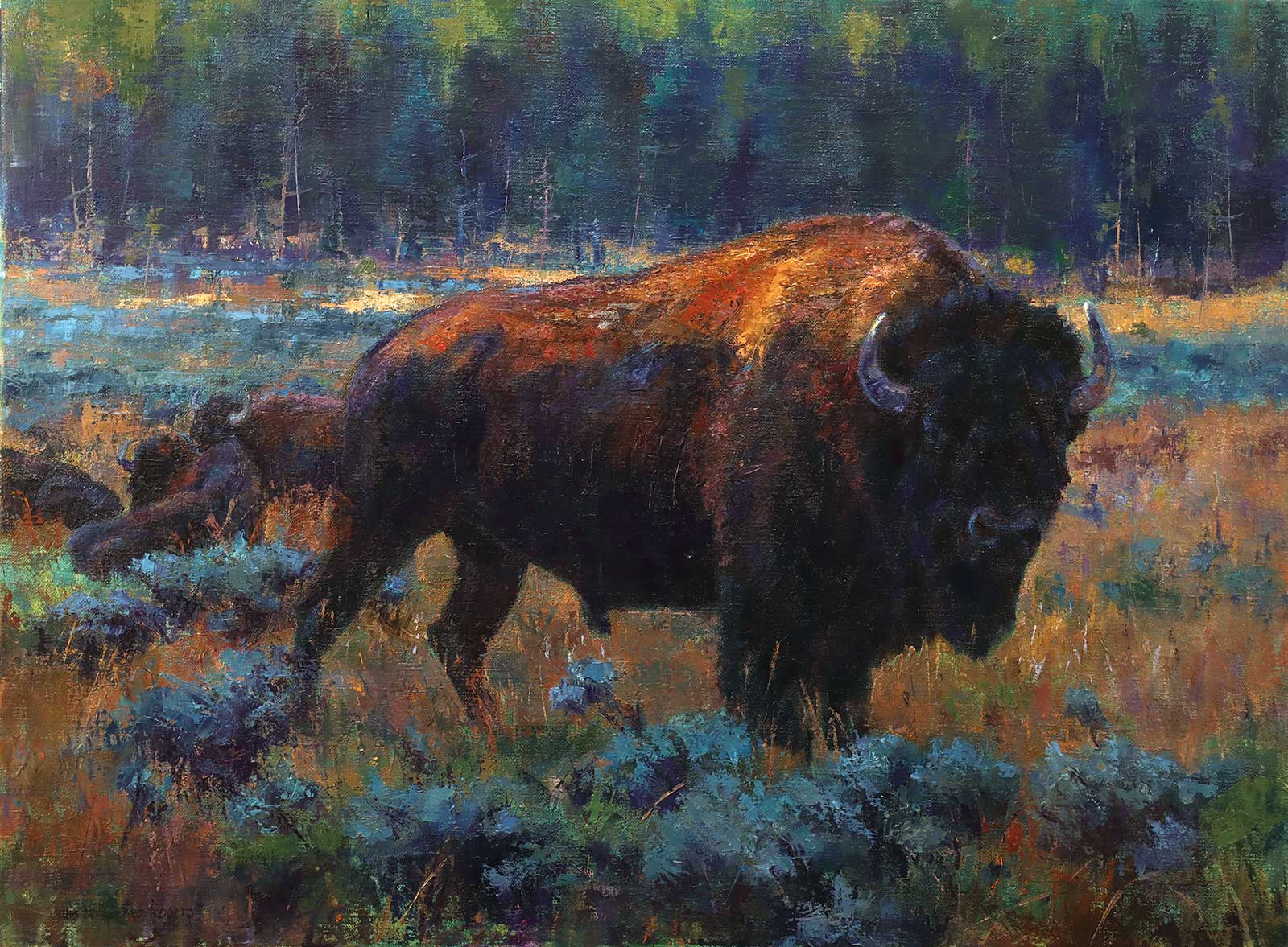
Julia Rogers, Evening Glow, oil on linen, 18 x 24” (45 x 60 cm)
“A bit of a tomboy” growing up, Rogers loved animals from the start and has been painting them for as long as she can remember. Nowadays, she travels near and far to observe wildlife in their natural habitats. One of the paintings Rogers will be bringing to this year’s show is Evening Glow, depicting a kingly bison grazing in a field, several of his herd members meandering behind him. “Evening Glow is another example of the effect of light,” says Rogers, “from one of many trips out West. [It’s] that moment when the sun is setting behind a hill or a line of trees and everything seems to catch fire in color—a ribbon of yellow and red sunlight hitting treetops. As the sun drops, the ground and everything on it glows.”
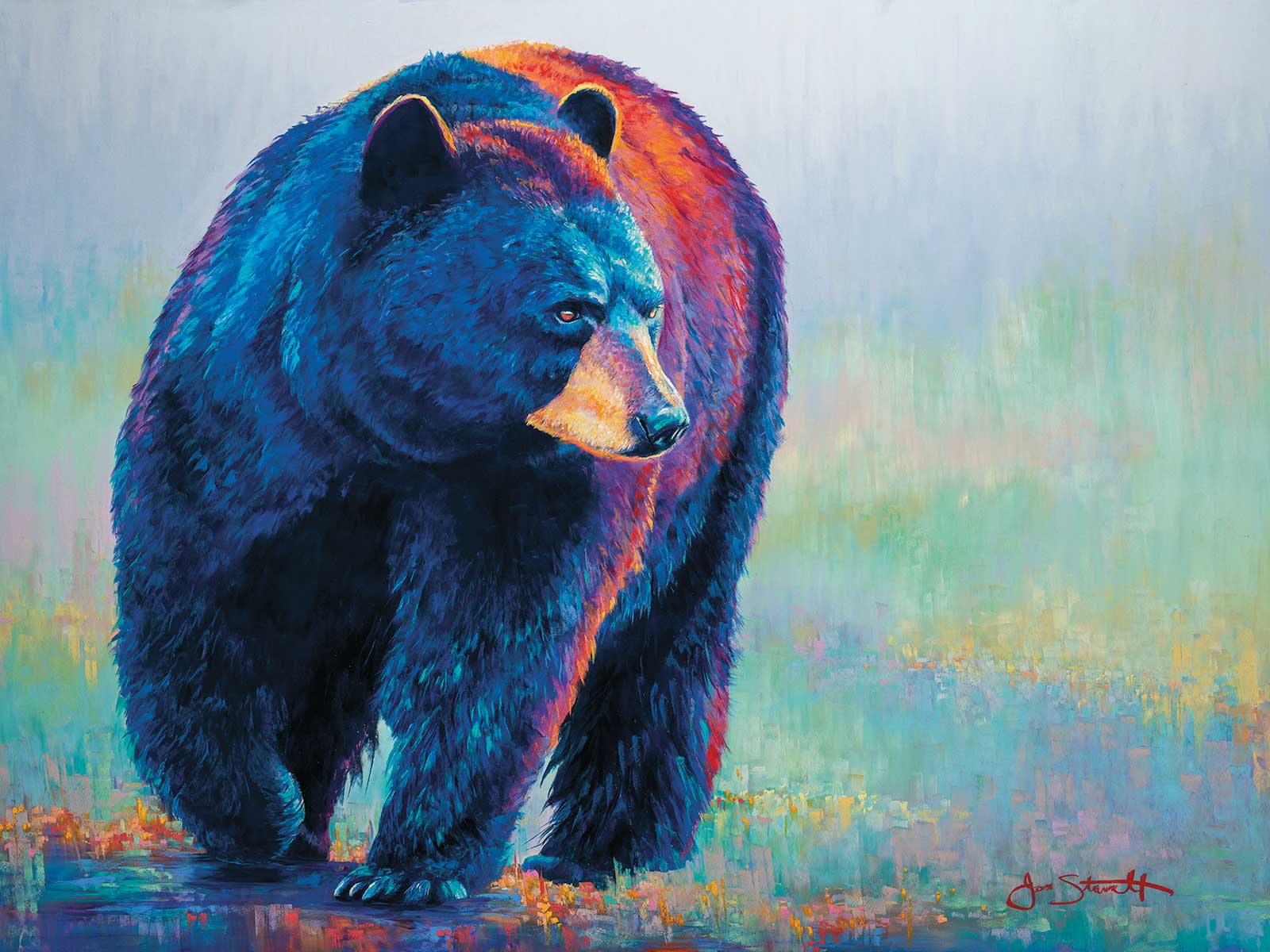
Jen Starwalt, Awaken the Wild Within, soft pastel on paper, 36 x 48” (91 x 121 cm)
Waterfowl art made an impact in 2021 as well, with Featured Artist Mark Kelvin Horton’s oil Onward. But while an egret takes flight in the backdrop of the painting, Horton’s Onward feels more like an ode to the Lowcountry landscape—lush green marshlands and clouds stretching over a deep blue sky. “It was a great honor and pleasure being chosen as the 2021 Featured Artist. It was beyond my greatest expectations to have that happen,” he says. Primarily a landscape painter, Horton strives “to capture the atmosphere and mood of a particular moment in time. I use wildlife such as graceful egrets to create a sense of scale and movement in my Lowcountry landscapes. I also sometimes include iconic Lowcountry figures in my landscapes, such as oystermen and castnetters to capture the true flavor, feel and character of our unique and beautiful region of the country.”
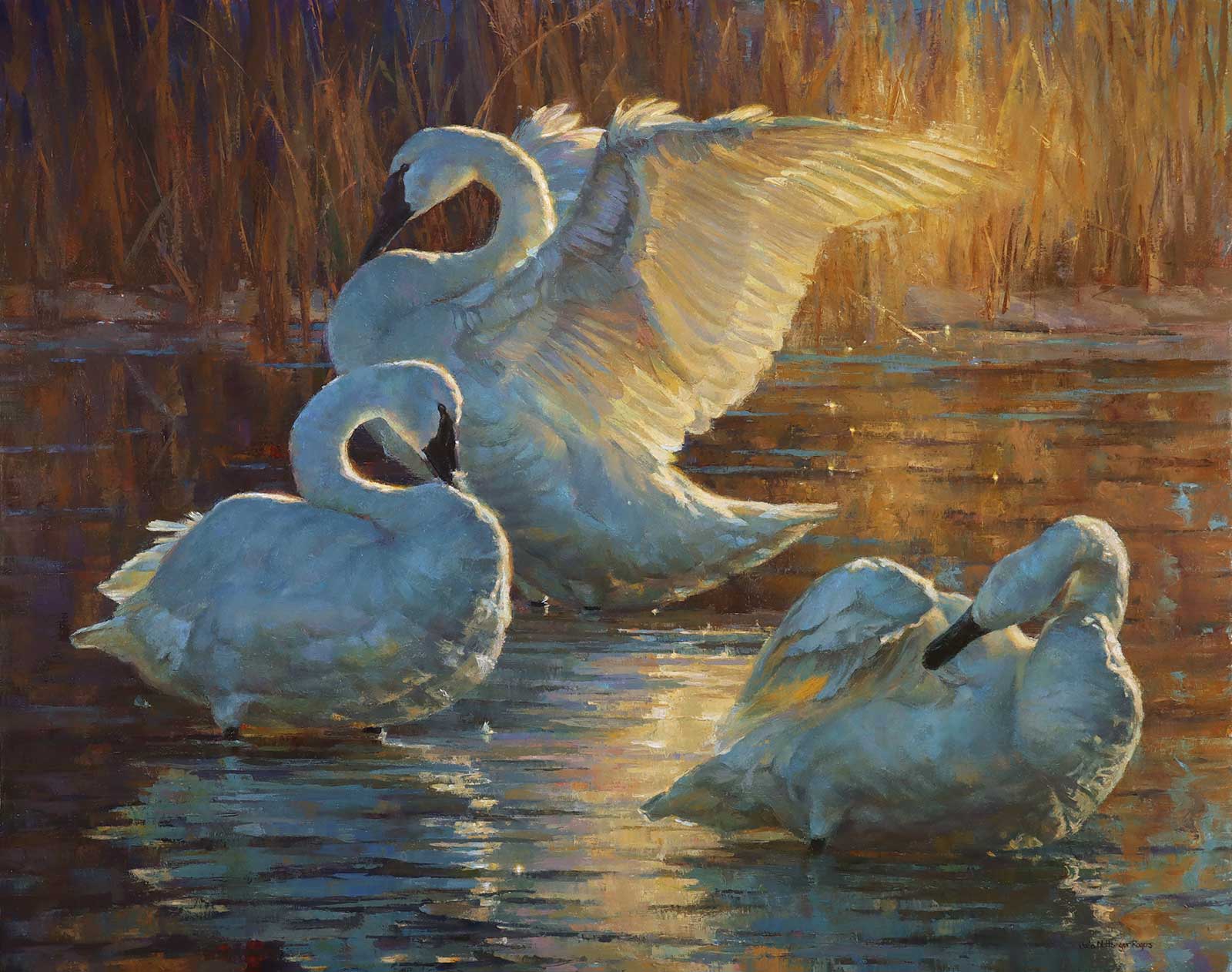
Julia Rogers, Golden Light, oil on linen, 36 x 45” (91 x 114 cm). 2022 Featured Artwork.
Artists participating in the 2023 event include Kirby, Rogers and Horton, as well as John Banovich, Amy Lay, Walter Matia, Kelly McNeil, Suzie Seerey-Lester, Larry Seymour, Julie Jeppsen, Bill Farnsworth, Jen Starwalt, Richard Clifton, Stephen Townley Bassett, John Tolmay and many others.
For Powell, one of the most emotional aspects of the Southeastern Wildlife Exposition is that singular, charged moment before the Preview Afternoon. It’s that moment when the full range of artwork exhibited in the show comes together, all at once. “You walk into the ballroom and get the first view of what people brought to Charleston, and you’re kind of just blown away seeing that all in one place,” Powell reflects. “It really gets the energy going. People who haven’t seen each other in a year or more. It’s something you couldn’t force if you tried to…That reunion factor, you can’t do better.”
The Southeastern Wildlife Exposition takes place February 17 to 19, 2023.
Learn more at www.sewe.com —