I discovered the watercolor medium when I went to art school in the mid ’90s. It wasn’t instant love at the time. I remember my teacher telling me I couldn’t do any small details, only use big brushstrokes. We were supposed to paint a still life of a red onion. As I recall the painting turned out OK even though I found the process very frustrating.
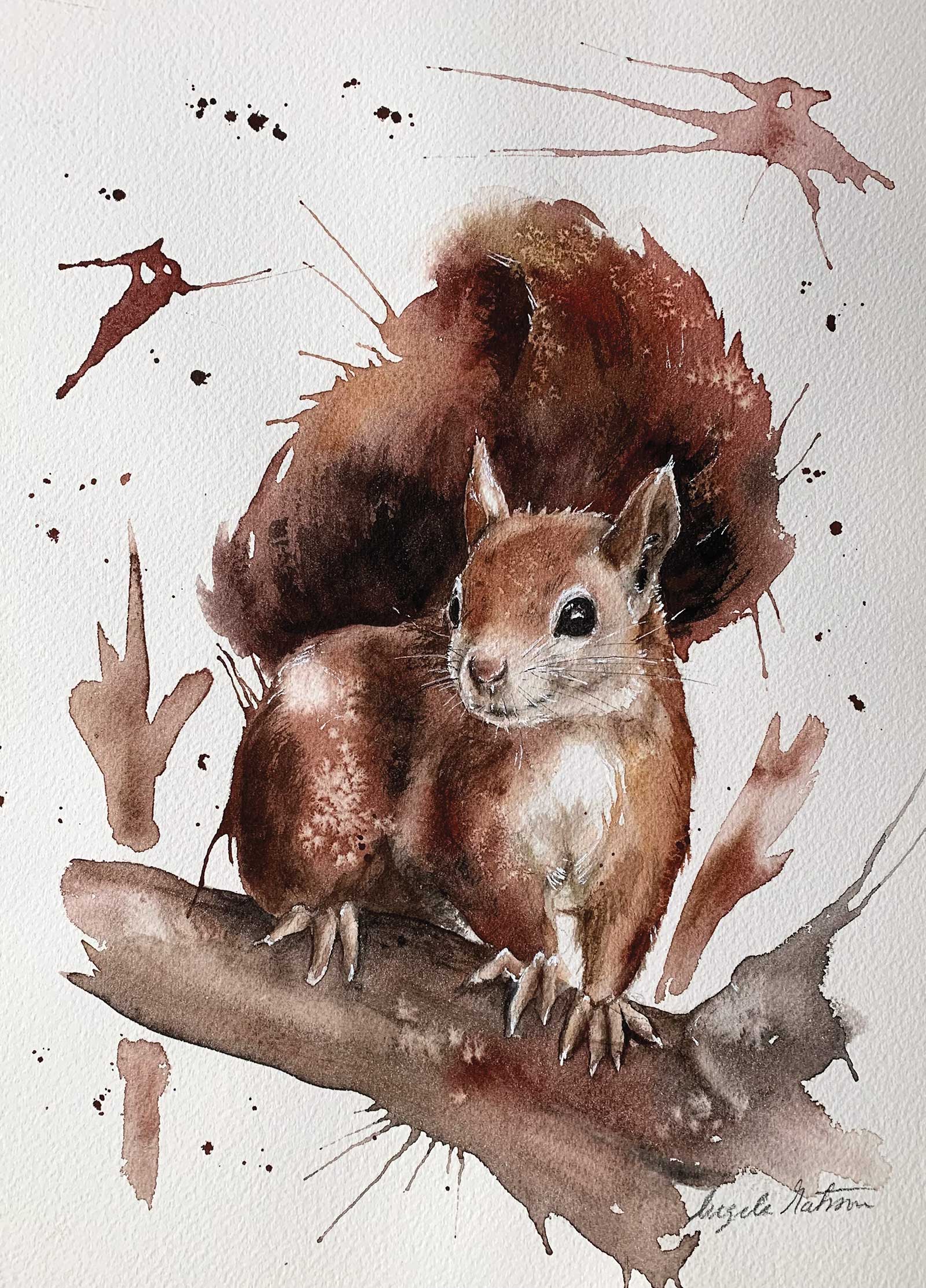
Curious squirrel, watercolor on Arches cold-pressed cotton paper, 12 x 9" (30 x 22 cm) I have this really alert little squirrel friend outside my window. I wanted to immortalize him and at the same time try a new way of using color splashes to make the painting interesting.
About seven years ago, my oldest daughter started art school. One day she brought a palette with watercolors home from school to finish a project. As the palette remained on the kitchen table, I decided to try painting with watercolor one more time. I hadn’t been painting for some time due to lack of inspiration, but this time it was instant love.
Since that day I’ve been painting almost exclusively with watercolors. I absolutely love the medium for its unpredictability. The feeling when you put the brush filled with pigment onto the wet paper and see what it decides to do. It’s so very soothing to watch. Throughout these years I’ve explored many different styles and subjects, but one captured my heart. I’ve enjoyed watching and learning about birds and wild animals since I was a child. So, it felt natural for me to start painting them. I tried to use the knowledge from art school in my paintings and joined some online courses to refresh my memory.
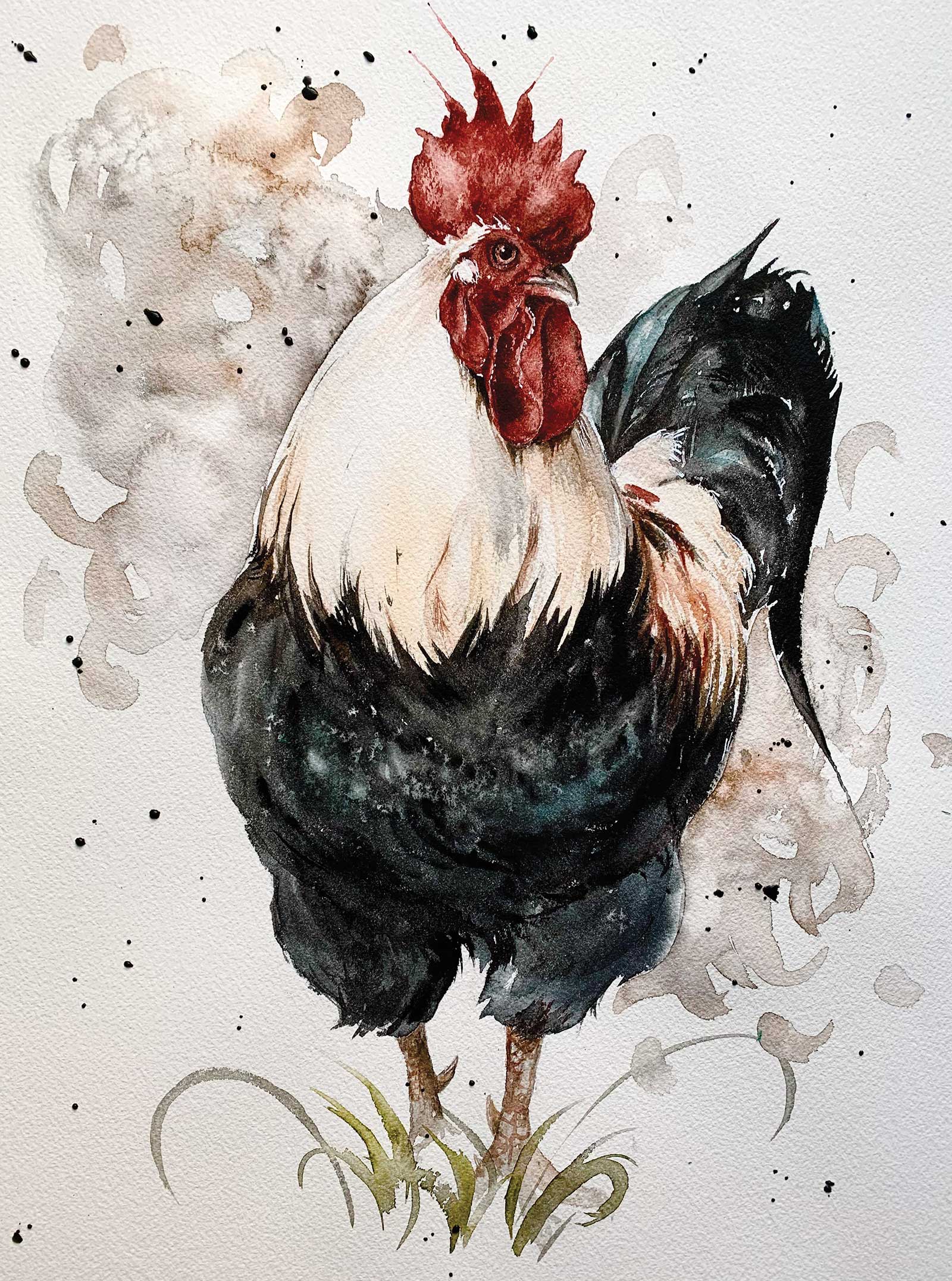
Rooster, watercolor on Arches cold-pressed cotton paper, 16 x 12" (40 x 30 cm) I just love roosters. They look so proud and angry, yet so silly at the same time.
I love watching paintings of dramatic landscapes by talented artists and tried to make paintings of landscapes and houses, but I soon lost interest in the paintings and returned to painting animals almost instantly. I also tried soaking the paper with water and attaching it with paper tape to get a smooth surface as I learned in the courses. But this technique didn’t work for me.
I ended up using glued watercolor paper blocks from Arches and painting directly on the dry paper. This technique suited me very well because I want to work fast and don’t have the patience to wait too long for the paper to dry. Also, I like the rough edges you get when the colored wet areas meet the dry paper. I think it adds a roughness and interesting feeling to the often very detailed and delicate motives.
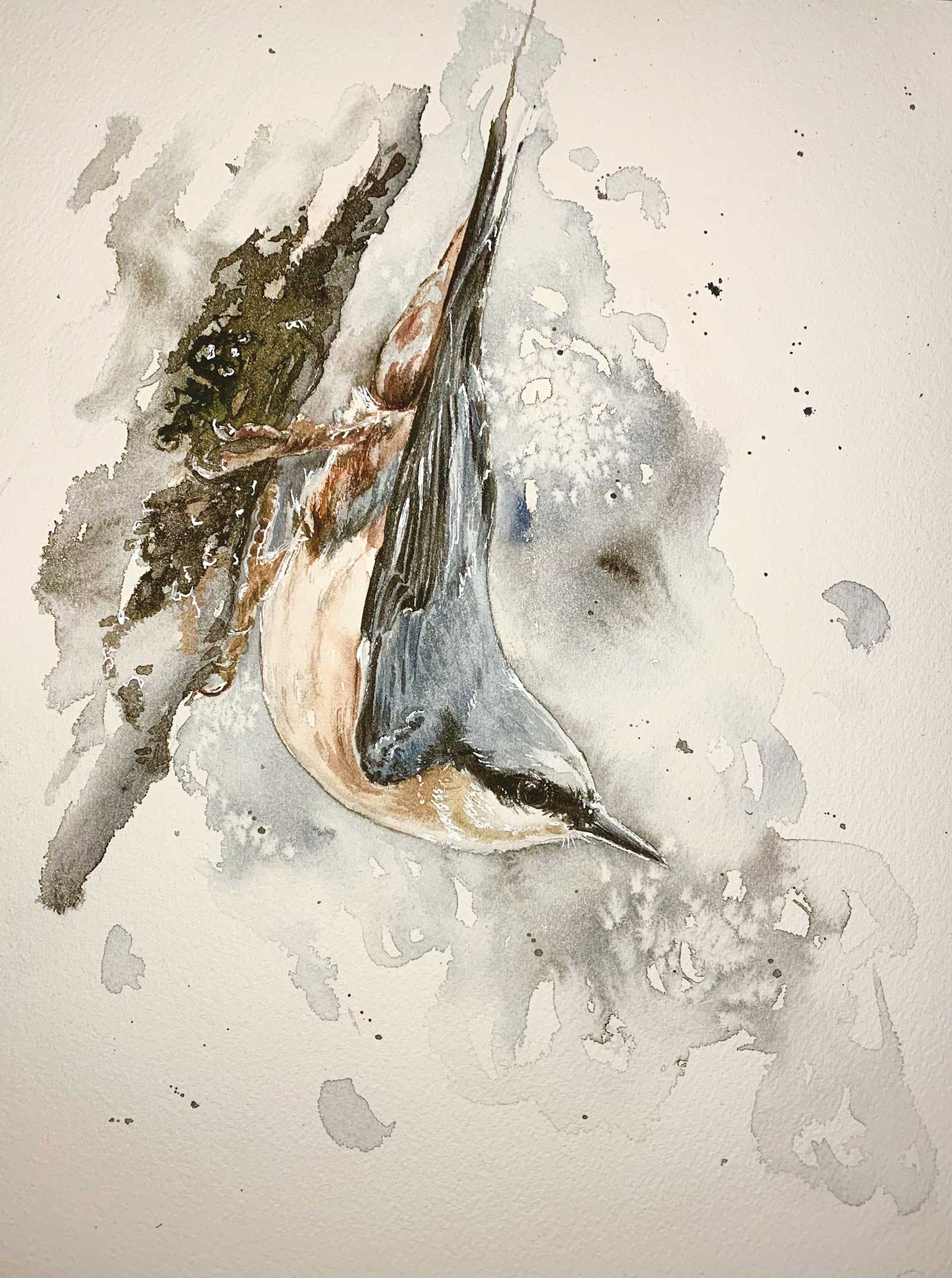
Nuthatch, watercolor on Arches cold-pressed cotton paper, 12 x 9" (30 x 22 cm) I think these small birds are so fascinating when they run up and down the stems looking for insects.
I also tried using big brushes and avoiding the small details, but it just wasn’t for me. When I allowed myself to completely ignore all the advice from my teachers and go my own way, I was happy to find the technique that suited my temperament and preferences best. I ended up focusing on the eyes of the objects, animals or people. Because that is what I find the most interesting. And that’s also where you look first when you see a painting. From the eyes I build the painting from very sharp and precise details to a loose and flowing background. I get inspiration for my paintings by watching nature movies and pictures and then try to paint from memory and feeling. First I do a couple of sketches of frozen sequences, so I know my object inside and out, and then make the final painting from memory.
One of my absolute favorite objects is the wild hare. Their eyes are absolutely mesmerizing. There are so many different nuances and so much character only in the eyes. And I also find it fascinating to study their movement. From where every little muscle in their body reacts when they get scared, to the total immobility when they listen to sounds that the human ear is incapable of hearing.
My Design and Composition Tactics
- I always paint on dry paper, just soaking the areas I want to paint, leaving a white background.
- I use blocks with 300gsm watercolor paper of the best quality to be able to work fast on dry paper. I also put in a lot of time working with the small details. With good quality paper you can work a long time with your brush in the same spot without the paper getting torn.
- I also like the painting process to be unpredictable as well as very controlled because I think I will get a more interesting result. That is why I drip the paint in the puddles of water and put salt on it. For the details I use the pointiest, finest brushes I can find.
My Art in the Making Resting
Stage 1
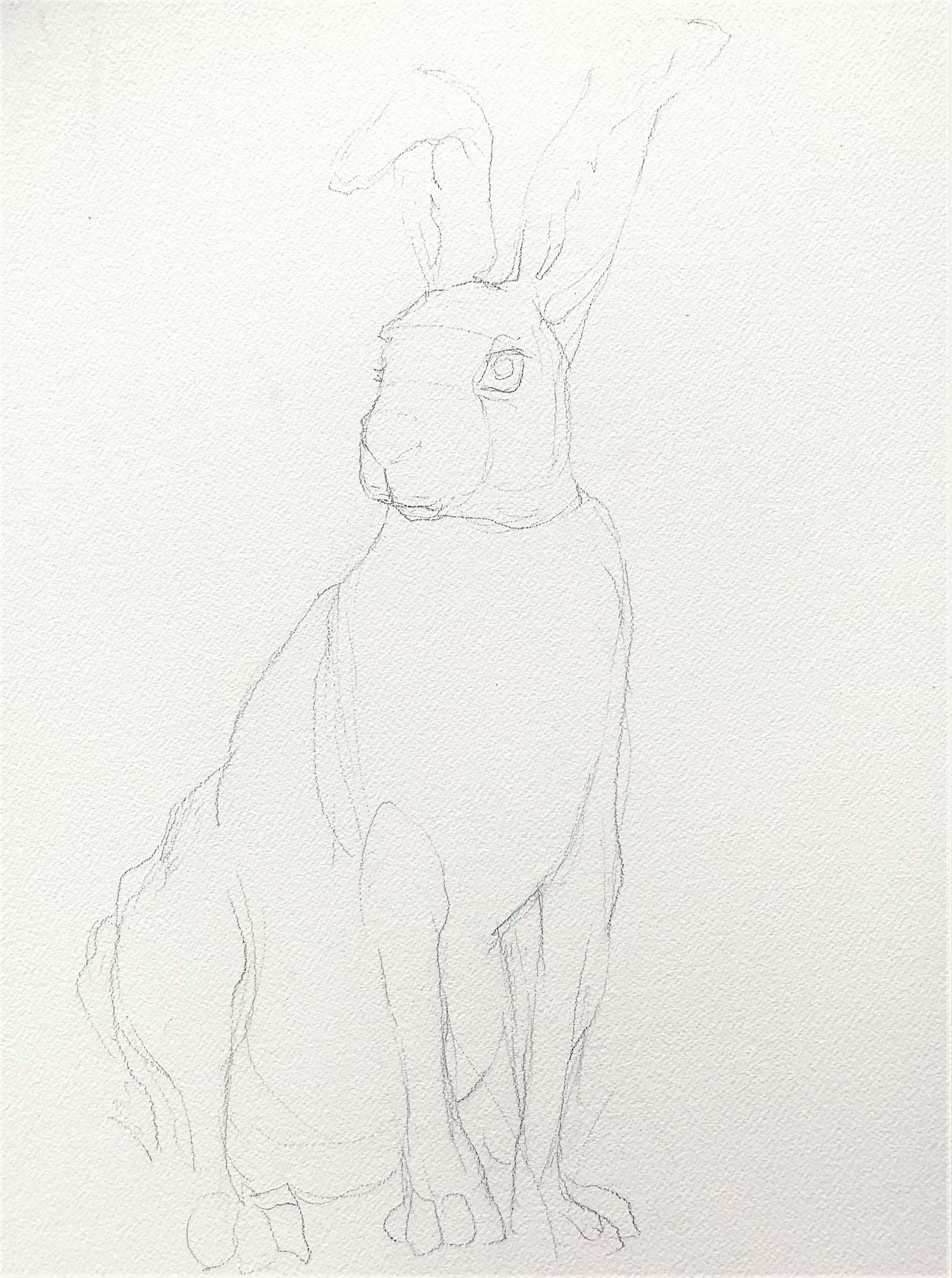
Stage 1 Sketch
First I make a sketch of a hare with a pencil on watercolor paper.
Stage 2
Stage 2 Dry to Wet
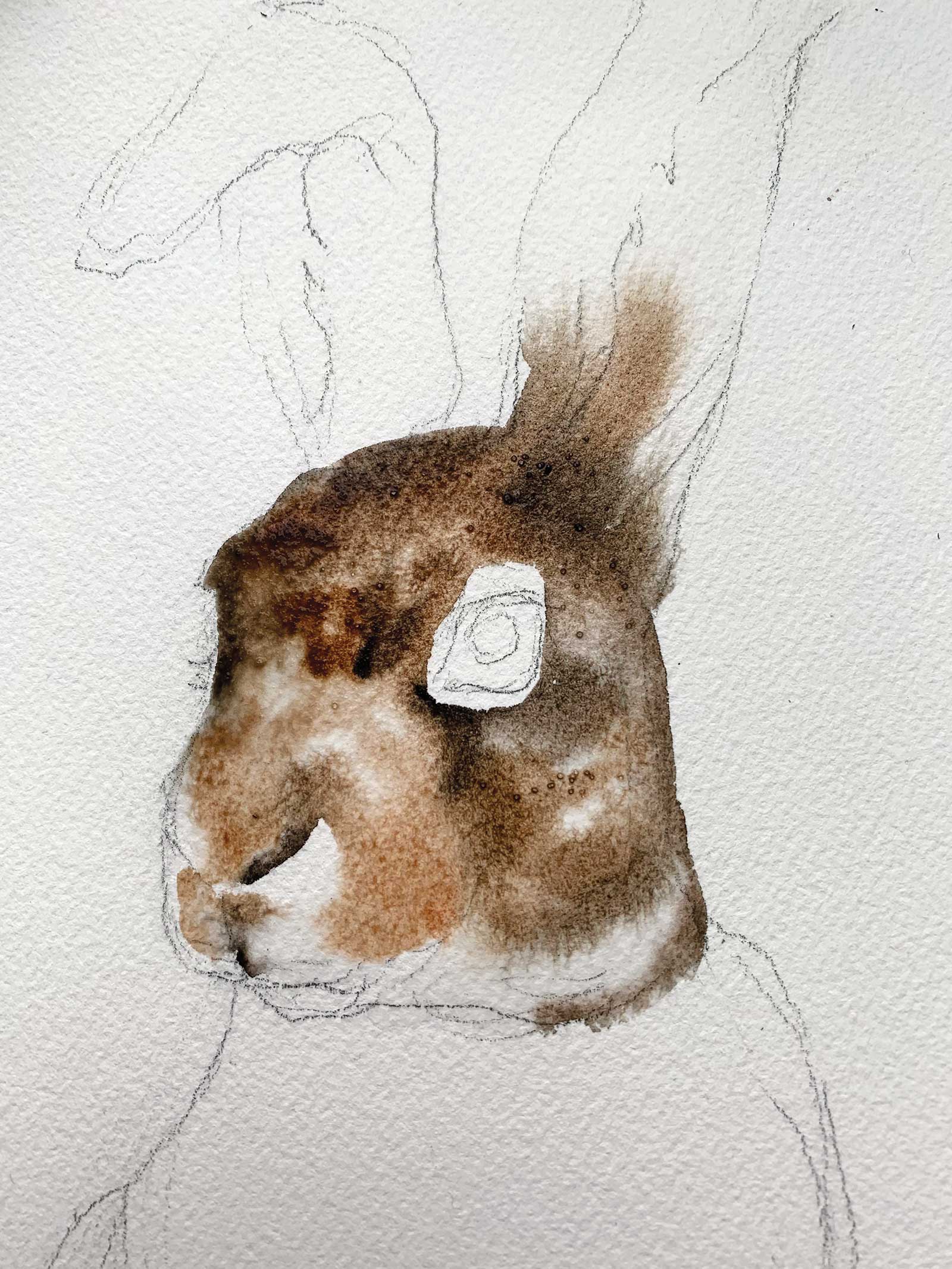
I use dry paper when I start painting, and I use a clean brush and soak it in water. Then I soak the area I want to begin with so it’s really wet. I usually start with a small area because I will have to work fast so it will not dry out.
I fill the brush with the pigments I want to use and drip it in the water so it floats out by itself. I try not to stir it around too much, because I want to keep the colors from mixing too much. Then I hurry up to sprinkle a little bit of table salt in the wet paint. The salt grains will attract the color and make patterns when it dries.
Stage 3
Stage 3 Working on the Chest
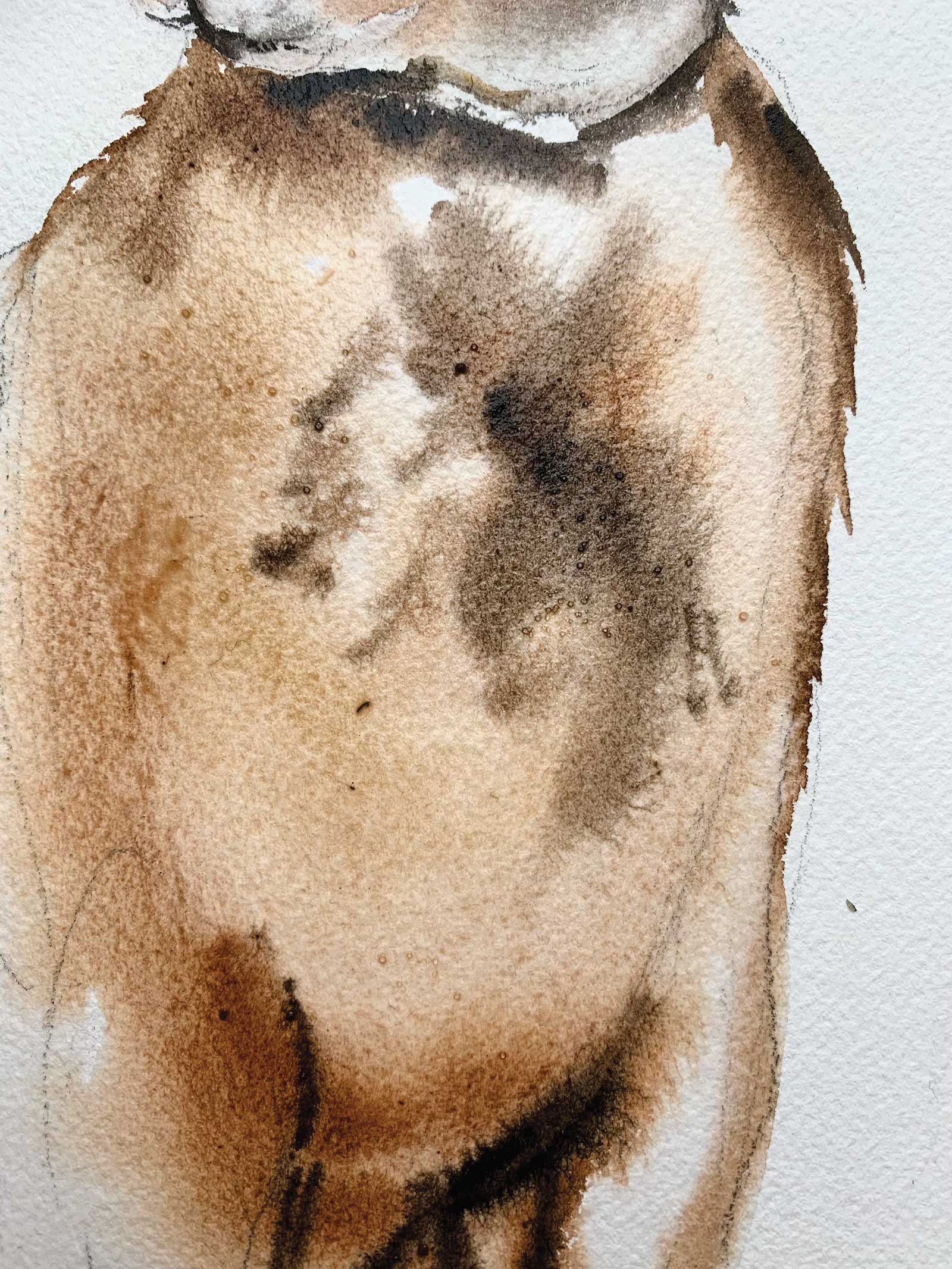
I continue with the chest and use the same process, using water first, then fluidly with color and then salt.
Stage 4
Stage 4 Rough Watercolor Sketch
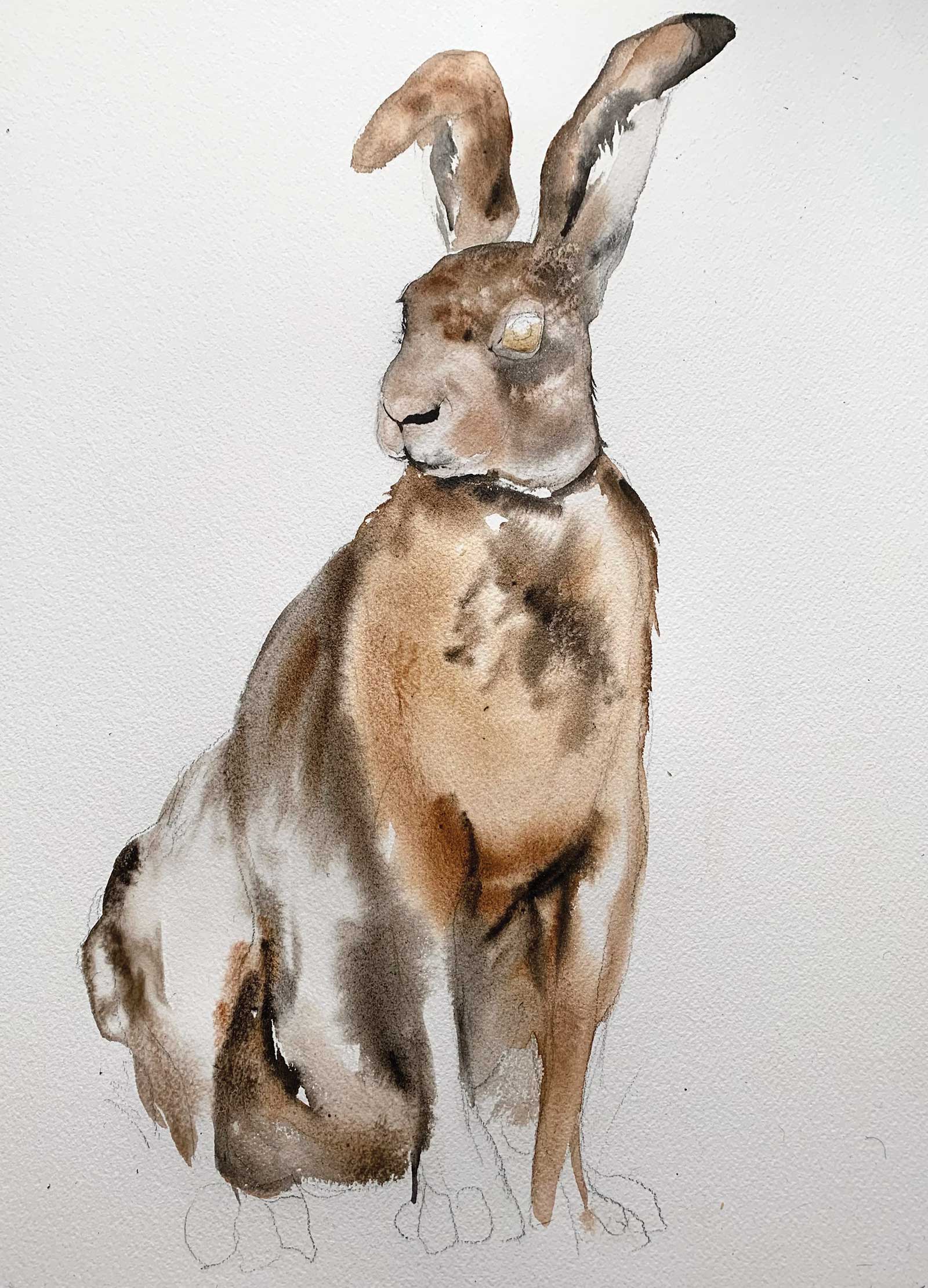
I make a rough watercolor sketch only using water on the hare shape to enhance the dark areas and shadows.
Stage 5
Stage 5 Focusing on the Eyes
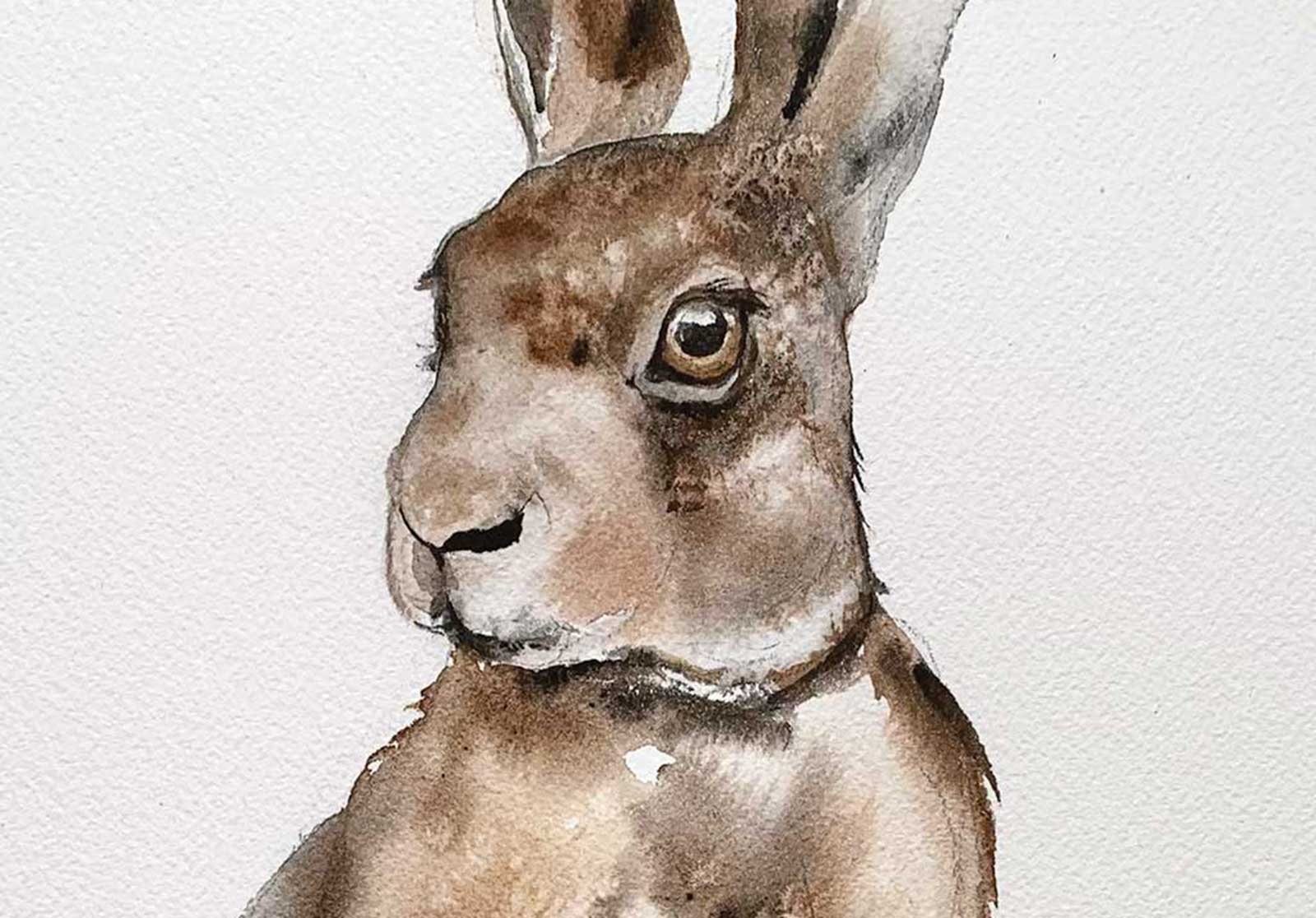
Here I’ve started with the most important part of my painting, the eyes. I work with a very thin brush to make sure I get the illusion of life and light in the eyes using different nuances of brown, ochre and yellow, and of course, black to outline the eye. Here it’s important to leave a little bit of white to get the feeling of light reflecting in the eye.
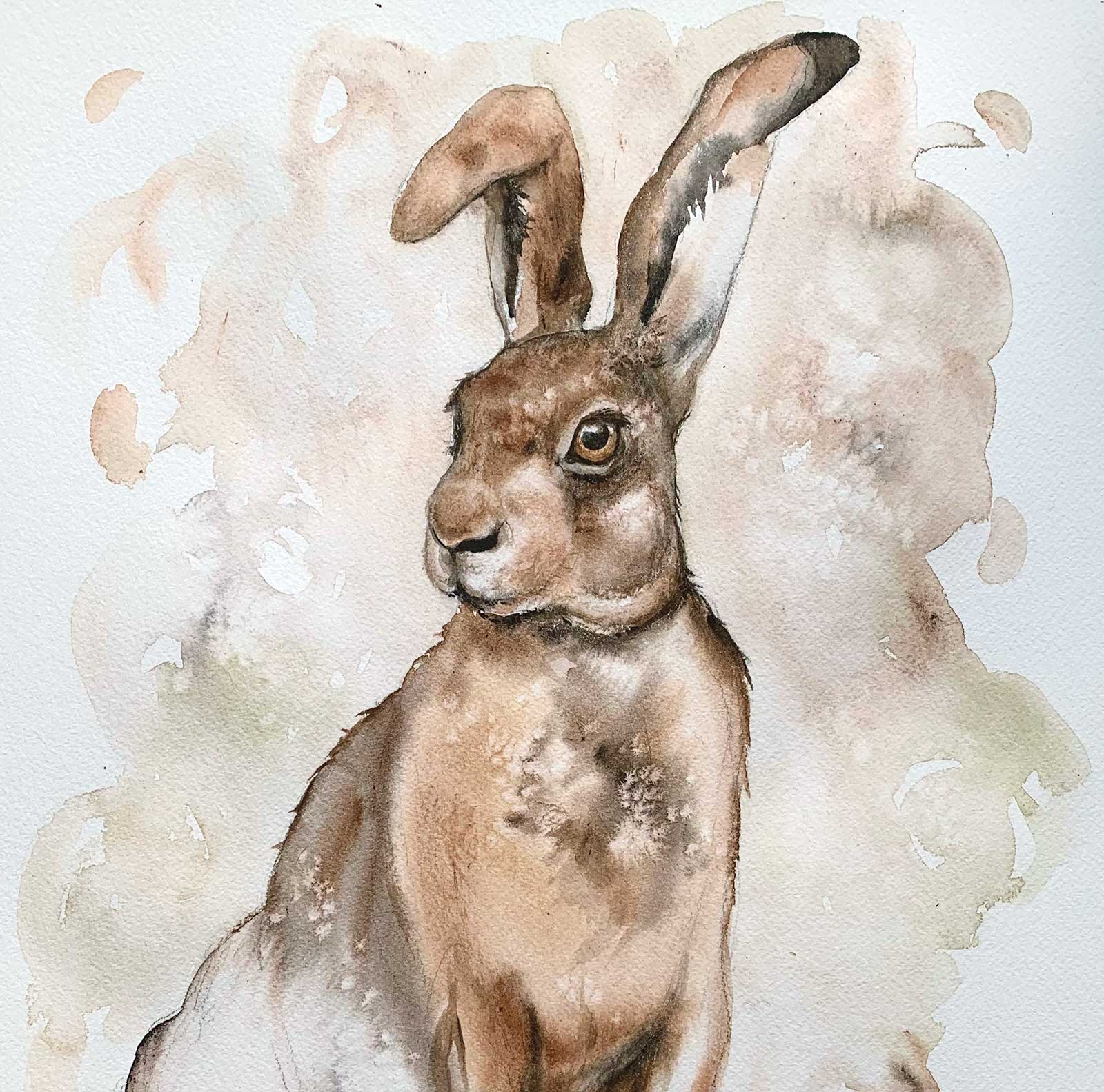
Stage 6
Stage 6 Background
When the painting has dried for approximately 30 minutes I continue with the background. I have to wait until it’s dry so that the paint in the hare won’t resolve and mix with the background.
Then I do the process with the clean water, filling the area I want to use for the background. I drip the color in. I usually use the same color as the hare in the background together with another color to get harmony in the painting. When the background is still wet, I drip more water and salt on it after putting the paint in to get exciting effects.
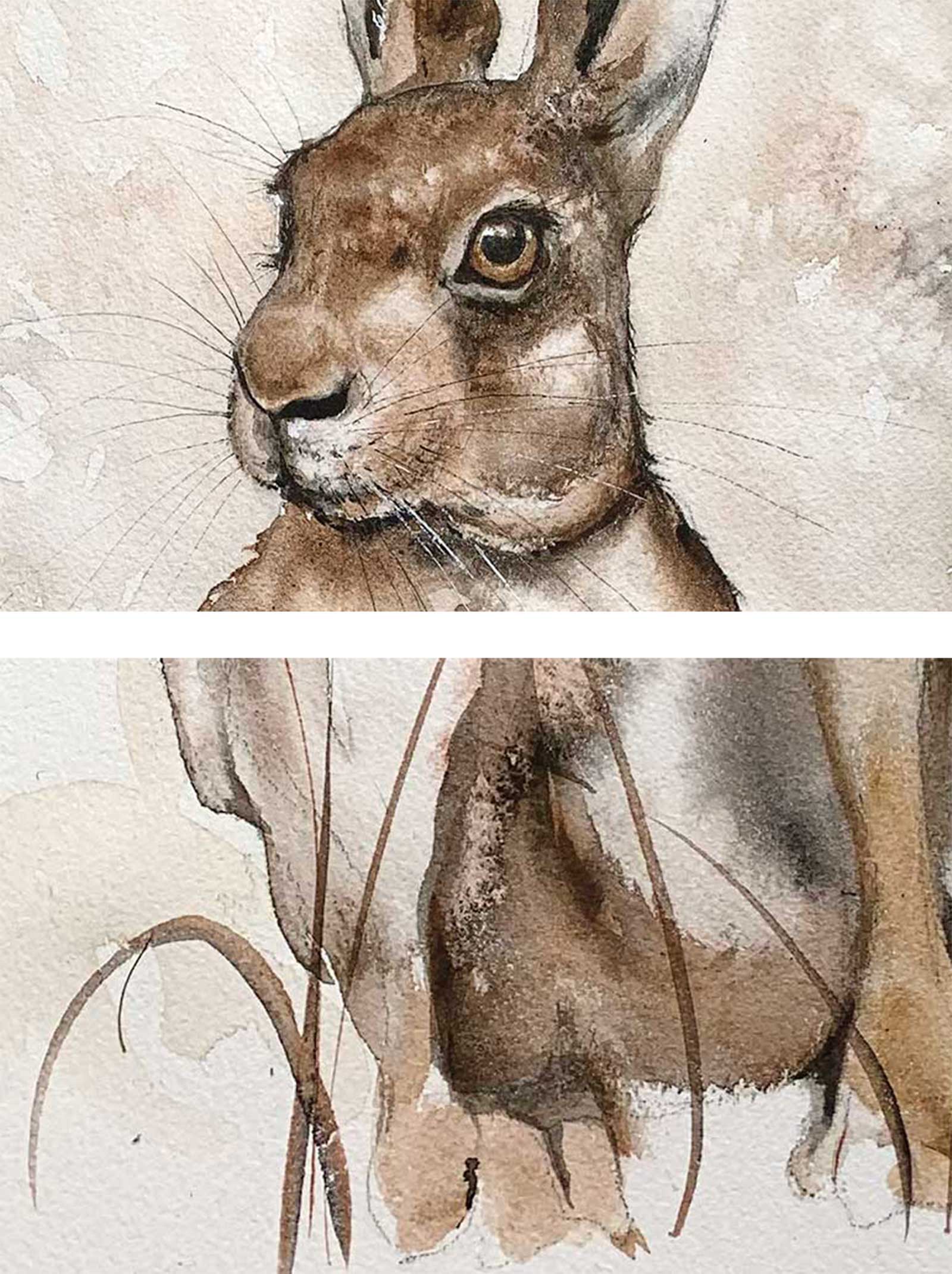
Stage 7
Stage 7 Let Background Dry
Then I wait for the background to dry. Now it’s time to work with the details of both the hare and background. First I use a fine liner to make the whiskers and straws. Then I use a white gel roller to make white straws. For the background I use a pointed brush to paint straws to get the feeling of nature and perspective in the painting.
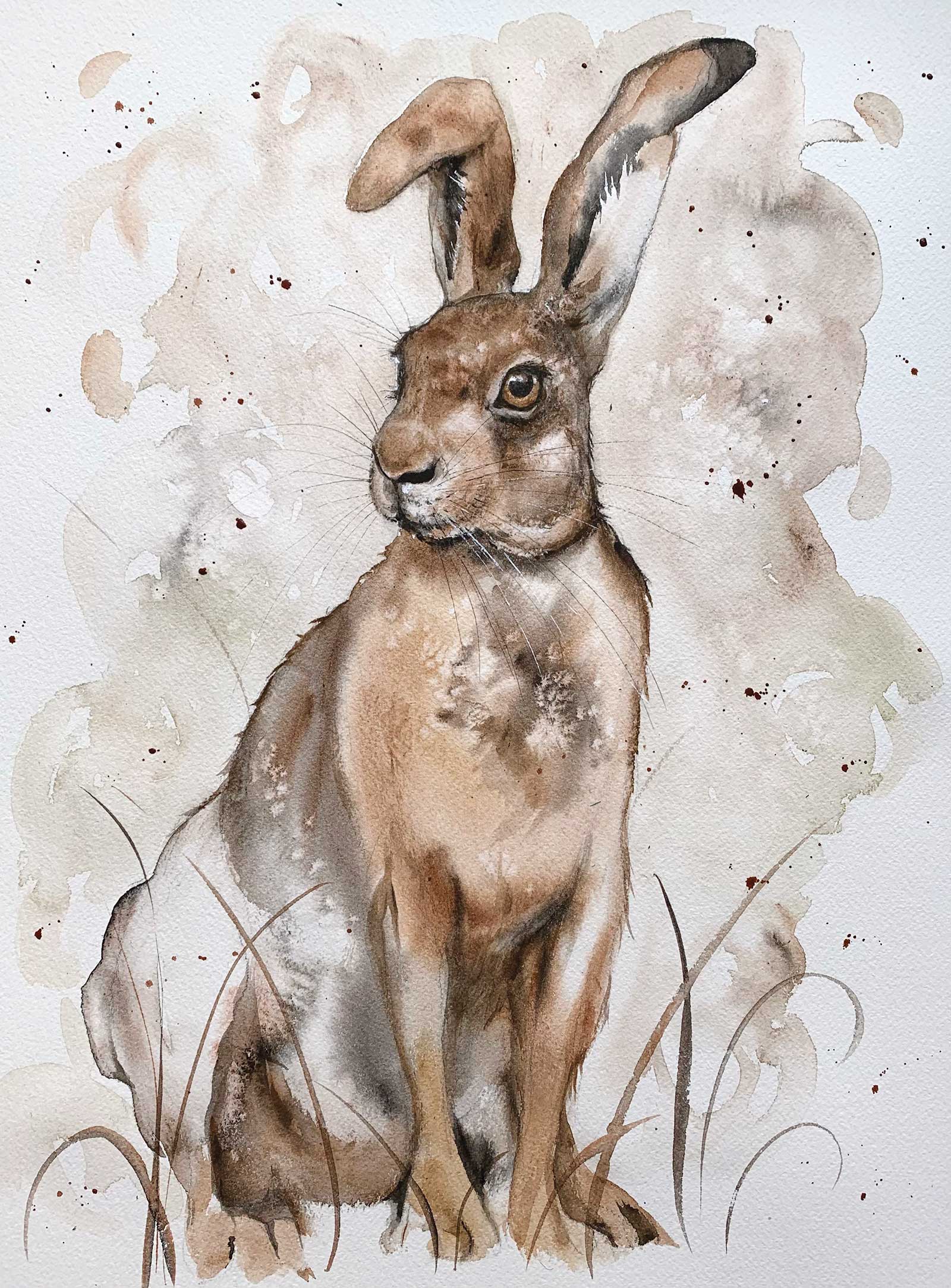
Stage 8
Stage 8 Paint Splatters
Resting, watercolor, 16 x 12" (40 x 30 cm)
The last thing I do is sprinkle some paint with a wet brush onto the painting to get the feeling of bugs and movement in the meadow.
About the artist
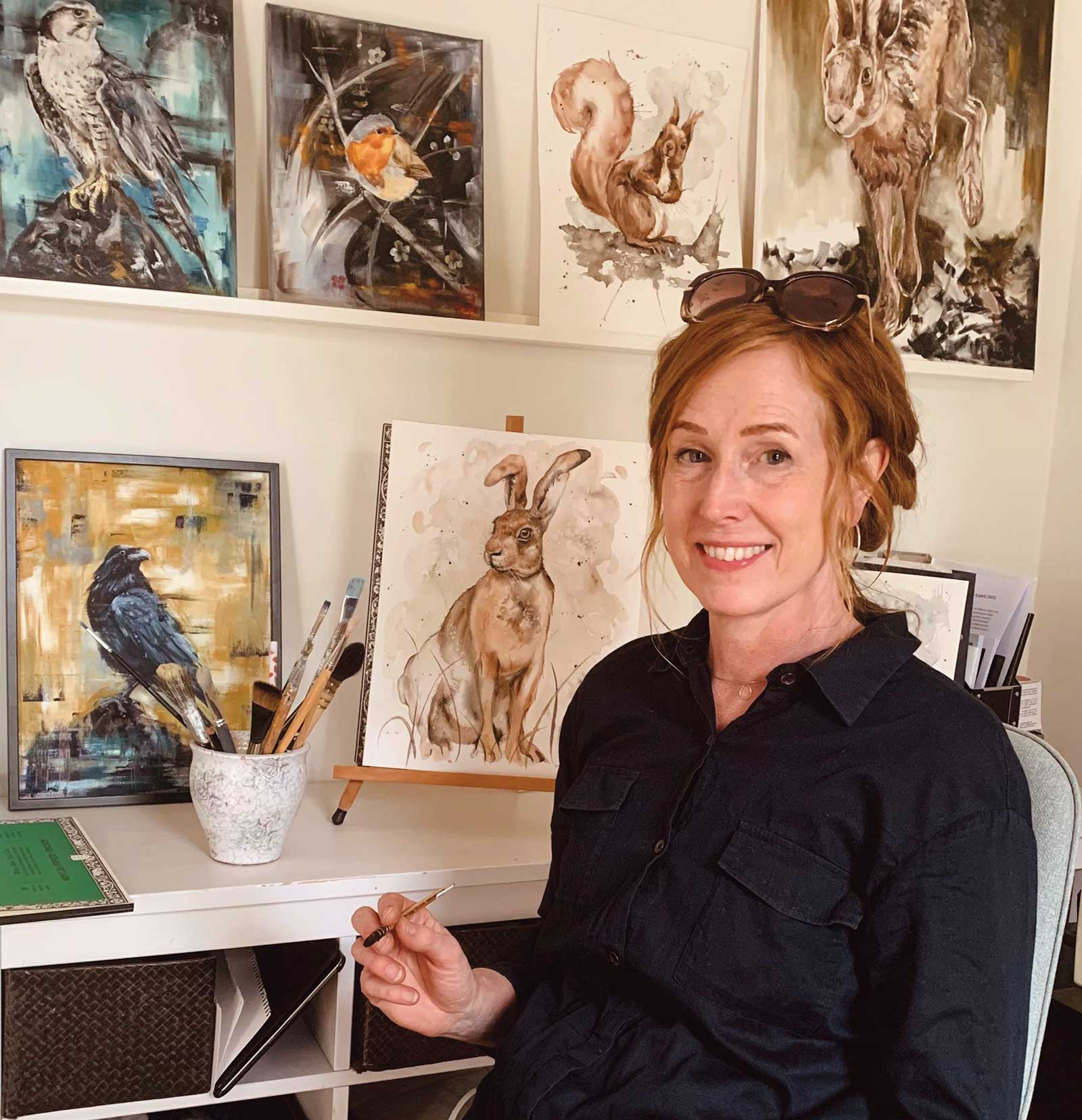 Ingela Matsson in her studio
Ingela Matsson was born in 1970 in Borås, a small town in the south of Sweden. Matsson has loved painting and being creative ever since she was a child, always scribbling and sketching whenever she had the opportunity. As a young adult, her interest in painting grew, and she decided to apply to an art school in Stockholm, Sweden. After struggling with her work samples along with working as a kindergarten teacher, Matsson was finally accepted into Nyckelviksskolan in Stockholm for an arts and crafts education. She learned carpentering, metal design, textile design, sculpting in clay and all the basics of painting. During that period, Matsson also met her husband and decided to stay in Stockholm, where they raised their two beautiful daughters. The last six years, the artist has been working part-time as a watercolor artist selling and exhibiting her work. Matsson has taken part in numerous juried exhibitions throughout Sweden. She is also a member of the art organization Täby konstnärerna.
Contact at
www.ingela-matsson-art.webnode.se
www.konst.se/ingela-matsson
ingelamatsson@live.se