I have said before, I believe portraiture is one of the most important branches of fine art, not only for its own sake but for its historical significance to humankind. I truly believe that. For instance, the Mona Lisa is considered to be the best known, most visited and most written about work of art in the world with visitors to the Louvre waiting up to two hours to view it for just a few minutes before being asked to move on. It is also known as one of the most valuable works of art and holds the Guinness World Record for the highest known painting insurance valuation in history—and it’s a portrait! I recently interviewed six leading artists about how to compose works of art that tell a story and can stand the test of time, and did I mention they happen to be all portraits?
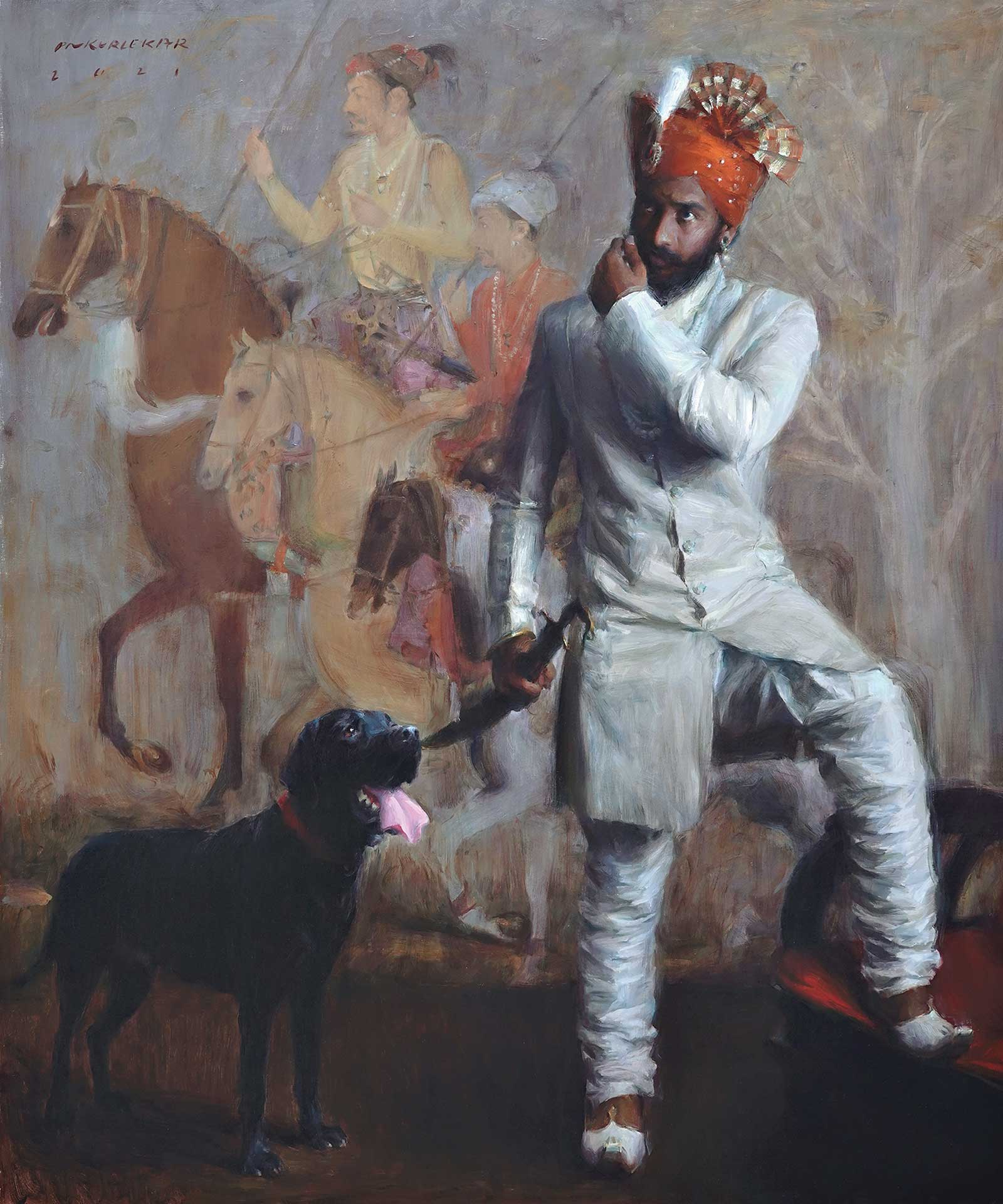
Pramod Kurlekar, Prince, oil on linen, 48 x 40" (121 x 101 cm)
Egnoski: How important is it to you that your paintings tell a story about the sitter?
Pramod Kurlekar: The story in the portrait has its own significance. When I want to express something more than the visual beauty in my portrait or painting, then I use the sitter as a medium to communicate with the audience along with other elements of painting. The person depicted in my portrait represents my thoughts in the form of a story in front of the audience.
Michael Shane Neal: Very important. I always hope to relate to the viewer a feeling of the subject of my pictures—one that reveals a great deal about who they are and what they are like.
Evert Ploeg: In my painting process, I find it important to address a narrative within the portrait. I’m looking for something unique about the sitter. It’s the art of portraiture to inject something which the viewer can feel and sense about the subject.
Mary Qian: I love portraits when they capture a combined story of the sitter and the artist. The subject and the artist coexist in this world, meet, and communicate in silence, bridging the past and present. That is the motivation for me to paint portraits.
Alexandra Tyng: I’m a visual storyteller by nature. My passion is capturing, in a single image, a narrative that unfolds through time. A portrait is a suggestion of a life story. It’s not a static snippet of a life, but a window into something greater than the painted image.
Mary Whyte: Art is storytelling. The most memorable portraits will always be the ones that went beyond just getting a likeness. They are the works that portray a true sense of humanity and will endure. Creating an emotional connection in a painting with the viewer can be done via the use of color, the model’s facial expression and posture, or by incorporating a narrative background. More often, it is what you eliminate that counts.
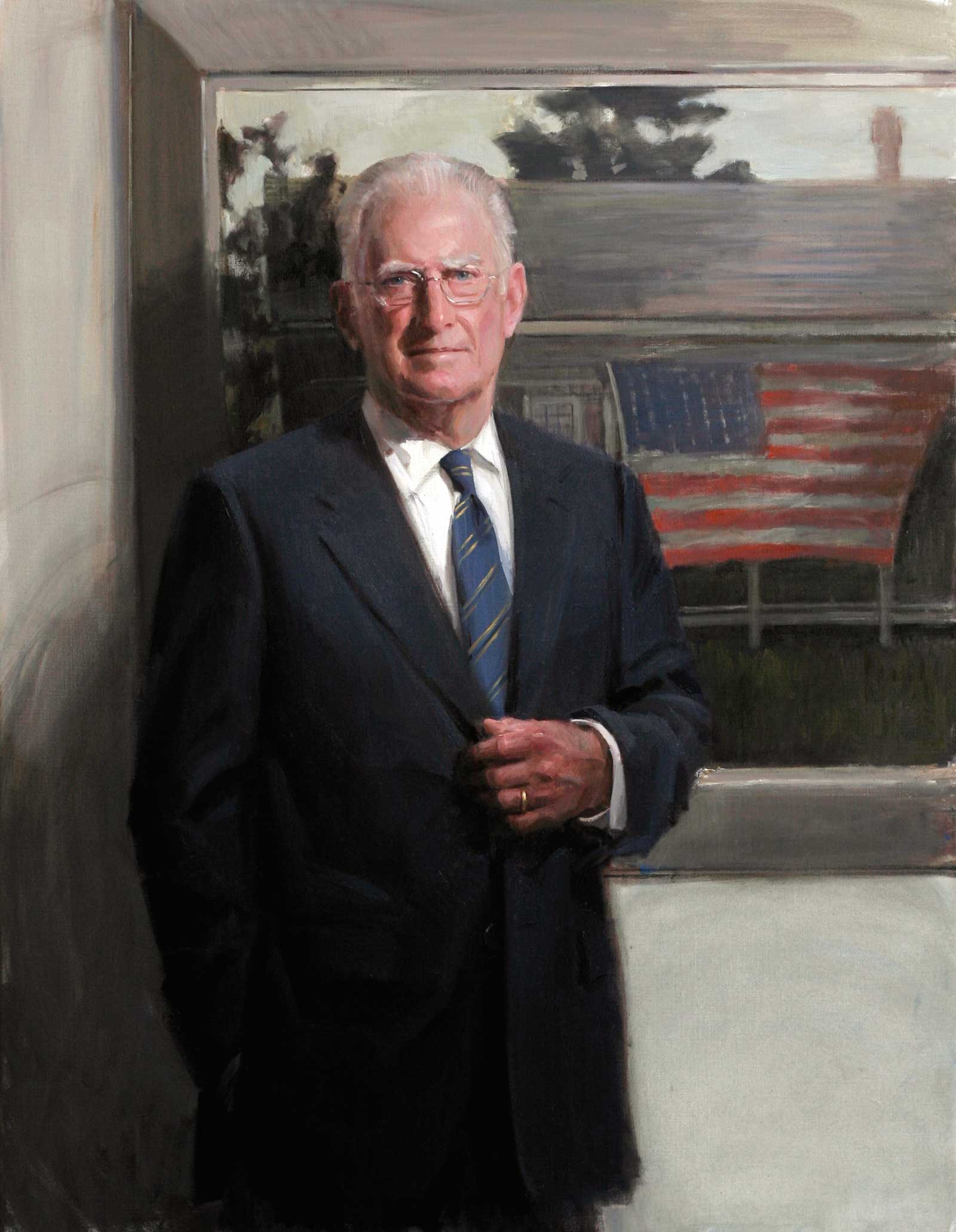
Michael Shane Neal, Dr. Richard Rothman, Rothman Institute, oil on canvas, 50 x 36" (127 x 91 cm)
Egnoski: Can you tell us about the inspiration behind the painting shown in this article?
Kurlekar: “Determination born out of self-confidence” is the human spirit that is the basic inspiration of the portrait shown here. In this portrait, I have painted a prince with piercing eyes, standing in a confident posture twisting his moustache, showing the determination he has to do something great.
Neal: This portrait of Dr. Rothman was composed to evoke a feeling of his self-confidence, quiet dignity and caring spirit. A talented surgeon, Dr. Rothman was one of the first American surgeons to do hip replacements, and he went on to develop an international reputation as a surgeon and implant developer. He was an avid collector of American art and a patriot who was the son of a Polish immigrant. He personally selected the Jamie Wyeth painting as the backdrop for his portrait.
Qian: For my painting, Lyla, I was inspired by the shape of seashells and how they show the golden mean. That shape reminds me of a mother hugging a child for some reason, so when I had a chance to paint an image of a mother with a young child, I couldn’t resist trying a composition based on that. With a little nudging of the pose, I painted this painting.
Ploeg: This portrait of First Nations Elder Tim Douglas was commissioned by Big hART (one of Australia’s leading arts and social change organizations). Quite often in portraiture, those distinguished in our society can be depicted in their academic robes or a uniform emblazoned with medals or epaulette stripes—attire that immediately identifies them as eminent and honored. Becoming an Elder in Aboriginal life doesn’t come with any of these identifying markers, but Douglas indeed is an important and revered person. As those visual narratives were not so immediate, it was important how I posed him. Using a podium, I elevated him to equal my eye line and positioned him in a comfortable chair, holding his cane, as the vehicle to deliver a statesman-like attitude. Douglas may be frail and his mobility limited, but it was very important to me to portray him in a pose that reflected his status—a very gentle person but with vast cultural and historical knowledge.
Tyng: Gretchen Worden was the director of the Mütter Museum, a small but famous collection of medical anomalies from past centuries. Her portrait was commissioned posthumously by friends and colleagues who wanted a portrait that reflected her unique leadership of the museum and her personality, which everyone mentioned was her dry humor. Fortunately, some videos of Gretchen existed, so I was able to watch her in action. In one video, she was a guest on the David Letterman show. She had brought a 19th-century metal instrument used to break up bladder stones, and she explained how it was used. Her delivery of this information and David Letterman’s reactions were priceless. In this and every video, Gretchen’s expression started out serious, her smile began slowly and ended with a sudden grin. I wanted to capture the moment just before the grin, and I convinced the commissioning group that a wide smile would be static in comparison.
Whyte: Disciple was one of 30 watercolors I did for a traveling museum exhibition on blue collar workers. The model, then in her 80s, was from Hacksneck, Virginia, and for years made her living as a crab picker. She told me that on Sundays she put on her “high, high heels” and played the organ in her church for a congregation of 12 people.
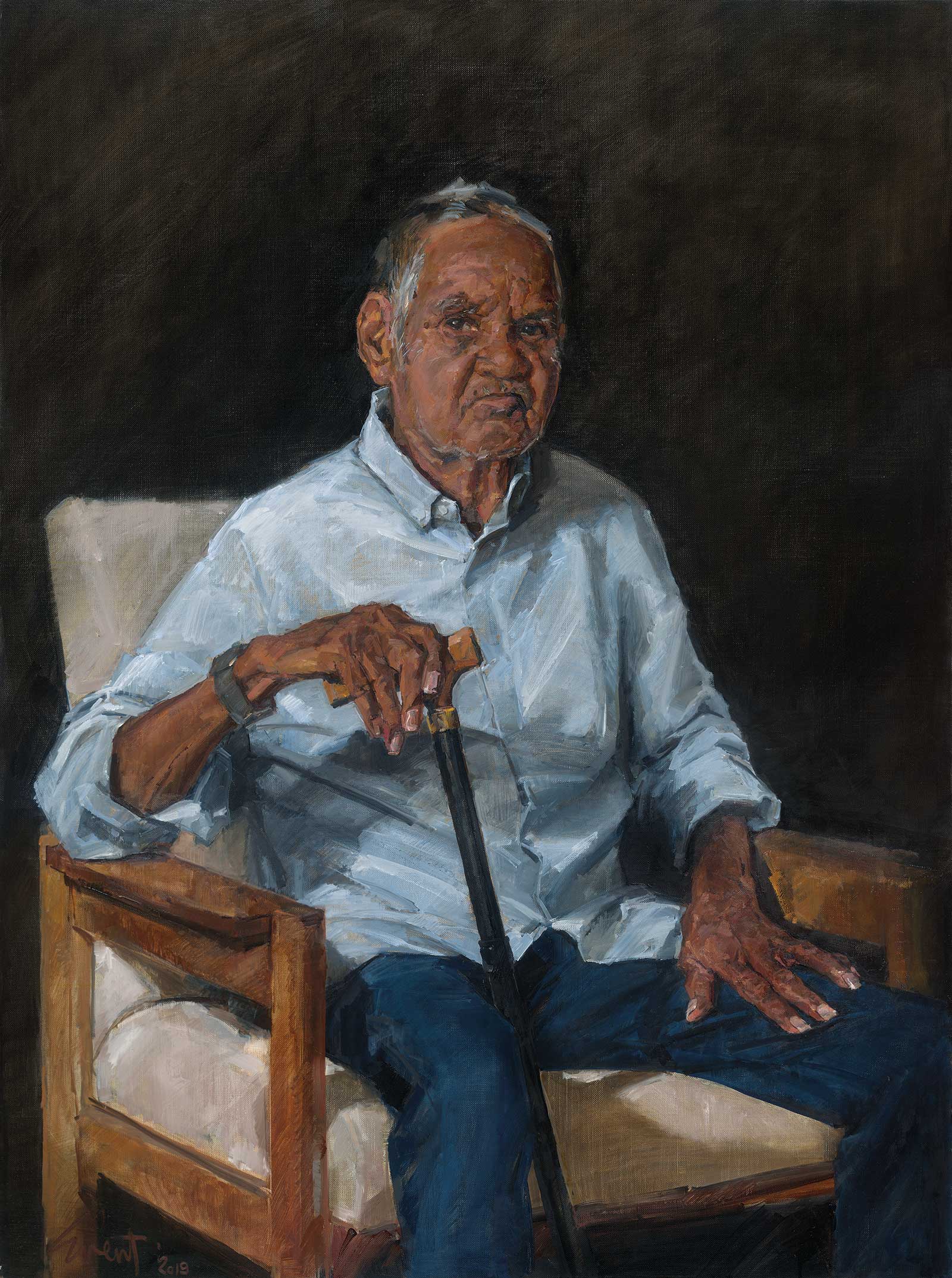
Evert Ploeg, Ngurin-Nyunggu: Ngarluma Elder – Tim Douglas, oil on linen, 53.9 x 40.1" (137 x 102 cm)
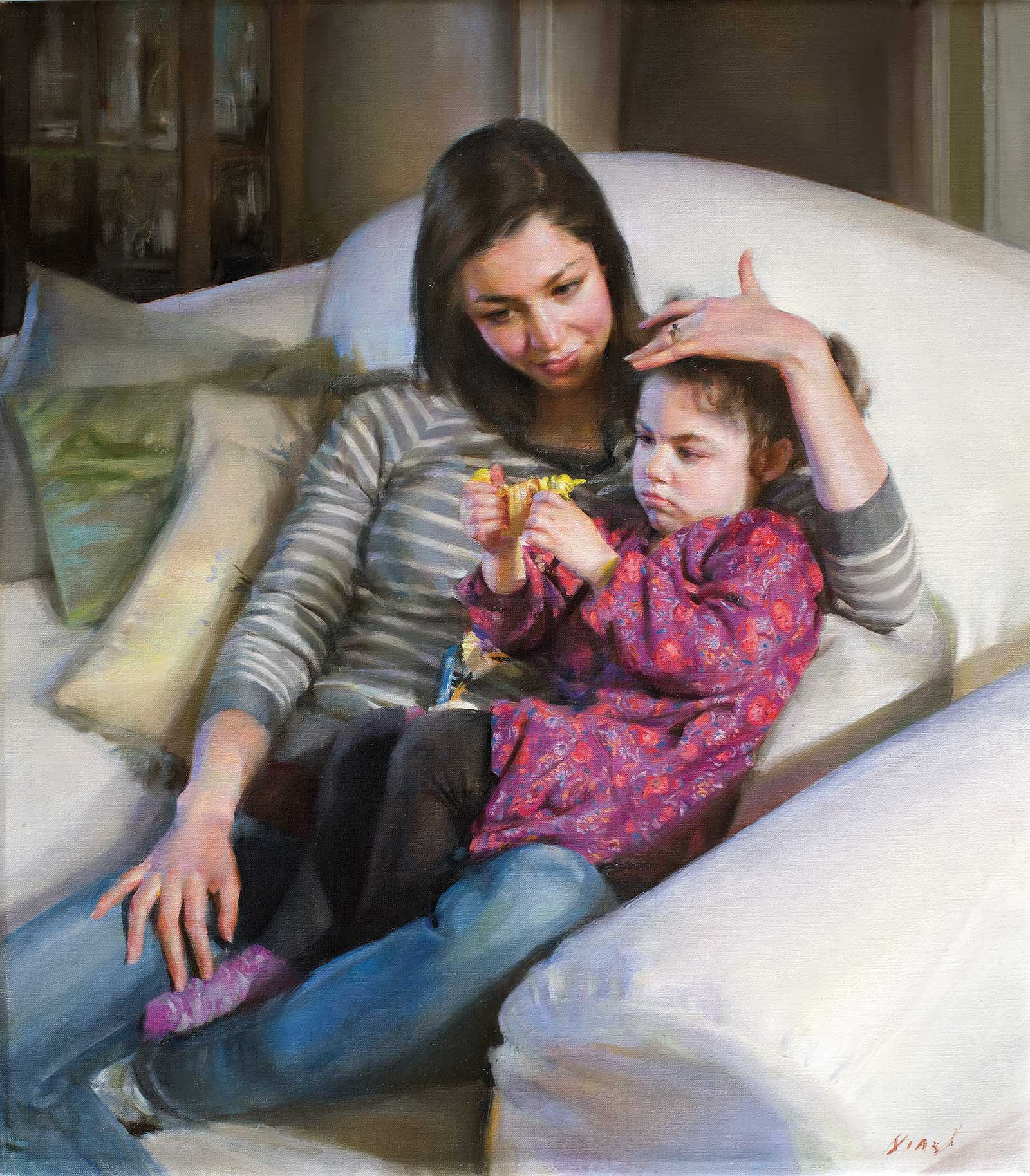
Mary Qian, Lyla, oil on canvas, 28 x 25" (71 x 63 cm)
Egnoski: Are there any composition rules that you follow?
Kurlekar: Rather than the established rules of composition, I try to bring the visual imagination emerging from my feelings into the composition.
Neal: I make every effort to keep compositions simple. I consider my subject as the dominant shape of my composition and then look for ways to support the pose and mood of the sitter. Color, value and angles are some tools I use to express a feeling. As an example, strong vertical lines suggest dignity and strength while horizontal lines express stability and calmness.
Ploeg: I’m very much a tonal/classic painter. I like to push certain boundaries, but sticking to some well observed compositional instruments definitely helps, such as the “rule of thirds” and trying to incorporate triangles or angles, which move the eye around within the work in a continuous loop.
Qian: I don’t really have any strict composition rules to follow. A pyramid shape for simple portraits is usually the easiest approach, but I am very intrigued by the golden mean and try to unlock its magic when a more complicated composition is required.
Tyng: I like each portrait to be different, and that can involve breaking rules or at least bending them. However, there are a few things I always keep in mind: 1. Negative space is good, because the quiet areas (dark area, plain wall or simplified environment) help direct the eye to the active areas. 2. Value massing, the grouping areas of dark and light values into larger masses so that values don’t jump around, makes the form of the sitter appear more three-dimensional. 3. Everything in a portrait should be in service of the central idea. Remove all extraneous detail!
Whyte: First and foremost, an artist should approach a portrait as a painting. It is a painting first, a portrait second. All of the elements of sound composition and design still apply, such as a single focal point, harmonious colors and shapes, and a strong, simple value pattern. On these principles, all good paintings rest regardless of subject matter.
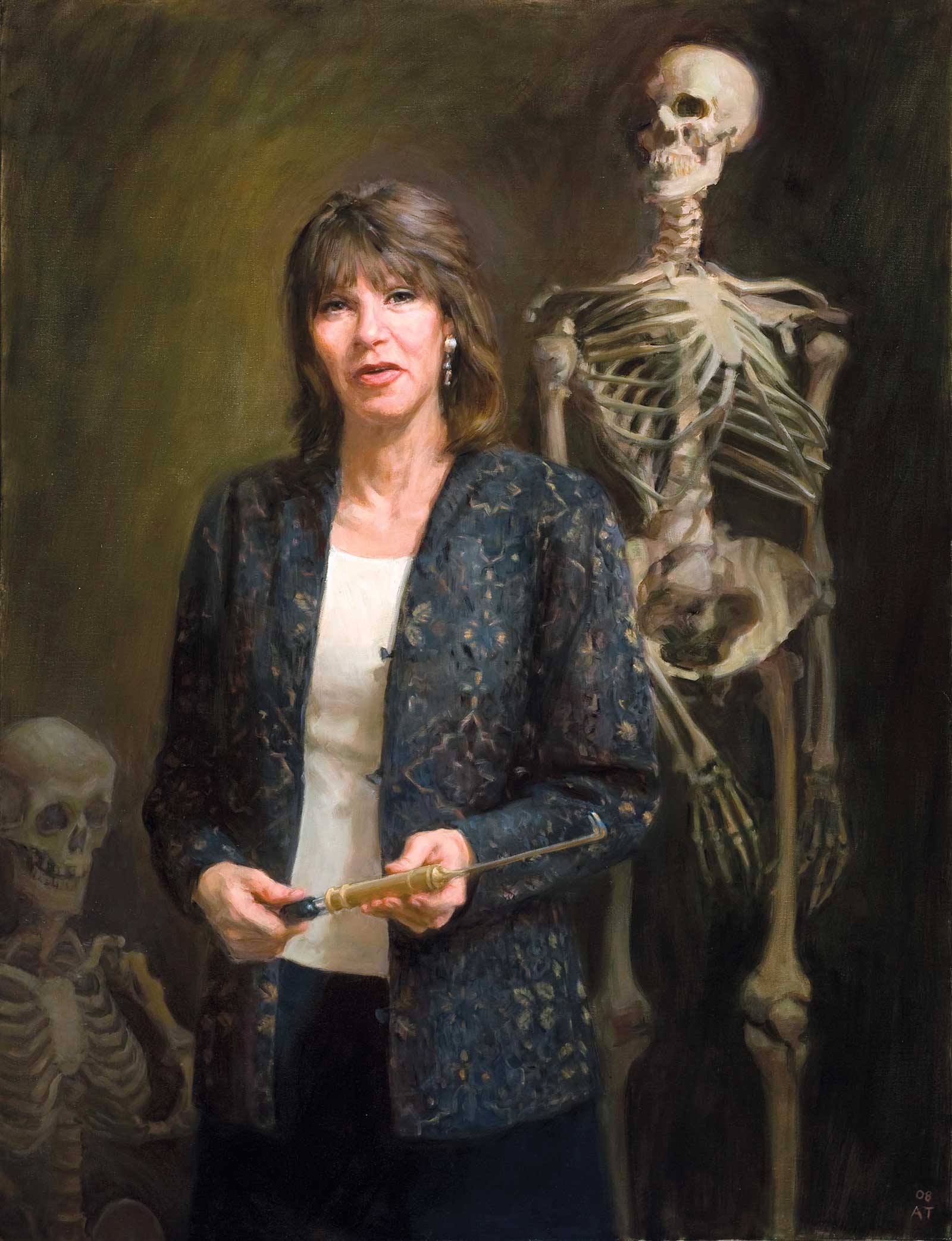
Alexandra Tyng, Gretchen Worden, oil on linen, 48 x 36" (121 x 91 cm)
Egnoski: What elements do you think make a portrait a work of art?
Kurlekar: I think a simple portrait becomes a fine piece of art with help of the following elements: the subject, the composition, as well as color scheme, and most importantly the body language and expressions of the person. If the artist uses all these elements sensibly with an authentic way of self-experience in the portrait, then it helps to convert a simple portrait into a fine piece of art.
Neal: That is a very difficult question. I believe that anything that is elevated in your mind to a point at which it’s an interesting painting and not merely a likeness, would make it a great work of art. Certainly we’ve all seen a painting of a person so arresting that we didn’t care who it was; we’d love to hang it in our homes and enjoy it every day.
Ploeg: There are just so many portrait paintings out there, but for me only a handful really become “artworks.” It’s something that transcends just a pure likeness of someone: the way the painting has been executed, the brushwork, the texture and simplicity as well as the composition, the coloring and then the balance of how the subject has been described. A painted portrait is not unlike the character in a novel where the author fully describes the character, but the reader makes the image themselves.
Qian: The most important element of a portrait for me is capturing the spirit of the sitter, in addition to all the technical expertise.
Tyng: First of all, the artist’s degree of technical mastery would have reached a level at which there are no “inadvertent mistakes.” At this level of mastery, the idea in the artist’s mind flows down through the heart and soul, down the arm and out the fingertips into the tool and into the work, and the artist is capable of creating a work of art.
Whyte: Attics and antique shops are filled with portraits that are probably a perfect likeness of the sitter. What makes a portrait a true work of art is what makes any artistic creation successful. It is the artist’s skill in capturing a timeless and universal truth, illustrating what he or she experienced or felt, and conveying it to the viewer.
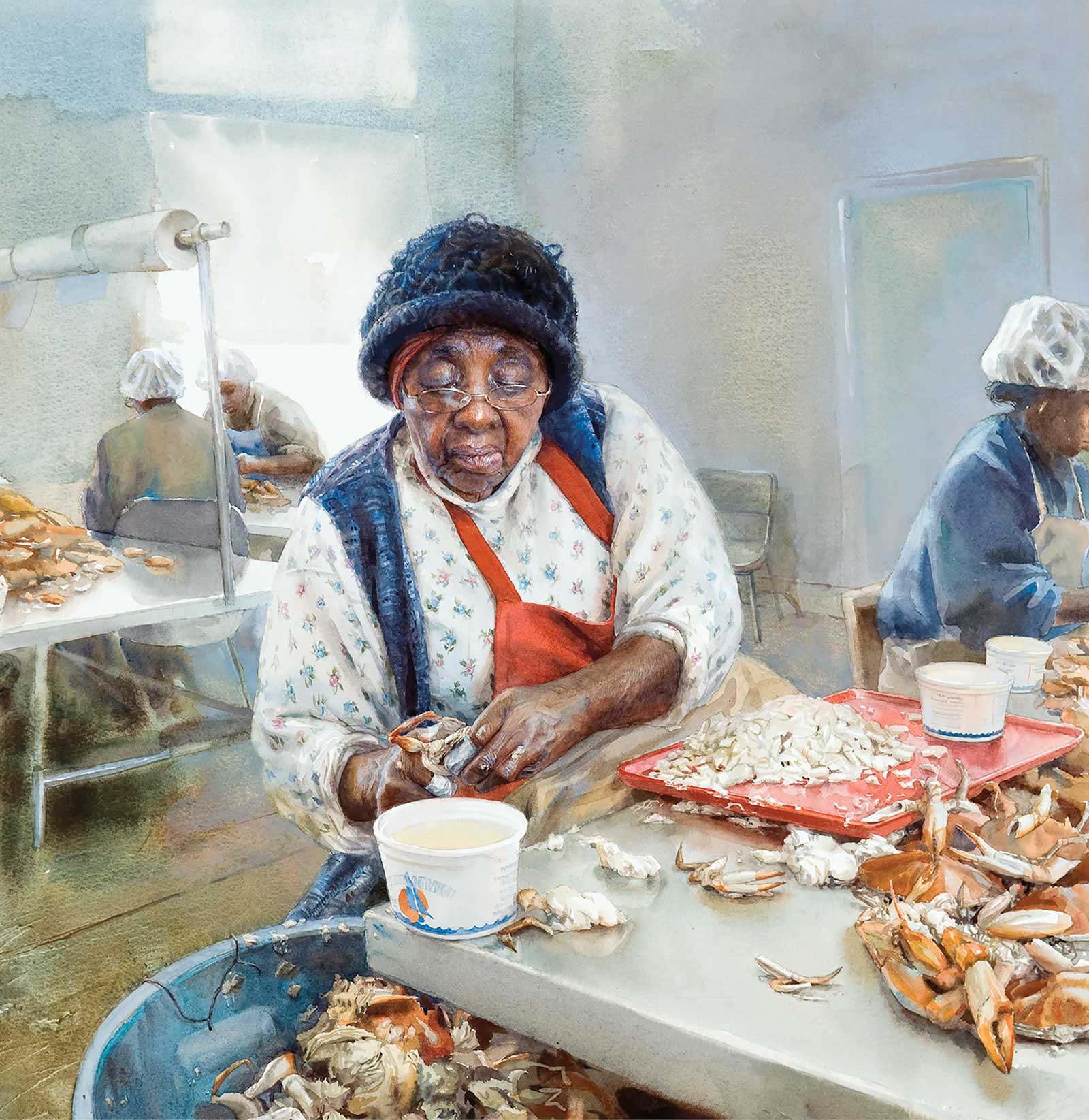
Mary Whyte, Disciple (Crab Picker), watercolor on paper, 21¾ x 19¼" (55 x 48 cm)
Egnoski: Do you find it a delicate balance between how much a client might want included in a portrait and what you believe will make a lasting composition?
Kurlekar: When a client commissions a portrait, many times that client has some visual imaginations in his mind about the painting, and sometimes the client can be very vocal about including them into the painting. On such an occasion, a painter should understand and respect the client’s thoughts and feelings and try to make a meaningful analysis with examples to explain what is necessary and what is not necessary to show in the final painting with the goal of a good work of art.
Neal: Sometimes a well-intentioned client has ideas and selects too many objects to include in the picture. It’s a delicate act of compromise at times. I work hard to listen carefully, and then if I find I don’t agree, I try to steer someone to what I think works best from “an artist’s standpoint” of making the picture stronger compositionally and as a work of art.
Ploeg: On occasion with my commissions, I have been presented with quite a lot of background information and certain elements that a client may want within their portrait, and even though the process is collaborative, it’s my job to include and/or edit these suggestions. The most important part of the portrait is indeed the face, and the focus should always be drawn back to there. If we do include objects as such, it’s always about how this can be used compositionally to lead the eye around rather than distracting it.
Qian: It is always a delicate balance between what the client wants and what I prefer. The choice of composition is the biggest decision for a painting. Most times, I will try to persuade the client to go with ones I think would make a great painting. If the clients have similar taste as mine, it is possible to achieve.
Tyng: Yes, it is a balance, and a process, and a challenge. My architect parents set a great example for me to follow in commissioned work. The client provided the program, and the architect (or artist) provided the inspiration, so every commission is an opportunity for collaboration, and the result is greater than what could have been if each had worked alone.
Whyte: Every portrait commission is a contractual agreement between the artist and the client, so naturally, there are concessions that the artist may sometimes have to weigh. Regardless, it is the artist’s signature that is on the painting and not the client’s. I have found that it is helpful to reassure the client that you will make every effort to present them in the best light and will come up with a painting that they and their family will love.
Christine Egnoski is the executive director of the Portrait Society of America, serving in that position for the past 24 years. She regularly writes for International Artist and other fine art publications. —