I have always been a figurative artist at root, finding myself searching out and homing in on the human qualities of any painting. I’m simply inspired by people. I gravitate to them, and my goal is to capture and train the viewer’s attention on what’s sometimes inexpressibly human.
As for working with a model like John A. Carrasco, what can I say? Every figurative artist should leap at such an opportunity! There was something very special and captivating about this image, with his downward and contemplative gaze. That said, while the soul of a figurative piece often lives in the eyes, here it seemed to live in the story written on Carrasco’s arm. I wanted to make that story the focal point for the viewer, which was my main challenge.
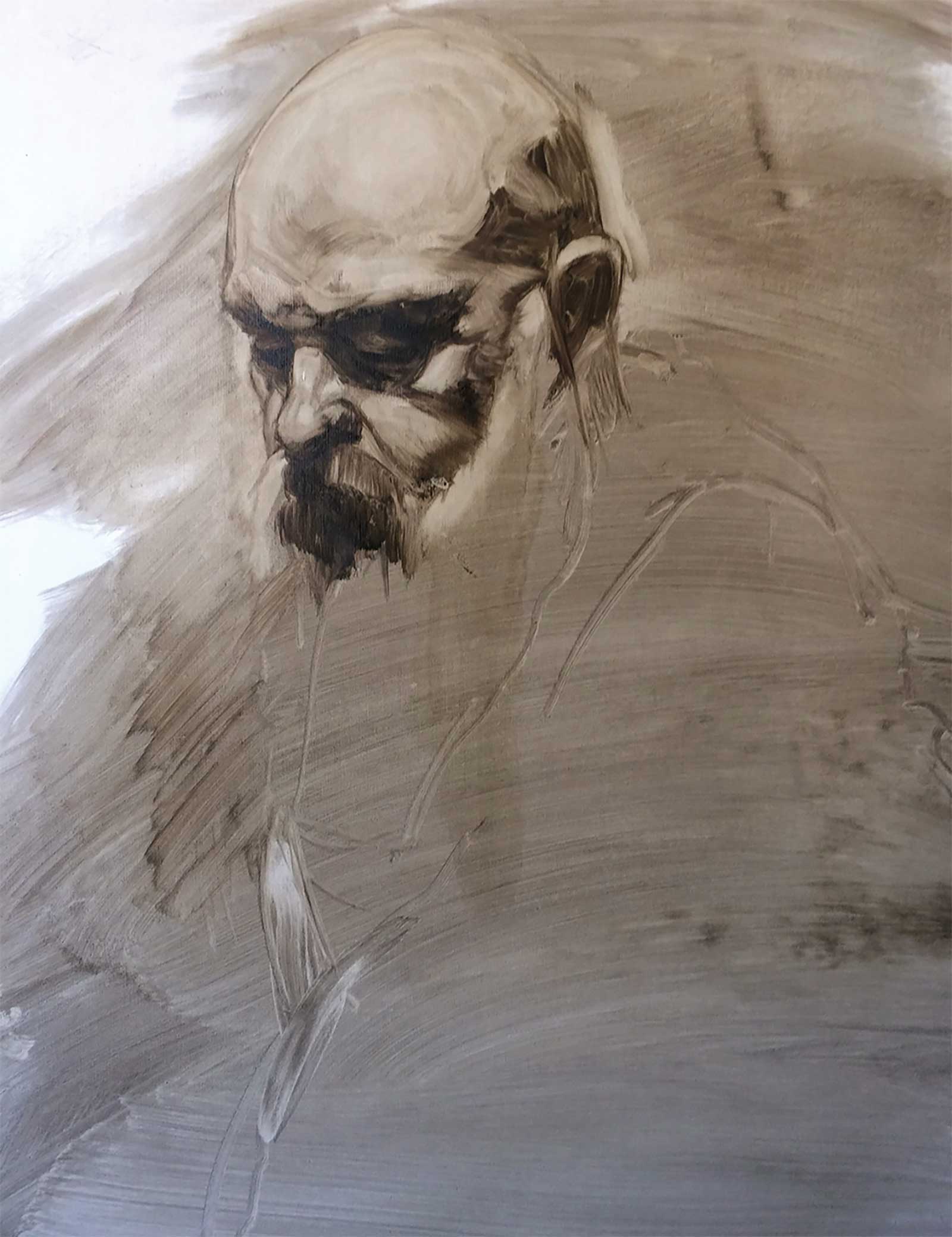 Stage 1
Stage 1: You could say I never start a portrait the same way twice because I always begin by toning the canvas, and the tone I set depends on the energy I’m feeling from the subject. Here, I used a mixture of raw umber and ultramarine blue, slightly diluted with Gamsol. Even in the earliest stages, I’m thinking about composition and movement as I lay the groundwork for drawing the form.
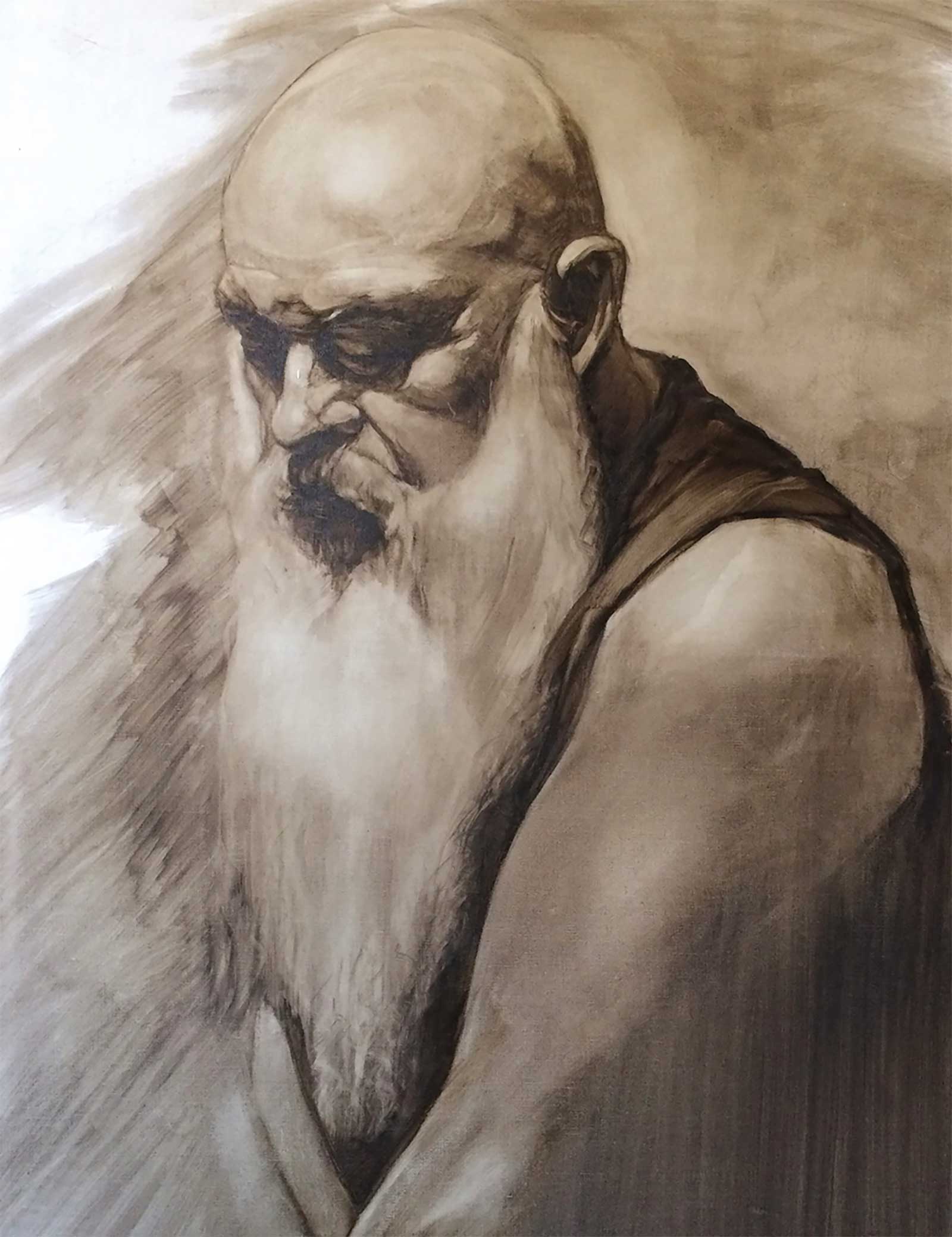 Stage 2
Stage 2: While drawing, I concentrated my attention on identifying the light and dark shapes of the figure. I looked for shadows, particularly for patterns of darkness in his eye sockets and shirt. Once those were established, I began wiping out the highlights in his forehead, face and beard. Doing this paved the way for me to pull the values together to accomplish softer transitions while continuing to check my proportions and likeness. My goal at this point was to achieve an accurate, monochromatic underpainting to serve as an armature for the color.
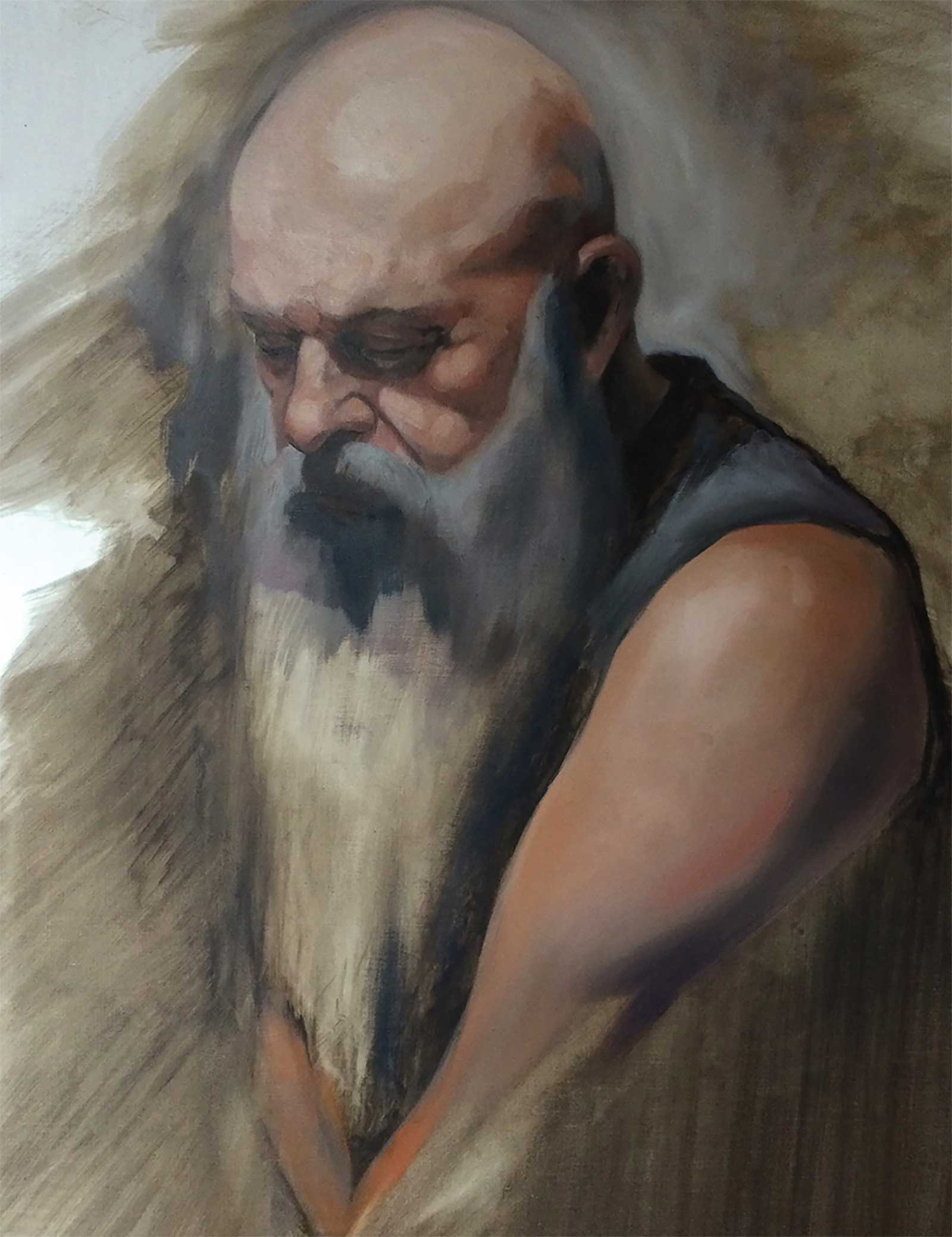 Stage 3
Stage 3: Now came the fun part (as if all of it weren’t fun)! Once I found I was satisfied with the initial stages, I began blocking in my lights and darks using a combination of capucine red light, yellow ochre and white. In the shadow shapes, I let some of the raw umber stay to preserve contrast. I also added a bit of white to my raw umber and blue mixture to block in some of the beard’s values.
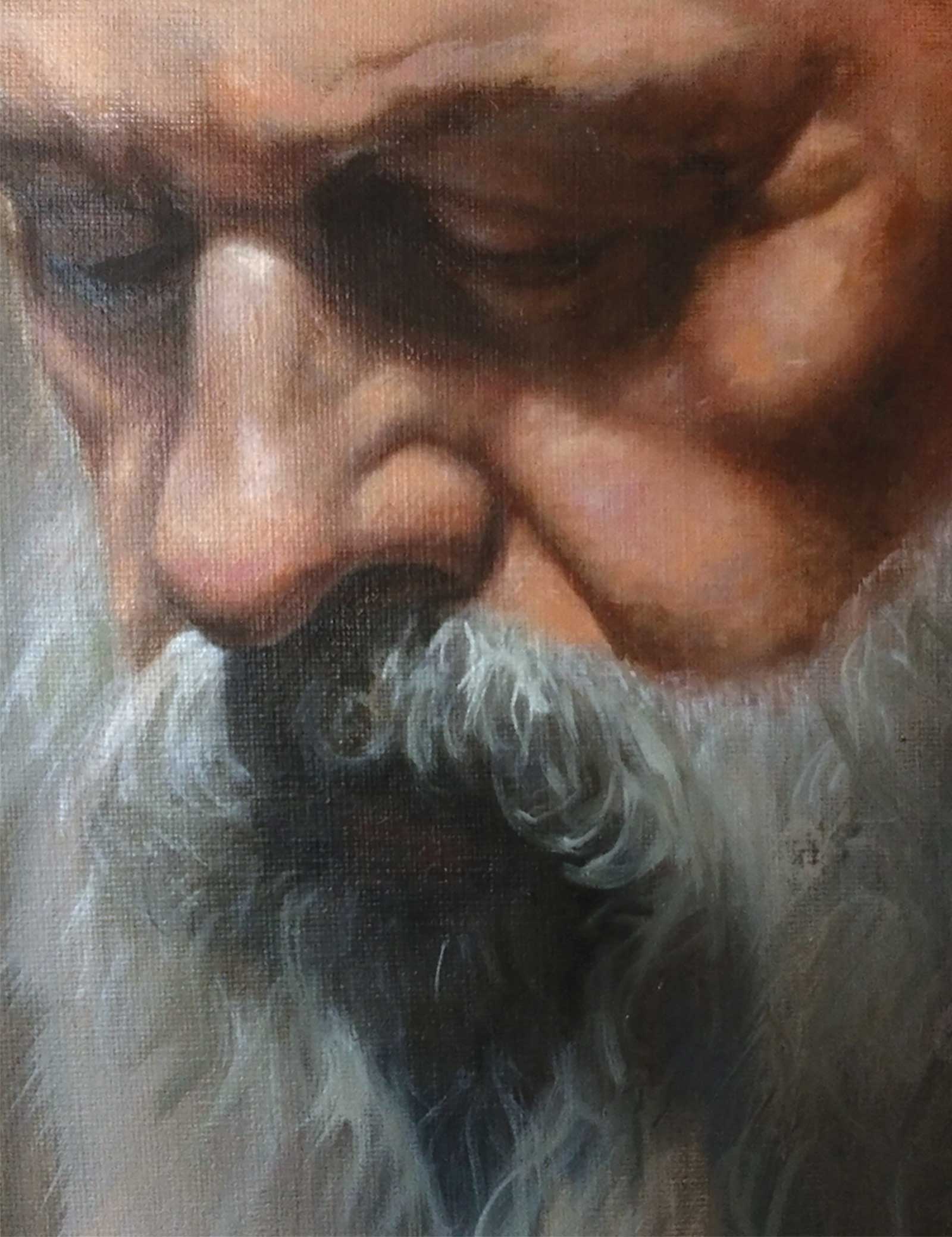 Stage 4
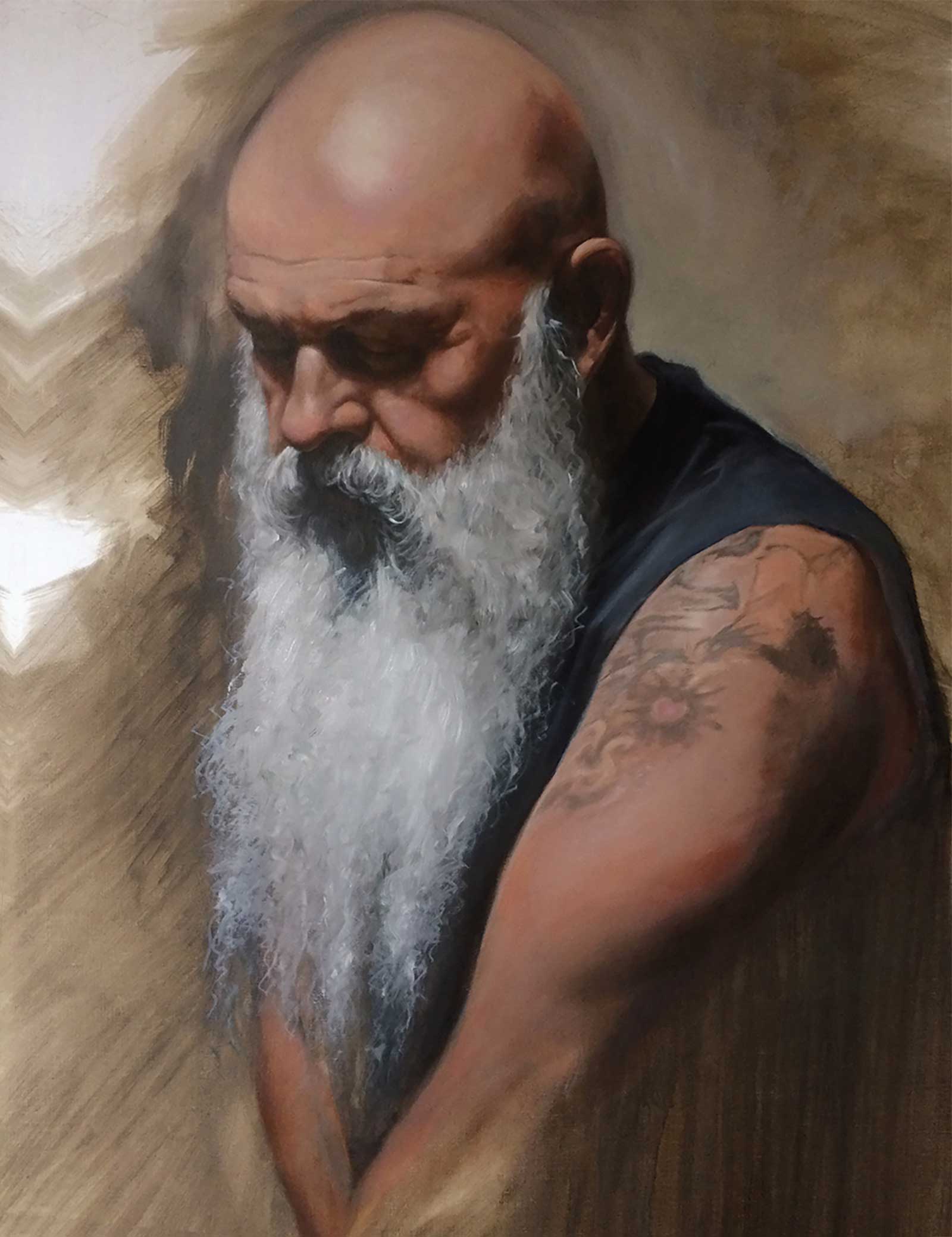
Stage 4: This is when the skin tones started to strengthen as I continued to confirm likeness while incorporating more of the effects of light. I added some lighter, warmer values to the background, behind Carrasco’s head, to strengthen his silhouette. I also started the tattoo after completing the arm’s flesh.
 Stage 5
Stage 5: To continue with the tattoo, I resumed laying in subtle color shifts and transparent layers to give the illusion of ink in skin. This is where very subtle nuances required attention. I also glazed the beard with a warm gray to make the values more cohesive.
 Stage 6
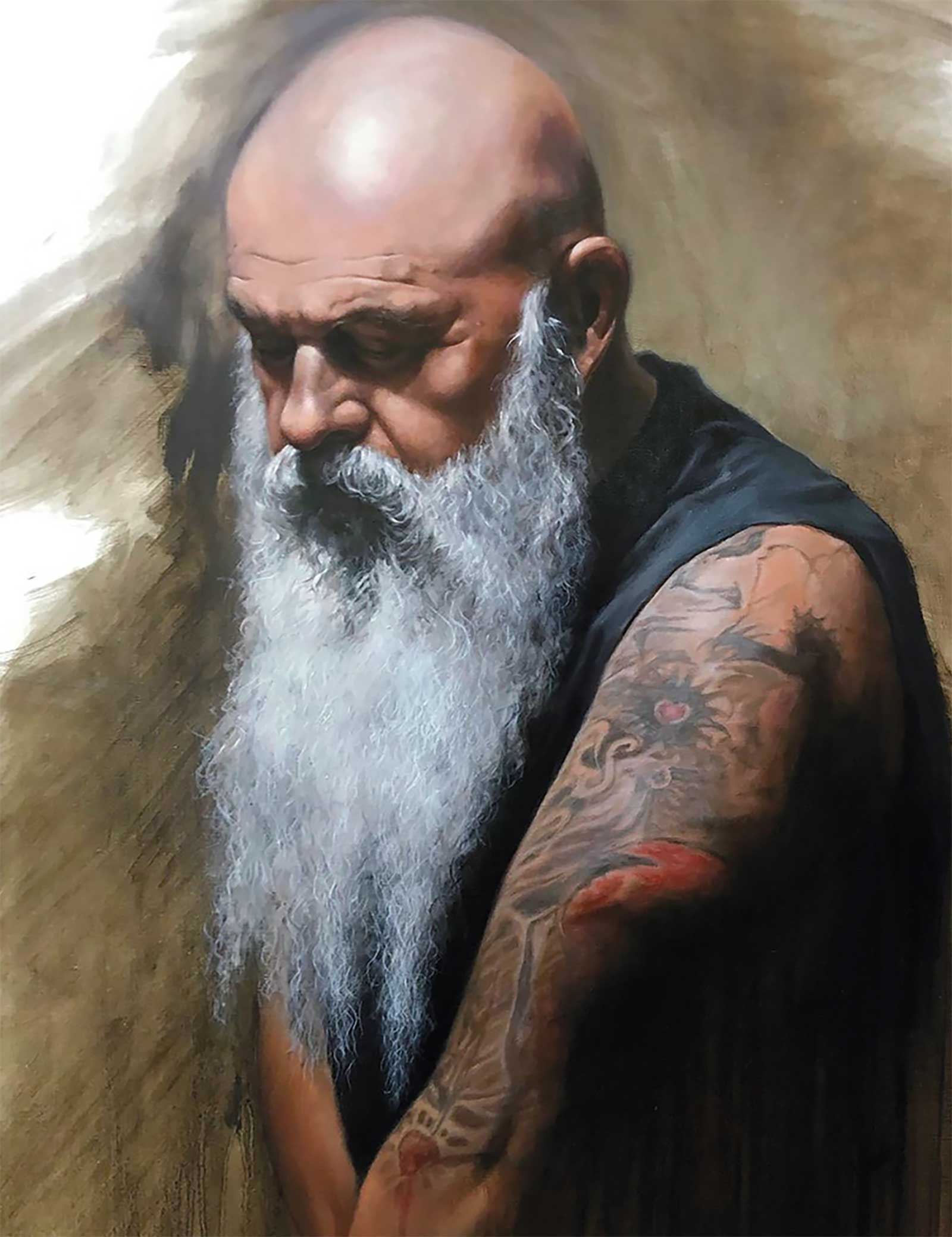
Stage 6: The final stages are all about the details. I refocused some of the lights in the beard and added more strands of individual hairs. I also continued to work the entire figure, checking for cool and warm adjustments and softening edges. Sometimes I purposefully leave my backgrounds loose to keep the viewer’s attention focused on the subject. Now the figure is complete, and I’ve painted his story.
American artist Barbara Hack received her Bachelor of Fine Arts degree in drawing and painting with intensive study in Europe and additional training in New York. Her work is an ongoing reflection on people and their emotions, pursuing figures from the past with their moods and their contexts, all while capturing ephemeral moments that last. Her work has been exhibited in D-Anthony Gallery in Wausau, Reh’s Gallery and Salmagundi Club in New York, Abend Gallery in Denver, and the Wausau Museum of Contemporary Art.—