The changing colors and shapes of the botanical world enrich our senses and offer the opportunity to engage more deeply with the varied aesthetics of nature. I get my inspiration for painting flowers from the surrounding nature—from forests and fields, gardens and parks. It is an enormous challenge to fully grasp the richness and nuances of color. This requires precise and careful observation of the botanical object to be painted. When looking at the plants, one very quickly realizes that the play of colors is particularly important for two aspects of painting. On the one hand, the nuance of color is important to represent form and three-dimensionality. On the other hand, with the tints of my chosen colors, I manage to depict the surface structure of the plants. This is very important because every plant is different. For a flower with velvety, smooth leaves, the composition of the colors must be different than for flowers whose leaves are more wrinkled or even dried out.
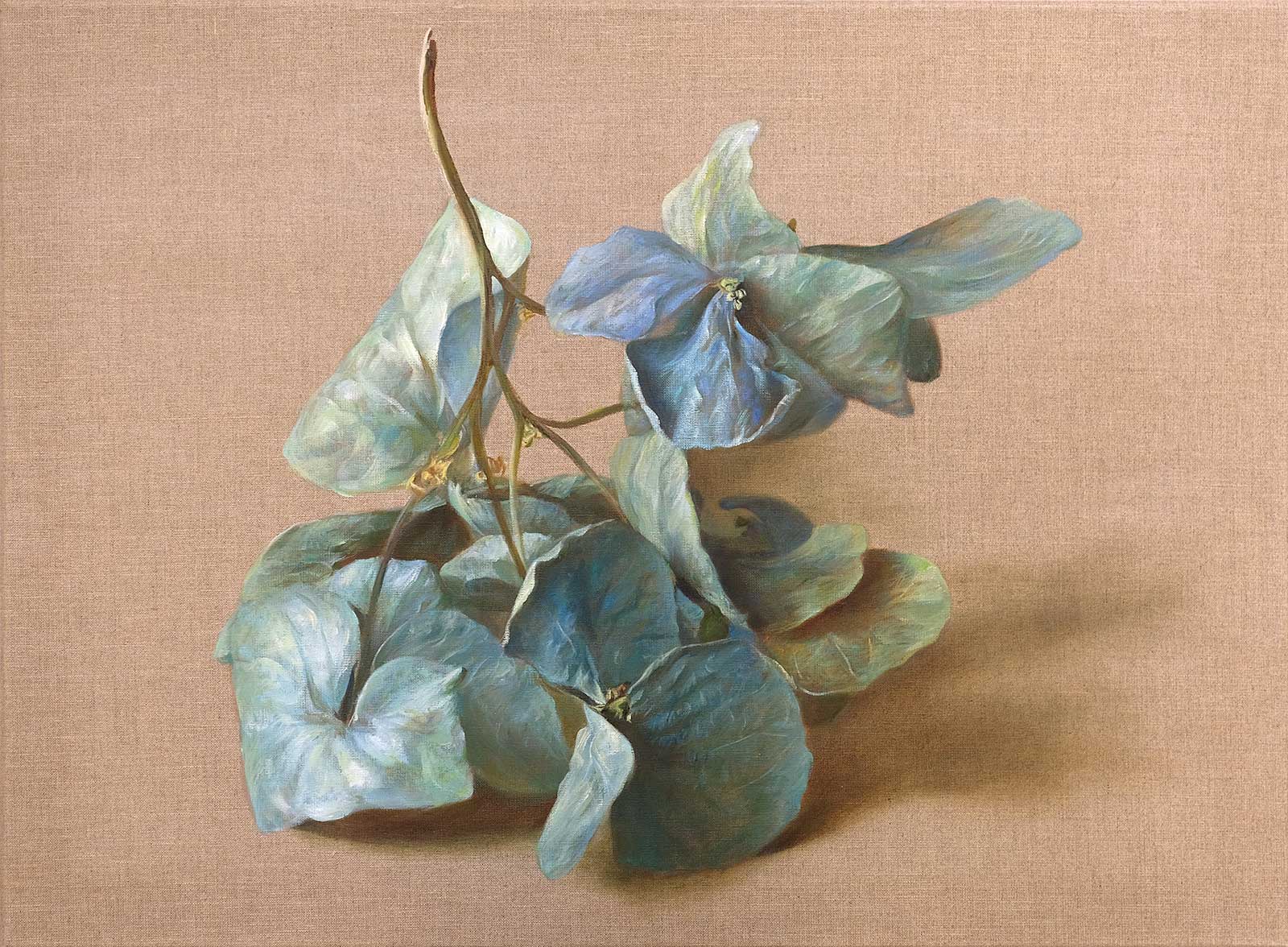
Hydrangea 2, oil on canvas, 23½ x 31½" (60 x 80 cm) The hydrangea came from a nearby garden center and captured me immediately. I simply had to paint it in its shades of green and blue.
The plants in my demonstration of two roses show themselves in all their splendor and at the same time in their fragility. If you hold these dark red roses against the light, you can see warm and cold colors, a play of colors created on the surface of the petals. Depending on the incidence of light, these colors change again. Therefore it is important that the light hitting the flowers to be painted is constant. Only in this way can the choice and nuancing of the colors be done carefully and correctly.
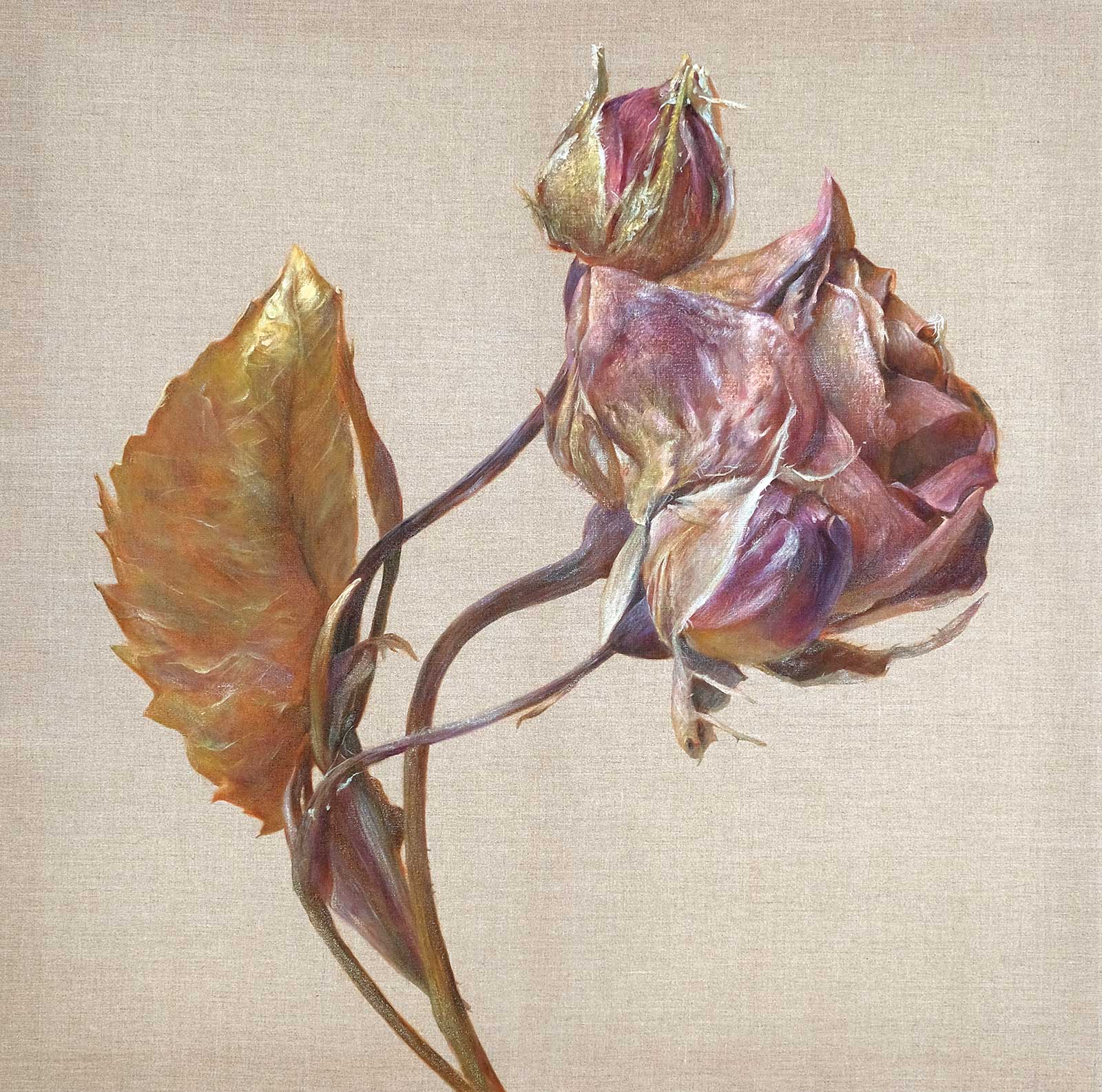
Silence, oil on canvas, 39 x 39" (100 x 100 cm) A shadow is cast on the rose petals. The leaf on the stem stretches up proudly and is hit by a ray of sunlight so that it shimmers.
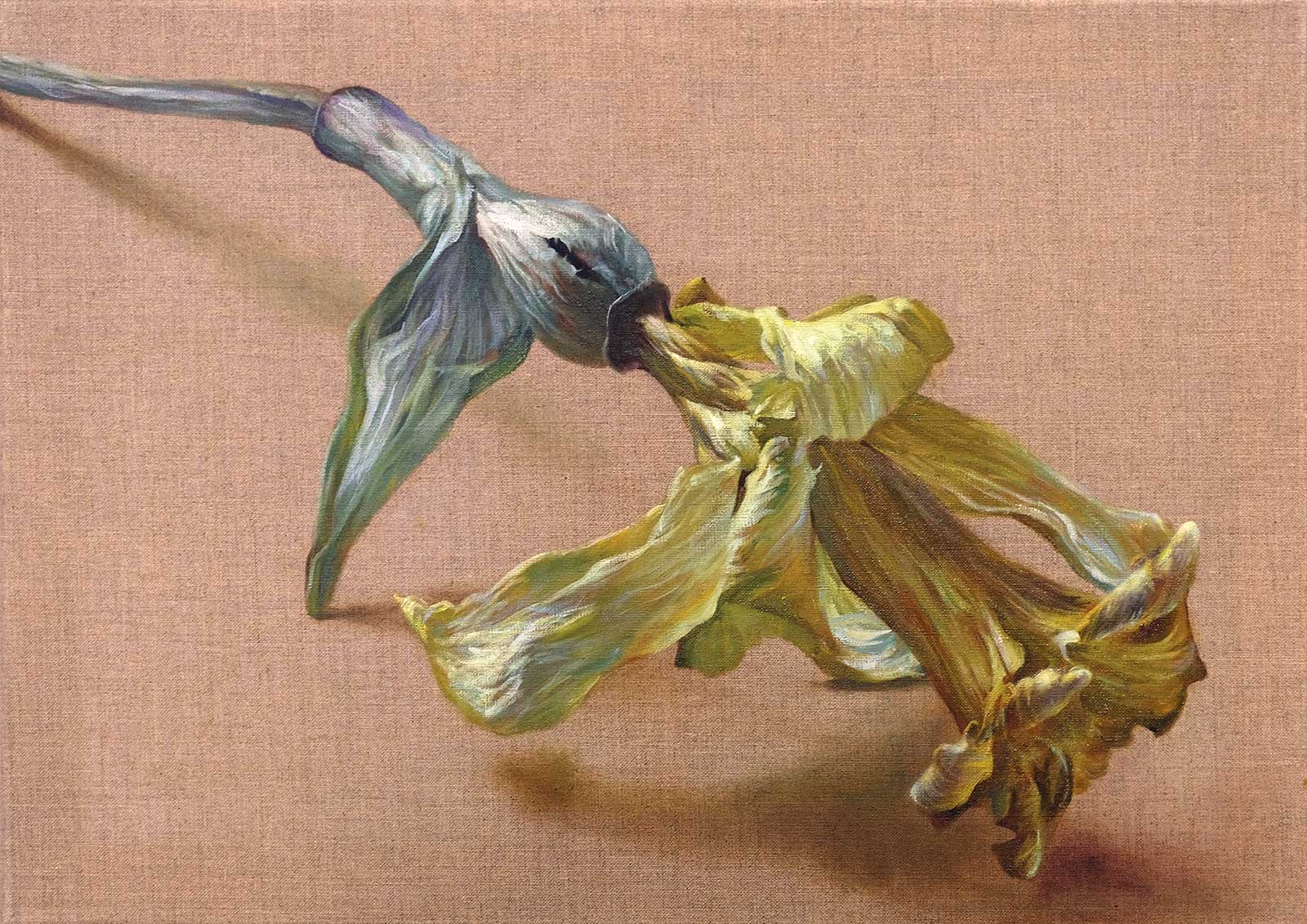
Daffodil, oil on canvas, 19½ x 27½" (50 x 70 cm) The yellow tones of the daffodil immediately create a cheerful mood and you can’t help but have these flowers around, especially in the springtime.
When I want to start painting a flower after observing the plant closely, I first make sketches to have an ideal starting position on the canvas for painting. The sketches are to be understood as a kind of basic composition of the painting. For the paintings I presented, I decided on an arrangement that corresponds to the triangular composition. This stylistic device stands for clarity, harmony and balance. Like in this case, I mostly choose flowers that are not perfectly grown, as this is more interesting for me. Painting from life fascinates me. I have to constantly make new comparisons between individual parts of the flower before I mix the colors for the respective spots. There are countless aspects that need to be considered when working with colors. For example, the technique and type of color application is important for the edges of the object. In addition, the choice and use of color must take into account color relationships, e.g. contrasts, both qualitatively and quantitatively. The materiality and surface structure should be made clear in the display value of the color. When applying the paint, it can be applied impasto, opaque and glazed. I always compare the color gradations of the petals with each other so that I hit the right note and try to paint as expressively as possible. I mix my colors on my palette as I need them.
I work with oil paints on 100 percent linen canvas. I very rarely paint a background on my canvas, as I don’t want to distract from the painted plants. This also brings out the luminosity of the flowers.
My Art in the Making Dark red brilliance
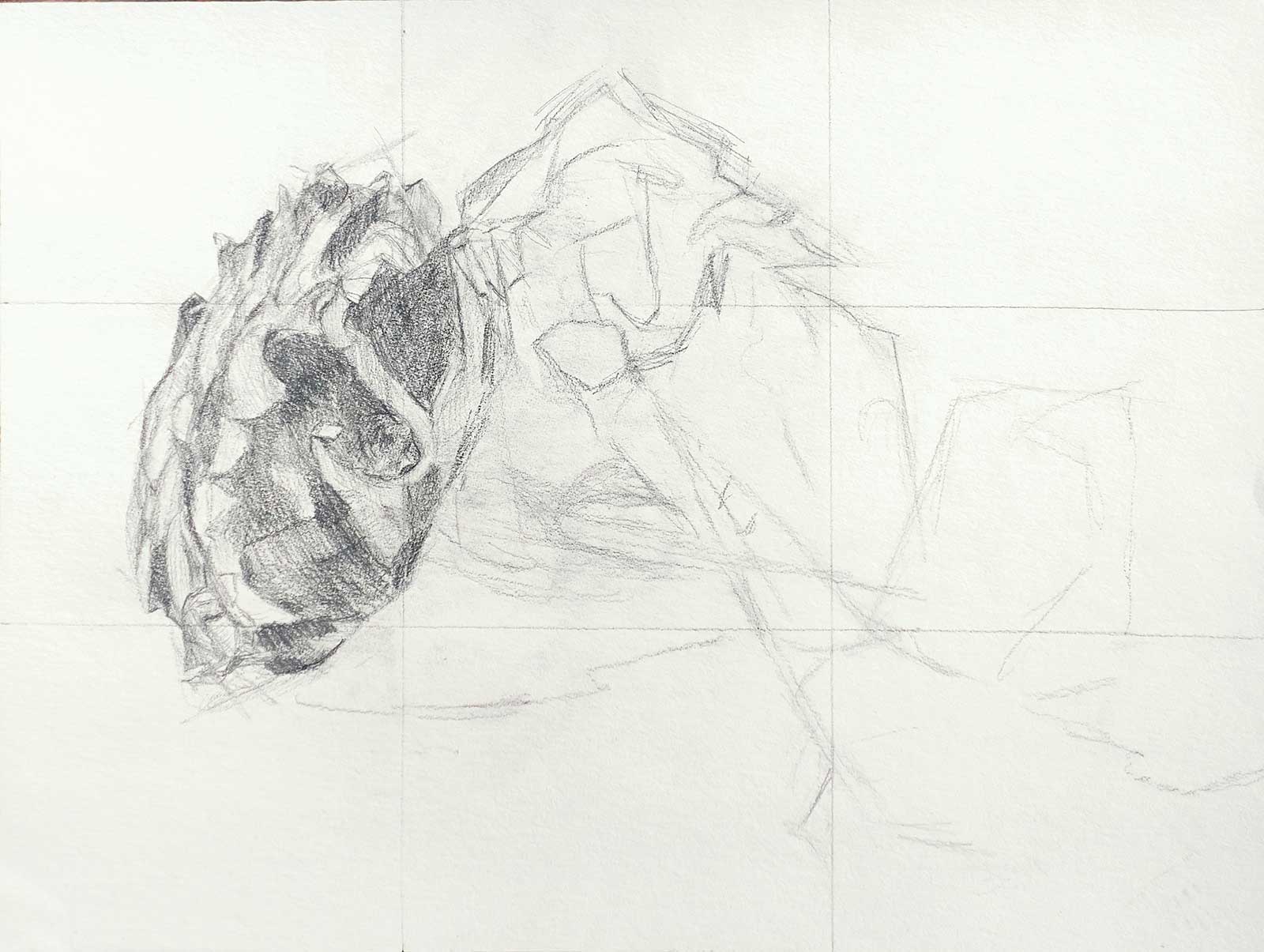
Stage 1
Stage 1 Sketching the Composition
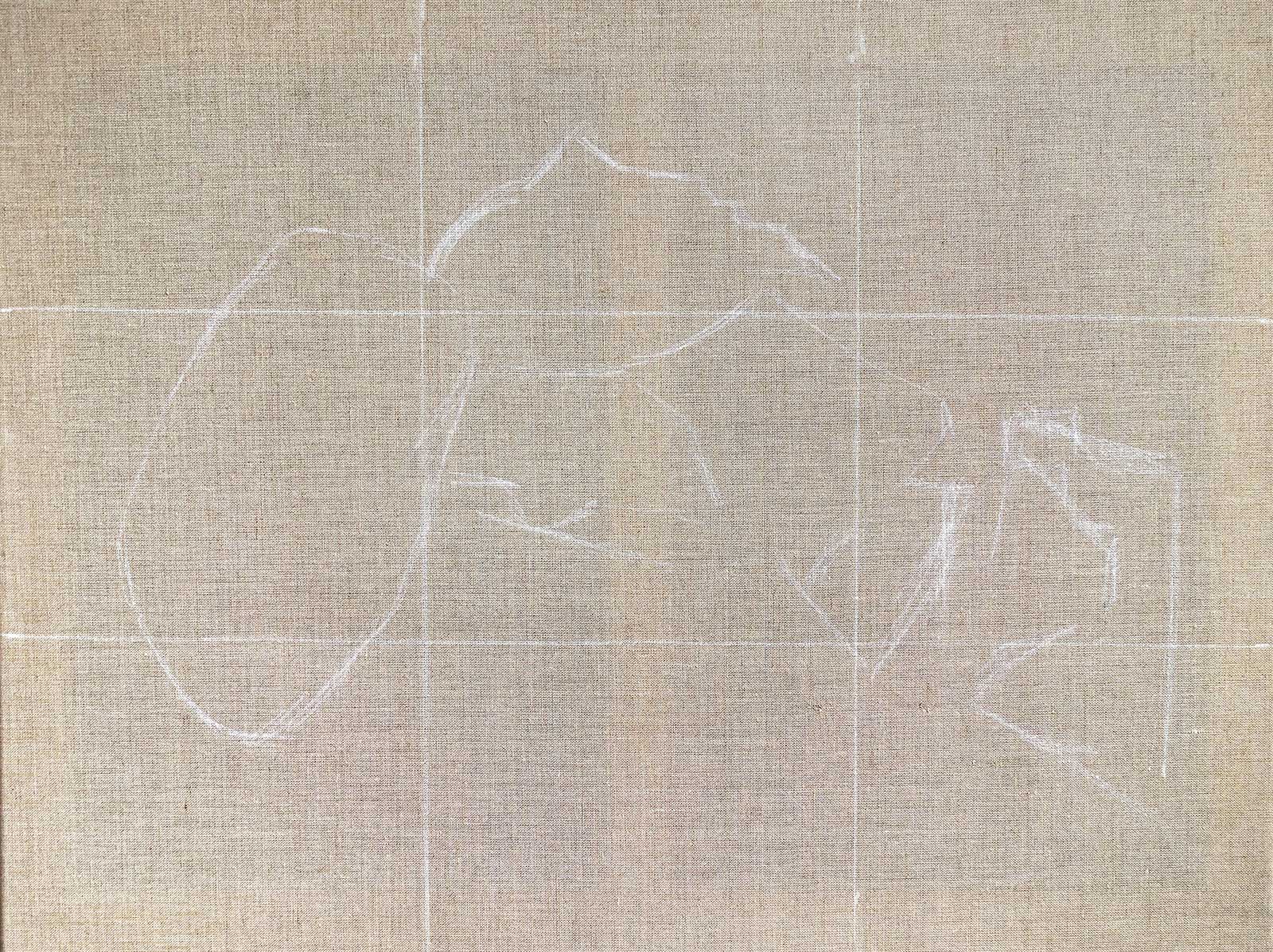
First I make a sketch of my composition of the two roses. I choose a white paper and draw the motif on the paper with a pencil. Then I divide the sketch into nine equal parts so that I can transfer the sketch to my canvas.
Stage 2
Stage 2 Transferring Sketch to Canvas
My canvas is made of 100 percent linen and measures 60 by 80 cm. I also divide the canvas into nine equal parts. Then I transfer the composition from step one onto the canvas with white chalk. The details are not important at this stage. What is important is that the perspective is right.
Stage 3
Stage 3 Drawing the Roses with Paint
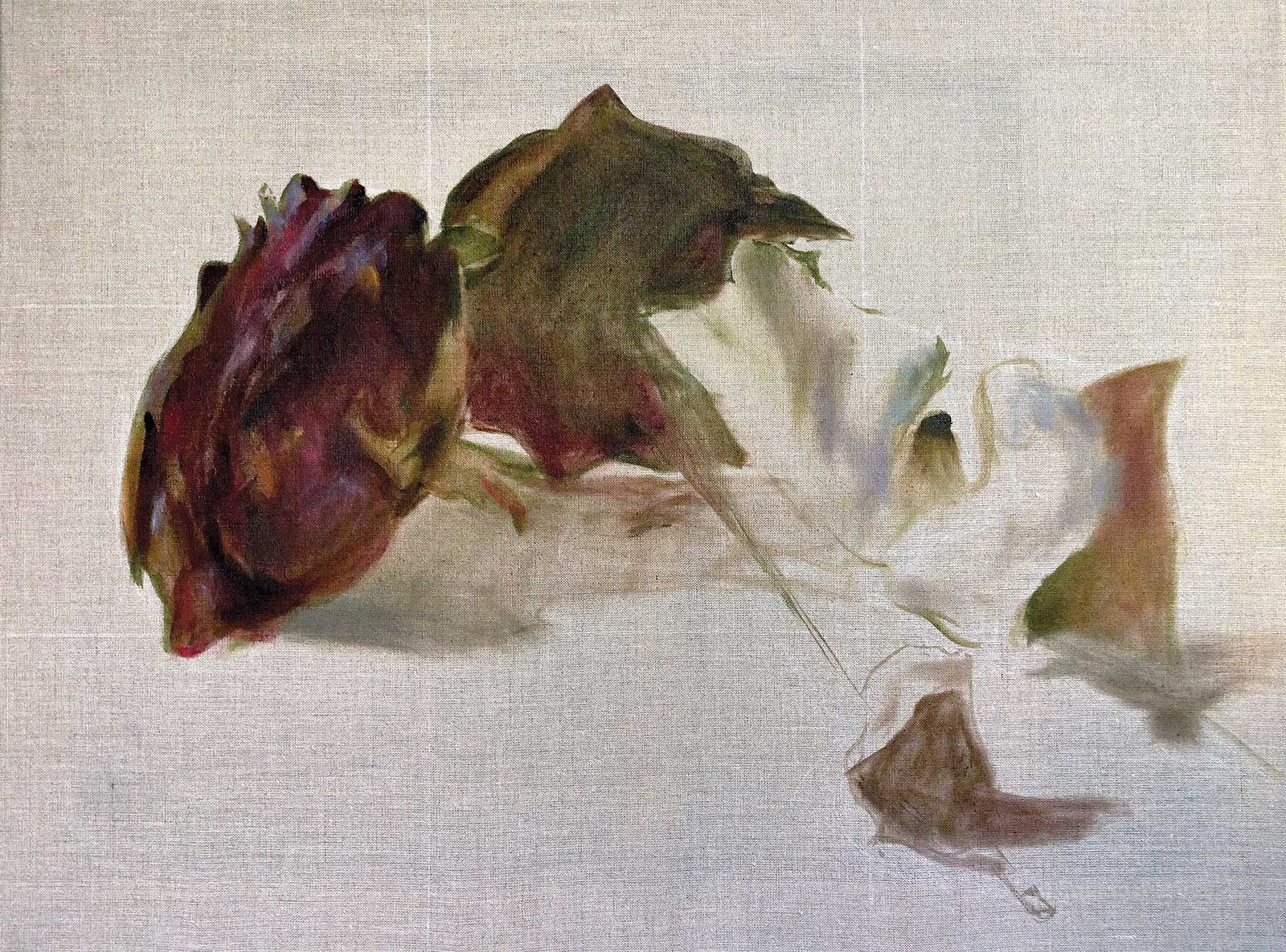
Now I detail and draw the roses on the canvas with paint. Shadows are created. Then I mix the colors I can see on the two roses and on the petals and apply them to the canvas.
Stage 4
Stage 4 Building Light and Shadow
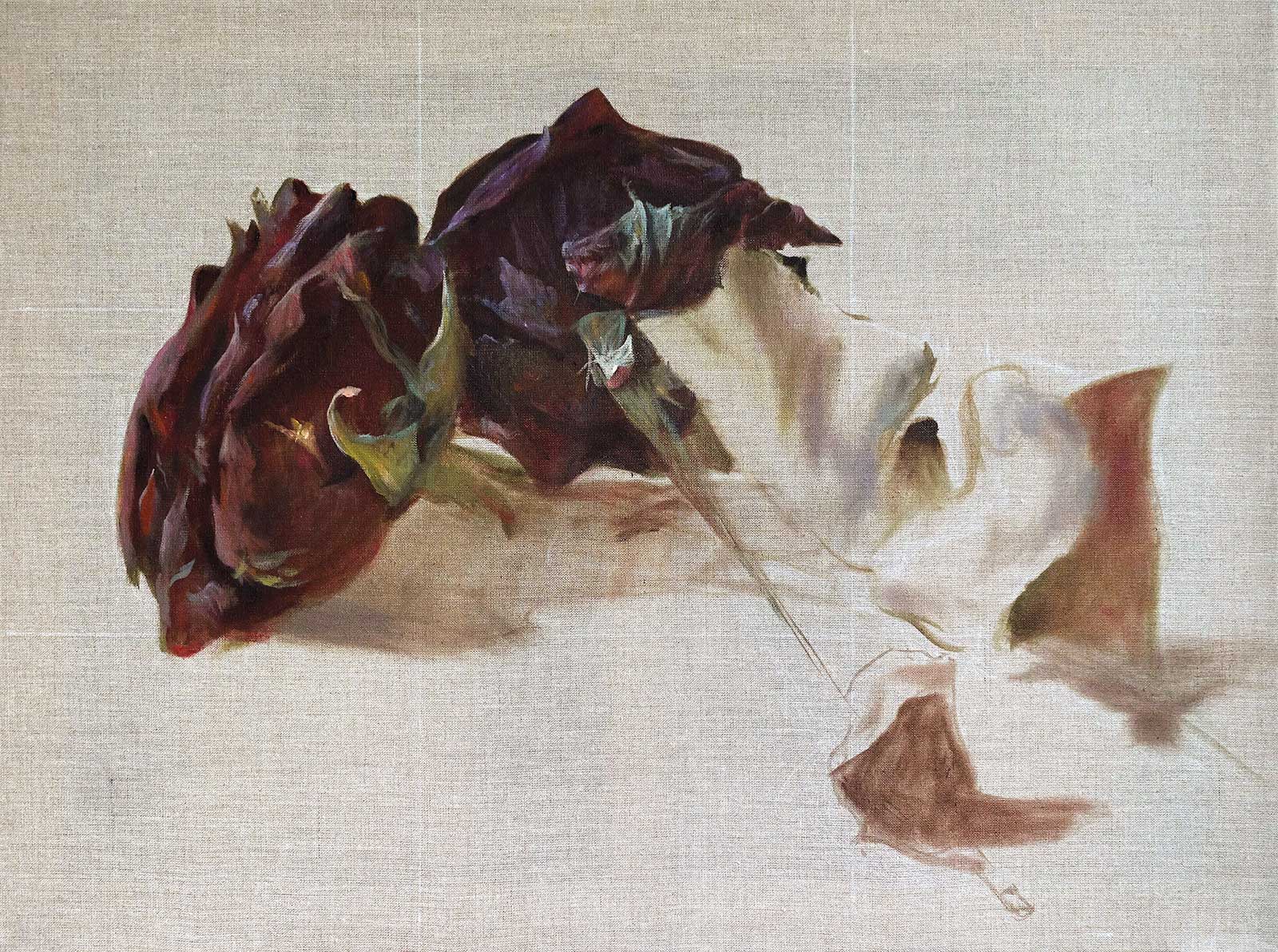
Light and shadow are now intensified. More attention is paid to details of the rose blossoms. The following aspects should now be observed more closely: darkness and light; warmth and cold; edges and borders; what direction of movement do the flowers, leaves and stems take; what is the shape and form of the flowers, leaves and stems; and whether they are flat or narrow.
Stage 5
Stage 5 Details in the Leaves
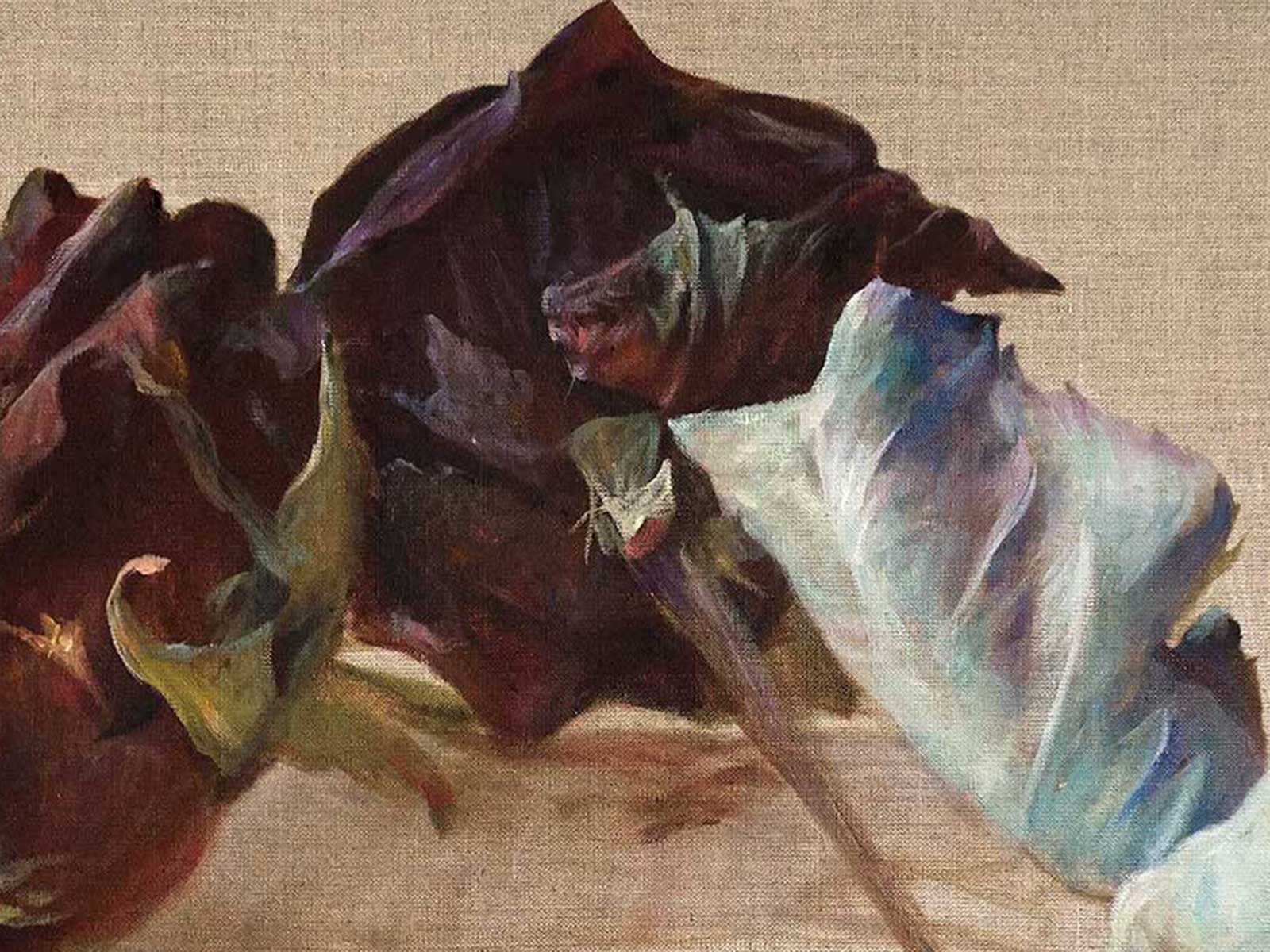
The leaves of the stem are now painted and detailed. In addition, the considerations from stage four are further implemented.
Stage 6
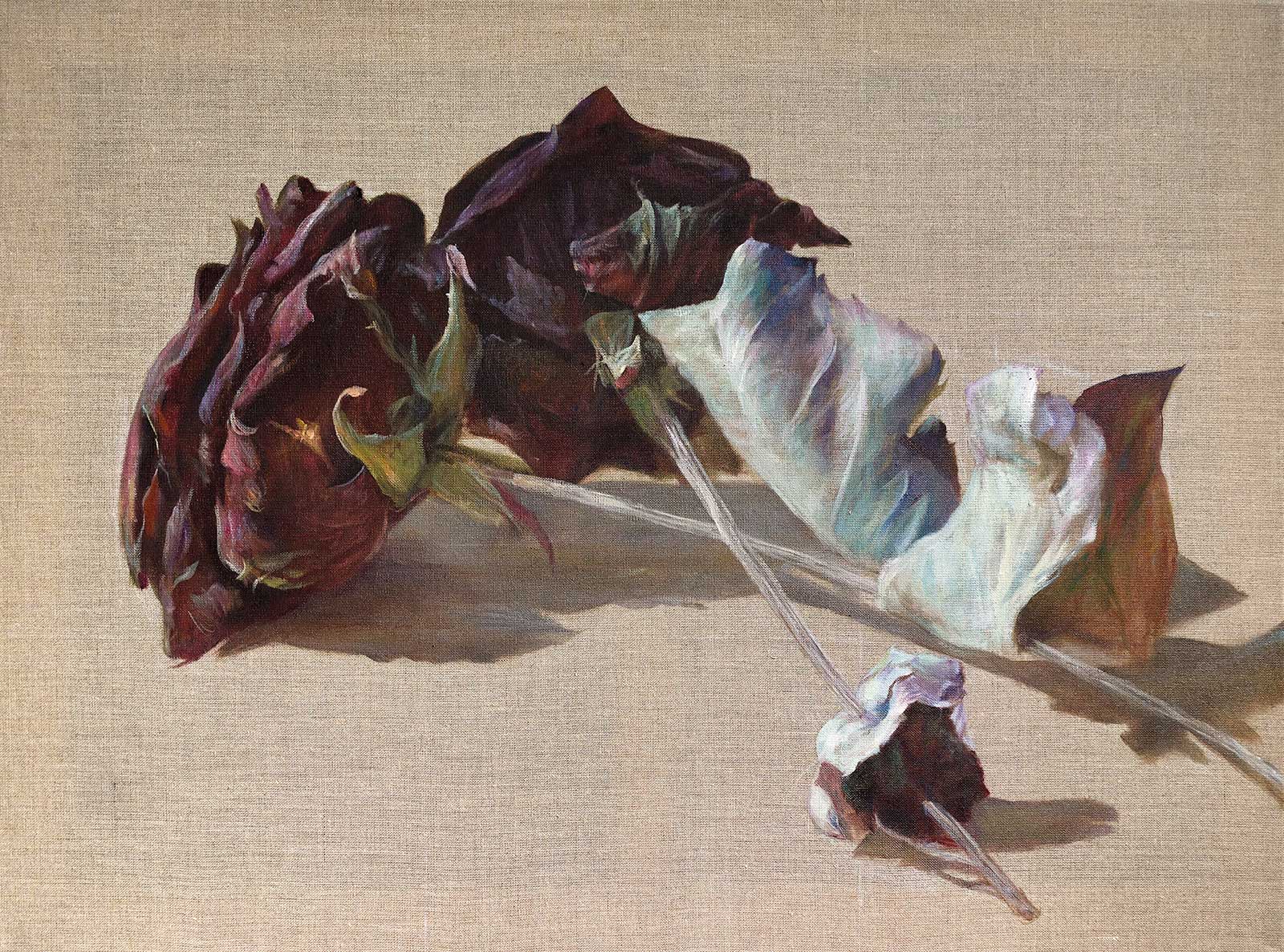
Stage 6 Fine Tuning
At this stage, I correct my painting, draw further comparisons to the plant and add to what I can see.
Stage 7
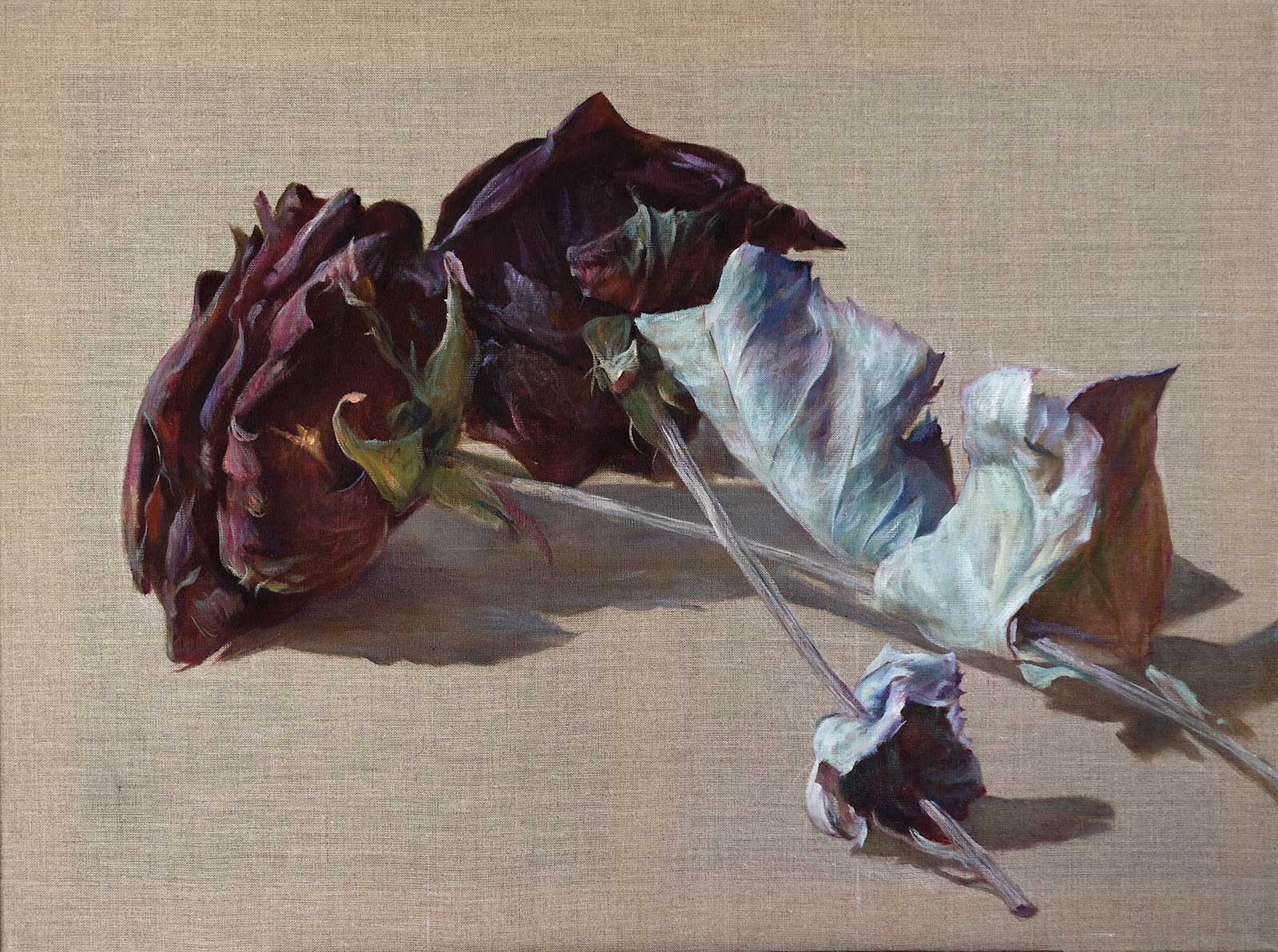
Stage 7 Finished Artwork
Dark red brilliance, oil on canvas, 23½ x 31½" (60 x 80 cm)
The painting is now being finalized. First I check the painting, then I make the last corrections and add highlights. Now the painting is finished.
About the artist
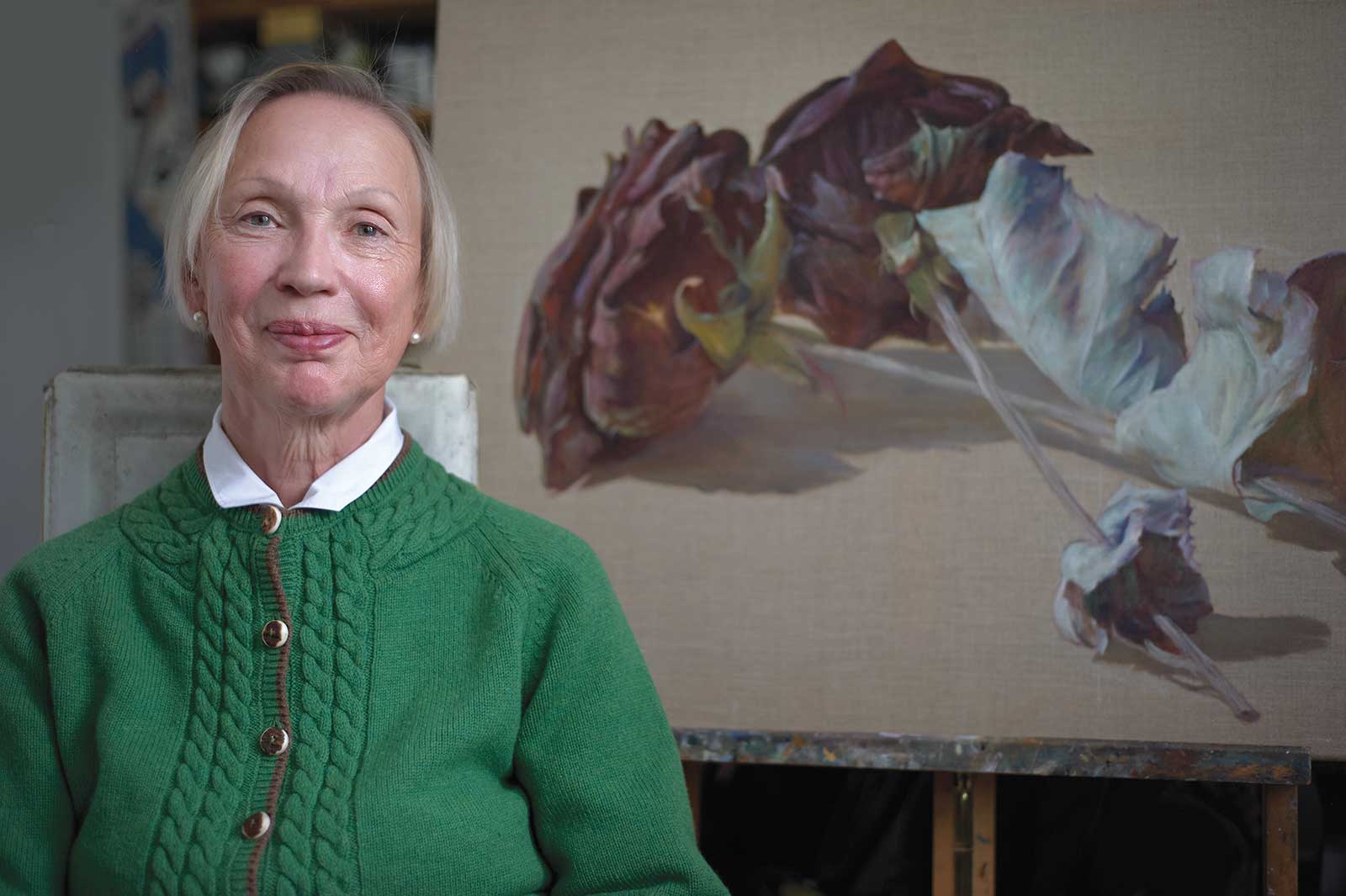 Marieluise Bantel
Marieluise Bantel is an artist from Germany who specializes in botanical painting. With her flower paintings, she does not only want to depict and reproduce, but to express a deeper reality and statement behind what is depicted. She studied art at the Freie Kunstschule Stuttgart - Academy of Art and Design.
She has received numerous awards for her artistic work and gets attention for her painting in international art magazines. Her paintings especially find favor with collectors and lovers of floral art. In Germany, she has had exhibitions in palaces and castles, including the Ludwigsburg Residential Palace. Last October she was represented at the Biennale in Florence, Italy. Most recently, she had the exhibition The Beauty of Decay at the Haus der Wirtschaft Baden-Württemberg. The building is part of the Baden-Württemberg Ministry of Economics, Labour and Tourism.
Contact at
contact@marieluise-barbara-bantel.de
www.marieluise-barbara-bantel.de/en