Kris Kringle. Babbo Natale. Saint Nick. Papa Noel. They all refer to the same man—Santa Claus, a beloved character who embodies a spirit of warmth and giving. And no doubt, many artists throughout history have painted their interpretations of the jolly man in the big red coat, from Haddon Sundblom’s iconic Coca-Cola illustrations, to Thomas Nast, Norman Rockwell and J.C. Leyendecker, to modern-day artist Tom Browning’s depictions of Santa enjoying everyday life.
That cheerful countenance, those bright rosy cheeks, the classic bobble-topped stocking hat—we all have our own visions of Santa nestled in our imaginations. In this issue, artist and regular International Artist contributor James Gurney recalls his experience capturing the aura and personality of this much-loved figure.
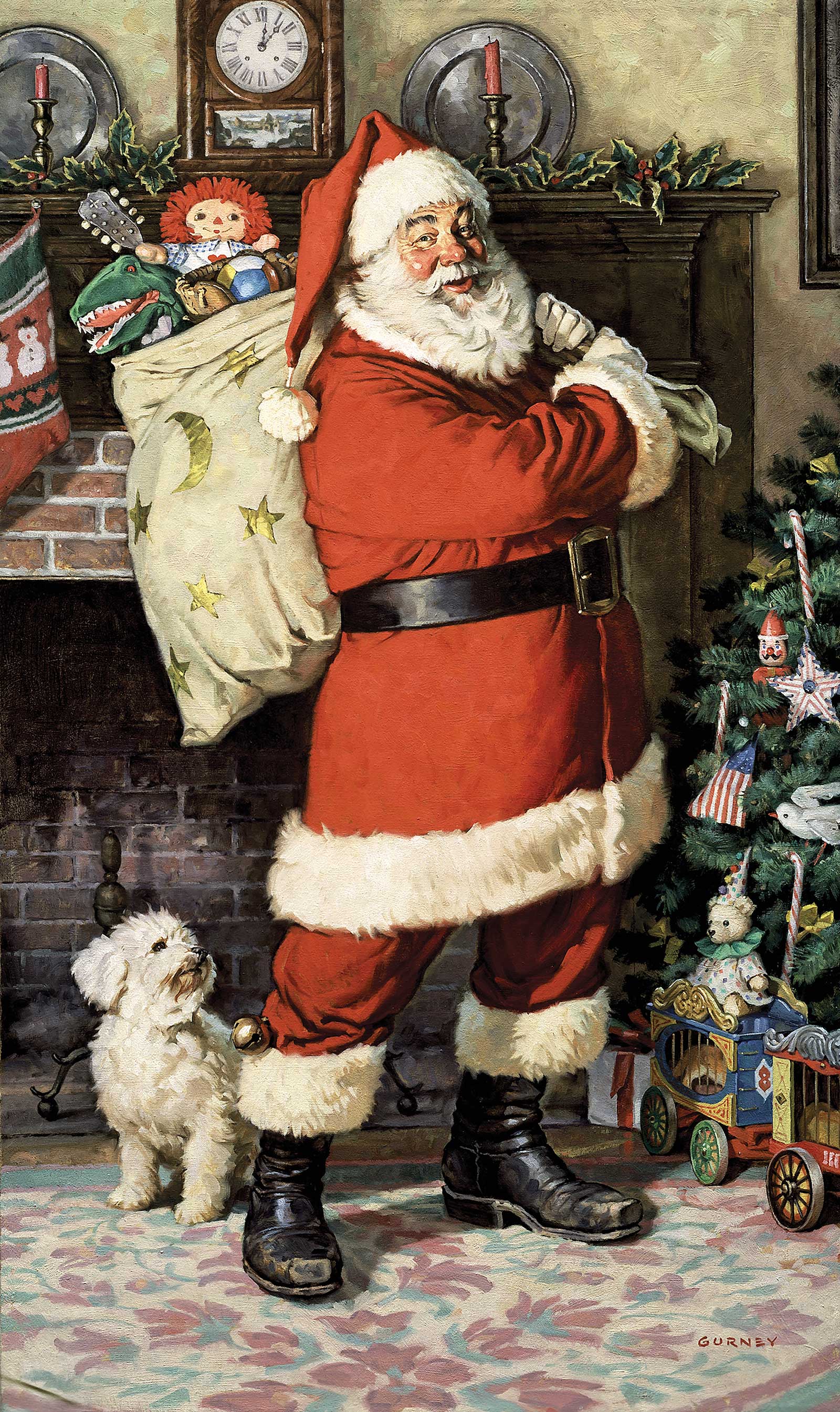
James Gurney, Santa Claus, 1993, oil on linen, 35 x 24" (88 x 60 cm)
Think of it: the best known man in America, making an appearance in your living room every year. He keeps his appointment cheerfully, as he has for as long as anyone can remember. Why is Santa such an enduring image in our hearts? Maybe he’s just the unlikely hero we need in our age of low cholesterol foods and body toning gyms. He is the role model for those of us who are getting a little rounder, losing a little hair and racking up years faster than those numbers on the gas pump. His doctor might say, “Really, Santa, a man your age shouldn’t be carrying such a heavy sack unless you slim down a bit. And those hours you’ve been working! If you want to keep that delivery job, can’t you at least get holidays off?”
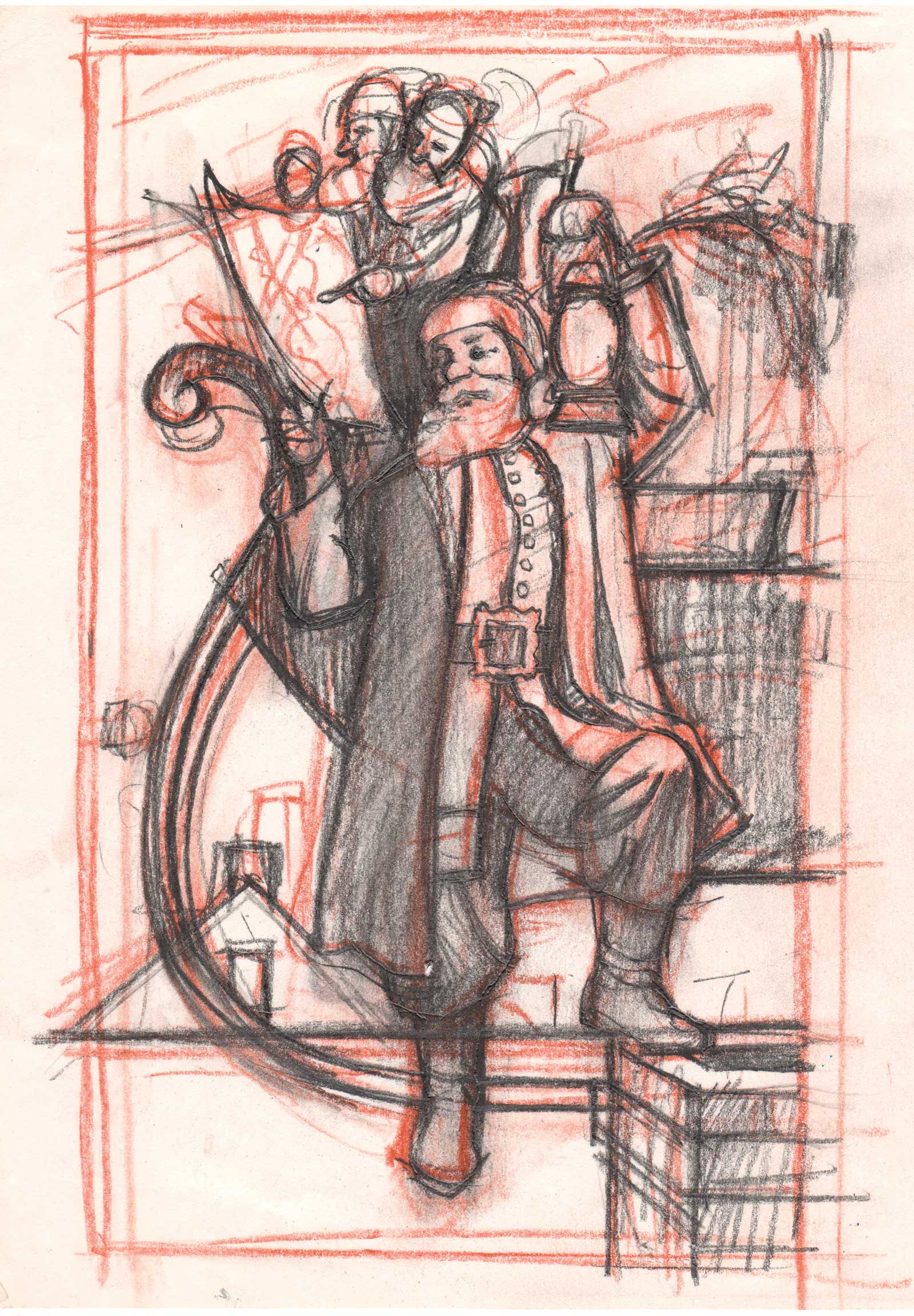
One of Gurney’s concept sketches for his Santa Claus painting.
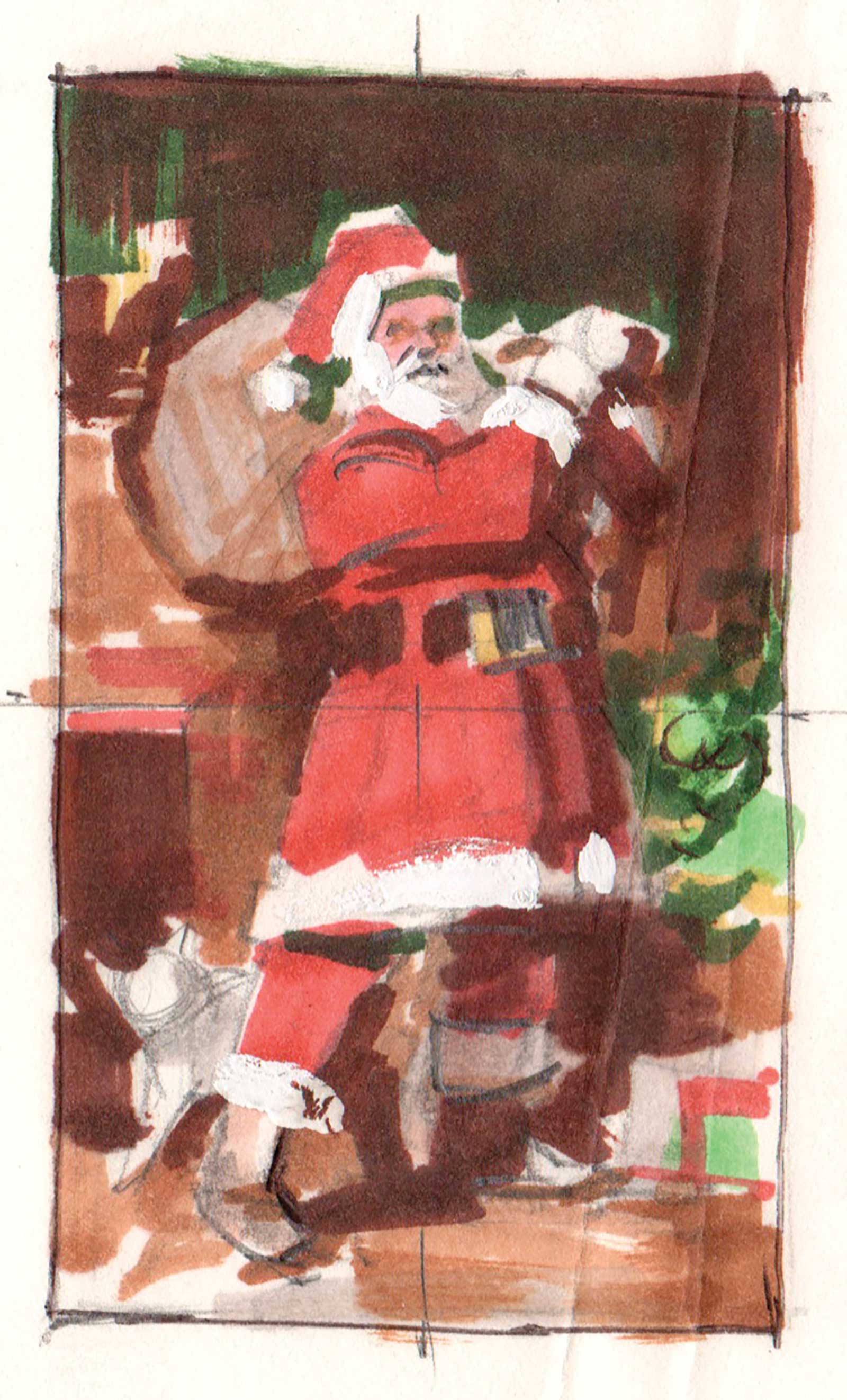
A study for the final painting, blocking in major shapes and colors.
Santa Claus is, without question, the most beloved character that has sprung from our collective imagination. Although Santa Claus has a long history with many different variations in the legend, the modern image we have of him is largely the work of three American artists: Thomas Nast, Norman Rockwell and Haddon Sundblom, who painted the famous Coca-Cola Santas.
Surprisingly, none of these artists ever painted Santa in the classic pose that, to me at least, is the definitive scene we all have in our minds: Santa with the bag of gifts over his shoulder, having just arrived down the chimney. My goal with this painting was to pay homage to all three of the great Santa painters of the past in the way I treated the character. I gave him a sturdy stance and a cheery smile, all painted with bold brushwork.
I made sure to include all the little bits of storytelling: the clock showing a few minutes past midnight, the 19th-century hearth with holly and candles, the decorated tree, the sack with stars and moons, and of course the little dog, who isn’t sure whether to nip his heels or wait for a treat. Dinotopia collectors will also notice the dinosaur puppet and the image of Waterfall City on the clock.
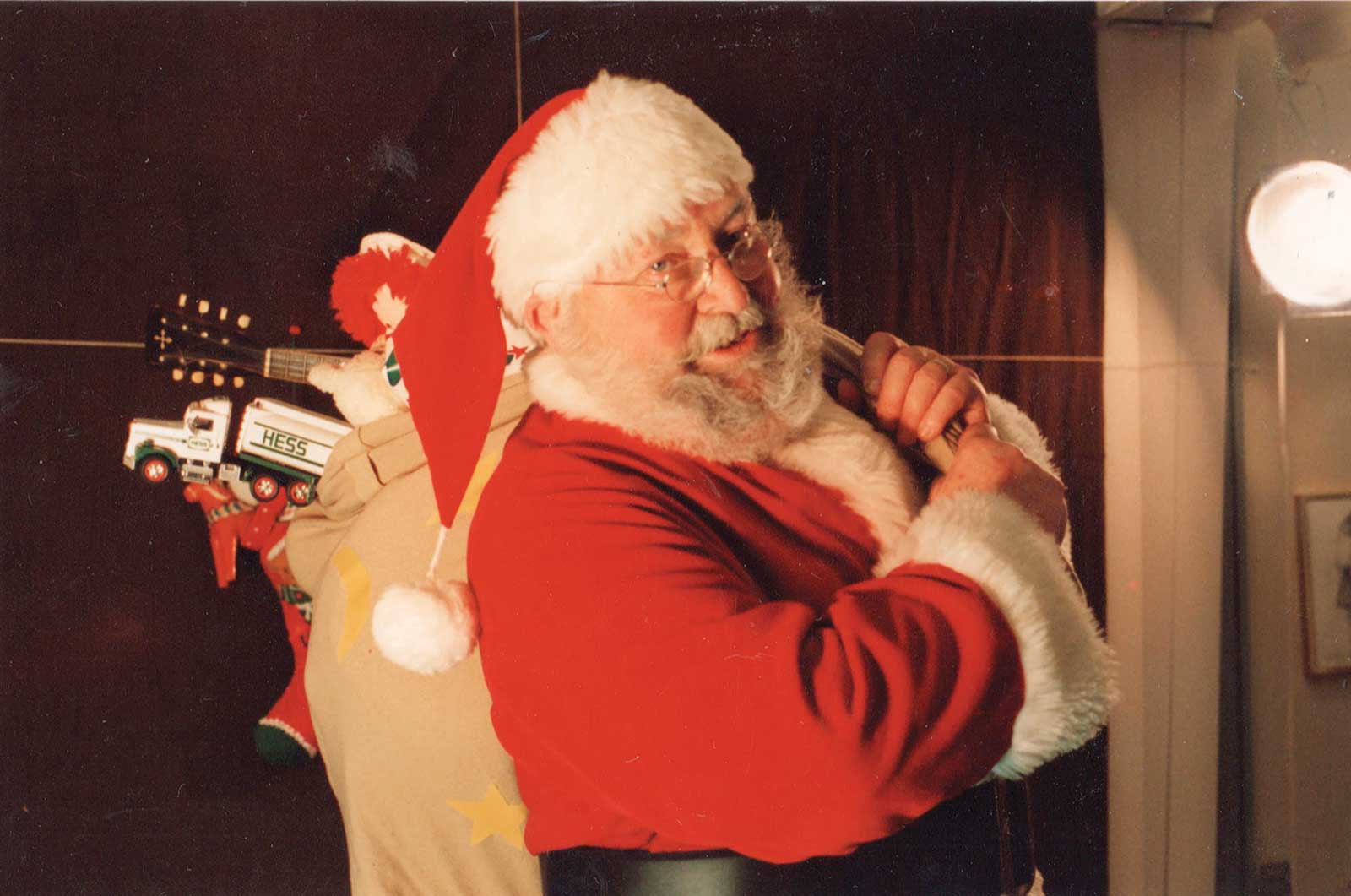
Harry posing as Santa Claus.
In the little village where I live in upstate New York, the tradition of Santa Claus is alive and well. If you stop in at the local hardware store in December, you’ll find an electric train layout winding its way through a group of motorized elves near the snow shovel display. Beyond that is a raised platform where Harry, a retired police officer, sits near a teenager in a green suit holding a digital camera.
Harry is Santa Claus. He has no need for a polyester beard or a pillow over his stomach. People call him Santa even when he’s not in the suit. He already knows the kids’ names and what they want and whether they’ve been good. So imagine the amazement of my two young sons, Dan and Franklin, when Harry arrived on a snowy night to pose for his portrait. He appeared in costume and stayed in character the whole time. Dan kept bringing him cookies. And I had to address him properly: “Move your right foot forward, would you please, Santa?”
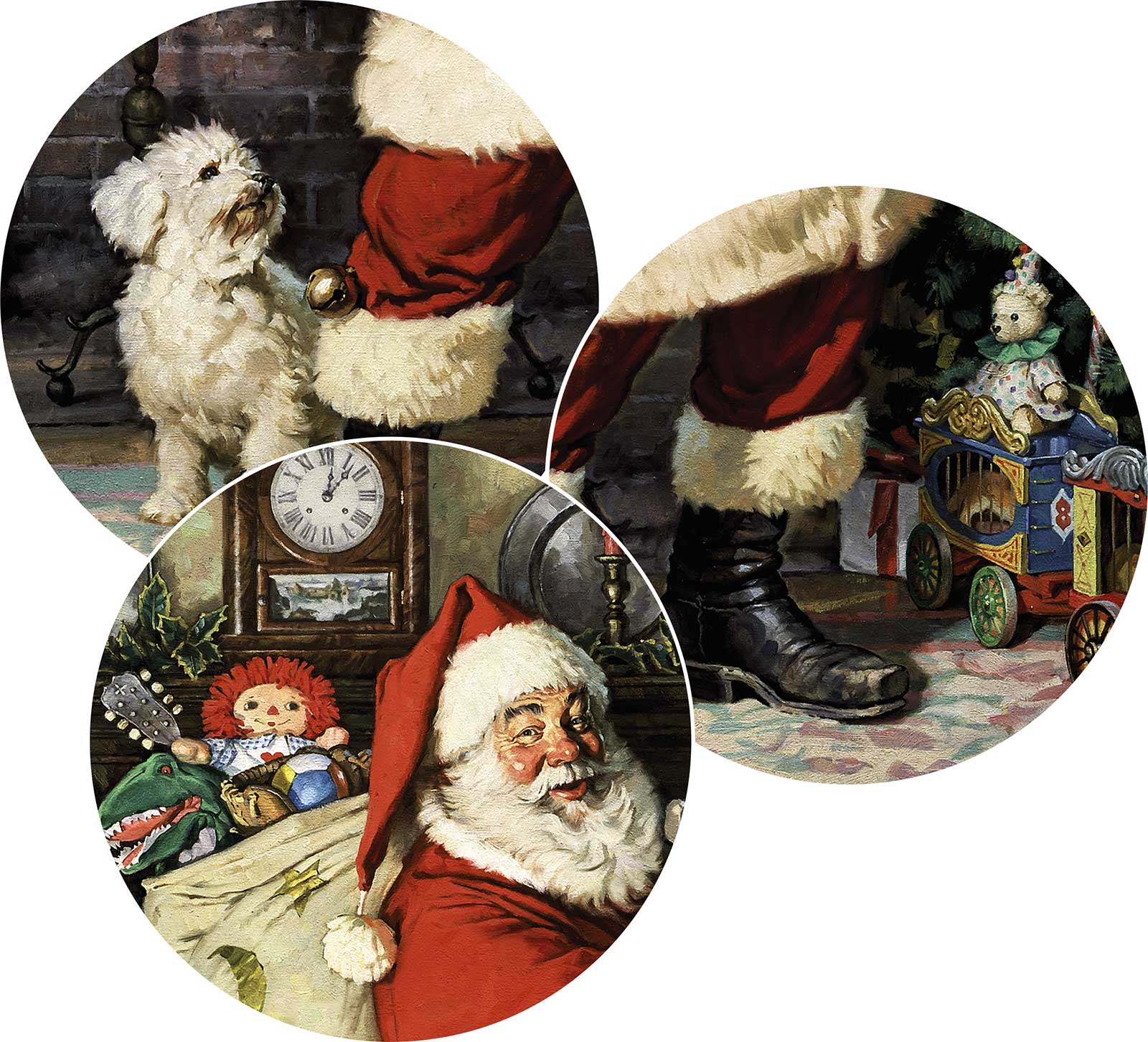
James Gurney, Santa Claus (details), 1993, oil on linen, 35 x 24" (88 x 60 cm)
I also needed to determine the setting in which I would place him. At first I had planned to show him on the rooftop, and I tried some sketches with him at the North Pole. The entire experience was uncanny. After the posing session, I was really convinced that I had been looking at the actual guy from the North Pole. The next day, Dan was telling his nursery school class, “Santa came to my dad’s studio, and my dad was telling him what to do!”
Eventually, I settled on a scene in front of a decorated hearth. I went around town on a scouting expedition with my camera. I found a brick hearth at the old inn in town. The mantle clock came from an antique store. The tree and the Steiff train came from the house of a friend who collects antique Christmas decorations. Another friend had the hearth rug and the white dog.
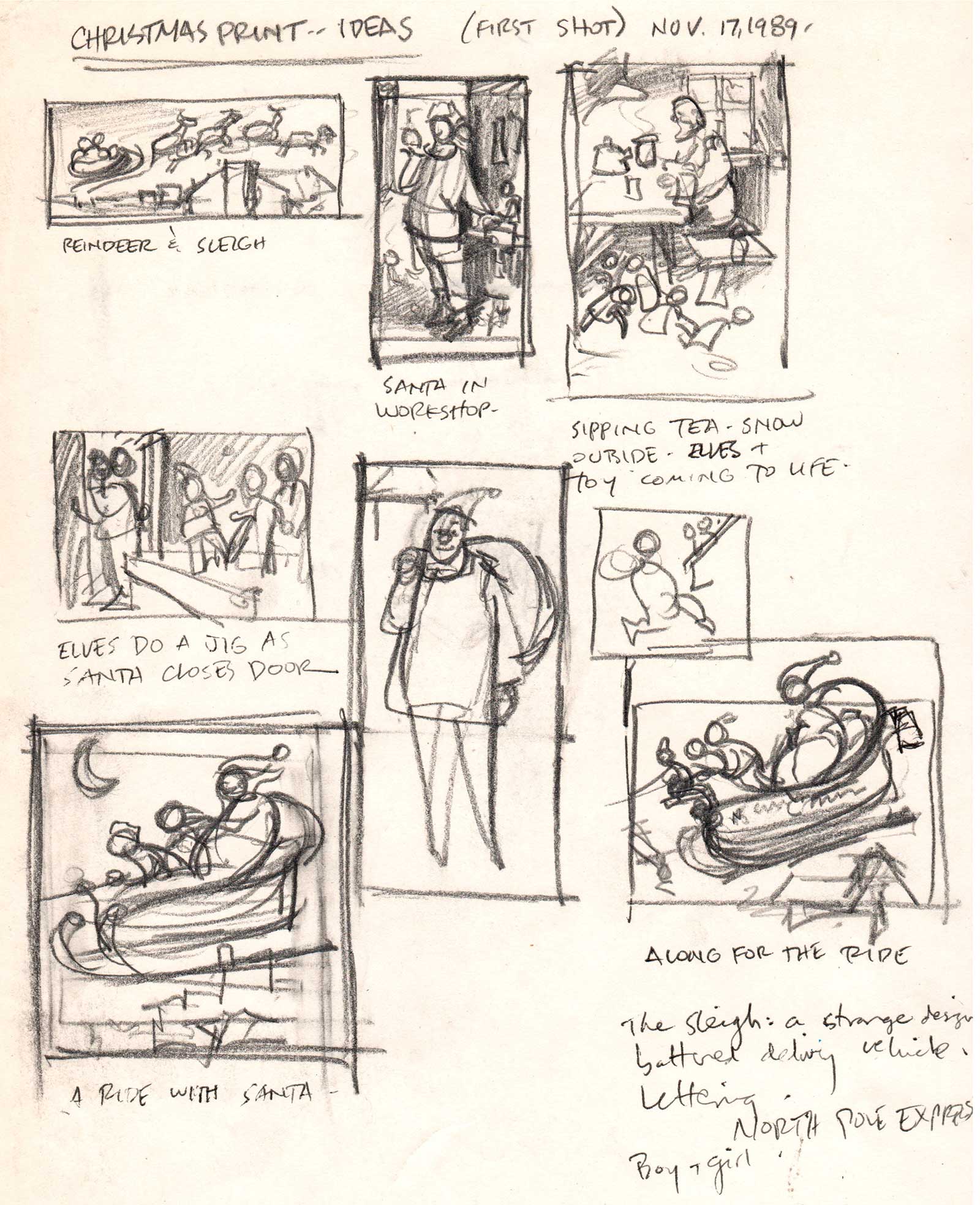
A series of thumbnails detailing Gurney’s various ideas for a Santa painting from several years earlier.
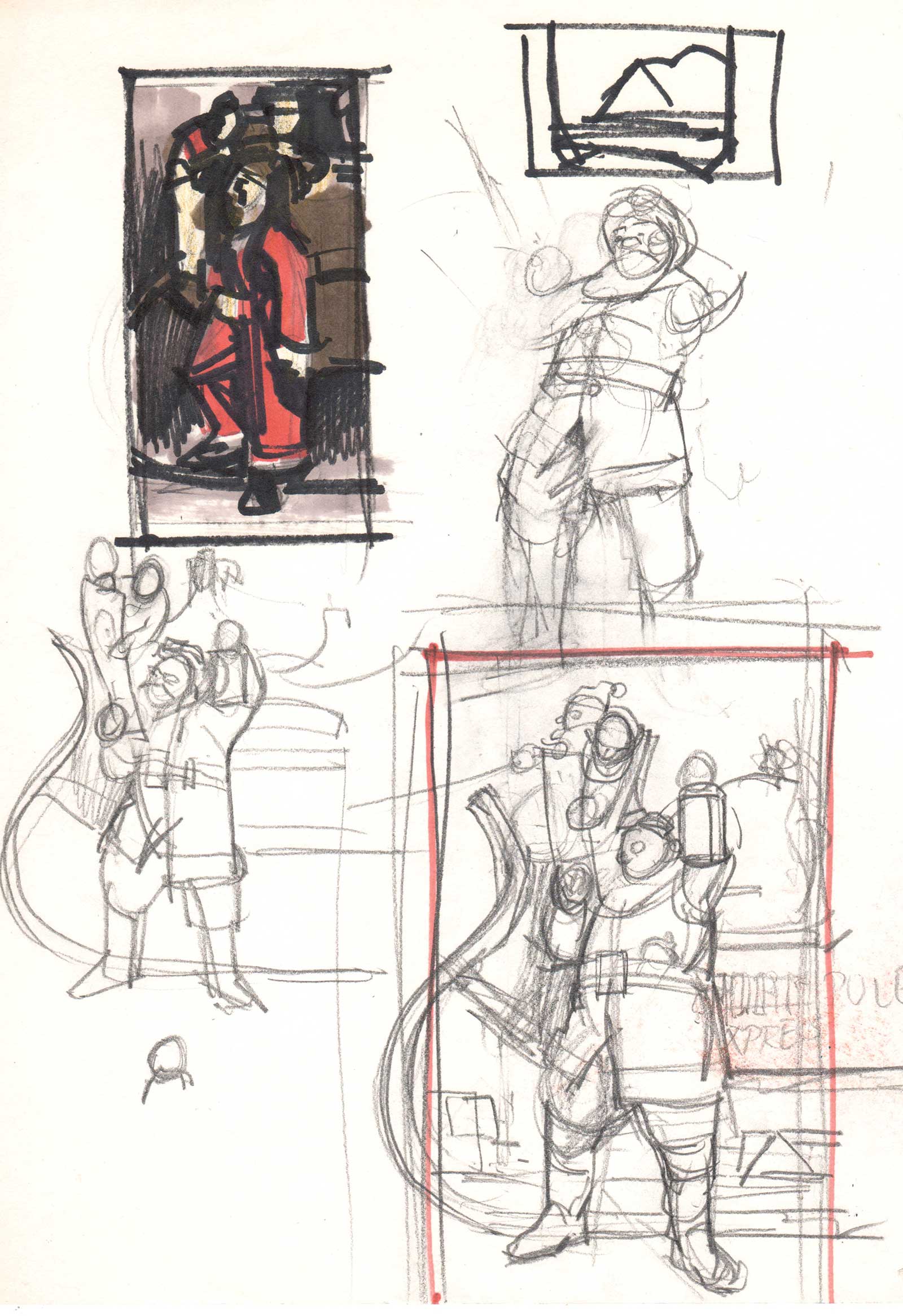
Gestural sketches experimenting with poses.
Once I had established the lighting on the pose, I kept the same lighting on the props, bringing a portable light with me on the remote photoshoots. I also brought a ruler to photograph beside each of the props so that later I could composite them together in an accurate scale. Back in the studio, I juggled all these elements in different combinations in revised thumbnail sketches that ultimately culminated in the finished piece.
Why did I want to paint this picture? Mainly, it was a gift for my two boys, both to help them etch the image in their minds, and to pay tribute to their willingness to believe. I also offer it to other kids who believe, and to the rest of us who need a chubby champion to remind us that goodness and generosity are always around us. —
About the Artist
 James Gurney
James Gurney is the author of such publications as Color and Light: A Guide for the Realist Painter and the Dinotopia series. His book Imaginative Realism details the behind-the-scenes methods that he uses to paint realistic scenes of imaginary subjects. The book is available in Chinese, Korean, Japanese and Spanish.
Contact at
www.jamesgurney.com