My work is shared equally between the studio and the outdoors. When working in the studio, of course, I always use reference photographs that I have previously studied and that I use with photo retouching programs. Outdoors I work on the subject directly, but I also rely on an image I’ve taken, which allows me to establish the composition and fix the lights and shadows that will inevitably change throughout the working session. In most cases, the works I do outdoors are during quick “painting competitions” (as they are called in Spain).
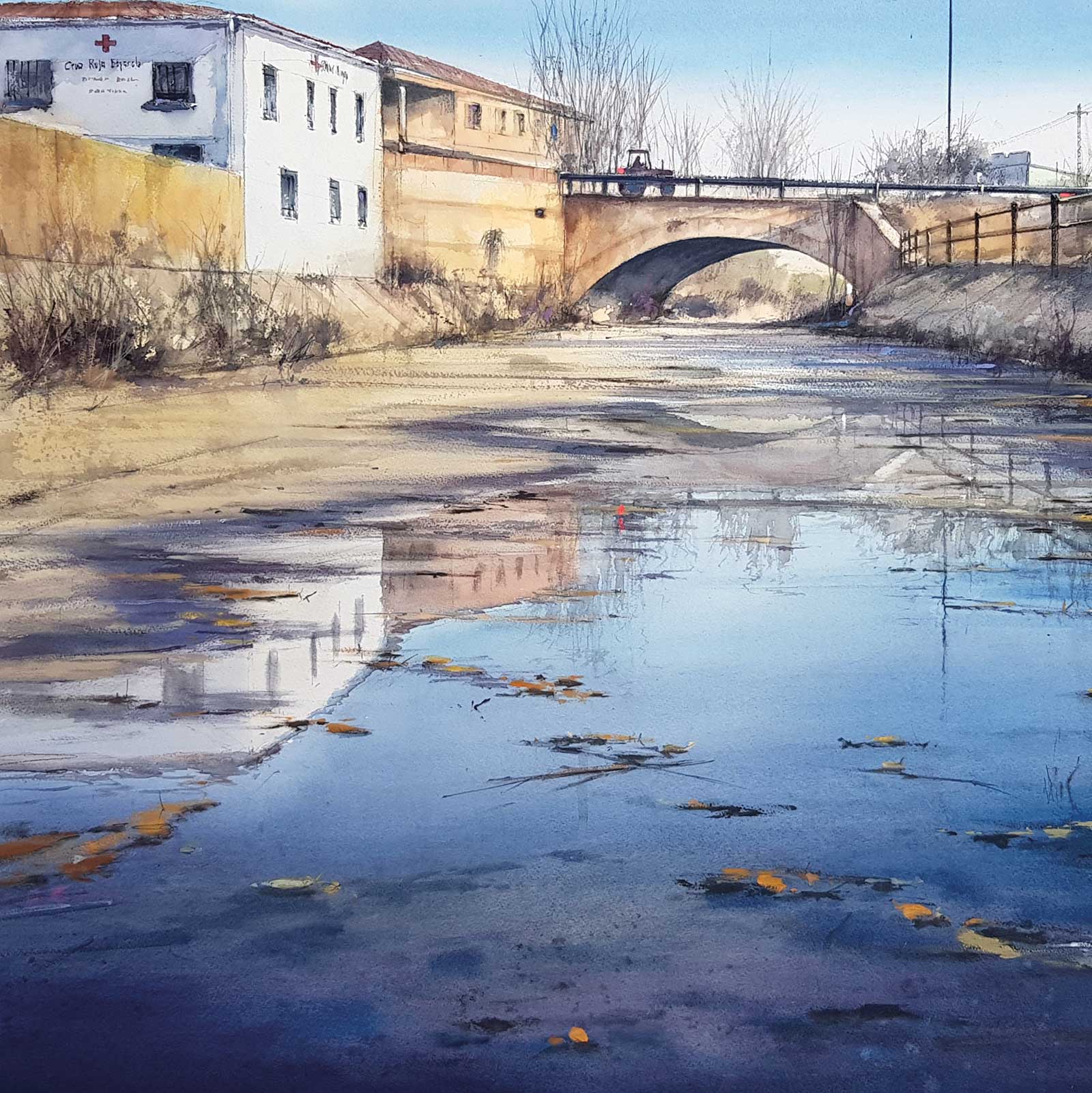
Motilla del Palancar, watercolor, 39 x 39" (100 x 100 cm) In recent years, most of the Spanish rivers are almost dry during the summer, so I had to paint only a few puddles in the riverbed. Any kind of water is perfect for plein air work.
I like that water is the undisputed protagonist of the landscape. For that, I lower the horizon line with a point of view almost at the level of the pond or the river that I am going to paint. With this method, the perspective lines at both ends are more open and the feeling of space is greater. The more space we devote to water, the more we can use multiple remedies as well as reflections.
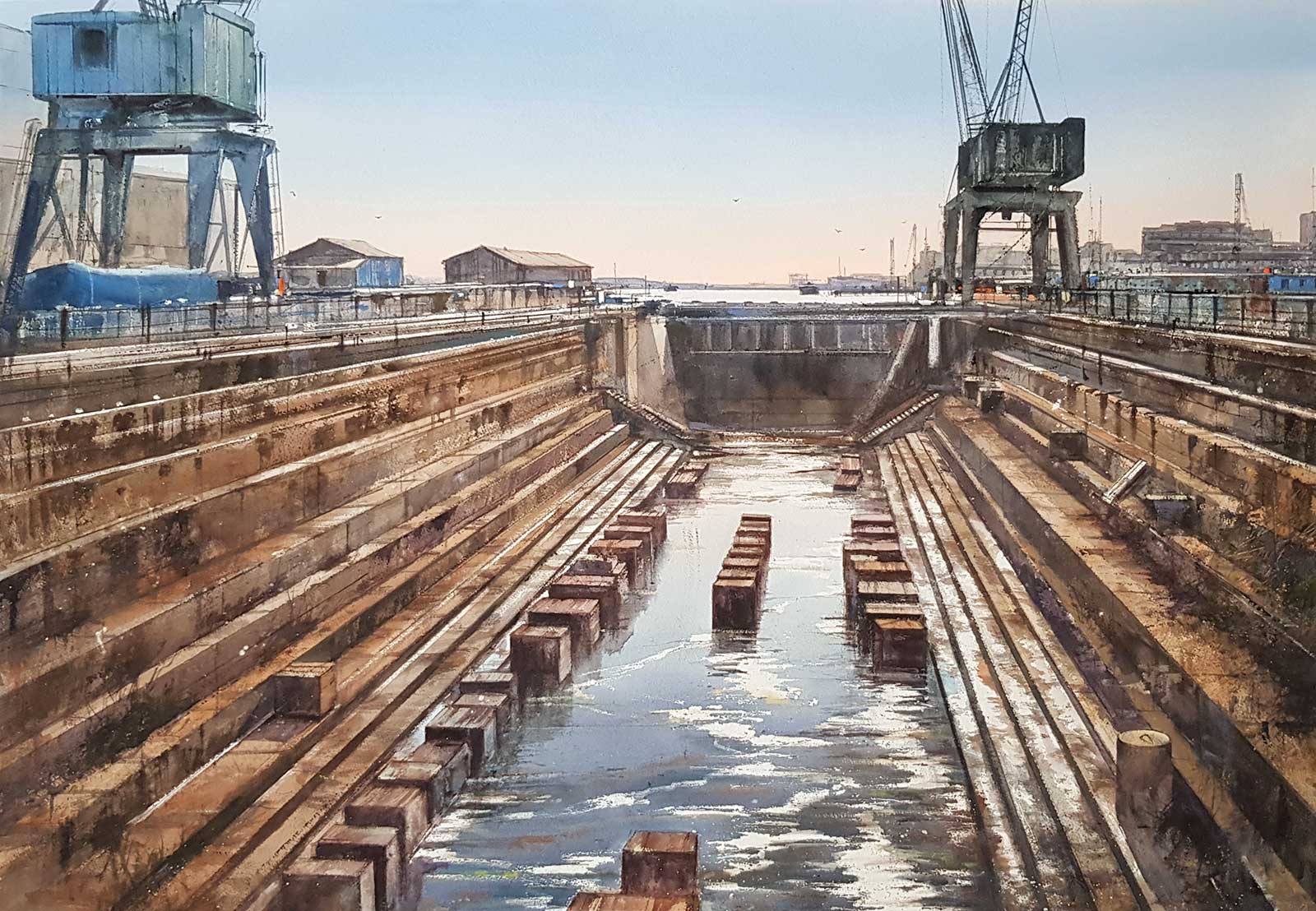
Charlestown, Boston, watercolor, 27½ x 39" (70 x 100 cm) I love industrial scapes with plenty of cranes and structures. This view is not the most beautiful of Boston, but I loved the dry dock the moment I saw it. In this case, this painting was done in the studio.
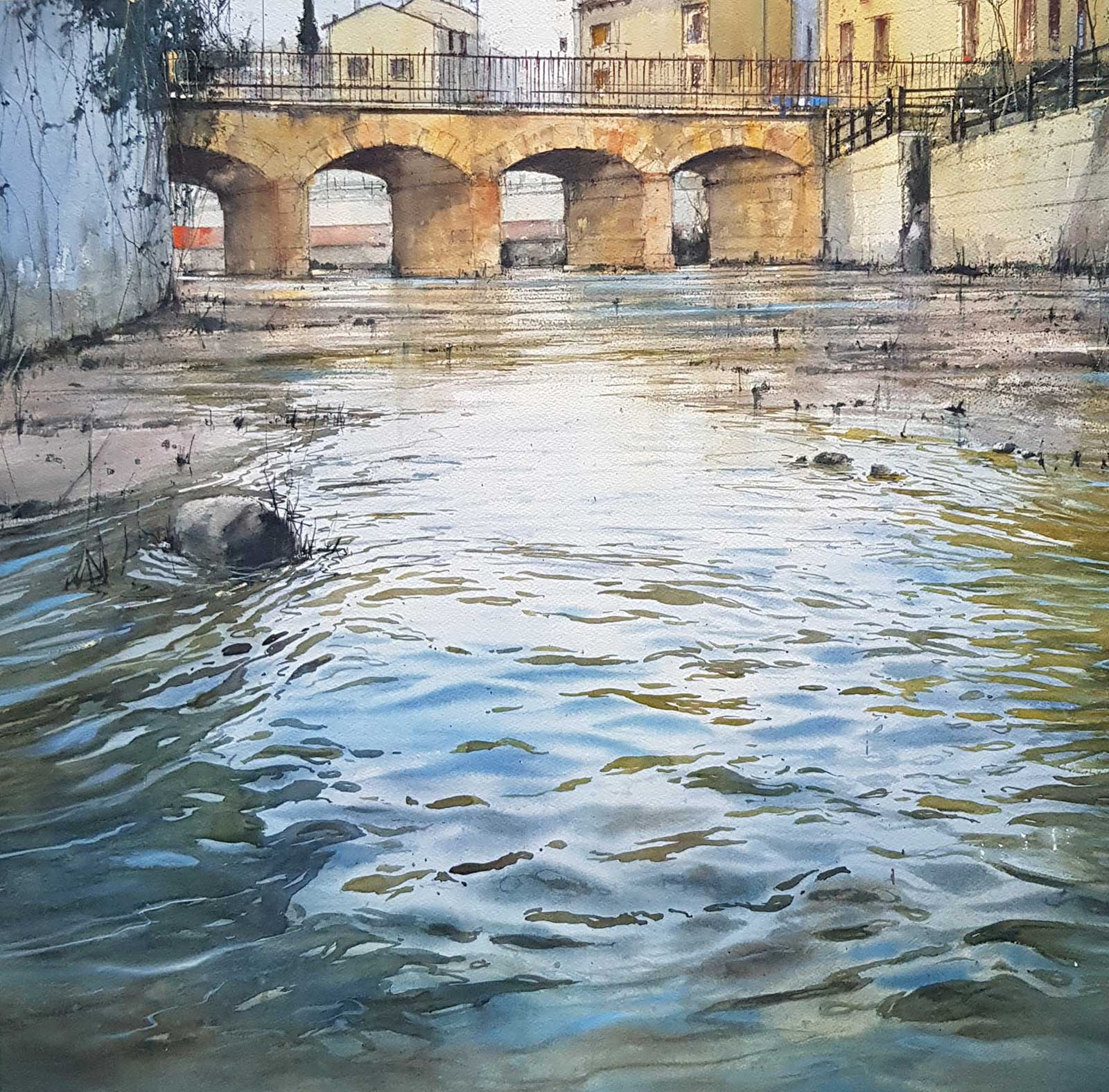
Alcorisa, watercolor, 39 x 39" (100 x 100 cm) When I arrived in this town to join in a plein air competition in the month of January, the temperature was -5 ºC, one of the coldest days I have ever had during my plein air contests. I was able to finish the watercolor and also won first prize.
After 20 years dedicated to professional painting, I have tried and changed my palette colors numerous times as my style and technique has evolved. Eventually I reduced them to a selection of only ten, which are currently available on the Daniel Smith brand set: opera rose, medium hansa yellow, pyrrole red, transparent oxide red, sepia, indigo, French ultramarine, cerulean blue chrome, lavender and phthalocyanine green. With this selection, I can capture the atmosphere and the feeling of reality in any landscape. I also use titanium white for the highlights and the small final details.
My Art in the Making Linares
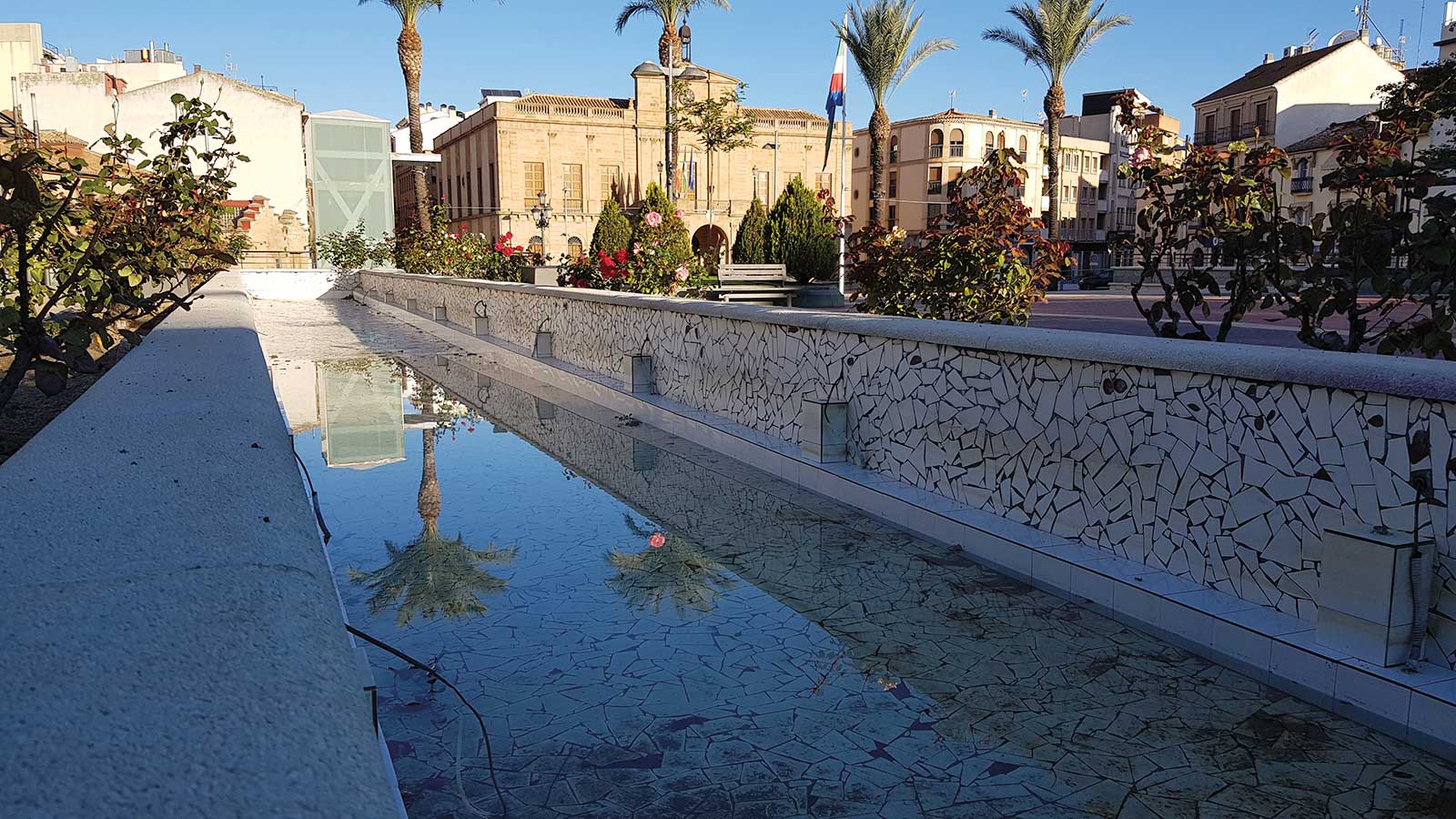 Photo reference
Spain is the country where the most speed painting competitions in the world are held, due to the great tradition that exists and the good weather. I have been participating in this type of competition for 25 years, and it has become an indispensable part of my profession. During the year I participate in about 30 outdoor painting competitions, and this work corresponds to one of the last in 2021, in the city of Linares, Jaén, Andalusia. On this occasion I chose the main square of the town using the fountain as the main compositional element. Besides enjoying painting in the open air, I won the first prize in the contest where more than 50 artists participated.
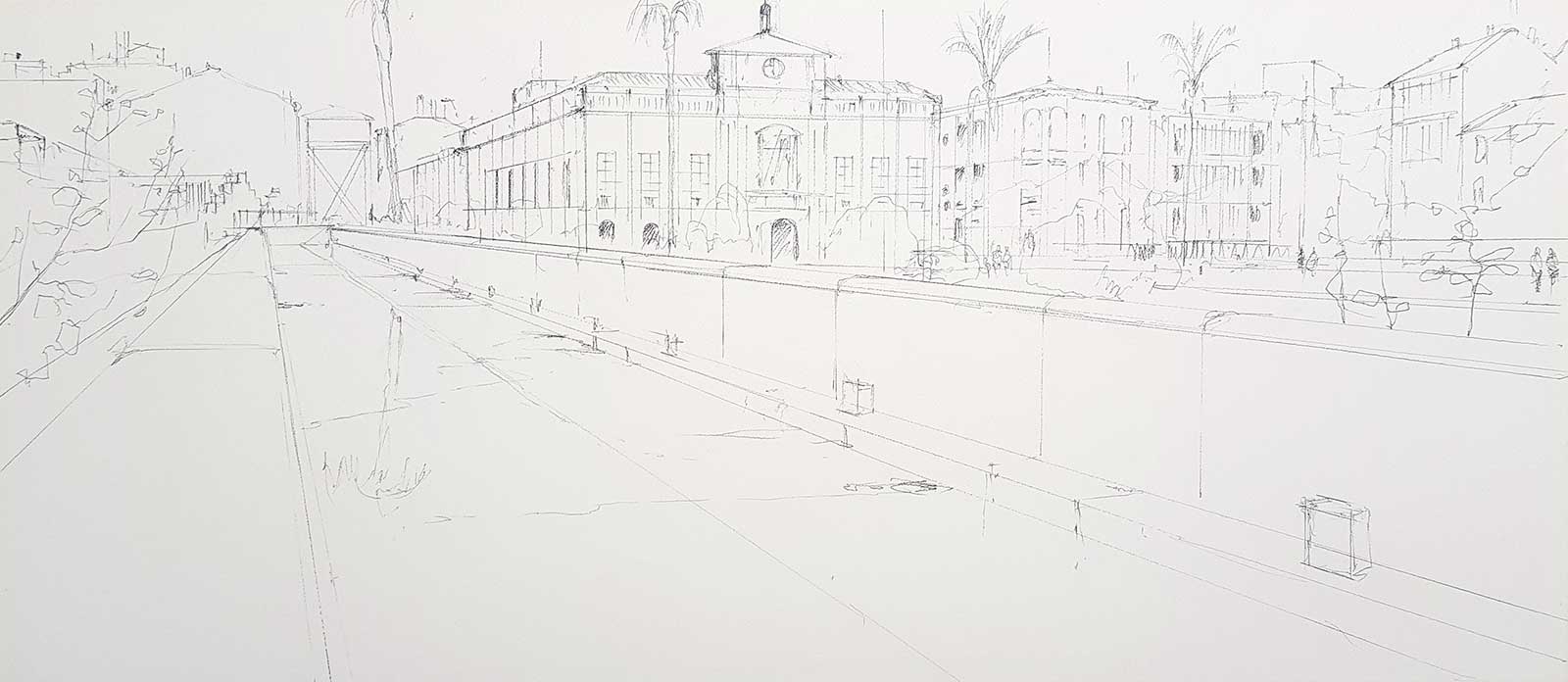 Stage 1
Stage 1 Establishing Perspective
The drawing is precise in terms of structure, but not detailed, to give the work more ease. I always start my watercolors with a precise drawing, in which I often work for up to an hour if the subject is urban passages, like this one. All lines in the composition are directed to a vanishing point that is at the end of the fountain. The rest of the facades are positioned almost frontally to the viewer, so they would hardly have perspective. The drawing is precise in terms of structure, but again, not too detailed. The drawing is made with a 1-millimeter-thick pencil and 2B hardness.
WHAT THE ARTIST USED
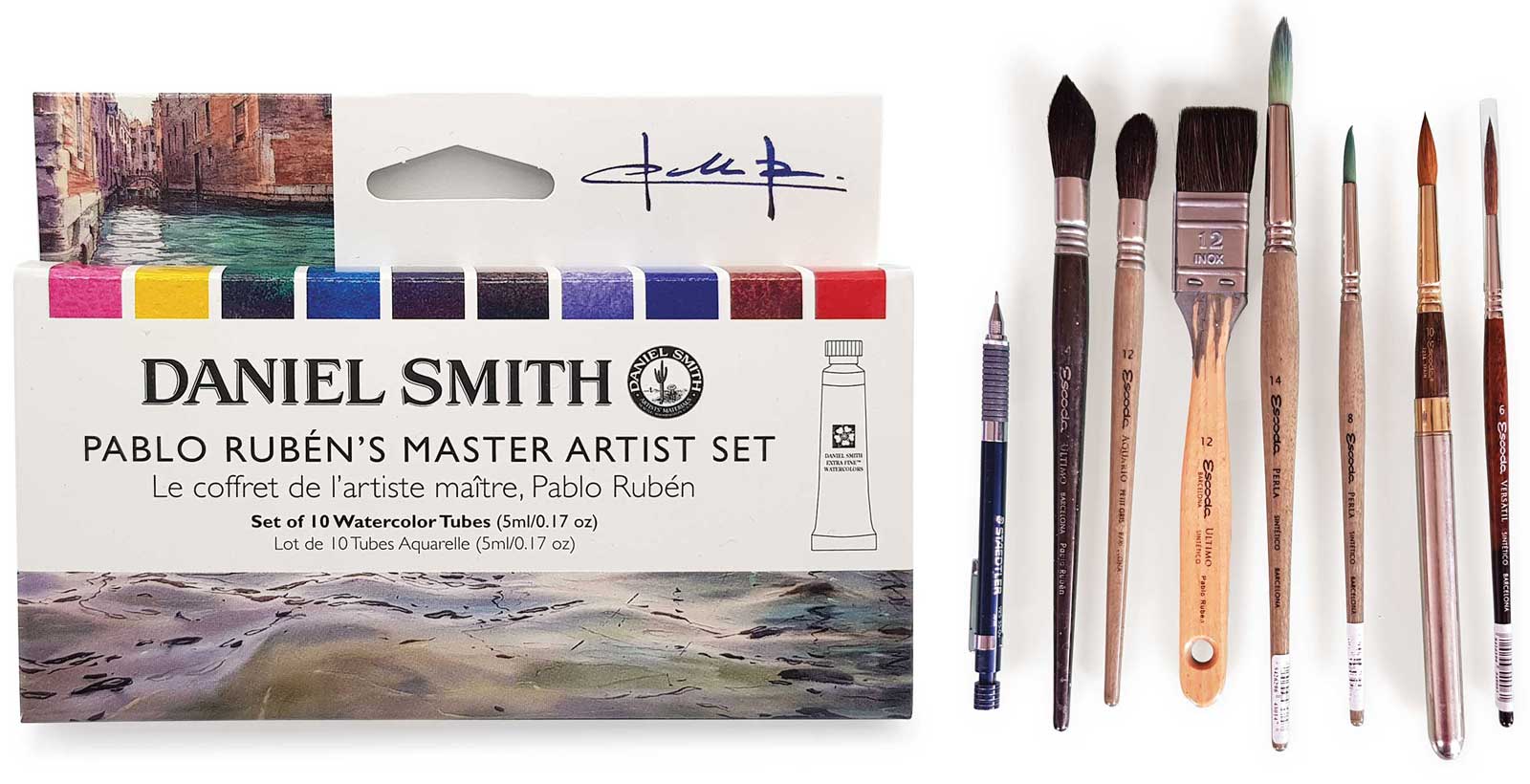
Daniel Smith Watercolors
Lavender, Ultramarine blue, Indigo, Cerulean blue, Cobalt teal blue, Sepia, Pirrol orange, Opera pink, Transparent red oxide, Buff titanium, Hansa yellow deep, Titanium white, Mars yellow
Escoda Brushes
“Petit gris type” brush (medium), #14 (Ultimo), Pointed synthetic brushes (medium), #14 (Perla), Hake brush, flat #15 (Ultimo), Rigger brush, #6 (Versatil)
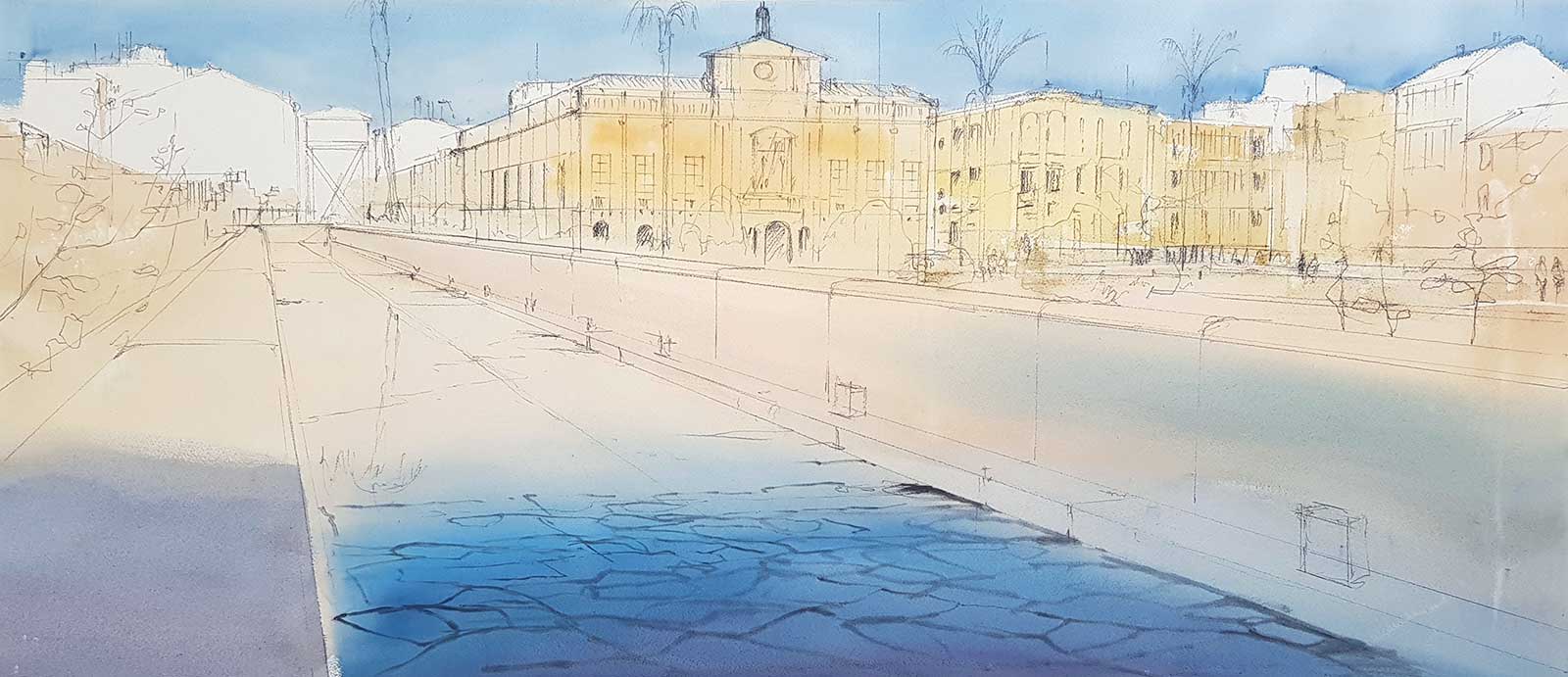 Stage 2
Stage 2 First Wash
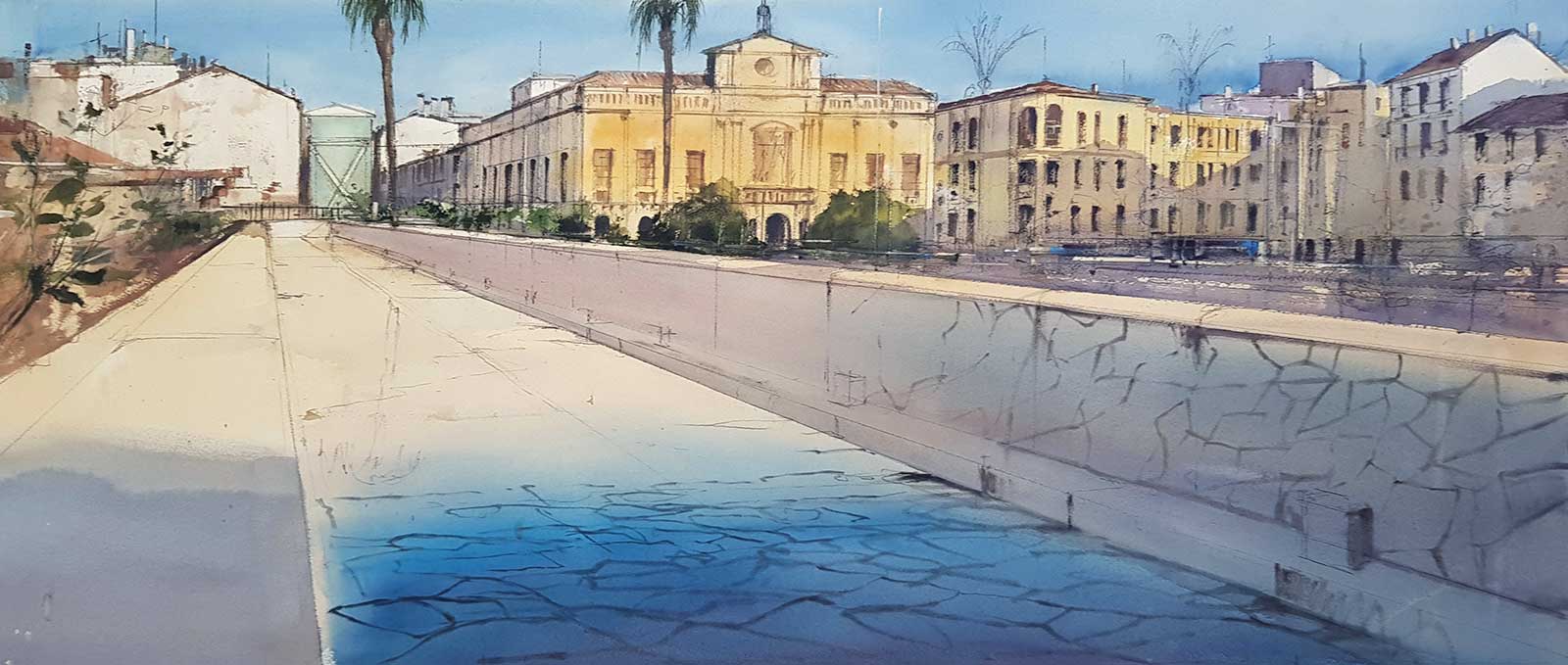
The first wash is the one that provides the mother color to the entire work and connects the different parts of our landscape. Warm yellow and orange tones for the facades where the sun shines and cold colors for the sky, shadowed areas and reflection of the sky in the thin layer of water at the bottom of the fountain. These washes are made on dry paper but connected to each other, leaving the houses unpainted in white.
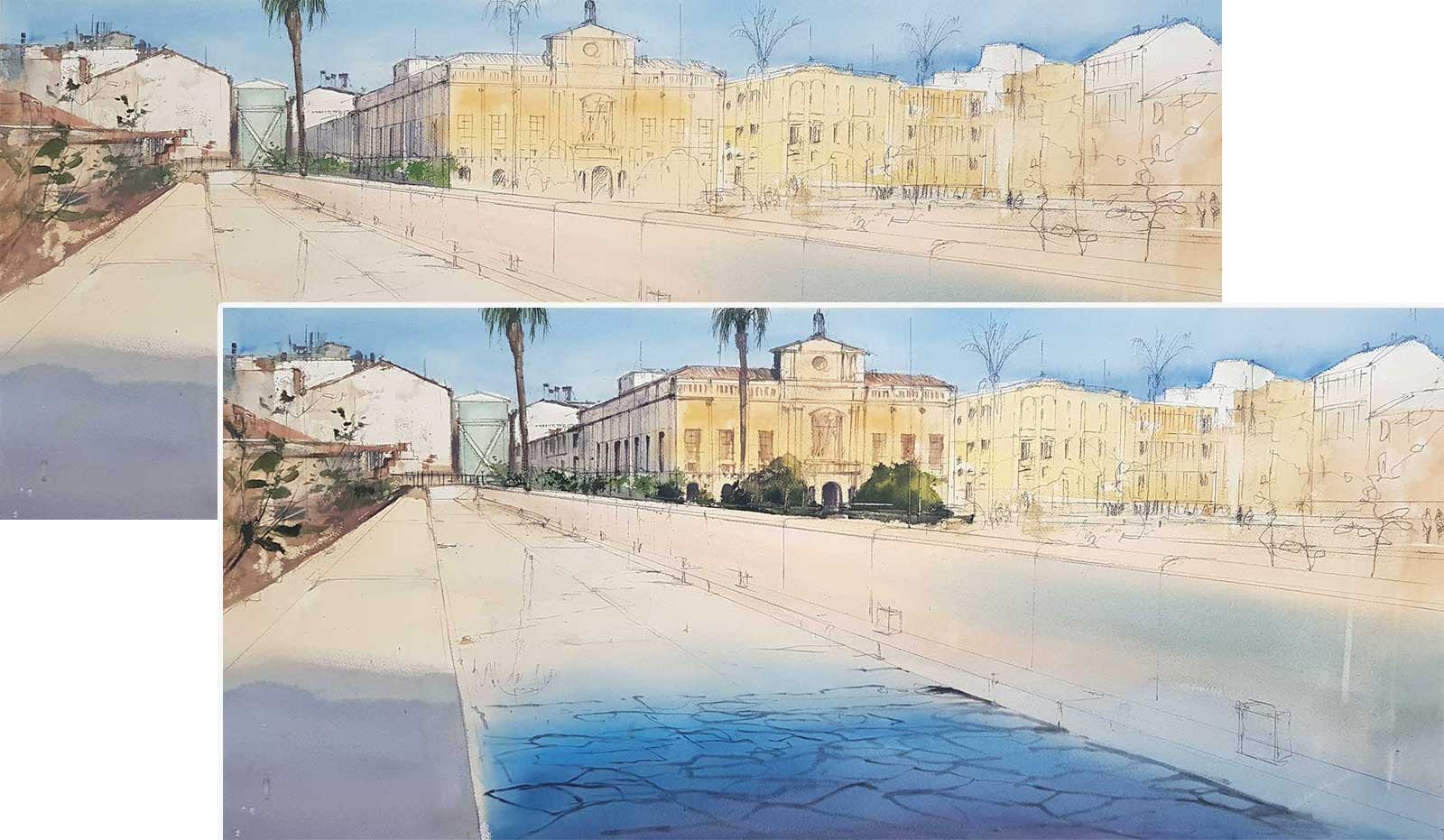 Stage 3
Stage 3 Defining Details
Then I begin to define the details of the work, starting with the last shots, to gradually place the different elements in the order in which the landscape appears. As I am right-handed, I almost always work from left to right.
 Stage 4
Stage 4 Deeper Tones
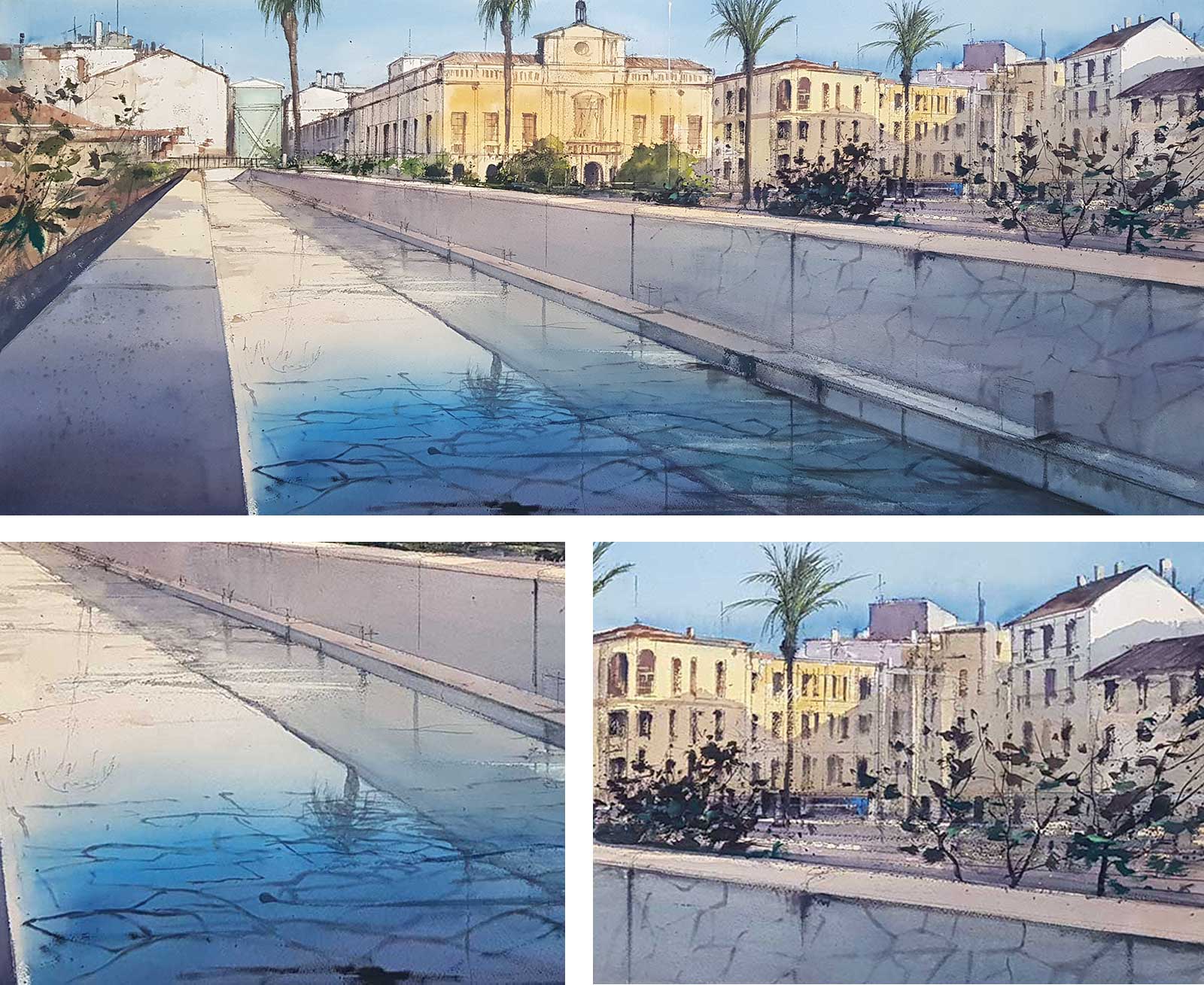
After the last shots, it is time to work on the front and the vegetal elements that surround it, using darker values and more saturated colors. For the shadow that is projected on the buildings in the background I have applied a transparent glaze of violet tones.
 Stage 5
Stage 5 Close-up Elements
We continue to move towards the close-ups, painting the vegetation on both sides of the fountain and the elements reflected in the thin layer of water. In this step I am already adding many of the final details of the watercolor.
 Stage 6
Stage 6 Finished Artwork
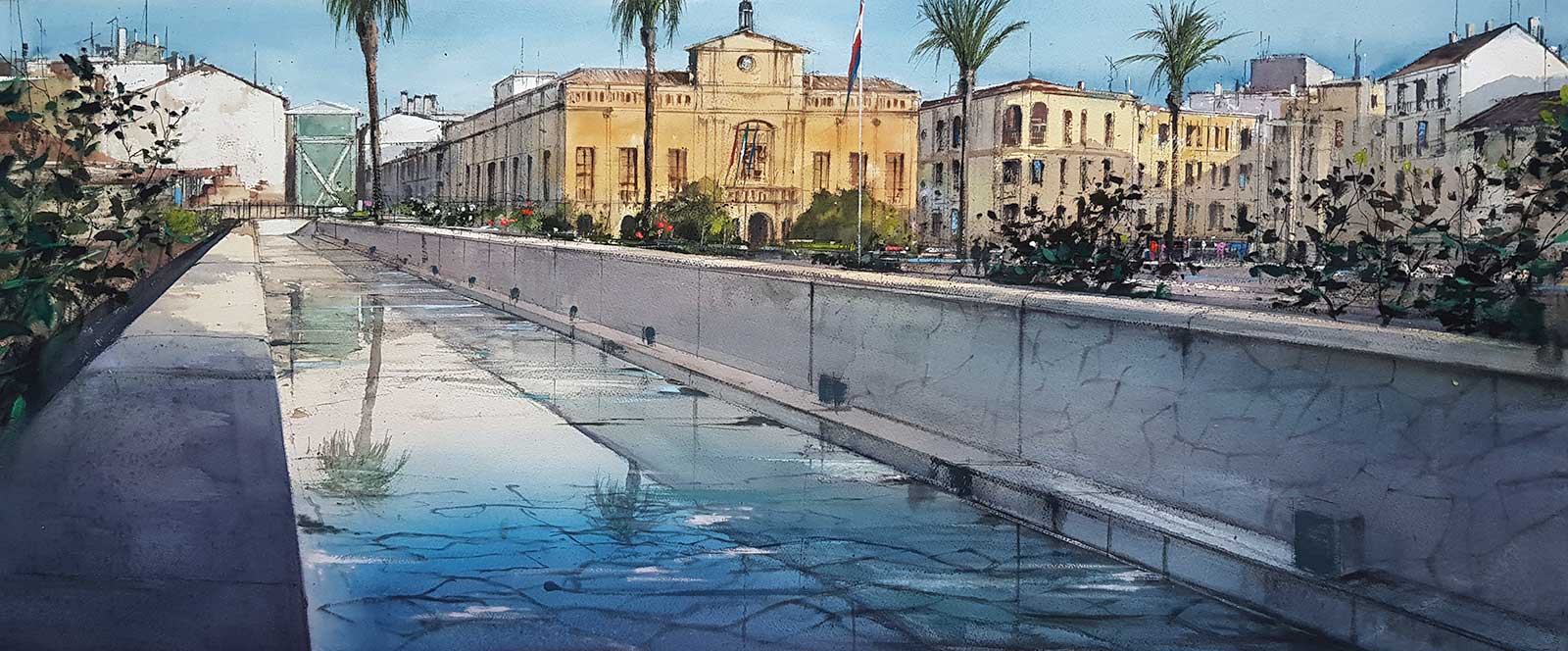
Linares, watercolor, 23½ x 47" (70 x 120 cm)
This is the last stage of the plein air watercolor painting, where I add the final details and make the last tonal evaluations to give the scene more contrast, such as in the town hall or on the sides of the fountain.
About the artist
 Pablo Rubén
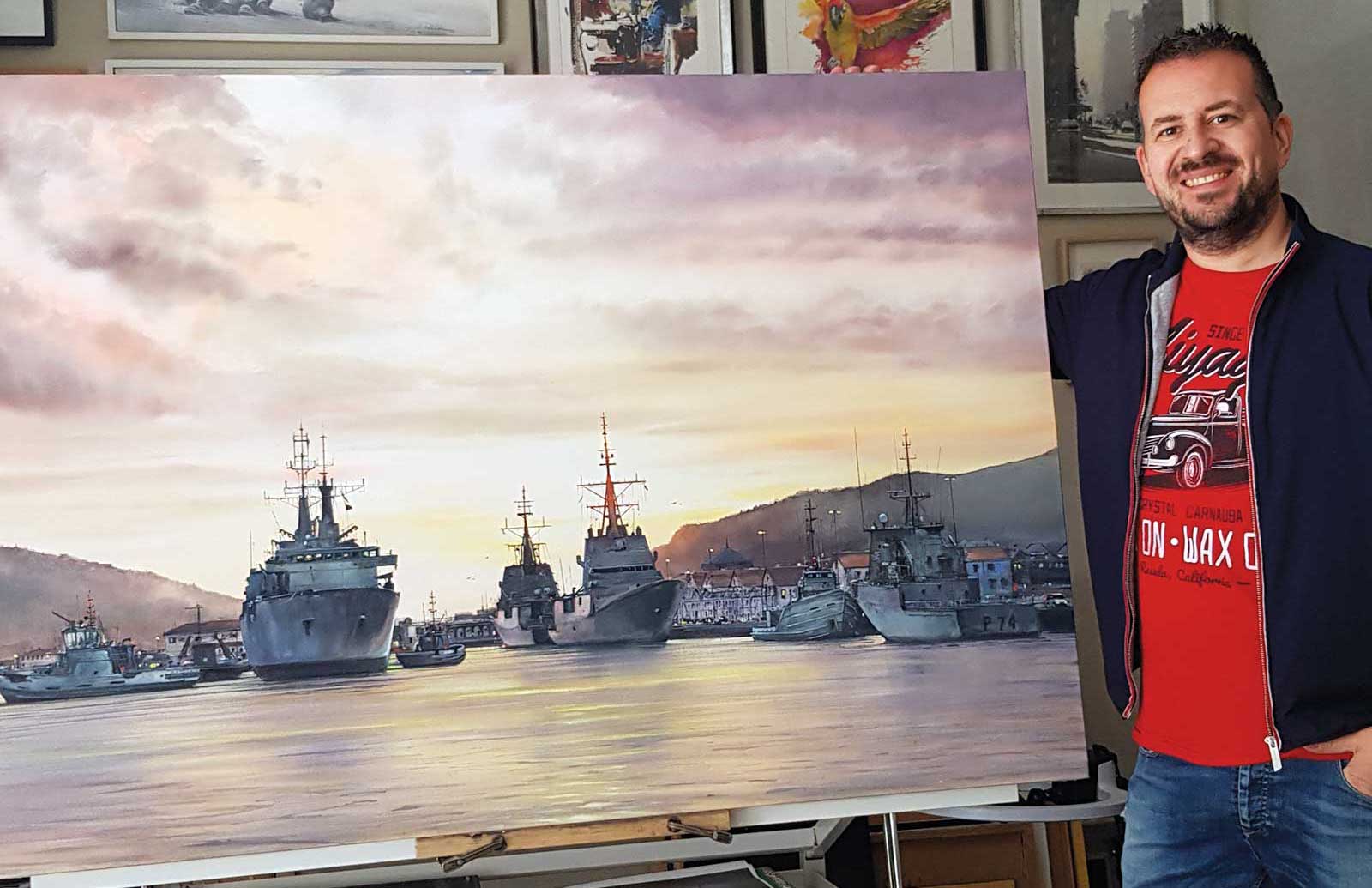
Pablo Rubén has dedicated himself professionally to painting for more than 20 years, and since 2007, has specialized exclusively in the watercolor technique. The artist combines exhibitions, festivals and competitions with the teaching of fine arts. He has obtained nearly 500 national and international awards from prestigious art competitions and exhibitions from around the world.
Currently, Rubén teaches watercolor courses across the globe, including Los Angeles, Moscow, Seattle, Vancouver, Brazil, Mexico, Florence and France, as well as the ABC Museum in Madrid, and in his studio in Griñón, Spain.
Contact at
arte@pabloruben.com
www.terracotta.art/video/water-scenes-in-madrid?ref=pabloruben