Still life painting, among many things, is about elevating the allure of everyday objects. It’s a simple scene distilled down to its most poignant elements, a result of stellar composition and artful combinations of arrangement and lighting. Through these deliberate choices, artists can make a still life feel clean and refreshing, or bold and enrapturing.
All at once, static scenes become dynamic and full of life.
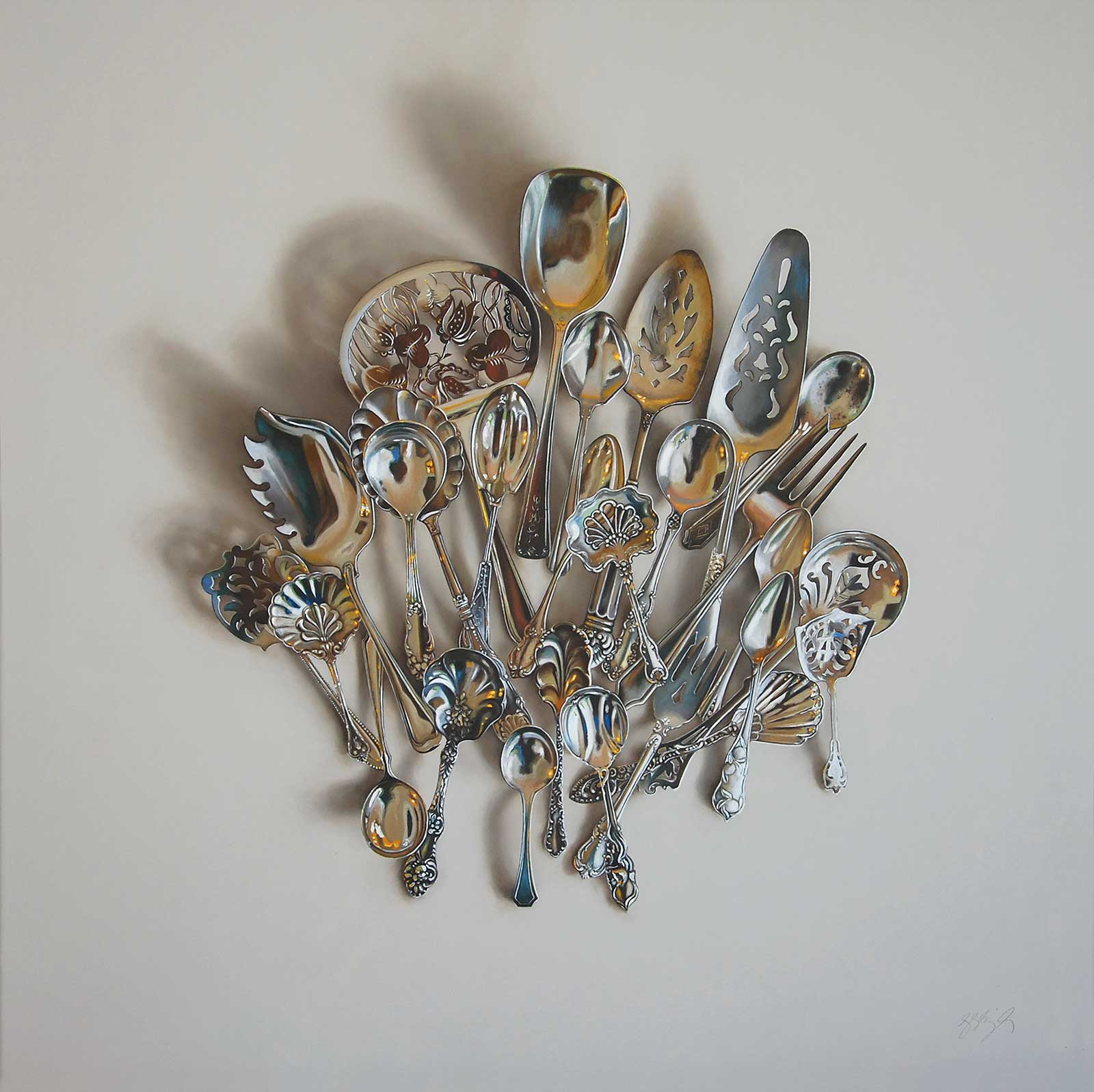
Leslie Lewis Sigler, The Potluck, oil on panel, 24 x 24" (60 x 60 cm)
“The spark for a still life idea can come at any time. It often begins with an object to build a story around,” says Todd M. Casey, artist, teacher and author of books like The Art of Still Life: A Contemporary Guide to Classical Techniques, Composition, and Painting in Oil and Cocktails, A Still Life. “An object or idea can come either from an experience, seeing paintings in a museum, serendipitously, or by another art form such as reading or music. Once I have my idea, I try to take as much time to build the story and make an interesting composition. A good painting can come together quickly if you have the right props to tell the story, but sometimes they take a long time.”
For still life painter Natalia Karpman, who lives in Italy, inspiration can strike during moments of ordinary, everyday life. “Since I mostly paint fruits and vegetables, my [ideas] start each time I go grocery shopping,” she says. “If I see something painting worthy, like a couple of gorgeous tomatoes, I get them and forbid my family members to touch them until I’m done photographing them. Because of how light in my studio is arranged, it’s not always comfortable to paint from life, so I prefer taking a lot of photos of the setup and then pick one as a reference photo for the painting.” Sometimes, Karpman adds, she’ll find a good composition right away, but more often it takes time—rearranging objects, adjusting the light, adding or removing items.
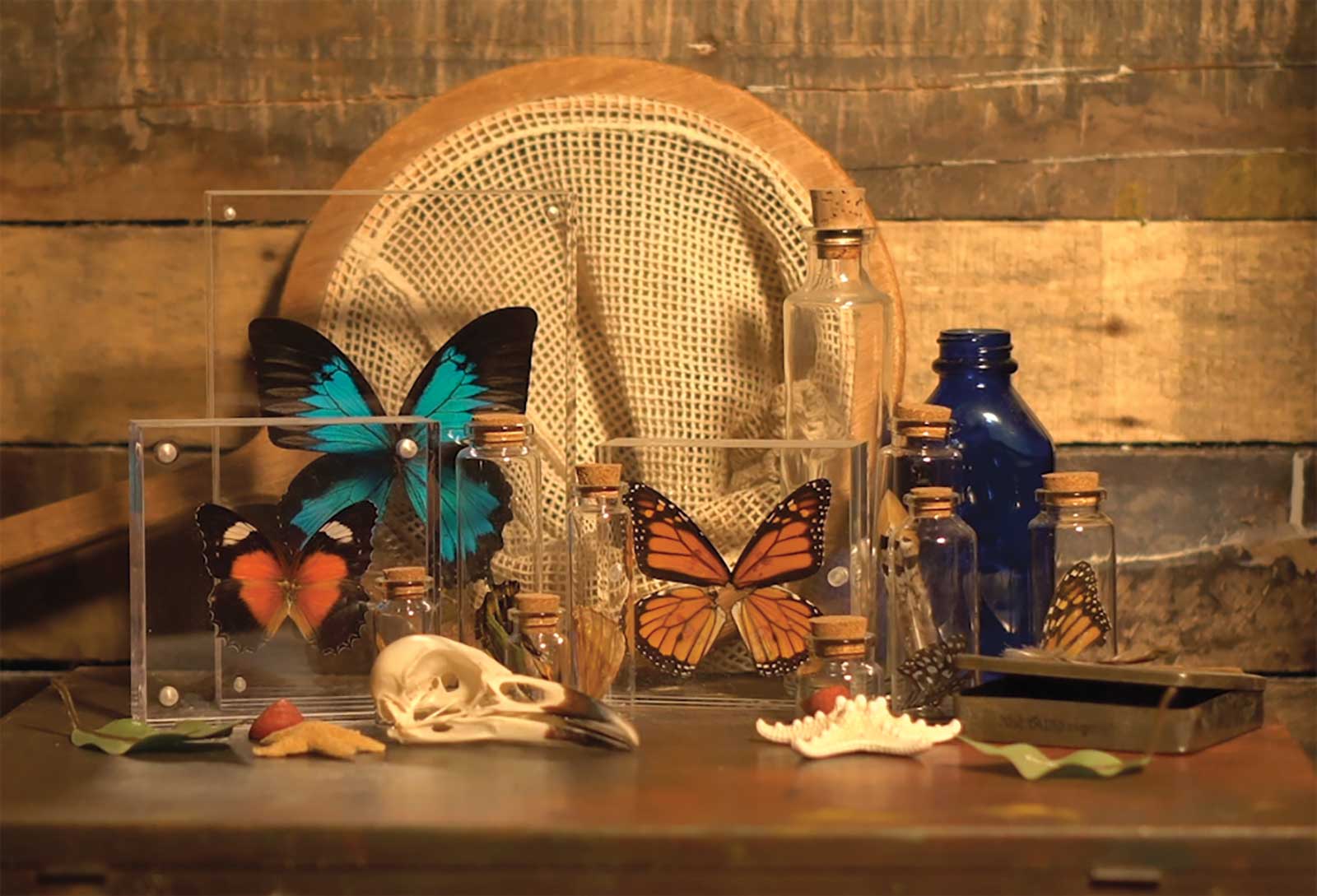
The naturalist by Todd M. Casey in warm light.
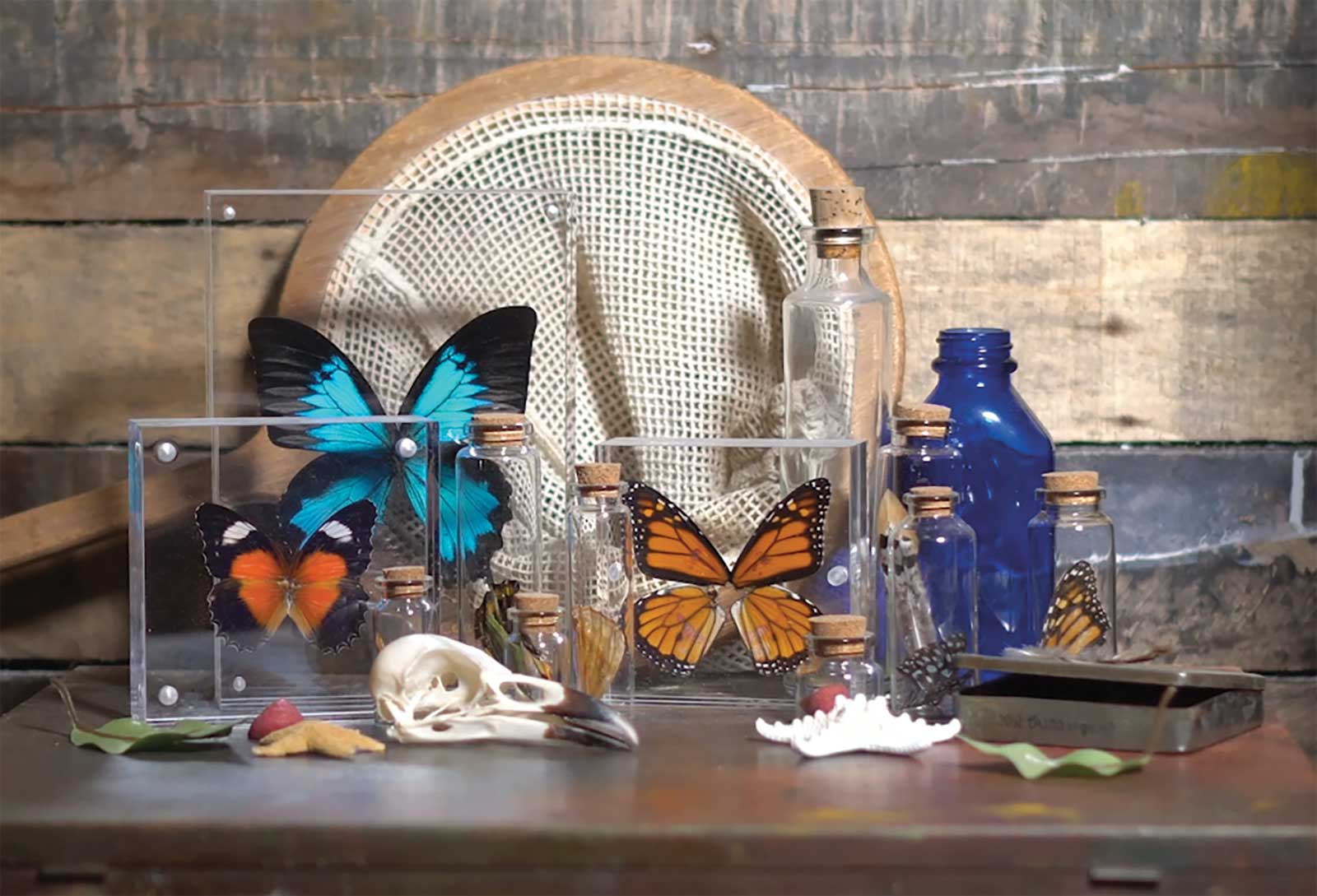
The naturalist by Todd M. Casey in natural light.
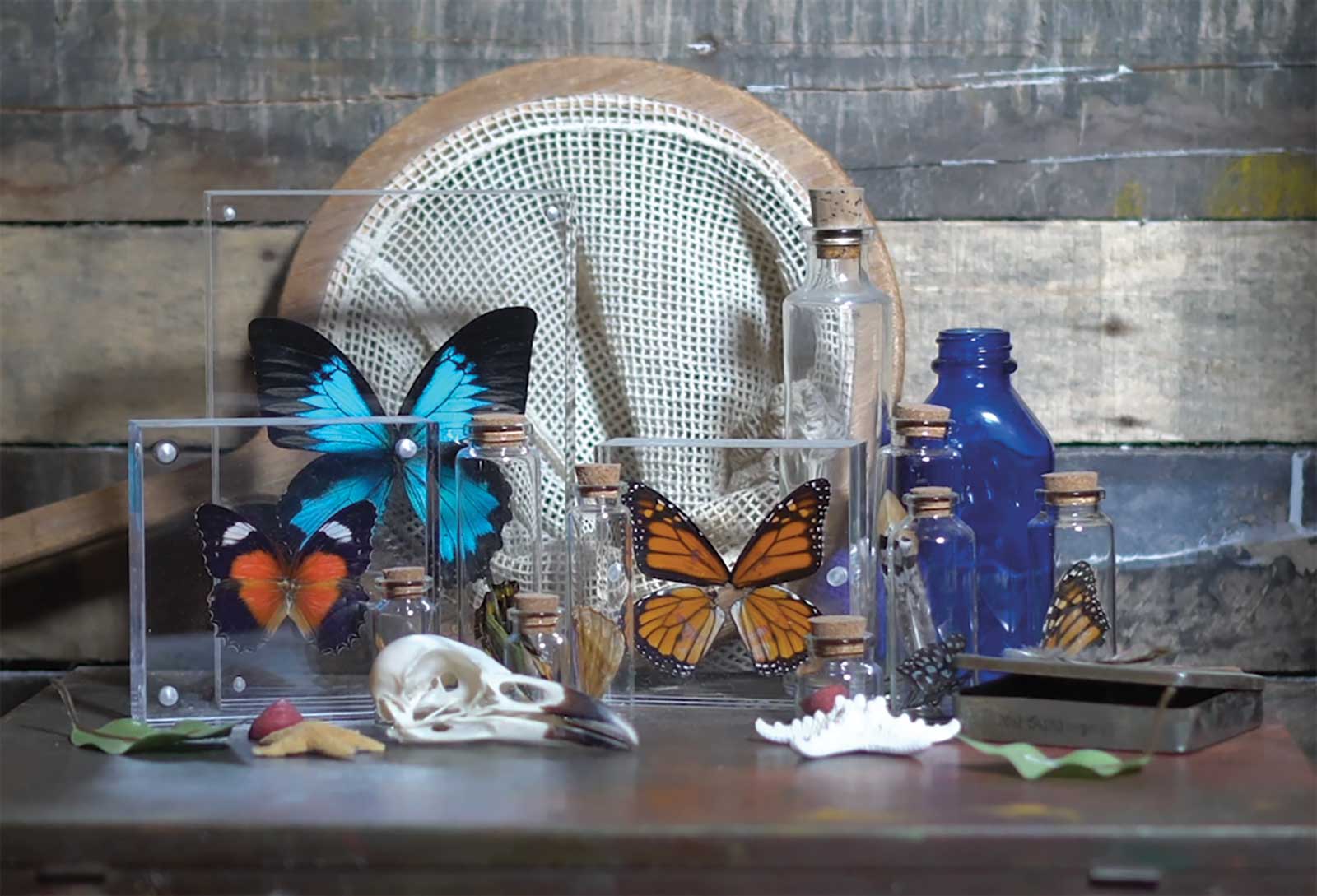
The naturalist by Todd M. Casey in cool light.
When arranging a still life, Casey explains that he’ll primarily use one or two of the seven principles of 20th-century painter and art professor Maitland Graves. The seven principles are as follows: balance (asymmetry), movement, pattern, emphasis, contrast, rhythm and unity. “I try to imagine that the set-up is like a stage performance, where the main character is the focal point or highest contrast. I’ll have a second area of lower contrast and sometimes a third area of even lesser contrast. We usually look at the highest and largest contrast first, then move to the second and third contrast, which can help to create movement in a set-up. A quick device like the rule of thirds is good to pull the audience toward the center so your focal points are not too close to the edge.” An example of the rule of thirds applied to a painting can be seen in Casey’s Where inspiration often begins. “[It] acts as a guide so that the focal point is toward the center of the composition. Where the vertical and horizontal lines converge are called power points,” he adds.
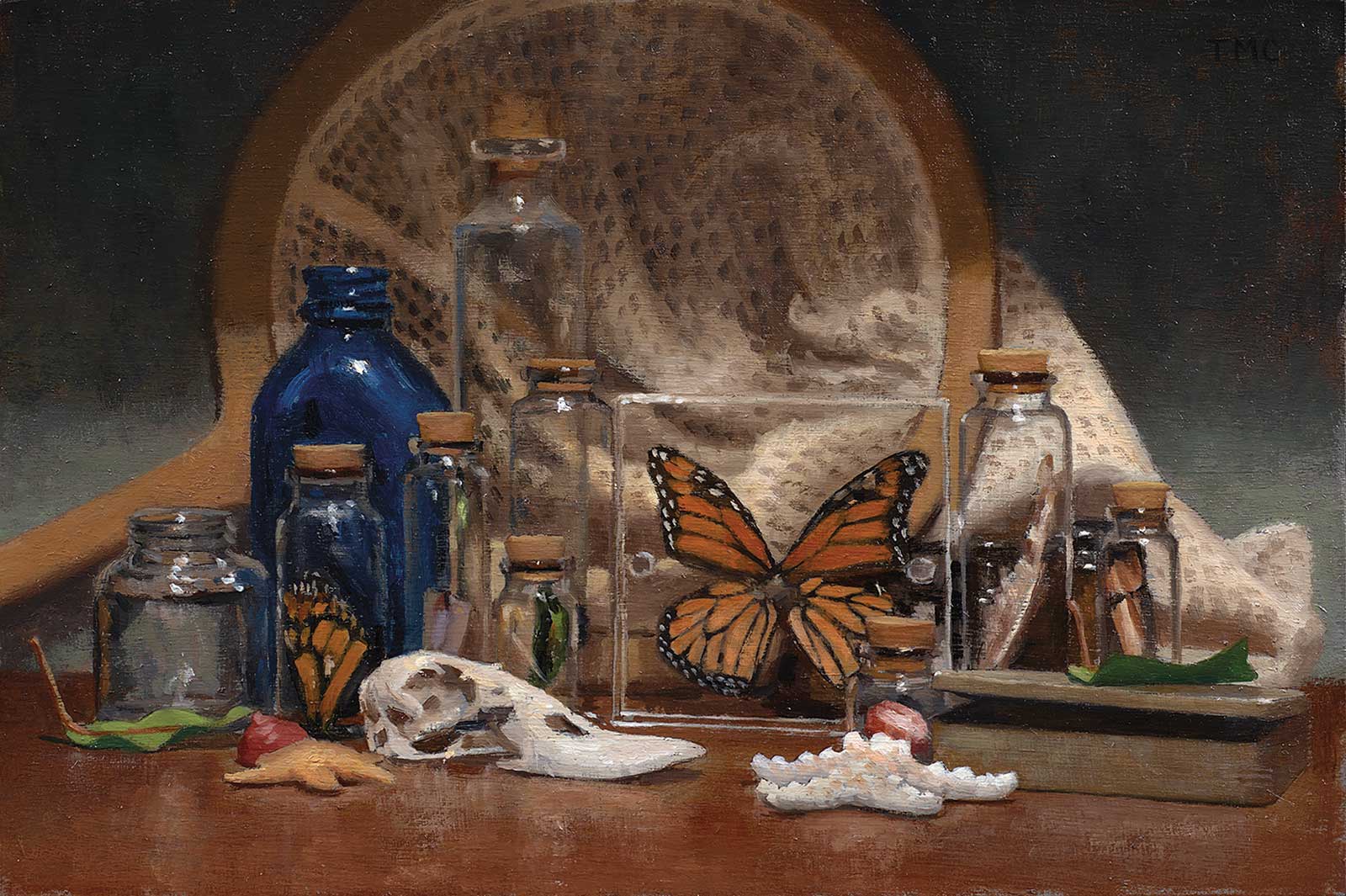
Todd M. Casey, The naturalist, oil on panel, 6 x 9" (15 x 22 cm)
The paintings of Leslie Lewis Sigler, represented by numerous prestigious galleries, are instantly recognizable—gleaming silverware set against white backdrops from a top-down perspective. The pieces are clean and crisp, and they command attention. “I view my still life subjects as portraits, so I like to set up the composition like a portrait,” Sigler says. “I set up the composition by selecting a singular object (such as a copper mold) or group of objects (such as silver utensils) on a simple background. I work in a room with natural light to capture soft shadows, and I photograph the set-up from an aerial view. My objects are metal so they reflect the colors of the surrounding room, which becomes a significant part of the painting. Ultimately I work from a photograph so I can capture the light and reflection exactly as I like it.”
Sigler recalls an experience in college where a professor instructed the class to paint a roll of toilet paper for weeks on end. “Composition and lighting can make [even] a roll of toilet paper a beautiful thing…I enjoy finding meaning and significance in the intentional and unintentional arrangement of objects.”
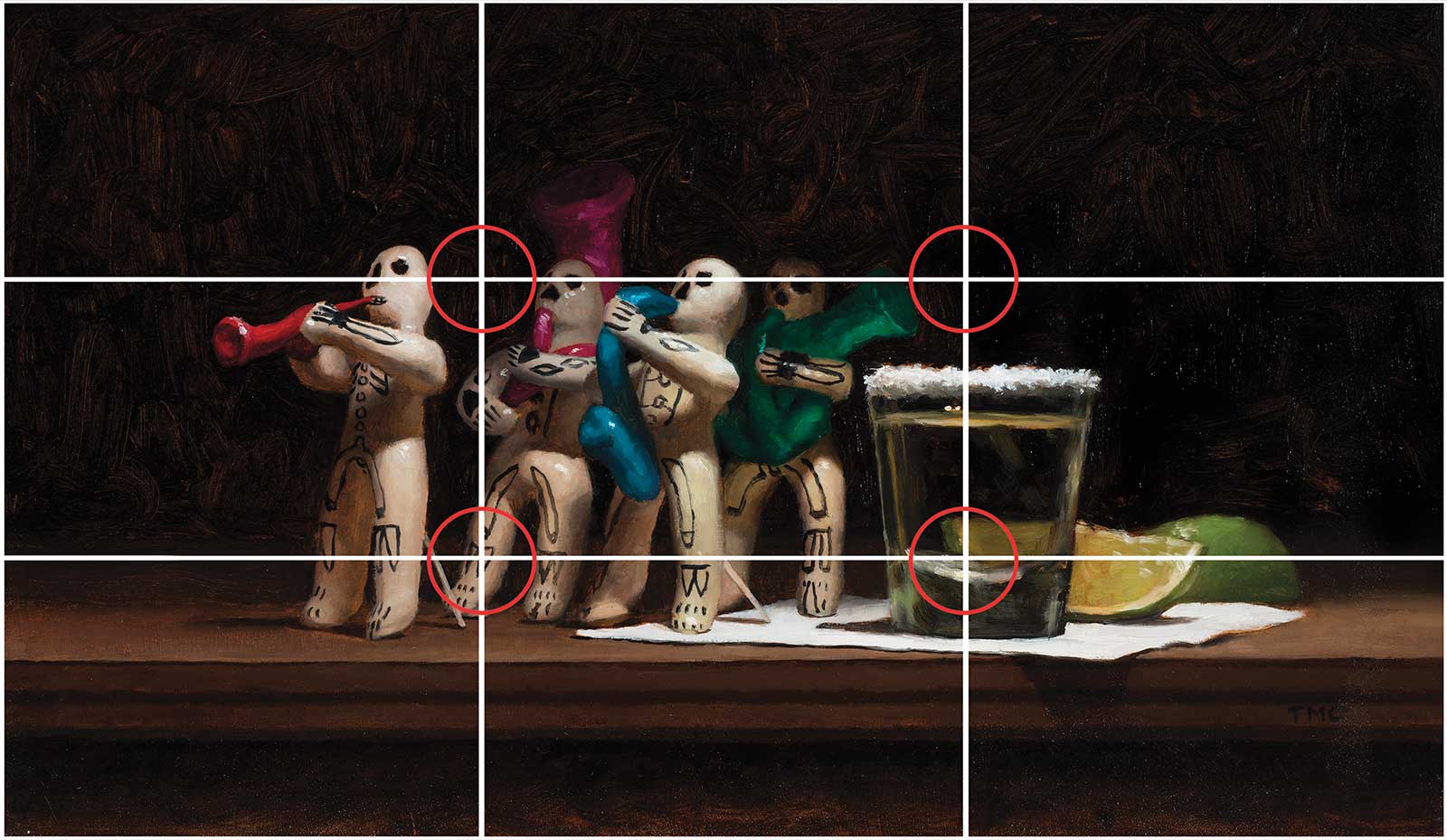
The rule of thirds demonstrated on Todd M. Casey’s oil on panel Where inspiration often begins.
Award-winning painter Christine Lafuente is a master of mood and light. “In my studio, I have two large windows with unobstructed north light. Because natural north light is relatively cool, it is sympathetic to an oil painting process that relies on tinting with white pigments that tend [toward] cool colors.” In her piece Peonies, Cherry Blossoms, and Ranunculus, we see a menagerie of vases on a table, some filled with flowers, others empty.
“One window lights my table and still life. The other lights my canvas and palette. Though I experiment with various orientations to the light source, I find myself most interested in a side-lit set-up, where I am sitting between the windows, facing the table, with light coming in from the left. Behind the table is a corner where the shadow from the windowed wall creates a varying tone across the back wall. I set up the light masses in contrast with this tone,” Lafuente explains of the set-up for the painting.
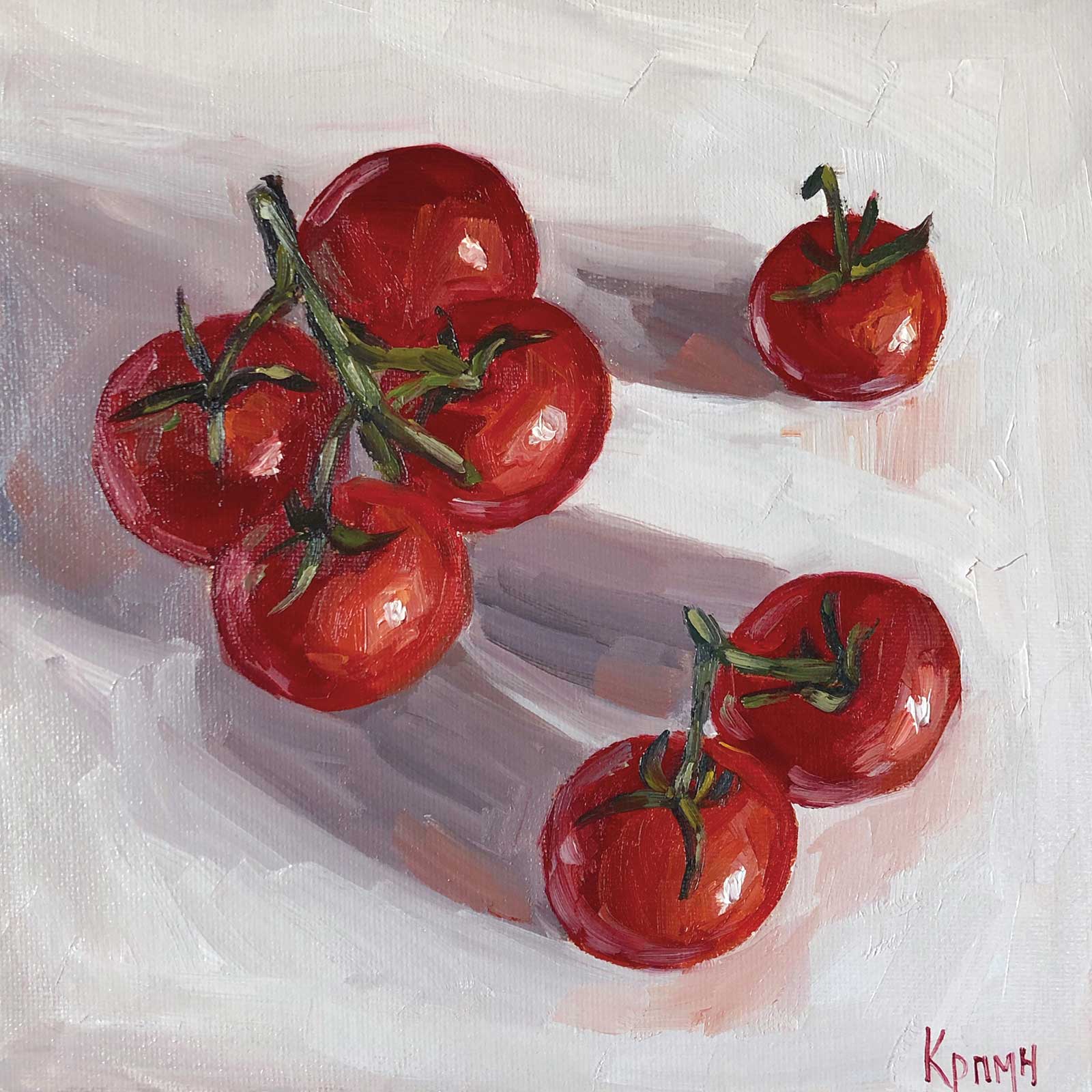
Natalia Karpman, Uneven Teams, oil, 7.8 x 7.8" (20 x 20 cm)
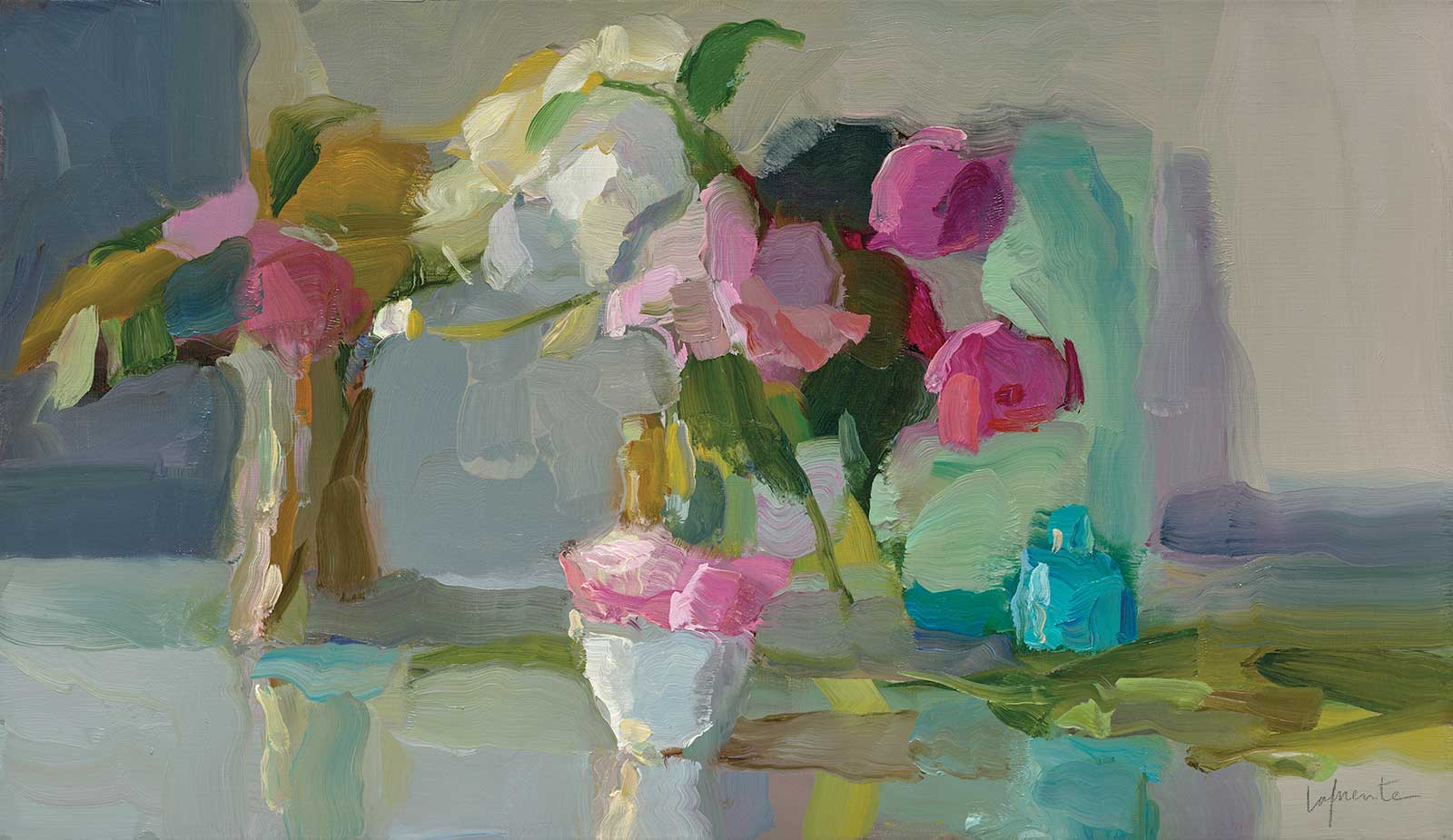
Christine Lafuente, Peonies, Cherry Blossoms, and Ranunculus, oil on linen, 14 x 24" (35 x 60 cm)
“The side-lit objects break into chunks of light, shadow and color. These similar chunks of tone or color recombine into larger forms and gestures…I can move objects ‘upstage’ and ‘downstage’ on my tiny proscenium…The cherry blossoms on the left I wanted to recede into the shadow area, so I pushed it ‘upstage’ and behind the dominant shaft of light. It becomes somewhat flat in tone from being relatively front-lit. The peonies are in the dominant shaft of light, so they take center stage, more significant. The arc from the peonies to the ranunculus then lands on the wee blue bottle, a favorite friend in my still life world. He is where the eye lands.”
Casey breaks down lighting into three properties: temperature, aperture (size) and the direction of light. The temperature of natural light is about 5000 to 5500 kelvin (white light), an incandescent bulb is around 3000 to 3300 kelvin (warm), and 5500 to 6800 kelvin is considered cool, he explains.
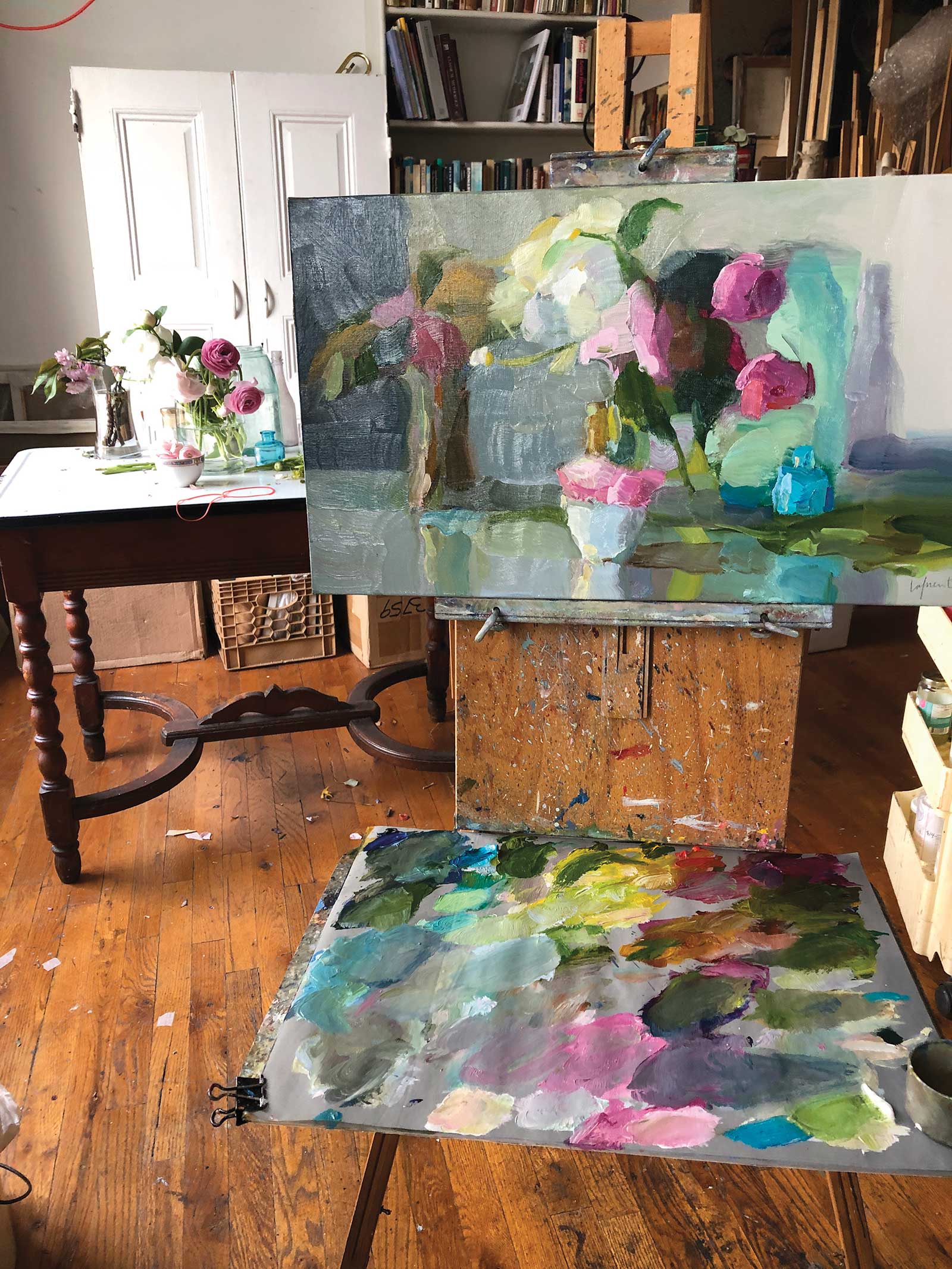
A glimpse into Christine Lafuente’s studio and her composition for Peonies, Cherry Blossoms, and Ranunculus.
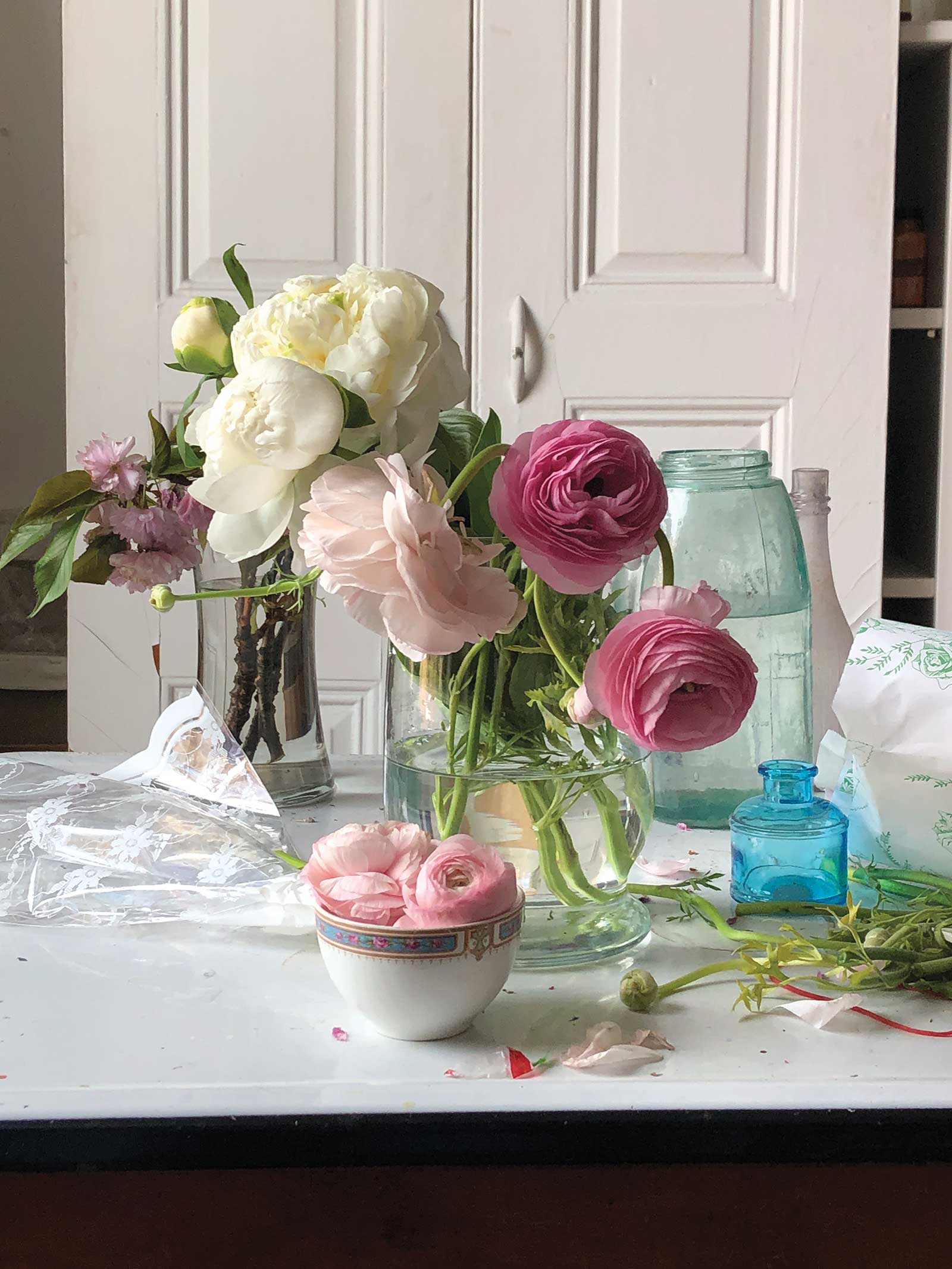
A view of Christine Lafuente’s set-up for Peonies, Cherry Blossoms, and Ranunculus.
The specific color of the light inevitably impacts the colors of the objects. Warm light, for instance, intensifies warm colored objects and decreases the color of cooler objects, and vice versa. “The size of the light is important as well,” says Casey. “A window or skylight is a large aperture and will illuminate the subject more than a smaller light. Therefore, you’ll have more lumen, which affects the whole environment. The direction of the light is also a big component of setting up. Traditional still lifes are lit from the top with natural light. However, you can choose to move the light or the set-up wherever you’d like to see the patterns created and the fall of light on the set-up.”
Like most who choose to traverse the creative realm, the job of a painter is like that of a musical composer, set designer or director. They must consider every last detail in their given art form, determine how one element connects to another, and make choices that ultimately tell the stories they want to tell.
Casey cites American poet Jane Kenyon: “The poet’s job is to put into words those feelings we all have that are so deep, so important, and yet so difficult to name, to tell the truth in such a beautiful way, that people cannot live without it.” —