In the world of abstract painting it can be daunting to know where to start, or how to start. The rules aren’t as clear as they are with representational art. With abstract painting we cannot judge it purely on technique or else it becomes too aesthetic, too decor. Nor can we use narrative or subject matter to inform it. In order for abstract art to work, it must be real, it must be authentic. Regardless of aesthetic, the work must feel convincing. We the viewer must be convinced the artist really believed in what they were doing.
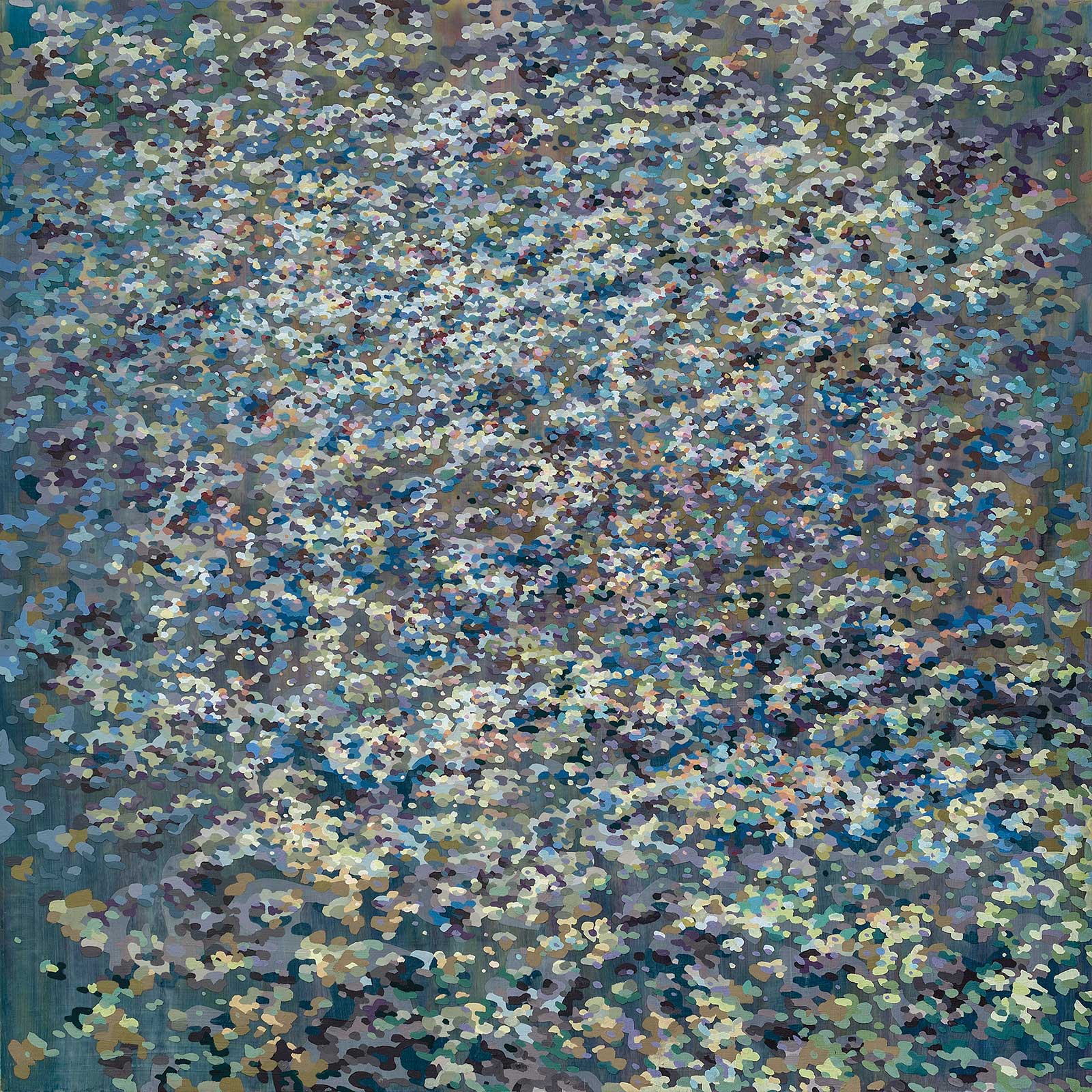 Cathartic Momentum, oil and cold wax on panel, 48 x 48" (121 x 121 cm). Some of my works have a clear focal point. For this painting I wanted to create a piece that didn’t have a focal point. By doing so, our eye wonder tirelessly, not knowing where to rest.
For me, I count on process and intuition to guide my work. My specific process was developed by combining my knowledge of academic painting with my understanding of conceptual and abstract art, and processing it all through my personal meditative practice. Intuition, memory, experience and feeling are given space to emerge. What is left in the end is more than just an abstract painting. It is a recording of me, my feelings and my emotions. It is a manifestation of my intention. Joy, pain, fear, anger and all other emotions have been transferred to the surface.
Intuition is arrived at when we have the courage to trust ourselves. It takes time and requires us to take risks and be willing to make mistakes. While I am still making mistakes, I’ve reached a point where I can trust my artistic intuition.
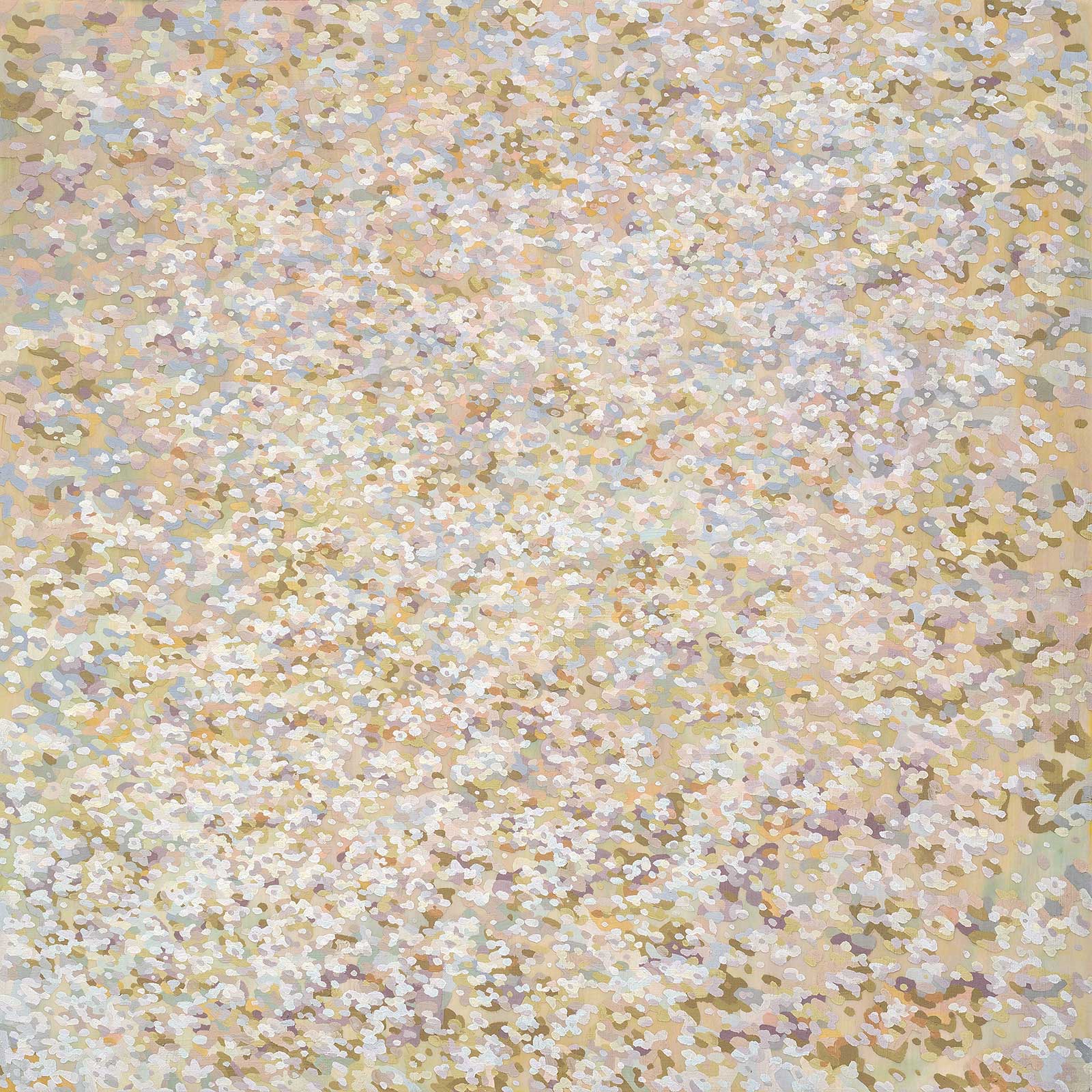
Affinity for Inconsistency, oil and cold wax on panel, 36 x 36" (91 x 91 cm). My inspiration for this painting was to tone back the color and work within a high key palette. By setting these parameters, I was able to focus on exploring the range of white.
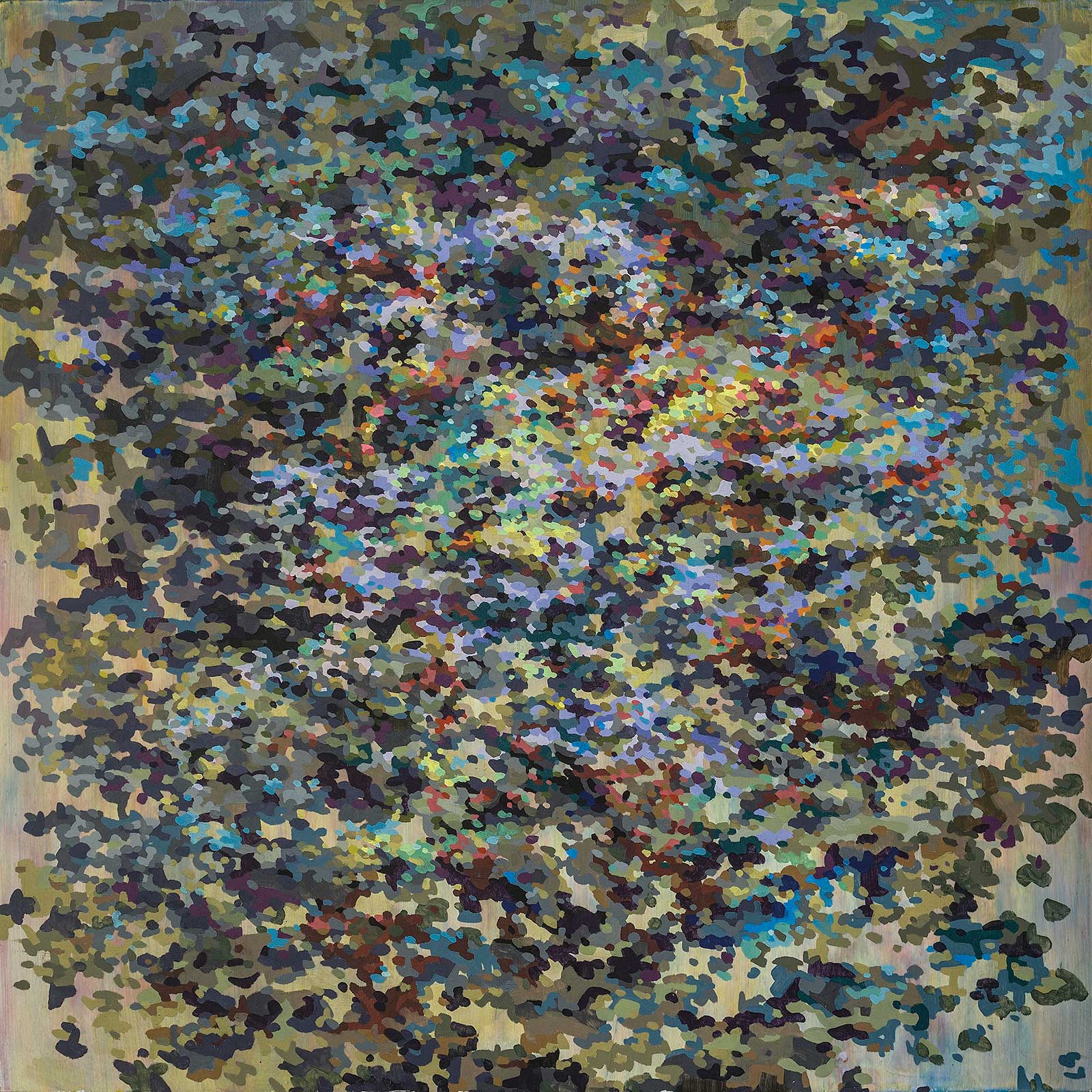
Conscious Impulses, oil and cold wax on panel, 48 x 48" (121 x 121 cm). In my work I seek to reflect energy itself, from its micro form to the level of the universe. This compositions can be divided into clusters even while they work as organic wholes.
Having a process provides me with the comfort in knowing that if I get stuck or lost, I can go back to my process and regroup. I like to separate the painting process into individual components so I can focus on one task at a time. Process means coming up with a set of steps to follow to achieve an outcome. Rather than approach each painting new, I fine tune the way I paint. This style of painting gives me the confidence to relax, let go and tap into the creative energy.
Just like how a jazz musician performs with spontaneity, I paint using intuition and instinct. I respond to the painting, letting it guide me. With enough practice, patience and understanding, we all can tap into this flow.
My Art in the Making Retention of Complexion
To create my paintings, I use a variety of techniques and materials. While no two paintings are the same, they all share this same process. As well, I believe in using the finest materials and following best practices to ensure the painting lasts many lifetimes. Each stage takes time and requires sufficient dry time. In the end, it took approximately six months to create this piece.
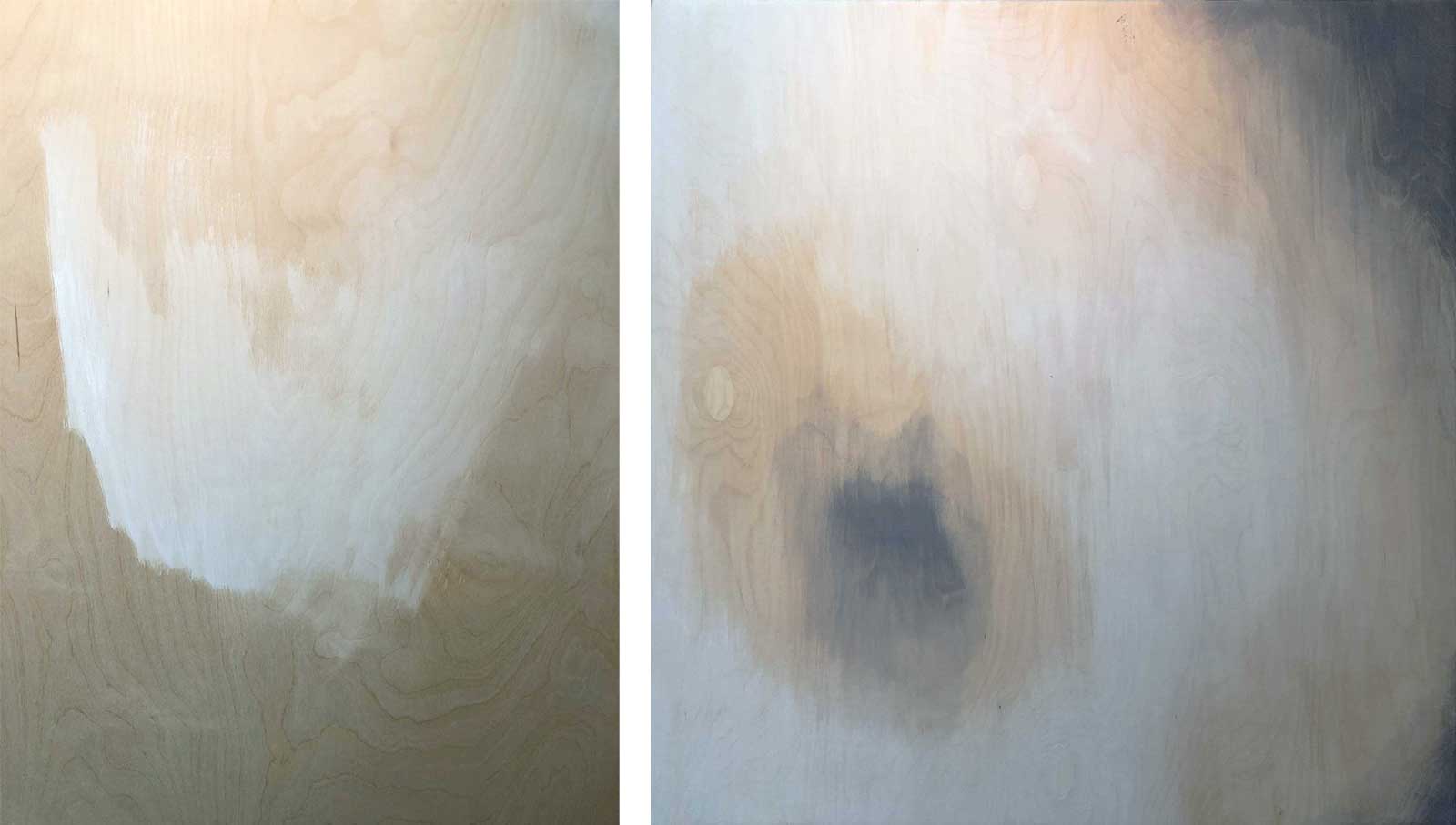
Stage 1
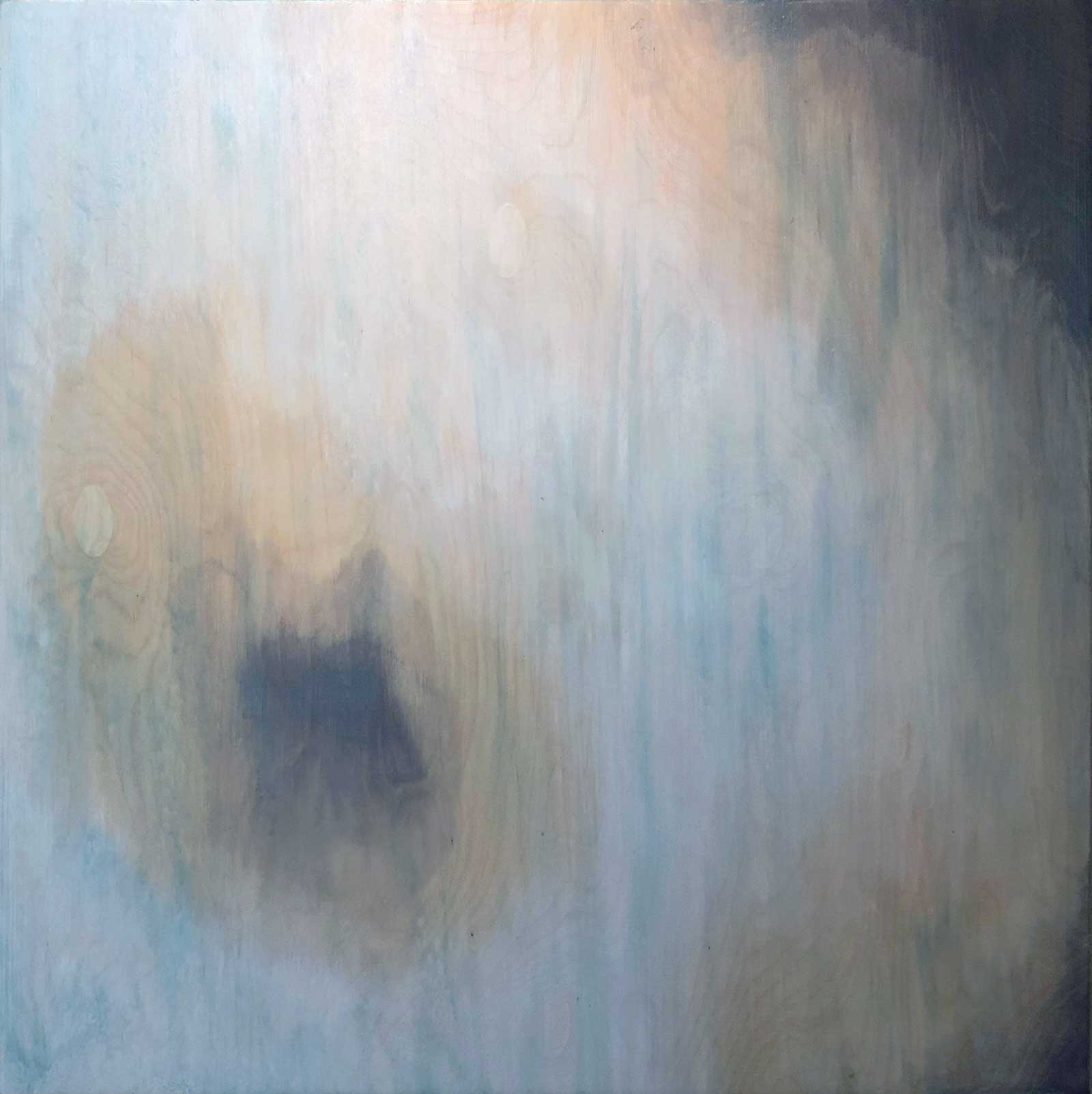
Stage 1 Staining and Bleaching the Panel
On Baltic birch panel, I start by applying a water-based wood conditioner. This will help pull out the wood grain and make it pronounced. I’ll also sand the surface if required. Next, I apply a water-based wood stain and bleach. The stain allows me to darken the wood while preserving the grain. The bleach lightens the wood grain. I use a technique that allows me to gradient the stain and bleach. After the wood is completely dry, three layers of transparent gesso are applied to prepare the surface for paint.
 Glaze
Glaze
Mixing Your Glaze
The glaze is created by mixing cold wax medium with Galkyd and mineral spirits. I adjust the proportions of mediums to ensure appropriate drying. Only a tiny amount of oil paint is needed and only 100 percent transparent colors are used.
Stage 2
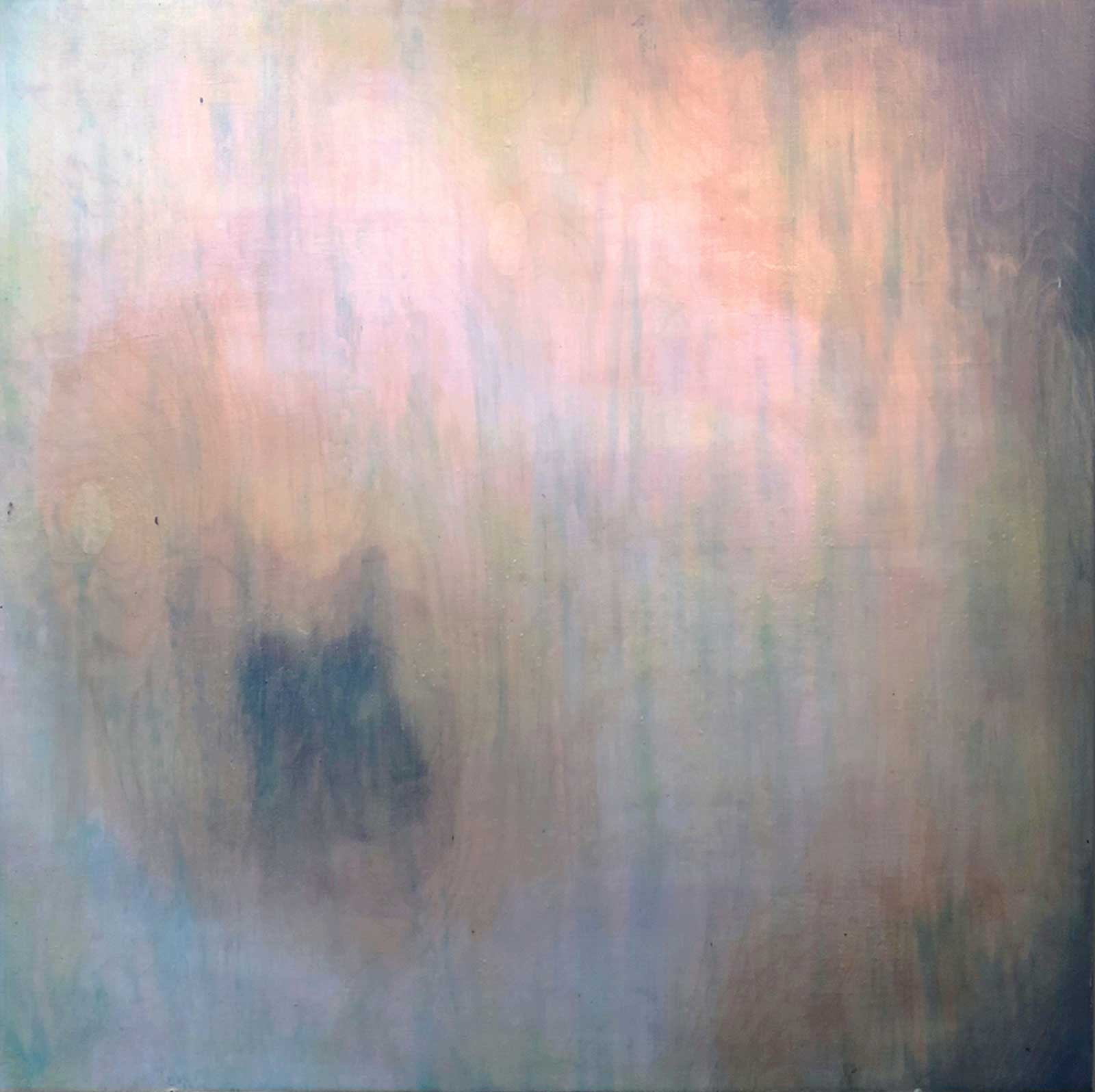
Stage 2 Layers of Transparent Glazes
The next step is to apply a full coat of paint, as a glaze. I create my glazes using a combination of cold wax medium, Galkyd, mineral spirits and oil paint. Layer upon layer of glaze is applied to the panel. It takes approximately one week for the layer to dry before the next layer can be applied. The layers of glazes are applied in order with the following colors: ultramarine blue, Indian yellow, viridian green, quinacridone red and dioxazine purple.
Stage 3
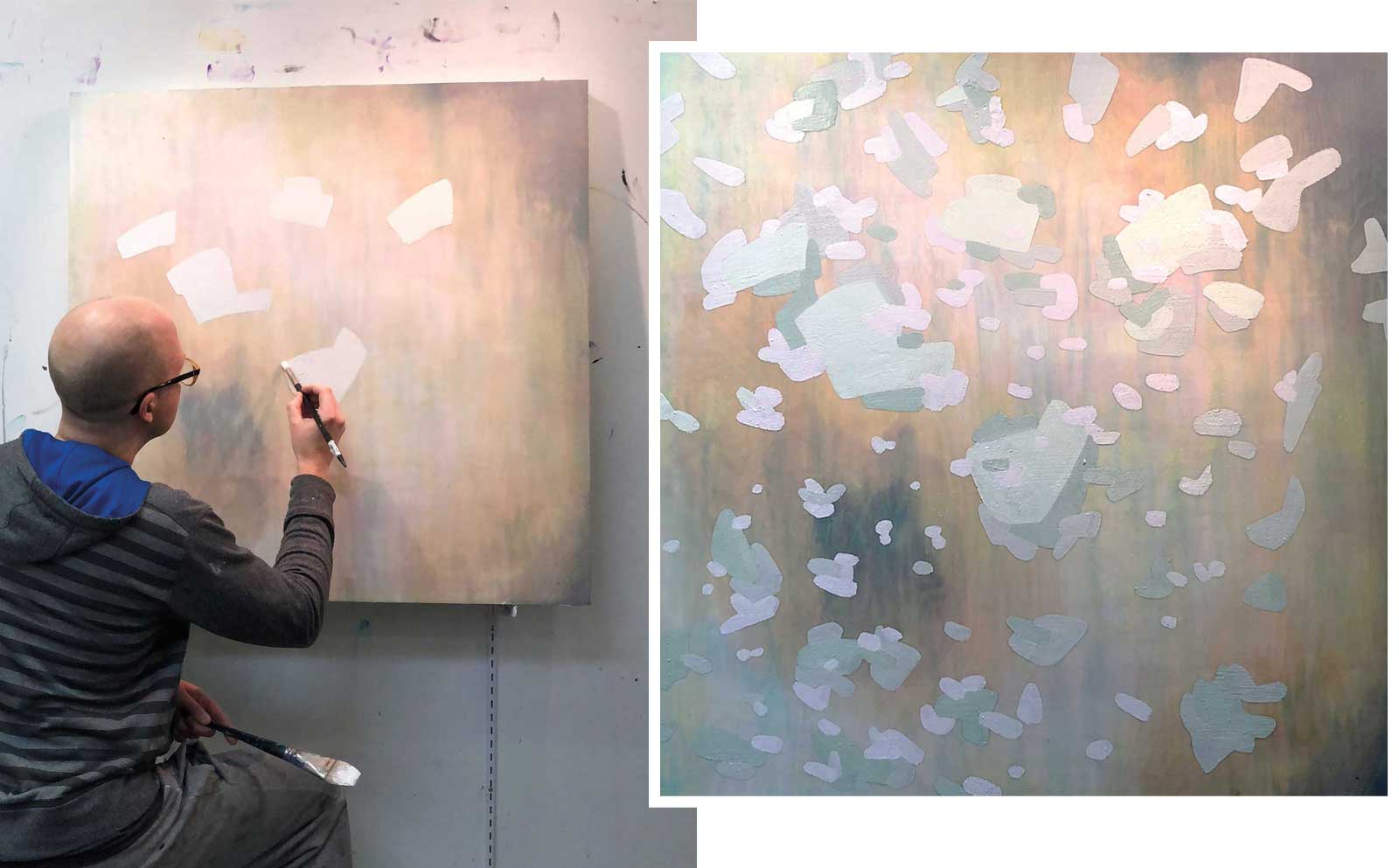
Stage 3 Large Brushstrokes
Using my largest brushes I start by blocking in abstract shapes. Every mark is calculated and intentional. During this stage, I am establishing the light areas, as well as defining warm and cool color relationships.
Stage 4
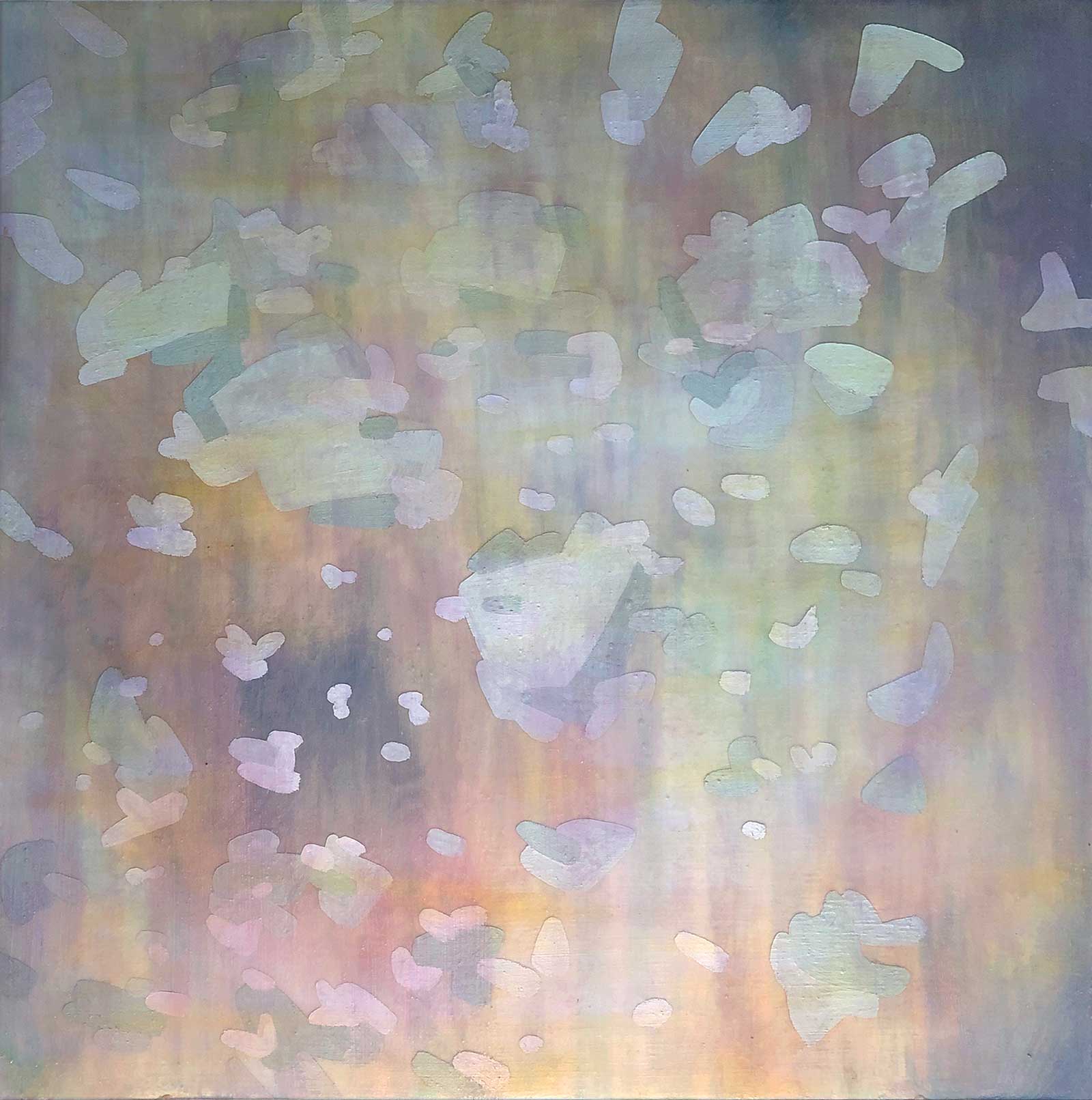
Stage 4 More Layers of Glaze
Additional layers of glaze are applied to the entire painting. This builds depth and creates subtle color shifts. In all there are ten layers of glaze.
Depending on my intention, I can layer the glazes to create rich and vibrantly colorful areas or I can create subtle and subdued areas of color. For this particular piece, I want the glazing effect to be more on the subtle side.
Layers of Glaze
Phase One:
• Ultramarine blue
• Indian yellow
• Viridian green
• Quinacridone red
• Dioxazine purple
Phase 2:
• Indian yellow
• Sap green
• Quinacridone red
• Ultramarine blue
• Indian yellow
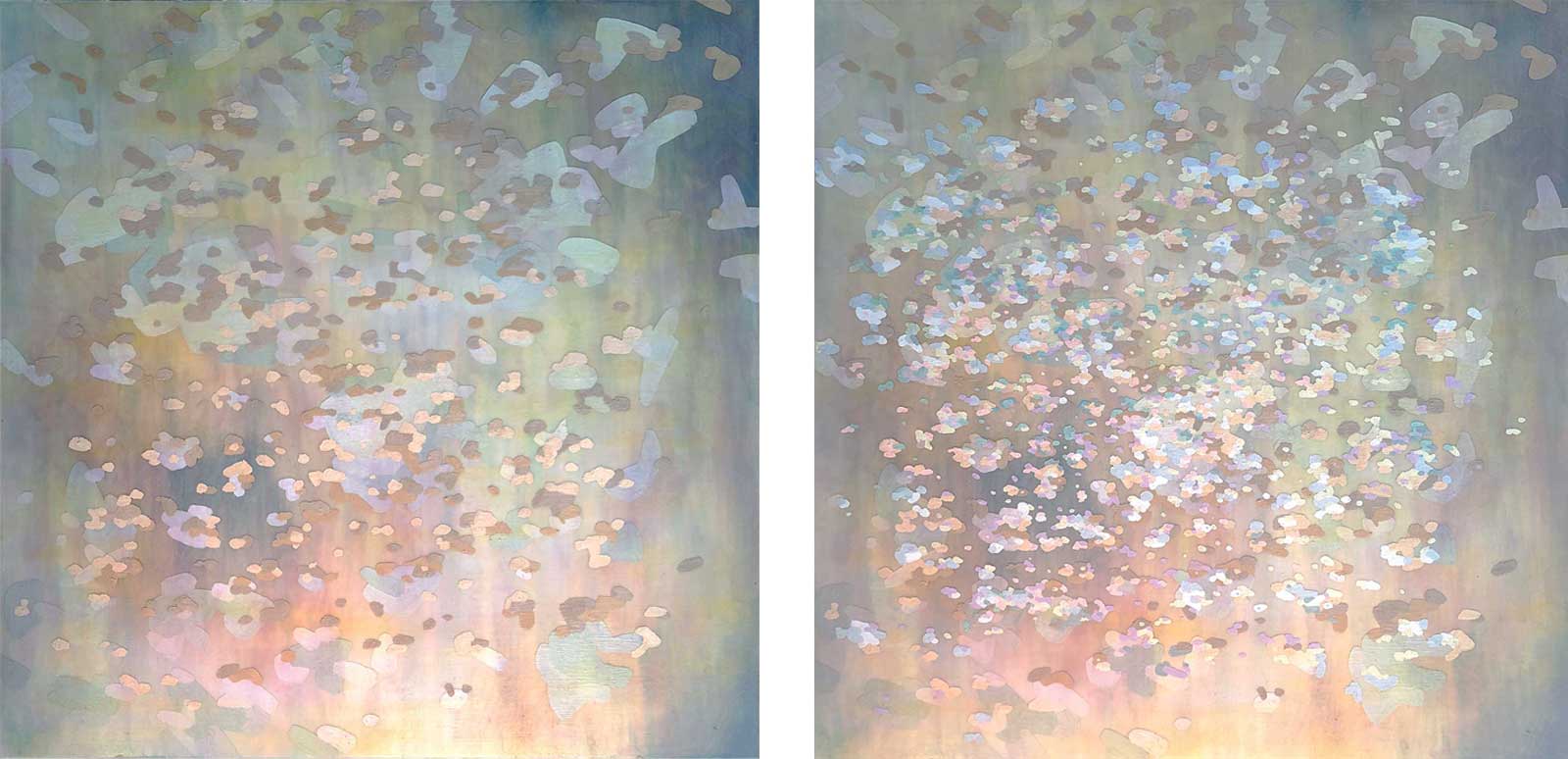
Stage 5
Stage 5 Colorful Brushstrokes
Next, I add in the brightest colors using medium brushes. These colors will act as a reference point when adding future color to the painting because I want them to be the most saturated colors in the piece.
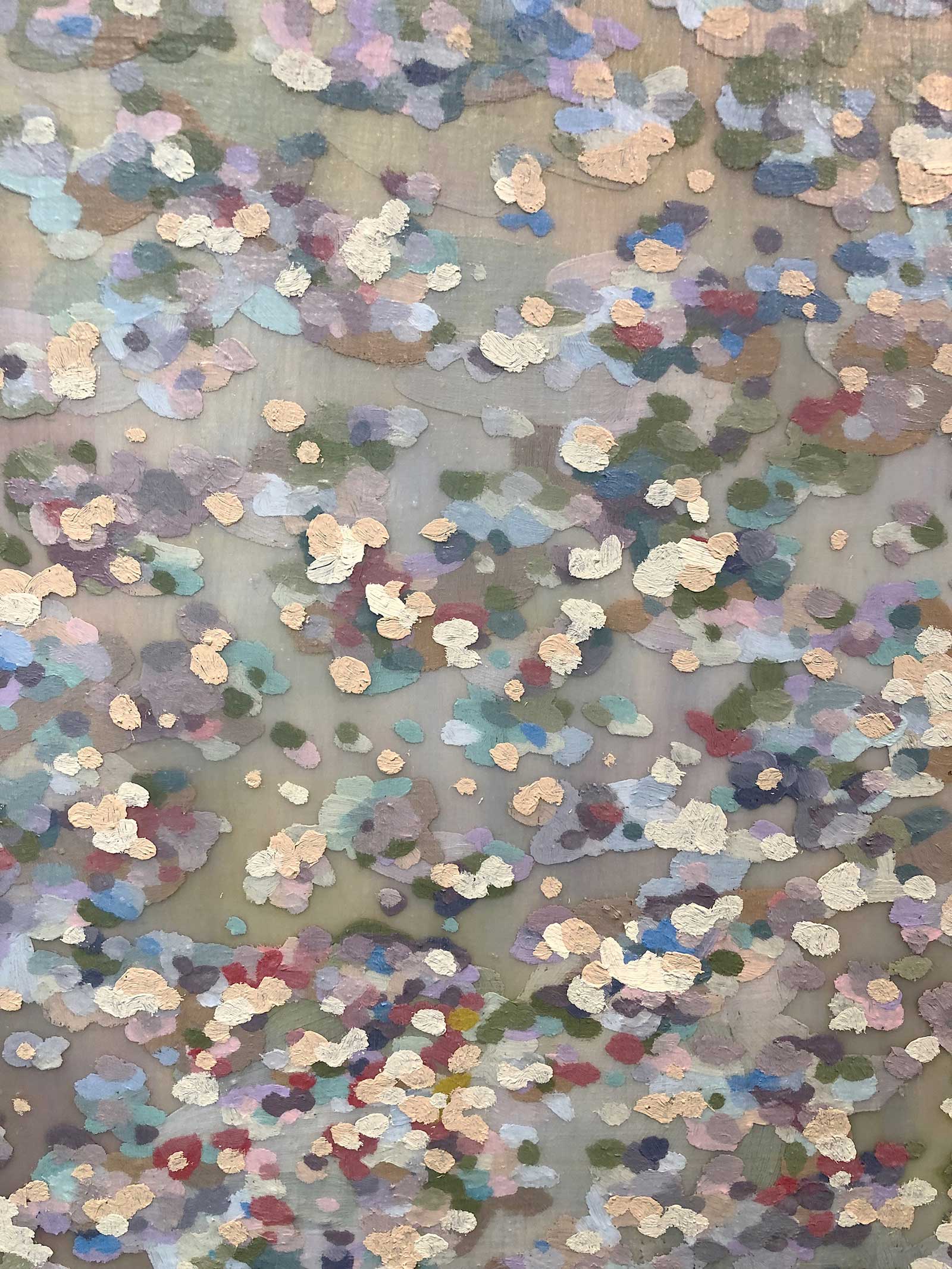
Stage 6
Stage 6 Establishing Color Harmony
By now the painting is taking shape, however, I am constantly adjusting colors in order to balance the overall compositions. The making of the work is very much like a conversation between myself and the painting. The painting speaks to me, I respond with a mark, then I sit back and listen. Again, the painting speaks to me and I respond. This back and forth continues until the painting speaks no more and our conversation is over.
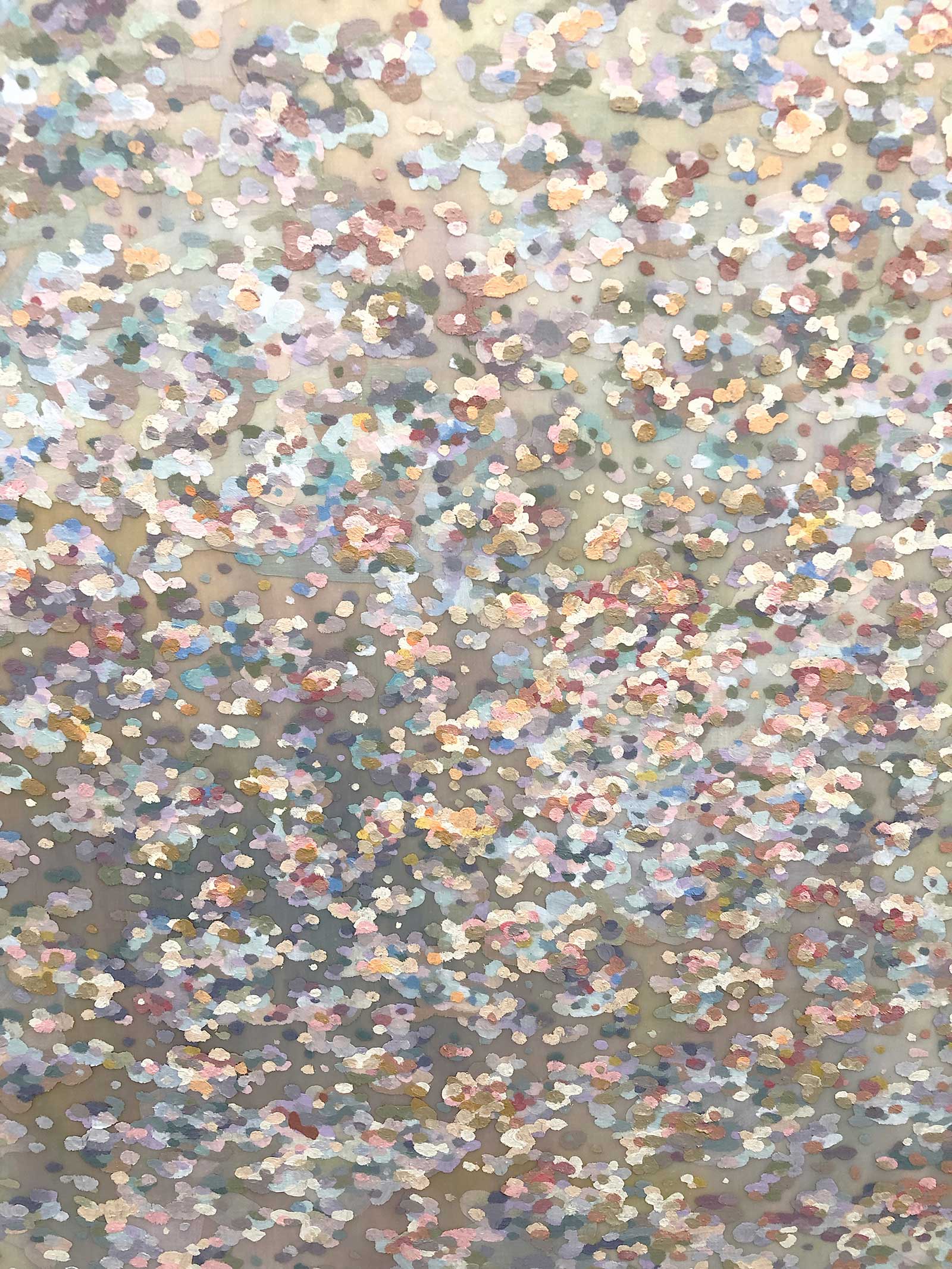
Stage 7
Stage 7 More Brushstrokes
Layer upon layer of brushstrokes are applied using a range of brush sizes. Each mark is carefully mixed and meticulously crafted. My goal is to create a painting rich in depth, color and rhythm. In this painting we see the use of soft purple and green points beam out from beneath deep saturated reds. The viewer could be looking at extreme close- ups of nature, particle clusters, details of an inner landscape, or simply forms of paint, pigment and brushstrokes themselves.
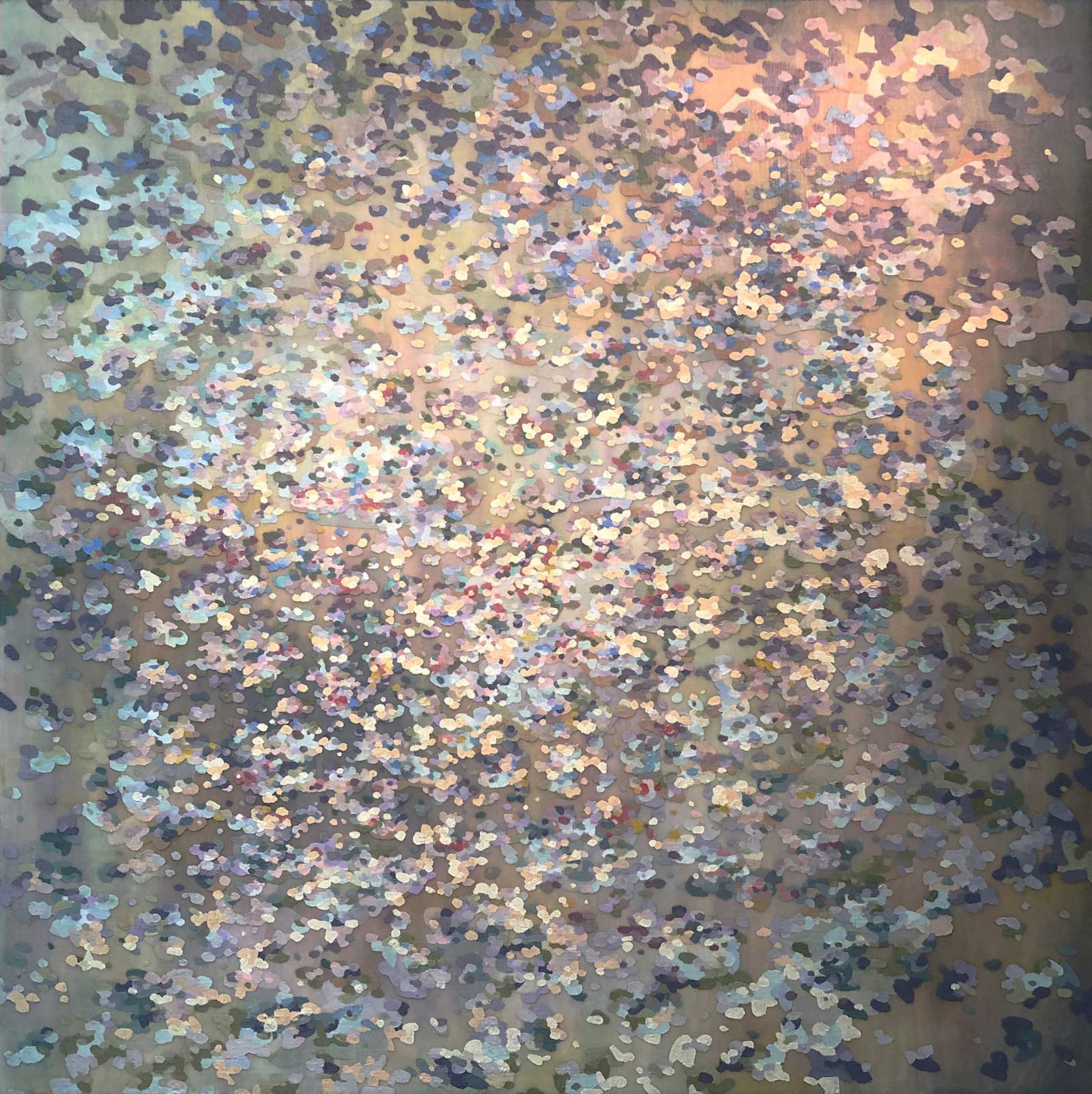
Stage 8
Stage 8 Add In Grays
I apply many shades of gray on top of the bright colored brushstrokes. These rich grays are mixed using complementary colors and help me tie all the colors together.
Stage 9
Stage 9 Final Highlights
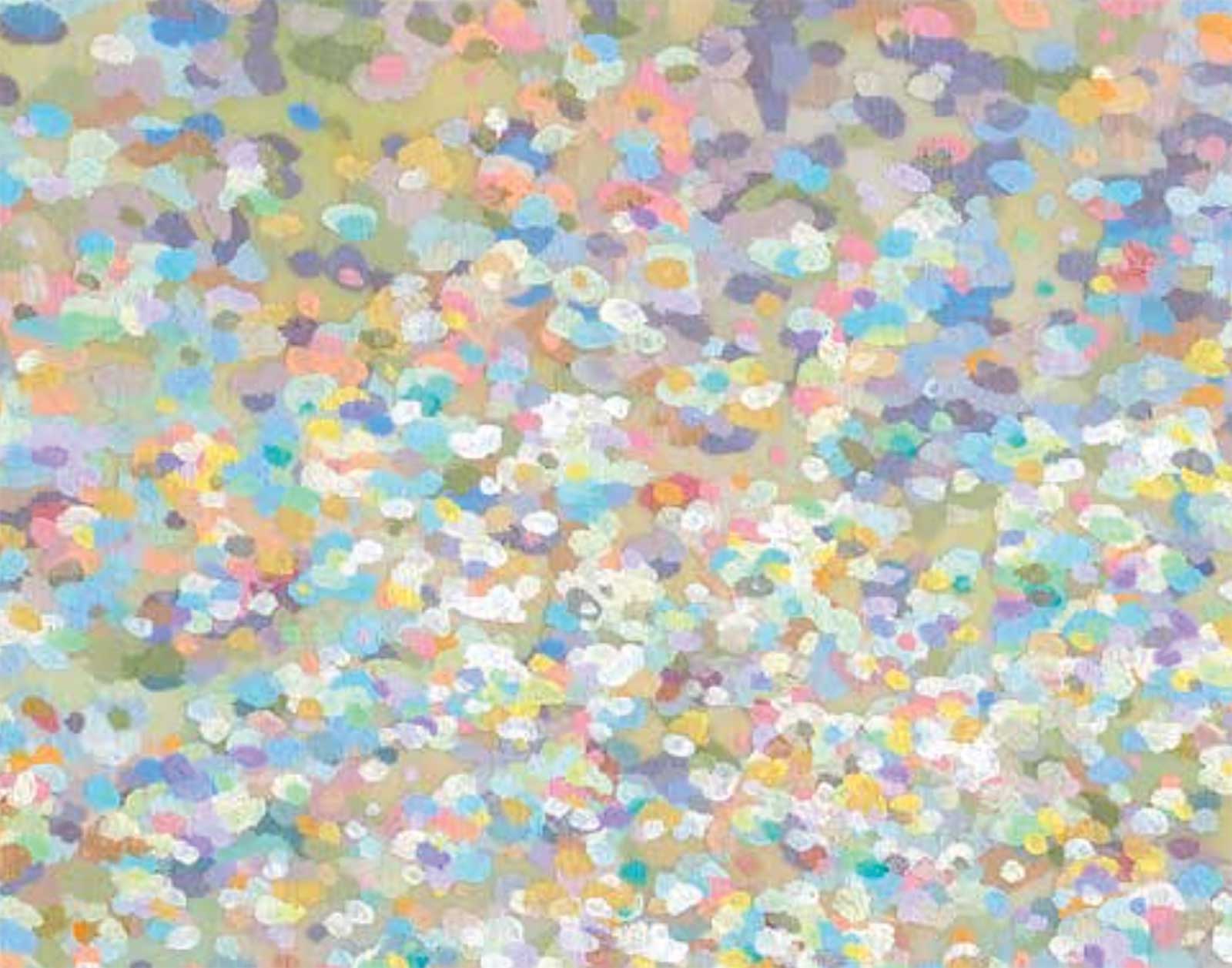
I finish the painting by going in with my smallest brush and using bright highlights. In this painting I used mainly titanium white mixed with hints of color. These final touches add vibrancy and finish off the painting.
Stage 10
Stage 10 Finished Artwork
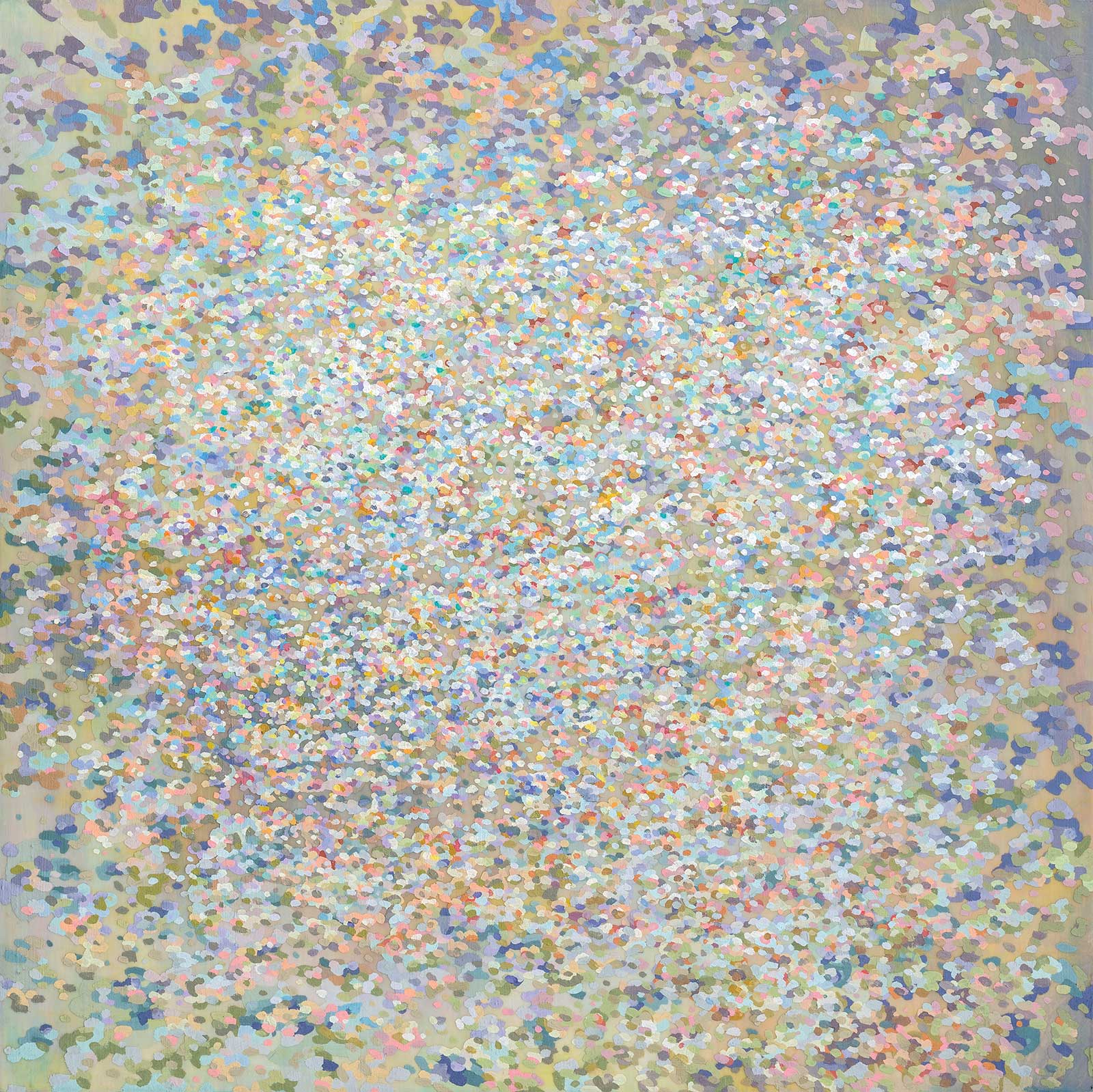
Retention of Complexion, oil and cold wax on panel, 36 x 36" (91 x 91 cm)
About the artist
 Steve Baylis
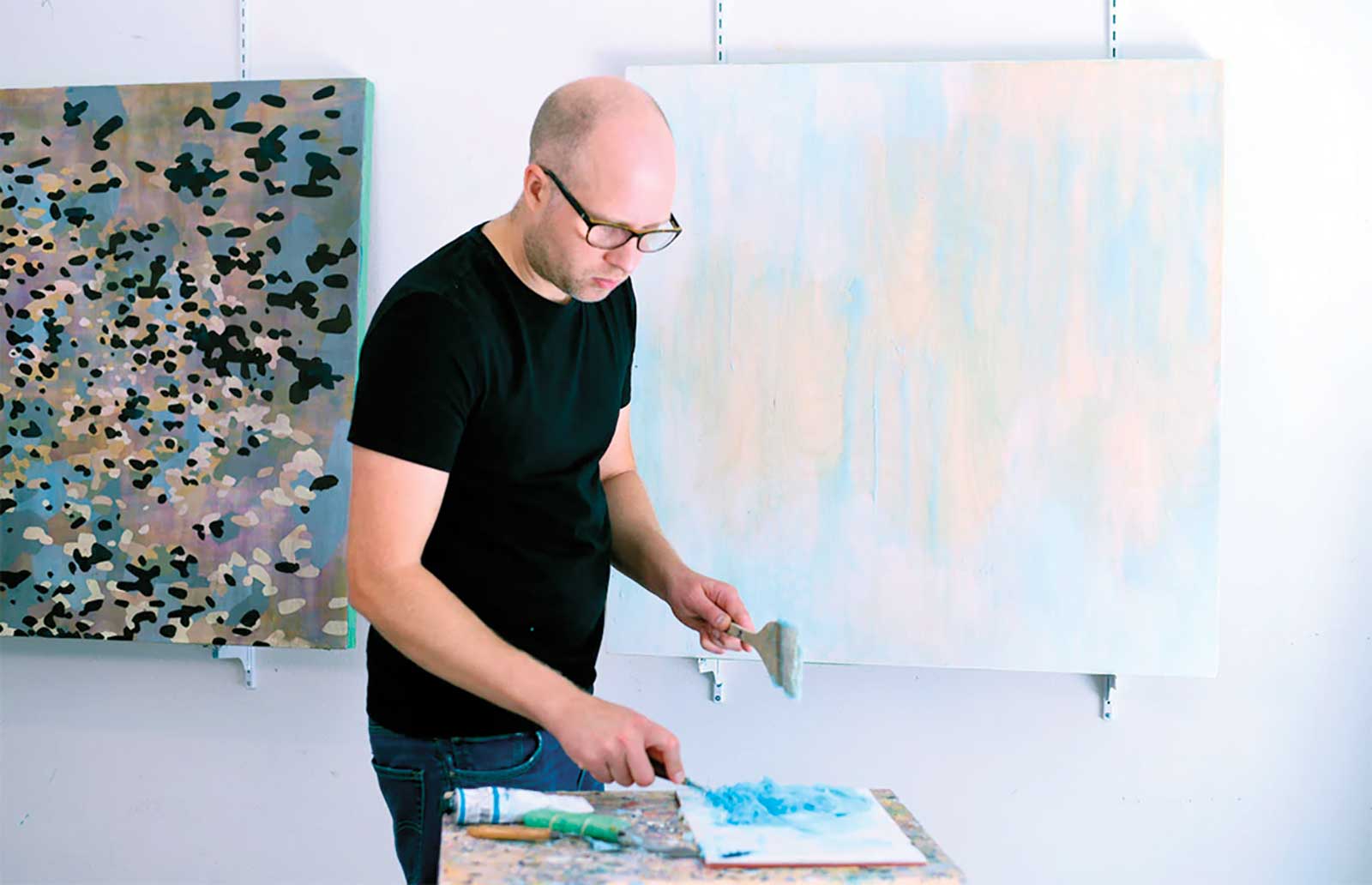
Born an artist, the event that first and forever shaped artist Steve Baylis’ path was at the age of 18 when he was diagnosed with an autoimmune disease. This challenged his core beliefs in both life and mortality, and set him down a path to better understand our place within the self and within the universe.
For the next seven years, Baylis studied art, illustration and design at some of Canada’s top art universities where he mentored under the notable post-impressionist artist Kiff Holland. Over time, his work became featured in prominent exhibitions, was represented by commercial galleries and eventually collected around the world.
Making art is a gateway for Baylis to express himself, process pain and focus on something different. Anger, joy and all other feelings and emotions are expressed into his artwork, creating a visual manifestation of human emotions. In doing so, each image becomes a gateway to another world and to unlocking one’s mind.
Contact at
info@stevebaylis.com
www.stevebaylis.com