A heavy downpour is fatal to an unprotected watercolor. The combination of wind and rain will eventually shut down an oil painting, too, even when you’re under a good umbrella. But despite the challenges, rain is a time-honored subject for plein air painters, with its moody light and glistening reflections. Here are a few stories of how I tried to paint from life on rainy days.
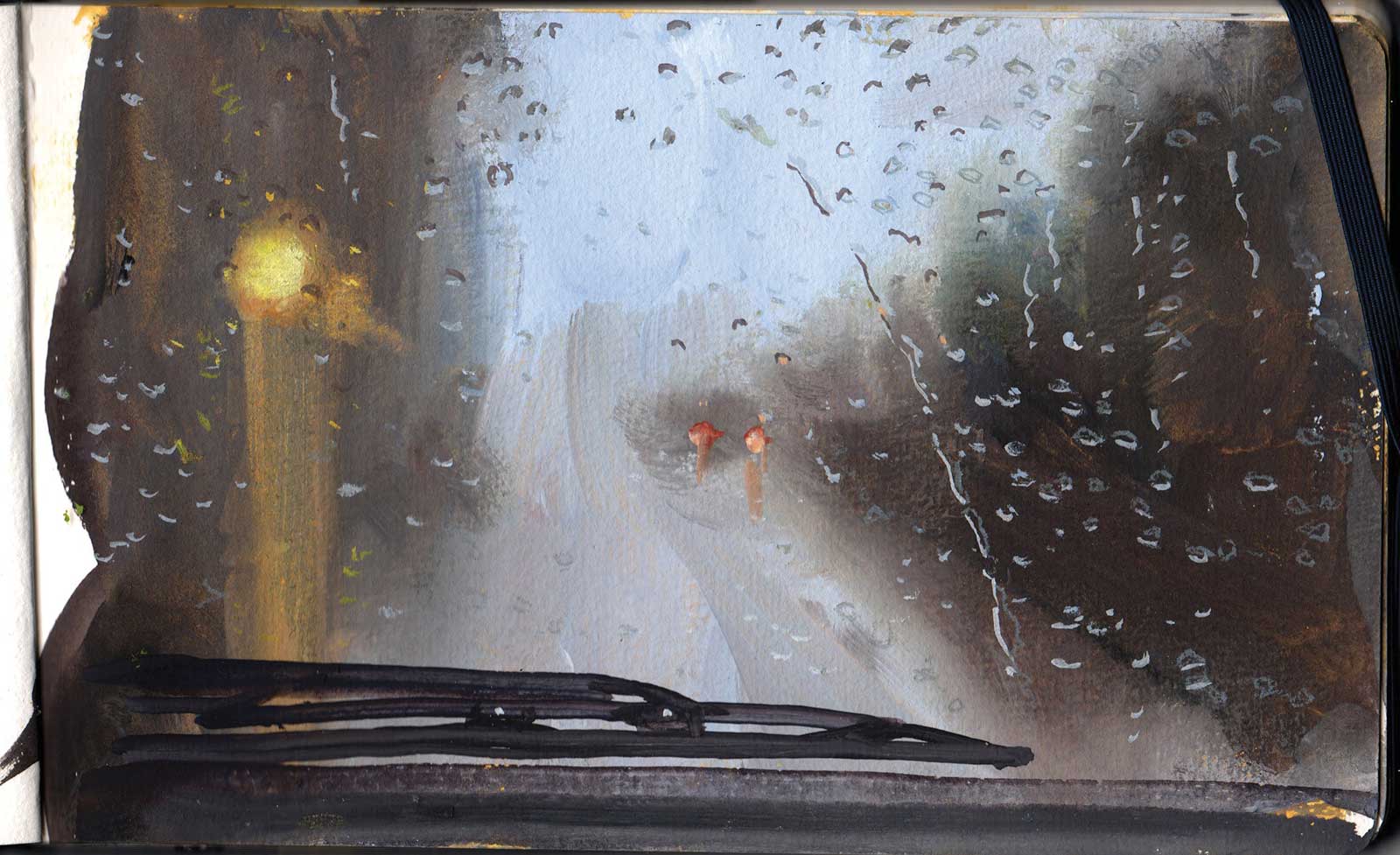
Windshield on a Rainy Day, gouache, 5 x 8" (12 x 20 cm)
Droplets on the Windshield
Painting in gouache is usually impossible if it’s raining. Why not paint from inside the car? There’s an interesting effect that I want to capture: raindrops on the windshield. That means painting the out-of-focus landscape view first, so that the attention stays on the plane of the window. The droplets form an arc along the outer path of the wiper.
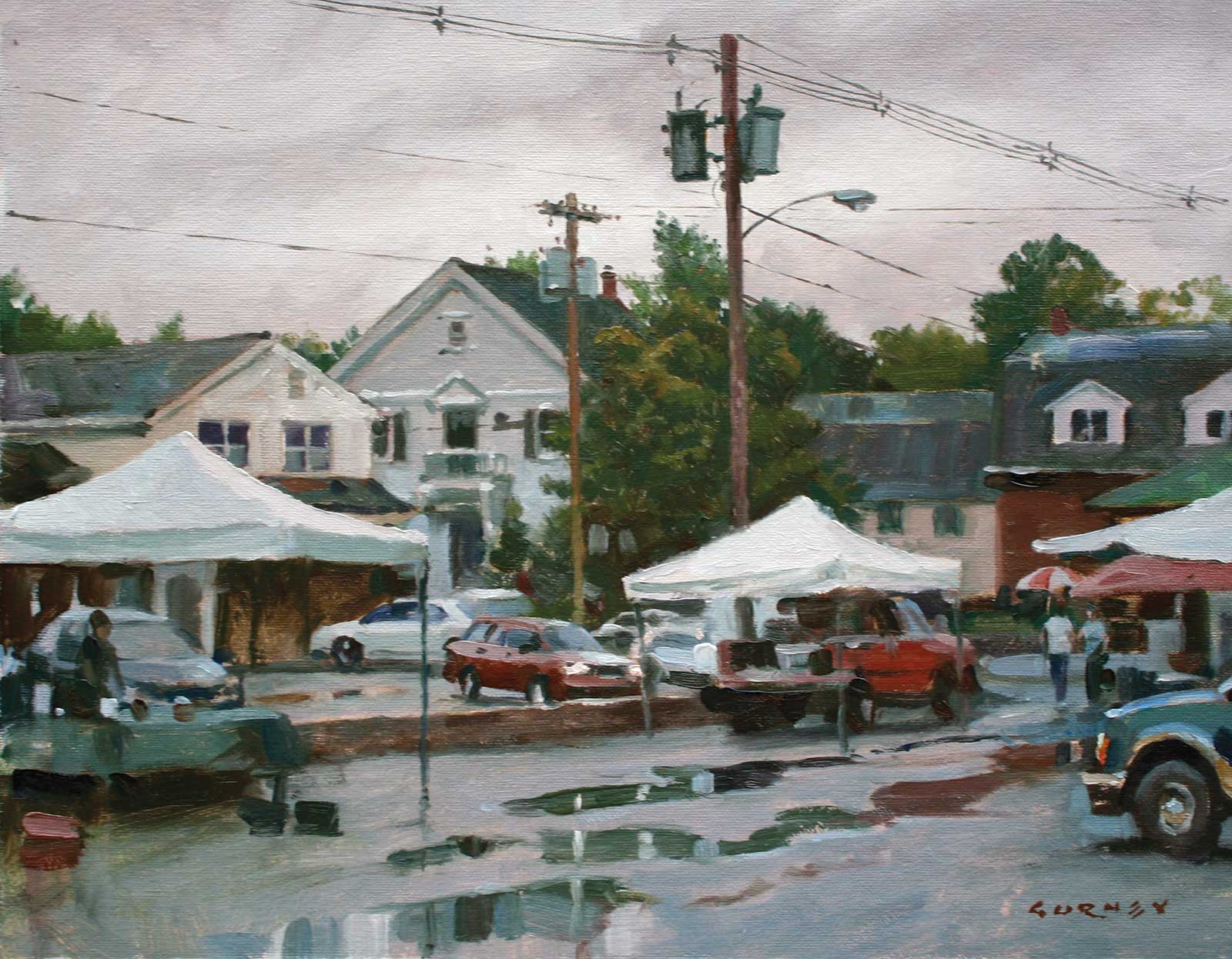
Millbrook Farmers Market, oil on canvas mounted to board, 11 x 14" (27 x 35 cm)
Downpour at the Farmers Market
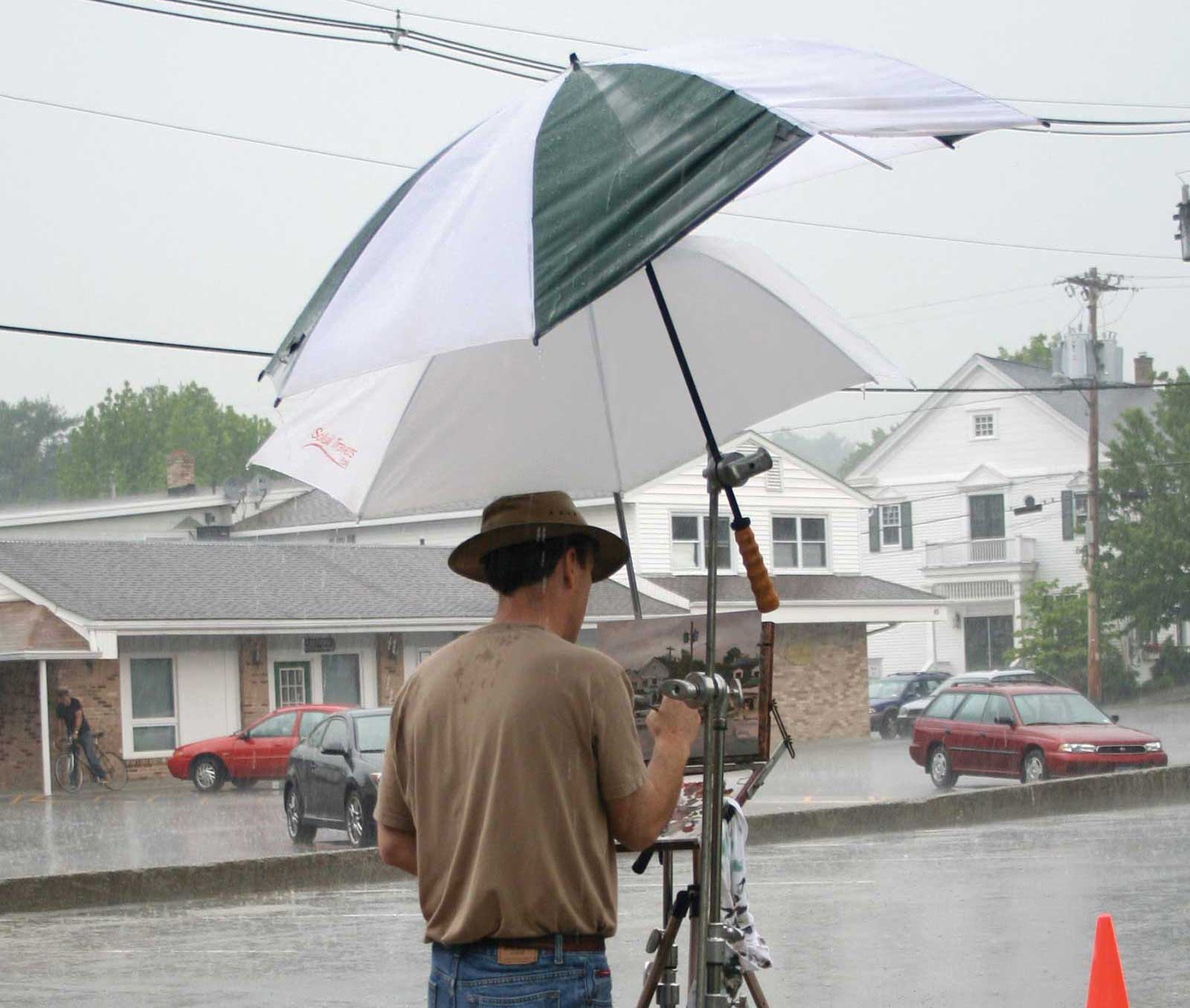
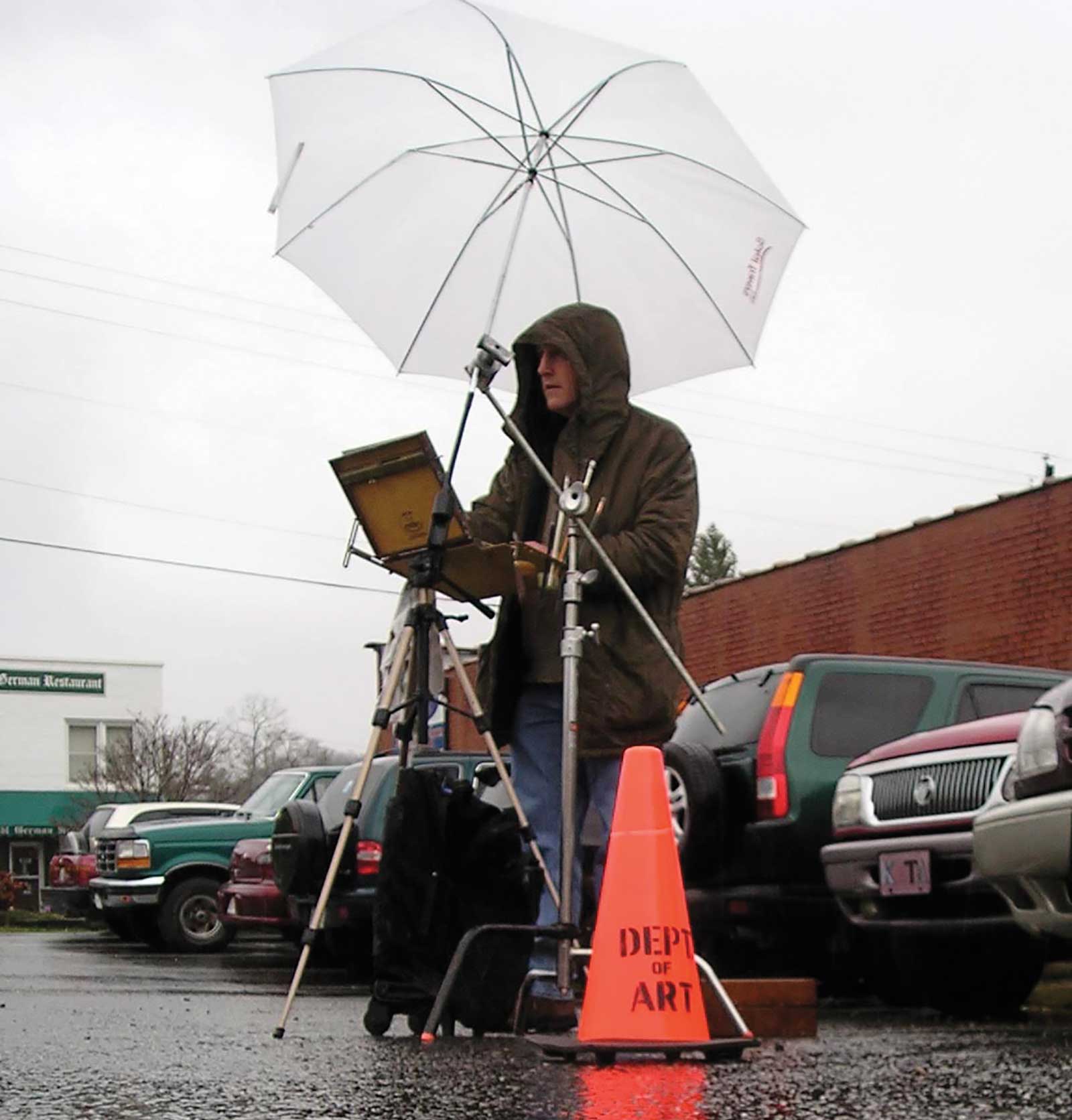
The weatherman warns of a lightning storm with a torrential downpour. I’m ready. I protect my easel with two big umbrellas, each clamped to its own C-stand. I stand in the gap between them. As the rain starts, a cold stream heads down my neck. When the wind picks up, I put my foot on the base of one of the C-stands to keep it from blowing down.
My wife sets up under the open tailgate of our van. She’s out of the rain, but her watercolor washes won’t dry. Another friend has a half an inch of water pooling in the box of his French easel.
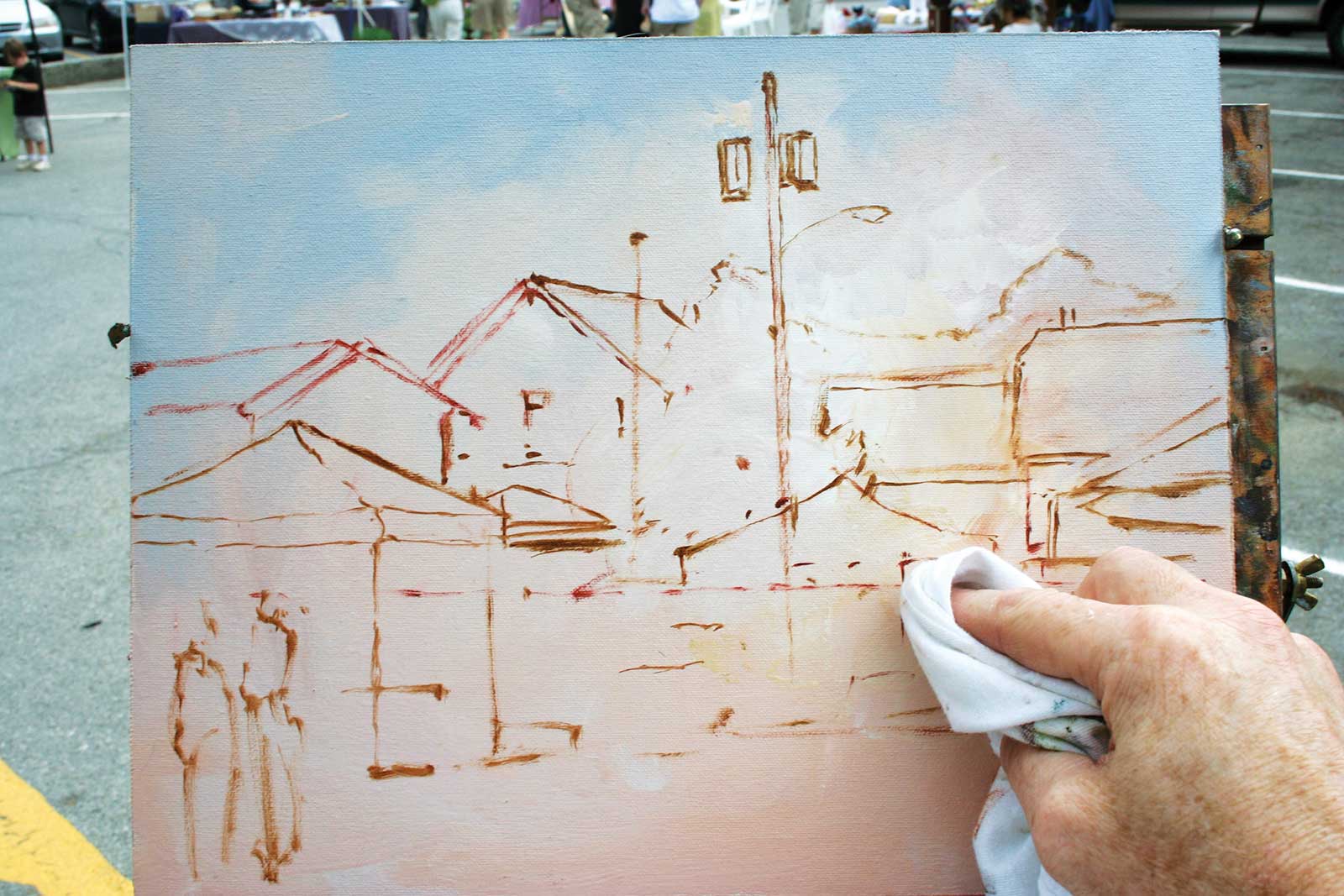
I start the drawing with burnt sienna and a bristle brush over an oil-primed 11-by-14-inch canvas. I paint the sky first and work my way down to street level. I hurry to capture the remaining tents and tables. The payoff is painting the reflections in the wet pavement. Note how the color of the puddle changes from green (under the trees) to red (under the truck and brick building). Finally I paint the telephone wires using a sable round brush guided by the mahl stick. The whole painting takes about five hours.
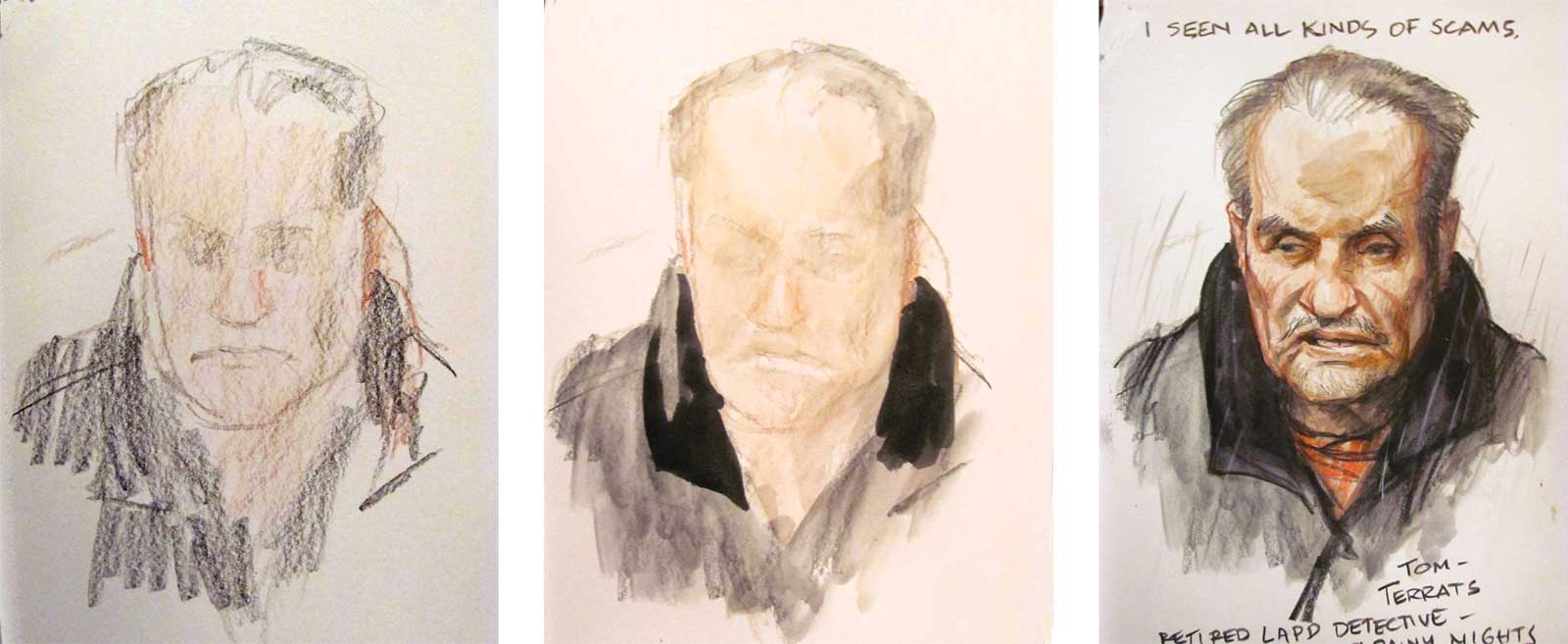
Portrait Noir, watercolor, ink, and colored pencils, 7 x 5" (17 x 12 cm)
Portrait Noir
“I’ve never seen an October rain like this in all my years,” says my friend David Starrett. We meet for lunch at Gus’s Barbecue in South Pasadena. At the back door we drop our umbrella into a bucket full of other half-dead umbrellas.
David was a model for one of the characters in my Dinotopia books. He’s a natural actor, the son of Western actor Charlie Starrett. He obliges me by spontaneously getting into character as I sketch him.
He orders ribs, and I order coffee. I unholster my colored pencils. Robert Johnson’s voice pours out of the speakers. Rain gushes out of the gutters outside. David turns up his collar. I squeeze the handle of my black Niji brush pen. A drop of Higgins Eternal bleeds out of the tip.
He starts looking more and more like a hard-boiled film noir detective, the kind of guy who works best after hours on rainy nights when the rest of the guys have gone home. “That’s when they dump the evidence,” he mutters, as he saws loose a rib.
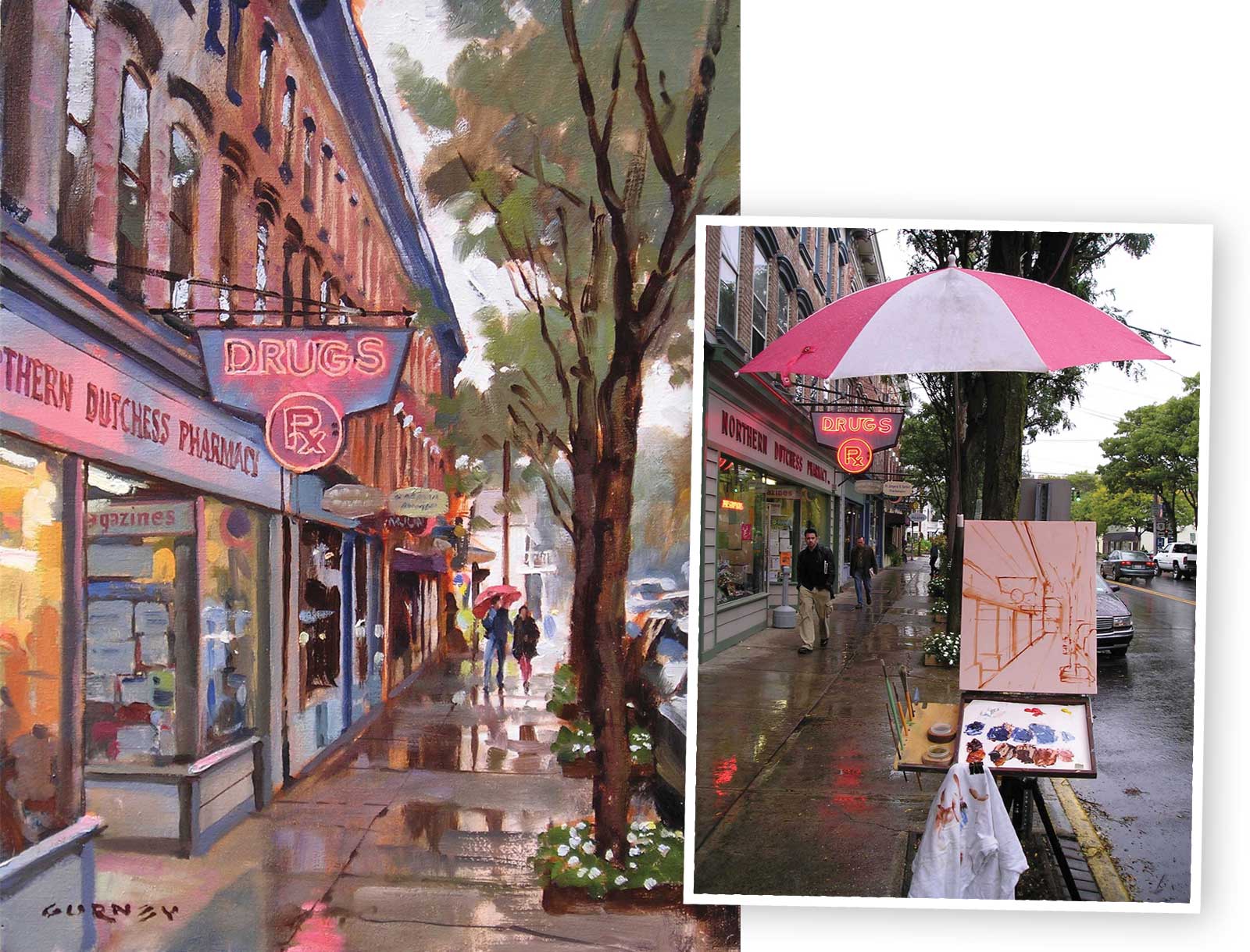
Market Street, oil on linen, 14 x 18" (35 x 45 cm)
Wet Sidewalks
One of the virtues of oil paint is that you can paint in a drizzle or a downpour. Here’s the set-up I’m using for painting a storefront scene. The leaky beach umbrella is held on with a plastic clamp, which attaches to the top of the sketch easel. It keeps the worst of the water off the painting, but still everything is covered by droplets.
The photo on the left shows the painting in its lay-in stage, drawn in loosely with a bristle brush using burnt sienna and turpentine. It pours for six hours with no let up, but at least the light stays more or less the same during that time.
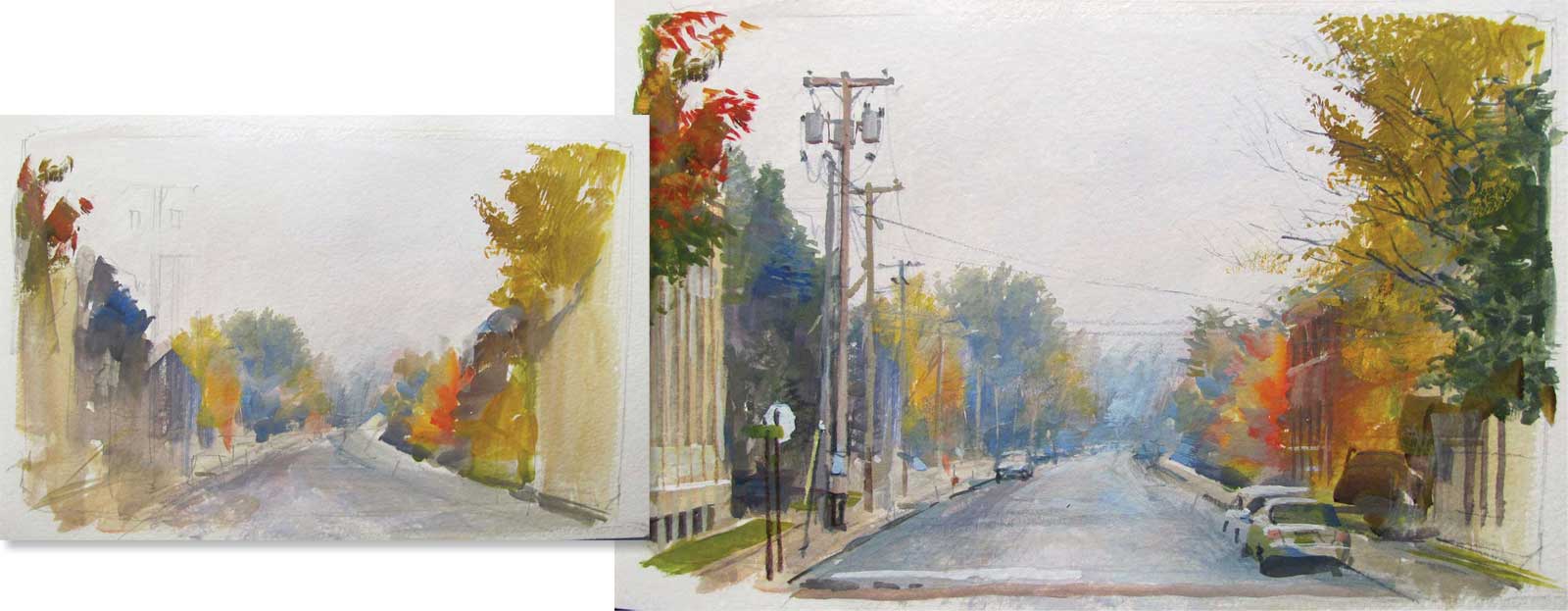
Bennington, Vermont, gouache and watercolor, 5 x 8" (12 x 20 cm)
The Rain in Bennington, Vermont
It’s a wet day in Bennington, Vermont. Because of the drizzle and rain, I look for a place to paint that’s under cover, so I drive around town until I find a public building with a covered porch.
I use an unusual technique with gouache and watercolor called “painting into the soup” that works well for conveying this kind of misty weather. I do a very quick pencil lay-in on the watercolor paper, and then apply the “soup”—a thin layer of opaque titanium white, lowered just a little bit from pure white with a little blue, yellow and red.
The soup goes across the whole sky and the far end of the street, and then tapers off past the treetops and toward the foreground. With 100 percent humidity, the soup takes a while to dry. When the soup dries, it receives the colored pencil a bit like gesso would, allowing very sensitive small touches. Instead of black, I used two values of gray Caran d’Ache Supracolor pencil for the delicate telephone wires and fine branches.
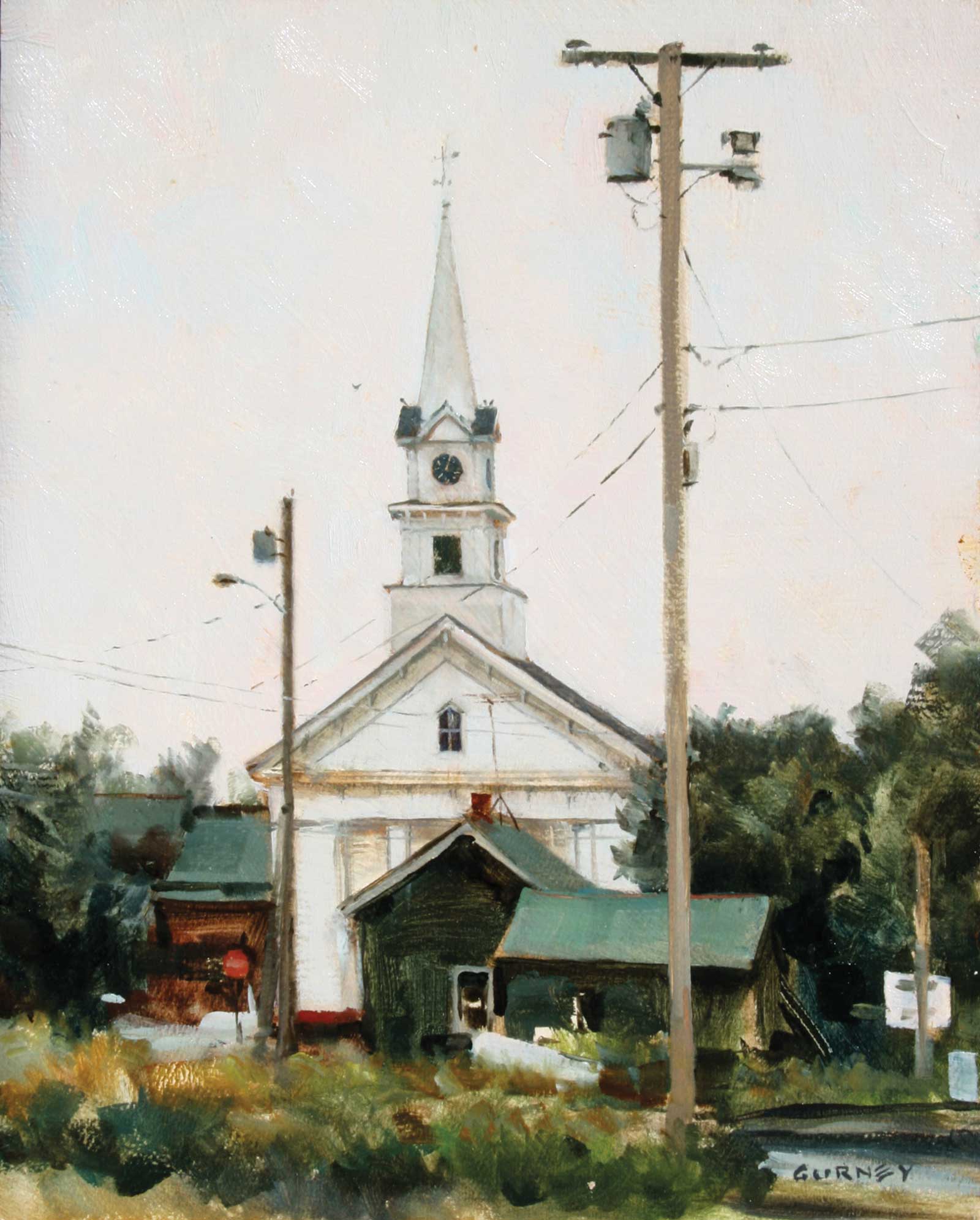
Maine Church, oil on board, 10 x 8" (25 x 20 cm)
The Rain in Maine
It’s a steady deluge in Millbridge, Maine. I have my painting gear but no umbrella. The only public place with cover is the porch in front of the post office. The view looks across to the congregational church beyond some utility poles and outbuildings. I like the way the church is white against the white of the sky, with a few birds perched up high on the steeple.
About the Artist
 James Gurney
James Gurney is the author of Color and Light: A Guide for the Realist Painter and the Dinotopia series, which you can get signed at his website, www.jamesgurney.com.
Contact at
www.jamesgurney.com