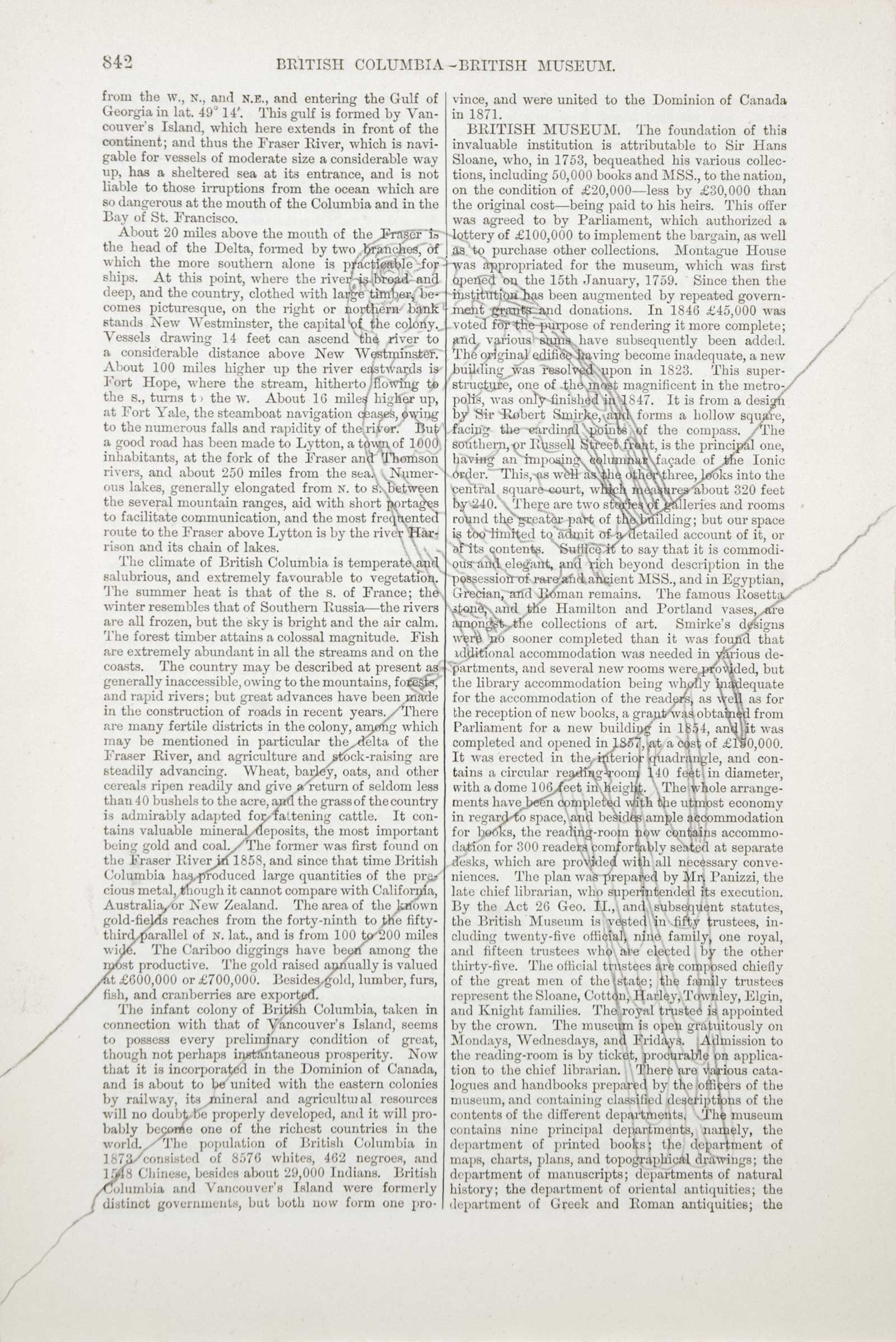
There lies a history and a story on every page of a vintage book that can be felt and seen in the often evident marks and wear. These pages are the substrate and the inspiration for the avian subjects I paint. There is always a relationship between the page and the bird, inviting questions and investigation. The page used in this demonstration references the British Museum, and the bird in question, the eastern rosella, is represented in the museum’s specimen collections. While pieces using pages from field guides show a direct relationship between the bird and the page, with the description of the bird evident, these works are additionally an homage to the creators of field guides—both the artists and scientists.
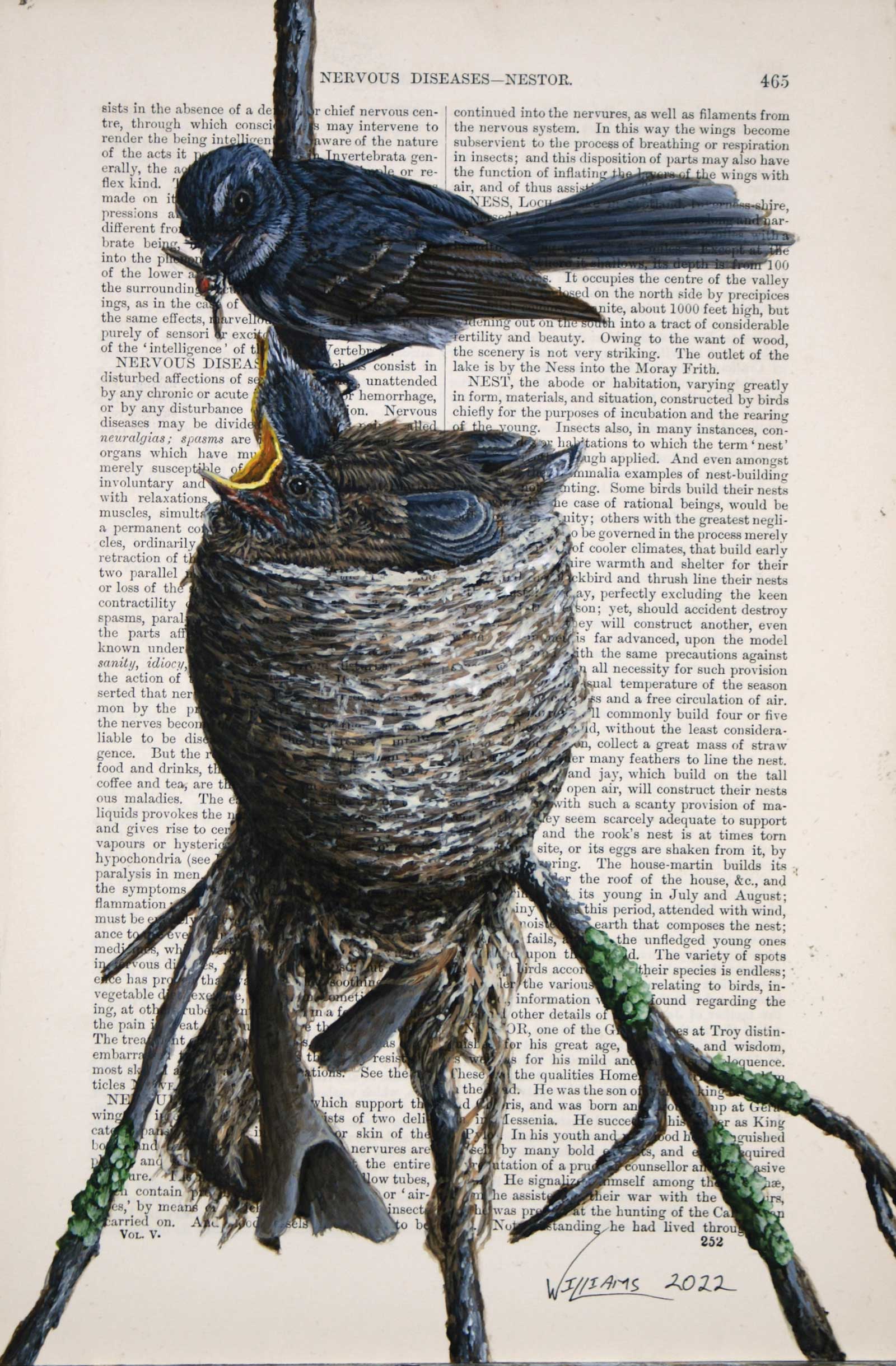
Grey Fantail feeding young in nest on vintage (1851) page from ‘The Popular Encyclopaedia or Conversations Lexicon’, acrylic on vintage book page, 9.7 x 6½" (24.7 x 16.6 cm) A piece created from my viewing of gray fantails nesting in our backyard. I wanted to capture the dedication of the parents which we viewed constantly flying around taking insects on the wing to feed their young. The open composition brings focus to the nest and the birds.
Due to the variable nature of the paper in vintage books, I have found acrylic to be the most versatile medium. Each painting is built with a large number of reasonably transparent layers, allowing blending of colors while building form and feather texture. The paint is thinned with a combination of satin glazing medium and water. The use of Golden Open Slow Drying Acrylics with the glazing medium allows for wet-in-wet blending both on the palette and within the painting. In this way I am able to achieve the soft blends and color gradation seen in the birds’ feathers. At times the paint will be applied in a more opaque and thicker approach to indicate feather form and texture.
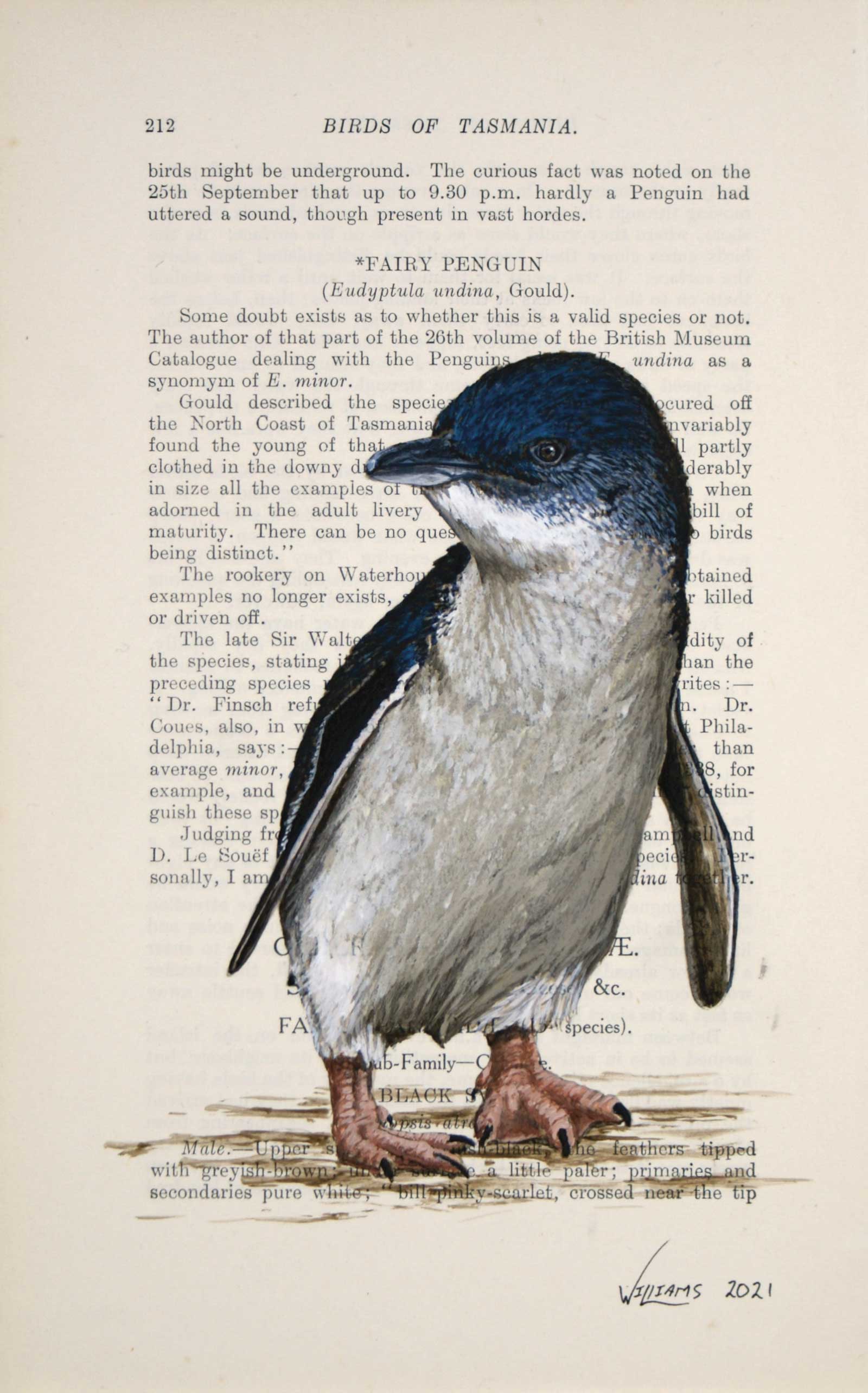
Fairy Penguin on vintage (1910) page from ‘A handbook of the Bird of Tasmania and its dependencies’ by Frank Mervyn Littler, acrylic on vintage book page, 9.2 x 5.7" (23½ x 14½ cm) The pose of the bird leaning towards the page edge while looking back across the page creates a lovely composition and narrative to the piece. Minimal ground details bring the focus to the bird with the turn of its head and raised wings.
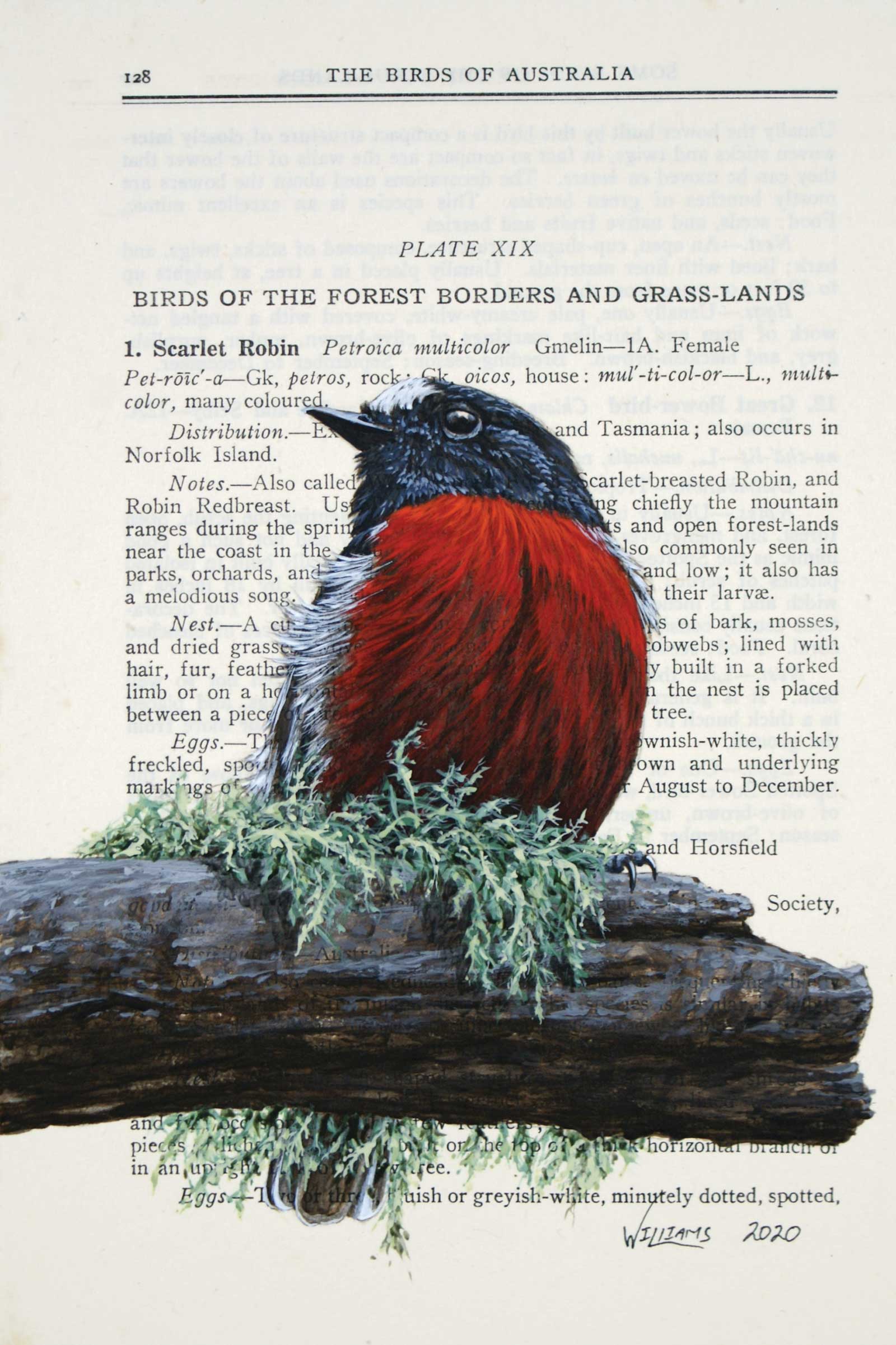
Scarlet Robin on vintage (1948) page from ‘What Bird is That?’ by Neville W. Cayley, acrylic on vintage book page, 8½ x 5¾" (21.6 x 14.6 cm) The turn of the head in the direction the branch leaves the page creates a tension to the piece. The rich red was heightened by accentuating the shadow down the chest with gradated red browns.
In some pieces this transparent layered painting approach allows for pieces of text from the page to still be visible within the bird. I have found that this can be so subtle that the text actually contributes to the texture and form of the feathers while also binding the bird to the page. This is never a conscious decision defined from the start, but is in fact a more organic approach in the evolution of each piece. This approach is also applied to the level of detail within a piece. Some areas will end up highly rendered with fine detail while others will be more suggestive.
Compositional decisions are made around the page context and the bird as well. Consideration is made to ensure key pieces of text remain visible to accentuate the relationship between the bird and the page. The placement and pose of the bird, while influenced by the page, also reflects the nature and behavior of the species. Often the bird will be placed off-center with negative space creating a nice tension to the piece. I like to use dynamic poses to show behavior and to bring movement into a piece. The simplicity of the composition, often without much more than a branch for a perch, retains focus on the bird and allows for the contextual relationship to the page.
My Art in the Making Eastern Rosella on vintage (1851) page from ‘The Popular Encyclopaedia or Conversations Lexicon’
The page chosen references the British Museum and is in reference to the collections of specimens (this bird included) that now reside in the British Natural History museum—which were collected during the age of exploration. The piece is an homage to the explorers and artists of that time.
 Stage 1
Stage 1 Choosing the Right Page
In this stage, I am selecting the page I will work on from my vintage book collection. A critical stage in creating the relationship between the bird and the page to drive the narrative of the piece and make the connection with the viewer.
WHAT THE ARTIST USED
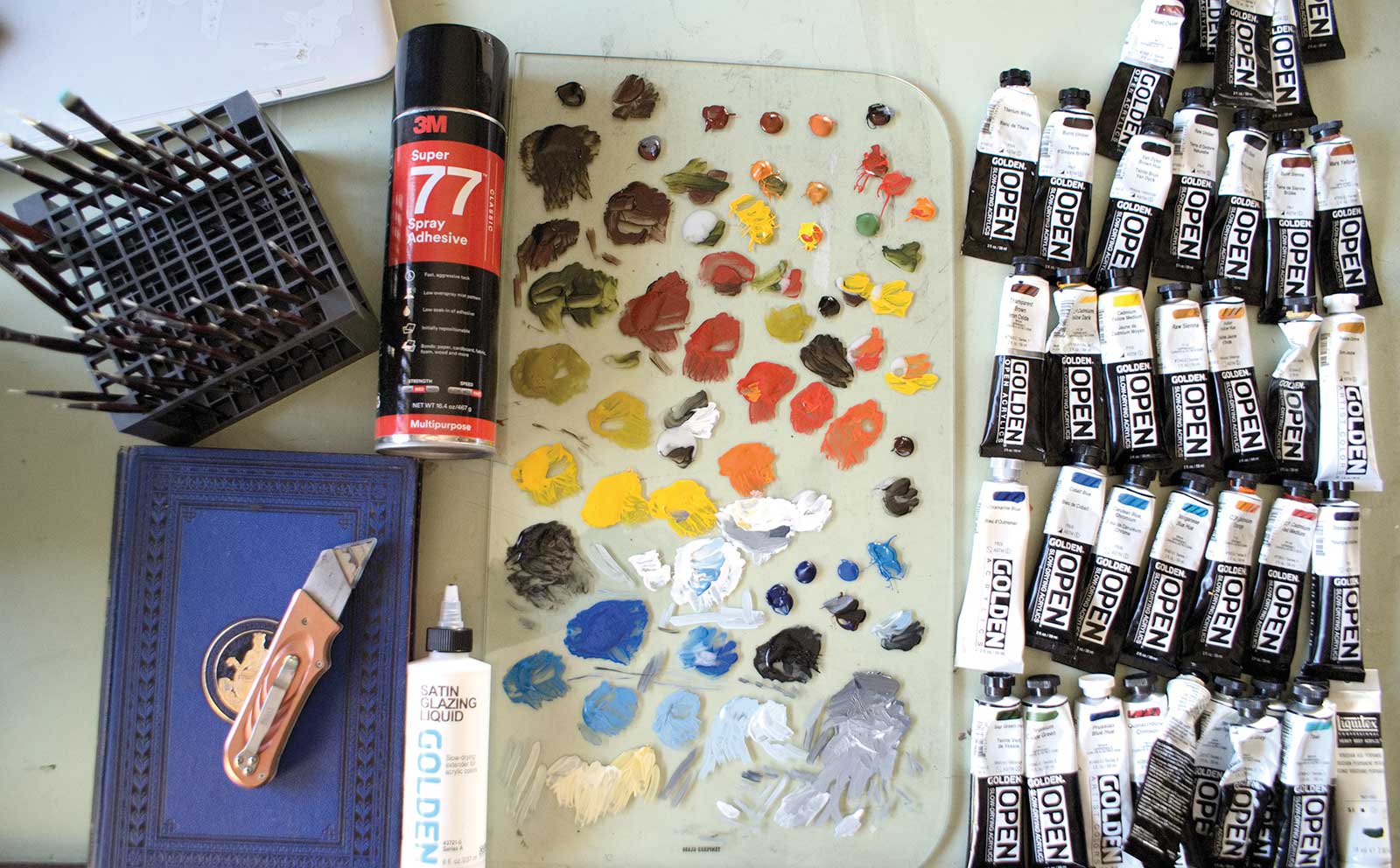
Golden Open Slow Drying Acrylics
Raw umber, Burnt umber, Van dyke brown hue, Bone black, Violet oxide, Cadmium red medium, Cadmium orange, Raw sienna, Indian yellow hue, Cadmium yellow dark, Cadmium yellow medium, Ultramarine blue, Cerulean blue, Sap green hue, Titanium white
Brushes
Neef taklon liner, size 0, Neef taklon script, size 10/0, Neef taklon script, size 20/0, Neef taklon dagger, size ¼
Paper
Vintage book page trimmed of binding edge, Archival matt board (the book page is glued to this for support)
Additional Supplies
Golden Satin Glazing Liquid, 3M Super 77 spray adhesive (acid free), Knife/scalpel with fresh blade, Glass palette, Water cup, Tracing paper, Pencils, Paper towel, Computer with reference images
 Stage 2
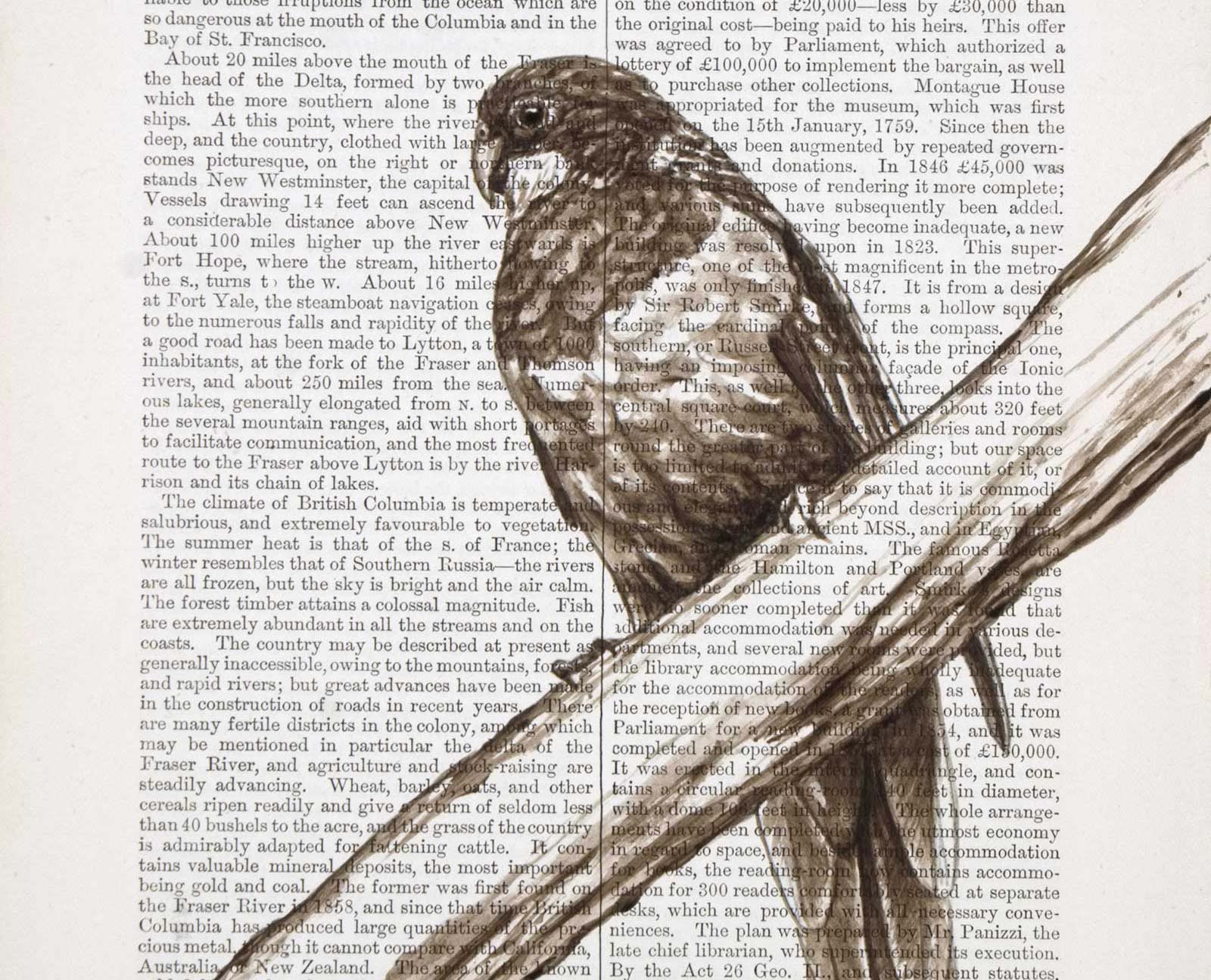
Stage 2 Drawing
The page has been carefully removed from the book and glued to an archival matt board with acid-free spray glue. The drawing (showing feathers and form) has been transferred to the page using tracing paper.
 Stage 3
Stage 3 Underpainting
The tonal underpainting capturing light, and particularly shadow, is made with raw umber thinned with glazing medium and water. I personally like the neutral tone of raw umber as a base to build subsequent layers.
 Stage 4
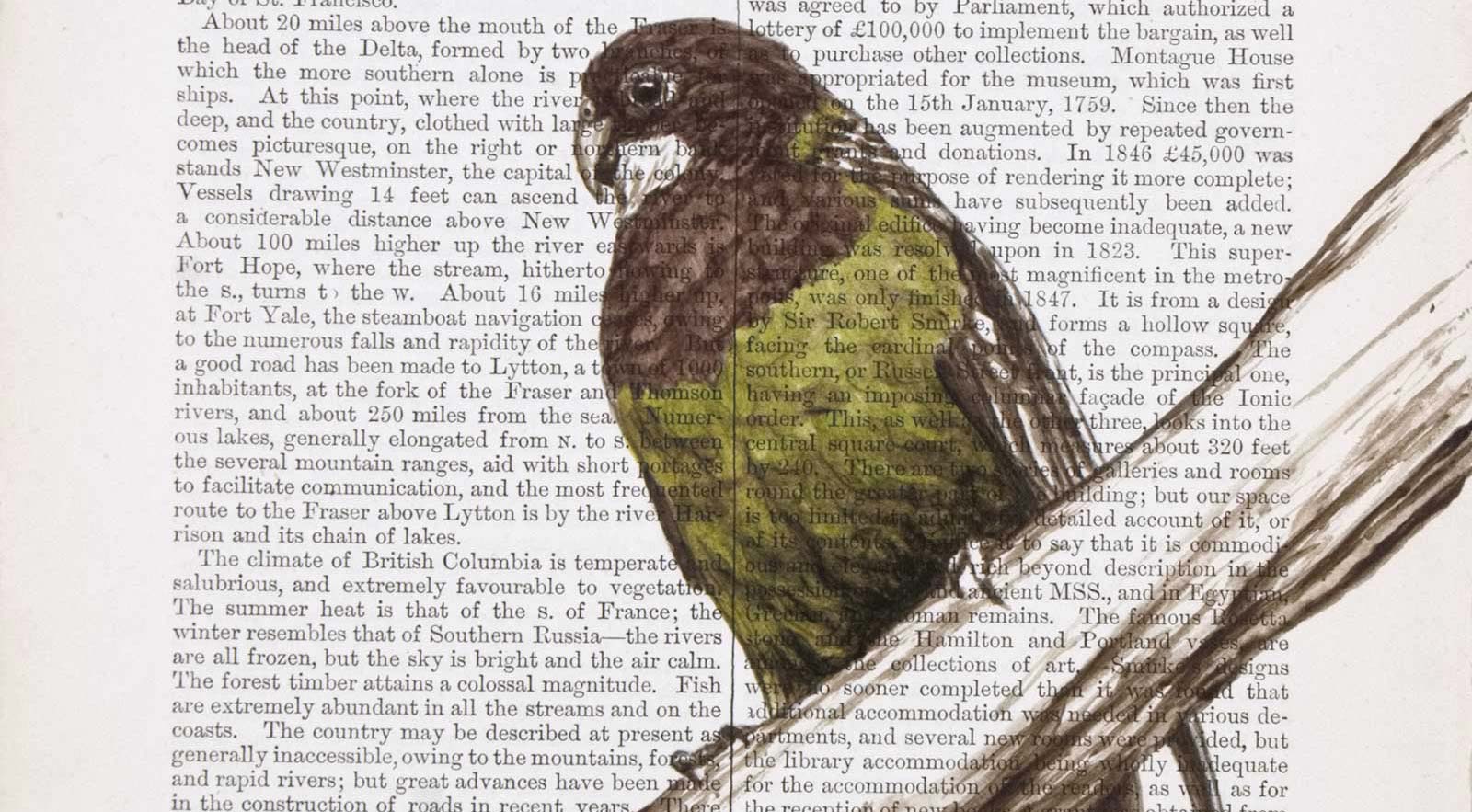
Stage 4 Strengthening Shadows
The first transparent washes are laid down, reinforcing shadows created in the underpainting. The red is a mix of violet oxide, burnt umber and Van Dyke brown. The yellow/green is sap green, Indian yellow hue and raw sienna.
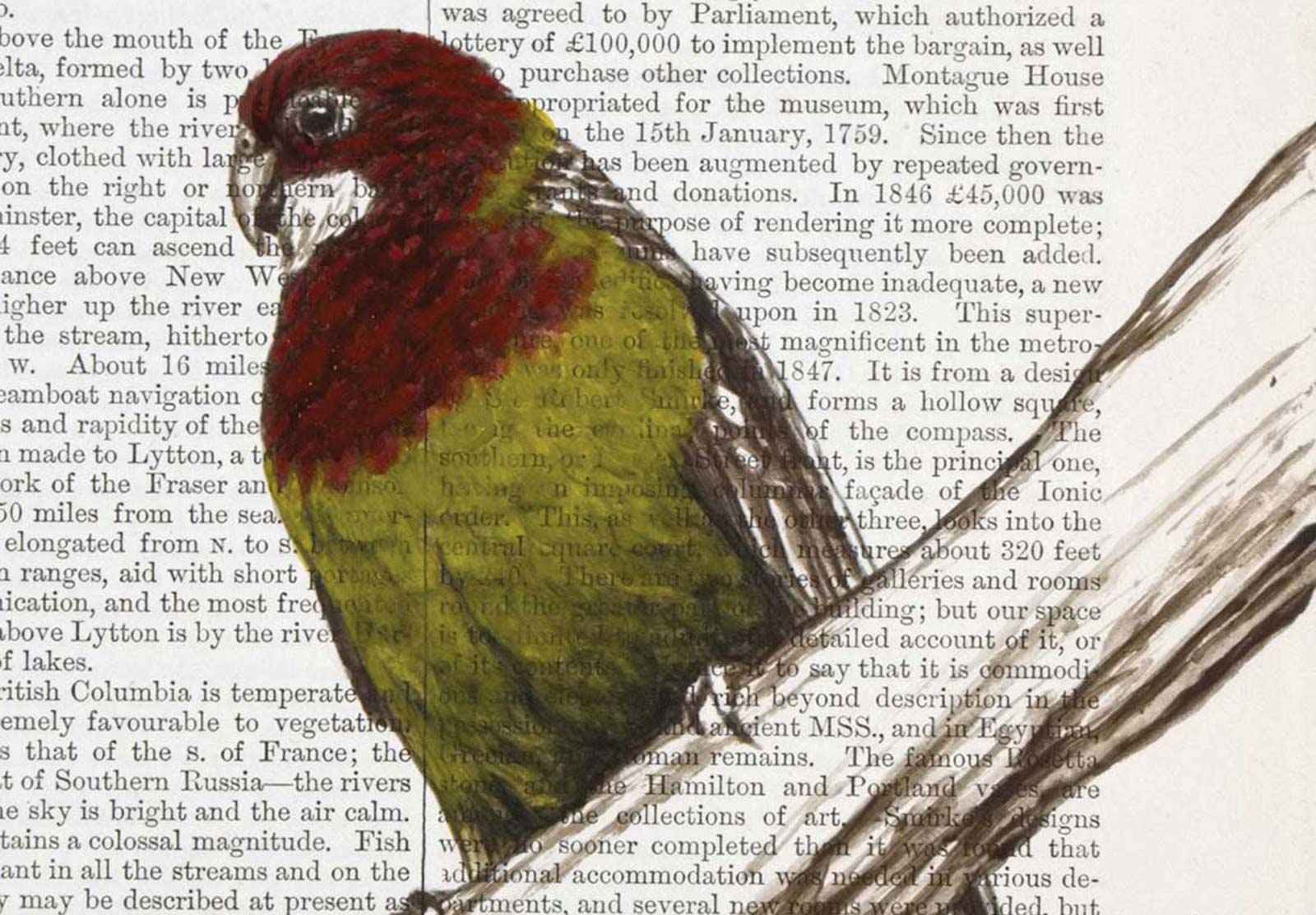 Stage 5
Stage 5 Intensifying Colors
The vibrancy of the red begins by adding cadmium red to the initial mix on the outer parts of the feathers to preserve form. Cadmium yellow dark is added to the green mix. With both colors, glazing medium is used for blending.
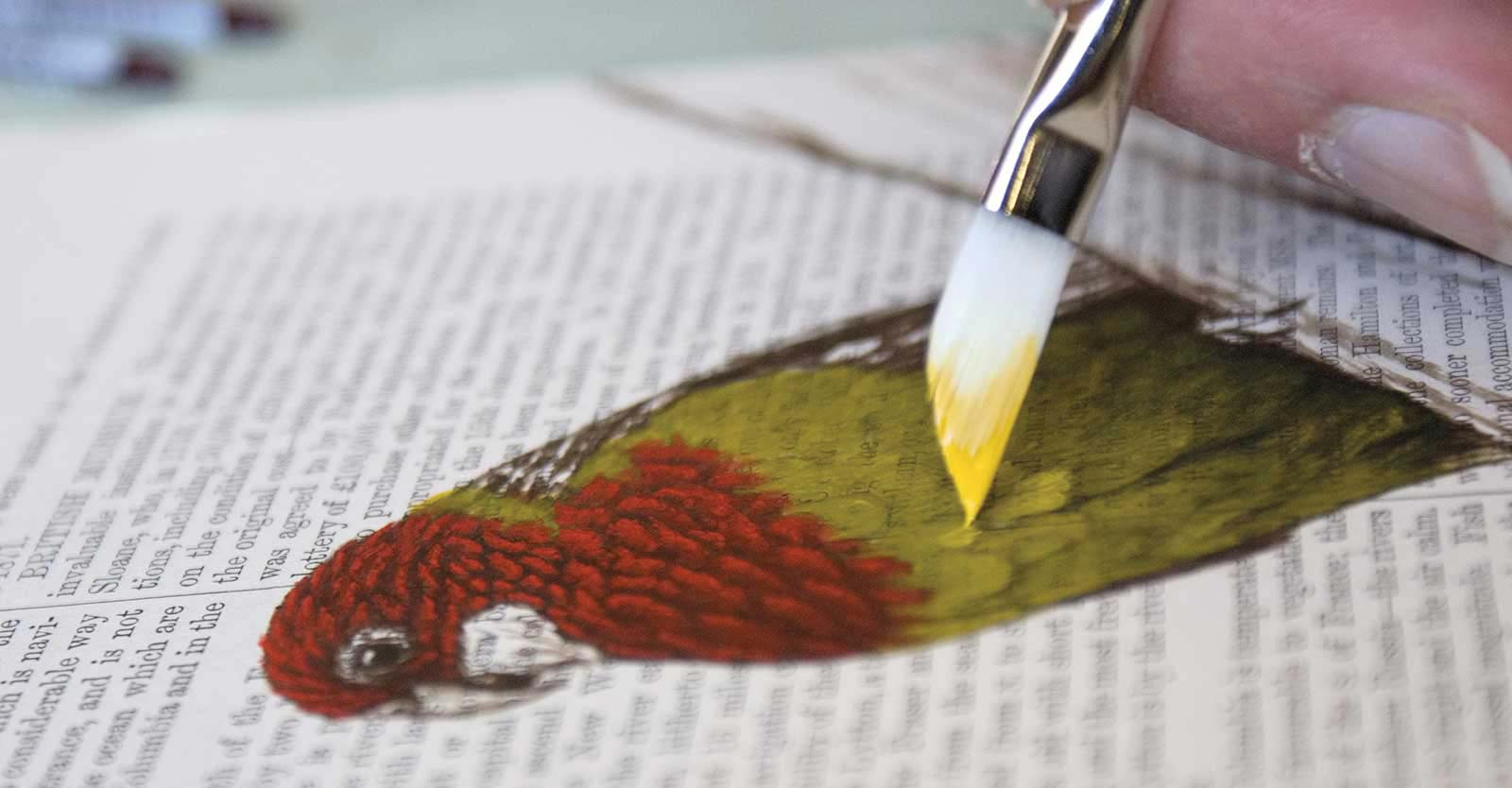 Stage 6
Stage 6 Stronger Reds
Strengthen the red by adding cadmium red to the mix, gently washing outer parts of individual feathers. Cadmium yellow dark is added to the yellow/green mix and applied with a dagger brush bringing softness to the feathers.
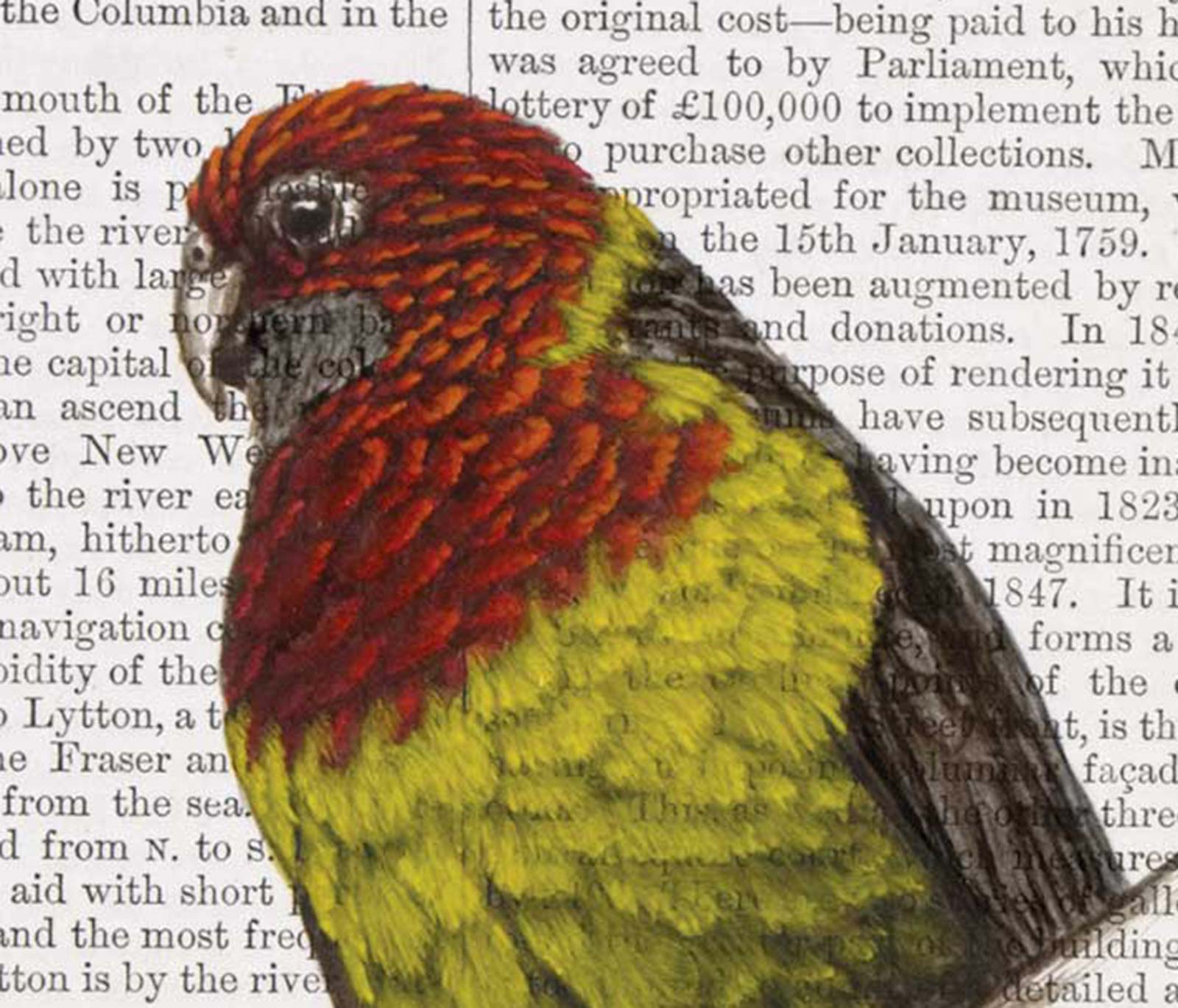 Stage 7
Stage 7 Directional Lighting
Directional lighting is indicated by applying initial highlights to the red and yellow/green feathers. A bone black wash is applied as a base color for the tail, wing and throat.
 Stage 8
Stage 8 Details in the Feathers
The throat feathers are finely indicated with a thinned titanium white. The blue on the wing and tail starts with a wash mix of ultramarine and cerulean blue made in two layers.
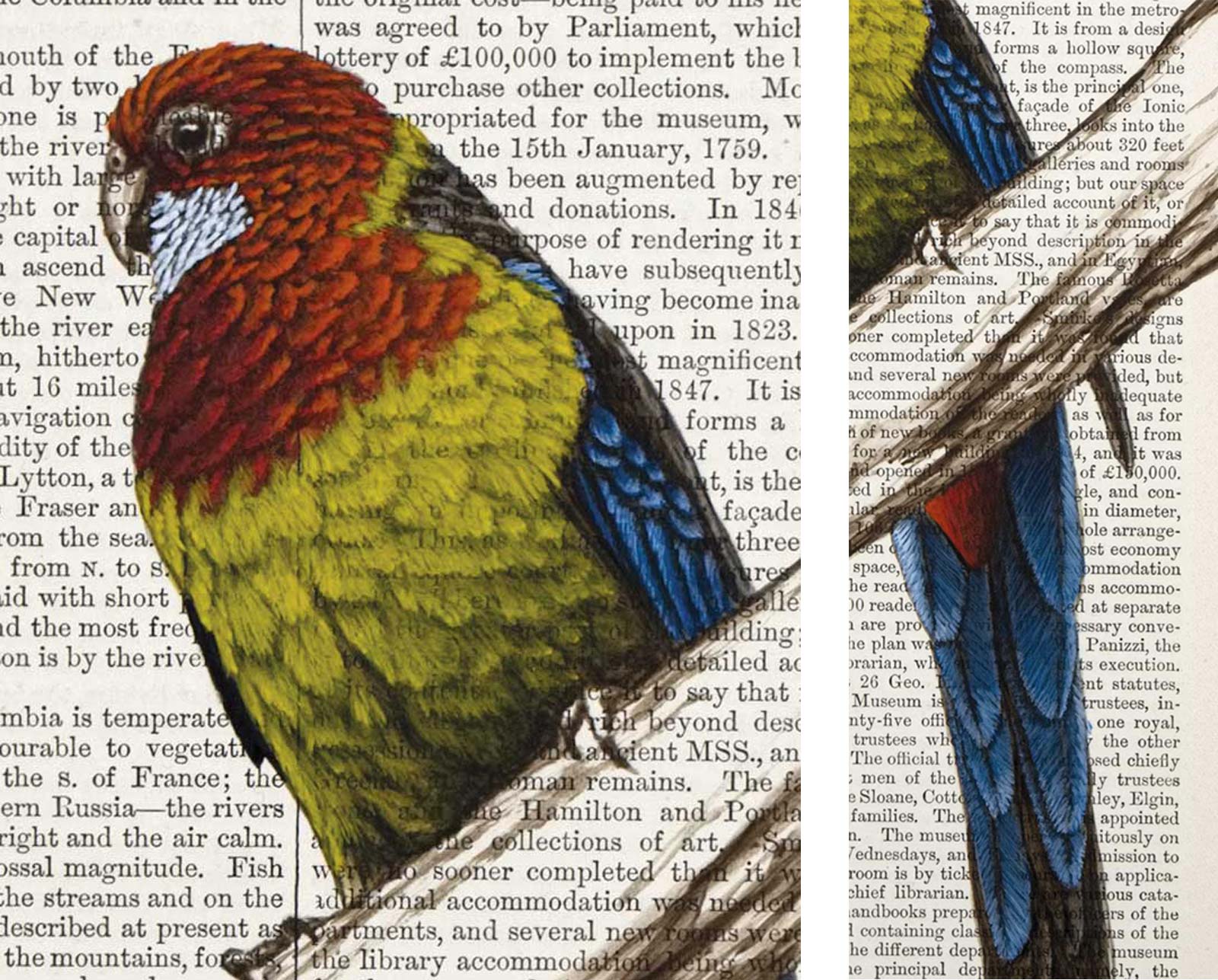 Stage 9
Stage 9 Application of Thicker Paint
Second layer of thicker paint is added to the throat, brightening the white. The blue wing and tail blue are gradually lightened, and I am adding more cerulean and then white to the mix, making sure to preserve feather textures.
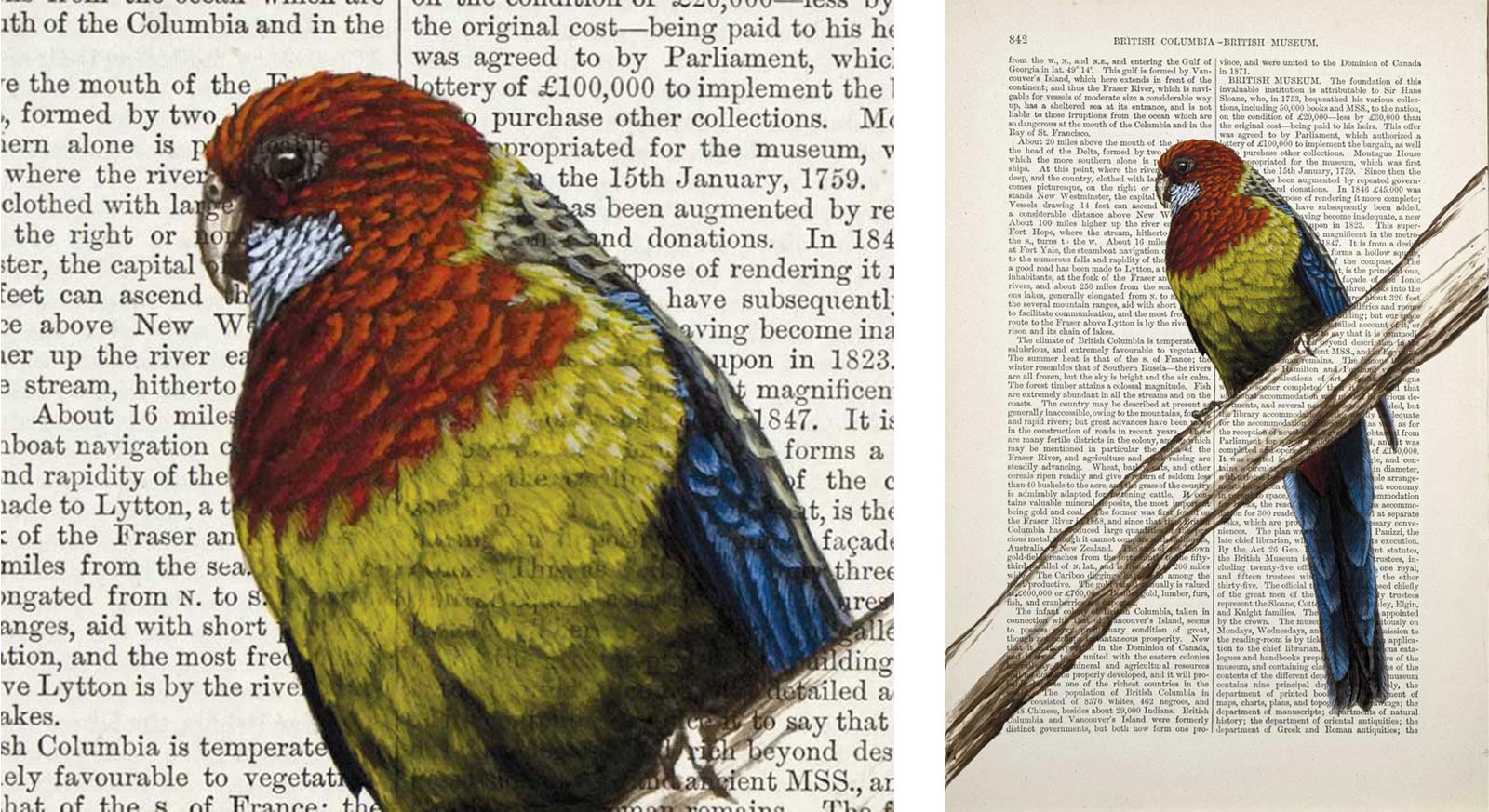 Stage 10
Stage 10 Accentuating the Lights
To accentuate light, the shadowed areas receive one to three washes of bone black, particularly the tail, under the chest and around the throat. Neck feathers are defined and highlights on the upper chest are strengthened.
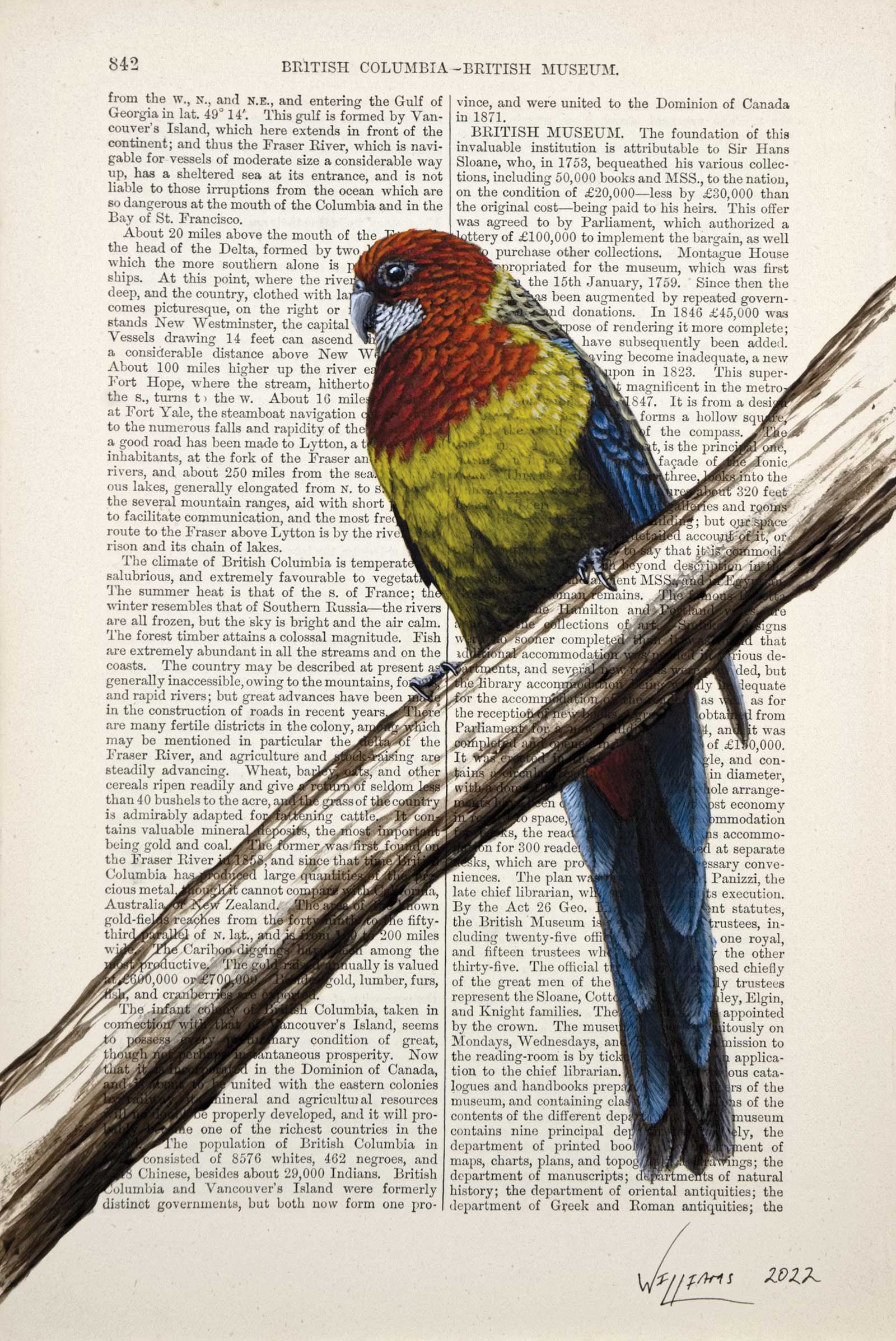 Stage 11
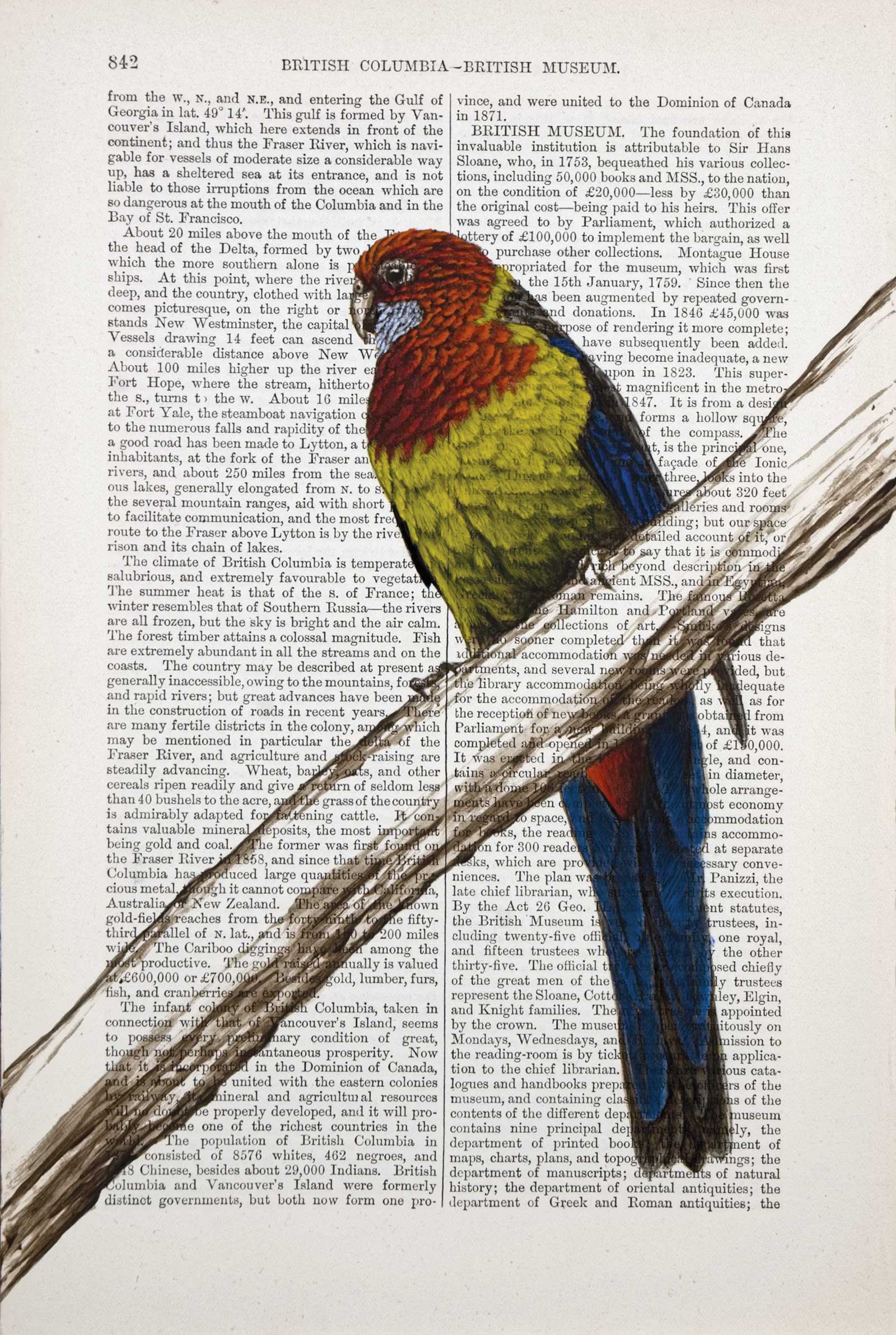
Stage 11 Finished Artwork
Eastern Rosella on vintage (1851) page from ‘The Popular Encyclopaedia or Conversations Lexicon’, acrylic on vintage book page, 9¾ x 6½" (24.8 x 16.6 cm)
Finally, I’ll work on the finishing details. The eye is defined with a black (ultramarine and titanium white) plus a sharp point of light. The beak and feet are defined with two gray mixes (black mix and titanium white) and a shadow wash is applied on the branch.
About the artist
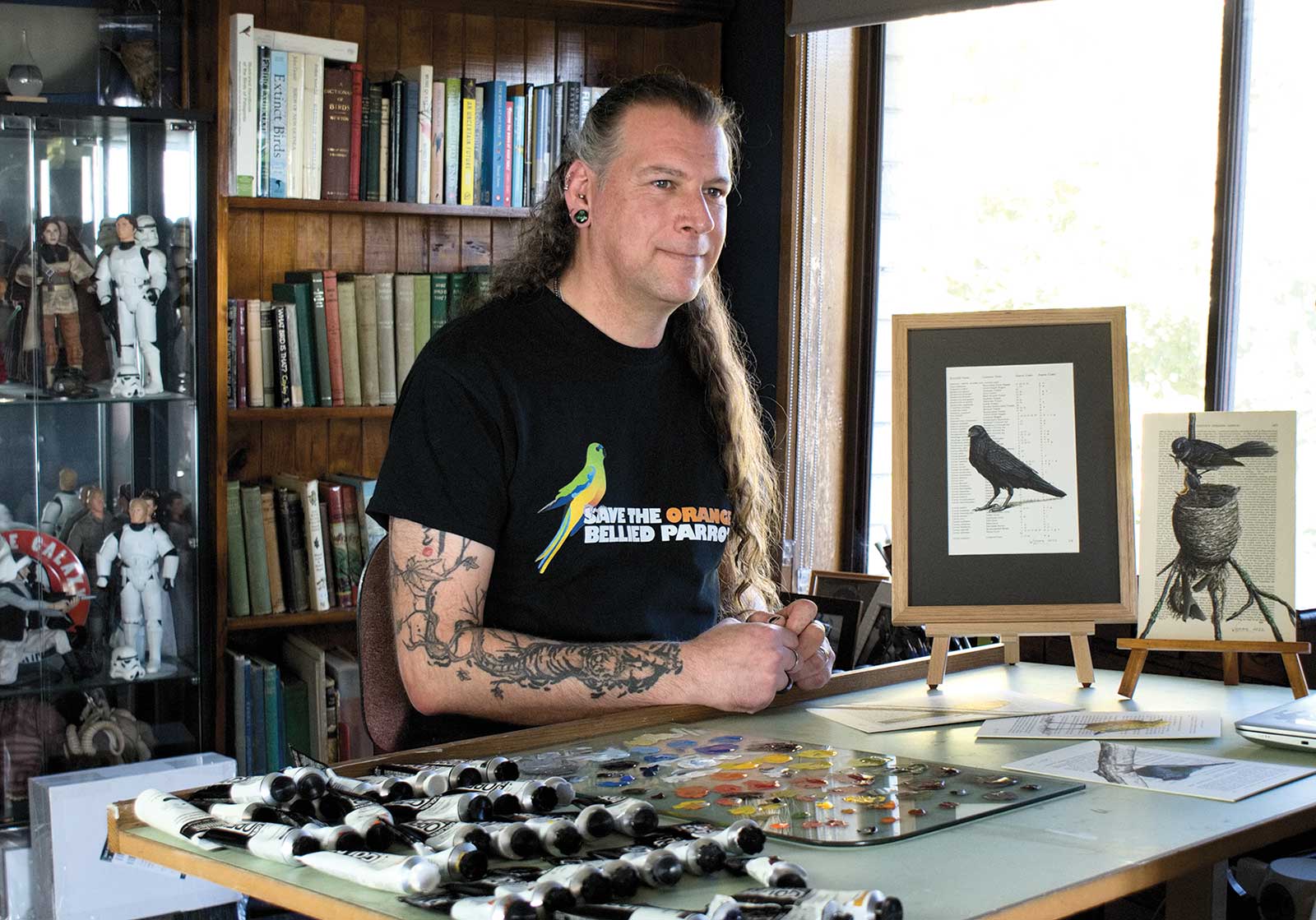 Craig Williams
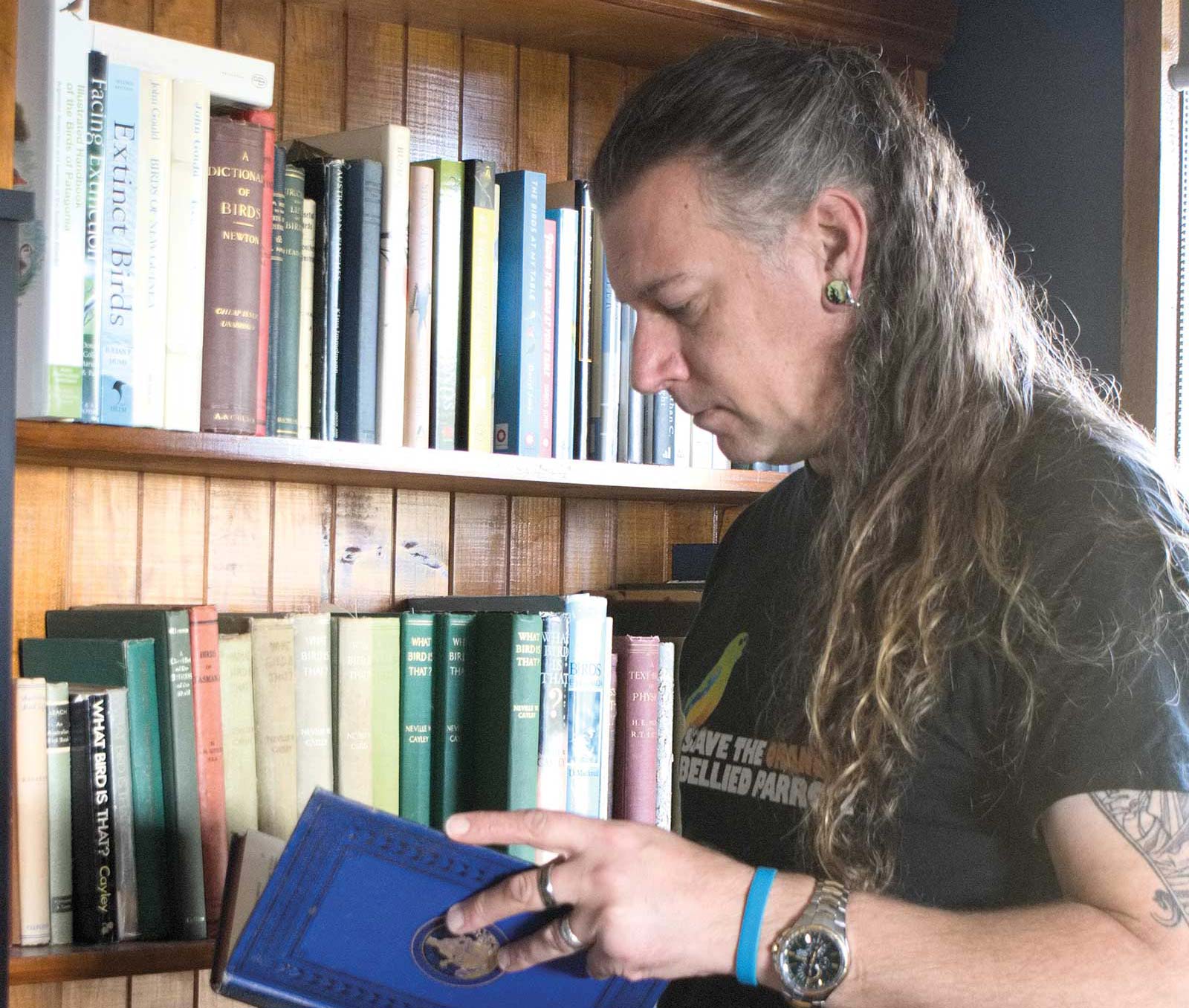
Craig Williams is a professional artist specializing in depicting birds with a painterly realism on pages from vintage books. A self-taught artist, Williams’ natural sciences degree fosters a high level of detail and accuracy to the work alongside a knowledge and sensitivity of the subject. This science background led to Williams being employed in a large regional museum as a scientific illustrator creating illustrations for scientific research, artworks supporting exhibitions and display signage.
Williams has participated in numerous exhibitions around Tasmania, Australia, and has a large audience of private collectors across the breadth of Australia. His work also resides with private international collectors in the United States, Canada, New Zealand, United Kingdom, Spain, Italy and Germany.
In addition to his painted vintage book pages, Williams works in collaboration with the podcast The Science of Birds, where he creates artworks specific to each episode that are then available for purchase, with 50 percent of proceeds contributing to bird conservation projects.
Represented by
An Artistic Affair, Tasmania, Australia, www.facebook.com/highstreetoatlandstas
Bluethumb Art, Australia, www.bluethumb.com.au