When an idea for a painting forms in my mind, my imagination creates a full-color image. Based on these mental visuals, I start to look for materials around me in the real world that will help me recreate the image in my mind. Then I begin working by creating props from the available materials.
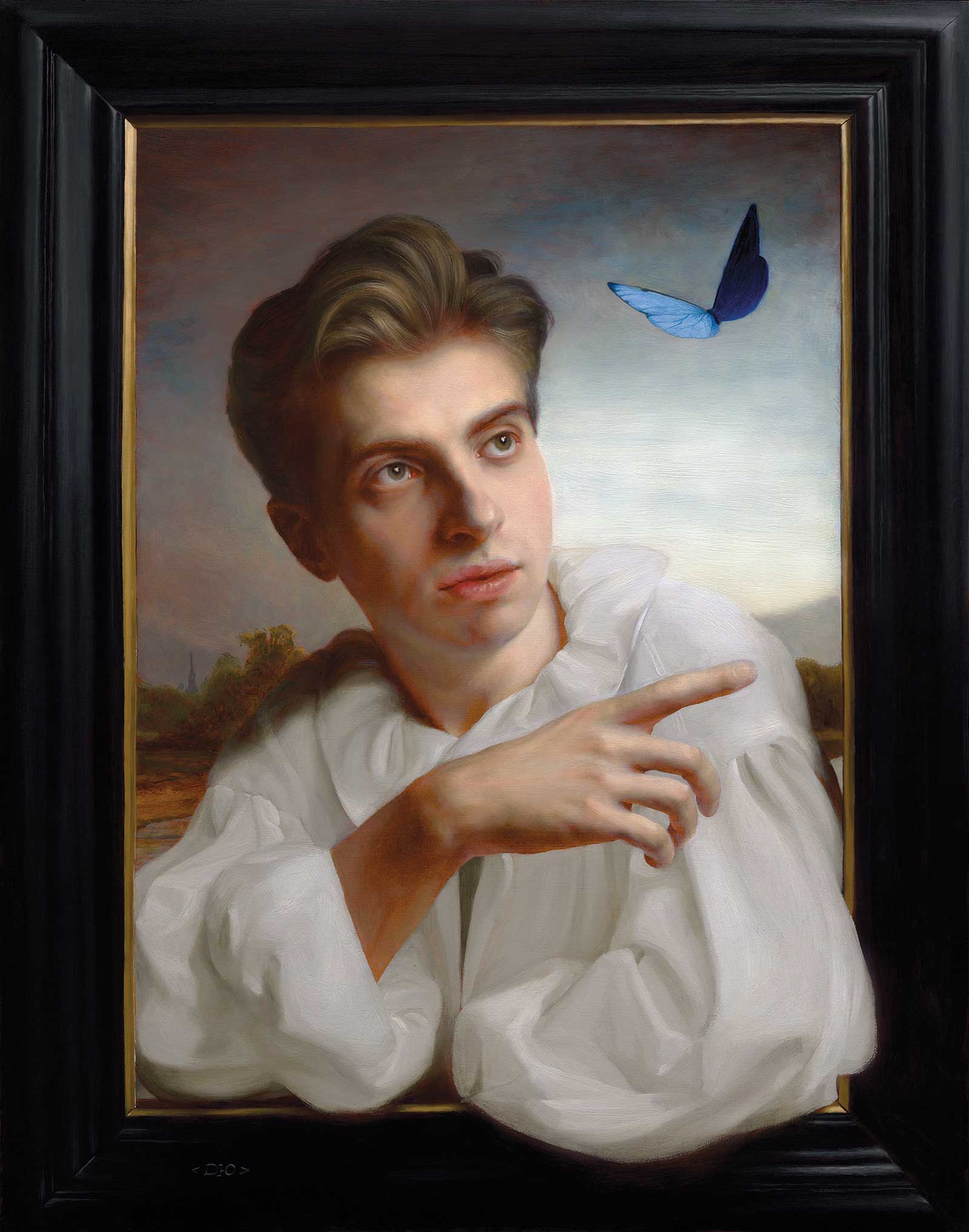 Tempting the Virtuous, oil on wood, 24.9 x 19.6" (63.3 х 50 cm) What is most real to me is the fictional world which I embody in my paintings. I don’t chase ideas; they come on their own, and often. The labor is not conducive to their emergence, but it is suitable to convey them better in terms of craftsmanship.
I will usually set up a photo session to capture exactly what I am imagining. During these sessions, shots are taken against a neutral background, which allows me to play around with different backdrops later on. The unity of all elements in the set-up is very important. Often, I’ll also create an electronic sketch to help me work out the composition. I decide on the positioning of black, white and gray elements on the canvas as well as the color balance and contrasts and often combine many images from a photoshoot into a single image, bringing together the best moments.
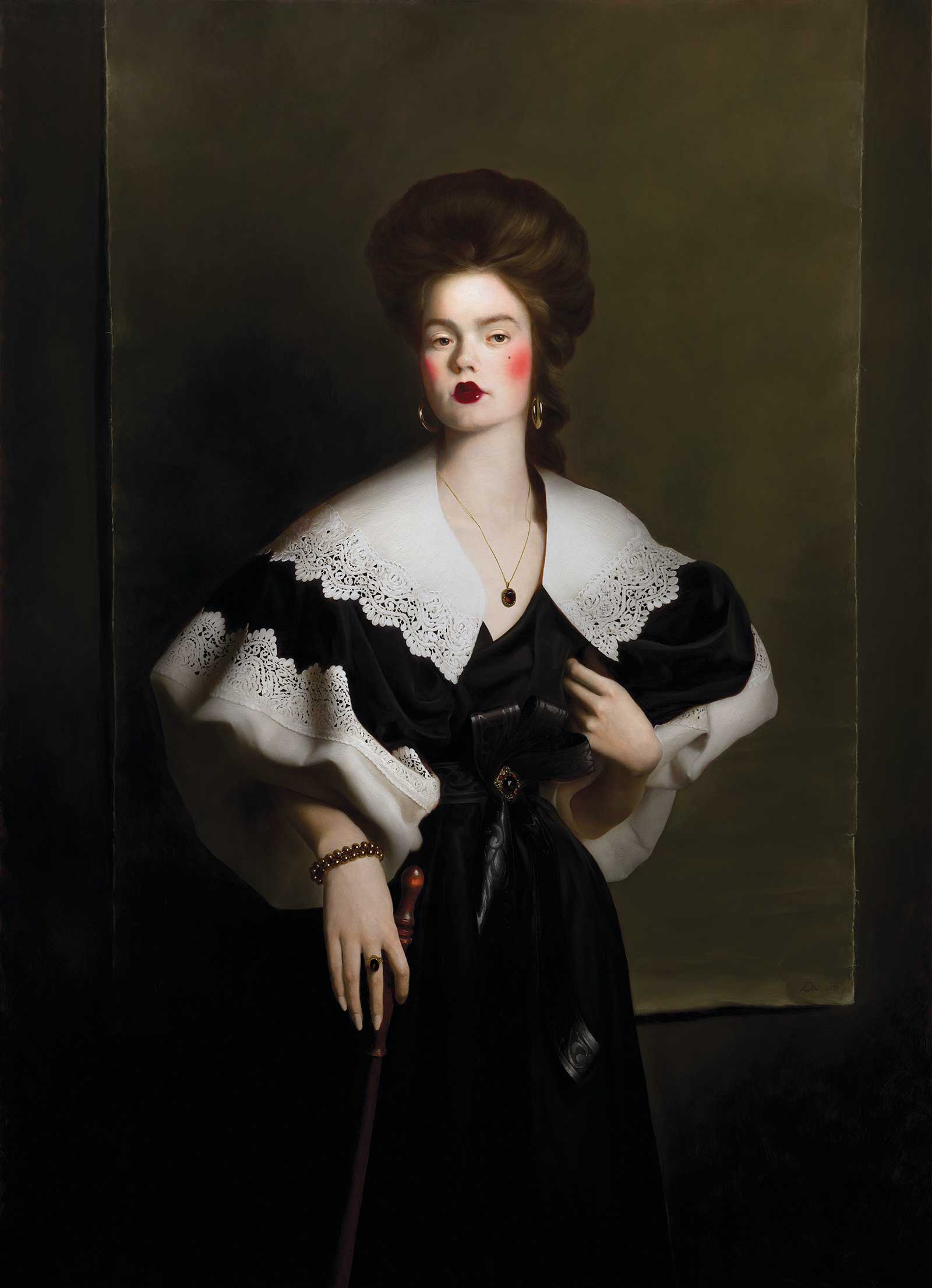
Portrait of a Doll, oil on wood, 51½ x 36.6" (131 х 93 cm) I spend a lot of time looking for a future painting composition before I start painting. I experiment with the direction of lighting, its intensity and remoteness. I carefully select the coloring of clothing, jewelry and backgrounds. I try different angles and poses before I make a final decision on the model’s positioning.
I also determine the size of the portrait in relation to the format and the positioning of the figure in relation to the surrounding background: how much space to leave around it and how to organize it. I adjust all the tones in relation to each other and establish the coloration. After that, the sketch is subjected to a virtual visualization in the frame to assess how the composition works within the given framework and what impression the work will make on the viewer from a distance. The more I elaborate and think about it in the electronic sketch, the more the painting gains in the power of impact. This allows me to get closer to the original idea so that I can then focus entirely on the work with the material, freeing the process from research. At the very beginning of the process, you must believe in the value and the result of your work. A painter’s execution of an idea can only be truly beautiful when they retain the passion, giving themselves completely to the process.
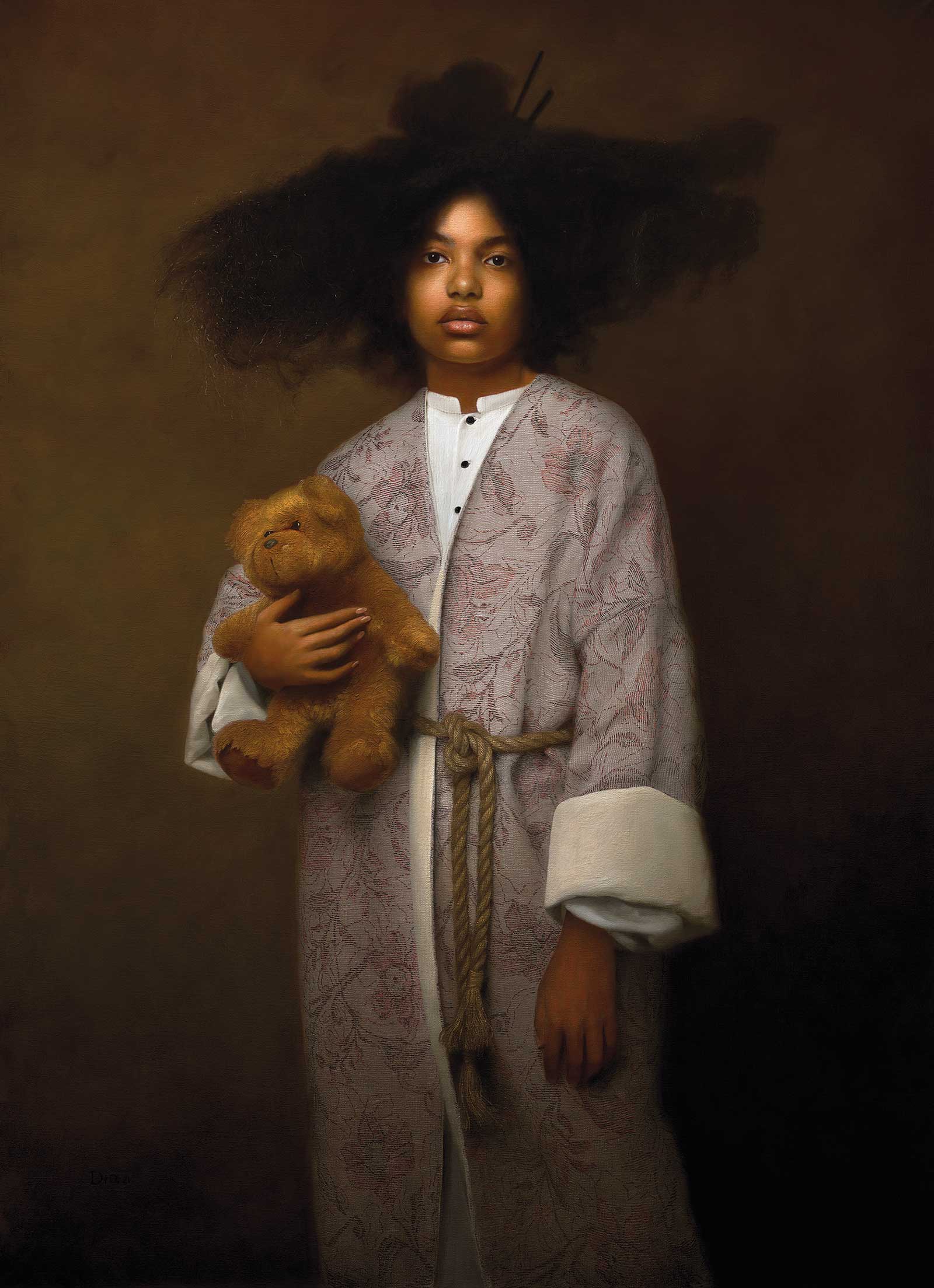
Isabelle, oil on canvas, 46.8 x 33.4" (116½ х 85 cm) Prior to embarking on a challenging painting, I often study the techniques and approaches of the Old Masters. Before painting the tapestry gown I visited the Hermitage to look at examples of rendering this fabric in European art. To depict the girl’s face and hands I examined the portraits of children accomplished in various techniques and mastery of different levels.
The more experienced the artist, the more developed is their ability to simplify everything, and not get bogged down in the details. At the beginning of the process of making a painting, one should try to see and arrange small objects and colors into the largest possible forms, first in tone and then in color. Painting contains not color, but the idea of color and how each piece interacts with each other. Once the tinting is finished, the work of finding and applying a base layer of simple color blocks to work out the correct distribution of light and color on each of the objects in the painting begins. In my work I start with the darkest, lightest and brightest tones, gradually adding the middle ranges. Working from the far background, I move through the rest of the painting, adding more information and complexity of color for each fragment.
The value of the layer-by-layer technique is that you can devote enough time to each task without being distracted by other tasks. I move from the larger areas of the painting to the smaller ones. I lay down thick and cold layers of paint on transparent and warm ones, where a special color vibration occurs, making the color even more complex.
My Art in the Making The Gentleman
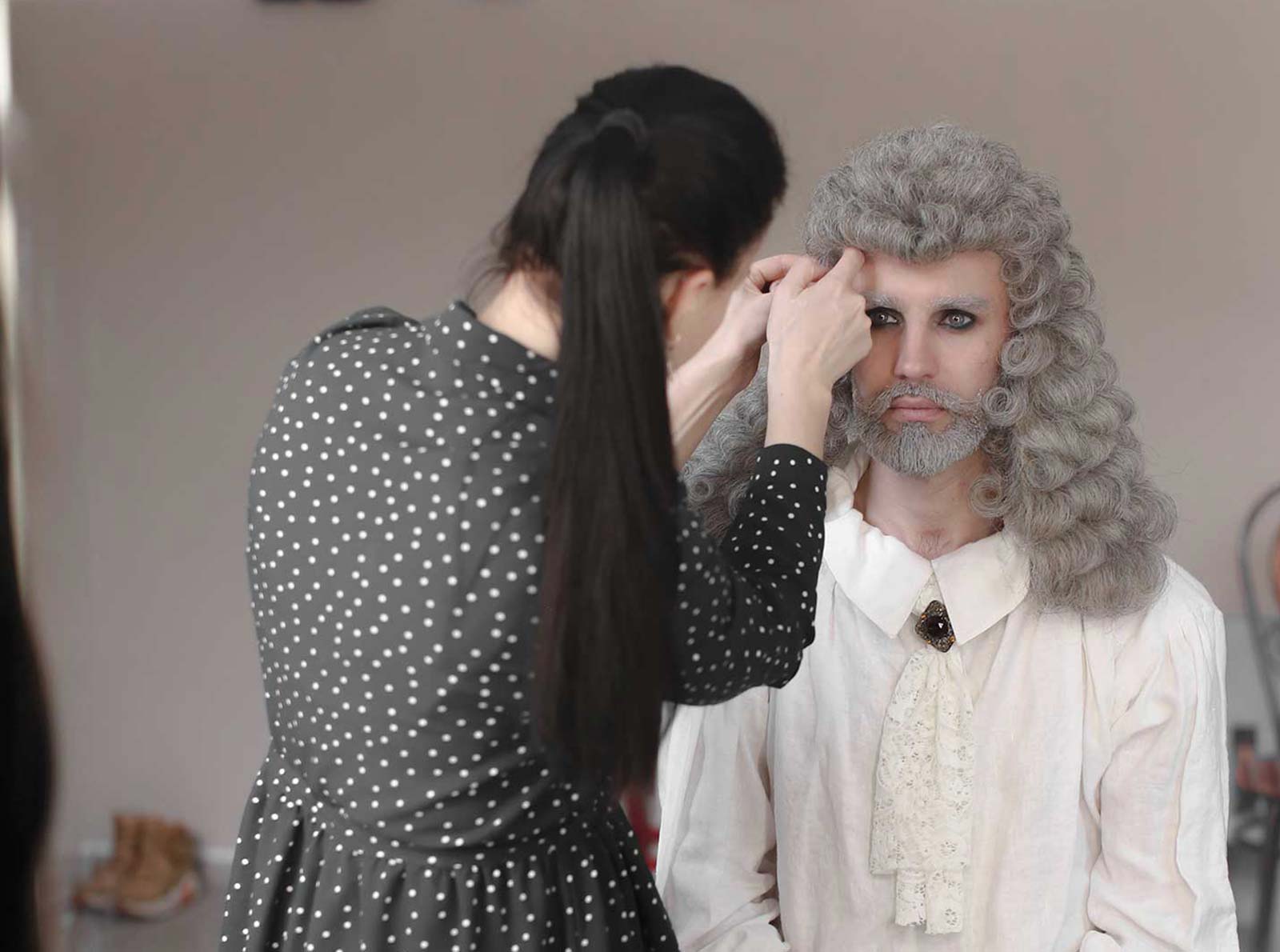
Stage 1
Stage 1 Creating the Image
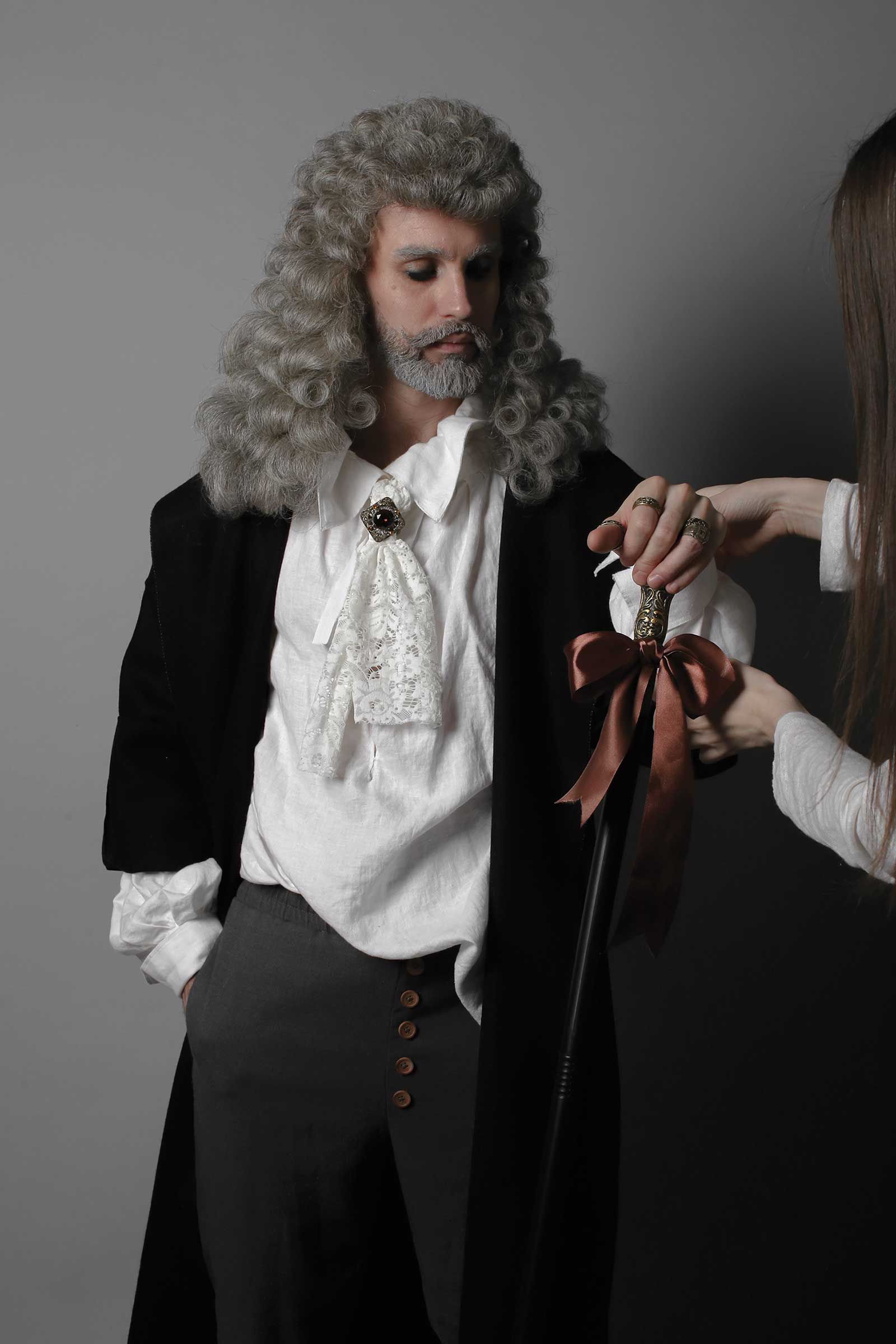
Relying on my creative imagination, I combine elements of a variety of styles that appeal to me. This image requires not only makeup, highlighting the gray-green eyes, which would otherwise be lost against the background of the hair and beard, but also thorough preparation from the model. (The model grew out a mustache for two months specifically for this photoshoot.) Every detail of the portrait, including the wig kindly provided by the legendary “Lenfilm” studio, the suit (designed from scratch and made by hand), as well as the accessories—all of these are designed to reflect the personality of the man, focusing not so much on theatricality, as on emphasizing the best qualities of the model.
WHAT THE ARTIST USED
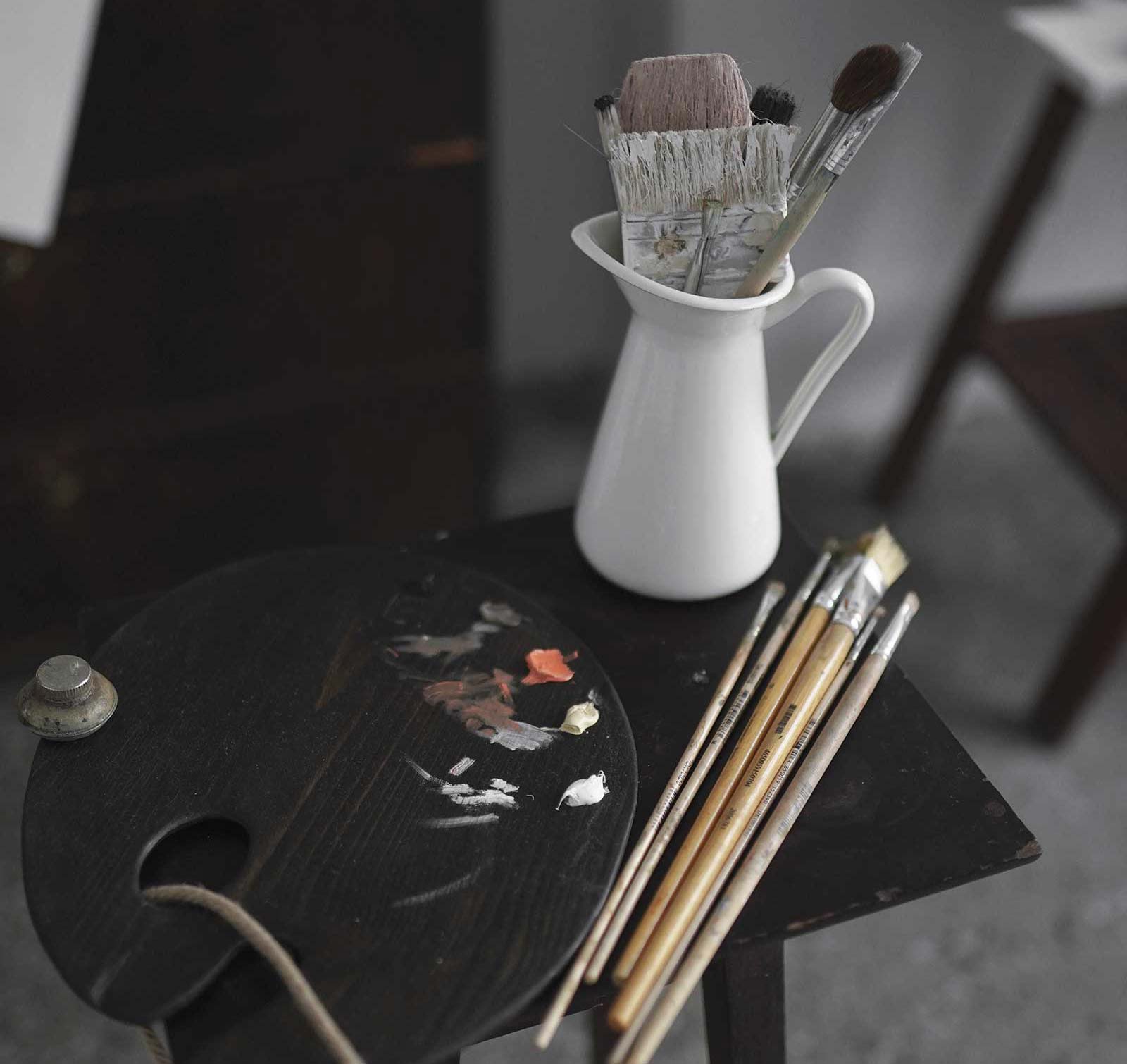
Oils
Titanium white, Natural umber, Prussian blue, Yellow ochre, Green earth, Burnt sienna, Ivory black, Cadmium red, Kraplak
Brushes
Synthetic and bristle brushes, flat and oval in various sizes
Additional Supplies
Canvas, Linseed oil, Acrylic primer, Wooden palette, Paper towels
Stage 2
Stage 2 The Photoshoot
The photoshoot helps me make my own work material before I start painting. The light is planned and set, every detail is adjusted and the sitter’s facial expressions are captured. The shots are made on a neutral gray background to avoid any foreign reflections on the model. Then a digital sketch is made, where by examining my design ideas and compositional plan, I can completely change anything I want.
Stage 3
Stage 3 Shadow Silhouette
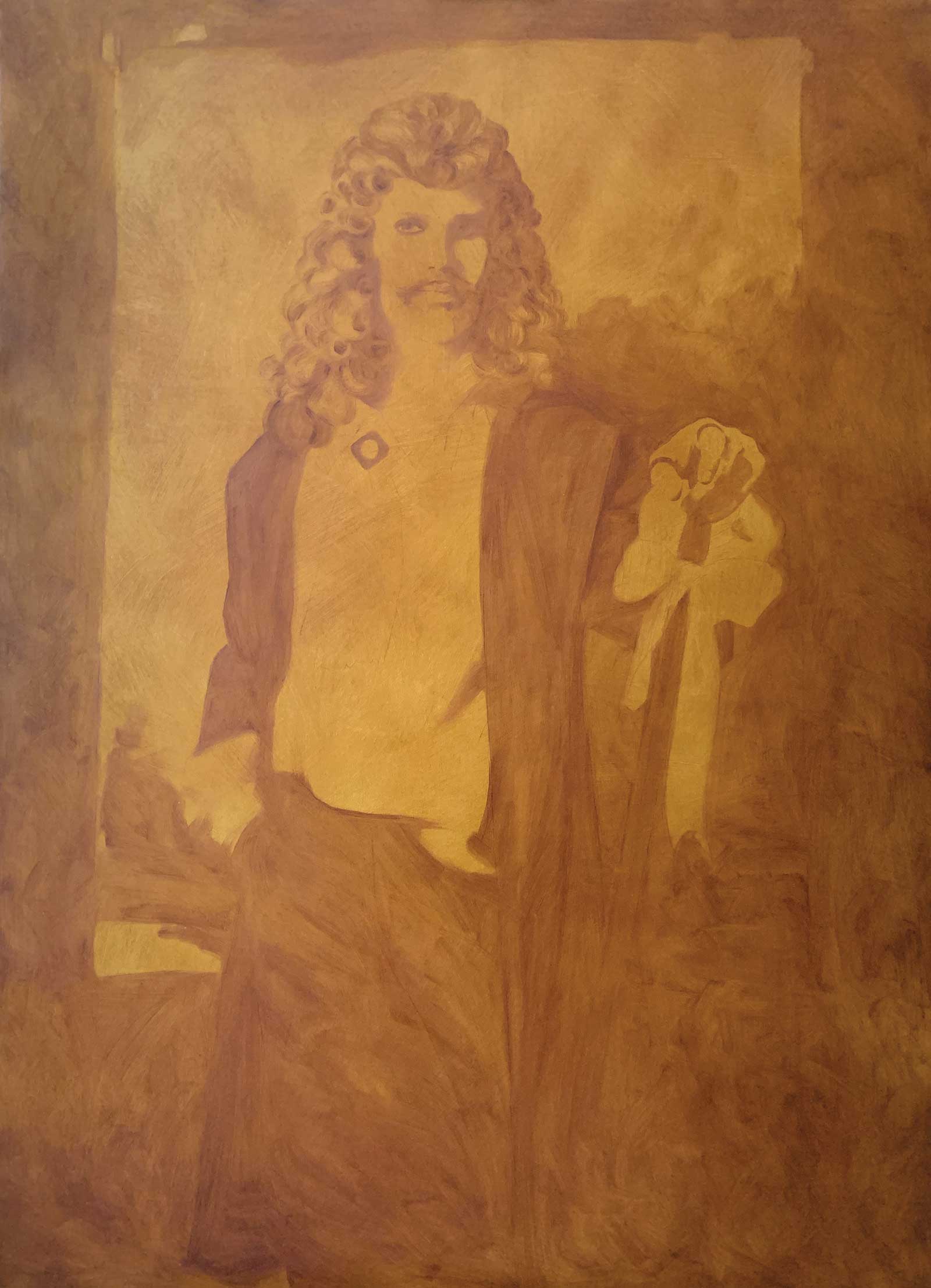
The work process begins with preparing the canvas and applying a layer of imprimatur. Next, large shadow parts are identified and the overall silhouette is built up. First, the pigment is applied, giving the figure the aesthetic of fluent brushstrokes. The brushstrokes are executed very boldly, changing direction within the boundaries of the area to be filled. This “sloppiness” will shine through the subsequent layers, creating the expressiveness of the underlying paint.
Stage 4
Stage 4 The Darkest Parts
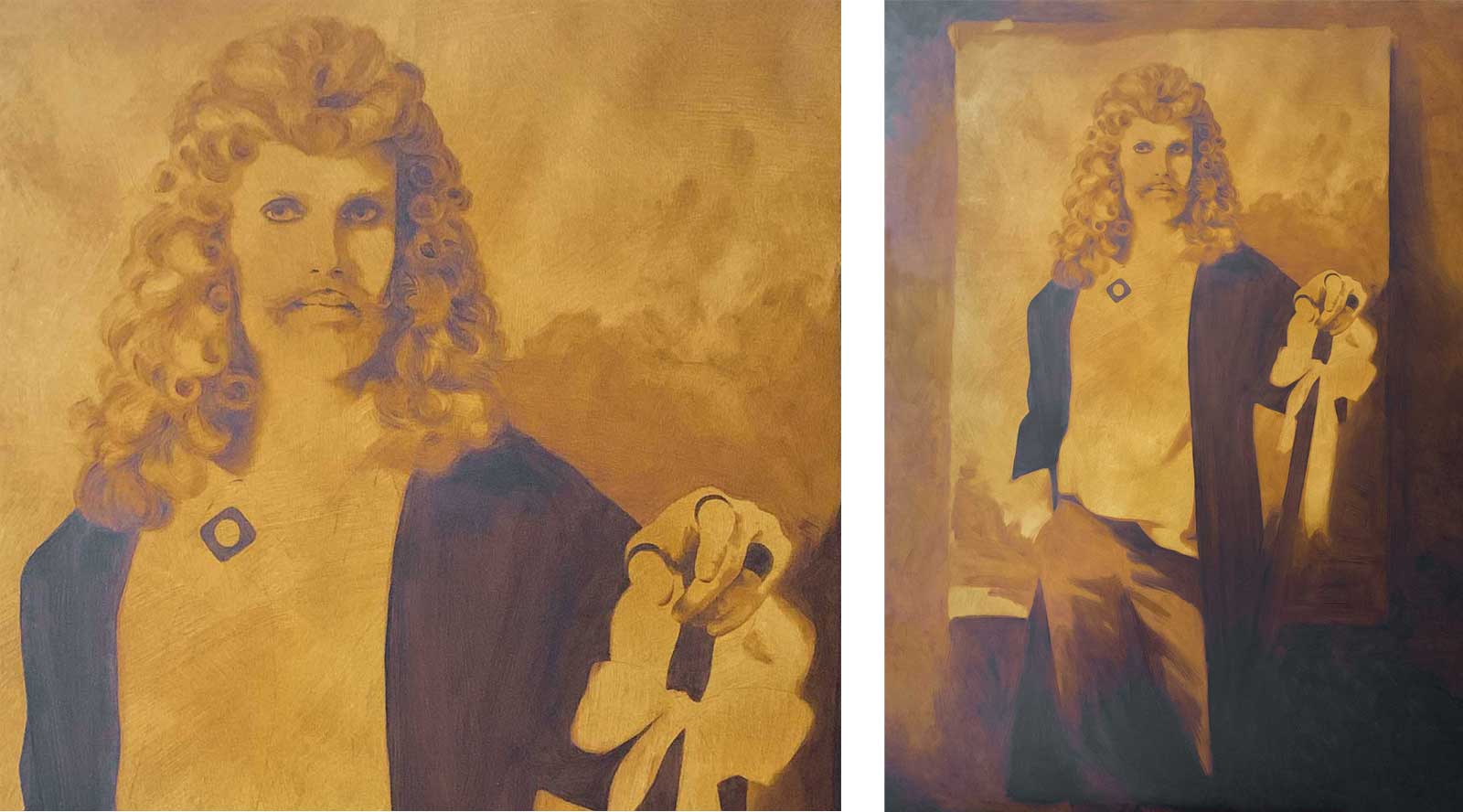
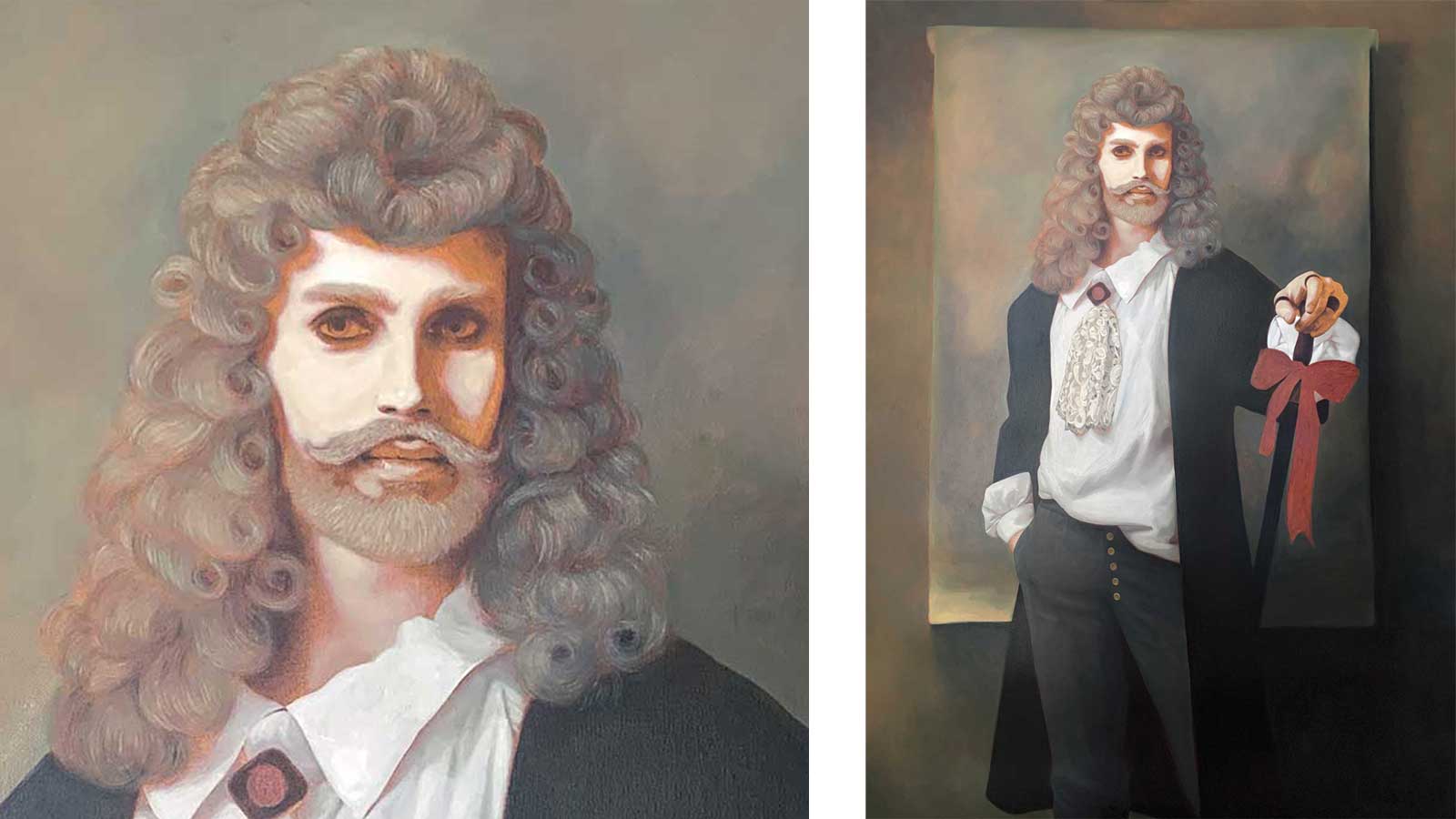
The task of this stage is to clarify the pattern and suggest its shape. The darkest parts of the entire composition are fixed, immersing the secondary parts in semi-darkness. Brushstrokes are applied with even more saturated paint. Later on, these areas will serve as a basis for comparison with other tones. This layer plays an important role: the warm base, shining through the subsequent cold tones, gives richness to the color system of the painting.
Stage 5
Stage 5 Primary Layer
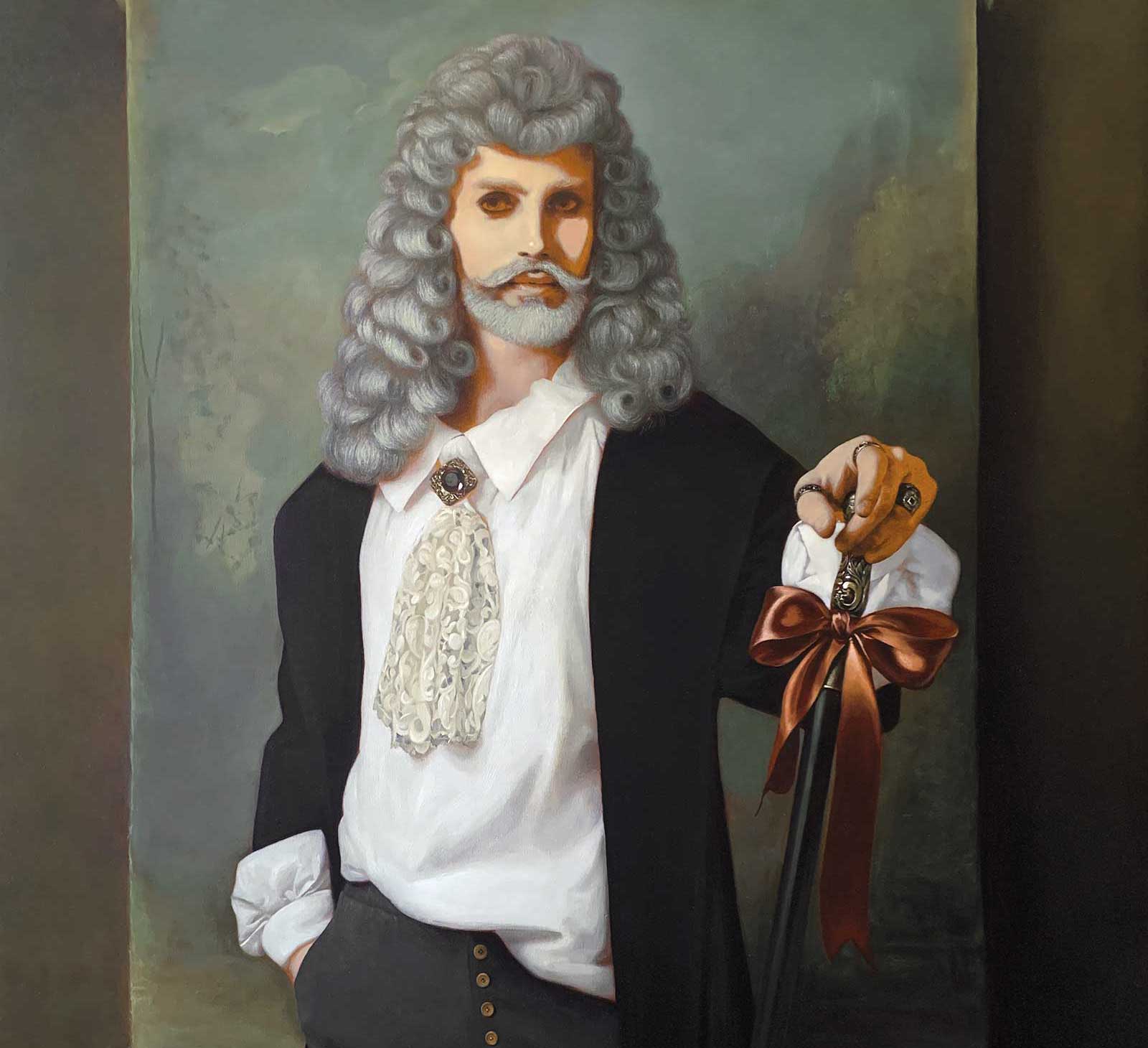
After applying the shadows, I move on to working out the picture in more detail, starting with the far backgrounds and gradually moving across the entire area. At this stage, I apply a base color layer: simple spots are distributed with basic tones on each image element for a proper balance of light and color. The execution of this stage is accompanied by a constant mutual comparison of tones. The brightest and most saturated areas are then reworked by applying additional layers of paint in anticipation of future glazes and corrections.
Stage 6
Stage 6 Impasto Technique and Creating Volume
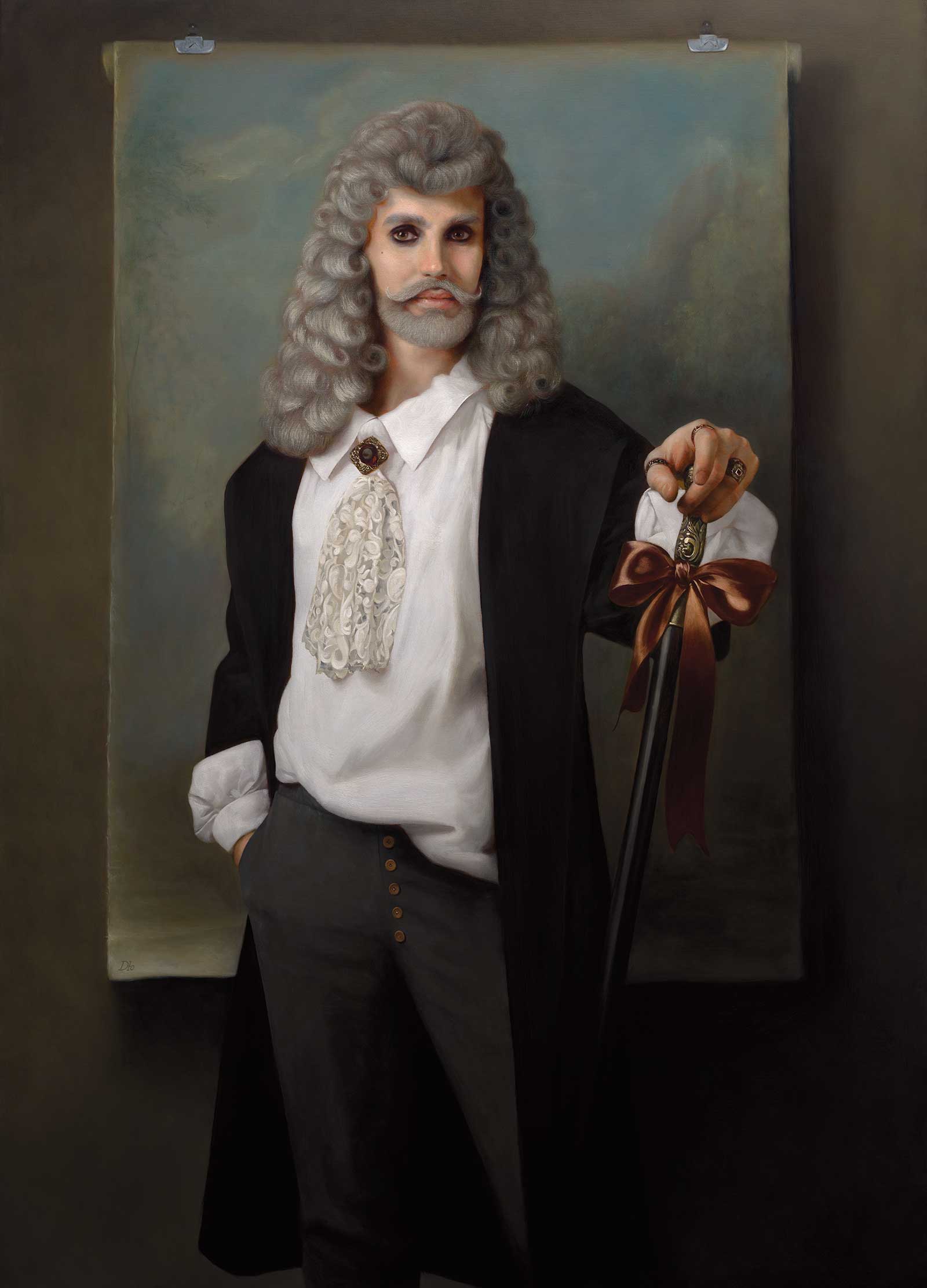
When all previous layers have dried, I proceed to draw the face and the figure. By applying denser but slightly loose layers of paint, I can work on, for example, the texture of the hair. The wet brushstrokes are partially “scratched” with the dry brush so that the lower base tone is visible through them. This enriches the applied shade and allows showing the full depth of the selected tones. In a circle, over and over again, thick and cold brushstrokes are applied over warm and transparent ones, and warm brushstrokes are laid on the cold ones. At the same time, each fragment is also worked on to give shape and volume by adding shadows, light and reflexes.
Stage 7
Stage 7 Corrections and Glazes
The Gentleman, oil on canvas, 46.8 x 33.6" (116½ х 85½ cm)
In the final stage, layers of transparent paint are applied, bringing additional information and color complexity to each element. The coloring is resolved in its full, final form. The smallest details of the shape of the face and hands, clothes and jewelry are worked out. To create spectacular brushstrokes, I first shade the desired area and then apply dense, expressive brushstrokes to the area. This is how I sculpt the facial expression and convey the bright shine of metal.
About the artist
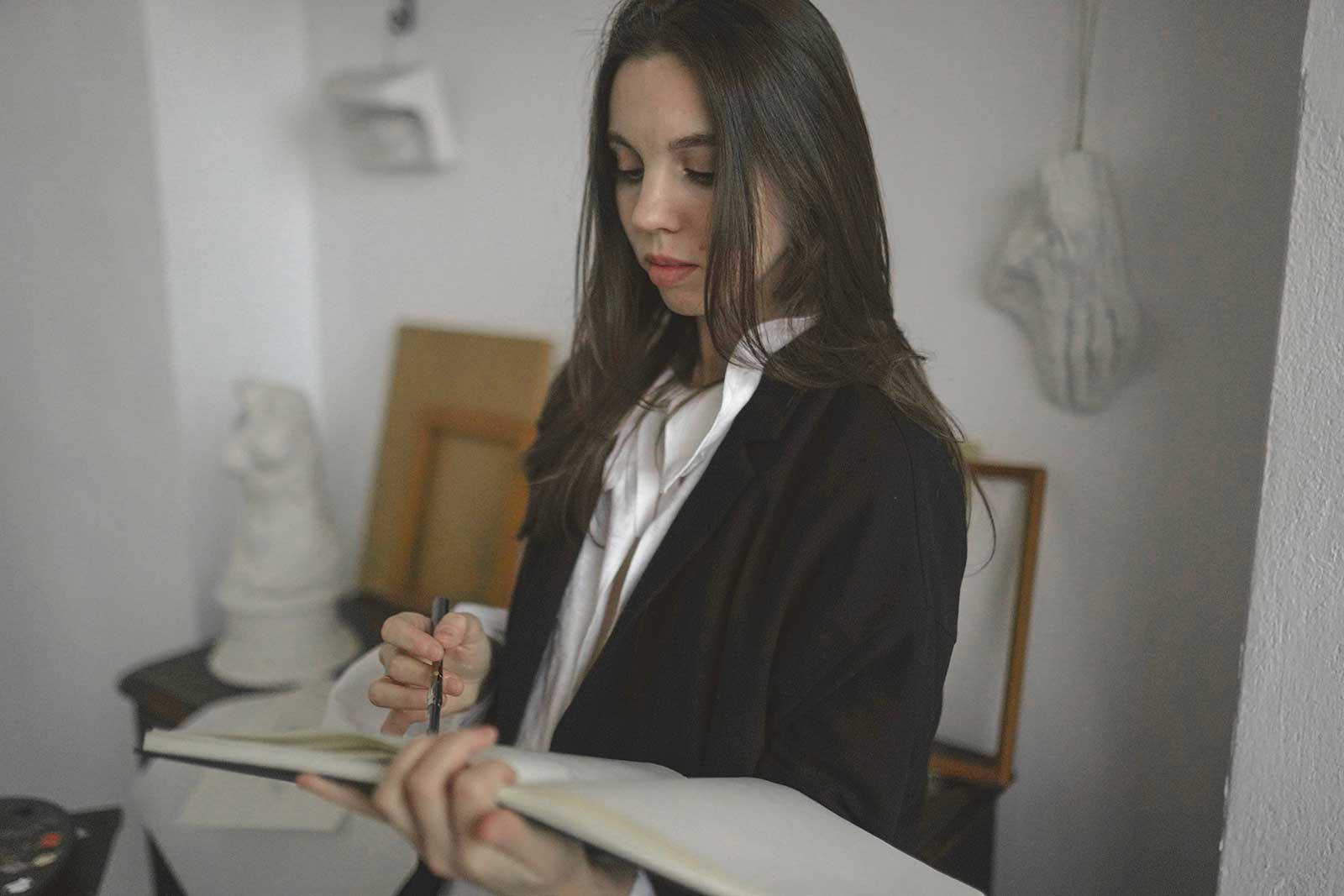 Darya Dolgareva
Darya Dolgareva is a portrait and figurative artist. She is inspired by 17th-century Dutch artists and incorporates classical techniques into the world of contemporary culture and design, combining this in portraits of remarkable people. Honing her skills over a long period of time, she has accumulated knowledge and skills from different universities, personal experimentation and practice. Often the lack of necessary materials has helped her improvise and create different outfits for her paintings. Combining the layer-by-layer painting technique with elements of modernity, Dolgareva uses brushstrokes as a means of pictorial language to express the complex beauty of our time. She has won numerous national and international awards, including the Grand Prize in International Artist Competition #128, Favorite Subjects. She has also been a finalist in major international competitions from such organizations as the Art Renewal Center.