



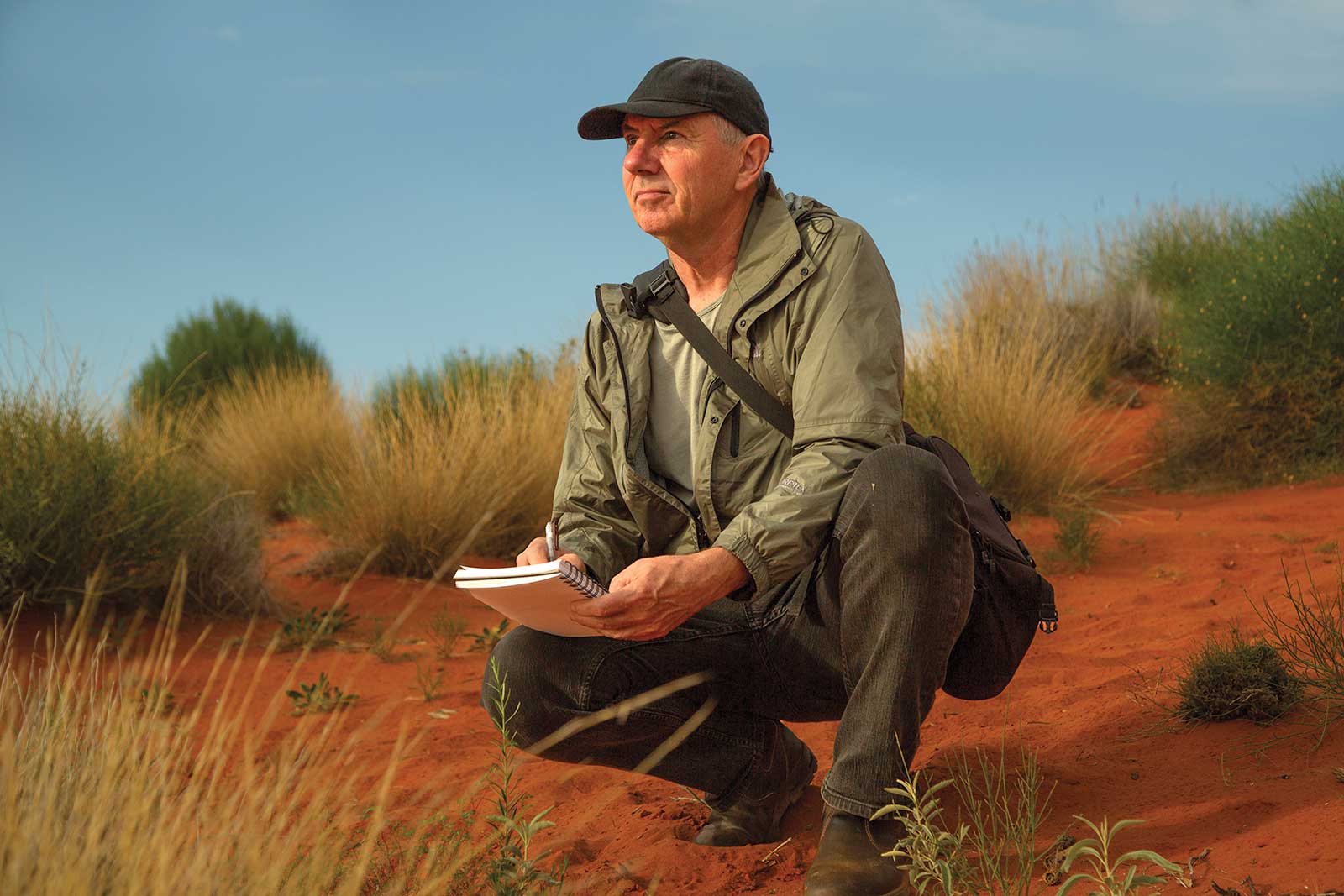
There is nothing like sitting down in an interesting location with a sheet of paper and a handful of painting materials and getting lost in the atmosphere of the subject.
I was reminded of this simple pleasure during a recent painting workshop to outback Australia. A group of students and I traveled to many fabulous locations and immersed ourselves in what was before us. It is amazing how the process of painting on location forces you to examine, analyze and interact with the subject before you.
A palette with half a dozen colors, a few brushes, some ink, gesso, a collapsible water container and some watercolor paper are all that is needed.
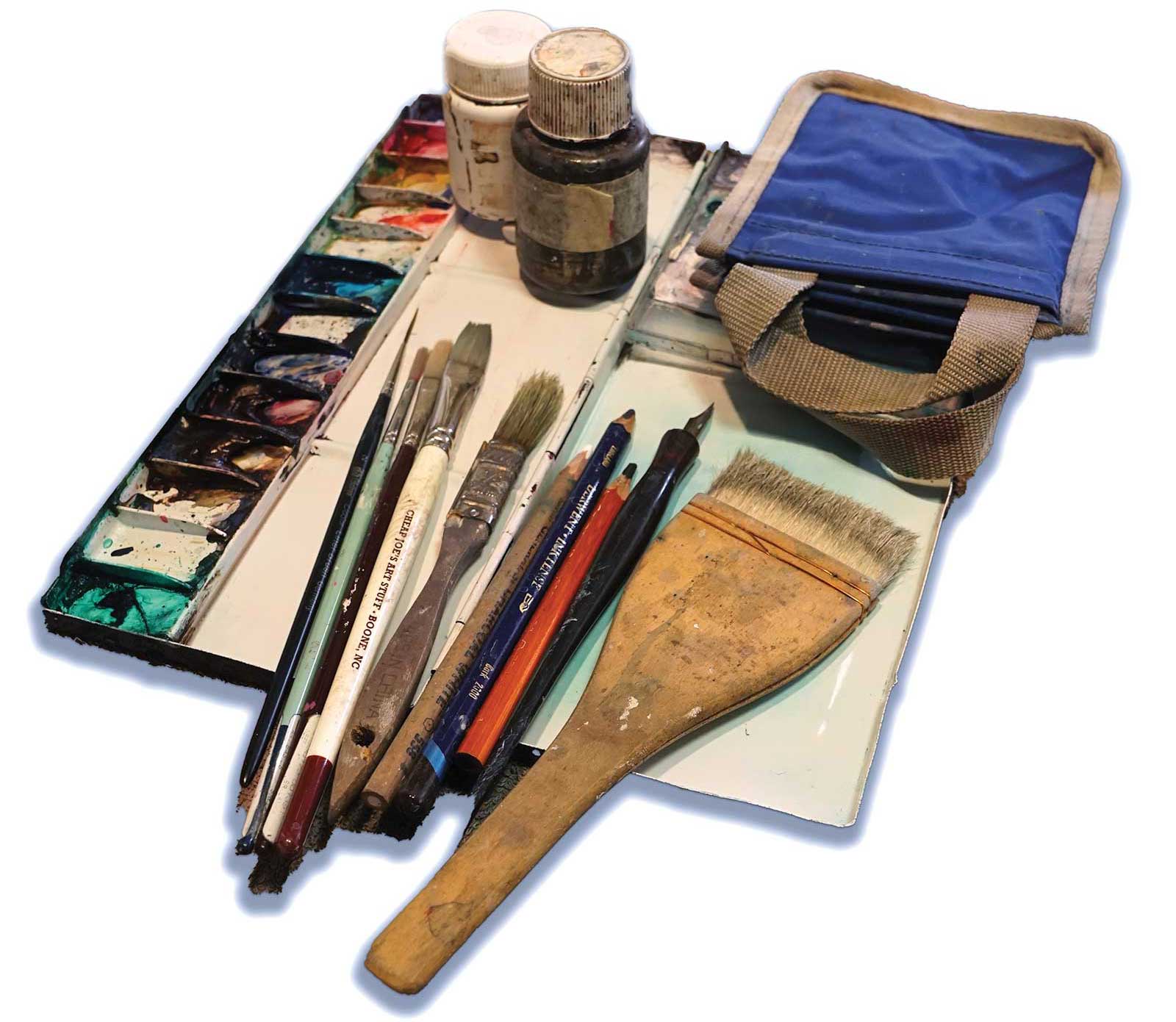
The colors I use are quinacridone gold, permanent alizarin crimson, French ultramarine blue, phthalo blue, phthalo green and occasionally for glazes, permanent rose, aureolin and cobalt blue. The brushes I use are a 18, ¼ and ½-inch taklon one stroke, a ½-inch bristle brush, a #1 rigger and a #2 inch Hake. I also have a black and a white charcoal pencil, some burnt sienna pigment ink and dip pen, and a pot of gesso.
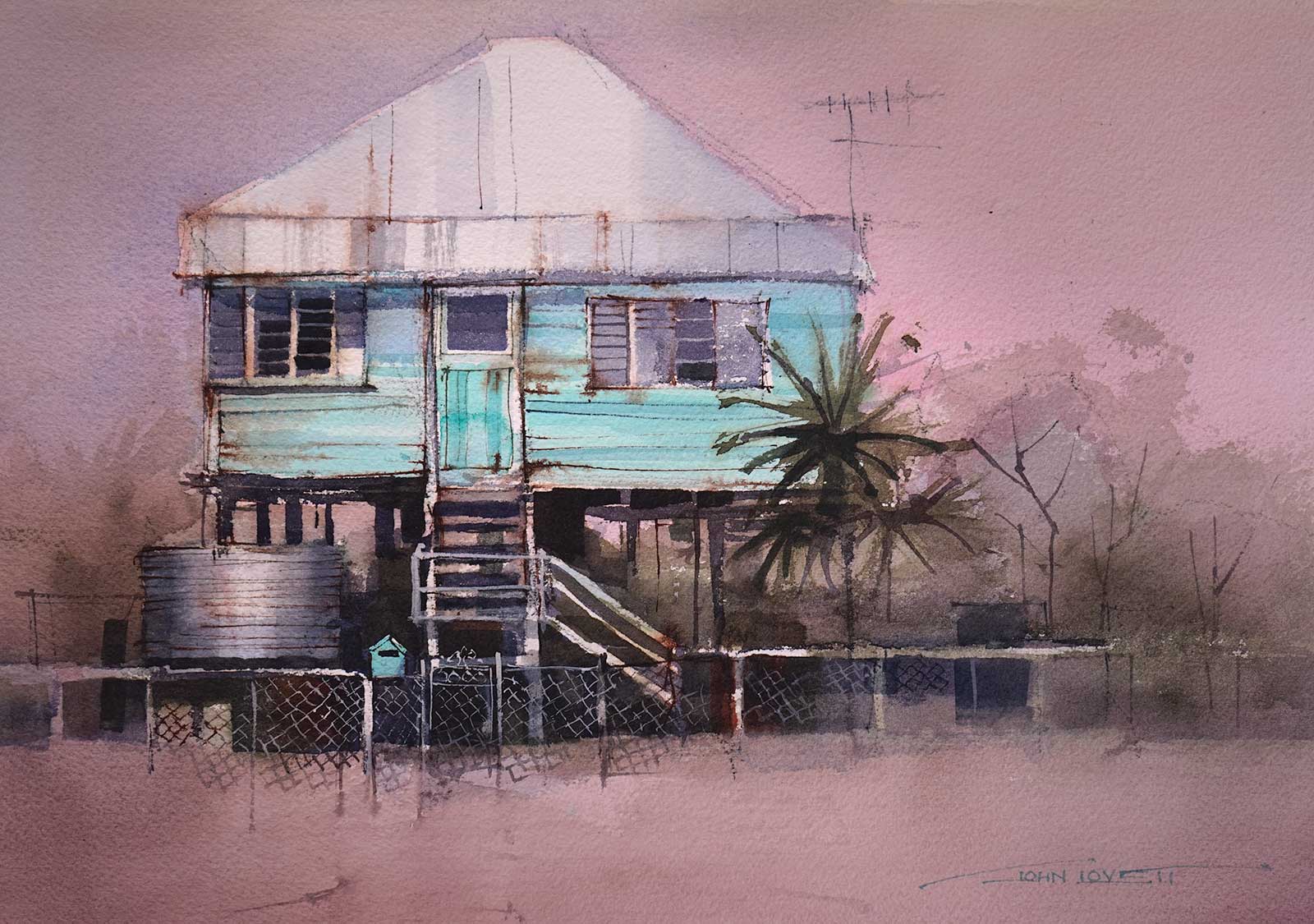
We discovered this wonderful old house in the back street of an outback Queensland town, perched up on tall stilts with fading green paint, a matching letter box and rickety wire fence. It was a lot of fun to get to know it through careful examination over a couple of hours.
To increase the intensity of the green I made the sky and foreground lean towards a dirty pink using permanent rose.
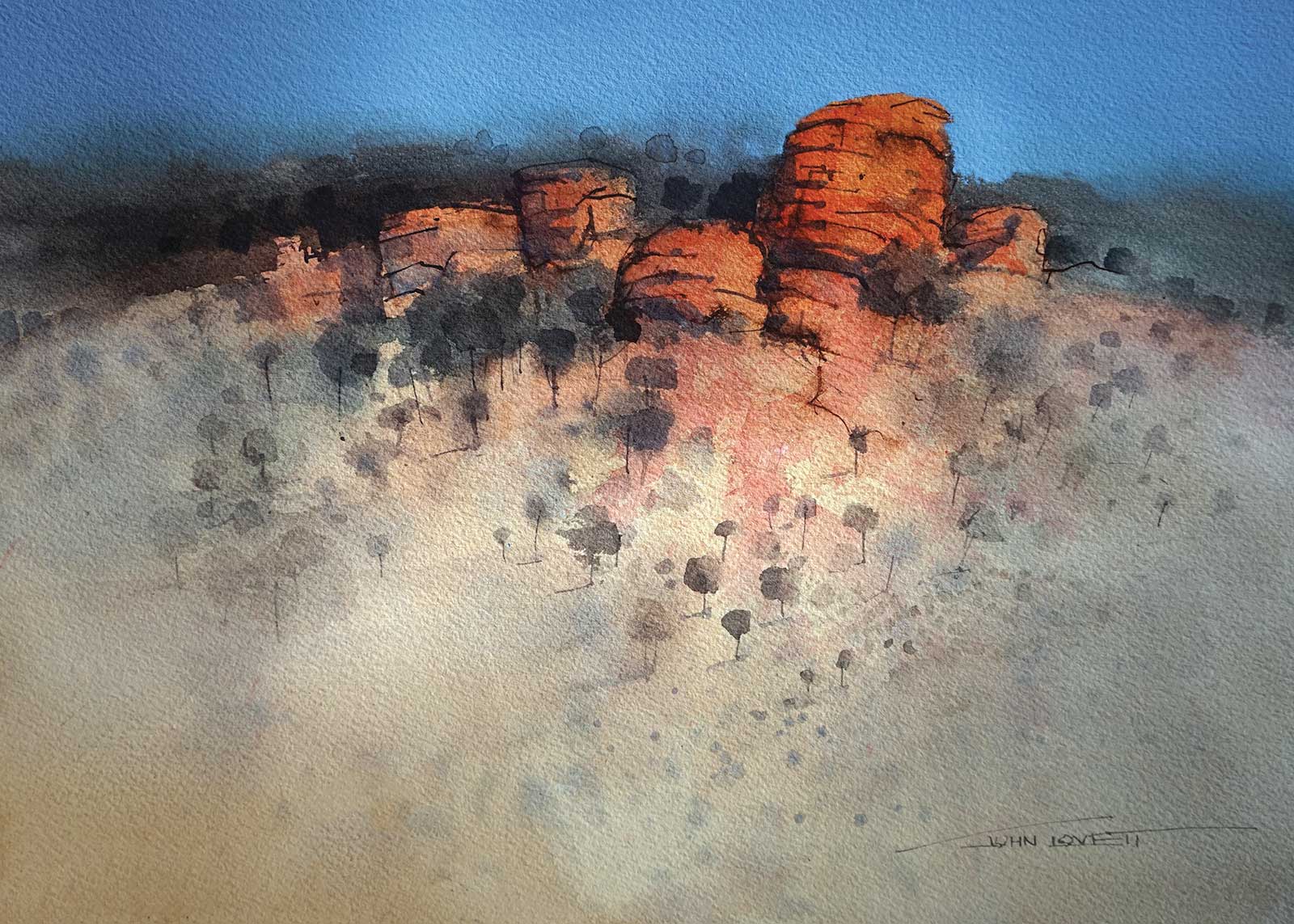
This rocky escarpment was part of the flat topped hills called “jump ups” outside the town of Winton. We sat with our backs to the sun and were sheltered from the wind by our coach. Such luxury allowed us to spend a morning coming to grips with this spectacular outcrop under the intense blue sky of outback Australia. To get the intensity of the blue sky I mixed ultramarine and titanium white gouache to create a beautiful, flat, opaque blue that amplifies the transparency of the orange rocks.
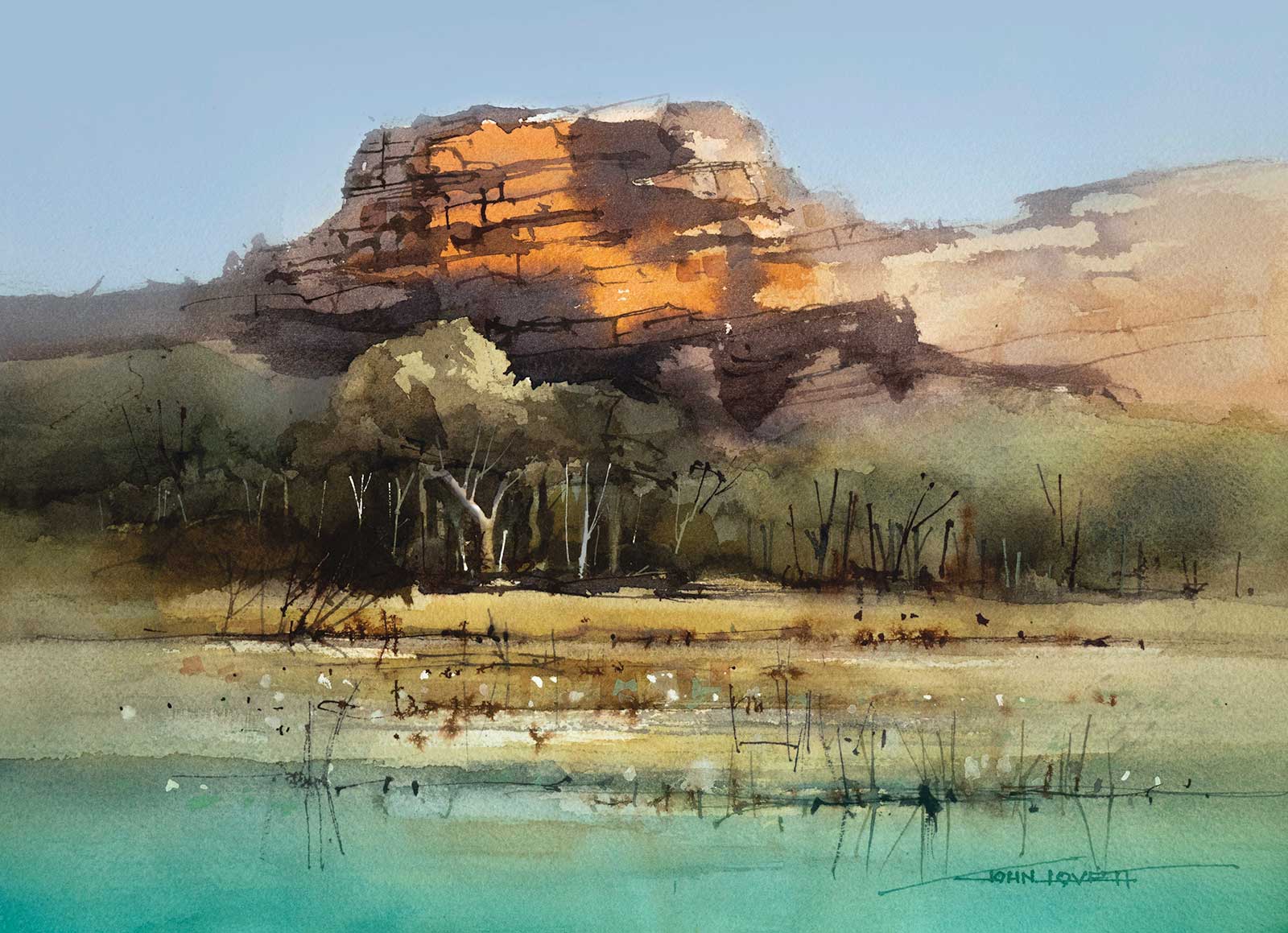
This ancient rock perched above a billabong and surrounded by sparse sapling forest, looks impressive as the sun grazes the edge of the rocks. Sitting listening to the many birds and watching the shadows change across the rock face hypnotizes you into understanding the structure and make up of the subject. After a couple of hours observing and painting, every detail becomes clear and familiar.
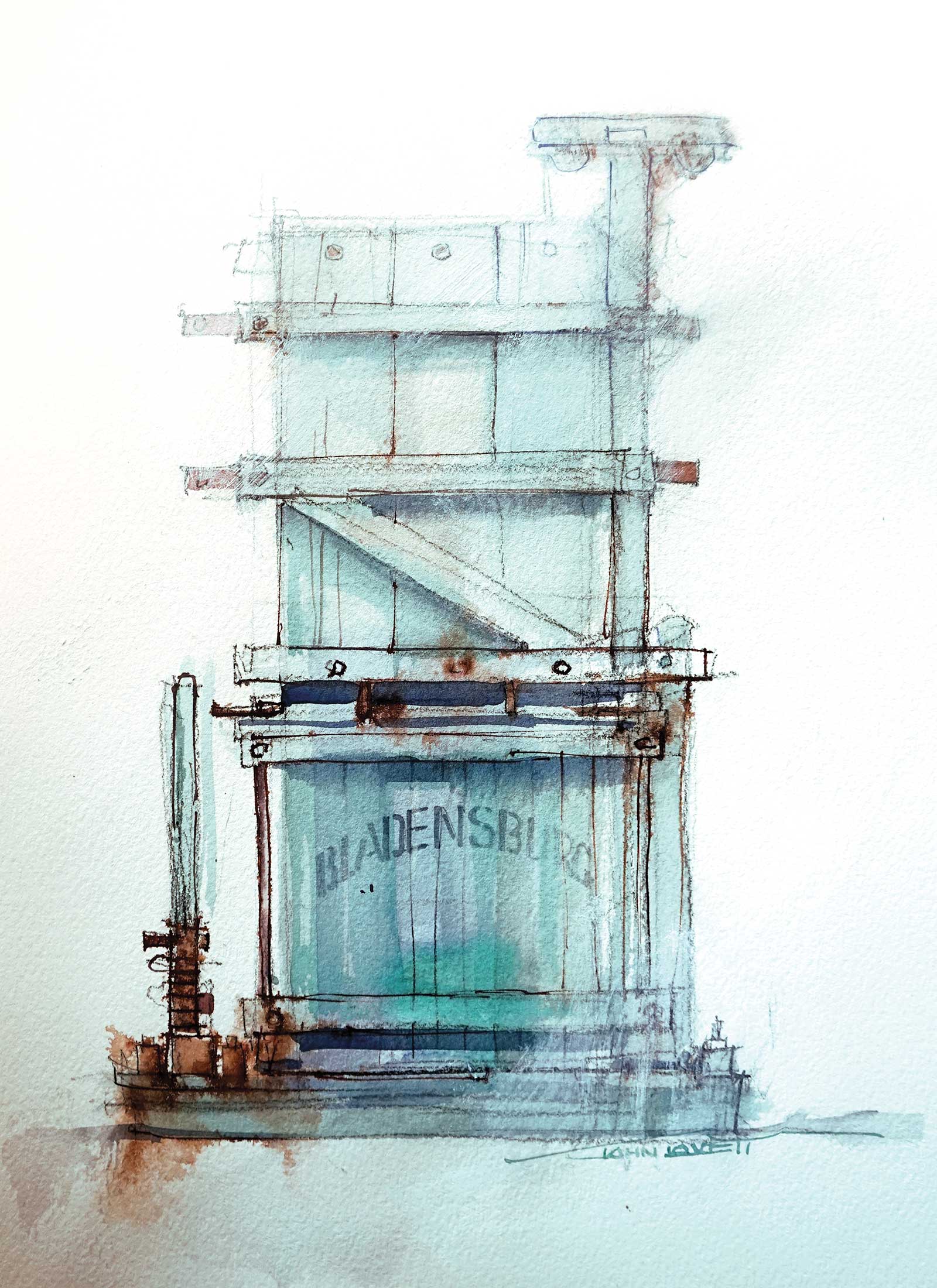
Sometimes you come across something strange and unusual that just demands to be painted. This old wool press was such an object, with its ancient, weather beaten patina and curious mechanics. Loose charcoal pencil marks, bleeding ink lines and a rough application of gesso were used to capture the rough, no nonsense nature of the press. The ridiculousness of the faded phthalo green paint work on such an object was an added bonus, giving an out of character decorative element to such a practical device.
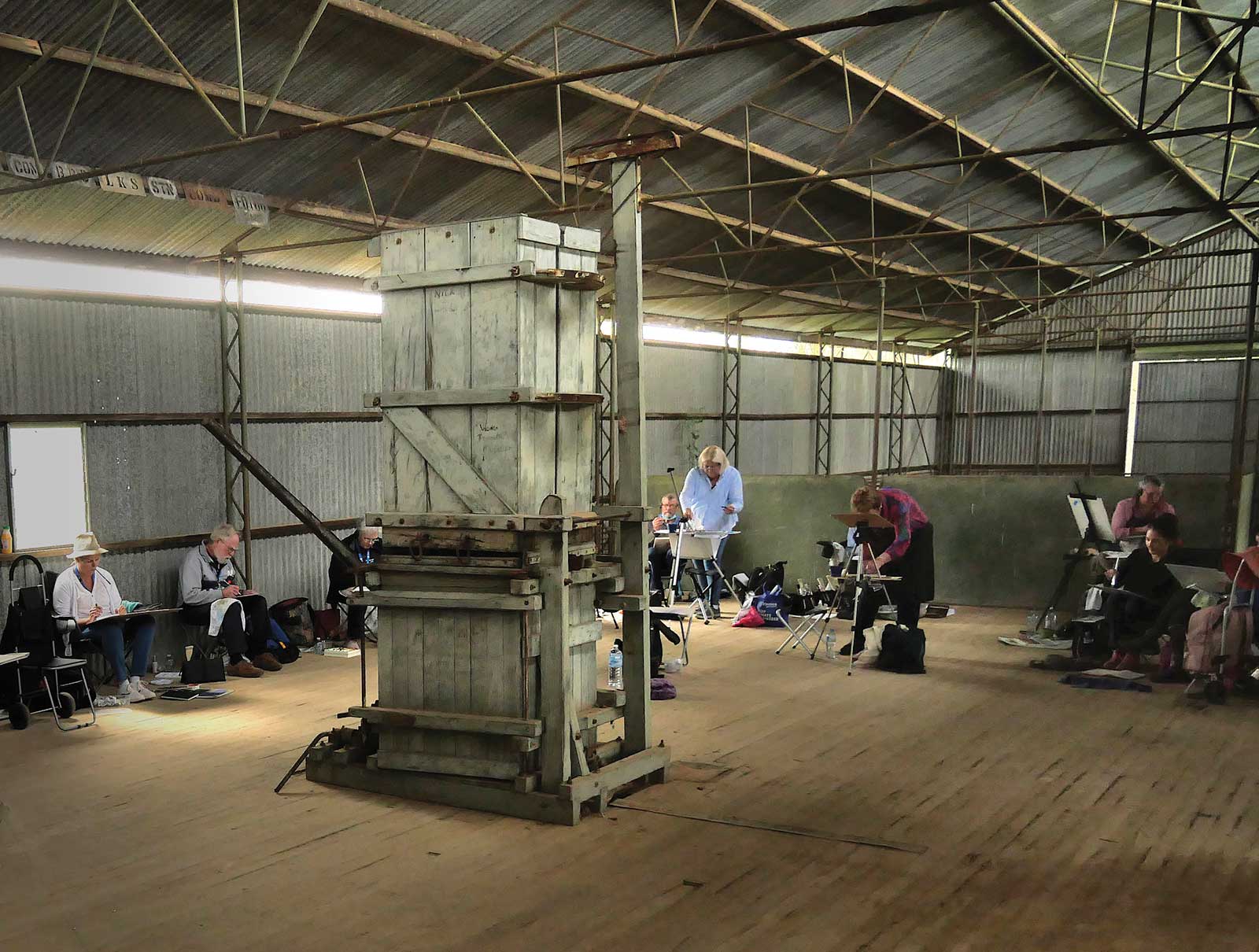
The old wool press was in the center of the floor of a disused shearing shed, so we had protection from the sun and wind, making for a very comfortable painting experience.
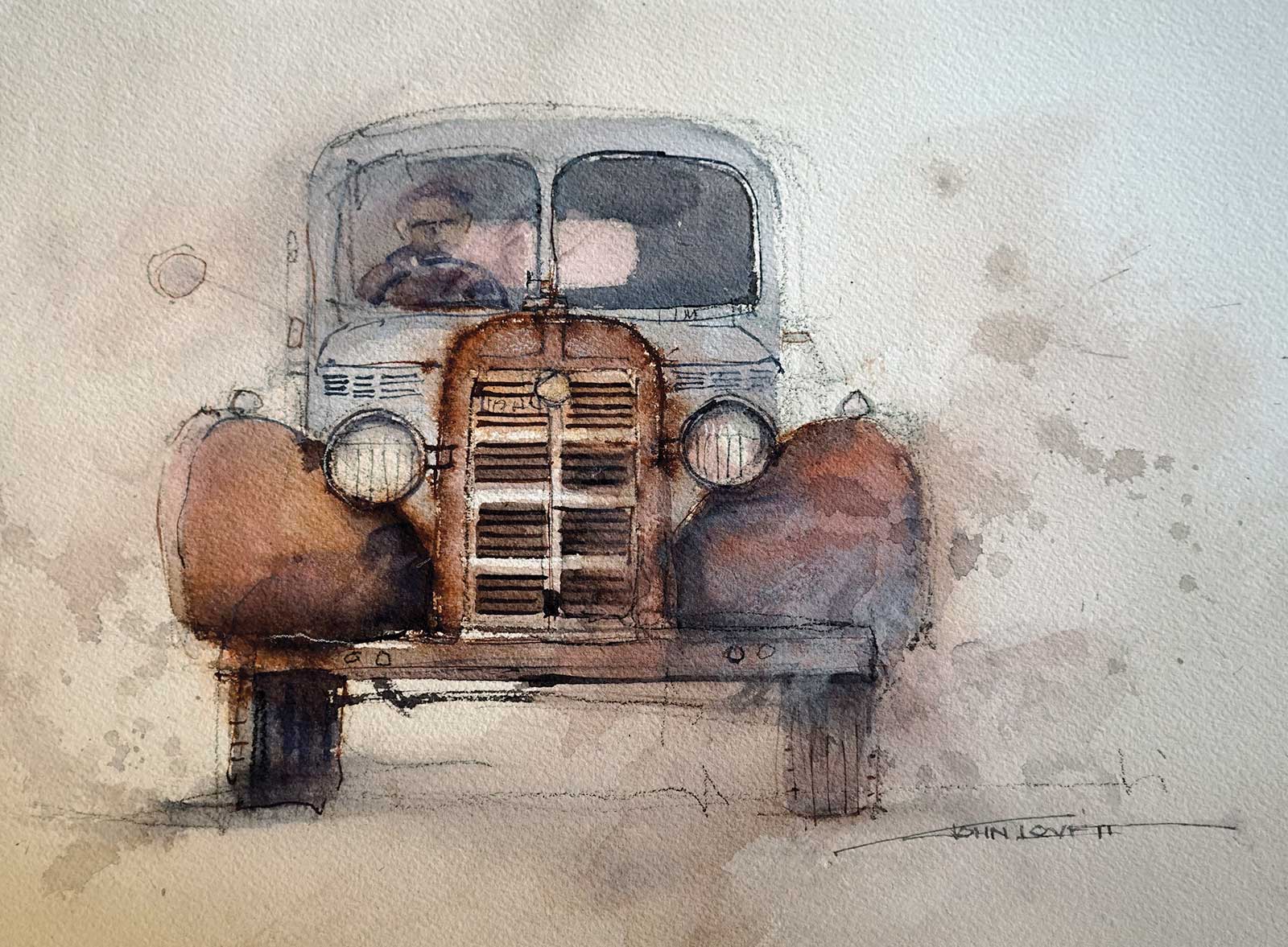
Willy Ma was a Chinese market gardener in Winton for 77 years. His old store and remains of his gardens and unusual watering system have been preserved on the edge of town. His old truck and four wheel drive are no longer running, but housed under a shelter for protection. Some of our workshop group painted the store and some, the old truck.
I loved the way the truck had been left exactly as it was when it stopped running, so I decided to paint it. A dirty burnt sienna color was mixed and used for the rusty panels and a neutral gray for the main cab. Details were added with ink and fine rigger lines. Finally, a dilute wash of white gouache was painted over the windows to suggest their grimy, gray film. Willy Ma’s photograph was on a sign near the buildings so I added a suggestion of Willy behind the wheel. A loose wash and splash of pale, warm gray adds a feeling of movement to the old vehicle.
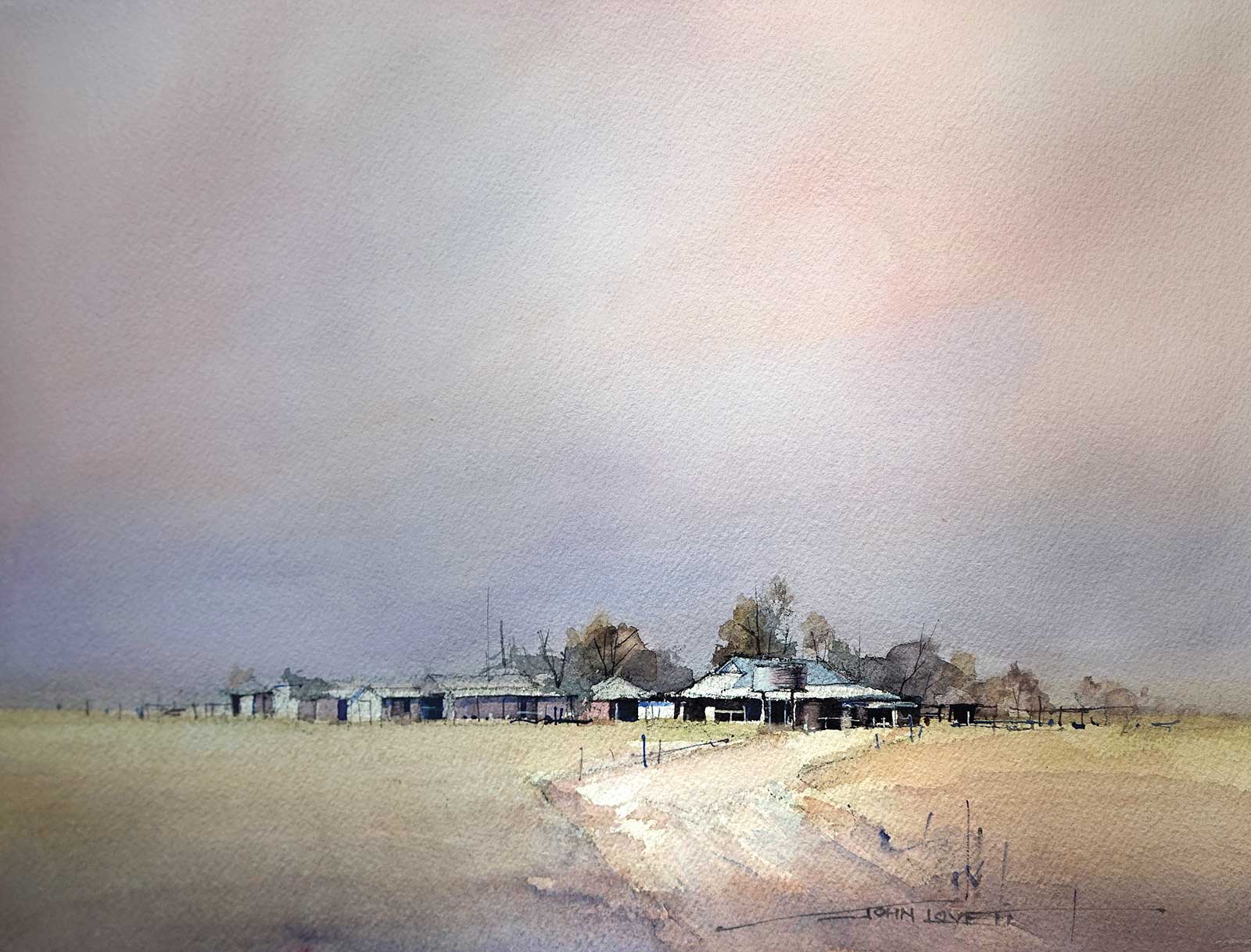
We visited Camden Park Station and painted the homestead and out buildings from the approaching road. There was a number of ways this subject could have been tackled, but to me the big open skies were such a feature of this landscape that I couldn’t help pushing the buildings back into the distance and featuring the subtle colors of the huge expanse of sky. Transparent washes of cobalt, aureolin and permanent rose were layered over one another to build up the translucent variations.
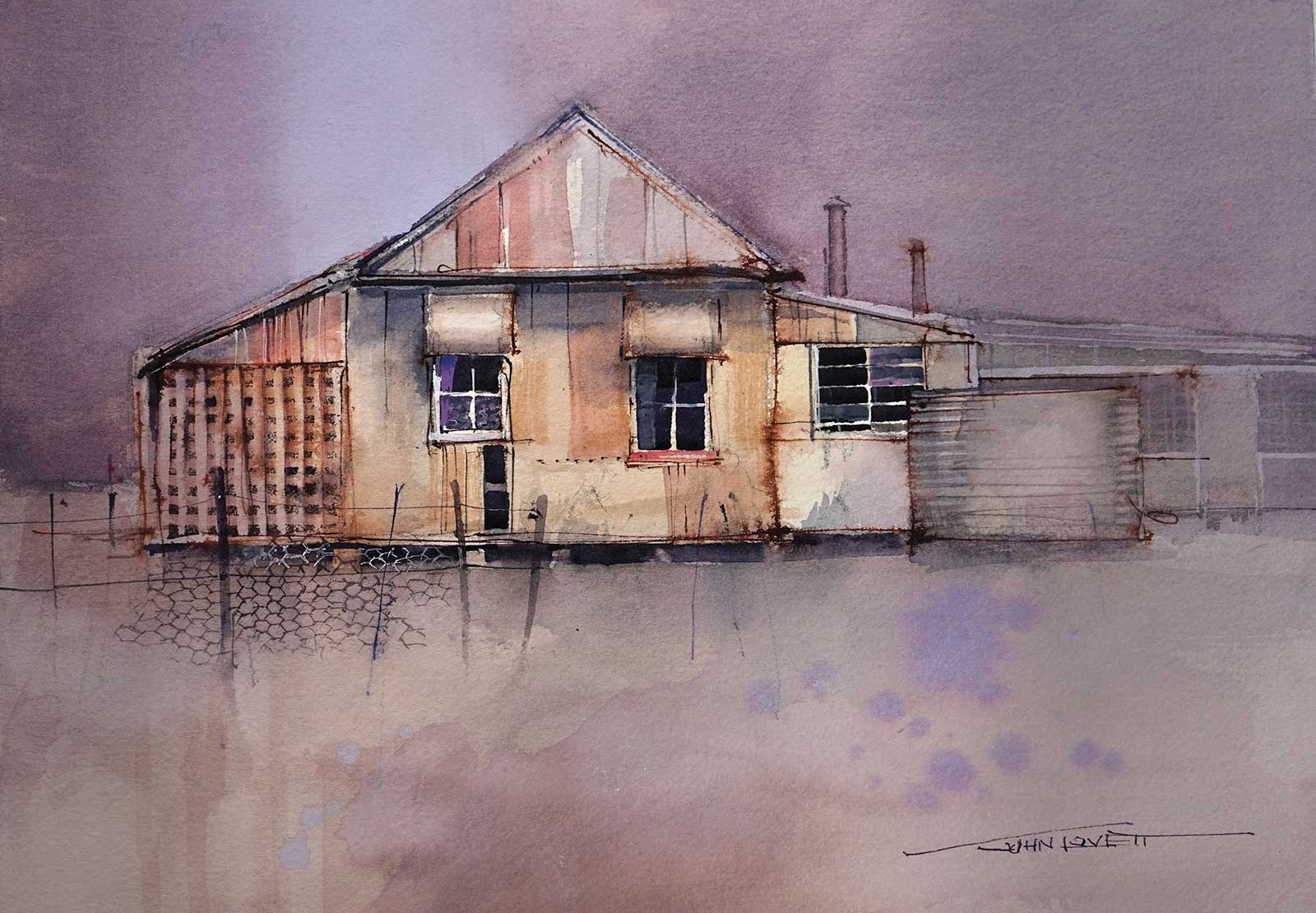
The Langenbaker house is an interesting part of the history of the town of Ilfracombe. The Langenbaker family owned the house for over 100 years, bringing up 11 children there.
I love the weathered patina and interesting variation in the geometric shapes. The house was painted with a puddle of dirty yellow, which I adjusted from yellow to orange and warm gray. Burnt sienna ink lines sprayed with a mist of water and fine rigger lines add sharp, focused detail to the painting.The complementary sky and foreground of gray/violet intensifies the yellows of the building.
No matter where you are, getting out and painting on location is a great way to really become involved with your subject and increase your powers of observation. If you are nervous about painting on your own, join a painting group or workshop. It’s a lot of fun and a great benefit to your drawing and painting skills. —
Contact at www.johnlovett.com