As a landscape painter, I rely heavily on sky imagery to convey an emotion within my paintings. The ever-changing quality of the sky can suggest a mood through shifting light or weather conditions as easily as it can alter the attendant landscape. It is more important to me to convey a feeling faithfully than to provide an accurate representation of a specific place. The technique I use to capture skies requires that I work wet-on-wet, building up the surfaces of my paintings.
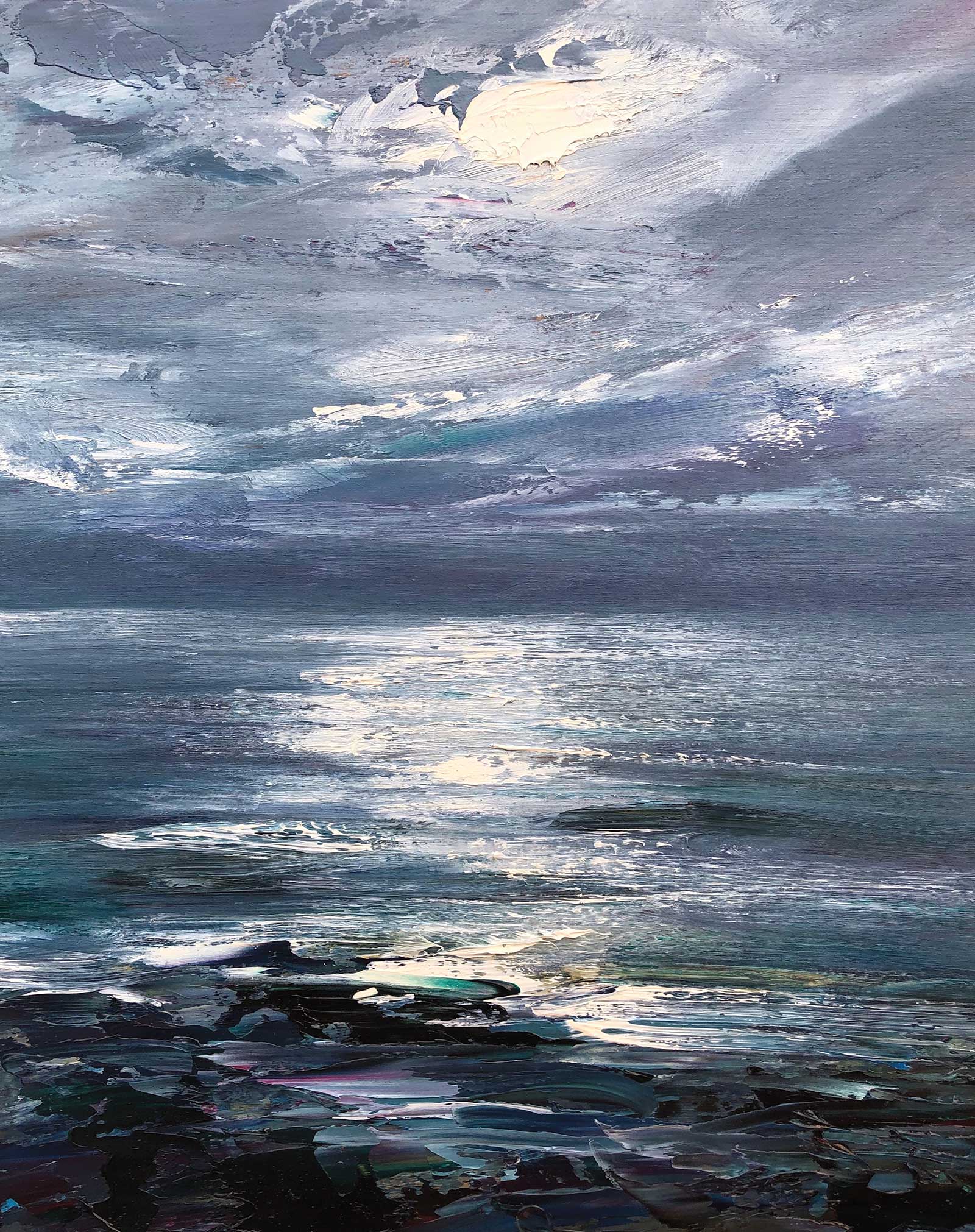
Full Moon Tide, oil on cradled wood panel, 10 x 8" (25 x 20 cm) This painting began from a reference photo taken during daylight hours, but it became a nocturne as it developed. I was interested in how a subtle application of color could feel more significant in a gray picture plane.
As I begin layering paint on my substrate, I allow for a loss of control, which rewards me with an element of surprise. This act of letting go informs the direction of my work and enables the surface to become part of my decision making process. I regain control over my surface as I work toward refining my painting, but it is through this method that surface quality becomes an important element in each finished piece.
Working with both a brush and a knife, each tool contributes to developing the surface. I use my brushes to block in color, to create subtle transitions and to generate softer edges. The palette knife allows me to maintain saturated color, to blend, scrape down and to layer my surface application.
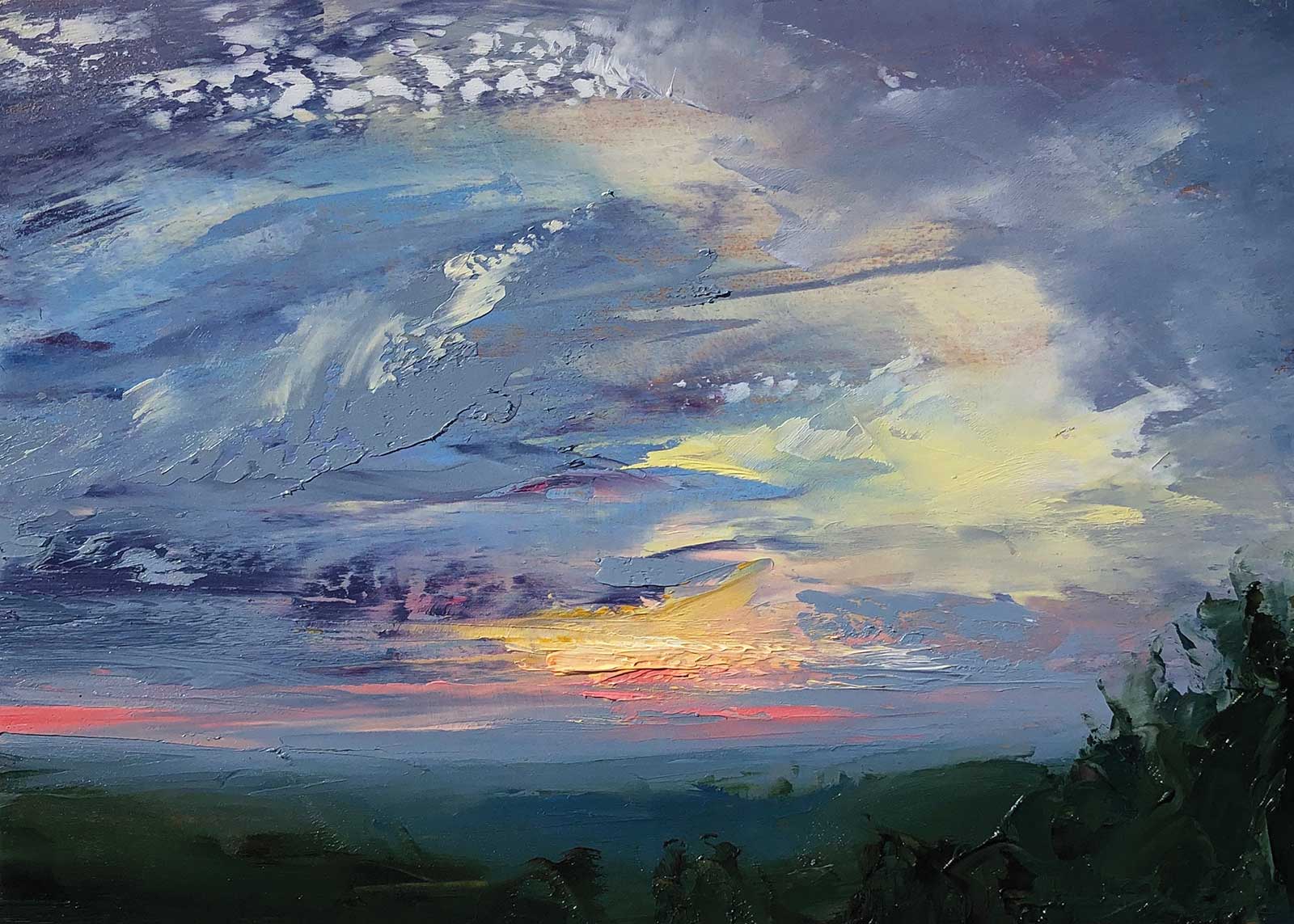
Exaltation, oil on cradled wood panel, 5 x 7" (12 x 17 cm) Inspired by sunsets in the foothills of the Blue Ridge Mountains, I painted this skyscape focusing on the strong contrast of complementary colors. Most of the textures in the sky were developed with a knife. The marks and thin paint application in the upper right corner of the painting were made by scraping down and blending color with my palette knife.
I always begin a painting with some visual reference, whether working in plein air or in the studio. I usually start by drawing out the composition with a neutral-colored oil, directly on my surface. Because skies tend to be more abstract in shape, I skip this step when they are my primary subject and start my piece by blocking in color. Procedurally, I develop my surfaces by loading up my knife with oils and allowing colors to blend on the substrate in unexpected ways, sometimes mixing optically. This thick layering of paint allows for strong contrasts in color and value. The physicality of the oil paint itself produces a variety of textures contributing to the resulting surface. If I’m displeased with a particular application, I can scrape down the area and reapply until I’m satisfied with the result. Sometimes the process of scraping down will leave residual marks or surprising color transitions that I allow to remain on the surface. Through this technique, the painting process becomes part of the finished piece and is not buried in a refined image.
My Art in the Making Blue Ridge Twilight
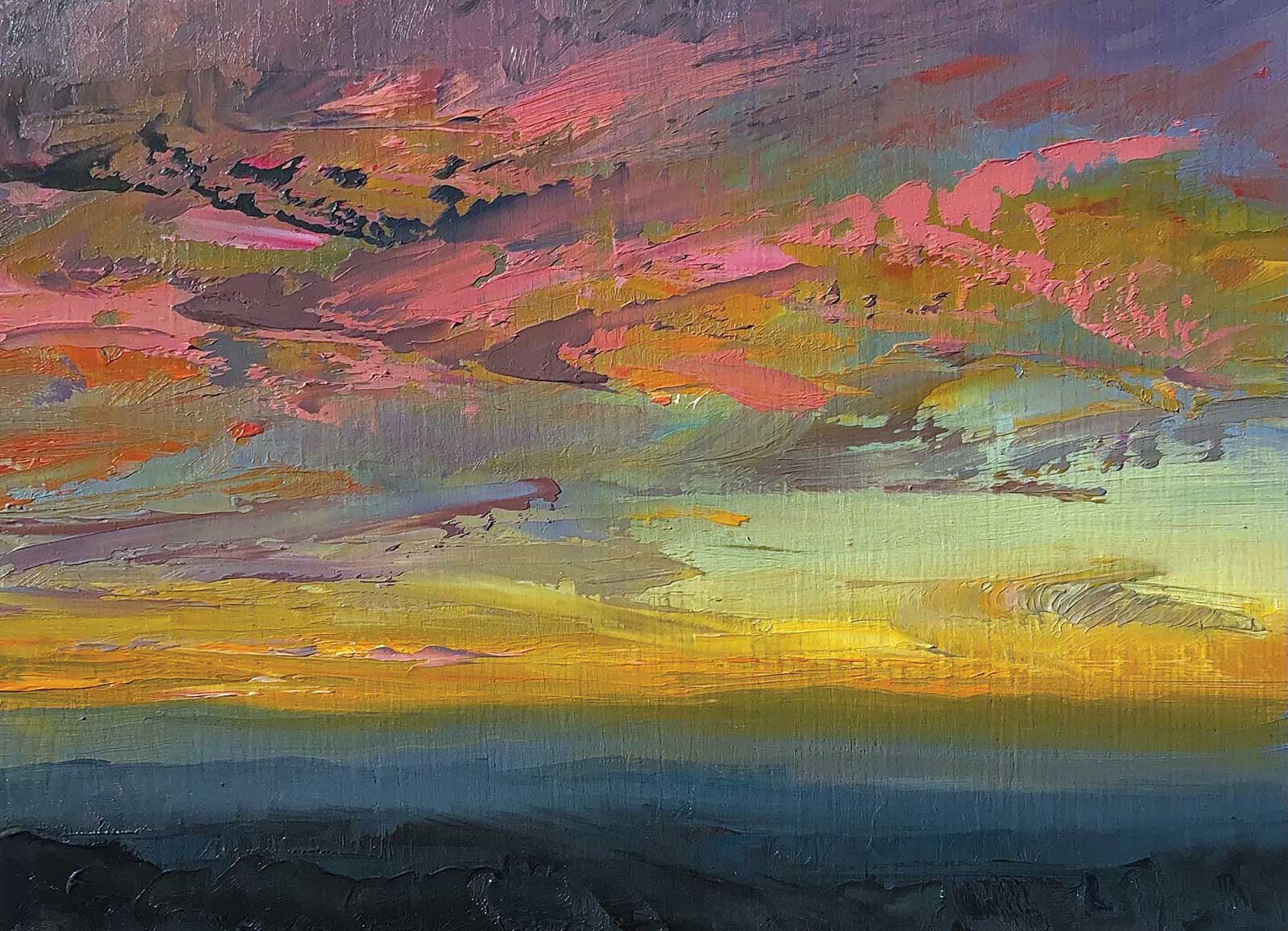
Study, oil on cradled wood panel, 5 x 7" (12 x 17 cm) I primed this wood panel with shellac in order to seal the surface while maintaining its texture. Working on a semi-textured surface gives me control during my painting process.
Often, I will deviate from my original reference material as the composition develops. For this piece, I began with a 5-by-7-inch oil sketch, which served as a study to help me solidify my composition, value structure and color relationships. My subject in this painting depicts a scene from my hometown in the foothills of the Blue Ridge Mountains. As I begin to develop the foreground, I am considering the atmospheric relationship between the sky and land. I negotiate soft edges, subtle textures and minimal contrast at the horizon line. Mixing grays for the landscape from colors I have used in the sky helps me to unify the overall color scheme and minimize contrast in the foreground. By working in a fat-over-lean process, I develop a more heavily textured surface at the top and the bottom of my composition to suggest my subjects in the foreground as being closer and more clearly defined. Finally, I make edits to refine my painting, allowing each mark or spot of color to dictate the one that will follow. Ultimately, the layered paint application on each painting’s surface should serve two purposes: to stand in as the subject, and to remain as paint, varied in color and in texture.
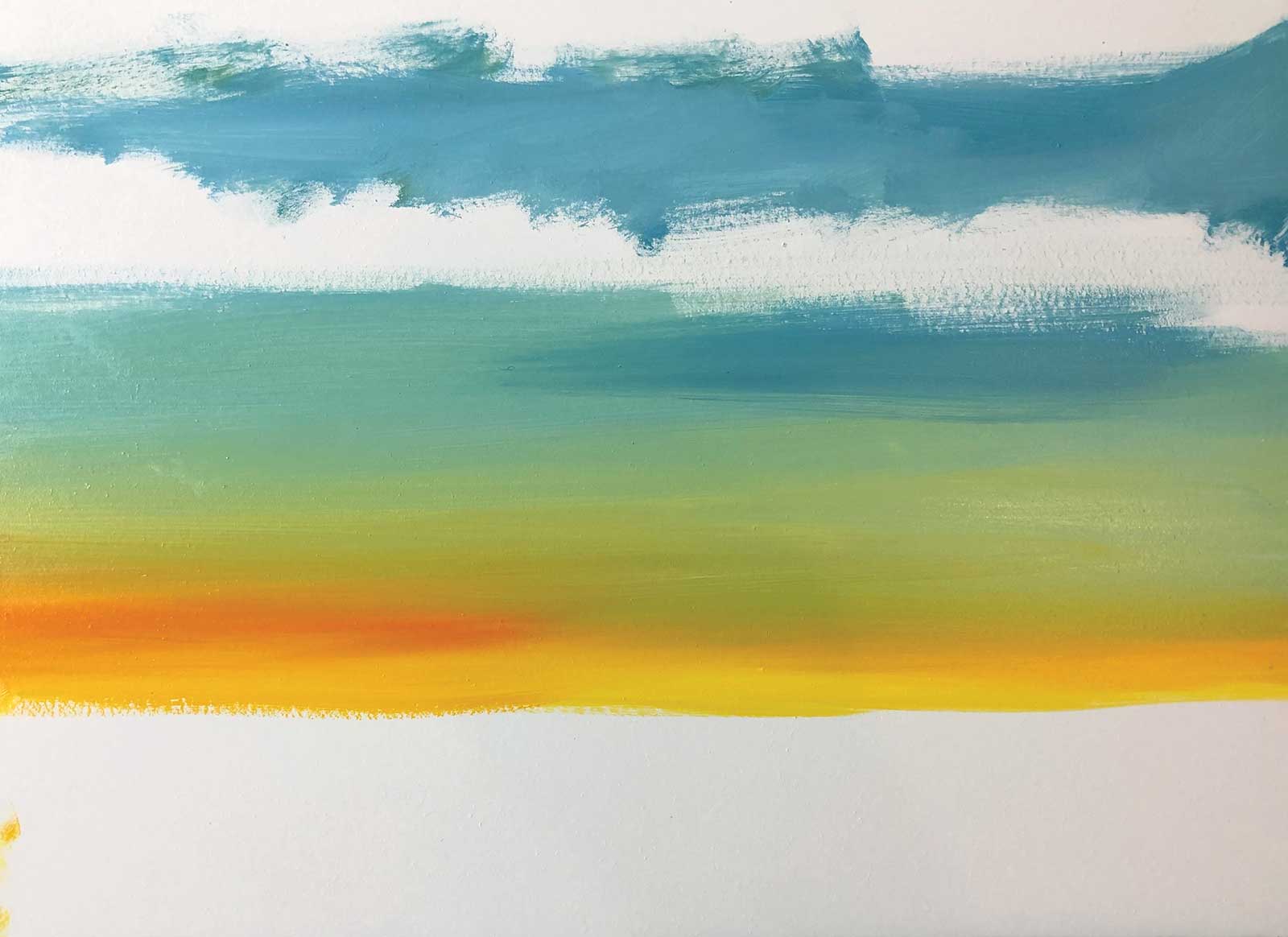
Stage 1
Stage 1 Gradient Sky
Transitioning between a tinted Indian yellow, viridian green and cerulean blue hue, I begin by establishing a gradation in the sky. I am working on a 9-by-12-inch medium textured surface.
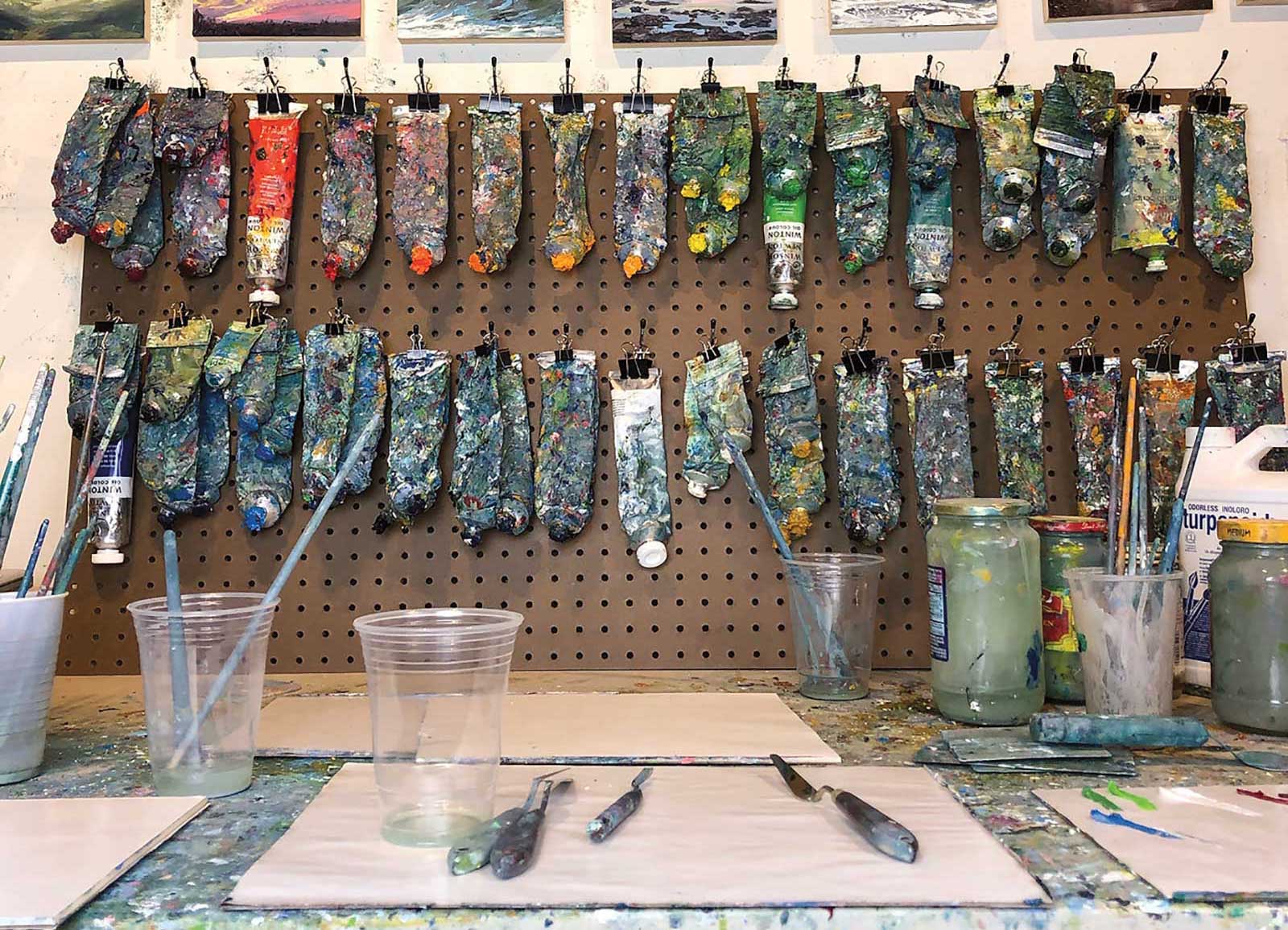
WHAT THE ARTIST USED
Oils
Indian yellow, Permanent rose, Titanium white, Cerulean blue hue, Phthalo blue, Raw umber, Viridian green, Yellow ochre, Payne’s gray, Portland cool gray
Additional Materials
Artist Tape, Paper palettes, Turpenoid, Paper towels, Synthetic brushes: angular 4, flat 14, Knife: T 32 Creative Mark, Shellac, Surface of study: cradled wood panel, 5 x 7", Surface of painting: cradled panel, medium texture, 9 x 12"
Stage 2
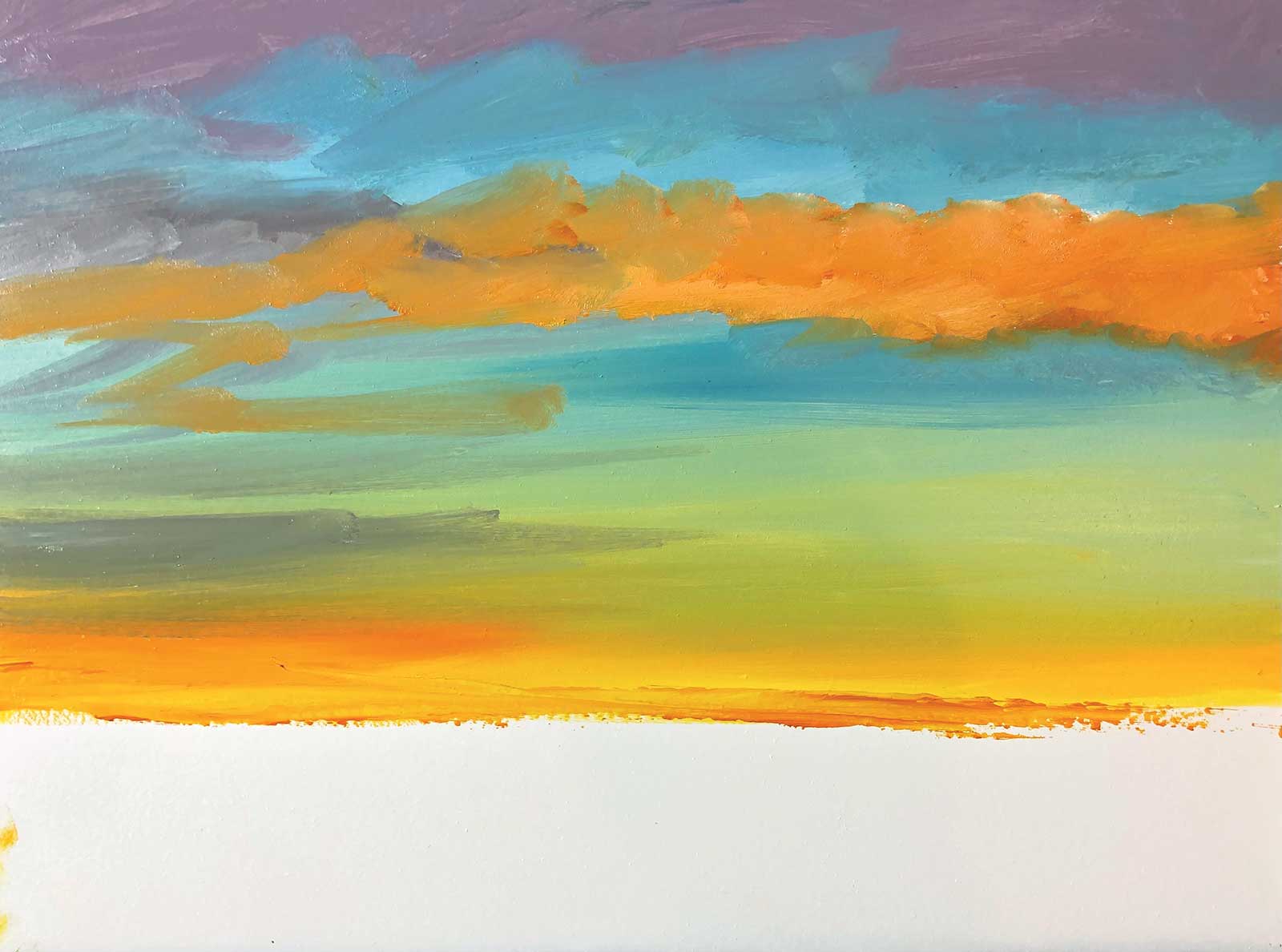
Stage 2 Blocking in Clouds
Working with contrasting colors, I block in the shapes of the clouds. Because my composition will change as the piece develops, the shapes are kept simple and my paint application thin.
Stage 3
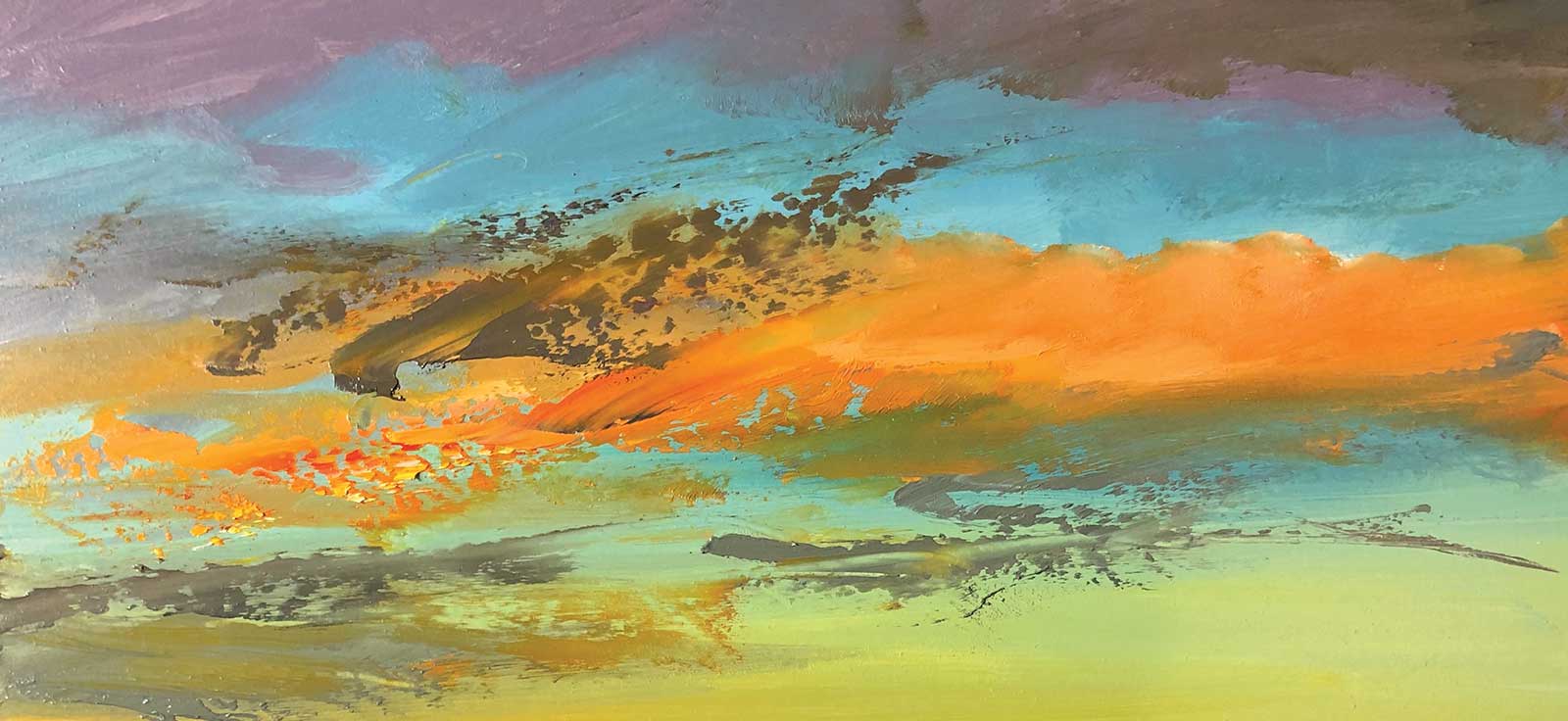
Stage 3 Thick Paint with Knife
To develop texture and create value contrast, I begin layering a thicker application of paint with my palette knife.
Stage 4
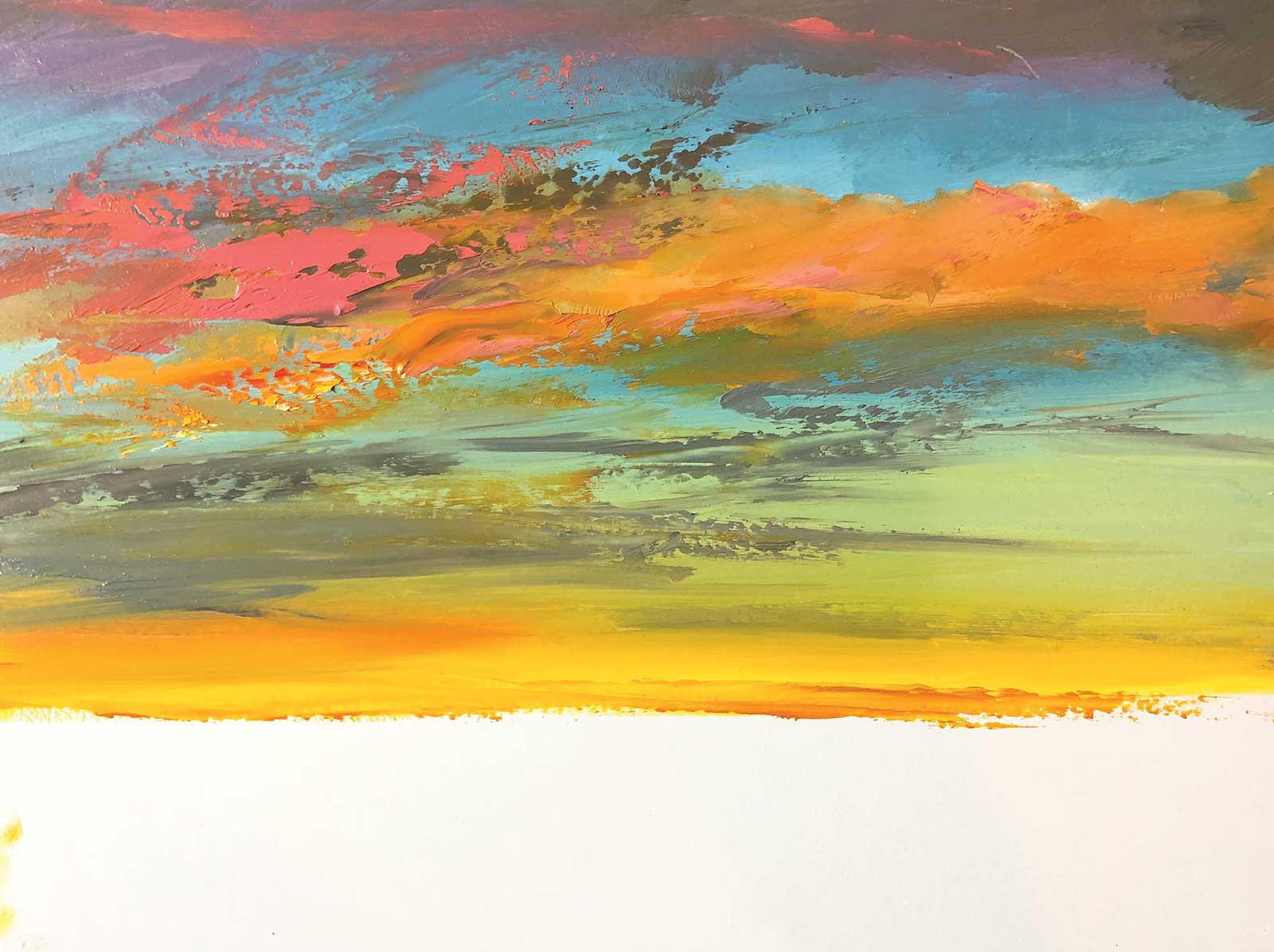
Stage 4 Creating Contrast
In order to create color contrast and generate additional shapes, I continue layering paint. I begin blending edges with my brush to create more subtle transitions toward the horizon line.
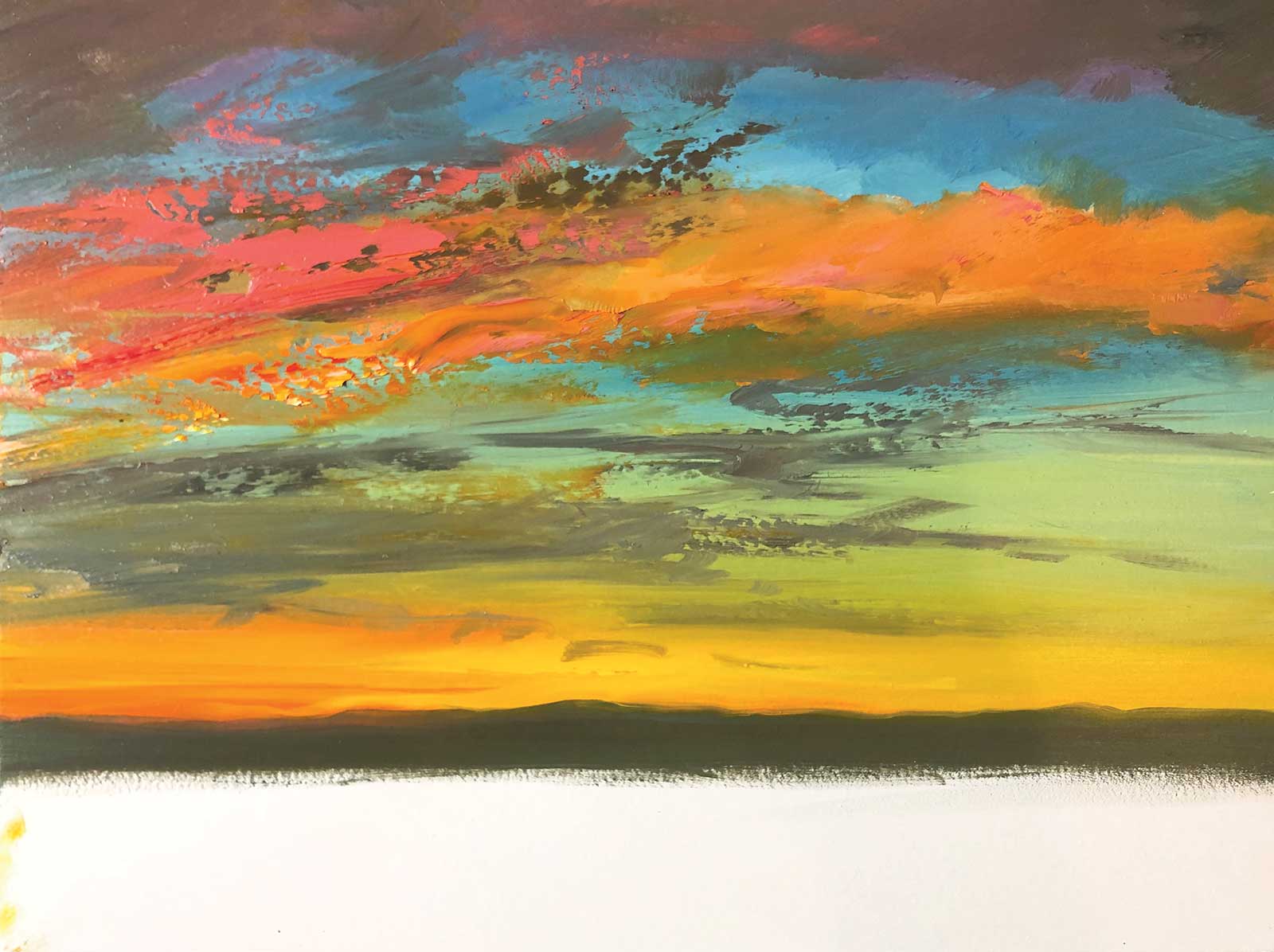
Stage 5
Stage 5 Nuanced Forms
A horizon line is established, and paint is layered in the sky to make the textures more complex. I add additional shapes near the horizon, keeping the contrast limited in deep space.
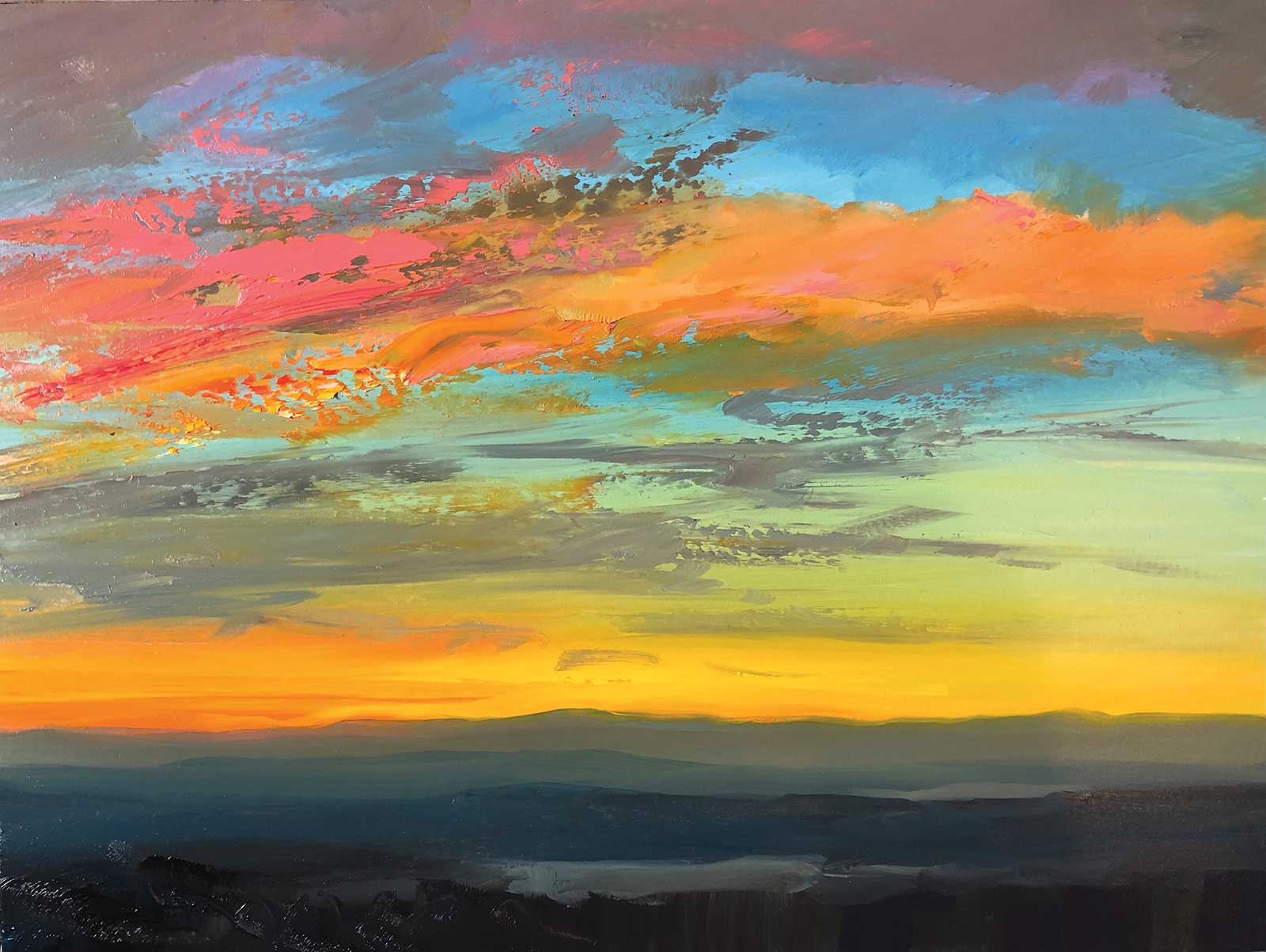
Stage 6
Stage 6 Building Foreground
Building my foreground from back to front, I make each hill darker, more defined and more heavily textured. I aim to keep the land neutral and limited in contrast, so the sky will be the focal point.
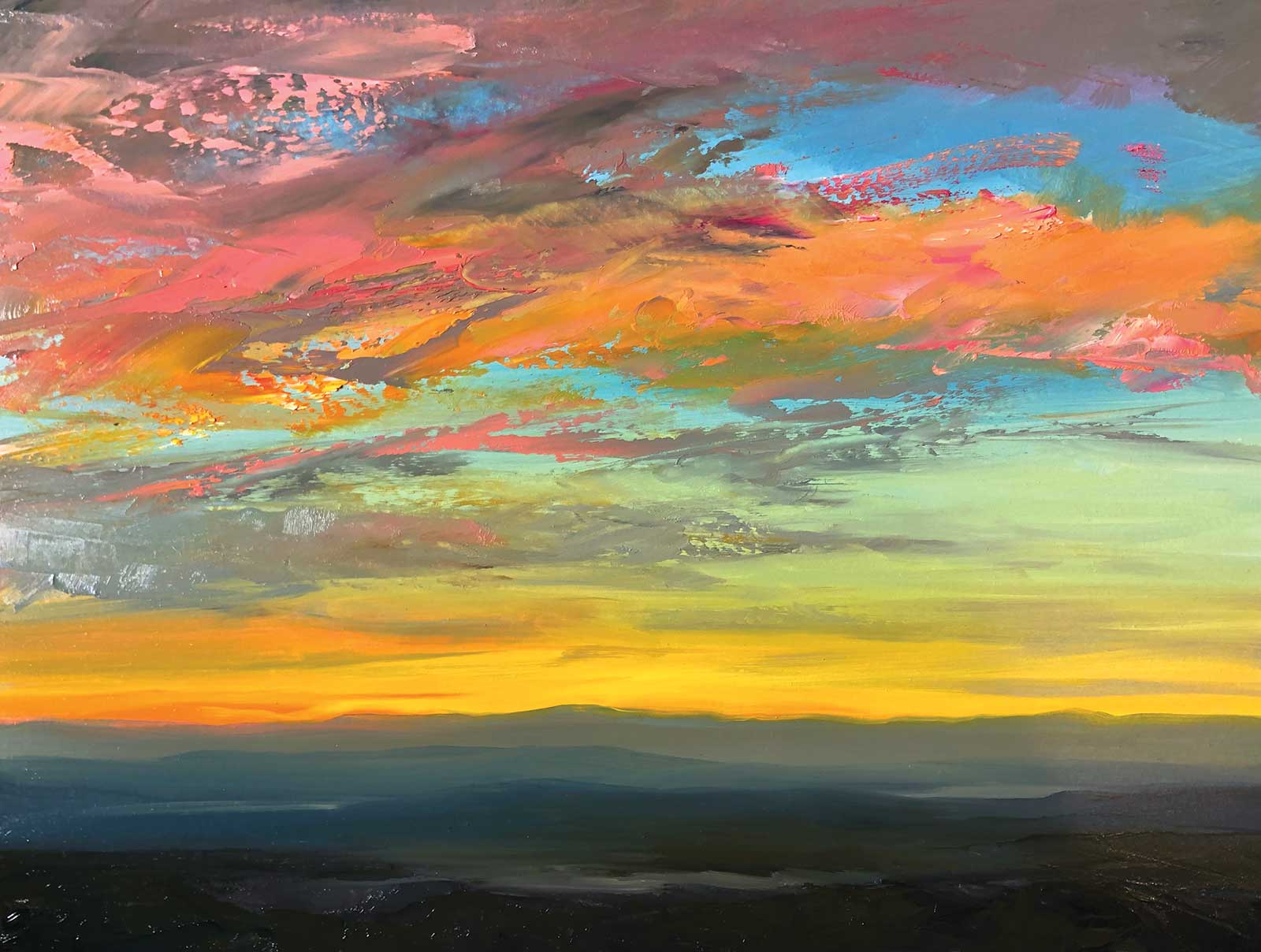
Stage 7
Stage 7 A Balance of Elements
To establish a sense of unity, I work toward integrating the sky and land. At this stage, I am balancing values, changing shapes, adding details and developing textures throughout the painting.
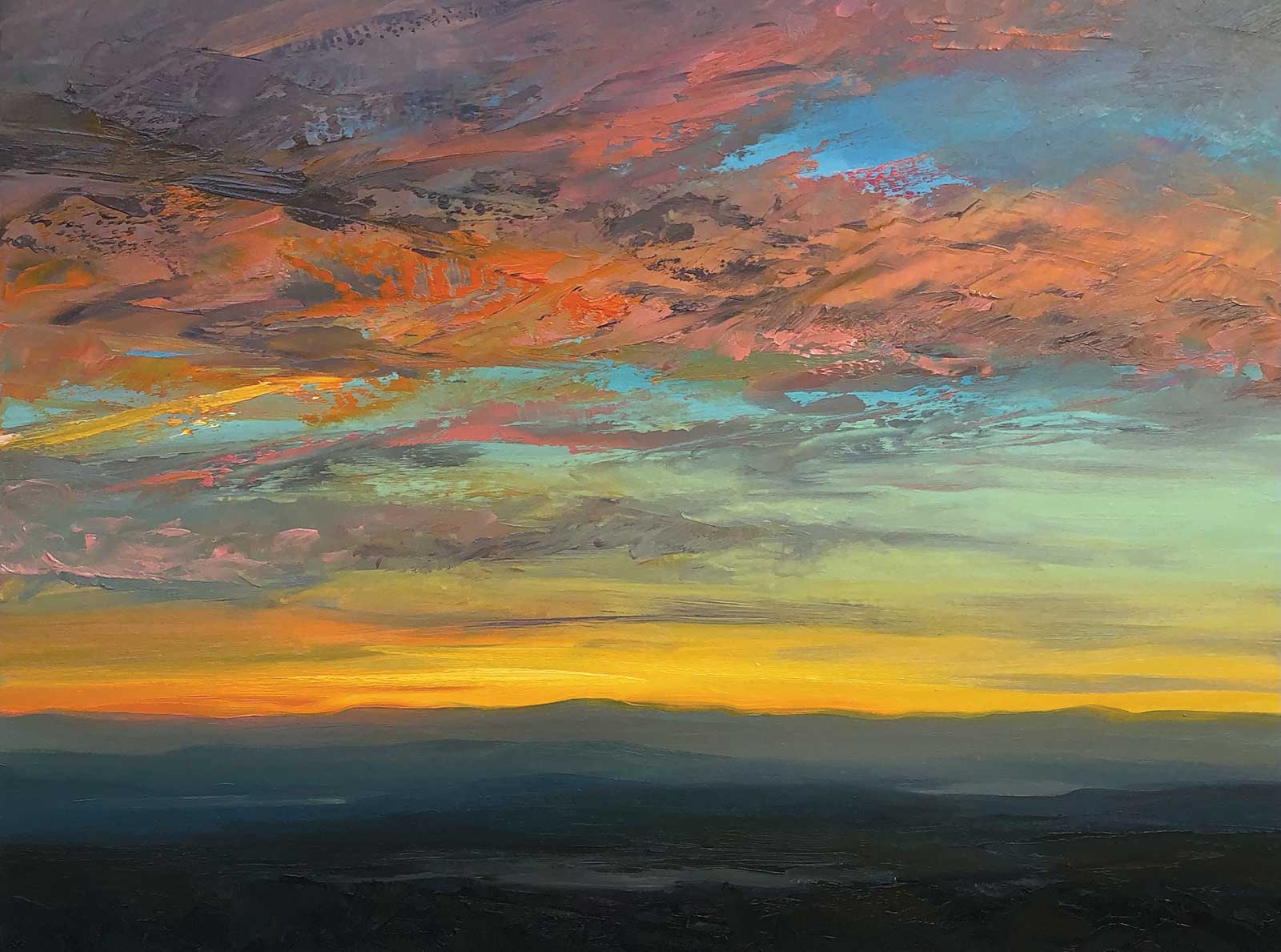
Stage 8
Stage 8 Finished Artwork
Blue Ridge Twilight, oil on cradled panel, 9 x 12" (22 x 30 cm)
In order to balance out the dark values in the foreground, I lay in darker tones in the sky. To create more variety and interest, I break up any remaining large shapes of color.
About the artist
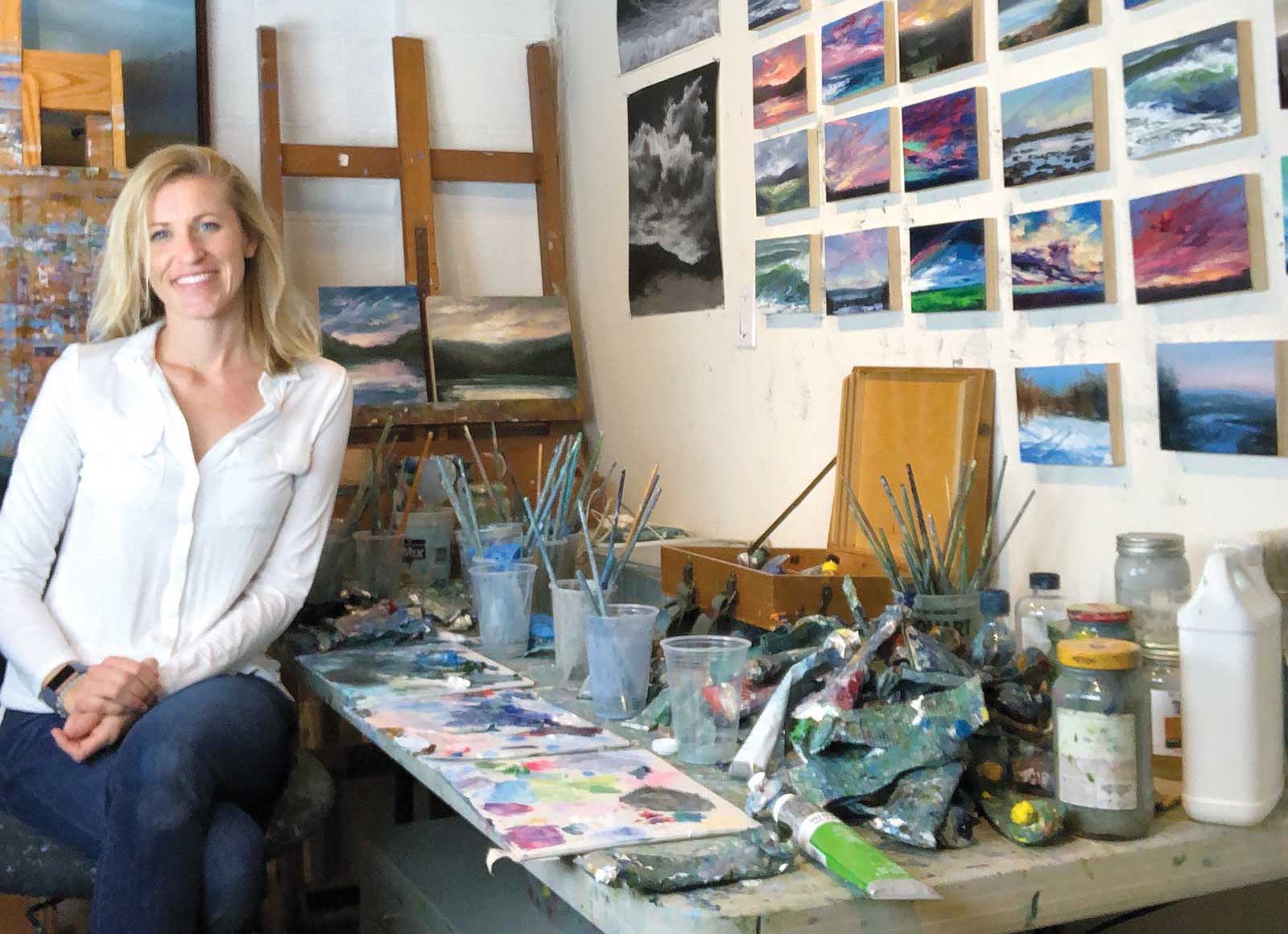 Whitney Knapp
Whitney Knapp Bowditch was born in Connecticut, lived in Surrey, England, and currently resides in Richmond, Virginia. She earned her Bachelor of Fine Arts degree from Denison University, and her Post Baccalaureate Certificate and her Master of Fine Arts degree from the Pennsylvania Academy of the Fine Arts. Bowditch’s work has been exhibited nationally, and her pieces are in private collections throughout the United States and abroad. She is represented by Jessie Edwards Gallery, The Photo Dog Art Gallery, Eisenhauer Gallery and Sugarlift. She has taught drawing and painting courses at the high school and college level, and currently teaches at John Tyler Community College in Midlothian, Virginia.
Represented by
Jessie Edwards Gallery, Rhode Island, USA, www.jessieedwardsgallery.com
The Photo Dog Art Gallery, Rhode Island, USA, www.thephotodogartgallery.com
Eisenhauer Gallery, Massachusetts, USA, www.eisenhauergallery.com
Sugarlift Gallery, New York, USA, www.sugarlift.com