I’m a professional wildlife artist based in Preston, Lancashire, United Kingdom. I bring my love for animals and art together by creating the highest quality realistic colored pencil drawings of wildlife, capturing the character and beauty of each animal. In my original wildlife portraiture, I like to work from carefully selected photographs, which often capture a close-up, intimate moment of the subject in a strong light. This enables me to achieve an exceptional amount of detail in each of my pieces, which often portray an emotional encounter.
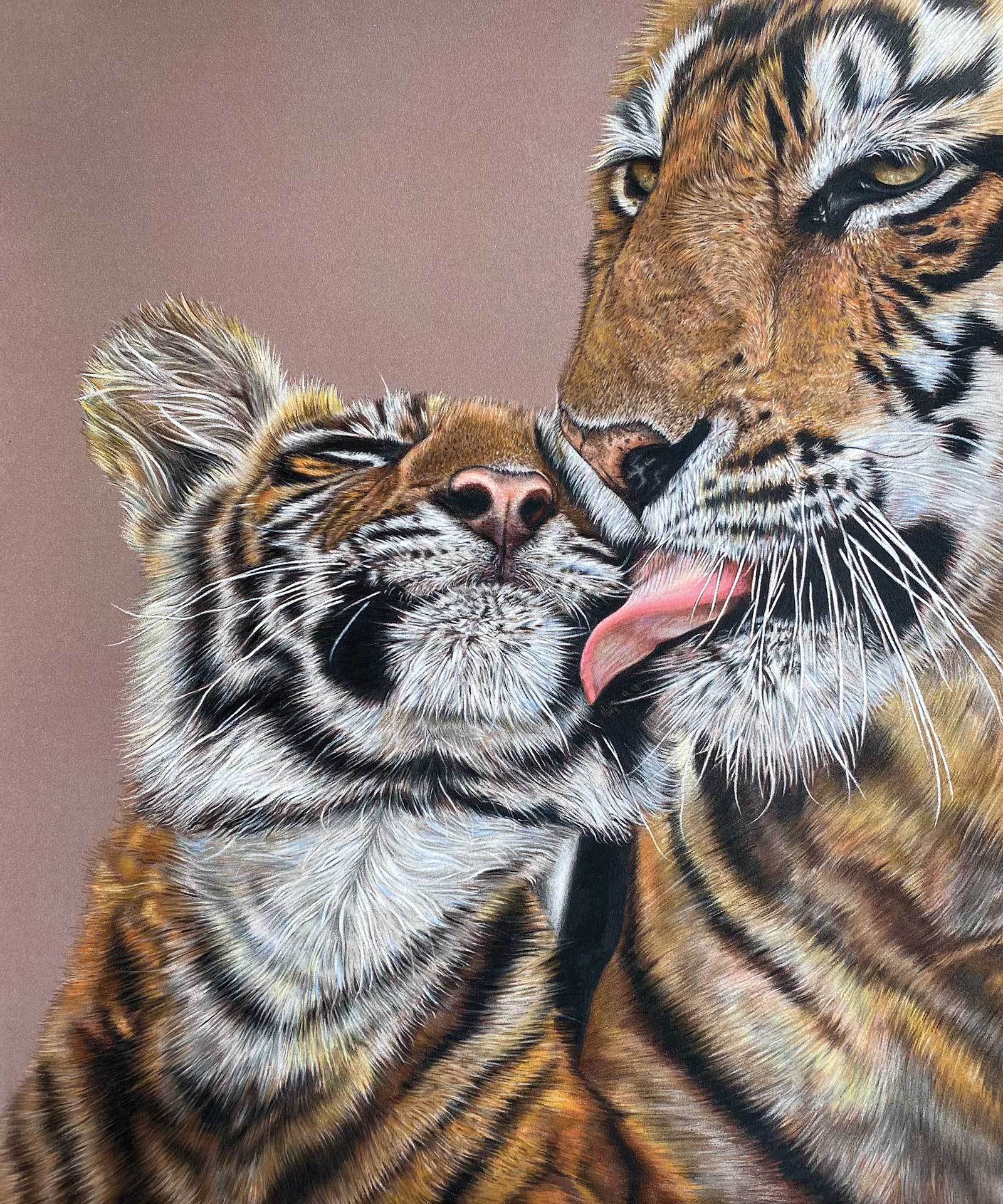
Wild Love, colored pencil on Pastelmat, 19 x 16" (48 x 40 cm) This large-scale drawing focuses on the personal emotional connection between a mother tiger and her cub, focusing on their soft affectionate traits in comparison with their wild side, which tigers are predominantly known for.
I choose to create my authentic portraits in colored pencils, as they allow for accuracy and depth through an incredible control of detail. I enjoy the timely process of building up layers to recreate fur textures through every delicately placed pencil stroke. I strive to bring the subject to life on the paper, through intricate techniques, patience and precision. My wildlife drawings are created using a mixture of Faber-Castell Polychromos and Caran D’Ache Luminance colored pencils, which complement each other brilliantly. Polychromos are predominantly oil based, so they are a much harder pencil with a far richer pigment. The luminance pencils are predominantly oil based, so are perfect for blending and building up tonal value.
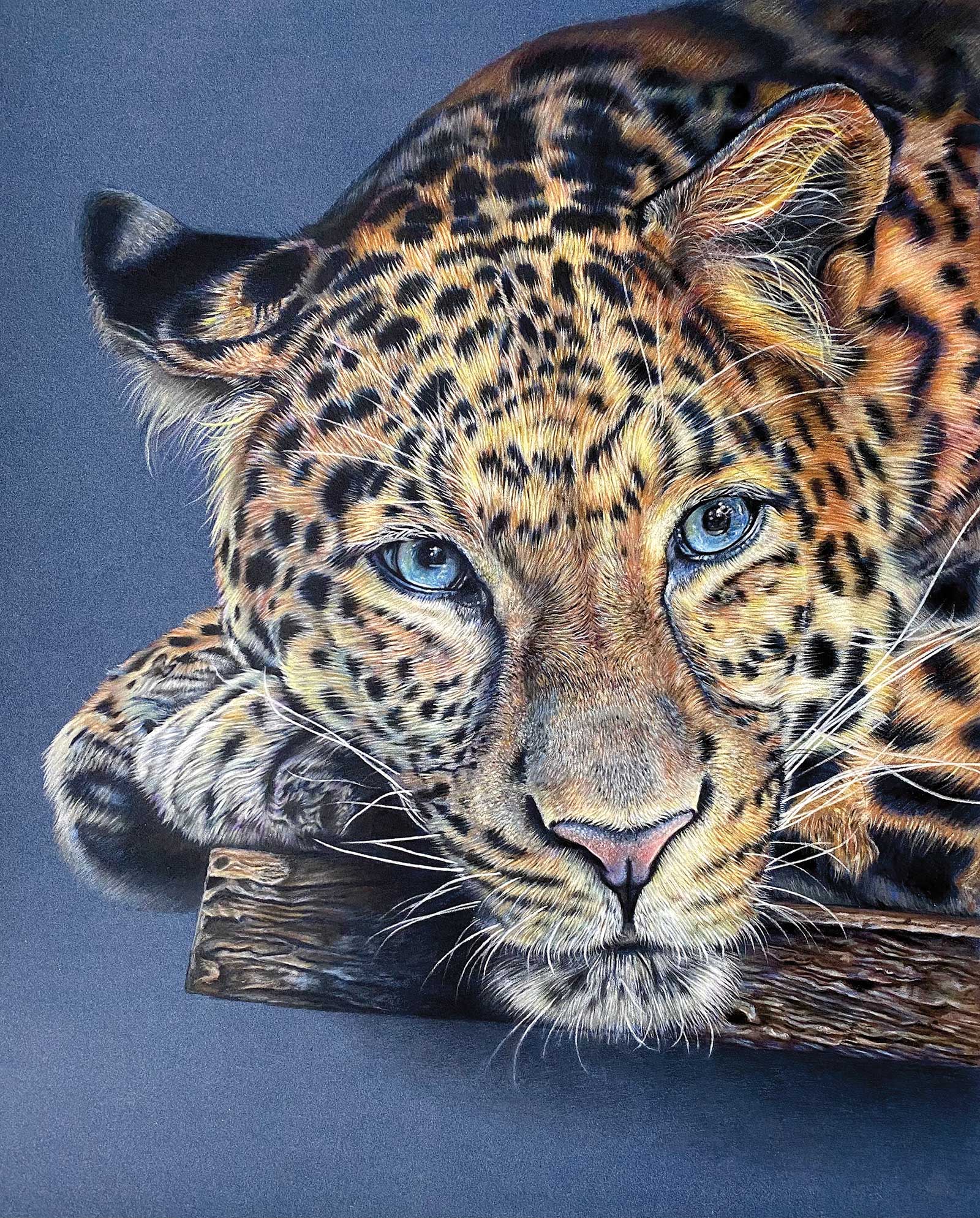
Contemplating, colored pencil on Pastelmat, 19 x 16" (48 x 40 cm) This artwork shows an up close and personal moment of a leopard. I focused primarily on color for this piece, using the contrasting colors of orange and blue to add a realistic sense of depth to the drawing, making the leopard noticeably emerge.
I consider my work to be a balance between photorealism and a classic delicate drawing style. It’s important to me that my work holds an element of photorealism, but can still be recognized as a colored pencil drawing. More recently I have been experimenting with softer mediums, like PanPastels, which can complement the fine lined nature of colored pencils, offering a contrast of looser and tighter textures.
In terms of choosing the right materials to complement my techniques, I predominantly work on Fabriano Artistico paper, drafting film or Pastelmat, all of which are complete opposite surfaces to work on but can result in slightly different outcomes. The fine tooth of the Fabriano Artistico paper allows for a multitude of layers with colored pencils, adding to the depth and vibrancy of my work, whereas drafting film has a completely smooth surface, allowing for the finer detail. Due to the surface being completely smooth, it doesn’t hold many layers, however its transparency means I can layer behind it and it’ll still show through. I can also draw on the reverse side of the drafting film to increase the level of depth.
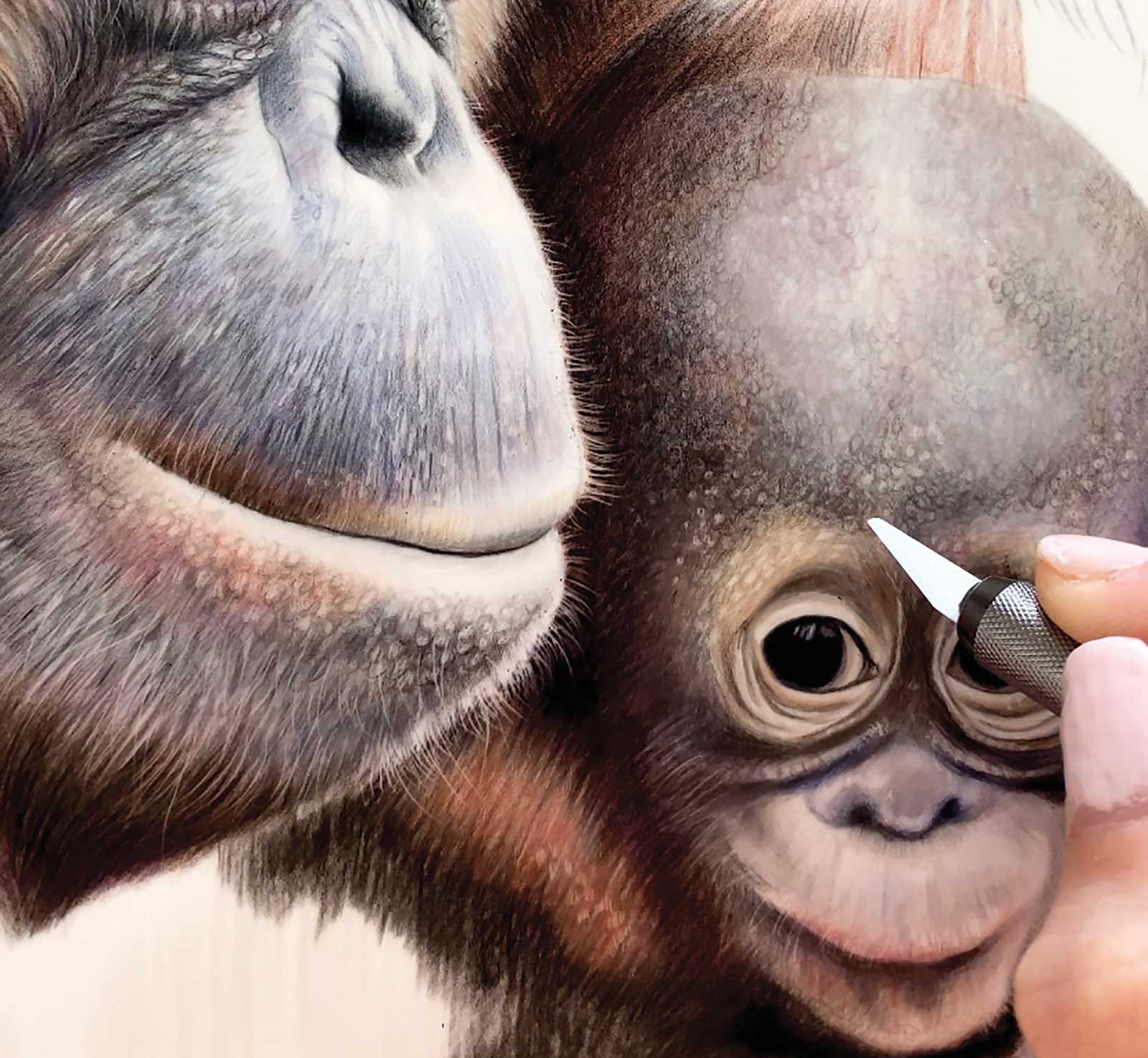
Throughout all my wildlife pieces, I refine the details with the craft knife slice tool, which enables me use the removal technique to pull out highlights in the fur, whiskers and fine details in the eye (portraying the light reflections), that I wouldn’t be able to achieve just by using colored pencils alone. The craft knife slice tool can be held like a pencil for maximum control. The small ceramic blade at the end removes those top layers of pigment to reveal the paper underneath, resulting in fine, etched-out marks that add to the realistic level of intricacy in every piece. Particularly when drawing fur, the craft knife slice tool has now become a necessity in my art studio, alongside my colored pencils.
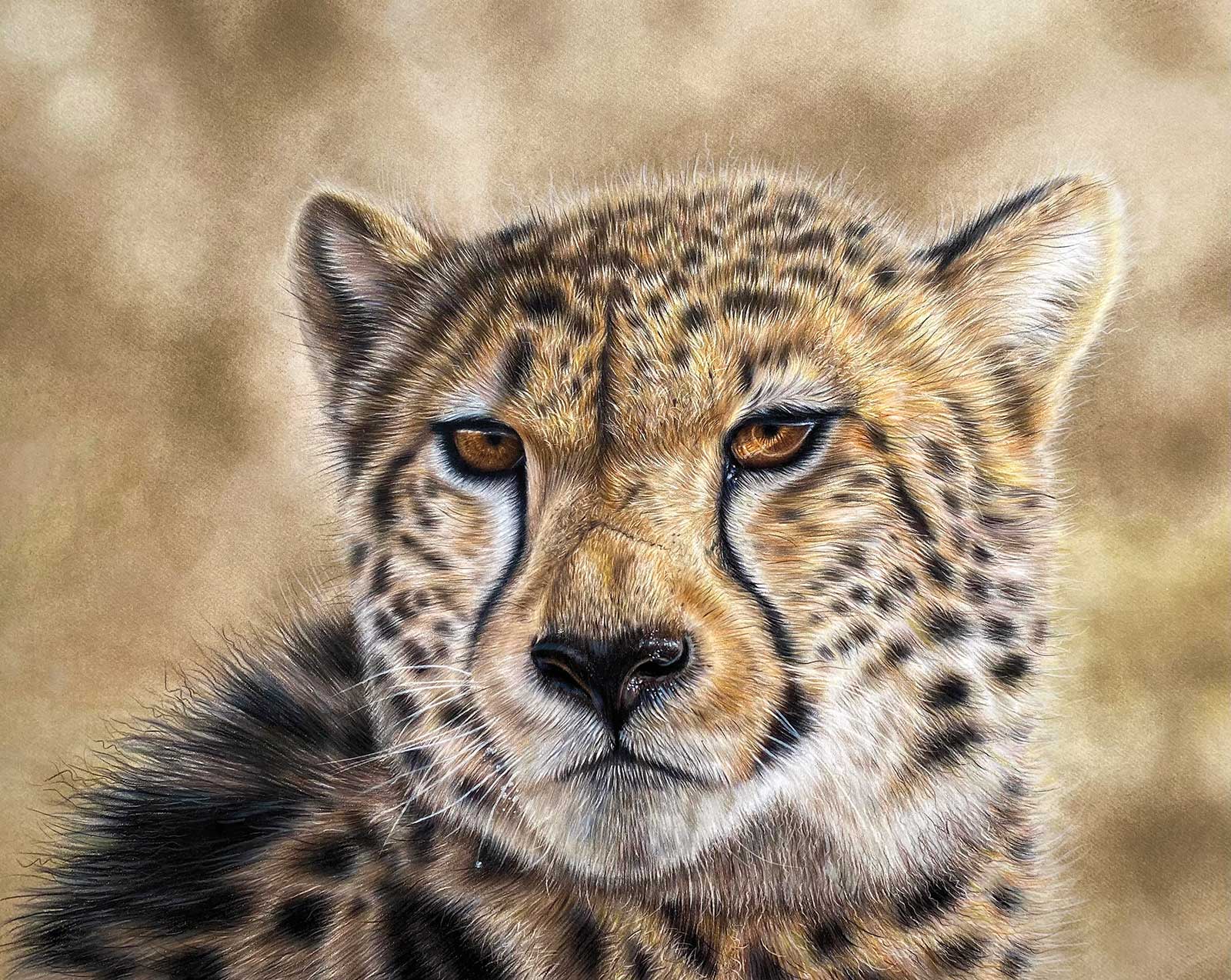
Sunset in the Savanna, colored pencil on hot-pressed Fabriano Artistico paper, 12 x 14" (30 x 35 cm) In my most recent wildlife piece of this cheetah I further experimented with PanPastels, using them to create a soft, blurred out background, so the sole focus remains on the intricate details making up the cheetah. The warm colors and strong light source remind me of a sunset, hence the name Sunset in the Savanna.
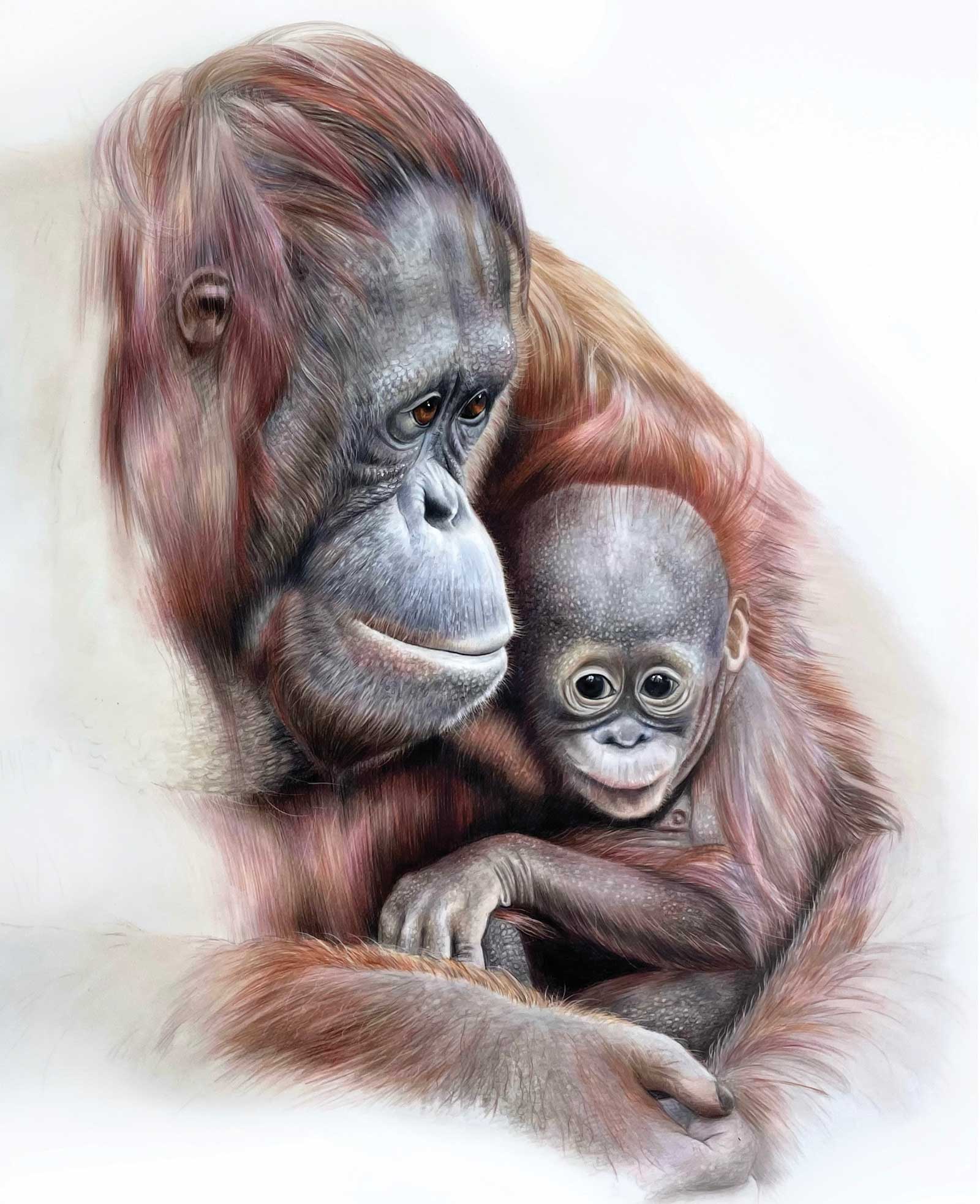
For example, my demonstration piece of the orangutans, Close Connection, still holds an element of realism by keeping my drawing style really tight and detailed for the majority of the piece. Layered behind the drafting film, is a softer blended mix of PanPastels on Fabriano Artistico paper. I chose to focus solely on the intimate and emotional connection between mother and baby, cropping down the original reference to something that more suited my style. The subtle blurred edges of the orangutans gives the viewer an obvious focal point wrapped up in the detail, inviting them into that captured personal moment, allowing the beauty of the animals to be deeply appreciated.
My Art in the Making Close Connection
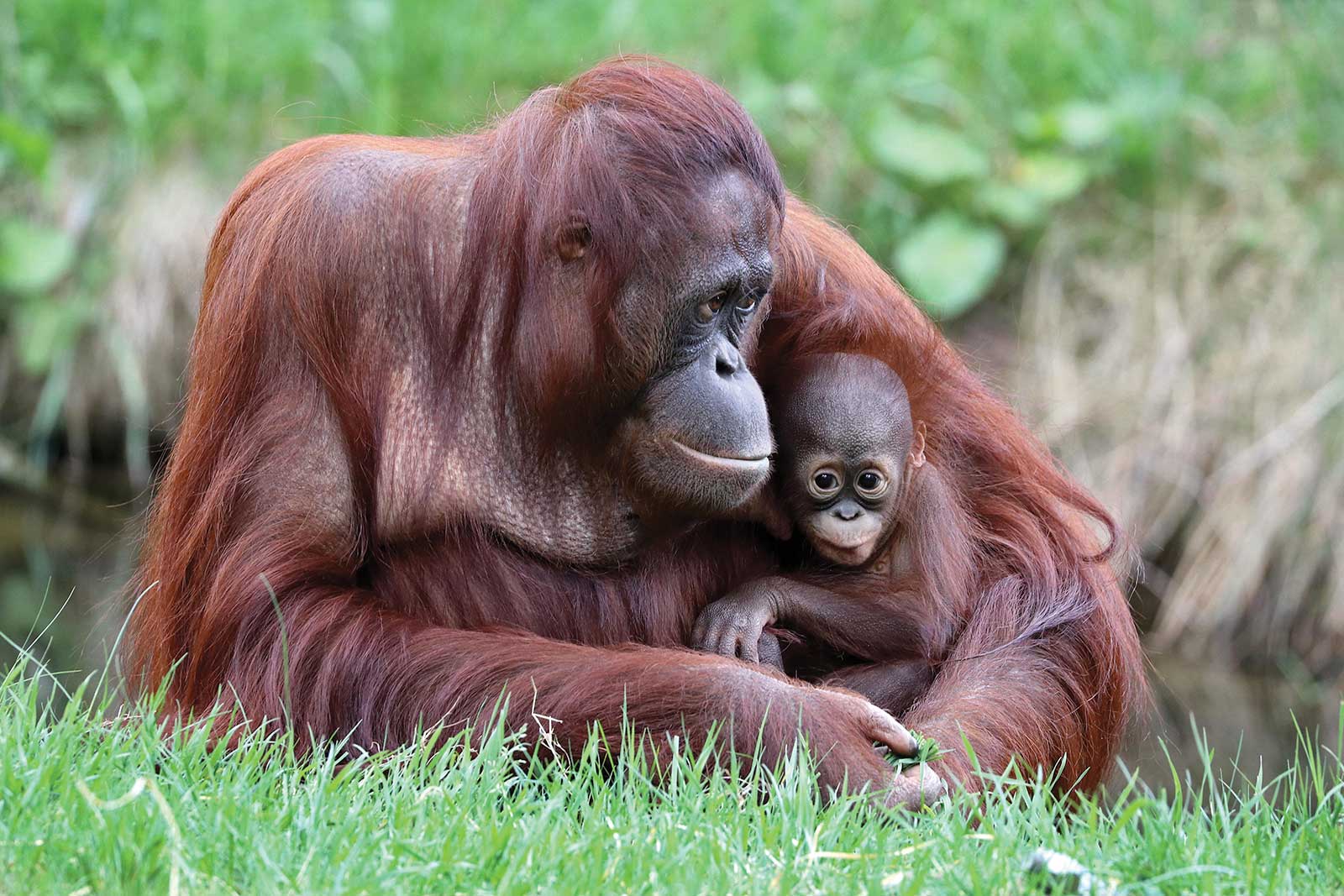
Reference Photo Credit: Edwin Butter
In this demonstration, I will show you my step-by-step process for achieving this realistic orangutan drawing in colored pencils. This artwork is made up of a multitude of layers, colors and techniques, combined with a delicate drawing style and an eye for detail.
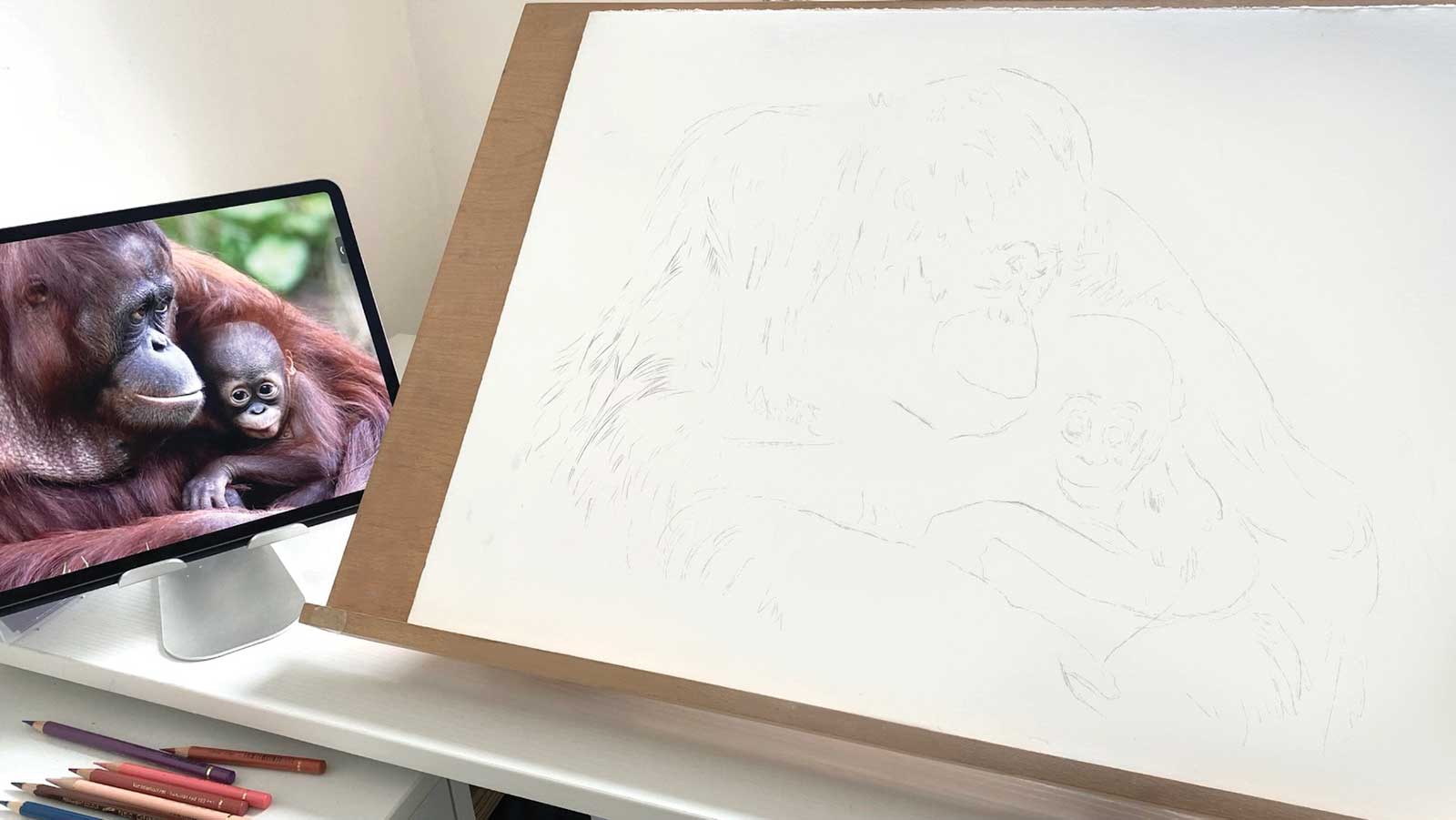 Stage 1
Stage 1 Initial Outline and Set-up
The initial outline has been drawn onto the Fabriano Artistico paper, and the drafting film has been layered over it and secured with masking tape. Drafting film is transparent, meaning the outlines can be seen clearly underneath.
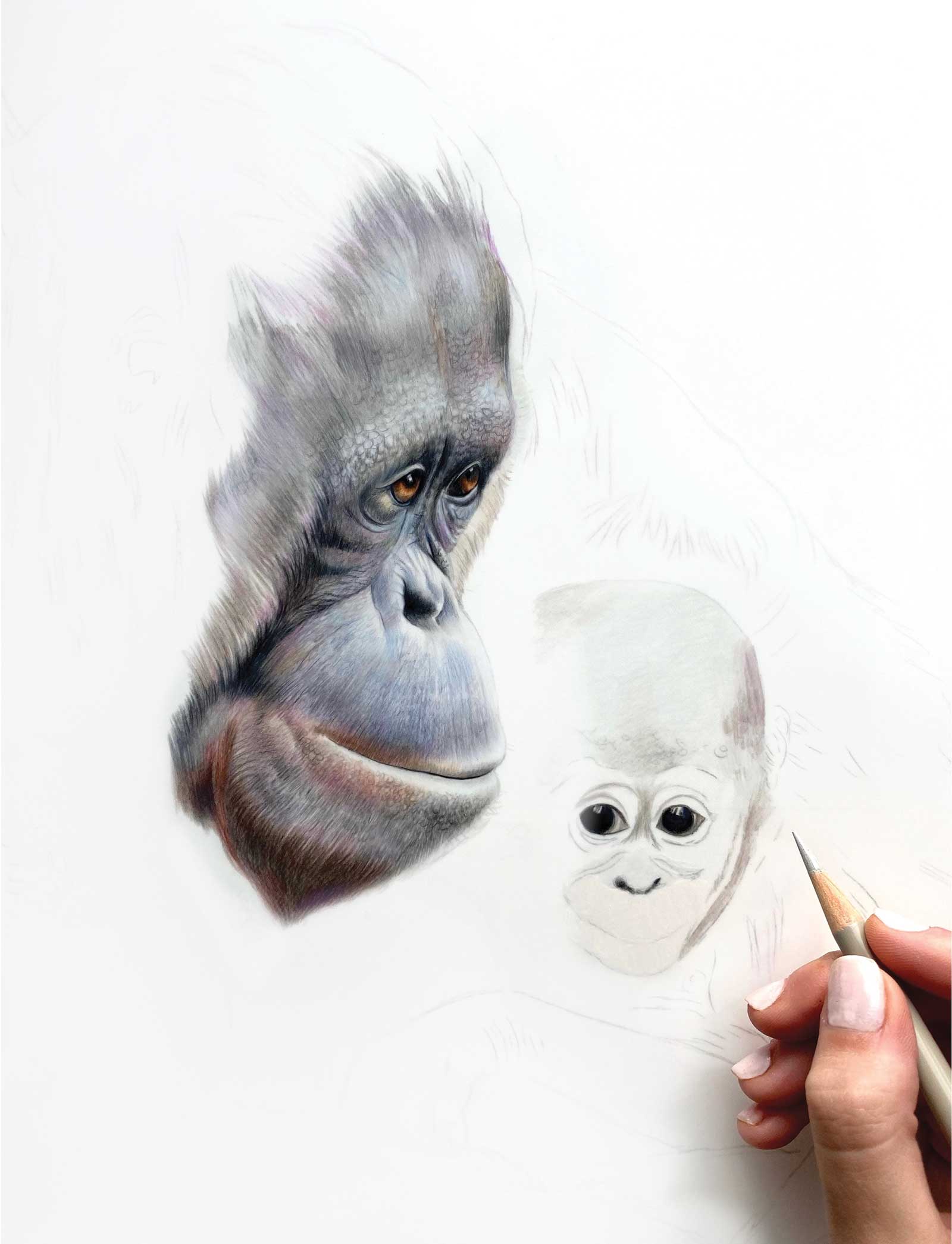 Stage 2
Stage 2 Base Layers
With my palest colors, I’m lightly shading in the basic shapes, outlines and shadows, which make up the orangutans’ faces. I’m drawing in small circular motions, using the bluntest part of the tip of my pencil to keep the lines soft and achieve an even coverage.
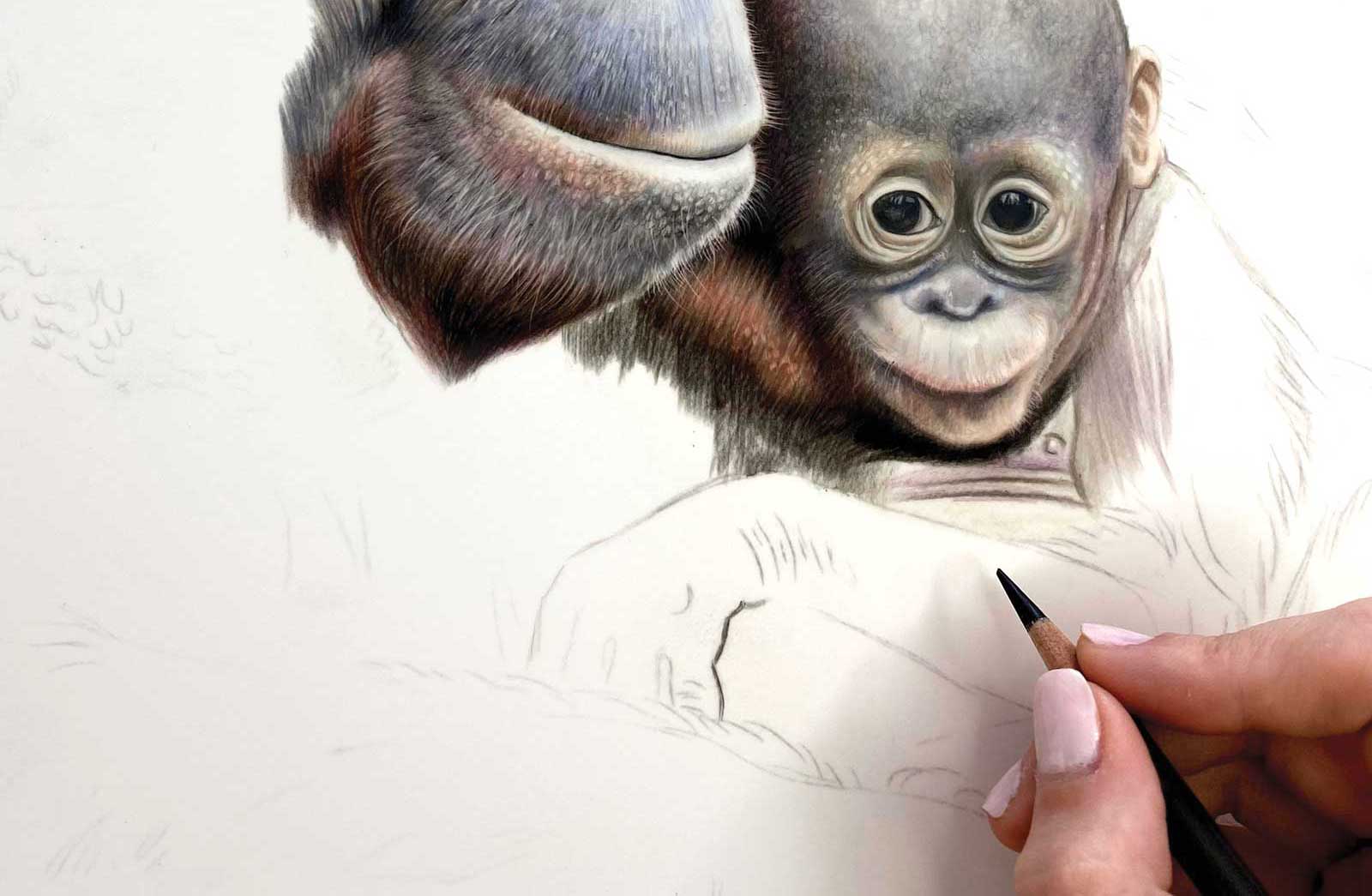 Stage 3
Stage 3 Undertones
Adding layers of vibrant colors while applying a light pressure provides subtle undertones, which show through additional layers.
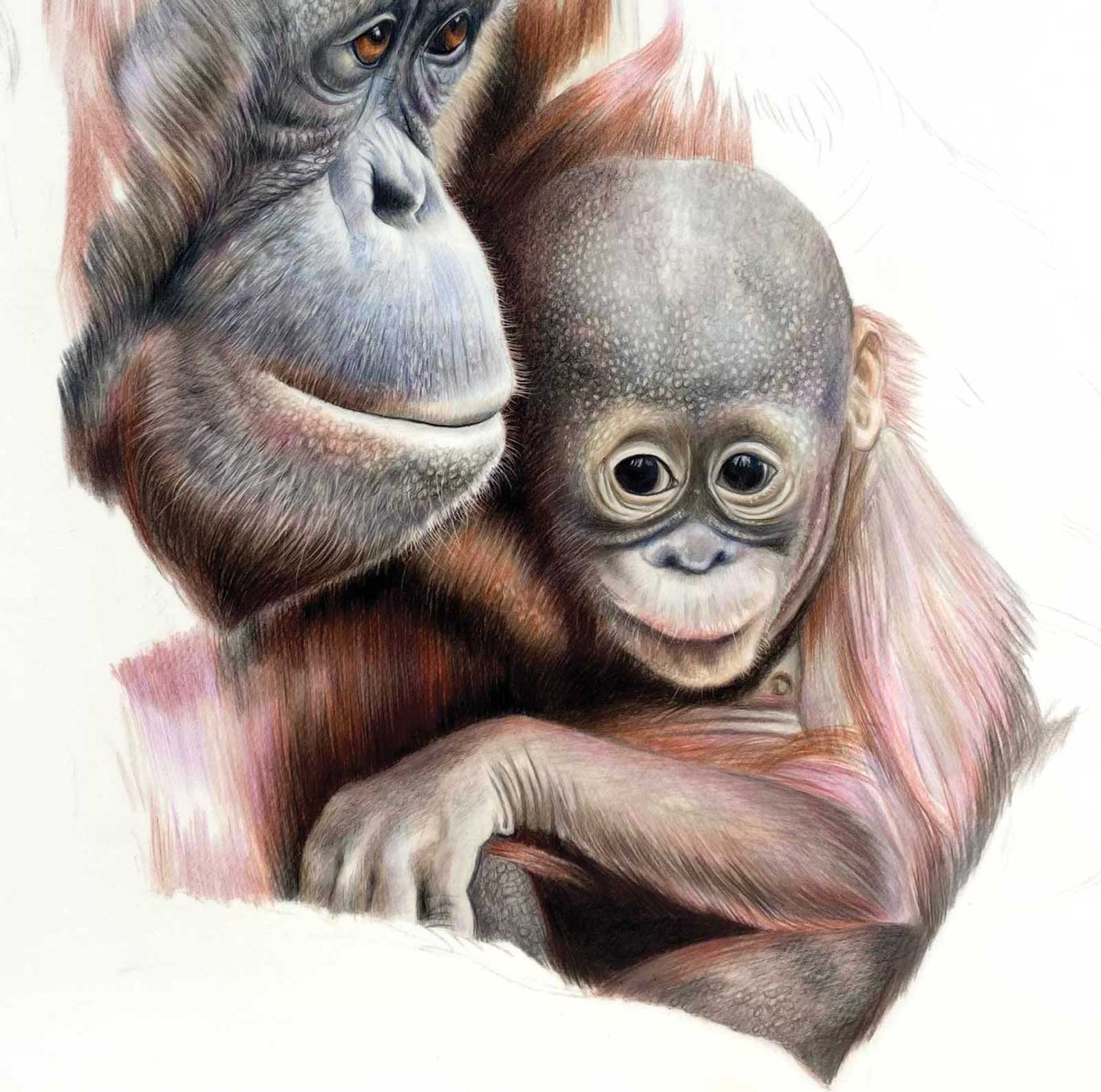 Stage 4
Stage 4 Tonal Value
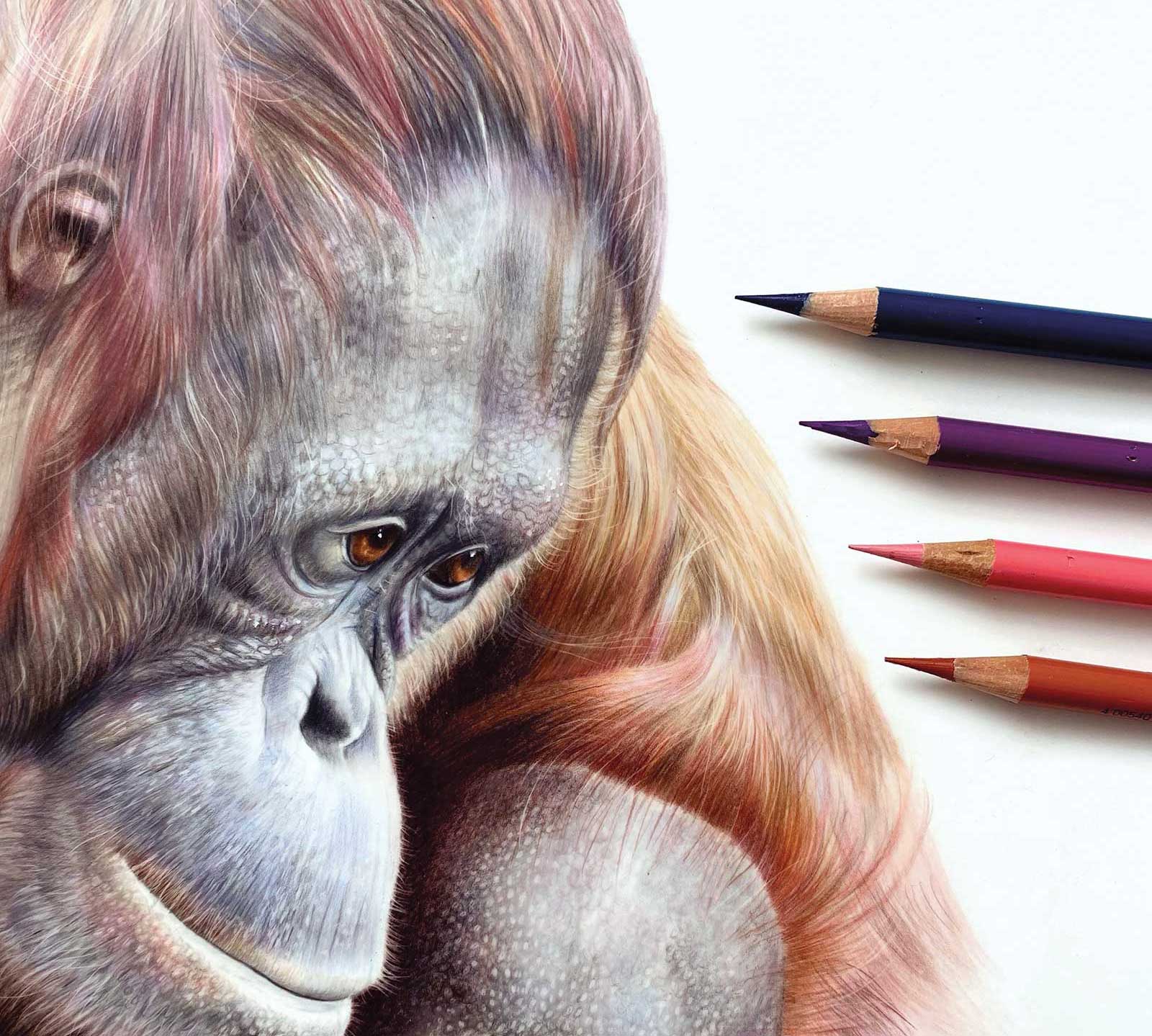
The main body of work is building up tonal value through a vast array of light, medium and dark tones. Capturing the lighting can place focus on different parts of the composition, which can develop the realistic aspect of the drawing.
 Stage 5
Stage 5 Contrast
Having a clear contrast creates more depth in the drawing. I pull out highlights and really darken those darkest areas. Contrasting colors can also add to the realistic element of the piece—for example, the rich orange fur against the blue tones in the face.
 Stage 6
Stage 6 Craft Knife Slice Tool
Using the removal technique to lightly scrape away those top layers with the ceramic blade of the craft knife slice tool can create fine highlights and details, adding to the realistic textures of the orangutans—for example, the fine wispy hairs and the bumpy textured skin.
 Stage 7
 Stage 7
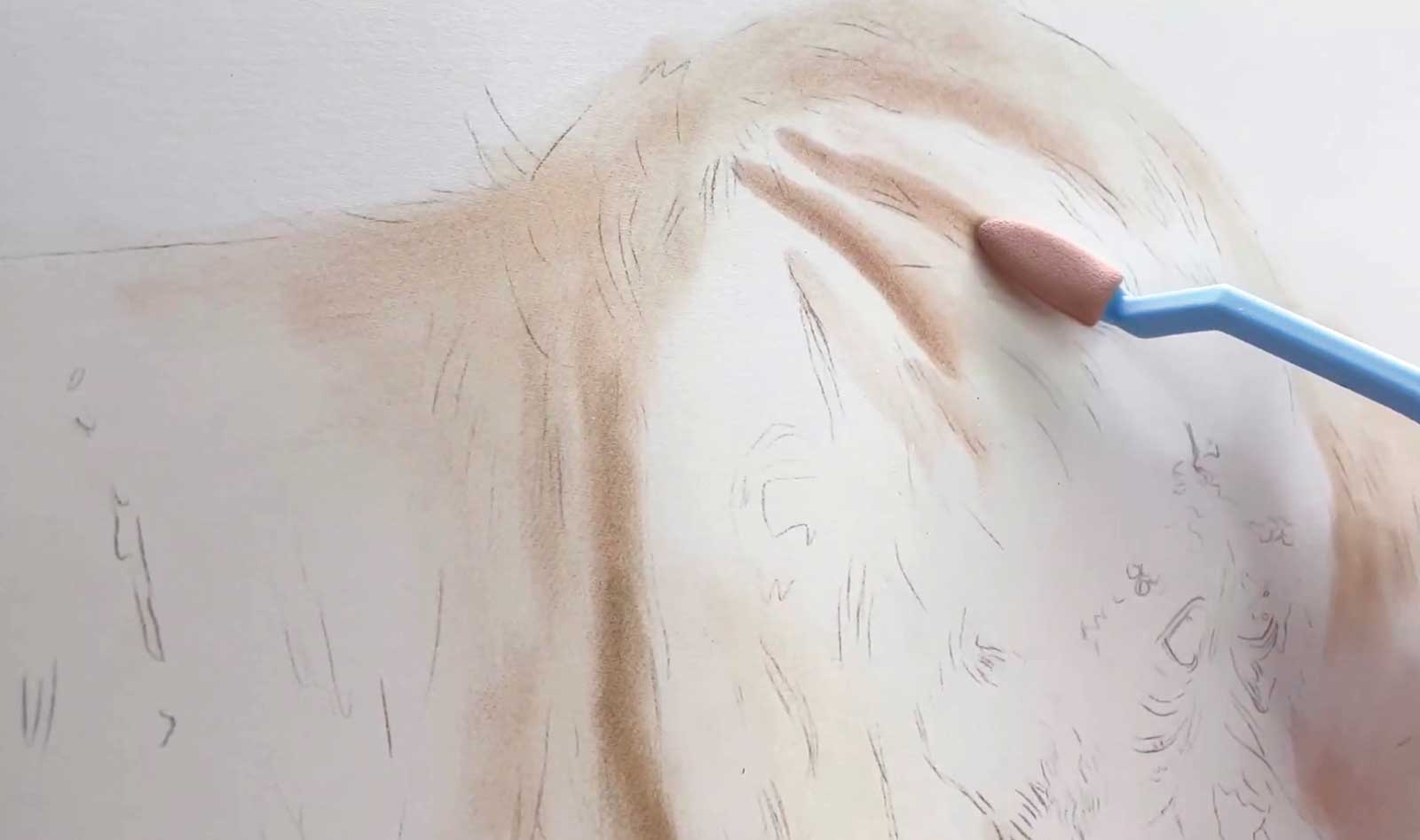
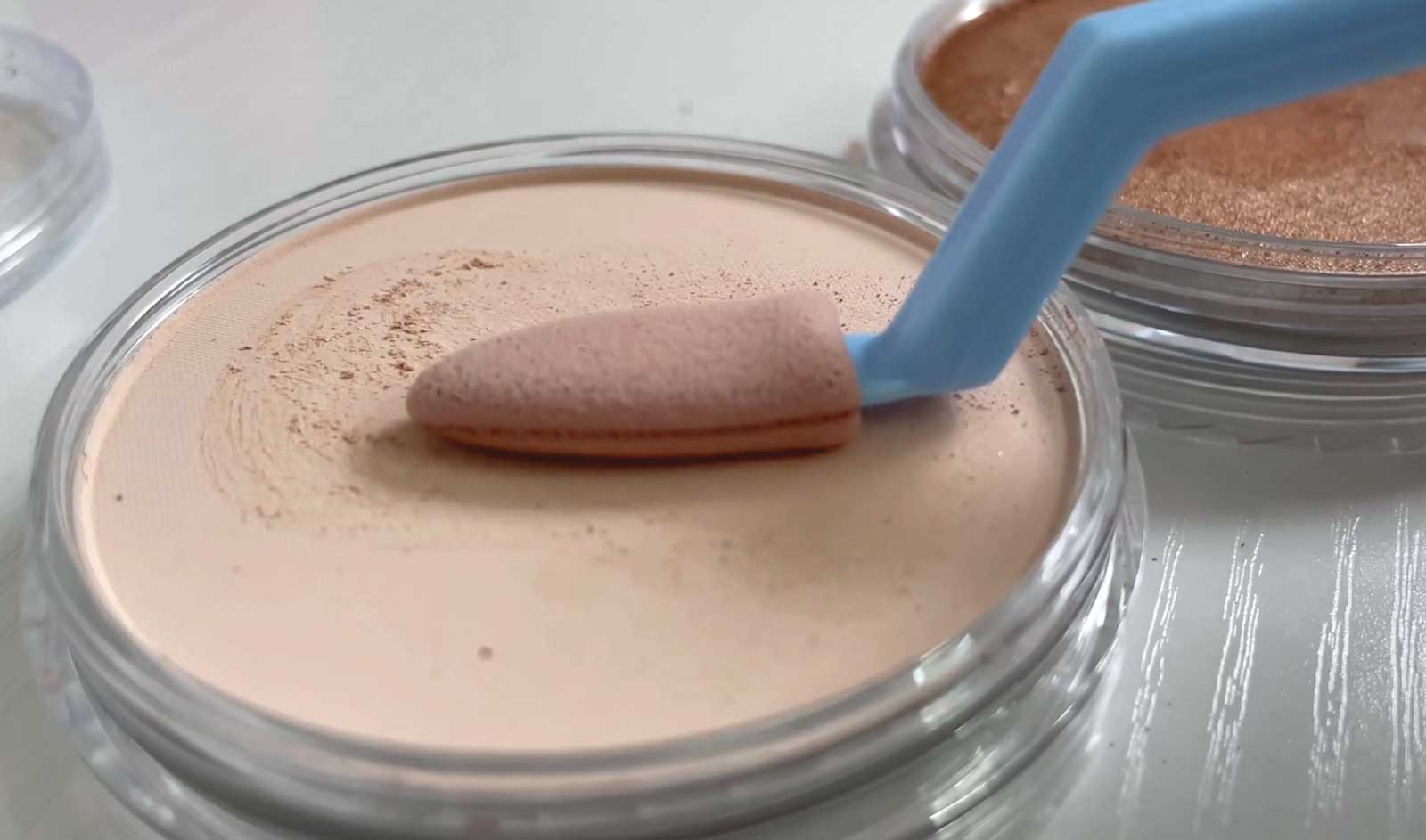
Stage 7 PanPastels
Now the drawing is almost finished, I have removed the drafting film (with the drawing on it), to reveal the faint initial outlines on the Fabriano paper underneath. I then use warm pink/orange toned PanPastels to add a soft looser feel to the edges of the orangutans, applying the pigments with a soft knife cover and sponge, before adding the drafting film back over the top.
 Stage 8
Stage 8 Refinements and Finishing Touches
Close Connection, colored pencil on drafting film, 15 x 11" (38 x 27 cm)
After seeing the entire piece come together after adding the subtle PanPastels in the background, I can now pick out any final alterations, and add those really intricate touches of detail to enhance that realistic element further. You can brush away any loose pigment with a soft clean brush.