I am fascinated by landscape, but more specifically, the character of trees within the landscape. Sometimes it can be the interaction between a group of trees or it can be a single tree, but it is about capturing something of the beauty and energy in nature that I discover on walks in the countryside. I call these works “treescapes.”
I am primarily a studio painter and love experimenting and exploring new ways to make marks and to apply paint to a surface. Working intuitively and moving from painting to painting is when I am happiest, playing one picture against another and resting a picture when I’m not sure of the next step. It is not in my character to work on one picture from beginning to end. I get a lot of energy and excitement when starting a new picture; the possibilities are endless, and it’s nice sometimes to be “led” by the picture.
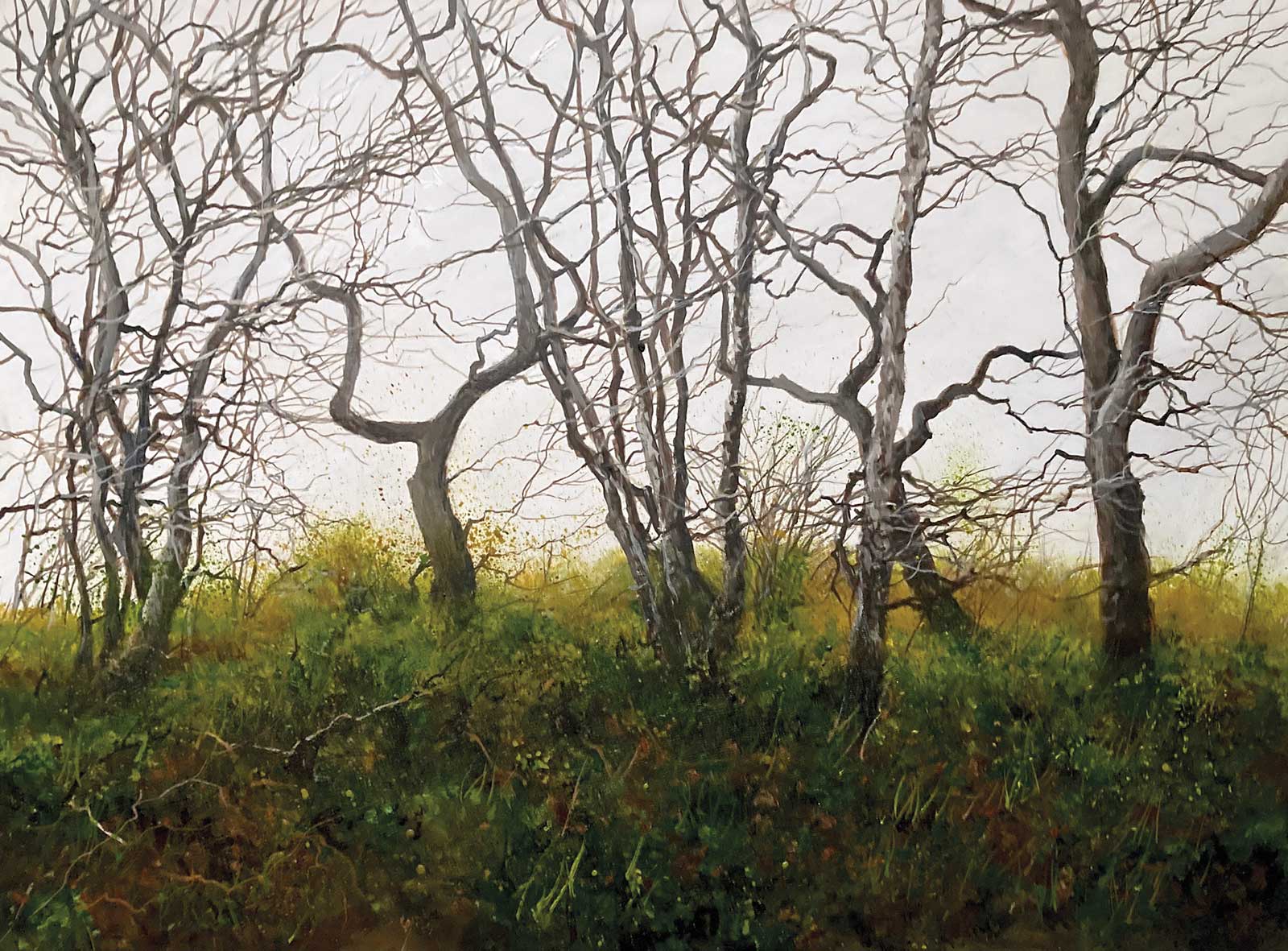
Edge of the Wood, acrylic on board, 12 x 15½" (30 x 40 cm) This is typical of the scene I love to paint. I blocked in a flat featureless sky to allow the trees to work with the textured undergrowth. I kept the trees fairly light so I could show more marks and color. The undergrowth was built up using many layers and colors, working light on dark and dark to light with different brushes and a painting knife to create a variety of marks, suggesting rich dense undergrowth.
I work in various media—graphite, charcoal and watercolor mixed media—but I find pastels or acrylic allow me two distinctly different ways to explore my subject. Both mediums allow the use of layering which is an important process in the construction of the picture. The elements of a layer are often completely or partially obscured during the painting process, which adds extra interest. And I enjoy inverting layers, sometimes starting with a drawing, other times with washes of color.
My acrylic tree paintings are currently a smaller format, 30 by 40 centimeters or similar, painted on tinted gesso panels (although I have plans to work larger). For some time I have felt frustrated by the limitations of brushes to apply the paint: flats and rounds, synthetic or bristle, big or small, long or short handled. Of course you can get a range of effects with brushes, but I crave other ways (painting knives, sponge or flicking) with which to apply paint and manipulate the surface.
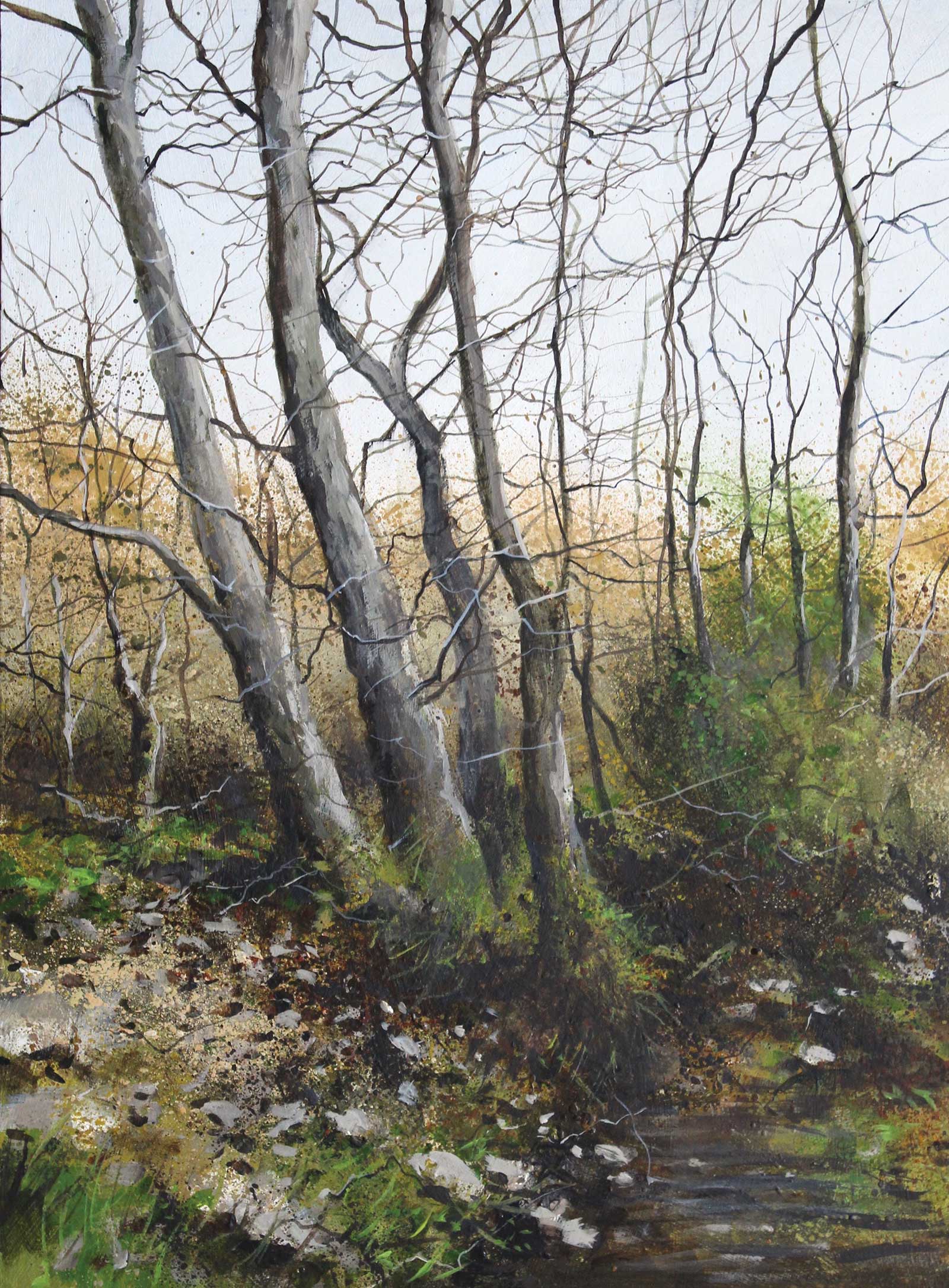
Quiet Place, acrylic on board, 15½ x 12" (40 x 30 cm) I view each painting as a challenge but also a learning process, and with this picture I wanted the feeling of ambience above accurate detail. I tried to find different ways to apply the paint, combining spatter with brushwork then using a rigger for fine branch work but keeping other elements vague by under-painting and suggestion rather than overstating detail. The limited color palette adds to the effect of solitude I think.
I often start with loose “washes” of color for sky and foreground so there is something on which to build, freely introducing a variety of different colors to create a particular “feel.” I might then do some drawing to establish the main elements (trees) so that I can check that the composition and proportions work, followed by tentative blocking in of the trunks and main branches of the trees. Throughout the painting it is important to maintain balance, so I will try not to get too carried away at this stage and may move down to the undergrowth to create a little solidity, variety and texture. I am not averse to using acrylic inks in the painting if appropriate.
Although I work from images, I am not interested in simply recreating a photo in the painting. So I am not too concerned if the painting is not exactly a copy of the image—it is made with paint after all so it should look like a painting.
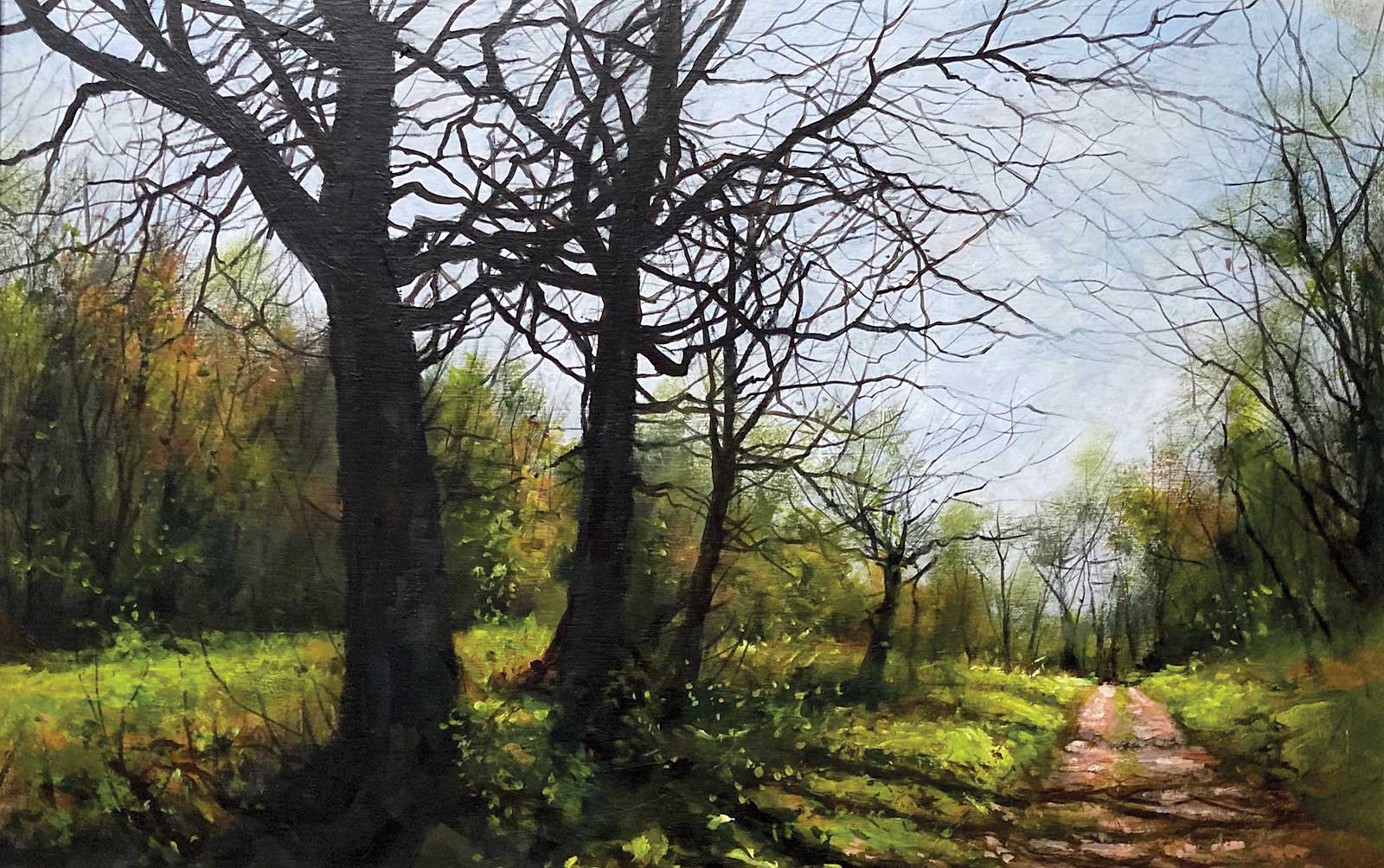
Late Spring Landscape, acrylic on board, 12½ x 19" (32 x 49 cm) A cold spring day with bright blue sky and strong sun picked out bright yellows and vibrant greens leaving dark shadows. The compositional device of a path leading into the picture introduced more color. This picture marked a change in direction: brighter colors and less literal mark making. I mixed vivid yellows and greens that had previously been ‘off the scale’ for me. The path was difficult to paint.
One thing that remains constant in my work is the importance of drawing. Above all, I would say this is the key element, and the thing that is apparent in every picture I make. A painting might start with a drawing (doesn’t have to, of course) but during the painting process the drawing invariably gets lost, so has to be found again. This is the part I enjoy in painting: the losing and finding again of the drawing.
My Art in the Making Autumn Colour
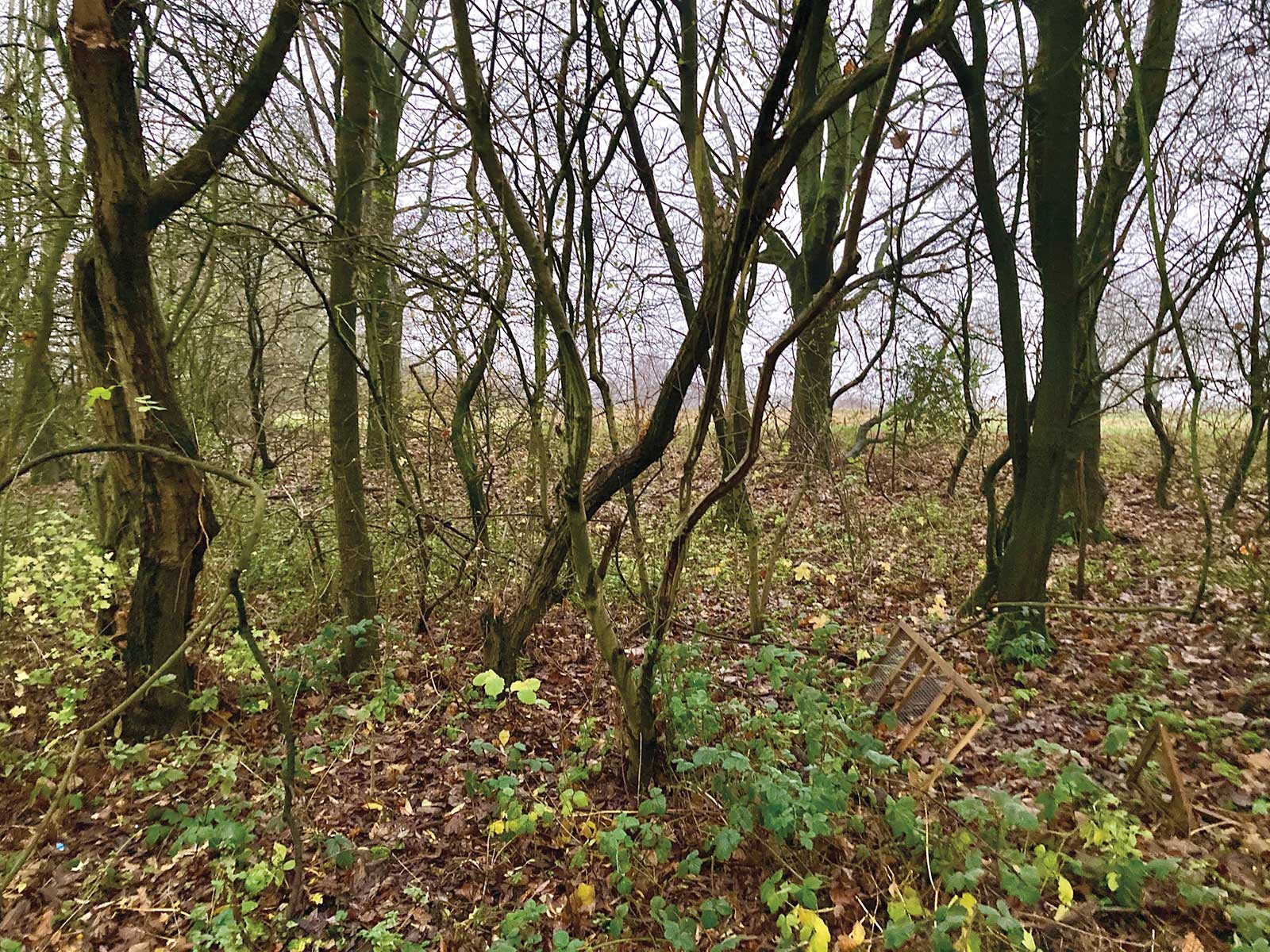 Reference Photo
Reference Photo
The original inspiration photo taken on an autumn walk: lots of intertwining trees, a variety of color in the undergrowth and a flat sky.
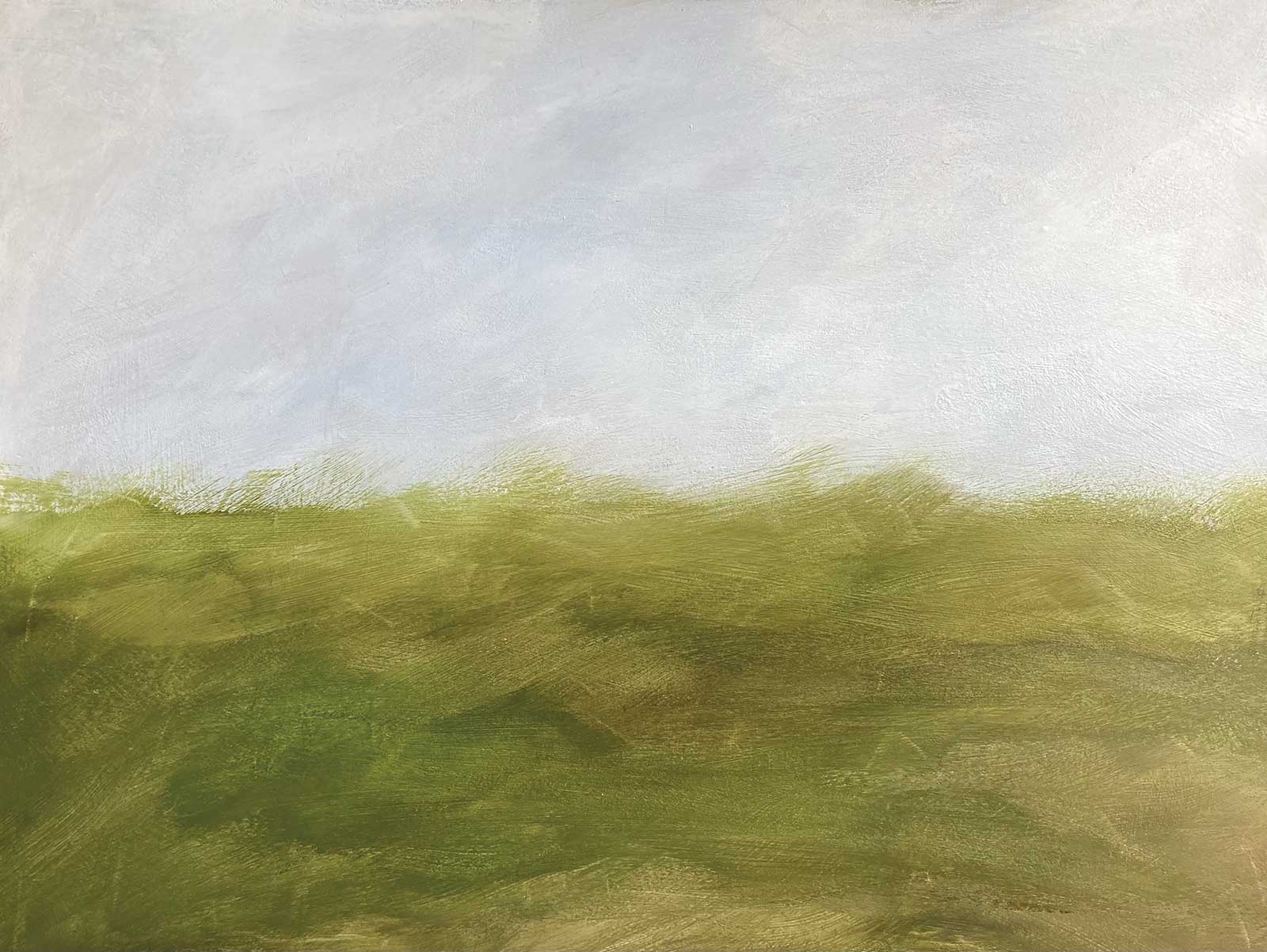 Stage 1
Stage 1 Preparations
The board was prepped with three coats of gesso lightly tinted with acrylic. A bluish gray was washed in for the sky and some mid-green for the foreground. I’ve kept the brushwork quite loose.
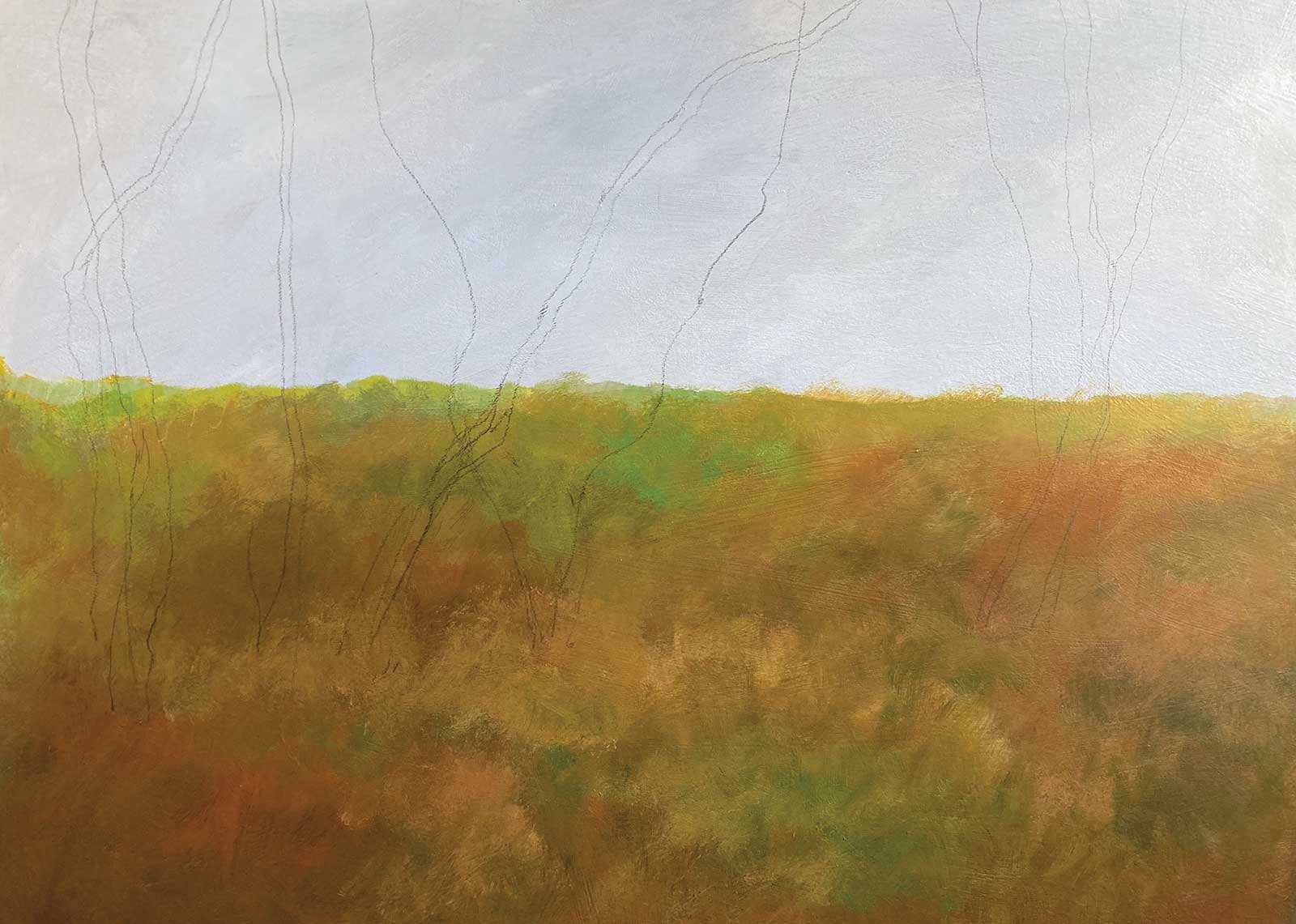 Stage 2
Stage 2 Warm Tones and Tree Branches
After intuitively scrubbing more solid and varied colors (introducing yellows and reddy browns) into the foreground, I penciled in a few of the main trees to establish relationships in the composition.
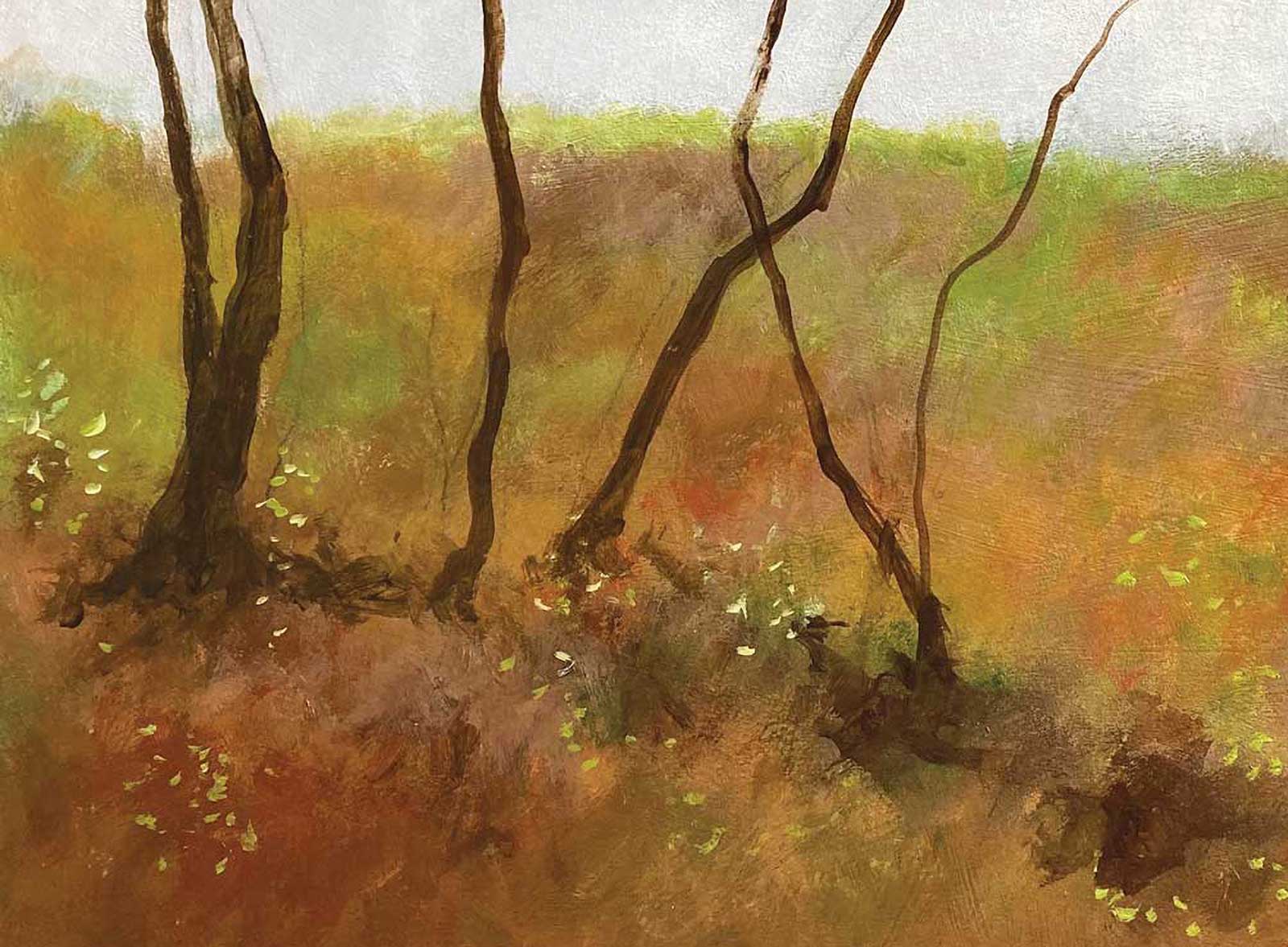 Stage 3
Stage 3 Building up the Color
Mixing a dark brown using ultramarine with burnt sienna and burnt umber, I used a rigger to reinforce the pencil drawing and added some shadows and more color in the undergrowth.
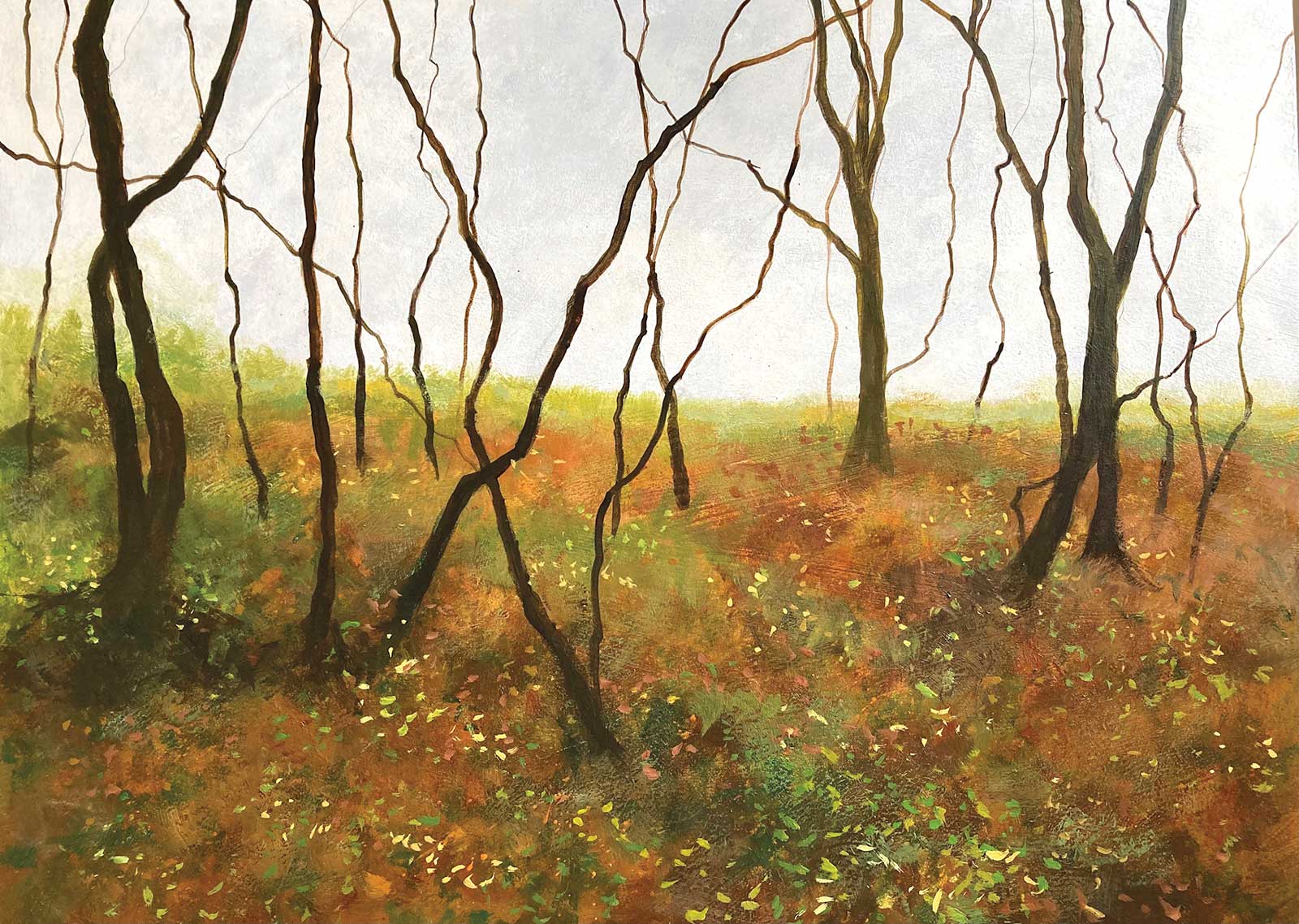 Stage 4
Stage 4 Developing the Undergrowth
I’ve added more trees and branches and, using a variety of brushes, developed the undergrowth to suggest more depth and solidity where the trees emerge from the ground.
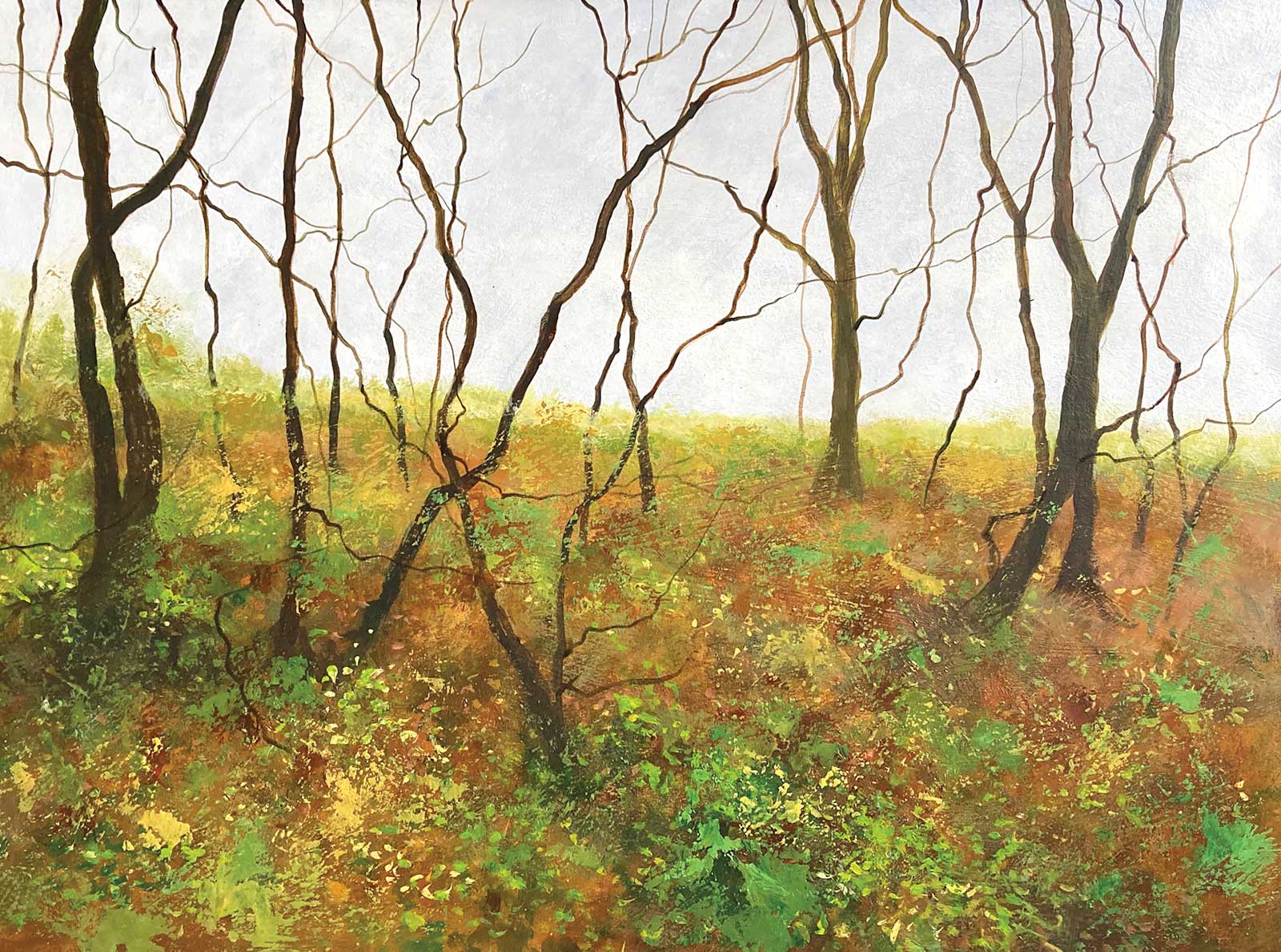 Stage 5
Stage 5 Finer Branches
Trying to keep a balance, I’ve painted some finer branches and then experimented with different ways to apply the paint, using a painting knife to drag some different colors across the surface.
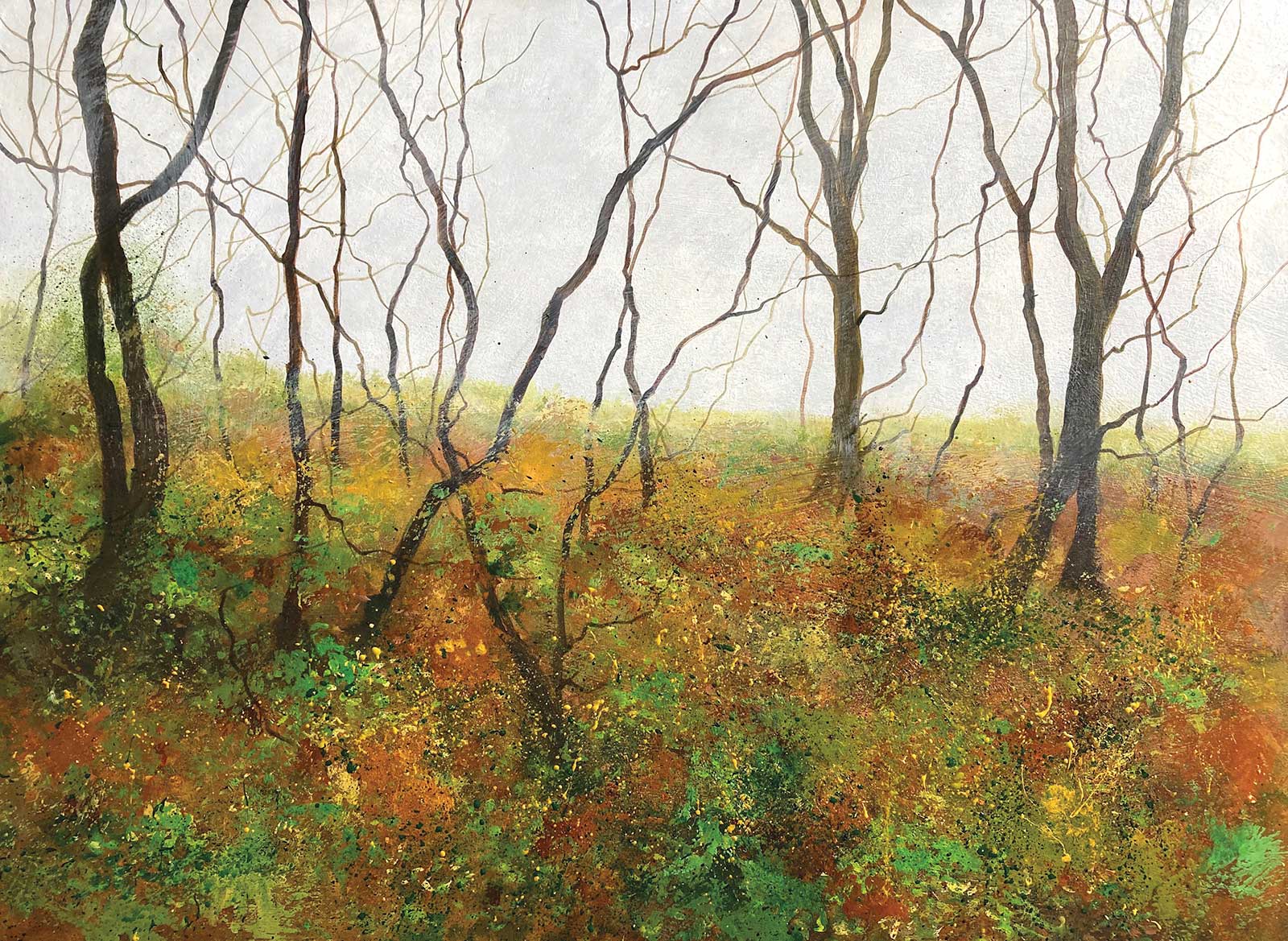 Stage 6
Stage 6 Creating Depth
There needed to be a sense of distance to the horizon line, which meant painting through some of the trees. Using an old toothbrush I spattered some paint onto the “knifed” surface to create texture.
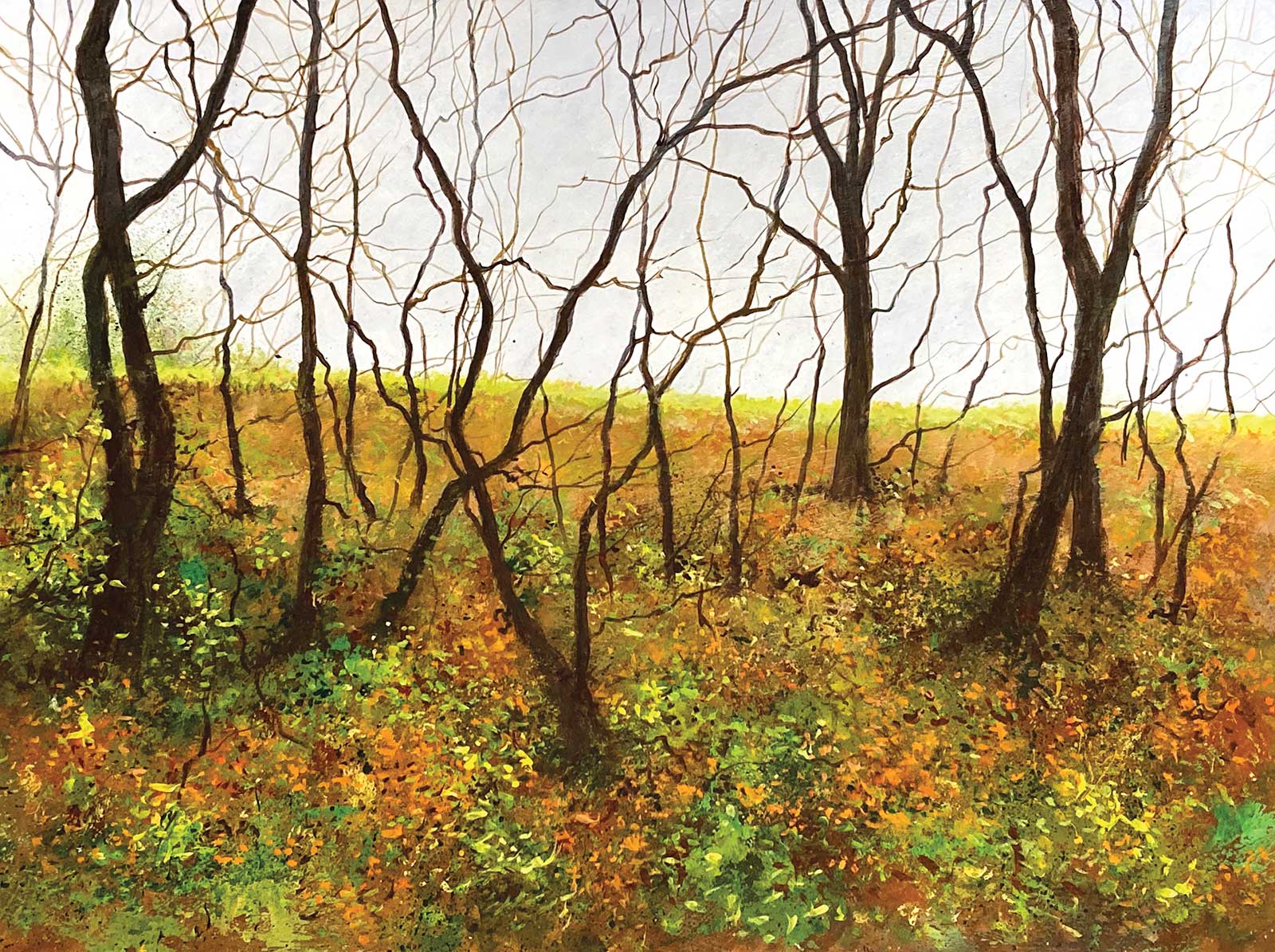 Stage 7
Stage 7 Enhancements
The textures and colors are starting to work in the undergrowth. The trees needed more work to vary thicknesses and add more small branches. I mixed matte medium with paint to knock back intensity.
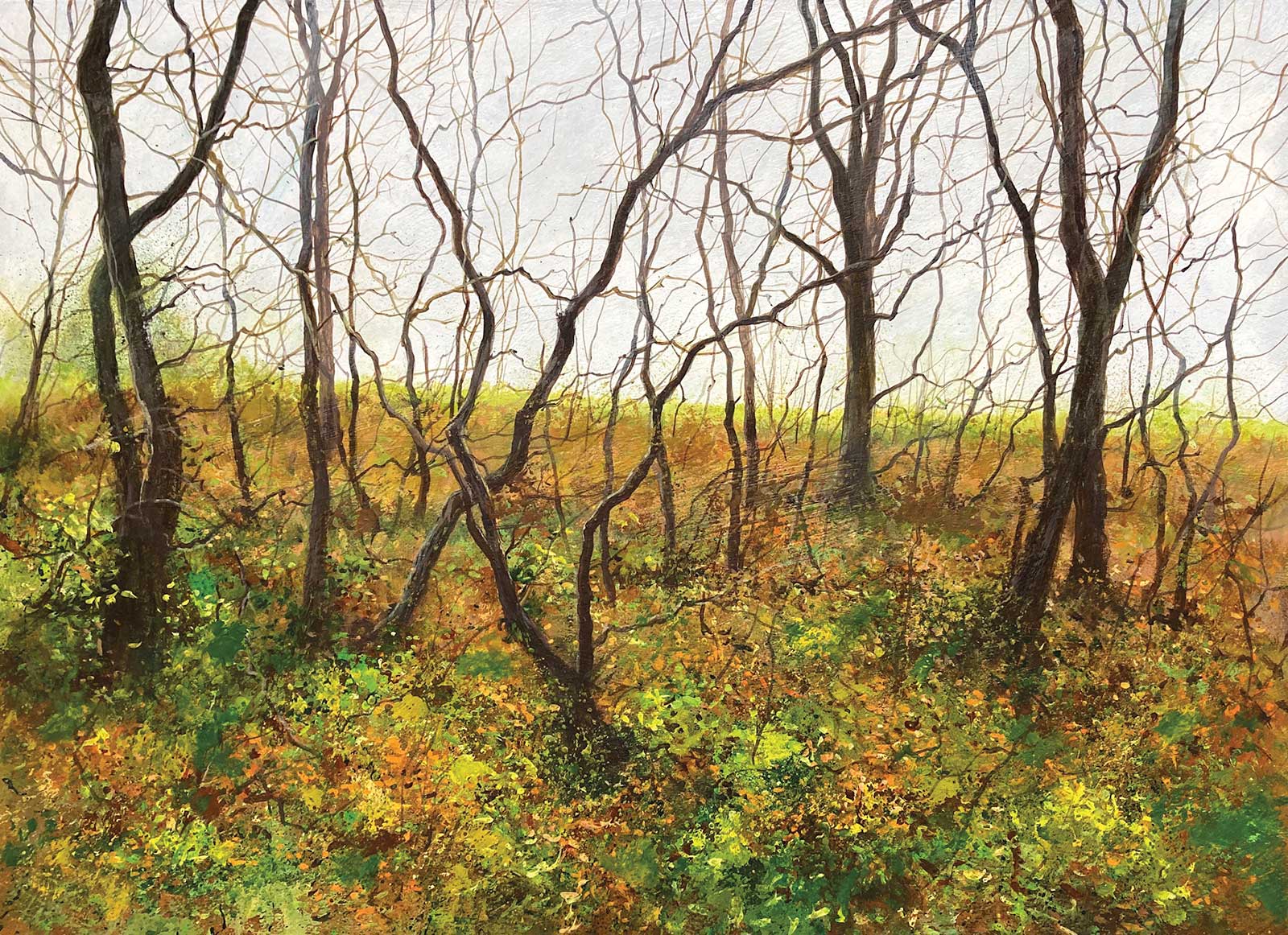 Stage 8
Stage 8 Sense of Distance
I’m now happy with the texture and color in the undergrowth. I’ve also tried to create a foreground, some middle distance and some far distance. I’ve also done a lot more work on the trees.
 Stage 9
Stage 9 Branch Work
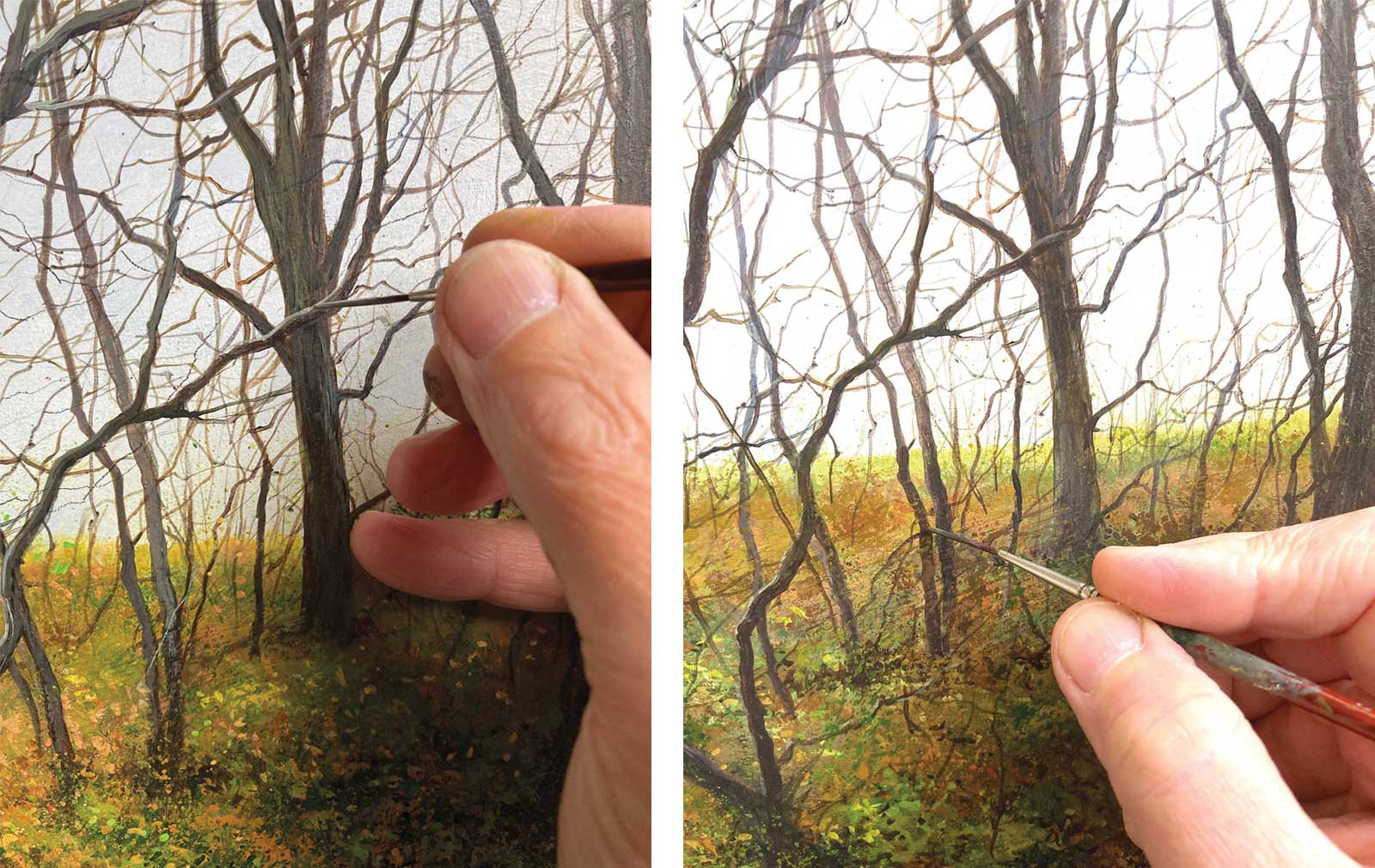
Here I’m using a rigger for some of the branch work. The paint has to be thinned down with water and medium to get the right consistency or it won’t work.
 Stage 10
Stage 10 Knife Work
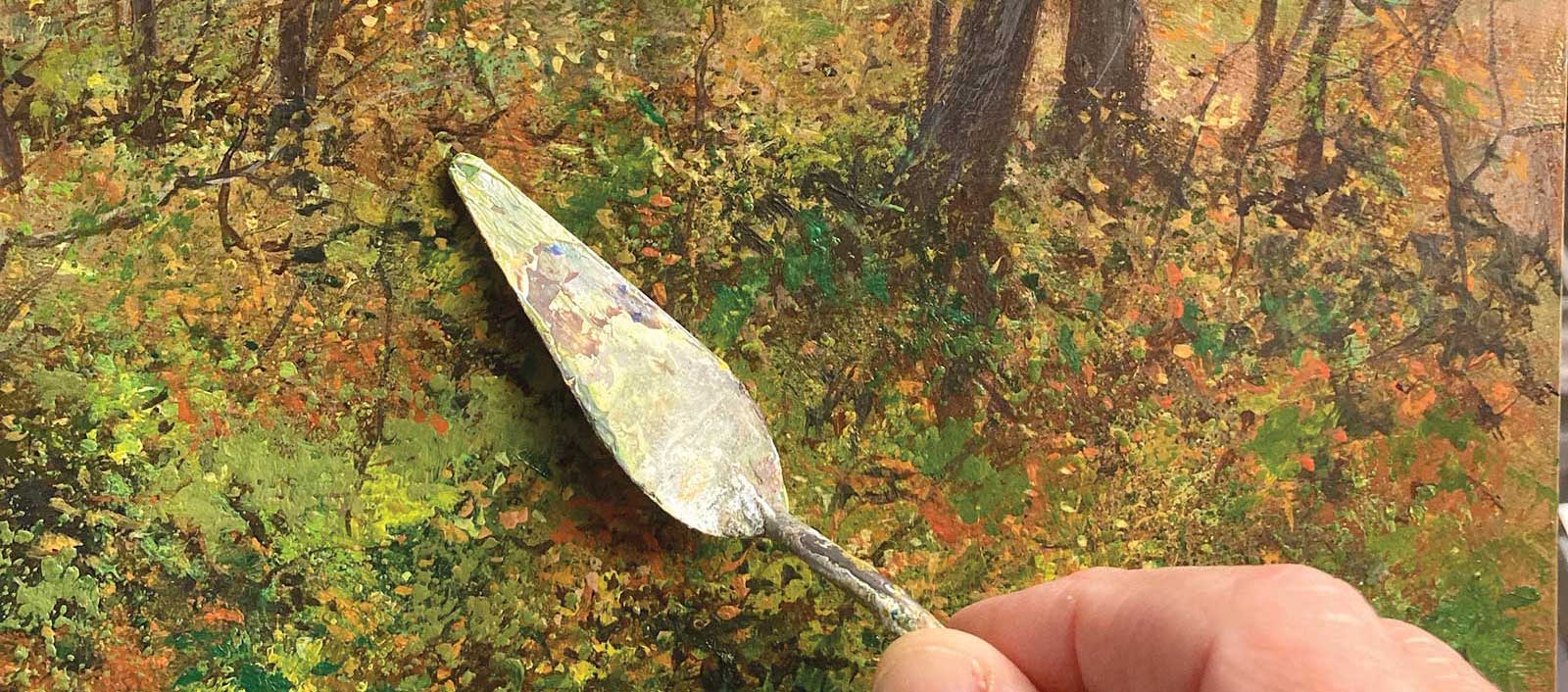
Now I’m using a painting knife to drag small amounts of different colors across the surface to create texture and different marks. Obviously it isn’t a precise way to apply paint, so you have to make further adjustments.
 Stage 11
Stage 11 Finished Artwork
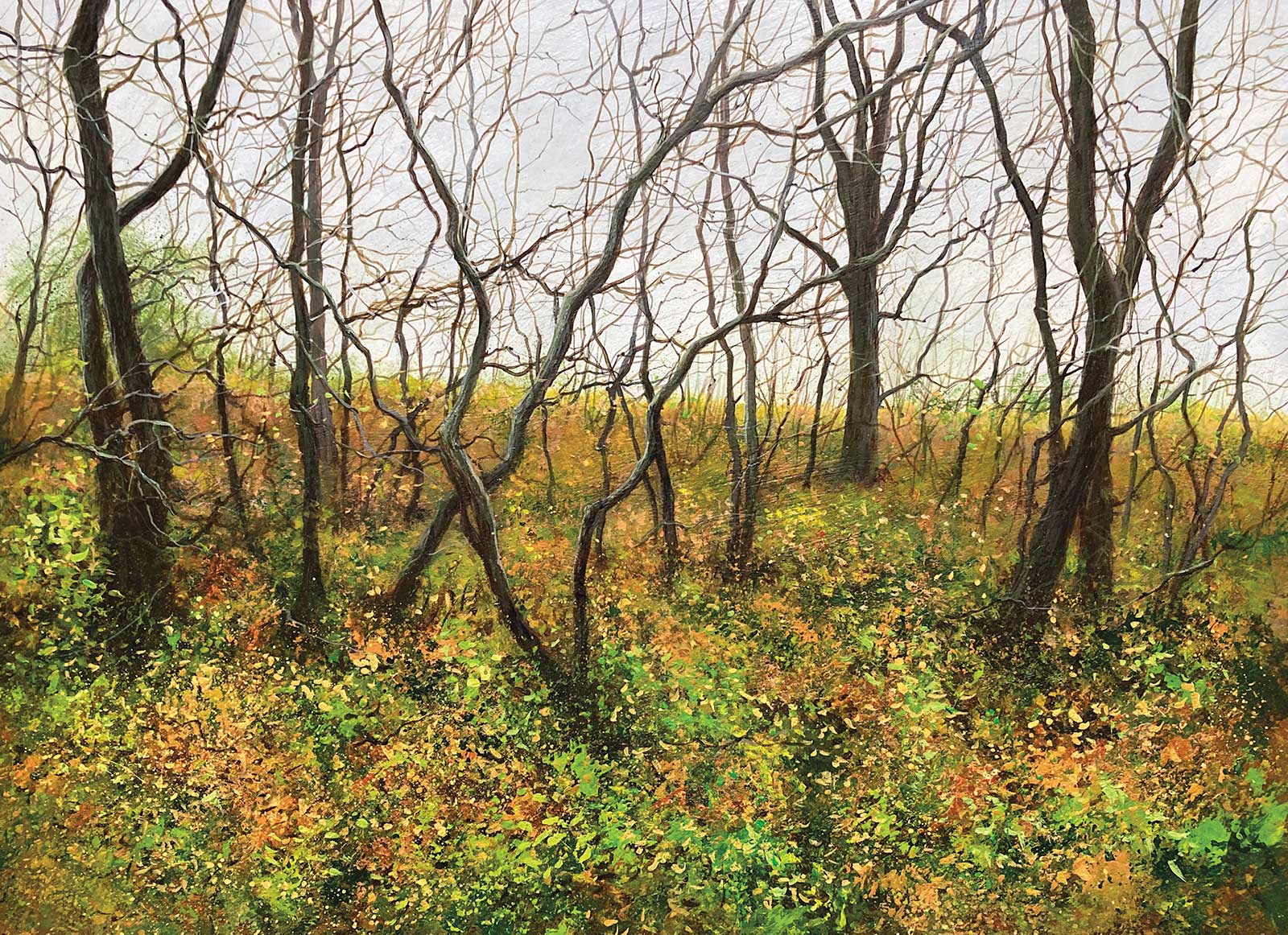
Autumn Colour, acrylic on board, 12 x 15½" (30 x 40 cm)
I’ve tidied a lot of the trees and branches, adding highlights here and there, and also more color to the undergrowth. The picture is more balanced now. I will rest for a while before reassessing.
About the Artist
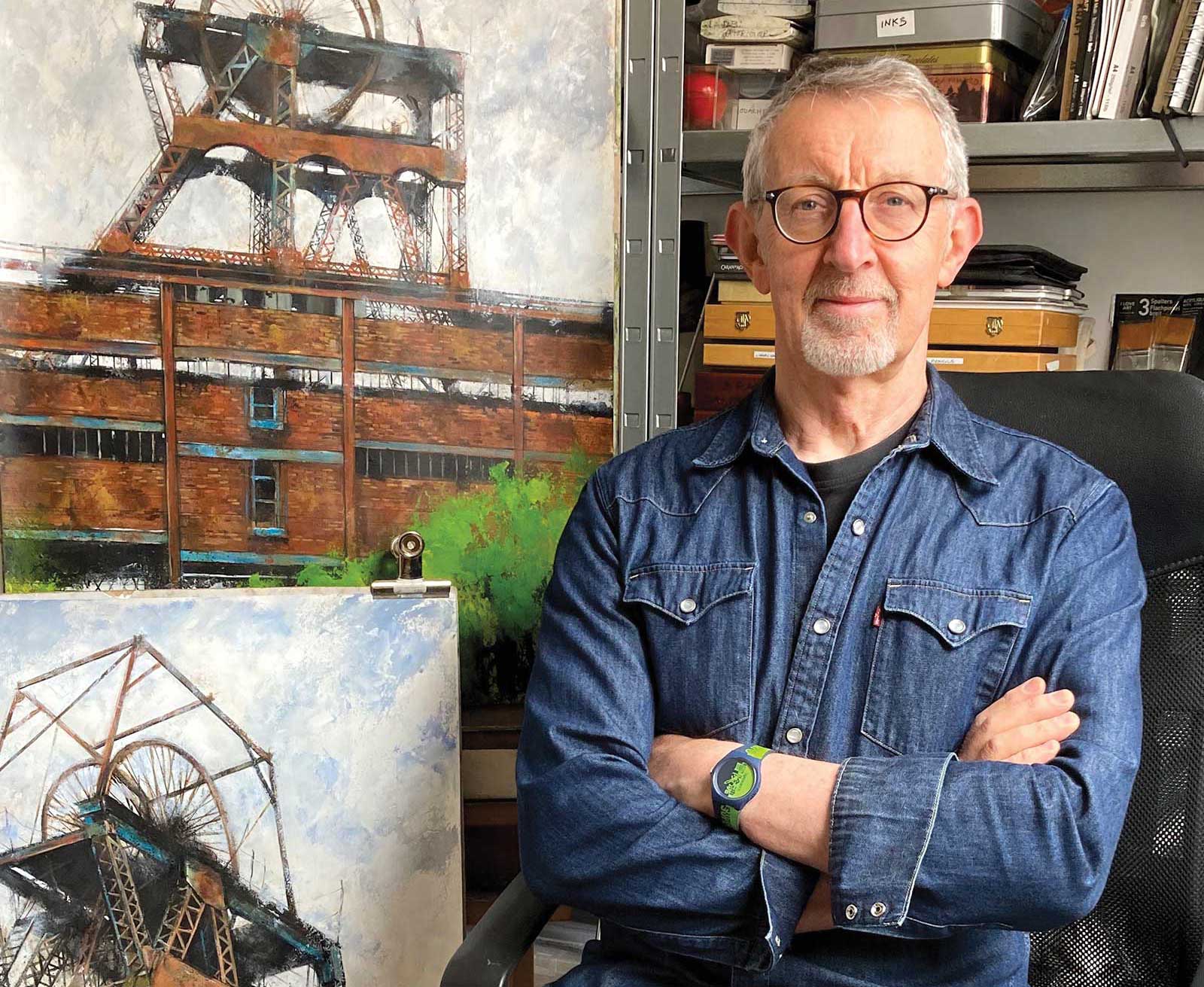 David Brammeld
While today David Brammeld is an international artist, growing up in Stoke-on-Trent, Staffordshire, UK, has undoubtedly informed the artist he’s become. Trying to understand the complex post-industrial landscape around him, scarred by the demise of coal, ceramic and steel industries, Brammeld would draw the decaying factory buildings, houses, empty shops and the huge obsolete coal mine pit head gear, initially creating large expressive works in charcoal and pastel on paper, then later in acrylic, oil and mixed media.
The natural landscape is never far away from Stoke though, and would become a welcome antidote for the artist, developing into another key subject through which to explore character, texture and identity. He started exhibiting in open art exhibitions which led to being elected a member of the Royal Birmingham Society of Artists in 2009, The Royal Society of British Artists in 2014, The Pastel Society UK in 2016, Société des Pastellistes de France in 2016 and the Manchester Academy of Fine Arts in 2019. Brammeld also takes part in society group shows on an annual basis.
In 2021, as well as showing in the UK, Brammeld exhibited with Red Rock Pastel Society, Nevada; the 20th International Festival du Pastel in Feytiat, Limoges, France; The Pastel Society of Russia in Penza Gallery, Moscow; and the Pastel Society of South Korea. His work is shown at Trent Art Gallery in Newcastle-under-Lyme (www.trent-art.co.uk) and society exhibitions at Mall Galleries in London (www.mallgalleries.org.uk). He also has a studio gallery at Josselin in Brittany, France. Publications by Brammeld include Creative Drawing Techniques published by Crowood Press, and For the Love of Trees and Potteries Collection, both self-published.
Contact at
www.davidbrammeld.com